dental ppc campaign management
Why Dental PPC Campaign Management Matters for UK Practices
Dental PPC campaign management delivers immediate visibility for high-value treatments when patients actively search for solutions. Unlike SEO, which takes months to build, properly structured pay-per-click campaigns place your practice at the top of search results within days, capturing patients ready to book consultations for implants, Invisalign, and emergency care.
The Commercial Intent Behind Dental Searches
When someone types “dental implants near me” or “Invisalign cost Manchester” into Google, they are not browsing casually. These searches signal strong purchase intent, often representing patients who have already decided to pursue treatment and are now comparing providers. Dental PPC campaign management positions your practice precisely at this decision point, connecting you with patients whose average treatment value exceeds £3,000.
How PPC Fits Into Your Patient Acquisition Strategy
PPC advertising complements organic search efforts by capturing demand immediately whilst your SEO strategy matures. For practices launching new services or expanding into competitive areas, paid search provides instant market entry. The real power emerges when you align PPC campaigns with your practice capacity: scaling spend during periods with appointment availability, then reducing investment when your schedule fills.
Why Dentists Struggle With PPC (and How to Avoid It)
Most dental practices waste 40–60% of their PPC budget on irrelevant clicks. Someone searching “dental pain relief” costs you £8 per click but rarely books a consultation, whilst “private dentist implants Birmingham” attracts patients ready to invest thousands. The difference lies in understanding search intent and structuring campaigns around treatment-specific keywords rather than broad dental terms.
Common PPC Pitfalls
Practices often fail because they treat Google Ads as a “set and forget” channel. Without proper campaign architecture, you will attract price shoppers, emergency patients seeking NHS care, and clicks from outside your service area. Success requires continuous refinement: adding negative keywords weekly, adjusting bids based on conversion data, and testing ad copy variations to improve click-through rates.
Structuring Your Dental PPC Campaign for Maximum Results
Organising Campaigns by Treatment Type
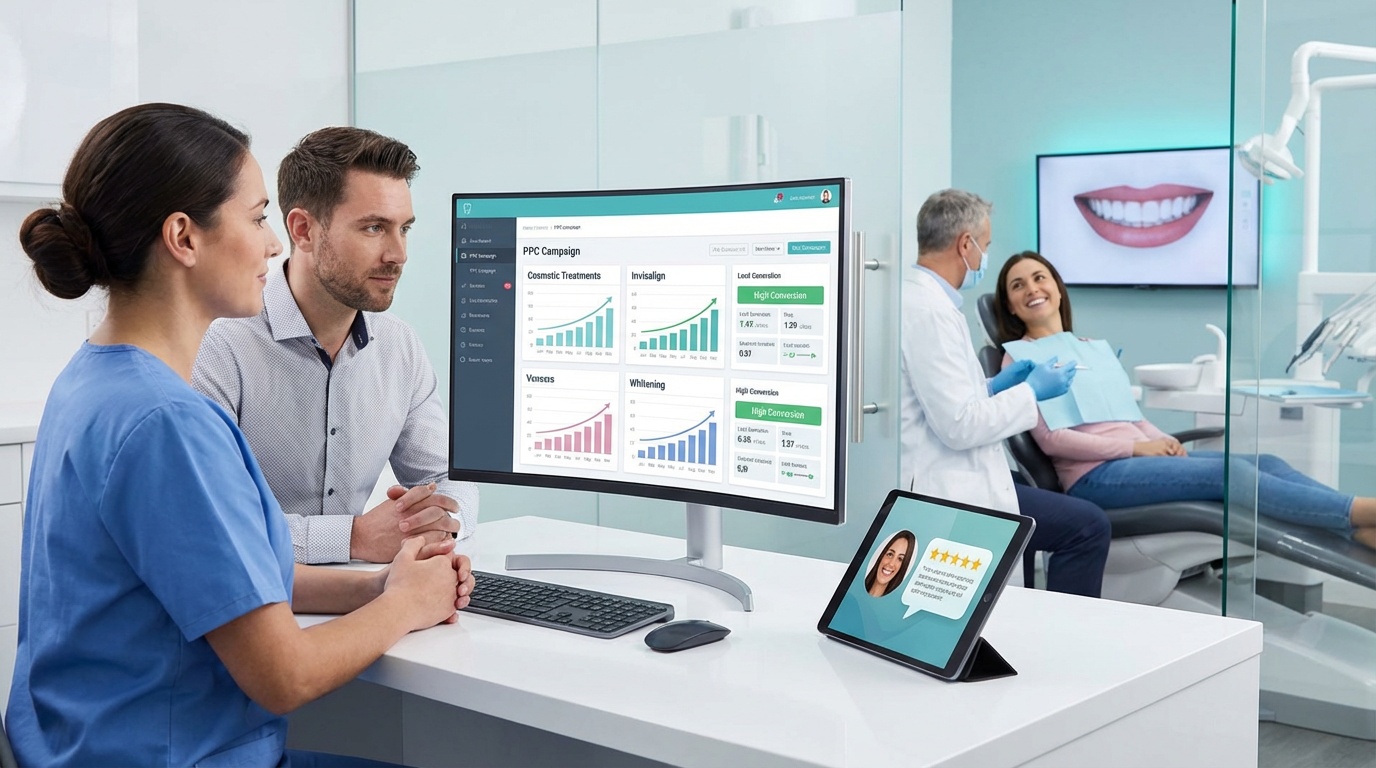
Create separate campaigns for each major service category: cosmetic treatments (Invisalign, veneers, whitening), restorative procedures (implants, crowns), and emergency care. This structure allows precise budget allocation based on profit margins and appointment availability. Your Invisalign campaign might receive £1,500 monthly whilst emergency dentistry gets £300, reflecting the revenue potential and strategic priorities of your practice.
Building Ad Groups With Tightly Themed Keywords
Within each campaign, organise ad groups around specific patient queries. Your implant campaign should contain separate ad groups for “single tooth implant”, “full mouth dental implants”, and “implant cost”. This granular approach ensures your ad copy directly addresses the searcher’s specific concern, improving Quality Score and reducing cost per click. Aim for 5–15 keywords per ad group, all sharing identical search intent.
Applying Negative Keywords to Stop Wasting Budget
Negative keywords prevent your ads appearing for unprofitable searches. Add terms like “NHS”, “free”, “cheap”, “DIY”, and “student” immediately. Review search term reports weekly to identify irrelevant queries triggering your ads. A practice in central London discovered they were spending £400 monthly on clicks from people searching “dental schools” and “dental assistant jobs”, neither of which generated appointments.
Setting Up Geo-Targeting With Radius Bidding
Configure location targeting based on realistic travel distances for different treatments. Emergency patients rarely travel beyond 5 miles, whilst implant patients often drive 15–20 miles for the right provider. Use radius bidding to increase bids by 30% for searchers within 3 miles of your practice, then decrease bids by 20% for those 10+ miles away. Exclude areas where you lack parking access or face severe competition.
| Campaign Structure | Best For | Budget Approach |
|---|---|---|
| Treatment-Specific | Practices offering multiple high-value services | Allocate by profit margin and capacity |
| Location-Based | Multi-site practices or competitive urban areas | Higher bids for primary catchment zones |
| Urgency-Driven | Practices with emergency appointment slots | Flexible daily budgets for immediate demand |
Keyword Strategy for High-Value Dental Treatments
Selecting Treatment-Specific Keywords
Focus your dental PPC campaign management on keywords that reflect specific treatment decisions rather than general dental queries. “Invisalign cost Birmingham” and “same day dental implants Manchester” attract patients researching particular procedures, whilst “dentist near me” captures everyone from routine check-up seekers to emergency cases. Target long-tail keywords containing treatment names, location modifiers, and commercial indicators like “cost”, “price”, “best”, or “private”. These typically convert at 8–12%, compared to 2–3% for generic dental terms.
Balancing Search Volume, Competition, and Conversion Intent
High-volume keywords like “dental implants” cost £15–25 per click in major cities but include many researchers months away from booking. Lower-volume phrases such as “full arch implant consultation London” cost £8–12 yet attract patients ready to schedule appointments. Allocate 70% of your budget to medium-volume, high-intent keywords that balance affordability with conversion potential. Reserve 20% for high-volume brand awareness terms and 10% for experimental long-tail variations.
Understanding the Three Keyword Categories
Treatment keywords target specific procedures: “porcelain veneers”, “clear aligners”, “tooth replacement options”. Emergency keywords capture urgent needs: “broken tooth repair”, “emergency dentist open now”, “severe toothache treatment”. Local keywords combine geography with intent: “private dentist Kensington”, “cosmetic dentistry Manchester city centre”. Each category requires different landing pages, ad copy, and bidding strategies. Emergency searches demand immediate response mechanisms, whilst treatment keywords need detailed service information and pricing transparency.
Why Keyword Research Differs for Cosmetic Versus Restorative Services
Cosmetic dentistry keywords reflect discretionary spending and aesthetic concerns. Patients search “smile makeover”, “teeth whitening results”, or “celebrity veneers”, indicating they are motivated by appearance and willing to invest in premium services. Restorative keywords signal functional problems: “replace missing tooth”, “broken crown repair”, “denture alternative”. Cosmetic campaigns should emphasise transformation and confidence, whilst restorative campaigns must address pain relief, durability, and long-term value. Adjust your bidding accordingly, as cosmetic procedures typically justify higher cost-per-acquisition due to superior profit margins.
Converting Clicks Into Appointments: Ad Copy and Landing Pages
Writing Ad Copy That Speaks to Patient Urgency and Treatment Benefits
Effective ad copy addresses the specific outcome patients seek rather than listing services. “Get Your Confidence Back With Invisalign” outperforms “Invisalign Treatment Available” because it speaks to the emotional benefit. Include your unique value proposition in every headline: “Same-Day Implant Consultations”, “0% Finance Available”, or “Specialist Orthodontist With 15 Years of Experience”. Use the description lines to address common objections about pain, cost, or time commitment.
Crafting Clear Calls-to-Action That Drive Bookings
Replace weak CTAs like “Learn More” or “Contact Us” with specific action-oriented phrases: “Book Your Free Consultation”, “Check Your Eligibility for 0% Finance”, or “See Available Appointments This Week”. Add urgency only when genuine: “Limited Slots for February” or “New Patient Offer Ends Soon”. Test different CTA variations weekly, as small changes can improve conversion rates by 20–30%. The best-performing CTAs typically promise a low-commitment first step rather than demanding immediate treatment decisions.
Optimising Landing Pages for Conversion
Your landing page must deliver on the promise made in your ad. If your ad mentions “Invisalign from £2,800”, that price must appear prominently on the landing page within the first screen. Remove navigation menus that allow visitors to browse away, keeping focus on a single conversion goal: booking a consultation. Include a contact form above the fold, display your phone number in large text, and add a booking calendar widget if possible. Pages with video testimonials convert 35% better than those with text alone.
Using Patient Testimonials and Social Proof in Ads
Google Ads allows seller ratings extensions when you have sufficient reviews. Dominate Dental maintains a 5.0 rating based on 18 reviews, which appears automatically beneath ads and can increase click-through rates by 10–15%. Incorporate specific patient outcomes in your ad copy: “Join 200+ Patients Who Have Transformed Their Smile” or “Rated 5 Stars by Local Patients”. Reference your location at Grosvenor House, 11 St Paul’s Square, Birmingham to build local trust and improve relevance scores for Birmingham-area searches.
Measuring Success: Tracking ROI and Continuous Optimisation
Setting Up Conversion Tracking for Appointment Bookings
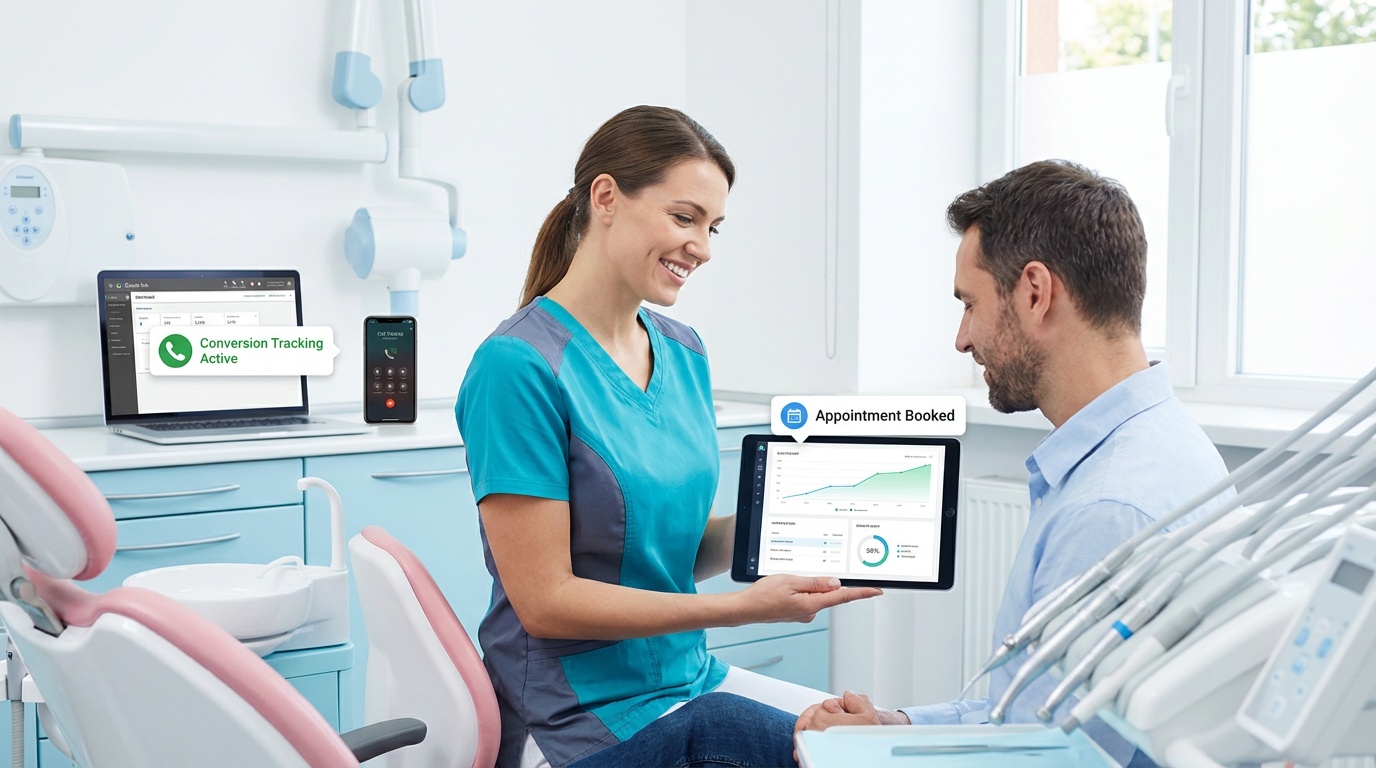
Install Google Ads conversion tracking on your thank-you page and use call tracking for phone enquiries. Assign different values to different conversion types: a completed contact form might be worth £150 (based on historical consultation-to-treatment rates), whilst a phone call exceeding three minutes could be worth £200. This allows Google’s algorithm to optimise towards your most valuable actions rather than simply maximising clicks.
Analysing Performance by Treatment Type and Keyword
Review campaign performance monthly to identify which treatments generate positive ROI. Your implant campaign might deliver £8 return for every £1 spent, whilst general dentistry barely breaks even. Reallocate budget accordingly, scaling successful campaigns and pausing underperformers. Examine search term reports to find unexpected high-converting keywords, then create dedicated ad groups around them. One practice discovered “teeth in a day” converted at 18%, triple their average, prompting a standalone campaign.
A/B Testing Ad Variations and Landing Page Elements
Test one variable at a time: headline variations this week, description copy next week, then landing page headlines. Run tests until you achieve statistical significance, typically requiring 100+ clicks per variation. Small improvements compound dramatically. Increasing your click-through rate from 4% to 5% whilst improving landing page conversion from 8% to 10% yields 56% more consultations from identical ad spend.
When to Scale, Pause, or Pivot Your Campaigns
Scale campaigns that consistently deliver cost-per-acquisition below your target threshold, typically when patient lifetime value exceeds acquisition cost by 3:1 or more. Pause campaigns that fail to generate conversions after 50 clicks or £500 of spend. Pivot campaigns showing high engagement but low conversions by testing new landing pages or adjusting keyword match types. Successful dental PPC campaign management requires monthly strategic reviews, not daily reactive adjustments.
Advanced Bidding Strategies That Maximise Treatment Value
Choosing Between Manual and Automated Bidding
Manual CPC bidding gives you complete control over maximum cost per click, ideal when launching campaigns or working with limited budgets under £1,000 monthly. You set precise bids for each keyword based on its conversion value. Automated strategies like Target CPA or Maximise Conversions work better once you have accumulated 30+ conversions monthly, allowing Google’s algorithm to optimise bids in real time. Practices spending £3,000+ monthly typically achieve 25–40% better ROI with automated bidding after the initial learning period.
Implementing Dayparting for Appointment Availability
Adjust bids based on when your practice can answer phones and book appointments. Increase bids by 50% during reception hours (typically 9am–5pm weekdays) when someone can schedule consultations immediately. Reduce bids by 30–50% during evenings and weekends unless you offer online booking. One Birmingham practice discovered their highest-value implant enquiries occurred Tuesday–Thursday mornings, prompting them to concentrate 60% of their weekly budget into those specific windows.
Using Audience Targeting to Reach Previous Visitors
Create remarketing lists for people who visited your pricing pages but did not book. These warm audiences convert at 15–20%, triple the rate of cold traffic. Show them ads with special offers or patient testimonials to address remaining objections. Build similar audiences based on your converters, allowing Google to find prospects matching your best patients’ demographic and behavioural patterns. Exclude existing patients from your campaigns to avoid wasting budget on people already in your system.
Adjusting Bids Based on Device and Location Performance
Mobile searchers often have higher intent for emergency services but lower conversion rates for cosmetic treatments requiring family discussion. Analyse device performance monthly: if mobile converts at 6% whilst desktop achieves 12% for Invisalign, reduce mobile bids by 30%. Similarly, examine location reports to identify postcodes generating quality enquiries. Increase bids by 40–60% for areas within 3 miles of your practice whilst decreasing them for regions producing high bounce rates or low-value enquiries.
Budget Allocation and ROI Planning for Sustainable Growth
Calculating Your Maximum Cost Per Acquisition
Determine how much you can afford to spend acquiring each patient by calculating treatment lifetime value. If your average implant patient spends £4,500 initially and returns for £800 in maintenance over five years, your total value is £5,300. With a 40% profit margin, you generate £2,120 profit per patient. Spending up to £700 to acquire that patient (33% of profit) maintains healthy margins whilst allowing aggressive growth. Apply this formula to each treatment category separately, as emergency patients rarely match the lifetime value of cosmetic dentistry clients.
Phasing Budget Investment as Campaigns Mature
Start with £1,500–2,000 monthly for 90 days whilst gathering conversion data and refining targeting. This discovery phase identifies which treatments, keywords, and ad variations perform best. From month four onwards, increase budget by 25–50% for proven campaigns whilst pausing underperformers. Mature dental PPC campaign management typically requires £3,000–5,000 monthly for single-location practices in competitive markets, scaling to £8,000+ for multi-site operations or practices focusing exclusively on high-value cosmetic treatments.
Balancing PPC Investment With Other Marketing Channels
Allocate marketing budget based on patient acquisition speed and capacity constraints. PPC delivers immediate results but stops generating leads the moment you pause spending. SEO takes 6–12 months to build momentum but provides compounding returns. A balanced approach dedicates 40% to PPC for immediate demand capture, 35% to SEO for long-term sustainability, 15% to reputation management and patient retention, and 10% to testing new channels. Adjust ratios based on your practice growth stage and competitive position. Consider enhancing your efforts with our comprehensive Dental SEO Services to complement your PPC campaigns.
Planning for Seasonal Fluctuations in Dental Demand
Cosmetic dentistry enquiries spike in January (New Year resolutions) and April–May (wedding season). Emergency searches increase during December holidays when regular dentists close. Scale your PPC budget by 30–50% during peak months to capture increased demand, then reduce spending during traditional slow periods like August. Some practices shift budget entirely to remarketing during summer months, staying visible to previous visitors whilst minimising spend on expensive cold traffic.
Budget Optimisation Framework
Review spend allocation weekly for the first month, then fortnightly once campaigns stabilise. Identify campaigns delivering cost per acquisition below your target threshold and increase their daily budgets by 20%. Pause any campaign that fails to generate a conversion after spending three times your target CPA. Reallocate saved budget to top performers. This continuous refinement typically improves overall campaign ROI by 40–60% within six months compared to static budget allocation.
Your 90-Day Implementation Roadmap

Month One: Foundation and Data Collection
Launch with three core campaigns covering your highest-value treatments. Install conversion tracking, set conservative daily budgets, and focus on gathering performance data rather than immediate ROI. Add negative keywords daily based on search term reports. Expect cost per acquisition to run 50–100% above target during this learning phase. Your primary goal is identifying which keywords and ad variations generate genuine consultation bookings rather than tyre-kickers.
Month Two: Refinement and Expansion
Analyse month-one data to identify top-performing keywords, then build dedicated ad groups around them with tightly matched ad copy. Pause underperforming keywords consuming budget without conversions. Test three ad copy variations per campaign, changing only headlines whilst keeping descriptions constant. Implement remarketing campaigns targeting previous website visitors. Most practices see cost per acquisition drop 30–40% during month two as targeting becomes more precise.
Month Three: Optimisation and Scaling
Double budgets for campaigns consistently delivering profitable acquisitions. Launch additional campaigns for secondary treatments if primary campaigns show strong performance. Implement advanced bidding strategies if you have accumulated sufficient conversion data. Test landing page variations to improve conversion rates. By month three, successful dental PPC campaign management should deliver predictable cost per acquisition within 15% of your target, allowing confident budget scaling.
Ongoing: Continuous Improvement and Market Adaptation
Dedicate two hours monthly to strategic review: analysing competitor auction insights, testing new keyword opportunities, and refining audience targeting. Update ad copy quarterly to reflect seasonal promotions or new services. Audit landing pages every six months to ensure messaging aligns with current patient concerns and treatment options. The practices achieving sustained PPC success treat it as an evolving system requiring regular attention rather than a one-time setup.
Building Sustainable Patient Acquisition Through Strategic PPC Management
Successful dental PPC campaign management transforms paid advertising from an expense into a predictable patient acquisition system. By structuring campaigns around specific treatments, targeting high-intent keywords, and continuously refining based on conversion data, UK dental practices generate consistent flows of qualified consultation bookings. The difference between profitable and wasteful PPC lies not in budget size but in strategic execution: precise targeting, compelling messaging, and relentless optimisation.
Start with focused campaigns for your highest-value treatments, establish solid tracking, and commit to 90 days of data-driven refinement. Scale investment only after proving ROI on initial spend. Practices winning with PPC do not simply buy more clicks; they systematically improve every element of their campaigns until each pound spent returns three or more in treatment revenue. This disciplined approach builds sustainable growth whilst competitors waste budgets on irrelevant traffic and generic messaging.
For practices seeking expert guidance in implementing these strategies, Dominate Dental specialises in generating qualified consultations for UK dental practices through strategic PPC management. Located at Grosvenor House, 11 St Paul’s Square, Birmingham B3 1RB, our team combines technical expertise with deep understanding of dental patient acquisition. With a 5.0 rating based on 18 reviews, we help practices transform advertising spend into measurable treatment bookings. Visit our location via Google Maps or schedule a New Patient Opportunities Call to discuss your practice growth objectives.
Dental practitioners interested in regulatory standards can find comprehensive information on the General Dental Council, which oversees professional conduct and safety in the UK.
Additional Resources
Understanding available options for dental treatments under the NHS can help inform your PPC targeting strategy. For patients seeking NHS care, NHS dental services provide useful guidance on eligibility and treatment coverage.
Because pay-per-click advertising strategies are central to this guide, practitioners interested in the methodology behind PPC can refer to the detailed Pay-per-click entry on Wikipedia for a comprehensive overview of the topic.
Frequently Asked Questions
How does dental PPC campaign management provide immediate results for UK practices?
Dental PPC delivers instant visibility for high-value treatments, placing your practice at the top of search results quickly. This allows you to capture patients actively searching for solutions like implants or Invisalign, who are ready to book consultations within days. It’s a direct route to connecting with patients at their decision point.
What kind of patient searches indicate strong commercial intent for dental treatments?
Searches like “dental implants near me” or “Invisalign cost Manchester” signal strong purchase intent. These patients have often decided on treatment and are comparing providers. Dental PPC connects your practice with these high-value patients, whose average treatment value often exceeds £3,000.
Why do many dental practices struggle to get good results from Google Ads?
Most practices waste a significant portion of their PPC budget on irrelevant clicks, failing to understand search intent. Treating Google Ads as a “set and forget” channel leads to attracting price shoppers or patients outside the service area. Success requires continuous refinement, adding negative keywords, and adjusting bids based on conversion data.
How important are negative keywords in a dental PPC campaign?
Negative keywords are essential for preventing your ads from appearing for unprofitable searches. Adding terms like “NHS,” “free,” or “cheap” immediately stops wasted spend. Regularly reviewing search term reports helps identify and exclude irrelevant queries, ensuring your budget targets genuinely interested patients.
How can geo-targeting improve the effectiveness of a dental PPC campaign?
Geo-targeting allows you to configure location targeting based on realistic travel distances for different treatments. You can use radius bidding to increase bids for searchers closer to your practice, while decreasing bids for those further away. This ensures your ads reach patients within your viable service area, maximizing appointment bookings.
What is the best way to organize a dental PPC campaign for maximum impact?
For maximum impact, organize campaigns by treatment type, such as cosmetic or restorative procedures. Within each campaign, create ad groups around specific patient queries, like “single tooth implant” versus “full mouth dental implants.” This granular structure ensures ad copy directly addresses the searcher’s specific concern, improving Quality Score.
How does PPC complement a dental practice's overall patient acquisition strategy?
PPC advertising captures immediate demand while your SEO strategy matures, providing instant market entry for new services or competitive areas. Its true power emerges when aligned with practice capacity, allowing you to scale spend during periods with appointment availability. This creates a balanced and effective patient acquisition funnel.
Leave a Reply