best dental marketing strategies 2025
The dental marketing playbook has fundamentally changed. With 71% of prospective patients searching online before booking, and the NHS providing 40% less coverage than a decade ago, private dental practices face unprecedented opportunity paired with fierce competition. The practices thriving in 2025 aren’t simply spending more on marketing; they’re deploying the best dental marketing strategies 2025 with surgical precision, targeting high-value treatments through channels that deliver measurable returns.
The best dental marketing strategies 2025 prioritise local SEO dominance, treatment-specific paid advertising (Google Ads and Meta), and content that positions dentists as trusted authorities. Top-performing UK practices allocate 60% of budgets to digital channels, achieving a £3–5 return for every £1 spent by focusing on high-intent patients seeking Invisalign, implants, and cosmetic treatments.
The Dental Marketing Environment in 2025: Why Your Strategy Matters Now
How patient behaviour has shifted online
Modern dental patients research extensively before committing. Data shows 48% spend two or more weeks evaluating options, comparing reviews, treatment costs, and practitioner credentials. They’re reading blog content, watching procedure videos, and scrutinising Google Business Profiles. Practices without a strong digital presence lose these patients before conversations begin.
The NHS decline and private practice opportunity
The UK private dental market now exceeds £7.7 billion annually, driven by NHS service reductions and growing demand for cosmetic procedures. Patients increasingly accept that quality dental care requires private investment. This shift creates exceptional opportunities for practices positioned to capture patients seeking Invisalign, implants, and aesthetic treatments where margins justify marketing spend.
What top-performing practices are doing differently
Leading practices treat marketing as patient acquisition science, not an expense. They track cost-per-acquisition by treatment type, optimise conversion pathways, and maintain consistent multi-channel presence. Most importantly, they recognise that attracting a £5,000 implant patient requires a different strategy than filling emergency appointments.
Digital-First Patient Acquisition: Where to Invest Your Marketing Budget
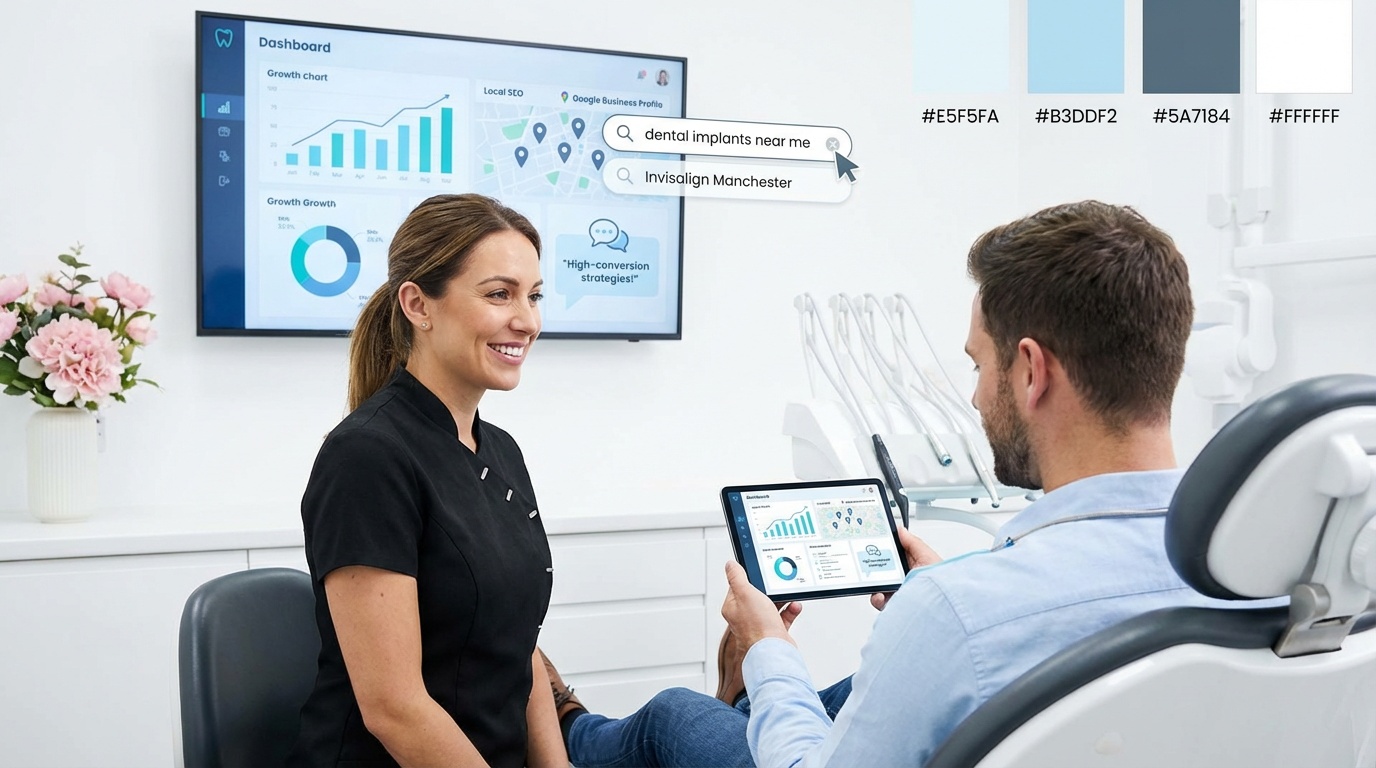
Local SEO and Google Business Profile optimisation
When patients search “dental implants near me” or “Invisalign Manchester,” your Google Business Profile determines visibility. Optimised profiles with consistent NAP data, regular posts, review responses, and treatment-specific photos can generate 3–5 qualified enquiries weekly without ongoing ad spend. Local SEO builds compounding returns, with practices ranking in the map pack capturing 44% of clicks.
Google Ads and PPC for high-intent patient capture
Search advertising captures patients actively seeking treatment. Campaigns targeting “emergency dentist London” or “dental implants Birmingham” convert at 8–12% when paired with optimised landing pages. Cost-per-click ranges from £3–8 for general terms, and £8–15 for high-value treatments. A well-managed £2,000 monthly Google Ads budget typically generates 15–25 consultation bookings for private treatments.
Meta advertising (Facebook and Instagram) for awareness and retargeting
Meta platforms excel at building awareness and nurturing consideration. Target audiences by demographics, interests, and behaviours to reach cosmetic-conscious patients. Retargeting website visitors who didn’t book can increase conversion rates by 40%. Meta advertising costs less per impression but requires longer nurture cycles, making it ideal for treatments with extended decision timelines like orthodontics.
Budget allocation framework: achieving 150% ROI
Allocate 40% to Google Ads for immediate conversions, 30% to SEO for sustainable growth, 20% to Meta for awareness, and 10% to testing emerging channels. Track cost-per-acquisition by treatment: emergency appointments should cost under £50, cosmetic consultations £100–150, and implant consultations £150–250. Practices following this framework often achieve 150–200% ROI within six months.
Treatment-Specific Marketing: Converting High-Value Patients
Generic “we’re a great dental practice” messaging fails because different treatments attract different patient psychology. The best dental marketing strategies 2025 segment campaigns by treatment type, creating tailored messaging and conversion pathways.
Invisalign: Invisalign patients prioritise aesthetics and discretion. Target 25–45-year-olds through Instagram with before-and-after content, emphasising lifestyle benefits. Keywords like “invisible braces London” and “clear aligners cost” capture high-intent searchers. Landing pages should showcase results and offer virtual consultations to reduce booking friction. Learn about our Invisalign Marketing Services designed specifically to grow your Invisalign patient base.
Implants: Dental implant marketing requires trust-building and education. Target older demographics (45–65) through Facebook and Google Search. Content addressing “dental implant procedure”, “implant vs denture”, and “implant cost UK” positions your practice as an expert guide. Video testimonials and detailed procedure explanations can convert sceptical prospects into booked consultations.
Emergency: Emergency dental services demand immediate visibility. Bid aggressively on “emergency dentist [location]” and ensure your phone number displays prominently in ads. Same-day appointment availability and extended-hours messaging convert urgent searchers. These patients often become long-term private patients when the initial service impresses.
Each treatment needs dedicated landing pages with treatment-specific calls-to-action, relevant keywords, and conversion-focused design. Practices running segmented campaigns see 60% higher conversion rates than those using a single generic funnel.
Beyond Paid Ads: Content, Personal Branding, and Long-Term Patient Generation
Content marketing and SEO strategy for organic patient discovery
Consistent publishing of treatment-focused content builds authority and captures patients throughout their research journey. Blog articles answering “how much do dental implants cost UK” or “Invisalign vs traditional braces” can rank for long-tail searches, generating qualified traffic months after publication. Practices publishing twice monthly often see organic traffic grow 40–60% year-on-year, with content-driven enquiries converting at higher rates because patients arrive better informed and already trusting your expertise. Check out our comprehensive dental marketing blog for ideas to elevate your content strategy.
Dentist as thought leader: personal branding vs clinic branding
Patients choose dentists, not buildings. Principal dentists building personal brands through LinkedIn articles, Instagram educational content, and video explanations create trust that clinic branding alone rarely matches. When a clinician shares their implant placement philosophy or posts patient transformation stories (with consent), they become the expert patients request. This equity can carry into additional locations or a future transition, making it a major long-term asset.
Social media management and community building
Effective dental social media marketing prioritises education over promotion. Share procedure explanations, oral health tips, team introductions, and patient success stories. Instagram and Facebook algorithms reward consistency with stronger organic reach. Practices posting 3–4 times weekly can build engaged communities where patients tag friends, share content, and provide authentic testimonials that influence prospective patients more than paid advertising alone. Consider our Social Media Management Packages for Dental Practices to maintain a consistent and effective presence.
Patient retention through loyalty and referral programmes
Acquiring new patients costs 5–7 times more than retaining existing ones. Implement referral incentives that offer treatment credits or discounts when patients recommend friends or family. Email newsletters that keep in touch between appointments help your practice stay top of mind when patients need additional treatments or when someone they know asks for a recommendation. A structured retention programme can increase patient lifetime value by 35–50%, improving overall marketing ROI. Additionally, the dental professionals community plays a vital role in enhancing these efforts.
Building Your 2025 Dental Marketing Action Plan: From Strategy to Results

Audit your current marketing: where are the gaps?
Start by assessing what’s working and what’s not. Review Google Analytics to identify traffic sources, conversion rates by channel, and cost-per-acquisition. Check your Google Business Profile rankings for key treatment searches. Analyse competitor visibility for terms you should be winning. Most practices discover they’re overspending on underperforming channels while neglecting higher-return opportunities. This audit shows where to reallocate budget for fast impact. Book a free social media report to benchmark your current online presence and identify quick wins.
Multi-channel integration roadmap for your practice
Successful dental marketing needs a coordinated multi-channel presence. Month one: optimise your Google Business Profile and launch Google Ads for your highest-value treatment. Month two: build treatment-specific landing pages and begin SEO content publishing. Month three: add Meta retargeting to nurture website visitors. Month four: implement email nurture sequences and referral programmes. This phased approach reduces overwhelm while building momentum, with channels reinforcing each other over time. The Dentistry in the United Kingdom landscape continues to evolve, making this roadmap essential for modern practice growth.
Quick wins vs long-term investments
Balance immediate results with sustainable growth. Quick wins include Google Ads for emergency services, Google Business Profile optimisation, and requesting reviews from satisfied patients. These can generate enquiries within days. Long-term investments like SEO content, personal brand building, and community engagement often take 3–6 months before meaningful returns, but they can deliver lower cost-per-acquisition and higher patient quality. The best dental marketing strategies 2025 combine both approaches, using paid advertising to support organic growth.
Measuring success: KPIs that matter
Track metrics that link to revenue: new patient volume by treatment type, cost-per-acquisition by channel, consultation-to-treatment conversion rate, and overall marketing ROI. Monitor website conversion rate, Google Business Profile views and actions, and organic rankings for priority keywords. Practices reviewing these monthly can keep improving performance; practices that don’t measure waste budget on ineffective tactics. For deeper industry insights, visit dental practices industry report.
Ready to transform your patient acquisition?
Dominate Dental specialises in implementing these exact strategies for UK dental practices, combining AI-powered targeting with expert campaign management. Our clients average 150% ROI within six months, generating 50+ qualified consultations monthly for high-value treatments. Book your free marketing audit to see where your practice is missing opportunities and get a customised growth roadmap designed around your treatment mix and local market.
Choosing the Right Dental Marketing Partner: What Separates Excellence from Mediocrity
Many dental practices try marketing internally or hire generalist agencies without dental-specific experience. This often underperforms because dental patient acquisition needs an understanding of treatment economics, patient psychology, and advertising compliance that many general marketers don’t have.
Specialist dental marketing agencies understand that an Invisalign campaign needs different targeting, messaging, and conversion optimisation than emergency dental advertising. They know which keywords tend to convert, what landing page elements drive bookings, and how to structure campaigns in line with GDC advertising guidance while maximising response.
When evaluating potential partners, review case studies with specific metrics. Vague promises of “increased visibility” aren’t enough. Ask for evidence of lower cost-per-acquisition, higher consultation volume, and documented ROI for practices similar to yours. The best dental marketing strategies 2025 are delivered by teams that report clearly, showing which channels drive which results.
Look for partners offering integrated services rather than single-channel delivery. Google Ads performance improves when supported by strong SEO and conversion-focused landing pages. Meta advertising performs better when retargeting visitors from relevant treatment pages. Splitting work across multiple vendors can create inconsistent messaging and tracking gaps that waste budget.
Dominate Dental combines AI-powered audience targeting with dental marketing expertise, delivering what practices need: qualified consultations for high-value treatments. Our clients don’t pay for vanity metrics like impressions or clicks. They invest in measurable patient acquisition, with transparent reporting showing cost-per-consultation and treatment conversion rates tied to practice revenue.
The technology and human expertise combination
Effective dental marketing in 2025 requires both technology and human insight. AI tools can identify high-intent audiences, optimise bid strategies, and adapt messaging at scale. Yet technology alone can’t write persuasive treatment explanations, address patient concerns with the right tone, or make strategic decisions about where to allocate budget.
The most successful practices work with teams that blend both. Automated systems handle repetitive optimisation tasks, freeing human experts to focus on strategy, creative, and patient-first messaging. This approach improves efficiency without losing the personal touch that converts cautious prospects into booked consultations.
Future Dental Marketing Trends: 2025 and Beyond
AI-powered personalisation in patient journeys
Artificial intelligence now supports highly personalised marketing at the individual level. Systems can analyse browsing behaviour, demographic data, and engagement patterns to serve content that addresses specific concerns. A 35-year-old researching Invisalign will see different messaging than a 60-year-old exploring implants, even on the same website. This level of personalisation can lift conversion rates by 35–50% compared to generic messaging.
Chatbots powered by natural language processing can answer common questions instantly, qualify leads, and support booking without staff involvement. These systems work 24/7, capturing patients researching outside business hours. Many solutions now deliver more natural conversations, reducing the “robotic” feel that used to put patients off.
Video content dominance in patient education
Video consumption continues to grow, with many patients preferring video explanations over written content. Practices producing regular videos explaining procedures, introducing team members, and showcasing results can build trust faster than text alone. YouTube also functions as a search engine for dental queries, and well-optimised videos can appear in Google results.
Short-form video on Instagram Reels and TikTok can reach younger demographics who may stay with your practice for decades. Dentists comfortable on camera can build stronger personal brands and attract patients who seek out their approach. A modest, consistent content plan often beats occasional high-production posts.
Voice search optimisation for local queries
Voice searches via smartphones and smart speakers increasingly drive dental enquiries. These queries use conversational language like “find a dentist near me that does Invisalign” rather than typed keywords. Optimising for voice search often means building question-and-answer content and strengthening local SEO signals.
Google Business Profile accuracy matters even more because voice assistants frequently pull details directly from listings. Practices with complete, accurate profiles and strong review signals are more likely to appear in voice-led results, while incomplete profiles miss out.
Reputation management and systematic review generation
Online reviews influence 93% of dental patients’ decisions. Practices that consistently request reviews from satisfied patients build an advantage that paid ads can’t replicate. High star ratings with detailed testimonials can convert website visitors at much higher rates than practices with few reviews or mixed feedback.
Automated review request systems can send personalised messages after successful treatments, making review generation more consistent. Responding professionally to all reviews, including negative ones, shows commitment to patient care and can reduce drop-off among prospects comparing multiple practices.
Final Recommendations: Implementing Your Winning Strategy

The practices thriving in 2025 share common traits. They treat marketing as patient acquisition science, measure performance, and keep improving. They match strategy to treatment type, segmenting campaigns rather than using one generic message. They pair paid acquisition with long-term growth via SEO, content, and reputation.
Start with actions that can generate results quickly while supporting longer-term plans: optimise your Google Business Profile, launch targeted Google Ads for your highest-value treatment, and implement a consistent review request process. These steps are practical, measurable, and can produce enquiries within days.
At the same time, commit to sustainable growth: publish educational content consistently, build your clinicians’ personal brands through social platforms, and develop treatment-specific landing pages. These activities usually take months to mature, but they can lower cost-per-acquisition and improve lead quality.
Effective dental marketing also requires specialised expertise. The best dental marketing strategies 2025 aren’t mysteries; they come down to disciplined execution. Practices trying to do everything in-house often spread time and attention too thin. Practices working with specialists can focus on clinical delivery while patient acquisition is managed with clear targets and reporting.
Dominate Dental exists to bridge this gap, providing UK dental practices with marketing expertise and technology that generates qualified consultations for Invisalign, implants, and cosmetic treatments. Our integrated approach combines faster wins with sustained growth, aiming for 150%+ ROI that improves practice economics. Book your complimentary marketing audit to identify opportunities in your local area and get a customised roadmap showing how to apply these strategies for maximum impact.
Leave a Reply