Key Takeaways
- Most UK adults are not eligible for free dental implants on the NHS.
- NHS funding for dental implants is reserved for exceptional medical cases only.
- Routine tooth loss or cosmetic reasons do not qualify for NHS implant funding.
- Understanding the strict NHS criteria can help avoid false hope.
- Knowing the application process may assist those who genuinely qualify in accessing funding.
Table of Contents
- Fast Answer – When Can You Get Free Dental Implants on the NHS?
- Understanding Dental Implants and How NHS Funding Really Works
- Who Gets Free NHS Dental Treatment – And What That Means for Implants
- Clinical Criteria: When Will the NHS Fund Dental Implants?
- Step-by-Step: How to Get Assessed for NHS-Funded Dental Implants
- Improving Your Eligibility: Practical Steps You Can Take in the Next 3–6 Months
- Alternatives to Implants on the NHS – What You Can Realistically Get
- NHS vs Private Implants: Costs, Waiting Times, and Outcomes
How to Get Free Dental Implants on the NHS? (UK Guide From a Dental Marketing & Patient Acquisition Expert)
The harsh reality is that most UK adults cannot get free dental implants on the NHS, even with low income or benefits. NHS implant funding is reserved for exceptional medical cases—not routine tooth loss or cosmetic preferences. Understanding the strict criteria and application process could save you months of false hope or help you access legitimate funding if you truly qualify.
If you’re a dental practice looking to reach more patients who are searching for information on NHS dental implants or private alternatives, investing in SEO for dentists can help your website appear higher in search results for these competitive queries.
Additionally, having a robust dental marketing plan ensures you communicate clearly about NHS and private options, helping patients understand their choices and improving your practice’s reputation as a trusted source of information.
Fast Answer – When Can You Get Free Dental Implants on the NHS?
The One-Sentence Reality Check
NHS dental implants are funded only in exceptional, strictly defined medical cases where conventional dentures or bridges cannot provide adequate function—not for cosmetic improvements or routine tooth replacement. Even patients on benefits or low incomes must first meet these rigid clinical criteria before any financial assistance applies.
Situations Where the NHS May Pay for Implants
- Major facial or jaw trauma from road traffic accidents or serious injuries affecting multiple teeth and bone structure
- Cancer treatment consequences where mouth/jaw surgery or radiotherapy caused significant tooth and tissue loss
- Severe congenital conditions including multiple congenitally missing teeth or cleft-related developmental issues
- Documented denture intolerance after genuine attempts, due to anatomical or neuromuscular problems
Quick Self-Check: 3 Questions to Ask Yourself
Critical Assessment:
- “Was my tooth loss caused by trauma, cancer treatment, or a birth condition?”
- “Have I tried dentures or bridges and genuinely cannot tolerate them due to medical reasons?”
- “Is my general health stable with good oral hygiene and no smoking?”
If you answer “no” to all three, implants are almost certainly private only.
Understanding Dental Implants and How NHS Funding Really Works
What a Dental Implant Actually Is (In Plain English)
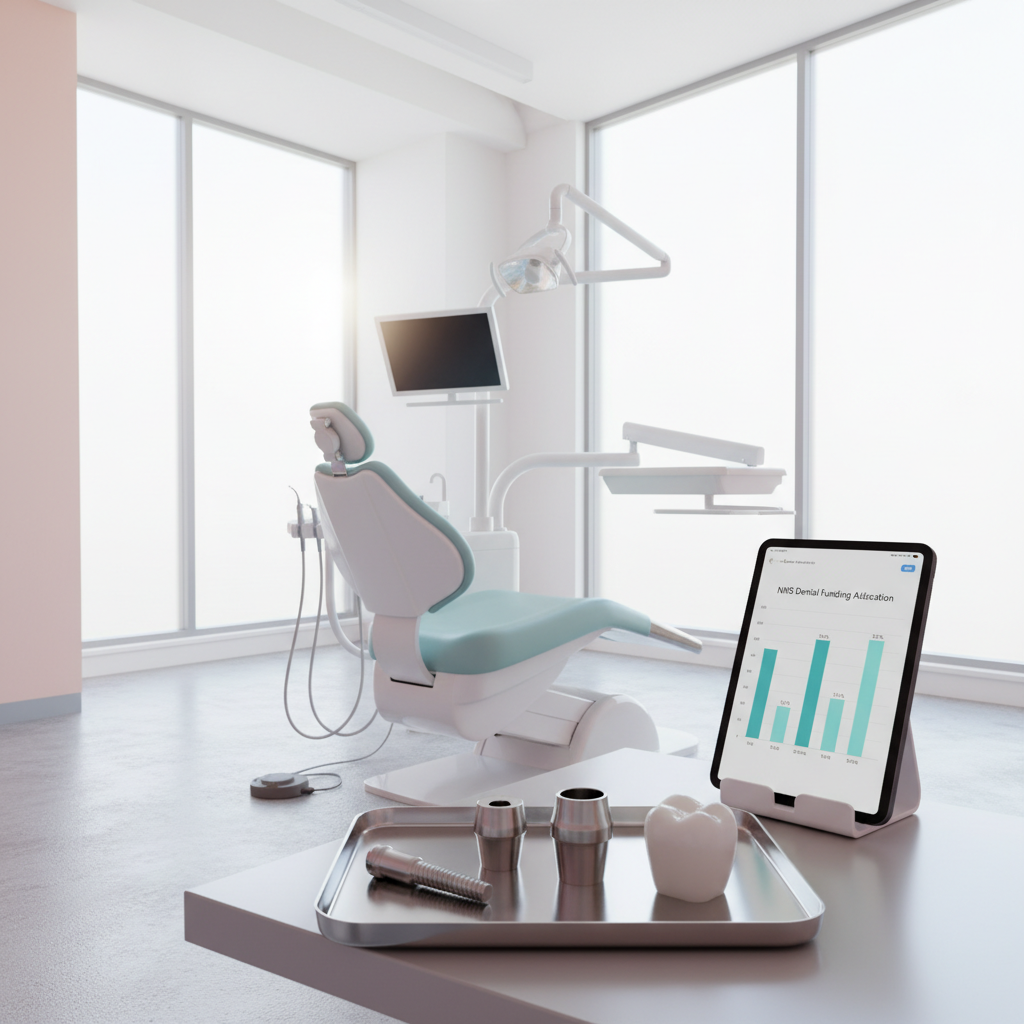
A dental implant consists of a titanium screw surgically placed into the jawbone, an abutment connector, and a crown restoration. The complete process typically spans 3-6 months: initial surgery, healing period for bone integration, then final restoration attachment.
Why Implants Are Not Routine NHS Dentistry
Implants are classified as complex, high-cost, elective procedures compared to standard dentures or bridges. The NHS prioritises treatments that address health needs rather than premium solutions, making implants available only when conventional alternatives fail to restore basic function.
For more insights on how dental practices can educate patients about treatment options and attract more qualified leads, explore these dental marketing ideas that can help you stand out in a competitive market.
Medically Necessary vs Cosmetic in NHS Language
NHS defines medical necessity as restoring essential functions: eating, speaking clearly, or correcting severe facial defects affecting quality of life. Cosmetic motivations—wanting fixed teeth for convenience or improved appearance when functional dentures are possible—do not qualify for funding.
Which NHS Band Do Implants Sit In When Funded?
Approved NHS implants fall under Band 3 treatment in England and Wales, currently costing approximately £280-£320 per treatment course. However, even NHS-funded implants are not completely “free” unless you qualify for dental charge exemptions through benefits, age, or medical circumstances.
Who Gets Free NHS Dental Treatment – And What That Means for Implants
Standard NHS Dental Charge Exemptions
Free NHS dental treatment applies to: under-18s, under-19s in full-time education, pregnant women and new mothers (up to 12 months post-birth), and benefit recipients including Income Support, income-based JSA, income-related ESA, Pension Credit Guarantee, and qualifying Universal Credit cases. War pension recipients for accepted disabilities also qualify.
Proving You Get Free Treatment (HC2, Exemption Cards, Evidence)
Patients must present HC2 certificates (full help) or HC3 certificates (partial help) obtained through the NHS Low Income Scheme, along with current benefit documentation. These certificates must be valid and presented at each appointment to avoid charges.
Important Distinction – Free Treatment vs Eligibility for Implants
Qualifying for free NHS dental care does not automatically qualify you for implants. You must first meet strict clinical criteria for implant necessity, and only then will patient charges be waived if you hold valid exemption documentation. The clinical hurdle remains identical regardless of your financial status.
Example Scenarios
- 35-year-old on Universal Credit with routine tooth loss from decay → likely no implants on NHS, but may get dentures/bridges free or reduced cost
- 22-year-old with congenital absence of several front teeth + HC2 certificate → high chance of hospital referral and, if approved, no patient charge
- Cancer survivor with documented jaw reconstruction needs → strong case for NHS funding with exemption certificate covering all charges
Clinical Criteria: When Will the NHS Fund Dental Implants?
Royal College & Hospital-Level Guidance – The Big Picture
Most Integrated Care Boards (ICBs) and hospital trusts follow Royal College of Surgeons and specialist society guidance, reserving implants for “exceptional need” cases where conventional dentures or bridges cannot provide adequate function. Each ICB interprets these guidelines differently, creating regional variation in funding decisions.
For the official clinical guidelines, you can review the Royal College of Surgeons and specialist society guidance directly.
Conditions That Commonly Qualify
- Post-cancer reconstruction following surgical removal of jaw/facial structures or radiotherapy damage to oral tissues
- Major trauma cases involving multiple tooth loss with significant bone and soft tissue damage from accidents
- Congenital or developmental anomalies including hypodontia (multiple congenitally missing teeth) and cleft lip/palate-related tooth loss
- Severe anatomical limitations making denture wear impossible due to ridge resorption or neuromuscular disorders
What “Congenitally Missing Teeth” Means in Practice
Congenitally missing teeth are those that never developed from birth, confirmed through clinical examination and radiographic evidence. This condition commonly affects upper lateral incisors or involves multiple teeth, typically managed by hospital-based orthodontic and restorative teams working together for comprehensive treatment planning.
Situations That Rarely or Never Qualify
Routine decay, gum disease, or broken teeth where dentures or bridges remain viable options will not qualify for NHS implant funding. Patients seeking improved aesthetics, convenience, or single tooth replacement without significant functional impairment face almost certain rejection. The key question remains whether conventional alternatives can restore basic eating and speaking functions.
General Health & Oral Health Requirements
Candidates must demonstrate stable general health with well-controlled conditions like diabetes, excellent plaque control with no untreated gum disease, and smoking cessation. Most NHS centres require patients to be smoke-free for at least 3-6 months before consideration, alongside documented periodontal health scores meeting specific thresholds.
If you’re looking for ways to improve your dental website’s visibility and attract more patients interested in NHS and private implant options, consider these smart dental website design strategies to enhance user experience and trust.
Step-by-Step: How to Get Assessed for NHS-Funded Dental Implants

Step 1 – Book a Detailed Assessment With Your General Dentist
Request a comprehensive evaluation of options to replace missing teeth and whether you meet NHS implant criteria. Prepare a written summary including when and why teeth were lost, relevant medical diagnoses, cancer or trauma history, and current medications to ensure thorough documentation.
For dental practices aiming to streamline their patient acquisition process and improve communication about NHS and private treatments, partnering with a dental marketing agency can provide expert guidance and proven strategies.
Step 2 – Document Your Medical Need, Not Just Your Preference
Focus discussions on functional difficulties: problems eating, speaking clearly, or managing daily activities with current dentures. Ensure any cancer treatment records, trauma documentation, or congenital condition reports are included in your dental notes for referral purposes.
Step 3 – Ask Directly About Hospital or Specialist Referral
Ask your dentist: “Based on my history, do I meet our local ICB criteria for an implant referral?” Understand that NHS referrals typically go to hospital restorative dentistry or oral & maxillofacial departments, not high-street practices, and require specific clinical justification.
Step 4 – Understand Local Funding Rules (ICB Policies)
Each Integrated Care Board decides whether to commission implant services and defines specific qualifying criteria. Ask your dental practice if they can access local clinical commissioning guidelines or pathway documents that outline funding decisions for your area.
Step 5 – What Happens After a Referral Is Accepted
Hospital consultations involve comprehensive clinical examination, advanced imaging (x-rays/CT scans), periodontal assessment, and smoking status verification. Expect discussions about alternative treatments and realistic waiting times, often 6-18+ months for complex reconstructive work depending on local capacity.
Step 6 – If Referral Is Refused or Funding Denied
Request written explanation detailing whether refusal was clinical or funding-based. Ask about available appeal or review procedures and what additional evidence might strengthen your case, such as specialist reports or documented treatment failures.
For more tips on how to encourage patients to share their experiences and boost your practice’s reputation, check out this guide on how to get patients to write reviews.
Improving Your Eligibility: Practical Steps You Can Take in the Next 3–6 Months
Optimise Your Oral Health Before Any Application
Improving your oral hygiene, quitting smoking, and ensuring any gum disease is treated are essential steps before applying for NHS-funded implants. Dental practices can support patients by sharing practical advice and resources through their website and social media channels. For inspiration, browse these dental social media ideas to engage your audience and promote oral health best practices.
Alternatives to Implants on the NHS – What You Can Realistically Get
Standard NHS Options for Missing Teeth
Dentures remain the primary NHS solution for multiple missing teeth, typically constructed from acrylic or metal frameworks under Band 3 treatment charges. Bridges offer fixed prosthetics supported by adjacent teeth, also covered under Band 3 where clinically appropriate. Some posterior tooth loss may require no replacement if function remains adequate.
Comparison – Implants vs Dentures vs Bridges (NHS Perspective)
| Treatment | Stability/Function | Aesthetics | Longevity | NHS Availability |
|---|---|---|---|---|
| Implants | Excellent chewing efficiency | Natural appearance | 15-25+ years | Exceptional cases only |
| Dentures | Adequate for most foods | Good when well-fitted | 5-10 years | Readily available |
| Bridges | Fixed, reliable function | Excellent aesthetics | 10-15 years | Where teeth suitable |
When the NHS Will Recommend Dentures Instead of Implants
Single or multiple non-front teeth where partial dentures provide acceptable chewing function represent standard NHS practice. Patients with health conditions making surgery inadvisable, such as uncontrolled diabetes or recent cardiac events, typically receive denture-based solutions regardless of tooth position or number.
Moving From NHS Dentures to Private Implants Later
Many patients successfully transition from initial NHS dentures to privately-funded implants once finances allow. Maintain regular dental reviews and optimal oral hygiene during denture wear to preserve bone and gum health, as these factors directly impact future implant success rates and treatment complexity.
For a comprehensive overview of NHS dental treatments and what is covered, visit the official NHS dental treatments page.
NHS vs Private Implants: Costs, Waiting Times, and Outcomes

Who Provides the Treatment?
NHS implants are delivered exclusively through hospital-based restorative dentistry or oral & maxillofacial surgery departments with rigid clinical criteria and extended waiting lists. Private implant clinics offer broader treatment indications with flexible scheduling and immediate consultation availability for suitable candidates.
If your practice wants to attract more private implant patients and stand out from local competitors, implementing effective local SEO for dentists can help you reach people searching for private dental solutions in your area.
Cost Comparison
NHS-funded implants carry Band 3 charges (approximately £280-£320 in England) per treatment course regardless of implant number, with complete exemption for qualifying benefit recipients. Private implants typically range £2,000-£3,000+ per implant, plus additional costs for CT scans, extractions, and temporary restorations.
Waiting Time & Convenience
NHS pathways often require 6-24 months from initial referral to final restoration completion, depending on case complexity and local hospital capacity. Private treatment typically progresses from consultation to completion within 3-9 months, with treatment planning appointments available within 2-4 weeks.
Aesthetic and Material Options
Frequently Asked Questions
What are the specific medical conditions that qualify a patient for free dental implants on the NHS?
Free NHS dental implants are typically reserved for patients with exceptional medical conditions such as major facial or jaw trauma from accidents, significant tooth and tissue loss due to cancer treatments like surgery or radiotherapy, and severe congenital abnormalities affecting multiple teeth and bone structure. These cases require specialist assessment and approval to confirm that conventional dentures or bridges cannot provide adequate function.
Why are dental implants generally not available on the NHS for routine tooth loss or cosmetic reasons?
Dental implants are not routinely available on the NHS because funding is prioritised for clinically necessary treatments rather than cosmetic or routine tooth replacement. The NHS focuses on cost-effective solutions like dentures or bridges for most patients, reserving implants for exceptional cases where these alternatives cannot restore proper function.
What is the NHS application process for getting approval for funded dental implants?
The NHS application process for funded dental implants involves a specialist dental assessment to determine clinical need, followed by submission of detailed medical evidence to NHS authorities. Approval is granted only if the patient meets strict clinical criteria proving that conventional treatments are insufficient, and the case is reviewed by an NHS panel or consultant before funding is authorised.
What alternatives to dental implants are available on the NHS for patients who do not meet the implant funding criteria?
For patients who do not qualify for NHS-funded implants, the NHS typically offers alternatives such as conventional dentures or dental bridges. These options provide functional tooth replacement at a lower cost and are widely available, although they may not offer the same durability or aesthetic benefits as implants.
Leave a Reply