Digital Marketing Dental Clinics 2026: The Ultimate UK Guide
digital marketing for dental clinics
Key Takeaways
- Digital marketing for dental clinics includes SEO, paid advertising, social media, and website optimization.
- These strategies are tailored to attract high-value private patients to UK dental practices.
- Marketing efforts focus on patients seeking premium treatments such as Invisalign, implants, and cosmetic dentistry.
- Precise geographic and demographic targeting differentiates dental marketing from generic marketing approaches.
Digital Marketing for Dental Clinics: UK’s Growth Engine
Digital marketing for dental clinics encompasses SEO, paid advertising, social media, and website optimization strategies specifically designed to attract high-value private patients to UK dental practices. Unlike generic marketing, it targets patients seeking premium treatments like Invisalign, implants, and cosmetic dentistry through precise geographic and demographic targeting.
Effective dental marketing combines targeted local SEO, tailored paid ads, engaging social media, and reputation management to attract premium UK patients seeking specialized treatments.
UK dental practices investing strategically in digital marketing consistently generate 50+ qualified consultations monthly while achieving 15% website-to-booking conversion rates. This performance gap separates thriving practices from those struggling with empty appointment books, particularly in competitive metropolitan markets like London, Manchester, and Birmingham.
2025 UK Private Dental Market Facts
- Average Invisalign treatment value: £3,500-£5,000
- Single dental implant cost: £2,000-£4,000
- Digital-first practices report 40% higher patient lifetime value
- 73% of patients research treatments online before booking consultations
What Makes UK Dental Marketing Distinctive

UK dental marketing operates within strict GDC compliance requirements while targeting an increasingly sophisticated private-pay patient base. Unlike other healthcare sectors, dental practices must balance clinical authority with accessibility, often converting patients from NHS to private care through educational content and trust-building.
The regulatory landscape demands transparent pricing, ethical advertising, and evidence-based treatment claims—factors that eliminate many generic marketing tactics used in other industries. Successful campaigns focus on patient education, treatment outcomes, and practice credibility rather than aggressive sales messaging.
| Marketing Approach |
Digital Marketing |
Traditional Marketing |
| Cost per patient acquisition |
£150-£300 |
£400-£800 |
| Geographic targeting precision |
Postcode-level accuracy |
Broad regional coverage |
| Campaign optimization speed |
Real-time adjustments |
Monthly/quarterly reviews |
| ROI measurement accuracy |
Precise tracking to consultation |
Estimated attribution |
Local & National SEO: Dominating Search Rankings
Local SEO drives 68% of new patient acquisitions for UK dental practices, making Google Business Profile optimization and local keyword dominance essential for sustainable growth. Practices appearing in Google’s “map pack” for searches like “dental implants near me” or “emergency dentist Manchester” capture the highest-intent traffic.
Google Business Profile Mastery
Complete your profile with 15+ high-quality photos, weekly posts about treatments, and consistent NAP (Name, Address, Phone) information across all online directories. Secure 50+ authentic patient reviews within 90 days through automated post-treatment email sequences, responding professionally to every review within 24 hours.
Premium Treatment Keyword Targeting
Target location-specific, high-value keywords: “Invisalign [city name]”, “dental implants [area]”, “cosmetic dentist [postcode]”. Create dedicated landing pages for each major treatment, optimized for both search engines and conversion with clear pricing, before/after galleries, and prominent booking CTAs.
Local vs National SEO Investment
Local SEO delivers faster ROI for single-location practices, typically showing ranking improvements within 60-90 days. National SEO suits multi-location groups or specialists targeting broader audiences, requiring 6-12 months for significant results but enabling higher-volume patient acquisition across multiple metropolitan areas.
Website Design & Conversion Optimization Blueprint
Your practice website serves as the digital front door, with 78% of patients forming credibility judgments within 3 seconds of landing. Mobile-optimized sites with sub-3-second load times, professional photography, and clear treatment information convert 40% more visitors into consultation bookings than generic dental templates.
2025 Must-Have Website Features
SSL security certificates and GDPR-compliant contact forms build patient trust while protecting sensitive information. Integrated online booking systems reduce phone tag and capture after-hours inquiries. Location-specific CTAs like “Book Invisalign Consultation in Kensington” outperform generic “Contact Us” buttons by 65%.
Educational Content for SEO & Trust
Publish weekly blog posts addressing common patient questions: “How long does Invisalign take?”, “Dental implant recovery timeline”, “Teeth whitening options compared”. Include before/after case studies with patient consent, treatment videos, and detailed procedure explanations to establish clinical expertise while capturing long-tail search traffic. For more inspiration, see these dental blog post ideas.
AI & Visual Search Preparation
Optimize images with descriptive alt text: “Invisalign before after results London patient” rather than generic file names. Implement schema markup for treatments, reviews, and contact information. Create video content showcasing procedures and patient testimonials, as video results increasingly appear in dental-related searches.
Paid Digital Advertising for Dental Clinics—Converting Demand into Bookings

Google Ads delivers the fastest path to qualified dental patients, with properly optimized campaigns generating consultation bookings within 48-72 hours of launch. UK dental practices investing £2,000-£7,000 monthly in PPC typically achieve cost-per-lead ranges of £45-£120 for high-value treatments like Invisalign and dental implants, compared to £200+ through traditional advertising methods. For a deeper dive, check out these dental marketing ideas.
Target high-intent keywords combining treatment + location (“dental implants Manchester”, “Invisalign London”) during peak search hours (9 AM-12 PM, 6 PM-9 PM weekdays). Structure campaigns by treatment type with dedicated landing pages featuring patient testimonials, before/after galleries, and streamlined booking forms. Ad copy must address pain points directly: “Same-day consultations available” or “Finance options from £89/month” significantly outperform generic messaging.
PPC Reality Check: New patient inquiries typically begin within 3-5 days of campaign launch, with 60% of quality leads booking consultations within the first week of contact.
Meta advertising excels for awareness-building among demographics aged 25-45, particularly effective for cosmetic treatments. Instagram campaigns showcasing transformation results generate engagement rates 40% higher than Facebook, while TikTok reaches younger demographics considering orthodontic treatments. Allocate 70% of paid budget to Google Ads for immediate conversions, 30% to social platforms for long-term brand building.
Instagram dominates visual storytelling for UK dental practices, with treatment transformation posts generating 3x higher engagement than educational content. Facebook remains essential for patient reviews and community building among established demographics, while TikTok captures younger audiences researching cosmetic dentistry. Successful practices post consistently across platforms: 3-4 times weekly on Instagram, 2-3 times on Facebook, daily on TikTok during trending hours.
Create content pillars balancing education (40%), behind-the-scenes practice life (30%), patient success stories (20%), and promotional offers (10%). Treatment reveal videos, particularly Invisalign progress updates and implant transformations, consistently achieve highest reach and shares. Partner with local lifestyle influencers for authentic endorsements, focusing on micro-influencers (5K-50K followers) who deliver superior engagement rates compared to celebrity partnerships.
| Approach |
Reach Potential |
Cost Investment |
Lead Quality |
Resource Requirement |
| Organic Social |
Limited but targeted |
Time-intensive only |
High trust factor |
Daily content creation |
| Paid Social |
Scalable audience |
£500-2000/month |
Variable by targeting |
Campaign management |
Paid social campaigns should target specific demographics within 15-mile radius of practice locations. Create lookalike audiences based on existing high-value patients, then test age ranges (25-35 for cosmetic, 45-65 for implants) with treatment-specific creative. Video ads showcasing actual patient journeys outperform static images by 65% in conversion rates.
Address low engagement through strategic posting times (7-9 AM, 12-2 PM, 5-7 PM), interactive content like polls and Q&A sessions, and consistent patient feature stories. Respond to comments within 2 hours during business days, as delayed responses correlate with 40% lower inquiry conversion rates.
Reputation & Review Management—Owning Your Online Image
Positive online reviews directly influence 89% of UK patients’ dental practice selection decisions, with practices maintaining 4.5+ star averages generating 70% more consultation bookings than those below 4.0 stars. Each negative review potentially costs practices £2,000-£5,000 in lost revenue from deterred patients, making proactive reputation management essential for sustainable growth.
Implement automated review request systems triggering 24-48 hours post-appointment via email and SMS. Successful practices achieve 15-25% review response rates by personalizing requests, offering multiple platform options (Google, Facebook, WhatClinic), and providing direct links. Monitor mentions across all platforms weekly using tools like Google Alerts and Reputation.com, responding professionally to negative feedback within 24 hours while highlighting resolution efforts. For practical tips, see how to get patients to write reviews.
Transform negative experiences into positive outcomes through systematic response protocols. Acknowledge concerns publicly, offer private resolution contact, and follow up with corrective action updates. Practices demonstrating responsive management often convert negative reviewers into advocates, with 60% of complainants updating reviews positively after satisfactory resolution.
Review Recovery Strategy: Contact dissatisfied patients within 48 hours, offer complimentary consultations or treatment adjustments, then request updated reviews after successful resolution.
Email & Patient Retention Marketing—Maximising Lifetime Value
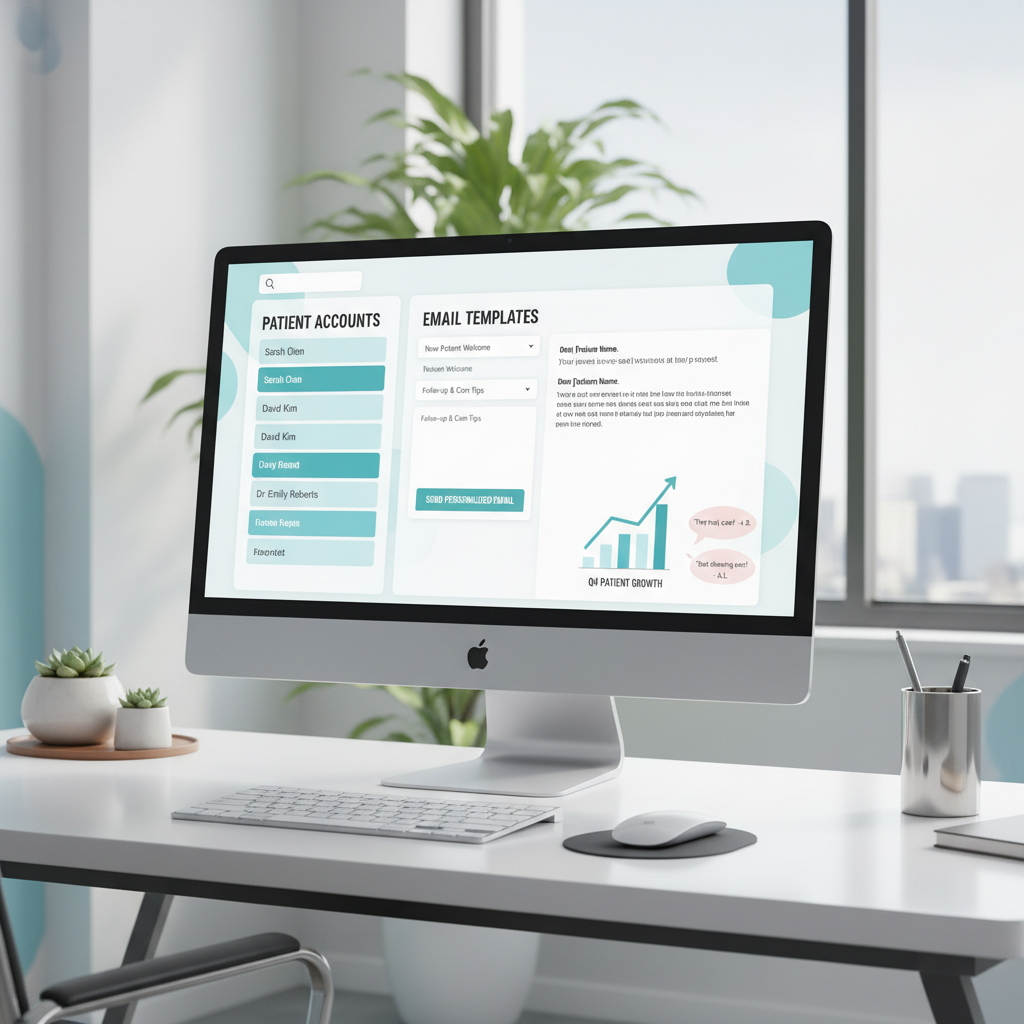
Email marketing delivers the highest ROI among digital marketing channels for dental practices, generating £42 return for every £1 invested when properly segmented and personalized. Existing patients represent 60% easier conversion opportunities for additional treatments compared to acquiring new patients, making retention campaigns critical for practice profitability.
Structure patient communication journeys based on treatment history and lifecycle stage. New patients receive welcome series explaining practice protocols and introducing team members. Maintenance patients get appointment reminders, oral health tips, and treatment completion reminders. Reactivation campaigns target lapsed patients with personalised offers based on their treatment history—typically sending quarterly check-up reminders or seasonal treatment promotions.
Automated workflows handle routine communications whilst maintaining personal touch points. Practice managers can segment lists by treatment type, appointment frequency, and referral source to deliver relevant messaging that drives bookings rather than unsubscribes.
Leveraging Video Marketing—Modern Tools for Patient Acquisition
Video content drives 80% higher engagement rates than static posts, with treatment explanation videos generating 3x more consultation bookings than text-based content alone. UK dental patients increasingly expect visual proof before committing to high-value treatments like Invisalign or implants.
Effective dental videos focus on three core types: 90-second treatment explainers showing before-and-after transformations, behind-the-scenes practice tours building trust and familiarity, and patient testimonials addressing common concerns about pain, cost, and recovery time. These videos perform exceptionally well on YouTube for SEO benefits and across Meta platforms for targeted advertising. For more on this, see dental video marketing.
Distribution strategy matters as much as content quality. Embed videos directly on treatment landing pages to increase conversion rates, use them in email campaigns for patient education, and leverage YouTube’s local search dominance by optimising titles with location-specific keywords like “dental implants Manchester” or “Invisalign London clinic”.
Results Measurement & Continuous Optimization for Dental Clinics
Successful dental practices track three critical metrics: monthly qualified leads (target: 50+), consultation booking conversion rate (benchmark: 15%), and patient lifetime value from digital channels. These KPIs directly correlate with practice growth and marketing ROI.
Google Analytics 4 combined with call tracking software provides comprehensive visibility into patient acquisition costs and conversion paths. Set up custom dashboards showing source attribution—which campaigns generate the highest-value patients, not just the most enquiries. Track consultation-to-treatment conversion rates by traffic source to identify your most profitable marketing channels.
Essential Tracking Setup
Monthly Review Metrics: Website conversions, call volume by source, cost per qualified lead, booking completion rates, and treatment acceptance percentages. Practices should review performance weekly and adjust campaigns monthly based on data trends.
Advanced tracking includes patient journey mapping from initial search to treatment completion. This reveals optimization opportunities—perhaps your SEO drives quality leads but your PPC attracts price-sensitive enquirers, or social media builds awareness but rarely converts directly to bookings. Use these insights to reallocate budget toward your highest-performing channels. For more on dental statistics, see NHS dental statistics England 2025.
Frequently Asked Questions
How does digital marketing specifically help UK dental clinics attract high-value private patients?
Digital marketing enables UK dental clinics to precisely target patients seeking premium treatments like Invisalign and implants through tailored SEO, paid ads, and social media campaigns. By focusing on geographic and demographic data, practices attract qualified leads actively researching private dental care, resulting in higher consultation bookings and increased private treatment revenue.
What are the key differences between UK dental marketing and generic healthcare marketing approaches?
UK dental marketing must navigate strict GDC compliance while appealing to a sophisticated private-pay patient base, balancing clinical authority with accessibility. Unlike generic healthcare marketing, it emphasizes educational content to convert NHS patients to private care and targets specific high-value treatments with precise local and demographic focus.
Why is local SEO crucial for dental practices in the UK, and how does it impact new patient acquisition?
Local SEO ensures dental practices dominate search rankings within their geographic area, making them highly visible to patients searching for nearby premium treatments. This targeted visibility drives more qualified traffic, leading to increased consultation bookings and a stronger patient pipeline in competitive metropolitan markets like London, Manchester, and Birmingham.
What strategies can dental clinics use to improve website-to-booking conversion rates and patient retention?
Dental clinics can enhance conversion rates by optimizing website design for user experience, implementing clear calls-to-action, and showcasing social proof through reviews and case studies. For patient retention, leveraging email marketing and personalized follow-ups maximizes lifetime value by encouraging repeat treatments and ongoing engagement.
About the Author
Dan Ashburn is the Co-Founder at Dominate Dental, the UK’s specialist agency for high-value patient acquisition.
Drawing on a decade of data-driven advertising experience and hundreds of clinic campaigns, Dan blends AI technology with human insight to deliver predictable streams of Invisalign, implant, and cosmetic dentistry consultations. His team’s results-focused approach has helped practices across London, Manchester, Birmingham, and nationwide convert marketing spend into chair-time—often booking 50+ qualified consultations per month while cutting no-shows.
When he’s not optimizing funnels or unpacking the latest algorithm updates, Dan shares actionable dental marketing ideas, real-world case studies, and ROI benchmarks so dental teams can make confident marketing decisions.

Leave a Reply