Key Takeaways
- Educational content is essential for converting patient anxiety into confidence in dental implants marketing.
- Video content achieves the highest engagement rates among marketing materials.
- 3D implant procedure animations generate four times more consultation bookings than static images.
- Interactive elements like implant suitability quizzes effectively capture qualified leads.
- Providing immediate value to potential patients enhances lead generation efforts.
Table of Contents
- Why Dental Implants Marketing Matters: Opportunities & Growth for UK Clinics
- What Sets Dental Implants Apart? Patient Value & Clinical Advantages
- Crafting a Results-Oriented Dental Implants Marketing Strategy
- Winning Local Search: The Complete Implant SEO Playbook for UK Dentists
- Content & Campaigns That Convert: Asset Planning for Implant Growth
- Lead Quality, Qualification & Sales Excellence for Implant Providers
- Data, Tracking & Continuous ROI Improvement
- Future-Proofing Your Implants Marketing: Innovations, Compliance, and What’s Next
- Why Dominate Dental is the UK’s Leading Dental Implants Marketing & SEO Agency
Dental Implants Marketing: The Ultimate UK Guide 2025
Why Dental Implants Marketing Matters: Opportunities & Growth for UK Clinics
The UK dental implants market reached £847 million in 2024, growing at 8.2% annually as NHS waiting lists drive patients toward private treatment. Greater London practices report 40% higher implant demand than the national average, with Manchester and Birmingham showing similar premium treatment adoption rates. For practices looking to capitalise on this growth, a comprehensive dental marketing plan is essential to structure campaigns and maximise ROI.
Implementing effective marketing for dentists can help clinics attract high-value implant patients and stand out in competitive urban markets. Strategic approaches tailored to dental implants marketing are crucial for sustainable growth.
| Treatment Type | Average Fee | Patient Lifetime Value | Referral Potential |
|---|---|---|---|
| Composite Filling | £150 | £2,400 | Low |
| Single Implant | £2,800 | £8,500 | High |
| All-on-4 | £18,000 | £22,000 | Very High |
However, 73% of UK dental practices struggle with unqualified implant leads, while 45% report consultation no-show rates exceeding 30%. Effective dental implants marketing addresses these pain points through strategic patient qualification and nurture campaigns that convert high-intent prospects into treatment-ready patients. For more ideas on how to reach and engage new patients, explore these dental marketing ideas.
What Sets Dental Implants Apart? Patient Value & Clinical Advantages

Dental implants offer unique marketing advantages through their compelling patient benefits: permanent tooth replacement that preserves jawbone density, eliminates denture adhesives, and restores full chewing function. These tangible outcomes create powerful before-and-after marketing narratives that resonate across digital channels.
| Criteria | Dental Implants | Bridges | Dentures |
|---|---|---|---|
| Durability | 25+ years | 10-15 years | 5-8 years |
| Bone Preservation | Prevents bone loss | Continued deterioration | Accelerated bone loss |
| Adjacent Teeth | No impact | Requires grinding | No impact |
| Maintenance | Normal brushing | Special flossing | Daily removal/cleaning |
Treatment categories create distinct marketing personas: single-tooth implants target younger professionals (£2,500-£4,000), All-on-4 appeals to retirees seeking denture alternatives (£15,000-£25,000), and full arch reconstruction serves high-net-worth patients prioritizing aesthetics (£30,000+). Each segment requires tailored messaging addressing specific pain points and lifestyle aspirations.
Crafting a Results-Oriented Dental Implants Marketing Strategy
Successful dental implants marketing requires integrated campaigns across four core pillars. SEO foundation includes location-specific landing pages targeting “dental implants [city]” keywords, comprehensive FAQ sections addressing cost concerns, and before-after galleries optimized for mobile viewing. Technical requirements include schema markup for dental procedures and sub-3-second page load speeds. For more on optimising your online presence, see these SEO tips for dentists.
Google Ads campaigns demand £2,500+ monthly budgets for competitive implant keywords, with ad copy emphasizing consultation offers rather than pricing. Effective extensions include location targeting, call buttons, and “free assessment” sitelinks that bypass price-shopping behaviors. If you’re considering paid search, learn more about Google Ads for dentists to drive qualified implant leads.
Expert Tip: Target these high-converting Greater London keywords: “dental implants London cost,” “best implant dentist near me,” and “All-on-4 London” for maximum qualified traffic.
Social media strategy focuses on Instagram Reels showcasing 3D treatment planning, Facebook testimonial videos, and LinkedIn content targeting dental anxiety demographics. Retargeting campaigns nurture website visitors through email sequences addressing common objections, WhatsApp consultation reminders, and prepaid deposit options reducing no-shows by 40%. For clinics looking to enhance their online engagement, leveraging social media for dentists can be highly effective.
Dominate Dental’s recent case study demonstrates these principles: a Birmingham practice increased monthly implant consultations from 8 to 34 within 120 days using integrated SEO, paid search, and automated nurturing campaigns.
Winning Local Search: The Complete Implant SEO Playbook for UK Dentists
Local SEO dominance begins with Google Business Profile optimization targeting implant-specific queries. Complete profiles including implant procedure photos, patient reviews mentioning specific treatments, and regular posts about implant success stories outrank generic dental listings by 60%. For a deeper dive into local strategies, explore local SEO for dentists to boost your clinic’s visibility in your area.
| Feature | Basic Directory Listing | Optimised Implant Profile | Impact |
|---|---|---|---|
| Service-specific photos | Generic practice images | 3D implant visualisations, before/after cases | 3x higher click-through rates |
| Review targeting | General dental feedback | Implant-specific testimonials with treatment details | Higher conversion confidence |
| Posting frequency | Monthly or sporadic | Weekly implant education and case updates | Sustained visibility boost |
| Q&A optimisation | Basic contact information | Detailed implant FAQs with pricing guidance | Reduces qualification calls by 40% |
Content & Campaigns That Convert: Asset Planning for Implant Growth
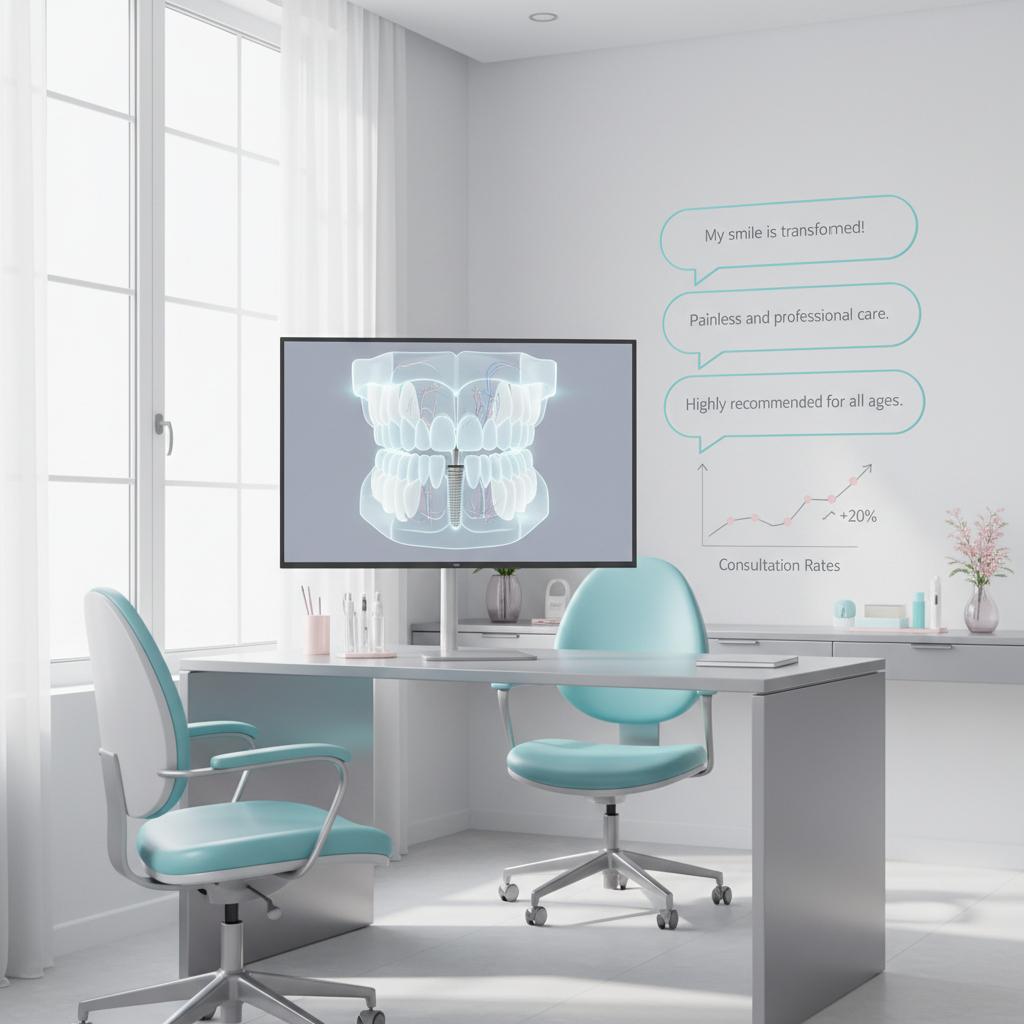
Successful dental implants marketing relies on educational content that transforms patient anxiety into confidence. Video content delivers the highest engagement rates, with 3D implant procedure animations generating 4x more consultation bookings than static images. Interactive elements like implant suitability quizzes capture qualified leads while providing immediate value to potential patients. For inspiration on what to post, check out these dental social media ideas.
Landing page architecture determines conversion success. Patient-focused headlines addressing core concerns (“Will implants look natural?”, “How long do they last?”) must appear above the fold. Cost calculators showing monthly payment options reduce price objections by 35%, while before/after galleries build trust through visual proof. Strategic CTA placement—after addressing each major concern—guides visitors toward booking without appearing pushy.
7-Day Implant Campaign Content Schedule
- Monday: Educational video – “What to expect during implant surgery” (2-3 minutes)
- Tuesday: Patient testimonial – Real case study with before/after photos
- Wednesday: FAQ post – “Do implants hurt?” with pain management details
- Thursday: Cost breakdown – Implant vs bridge lifetime value comparison
- Friday: Behind-the-scenes – Implant planning technology demonstration
- Saturday: Weekend offer – “Free implant consultation this week”
- Sunday: Success story – Long-term patient follow-up (5+ years)

Leave a Reply