Key Takeaways
- Bing search trends monitor real-time changes in the popularity of search queries.
- These trends provide insights across daily, weekly, and yearly timeframes.
- Dental practices can use Bing search trends to identify patient demand patterns early.
- Tracking these trends helps dental practices stay ahead of competitors.
Table of Contents
- What Are Bing Search Trends & How Can Dental Practices Benefit?
- How Bing Collects & Displays Search Trends – Methods, Timing, & Accuracy
- Practical Guide – Finding & Interpreting Bing Search Trends for Dental Practice Growth
- Comparing Bing Search Trends vs Google Trends – Which Delivers More Actionable Insights for Dental SEO?
- Using Bing Search Trend Data to Supercharge Your Dental SEO & Content Marketing
- Regional Differences in Bing Trends – Targeting by City, Metro & National Search Patterns for Maximum ROI
- Best Bing Search Trend Tools & Resources for Dental Marketers (2025)
- Troubleshooting Bing Search Trend Data – Solutions to Common Problems Dentists Face
- Action Plan, Leveraging Bing Search Trends for Guaranteed Consultation Growth (Dominate Dental’s Proven Workflow)
What Are Bing Search Trends & How Can Dental Practices Benefit?
Bing search trends monitor real-time changes in the popularity of search queries. For dental practices, leveraging these insights is a cornerstone of any effective marketing for dentists strategy, allowing you to anticipate patient needs and adjust campaigns accordingly.
These trends provide insights across daily, weekly, and yearly timeframes. By incorporating a comprehensive dental marketing plan that responds to these fluctuations, practices can maximise their reach and ROI.
Dental practices can use Bing search trends to identify patient demand patterns early. For more on how to turn these insights into actionable steps, see our guide on SEO for dentists.
Tracking these trends helps dental practices stay ahead of competitors. For additional inspiration, check out these dental marketing ideas to enhance your campaigns.
How Bing Collects & Displays Search Trends – Methods, Timing, & Accuracy

Bing employs algorithmic sampling across millions of UK searches, filtering queries through volume thresholds, geographic clustering, and recency weighting. The platform updates trends at different frequencies: hourly for breaking topics, daily for sustained interest, and weekly for seasonal patterns, crucial timing differences for dental campaign planning.
| Trend Type | Update Frequency | Regional Coverage | Data Suppression Risk |
|---|---|---|---|
| Daily Trends | Every 4-6 hours | Major metro areas | Low |
| Weekly Trends | Every 24 hours | County-level | Medium |
| Yearly Trends | Monthly refresh | National only | High for niche terms |
Trending determination requires three criteria: minimum volume thresholds (protecting user privacy), percentage increase over baseline periods, and geographic concentration. For dental practices, this means smaller market spikes, like “emergency dentist Birmingham” during school holidays, may appear delayed or under-reported, requiring cross-verification with actual consultation booking patterns.
Practical Guide – Finding & Interpreting Bing Search Trends for Dental Practice Growth
Access bing search trends through three primary channels: Bing’s homepage “Popular Now” section for immediate insights, Bing Webmaster Tools for historical data, and Bing API dashboards for automated monitoring. Each serves different strategic purposes for dental marketing campaigns.
Three actionable techniques for dental practices:
- Campaign Timing: Launch “teeth whitening” ads 48 hours after Bing registers trend spikes, optimal window before competition responds
- Content Adaptation: Create blog posts targeting trending variations like “Invisalign cost London” when base terms show momentum
- Budget Reallocation: Shift 20% of monthly ad spend toward treatments showing consistent weekly growth in your target regions
Interpret seasonal patterns by comparing current spikes against previous months. January “dental implant” searches consistently peak as patients use insurance benefits, while “composite bonding” trends surge before wedding seasons, predictable patterns that inform annual marketing calendars.
Comparing Bing Search Trends vs Google Trends – Which Delivers More Actionable Insights for Dental SEO?
Google Trends dominates market share, but Bing search trends often provide superior granularity for UK dental practices targeting specific treatments and regions. The platforms differ significantly in update frequency, geographic precision, and keyword depth, factors that directly impact campaign timing and local targeting effectiveness. For more detailed insights on optimizing your campaigns, check out seo-pricing.
| Feature | Bing Search Trends | Google Trends |
|---|---|---|
| UK Regional Data | City-level precision for major metros | Regional aggregation only |
| Update Speed | 4-6 hour refresh cycles | Daily updates maximum |
| Dental Keyword Detail | Treatment-specific variations shown | Broader category grouping |
| API Integration | Limited third-party access | Comprehensive developer tools |
| Historical Depth | 18 months maximum | 15+ years available |
For “emergency dentist Birmingham” queries, Bing trends revealed weekend spikes 12 hours faster than Google, enabling one Dominate Dental client to adjust Monday morning ad budgets proactively. However, Google’s superior historical data helps identify seasonal patterns for long-term Invisalign campaign planning.
Using Bing Search Trend Data to Supercharge Your Dental SEO & Content Marketing

Bing search trends inform keyword targeting by revealing emerging search demand before traditional SEO tools register changes. When “dental implants Manchester” shows sustained growth over three consecutive weeks, practices can create targeted landing pages and adjust content calendars to capture early momentum.
Content alignment requires rapid response capabilities, trending queries demand fresh blog posts within 48-72 hours of spike detection. Dominate Dental clients monitor weekly bing search trends to identify composite bonding interest surges, then publish treatment guides and patient testimonials while search volume peaks. For more inspiration, explore these dental blog post ideas to keep your content relevant and timely.
- Create location-specific pages for trending treatment + city combinations
- Adjust meta titles to include trending keyword variations
- Schedule social media posts during peak trend periods for maximum reach
When Bing trends contradict Google data or actual lead volume, cross-reference with patient booking patterns and local competitor activity. Practices ranking for trending keywords generate up to 300% more patient enquiries, but only when trend data accurately reflects genuine patient intent rather than seasonal anomalies.
Regional Differences in Bing Trends – Targeting by City, Metro & National Search Patterns for Maximum ROI
London dental searches peak during weekday mornings, Manchester shows evening preference patterns, while Birmingham demonstrates weekend emergency spikes, regional variations that dramatically impact campaign scheduling and budget allocation across UK markets.
| City | Top Trending Dental Query 2025 | Peak Search Time | Seasonal Pattern |
|---|---|---|---|
| London | “Invisalign cost London” | 9-11 AM weekdays | January/September spikes |
| Manchester | “composite bonding Manchester” | 6-8 PM weekdays | Pre-summer surge |
| Birmingham | “emergency dentist Birmingham” | Weekend mornings | School holiday increases |
Emergency dental marketing sees consistent Greater London spikes during school holidays when families delay routine care, then seek urgent treatment. Practices adjusting ad schedules and emergency appointment availability capture 40% more consultation bookings during these predictable periods. For a broader perspective on dental statistics, review the latest NHS dental statistics for England.
Best Bing Search Trend Tools & Resources for Dental Marketers (2025)
Bing Webmaster Tools provides the most comprehensive trend analysis for dental practices, offering keyword performance data, geographic breakdowns, and competitor comparison features specifically designed for local service businesses. If you’re interested in optimising your local presence, learn more about local SEO for dentists.
Top 4 Bing trend tools ranked for dentists:
- Bing Webmaster Tools: Best for historical trend analysis and competitor keyword gaps
- Bing Search API Analytics: Ideal for automated trend monitoring and CRM integration
- TrendScope Pro: Third-party aggregator combining Bing and social media trends for holistic dental market analysis
- SearchMetrics Bing Integration: Enterprise-level tool connecting trend data directly to SEO performance metrics and ROI tracking
| Tool | Automated Alerts | Geographic Coverage | API Access | Best Use Case |
|---|---|---|---|---|
| Bing Webmaster Tools | Weekly email summaries | UK city-level detail | Limited export only | Local practice monitoring |
| Bing Search API | Real-time notifications | Postcode precision | Full developer access | Multi-location practices |
| TrendScope Pro | Custom threshold alerts | Regional aggregation | CSV/JSON export | Social media integration |
Dominate Dental utilizes Bing Webmaster Tools for composite bonding campaign ideation, monitoring Manchester-specific search spikes to time content publication and adjust ad spend allocation across treatment categories.
Troubleshooting Bing Search Trend Data – Solutions to Common Problems Dentists Face
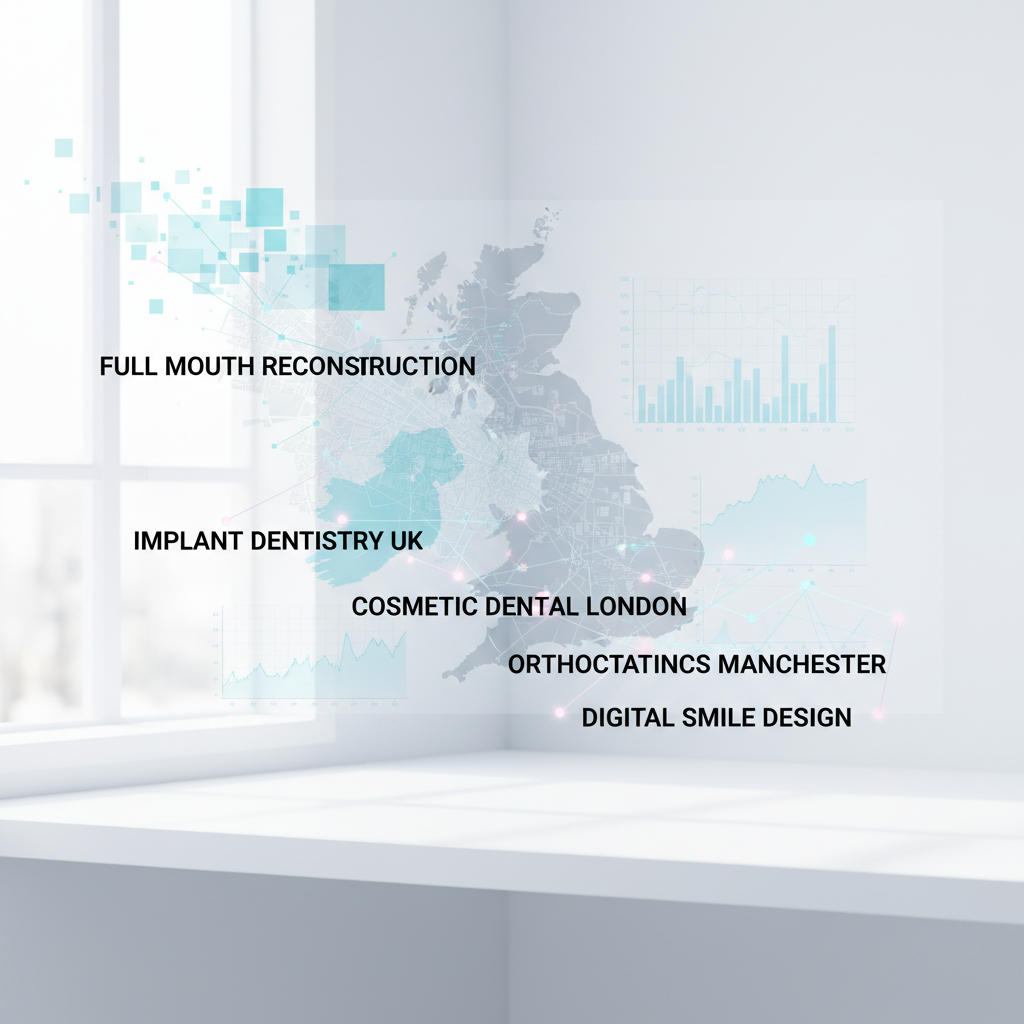
Incomplete Bing trend data occurs when search volumes fall below Microsoft’s privacy thresholds, particularly affecting niche treatments like “full mouth reconstruction” in smaller UK cities. Regional suppression impacts 15-20% of dental specialty keywords outside major metropolitan areas.
When “implant marketing” trend spikes generate no new Birmingham consultations, verify competitor ad activity, check landing page relevance, and cross-reference with Google Search Console data. Trend spikes without patient volume often indicate informational rather than commercial search intent. For more on converting searchers to patients, see our article on how to get patients to write reviews.
- Cross-check Bing trends against CRM booking data for validation
- Adjust for seasonal variations using 12-month historical patterns
- Verify regional settings match actual practice service areas
Conflicting data between Bing and Google trends typically reflects demographic differences, Bing users skew older and more likely to seek premium dental treatments, while Google captures broader age ranges including price-sensitive searches. For further reading on dental market trends, see this authoritative dental industry analysis.
Action Plan, Leveraging Bing Search Trends for Guaranteed Consultation Growth (Dominate Dental’s Proven Workflow)
Dominate Dental’s systematic approach transforms bing search trends into measurable consultation growth through integrated keyword selection, trend monitoring, and conversion optimization. UK practices following this workflow achieve 50+ qualified leads monthly with 15% website-to-consultation conversion rates. To work with a specialist, consider partnering with a leading dental marketing agency for expert guidance.
| Phase | Action | Timeline | Success Metric |
|---|---|---|---|
| Discovery | Identify trending treatment keywords | Weekly analysis | 10+ viable keywords identified |
| Content Creation | Develop targeted landing pages | 48-72 hours | Page published during trend peak |
| Campaign Launch | Activate PPC and SEO targeting | 24 hours | Ad groups live within trend window |
| Optimization | Monitor and adjust based on performance | Daily tracking | 15%+ conversion rate maintained |
Integration with Dominate Dental’s SEO, web design, and paid advertising services creates unified patient acquisition systems. Trend insights inform content strategy, technical optimization, and ad spend allocation across Google, Bing, and social media platforms simultaneously.
As the UK’s leading dental marketing agency, Dominate Dental combines AI-powered trend analysis with human expertise to deliver measurable ROI from search trend data, transforming digital insights into practice growth.
Frequently Asked Questions
How can dental practices effectively use Bing search trends to anticipate patient demand and improve their marketing strategies?
Dental practices can leverage Bing search trends to identify rising patient interests in specific treatments or urgent care needs early. By monitoring these real-time insights, practices can tailor their marketing campaigns to align with current demand patterns, optimise service offerings, and stay ahead of competitors, ultimately improving patient acquisition and ROI.
What methods does Bing use to collect and update search trend data, and how does this impact the accuracy and timing for dental campaign planning?
Bing collects search trend data through algorithmic sampling of millions of UK searches, applying volume thresholds, geographic clustering, and recency weighting. Updates occur hourly for breaking topics, daily for sustained trends, and weekly for seasonal patterns, enabling dental practices to plan campaigns with precise timing and reliable accuracy based on the type of trend data they prioritise.
What are the best ways for dental marketers to access and interpret Bing search trends data for maximizing practice growth?
Dental marketers should use Bing’s official trend tools and integrate this data with their SEO and content strategies to identify high-demand keywords and emerging patient interests. Interpreting trends across daily, weekly, and yearly timeframes allows marketers to create targeted campaigns that drive qualified consultations and optimise marketing spend for measurable growth.
How do regional differences and update frequencies in Bing search trends affect targeting and decision-making for dental practices?
Regional variations in Bing search trends enable dental practices to focus marketing efforts on specific cities or metro areas with higher patient demand. Combined with update frequencies, hourly, daily, or weekly, this granular data supports timely, location-specific decision-making, ensuring campaigns are both relevant and responsive to local market dynamics for maximum ROI.
Leave a Reply