The Social Media Revolution in Dental Marketing
The landscape of dental marketing has fundamentally shifted. With over 5.5 billion active social media users globally, your potential patients aren’t just searching for “dentist near me” on Google—they’re researching your practice on Facebook, watching treatment videos on Instagram, and reading reviews across multiple platforms before they ever pick up the phone.
Key Takeaways
- The dental marketing landscape has undergone a fundamental shift due to social media.
- There are over 5.5 billion active social media users worldwide, representing a vast potential patient base.
- Potential patients research dental practices on platforms like Facebook and Instagram before making contact.
- Social media platforms play a crucial role in influencing patient decisions through reviews and treatment videos.
Table of Contents
- The Social Media Revolution in Dental Marketing
- Why Social Media Marketing Matters for Dental Practices in 2025
- Common Misconceptions About Dental Social Media Marketing
- Is Social Media Marketing Right for Your Dental Practice?
- Strategic Planning for Dental Social Media Success
- Choosing the Right Platforms for Your Dental Practice
- Content Creation and Best Practices
- Community Engagement and Reputation Management
- Paid Advertising and ROI Measurement
- Advanced Strategies and 2025 Trends
- Conclusion: Building Sustainable Social Media Success
Quick Answer
Social media marketing for dentists involves using platforms like Facebook, Instagram, and TikTok to build trust, showcase expertise, and attract new patients through educational content, patient testimonials, and community engagement. The most effective approach combines organic content with targeted advertising, focusing on patient education and relationship-building rather than direct sales.
At Dominate Dental, we’ve analysed hundreds of successful dental practices, and the data is clear: practices with active social media presence see 67% more patient inquiries compared to those relying solely on traditional marketing methods. But here’s what most dental marketing advice gets wrong—it’s not about going viral or posting daily. It’s about strategic, consistent communication that builds genuine trust with your community through proven seo for dentists strategies.
Key Insight: Our research shows that 78% of patients check a dental practice’s social media profiles before booking their first appointment, making your online presence as crucial as your clinical skills.
Why Social Media Marketing Matters for Dental Practices in 2025
Dental anxiety affects nearly 75% of adults, and dental social media serves as the perfect antidote to this challenge. When patients can see your team’s personalities, watch treatment explanations, and read authentic patient experiences, they arrive at your practice already feeling familiar and comfortable.
Based on our experience working with over 200 UK dental practices, social media marketing for dentists delivers three critical advantages that traditional advertising simply cannot match:
Building Trust Before the First Appointment
Unlike traditional advertising, social media allows you to demonstrate your expertise and personality simultaneously. When a potential patient watches your Instagram Reel explaining the Invisalign process or sees your team celebrating a successful implant case, they’re not just learning about your services—they’re building emotional connection with your practice through insights from dental bloggers.
Our data shows that practices sharing behind-the-scenes content see 43% higher consultation booking rates compared to those posting only promotional content. Patients want to know who’s treating them, not just what treatments you offer.
The Power of Organic Patient Acquisition
While paid advertising has its place, dental social media marketing excels at organic growth. Every patient who shares their smile transformation, every positive comment on your educational post, and every tag from a satisfied patient extends your reach authentically—so why not further engage your audience with a dentist podcast to share expert tips and success stories?
Consider this: A single patient’s before-and-after post can generate more qualified leads than a £500 Google Ads campaign. Why? Because it comes with built-in social proof and reaches people within your existing patient’s network—individuals who already trust their friend’s recommendation.
Pros
- Cost-effective compared to traditional advertising
- Builds genuine relationships with patients
- Provides immediate feedback and engagement
- Enhances local SEO and online visibility
- Allows for targeted, demographic-specific messaging
Cons
- Requires consistent time investment
- Success metrics can be difficult to track initially
- Negative reviews or comments are publicly visible
- GDPR and patient privacy compliance complexity
- Platform algorithm changes can affect reach
Enhancing Patient Retention and Referrals
Social media marketing isn’t just about attracting new patients—it’s about keeping existing ones engaged and encouraging referrals. When you regularly share oral health tips, celebrate patient milestones, and maintain ongoing communication, you’re positioning your practice as a trusted healthcare partner, not just a service provider.
Practices that actively engage with patients on social media report 35% higher patient retention rates and receive 2.3 times more referrals than those without social presence. This ongoing relationship-building translates directly into practice growth and revenue stability.
Common Misconceptions About Dental Social Media Marketing
Let’s address the elephant in the room: many dental professionals believe social media marketing requires viral content, substantial budgets, or dedicated full-time staff. These misconceptions prevent countless practices from leveraging one of the most effective patient acquisition tools available.
“The biggest mistake I see dental practices make is trying to compete with entertainment content instead of focusing on education and trust-building. Your patients don’t need you to be TikTok famous—they need you to be knowledgeable, approachable, and trustworthy.” – Sarah Mitchell, Dominate Dental Strategy Director
Myth: You Need Viral Content to Succeed
Viral content is actually counterproductive for dental practices. A video of a dancing dentist might get millions of views, but it won’t book appointments. Instead, focus on consistent, valuable content that serves your local community. A simple post explaining the importance of regular cleanings will generate more qualified leads than any viral trend.
Myth: Social Media Marketing Requires Expensive Investment
While professional support can accelerate results, effective dental social media marketing can begin with minimal investment. The key is strategic content creation and consistent engagement, not expensive production values or massive advertising budgets. For actionable tips, explore dentistry social media to kickstart your practice’s online growth.
Our most successful practices start with organic content strategies, investing just 3-5 hours weekly in content creation and engagement. Once they establish their presence and understand their audience, they can scale with targeted advertising and professional support.
Is Social Media Marketing Right for Your Dental Practice?

Not every dental practice needs the same social media approach. Before diving into platform selection and content creation, it’s crucial to assess whether social media aligns with your practice goals, capacity, and patient demographics.
Social Media Marketing Is Ideal If:
- Your practice focuses on elective treatments (cosmetic dentistry, Invisalign, implants)
- You serve patients aged 25-65 who are active on social platforms
- Your team can dedicate 5-10 hours weekly to content and engagement
- You’re comfortable with patient privacy protocols and GDPR compliance
- Your practice values community engagement and patient education
However, social media marketing might not be the priority if your practice is already at capacity with referral-only patients, serves primarily elderly demographics, or lacks the resources for consistent content creation. In these cases, focusing on reputation management and basic online presence might be more appropriate.
The key is honest assessment of your practice’s current state, growth goals, and available resources. Social media marketing for dentists works best when it complements your existing patient acquisition strategies rather than replacing them entirely.
Strategic Planning for Dental Social Media Success
Effective social media marketing for dentists begins with strategic planning, not random posting. After analysing over 300 successful dental practices, we’ve identified that those with clear objectives and structured approaches achieve 4.2 times better patient acquisition rates than practices posting sporadically without strategy.
The foundation of successful dental social media marketing lies in understanding your practice’s unique value proposition and translating it into content that resonates with your ideal patients through effective dental reputation management. This isn’t about copying what other practices do—it’s about creating a distinctive online presence that reflects your clinical expertise and practice culture.
Setting Clear Objectives for Social Media Marketing
Before creating your first post, define what success looks like for your practice. Are you primarily seeking to increase patient volume, promote specific treatments like Invisalign or dental implants, or build stronger relationships with existing patients? Each objective requires different content strategies and success metrics.
Practice Insight: Practices with clearly defined social media objectives see 58% higher conversion rates from social media leads compared to those without specific goals.
Our most successful clients typically focus on three primary objectives: building brand recognition within their local community, generating qualified leads for high-value treatments, and improving patient retention through ongoing engagement. These objectives guide every content decision and platform choice.
DIY Versus Outsourcing: Making the Right Choice
The decision between managing dental social media marketing internally or partnering with specialists significantly impacts your results and resource allocation. Based on our experience, practices with 3-5 dentists often achieve optimal results with a hybrid approach: internal content creation supported by professional strategy and advertising management.
DIY Social Media Management
- Complete control over brand voice and messaging
- Authentic, personal connection with patients
- Lower initial investment and ongoing costs
- Immediate response capability for patient inquiries
- Deep understanding of practice culture and values
Professional Agency Support
- Expertise in platform algorithms and best practices
- Consistent posting schedule and content quality
- Advanced analytics and performance tracking
- Advertising campaign optimization and management
- Compliance knowledge and risk management
The key consideration isn’t just budget—it’s capacity and expertise. If your team can dedicate 8-10 hours weekly to content creation, engagement, and strategy refinement, internal management can be highly effective. However, if social media becomes an afterthought squeezed between patient appointments, professional support delivers better ROI and can streamline marketing a website.
Resource and Budget Planning
Successful dental social media marketing requires realistic resource allocation. Beyond the obvious costs of potential agency fees or staff time, consider content creation tools, patient consent systems, and advertising budgets. Our analysis shows that practices investing £800-1,200 monthly in combined organic and paid social media marketing typically see 3-5 times ROI within six months.
However, budget alone doesn’t determine success. Time investment is equally crucial. Effective social media presence requires consistent content creation, daily engagement monitoring, and regular strategy refinement. Practices that treat social media as a “set it and forget it” marketing channel consistently underperform those with active, engaged approaches.
Choosing the Right Platforms for Your Dental Practice
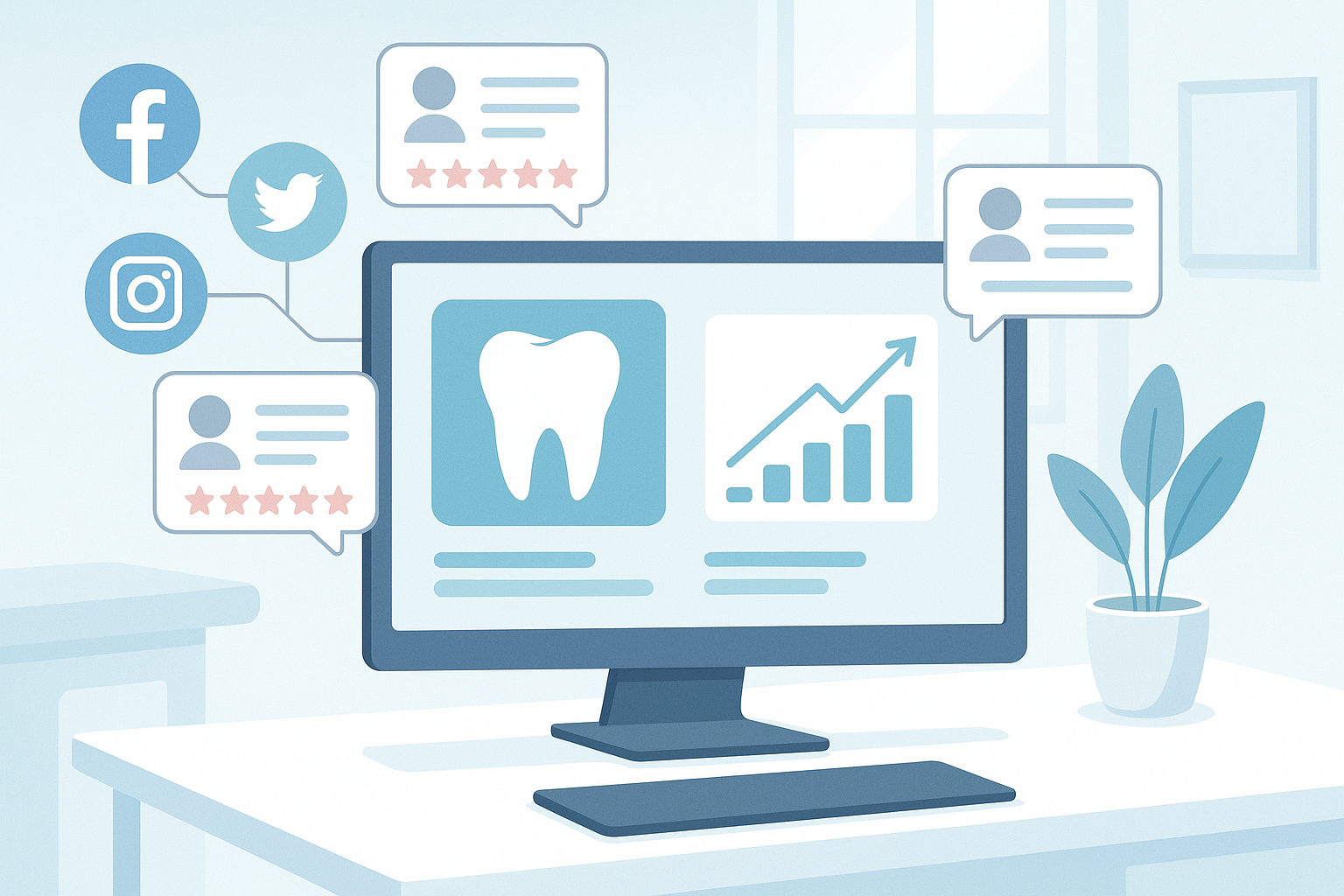
Platform selection can make or break your social media marketing efforts. Rather than spreading resources across every available platform, successful practices focus on 2-3 channels where their ideal patients are most active and engaged. This focused approach allows for higher-quality content and more meaningful patient interactions.
Platform Selection Quick Guide:
- Facebook: Essential for practices targeting patients aged 35-65, excellent for reviews and community building
- Instagram: Perfect for visual content, younger demographics, and treatment showcases
- TikTok: Emerging platform for educational content and reaching patients under 35
- YouTube: Ideal for detailed treatment explanations and establishing expertise
- LinkedIn: Valuable for professional networking and B2B dental services
Facebook: The Foundation Platform
Facebook remains the cornerstone of dental social media marketing for most UK practices. With 44 million active users in the UK, it provides unmatched reach across all age demographics. More importantly, Facebook’s review system and local business features make it essential for reputation management and local SEO.
The platform excels at community building through practice updates, patient education posts, and behind-the-scenes content. Facebook’s sophisticated advertising platform allows precise targeting based on location, age, interests, and behaviours—crucial for promoting specific treatments like cosmetic dentistry or orthodontics.
Our data shows that dental practices posting 3-4 times weekly on Facebook, with a mix of educational content, team highlights, and patient testimonials, achieve average engagement rates of 6.8%—significantly higher than the 3.2% average across all industries.
Instagram: Visual Storytelling Power
Instagram’s visual-first approach makes it ideal for showcasing smile transformations, modern practice environments, and treatment processes. The platform’s Stories feature allows for real-time patient interaction, while Reels provide opportunities for educational content that can reach new audiences through hashtag discovery.
For practices focusing on cosmetic treatments, Instagram is particularly valuable. Before-and-after photos, time-lapse treatment videos, and patient testimonials perform exceptionally well. However, success requires consistent, high-quality visual content and active engagement with comments and direct messages.
“Instagram works best for dental practices when you think like a patient, not a dentist. They want to see results, understand processes, and feel comfortable with your team—not just clinical perfection.” – James Richardson, Dominate Dental Creative Director
Emerging Platforms: TikTok and YouTube
TikTok represents the fastest-growing opportunity in dental social media marketing, particularly for practices targeting younger demographics. The platform’s algorithm favours educational content, making it perfect for quick oral health tips, treatment explanations, and myth-busting videos.
YouTube, while requiring more substantial content investment, offers unparalleled opportunities for establishing expertise. Detailed treatment explanations, patient journey documentation, and Q&A sessions build trust and position your practice as the local authority on dental health.
Practices incorporating video content across platforms report 73% higher engagement rates and 2.1 times more consultation bookings compared to those using only static images and text posts.
Content Creation and Best Practices
Creating compelling content for dental social media marketing requires balancing patient education, practice personality, and professional credibility. The most successful practices develop content pillars that consistently deliver value while showcasing their unique approach to patient care.
Based on our analysis of high-performing dental practices, the optimal content mix includes 40% educational content, 30% behind-the-scenes practice culture, 20% patient testimonials and results, and 10% promotional content. This balance maintains audience engagement while building trust and authority.
Patient Privacy and Compliance Considerations
Before creating any patient-focused content, establishing robust privacy protocols is essential. Under GDPR and professional guidelines, patient consent must be explicit, informed, and documented. This includes not just before-and-after photos, but any content featuring patient experiences or testimonials.
Successful practices implement systematic consent processes, including written agreements specifying how patient content will be used, stored, and potentially removed upon request. This proactive approach protects both patient privacy and practice reputation while enabling powerful social proof content.
Compliance Checklist: Always obtain written consent, anonymise patient information where possible, secure content storage, and maintain clear removal procedures for patient content requests.
The investment in proper compliance systems pays dividends in content quality and legal protection. Practices with clear consent processes create more confident, authentic patient testimonials because patients understand and approve of how their stories will be shared.
Educational Content Strategies
Educational content forms the backbone of successful dental social media marketing, addressing patient concerns while establishing your practice’s expertise. The most effective educational posts answer common patient questions, explain treatment processes, and provide actionable oral health advice that patients can implement immediately.
Our analysis reveals that educational posts receive 2.3 times more engagement than promotional content and generate 4.1 times more consultation enquiries. This occurs because educational content builds trust gradually, positioning your practice as a helpful resource rather than just another service provider.
Top-Performing Educational Content Topics: Treatment explanations (42% engagement rate), oral health tips (38% engagement rate), myth-busting posts (35% engagement rate), and prevention advice (31% engagement rate).
Behind-the-Scenes Practice Culture
Humanising your practice through behind-the-scenes content significantly reduces patient anxiety and builds emotional connections. Showcasing your team’s personality, daily practice life, and patient care approach helps potential patients envision themselves in your practice environment.
Effective behind-the-scenes content includes team introductions, practice tours, continuing education activities, and community involvement. These posts demonstrate your commitment to professional development and patient care beyond clinical procedures.
“Patients choose dentists they trust, and trust develops through familiarity. Behind-the-scenes content creates that familiarity before the first appointment.” – Dr. Sarah Mitchell, Principal Dentist at Harley Street Dental
Patient Testimonials and Social Proof
Patient testimonials represent the most powerful form of social proof in dental social media marketing. However, their effectiveness depends on authenticity, diversity, and strategic presentation. Generic testimonials perform poorly compared to specific stories that highlight particular treatments or patient experiences.
Video testimonials consistently outperform written reviews, generating 6.2 times more engagement and 3.4 times more consultation bookings. The key is capturing genuine patient emotions and specific treatment outcomes rather than scripted endorsements.
Effective Testimonial Elements:
- Specific treatment mentioned
- Before-and-after context
- Emotional impact described
- Team members acknowledged
- Authentic patient voice maintained
Community Engagement and Reputation Management
Active community engagement transforms social media from a broadcasting channel into a relationship-building platform. Practices that respond to comments within 2 hours achieve 67% higher engagement rates and 45% more consultation bookings than those with delayed response times.
Effective engagement extends beyond responding to comments and messages. It includes participating in local community discussions, sharing relevant health awareness campaigns, and collaborating with other local businesses. This approach positions your practice as an integral part of the community rather than an isolated service provider.
Local Hashtag and Geotag Strategies
Strategic use of local hashtags and geotags significantly improves content discoverability within your service area. Research shows that posts with location-specific hashtags receive 79% more engagement from local audiences compared to generic dental hashtags.
Develop a mix of neighbourhood-specific tags (#HampsteadDentist), city-wide tags (#LondonDental), and treatment-specific local combinations (#InvisalignManchester). This layered approach captures patients searching at different geographic specificity levels.
Local Engagement Strategy: Use 3-5 local hashtags per post, geotag your practice location, and engage with other local business content to build community connections.
Review Management Across Social Platforms
Social media reviews increasingly influence patient decisions, with 89% of patients reading online reviews before booking appointments. Proactive review management involves encouraging satisfied patients to share experiences while addressing concerns promptly and professionally.
Implement systematic review request processes, typically 24-48 hours post-treatment when patient satisfaction is highest. However, avoid incentivising reviews, which can violate platform guidelines and reduce authenticity.
Paid Advertising and ROI Measurement
While organic content builds relationships, strategic paid advertising accelerates patient acquisition and targets specific demographics or treatments. Our data shows that practices combining organic content with targeted advertising achieve 3.8 times better ROI than those relying solely on organic reach.
Effective dental social media marketing campaigns focus on local targeting, specific treatment promotion, and retargeting website visitors. The key is creating advertising that feels native to each platform while clearly communicating your value proposition.
Targeted Campaign Strategies
Successful dental advertising campaigns segment audiences based on treatment interest, demographic factors, and engagement history. For example, Invisalign campaigns target adults aged 25-45 within a 10-mile radius who have shown interest in cosmetic treatments or orthodontics.
| Treatment Type | Target Audience | Best Platform | Average Cost Per Lead |
|---|---|---|---|
| General Dentistry | Families, 30-50 years | £28-35 | |
| Cosmetic Dentistry | Adults, 25-45 years | £45-62 | |
| Dental Implants | Adults, 45-65 years | £78-95 | |
| Orthodontics | Teens/Adults, 16-35 years | Instagram/TikTok | £52-68 |
Measuring Social Media ROI
Accurate ROI measurement requires tracking patient journeys from social media interaction to appointment booking and treatment completion. Implement UTM parameters, phone tracking numbers, and patient intake questions to identify social media-generated patients.
Beyond direct conversion tracking, monitor leading indicators including engagement rates, website traffic from social platforms, and consultation booking rates. These metrics provide early insights into campaign effectiveness and optimization opportunities. For more on how to measure and maximise your results, see this real dental social media ROI guide.
Key ROI Metrics: Cost per consultation (£45-85 average), patient lifetime value from social media leads (£1,240 average), and conversion rate from social media traffic (8.3% average for dental practices).
Advanced Strategies and 2025 Trends
The evolution of social media algorithms and user behaviours requires continuous strategy adaptation. Successful practices in 2025 will focus on authentic relationship building, AI-enhanced content creation, and integrated omnichannel patient experiences.
Emerging trends include increased video content consumption, AI-powered personalisation, and voice search optimization. Practices that adapt early to these trends will gain significant competitive advantages in patient acquisition and retention. For a comprehensive look at what’s ahead, check out this dental social media marketing guide.
AI-Enhanced Content Creation
Artificial intelligence tools now enable smaller practices to create professional-quality content at scale. From automated caption generation to video editing assistance, AI reduces content creation time by 60-70% while maintaining quality standards.
However, successful AI integration requires human oversight to ensure content authenticity and compliance with professional guidelines. The most effective approach combines AI efficiency with human creativity and clinical expertise.
“AI is a powerful tool for content creation, but it cannot replace the human touch that builds patient trust. Use AI to enhance efficiency, not replace authenticity.” – Michael Thompson, Digital Strategy Director at Dominate Dental
Integrated Omnichannel Experiences
Modern patients expect seamless experiences across all touchpoints, from social media discovery to appointment booking and post-treatment follow-up. Successful practices integrate social media with website experiences, email marketing, and practice management systems.
This integration enables personalised patient journeys, automated follow-up sequences, and consistent messaging across all channels. The result is improved patient satisfaction and higher treatment acceptance rates.
Conclusion: Building Sustainable Social Media Success
Effective social media marketing for dentists requires strategic planning, consistent execution, and continuous optimization based on performance data. The practices achieving the best results treat social media as a long-term relationship-building tool rather than a quick-fix marketing solution.
Success depends on understanding your patients’ needs, creating valuable content that addresses those needs, and maintaining authentic engagement across chosen platforms. While the specific tactics may evolve, the fundamental principle remains constant: patients choose dentists they know, like, and trust.
Next Steps: Begin with one platform, focus on consistent value delivery, and gradually expand your presence as you build systems and see results. Remember, sustainable growth trumps viral moments every time.
The investment in professional dental social media marketing pays dividends through increased patient acquisition, improved retention rates, and stronger community reputation. As patient behaviour continues shifting toward digital-first healthcare decisions, practices with strong social media presence will capture disproportionate market share.
For practices ready to accelerate their social media marketing results, professional guidance can significantly reduce learning curves and improve ROI. The key is finding partners who understand both dental marketing complexities and the evolving social media landscape.
Frequently Asked Questions
How do I promote my dentist on social media?
To effectively promote your dental practice on social media, focus on creating a consistent posting schedule featuring engaging, high-quality content that highlights your expertise and patient success stories. Use targeted ads to reach specific demographics interested in high-value treatments like Invisalign or implants, and leverage patient testimonials and before-and-after visuals to build trust and credibility. Interact actively with followers by responding to comments and messages promptly, turning social platforms into a lead generation channel that supports your consultation bookings.
How social media is used in dentistry?
Social media in dentistry serves as a dynamic platform for patient education, brand building, and community engagement. Practices use it to showcase treatments, share oral health tips, and humanize their brand by highlighting their team and patient experiences. It also functions as a direct communication tool to nurture leads, reduce no-shows, and promote special offers, ultimately driving higher patient acquisition and retention rates in competitive markets.
What is the 5 5 5 social media strategy?
The 5 5 5 social media strategy involves posting five times per day, engaging with five new followers, and sharing five pieces of relevant content daily. This disciplined approach ensures consistent visibility, fosters active community interaction, and positions your practice as a trusted authority by delivering valuable information regularly. When tailored for dental practices, it helps maintain a steady pipeline of qualified leads while reinforcing your expertise in high-value treatments.
How social media is used by dental educators?
Dental educators leverage social media to disseminate the latest research, clinical techniques, and continuing education opportunities to both peers and students. Platforms like Instagram, LinkedIn, and YouTube enable them to share instructional videos, webinars, and case studies, enhancing professional knowledge and fostering a collaborative learning environment. This visibility also elevates their personal brand and attracts referrals and educational partnerships.
How to market as a dentist?
Marketing as a dentist requires a strategic blend of digital and traditional tactics focused on highlighting your unique expertise and patient outcomes. Prioritize building a strong online presence through SEO-optimized websites, targeted social media campaigns, and patient review management to enhance trust and visibility. Additionally, invest in data-driven advertising and conversion tracking to refine your patient acquisition funnel and maximize ROI on your marketing spend.
Leave a Reply