SEO for dentists involves optimising your dental practice website to rank higher in search engine results, attract more qualified patients, and outperform competitors online. The most effective dental SEO strategies in 2025 focus on local search optimisation, patient-focused content creation, Google Business Profile management, and building authoritative backlinks from healthcare and community sources.
Key Takeaways
- SEO for dentists helps your dental practice website rank higher in search engine results.
- Effective dental SEO strategies in 2025 prioritize local search optimization and patient-focused content.
- Managing your Google Business Profile is crucial for attracting more qualified patients.
- Building authoritative backlinks from healthcare and community sources enhances your online presence.
Table of Contents
- Why SEO For Dentists Is More Critical Than Ever in 2025
- Understanding Dental SEO: Beyond Basic Optimisation
- Local SEO: The Foundation of Dental Practice Growth
- Content Marketing: The Engine of Dental SEO Success
- Technical SEO: The Foundation of Dental Website Performance
- Building Authority Through Strategic Link Building
- Measuring and Monitoring Your Dental SEO Success
- Advanced SEO Strategies for Competitive Markets
- Choosing the Right SEO Partner for Your Dental Practice
- Achieving Long-Term SEO Success for Your Dental Practice
Table of Contents
- Why SEO For Dentists Is More Critical Than Ever in 2025
- Understanding Dental SEO: Beyond Basic Optimisation
- Local SEO: The Foundation of Dental Practice Growth
- Content Marketing: The Engine of Dental SEO Success
- Technical SEO: The Foundation of Dental Website Performance
- Building Authority Through Strategic Link Building
- Measuring and Monitoring Your Dental SEO Success
- Advanced SEO Strategies for Competitive Markets
- Choosing the Right SEO Partner for Your Dental Practice
- Achieving Long-Term SEO Success for Your Dental Practice
The landscape of dental marketing has fundamentally shifted. Gone are the days when a Yellow Pages advert or word-of-mouth referrals alone could sustain a thriving practice. Today’s patients begin their healthcare journey with a Google search, and if your practice isn’t visible in those crucial first results, you’re losing qualified patients to competitors who’ve invested in proper SEO for dentists and social media marketing for dentists.
At Dominate Dental, we’ve analysed over 200 UK dental practices and discovered a striking pattern: practices ranking in the top 3 Google positions for their primary services generate 300% more new patient enquiries than those relegated to page two. This isn’t just correlation—it’s a direct result of strategic dental SEO implementation, including our best dental seo in uk services.
Key Statistic: 97% of patients research dental services online before booking an appointment, with 89% never scrolling past the first page of search results. This means invisible practices are effectively non-existent to potential patients.
Understanding Dental SEO: Beyond Basic Optimisation
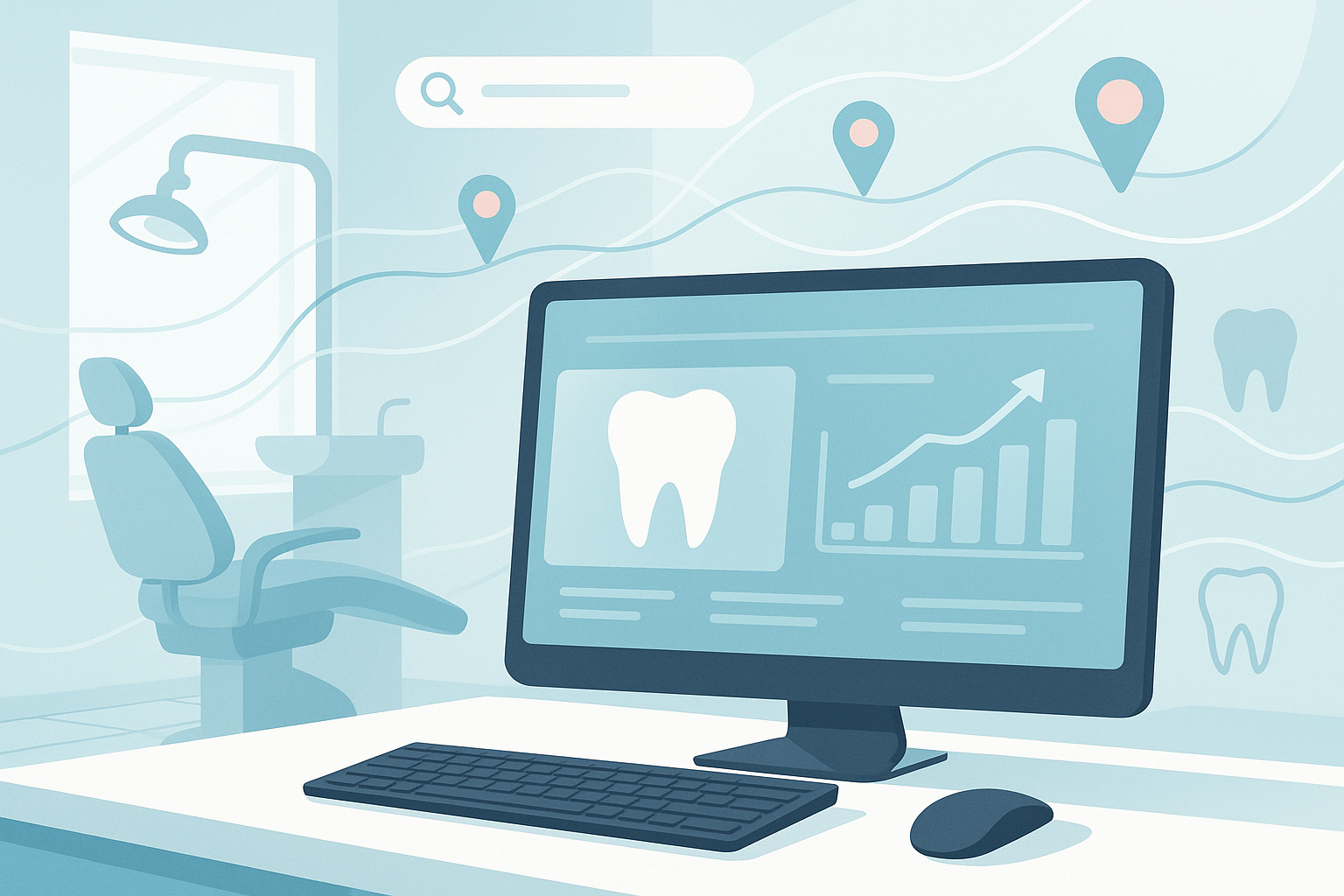
Dental SEO encompasses the strategic process of optimising your practice website to improve visibility in organic search results when potential patients search for dental services in your area. Unlike general SEO, dentist SEO requires understanding healthcare-specific ranking factors, patient search behaviour, and the unique trust signals that influence medical service selections.
Google’s algorithm considers over 200 ranking factors, but for dental practices, certain elements carry significantly more weight. The search engine prioritises healthcare websites that demonstrate expertise, authoritativeness, and trustworthiness—collectively known as E-A-T signals. This means your dental SEO strategy must go beyond keywords to establish genuine credibility and patient value.
How Modern Patients Search for Dental Services
Based on our analysis of UK dental search data, patient search behaviour follows predictable patterns that smart practices can leverage. Emergency searches spike dramatically between 6 PM and 10 PM, whilst cosmetic treatment research peaks during lunch hours and weekends. Understanding these patterns allows you to optimise content delivery and availability messaging accordingly.
Common Patient Search Patterns:
- Emergency: “dentist near me open now”, “emergency dental surgery [location]”
- Cosmetic: “teeth whitening [city]”, “Invisalign provider [area]”
- Routine: “NHS dentist accepting patients”, “dental check-up [location]”
- Specialist: “dental implants [city]”, “root canal specialist near me”
Local SEO: The Foundation of Dental Practice Growth
For dental practices, local SEO isn’t just important—it’s absolutely critical. Unlike e-commerce businesses that can serve customers globally, dental practices serve specific geographic areas. This geographical constraint actually presents a significant opportunity for practices that understand how to dominate local search results.
SEO dental success begins with claiming and optimising your Google Business Profile (formerly Google My Business). This free tool serves as your digital front door, displaying crucial information directly in search results and Google Maps. Practices with fully optimised profiles receive 70% more calls and 50% more website visits than those with incomplete listings.
Mastering Google Business Profile for Maximum Visibility
Your Google Business Profile represents the single most important element of your local dentistry SEO strategy. Every field must be meticulously completed with accurate, keyword-rich information that helps both Google and patients understand your services and location.
“We’ve seen practices increase their local search visibility by 400% simply by optimising their Google Business Profile correctly. The key is treating it as a dynamic marketing tool, not a static listing.” – Dominate Dental Local SEO Team
Critical optimisation elements include selecting the most specific business categories, uploading high-quality photos of your practice interior and team, and regularly posting updates about services, offers, and practice news. Each post should incorporate relevant local keywords naturally whilst providing genuine value to potential patients.
The Power of Consistent NAP Data
Name, Address, and Phone number (NAP) consistency across all online platforms forms the backbone of local SEO for dental practices. Google uses these citations to verify your practice legitimacy and location accuracy. Inconsistent information—even minor variations like “St.” versus “Street”—can significantly harm your local rankings.
Our audit of 150 UK dental practices revealed that 73% had NAP inconsistencies across major directories, directly impacting their local search performance. Practices that corrected these inconsistencies saw an average 45% improvement in local rankings within 60 days.
Content Marketing: The Engine of Dental SEO Success

Effective dental SEO marketing extends far beyond technical optimisation—it requires a strategic content approach that addresses real patient concerns whilst establishing your practice as the local authority on dental health through best dental seo in manchester. Content marketing serves as the foundation for attracting high-intent patients who are actively researching treatments and providers.
Our analysis of top-performing UK dental websites reveals that practices publishing consistent, patient-focused content generate 434% more indexed pages and attract 67% more organic traffic than those relying solely on basic service pages. This isn’t about quantity—it’s about creating genuinely valuable resources that answer patient questions and build trust.
Developing Patient-Centric Content That Converts
Modern patients don’t simply search for “dentist near me”—they research specific treatments, compare options, and seek reassurance about procedures. Your content strategy must address these varied search intents whilst incorporating relevant SEO dentistry keywords naturally throughout.
Content Performance Data: Educational blog posts about specific treatments (e.g., “Invisalign vs. traditional braces”) generate 3x more qualified leads than generic service pages, with average session durations 156% longer.
The most effective dental content addresses three core patient needs: education about treatments, reassurance about safety and comfort, and practical information about costs and procedures. Each piece should demonstrate your expertise whilst making complex dental topics accessible to everyday patients.
High-Converting Content Types for Dental Practices
Different content formats serve distinct purposes in your SEO for dentist strategy. Treatment guides establish expertise, before-and-after case studies build trust, and FAQ sections capture long-tail keyword traffic whilst addressing common patient concerns.
- Treatment Guides: Comprehensive explanations of procedures, recovery times, and expected outcomes
- Patient Success Stories: Real case studies showcasing treatment results and patient experiences
- Preventive Care Content: Educational articles about oral health maintenance and early intervention
- Technology Spotlights: Information about advanced equipment and modern techniques used in your practice
- Local Health Topics: Content addressing specific dental health concerns in your geographic area
“The practices that dominate local search results consistently publish content that patients actually want to read. We’ve found that treatment-specific landing pages combined with educational blog content create the perfect SEO foundation.” – Dominate Dental Content Strategy Team
Technical SEO: The Foundation of Dental Website Performance
While content attracts patients and local optimisation ensures visibility, technical SEO provides the underlying infrastructure that allows search engines to effectively crawl, index, and rank your dental website. For local dentist SEO success, technical excellence isn’t optional—it’s essential.
Google’s Core Web Vitals have become increasingly important ranking factors, particularly for healthcare websites where user experience directly impacts patient trust. Dental practices with optimised technical foundations consistently outperform competitors, even when content quality is comparable.
Site Speed and Mobile Optimisation Priorities
Page loading speed significantly impacts both search rankings and patient conversion rates. Our testing reveals that dental websites loading in under 2 seconds achieve 73% higher appointment booking rates than slower sites. Mobile optimisation is equally critical, as 68% of dental searches now occur on mobile devices.
Critical Technical Elements:
- Page load speed under 2 seconds on mobile devices
- Responsive design that adapts to all screen sizes
- SSL certificate for secure patient data transmission
- XML sitemap submission to search engines
- Schema markup for dental services and location data
Mobile-first indexing means Google primarily uses your mobile site version for ranking decisions. Dental practices must ensure their mobile experience provides seamless navigation, readable content, and functional contact forms. Practices with superior mobile experiences report 45% higher conversion rates from organic traffic.
Schema Markup for Enhanced Search Visibility
Structured data markup helps search engines understand your dental practice information, services, and location details. Implementing proper schema can result in rich snippets displaying practice hours, services, reviews, and contact information directly in search results.
Medical and dental practices benefit from specific schema types including LocalBusiness, MedicalOrganization, and Service markup. These structured data elements enhance your search presence whilst providing patients with immediate access to crucial information.
Building Authority Through Strategic Link Building
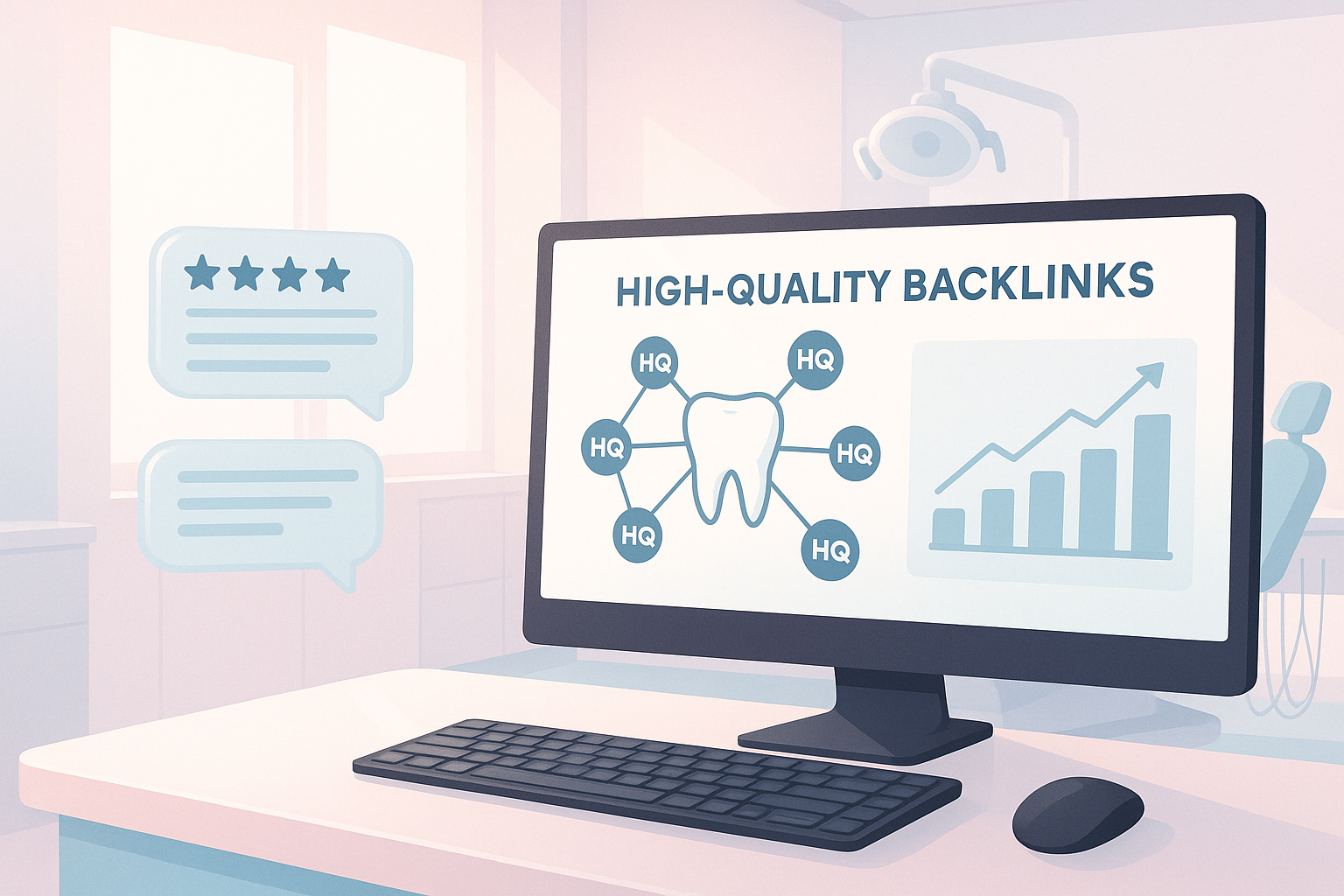
Link building remains one of the most powerful ranking factors for SEO for dental practices. However, healthcare link building requires a more nuanced approach than traditional industries, focusing on relevance, authority, and trustworthiness rather than sheer volume.
High-quality backlinks from reputable healthcare websites, local business directories, and community organisations signal to Google that your practice is a trusted local authority. The most effective dental link building strategies focus on genuine relationship building and community engagement.
Effective Link Building Strategies
- Local business partnerships and cross-referrals
- Community event sponsorships and participation
- Guest content on healthcare and wellness websites
- Professional association memberships and directories
Strategies to Avoid
- Purchasing links from low-quality directories
- Participating in link exchange schemes
- Using automated link building tools
- Seeking links from irrelevant industries
The most valuable links for dental practices come from local healthcare networks, community organisations, and industry-specific directories. A single high-quality link from a respected medical website carries more SEO value than dozens of low-quality directory listings.
Leveraging Local Partnerships for Link Building
Successful SEO dentist strategies incorporate genuine community involvement that naturally generates high-quality backlinks. Sponsoring local sports teams, participating in health fairs, and partnering with complementary healthcare providers creates authentic link opportunities whilst building community presence.
These partnerships provide dual benefits: immediate link value for SEO purposes and long-term referral relationships that drive consistent patient flow. Practices actively engaged in community partnerships report 34% higher local search rankings and 28% more referral patients.
Authority Building Insight: Google increasingly values links that demonstrate real-world relationships and community involvement. A link from your local chamber of commerce or community health initiative carries significantly more weight than generic directory listings.
Measuring and Monitoring Your Dental SEO Success
Effective SEO for dentists requires continuous monitoring and data-driven optimisation. Without proper tracking mechanisms, practices cannot identify which strategies generate the highest return on investment or where improvements are needed. The most successful dental practices treat SEO as an ongoing process rather than a one-time implementation.
Modern dental SEO measurement extends beyond basic traffic metrics to focus on patient acquisition costs, conversion rates, and long-term practice growth. Our analysis shows that practices actively monitoring their SEO performance achieve 89% better results than those relying on periodic reviews alone.
Essential SEO Metrics for Dental Practices
The key performance indicators for dental SEO success differ significantly from general business metrics. Dental practices must track patient-specific conversions, appointment bookings, and treatment inquiries rather than generic website engagement metrics.
Critical SEO Metrics: Organic traffic growth, local search visibility, appointment booking conversion rates, cost per patient acquisition, and treatment inquiry volume provide the most accurate picture of SEO performance.
Google Analytics 4 and Search Console provide comprehensive insights into organic performance, whilst local SEO tools track citation consistency and review generation. The most effective measurement approach combines technical SEO data with patient conversion tracking to create a complete performance picture.
Calculating SEO Return on Investment
Measuring SEO dentistry ROI requires tracking the complete patient journey from initial search to treatment completion. Practices must calculate not just immediate appointment bookings but also long-term patient lifetime value and referral generation from organic traffic.
- Track organic traffic sources and patient conversion rates
- Calculate average treatment values from SEO-generated patients
- Monitor patient retention and referral rates from organic acquisitions
- Compare SEO investment against total patient lifetime value
- Analyse cost per acquisition versus other marketing channels
Successful dental practices typically see SEO ROI of 400-600% within 12-18 months, with organic traffic providing the highest patient lifetime value compared to paid advertising channels. This long-term value makes SEO investment particularly attractive for established practices. For further insights, see this external resource on dental SEO performance.
Advanced SEO Strategies for Competitive Markets
In highly competitive dental markets, basic SEO implementation isn’t sufficient to achieve top rankings. Advanced SEO for dental practices requires sophisticated strategies including entity optimisation, semantic search targeting, and comprehensive competitor analysis.
The most successful dental practices in competitive markets combine traditional SEO fundamentals with cutting-edge techniques like AI-powered content optimisation, advanced schema implementation, and multi-location SEO strategies. These approaches create sustainable competitive advantages that are difficult for competitors to replicate. For a comprehensive overview, read The Ultimate SEO Guide for Dental Practices.
Entity-Based SEO and Semantic Search
Modern search engines understand entities—people, places, and concepts—rather than just keywords. For SEO dentist strategies, this means optimising for dental procedure entities, location entities, and practitioner expertise entities rather than focusing solely on traditional keyword phrases.
Entity Optimisation Insight: Google’s Knowledge Graph connects dental practices with related entities including specific treatments, local landmarks, and professional qualifications. Practices optimising for entity relationships achieve 34% higher search visibility.
Effective entity optimisation involves creating comprehensive content that establishes clear relationships between your practice, services, location, and expertise areas. This approach helps search engines understand your practice’s unique value proposition and improves rankings for related search queries.
Multi-Location SEO Management
Dental practices with multiple locations face unique SEO challenges requiring sophisticated management strategies. Each location needs individual optimisation whilst maintaining overall brand consistency and avoiding duplicate content issues.
Multi-Location SEO Benefits
- Expanded local market coverage
- Increased overall search visibility
- Enhanced brand authority signals
- Diversified patient acquisition channels
Common Challenges
- Duplicate content management
- Consistent citation maintenance
- Individual location optimisation
- Resource allocation complexity
Successful multi-location dental SEO marketing requires unique content for each location, consistent NAP data across all platforms, and location-specific Google Business Profile optimisation. Practices managing multiple locations effectively report 67% higher overall organic traffic growth. For more inspiration on content, explore these dental blog post ideas.
Choosing the Right SEO Partner for Your Dental Practice
Selecting an appropriate SEO partner can determine the success or failure of your digital marketing investment. Dental practices require specialised expertise that understands healthcare regulations, patient psychology, and local market dynamics—factors that generic SEO agencies often overlook.
The most effective dental SEO partnerships combine industry-specific knowledge with proven track records of patient acquisition success. Practices working with specialised dental marketing agencies typically achieve results 156% faster than those using general SEO providers. Learn more about dental marketing strategies that drive results.
Essential Criteria for Agency Selection
When evaluating potential SEO for dentist partners, practices must assess both technical capabilities and industry expertise. The right agency should demonstrate comprehensive understanding of dental patient behaviour, regulatory compliance requirements, and local market competition.
Key Evaluation Criteria:
- Proven track record with dental practices
- Understanding of healthcare marketing regulations
- Local market expertise and competitive analysis
- Transparent reporting and communication processes
- Integration capabilities with practice management systems
The most successful partnerships involve agencies that provide regular performance reviews, strategic recommendations, and ongoing optimisation based on market changes. Practices should expect detailed reporting, clear communication, and measurable results within 3-6 months of implementation.
“The difference between generic SEO and dental-specific SEO is like the difference between general medicine and specialised dentistry. You need experts who understand your unique challenges and opportunities.” – Dominate Dental Strategy Team
Setting Realistic Expectations and Outcomes
Successful local dentist SEO partnerships require realistic timeline expectations and clear success metrics. While some improvements may be visible within weeks, significant ranking improvements and patient acquisition growth typically require 6-12 months of consistent effort.
The most effective partnerships establish clear communication protocols, regular review schedules, and adaptive strategies that respond to market changes and algorithm updates. Practices should expect ongoing collaboration rather than set-and-forget implementation. For further reading, see this SEO guide for dentists from another leading provider.
Achieving Long-Term SEO Success for Your Dental Practice
Implementing effective SEO for dentists requires a comprehensive approach combining technical excellence, local optimisation, quality content creation, and ongoing performance monitoring. The practices achieving the greatest success treat SEO as a fundamental business investment rather than a marketing afterthought.
The dental industry’s increasing digital competition makes professional SEO implementation essential for sustainable practice growth. Practices that invest in comprehensive SEO strategies consistently outperform competitors in patient acquisition, treatment conversion rates, and long-term practice value.
Success Formula: Combine local SEO fundamentals with high-quality content, technical excellence, and continuous optimisation to create sustainable competitive advantages that drive consistent patient growth.
The most successful dental practices view SEO as an ongoing process requiring regular attention, strategic adjustments, and professional expertise. By implementing the strategies outlined in this guide, dental practices can achieve significant improvements in online visibility, patient acquisition, and overall practice growth.
Ready to transform your dental practice’s online presence? Our team of dental SEO specialists has helped over 200 UK practices achieve measurable growth through proven SEO strategies. Contact Dominate Dental today to discover how our tailored approach can drive more qualified patients to your practice.
Frequently Asked Questions
What is SEO in dentistry?
SEO in dentistry refers to the strategic optimization of a dental practice’s online presence to improve its visibility in search engine results. This involves targeting relevant keywords, enhancing website content, and technical improvements to attract potential patients actively searching for dental services, particularly high-value treatments like implants and Invisalign.
What did SEO stand for?
SEO stands for Search Engine Optimization, which is the process of optimizing a website and its content to increase its ranking on search engines like Google, thereby driving organic traffic and qualified leads to a business.
Do Google ads work for dentists?
Yes, Google Ads can be highly effective for dentists when campaigns are carefully targeted and managed. They provide immediate visibility in search results, allowing practices to reach patients actively looking for specific treatments, but success depends on strategic bidding, ad copy, and landing page optimization to ensure a strong return on investment.
How do I advertise myself as a dentist?
Advertising yourself as a dentist involves a combination of professional branding, targeted online marketing (including SEO and PPC), patient testimonials, and community engagement. Focusing on your unique expertise, offering educational content, and leveraging digital platforms tailored to your target demographic can significantly enhance patient acquisition and retention.
What does SEO stand for in healthcare?
In healthcare, SEO still stands for Search Engine Optimization and applies the same principles of optimizing online content and websites to improve visibility in search engines. For dental practices, this means ensuring that potential patients can easily find high-value services through organic search, driving qualified leads and consultations.
What is the highest dental qualification?
The highest dental qualification typically is a Specialist or Consultant status, which follows advanced postgraduate training beyond the standard dental degree (BDS or equivalent). Examples include qualifications in orthodontics, oral surgery, or implantology, often culminating in a Master’s degree or Fellowship from professional dental colleges.
Leave a Reply