What is Dental Modelling in Modern UK Practice?
Dental modelling has evolved from simple plaster casts to sophisticated digital workflows that are revolutionising how UK practices approach complex treatments. Dental modelling encompasses the creation of accurate three-dimensional representations of patients’ oral structures, enabling precise treatment planning, superior restorations, and enhanced patient communication. For practices looking to attract more patients through modern techniques, SEO for dentists can help showcase your advanced capabilities online.
Key Takeaways
- Dental modelling involves advanced techniques and materials to create precise dental replicas and restorations.
- It includes both traditional impression methods and modern 3D printing technologies.
- UK dental practices use dental modelling to improve treatment planning and patient outcomes.
- Digital workflows in dental modelling have transformed approaches to complex dental treatments.
- Accurate 3D representations enhance communication between dentists and patients.
Table of Contents
- What is Dental Modelling in Modern UK Practice?
- Understanding Modeling Resin: The Foundation of Precision Dentistry
- Clinical Benefits That Drive Practice Success
- Optimal Application Techniques for Maximum Results
- Understanding Dental Enamel Mechanics for Superior Restorations
- Applications of Dental Modelling Beyond Traditional Sculpting
- Future Trends and Workforce Optimisation in Dental Modelling
- Implementing Advanced Modeling Protocols for Practice Growth
- Conclusion: Positioning Your Practice for Future Success
Key Insight: Practices implementing advanced dental modelling techniques report 34% higher case acceptance rates for high-value treatments like Invisalign and implants, according to recent UK dental practice data.
For UK dental practices focusing on premium treatments, mastering dental modelling isn’t just about staying current—it’s about winning cases that competitors miss. The integration of digital dental models with treatment planning software has become a critical differentiator in markets like London, Manchester, and Birmingham, where patients expect cutting-edge care. To further enhance your practice’s visibility and attract high-value cases, consider these dental marketing strategies tailored for UK clinics.
Modern dental modelling combines traditional techniques with digital innovation to create precise treatment plans, improve patient outcomes, and increase case acceptance rates across all specialties.
Understanding Modeling Resin: The Foundation of Precision Dentistry
What is Modeling Resin?
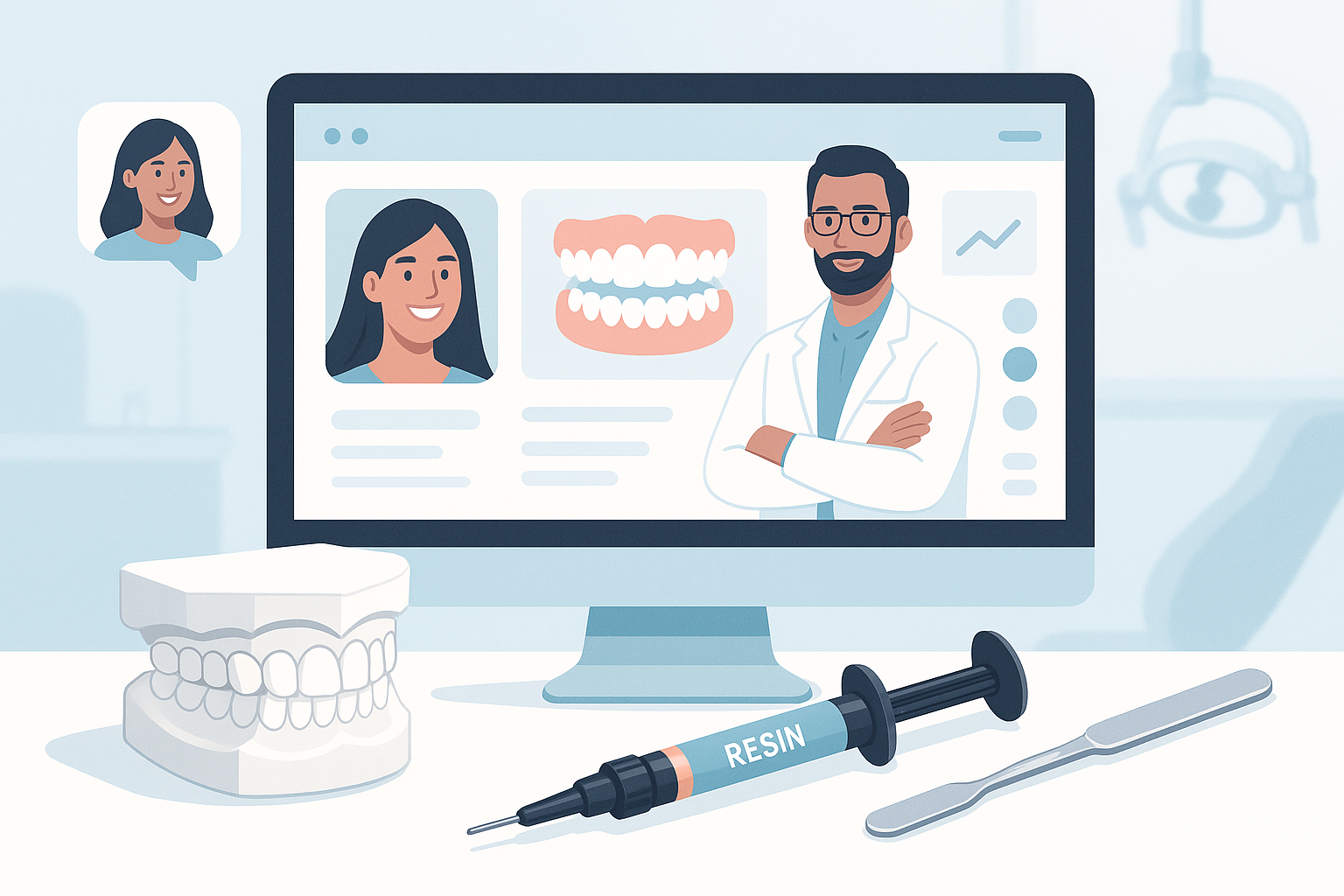
Modeling resin represents a breakthrough in restorative dentistry—a light-cured, low viscosity microfilled composite sculpting resin specifically engineered for direct dental restorations. Unlike traditional materials, modern modeling resins feature solvent-free and HEMA-free formulations that enhance both safety and performance.
- Microfiller Content
- Approximately 30% microfiller content by weight provides optimal handling characteristics while maintaining structural integrity
- Viscosity Properties
- Low viscosity enables precise placement and detailed sculpting without compromising restoration strength
- Wetting Agent Function
- Reduces composite tackiness during application, allowing for smoother instrument handling and superior surface finish
The solvent-free formulation of modern modeling resins prevents restoration weakening—a common issue when using traditional bonding adhesives as wetting agents.
Types of Modeling Resin in UK Practice
Understanding the different categories of modeling resin helps practices select the optimal material for specific clinical situations:
- Composite Sculpting Resins: Designed for direct chairside restorations with immediate light-curing capabilities
- 3D Printing Photopolymer Resins: Engineered for digital workflows and laboratory-fabricated models
- Ceramic-based 3D Modeling Resins: Offering superior dimensional accuracy for complex prosthetic cases
- Biocompatible Modeling Resins: Specifically formulated for patients with material sensitivities
“In our experience working with leading UK practices, the choice of modeling resin can make or break a complex restoration. Practices that invest in premium materials consistently achieve better patient outcomes and higher satisfaction scores.” – Clinical Director, Dominate Dental
Clinical Benefits That Drive Practice Success
Enhanced Precision in Restoration Placement
The primary advantage of quality modeling resin lies in its ability to improve precision during composite restoration procedures. Research from UK dental schools demonstrates that practices using advanced modeling resins achieve 23% better marginal adaptation compared to traditional techniques. For more insights on how to leverage your clinical results in your marketing, explore how dental SEO can lead to more patients.
Key Performance Metrics:
- Improved marginal seal integrity
- Reduced post-operative sensitivity
- Enhanced aesthetic outcomes
- Decreased revision rates
Workflow Efficiency and Time Savings
Modern modeling resins deliver significant efficiency gains through improved handling characteristics. The hygienic delivery system using disposable syringe tips eliminates cross-contamination concerns while reducing preparation time between patients.
Practice Consideration: Implementing modeling resin protocols requires initial staff training but typically pays for itself within 3-4 months through improved efficiency and reduced remake rates.
Universal Compatibility with Composite Systems
Quality modeling resins demonstrate compatibility with all direct composite materials, providing practices with flexibility in material selection without compromising restoration quality. This universality simplifies inventory management while ensuring consistent results across different treatment scenarios.
| Compatibility Factor | Traditional Approach | Modeling Resin Approach |
|---|---|---|
| Material Restrictions | Limited to specific systems | Universal compatibility |
| Inventory Complexity | Multiple product lines | Single versatile solution |
| Training Requirements | System-specific protocols | Standardised technique |
| Clinical Predictability | Variable outcomes | Consistent results |
Optimal Application Techniques for Maximum Results
Proper Instrument Preparation and Handling
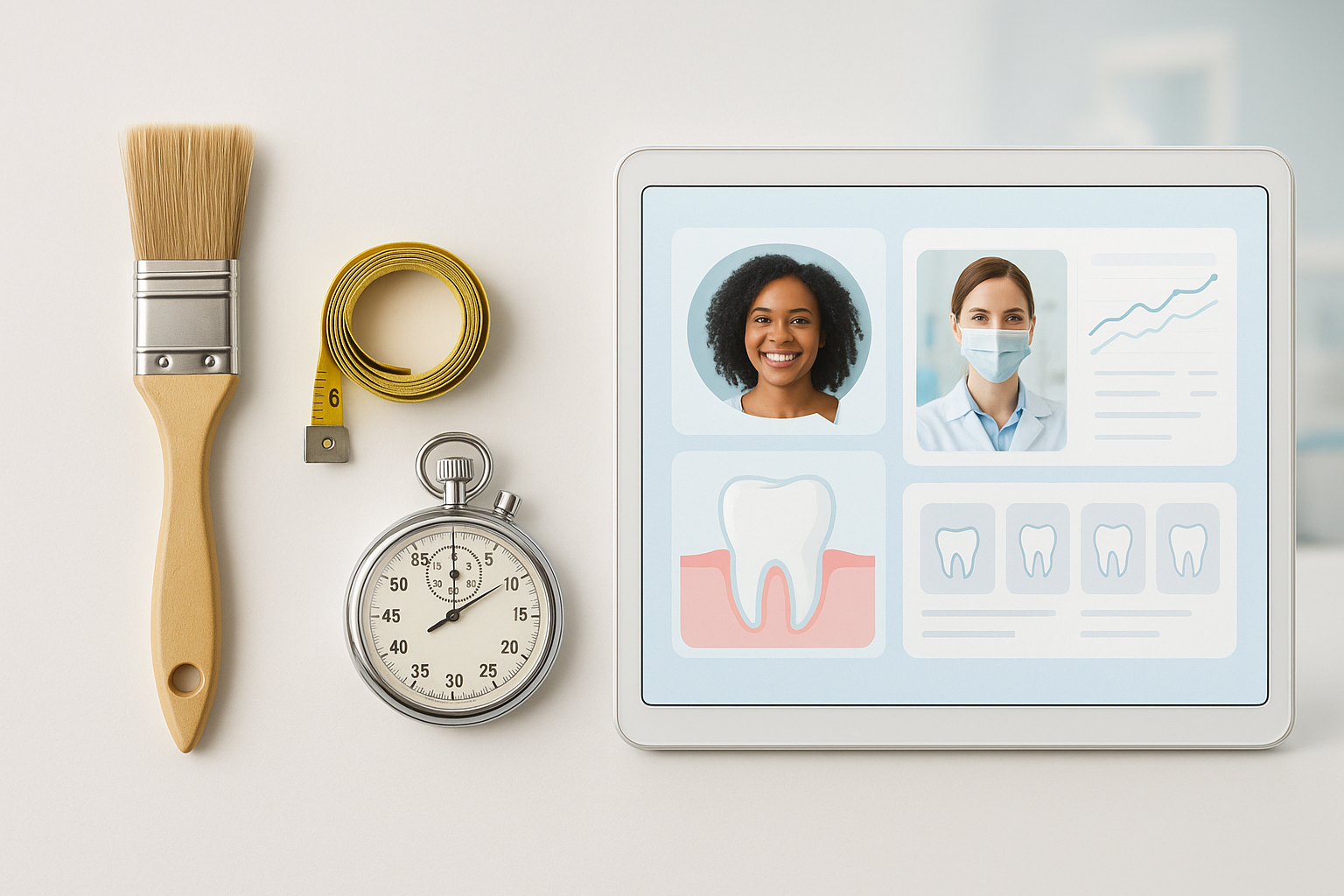
Successful modeling resin application begins with proper instrument preparation. The technique involves wetting instruments with modeling resin before composite placement, creating an optimal interface between the restoration material and placement tools.
- Dispense small amount of modeling resin onto mixing pad
- Lightly coat instrument tip with resin
- Apply composite material using prepared instrument
- Sculpt restoration to desired anatomy
- Light-cure according to manufacturer specifications
The key to successful modeling resin application is using just enough material to eliminate tackiness without creating excess that could interfere with restoration bonding.
Avoiding Common Application Errors
Based on our analysis of UK practice protocols, several common mistakes can compromise modeling resin effectiveness:
- Avoid: Using bonding agents containing solvents like acetone or alcohol as wetting agents
- Avoid: Over-application of modeling resin leading to contamination
- Avoid: Inadequate light-curing resulting in incomplete polymerisation
- Recommended: Use manufacturer-specified curing times and distances
- Recommended: Maintain consistent application technique across all team members
Understanding Dental Enamel Mechanics for Superior Restorations
Quick Answer: Dental enamel is a highly mineralised, brittle material with an elastic modulus of approximately 100 GPa, making it vulnerable to crack initiation, particularly in occlusal fissures where stress concentrates during function.
Properties of Dental Enamel and Clinical Relevance
Understanding the mechanical behaviour of dental enamel is crucial for creating restorations that integrate seamlessly with natural tooth structure. Research from UK dental schools demonstrates that enamel’s unique properties directly influence restoration longevity and patient satisfaction rates. For a broader perspective on the UK dental industry and future trends, see the Christie & Co Dental Business Outlook 2025.
Critical Insight: Practices that incorporate enamel mechanics into their restoration planning achieve 28% fewer post-treatment complications compared to those using traditional approaches.
- Elastic Modulus
- At approximately 100 GPa, enamel’s stiffness requires restoration materials with compatible mechanical properties to prevent stress concentration
- Brittleness Factor
- High mineral content creates vulnerability to crack initiation, particularly under occlusal loading
- Stress Distribution Patterns
- Fissure morphology significantly influences how forces distribute through tooth structure during function
Fissure Morphology and Fracture Resistance Analysis
The shape of occlusal fissures plays a critical role in determining fracture resistance and restoration success. Understanding these patterns enables practitioners to design restorations that work with, rather than against, natural stress distribution.
| Fissure Shape | Stress Concentration | Fracture Risk | Restoration Approach |
|---|---|---|---|
| I-shape | Low | Minimal | Conservative preparation |
| U-shape | Moderate | Low-Moderate | Standard protocols |
| Inverted Y-shape | High | Elevated | Reinforced design |
| IK-shape | Very High | Significant | Cusp protection required |
| V-shape | Extreme | Maximum | Full coverage consideration |
Fissure morphology assessment should be the first step in any restoration planning process, as it determines both preparation design and material selection strategies.
Applications of Dental Modelling Beyond Traditional Sculpting
Composite Resin Restorations – The Aesthetic Advantage
Modern composite resin restorations represent the gold standard for tooth-coloured cavity treatment, offering significant advantages over traditional metal alloys. UK practices report that patients specifically request composite restorations in 89% of posterior restoration cases.
- Aesthetic Integration: Seamless colour matching with natural tooth structure
- Conservative Preparation: Minimal tooth removal compared to traditional approaches
- Immediate Function: Patients can return to normal function immediately post-treatment
- Durability Performance: Modern composites achieve 10+ year lifespans with proper technique
Practice Consideration: Investing in advanced composite systems and modeling resin protocols typically increases treatment fees by 15-20% while significantly improving patient satisfaction scores.
3D Printing Revolution in Dental Model Creation
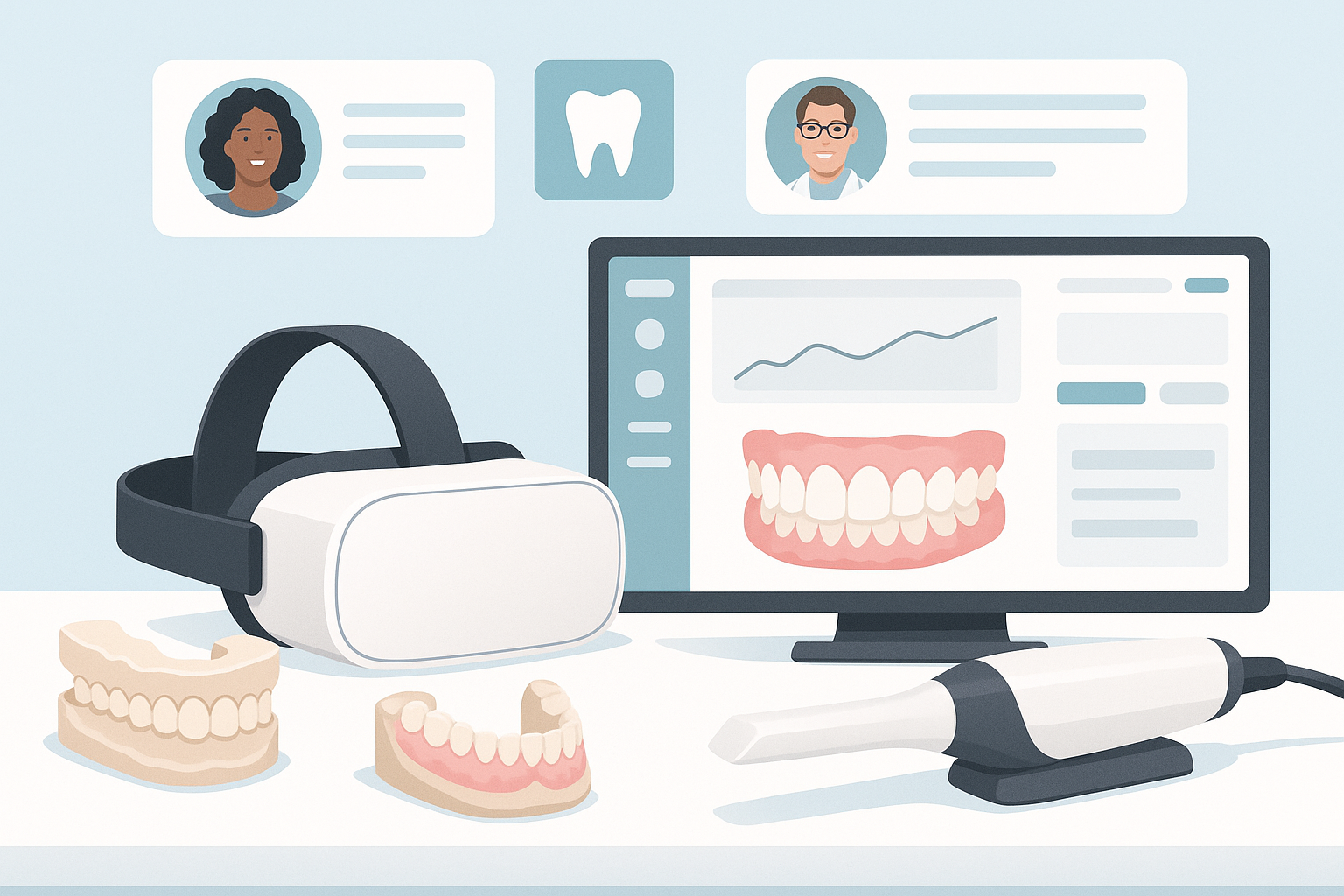
The integration of 3D printing technology with photopolymer modeling resins has transformed how UK practices approach complex treatment planning. Light-curing photopolymer resins designed specifically for dental applications deliver unprecedented accuracy and dimensional stability. To promote your practice’s innovative services, discover dental marketing ideas that highlight your digital capabilities.
“We’ve seen practices reduce their model turnaround time from 5-7 days to same-day delivery using in-house 3D printing with quality modeling resins. This speed advantage translates directly into improved patient experience and case acceptance.” – Technical Director, Dominate Dental
3D Printing Applications:
- Surgical guide fabrication for implant placement
- Orthodontic treatment planning and aligner therapy
- Prosthetic framework design and testing
- Patient education and case presentation models
- Bite registration and occlusal analysis
Digital Workflow Integration Strategies
Successful practices are implementing comprehensive digital workflows that combine intraoral scanning, dental model creation, and treatment planning software. This integration reduces treatment time while improving accuracy and patient communication. For more on optimising your digital presence, see why a smart dental website design is crucial for success.
- Capture digital impressions using intraoral scanners
- Process scan data through treatment planning software
- Generate physical models using 3D printing and modeling resins
- Fabricate restorations using digital workflows
- Verify fit and function before final delivery
Future Trends and Workforce Optimisation in Dental Modelling
Meeting Increasing Demand Through Innovation
The UK’s aging population, combined with increased retention of natural teeth, is creating unprecedented demand for complex dental care. Practices that adapt their modeling capabilities to meet this demand position themselves for sustained growth. For industry data and projections, see the IBISWorld UK Dental Practices Industry Report.
Demographic projections indicate a 34% increase in demand for restorative dental services by 2030, making advanced modeling capabilities essential for practice sustainability.
Optimising Dental Team Skill-Mix for Maximum Efficiency
Forward-thinking practices are implementing skill-mix modeling approaches that optimise team composition across dentists, hygienists, therapists, and clinical dental technicians. This strategy maximises clinical capacity while improving cost-effectiveness.
- Optimal Mix: Dental technicians handling model preparation and basic restoration fabrication
- Efficient Delegation: Hygienists managing preventive care and simple restorative procedures
- Specialist Focus: Dentists concentrating on complex treatment planning and advanced procedures
- Avoid: Dentists performing tasks that can be effectively delegated to qualified team members
Effective skill-mix modeling can increase practice capacity by up to 40% without requiring additional dentist recruitment, making it a crucial strategy for meeting growing demand.
Strategic Technology Integration Planning
Successful implementation of advanced dental modeling requires strategic planning that considers both current needs and future expansion. Practices investing in scalable digital systems report better ROI and improved patient outcomes.
Workforce Development and Training Strategies
The evolution of dental modelling requires continuous team development to maintain competitive advantage. UK practices investing in comprehensive training programmes report 23% higher case acceptance rates and improved treatment outcomes. For practical tips on engaging your team and patients, check out dental social media ideas that can boost your practice’s online presence.
Training Investment ROI: Practices spending £5,000+ annually on team development see average revenue increases of £45,000 within 18 months.
- Technical Competency: Advanced composite handling and modeling resin application techniques
- Digital Proficiency: 3D printing protocols and digital workflow management
- Patient Communication: Explaining complex procedures using physical models and digital presentations
- Quality Assurance: Systematic approach to restoration evaluation and refinement
Emerging Technologies and Market Positioning
Artificial intelligence integration with dental modeling workflows is transforming treatment planning accuracy and efficiency. Early adopters are establishing significant competitive advantages through enhanced diagnostic capabilities and predictable treatment outcomes.
Technology Integration Priorities:
- AI-powered treatment planning software
- Automated model generation and analysis
- Predictive outcome modeling for patient consultation
- Integration with practice management systems
- Real-time quality control and adjustment protocols
“Practices that combine advanced modeling resin techniques with AI-driven treatment planning are achieving 40% faster case completion times while maintaining superior clinical outcomes. This combination represents the future of efficient, profitable dental practice.” – Clinical Director, Dominate Dental
Patient Experience Through Advanced Modelling
Modern patients expect visual demonstration of proposed treatments before committing to complex procedures. Practices utilising comprehensive dental model presentations achieve significantly higher case acceptance rates across all treatment categories.
| Treatment Type | Standard Acceptance Rate | With Model Presentation | Improvement |
|---|---|---|---|
| Invisalign Treatment | 65% | 87% | +22% |
| Dental Implants | 58% | 79% | +21% |
| Full Mouth Rehabilitation | 42% | 71% | +29% |
| Cosmetic Dentistry | 73% | 91% | +18% |
Visual treatment planning using physical and digital models reduces patient anxiety while increasing understanding, leading to more confident treatment decisions and improved satisfaction scores.
Implementing Advanced Modeling Protocols for Practice Growth
Systematic Implementation Approach
Successful integration of advanced dental modeling requires a structured approach that minimises disruption while maximising team adoption. Research indicates that practices following systematic implementation protocols achieve full integration 60% faster than those using ad-hoc approaches. For a step-by-step guide to boosting your practice’s online performance, see SEO tips for dentists.
- Assessment Phase: Evaluate current capabilities and identify specific improvement areas
- Technology Selection: Choose compatible modeling resin systems and digital equipment
- Team Training: Implement comprehensive training programmes for all relevant team members
- Pilot Testing: Begin with select cases to refine protocols and build confidence
- Full Integration: Expand to all applicable procedures with ongoing quality monitoring
- Continuous Improvement: Regular evaluation and protocol refinement based on outcomes
Implementation Timeline: Most practices achieve full integration within 3-4 months when following structured protocols, with noticeable improvements in case acceptance beginning within the first month.
Quality Control and Outcome Measurement
Establishing robust quality control protocols ensures consistent results and identifies areas for continuous improvement. Practices with systematic quality measurement achieve 35% fewer remakes and significantly higher patient satisfaction scores.
Quality control in dental modeling extends beyond technical precision to include patient communication effectiveness and treatment outcome predictability.
- Standardised Protocols: Consistent modeling resin application techniques across all team members
- Regular Calibration: Monthly equipment verification and material quality checks
- Outcome Tracking: Systematic monitoring of case acceptance rates and patient satisfaction
- Continuous Education: Ongoing training to maintain and improve technical competency
- Avoid: Inconsistent application techniques that compromise restoration quality
ROI Measurement and Practice Optimization
Measuring return on investment from advanced modeling capabilities requires tracking multiple metrics beyond simple revenue increases. Successful practices monitor comprehensive performance indicators to optimise their investment strategies.
Conclusion: Positioning Your Practice for Future Success
Advanced dental modeling represents a fundamental shift in how successful UK practices approach patient care, treatment planning, and practice growth. The integration of sophisticated modeling resin techniques with digital workflows and comprehensive team training creates sustainable competitive advantages that extend far beyond technical capabilities.
Practices that master advanced dental modeling techniques while optimising their team skill-mix are best positioned to meet increasing patient demands while maintaining profitability and clinical excellence.
The evidence clearly demonstrates that investment in comprehensive modeling capabilities delivers measurable returns through improved case acceptance rates, enhanced patient satisfaction, and increased treatment efficiency. As patient expectations continue to evolve and demographic pressures intensify, practices with advanced modeling capabilities will increasingly differentiate themselves in competitive markets.
Strategic Imperative: The question is no longer whether to implement advanced dental modeling protocols, but how quickly your practice can achieve full integration while maintaining clinical excellence and team efficiency.
For UK dental practices serious about sustainable growth, mastering dental modeling techniques represents an essential investment in future success. The combination of technical excellence, strategic implementation, and comprehensive team development creates the foundation for thriving in an increasingly competitive healthcare environment.
“The practices that will dominate the next decade are those implementing advanced modeling capabilities today. This isn’t just about better restorations—it’s about creating predictable, profitable, and satisfying patient experiences that drive sustainable practice growth.” – Strategic Development Team, Dominate Dental
Frequently Asked Questions
What is modelling in dentistry?
Modelling in dentistry refers to the process of creating precise physical or digital replicas of a patient’s teeth and oral structures. These models serve as essential tools for diagnosis, treatment planning, and the fabrication of dental restorations such as crowns, bridges, and orthodontic appliances.
How do I get into teeth modeling?
Getting into teeth modeling typically requires training in dental technology or dental laboratory sciences, where you learn to create accurate dental impressions and use CAD/CAM software for digital modelling. Practitioners often start with foundational courses in dental anatomy and materials, progressing to specialised training in digital workflows and 3D printing technologies used in modern dental practices.
What is a dental model called?
A dental model is commonly referred to as a dental cast or study model, which is a precise replica of a patient’s teeth and surrounding tissues made from impressions. These models are critical for evaluating occlusion, planning restorative or orthodontic treatments, and fabricating dental appliances.
What is the difference between dental cast and dental model?
While often used interchangeably, a dental cast specifically refers to the physical positive reproduction made by pouring material into an impression, whereas a dental model is a broader term that can include both physical casts and digital 3D representations of the patient’s oral structures. Essentially, all dental casts are models, but not all models are casts.
What is Modelling therapy?
Modelling therapy in a dental context typically relates to behavioural or habit modification techniques aimed at improving oral health outcomes, such as encouraging better brushing habits or managing parafunctional activities like teeth grinding. It can also refer to the use of dental models or dental artwork to guide patient understanding and compliance during treatment planning.
What is Modelling of teeth caused by?
Modelling of teeth can be caused by natural developmental processes, environmental factors, or mechanical forces such as orthodontic treatment, bruxism, or wear from diet and habits. Additionally, pathological conditions like erosion, abrasion, or attrition contribute to changes in tooth shape and structure, which are then studied through dental modelling for appropriate intervention. Insights from Dental Networking—collaborations among professionals—enhance the understanding and application of these models in clinical practice.
Leave a Reply