The Evolution of Marketing in Dentistry

Remember relying on word-of-mouth and the Yellow Pages? Times have certainly changed. Dental marketing has shifted dramatically, moving from simple advertisements to complex digital strategies. This evolution reflects changes in how patients find and select their dental care.
From Traditional to Digital: A Notable Change
While traditional methods like print ads still hold some value, they are less effective in reaching today's tech-savvy patients. Relying solely on these methods can significantly limit a practice's reach. This puts practices at risk of falling behind competitors who have adopted digital marketing.
The Rise of Patient Expectations
Today's patients are more informed. They research online, read reviews, and compare services before booking an appointment. They also expect a smooth online experience, including online booking, appointment reminders, engaging content, and personalized communication. This shift in patient expectations requires dental practices to adapt their marketing accordingly.
Growth in the UK Dental Services Market
The UK dental services market is growing rapidly. Valued at USD 9.9 billion in 2023, it's projected to reach USD 48.83 billion by 2032, with a CAGR of 19.4%. This growth stems from increased awareness of oral health and demand for cosmetic procedures. For more in-depth statistics, check out this resource: Learn more about the growth of the UK dental market
Embracing the Digital Ecosystem
Progressive dentists are adapting to these changes by developing comprehensive digital marketing strategies. These strategies include building user-friendly websites optimized for local search, engaging with patients on social media platforms like Facebook, and utilizing targeted online advertising to reach new potential patients. This approach isn't just about following trends; it’s about understanding how patients behave online and aligning marketing to meet their needs. The evolution of dental marketing emphasizes patient-centric engagement and building strong relationships.
Digital Marketing That Actually Drives Appointments
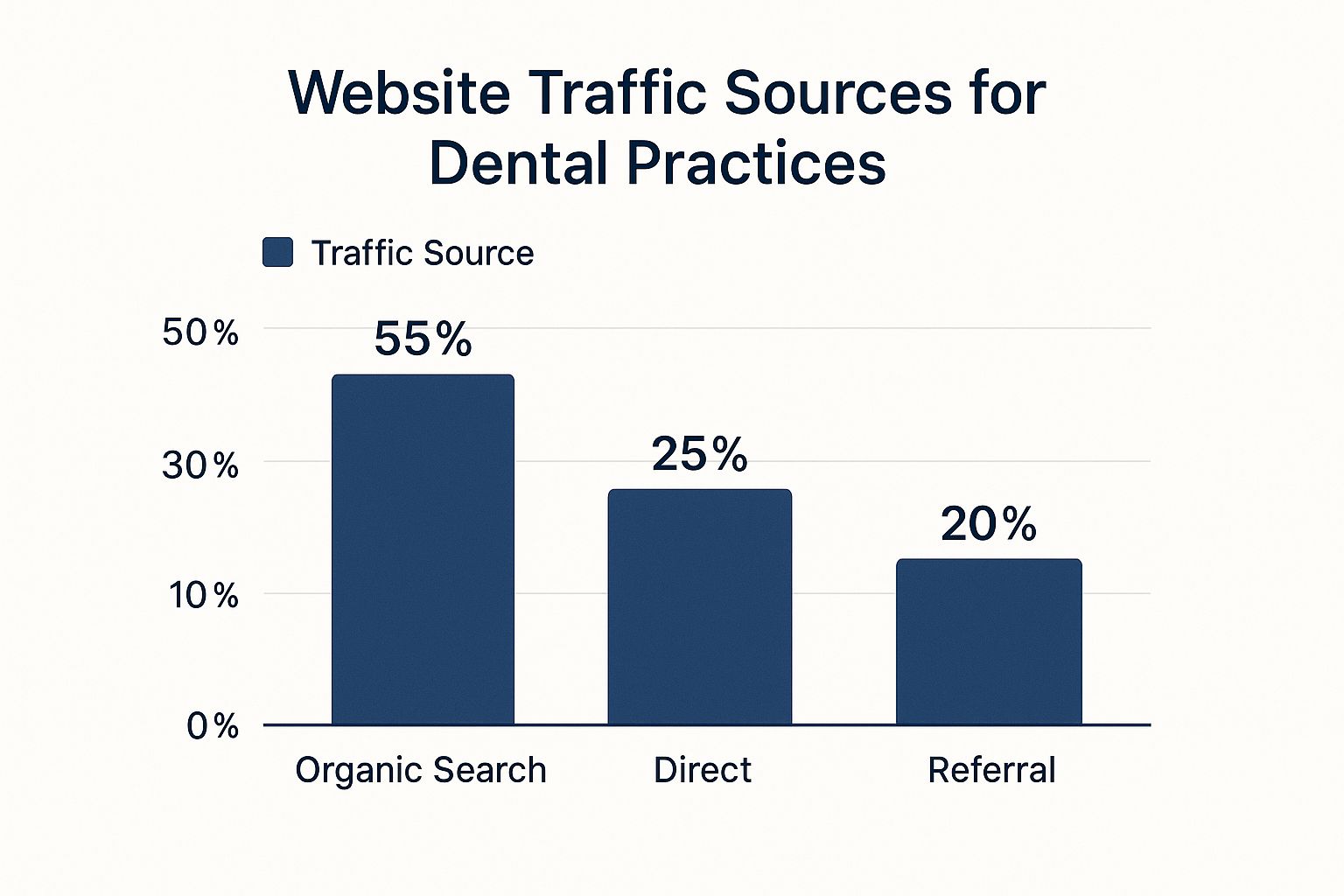
The infographic above highlights the main avenues patients use to find dental practice websites in the UK. Organic search takes the lead at a substantial 55%, followed by direct visits at 25%, and referrals at 20%. This data underscores the vital role of a strong dental marketing strategy centered around organic search. In other words, a solid SEO approach is key for attracting new patients.
The Power of Search Visibility
Think of your website as your online practice. Just as a well-placed physical office benefits from foot traffic, your website thrives on visibility in search engine results. This is where Search Engine Optimization (SEO) comes in. By optimizing your website for relevant keywords, you increase the chances of potential patients finding your practice when searching for dental services in your area. For a deeper dive into dental SEO, check out this helpful guide: How to master dental SEO for increased patient flow.
Creating a Website That Converts
Attracting visitors is only half the battle. Your website also needs to convert those visitors into booked appointments. This involves a user-friendly design with clear calls to action and engaging content. Showcase your expertise and build trust with potential patients.
Consider features like online booking, patient testimonials, and detailed service descriptions. Personalization is also increasingly important in dental marketing. You can explore more about creating tailored experiences here: personalized experiences.
Beyond the Website: Expanding Your Reach
Your website is the foundation, but other digital channels can significantly boost your reach. Social media platforms like Facebook and Instagram provide avenues for connecting with potential patients, building brand awareness, and showcasing your practice's personality.
Paid advertising can further expand your reach and target specific demographics. The key is to integrate these channels strategically to create a consistent and effective online presence. This multi-pronged approach ensures you’re reaching a wider audience.
To help you understand the various options available, let's take a look at a comparison of different digital marketing channels:
Digital Marketing Channels for Dental Practices
Comparison of different digital marketing channels and their effectiveness for dental practices
| Marketing Channel | Average Cost | Effectiveness for Patient Acquisition | Implementation Difficulty | Best For |
|---|---|---|---|---|
| SEO | Varies (Long-term investment) | High (Sustainable growth) | Moderate to High | Building a strong online foundation and attracting organic traffic |
| Paid Advertising (PPC) | Varies (Pay-per-click) | High (Immediate results) | Moderate | Quickly reaching target audiences and generating immediate leads |
| Social Media Marketing | Varies (Time investment + potential ad spend) | Moderate (Building brand awareness and engagement) | Moderate | Connecting with potential patients and building community |
| Email Marketing | Low | Moderate (Nurturing leads and retaining existing patients) | Easy | Staying in touch with patients and promoting special offers |
The table above shows that while SEO is a longer-term strategy, it offers sustainable growth. Paid advertising delivers quick results, but requires ongoing investment. Social media focuses on building relationships, while email marketing is ideal for nurturing leads and patient retention.
Measuring Your Marketing Success
Tracking and analyzing your marketing performance is crucial. Don't just focus on surface-level metrics like website visits or follower counts. Instead, monitor Key Performance Indicators (KPIs) such as new patient acquisitions, appointment booking rates, and Return on Investment (ROI).
This data provides valuable insights into what's working and what's not. By understanding your KPIs, you can refine your strategies and ensure your marketing budget is being used effectively to drive practice growth. This data-driven approach helps you make informed decisions and maximize your return.
Cosmetic Dentistry Marketing That Converts
 Dentistry Marketing“>
Cosmetic dentistry offers a significant growth area for UK dental practices. Successfully marketing these services, however, requires a strategic and focused approach. The key isn't simply attracting patients; it's converting initial interest into booked appointments. This means understanding patient motivations and tailoring your message accordingly.
Messaging That Resonates With Patients
Effective marketing for cosmetic dentistry connects with patients on an emotional level. It speaks to their aspirations for increased confidence, a more attractive smile, and an enhanced overall appearance. Compelling before-and-after photos can be particularly powerful in eliciting this emotional response. Maintaining ethical standards and realistic patient expectations is paramount. For more dental marketing ideas, check out this resource: How to master dental marketing ideas.
The Power of Pricing Psychology
Pricing plays a vital role in cosmetic dentistry marketing. Finding the sweet spot – making high-end treatments accessible without undervaluing your expertise – requires careful consideration. Offering flexible payment plans or treatment packages can broaden your appeal and make procedures more attainable for a wider patient base.
Cosmetic dental treatments have become increasingly popular in UK dental marketing. This rise is fueled by a growing desire for aesthetic improvement, especially among younger demographics. By 2020, a significant 40% of UK residents under 35 had undergone teeth whitening, with nearly half (48%) expressing intentions to do so. Celebrity endorsements and the influence of social media further contribute to this burgeoning demand. For deeper insights into this market, explore this link: Explore the cosmetic dentistry market.
Targeted Campaigns for Specific Demographics
Successful cosmetic dentistry campaigns frequently focus on specific demographic groups. A practice might, for example, tailor its messaging to resonate with brides-to-be, working professionals, or individuals seeking a complete smile makeover. Digital platforms are invaluable for reaching these niche audiences with personalized messages addressing their unique aesthetic goals. For improving your online visibility and driving appointments, optimizing Google My Business is essential.
Balancing Aspiration With Clinical Credibility
While aspirational messaging is essential, maintaining clinical credibility is equally crucial. Patients need assurance that their cosmetic dentist possesses the necessary skill and experience to achieve the desired results. Showcasing your qualifications, highlighting your expertise, and emphasizing the safety and effectiveness of your treatments builds trust and confidence. By striking this balance, you attract patients seeking both aesthetic beauty and clinical excellence. This blend of art and science is the cornerstone of a successful cosmetic dentistry practice.
Building a Patient Loyalty Engine That Works
Patient retention is the cornerstone of a profitable dental practice. It's much more cost-effective to keep existing patients than to constantly find new ones. Yet, many practices focus on acquiring new patients rather than building strong, lasting relationships. This section explores how leading UK dental practices are creating patient loyalty engines that drive recurring revenue and generate positive word-of-mouth referrals.
Personalized Communication: Beyond Automated Messages
Building genuine patient connections starts with communication that feels personal. This means moving beyond automated appointment reminders and generic emails. Successful practices use patient relationship management (PRM) systems like Dentrix to segment their patient base and tailor communications. Think birthday greetings, personalized post-treatment messages, or special offers based on past procedures. These small touches can significantly improve patient engagement.
Creating Memorable Experiences
Turning routine appointments into positive experiences is key for patient loyalty. This could involve anything from offering complimentary refreshments and comfortable waiting areas to providing clear and empathetic communication throughout the treatment. This transforms a potentially stressful visit into something patients appreciate.
Loyalty Programs and Referral Systems
Structured loyalty programs incentivize repeat visits and reward patient loyalty. These programs might offer discounts on future treatments, exclusive access to events, or priority booking. Similarly, effective referral systems can attract new patients while strengthening relationships with existing ones. Offer rewards for successful referrals, and simplify the recommendation process for your patients.
The Power of Feedback
Actively asking for patient feedback shows you value their opinions and are committed to improving. Provide user-friendly feedback options, like online surveys or comment cards, and then act on the feedback received. This turns patient input into valuable data that can inform practice improvements and enhance the overall patient experience. Closing the feedback loop builds trust and shows patients they are heard.
Targeted Outreach Through Segmentation
Segmenting your patient base allows for targeted outreach. This resonates better with specific demographics and treatment needs. For example, messages for families with young children will differ from those for older adults seeking restorative treatments. By understanding the specific needs of different patient groups, your marketing campaigns become more effective and engaging. This personalized approach will likely result in increased patient loyalty and practice growth compared to generic marketing.
Content That Positions You As The Dental Authority
Generic dental content won't attract new patients. In fact, it might even hurt your practice's image. You need a content strategy that establishes you as a trusted expert. This section explains how to create compelling content that resonates with potential patients and builds confidence in your expertise.
Understanding Your Audience's Needs
Building authority starts with understanding your patients. What questions do they have about their dental health? What are their concerns? What are they searching for online? Think like a patient and anticipate their needs. By addressing these directly, your content becomes a valuable resource they'll appreciate. You might be interested in: How to master content marketing for your dental practice.
Creating Educational Resources That Engage
Once you know your audience, create informative content that showcases your expertise. This could take many forms: blog posts, videos, infographics, or even downloadable guides. For example, a blog post comparing different teeth whitening options or a video demonstrating proper brushing techniques can be highly effective. The key is to provide real value and educate your audience.
Simplifying Complex Concepts
Dental procedures can seem intimidating. Explain things clearly and concisely, avoiding technical jargon. Use analogies and real-life examples to simplify complex concepts. Think about how you'd explain a complicated recipe. You'd break it down step-by-step, wouldn't you? Apply the same principle to your dental content.
Content Distribution and Repurposing
Creating great content is only half the battle. Sharing it effectively is equally important. Distribute your content on your website, social media channels, and via email marketing. Repurposing your content can also extend its reach. A blog post can become a series of social media updates, a short video, or an infographic. This amplifies your message and maximizes your investment.
Measuring Content Effectiveness
Track your content's performance. Are your blog posts attracting traffic? Are your videos generating engagement? Are appointments increasing? These metrics show the impact of your dental marketing. Analyzing this data helps you refine your strategy and demonstrate the value of your efforts.
Key Performance Indicators for Dental Content
The following table outlines key metrics for evaluating different content types. Understanding these metrics is crucial for optimizing your content strategy.
Dental Content Marketing Performance Metrics
Key performance indicators for measuring the effectiveness of dental content marketing efforts
| Content Type | Engagement Rate | Conversion Potential | Production Effort | Recommended Frequency |
|---|---|---|---|---|
| Blog Posts | Moderate | High | Moderate | Weekly |
| Videos | High | Moderate | High | Bi-weekly or Monthly |
| Infographics | Moderate | Low | Moderate | Monthly |
| Case Studies | High | High | High | Quarterly |
This table helps you understand the potential impact of each content type, enabling you to make informed decisions about your content strategy. Blog posts, for instance, offer high conversion potential, while videos excel at engagement. Understanding these nuances is crucial for maximizing your results.
By focusing on authoritative content, you build trust, attract new patients, and solidify your status as a leading dental expert. This not only benefits your practice but also empowers patients to make informed choices about their oral health.
Ethical Marketing in Dentistry That Builds Trust

In dentistry, trust is paramount. Ethical marketing isn't simply about checking off boxes on a list of regulations; it's about fostering genuine patient relationships built on honesty and transparency. This patient-centric approach not only safeguards your practice from potential issues but also cultivates patient loyalty and boosts your reputation.
Aligning Your Marketing With GDC Guidelines
The General Dental Council (GDC) sets the standards for dental professionals in the UK. Aligning your marketing efforts with these guidelines is essential for maintaining your registration and upholding professional integrity. This involves ensuring accurate messaging, avoiding misleading claims, and respecting patient vulnerabilities.
Promising unrealistic outcomes or employing high-pressure sales tactics are not only unethical but could also have serious consequences. Instead, focus on providing clear and factual information that empowers patients to make the best decisions for their oral health.
Transparency in Treatment Options and Pricing
Open communication is the cornerstone of trust. Clearly outlining treatment options and associated costs empowers patients to make informed decisions. Providing this information upfront prevents misunderstandings and cultivates a collaborative relationship between dentist and patient. This transparency strengthens the bond between patient and practitioner.
Ethical Use of Testimonials and Before-and-After Photos
Testimonials and before-and-after photos can be powerful marketing assets. However, responsible use is key. Always obtain informed consent before featuring patients in marketing materials. Furthermore, ensure these materials accurately reflect typical results.
Avoid exaggerating outcomes or using photos that might compromise patient privacy. This respectful approach maintains patient trust and enhances your professional image.
Promotional Offers That Respect Patient Dignity
Special offers and discounts can attract new patients. However, these promotions should never undermine the value of your services or pressure patients into unnecessary treatments. Transparency is crucial; ensure your offers genuinely benefit patients and are presented honestly.
This ethical approach avoids the impression that profit is prioritized over patient well-being, fostering long-term trust and loyalty.
Building a Reputation of Trust
Ethical marketing in dentistry cultivates a strong foundation of trust. By consistently adhering to GDC guidelines, communicating transparently, and respecting patient dignity, you build a practice that truly prioritizes patient well-being. This approach not only strengthens your reputation but also nurtures patient loyalty, leading to sustainable growth. Ultimately, ethical marketing is not just the right thing to do; it's also a smart business strategy.
Measuring What Actually Matters in Dental Marketing
Stop fixating on vanity metrics like clicks and impressions. These don't always lead to new patients or higher revenue. This section explains how successful UK dental practices measure what truly drives success: growth and profitability.
Beyond Clicks and Impressions: Connecting Marketing to Bookings
The key is to link your marketing to real-world results. How many clicks became appointments? How many social media interactions led to consultations? Tracking systems that connect campaigns to bookings are crucial. For example, using unique tracking phone numbers or custom URLs in your campaigns helps accurately measure conversion rates.
Calculating Patient Acquisition Cost: Understanding Your Investment
Understanding your Patient Acquisition Cost (PAC) is fundamental. PAC is the cost of gaining one new patient through a specific marketing channel. Calculate it by dividing your total marketing spend for a campaign by the number of new patients it brought in. This helps you understand your marketing's efficiency and allocate your budget strategically. Comparing PAC across different campaigns helps identify the most cost-effective strategies for new patient growth.
Lifetime Patient Value: The Long-Term Perspective
Acquiring new patients is important, but understanding Lifetime Patient Value (LPV) is even more vital. LPV is the total revenue a patient generates throughout their relationship with your practice. A patient who comes in for regular check-ups and occasional procedures over many years will have a higher LPV than a patient needing a single emergency treatment. This long-term view emphasizes the importance of patient retention alongside acquisition.
Marketing ROI: Demonstrating the Value of Your Efforts
Calculating Marketing Return on Investment (ROI) proves the effectiveness of your marketing spend. ROI shows the profit generated from your marketing investment. Calculate this by comparing the revenue generated from campaigns against their cost. A positive ROI demonstrates that your marketing contributes to practice growth.
Affordable Analytics Tools: Tracking Progress
Several affordable analytics platforms, like Google Analytics, are designed for dental practices. They provide valuable insights into your marketing performance with tools for tracking website traffic, campaign effectiveness, and monitoring your Key Performance Indicators (KPIs). This data enables you to track progress and make data-driven decisions about your marketing strategies.
Regular Marketing Performance Reviews: Driving Continuous Improvement
Regularly reviewing your marketing performance is essential for identifying areas for improvement. Schedule regular reviews, perhaps monthly or quarterly, to analyze your KPIs. These reviews should involve the whole marketing team and focus on identifying successes, addressing challenges, and refining strategies. This ongoing evaluation cultivates continuous improvement.
Identifying Misleading Indicators: Avoiding the Pitfalls of Vanity Metrics
Many commonly tracked metrics are misleading. High website traffic is meaningless if it doesn't translate to bookings. Thousands of social media followers don't automatically mean a growing patient base. Focus on the metrics that directly impact revenue and growth.
By focusing on these key measurements, you move beyond vanity metrics and prioritize what truly matters: growing your practice and achieving a strong ROI. This data-driven approach empowers you to make informed decisions and drive sustainable success.
Ready to dominate your local dental market? Dominate Dental offers a full suite of dental marketing services designed to attract new patients and grow your practice. Visit Dominate Dental today to learn more.
Leave a Reply