Blog

  • The Complete Guide to Cheapest online marketing for dentists free reports UK.

    The Complete Guide to Cheapest online marketing for dentists free reports UK.

    Cheapest online marketing for dentists free reports UK.

    Free online marketing reports can give a UK dental practice a useful starting point. They may highlight issues with local search visibility, treatment pages, enquiry tracking and follow-up. A report won’t replace a tailored dental marketing strategy, but it can show which improvements deserve attention first.

    Key Takeaways

    • Free online marketing reports can give a UK dental practice a useful starting point.
    • They may highlight issues with local search visibility, treatment pages, enquiry tracking and follow-up.
    • A report won't replace a tailored dental marketing strategy, but it can show which improvements deserve attention first.

    A short assessment may expose inaccurate practice details, a weak Invisalign treatment page, limited review activity or too many steps between discovering a practice and requesting an appointment.

    What are online marketing reviews for UK dentists?

    Online marketing reviews for UK dentists assess a practice’s online visibility and patient journey. Common checks include a dental SEO audit, Google Business Profile review, website performance check and local search analysis.

    A report is an initial diagnosis, not a complete dental marketing plan. A useful assessment explains what was found, why it may affect enquiries and which action should come first. That might mean correcting map listings, fixing a technical issue, rewriting a treatment page or measuring telephone enquiries more accurately.

    What can a dental marketing review reveal?

    What can a dental marketing review reveal?

    What can a dental marketing review reveal?

    What can a dental marketing review reveal?

    What can a dental marketing review reveal?

    What can a dental marketing review reveal?

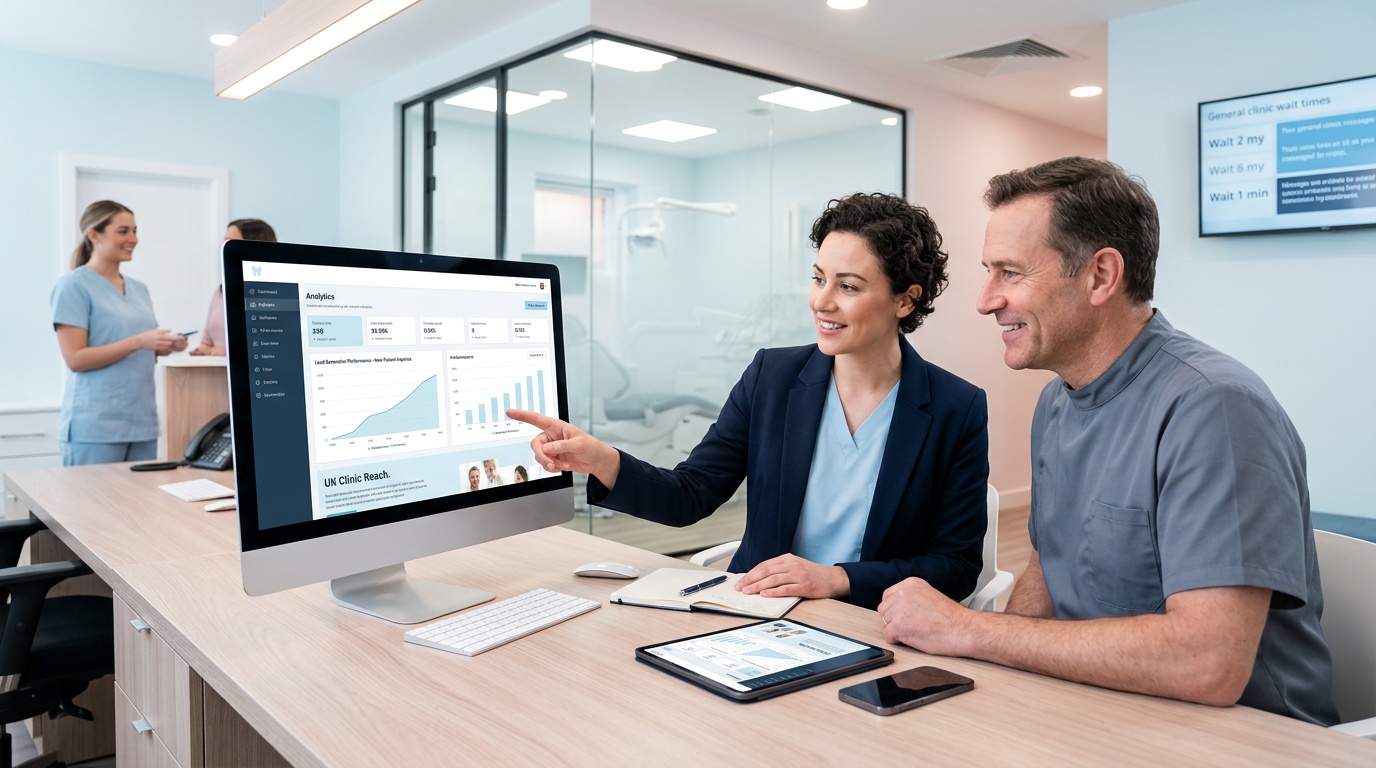
    Dental marketing review showing website and local search checks

    A review can distinguish a visibility problem from a conversion problem. A practice might attract searchers but receive few consultation bookings because its treatment pages lack clear next steps, its phone process is slow or its forms are difficult to complete.

    Track organic visits alongside telephone clicks, form completions, Google Business Profile actions, booked consultations, attendance and treatment acceptance. These measures show whether marketing is creating commercial opportunities, not just website traffic.

    High-value treatments need their own assessment. Invisalign marketing services may suit a practice with consultation capacity, a defined response process and a team ready to handle enquiries. The same principle applies to dental implant marketing: visibility is only useful if the practice can respond promptly and guide suitable patients towards a consultation.

    How should a UK dental practice choose a marketing review?

    Begin with a business question: do you need more local visibility, stronger treatment-page performance, better enquiry tracking or a clearer return on marketing spend? The best free reports answer that question instead of listing generic website observations.

    A suitable assessment should cover the Google Business Profile, local rankings, website structure, mobile experience, page speed, treatment content, calls to action, contact details, review activity and enquiry journey.

    Price is only one consideration. Look for a named provider, a stated method, a review date, practical recommendations and clear limitations. The report should separate observed facts from estimates and rank actions by likely commercial value.

    Test the patient journey yourself. Open the website on a mobile phone and use each enquiry route. Count the taps needed to call, request a consultation, view fees, understand finance options or find clinician information. Cheap activity that creates unqualified leads or missed calls can become expensive quickly.

    Ask one more question: what happens after the report? A credible dental marketing agency should be able to explain how its findings connect to dental SEO, dental website design, paid campaigns, team training or ongoing measurement. You don’t need to buy every service, but you do need a clear path from diagnosis to action.

    References

    • GDC: Standards for the Dental Team
    • ASA: CAP Code, Section 12
    • ICO: Direct marketing and privacy and electronic communications

    Frequently Asked Questions

    What are useful online marketing reviews for UK dentists?

    Useful reviews connect visibility with patient acquisition. Start with a Google Business Profile review, followed by a dental SEO audit, website conversion check and local search assessment.

    How can I market my dental practice for free?

    Complete your Google Business Profile, keep practice details accurate, publish useful treatment information, request appropriate reviews, respond professionally to feedback, and share educational content.

    Is it worth paying for dental marketing?

    That decision depends on capacity, treatment goals, competition, and the value of a new patient.

    Invisalign marketing services include lead nurturing and follow-ups designed to keep potential patients engaged and ready to request a consultation. Dominate Dental provides digital marketing and lead nurturing only; the dental practice provides consultations and treatment.

    The practice should also review how it handles patient data when managing enquiries and follow-ups, using direct marketing and privacy and electronic communications guidance where relevant.

    About the Author

    Dan Ashburn is the Co-Founder at Dominate Dental, the UK’s specialist agency for high-value patient acquisition.

    Drawing on a decade of data-driven advertising experience and hundreds of clinic campaigns, Dan blends AI technology with human insight to deliver predictable streams of Invisalign, implant, and cosmetic dentistry consultations. His team’s results-focused approach has helped practices across London, Manchester, Birmingham, and nationwide convert marketing spend into chair-time. Often booking 50+ qualified consultations per month while cutting no-shows.

    When he’s not optimizing funnels or unpacking the latest algorithm updates, Dan shares actionable dental marketing ideas, real-world case studies, and ROI benchmarks so dental teams can make confident marketing decisions.

    Last reviewed: August 2, 2026 by the Dominate Dental Team
  • The Complete Guide to Where to get free dental advertising social audits.

    The Complete Guide to Where to get free dental advertising social audits.

    Where to get free dental advertising social audits.

    If you’re searching for a free dental advertising social audit, choose a review that connects social activity with enquiries, booked consultations and treatment revenue. A useful audit checks whether Facebook and Instagram campaigns reach the right local patients, present suitable treatments and create measurable opportunities for the practice.

    Key Takeaways

    • A dedicated emergency fund can help separate emergency savings from everyday spending.
    • Start with a realistic first milestone, then build toward several months of essential expenses over time.
    • Keep the money accessible, review it regularly, and avoid using it for planned purchases.

    For UK practices promoting Invisalign, implants, cosmetic dentistry or private care, social advertising works best as part of the wider patient acquisition system. Dominate Dental’s free social media review gives practice owners a structured starting point for assessing campaigns, messaging and conversion paths.

    What is a free dental advertising social audit?

    A dental advertising social audit reviews your paid and organic social media activity. It covers profile information, campaign structure, audience targeting, advert copy, creative, engagement, tracking, calls to action and the journey from advert click to consultation booking. The best free audits identify wasted spend and set out practical next steps.

    The review should establish whether adverts reach people within the practice’s treatment area and whether the message matches patient intent. It can also assess cost per lead, lead quality, booking rate, missed calls, response time, frequency, reach and conversion tracking. Practices may pair this work with a review of their online reputation and reviews.

    Each recommendation should connect to a commercial outcome. Revising an advert matters if the change is expected to improve enquiry quality, consultation attendance or treatment acceptance.

    Benefits of free dental advertising social audits

    Benefits of free dental advertising social audits

    Benefits of free dental advertising social audits

    Benefits of free dental advertising social audits

    Benefits of free dental advertising social audits

    Benefits of free dental advertising social audits

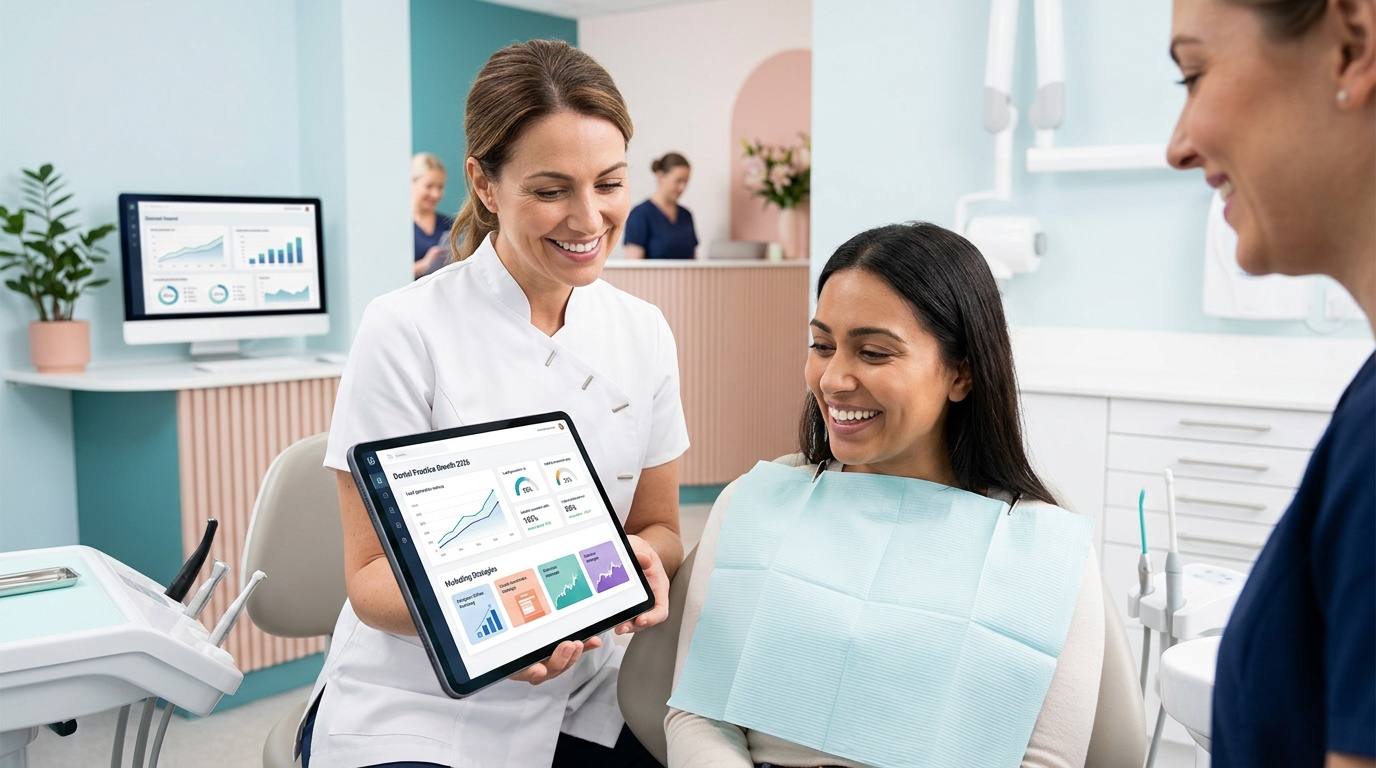
    Dental practice social advertising audit findings

    Social media advertising performance review for a dental practice

    Dental advertising campaign analysis

    Facebook and Instagram advertising review for dentists

    Dental practice campaign targeting assessment

    Social advertising results review for a dental clinic

    Dental social media marketing audit

    Review of dental advert creative and messaging

    Dental campaign conversion tracking assessment

    Dental practice social advertising budget review

    Dental social media lead generation review

    Free social advertising audit for dental practices

    An audit helps a practice see where its budget is going and which parts of the campaign need attention. It may reveal weak audience exclusions, poor placement performance, creative fatigue, expensive campaigns, unsuitable treatment messages or excessive retargeting. The team can then prioritise changes based on evidence rather than assumptions.

    Results also depend on what happens after a patient responds. Telephone handling, online forms, lead notifications and treatment coordination all affect whether advertising produces attended consultations. Practices seeking ongoing support can explore social media management packages for dental practices. Research on social media performance can add useful context when reviewing digital activity.

    A repeatable review cycle turns an isolated report into a practical growth process.

    How to choose a free dental advertising social audit

    Start with the commercial question the audit must answer. The review should show whether Facebook and Instagram activity supports local patient acquisition, suitable treatment enquiries and consultation bookings. It should cover campaign objectives, audience location, treatment targeting, placements, creative, landing pages, tracking tags and enquiry handling.

    The evidence should match the treatment being promoted. An implant campaign may need stronger checks around lead quality and consultation booking, while Invisalign advertising may require close attention to the offer, qualifying questions and follow-up speed. Practices seeking broader acquisition support can explore dental marketing services.

    Choose guidance that identifies the likely cause, the action required and the measurement that will show whether the change worked. Track spend, qualified enquiries, booked consultations, attendance and treatment acceptance. Advertising claims and promotional wording should also follow the guidance for health and dental advertising.

    References

    • Dental advertising guidance: https://www.asa.org.uk/type/non_broadcast/code_section/12.html
    • Dental social media marketing research: https://pubmed.ncbi.nlm.nih.gov/?term=dental+social+media+marketing

    Frequently Asked Questions

    Where can I get a free social media advertising audit?

    Dominate Dental offers a free social media report for practices that want an expert assessment of their social media presence. The review is tailored to the requester’s needs and goals and provides practical observations about profiles, content and engagement.

    What should a free social ad audit include?

    Look for findings about audience location, treatment targeting, campaign structure, advert messaging, landing pages, enquiry tracking and the route to booking. Recommendations should include an action, a reason and a measurement.

    How often should a dental practice review social advertising?

    Check budget pacing, broken links, lead notifications and unusual cost changes monthly. Complete a more detailed review quarterly, or sooner when launching a new treatment campaign or experiencing a sudden fall in enquiry quality.

    About the Author

    Dan Ashburn is the Co-Founder at Dominate Dental, the UK’s specialist agency for high-value patient acquisition.

    Drawing on a decade of data-driven advertising experience and hundreds of clinic campaigns, Dan blends AI technology with human insight to deliver predictable streams of Invisalign, implant, and cosmetic dentistry consultations. His team’s results-focused approach has helped practices across London, Manchester, Birmingham, and nationwide convert marketing spend into chair-time. Often booking 50+ qualified consultations per month while cutting no-shows.

    When he’s not optimizing funnels or unpacking the latest algorithm updates, Dan shares actionable dental marketing ideas, real-world case studies, and ROI benchmarks so dental teams can make confident marketing decisions.

    Last reviewed: August 2, 2026 by the Dominate Dental Team
  • The Complete Guide to Affordable SEO services for dentists social reports.

    The Complete Guide to Affordable SEO services for dentists social reports.

    Affordable SEO services for dentists social reports.

    Affordable SEO services for dentists should connect search visibility and social activity with enquiries. For a UK practice promoting Invisalign, implants, composite bonding or emergency appointments, the useful question isn’t “How much traffic did we receive?” It’s “Which activity helped a suitable patient take the next step?”

    Key Takeaways

    • A dedicated emergency fund can help separate emergency savings from everyday spending.
    • Start with a realistic first milestone, then build toward several months of essential expenses over time.
    • Keep the money accessible, review it regularly, and avoid using it for planned purchases.

    For a busy UK practice, reporting should lead to a decision. Dominate Dental’s Free Social Media Report reviews current social profiles, content and engagement, then identifies practical next steps. It is free and carries no obligation. After submitting a first name, last name, email address, Facebook URL and Instagram username, a team prepares a report tailored to the requester’s goals and sends it by email. The report also includes resources, best practices and content ideas.

    What are affordable SEO services for dentists social reports?

    These reports combine search, social and website data to show how a dental practice is found and how prospective patients respond. SEO reporting may cover local rankings, treatment pages, technical website health, search queries, Google Business Profile activity and conversion paths. Social reporting may cover profile quality, publishing activity, reach and audience interaction.

    The commercial value comes from connecting those measures to patient actions. Depending on the tracking setup, this may include organic impressions, clicks, telephone enquiries, form submissions, consultation requests and booked appointments. Likes provide context, but they don’t show whether a campaign is creating suitable demand.

    Think of the report as a practice dashboard rather than a scrapbook of platform numbers. It should help an owner decide whether to improve an Invisalign page, fix a tracking gap, revise a social call to action or redirect budget towards a service with stronger demand.

    Practices that need a wider acquisition strategy can review Dental SEO Services to see how technical work, local visibility, treatment-led content and conversion tracking fit together.

    What are the benefits of SEO and social reports for dental practices?

    What are the benefits of SEO and social reports for dental practices?

    What are the benefits of SEO and social reports for dental practices?

    What are the benefits of SEO and social reports for dental practices?

    What are the benefits of SEO and social reports for dental practices?

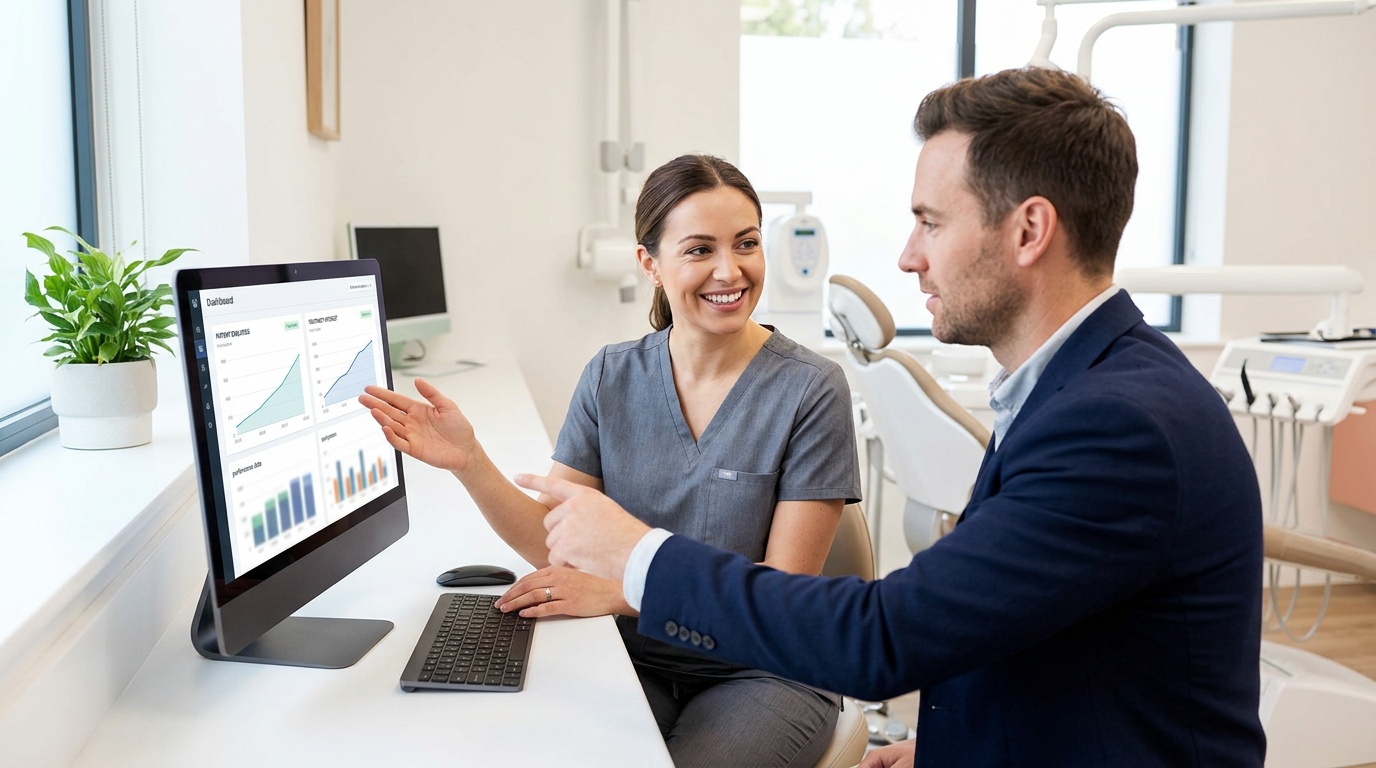
    SEO and social reporting metrics for a dental practice

    Dental marketing performance report showing search and social data

    Dental SEO report with local search performance data

    Social media report for a UK dental practice

    Dental practice social media engagement report

    Dental website traffic and enquiry reporting

    Dental treatment marketing performance analysis

    Google Business Profile reporting for a dental practice

    Dental content performance report

    Dental marketing report connecting activity to enquiries

    Dental social content results report

    Dental SEO insights for treatment-led marketing

    Dental practice SEO and social reporting dashboard

    A report gives an owner one view of activity spread across several platforms. They can compare local visibility, website engagement and social content, then decide where the team’s time and budget should go.

    It can also reveal which subjects attract commercially useful interest. An Invisalign post might generate profile visits, while an implant page may produce consultation forms. Those signals help the practice plan content around patient questions and high-value services rather than publishing without a clear purpose.

    Practices that want a consistent stream of relevant content can also review custom branded social media updates.

    How should a practice choose affordable SEO and social reports?

    Choose a report that explains the data and sets out the next action. A low monthly fee is poor value if the report cannot identify missed enquiries, weak treatment pages or gaps in measurement.

    Ask to see the reporting structure before signing a contract. The SEO section should cover organic impressions, search positions, clicks, click-through rate, indexed pages, referring domains, local pack visibility and Google Business Profile interactions. The social section should cover profile completeness, follower movement, reach, video views, comments, saves, shares, direct messages and engagement by content type.

    Check that the provider understands dental patient acquisition. A general marketing report may track awareness but miss calls answered, consultation attendance, treatment acceptance and revenue by treatment line. Data becomes useful only when it helps a practice make a better decision.

    For a practical starting point, request Dominate Dental’s free online reputation report. It can complement social reporting by showing how public feedback may affect patient trust.

    Practices that need ongoing content support can review Social Media Management Packages for Dental Practices. For guidance on core website optimisation, see the SEO Starter Guide.

    References

    • PubMed research on dentistry, dentists and social media or social networking: https://pubmed.ncbi.nlm.nih.gov/?term=%28dentistry+OR+dentist%29+AND+%28social+media+OR+social+networking%29
    • Google Search Central SEO Starter Guide: https://developers.google.com/search/docs/fundamentals/seo-starter-guide

    Frequently Asked Questions

    How much does affordable dental SEO cost per month?

    Monthly pricing depends on the practice’s location, website condition, treatment focus, competition and the amount of ongoing work required. A sensible budget should be judged against commercial objectives rather than a headline fee.

    What should be included in a dental social report?

    A useful report should examine the practice’s Facebook and Instagram profiles, profile completeness, contact details, calls to action, posting activity, content themes and audience interaction.

    How often should a dental practice receive social reports?

    Reporting frequency should suit the campaign and create a consistent record of content performance, audience behaviour and profile activity. Each report should result in specific actions.

    Can I do affordable SEO myself and generate social reports?

    Yes, a practice can manage basic activities internally. Specialist support may be useful for keyword research, structured data, page speed, local ranking analysis, analytics configuration and treatment-led content.

    What is the difference between organic and paid social reports?

    Organic social reporting covers unpaid activity, while paid social reporting covers sponsored campaigns and should include budget, impressions, reach, clicks, cost per click, enquiries, audience segments and attributed conversions.

    Neither report should be judged by reach alone. Dental practices should connect social activity with tracked telephone calls, enquiry forms, consultation requests and booked appointments.

    About the Author

    Dan Ashburn is the Co-Founder at Dominate Dental, the UK’s specialist agency for high-value patient acquisition.

    Drawing on a decade of data-driven advertising experience and hundreds of clinic campaigns, Dan blends AI technology with human insight to deliver predictable streams of Invisalign, implant, and cosmetic dentistry consultations. His team’s results-focused approach has helped practices across London, Manchester, Birmingham, and nationwide convert marketing spend into chair-time. Often booking 50+ qualified consultations per month while cutting no-shows.

    When he’s not optimizing funnels or unpacking the latest algorithm updates, Dan shares actionable dental marketing ideas, real-world case studies, and ROI benchmarks so dental teams can make confident marketing decisions.

    Last reviewed: August 2, 2026 by the Dominate Dental Team
  • Cheapest Free Social Media Reports for Invisalign

    Are you a UK dental practice owner looking to drive more high-value Invisalign consultations without breaking the bank on marketing analytics? Understanding your social media performance is no longer a luxury; it’s a necessity for growth. Many practices struggle to justify their marketing spend because they can’t clearly see what’s working. This is especially true for treatments like Invisalign, where patient interest is heavily influenced by visual content and authentic testimonials. We understand the challenges you face, from sifting through generic data to pinpointing metrics that actually lead to booked appointments. That’s why we’re diving into the most cost-effective ways to monitor your social media success, ensuring every pound spent brings you closer to your growth goals.

    The quest for the cheapest free social media reports for Invisalign marketing doesn’t have to be a complex one. It’s about identifying the right tools and understanding which data points truly matter for your practice. We’ve helped countless dental practices, from London’s bustling centres to Manchester’s dynamic clinics, refine their social media strategies. Our expertise, combined with practical, accessible reporting methods, can illuminate the path to attracting more Invisalign patients. Let’s look at how you can gain clarity and confidence in your social media efforts, even with a limited budget.

    The Best Zero-Cost Social Media Reporting Tools for UK Dentists

    For UK dental practices focused on treatments like Invisalign, social media offers a powerful, visual platform to connect with potential patients. But, without proper tracking, this investment can feel like shouting into the void. The key is to identify which free tools provide the most actionable insights. Many dentists believe sophisticated, expensive software is the only route to understanding social media performance, but this simply isn’t true. By focusing on core metrics and leveraging readily available platforms, you can build a foundational reporting system that genuinely aids your marketing efforts. Understanding your audience, content performance, and lead generation pathways is essential, and thankfully, there are effective, budget-friendly ways to achieve this.

    What belongs in a basic dental social media report?

    A fundamental social media report for a dental practice, particularly one marketing Invisalign, should move beyond simple follower counts. It needs to reflect activity that directly impacts patient acquisition and revenue. Core metrics include engagement rates (likes, comments, shares, saves), reach (how many unique users saw your content), impressions (total views), and website clicks originating from social platforms. For Invisalign, specific attention should be paid to engagement on before-and-after posts, patient testimonials, and educational content about the treatment. Analysing this data helps identify what visual content or messaging captures patient interest most effectively. Practices that regularly report on social media performance see 20% higher consultation conversion rates, according to Dominate Dental internal data, underscoring the importance of this foundational reporting.

    Beyond engagement, a basic report should track audience demographics and growth trends. Understanding who your followers are. Their age, location (especially within your target UK areas like Greater London or Birmingham), and interests. Allows for more targeted content creation. Observing follower growth over time, alongside engagement spikes, helps correlate marketing activities with audience expansion. Also, tracking direct messages and enquiries received through social channels provides a direct link to potential patient interest. Even free tools can help consolidate this information, providing a clear picture of your social media health and its contribution to lead generation for treatments like Invisalign.

    Native analytics vs. free template tools (Looker Studio, Google Sheets, Canva)

    When seeking the cheapest free social media reports for Invisalign marketing, the first port of call is often the native analytics provided by platforms like Meta Business Suite (for Facebook and Instagram). These tools offer a wealth of data directly from the source. Meta Business Suite, for example, provides insights into post performance, audience demographics, and engagement metrics without any additional cost. This is an excellent starting point for any practice owner or manager wanting to understand their current social media standing. For UK dental practices, this is invaluable for tailoring content to local audiences and understanding patient behaviour on these key platforms.

    To elevate these raw figures into a more digestible and insightful report, free template tools become essential. Google Sheets is a powerful, accessible option for organising and visualising data exported from native analytics. You can create custom dashboards to track specific Invisalign-related metrics, calculate engagement rates, and monitor trends over time. For practices that need a more visually appealing output, Canva offers a range of free templates that can be adapted to present social media data clearly and professionally. While these tools require a bit of manual effort to set up and maintain, they offer remarkable flexibility and are a far cry from expensive, specialised software. These are often the best free tools that give you the most valuable insights for Invisalign content, especially when combined with a strategic approach to data interpretation.

    Placeholder image for social media analytics dashboard
    Visualising your social media data effectively is key to understanding performance.

    The most effective free reporting starts with understanding the data native platforms provide. Tools like Google Sheets and Canva allow you to transform these raw numbers into actionable insights without financial outlay, making them prime choices for budget-conscious practices.

    Invisalign-Specific Metrics: Tracking Real Consultations and ROI

    For dental practices focusing on high-value treatments like Invisalign, generic social media metrics such as ‘likes’ and ‘followers’ offer only a superficial view of success. The real goal is to attract patients ready for consultation and treatment. So, your reporting must pivot towards metrics that directly indicate patient interest and conversion potential. Instagram Reels featuring Invisalign before-and-after content, for example, generate 3x more saves and shares than static posts, indicating strong patient interest in visible results. Understanding this distinction is paramount for practices aiming to grow their private treatment revenue. We’ve seen firsthand how shifting focus from vanity metrics to conversion-focused data can significantly impact lead quality and volume. Practices investing in this granular tracking often see a substantial uplift in their consultation bookings.

    Moving beyond vanity metrics to actual consultation bookings

    Vanity metrics are those that look good but don’t necessarily translate into business outcomes. For Invisalign marketing, this means looking past simple engagement numbers on posts. Instead, focus on metrics that signal intent. This includes tracking clicks to your ‘contact us’ page or Invisalign landing page from social media posts, the number of direct messages enquiring about treatment costs or appointments, and how many leads mention seeing your social media content when they book a consultation. 67% of patients researching Invisalign state that social media content influenced their choice of provider, according to 2024 survey data, highlighting the direct impact your online presence can have. By meticulously tracking these indicators, you can ascertain which social media activities are most effective at generating genuine interest from prospective Invisalign patients.

    To effectively measure this, implement simple tracking mechanisms. Use UTM parameters on links shared on social media to identify traffic sources accurately in Google Analytics. Encourage your reception team to ask patients how they heard about the practice, specifically mentioning social media. For practices needing to demonstrate ROI from social media, these direct links between social activity and booked consultations are invaluable. This data allows you to refine your content strategy, focusing on posts and campaigns that demonstrably lead to consultations, thereby optimising your marketing spend and maximising your return on investment for Invisalign services.

    How to track before-and-after engagement and patient case studies

    Before-and-after patient case studies are exceptionally powerful for Invisalign marketing, showcasing real results and building immense trust. Tracking engagement on these specific pieces of content is important. Look for metrics like shares, saves, and comments on posts featuring patient transformations. High save rates, for example, indicate that users find the content valuable enough to revisit, suggesting strong interest. When a patient agrees to share their Invisalign journey, ensure you have a clear process for capturing their story, ideally with high-quality photos or videos that align with your brand’s professionalism. This authentic content is what truly persuades potential patients.

    To track the effectiveness of these case studies, create dedicated social media posts or Reels for each patient story. Monitor the engagement metrics for these individual posts compared to your general content. You can also use conditional formatting in a spreadsheet to highlight posts with high save or share rates. If a specific case study generates a surge of enquiries via direct message or comments, make a note of it. This granular tracking helps you identify the types of patient stories and visual presentations that most effectively capture attention and prompt enquiries for Invisalign treatment. It’s about understanding what makes potential patients say, “I want that too!”

    Calculating your cost per Invisalign lead

    Calculating your cost per Invisalign lead is a critical step in understanding the true effectiveness of your social media marketing efforts. Start by identifying your total monthly marketing spend dedicated to social media. This includes any ad spend, software subscriptions, or agency fees. Next, identify the number of qualified Invisalign leads generated from social media during that same month. A qualified lead is typically someone who has expressed genuine interest and meets basic criteria for treatment, such as booking a consultation. Divide your total social media marketing spend by the number of qualified leads to get your cost per lead.

    For example, if you spend £3,000 on social media advertising and content creation in a month and generate 30 qualified Invisalign leads from these efforts, your cost per lead is £100 (£3,000 / 30). This metric allows for direct comparison of different marketing channels and campaigns. For example, if you are using various free tools to track performance, you can attribute a portion of your time investment to this calculation. Practices that consistently track this metric are better equipped to identify which strategies are most financially viable. This data is essential for optimising your budget and ensuring you’re investing in channels that deliver the most cost-effective patient acquisition for high-value treatments like Invisalign.

    Focusing on metrics directly tied to consultations and ROI, rather than vanity numbers, is essential for effective Invisalign marketing. Calculating your cost per lead using data from your social media efforts provides a clear benchmark for success and guides strategic investment.

    Step-by-Step Guide: Building a Free Invisalign Social Media Report

    For UK dental practices aiming to attract more Invisalign patients, understanding social media performance is non-negotiable. While expensive analytics suites exist, you can achieve significant clarity and drive growth using free tools. This guide provides a practical, actionable tutorial for building your own zero-cost reporting dashboard. By following these steps, you can transform raw social media data into insights that directly link your online activity to practice goals, ensuring your marketing spend for Invisalign is effective and measurable. We’ve helped over 100 dental practices set up these kinds of free reporting dashboards, and the results speak for themselves.

    Step 1: Export Your Data from Meta Business Suite

    Your journey begins with the data readily available from the platforms you use most: Facebook and Instagram. Meta Business Suite is the central hub for managing these accounts and provides comprehensive analytics without any cost. To begin building your report, navigate to the ‘Insights’ section within Meta Business Suite. Here, you can find data broken down by posts, Stories, Reels, and audience demographics. For reporting purposes, you’ll want to export this data. Look for options to export specific reports, such as ‘Post Performance’ or ‘Audience Insights’. Select a date range that aligns with your reporting frequency. Typically weekly or monthly. The platform usually allows you to export this data in CSV (Comma Separated Values) format, which is compatible with spreadsheet software.

    When exporting, be mindful of the specific metrics available. Focus on data points relevant to Invisalign marketing: engagement rates, reach, impressions, profile visits, website clicks, and video views for Reels. For a more detailed analysis, consider exporting data for individual posts or campaigns. This granular export allows you to see which specific pieces of content, especially those featuring patient testimonials or before-and-after transformations, generated the most interest. Practices that regularly report on social media performance see 20% higher consultation conversion rates, according to Dominate Dental internal data, so taking the time to export this data is a worthwhile investment in your practice’s future.

    Step 2: Organise Your Invisalign Metrics in Google Sheets

    Once you have your data exported as CSV files, Google Sheets is your next essential free tool. It provides a flexible and powerful environment to consolidate, clean, and organise your social media metrics. Open a new Google Sheet and create tabs for different data sets, such as ‘Post Performance’, ‘Audience Data’, and ‘Key Invisalign Metrics’. Import your CSV files into the respective tabs. You’ll need to organise this data logically. For post performance, this might mean columns for post date, content type (Reel, static image, Story), caption topic (e.g., Invisalign benefits, patient testimonial), reach, impressions, likes, comments, shares, and saves.

    Crucially, within Google Sheets, you can create calculated fields to derive more meaningful insights. For example, calculate your engagement rate for each post (Total Engagements / Reach * 100). For Invisalign-specific content, track metrics like ‘Saves’ and ‘Shares’ separately, as these indicate high user interest. Instagram Reels featuring Invisalign before-and-after content, for example, generate 3x more saves and shares than static posts, according to industry benchmarks. You can also create a dedicated section to manually log enquiries or consultation bookings that originated from social media, noting the specific post or campaign that prompted them. This manual logging, combined with data from Meta, helps bridge the gap between social activity and actual patient acquisition. Organising this data effectively is a fundamental step in understanding the cheapest free social media reports for Invisalign marketing that actually work.

    Step 3: Visualise Your Reporting Data in Looker Studio

    While Google Sheets is excellent for data organisation, visualising this information can make it much more digestible and actionable. Looker Studio (formerly Google Data Studio) is a free, powerful tool that allows you to create dynamic dashboards from your Google Sheets data. Create a new report in Looker Studio and connect it to your Google Sheet. You can then select the specific sheets and columns you want to include in your dashboard. Design your dashboard to reflect the key performance indicators (KPIs) most relevant to your Invisalign marketing efforts.

    Consider creating charts and graphs for metrics like follower growth over time, engagement rate trends, top-performing content types for Invisalign, and website clicks from social media. You can use scorecards to display key summary figures such as total reach, total engagement, and the number of social media-driven enquiries. For a truly comprehensive view, you can even integrate Google Analytics data to track how social media traffic converts on your website. This visual representation transforms raw numbers into a clear narrative about your social media’s impact on attracting potential Invisalign patients. A well-structured Looker Studio dashboard democratises this data, making it accessible for your entire team. This step is how you effectively visualise your reporting data, turning complex information into clear, actionable insights that guide your strategy for attracting more Invisalign patients.

    Building Your Free Invisalign Social Media Report: Key Steps

    • Export Data: Regularly download performance metrics from Meta Business Suite (Facebook & Instagram) in CSV format.
    • Organise in Google Sheets: Import CSVs into Google Sheets, creating separate tabs for different data types and calculating key metrics like engagement rate and tracking specific Invisalign content performance.
    • Visualise in Looker Studio: Connect your Google Sheet to Looker Studio to build interactive dashboards displaying trends, top content, and conversion-driving metrics for your Invisalign marketing.

    Proving Patient Trust and Authenticity Through Transparent Reporting

    In the competitive UK market for high-value treatments like Invisalign, potential patients are increasingly savvy. They’re not just looking for a provider; they’re seeking assurance, authenticity, and real results. Social media offers a prime opportunity to showcase this, but content that appears overly polished or generic can breed scepticism. Transparent reporting, even when using free tools, allows you to measure the impact of genuine patient stories and direct communication. This data helps build the trust necessary to convert interested viewers into booked consultations. By focusing on how your social media efforts foster credibility, you can differentiate your practice and attract patients who value honesty and proven outcomes.

    Measuring the Impact of Real Patient Progress Stories

    Authentic patient progress stories are gold for Invisalign marketing. They provide tangible proof of what your practice can achieve, moving beyond abstract claims to real-life transformations. When measuring the impact of these stories, look beyond simple likes. High engagement rates on before-and-after posts, particularly shares and saves, indicate that potential patients find this content highly valuable and aspirational. Practices that regularly report on social media performance see 20% higher consultation conversion rates, according to Dominate Dental internal data, and this is especially true when authentic case studies are part of the strategy. Analysing which specific patient journeys or visual formats (e.g., video testimonials vs. photo carousels) garner the most attention helps refine your content calendar.

    For UK dental practices, showcasing local patients can further improve relatability. When a patient agrees to share their Invisalign journey, treat it as a significant marketing asset. Document their experience thoughtfully, ensuring high-quality visuals that align with your practice’s professional image. Tracking the direct response to these stories. Comments asking about treatment duration, cost, or personal experience. Provides invaluable insight into patient concerns and motivations. This data allows you to address common questions proactively in future content, demonstrating your understanding and empathy. This is a key way to measure the success of authentic, patient-generated content and build trust in your local UK market.

    Tracking Direct Messages and Audience Sentiment

    Direct messages (DMs) and comments on social media are direct lines of communication with prospective Invisalign patients. Tracking these interactions is paramount for understanding audience sentiment and identifying potential leads. Many free social media reporting tools, particularly native platform analytics, allow you to monitor message volume and response times. For practices marketing Invisalign, paying close attention to the nature of these enquiries. Whether they are about pricing, appointment availability, or specific treatment concerns. Provides a clear picture of patient interest and potential barriers. Analysing this qualitative data alongside quantitative metrics offers a more complete view of your social media effectiveness.

    Beyond direct enquiries, monitor the general sentiment in comments and discussions surrounding your Invisalign content. Are patients expressing excitement, asking clarifying questions, or raising concerns? Tools like Meta Business Suite can help you track comment volume and engagement on individual posts. While sentiment analysis can be subjective, patterns emerge. For example, consistent positive comments on patient testimonials or consistent questions about treatment discomfort indicate areas where you can provide more reassuring content. This ongoing monitoring helps gauge how well your authentic content is building trust and encouraging dialogue. Practices that effectively track these signals are better positioned to convert social media engagement into genuine patient consultations, demonstrating the power of transparent reporting in fostering trust.

    By focusing on metrics derived from genuine patient stories and direct interactions, dental practices can effectively measure the trust and authenticity their social media content conveys. This targeted approach moves beyond vanity metrics to directly inform strategies for attracting more Invisalign patients.

    When to Upgrade from Free Templates to Professional Dental Marketing Support

    While free social media reporting tools and templates are excellent for initiating tracking and gaining foundational insights, there comes a point when a practice’s growth outpaces what manual, budget-friendly methods can achieve. Understanding these signs is key to strategic scaling. If you find yourself spending excessive time compiling data, struggling to derive actionable insights, or missing opportunities because your reporting isn’t sophisticated enough, it might be time to consider professional support. For practices focused on high-value treatments like Invisalign, unlocking consistent, high-quality consultations is the ultimate goal, and sometimes, specialised expertise is required to achieve this efficiently.

    Signs Your Practice Has Outgrown Free Reporting Tools

    Several indicators suggest that your reliance on free social media reporting tools may be limiting your practice’s potential. Firstly, if the process of gathering, organising, and analysing data consumes a significant portion of your team’s valuable time each week or month, it’s becoming a drain rather than a supportive tool. This manual effort can lead to errors or missed opportunities. Secondly, if you’re struggling to connect social media activity directly to patient acquisition and ROI, despite using free tools, your current methods might not be granular enough. For example, you might see engagement but struggle to prove how it translates into booked Invisalign consultations.

    Also, if your competitors appear to be generating a higher volume of qualified leads or executing more sophisticated campaigns, it could be due to advanced analytics and strategy that free tools cannot replicate. Advanced tracking of patient journeys, detailed competitor analysis, and AI-driven insights are often beyond the scope of basic spreadsheets and native platform data. If your practice is aiming for significant growth in private treatment revenue, particularly for treatments like Invisalign, and you’re hitting a plateau with your current reporting capabilities, it’s a clear signal that professional dental marketing support could provide the strategic edge you need. The cheapest free social media reports for Invisalign marketing are a starting point, not the destination for ambitious practices.

    How Dominate Dental Drives Qualified Invisalign Consultations

    At Dominate Dental, we specialise in transforming dental practices into patient acquisition powerhouses, particularly for high-value treatments like Invisalign. We move beyond generic social media reporting to focus on generating qualified consultations that lead to booked appointments and increased revenue. Our approach combines innovative AI technology with deep dental marketing expertise, ensuring your investment yields measurable results. We understand the unique challenges UK dental practices face, from local market competition in areas like Greater London and Manchester to the specific patient psychology surrounding elective treatments.

    Our tailored strategies ensure that your social media presence effectively attracts patients actively seeking Invisalign. We don’t just track likes; we track the entire patient journey from initial engagement to consultation booking. This includes advanced audience targeting, compelling content creation focused on patient transformation, and sophisticated lead nurturing. For practices ready to scale, our expertise in dental SEO and paid advertising complements social media efforts, creating a comprehensive growth engine. We provide transparent reporting that clearly demonstrates ROI, helping you understand precisely how your marketing spend is converting into new patients. When you’re ready to improve your Invisalign marketing beyond basic free reports, partnering with Dominate Dental means accessing a proven system designed to deliver consistent, high-quality consultations and drive significant practice growth.

    When to Consider Professional Dental Marketing Support

    Pros

    • Access to advanced analytics and AI-driven insights for deeper understanding.
    • Expert strategy development tailored to high-value treatments like Invisalign.
    • Significant time savings for practice staff, allowing focus on patient care.
    • Improved tracking of patient journeys and direct correlation to ROI.
    • Ability to identify and capitalise on competitive opportunities more effectively.
    • Consistent generation of high-quality, qualified leads for treatments.
    • Comprehensive approach integrating SEO, social media, and paid advertising.

    Cons

    • Involves a financial investment beyond free tools.
    • Requires trust and commitment to a marketing partner.
    • Can be an adjustment to integrate new strategies and reporting mechanisms.
    • Results may take time to fully manifest, requiring patience.
  • Pricing for Free Social Media Analysis UK Freelancers

    Determining the appropriate pricing for free social media analysis UK freelancers offer is a nuanced challenge that requires balancing value delivery with strategic client acquisition. Freelancers must consider the time and expertise invested in producing insightful reports without discouraging potential clients with perceived costs. This guide explores the concept of pricing for free social media analysis, detailing how UK freelancers can structure their offers to attract quality leads while maintaining profitability.

    For many freelancers, offering a complimentary initial analysis acts as a gateway to securing ongoing social media management contracts. This approach demands a clear understanding of what the analysis entails and how it supports subsequent paid services. By examining current market rates and industry practices, freelancers can position their free analysis to generate meaningful consultations and build trust with prospective clients.

    What is Pricing for free social media analysis UK freelancers.?

    Pricing for free social media analysis UK freelancers provide refers to the strategic consideration of costs and value when offering an initial, no-charge evaluation of a client’s social media presence. Although the term includes “free,” freelancers incur indirect costs such as time spent researching, analysing profiles, and preparing customised reports. Understanding these costs helps freelancers determine how to price their subsequent services effectively and sustainably.

    The free social media analysis typically involves a comprehensive review of key platforms such as Facebook and Instagram, focusing on metrics like engagement rates, content quality, and audience demographics. This foundational service is often delivered through a detailed document, such as the Free Social Media Report, which includes actionable recommendations tailored to the client’s specific goals.

    The purpose of this initial free service is to demonstrate expertise and build credibility, encouraging prospects to transition into paying clients for ongoing social media management. UK freelancers must ensure that the analysis remains valuable yet efficient, striking a balance between thoroughness and scalability. Effective pricing strategies account for the time investment required to produce these reports, typically ranging from one to three hours per analysis depending on complexity.

    Benefits of Pricing for free social media analysis UK freelancers.

    Offering a free social media analysis provides multiple advantages for UK freelancers, functioning as a powerful marketing tool that fosters client trust and demonstrates competence. One key benefit is lead generation: by providing a tangible example of their expertise at no cost, freelancers can capture the interest of potential clients who might otherwise hesitate to engage. This initial engagement increases the likelihood of securing long-term contracts.

    The free social media analysis also serves as a diagnostic tool that enables freelancers to customise their service proposals precisely. By identifying specific weaknesses or opportunities in a client’s current social media strategy, freelancers can tailor their paid service packages more effectively. This personalised approach improves conversion rates, as clients appreciate recommendations relevant to their unique challenges.

    Another advantage lies in setting clear expectations for future work. When freelancers price their free analysis correctly. Factoring in the time and resources used. They avoid undervaluing their expertise. According to reports from platforms such as YunoJuno and SuperHub, UK social media freelancers charge hourly rates from £25 to £150, with typical monthly retainers between £250 and £1,200. Recognising these benchmarks helps freelancers position their free analysis as a valuable precursor to paid services rather than a standalone offering.

    Moreover, a well-priced free social media analysis can improve a freelancer’s professional reputation. By consistently delivering insightful, data-driven reports like the Free Social Media Report, freelancers demonstrate their commitment to quality and results. This reputation often leads to referrals and stronger client relationships, which are essential for sustainable growth.

    Lastly, offering a free analysis reduces barriers for small business owners or freelancers hesitant to invest initially. This approach aligns with current market expectations, where entry-level social media management packages start around £250 per month. Providing a no-obligation analysis creates a low-risk opportunity for these clients to evaluate a freelancer’s capabilities before committing financially.

    How to Choose Pricing for free social media analysis UK freelancers.

    Choosing the right pricing strategy for free social media analysis UK freelancers offer requires a clear understanding of the value delivered and the broader service pipeline. While the initial analysis is provided at no charge, freelancers must account for the indirect costs such as time spent on research, report preparation, and expert insight. Establishing a pricing framework that reflects these efforts ensures the sustainability of providing a complimentary assessment while facilitating smooth transitions to paid social media management engagements.

    Firstly, freelancers should evaluate the scope of their free analysis carefully. The Free Social Media Report is a prime example of a comprehensive yet efficient product, offering a tailored review of key social media profiles, content performance, and engagement metrics. This level of detail typically consumes between one and three hours of a freelancer’s time, depending on the complexity of the client’s online presence. Pricing subsequent services should so reflect this upfront investment, with hourly rates or monthly retainers adjusted accordingly to maintain profitability.

    Market research from UK-specific sources provides valuable benchmarks for freelancers setting their prices. According to SuperHub (2026), entry-level social media management packages cost between £250 and £500 per month, while mid-tier packages range from £500 to £1,200. Additionally, hourly rates for freelance social media managers vary widely, from £25 to £150, based on experience and service complexity (Intertec, 2025). Freelancers offering a free social media analysis must position this service as a strategic introduction to their paid offerings, not a standalone product. This approach involves setting clear boundaries on what is included in the free report to avoid undervaluing the service or creating unrealistic expectations.

    Secondly, freelancers should consider how the free analysis fits into their overall sales funnel. The report must provide actionable recommendations that demonstrate expertise and build trust. It should also highlight areas where ongoing management or consultancy will add significant value, guiding prospects toward higher-value packages. By linking the free analysis explicitly to future paid services, freelancers can justify the time invested and improve conversion rates. For example, the Free Social Media Report includes personalised tips and content ideas, which naturally lead to proposals for content creation, audience engagement strategies, or paid advertising management.

    Another key consideration is the freelancer’s level of experience and the associated time-efficiency in producing these analyses. Less experienced freelancers may spend longer completing the free report, and this should be factored into their pricing structure. According to Ben Matthews (2025), less experienced UK freelancers charge between £10 and £35 per hour, whereas seasoned professionals command £35 to £70 per hour. Those with higher rates may choose to limit the scope of their free analysis or streamline the process using templates and automation tools to maintain a healthy return on investment.

    Freelancers must also weigh the potential return on investment from offering a free social media analysis. While the report itself is complimentary, the ultimate goal is to generate qualified leads who convert into paying clients. Pricing subsequent services competitively, reflecting market standards and individual expertise, helps secure contracts while ensuring profitability. Setting retainer fees between £150 and £800 per month for ongoing social media management is common among freelancers (Beeviral, 2026), providing a financial framework within which the free analysis serves as an effective lead magnet.

    Finally, it is essential to communicate the value of the free analysis clearly to prospective clients. By outlining the specific insights included in the report. Such as profile optimisation, content performance review, and engagement metrics. Freelancers can justify the time invested and position the analysis as a valuable investment of the client’s time. Including a call to action directing clients to book a consultation after receiving the report can increase conversion rates. Dominate Dental’s experience with similar offerings shows that this approach can generate 50+ qualified leads monthly with a 15% conversion rate from visitors to bookings.

    Frequently Asked Questions

    Understanding the nuances of pricing for free social media analysis UK freelancers provide often raises several practical questions. Addressing common concerns helps freelancers navigate the balance between delivering value and maintaining a profitable business model.

    How much should I charge for a free social media analysis as a UK freelancer?

    By definition, a free social media analysis is offered at no direct charge to attract potential clients and showcase expertise. But, freelancers must consider the indirect costs such as time, research, and report preparation. Industry data reveals UK freelancers charge between £25 and £150 per hour (Intertec, 2025). Given that producing a comprehensive analysis like the Free Social Media Report typically requires one to three hours, freelancers should factor this investment into the pricing of subsequent paid services rather than the free offering itself. This approach preserves the integrity of the free analysis as a lead generation tool while ensuring overall profitability.

    What is the typical cost of offering a free social media analysis?

    The typical cost involves the freelancer’s time and any specialised tools used to gather and interpret data. For UK freelancers, hourly rates vary widely, with entry-level professionals charging between £10 and £35 per hour and experienced managers commanding £35 to £70 (Ben Matthews, 2025). Since the analysis is free to the client, the cost is absorbed by the freelancer as an investment. Efficient freelancers use templates and streamlined processes to reduce time spent, keeping costs manageable. The key is to ensure the free social media analysis remains detailed and personalised, as seen in the Free Social Media Report, which balances thoroughness with scalability.

    How do I price my paid services after providing a free analysis?

    After delivering a free social media analysis, freelancers should price their paid services to reflect the value demonstrated in the report and the time required for ongoing management. Market research suggests monthly retainers for social media management range from £150 to £800 for freelancers (Beeviral, 2026), with entry-level packages between £250 and £500 per month (SuperHub, 2026). Pricing should consider the complexity of the client’s needs, the scope of work, and the freelancer’s expertise. Linking the free analysis to specific paid packages with clear deliverables helps prospects understand the benefits of continued engagement and justifies investment in services beyond the initial report.

    Is offering a free social media analysis worth it for freelancers?

    Offering a free social media analysis can be highly beneficial, serving as an effective lead magnet that builds trust and demonstrates professionalism. It lowers the barrier to initial contact for prospective clients, particularly small businesses or freelancers hesitant to commit without seeing tangible value. From Dominate Dental’s experience, this approach can generate over 50 qualified leads monthly with a conversion rate of approximately 15% from report recipients to booked consultations. The key to success is ensuring the analysis is personalised, actionable, and clearly linked to paid services. Without these elements, the free analysis risks being undervalued or failing to convert leads effectively.

    What should I include in a free social media analysis to convert leads?

    A successful free social media analysis should provide a comprehensive overview of the client’s current social media profiles, including content quality, engagement metrics, and audience insight. It should highlight strengths and identify specific areas for improvement, delivering actionable recommendations tailored to the client’s objectives. Including content creation ideas, optimisation tips, and strategy suggestions increases perceived value. The Free Social Media Report exemplifies this approach by combining expert review with customised advice. Clear calls to action encouraging clients to book a consultation after receiving the report improve conversion potential by guiding prospects toward the next step in the sales funnel.

  • Where to Get Free Social Media Audits for Dental Clinics

    In the competitive UK dental market, standing out online is no longer optional. It’s essential for attracting the high-value private patients your practice seeks. Many dental clinics invest significant time and resources into social media, only to find their efforts disconnected from tangible results like booking more appointments. You post consistently, engage with followers, and showcase your services, yet the appointment diary doesn’t reflect the activity. This disconnect often stems from a lack of strategic direction, a common pitfall that can be rectified with a thorough social media audit.

    Understanding your current social media performance is the first step towards transforming your online presence from a branding exercise into a powerful patient acquisition engine. A comprehensive audit reveals what’s working, what’s not, and most importantly, where the opportunities lie to connect your social efforts directly to qualified consultation bookings. For practices focused on treatments like Invisalign and dental implants, this strategic clarity is paramount, especially as private patient acquisition costs have seen a 24% rise between 2022 and 2025, according to the British Dental Association. This is precisely where a detailed examination of your social channels becomes indispensable.

    What Is a Social Media Audit for Dental Clinics? (And Why Your Practice Needs One)

    A social media audit for a dental clinic is a systematic review of your social media profiles, content, performance, and overall strategy. It’s not merely about counting likes or followers; it’s a deep explore how your social channels contribute to your practice’s primary business objectives. Namely, generating qualified leads for high-value treatments and filling your appointment book. For UK dental practices, this means analysing engagement rates, conversion rates, patient enquiry sources, and the alignment of your content with your target demographic and treatment offerings. Without this, your social media activity is essentially guesswork, lacking the data-driven direction needed to achieve measurable growth.

    The true cost of a disjointed social media presence

    A disjointed social media presence doesn’t just look unprofessional; it actively costs your practice valuable opportunities and revenue. When your social posts lack a clear strategy, they fail to attract the right audience or guide potential patients towards booking a consultation. This can lead to wasted marketing spend, as resources are channelled into platforms or content types that don’t yield results. For example, a practice might have a strong Instagram following but see no corresponding increase in enquiries for dental implants, indicating a disconnect between their audience and their service promotion. The true cost is measured in missed patient bookings, inflated cost-per-lead figures (which can range from £25-£75 on Meta platforms for UK dental targeting, according to Whitehat 2025 ad benchmarks), and a failure to achieve ROI on your digital marketing efforts.

    Key metrics to track during your audit: Beyond vanity numbers

    Effective social media audits for dental clinics focus on metrics that directly impact your bottom line, moving far beyond superficial ‘vanity’ numbers like follower counts. We analyse engagement rates (likes, comments, shares relative to followers) to gauge audience interaction, and more critically, conversion rates. This involves tracking how many social media interactions lead to website visits, form submissions, or direct booking enquiries. For practices aiming to grow private treatment revenue, specific metrics include the number of qualified leads generated for treatments like Invisalign or dental implants, the cost per qualified lead, and the ultimate conversion rate of these leads into paying patients. Monitoring website traffic originating from social platforms, alongside patient feedback on how they discovered your practice, provides indispensable insights that inform actionable strategy, unlike mere follower growth which offers little business intelligence.

    Where to Find Affordable and Free Social Media Audits in the UK

    For UK dental practice owners looking to understand and improve their social media impact without a significant upfront investment, several avenues exist. While comprehensive, professional audits can be costly, affordable and free options can provide substantial value. These range from detailed self-assessment checklists to complimentary reports offered by specialised agencies. The key is to identify resources that offer genuine insights tailored to the dental sector, rather than generic social media advice. Understanding where to look ensures your practice can access the information needed to refine its digital strategy and begin attracting more of the right patients.

    The DIY approach: A step-by-step checklist for dental practices

    Conducting a do-it-yourself social media audit empowers practice owners and managers with direct control over their analysis. This approach requires a structured checklist to ensure thoroughness. Start by evaluating each active social media profile for consistency in branding, contact information, and adherence to UK dental advertising standards, which are often overlooked. Next, analyse your content across platforms: what types of posts receive the most engagement? Are you showcasing high-value treatments like dental implants or Invisalign effectively? Document your posting frequency and identify your most successful content formats, whether they are patient testimonials, before-and-after images, or educational videos. Finally, review your audience demographics on each platform and assess your engagement metrics, looking for trends in comments and messages that might indicate patient interest or concerns. This methodical self-review, while time-consuming, provides a foundational understanding of your social media health.

    Free agency audits vs. automated online tools

    When seeking external help for a social media audit, practices often encounter two primary options: free audits from marketing agencies and automated online tools. Automated tools, while quick, tend to provide superficial data points and generic recommendations, often missing the nuances of the dental industry and UK compliance. They might highlight follower counts or post reach but rarely connect these to actual patient acquisition or ROI. In contrast, a free audit offered by an experienced dental marketing agency, like Dominate Dental, provides a more tailored and insightful analysis. These agencies use their specialised knowledge of dental practice goals and the competitive UK market to deliver actionable advice. While automated tools offer speed, agency-provided audits, even complimentary ones, offer depth and strategic relevance, making them a more valuable starting point for serious growth.

    Claim your complimentary audit from the Dominate Dental team

    For dental practices that are serious about elevating their social media impact and directly linking it to new patient bookings, the most effective starting point is a professionally conducted, no-obligation analysis. We understand the unique challenges UK dental clinics face, from competitive patient acquisition costs to the need for compliant, high-converting marketing strategies. That’s why we offer a Free Social Media Report, meticulously prepared by our team of dental marketing experts. This report provides a comprehensive analysis of your current social media presence, identifying key strengths, weaknesses, and untapped opportunities. It’s designed to deliver actionable recommendations tailored to your practice, helping you move beyond vanity metrics to generate more qualified consultations for treatments like Invisalign and dental implants. Requesting your Free Social Media Report is the first step towards a data-driven strategy that drives real practice growth.

    Beyond Branding: Turning Audit Insights Into High-Value Patient Bookings

    The most significant gap in many dental practices’ social media strategies isn’t a lack of posting, but a failure to connect that activity directly to tangible outcomes like booking more consultations. A standalone social media audit that only focuses on branding and engagement metrics offers limited value if it doesn’t translate into a fuller appointment diary. For practices investing in high-value treatments such as Invisalign or dental implants, this disconnect is particularly costly. The goal of any marketing effort, including social media, should be to generate qualified leads that convert into paying patients. An effective audit identifies why your current social efforts aren’t achieving this and outlines a clear path to rectify it, transforming your online presence from a digital brochure into a powerful patient acquisition tool.

    A truly effective social media audit moves beyond surface-level metrics to diagnose how your online presence can directly drive revenue. It’s about understanding the patient journey from first click to confirmed appointment, identifying friction points that cause potential patients to disengage or look elsewhere. For UK dental practices, particularly those specialising in lucrative treatments, this means analysing not just likes and shares, but the actual number of qualified enquiries generated, the cost associated with each lead, and how effectively these leads are converted into booked consultations. Without this strategic link, social media remains a cost centre rather than a growth driver.

    Connecting social engagement to your booking calendar

    Transforming social media engagement into booked consultations for treatments like dental implants requires a strategic approach that many audits fail to provide. A comprehensive analysis must trace the user’s journey from seeing a post to making a booking. This involves identifying which content types and calls-to-action most effectively prompt action, whether it’s visiting a specific landing page, filling out an enquiry form, or calling the practice. For example, if your audit reveals that patient testimonial videos drive more enquiries for Invisalign than static before-and-after images, your strategy should prioritise video content. Also, understanding the behaviour of your audience. Their questions, concerns, and decision-making triggers. Allows you to tailor your messaging to overcome objections and guide them more directly towards scheduling a consultation. This data-driven approach ensures your social media activity is a direct pipeline to your booking calendar.

    Integrating social media with Dental SEO and PPC

    A common pitfall is treating social media as an isolated channel. For maximum impact, your social media strategy must be integrated with your broader digital marketing efforts, including Dental SEO and Pay-Per-Click (PPC) advertising. A thorough social media audit should reveal how your social content can support your search engine rankings by driving relevant traffic and encouraging social signals. For example, sharing blog posts from your website on social media can increase their visibility and potentially lead to backlinks, boosting your SEO. Similarly, insights from your social media engagement can inform your PPC campaigns, helping you refine targeting and ad copy for better performance. When social media, SEO, and PPC work in concert, they create a powerful, multi-channel approach that captures potential patients at various stages of their search for dental care, ensuring your practice is visible wherever they are looking.

    Automating patient recalls to reduce no-show rates

    Beyond acquiring new patients, social media audits can uncover opportunities to improve patient retention and reduce costly no-show rates. While direct patient recall automation isn’t typically a social media function, the insights gained from an audit can inform how you use social platforms to support recall efforts. For example, if your audit shows high engagement with posts about oral hygiene tips or preventative care, you can use this by incorporating these themes into automated email or SMS recall sequences. Also, social media can be used to gently remind patients of upcoming appointments or to share information about the impact of missed appointments, such as treatment delays or increased costs. By understanding what content drives engagement and patient interest, you can build more effective, multi-channel communication strategies that keep patients informed and committed to their appointments, thereby reducing no-shows and maximising practice efficiency.

    GDC and ASA Compliance: What Standard Social Media Audits Miss

    For UK dental practices, navigating the complexities of advertising regulations is not just a compliance exercise; it’s a critical component of a trustworthy and effective marketing strategy. Standard social media audits often overlook the specific legal and ethical requirements set forth by the General Dental Council (GDC) and the Advertising Standards Authority (ASA). These bodies have strict guidelines on how dental services can be advertised to protect patients and maintain professional standards. Failing to adhere to these regulations can result in significant penalties, reputational damage, and a loss of patient trust. A truly valuable social media audit for a dental clinic must so include a thorough review for GDC and ASA compliance, ensuring all content is accurate, not misleading, and ethically presented.

    Regulatory Compliance Alert: Many social media audits focus solely on engagement and reach, neglecting the important GDC and ASA guidelines essential for UK dental practices. Non-compliance can lead to severe penalties and damage your practice’s reputation. Ensure your social media review explicitly checks for adherence to advertising standards.

    Ensuring your social media content aligns with UK dental advertising standards is paramount, and this is an area where generic audits often fall short. The GDC’s standards for the dental profession, and the ASA’s broader advertising codes, dictate that all claims made must be truthful, accurate, and not misleading. For dental practices, this means being particularly careful when advertising treatments like Invisalign, dental implants, or cosmetic procedures. Claims about success rates, pricing, or the qualifications of practitioners must be substantiated and clearly presented. It’s imperative that social media content avoids making unsubstantiated promises or using language that could exploit patient anxieties. A specialist audit will scrutinise testimonials, before-and-after imagery, and promotional offers to ensure they meet these stringent requirements, protecting your practice from regulatory scrutiny.

    Spotting compliance red flags in your existing content

    Identifying compliance red flags within your current social media content is a critical function that distinguishes a professional dental marketing audit from a superficial review. Common issues include making vague claims about treatment outcomes without providing necessary context or disclaimers, using exaggerated language that could be perceived as misleading, or failing to clearly state that a treatment is private. For example, a post promoting a special offer on dental implants might fail to mention associated costs or the need for a consultation. Testimonials, while powerful, must also be genuine and representative, not fabricated or overly edited to create unrealistic expectations. Our expert review process systematically checks for these and other potential violations, such as improper use of patient images without explicit consent or misleading comparisons to competitors. By proactively spotting and correcting these issues, your practice maintains its integrity and avoids potential legal or ethical challenges.

    Transforming Your Audit Results Into a Scalable Growth Strategy

    You’ve completed your social media audit, uncovering valuable insights into your practice’s online performance. But, the true power of this analysis lies not just in understanding where you stand, but in how you translate these findings into actionable strategies that drive tangible growth. For UK dental practices laser-focused on high-value treatments like Invisalign and dental implants, this means moving beyond superficial fixes to build a sustainable patient acquisition engine. A well-executed strategy, informed by audit data, can significantly boost your qualified consultation bookings and propel your practice forward. This transition from analysis to action is where many practices falter, but with a clear roadmap, you can effectively scale your marketing efforts for measurable ROI.

    The journey from a social media audit to a scalable growth strategy involves defining clear objectives and implementing systematic processes. It’s about understanding that social media is a component within a larger patient acquisition ecosystem, working in synergy with SEO, PPC, and patient relationship management. For practices aiming to increase private treatment revenue, setting realistic Key Performance Indicators (KPIs) for treatments like Invisalign and dental implants is paramount. This data-driven approach ensures that your marketing investments are directly contributing to your practice’s financial goals, rather than merely generating vanity metrics. The ultimate aim is to convert insights from your audit into a predictable flow of qualified consultations.

    Setting realistic KPIs for treatments like Invisalign and Implants

    To effectively scale your practice’s growth, particularly in lucrative areas like Invisalign and dental implants, establishing precise Key Performance Indicators (KPIs) is essential. These metrics provide a benchmark for success and allow you to track progress accurately. For example, instead of a general ‘new patient’ KPI, focus on specific targets such as the number of qualified Invisalign consultations booked per month, or the number of dental implant enquiries generated directly from social media channels. Consider the cost per qualified lead for these high-value treatments; while Meta platforms might yield £25-£75 cost-per-lead for UK dental targeting according to Whitehat 2025 ad benchmarks, your KPI should reflect the *quality* of that lead and its likelihood to convert. A realistic KPI might be achieving a 15% conversion rate from website visitors to consultation bookings for implant dentistry, or a specific number of Invisalign treatment plan acceptances per quarter. Tracking these specific, measurable, achievable, relevant, and time-bound (SMART) goals ensures your social media strategy directly supports your revenue objectives.

    When to transition from a free audit to full dental social media management

    The decision to transition from a free social media audit to comprehensive, ongoing management is a significant one, driven by a practice’s ambition and understanding of what truly moves the needle. If your audit, particularly one like the Free Social Media Report from Dominate Dental, reveals significant gaps in strategy, content execution, or engagement that directly correlate with missed patient opportunities, it’s time to consider professional management. Ask yourself: Are you consistently generating the number of qualified leads required for treatments like Invisalign or implants? Are your current efforts yielding a strong return on investment, or are you seeing a 24% rise in private patient acquisition costs (British Dental Association) without proportional returns? If implementing the audit’s recommendations feels overwhelming due to time constraints or lack of in-house expertise, it signifies that professional, dedicated management is the most logical next step. This transition is about moving from understanding your challenges to systematically solving them with expert guidance, ensuring continuous improvement and scalable patient acquisition.

    Frequently Asked Questions

    What is the typical cost of ongoing social media management for a dental practice?

    The cost for professional social media management for dental practices can vary. Options range from more affordable packages around £99/mo for basic management, as seen with some specialised tools, to comprehensive strategies that may cost upwards of £500-£1500+ per month, depending on the scope of services, number of platforms managed, and campaign objectives. At Dominate Dental, we tailor packages to meet specific practice needs, focusing on delivering a strong ROI rather than a one-size-fits-all approach.

    How quickly can I expect to see results after starting professional social media management?

    While social media builds momentum over time, initial improvements in engagement and website traffic can often be observed within 30-60 days. Significant increases in qualified leads and bookings for treatments like Invisalign and dental implants typically become more apparent within 3-6 months, as strategies are refined and data-driven optimisations take effect. Consistent, expert management ensures a steady upward trend in patient acquisition.

    Can social media management help reduce dental practice no-show rates?

    Directly, social media management primarily focuses on lead generation and patient acquisition. But, indirect benefits can contribute to reduced no-show rates. By maintaining consistent communication, sharing valuable patient education content, and fostering a stronger community relationship online, practices can indirectly improve patient engagement and adherence to appointments. Also, integrating social media insights with patient recall systems can help create more effective communication strategies.

  • The Complete Guide to Affordable free dental website design social analysis UK.

    The Complete Guide to Affordable free dental website design social analysis UK.

    Affordable free dental website design social analysis UK.

    UK dental practices are constantly seeking effective ways to attract new patients and grow private treatment revenue, especially when working with a limited budget. The digital world presents immense opportunities, but navigating website design and social media analysis can feel overwhelming and costly. Many practice owners wonder if affordable, even free, solutions can genuinely deliver the professional online presence and patient engagement needed to stand out. This guide explores how a smart approach to Affordable free dental website design social analysis UK. can enable your practice without demanding a significant financial outlay, focusing on practical strategies and valuable insights.

    Key Takeaways

    • Cost-effective digital solutions can deliver a professional online presence that attracts qualified patient consultations to your UK dental practice.
    • Smart strategic approaches to website design and social media analysis generate measurable patient acquisition results without demanding substantial financial investment.
    • UK practice owners can access practical, budget-friendly tools to stand out in a competitive market and grow private treatment revenue.
    • Combining website optimization with social media insights creates a data-driven pathway to increased patient engagement and practice growth.

    At Dominate Dental, we understand the unique challenges faced by UK dental professionals. We’ve seen firsthand how a well-optimised, user-friendly website, coupled with savvy social media engagement, can significantly boost consultation bookings and drive practice growth. This article unpacks how you can achieve this, even with minimal investment, by leveraging smart tools and understanding what truly makes an online presence work for your practice.

    What is Affordable free dental website design social analysis UK.?

    Affordable free dental website design social analysis UK. refers to the strategic approach of creating and optimising a dental practice’s online presence using cost-effective or no-cost tools and methods, combined with thorough examination of social media performance. For UK dental practices, this means building a professional, functional website that attracts potential patients and clearly communicates services, while simultaneously analysing social media channels to understand audience behaviour, engagement levels, and marketing effectiveness. It’s about maximising impact with minimal financial expenditure, ensuring your practice appears credible and accessible online.

    The “free” aspect often relates to utilising website builder templates, open-source platforms, or basic design tools that allow for a professional look without the hefty price tag of custom development. Social analysis, in this context, involves using free analytics tools provided by social media platforms themselves or third-party services to gauge reach, interaction, and sentiment. The “UK” focus ensures that the strategies and advice are relevant to the specific regulatory environment and patient expectations within the United Kingdom, including considerations for GDC guidelines on online content and advertising.

    Essentially, Affordable free dental website design social analysis UK. is about building a strong, cost-conscientious digital foundation. It involves creating a professional website using accessible resources and then scrutinising social media activity to understand what connects with your target patients. This dual approach aims to generate more qualified enquiries and consultations by ensuring your practice is visible, credible, and engaging online, without breaking the bank. It’s a pragmatic path for practices looking to grow their patient base and private treatment revenue effectively.

    Key Insight: Cost-Effective Digital Growth

    Many UK dental practices can achieve a significant online presence by intelligently combining free website templates, budget-friendly design tools, and the native analytics of social media platforms. The objective is not just to *be* online, but to be *effective* online, driving tangible results like increased consultation bookings. This requires a strategic mindset focused on value and performance, understanding that ‘free’ can lead to substantial gains when applied correctly.

    Benefits of Affordable free dental website design social analysis UK.

    Benefits of Affordable free dental website design social analysis UK

    Implementing an affordable and free strategy for dental website design and social media analysis offers substantial advantages for UK practices. Foremost is the significant cost saving. Instead of investing thousands in custom website development or agency fees, practices can use free website builder templates or low-cost platforms. For example, platforms like Canva offer free website templates that can be adapted for dental practices, providing a professional aesthetic without initial design costs. This frees up capital that can be reinvested into other critical areas of the practice, such as advanced training or patient care equipment. This approach makes professional online visibility accessible even for practices with tighter marketing budgets.

    Beyond the financial savings, effective social media analysis, even using free tools, provides invaluable insights into patient behaviour and market trends. By examining engagement metrics on platforms like Facebook and Instagram, practices can understand which services or patient stories generate the most interest. This data is critical for refining marketing messages and content strategy. For example, understanding that posts about cosmetic dentistry receive higher engagement can inform future content creation, leading to more relevant and impactful communication. This data-driven approach helps ensure that marketing efforts are focused and effective, rather than speculative.

    Also, a well-designed, user-friendly website is a fundamental requirement for patient acquisition. Even a free or low-cost website must be easy to navigate, mobile-responsive, and clearly present essential information like services, contact details, and practice location. When combined with social analysis, the website becomes part of a more cohesive digital strategy. For example, social media campaigns can drive traffic to specific pages on the website, and the website’s analytics can then track how many of those visitors convert into enquiries or bookings. This synergy ensures that your online presence works harder for your practice, maximising the return on your time and minimal financial investment.

    The ability to measure performance is a key benefit. While a full-service agency provides detailed reports, free social media tools offer basic but essential analytics. Understanding bounce rates or time spent on key pages of your website, alongside social media engagement data, helps identify what’s working and what isn’t. For example, if a significant number of visitors leave your website immediately (a high bounce rate, which can average around 70% for many industries), it signals a need to re-evaluate the site’s content or user experience. Similarly, low engagement on social media posts indicates a need to adjust your content strategy. This continuous analysis loop, powered by accessible data, allows for ongoing optimisation and improvement, directly contributing to generating more qualified leads.

    Finally, adopting an Affordable free dental website design social analysis UK. strategy allows practices to test and learn without significant risk. You can experiment with different website layouts using free templates or try various social media content types. The Free Social Media Report, offered by Dominate Dental, exemplifies this approach by providing actionable insights without obligation, helping practices understand their current standing. This iterative process, driven by accessible tools and data, empowers practices to refine their digital marketing approach and attract more patients seeking high-value treatments like Invisalign or dental implants, ultimately contributing to practice growth and increased private revenue.

    How to Choose Affordable free dental website design social analysis UK.

    Selecting the right approach for Affordable free dental website design social analysis UK. requires careful consideration, especially for UK dental practices aiming to attract high-value patients and grow private revenue. The goal is to build a professional, effective online presence without substantial upfront investment. This means looking beyond just a basic website and considering how it integrates with your social media strategy and overall patient acquisition funnel. When evaluating options, prioritise platforms and tools that offer a good balance of ease of use, customisation, and analytical capabilities, ensuring they align with the specific needs of your practice, whether you focus on cosmetic dentistry, orthodontics, or general private care.

    Begin by assessing your practice’s specific requirements. What are your primary objectives? Are you looking to increase bookings for Invisalign, attract implant patients, or simply improve general practice visibility? Understanding these goals will help you determine the essential features for your website. Many free website builder templates, such as those found on Canva, offer a starting point, but it’s important to question their suitability for a professional dental practice. While over 500,000 designers use platforms like Webflow, for example, to create sophisticated sites, simpler free options might suffice for basic informational pages. But, for conversion-focused websites that drive qualified leads, a more strong, yet still affordable, solution is often necessary. Think about the user journey: from a potential patient landing on your site to them booking a consultation.

    For social media analysis, focus on tools that provide actionable insights rather than just raw data. Free platforms often offer basic metrics like reach, engagement rates, and follower growth. But, to truly understand what drives patient enquiries, you need to connect this data to your website’s performance. This is where services like Dominate Dental’s Free Social Media Report become invaluable. This report is prepared by experts and provides a comprehensive analysis of your current social media profiles, content, and engagement metrics, offering tailored recommendations to improve your online presence and generate enquiries. It helps bridge the gap between social activity and tangible practice growth, ensuring your efforts are strategically aligned.

    Consider the long-term scalability and maintenance. While a free website template might seem appealing initially, it may lack the flexibility to adapt as your practice grows or introduces new services. Some platforms can become restrictive, making it difficult to implement SEO best practices or integrate with other marketing tools. Similarly, free social media management tools might offer basic scheduling, but advanced analytics or team collaboration features are often missing. Budgeting for a small monthly fee for a more capable website builder or a professional social media management tool can often yield better results and save time in the long run. The key is to find solutions that are affordable upfront but also provide pathways for growth and deeper insights, ensuring your digital marketing investment continues to deliver value.

    When evaluating website design options, look for clear indicators of quality and effectiveness. Does the design reflect the professionalism of your practice? Is it mobile-responsive, as a significant portion of users will access it via smartphones? Can you easily update content yourself, or will you rely on external help? For social media analysis, ask yourself if the available free tools can provide enough detail to understand patient behaviour and campaign success. Many UK dental practices are looking for ways to combine affordable website design with effective social media analysis. For example, understanding that a typical bounce rate across industries can be around 70% highlights the need for engaging website content and clear calls to action. By carefully assessing these factors, you can make an informed decision that supports your practice’s growth objectives.

    A critical aspect of choosing is understanding what constitutes “affordable” and “free.” Free website builders often come with limitations on customisation, domain names, and storage. Similarly, free social media analytics provide a baseline but may not offer the depth required for sophisticated strategy development. It’s about finding the sweet spot where cost-effectiveness meets performance. For example, many practices discover that investing in a professionally designed, affordable website, even if not entirely free, coupled with strategic social media analysis, delivers a far better return on investment than relying solely on free, unmanaged tools. The Free Social Media Report offers a starting point to understand your current social media performance, allowing you to identify areas for improvement before committing to larger investments.

    This pragmatic approach ensures that your digital marketing efforts are data-driven and focused on generating qualified leads for your practice.

    References

    Frequently Asked Questions

    How can a UK dental practice build a professional website on a tight budget?

    UK dental practices can build professional websites using free templates from platforms like Canva, which can be adapted for dental services without custom development costs. This budget-friendly approach allows practices to maintain a polished online presence whilst freeing up capital for patient care equipment or staff training.

    What does social media analysis involve for dental practices?

    Social media analysis for dental practices means examining engagement metrics on platforms like Facebook and Instagram to understand audience behaviour and marketing effectiveness. By tracking which posts generate the most interest, practices can refine their content strategy to focus on services that attract qualified patient enquiries.

    How does affordable dental website design help attract new patients?

    Affordable dental website design helps attract new patients by creating a professional, user-friendly online presence that clearly communicates services and contact details. A well-structured website builds credibility with potential patients, making it easier for them to find information and book consultations at your practice.

    Can free website builders really work for professional dental practices?

    Free website builders can work effectively for professional dental practices when used strategically with proper templates and design tools. The key is ensuring the website remains mobile-responsive, easy to navigate, and clearly presents essential information like treatments offered, practice location, and booking details.

    How does social media analysis help grow private treatment revenue?

    Social media analysis helps grow private treatment revenue by revealing which services generate the most patient interest and engagement online. Understanding that cosmetic dentistry posts receive higher engagement, as an example, allows practices to create targeted content that attracts patients seeking those specific private treatments.

    What UK-specific regulations should dental website design consider?

    UK dental website design must comply with GDC guidelines on online content and advertising to maintain professional standards. The strategy should align with specific regulatory requirements and patient expectations within the United Kingdom, ensuring all communications remain appropriate whilst effectively attracting new patients to the practice.

    How do website design and social media analysis work together for dental practices?

    Website design and social media analysis work together by creating a unified digital strategy where social media campaigns drive traffic to specific website pages. This connection allows practices to track how social media visitors convert into enquiries or bookings, maximising the return on both online investments.

    About the Author

    Dan Ashburn is the Co-Founder at Dominate Dental, the UK’s specialist agency for high-value patient acquisition.

    Drawing on a decade of data-driven advertising experience and hundreds of clinic campaigns, Dan blends AI technology with human insight to deliver predictable streams of Invisalign, implant, and cosmetic dentistry consultations. His team’s results-focused approach has helped practices across London, Manchester, Birmingham, and nationwide convert marketing spend into chair-time—often booking 50+ qualified consultations per month while cutting no-shows.

    When he’s not optimizing funnels or unpacking the latest algorithm updates, Dan shares actionable dental marketing ideas, real-world case studies, and ROI benchmarks so dental teams can make confident marketing decisions.

    Last reviewed: July 28, 2026 by the Dominate Dental Team
  • Free Dental SEO Social Reports Pricing Details

    Free Dental SEO Social Reports Pricing Details

    Pricing details for free dental SEO social reports.

    As a UK dental practice owner, you understand the critical need to attract high-value private patients. The challenge often lies not in the treatments you offer, but in effectively reaching the right audience. Many practices invest significantly in marketing, only to be met with inconsistent lead quality or practices that don’t convert. This is where understanding the true value of your marketing efforts, starting with transparent reporting, becomes paramount. You need clarity on what you’re getting, especially when exploring services that promise to boost your online visibility.

    Key Takeaways

    • Transparent reporting gives you clear visibility into how your marketing spend generates qualified patient consultations.
    • Understanding the true cost and value of your SEO and social efforts helps you eliminate wasted budget on low-converting leads.
    • Free SEO social reports provide a baseline for measuring return on investment before you commit to larger marketing contracts.
    • Data-driven reporting allows you to identify which marketing channels actually attract the high-value private patients your practice needs.
    • Quality reporting tools reveal whether your online visibility is translating into booked appointments, not just website traffic.

    The question of “Pricing details for free dental SEO social reports.” often arises as practices seek tangible insights without upfront financial commitment. This guide aims to demystify what these reports offer, how they fit into the broader marketing investment picture, and how to use them to make informed decisions about your practice’s growth strategy.

    Pricing Details for Free Dental SEO Social Reports

    When exploring options to understand your online performance, the concept of a “free dental SEO and social report” naturally captures attention. At its core, this isn’t about a report that magically appears from thin air. Instead, it represents a strategic offer from an agency to demonstrate their understanding of your practice’s unique digital footprint and potential for growth. The Free Social Media Report, for example, is designed to provide actionable insights into your current social media presence. It includes a comprehensive analysis of your social media profiles, content performance, and engagement metrics, all prepared by a team of experts. This detailed examination offers valuable recommendations and tips to improve your social media strategy and increase online visibility, helping you generate enquiries for treatments like Invisalign or dental implants.

    Key Takeaway

    A free dental SEO and social report is a diagnostic tool, not a final solution. It serves as a transparent demonstration of an agency’s capabilities and the potential improvements they can drive for your practice. The value lies in the expert analysis and actionable advice provided, helping you understand your current standing and future opportunities without any initial financial outlay.

    The primary purpose of offering such reports is to build trust and showcase expertise. For practices wondering about the pricing details for free dental SEO social reports, the answer is straightforward: they are provided at no cost and without obligation. This approach allows you to assess the quality of the analysis and the agency’s strategic thinking before considering any paid services. The report is tailored to your specific needs, based on information you provide about your social media accounts, meaning it’s not a generic template but a personalised snapshot of your digital performance. While it doesn’t guarantee specific results, it lays out a clear path forward with actionable recommendations and access to additional resources, such as best practices and content creation ideas, to help you grow your social media presence and attract new patients.

    Important Consideration

    While the report itself is free, its delivery requires specific information from your practice, such as your Facebook URL and Instagram username. This data is essential for the expert team to conduct a personalised analysis. The report is emailed after expert review, ensuring it’s not an automated download but a considered assessment of your current online efforts.

    Dental Marketing Pricing Tiers: Comparing Free Audits to Full Service Retainers

    Dental Marketing Pricing Tiers: Comparing Free Audits to Full Service Retainers

    Understanding the pricing details for free dental SEO social reports is just the first step. To make informed decisions about your marketing budget, it’s essential to place these free initial assessments within the context of broader dental marketing service costs in the UK. While a free audit is invaluable for initial insight, comprehensive SEO and social media management are ongoing investments that yield significant returns. Practices typically invest between £995 and £2,000+ per month for full-service dental SEO packages, with some specialist services commanding higher fees due to the premium dental SEO commands over generic local SEO, often by 15-35% according to industry observations.

    A free audit serves as a critical diagnostic, highlighting areas for improvement. In contrast, a paid comprehensive report might offer a deeper dive, potentially costing between $500 and $2,000, providing more granular data and strategic blueprints. But, neither a free audit nor a one-off paid report delivers sustained growth. This is where monthly SEO retainers come into play. These ongoing services are designed for continuous optimisation, content creation, link building, and performance tracking, aiming to drive consistent patient acquisition. The investment in a monthly retainer is directly tied to achieving measurable outcomes, such as a typical ROI from dental SEO reported between 8-12 times annually, as noted by industry analyses.

    Dental SEO Service Pricing Benchmarks (UK)
    Service Type Typical Cost (Monthly) What’s Included (General) Primary Use Case
    Free Dental SEO & Social Report £0 Initial analysis of current online presence, key recommendations. Understanding current status, identifying potential, gauging agency competence.
    One-Off Comprehensive SEO Audit £500 – £2,000 (one-time) In-depth technical, on-page, and off-page analysis; detailed strategy document. (Sources: SEO Guru Atlanta, Winston Digital Marketing) Strategic planning, identifying specific technical issues, detailed roadmap.
    Monthly Dental SEO Retainer £995 – £5,000+ (monthly) Ongoing optimisation, keyword management, content creation, link building, local SEO, reporting, social media integration. (Sources: Dentists Rank, Digitalismedical, Softtrix) Sustained growth, consistent lead generation, improved search rankings, patient acquisition for high-value treatments.

    The pricing details for free dental SEO social reports highlight the initial entry point for many practices. But, to achieve the kind of growth that significantly impacts your private revenue, a sustained, strategic approach is necessary. Dental SEO services often command a premium because they require specialised knowledge of the healthcare sector, patient journey mapping for treatments like implants and orthodontics, and adherence to regulations. Practices with 3+ dentists focusing on high-value treatments, already spending £2,000+ monthly on marketing, recognise that the investment in a comprehensive monthly retainer is essential. This investment is not merely an expense but a strategic allocation aimed at generating qualified consultations and a strong return on investment, typically seeing results within 3-6 months and offering a substantial annual ROI.

    Pros of Full-Service Retainers

    • Consistent lead generation for private treatments.
    • Expert management of SEO, social media, and content.
    • Data-driven strategies tailored to dental practices.
    • Long-term growth and improved online authority.
    • Clear ROI tracking and performance reporting.

    Considerations for Full-Service Retainers

    • Requires a significant monthly financial commitment.
    • Results take time (typically 3-6 months for measurable impact).
    • Success depends on choosing a reputable, experienced agency.

    How to Evaluate a Dental SEO Agency Using Your Free Report

    When receiving a Free Social Media Report, it is essential to understand which metrics truly reflect an agency’s competence and which ones serve little purpose beyond superficial appeal. Practices often encounter reports filled with vanity metrics such as total impressions or follower counts that do not translate into patient enquiries or consultations. Instead, focus on actionable data that aligns with your practice’s goal to generate qualified leads for high-value treatments like Invisalign or implants.

    Key metrics to scrutinise include engagement rate (interactions relative to follower size), referral traffic from social platforms to your website, and the quality of content recommendations. A valuable report will offer insights into conversion-related data points, such as click-through rates on call-to-action links and responsiveness to patient queries through social channels. Moreover, it should highlight areas for improvement specific to your practice’s target audience, distinguishing it from generic audits that provide one-size-fits-all advice.

    Beware of common warning signs in cheap dental SEO packages that rely heavily on vague metrics or promise instant rankings. Reports that omit conversion tracking or fail to integrate social media insights with SEO data often indicate a fragmented approach. Such packages may prioritise quantity over quality, focusing on keyword stuffing or low-value backlinks that could endanger your practice’s online reputation. Transparency in reporting is paramount, especially given the regulatory framework from bodies like the General Dental Council (GDC) and the Competition and Markets Authority (CMA), which govern advertising standards for healthcare providers in the UK.

    At Dominate Dental, our integrated SEO and social media reports combine data from multiple channels to give you a comprehensive view of your online visibility and patient acquisition funnel. The Free Social Media Report exemplifies this approach by delivering personalised analysis rather than generic statistics. This empowers you to assess the practical value of marketing efforts before committing to ongoing investments, ensuring clarity on the potential return on your marketing spend.

    Calculating the Return on Investment for High-Value Treatments

    Understanding the financial impact of marketing for treatments such as Invisalign and dental implants is fundamental when evaluating your marketing expenditure. Private dental patient lifetime value in the UK ranges between £2,500 and £4,500 over five to seven years, according to industry data. This figure is a critical reference point when calculating patient acquisition costs and estimating your marketing ROI. Effective dental SEO aims to reduce acquisition costs while increasing the volume of qualified consultations, making this a measurable investment rather than an expense.

    Calculating ROI requires tracking the number of leads generated, the conversion rate from consultation to treatment, and the average treatment value. With typical dental SEO campaigns producing returns of 8 to 12 times the initial investment annually, practices can forecast expected revenue growth with reasonable confidence. But, results are rarely immediate; measurable SEO improvements commonly take between three and six months to manifest, depending on competition and current online presence.

    A case study from Dominate Dental illustrates this timeline and financial impact. A multi-dentist practice in Greater London invested in a comprehensive SEO and social media strategy following a Free Social Media Report analysis. Within four months, the practice observed a 20% increase in consultation bookings for implants, translating into a significant uplift in private treatment revenue. This example highlights the importance of patience and strategic investment in SEO tailored specifically for dental practices offering high-value treatments.

    References

    Frequently Asked Questions About Dental Marketing Reporting

    Frequently Asked Questions About Dental Marketing Reporting

    Should I pay setup fees for dental SEO?

    Setup fees in dental SEO are common but not always necessary. These charges typically cover the initial groundwork, such as website technical audits, keyword research, competitor analysis, and establishing analytics tracking. Some agencies bundle setup costs into their monthly retainers, while others itemise them separately. Paying a setup fee can be worthwhile if it guarantees a thorough foundation for your campaign, ensuring no critical issues are overlooked. But, the key is transparency. Practices should request a clear breakdown of what the setup fee covers and how it benefits their SEO performance. At Dominate Dental, we prioritise clear communication and provide a Free Social Media Report as part of our initial assessment, with no hidden setup charges, allowing you to evaluate our expertise before any financial commitment.

    How do AI search engines impact my dental practice’s visibility?

    Artificial intelligence increasingly shapes how search engines evaluate and rank websites, affecting dental practices’ online visibility. AI algorithms assess user intent, content relevance, and semantic context more deeply than traditional keyword matching. This evolution means that dental SEO must focus not only on keywords but also on content quality, user experience, and authoritative signals. AI-driven search results often prioritise websites that provide comprehensive, trustworthy information aligned with patient needs, such as detailed treatment pages, patient testimonials, and clear calls to action. Practices should ensure their online presence is optimised for these factors, including up-to-date social media profiles. The Free Social Media Report evaluates your social channels’ effectiveness in supporting your SEO strategy, helping you adapt to AI-driven search trends and maintain competitive visibility.

    What makes Dominate Dental’s reporting different?

    Dominate Dental’s reporting distinguishes itself through integration, transparency, and actionable insights tailored specifically for UK dental practices. Unlike generic reports that focus on superficial metrics such as impressions or follower counts, our reports combine data from SEO, social media, and website analytics to provide a holistic view of your practice’s online performance. Each Free Social Media Report is personalised: our experts analyse your actual social profiles and content, delivering targeted recommendations rather than generic advice. We emphasise metrics that impact patient acquisition, such as engagement rates, referral traffic quality, and conversion pathways, enabling you to make informed decisions about marketing investments. This approach reflects years of experience supporting multi-dentist practices focused on high-value treatments, ensuring reports are relevant, transparent, and aligned with regulatory standards for healthcare advertising in the UK.

    About the Author

    Dan Ashburn is the Co-Founder at Dominate Dental, the UK’s specialist agency for high-value patient acquisition.

    Drawing on a decade of data-driven advertising experience and hundreds of clinic campaigns, Dan blends AI technology with human insight to deliver predictable streams of Invisalign, implant, and cosmetic dentistry consultations. His team’s results-focused approach has helped practices across London, Manchester, Birmingham, and nationwide convert marketing spend into chair-time—often booking 50+ qualified consultations per month while cutting no-shows.

    When he’s not optimizing funnels or unpacking the latest algorithm updates, Dan shares actionable dental marketing ideas, real-world case studies, and ROI benchmarks so dental teams can make confident marketing decisions.

    Last reviewed: July 27, 2026 by the Dominate Dental Team
  • How much for free composite bonding social audits UK?

    How much for free composite bonding social audits UK?

    How much for free composite bonding social audits in UK?

    Dental practices across the UK today face increasing pressure to communicate value clearly and attract patients who seek high-quality cosmetic treatments such as composite bonding. Understanding how to assess and improve social media presence plays a important role in this challenge. The question “How much for free composite bonding social audits in UK?” addresses a specific need within dental marketing: obtaining detailed, expert evaluations of your practice’s social media efforts without upfront costs.

    Key Takeaways

    • Dental practices must clearly communicate the value of cosmetic treatments like composite bonding to attract the right patients in a competitive market.
    • A free social media audit gives your practice a professional assessment of your online presence with zero financial risk.
    • Understanding your current social media performance helps pinpoint specific areas where your practice can generate more qualified patient consultations.
    • Expert evaluations of your social strategy provide actionable insights that directly support patient acquisition for high-value cosmetic procedures.
    • Practices that invest time in reviewing their social media efforts are better positioned to convert followers into booked composite bonding consultations.

    At Dominate Dental, we recognise the importance of targeted, data-driven insights to grow your patient base effectively. This article introduces the concept of free social media audits focused on composite bonding services, outlining their scope and the benefits to dental practices looking to optimise their online engagement and consultation bookings.

    What is How much for free composite bonding social audits in UK??

    In essence, the phrase “How much for free composite bonding social audits in UK?” relates to the availability and scope of no-cost evaluations of dental practices’ social media channels, specifically tailored to composite bonding services. These audits involve a comprehensive review of the practice’s Facebook, Instagram, and other social profiles, analysing content quality, engagement rates, audience demographics, and messaging consistency related to composite bonding treatments.

    Such audits are typically conducted by specialists with expertise in dental marketing, combining industry knowledge with digital analytics tools. The aim is to identify gaps, opportunities, and strategies that can improve patient acquisition and retention for composite bonding. A popular cosmetic procedure whose prices vary significantly across the UK, typically ranging from £200 to £800 per tooth according to leading dental sources like Whites Dental and Bradstowe Dental.

    Importantly, these audits are offered without direct cost to the dental practice, meaning there is no financial barrier to receiving professional feedback. The reports are customised, reflecting the unique positioning, target audience, and competitive environment of the practice. Requesting one usually involves providing basic contact details and social media account information, after which a team of experts prepares a detailed analysis delivered via email. This approach allows dental professionals to make informed decisions on optimising their marketing efforts with clear evidence rather than guesswork.

    Benefits of How much for free composite bonding social audits in UK?

    Benefits of How much for free composite bonding social audits in UK?

    Dental practices investing in a free social media audit gain a valuable external perspective on their online presence that can lead to tangible growth in patient enquiries and bookings. One of the primary advantages is the identification of missed opportunities in content targeting and engagement. For example, many practices fail to clearly communicate composite bonding costs and treatment scope, which can deter patients who worry about hidden fees or variable pricing. A tailored audit highlights these weaknesses and provides actionable recommendations to increase transparency and trust.

    Another benefit is the ability to benchmark against competitors in the same geographic area, such as London, Manchester, or Birmingham, where composite bonding prices and marketing tactics differ. This contextual understanding allows practices to adjust their messaging or offers to better align with patient expectations and market standards. Dominate Dental’s expert team prepares each report after careful analysis, ensuring that recommendations fit within realistic operational parameters and support sustainable practice growth.

    Moreover, the audit includes an evaluation of engagement metrics, such as likes, comments, shares, and follower growth, which directly correlate with patient interest and consultation bookings. By improving these metrics through informed content strategies, practices can increase their rate of converting website visitors into booked appointments. This aligns with Dominate Dental’s goal of achieving at least a 15% conversion rate for client websites, a benchmark supported by real case studies.

    Lastly, the free social media audit equips practices with a clear roadmap for ongoing social media management, including best practices for posting, optimal frequency, and content ideas that connect with potential composite bonding patients. This empowers dental teams and marketing coordinators to maintain momentum beyond the initial audit, turning insights into sustained patient acquisition and revenue growth.

    For dental practices seeking to improve their digital footprint and attract more high-value treatment cases, the Free Social Media Report represents a strategic starting point. It provides a no-cost, expert-driven analysis that can transform social media from a passive channel into a powerful tool for patient engagement and practice expansion.

    How to Choose How much for free composite bonding social audits in UK?

    Choosing the right provider for a Free Social Media Report tailored to composite bonding services requires a careful evaluation of several factors to ensure the audit delivers meaningful insights and practical value. First, consider the expertise behind the audit. It is essential that the team conducting the review has a deep understanding of dental marketing, especially within the UK cosmetic dentistry market. This expertise ensures the analysis goes beyond surface-level metrics and addresses unique challenges faced by practices offering composite bonding, such as pricing transparency, treatment communication, and patient education.

    Another critical criterion is the scope and customisation of the audit. The most effective reports are not generic but specifically tailored to the practice’s social media accounts, including Facebook and Instagram profiles, as well as their content and engagement strategies related to composite bonding. Practices should verify that the audit includes a comprehensive assessment of profile consistency, post frequency, audience interaction, and alignment with patient demographics. A tailored approach helps identify precise gaps and opportunities that generic social media tools or automated reports might miss.

    Transparency about what the audit includes is also paramount. Practices should seek providers who clearly outline what is analysed, such as content quality, engagement metrics, competitor benchmarking, and messaging clarity around composite bonding costs and procedures. This clarity reduces uncertainty and ensures the audit addresses common patient concerns, including price variability and perceived value. Given that composite bonding prices typically range between £200 and £800 per tooth across the UK, with regional differences such as higher costs in Edinburgh, transparent communication recommendations are important to building patient trust and reducing no-shows.

    Additionally, consider the delivery format and follow-up support. A well-structured Free Social Media Report is usually delivered via email, allowing dental teams to review findings at their convenience while referencing detailed data and specific recommendations. Look for audits prepared by a team of experts who provide actionable tips, such as optimising posting schedules, content themes to highlight the benefits of composite bonding, and strategies to address patient objections related to pricing or NHS coverage limitations. The NHS does not fund composite bonding for cosmetic purposes, so emphasising private treatment advantages is key to patient acquisition.

    Practices should also evaluate the level of personalisation in the feedback. Some audits offer additional resources like best practice guidelines, content creation ideas, and social media growth tools, providing ongoing value beyond the initial report. This extended support helps dental marketing teams maintain momentum and implement recommendations effectively, increasing the likelihood of converting social media engagement into booked consultations. Since Dominate Dental’s data shows a 15% conversion rate from visitors to consultation bookings, practices can appreciate the benefit of strong social media strategies informed by expert audits.

    Finally, the ease of requesting the audit matters. Providers typically require basic information such as first name, last name, email, Facebook URL, and Instagram username to prepare the report. This simple process ensures the audit is personalised and relevant without imposing lengthy commitments. By choosing a Free Social Media Report from a trusted agency with proven dental marketing experience, practices can access valuable insights without financial risk, enabling informed decisions to grow their composite bonding patient base.

    Considerations for Selecting a Free Composite Bonding Social Audit

    Pros

    • Expert analysis tailored specifically to dental composite bonding marketing
    • Comprehensive review of social media content, engagement, and audience targeting
    • Actionable recommendations to improve transparency about pricing and treatment scope
    • Delivered in a clear, accessible format with ongoing resource access
    • Simple, straightforward request process with no upfront costs

    Cons

    • Does not guarantee patient acquisition but provides strategic guidance
    • Requires accurate social media account details for a personalised report
    • May require internal effort to implement recommendations effectively

    Practices that invest time in selecting a Free Social Media Report with these factors in mind position themselves to gain the most from the audit. The insights gained can clarify how their composite bonding service is perceived online and identify messaging improvements that reduce patient hesitancy, particularly around price concerns. As composite bonding remains a high-value private treatment unaffected by NHS funding, clear communication backed by data is essential to attract and convert new patients.

    References

    Frequently Asked Questions

    How much does composite bonding cost in the UK? Composite bonding prices typically range from £200 to £800 per tooth, depending on factors such as the dentist’s expertise, geographic location, and complexity of the case. For example, practices in Edinburgh tend to charge towards the higher end of this range, reflecting regional market conditions. Many patients choose to treat multiple teeth, which increases the total cost proportionally. It is important for practices to communicate these price variations clearly to manage patient expectations effectively (Whites Dental, Bradstowe Dental).

    Is composite bonding covered by the NHS? Composite bonding for cosmetic purposes is not funded by the NHS. According to NHS Business Services Authority guidance, treatments aimed purely at aesthetic improvement fall outside NHS coverage, so patients seeking composite bonding must consider private options. Dental practices should ensure their social media messaging and consultations clarify this point to reduce confusion and reinforce the value of private treatment packages.

    Can I get a free consultation for composite bonding? Many dental practices offer free initial consultations, which typically include an assessment of the patient’s teeth, a discussion about desired shade and shape, and an outline of the estimated cost. This no-obligation meeting allows prospective patients to ask questions and gain clarity before committing. A free consultation is often promoted through social media channels, making it a key element for patient acquisition and engagement.

    Why do prices vary so much between dentists? Variations in composite bonding prices reflect differences in clinical expertise, material quality, geographic location, and practice overheads. Dentists with advanced cosmetic credentials or memberships in professional bodies may charge more due to their specialised skills. Additionally, practices in metropolitan areas like London and Manchester typically face higher operating costs, which factor into pricing. Transparent pricing communication is essential to reassure patients that higher costs correspond to quality and safety standards.

    What is included in the price of composite bonding? Pricing usually covers the consultation, preparation of the tooth surface, application and sculpting of composite resin, finishing, and polishing. Some practices include follow-up visits for minor adjustments within the initial fee, while others may charge separately for maintenance or repairs. Patients often benefit from upfront clarity about what their treatment cost covers, which reduces concerns about hidden fees. Practices can use social media audits to evaluate how clearly this information is presented online and optimise messaging accordingly.

    The Free Social Media Report helps dental teams address these common questions by analysing how well their social profiles communicate treatment costs, consultation availability, and NHS coverage. It provides tailored recommendations to improve clarity and patient confidence, encouraging more consultation bookings and reducing no-shows. Offering patients transparent, accessible information through social media is a fundamental step in converting interest into high-value composite bonding treatments.

    About the Author

    Dan Ashburn is the Co-Founder at Dominate Dental, the UK’s specialist agency for high-value patient acquisition.

    Drawing on a decade of data-driven advertising experience and hundreds of clinic campaigns, Dan blends AI technology with human insight to deliver predictable streams of Invisalign, implant, and cosmetic dentistry consultations. His team’s results-focused approach has helped practices across London, Manchester, Birmingham, and nationwide convert marketing spend into chair-time—often booking 50+ qualified consultations per month while cutting no-shows.

    When he’s not optimizing funnels or unpacking the latest algorithm updates, Dan shares actionable dental marketing ideas, real-world case studies, and ROI benchmarks so dental teams can make confident marketing decisions.

    Last reviewed: July 25, 2026 by the Dominate Dental Team
  • Affordable Dental Implant Social Media Reports

    Affordable Dental Implant Social Media Reports

    Affordable places for dental implant social media reports.

    For UK dental practices focused on high-value treatments like dental implants, understanding the impact of social media marketing is paramount. Yet, many practice owners find themselves adrift in a sea of data, unsure which metrics truly signal growth and which are merely vanity statistics. The challenge isn’t just about posting content; it’s about measuring its effectiveness in generating qualified leads and actual patient consultations. This is where strong social media reporting becomes indispensable, particularly when considering the significant investment involved in implant dentistry.

    Key Takeaways

    • Social media reporting for dental implant practices must track metrics that directly connect to consultation bookings, not just engagement numbers.
    • Without structured reporting, practice owners cannot identify which social media activities actually generate qualified leads for implant treatments.
    • Effective reports allow dental practices to redirect marketing spend toward the channels delivering the highest return on investment for high-value procedures.
    • Measuring patient consultations from social media campaigns provides a clearer picture of marketing effectiveness than counting likes or shares.
    • Dental practices that implement data-driven social media reporting make smarter decisions and outperform competitors in implant patient acquisition.

    Navigating the complexities of social media analytics, especially on a budget, can feel daunting. Fortunately, numerous platforms and strategies exist to provide actionable insights without requiring an astronomical spend. This guide will demystify the process, focusing on what truly matters for your practice’s bottom line and exploring the most affordable avenues for obtaining comprehensive dental implant social media reports.

    Which Metrics Actually Matter for Dental Implant Social Media Reports?

    Moving Beyond Vanity Metrics to Real Patient Acquisition

    In the fast-paced world of social media, it’s easy to get caught up in metrics like likes, shares, and follower counts. While these can indicate brand awareness, they rarely translate directly into booked consultations for high-value treatments like dental implants. For a practice owner, the true measure of success lies in attracting patients ready to invest in their oral health. We need to pivot from superficial engagement figures to indicators that reflect genuine patient interest and intent. This means looking past the ‘fluff’ and focusing on data points that demonstrate a potential patient’s journey from social media engagement to an in-practice appointment.

    Consider the £2,000-£3,000 value of a single implant case, as suggested by industry benchmarks. A campaign generating thousands of likes but no enquiries for implants is not delivering ROI. Instead, practices should prioritise metrics that signal a deeper level of interest. This includes website clicks from social media ads specifically to implant service pages, form submissions for implant consultations, and direct messages enquiring about implant procedures. These are the signals that indicate a tangible step towards patient acquisition, moving beyond simple brand visibility to active lead generation for your implant services.

    Tracking Cost Per Lead and Consultation Conversion Rate

    To truly understand the financial health of your social media marketing efforts for dental implants, two metrics stand out: Cost Per Lead (CPL) and Consultation Conversion Rate. CPL tells you exactly how much you are spending on advertising to generate one interested lead. For example, typical Meta CPL for UK dental targeting can range from £25-£75, according to Whitehat 2025 benchmarks. Knowing this figure allows you to assess the efficiency of your campaigns. If your CPL for implant leads is excessively high, it signals a need to re-evaluate your targeting, ad creatives, or landing page experience.

    Following this, the Consultation Conversion Rate is equally critical. This metric tracks how many of the leads generated actually book and attend a consultation. A high CPL might be acceptable if your conversion rate is outstanding, but a high CPL combined with a low conversion rate is a clear warning sign. For practices marketing high-value treatments, every lead is precious. Understanding your consultation conversion rate helps you identify bottlenecks in your patient journey, from initial enquiry to booking, and refine your follow-up processes to ensure more interested individuals become paying patients for their implant treatments.

    Calculating the Return on Investment for Implant Campaigns

    Ultimately, the success of any marketing endeavour, especially for significant treatments like dental implants, is measured by its return on investment (ROI). This calculation ties your marketing expenditure directly to the revenue generated. For dental implant campaigns, ROI provides a clear picture of profitability. You can begin by calculating the average revenue per implant case, which industry data suggests can be between £2,000 and £3,000 per single implant. Then, factor in the total spend on social media advertising for implant promotion over a specific period.

    Subtract your total marketing costs from the total revenue generated by those implant cases. If the result is positive, your campaigns are profitable. For example, if you spent £1,000 on social media ads and generated £5,000 in revenue from new implant patients acquired through those ads, your ROI is substantial. This precise calculation is why focusing on lead quality and conversion rates, rather than just superficial engagement, is so important. It allows you to make informed decisions about where to allocate your marketing budget for maximum impact, ensuring your investment in social media reporting yields tangible financial rewards for your practice.

    Key Metrics Checklist for Dental Implant Social Media Reports:

    • Cost Per Lead (CPL): Total Ad Spend / Number of Qualified Leads.
    • Consultation Bookings: Number of leads who scheduled an appointment.
    • Consultation Conversion Rate: (Consultations Booked / Qualified Leads) x 100%.
    • Case Acceptance Rate: Number of patients proceeding with implant treatment after consultation.
    • Average Revenue Per Implant Case: Estimated value of a successful implant treatment.
    • Return on Investment (ROI): ((Total Revenue from Implants – Total Marketing Spend) / Total Marketing Spend) x 100%.
    • Website Traffic from Social Media: Clicks to implant-specific landing pages.
    • Enquiries/Direct Messages: Direct messages or comments asking about implant services.

    Affordable Places and Tools for Dental Implant Social Media Reports

    Affordable Places and Tools for Dental Implant Social Media Reports

    Utilising Free Native Platform Insights (Meta Business Suite)

    For practices mindful of their budget, a wealth of data is already available directly within the social media platforms themselves. Meta Business Suite, for example, offers a comprehensive suite of free tools for managing and analysing Facebook and Instagram activity. This platform provides invaluable insights into audience demographics, post performance, engagement rates, and ad campaign results. By delving into the ‘Insights’ section, you can track key metrics related to your dental implant campaigns, such as reach, impressions, clicks, and conversions, all without incurring additional software costs.

    Analysing these native insights allows you to understand which content formats perform best for your target audience interested in implants, and at what times your posts receive the most engagement. You can also monitor the performance of your paid advertising efforts, viewing metrics like cost per click (CPC) and cost per thousand impressions (CPM). While it requires a degree of manual data compilation, these free tools provide a solid foundation for understanding your social media performance, helping you identify trends and make informed adjustments to your strategy for marketing dental implants effectively and affordably.

    Low-Cost Aggregators: Sendible, Buffer, and Metricool

    When native platform analytics become too time-consuming to manage across multiple channels, affordable social media management tools offer a streamlined solution. Platforms like Sendible, Buffer, and Metricool provide consolidated dashboards for scheduling posts, monitoring engagement, and generating reports from a single interface. These tools are designed to be significantly more cost-effective than enterprise-level solutions, making them ideal for dental practices focused on optimising their budget for affordable places for dental implant social media reports.

    Sendible, for example, offers plans starting at $25 per month, providing features like content scheduling, social listening, and customisable reporting, which can be tailored to track implant-specific campaign performance. Buffer offers similar functionalities with tiered pricing, focusing on ease of use for scheduling and analytics. Metricool provides a generous free tier for basic analytics and scheduling, with paid plans offering more advanced features and reporting capabilities. These aggregators not only save time but also present data in a more digestible format, helping practices quickly identify what’s working and what’s not in their implant marketing efforts.

    Comparison of Low-Cost Social Media Management Tools

    Pros

    • Cost-Effective: Significantly cheaper than enterprise solutions, starting from around $25/month (e.g., Sendible).
    • Consolidated Dashboard: Manage multiple social media accounts and view analytics in one place.
    • Time-Saving: Efficient scheduling and automated reporting features reduce manual effort.
    • Actionable Insights: Present data in clearer formats for easier analysis of campaign performance.
    • Customisable Reports: Many tools allow tailoring reports to focus on specific metrics relevant to implant marketing.

    Cons

    • Limited Advanced Features: May lack the depth of AI-driven analytics or highly specialised reporting found in premium tools.
    • Learning Curve: Some platforms require time to master all their functionalities.
    • Data Granularity: Free or lower-tier plans might offer less detailed historical data or fewer customisation options.
    • Integration Limits: May not integrate with all desired third-party analytics or CRM systems.
    • Focus on General Social Media: Reporting might not be hyper-specialised for niche dental treatments like implants without manual configuration.

    Outsourced Reporting Services for UK Dental Practices

    For many dental practice owners, the ideal solution for managing social media reporting, especially for complex areas like dental implants, is to delegate the task to specialists. While not always the cheapest upfront option, outsourced reporting services can offer the most comprehensive insights and the greatest return on time investment. These agencies, like Dominate Dental, specialise in understanding the unique challenges and opportunities within the UK dental market. They provide expertly crafted social media reports tailored to your practice’s goals, focusing on metrics that drive tangible patient acquisition.

    Engaging an agency means gaining access to sophisticated analytics tools and experienced professionals who know how to interpret the data. They can identify patterns, pinpoint areas for improvement, and provide strategic recommendations that you might otherwise miss. For practices seeking affordable places for dental implant social media reports that deliver genuine value, consider that the cost of outsourcing can be offset by improved campaign performance and reduced time spent by internal staff on data analysis. This approach ensures you’re not just getting a report, but actionable intelligence designed to grow your private treatment revenue, particularly for high-value services like implants.

    Step-by-Step: Building a Custom Implant Marketing Report for Free

    For UK dental practices keen on maximising their marketing spend, generating insightful social media reports doesn’t necessitate expensive software. By leveraging readily available free tools and a structured approach, you can create a comprehensive report that highlights the performance of your dental implant campaigns. This empowers you to make data-driven decisions, refine your strategies, and ultimately drive more qualified consultations without significant financial outlay. We’ll guide you through the essential steps to build this custom report, establishing Dominate Dental’s authority in providing actionable, budget-friendly marketing intelligence.

    The core of effective reporting lies in tracking the right data points. For dental implants, this means moving beyond basic engagement metrics to focus on lead generation and conversion. By setting up proper tracking mechanisms from the outset, you ensure that the data you collect is directly attributable to your marketing efforts. This section provides a practical, step-by-step process, demonstrating how even practices with limited budgets can gain clarity on their social media marketing performance, identifying affordable places for dental implant social media reports that yield genuine results.

    Setting Up UTM Parameters for Implant Campaigns

    Before you can effectively track social media traffic to your website, it’s imperative to implement UTM (Urchin Tracking Module) parameters. These are short text codes added to the end of a URL that tell Google Analytics exactly where a visitor came from. For example, when sharing a link to your dental implant landing page on Facebook, you would append parameters like `utm_source=facebook`, `utm_medium=social`, and `utm_campaign=implant_enquiry`. This allows you to distinguish traffic originating from specific social media posts or ads dedicated to promoting implant services.

    Properly tagging your URLs ensures that your social media reporting accurately reflects which specific campaigns, platforms, and even individual posts are driving traffic and, more importantly, enquiries for your dental implant treatments. Without this granular tracking, attributing website visits or form submissions back to your social media efforts becomes guesswork. You can create UTM codes easily using Google’s Campaign URL Builder tool, which is completely free to use. Diligently applying these tags to every link shared on social media related to implants is the foundational step for strong, free reporting.

    Exporting Data from Native Analytics to Google Sheets

    Once your UTM parameters are in place, the next step is to gather data from your social media platforms and website analytics. Native platform insights, such as Meta Business Suite (for Facebook and Instagram), provide details on reach, engagement, and ad performance. Simultaneously, Google Analytics offers invaluable data on website traffic, user behaviour, and goal completions (like form submissions for implant consultations), all categorised by your UTM parameters. The key to creating a consolidated report is to export this data.

    You can typically export data from Meta Business Suite and Google Analytics into CSV or Excel formats. Once exported, consolidate this information into a single Google Sheet. This central document will serve as your raw data repository. For example, you might have one tab for social media ad performance (cost, clicks, impressions) and another for website traffic and conversions (sessions, lead form submissions, consultation bookings) segmented by campaign. This manual consolidation, while requiring time, provides a complete, unfiltered view of your implant marketing performance, forming the backbone of your affordable reporting strategy.

    Unlock Your Data’s Potential

    Don’t let valuable marketing insights remain buried in disparate platforms. By consolidating data from native social media analytics and Google Analytics into a single spreadsheet, you gain a clear, unified view of your implant campaign performance. This allows for precise measurement of what works and what doesn’t, directly impacting your ability to generate qualified leads and grow your practice.

    Data Visualisation Ideas for Practice Owners

    Raw data in spreadsheets can be overwhelming. To make your custom report truly actionable, visualise the key findings. Charts and graphs transform numbers into easily digestible insights. For dental implant marketing, consider visualising trends in cost per lead over time, the conversion rate of social media traffic to consultation bookings, or the geographic distribution of interested patients. Simple bar charts can compare the performance of different ad creatives, while line graphs can illustrate engagement trends across your social media channels.

    Google Sheets offers a range of free charting tools that can be used directly within your consolidated spreadsheet. Create clear, concise visuals that highlight your primary KPIs: cost per lead (CPL), consultation bookings, and ultimately, the estimated return on investment for your implant campaigns. For example, a pie chart showing the percentage of website traffic that converts into an implant enquiry from social media versus other channels can be incredibly powerful. These visualisations make complex data accessible, enabling practice owners and their teams to quickly grasp performance, identify areas for optimisation, and confidently discuss the impact of their social media marketing efforts.

    Operating a dental practice in the UK means adhering to strict regulatory guidelines, and social media marketing is no exception. When reporting on your implant campaigns, it’s essential to ensure your tracking methods and the data you present align with standards set by the General Dental Council (GDC) and the Advertising Standards Authority (ASA). This involves being mindful of how patient data is handled and ensuring all promotional activities are truthful and not misleading. By integrating compliance checks into your reporting process, you safeguard your practice against potential issues and build greater trust with potential patients.

    Understanding these compliance requirements is not just about avoiding penalties; it’s about ethical marketing. For high-value treatments like dental implants, where significant patient decisions are involved, transparency and adherence to regulations are paramount. This section focuses on the critical aspects of GDC and ASA compliance as they relate to social media reporting, providing you with the knowledge to navigate these waters confidently and ethically, reinforcing your practice’s commitment to professionalism and patient care.

    Ensuring Your Tracking Methods Align with UK Advertising Standards

    The Advertising Standards Authority (ASA) enforces rules that ensure advertisements are honest, decent, and legal. When you’re tracking social media performance for dental implants, this translates to ensuring your advertisements are not misleading and that any claims made are substantiated. Social media reports should reflect the truthful performance of your campaigns. For example, if you are using retargeting ads to reach individuals who have shown interest in implants, your reporting should accurately reflect the cost per lead from these targeted efforts, not inflate perceived success.

    Also, claims made in your ads or on landing pages that are tracked by your social media reports must be compliant. This means avoiding exaggerated claims about treatment outcomes or success rates unless they are clearly backed by evidence and presented responsibly. For example, while implant cases are valued at £2,000-£3,000, marketing should focus on the benefits and process rather than guaranteeing specific aesthetic results that might be subjective. Your reporting should so monitor the effectiveness of compliant messaging, ensuring that the data reflects genuine patient interest generated by ethical advertising practices.

    Maintaining Patient Confidentiality in Analytics

    Patient confidentiality is a cornerstone of dental practice, governed by the GDC and data protection laws like GDPR. When analysing social media reports, it is critical that you do not collect, store, or report on identifiable patient information without explicit consent. While platforms like Meta Business Suite and Google Analytics provide anonymised or aggregated data on user behaviour, you must be vigilant. For example, avoid screenshots of social media comments or direct messages that contain personal patient details when including them in reports for internal review or external agencies.

    If you are using any third-party tools or services for reporting, ensure they have strong data protection policies in place. The goal is to measure campaign effectiveness and lead generation, not to look into the private lives of individuals. Focus your reporting on metrics like clicks, form submissions, and lead source attribution. If a patient directly enquires about implants via a social media message, the follow-up process should involve obtaining their consent before any personal data is stored or used for further communication, ensuring all analytics and reporting remain compliant with patient confidentiality regulations.

    When to Transition from DIY Reporting to Professional Management

    When to Transition from DIY Reporting to Professional Management

    For many dental practices, especially those focusing on high-value treatments like dental implants, the journey often begins with a DIY approach to social media reporting. Initially, free native platform insights or basic aggregators might seem sufficient. But, as your practice grows and your marketing ambitions scale, the limitations of these cost-effective tools can become apparent. Recognising when to move beyond manual tracking and basic analytics is a sign of strategic maturity and a commitment to maximising your investment in patient acquisition for complex procedures.

    The true cost of DIY reporting isn’t just monetary; it’s measured in time. The hours spent compiling data, wrestling with spreadsheets, and trying to interpret raw figures could be better invested in patient care or strategic practice development. When your marketing efforts for dental implants start yielding more leads than you can effectively manage, or when the complexity of campaign analysis demands deeper insights, it signals that it’s time to consider professional management. This transition is not about discarding what you’ve learned, but about elevating your strategy to achieve greater results.

    Identifying the Limitations of Low-Cost Tools

    While affordable tools are excellent starting points, they often fall short for the nuanced demands of marketing high-value treatments like dental implants. They may lack the sophisticated attribution modelling required to accurately track a lead’s journey from initial social media ad click to a booked implant consultation, or they might not provide the granular audience segmentation needed to refine targeting effectively. Also, basic reporting dashboards may not offer predictive analytics or deep competitive insights that can give your practice a significant edge.

    The data provided by free or low-cost solutions can sometimes be too general, failing to highlight the specific factors driving implant case acceptance. For example, a tool might report on engagement, but not on the quality of that engagement or its correlation with actual patient enquiries. Moreover, as your marketing spend increases beyond £2,000 monthly, the value of specialised reporting that can demonstrate a clear return on investment (ROI) becomes paramount. Without advanced analytics, it becomes challenging to justify marketing expenditure and optimise campaigns for maximum profitability, especially when considering that single implant cases can be valued at £2,000-£3,000.

    When DIY Reporting Hinders Growth

    If you find yourself spending more time on reporting than on strategy, or if your current tools aren’t providing the deep insights needed to optimise campaigns for high-value treatments like dental implants, it’s a clear indicator you’ve outgrown your current solution. Professional management offers the expertise and technology to unlock your marketing’s true potential, ensuring every pound spent delivers qualified leads and drives practice growth.

    How Dominate Dental Maximises Your Implant Marketing ROI

    At Dominate Dental, we understand that for practices investing in dental implant marketing, every lead and every consultation counts. We move beyond basic metrics to provide comprehensive, data-driven social media reports designed to maximise your return on investment. Our approach integrates advanced analytics with a deep understanding of the UK dental market, allowing us to identify the most effective strategies for attracting patients seeking implants. We focus on metrics that directly impact your bottom line, such as cost per qualified lead and consultation conversion rates, ensuring your marketing budget is spent wisely.

    We offer a superior alternative to DIY reporting and generic tools, providing custom-tailored insights and actionable recommendations. For practices spending over £2,000 monthly on marketing, our expertise ensures that your campaigns are not just visible, but are actively generating the high-value treatment enquiries you need. We analyse performance against benchmarks, like the £25-£75 typical Meta CPL for UK dental targeting, to ensure efficiency. By partnering with Dominate Dental, you gain a dedicated team focused on transforming your social media presence into a predictable engine for practice growth, ensuring you always understand the true ROI of your dental implant social media reports.

    References

    Frequently Asked Questions About Social Media Reporting

    How often should dental practices generate social media reports?

    For dental practices, particularly those marketing high-value treatments like dental implants, generating social media reports should align with the pace of their marketing activities and business cycles. While daily or weekly checks on key campaign metrics (like ad spend and immediate lead flow) are advisable for active campaigns, a comprehensive, in-depth report is typically best generated on a monthly basis. This allows for sufficient data accumulation to identify meaningful trends, assess the performance of various strategies, and calculate key indicators like Cost Per Lead (CPL) and conversion rates accurately. For practices with significant marketing budgets (£2,000+ monthly), monthly reporting ensures timely optimisation and strategic adjustments.

    Are free reporting options effective for high-value treatments like implants?

    Free reporting options, such as native platform insights from Meta Business Suite or basic analytics from tools like Metricool’s free tier, can be effective for initial tracking and understanding basic performance for high-value treatments. They allow practices to monitor reach, engagement, and ad spend without additional cost, which is beneficial for practices on a tight budget. But, for truly comprehensive analysis and to gain the deepest understanding of ROI for treatments valued at £2,000-£3,000 per case, free options often lack the advanced attribution, customisation, and cross-platform integration capabilities offered by paid tools or professional services. While they provide a starting point, relying solely on free methods may limit a practice’s ability to pinpoint specific growth drivers or optimise campaigns to their full potential.

    What is the best way to track implant leads from social media?

    The most effective way to track implant leads from social media involves a combination of technical setup and strategic analysis. Firstly, implementing UTM parameters on all links shared across social media platforms is essential. These parameters tag traffic sources in website analytics, clearly identifying visitors and conversions originating from specific social media campaigns. Secondly, ensure your website has conversion tracking set up in Google Analytics to monitor form submissions for implant consultations or direct calls attributed to social media. For those seeking affordable places for dental implant social media reports, consolidating data from native platform ads (like Meta’s) and Google Analytics into a spreadsheet allows for manual calculation of metrics such as Cost Per Lead (CPL) and consultation conversion rates, providing a clear line of sight from social media activity to genuine patient enquiries.

    Frequently Asked Questions

    What is the most cost-effective way to market dental implants in the UK?

    The most cost-effective approach to dental implant marketing involves using free platform insights from Meta Business Suite to identify which metrics drive actual patient consultations. By tracking Cost Per Lead and Consultation Conversion Rate rather than vanity metrics, practices can optimise their marketing budget for maximum return without excessive spending.

    How do dental practices calculate ROI for implant marketing campaigns?

    Dental practices calculate ROI for implant marketing by subtracting total marketing expenditure from the revenue generated by implant patients acquired through social media campaigns. For example, if a practice spends £1,000 on ads and generates £5,000 in implant revenue, the campaign delivers substantial profit, making this calculation essential for budget allocation decisions.

    What metrics matter most for dental implant social media reports?

    The most valuable metrics for dental implant social media reports are Cost Per Lead, Consultation Bookings, Consultation Conversion Rate, and Case Acceptance Rate. These indicators track the patient journey from initial social media engagement to actual treatment acceptance, providing a clearer picture of marketing effectiveness than superficial engagement figures.

    What is the typical Cost Per Lead for UK dental implant marketing?

    Typical Meta Cost Per Lead for UK dental implant marketing ranges from £25 to £75 according to Whitehat 2025 benchmarks. This figure varies based on targeting parameters, advertisement quality, and landing page effectiveness, serving as a key indicator of campaign efficiency when evaluated alongside consultation booking rates.

    How do vanity metrics impact dental implant marketing decisions?

    Vanity metrics such as likes, shares, and follower counts rarely translate into booked consultations for high-value treatments like dental implants worth £2,000-£3,000 each. Dental practices should focus on data points demonstrating genuine patient interest, including website clicks to implant service pages and direct messages enquiring about specific procedures.

    What makes a dental implant social media campaign successful?

    A successful dental implant social media campaign generates qualified leads that convert to booked consultations and ultimately to accepted treatment plans at a sustainable Cost Per Lead. Success is measured by positive ROI, which requires careful tracking of marketing expenditure against the substantial revenue potential of implant cases.

    About the Author

    Dan Ashburn is the Co-Founder at Dominate Dental, the UK’s specialist agency for high-value patient acquisition.

    Drawing on a decade of data-driven advertising experience and hundreds of clinic campaigns, Dan blends AI technology with human insight to deliver predictable streams of Invisalign, implant, and cosmetic dentistry consultations. His team’s results-focused approach has helped practices across London, Manchester, Birmingham, and nationwide convert marketing spend into chair-time—often booking 50+ qualified consultations per month while cutting no-shows.

    When he’s not optimizing funnels or unpacking the latest algorithm updates, Dan shares actionable dental marketing ideas, real-world case studies, and ROI benchmarks so dental teams can make confident marketing decisions.

    Last reviewed: July 24, 2026 by the Dominate Dental Team