Key Takeaways
- UK dental practices investing over £2,000 monthly in marketing achieve 67% better ROI from SEO than paid advertising.
- The cost per lead for dental practices drops significantly from over £25 to just £4.55 with effective SEO strategies.
- Paid ads stop generating leads as soon as spending ceases, whereas SEO provides sustained and compounding visibility over time.
- Implementing dental practice SEO tips ensures long-term online presence and ongoing qualified lead generation.
Table of Contents
- Dental Practice SEO Tips: The 2026 UK Guide to Dominating Local Search and Generating Qualified Patients
- Understand Dental SEO Fundamentals: Why Local SEO Outperforms Paid Ads for UK Practices
- Conduct Keyword Research Tailored to High-Value UK Dental Treatments
- Claim and Optimize Google Business Profile (GBP) for Map Pack Dominance
- Build Location-Specific Website Pages and On-Page SEO
- Master Technical SEO for Speed, Mobile, and Indexing
- Develop a Content Marketing Plan for Patient Acquisition
- Secure Citations, Backlinks, and Off-Page Authority
- Manage Reviews and Reputation for Trust Signals
Dental Practice SEO Tips: The 2026 UK Guide to Dominating Local Search and Generating Qualified Patients
UK dental practices spending £2,000+ monthly on marketing see 67% better ROI from SEO compared to paid advertising, with cost per lead dropping from £25+ to just £4.55. While paid ads drain budgets the moment you stop spending, dental practice SEO tips deliver sustained visibility that compounds over time.
This comprehensive guide reveals 12 proven dental practice SEO tips specifically tailored for 2026 UK market trends, including AI-powered search results, zero-click searches, and increasingly competitive map packs. These strategies target high-value treatments like Invisalign and dental implants across Greater London, Manchester, and Birmingham.
Frustrated with low-quality leads and patient no-shows? These actionable techniques focus on attracting qualified patients actively seeking premium dental treatments, not bargain hunters. From Google Business Profile mastery to strategic backlink acquisition, expect measurable improvements in lead quality and volume.
Whether you’re competing for “emergency dentist near me” searches or positioning your practice for complex implant cases, these dental practice SEO tips provide the roadmap to generating 50+ qualified consultations monthly. Dominate Dental, the UK’s leading dental SEO agency, has refined these strategies across hundreds of successful practice transformations.
Understand Dental SEO Fundamentals: Why Local SEO Outperforms Paid Ads for UK Practices

Dental SEO optimizes your practice’s online presence for local searches like “dentist near me Manchester” through three core ranking factors: proximity, relevance, and prominence. Unlike general SEO, dental optimization targets hyper-local intent with treatment-specific keywords that match patient search behavior.
The fundamental difference lies in search intent. Patients searching organically demonstrate higher commitment levels—they’re researching thoroughly rather than clicking impulse ads. This translates to better consultation attendance rates and higher treatment acceptance for complex procedures like dental implants.
| Aspect | Dental SEO | Paid Ads (PPC) |
|---|---|---|
| Cost per Lead | £4.55 average | £25+ average |
| Visibility Duration | Permanent post-ranking | Stops when budget ends |
| Patient Intent Quality | High (organic trust signals) | Variable (broad targeting) |
| ROI Timeline | 6-12 months sustained growth | Immediate but fleeting |
Google’s local ranking algorithm prioritizes three key elements: on-page optimization (website content and structure), off-page signals (citations and backlinks), and technical factors (site speed and mobile responsiveness). Each element works synergistically to establish your practice’s authority in local search results.
Actionable Implementation: Audit your current rankings for “emergency dentist [your city]” using Google’s incognito mode. If you’re outside the top 3 map pack positions, prioritize Google Business Profile optimization and local citation consistency—this 5-minute check reveals immediate opportunities.
Calculate your baseline metrics by tracking organic versus paid new patient acquisitions quarterly. Successful practices achieve 15% conversion rates from website visitors to consultation bookings through targeted SEO, compared to 3-5% from broad PPC campaigns.
Test a strategic budget reallocation by shifting 20% of your advertising spend to SEO initiatives for three months. Monitor the uplift in qualified inquiries for high-value treatments like Invisalign and dental implants—these procedures show the most dramatic improvement in lead quality through organic channels.
The compounding nature of SEO means early investments continue paying dividends long after implementation. While paid ads require constant funding to maintain visibility, well-executed dental practice SEO tips create sustainable competitive advantages that strengthen over time.
Conduct Keyword Research Tailored to High-Value UK Dental Treatments
Effective keyword research maps the patient journey from initial awareness through treatment decision, targeting both informational queries (“what is Invisalign”) and transactional intent (“Invisalign cost London”). This strategic approach ensures you capture patients at every stage of their decision-making process.
Start with Google Keyword Planner combined with Ahrefs’ free tier to identify long-tail opportunities like “Invisalign dentist Birmingham Saturday appointments.” These specific phrases face less competition while attracting highly qualified patients with clear treatment preferences and scheduling requirements.
Prioritize location-modified treatment keywords that reflect your service area and specializations. “Dental implants Manchester city centre” targets patients specifically seeking convenient access to your practice location, while “emergency dental implants London weekend” captures urgent, high-value opportunities.
Systematic Keyword Development: Create a master list of 20 target keywords—10 location-based (“dental website optimization Manchester”) and 10 treatment-specific (“dental implant consultation near me”). Dedicate 15 minutes daily for one week to expand this foundation through competitor analysis and patient feedback.
Implement keyword clustering by building pillar pages around comprehensive treatment pages. For instance, create a main “Invisalign marketing” hub linking to specific clusters like “Invisalign cost London,” “Invisalign vs braces Manchester,” and “Invisalign aftercare Birmingham.” This strategy targets multiple search intents while establishing topical authority across your service area.
Track performance monthly with tools like Google Search Console and SEMrush. Aim for 20% traffic growth from long-tail queries within three months, as these typically convert 35% better than broad terms due to higher search intent specificity.
Claim and Optimize Google Business Profile (GBP) for Map Pack Dominance
Your Google Business Profile functions as your practice’s digital storefront, with complete profiles receiving 7x more visibility in local search results. Over 50% of dental searches now include “near me” modifiers, making map pack placement crucial for capturing high-intent patients seeking immediate care or consultations.
Verification and completion represent your foundation. Claim your GBP through phone or postcard verification within 3 minutes, then fill 100% of available fields including precise categories like “cosmetic dentist” rather than generic “dentist.” Add specific services such as dental implant marketing and Invisalign with pricing guidance where appropriate. Upload 20+ high-quality photos monthly, categorizing them strategically: team photos, treatment before/after images with patient consent, and facility tours showcasing modern equipment.
GBP Optimization Checklist
- Complete business hours including emergency availability
- Add attributes: wheelchair accessible, accepts new patients, parking available
- Weekly posts featuring treatment highlights and practice updates
- Professional response to all reviews within 24-48 hours
- Regular photo uploads showcasing composite bonding marketing results
Review management directly impacts map pack rankings, with Google’s algorithm favoring practices that actively engage with patient feedback. Encourage 5 reviews weekly through post-appointment follow-ups, responding professionally to each: “Thanks for the positive feedback about your composite bonding treatment, Sarah. We’re delighted you’re happy with your Manchester smile transformation.” This approach demonstrates active patient care while naturally incorporating location and service keywords.
Monitor your GBP insights weekly to identify peak search times and popular photo categories. Practices posting consistently for 30 days typically see 40% increases in direction requests and phone calls, with the greatest impact occurring during the first 90 days of optimization.
Build Location-Specific Website Pages and On-Page SEO
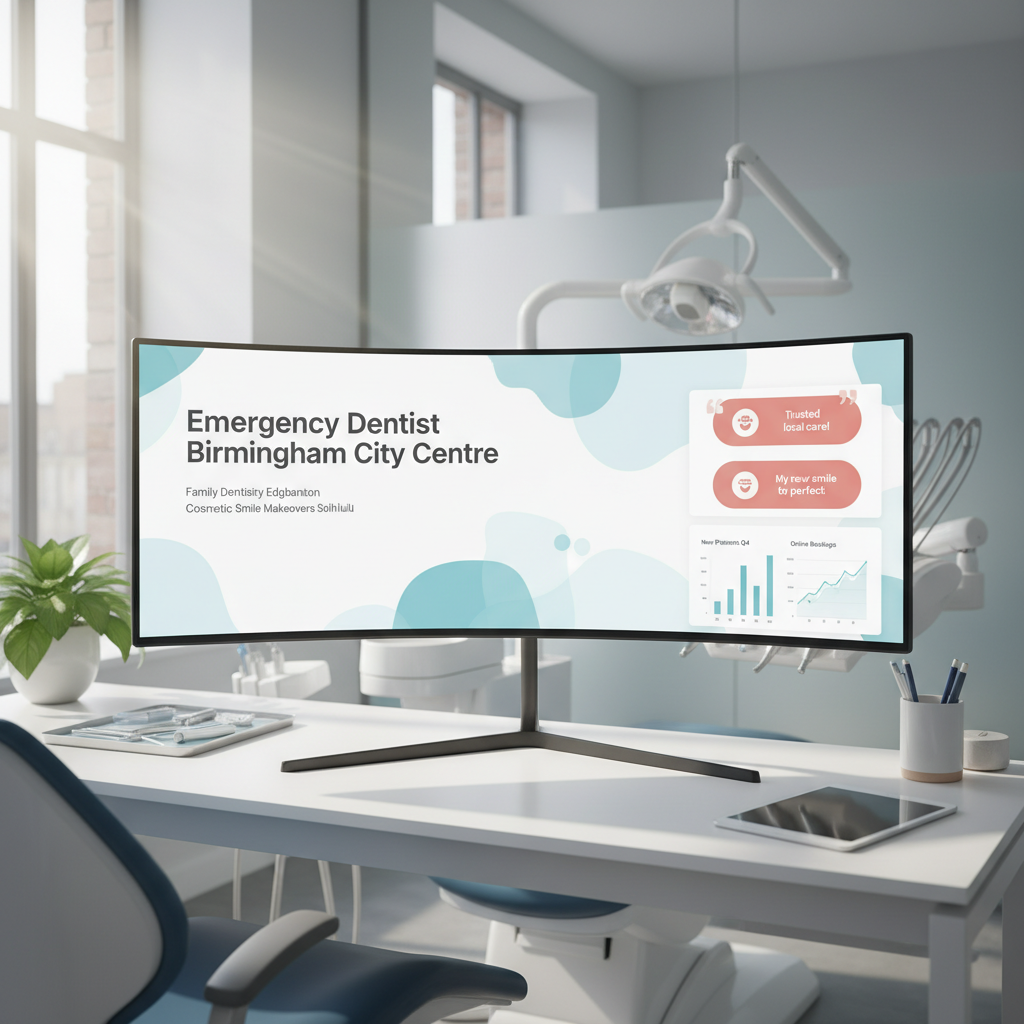
Location-specific pages capture patients searching for dental services in particular areas while avoiding duplicate content penalties that harm rankings. Create unique pages for each service area with distinct content addressing local patient needs, such as “Emergency Dentist Birmingham City Centre” or “Invisalign Specialist Manchester Northern Quarter.”
Structure each location page with 800+ words of original content, incorporating the target keyword in your H1 tag within the first 60 characters. For example: “Expert Dental Implants Manchester | [Practice Name].” Include local landmarks, transport links, and area-specific patient testimonials to demonstrate genuine local presence rather than template content.
| Page Element | Best Practice | Example |
|---|---|---|
| Title Tag | Under 60 characters with location + service | “Best Dental Implants Manchester | Dominate Dental” |
| Meta Description | 150-160 characters with CTA | “Expert dental implants in Manchester. Book consultation today.” |
| H1 Tag | Primary keyword + location | “Dental Implant Specialists in Manchester City Centre” |
| Image Alt Text | Descriptive with location | “Invisalign before after results London patient” |
Optimize images for fast loading with compression under 100KB while maintaining visual quality. Add descriptive alt text incorporating location and treatment keywords: “Invisalign before after London patient transformation.” This dual approach improves accessibility and provides additional ranking signals for image search results.
Implement internal linking strategies with 3-5 contextual links per page connecting to related treatment pages and your main dental social media marketing hub. This link architecture helps search engines understand your site structure while keeping visitors engaged with relevant content pathways.
Include FAQ sections addressing common local queries like “How much does Invisalign cost in London?” or “What’s the recovery time for dental implants in Birmingham?” Structure these with schema markup to increase chances of featured snippet placement, which can dramatically boost click-through rates from search results.
Master Technical SEO for Speed, Mobile, and Indexing
Technical SEO forms the foundation enabling your content to rank, with 53% of mobile users abandoning sites loading longer than 3 seconds. Google’s algorithm increasingly prioritizes fast, mobile-optimized sites, particularly for local searches where users expect immediate information access.
Use Google PageSpeed Insights to audit your current performance, targeting Core Web Vitals scores under 2.5 seconds for Largest Contentful Paint. Common fixes include enabling browser caching, compressing images, and minimizing CSS/JavaScript files. Implement these changes systematically, retesting weekly to monitor improvements in both speed scores and search rankings.
Ensure mobile responsiveness across all dental website design elements, as mobile-first indexing is now the default for Google. Test your site on multiple devices and browsers to guarantee a seamless experience for every visitor. Use responsive design frameworks and avoid intrusive pop-ups that can hinder mobile usability.
Develop a Content Marketing Plan for Patient Acquisition
Content marketing drives 67% more qualified leads for UK dental practices than traditional advertising, particularly when targeting high-value treatments like Invisalign marketing and dental implant marketing. The key lies in creating patient-focused content that answers specific questions throughout their treatment journey.
Successful dental practice SEO tips emphasise content that addresses real patient concerns. Create comprehensive guides covering “Invisalign cost London,” “dental implant recovery time Manchester,” and “composite bonding before after Birmingham.” These long-tail keywords attract patients ready to book consultations rather than casual browsers.
Structure your content calendar around the patient decision-making process. Educational content builds trust during the research phase, while treatment-specific pages convert visitors into bookings. Focus on evergreen topics that maintain search value: “How long do dental implants last?” consistently drives traffic year-round.
Video content significantly boosts engagement and dwell time, crucial ranking factors for 2026. Create 2-5 minute videos addressing common concerns: “Does Invisalign hurt?” or “What to expect during implant surgery.” Embed these on corresponding service pages to increase time on site.
Content Performance Benchmark: Practices publishing 8+ monthly blog posts generate 126% more qualified leads than those posting sporadically. Consistency matters more than volume.
Optimise content for featured snippets by structuring answers in numbered lists and clear definitions. Target questions beginning with “how,” “what,” and “why” related to your treatments. Featured snippet positions capture 35% of clicks in dental searches.
Repurpose successful content across multiple formats. Transform a popular blog post about dental implant marketing into an infographic, video script, and social media series. This amplifies reach while reinforcing your expertise across platforms.
Actionable Content Tips: Publish treatment-focused blogs every Tuesday at 9 AM for optimal engagement. Create FAQ pages with 10+ questions per treatment using schema markup. Develop quarterly content themes: Q1 focuses on cosmetic treatments, Q2 on preventive care, Q3 on emergency procedures, Q4 on New Year smile makeovers.
Track content performance through Google Analytics, monitoring pages that drive consultation bookings. Double down on high-converting topics while refining underperforming content to better match patient intent and search behaviour.
Secure Citations, Backlinks, and Off-Page Authority

Off-page SEO builds the digital reputation that Google uses to rank dental practices in competitive UK markets. Consistent NAP (Name, Address, Phone) citations across directories establish trust, while quality backlinks from authoritative sites signal expertise to search engines.
Start with local directory submissions to establish foundational citations. Target UK-specific platforms: Yell, Thomson Local, FreeIndex, and Bing Places. Ensure identical NAP formatting across all listings – inconsistencies confuse search algorithms and dilute ranking power.
Industry-specific directories carry more weight than general listings. Submit to Dental Guide UK, Private Dentistry, and regional dental association directories. These targeted citations directly support dental local SEO efforts while connecting with potential referral sources.
Build relationships with complementary healthcare providers for natural link opportunities. Orthodontists, oral surgeons, and periodontists often refer patients, creating authentic backlink prospects. Offer to write guest articles about dental implant marketing or collaborative care approaches.
| Link Building Strategy | Authority Impact | Time Investment | Conversion Potential |
|---|---|---|---|
| Local Directory Citations | Medium | 2-3 hours monthly | Moderate |
| Healthcare Guest Posts | High | 4-6 hours per article | High |
| Community Sponsorship | High | Ongoing relationship | Very High |
| Resource Page Links | Medium-High | 1-2 hours weekly | Low-Medium |
Create linkable assets that naturally attract backlinks. Develop comprehensive guides like “Complete Guide to Dental Emergencies in London” or interactive tools such as treatment cost calculators. These resources provide value while earning editorial links from local health websites and patient forums.
Monitor competitor backlink profiles using tools like Ahrefs or SEMrush. Identify link opportunities where competitors appear but your practice doesn’t. Reach out to these sites with relevant content or resource suggestions that add genuine value to their audience.
Community involvement generates powerful local links and brand recognition. Sponsor local sports teams, participate in health fairs, or offer educational workshops at schools. These activities often result in local news coverage and website mentions that boost both SEO and community reputation.
Citation and Link Building Actions: Audit existing citations monthly, correcting any NAP inconsistencies within 48 hours. Secure 2-3 quality backlinks monthly through guest posting on UK dental or health websites. Develop quarterly community partnerships that generate natural local links and patient referrals.
Manage Reviews and Reputation for Trust Signals
Online reviews directly influence 15% of local search rankings while affecting 93% of patient booking decisions. Proactive review management transforms satisfied patients into powerful marketing assets that drive both SEO performance and new patient acquisition.
For more ideas on encouraging patients to leave positive feedback, see how to get patients to write reviews.
Staying up to date with industry standards is also important. For authoritative information on dental services in the UK, visit NHS dental services.
To further enhance your dental marketing strategy, explore these dental marketing ideas for inspiration.
For an overview of dental regulations, refer to the General Dental Council.
Frequently Asked Questions
How does investing in SEO compare to paid advertising in terms of cost per lead and ROI for UK dental practices?
UK dental practices investing over £2,000 monthly in SEO achieve a 67% better ROI compared to paid advertising, with cost per lead dropping significantly from over £25 to just £4.55. Unlike paid ads, which stop generating leads once spending ceases, SEO delivers sustained, compounding visibility that improves lead quality and volume over time.
What are the key local SEO factors that dental practices should focus on to improve their online visibility?
Dental practices should prioritise proximity, relevance, and prominence to rank well in local searches. This includes optimising their Google Business Profile, building location-specific website pages, managing reviews and reputation, and securing authoritative citations and backlinks to boost local prominence and trust signals.
Why is local SEO more effective than paid ads for attracting qualified patients to dental practices?
Local SEO targets hyper-local intent, capturing patients actively searching for nearby high-value treatments like Invisalign and implants. Unlike paid ads, which attract leads only while budgets last, local SEO builds long-term online presence and trust, resulting in higher-quality leads and reduced no-shows.
What specific SEO strategies can dental practices implement to dominate local search results and generate more qualified consultations?
Dental practices should claim and optimise their Google Business Profile, conduct keyword research focused on high-value treatments, develop location-specific website content, master technical SEO for speed and mobile, implement a content marketing plan, and build authoritative citations and backlinks. Managing reviews and reputation also enhances trust and conversion rates.
Leave a Reply