Decoding the UK Dental Landscape: Your Market Opportunity
The UK dental market offers exciting prospects for practices willing to embrace a strategic dental marketing plan. It's not just about filling appointments; it's about cultivating a thriving, sustainable business. Understanding the specific dynamics of the UK dental market is the crucial first step.
Understanding the Current Market Dynamics
The market is evolving, shaped by changing patient expectations and advancements in technology. Patients are increasingly focused on preventative and cosmetic care, creating new growth opportunities. The presence of both private practices and NHS services provides diverse options for catering to different patient demographics. Understanding your target audience is more important than ever.
 dental marketing plan”>
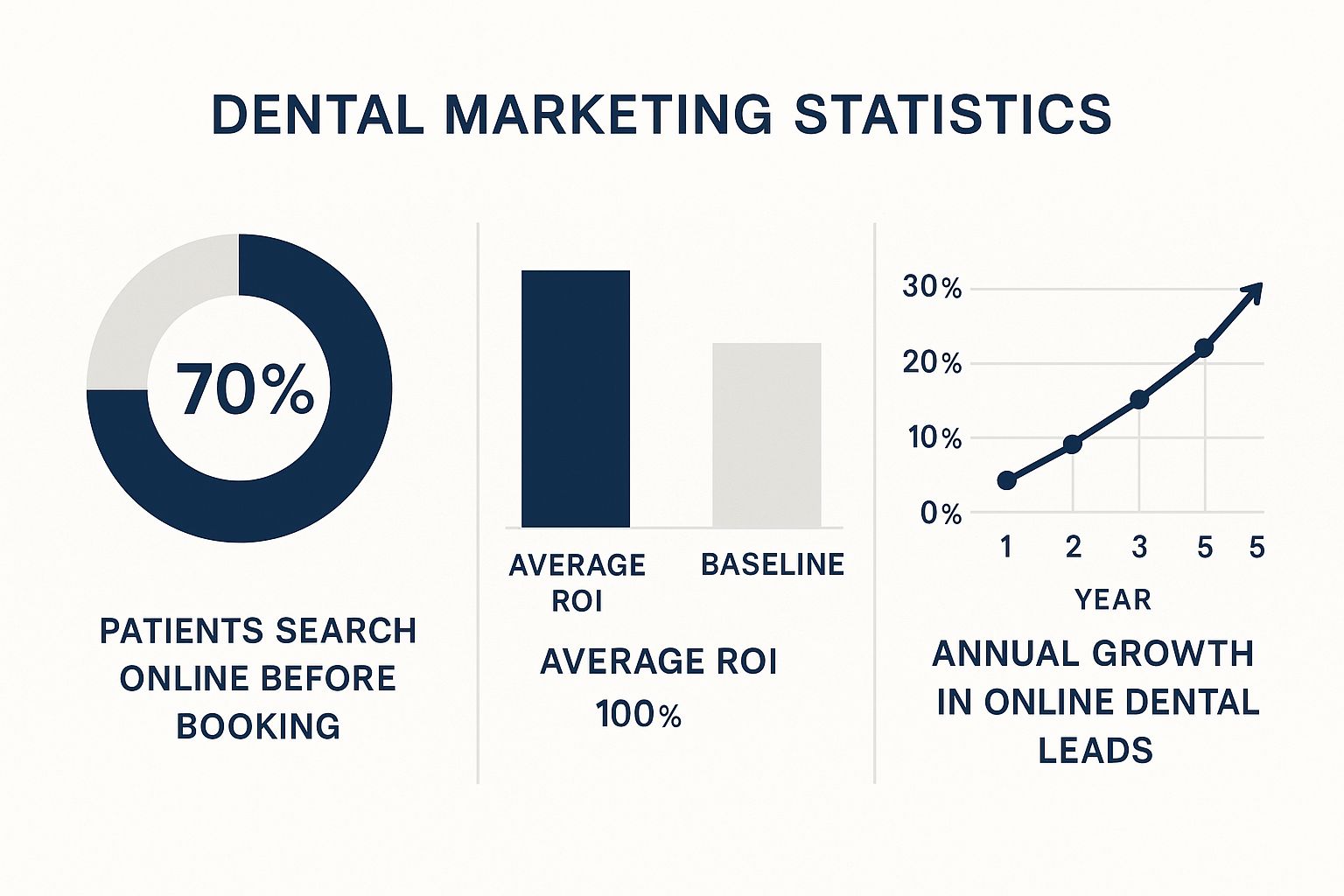
The infographic above illustrates key data impacting dental marketing plans. 70% of patients now research online before booking an appointment. The average ROI for dental marketing campaigns is 150%, significantly exceeding the industry average. Online dental leads have increased by 25% annually over the past five years. This data emphasizes the need for a strong online presence and a focused digital marketing strategy.
Identifying Profitable Niches and Regional Opportunities
Regional differences within the UK influence marketing effectiveness. Understanding the unique needs and preferences of patients in your local area is paramount. Demographic trends are also creating profitable niche markets. For example, the rising demand for cosmetic procedures among younger demographics presents a valuable opportunity for practices offering such services.
Tapping into Cosmetic Dentistry Growth
This trend is particularly noticeable in urban areas experiencing increased interest in cosmetic dentistry, often facilitated by private clinics and flexible payment options. The UK dental market's healthy growth projections underscore this potential. The market is predicted to reach USD 48.83 billion by 2032, with a CAGR of 19.4%. You can learn more about these projections here.
To better understand the projected growth across different segments of the dental market, let's look at the following table:
UK Dental Market Growth Projections: A comparison of market valuation and growth trends across different dental service categories
| Service Category | Current Market Value | Projected Growth Rate | Key Growth Drivers |
|---|---|---|---|
| General Dentistry | $XX Billion | X% | Increasing awareness of oral health, aging population |
| Cosmetic Dentistry | $XX Billion | X% | Rising disposable incomes, focus on aesthetics |
| Orthodontics | $XX Billion | X% | Technological advancements, increasing demand for teeth straightening |
| Restorative Dentistry | $XX Billion | X% | Growing prevalence of dental issues, innovative treatment options |
| Preventative Dentistry | $XX Billion | X% | Focus on proactive care, increasing health consciousness |
Note: The table above provides a framework. Actual market values and growth rates would require specific market research data to populate.
This table demonstrates the varying growth trajectories within the UK dental market. While general dentistry maintains a steady growth, areas like cosmetic and restorative dentistry are experiencing faster expansion due to factors like rising disposable incomes and advanced treatment options.
Learning from Successful UK Practices
Forward-thinking dentists are already leveraging these market trends. By studying their strategies, valuable lessons can be gleaned for developing effective dental marketing plans. These practices often prioritize building a strong brand identity, communicating a clear value proposition, and employing innovative marketing techniques that resonate with their target audience. By understanding market dynamics, identifying profitable niches, and learning from successful practices, you can create a robust dental marketing plan that positions your UK practice for sustained growth.
Crafting Your Dental Marketing Plan: Beyond the Basics
A successful dental marketing plan in the UK takes more than a website and a few social media posts. It requires a strategic understanding of the UK dental market, your target audience, a compelling brand identity, and measurable objectives. This section explores the key elements for building a dental marketing plan that delivers real results.
Defining Your Brand Identity and Value Proposition
Your brand identity is the personality of your practice; it's how patients perceive you and what differentiates you from competitors. Do you focus on NHS care, specialize in premium cosmetic services, or offer a balanced approach? Defining this shapes your entire marketing strategy. It also helps articulate your value proposition: the unique advantages patients gain by choosing you. What makes your practice special? Is it advanced technology, a commitment to patient comfort, or specialized expertise?
For example, a cosmetic dentistry practice might emphasize advanced techniques and state-of-the-art equipment. An NHS-focused practice might highlight accessibility and community health commitment. This clear distinction is crucial for attracting the right patients. For more insights, check out this resource: How to master your dental marketing plan.
Setting Measurable Marketing Objectives
A dental marketing plan without clear objectives is like sailing without a compass. Your objectives should be SMART: Specific, Measurable, Achievable, Relevant, and Time-bound. Instead of "increasing brand awareness," aim for concrete targets like "increasing website traffic by 20% next quarter" or "generating 15 new patient leads monthly through social media."
Furthermore, align your marketing objectives with overall business goals. Do you want to increase patient volume, boost revenue, or expand services? This alignment ensures marketing efforts directly contribute to practice success.
Developing Detailed Patient Personas
Understanding your ideal patient is fundamental. Patient personas represent your target audience segments, providing insights into their demographics, behaviours, motivations, and needs. For instance, a cosmetic dentistry patient persona might be a young professional aged 25-40, active on social media, and concerned about their appearance. This helps tailor your messaging and channels for maximum impact.
This detailed understanding allows for personalized marketing, ensuring your message resonates with the right people. It speaks to those seeking both oral health and aesthetic solutions. By defining your brand, setting measurable objectives, and understanding your patients, your dental marketing plan becomes a powerful tool for attracting and retaining patients in the UK.
Digital Dominance: Online Strategies That Actually Work
For dental practices in the UK, a strong online presence isn't just a bonus anymore – it's a must-have. It’s more than simply having a website. It's about using digital channels strategically to connect with current patients and attract new ones. This includes website optimization, using local SEO, creating valuable content, and using social media and paid advertising effectively.
Website Optimization for Patient Experience and Conversion
Your website is often the first interaction a potential patient has with your practice. It needs to be user-friendly, look professional, and be easy to navigate. This means ensuring your website is mobile-friendly, loads quickly, and includes clear calls to action.
Your website content should be informative and engaging, addressing common patient questions. Make sure to include details about your services, your team, and your contact information. A good marketing strategy for small business can provide helpful insights for dental practices.
Hyper-Local SEO: Targeting High-Intent Searches
Many people search online for dental services in their area. Hyper-local SEO is about optimizing your online presence so you rank higher in these local searches. This involves claiming and optimizing your Google My Business profile, using location-based keywords, and building local citations. This way, your practice is visible when potential patients search for dentists "near me."
Content Marketing: Establishing Authority and Addressing Patient Concerns
Creating valuable content is key for attracting and engaging potential patients. This can include blog posts, articles, videos, and infographics that address common dental concerns, offer practical tips, and show your expertise. This builds trust and improves your search engine rankings. Consider creating a blog post about teeth whitening benefits or the different types of braces.
For more social media tips, check out this article: How to boost your dental practice's social media engagement with Instagram Reels.
Social Media Marketing: Engaging Your Target Audience
Platforms like Facebook and Instagram are powerful tools for reaching potential patients. It's important to focus on the platforms where your target audience spends their time. Create engaging content that builds relationships and highlights your services. You could share patient testimonials, before-and-after photos, run contests, or offer special promotions. Paid social media advertising can also help you reach a wider audience.
Paid Advertising Campaigns: Maximising ROI
Paid advertising platforms like Google Ads and social media ads can be very effective for driving targeted traffic to your website. Careful planning is essential to maximize your return on investment (ROI). This means selecting the right keywords, targeting the right audience, and writing compelling ad copy. Closely monitor your campaign performance and make any necessary adjustments.
The dental industry is a significant part of the UK economy. The UK dental practices industry is projected to have a market size of approximately £7.7 billion in 2025. This includes both NHS and private dental services. More detailed statistics are available here. This highlights the importance of a strong dental marketing plan, incorporating both online and offline strategies to effectively reach your target audience and ultimately drive practice growth.
Offline Excellence: Traditional Tactics That Still Convert
While a strong online presence is essential for modern dental marketing, offline strategies remain valuable, especially in the UK. These traditional methods complement your digital efforts, creating a well-rounded approach that connects with a broader audience. Focusing only on digital marketing might mean overlooking valuable patient engagement opportunities.
The Power of Community and Partnerships
Building a strong local presence can be incredibly effective. This could involve sponsoring local events, participating in school health fairs, or collaborating with related businesses. Partnering with local pharmacies or opticians, for example, creates mutually beneficial referral networks. This lets you personally connect with potential patients within your target demographic.
Patient Referral Systems: Word-of-Mouth Marketing
A robust patient referral system is still one of the most effective marketing tools. Happy patients often recommend their dentist to friends and family. This type of organic word-of-mouth marketing builds trust and credibility. Incentivizing referrals with a small discount or reward program can encourage more recommendations, turning existing patients into active marketing participants.
Print Materials That Make an Impact
Even in the digital age, well-designed print materials still influence patient decisions. Go beyond generic leaflets. High-quality brochures showcasing your practice, team, and specialized services create a lasting impression. Targeted direct mail campaigns can also be effective, particularly when focused on specific demographics in your area. This tangible marketing approach resonates with patients who might not be as active online.
You might be interested in: How to master your social media marketing.
Local Sponsorships and Visibility
Strategic sponsorships boost your practice's visibility. Consider sponsoring a local sports team, community theatre group, or charity event. This raises awareness and positions your practice as a supportive community member, building goodwill and a positive brand image. A solid online strategy is crucial for dental practices. For more on how search engine optimization (SEO) can help, see this article on SEO for dentists. Integrating offline and online marketing creates a cohesive and impactful strategy.

Measuring Offline Marketing Effectiveness
Tracking the results of your offline efforts is essential. Monitor referral sources, track leads from direct mail, and survey patients about how they found you. This data helps you refine your strategies and budget effectively, ensuring you invest in tactics with the best return. Combining offline and online strategies creates a comprehensive dental marketing plan. This multi-faceted approach reaches patients at multiple touchpoints, driving consistent growth for your UK practice.
Technology as Your Marketing Edge: The Equipment Advantage

In the competitive UK dental market, technology is a powerful marketing tool. It sets your practice apart and attracts patients who prioritize quality care. The key is to communicate the benefits of your technology effectively, focusing on patient advantages rather than technical jargon.
Showcasing Technology Without the Jargon
Explaining the advantages of digital scanners, 3D imaging, and other advanced tools should always be patient-focused. Instead of emphasizing technical specifications, highlight the tangible benefits for patients. For instance, explain how digital scanners create more precise and comfortable impressions, eliminating the messy traditional molds. This resonates with patients looking for a modern and comfortable experience.
Virtual Tours and Engaging Content
Virtual tours are a great way to showcase your practice and equipment. A well-made video tour lets potential patients visualize themselves in your modern, well-equipped space. Complement this with engaging content that demonstrates your technology's benefits. Short videos or animated explainers can simplify complex procedures and showcase the efficiency and precision of your equipment.
Patient Testimonials: The Power of Real Experiences
Real patient stories are powerful marketing tools. Encourage patients who've benefited from your advanced technology to share their experiences. A positive testimonial about a faster, less painful procedure thanks to your technology is much more impactful than a technical description. These testimonials build trust and assure potential patients of the quality and comfort you provide.
Focusing on Technologies That Influence Patient Decisions
Not all technologies are created equal in the eyes of patients. Some, like intraoral cameras, directly enhance patient comfort and understanding. Others may be less visible or impactful. Focus your marketing on the technologies patients value – those that truly improve their experience and lead to better outcomes.
Measuring the ROI of Technology Investments
Tracking the impact of technology on patient acquisition and treatment acceptance is crucial. It justifies investments and refines your marketing strategy. For example, if you've invested in a CEREC machine, track the number of same-day crown procedures scheduled. This data-driven approach ensures your technology purchases align with your business goals. This is especially relevant in the UK, where the dental devices market is booming. The market is projected to reach USD 2.35 billion by 2030, indicating a strong demand for advanced equipment. Learn more about this growing market here.
Technology Adoption Impact on Dental Marketing
To understand how different technologies influence patient decisions, review the table below. It provides a comparison of their impact on acquisition and retention.
Technology Adoption Impact on Dental Marketing: Comparison of how different dental technologies influence patient acquisition and retention
| Technology Type | Patient Perception Value | Marketing Potential | Implementation Complexity | ROI Timeline |
|---|---|---|---|---|
| Digital Scanners | High (comfort, precision) | High (modern, efficient) | Medium | Short-term |
| 3D Imaging | Medium (diagnostic accuracy) | Medium (advanced care) | High | Long-term |
| Laser Dentistry | Medium (less invasive) | Medium (precise treatment) | High | Medium-term |
| Intraoral Cameras | High (patient education) | High (transparency, trust) | Low | Short-term |
This table highlights key differences and similarities in how each technology is perceived by patients and its potential for marketing. Prioritize technologies with high patient value and marketing potential for the best return on investment. By strategically showcasing your technology, you can differentiate your practice, attract new patients, and solidify your position as a leading provider of advanced, patient-centered care in the UK.
Measuring What Matters: From Data to Decisions
Too often, dental marketing plans in the UK focus on superficial metrics. Likes and shares are great for engagement, but they don't always translate to new patients or a boost to your practice's revenue. This section explores the Key Performance Indicators (KPIs) that truly make a difference – the metrics that directly impact growth and profitability.
Beyond Vanity Metrics: KPIs That Drive Practice Growth
Instead of focusing on superficial numbers, concentrate on metrics directly related to your business goals. These include:
- Patient Acquisition Cost (PAC): Knowing how much it costs to acquire a new patient is essential. This metric allows you to evaluate the return on your marketing investment.
- Treatment Acceptance Rate: This KPI tracks the percentage of patients who accept recommended treatments. A low rate could indicate opportunities to improve case presentations and patient communication.
- Lifetime Patient Value (LPV): This metric measures the total revenue generated by a patient throughout their relationship with your practice. Understanding LPV underscores the importance of patient retention and building long-term relationships.
These KPIs offer actionable insights, unlike vanity metrics which offer limited practical value. By analyzing PAC, treatment acceptance rates, and LPV, you can make data-driven decisions to optimize your marketing strategies and improve profitability.
Connecting Marketing Activities to Revenue Generation
Every aspect of your dental marketing plan should be tied to revenue generation. It's vital to track the source of new patients, whether it's a Google Ad, a social media campaign, or a patient referral. This attribution allows you to see which marketing efforts are directly contributing to your bottom line, enabling informed budget allocation.
For example, if local sponsorships yield a higher return than online advertising, you can reallocate your budget accordingly. This data-driven approach maximizes your marketing ROI and ensures efficient resource allocation.
Gathering Actionable Patient Feedback
Patient feedback is invaluable for practice growth. Implement systems for collecting feedback through surveys, online reviews, and direct communication. This feedback provides crucial insights into patient satisfaction, identifies areas for improvement, and informs your marketing messaging. Positive reviews also strengthen your online reputation and attract new patients.
Furthermore, patient feedback helps you understand the patient journey and identify any pain points. This allows you to refine your processes and improve the patient experience, fostering patient loyalty and encouraging positive word-of-mouth referrals.
A/B Testing and Continuous Improvement
Don't hesitate to experiment with your marketing efforts. A/B testing different messages, visuals, and offers helps identify what resonates most with your target audience. This data-driven approach allows you to optimize campaigns for maximum effectiveness. Continuously analyze the results, refine your strategies, and adapt to the evolving market.
This commitment to continuous improvement is crucial for success in the competitive UK dental market. By analyzing data, gathering feedback, and adapting your marketing plan, you ensure consistent growth and maximize your return on investment.
Benchmarking for Practices at Different Growth Stages
It's important to understand how your practice compares to others. Benchmarking against similar practices in your area provides valuable context and identifies areas for potential improvement. However, it's crucial to recognize that benchmarks vary based on your practice's growth stage. A new practice will have different KPIs than an established one.
For example, a new practice might prioritize building brand awareness and attracting new patients, while an established practice might focus on increasing patient retention and treatment acceptance rates. Benchmarking against relevant competitors provides valuable insights and helps set realistic growth targets.
Leave a Reply