Why Local SEO Transforms Dental Practice Growth
The way people find dental care has dramatically shifted. Instead of relying only on referrals, most patients now begin their search online. This makes local SEO for dentists essential for practice growth in the UK. Successful practices understand this and use online search habits to their advantage, capturing "dentist near me" searches and turning them into appointments.
Understanding the Shift in Patient Search Behaviour
Consider your own recent searches for local services – you probably Googled them. Dental care is no different. Patients search for terms like "dentist in [town/city]", "emergency dentist near me", or "best cosmetic dentist". To learn more about the importance of local SEO, check out our guide on SEO for dentists. This reliance on online search creates a huge opportunity for practices that prioritize local SEO. Data shows that 72% of patients search online before booking an appointment, emphasizing the need for a strong online presence. This trend is increasing, with almost 60% of Google searches ending without a click in 2024, and this number is expected to rise in 2025. You can learn more here.
Converting Online Searches into Appointments
Topping local search results is like having the best spot on the high street. When your practice is at the top for relevant keywords, you’re far more likely to attract new patients. This increased visibility leads to more calls, website visits, and booked appointments. For further insights, see How dental SEO can lead to more patients.
Avoiding Common Local SEO Pitfalls
Many practices waste marketing funds on ineffective methods. Common mistakes include ignoring their Google Business Profile, having inconsistent business listings (Name, Address, Phone Number – NAP), and lacking focus on local keywords. These issues can decrease visibility and make it difficult for patients to find you. Investing in a well-designed local SEO strategy prevents these problems and ensures effective budget use.
Setting Realistic Expectations and Measuring Success
While local SEO is vital, it's important to be realistic. Visibility improvements don't happen instantly. It's an ongoing process requiring consistent work and tracking. Monitoring metrics like keyword rankings, website traffic, and conversion rates gives you insights into your strategy's success. Focusing on these metrics allows you to refine your approach and maximize your return on investment.
Maximizing Your Google Business Profile for Patient Acquisition
Your Google Business Profile (GBP) is the cornerstone of attracting new patients. It's the digital equivalent of your practice's front door, connecting you with people actively searching for dental services nearby. Let's explore how to optimize your GBP to make it a powerful patient-generating tool.
The Power of a Complete and Accurate Profile
A successful GBP starts with accurate and complete information. This includes the basics: your practice's name, address, phone number (NAP), website, and hours of operation. Consistency across all online platforms is key to avoid confusing potential patients. For instance, if your website lists your address as "10 High Street," your GBP should match exactly. Small discrepancies can negatively impact your local SEO.
Beyond the basics, selecting the right categories for your practice is crucial. "Dentist" is a must, but adding specific categories like "Cosmetic Dentist" or "Orthodontist" helps Google understand your specialties and connect you with the right patients.
 seo for dentists“>
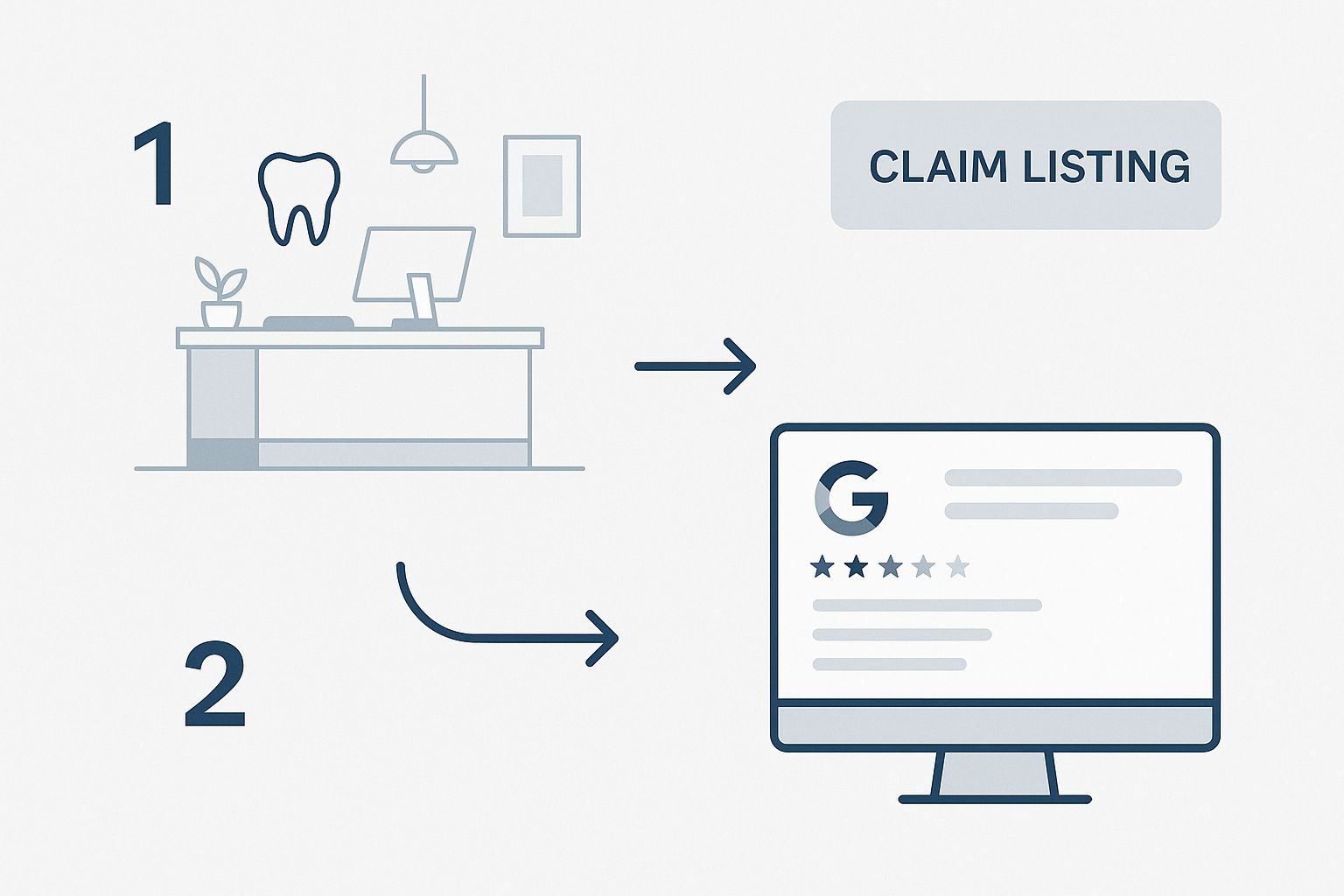
This image illustrates the crucial first step: claiming your GBP listing. By claiming and verifying your listing, you take control of the information displayed and unlock powerful features to interact with potential patients.
Optimizing your online presence, especially your GBP, is paramount for attracting new patients, particularly for dentists in the UK. Focusing on local SEO strategies ensures visibility in searches like "dentist near me." Learn more about local SEO for dentists here.
Engaging Visual Content and Compelling Descriptions
Your GBP is your online storefront. Just as an attractive physical storefront draws people in, high-quality photos and videos on your GBP capture attention. Showcase your facilities, friendly staff, and technology to help patients visualize themselves in your practice and build trust.
Your business description is your chance to connect. Craft a concise and engaging description that highlights what sets you apart. Do you offer specialized treatments? Do you focus on family dentistry or cosmetic procedures? Communicate the value you provide clearly.
Leveraging Google Posts and Patient Reviews
Google Posts are like mini-blog posts that appear in search results. Use them to announce new services, share special offers, or post informative content about dental health. Keep your profile fresh and engaging, attracting both new and existing patients.
Patient reviews build trust and credibility. Encourage satisfied patients to leave reviews on your GBP. Positive reviews influence potential patients and signal to Google that your practice is reputable, boosting your local search ranking. Responding to all reviews demonstrates your commitment to patient satisfaction.
Verification and Ongoing Optimization
Verifying your GBP ensures accuracy and builds trust. Google offers several verification methods, typically through postcard, phone, or email. Verification unlocks valuable insights and analytics to track your GBP's performance.
Local SEO is a continuous process. Regularly review and update your GBP to reflect any changes, like new services or adjusted hours. Stay updated on Google Business Profile features and best practices to maximize patient acquisition. Consistent optimization builds a strong online presence and attracts a steady stream of new patients.
Before we conclude, let's take a look at a checklist that can help you ensure your GBP is fully optimized.
This table summarizes key optimization elements for your Google Business Profile:
Google Business Profile Optimization Checklist for Dentists
A comprehensive checklist of essential optimization steps for dental practices to maximize their Google Business Profile effectiveness
| Optimization Element | Importance Level | Implementation Difficulty | Impact on Local Visibility |
|---|---|---|---|
| Accurate NAP Information | High | Low | High |
| Relevant Categories | High | Low | Medium |
| Engaging Photos and Videos | Medium | Low | Medium |
| Compelling Business Description | Medium | Low | Medium |
| Regular Google Posts | Medium | Low | Low |
| Active Management of Reviews | High | Medium | High |
| Profile Verification | High | Low | High |
| Consistent Updates | Medium | Low | Low |
By following these optimization steps, you can significantly improve your practice’s visibility and attract more patients. Regularly reviewing this checklist will ensure your GBP continues to be a powerful tool for growth.
Dental-Specific Keyword Research That Drives Appointments

Beyond optimizing your Google Business Profile and website structure is a powerful tool for attracting new patients: dental-specific keyword research. Many UK practices overlook this critical aspect of local SEO for dentists, missing valuable opportunities to connect with potential patients.
Identifying High-Value Keywords
Effective keyword research goes beyond simple terms like "dentist." It requires understanding the specific language patients use when searching for treatment. For example, instead of "dental restoration," a patient might search for "chipped tooth repair" or "fix broken front tooth."
Identifying these long-tail keywords, longer and more specific phrases, allows you to target patients actively looking for specific treatments. This targeted approach helps attract the right patients to your practice.
Consider the searcher intent behind keywords. Someone searching for "emergency dentist open now" has a different need than someone searching for "best cosmetic dentist London." Understanding intent helps tailor your content and connect with the right patients at the right moment.
Decoding Patient Language vs. Clinical Terminology
Dentists often use clinical terms that patients might not recognize. While "periodontitis treatment" is medically correct, a patient might search for "gum disease treatment" or "bleeding gums remedy." Bridging this gap is crucial for effective keyword targeting.
This means creating content that uses both types of language. This approach makes your content accessible to patients while showcasing your professional expertise. This strategy strengthens your online presence and builds patient trust.
Addressing Searcher Anxiety and Building Trust
Many patients feel anxious about dental procedures. Keywords like "painless root canal" or "gentle dentist for nervous patients" reflect this anxiety. Addressing these concerns in your content builds trust and positions your practice as compassionate and understanding.
Create content that explains procedures while reassuring patients and alleviating their fears. Building this trust can be a key differentiator for your practice.
Mapping Keywords to the Patient Journey
The patient journey typically moves from awareness to consideration and finally to decision. Different keywords are relevant at each stage. Someone in the awareness stage might search for "causes of toothache," while someone closer to a decision might search for "dental implants cost London."
Mapping keywords to each stage allows you to create targeted content that guides patients through their decision-making process, ultimately leading to appointments. This could involve blog posts, detailed service pages, and clear calls to action.
Exploring Keyword Variations Across Treatments and Locations
Different treatment categories have unique keyword sets. "Invisible braces" will attract different patients than "dentures." Location also plays a significant role in local seo for dentists. Patients in Birmingham will use different terms than those in Manchester.
Tracking geographically-specific search patterns lets you tailor content and target the right local audience. Location-specific landing pages can further refine your local targeting.
By mastering dental-specific keyword research, you connect with potential patients actively seeking your services. This drives targeted traffic to your website and ultimately increases appointments. This focused approach ensures your local SEO efforts reach the right people at the right time. This, in turn, boosts your practice’s visibility and attracts patients seeking quality dental care in your area.
Building a Local SEO Powerhouse Dental Website
Your dental website is the key to attracting new patients. It works for you 24/7. By looking at successful dental websites, we can see what brings in patients and keeps search engines happy. This section explores essential elements of a dental website optimized for local SEO for dentists in the UK.
Structuring Your Website For Local Relevance
Think of your website like a well-organized library. Clear navigation and a logical structure are crucial. Each page should have a distinct purpose, such as "Teeth Whitening" or "Dental Implants." This helps both patients and search engines find information quickly.
Location-specific landing pages are essential for targeting areas within the UK. For example, a "Dental Implants Manchester" page attracts patients in that city and improves local SEO.
Mobile optimization is also vital. Most people search on mobile devices. A responsive website adapts to any screen size, preventing frustration and improving search engine ranking.
Technical SEO Foundations
Behind the scenes, the technical side of your website is crucial for local search visibility. This includes fast loading speeds, a secure connection (HTTPS), and a sitemap.
These elements improve user experience and tell Google your website is trustworthy and reliable. A fast-loading website keeps visitors engaged and encourages them to explore your services.
Content Marketing For Dental Practices
Compelling content builds trust and establishes your practice as an expert. High-quality content addressing patient concerns and explaining treatments attracts organic traffic. Dominate Dental offers further insights on smart website design.
Blog posts like "What are the benefits of Invisalign?" or "How to manage dental anxiety" add value for potential patients and boost your visibility for relevant keywords.
Psychological Triggers and User Experience
Beyond just the technical details, understanding user psychology is crucial for converting website visitors. Clear calls to action, such as "Book Your Appointment Today," guide visitors towards taking action.
Trust signals, including patient testimonials and certifications, build credibility and encourage bookings. Showcasing positive reviews strengthens trust and helps patients feel comfortable choosing your practice.
Implementing Structured Data
Structured data is code that helps search engines understand your website content. This includes details about your practice, services, and location. It improves your visibility in search results and can lead to rich snippets, enhanced listings with extra information like opening hours and reviews.
Rich snippets make your practice stand out and provide key information at a glance, increasing click-through rates. This technical element has a significant impact on local SEO for dentists.
Maintaining Brand Consistency
While focusing on local SEO is important, maintaining consistent branding across all your locations is key, especially for practices with multiple locations. A consistent brand experience builds trust and reinforces your brand identity online.
The following table summarizes the essential website elements for boosting your dental practice's local SEO performance. It outlines the impact of each element on SEO, patient conversion, and the priority of implementation.
Essential Website Elements for Dental Practice Local SEO
A comparison of critical website features that impact local search rankings for dental practices
| Website Element | SEO Impact | Patient Conversion Impact | Implementation Priority |
|---|---|---|---|
| Mobile Optimization | High | High | High |
| Location-Specific Pages | High | Medium | High |
| Fast Loading Speed | High | High | High |
| Secure Connection (HTTPS) | Medium | High | High |
| Sitemap | Medium | Low | High |
| High-Quality Content | High | High | High |
| Clear Calls to Action | Medium | High | High |
| Trust Signals | Medium | High | Medium |
| Structured Data | High | Medium | Medium |
By implementing these elements, your website will attract, engage, and convert potential patients. This approach establishes your practice as a leader in your local market and positions your website as a powerful tool for growth.
Harnessing Patient Reviews as Your Competitive Advantage

Patient reviews are more than simple feedback; they are powerful tools for your dental practice. These reviews can significantly influence potential patients and directly impact your local SEO. This section explores how to generate authentic reviews and use them to build a strong online presence for your UK dental practice.
Understanding the Psychology of Review Requests
Timing is crucial when asking for reviews. Requesting feedback immediately after a complex procedure might not be ideal. Instead, consider asking after a routine check-up or when a patient expresses satisfaction with their visit.
Personalization matters, too. A generic email is less effective than a personalized message. Referencing the specific treatment a patient received shows you value their individual experience. This thoughtful approach builds rapport and encourages authentic feedback.
Identifying Key Review Platforms for UK Dentists
While Google reviews are essential, other platforms are also important for UK dental practices. Consider platforms like NHS Choices, Doctify, and Trustpilot. Focusing on platforms relevant to your target audience maximizes your reach and online visibility.
Diversifying your review platforms creates a more comprehensive view of your practice. Prioritizing these platforms allows you to connect with potential patients actively seeking healthcare information.
Responding to Reviews: Showcasing Your Practice Values
Responding to reviews, both positive and negative, shows your commitment to patient care. Thank patients for positive comments and address concerns raised in negative reviews professionally and promptly.
Handling negative reviews effectively can turn a negative experience into a positive one. A well-crafted response demonstrates professionalism and a dedication to patient satisfaction. For further guidance, check out this helpful resource: How to master online reviews.
Amplifying Positive Reviews and Handling Negative Feedback
Highlight positive reviews on your website and social media channels. These testimonials build trust and encourage potential patients to choose your practice. Positive feedback serves as social proof, reinforcing your reputation and expertise.
When addressing negative reviews, empathize with the patient's concerns and offer a solution. This demonstrates your commitment to resolving issues and maintaining patient satisfaction, mitigating the impact of negative feedback and building trust.
Leveraging Patient Testimonials Across Marketing Channels
Patient testimonials are valuable marketing assets. Use them in email marketing, social media posts, and even printed materials. These real-life experiences resonate with potential patients and build credibility.
Sharing positive reviews across multiple platforms reinforces your brand messaging and increases your chances of converting potential patients into loyal ones. This multi-channel approach ensures consistent communication and maximizes the impact of positive feedback.
By effectively managing patient reviews, you can turn feedback into a significant competitive advantage. This approach strengthens your online presence, builds trust, and ultimately contributes to practice growth in the competitive UK dental market. Positive reviews are a cornerstone of a successful and thriving dental practice.
Strategic Citation Building for Dental Practice Visibility
Having a robust Google Business Profile is crucial, but it's only one component of effective local SEO for dentists. Think of your online presence as a web – the more connections and the more consistent those connections, the more resilient and effective it becomes. That's where citation building enters the picture. It involves strategically listing your practice information on relevant online platforms to increase your authority and visibility among potential patients in the UK.
Identifying High-Impact Citation Opportunities
Not all citations hold the same weight. Some directories carry more authority and relevance for dental practices than others. General directories are useful, but concentrating on industry-specific platforms and professional associations significantly amplifies your reach.
Consider platforms like the British Dental Association, Dental Health.org, and reputable local directories. These targeted listings signal relevance to both search engines and potential patients. This strategic approach maximizes the effectiveness of your citations.
Prioritizing Citation Opportunities for Maximum Impact
Just as each patient requires individualized care, your citation-building strategy shouldn't be generic. Prioritize citations based on their relevance to your practice and your ideal patient. If you specialize in cosmetic dentistry, prioritize directories and platforms focused on aesthetics. If you provide NHS services, ensure your NHS Choices listing is accurate and current. This tailored approach strengthens your online presence in the areas that matter most.
Local SEO has a measurable impact: practices with optimized local SEO see a 156% increase in new patient appointments compared to those without. This emphasizes the importance of factors like Google Business Profile optimization, targeted keyword strategies, and consistent citations. For more detailed statistics, check out this helpful resource: Local SEO Statistics.
Maintaining NAP Consistency Across the Web
NAP (Name, Address, Phone Number) consistency is essential. Inconsistent information damages your credibility and confuses search engines. Imagine the frustration of a potential patient encountering different phone numbers for your practice across different websites. Ensure your NAP information is identical on all online platforms, including seemingly minor details like using "St." instead of "Street" or including your suite number. This attention to detail strengthens your online presence and builds trust with potential patients.
Leveraging Professional Associations, Community Connections, and Industry Relationships
Building citations is more than simply listing your practice in directories; it's about forging connections with your community. Look beyond online directories and explore opportunities with professional associations, local business groups, and even sponsorships. These relationships can generate valuable backlinks and enhance your practice's local relevance. Gathering positive reviews is also crucial. Here’s a helpful resource on the impact of reviews: 5-Star Google Review. These connections can lead to valuable citation opportunities and enhance your online visibility within your community.
Auditing and Correcting Existing Citations
Before adding new citations, audit your existing ones. Are there outdated listings, inaccurate information, or duplicate entries? These issues can negatively affect your local SEO. Utilize tools like Moz Local or BrightLocal to find and correct inconsistencies. This cleanup process strengthens your online foundation and ensures your citations are working effectively. Proactively addressing these issues is vital for maintaining a strong online presence and maximizing your visibility among potential patients.
Building a Citation Strategy that Supports Your Practice Goals
Your citation-building strategy should directly support your practice goals. If you aim to attract more patients from a particular area, focus on local directories and platforms relevant to that region. If you’re expanding your services, ensure your citations reflect these new offerings. This strategic alignment ensures that your citations support your growth objectives and contribute to your overall marketing efforts. This focused approach will yield better results and help you achieve your practice's specific goals.
Measuring What Matters: Local SEO Success Metrics
Vanity metrics like website visits or social media followers can be tempting to track. However, for dentists, local SEO success relies on data that directly impacts practice growth and new patients. This means looking beyond surface numbers and focusing on metrics that show real impact within the UK.
Key Performance Indicators (KPIs) for Dental Practices
The first step is identifying the Key Performance Indicators (KPIs) that align with your practice goals. Are you looking to increase bookings for a specific treatment? Or are you focused on growing your patient base within a certain area? Your goals will determine the metrics you should prioritize.
For example, if you’re focusing on dental implants, tracking keyword rankings for "dental implants [your town/city]" is essential. You'll also want to monitor the conversion rate of visitors who land on your implant services page. This reveals how effectively your website converts visitors into patients.
Tracking the Patient Journey From Search to Appointment
Understanding the patient journey is fundamental to effective local SEO for dentists. This involves tracking how patients find your practice, interact with your online presence, and finally book an appointment. Often, this includes analyzing data from Google Analytics and your practice's booking system.
You can track, for example, how many patients found your practice through your Google Business Profile compared to organic search results. This data helps you determine which local SEO strategies are driving the most valuable traffic.
Attributing New Patients to Specific Marketing Efforts
Accurately connecting new patients to specific marketing campaigns can be tricky. This often means using unique tracking phone numbers or URLs for different campaigns. This detailed approach helps you understand the return on investment (ROI) for each activity, such as a targeted Facebook ad or a local email campaign.
This information allows you to allocate your marketing budget wisely, focusing on strategies with the best results. In the UK, patients often choose practices that appear in the top three local search results. Trust significantly influences this decision, as patients often trust higher-ranking practices. Learn more here. Focusing on core local SEO elements improves your visibility and attracts potential patients.
Benchmarks and Warning Signs
While every practice is different, understanding industry benchmarks provides valuable context. This allows you to compare your performance with similar dental practices in terms of size and location. This competitive analysis can reveal areas for improvement and opportunities to gain an advantage.
Also, be mindful of warning signs. A sudden drop in keyword rankings, website traffic, or conversion rates can indicate underlying issues with your local SEO strategy. Regularly reviewing these metrics helps you quickly identify and address potential problems.
Reporting and Data Interpretation
Regular reporting is vital for making informed decisions. Create reports that emphasize business outcomes, such as new patient acquisition and revenue growth. These reports should present data clearly and concisely, highlighting key trends and insights. This data-driven approach keeps your local SEO strategy aligned with your overall business objectives.
Setting Up Tracking Systems
Several tools can help you monitor and measure your local SEO performance. Google Analytics and Google Search Console offer valuable insights into website traffic and search visibility. Other tools like Moz Local and BrightLocal can assist with citation management and local rank tracking. These tools provide essential data for refining your strategy and maximizing your local SEO effectiveness.
By focusing on the right metrics, tracking the patient journey, and consistently analyzing data, you can refine your local SEO strategy for optimal results. This data-driven approach ensures your marketing efforts align with your practice's goals and drive tangible results in the UK.
Leave a Reply