Top Aesthetics Agency 2026: UK Lead Generation Guide
aesthetics agency
Key Takeaways
- Generic marketing agencies often fail to grasp the specific needs of UK aesthetics clinics.
- An aesthetics agency focuses exclusively on the aesthetics sector to provide tailored marketing solutions.
- Such agencies help generate qualified consultations that lead to profitable treatments.
- Using a specialised aesthetics agency prevents wasting budgets on unqualified leads.
Aesthetics Agency Guide: UK Clinics & Med Spas 2025
UK aesthetics clinics face a critical challenge: generic marketing agencies simply don’t understand the unique dynamics of high-value treatments like dental implants, Invisalign, or facial aesthetics. An aesthetics agency specialises exclusively in this sector, delivering qualified consultations that convert into profitable treatments rather than wasting budgets on unqualified leads.
Top UK aesthetics agencies combine advanced digital marketing, strict compliance, and sector-specific expertise to maximize ROI and attract high-value patients consistently.
This comprehensive guide reveals how specialist agencies outperform generalist marketing firms, the essential services that drive results, and why practices investing £2,000+ monthly in marketing achieve superior ROI through sector-focused expertise. For more on building a successful strategy, see this dental marketing plan resource.
What Is an Aesthetics Agency?
An aesthetics agency is a specialised marketing firm focused exclusively on medical and dental practices offering cosmetic treatments. Unlike general healthcare marketers, these agencies understand the psychology of elective procedure patients, regulatory compliance requirements, and the extended sales cycles typical in high-value treatments.
Key Distinction
While “esthetics” refers to beauty treatments, “aesthetics” encompasses medical procedures including dental implants, Invisalign, composite bonding, and facial rejuvenation, requiring CQC compliance and medical advertising expertise.
These agencies typically serve cosmetic dentists, medical spas, orthodontists, and multi-practice groups seeking to increase private treatment revenue. Services span digital marketing, patient journey automation, compliance consulting, and conversion optimisation, all calibrated for the unique demands of aesthetic medicine.
The regulatory framework differs significantly from general marketing. UK aesthetics agencies must navigate GDPR compliance, medical advertising standards, and CQC requirements while maintaining the trust-building approach essential for high-ticket treatments.
Core Services Provided by UK Aesthetics Agencies
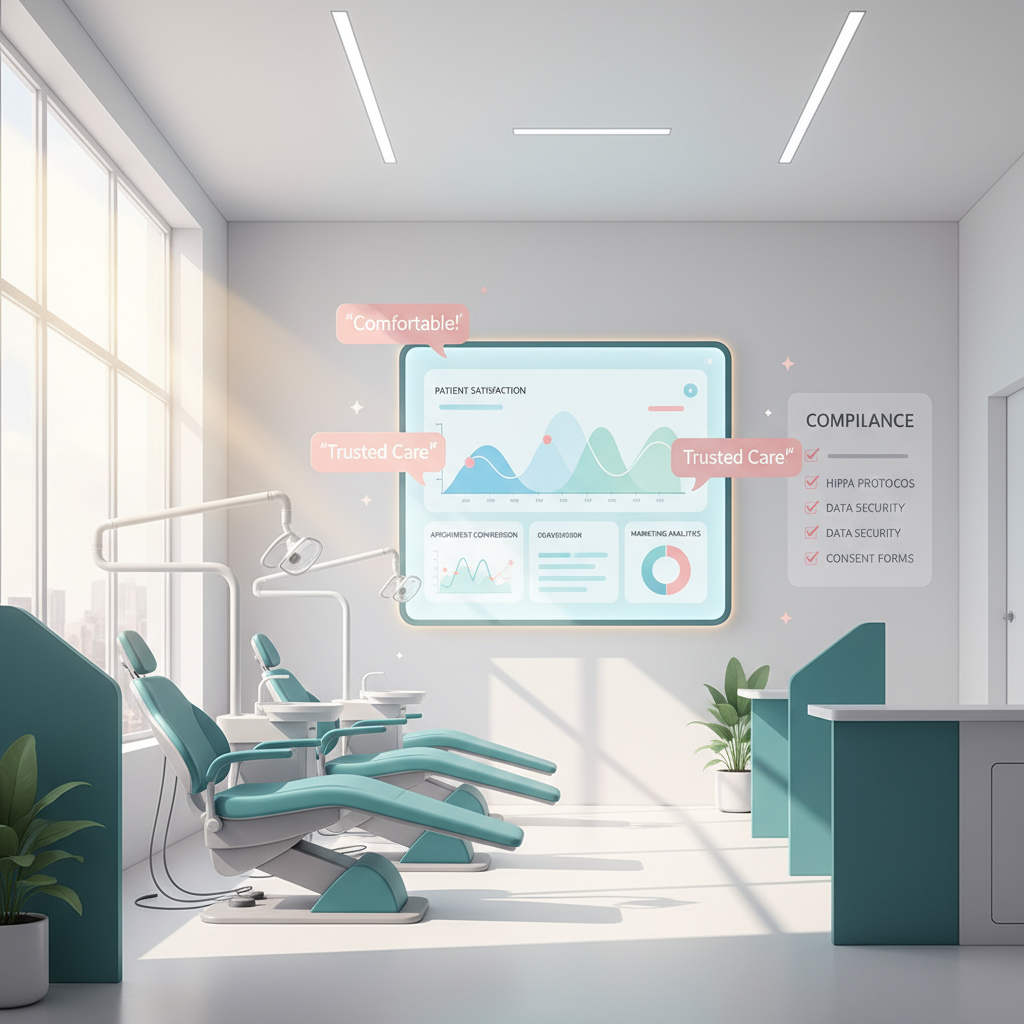
Specialist aesthetics agencies deliver comprehensive marketing solutions designed specifically for high-value treatments. The service portfolio extends far beyond basic digital marketing to encompass patient psychology, compliance, and conversion optimisation.
Digital Marketing Specialisation
SEO strategies target treatment-specific keywords with higher commercial intent. For dental implants, this means optimising for “dental implants [location]” rather than generic “dentist” terms. Additionally, practices can promote advanced procedures like zirconium-oxide-crowns to attract patients seeking high-quality restorative solutions. PPC campaigns complement this by utilising sophisticated audience targeting based on demographics likely to invest in elective procedures.
Social media marketing in aesthetic medicine emphasises before-and-after transformations while adhering to strict medical advertising guidelines. Effective content strategies focus on education and trust-building rather than hard-selling approaches that often fail. Tools like the intraoral scanner can help enhance patient education and showcase treatment outcomes in a compliant and engaging way.
Patient Journey Automation
Advanced agencies implement multi-touch nurturing sequences recognising that aesthetic treatment decisions involve months of consideration. Automated systems qualify leads through progressive profiling, reducing no-show rates from industry averages of 30-40% to under 15%.
| Service Category |
Specialist Approach |
Typical Results |
| SEO |
Treatment-specific keyword targeting |
50+ qualified leads monthly |
| PPC |
Demographic and psychographic filtering |
15-25% consultation booking rate |
| Social Media |
Compliance-aware visual content |
3-5x engagement vs generic content |
| Automation |
Multi-touch nurturing sequences |
40% reduction in no-shows |
Dominate Dental exemplifies this specialist approach, combining AI-powered lead scoring with human expertise to deliver consistent results for UK practices focusing on Invisalign, implants, and composite bonding treatments. For more ideas on boosting your clinic’s visibility, explore these dental marketing ideas.
Why Aesthetics-Focused Marketing Drives Better Results
Consumer psychology in aesthetics differs fundamentally from general healthcare. Patients research extensively, compare multiple providers, and require significant trust-building before committing to treatments costing £3,000-£15,000+. Generic healthcare marketing fails to address these unique behavioural patterns.
Conversion Psychology
Aesthetic patients make aspirational rather than urgent decisions. They respond to social proof, visual evidence, and detailed treatment explanations rather than basic promotional messaging. Specialist agencies understand these triggers and craft campaigns accordingly.
Visual content requirements differ dramatically. Before/after galleries, video testimonials, and detailed case studies drive conversions more effectively than text-based approaches. However, medical advertising regulations require careful compliance management that generalist agencies often mishandle.
Dominate Dental Case Study
A Manchester dental practice switching from a generalist agency to Dominate Dental achieved:
- 127% increase in Invisalign consultations within 90 days
- £47,000 additional monthly revenue from implant treatments
- No-show rate reduced from 35% to 12%
- Cost per qualified lead decreased by 43%
Industry benchmarks reveal significant performance gaps. Specialist aesthetics agencies typically achieve 15-25% consultation booking rates compared to 5-8% for generalist approaches. Cost per qualified lead averages £85-120 through specialist agencies versus £150-250+ through generic healthcare marketing.
The extended sales cycle in aesthetics requires sophisticated nurturing strategies.
Successful aesthetics practices recognise that patient touchpoints must align with their emotional and psychological journey. Specialist agencies map these complex interactions, from initial awareness through post-treatment follow-up, creating cohesive experiences that convert prospects into loyal patients.
Generic healthcare marketing often treats all medical services identically, missing the unique positioning requirements for elective procedures. This misalignment results in messaging that fails to address patient motivations, ultimately reducing conversion rates and increasing acquisition costs.
Key Success Factors When Choosing an Aesthetics Agency
Practice owners must evaluate potential partners across seven critical dimensions that directly impact treatment revenue and patient quality. The most successful clinic partnerships emerge when agencies demonstrate proven expertise in high-value procedure marketing, regulatory compliance, and measurable ROI delivery.
Treatment-specific case studies serve as the strongest indicator of agency capability. Look for documented results in your exact services, Invisalign campaigns, implant marketing, or facial aesthetics promotion, with specific metrics including lead volume, conversion rates, and average treatment value. Agencies unable to provide treatment-matched success stories lack the specialised experience necessary for optimal results.
Essential Vetting Checklist: Compliance expertise (CQC, GDPR), local market knowledge, transparent reporting systems, dedicated account management, technology integration capabilities, and minimum 24-month client retention rates above 85%.
Red flags include generic case studies, vague reporting structures, and inability to explain treatment-specific patient psychology. The most effective agencies operate with full transparency, providing real-time access to campaign performance and maintaining regular strategy review cycles. For more on how SEO can impact patient acquisition, read how dental SEO can lead to more patients.
How the Best UK Aesthetics Agencies Deliver Results: Strategy, Execution & ROI

Elite aesthetics agencies follow a systematic approach beginning with comprehensive market analysis and competitor assessment. The discovery phase typically spans 2-3 weeks, examining local demographics, treatment demand patterns, and competitive positioning to inform strategy development.
Implementation follows a structured 90-day roadmap: weeks 1-4 focus on foundation building (website optimisation, tracking setup, initial content creation), weeks 5-8 emphasise campaign launch and initial optimisation, while weeks 9-12 concentrate on scaling successful channels and refining underperforming elements. Most practices see initial qualified leads within 3-4 weeks, with full momentum achieved by month three.
Dominate Dental’s clients typically achieve 50+ qualified consultations monthly within 120 days, with conversion rates averaging 15-20% from website visitors to booked appointments. This performance stems from treatment-specific landing pages, AI-powered lead scoring, and automated nurture sequences designed for high-value procedure prospects.
ROI benchmarks vary by treatment type: Invisalign campaigns generate average returns of 4:1 within six months, while implant marketing achieves 6:1 returns due to higher treatment values. Composite bonding campaigns typically deliver 3:1 returns, with faster conversion cycles compensating for lower individual treatment values.
Aesthetics Agency vs Generalist Marketing Agency: A Detailed Comparison
The fundamental difference lies in patient journey understanding and treatment-specific conversion optimisation. Specialist aesthetics agencies design campaigns around elective procedure psychology, while generalist agencies apply broad healthcare marketing principles that often miss the nuanced motivations driving aesthetic treatment decisions.
| Criteria |
Specialist Aesthetics Agency |
Generalist Marketing Agency |
| Lead Quality |
Pre-qualified prospects with treatment intent |
General inquiries requiring extensive nurturing |
| Conversion Rates |
15-25% consultation-to-treatment |
5-12% consultation-to-treatment |
| Compliance Knowledge |
Deep CQC and medical advertising expertise |
Basic healthcare compliance understanding |
| Campaign Targeting |
Treatment-specific demographics and psychographics |
Broad healthcare audience segmentation |
| Content Strategy |
Before/after galleries, treatment education |
General health and wellness content |
A Manchester dental practice switched from a generalist agency to Dominate Dental after experiencing 6 months of poor lead quality and 3% conversion rates. Within 90 days of specialist management, monthly Invisalign consultations increased from 8 to 47, with conversion rates reaching 22%. The practice attributed success to treatment-specific landing pages and qualified lead scoring systems.
Choose specialist agencies when focusing on high-value elective treatments, seeking rapid ROI improvement, or requiring deep compliance expertise. Generalist agencies may suffice for basic brand awareness or mixed healthcare service promotion, but lack the specialisation necessary for competitive aesthetic markets. For more inspiration on content, see these dental blog post ideas.
Advanced Digital Marketing for Aesthetic Clinics
Search engine optimisation for aesthetic treatments requires hyper-local targeting combined with treatment-specific content strategies. Successful implant SEO campaigns focus on location-based keywords (“dental implants Manchester”) while addressing common patient concerns through educational content addressing cost, procedure details, and recovery expectations.
AI-powered lead scoring revolutionises consultation quality by analysing prospect behaviour patterns across multiple touchpoints. Dominate Dental’s proprietary system assigns scores based on page engagement, content downloads, review interactions, and demographic data, enabling practices to prioritise high-intent prospects and reduce no-show rates by up to 40%.
Social proof implementation extends beyond traditional testimonials to encompass sophisticated reputation orchestration. Leading aesthetics agencies deploy multi-touchpoint review generation systems that capture patient satisfaction at optimal moments, immediately post-treatment, during follow-up appointments, and at milestone intervals. This strategic approach yields 3-4x more positive reviews than passive collection methods, directly impacting local search visibility and consultation conversion rates.
Advanced analytics integration separates exceptional aesthetics agency providers from generalist marketing firms. Real-time dashboard reporting tracks patient journey metrics from initial ad impression through treatment completion, enabling practices to identify bottlenecks and optimise conversion paths. Top-tier agencies provide granular insights into cost-per-acquisition by treatment type, allowing practices to allocate budgets strategically across high-value procedures like implants and Invisalign.
For clinics looking to improve their local rankings, consider implementing local SEO for dentists as part of your digital strategy.
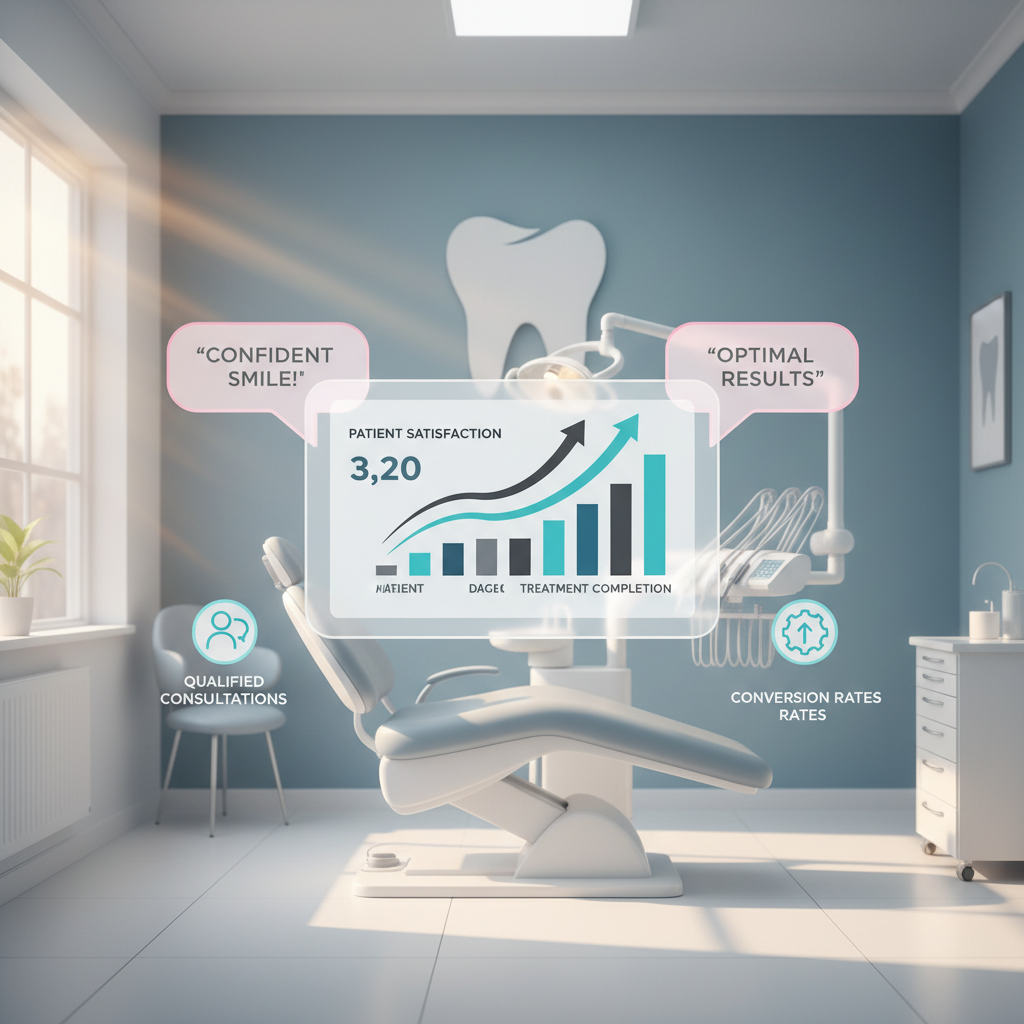
Successful aesthetics agency partnerships deliver measurable outcomes within defined timeframes. Industry benchmarks indicate that well-executed campaigns generate 50+ qualified consultations monthly within 90 days, with conversion rates averaging 15-20% for high-value treatments.
Key performance indicators extend beyond basic lead volume to encompass treatment-specific metrics. Implant marketing campaigns should achieve cost-per-lead ratios of £80-120, while Invisalign acquisition typically ranges £40-70 per qualified prospect. These figures reflect the specialised targeting and compliance requirements inherent in dental aesthetics marketing.
ROI Benchmark: Practices investing £3,000-5,000 monthly in specialist aesthetics marketing typically see 300-500% return on investment within six months, driven by high-value treatment conversions.
Attribution tracking requires sophisticated implementation across multiple touchpoints. Leading agencies deploy advanced pixel configurations and call tracking systems that map patient journeys from initial research through treatment completion. This granular visibility enables precise budget allocation and campaign optimisation based on actual revenue generation rather than vanity metrics.
Lifetime value calculations become critical when evaluating agency performance. Aesthetics patients often require ongoing treatments or refer family members, creating extended value chains that basic lead tracking fails to capture. Premium agencies factor these multiplier effects into their reporting frameworks, providing practices with comprehensive revenue attribution.
Compliance & Regulatory Considerations for UK Aesthetics Marketing
UK aesthetics marketing operates within stringent regulatory frameworks that demand specialist expertise. The General Dental Council (GDC), Care Quality Commission (CQC), and Advertising Standards Authority (ASA) maintain specific guidelines for medical marketing communications that generalist agencies often misunderstand or ignore. For more on current regulations, see the UK government’s licensing of non-surgical cosmetic procedures.
GDPR compliance requires sophisticated data handling protocols, particularly for before/after photography and patient testimonials. Leading aesthetics agency providers implement comprehensive consent management systems that protect practices from regulatory violations while maximising marketing asset utilisation.
Treatment-specific advertising restrictions vary significantly across aesthetic procedures. Invisalign marketing must adhere to orthodontic treatment protocols, while implant advertising faces additional scrutiny regarding outcome claims and patient suitability. Specialist agencies maintain current regulatory knowledge and implement compliant campaign structures from inception.
Social media compliance presents particular challenges given platform algorithm preferences for engaging content versus regulatory requirements for balanced presentation. Expert agencies develop content strategies that satisfy both regulatory standards and platform optimisation requirements, ensuring maximum reach without compliance violations.
Technology Integration for Modern Aesthetics Practices
Contemporary aesthetics marketing relies heavily on technology integration across practice management systems, customer relationship platforms, and marketing automation tools. Leading agencies provide seamless connectivity between marketing campaigns and practice workflows, ensuring efficient lead processing and patient communication.
AI-powered chatbot implementation has revolutionised initial patient interactions, providing 24/7 consultation booking capabilities while pre-qualifying prospects based on treatment interest and budget parameters. Advanced systems handle complex scheduling requirements and integrate directly with practice management software.
| Technology Component |
Basic Implementation |
Advanced Integration |
Impact on Conversions |
| CRM Integration |
Manual lead entry |
Automated capture & scoring |
40% faster follow-up |
| Appointment Booking |
Phone-only scheduling |
Multi-channel booking system |
60% more consultations |
| Patient Communication |
Basic email reminders |
Personalised journey automation |
25% reduction in no-shows |
| Review Management |
Reactive response |
Proactive generation system |
300% more positive reviews |
Marketing automation sequences require careful calibration for aesthetics patients, who typically research extensively before committing to treatment. Multi-touch nurture campaigns spanning 6-8 weeks prove most effective, combining educational content with social proof and strategic consultation incentives. For more on encouraging patient feedback, see how to get patients to write reviews.
Future Trends in Aesthetics Marketing

The aesthetics marketing landscape continues evolving rapidly, driven by technological advancement and changing patient expectations. Video-first content strategies are becoming essential, with practices achieving 400% higher engagement rates through treatment explanation videos and virtual consultations. For more on leveraging video, see dental video marketing.
Artificial intelligence applications extend beyond basic chatbots to encompass predictive lead scoring, automated content personalisation, and dynamic pricing optimisation. Forward-thinking aesthetics agency providers are already implementing these advanced capabilities for competitive advantage.
Local SEO emphasis intensifies as patients increasingly seek nearby providers for aesthetic treatments. Voice search optimisation and Google My Business enhancements are also shaping the regulatory landscape for clinics. For more on regulatory changes, see the UK government launches major crackdown on unsafe cosmetic procedures.
Frequently Asked Questions
What are the key differences between an aesthetics agency and a generalist marketing agency when promoting UK aesthetics clinics?
Aesthetics agencies specialise exclusively in the medical and dental cosmetic sector, understanding the unique patient psychology, longer sales cycles, and regulatory landscape of high-value treatments like dental implants and Invisalign. In contrast, generalist agencies lack this sector-specific expertise, often resulting in less targeted campaigns and lower-quality leads for aesthetics clinics.
How do UK aesthetics agencies ensure compliance with medical advertising standards and regulatory requirements like GDPR and CQC?
UK aesthetics agencies integrate strict compliance protocols into their marketing strategies, ensuring all content adheres to CQC guidelines and the ASA’s medical advertising standards. They also implement robust data protection measures aligned with GDPR to safeguard patient information throughout the marketing and consultation process.
What core marketing services do specialised aesthetics agencies provide to help clinics attract qualified patients for high-value treatments?
Specialised aesthetics agencies offer tailored digital marketing services including SEO, paid advertising, patient journey automation, conversion rate optimisation, and compliance consulting. These services are designed to generate qualified consultations by targeting high-intent patients interested in elective cosmetic procedures.
Why is investing £2,000 or more per month in sector-focused aesthetics marketing likely to yield a better return on investment for UK clinics?
Investing £2,000+ monthly enables clinics to leverage advanced, targeted marketing strategies that attract higher-quality leads and reduce wasted spend on unqualified prospects. Sector-focused agencies optimise campaigns specifically for aesthetics treatments, resulting in improved consultation rates, higher conversion percentages, and ultimately greater private treatment revenue.
About the Author
Dan Ashburn is the Co-Founder at Dominate Dental, the UK’s specialist agency for high-value patient acquisition.
Drawing on a decade of data-driven advertising experience and hundreds of clinic campaigns, Dan blends AI technology with human insight to deliver predictable streams of Invisalign, implant, and cosmetic dentistry consultations. His team’s results-focused approach has helped practices across London, Manchester, Birmingham, and nationwide convert marketing spend into chair-time, often booking 50+ qualified consultations per month while cutting no-shows.
When he’s not optimizing funnels or unpacking the latest algorithm updates, Dan shares actionable dental marketing ideas, real-world case studies, and ROI benchmarks so dental teams can make confident marketing decisions.
Last reviewed: September 28, 2025 by the Dominate Dental Team
Leave a Reply