
Where to get affordable online reputation reports for dental practices?
The best place to start is with a report that connects review data to patient acquisition. A useful audit should show how your practice appears across Google and other review platforms, identify recurring patient sentiment, and explain which issues may be reducing consultation enquiries. This matters particularly for Invisalign and implant services, where prospective patients often assess trust, treatment quality and communication before contacting a practice.
Key Takeaways
- Effective reputation reports must directly link online review data to the number of new patient enquiries your practice generates.
- A comprehensive audit should evaluate your visibility on Google and other platforms while identifying recurring themes in patient feedback.
- Understanding how online sentiment impacts trust is essential for converting high-value leads for Invisalign and implant treatments.
- Identifying specific communication or quality issues in your reviews helps you address barriers that stop potential patients from booking consultations.
Dominate Dental combines reputation analysis with local SEO, conversion tracking and enquiry-quality checks. The aim isn’t to collect attractive statistics. It’s to identify practical changes that help dental practices generate more qualified consultations and make better use of their marketing budget.
What Is an Online Reputation Report for a Dental Practice?
An online reputation report is a structured assessment of how patients and search engines view a dental practice. It normally reviews star ratings, review volume, recent feedback, response activity, sentiment, business profile completeness and local search visibility. A strong report separates findings by location, service and review source, showing whether the practice supports private dentistry enquiries or creates friction before booking.
Which Metrics Should a Dental Reputation Report Include?
Read these figures together rather than treating them as isolated scores. A high rating with very few recent reviews may provide less reassurance than a similar rating supported by a steady review pattern. Positive feedback can also sit alongside weak visibility if the Google Business Profile, location signals or service categories are incomplete.
| Metric | What it measures | Why it matters |
|---|---|---|
| Star rating | Average public review score | Sets an immediate trust signal in search results |
| Review volume | Total and recent review activity | Shows depth and freshness of patient feedback |
| Response rate | Proportion of reviews receiving a practice reply | Demonstrates attentiveness and supports reputation recovery |
| Visibility score | How prominently the practice appears for local searches | Links reputation with discoverability and website traffic |
Why Does Reputation Affect New Patient Enquiries?
Research cited by PracticeCafe reports that 77% of patients search for a dental practice online before booking, while 90% read online reviews when evaluating a dentist. Reputation is part of the conversion path, not just a public relations concern. A prospective implant patient may compare clinical pages, photographs, availability and reviews before submitting an enquiry. Unanswered complaints, old feedback or repeated comments about missed calls can prompt that patient to choose another practice.
PracticeCafe also reports that practices with a four-star rating or higher receive 30% more appointment requests. Treat that figure as an industry finding, not a guarantee for every location. Treatment demand, pricing, competition and reception performance also affect results. A well-built report helps principals connect patient sentiment with calls, form submissions, consultation bookings and private treatment revenue.
Where Can You Get an Affordable Online Reputation Report?
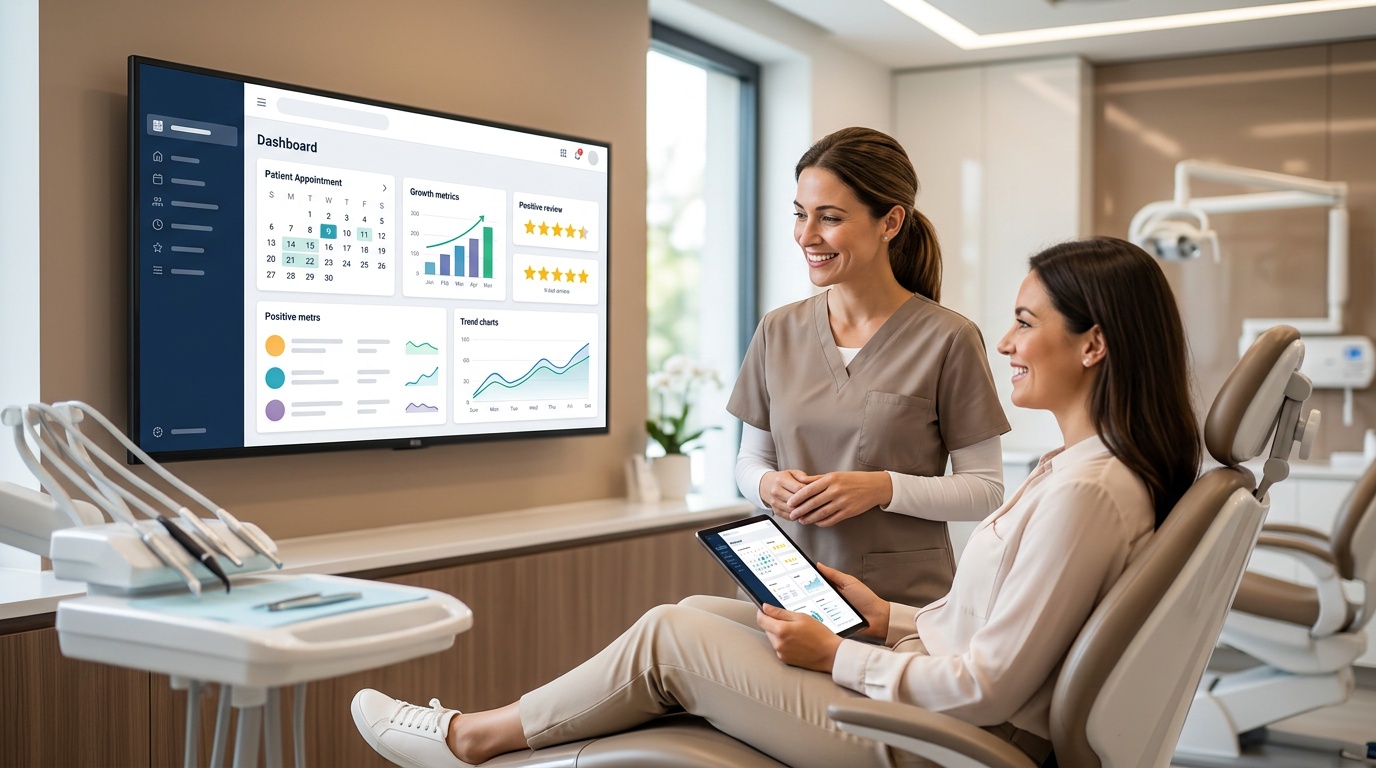
There are three practical routes: free platform data, low-cost reputation software and a focused agency audit. The cheapest option isn’t always the most useful. Free dashboards can show visibility and interaction data, but they rarely interpret patient language, compare treatment-related themes or prioritise fixes for a busy UK dental team. Practices can begin with a free social media report alongside their review data to identify broader trust and visibility opportunities.
Free Sources: Google Business Profile Insights and Platform Dashboards
Google Business Profile provides first-party information about searches, calls, website visits, direction requests and profile interactions. Pair this with manual review exports, Facebook feedback and website analytics for a basic snapshot. These sources suit a monthly health check, especially when marketing spend is already committed to Google Ads. Their limitation is context: they don’t usually explain why enquiries are falling, whether sentiment differs by service, or how the practice compares with nearby providers.
Affordable Paid Platforms Compared: Dental Reputation Software and Audits
Paid tools generally add review monitoring, automated invitations, response workflows, sentiment tagging, alerts and multi-location reporting. Before subscribing, confirm that the platform supports the review sites relevant to UK patients, exports usable data and handles patient information appropriately. Generic CRM reporting can be difficult to apply to dental workflows, where a missed call, treatment coordinator handover and consultation attendance each influence revenue.
| Option | Useful for | Check before purchase |
|---|---|---|
| Google Business Profile data | Search visibility, calls and profile engagement | It provides limited sentiment analysis and competitor context |
| Review monitoring software | Alerts, review requests, response management and location reporting | UK platform coverage, user access, data export and contract length |
| Dental-specific agency audit | Interpretation, local SEO priorities and consultation conversion insight | Methodology, deliverables, reporting frequency and proof of relevant expertise |
For a practice that wants interpretation rather than another dashboard, dental SEO services can connect local visibility, treatment pages and review findings. A focused audit is often more useful than disconnected software when the goal is qualified consultations.
Monthly Subscriptions vs One-Off Reports: What Does Each Cost?
A one-off audit is usually the more affordable choice when a principal needs a baseline before committing to ongoing management. It can reveal review gaps, inconsistent listings, response delays and local search weaknesses. A monthly subscription suits multi-site groups, practices running regular review campaigns or teams that need alerts after each marketing change. Free reports can save practices up to $200 per month compared with full-service reputation management, according to research cited by Golden Proportions. Exact savings depend on the provider and scope.
Request a written price breakdown covering setup, monthly access, review invitations, reporting, support and cancellation terms. That detail prevents a low headline price from becoming an expensive commitment.
How to Build Your Own DIY Reputation Report in Under an Hour
A structured DIY audit can provide a useful starting point without adding another monthly subscription. Set a timer for 60 minutes, record every finding in one spreadsheet and assess the patient journey from search result to enquiry. The goal isn’t a polished score. It’s a clear view of visible trust signals, recurring concerns and missed opportunities across the platforms patients in your area use.
Step-by-Step Checklist: Auditing Google Reviews, Trustpilot, Facebook and Yelp
- Record the baseline. Note your Google star rating, total reviews, reviews received during the past 90 days and the date of the latest review.
- Sample recent feedback. Read the latest 20 reviews and tag comments relating to reception, waiting times, clinical explanations, pricing and appointment availability.
- Calculate response activity. Count how many reviews received a professional, personalised reply.
- Measure review velocity. Record the number of reviews added each month for the previous three months.
- Check profile accuracy. Verify the practice name, address, telephone number, opening hours, services, photographs, booking link and location pin.
- Review visibility. Search privately for terms such as “private dentist near me”, “Invisalign dentist in [area]” and “dental implants in [area]”.
Create columns for platform, rating, review count, latest review date, response rate, recurring sentiment themes, profile errors, visibility notes and recommended action.
How Can You Benchmark Local Dental Competitors for Free?
Choose three practices that appear for the same service and town, then compare rating, review freshness, review volume, profile completeness, photograph quality, service descriptions and the prominence of appointment links. Keep the benchmark location-specific and use the findings to identify a realistic gap, such as weaker review recency or fewer service-specific comments.
A Buyer’s Checklist: What Should You Verify Before Paying?
A low price doesn’t make a report useful if the data is incomplete or impossible to act upon. Ask the provider to show a sample output with personal information removed. A suitable report should connect review evidence with dental services, locations, patient sentiment and practical marketing decisions.
Seven Questions to Ask Any Report Provider
- Which review platforms and local directories are monitored for UK practices?
- Does the report separate feedback about Invisalign, implants, emergency care and general dentistry?
- How are sentiment themes identified, and can the underlying reviews be checked?
- Does the provider measure response rate, review recency, profile completeness and local search visibility?
- How often is the report produced, and who explains the recommended actions?
- What patient data is collected, where is it stored and how is access controlled?
- What are the setup fees, ongoing charges, export options, notice period and cancellation terms?
What Are the Warning Signs of Generic or Unreliable Data?
Generic software often combines unrelated signals into a dashboard that looks precise but offers little direction for a dental team. Reliable reporting includes dated evidence, transparent calculations and recommendations linked to operational ownership.
How Can You Turn a Reputation Report Into More Private Patients?

The report is only the starting point. Its commercial value comes from converting findings into assigned tasks, measurable changes and better patient journeys. A practice may discover that its rating is healthy, yet recent feedback mentions slow call handling or unclear treatment explanations.
Which Reputation Fixes Should You Prioritise?
Start with issues closest to the booking decision. Unanswered reviews should receive professional, individual replies that protect patient privacy. Next, build a compliant review request process around suitable moments. Then address local visibility with accurate opening hours, complete service categories, current photographs, location pages and clear consultation links.
How Often Should You Pull Reports and Track Progress?
A monthly report suits most established practices. Review the same fields each time: rating, recent review volume, response activity, sentiment themes, profile accuracy, calls, form submissions, consultation bookings and attended consultations. Use a dated dashboard rather than replacing last month’s figures.
If your audit shows reputation weaknesses that are limiting consultation growth, Dominate Dental marketing services can assess the connection between reviews, local search performance and website conversion paths.
Leave a Reply