
Author: Josie Mitchelmore

  • Free Dental Website Design Social Analysis vs Competitors

    Free Dental Website Design Social Analysis vs Competitors

    Free dental website design social analysis vs competitors.

    Choosing the right online foundation for your dental practice is paramount. In the competitive UK market, the quality of your website directly impacts the quantity and quality of patients you attract, especially for high-value treatments like Invisalign and dental implants. Many practice owners face a dilemma: opt for seemingly cost-effective “free” dental website design solutions or invest in a bespoke, custom-built platform. Understanding the true value proposition of each is the first step towards making an informed decision that fuels practice growth.

    Key Takeaways

    • The choice between free and custom dental website design directly affects how many high-value patients you attract for treatments like Invisalign and dental implants.
    • Free website solutions often lack the customization and performance needed to compete effectively in the UK dental market.
    • Investing in a bespoke website platform typically delivers a stronger return on investment by generating more qualified consultations.
    • Practice owners should evaluate the long-term value of free designs against custom solutions rather than focusing only on upfront costs.
    • A professionally built website acts as a strategic asset for driving patient conversions and practice growth.

    This article examines the nuances of obtaining a Free dental website design social analysis vs competitors., examining the realities behind free builders and highlighting the essential features a professional, custom-built site offers. We will also explore how to effectively measure your practice’s online presence against rivals through a comprehensive social proof analysis, ensuring you capture attention and build unwavering patient trust.

    Free Dental Website Design Versus Custom Builds: An Honest Comparison

    The true cost of ‘free’ dental website builders

    The allure of a free dental website design is undeniable, particularly for practices mindful of marketing expenditure. Providers like My Social Practice offer dental website design with zero dollars upfront, presenting an attractive entry point. Yet, the term ‘free’ often masks hidden costs and significant limitations. These platforms typically rely on templates that offer minimal customisation, leading to a generic online presence that fails to distinguish your practice. You might find yourself constrained by limited design flexibility, basic functionality, and a lack of advanced features essential for attracting high-value patient enquiries. Additionally, scaling these free solutions as your practice grows can become a significant challenge, often necessitating a costly migration to a more capable platform down the line.

    Beyond the initial lack of cost, free builders frequently impose restrictions on SEO capabilities, essential for local visibility. They may also lack strong integration options for essential patient management systems or advanced booking functionalities. The result is a website that might look presentable but struggles to perform the core task: converting visitors into qualified consultations. When considering the primary keyword “Free dental website design social analysis vs competitors.”, it is worth observing that while free options exist, their long-term effectiveness and ability to compete are often severely curtailed by these inherent limitations, leading to a false economy.

    Custom dental web design features that justify the investment

    Investing in a custom-built dental website design, such as those offered by agencies like Wowbix with pricing starting around £2,500, unlocks a suite of advanced features tailored precisely to your practice’s unique goals. A custom build allows for a truly bespoke user experience, reflecting your brand’s identity and patient care philosophy. This includes sophisticated visual design, intuitive navigation, and content architecture optimised for your specific service offerings. From Invisalign marketing to dental implant marketing. These sites are built with conversion in mind, incorporating strategic calls to action, high-quality imagery, and clear pathways for prospective patients to book consultations.

    Importantly, custom designs prioritise performance and search engine visibility. They are developed with mobile-first responsive design principles, ensuring an optimal experience for the over 70% of dental website traffic that originates from mobile devices. Page load speeds are meticulously optimised, a key ranking factor for Google, ensuring visitors do not abandon your site due to sluggish performance. Additionally, custom websites allow for deep integration with CRM systems, advanced analytics tracking, and specialised patient journey mapping, providing invaluable data to refine marketing efforts and maximise return on investment. This level of control and sophistication is simply unattainable with most free templates.

    Pros of Custom Dental Web Design

    • Tailored branding and unique user experience
    • Advanced SEO capabilities for local search visibility
    • Optimised for speed and mobile responsiveness
    • Smooth integration with practice management systems
    • High-converting design focused on patient acquisition
    • Scalability to support practice growth
    • In-depth analytics for performance tracking

    Cons of Free Dental Website Builders

    • Limited customisation and generic appearance
    • Restricted SEO functionality, hindering search ranking
    • Basic features and potential lack of advanced tools
    • Poor scalability for growing practices
    • Often lack sophisticated conversion optimisation
    • Can incur hidden costs or require future migration
    • May not align with professional practice branding

    Comparison table: Free templates vs custom agency design

    When evaluating your options for a Free dental website design social analysis vs competitors., a direct comparison of features and capabilities provides clarity. While free templates offer an initial cost saving, custom agency designs deliver superior long-term value through specialised features and performance optimisation. Agencies like PBHS, for example, understand the specific needs of dental practices, offering tailored solutions that free builders cannot replicate. The investment in a custom website is an investment in attracting higher-value patients and achieving sustainable practice growth.

    Feature Free Template Website Custom Agency Website
    Branding & Design Limited, generic templates Bespoke, practice-specific branding
    Customisation Minimal, restricted options Full control over design and functionality
    SEO Optimisation Basic, often limited by platform Advanced, tailored for local search and conversions
    Mobile Responsiveness Variable, may not be optimal Guaranteed mobile-first, rapid loading
    Functionality & Integrations Basic, limited third-party options Advanced, smooth integration with systems
    Patient Conversion Focus Low, standard forms High, strategic CTAs and patient journey design
    Scalability Poor, difficult to expand Excellent, supports practice growth
    Ongoing Support & Updates Limited or none Comprehensive support and maintenance
    Initial Investment £0 £2,500+ (e.g., Wowbix)

    Conducting a Social Proof Analysis: Your Practice vs Competitors

    Conducting a Social Proof Analysis: Your Practice vs Competitors

    How to audit patient reviews and testimonials

    Social proof is the bedrock of trust in healthcare, and for dental practices, patient reviews and testimonials are gold. To conduct a meaningful analysis of your social proof against competitors, start by systematically auditing your online reputation. Gather all reviews from platforms like Google My Business, Facebook, Trustpilot, and any dental-specific review sites. Note the volume, average star rating, and the sentiment of these reviews. Pay close attention to common themes. Both positive and negative. Regarding patient experience, treatment outcomes, and staff interaction. As an example, consistent praise for a specific dentist’s gentle approach or a treatment coordinator’s helpfulness is powerful.

    Next, perform the same audit for your top three local competitors. Identify which practices consistently receive high volumes of positive feedback and what specific aspects patients praise. If a competitor excels in gathering video testimonials or showcasing detailed written reviews on their website, this is an essential insight. Understanding how well your practice showcases its positive feedback compared to others is a core part of a Free dental website design social analysis vs competitors. strategy. This comparative view highlights opportunities to improve your own testimonial collection and display methods, making your practice appear more trustworthy and preferred.

    Comparing social media integration and dental social media marketing

    Social media presence is no longer optional; it is an extension of your practice’s digital storefront and a significant source of social proof. When analysing your practice against competitors, examine the integration of social media channels into your website and your overall social media marketing strategy. Does your website feature easy-to-find links to your active social profiles? Are there embedded feeds showcasing recent activity or patient engagement? Competitors who actively post engaging content, share behind-the-scenes glimpses, and respond promptly to comments and messages demonstrate a commitment to patient interaction that builds trust.

    Consider the quality and consistency of content. Are competitors sharing educational posts about treatments, patient success stories, or practice updates? A practice like 12AM Agency, which offers a free GBP audit, understands the importance of a well-optimised local listing, which often integrates social signals. If your competitors are actively running targeted social media campaigns for specific treatments, such as Invisalign or implants, and showcasing the results, this is a clear indicator of their digital marketing prowess. Your analysis should assess not just the presence of social media links, but the activity and engagement levels, and how effectively these platforms are used to inform, attract, and reassure potential patients.

    Key Insight: A proactive approach to gathering and showcasing patient reviews, coupled with an active, engaging social media presence, significantly boosts a dental practice’s perceived trustworthiness and competitive edge. Practices that neglect this risk appearing outdated and less appealing to new patients.

    Building trust with before-and-after galleries

    Visual proof is incredibly powerful, especially for high-aesthetic, high-value treatments. Before-and-after galleries are a cornerstone of building trust and demonstrating your practice’s capabilities. When conducting your social analysis, meticulously examine how both your practice and your competitors present these visual case studies. Are the galleries high-resolution, well-lit, and professionally presented? Do they clearly showcase the transformative results of treatments like cosmetic dentistry, orthodontics (e.g., Invisalign), or dental implants? The clarity and quality of these images speak volumes about the practice’s attention to detail and commitment to excellent outcomes.

    Beyond just the images, consider the accompanying narrative. Do the galleries include brief patient stories or descriptions of the treatment provided? This context adds a personal touch and helps prospective patients envision themselves achieving similar results. A competitor might have a comprehensive gallery that clearly outlines the patient’s journey, from initial consultation to final smile, which is a strong indicator of effective patient communication and marketing. If your practice’s gallery is sparse, outdated, or poorly organised, it is a significant area for improvement when aiming to stand out from the competition. This element is fundamental to demonstrating tangible results and fostering confidence in your dental services.

    Essential Features Every High-Converting Dental Clinic Website Design Needs

    Mobile-first responsive design and rapid page load speeds

    Over 70% of dental website traffic originates from mobile devices, a figure consistently highlighted across industry research. Consequently, a mobile-first responsive design is non-negotiable for dental clinics aiming to convert visitors into patients. This design approach ensures the website adapts fluidly to various screen sizes and devices, providing an intuitive and smooth user experience whether viewed on a smartphone, tablet, or desktop. A responsive design not only improves usability but also positively impacts search engine rankings, as Google prioritises mobile-friendly sites in local search results.

    Equally important is the optimisation of page load speeds. Slow-loading websites increase bounce rates, directly harming patient acquisition efforts. Google explicitly recognises site speed as a ranking factor, impacting visibility in local search results where dental practices compete intensely. Fast-loading pages retain visitor interest and facilitate quicker navigation through treatment information and booking processes, improving the overall conversion potential. Investing in technical optimisation, including image compression, efficient coding, and reliable hosting, is essential to meet these standards.

    Treatment pages optimised for search intent

    Treatment-specific pages form the backbone of a dental website’s content strategy. Each page should be crafted around patient search intent, addressing the questions and concerns potential patients have when researching high-value treatments such as Invisalign or dental implants. Optimisation involves clear, patient-friendly language enriched with relevant keywords, ensuring the content aligns with what prospective patients seek when entering queries online.

    Beyond keyword inclusion, treatment pages must provide comprehensive information: procedure details, benefits, expected outcomes, and aftercare guidance. Including expert insights, frequently asked questions, and illustrative images or videos can significantly improve engagement. This depth not only improves search visibility but also establishes credibility and trust, encouraging visitors to progress toward booking a consultation. Tailoring content to reflect local patient needs and differentiating the practice’s expertise is essential for standing out in competitive urban markets such as London or Manchester.

    Clear calls to action to generate new patients

    An effective dental website guides visitors smoothly from information gathering to booking a consultation through strategically placed calls to action (CTAs). These CTAs must be visually prominent, concise, and action-oriented, such as “Book Your Invisalign Consultation” or “Request Your Free Dental Implant Assessment”. They serve as conversion triggers, reducing friction in the patient journey by offering straightforward next steps.

    Incorporating CTAs throughout the site. On the homepage, within treatment pages, and even blog posts. Maximises opportunities to engage visitors at various stages of decision-making. Clear contact forms, click-to-call buttons, and online booking integrations further streamline patient acquisition. Practices that implement well-designed CTAs typically see higher consultation booking rates, a metric Dominate Dental tracks closely to measure marketing ROI. For practices seeking to evaluate their website’s effectiveness in this area, the Free Social Media Report includes insights on conversion pathways and patient engagement strategies relevant to website design.

    Key Insight: Combining mobile-first design, targeted treatment content, and compelling calls to action creates a high-converting dental website that outperforms competitors and drives sustainable patient growth.

    Step-by-Step Guide: Auditing Your Website Against Local Competitors

    Identify your top three local competitors

    Begin your audit by selecting the three dental practices that compete most directly within your local area, particularly those targeting high-value treatments similar to yours. Use Google My Business, local online directories, and search engine results for relevant keywords such as “Invisalign dentist in Manchester” or “dental implants Birmingham” to identify these peers. Focus on competitors with strong online visibility and active patient engagement, as these will set the benchmark for your practice’s digital presence.

    Understanding who your direct competitors are provides a clear context for comparison. It allows you to evaluate not just design aesthetics but the entire patient acquisition funnel, including SEO performance, social proof, and user experience. This step lays the foundation for a data-driven competitive analysis essential for informed strategy adjustments.

    Score their user experience and navigation

    Next, assess each competitor’s website for user experience (UX) quality and ease of navigation. Key criteria include site responsiveness, intuitive menu structure, clarity of information architecture, and availability of patient-focused features such as online booking or enquiry forms. Evaluate how quickly visitors can find treatment information, contact details, and social proof elements like testimonials or before-and-after galleries.

    Assign scores based on factors like page load speed, mobile usability, and visual appeal. Notice any friction points that might deter patient engagement, such as complicated navigation paths or unclear CTAs. This qualitative scoring helps pinpoint strengths and weaknesses in your own website design relative to competitors. The goal is to identify actionable improvements that improve your site’s user journey and patient conversion rates.

    Evaluate their local SEO for dentist strategies

    Local SEO is essential to attracting patients in metropolitan areas where competition is high. Analyse how your competitors optimise their websites for local search by reviewing elements such as keyword usage, meta tags, schema markup, and Google Business Profile completeness. Check if they include local identifiers like neighbourhoods or city names on treatment pages and blog content.

    Review their backlink profiles and citation consistency across local directories, which significantly influence search rankings. Tools like Google Search Console, Moz, or SEMrush provide insights into organic visibility and keyword rankings. Identifying gaps in your own SEO against competitors enables targeted optimisations to improve your practice’s Google rankings and increase qualified traffic. Incorporating findings from a Free Social Media Report can further refine your local SEO strategy by highlighting social signals and engagement metrics that impact search performance.

    Key Insight: A structured audit focusing on competitor identification, UX scoring, and local SEO evaluation equips dental practices with a clear roadmap to outperform rivals and secure a larger share of patient enquiries.

    How Dominate Dental Turns Websites into Patient Generation Machines
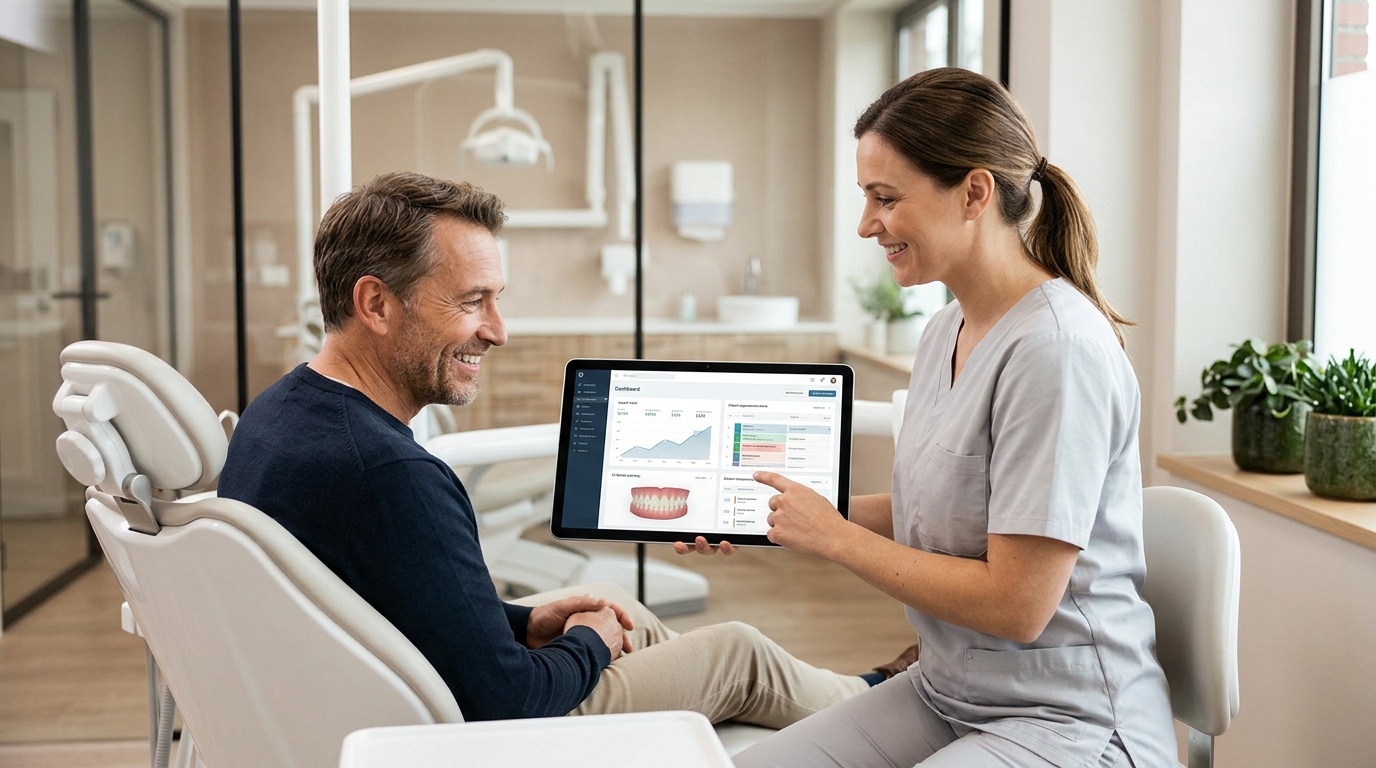
    How Dominate Dental Turns Websites into Patient Generation Machines

    Driving high-value growth with Invisalign marketing and dental implant marketing

    Dominate Dental specialises in transforming dental websites from static online brochures to dynamic patient acquisition tools, particularly for premium treatments such as Invisalign and dental implants. Our approach tailors every element of the site to attract and convert patients seeking these high-value services. We achieve this by integrating targeted content that addresses patient concerns, highlights treatment benefits, and showcases successful case studies. This strategic focus ensures your website appeals directly to motivated prospects, increasing consultation bookings and boosting private treatment revenue.

    Unlike generic free dental website design social analysis vs competitors. offerings, Dominate Dental’s custom builds incorporate proven marketing tactics, including treatment-specific landing pages optimised for search intent and clear calls to action that prompt immediate engagement. Our team understands the patient journey for orthodontics and implantology, allowing us to craft messaging that educates and reassures, essential for converting hesitant visitors into committed patients. This targeted marketing focus delivers measurable results, with many clients reporting a significant uplift in qualified leads within months of launch.

    Combining AI technology with expert dental website designers

    At Dominate Dental, we blend advanced AI technology with human expertise to deliver websites that outperform competitors. AI tools assist in analysing patient behaviour, keyword trends, and competitor strategies, enabling us to optimise content and design elements precisely. This data-driven methodology ensures your website meets both patient expectations and search engine requirements, improving visibility and engagement.

    Our expert designers then translate these insights into visually appealing, user-friendly websites that reflect your practice’s unique identity. This hybrid approach accelerates the design process without compromising quality, allowing us to deliver bespoke solutions efficiently. By using AI for continuous performance monitoring, we adapt and refine websites post-launch to maintain peak conversion rates, a capability free dental website design social analysis vs competitors. options rarely provide. This innovation, combined with our deep understanding of dental marketing, positions Dominate Dental as the leader in creating patient generation machines.

    Why partnering with a dedicated dental marketing agency delivers better ROI

    Choosing Dominate Dental means engaging with specialists who focus exclusively on dental practice growth, not generic website design. Our dedicated team understands the nuances of the dental market, from regulatory compliance to patient psychology, enabling us to design websites that meet industry standards while maximising patient acquisition.

    Our clients benefit from ongoing strategic support, including access to the Free Social Media Report, which delivers tailored insights into social media presence and competitive positioning. This report complements website design by identifying opportunities to improve online trust signals and engagement, directly feeding into higher conversion rates. Practices working with Dominate Dental typically achieve a 15% conversion rate from website visitors to booked consultations, a benchmark that free solutions struggle to reach.

    Investing in a specialised agency translates into better returns versus piecemeal or free approaches, as every design decision is made with patient generation in mind. Our proven methodology, combining bespoke design, AI-powered optimisation, and expert consultation, creates a sustainable growth engine for your practice that free dental website design social analysis vs competitors. options cannot match.

    References

    Frequently Asked Questions

    What are the hidden costs of 'free' dental website design services?

    The true cost of ‘free’ dental website design often lies in significant limitations and potential future expenses. Free builders typically use generic templates with minimal customisation, restricting your brand’s unique identity and patient experience. Scaling these platforms as your practice grows can also lead to costly migrations later on.

    How does a custom-built dental website design benefit my UK practice?

    A custom-built dental website design offers tailored branding, a unique user experience, and advanced features designed for patient acquisition. These sites are optimised for speed and mobile responsiveness, prioritising search engine visibility and conversion rates for high-value treatments like Invisalign and dental implants.

    What is a social analysis when comparing dental website competitors?

    A social analysis for dental websites involves evaluating your online presence against competitors, focusing on social proof and patient trust signals. This helps identify how your practice captures attention and builds confidence compared to rival practices in the UK market.

    What are the main drawbacks of using free dental website builders?

    Free dental website builders often come with restricted SEO capabilities, limiting local search visibility and the ability to attract qualified enquiries. They may also lack essential integrations for patient management systems and advanced booking, resulting in a generic online presence that struggles to convert visitors.

    Why is bespoke design superior for attracting high-value dental patients?

    Bespoke dental website design allows for sophisticated visual appeal and content architecture specifically optimised for services like dental implants and Invisalign. This tailored approach creates a superior user journey, guiding prospective patients towards booking consultations more effectively than generic templates can.

    How can I measure my dental practice's online presence against competitors?

    Measuring your dental practice’s online presence against competitors involves a comprehensive social proof analysis. This assessment helps understand how effectively your website captures attention and builds patient trust compared to other UK dental providers.

    What key features justify the investment in a custom dental website?

    Custom dental websites justify their investment through features like tailored branding, advanced SEO for local search, mobile-first optimisation, and seamless integration with practice management systems. These elements are designed for high conversion rates and scalability, directly supporting practice growth.


    About the Author

    Dan Ashburn is the Co-Founder at Dominate Dental, the UK’s specialist agency for high-value patient acquisition.

    Drawing on a decade of data-driven advertising experience and hundreds of clinic campaigns, Dan blends AI technology with human insight to deliver predictable streams of Invisalign, implant, and cosmetic dentistry consultations. His team’s results-focused approach has helped practices across London, Manchester, Birmingham, and nationwide convert marketing spend into chair-time. Often booking 50+ qualified consultations per month while cutting no-shows.

    When he’s not optimizing funnels or unpacking the latest algorithm updates, Dan shares actionable dental marketing ideas, real-world case studies, and ROI benchmarks so dental teams can make confident marketing decisions.

    Last reviewed: July 5, 2026 by the Dominate Dental Team
  • Free Dental SEO & Social Media Reports: Best Options

    Free Dental SEO & Social Media Reports: Best Options

    Dental SEO social media reports: best free options.

    In the competitive UK dental market, understanding your online performance is no longer a luxury. It’s a necessity. Dental practices investing in their digital presence, particularly in high-value treatments like Invisalign and dental implants, need clear insights to justify their marketing spend and, more importantly, to attract the right patients. Yet, many practice owners find themselves adrift in a sea of data, struggling to connect website traffic, search engine rankings, and social media engagement to tangible patient bookings.

    Key Takeaways

    • Tracking your online performance is essential for UK dental practices that want to stay competitive and justify their marketing budgets.
    • Free reporting tools can help you connect website traffic and social media metrics directly to real patient bookings.
    • Practices promoting high-value treatments like Invisalign and implants need clear data insights to attract qualified patients.
    • Many dental practice owners struggle with data overload and need practical reporting solutions to make sense of their digital marketing results.

    This is where strategic reporting becomes your practice’s unseen advantage. While sophisticated analytics platforms can come with hefty price tags, a wealth of powerful, free tools are available to help you dissect your digital performance. Mastering these resources allows you to identify what’s truly working, cut through the noise, and make data-driven decisions that fuel growth, changing your marketing efforts from guesswork into a precise science. At Dominate Dental, we believe every practice deserves access to these insights.

    Why Free Dental SEO & Social Media Reports Are Your Practice’s Secret Weapon

    The Challenge: Drowning in Data, Starving for Insight

    Many dental practice owners are acutely aware of the digital marketing noise. You’re likely spending £2,000 or more monthly on various initiatives, from Google Ads to social media campaigns, aiming to attract new patients for treatments like implants or cosmetic dentistry. The problem isn’t a lack of data; it’s an overabundance. You might have website analytics, social media insights, and search console reports scattered across different platforms. Without a consolidated view, these disparate data points can feel overwhelming, making it difficult to discern which activities are genuinely driving qualified consultations and which are simply generating vanity metrics. This data overload often leaves practices feeling like they’re investing heavily without a clear understanding of their return.

    The Promise: Actionable Insights Without the Price Tag

    The good news is that achieving clarity doesn’t necessitate a significant capital outlay on expensive reporting software. A range of leading digital platforms offer comprehensive, free reporting capabilities that can provide the actionable insights your practice needs. Tools like Google Analytics, Google Search Console, and Meta Business Suite offer deep dives into website behaviour, search engine visibility, and social media engagement. By understanding how to connect and interpret the data from these platforms, you can gain a comprehensive view of your digital marketing performance. This allows you to pinpoint which channels are driving patient journeys, identify your most sought-after treatments online, and understand where your marketing budget is most effective, all without incurring additional software costs.

    Dominate Dental’s Promise: Mastering Your Metrics for Growth

    At Dominate Dental, our mission is to equip UK dental practices with the strategies and tools to achieve predictable patient growth. We’ve seen firsthand how practices investing £2,000+ monthly in marketing often struggle with lead quality and no-shows, a common pain point for practices focusing on high-value services. Our expertise lies in translating raw data into clear, actionable intelligence. We understand that effective reporting isn’t just about *what* happened, but *why* it happened and *what you should do next*. By focusing on the metrics that truly matter. Those directly linked to qualified consultations for treatments like Invisalign and dental implants. We help practices move beyond vanity metrics to achieve measurable success. Our approach ensures you can confidently track your return on investment and make bold marketing decisions, positioning your practice for sustained growth in today’s competitive environment.

    Your Free Toolkit: Best Platforms for Dental Social Media & SEO Reporting

    Your Free Toolkit: Best Platforms for Dental Social Media & SEO Reporting

    To effectively track your dental practice’s online performance, a curated selection of free tools is indispensable. These platforms provide the foundational data needed to understand how potential patients find you, interact with your content, and ultimately decide to book an appointment. By integrating insights from these sources, you can develop a holistic view of your digital marketing efforts, identifying strengths and areas for improvement without incurring additional software expenses. Let’s explore the core components of a powerful, cost-free reporting strategy.

    Google Analytics: Understanding Website Traffic & Patient Journeys

    Google Analytics is the cornerstone for understanding website visitor behaviour. For a dental practice, this tool reveals how users arrive at your site. Whether from organic search, social media, or paid ads. You can track which pages they visit, how long they stay, and most critically, whether they complete desired actions, such as filling out a contact form or calling the practice (if call tracking is set up). Analysing user flow helps identify bottlenecks in the patient journey and understand which content or services are most appealing. For example, you might discover that pages detailing Invisalign or dental implant treatments receive significant traffic but have high exit rates, indicating a potential need to refine the content or call to action on those pages.

    Google Search Console: Mastering Your Dental Practice’s Search Performance

    Google Search Console (GSC) is your direct line to Google’s understanding of your website. It shows you exactly how your practice appears in Google search results, what search queries people use to find you, and how often your pages are clicked. For dental SEO, GSC is invaluable for identifying keyword opportunities and understanding your ranking performance for terms related to your services (e.g., ‘dentist near me’, ‘dental implants London’). It also flags any technical SEO issues, such as mobile usability problems or indexing errors, that could be hindering your visibility. By monitoring GSC, you ensure your website is technically sound and optimised to capture patients searching for your specific treatments.

    Meta Business Suite: Deep Dive into Facebook & Instagram Insights

    For practices active on social media, Meta Business Suite offers comprehensive analytics for Facebook and Instagram. It provides insights into audience demographics, post performance (reach, engagement, likes, shares, comments), and the effectiveness of your social media advertising campaigns. Understanding which types of content. Be it patient testimonials, before-and-afters of cosmetic work, or informative posts about dental hygiene. Generate the most engagement is key. This data helps refine your content strategy, ensuring you’re posting what your target audience wants to see, thereby increasing brand awareness and driving traffic back to your website. Given that 78% of patients check a practice’s social media before booking, this platform is essential.

    Google Data Studio (Looker Studio): The Free Dashboard Powerhouse

    While Google Analytics, Search Console, and Meta Business Suite provide individual data sets, Google Data Studio (now Looker Studio) is where you can consolidate them into a unified, visual dashboard. This free tool allows you to pull data from various sources and present it in customisable reports. For a dental practice, this means creating a single view that shows your SEO performance alongside your social media engagement, website traffic, and lead generation metrics. This integrated approach makes it significantly easier to identify trends, measure the impact of combined marketing efforts, and present clear, concise performance summaries. It transforms raw data into easily digestible charts and graphs, simplifying complex analysis.

    Bonus Free Tier Tools: Buffer & Later for Social Scheduling & Basic Analytics

    Beyond the core Google and Meta platforms, tools like Buffer and Later offer valuable free tiers that can simplify social media management and provide additional analytical layers. These platforms allow you to schedule posts across multiple social networks in advance, ensuring a consistent online presence. Their free plans typically include basic analytics that track post reach, engagement, and follower growth, offering a quick overview of your social media activity. While not as deep as Meta Business Suite, they provide convenience and supplementary data for practices looking to streamline their social media workflow and gain an initial understanding of content performance without additional cost.

    Building Your Free UK Dental Practice Report: Step-by-Step Dashboard Guide

    Creating a unified report from your free SEO and social media data doesn’t require a marketing degree or a costly software subscription. By connecting key platforms to a free dashboard tool like Google Data Studio (now Looker Studio), you can construct a powerful visualisation of your practice’s online performance. This guide walks you through the essential steps to build a report that offers genuine insight, helping you understand what drives patient inquiries and how to optimise your digital spend. For UK dental practices, integrating compliance checks is also a critical, often overlooked, step.

    Step 1: Connecting Your Data Sources (GA, GSC, Meta)

    The foundation of any comprehensive dashboard is the data you feed into it. For your dental practice, the primary sources will be Google Analytics (GA4), Google Search Console (GSC), and Meta Business Suite (for Facebook and Instagram insights). Within Looker Studio, you’ll use connectors to link these platforms. For Google Analytics and Search Console, these are typically built-in. You may need to authorise Looker Studio to access your Google account data. Connecting Meta Business Suite might require a third-party connector, many of which offer free tiers sufficient for basic data import. This consolidation is key to moving beyond scattered spreadsheets and gaining a holistic view of your online presence.

    Once connected, you can begin pulling specific metrics. For example, from Google Analytics, you might select ‘Users’, ‘Sessions’, and ‘Conversions’ (e.g., form submissions). From Google Search Console, ‘Impressions’, ‘Clicks’, and ‘Average Position’ for key dental terms are essential. Meta Business Suite will provide data on ‘Reach’, ‘Engagement’, and ‘Follower Growth’. The goal is to bring these distinct data streams into one place, enabling you to see how search visibility impacts website traffic, and how social engagement might correlate with patient inquiries.

    Step 2: Essential Metrics for Dental SEO & Social Media Success

    When building your dashboard, focus on metrics that directly inform growth and patient acquisition for your practice, rather than just vanity numbers. For SEO, track your website’s performance for keywords related to high-value treatments like Invisalign and dental implants. Key metrics include organic traffic volume, click-through rates (CTR) from search results, and your average ranking position for targeted terms. Google Search Console is invaluable here, showing you what people are searching for to find you. Understanding these search queries helps refine your content strategy and identify patient intent.

    On the social media front, look beyond likes and shares. Focus on metrics that indicate genuine interest and potential patient engagement. ‘Reach’ shows how many unique users saw your content, while ‘Engagement Rate’ (interactions divided by reach) reveals how compelling your posts are. Crucially, track website clicks originating from social media platforms using UTM parameters in your links, and monitor conversions in Google Analytics that can be attributed to social channels. For practices in the UK, understanding how these efforts contribute to qualified consultations is paramount, especially given that 78% of patients check a practice’s social media before booking.

    Step 3: Designing Your Dashboard: Key Visualisations & Layout

    A well-designed dashboard is intuitive and actionable. Start with a clear overview section. Use scorecards to display top-level metrics like total website traffic, total social media engagement, and the number of leads generated from both channels over a chosen period. Below this, use time-series charts to show trends for key metrics like organic traffic vs. social traffic, or engagement growth over weeks or months. This visual representation helps identify patterns and the impact of your marketing activities.

    For a more granular view, incorporate tables that break down performance by source or content type. For example, a table showing your top-performing blog posts by organic traffic, or a list of your most engaging social media posts with their respective reach and interaction counts. When designing, group related metrics together. Perhaps an SEO section with GSC and GA data, and a social media section with Meta insights. This structure makes it easy for practice owners and managers to quickly grasp performance, identify what’s working and what’s not, and make informed decisions about their strategy for services like cosmetic dentistry or dental implants.

    Step 4: Incorporating UK-Specific Compliance (GDC/ASA Safeguards)

    A critical differentiator for UK dental practices is ensuring all marketing activities and reporting align with regulatory guidelines. The General Dental Council (GDC) and the Advertising Standards Authority (ASA) have strict rules regarding how dental services can be advertised. When designing your dashboard, consider how you can track or flag potential compliance issues. For instance, if you’re reporting on patient testimonials or before-and-after images used on social media, ensure you have a system to verify consent and that the content adheres to GDC guidelines on professional conduct and advertising. While free tools may not directly flag compliance breaches, your dashboard can serve as a central point to review content that requires scrutiny.

    Your reporting should also reflect transparency about costs and treatment outcomes, as required by the GDC. If your social media or SEO efforts lead to specific treatment promotions, ensure your dashboard can link back to the original campaign materials to verify they meet advertising standards. For example, if a particular social media campaign promotes dental implants, ensure the associated landing page clearly displays pricing, risks, and alternatives. Building this awareness into your reporting process, even if it’s a manual cross-check, helps safeguard your practice against potential regulatory challenges and builds trust with potential patients. This attention to detail is something often missed by generic reporting advice.

    Step 5: Automating Your Reports for Consistent Insight

    The true power of Looker Studio lies in its ability to automate reporting. Once your data sources are connected and your dashboard is designed, you can set it to refresh automatically. This means you’ll always have up-to-date information without manually pulling data from each platform daily or weekly. You can schedule these reports to be emailed to yourself, your practice manager, or your team at regular intervals. Perhaps weekly or monthly. This automation ensures that your practice stays informed about its digital performance consistently, allowing for timely adjustments to your marketing strategies.

    Automated reporting frees up valuable time for practice owners and staff, allowing them to focus on patient care and strategic growth rather than data wrangling. It transforms reporting from a burdensome task into a seamless part of your operational workflow. This consistent flow of insights is invaluable for tracking progress towards goals, such as increasing patient inquiries for high-value treatments or improving your practice’s online visibility. For practices aiming to grow their private revenue, this sustained focus on performance data, facilitated by automation, is indispensable for making informed decisions and achieving predictable results. This approach ensures you’re always armed with the latest information to drive your practice forward.

    For practices seeking to truly master their online presence and convert more leads, understanding and implementing these free reporting tools is a significant step. However, translating this data into bold marketing decisions and optimising campaigns for maximum ROI can be complex. While these free tools provide the essential data, a strategic partner can help unlock their full potential. If you’re looking to refine your approach and ensure your marketing spend is delivering exceptional results, consider exploring how expert guidance can make a difference. The insights gained from these free reports, when acted upon strategically, can significantly impact your practice’s growth trajectory. For example, while free tools are excellent for tracking, understanding the nuances of patient acquisition costs and identifying the precise drivers of consultations for treatments like Invisalign or implants often requires deeper analysis. This is where partnering with specialists can provide a distinct advantage, ensuring your practice not only gathers data but also capitalises on it effectively. This leads us to consider the next stage: moving beyond basic metrics to understand the true drivers of growth and how to optimise your strategies for maximum impact.

    For dental practices looking to gain a competitive edge, especially in busy metropolitan areas like London or Manchester, leveraging these free reporting tools is a smart move. They offer a clear path to understanding what works without financial barriers. However, the true value emerges when this data is interpreted through the lens of expert knowledge. For example, understanding that a particular social media campaign for dental implants is driving clicks but not consultations requires more than just looking at the numbers; it demands an understanding of patient psychology and conversion pathways. This is where the expertise of agencies like Dominate Dental becomes invaluable. We help practices transform raw data into actionable strategies, ensuring that every marketing pound spent contributes directly to qualified patient bookings. If you’re ready to move from simply reporting to actively dominating your local market, understanding these free tools is just the beginning. We offer a Free Social Media Report that provides valuable insights and recommendations to improve your online presence, tailored to your practice’s specific needs and goals. This report is prepared by a team of experts and includes actionable recommendations to improve your social media strategy and increase online visibility.

    Beyond the Basics: Metrics That Truly Drive Dental Practice Growth

    While understanding your website traffic and social media engagement is a fundamental step, truly effective reporting for a dental practice goes deeper. It’s about transforming raw data into actionable intelligence that directly impacts patient acquisition and revenue growth. For practices focused on high-value treatments such as Invisalign, dental implants, or advanced cosmetic dentistry, merely tracking likes or page views isn’t enough. You need to connect these digital efforts to tangible outcomes. Qualified consultations and booked appointments. This section explores how to interpret data from your free reporting tools to measure what truly matters.

    From Clicks to Consultations: Tracking User Intent

    The ultimate goal of your online marketing is to attract patients seeking your services. Therefore, tracking the user’s journey from initial interest to a confirmed consultation is paramount. Google Analytics, when configured correctly, can help you understand this. By setting up conversion goals for form submissions, phone calls (via call tracking), or even ‘request a consultation’ button clicks, you can measure how effectively your website and social media channels are driving these specific actions. For example, if your social media posts promoting dental implants lead to a significant number of clicks, but few form submissions for a consultation, it indicates a disconnect between the initial interest and the desired conversion action on your website. Analysing user flow reports can reveal where potential patients drop off.

    Understanding search intent through Google Search Console is equally vital. When you see which search queries are bringing patients to your site, you gain insight into their needs and motivations. Are they searching for “emergency dentist London” or “best Invisalign provider UK”? This data allows you to tailor your content and campaigns more precisely. For instance, if you notice a surge in searches for “dental implants cost,” it signals an opportunity to create content that addresses pricing concerns transparently, potentially leading to more qualified inquiries about implant procedures and demonstrating effective use of your Dental SEO social media reports: best free options. This focus on intent means your marketing speaks directly to patient needs.

    Engagement vs. Conversion: What Really Matters for Patient Acquisition?

    It’s easy to get caught up in vanity metrics like follower counts or likes, but for a dental practice owner, these rarely translate directly into booked appointments. The real measure of success lies in conversions. While high engagement on social media (like comments or shares) can indicate brand awareness and audience interest, it’s the traffic that converts into leads that truly matters. For example, a Facebook post about smile makeovers might receive high engagement, but if it doesn’t drive clicks to your ‘cosmetic dentistry’ page or prompt direct messages asking for appointments, its direct impact on new patient acquisition is limited. You need to analyse which content and channels are most effective at moving potential patients further down the marketing funnel.

    A key distinction is between passive engagement and active intent. Comments asking about appointment availability or specific treatment details signify active intent, whereas a simple ‘like’ is passive. Your reporting should prioritise tracking these active signals. For practices spending £2,000+ monthly on marketing, understanding this distinction is critical to optimising spend. By focusing on metrics that track website visits from social media, form submissions, and phone inquiries originating from your digital efforts, you can accurately assess which platforms and campaigns are generating the most valuable leads. This focus ensures your efforts are aligned with the business goal of attracting new patients for lucrative treatments.

    Calculating Your Free ROI: Cost Per Lead & Beyond

    Even with free reporting tools, you can and should calculate your return on investment (ROI) and cost per lead (CPL). Your marketing spend (e.g., £2,000+ monthly) divided by the number of qualified leads generated from your digital efforts gives you your CPL. For instance, if you spent £2,000 on social media ads and generated 50 qualified leads, your CPL is £40. Comparing this CPL across different campaigns or platforms helps you identify the most cost-effective channels. If a particular SEO strategy or social media campaign yields leads at £20 each, while another costs £60, you know where to allocate more resources.

    Beyond CPL, consider the lifetime value of a patient. A patient acquired through dental implants marketing might represent significant revenue over several years. Therefore, a higher CPL might still be acceptable if the acquired patients are high-value. Free tools provide the data to track lead origin and, with proper CRM integration, the conversion rate of those leads into paying patients. This allows you to calculate the true ROI. For example, if 10% of leads generated from your social media convert into patients who spend an average of £3,000, and your CPL was £40, your ROI is substantial. This data-driven approach is essential for justifying marketing expenditure and making strategic decisions about your online presence.

    Identifying Top Performing Treatments (e.g., Invisalign, Implants) via Social & SEO

    Your reporting should highlight which specific treatments are generating the most interest and inquiries online. By analysing Google Analytics and Search Console data, you can see which service pages receive the most traffic and which keywords are associated with them. If your ‘dental implants’ page is consistently attracting organic traffic and generating consultation requests, it’s a clear indicator of strong demand and successful SEO efforts for that service. Similarly, on social media, track which posts about Invisalign or veneers garner the most engagement and website clicks. This allows you to focus your marketing content and advertising spend on treatments that have proven demand.

    For example, you might discover that Instagram posts featuring before-and-after photos of orthodontic transformations lead to a higher number of inquiries for Invisalign than general posts about oral hygiene. This insight helps you refine your content strategy for platforms like Meta Business Suite. By connecting these dots. Identifying high-demand treatments through SEO queries, seeing which service pages perform best, and noting which social media content drives engagement for those treatments. You can create a highly targeted and effective marketing plan. This granular analysis ensures your Dental SEO social media reports: best free options. are not just informative but strategically directive, focusing on revenue-generating services.

    Common Pitfalls: What Free Tools Can’t Easily Show You (And What to Do About It)

    While free tools are powerful, they do have limitations. One significant pitfall is the difficulty in precisely tracking the patient journey across multiple devices or offline interactions without advanced setup. For instance, a patient might see a Facebook ad, search for your practice on Google later, and then call from a Google Maps listing. Attributing that final conversion accurately to the initial Facebook touchpoint can be challenging with basic free tool configurations. Furthermore, understanding the *quality* of leads beyond basic demographics often requires human judgment and integration with your practice management system.

    Another limitation is the ability to perform in-depth competitor analysis or gain predictive insights that paid tools might offer. Free tools excel at reporting on *your* performance but offer less visibility into what competitors are doing successfully. Additionally, interpreting complex data and translating it into optimal marketing strategies requires expertise. For instance, understanding why UK dental practices see a 24% rise in patient acquisition costs between 2022 and 2025 (as noted by some industry observers) requires more than just looking at your own numbers; it involves market context. To overcome these pitfalls, consider supplementing free tools with manual analysis, asking patients how they found you, and, when necessary, seeking expert guidance to interpret the data comprehensively and ensure your marketing is truly driving growth.

    Key Metrics vs. Vanity Metrics

    Pros

    • Focuses on metrics directly tied to patient acquisition (conversions, leads, CPL).
    • Aligns marketing efforts with business objectives and revenue generation.
    • Provides clear data for ROI calculation, justifying marketing spend.
    • Helps identify which treatments (e.g., Invisalign, implants) are in highest demand online.

    Cons

    • Requires careful setup of goals and tracking in analytics platforms.
    • Can be complex to attribute multi-channel patient journeys accurately.
    • May overlook passive engagement that builds long-term brand loyalty.
    • Doesn’t inherently provide competitive insights or predictive analytics.

    Making Your Free Reports Work Harder: Actionable Strategies for Dental Dynamos

    Making Your Free Reports Work Harder: Actionable Strategies for Dental Dynamos

    Possessing powerful free reports is only the first step; the real magic happens when you translate these insights into decisive action. As a dental practice owner or manager, your ability to interpret data and adjust your marketing strategy accordingly will significantly impact your patient acquisition rates. This section outlines how to wield the information from your Dental SEO social media reports: best free options. to fuel bold decisions and optimise your online presence for maximum return.

    Translating Data into Bold Marketing Decisions

    Your reporting dashboard is not just a record of past performance; it’s a roadmap for future success. If your data reveals that organic search traffic for ‘dental implants Manchester’ is consistently high and converting well, that’s a strong signal to invest more in your SEO strategy for that service. Perhaps you need to create more in-depth content, build more local citations, or optimise existing pages for related keywords. Conversely, if social media posts about general dentistry are getting likes but not driving consultations, it might be time to pivot your content strategy. Bold decisions mean reallocating budget and effort based on what the data unequivocally tells you is working, rather than relying on assumptions or what competitors are doing.

    Consider the insights gained from tracking user intent. If your analytics show that potential patients frequently search for “Invisalign cost UK” but then bounce from your pricing page, a bold move would be to create a dedicated, transparent pricing guide or a flexible payment options page. This directly addresses a known patient concern identified through data. At Dominate Dental, we help practices make these informed, bold decisions by providing clear, data-backed recommendations that move beyond generic advice. Our expertise ensures that the insights from your reports are translated into impactful strategies that drive qualified consultations.

    Optimising Social Ad Spend Based on Free Performance Insights

    Meta Business Suite provides invaluable data for optimising your social media advertising budget. If your reports show that ads targeting specific demographics for cosmetic dentistry treatments like veneers are generating the highest click-through rates and conversions, you should allocate more ad spend to those campaigns. Conversely, if ads for less specialised services are underperforming or attracting low-quality leads, it’s time to pause them or completely re-evaluate the targeting, creative, and messaging. For practices spending £2,000+ monthly on marketing, avoiding wasted ad spend is critical for maximising ROI.

    Furthermore, analyse which ad creatives and copy variations perform best. If A/B testing shows that video testimonials for dental implants consistently outperform static images in driving inquiries, double down on video content. Your free reports can highlight which audiences are most responsive and which platforms within Meta (Facebook vs. Instagram) yield the best results for different treatment types. By continuously monitoring these insights and making agile adjustments to your campaigns, you ensure your advertising budget works harder, attracting more of the right patients for your high-value services.

    Refining Your SEO Strategy with Real-World Search Data

    Google Search Console (GSC) is your primary tool for refining your SEO strategy. It reveals the exact search terms people use to find your practice. If GSC shows you’re ranking on page two or three for terms like “best cosmetic dentist London,” it’s a clear opportunity to improve your on-page content, build more authoritative backlinks, or enhance your local SEO signals to move up the rankings. Analysing impression and click data for specific keywords can help you identify which terms are driving the most relevant traffic and which might be attracting less qualified visitors.

    Moreover, GSC can highlight technical SEO issues that might be hindering your performance. Errors related to mobile usability, page speed, or indexing can significantly impact your search rankings. Addressing these issues promptly, based on the alerts provided by GSC, is a direct way to improve your visibility. By consistently reviewing your GSC data, you can ensure your SEO efforts are aligned with what potential patients are actually searching for, leading to more qualified organic traffic and, ultimately, more patient consultations for treatments like Invisalign and dental implants. This data-driven refinement ensures your online presence is always optimised for discovery.

    When to Upgrade: Recognising the Limitations of Free Tools

    While free reporting tools like Google Analytics and Meta Business Suite are incredibly powerful, they aren’t a complete solution for every practice. As your practice grows and your marketing ambitions increase, you might encounter limitations. For instance, advanced attribution modelling, which precisely tracks the customer journey across all touchpoints (online and offline), often requires paid analytics platforms. Similarly, in-depth competitor analysis, keyword gap analysis, and predictive trend forecasting are typically features of premium SEO and marketing software. If you find yourself spending excessive time manually compiling data, struggling to connect disparate insights, or unable to answer complex strategic questions, it might be time to consider paid solutions.

    The decision to upgrade shouldn’t be taken lightly. It should be driven by a clear business need and a demonstrable ROI. For practices that have mastered the basics with free tools but are hitting a ceiling in terms of actionable insights or efficiency, investing in professional-grade software or services can provide the competitive edge needed. For example, understanding the precise cost of acquiring a patient for a complex procedure like dental implants, factoring in all marketing touchpoints, may necessitate a more sophisticated tracking system. Recognising these boundaries allows for strategic investment in tools and expertise that can unlock the next level of growth.

    Partnering for Predictable Patient Growth: Your Next Steps

    The journey from understanding your free reports to achieving predictable patient growth involves strategic implementation and continuous optimisation. For many UK dental practices, especially those focused on high-value services and operating in competitive markets like London or Manchester, this journey can be significantly accelerated by partnering with a specialist agency. At Dominate Dental, we combine cutting-edge AI technology with deep dental marketing expertise to help practices like yours not just track performance, but actively drive growth. We understand the nuances of attracting patients for treatments such as Invisalign and dental implants, and we translate data into tangible results.

    If you’re ready to move beyond basic reporting and implement strategies that deliver a consistent flow of qualified consultations, consider taking the next step. We offer a Free Social Media Report that provides valuable insights and recommendations to improve your online presence, tailored to your specific needs and goals. This report is prepared by a team of experts and includes actionable recommendations to improve your social media strategy and increase online visibility. By partnering with us, you gain access to proven strategies designed to help you generate new patients and grow your practice confidently. Let us help you transform your marketing data into your practice’s greatest asset.

    References

    Frequently Asked Questions

    What free tools can UK dental practices use to track SEO and social media performance?

    Google Analytics, Google Search Console, and Meta Business Suite are free platforms that provide insights on website traffic, search rankings, and social media engagement. These tools help practices understand patient journeys and identify which marketing channels drive consultations for treatments like Invisalign and dental implants.

    How can Google Search Console help my dental practice's SEO?

    Google Search Console shows the search queries bringing users to your site, your click-through rates, and any technical issues like mobile usability problems. This data helps you optimise pages for high-value treatments and improve your visibility in local dental searches.

    What is the best social media platform for dentists?

    There is no single best platform; it depends on your target audience. For UK dental practices, Facebook and Instagram often work well for patient engagement and showcasing treatments. Free reporting tools like Meta Business Suite let you track which content generates enquiries.

    How do I measure ROI from dental marketing using free reports?

    You can measure ROI by connecting data from Google Analytics (website conversions) with social media insights (engagement and click-throughs). Free reports highlight which channels generate qualified consultations, helping you allocate your marketing budget more effectively.

    What is the 80/20 rule in dental marketing?

    The 80/20 rule suggests that 80% of your results come from 20% of your efforts. In dental marketing, focus on the channels and content that drive the most patient bookings, as identified by free analytics reports from platforms like Google Analytics and Meta Business Suite.

    How often should I review my dental practice's SEO and social media reports?

    Review your reports monthly to track trends and adjust strategy. Free tools like Google Analytics, Search Console, and Meta Business Suite update regularly, allowing you to respond quickly to changes in patient behaviour or search performance without additional cost.

    About the Author

    Dan Ashburn is the Co-Founder at Dominate Dental, the UK’s specialist agency for high-value patient acquisition.

    Drawing on a decade of data-driven advertising experience and hundreds of clinic campaigns, Dan blends AI technology with human insight to deliver predictable streams of Invisalign, implant, and cosmetic dentistry consultations. His team’s results-focused approach has helped practices across London, Manchester, Birmingham, and nationwide convert marketing spend into chair-time. Often booking 50+ qualified consultations per month while cutting no-shows.

    When he’s not optimizing funnels or unpacking the latest algorithm updates, Dan shares actionable dental marketing ideas, real-world case studies, and ROI benchmarks so dental teams can make confident marketing decisions.

    Last reviewed: July 4, 2026 by the Dominate Dental Team
  • Emergency Dental Marketing: Free Audit Tools Compared

    Emergency Dental Marketing: Free Audit Tools Compared

    In the fast-paced dental care environment, emergencies do not wait for a convenient time. Patients facing sudden pain or trauma need immediate solutions, and their first point of contact is often a frantic online search. For UK dental practices aiming to capture this essential. And often lucrative. Patient segment, appearing at the top of search results when someone types “emergency dentist near me” is non-negotiable. But how do you ensure your practice stands out amongst the competition? Understanding your current online visibility is the first step.

    This is where a dental marketing audit becomes indispensable. It is not just about checking if your website is functional; it is a deep examination of how effectively your practice is presented to potential emergency patients across all digital touchpoints. For practices spending £2,000+ monthly on marketing and focusing on high-value treatments like Invisalign and implants, even small improvements in emergency patient acquisition can yield significant returns, given the high lifetime value of private patients. This article provides an essential Emergency dental marketing free audit tools comparison.

    What Is a Dental Marketing Audit and Why Your Emergency Practice Needs One

    A dental marketing audit is a comprehensive evaluation of your practice’s online presence and marketing efforts. It systematically assesses how well your digital assets attract, engage, and convert potential patients. For practices specialising in high-value treatments and seeking to grow their private revenue, understanding this digital footprint is paramount. The audit examines various components, from your website’s user experience and search engine optimisation (SEO) to your local search visibility and patient review management. It identifies strengths, weaknesses, and missed opportunities, providing a clear roadmap for improvement. Without a thorough audit, practices often operate with blind spots, unaware of why certain marketing channels are not performing or where potential patients are being lost.

    The difference between various audit types lies in their scope and focus. A website audit scrutinises your practice’s primary online home, looking at factors like loading speed, mobile-friendliness, content quality, and user navigation. A Google Business Profile (GBP) audit (formerly Google My Business) specifically examines your listing’s optimisation, ensuring accurate information, compelling photos, and active engagement with reviews and Q&As. Essential for local search dominance. An SEO audit digs deeper into your website’s technical health, on-page optimisation, and backlink profile, assessing how well it ranks for relevant search terms. For emergency dental services, a combined approach is necessary, as potential patients might find you through a Google Maps search, a local listing, or a direct website visit, often with urgent needs.

    Definition Callout: A comprehensive dental marketing audit is more than just a technical check; it is a strategic review designed to uncover how effectively your digital marketing attracts and converts patients, particularly for time-sensitive needs like emergency dental care. It examines website performance, local search visibility, and overall online reputation.

    Free audits can be incredibly helpful in identifying hidden gaps in your emergency patient journey, especially concerning local search visibility. Many patients requiring urgent dental care will search for terms like “24-hour dentist,” “dental emergency [city],” or “tooth pain relief near me.” These searches often lead to the Google Maps 3-Pack, where 70-80% of clicks for local searches are directed, according to industry data. A good audit will highlight if your practice is missing from these essential listings or if your profile is poorly optimised. It can reveal issues such as incorrect opening hours, missing contact details, or a lack of service mentions for emergency treatments, all of which deter patients in distress. By pinpointing these oversights, you can take immediate steps to improve your visibility when potential patients need you most. Practices implementing audit findings can see an average 43% increase in patient bookings within 90 days, as noted in case studies like Dentree’s.

    • Website Performance: Identifies slow loading times, mobile unfriendliness, or broken links that frustrate users seeking immediate help.
    • Google Business Profile Optimisation: Checks for accurate business hours, correct service areas, up-to-date contact information, and compelling descriptions relevant to emergency care.
    • Local SEO Gaps: Reveals why your practice might not be appearing in the essential Google Maps 3-Pack for emergency search terms.
    • Patient Review Analysis: Assesses your online reputation and your practice’s responsiveness to reviews, which heavily influences patient trust.
    • Keyword Visibility: Highlights your ranking for critical emergency dental keywords that patients use during urgent situations.

    Head-to-Head: Top Free Audit Tools for Emergency Dental Marketing

    Head-to-Head: Top Free Audit Tools for Emergency Dental Marketing

    When seeking to improve your practice’s online visibility for emergency dental patients, exploring the available free audit tools is a sensible starting point. Yet, the quality and utility of these tools can vary dramatically. At Dominate Dental, we have conducted an in-depth Emergency dental marketing free audit tools comparison. We assessed several leading platforms against a specific rubric designed to identify their true value for UK dental practices focusing on emergency patient acquisition. Our goal was to cut through the noise and pinpoint tools that offer genuine, actionable insights without resorting to aggressive upselling.

    Our scoring rubric prioritised depth of analysis, relevance to emergency dental services, the practicality of recommendations, and, essentially, a strict no-upsell policy for core findings. We analysed how each tool evaluated aspects like local SEO, website technical health, and Google Business Profile optimisation, paying close attention to features that directly impact emergency patient capture. This includes identifying missing emergency keywords, assessing local ranking potential, and checking the clarity of contact information for urgent cases. We believe that a truly useful free audit should equip practices with clear, data-driven insights that can be implemented immediately to drive better results, rather than simply acting as a lead magnet for paid services.

    Our Scoring Rubric for Free Dental Audit Tools

    • Depth of Analysis: How thoroughly does the tool examine key digital marketing areas (SEO, GBP, website)?
    • Emergency-Specific Focus: Does it acknowledge the unique needs of emergency dental patient acquisition (e.g., keyword relevance, speed of service)?
    • Actionability of Insights: Are the recommendations clear, practical, and easy for a practice manager or dentist to understand and implement?
    • No-Upsell Policy: Does the tool provide substantial value without immediately pushing the user towards a paid service for essential data?
    • Data Accuracy & Relevance: Is the data presented accurate and applicable to the UK dental market?

    To provide a practical, real-world perspective, we tested these free audit tools on a sample UK emergency dental practice profile. The goal was to see how each platform performed when analysing a typical scenario faced by practices in Greater London, Manchester, and Birmingham. This hands-on approach allowed us to evaluate the user interface, the clarity of the reports, and the tangible value of the insights provided. We observed how effectively each tool identified specific areas for improvement in local search rankings and Google Business Profile optimisation, which are critical for capturing patients searching for immediate dental care. For example, a practice with a strong SEO foundation can expect a significant ROI, potentially 16-83× over the patient lifetime, as highlighted by industry reports.

    Tool Depth of Analysis Emergency Focus Actionability Upsell Tactics Overall Value for Emergency Dental
    GrowthPlug Moderate to Good Fair Good Moderate (offers paid services) Useful for general website and SEO checks.
    Dental Master Media Good Good Excellent Low (provides detailed insights) Strong for identifying specific SEO and GBP opportunities.
    Storefront Audit Excellent Excellent Excellent Very Low (provides comprehensive data) Highly recommended for its detailed, multi-factor analysis.
    Lead Oracle AI Good Fair Good Moderate (focuses on lead generation) Helpful for understanding lead flow, but less on technical SEO.
    Circulation Dental Fair to Good Fair Good Moderate (promotes paid services) Offers a decent overview of website and SEO basics.

    Comparison of Free Audit Tools: Key Takeaways

    Pros

    • Storefront Audit: Offers unparalleled depth, analysing over 50 ranking factors critical for local search visibility. Its comprehensive nature makes it invaluable for identifying specific issues affecting emergency dental patient capture.
    • Dental Master Media: Provides highly actionable insights, particularly for SEO and Google Business Profile optimisation, directly addressing common pain points for emergency dental practices.
    • GrowthPlug & Circulation Dental: Offer a good starting point for practices new to audits, covering essential website and SEO elements with reasonable clarity.

    Cons

    • Upselling: Many tools, while offering a free initial report, heavily push paid services for more detailed data or implementation support, which can be frustrating.
    • Lack of Specialisation: Few free tools specifically tailor their analysis to the nuanced demands of emergency dental marketing, such as highlighting speed-sensitive keywords or local emergency service compliance.
    • Data Granularity: Some tools provide only high-level summaries, leaving users with a general understanding but lacking the specifics needed for targeted action.

    Emergency-Specific Audit Features That Free Tools Often Miss

    While many free dental marketing audit tools offer a generalised overview of your online presence, they frequently overlook the unique demands and patient behaviour associated with emergency dental care. Practices focused on attracting patients in urgent need must understand that the search journey is fundamentally different. A patient experiencing acute pain or a dental emergency is not browsing; they are acting with speed and urgency. This means standard audit parameters often fail to highlight the specific optimisations required to capture these high-stakes, time-sensitive enquiries. Identifying these specialised requirements is where a deeper understanding of emergency patient acquisition truly begins to differentiate effective marketing strategies.

    The effectiveness of any audit for emergency dental services hinges on its ability to recognise what matters most to a patient in distress. This includes assessing whether your practice prominently features keywords that individuals use when in urgent need, such as “urgent dental care,” “broken tooth emergency,” or “out-of-hours dentist.” Additionally, the accuracy and immediate visibility of your opening hours, especially for evenings, weekends, and public holidays, are paramount. Free tools might note if hours are listed, but they rarely analyse their prominence or clarity for emergency searches. Similarly, special categories on platforms like Google Business Profile that denote emergency services or 24/7 availability are essential for immediate patient selection.

    Why Emergency Keyword Coverage, Opening Hours, and Special Categories Matter

    For a practice aiming to serve patients requiring immediate attention, the precision of keyword targeting is non-negotiable. Patients searching for emergency dental care are not using broad terms; they are typically using highly specific, intent-driven phrases indicating immediate need. A comprehensive audit must therefore scrutinise your website and online listings for their alignment with these emergency search queries. If your practice does not rank for terms like “dental accident near me” or “severe toothache relief,” you are missing out on a significant portion of potential patients who need your services urgently. This gap can be substantial, as 90% of patients search online before booking any dental appointment, and this behaviour intensifies during emergencies.

    Beyond keywords, the immediate display of accurate and accessible opening hours is a critical conversion factor for emergency services. A practice that appears prominently in search results but displays standard business hours when a patient is searching at 9 PM on a Saturday will likely be bypassed for a competitor that clearly indicates evening or weekend availability. Free audit tools often provide a basic check, but they rarely assess the prominence or clarity of this information in the context of an emergency search. Moreover, using special categories on platforms like Google Business Profile, which can denote services like “24-hour emergency dentist” or “walk-in dental clinic,” is essential. These categories act as direct signals to search engines and patients alike, ensuring your practice is considered when time is of the essence. A well-optimised profile, accounting for these details, can significantly improve your chances of appearing in the Google Maps 3-Pack, where 70-80% of local search clicks are directed.

    UK-Specific Nuances: NHS vs Private Status, GDC Compliance, and Patient Review Patterns

    Operating within the UK market presents distinct challenges and opportunities for dental practices, particularly concerning emergency services. An effective audit must account for these specific nuances. For example, clearly distinguishing between NHS and private emergency dental provision is essential. Patients might search with an expectation of NHS services, and clarity on your practice’s status can attract or filter patients appropriately. Equally important is adherence to General Dental Council (GDC) guidelines regarding advertising and patient communication. Audits should indirectly assess whether online messaging is compliant and transparent, avoiding any misleading claims about availability or treatment, which is a common pitfall for practices under pressure to attract emergency patients.

    Patient review patterns in the UK also warrant specific attention during an audit. While reviews are universally important, the weight patients place on them for emergency services can be amplified. A distressed patient is more likely to trust a practice with a strong history of positive feedback regarding responsiveness, care, and successful emergency treatment. An audit should not only count reviews but also analyse their sentiment and the practice’s responsiveness to both positive and negative feedback, especially concerning urgent care scenarios. Understanding these UK-specific factors ensures that marketing efforts are not only visible but also trustworthy and compliant, building confidence among patients seeking immediate dental solutions.

    Essential Emergency Audit Checklist for UK Practices

    When evaluating your practice’s digital presence for emergency dental patients, ensure your audit covers these critical UK-centric elements:

    • Emergency Keyword Optimisation: Are terms like “emergency dentist [city],” “urgent tooth repair,” and “out-of-hours dental clinic” integrated into your website content and online listings?
    • Opening Hours Clarity: Is it immediately obvious when you are open for emergency appointments (including evenings, weekends, and holidays) across all platforms?
    • Service Specialisation: Have you clearly indicated “emergency dental services” or similar designations on your Google Business Profile and other local directories?
    • NHS vs. Private Distinction: Is your practice’s status regarding NHS emergency dental care clearly communicated to potential patients?
    • GDC Compliance Check: Does your online presence adhere to GDC advertising standards, ensuring transparency and avoiding misleading statements?
    • Review Sentiment for Urgency: Are patient reviews reflecting positive experiences with emergency care, and is the practice actively responding to urgent-related feedback?
    • Local Map Pack Visibility: How does your practice rank for emergency-related local searches, and are your Google Business Profile details (phone, address, hours) fully optimised for immediate access?
    • Mobile Responsiveness: Given that most urgent searches happen on mobile devices, is your website and listing experience smooth and fast on smartphones?

    Checklist of Emergency Audit Essentials Your Free Tool Must Cover

    To truly provide value for dental practices focusing on emergency patient acquisition, a free audit tool must go beyond generic SEO checks. It needs to offer specific insights into how well a practice is positioned to capture patients in immediate need. When conducting an Emergency dental marketing free audit tools comparison., it is essential to look beyond generic metrics. This involves a detailed examination of local search performance, particularly for time-sensitive keywords. For example, it should analyse your practice’s visibility in the Google Maps 3-Pack for “emergency dentist near me” and similar urgent queries. A strong tool will also assess the completeness and accuracy of your Google Business Profile, ensuring that critical information like phone numbers and emergency hours are not just present but easily discoverable and correctly categorised to signal your readiness to treat urgent cases.

    Furthermore, a truly essential free audit should evaluate your website’s technical health and user experience specifically through the lens of an emergency patient. This means checking mobile loading speeds, as many emergency searches occur on smartphones while on the go. It should also identify any barriers that might prevent a distressed patient from contacting you quickly, such as confusing navigation or unclear calls to action. While free tools might provide general website speed metrics, they often fail to connect these to the urgency of emergency dental needs. A comprehensive audit should also touch upon review management, highlighting the importance of recent, positive feedback that demonstrates reliability and competence in handling urgent dental situations. Such detailed analysis helps practices understand exactly where their emergency patient acquisition strategy might be falling short.

    Red Flags to Watch For When Using Free Audit Tools

    While the allure of a free dental marketing audit is strong, particularly when facing the challenge of attracting emergency patients, it is essential to approach these tools with a discerning eye. Not all free audits are created equal, and many can lead practices down unproductive paths or even into costly traps. Understanding the common pitfalls will help you identify genuinely useful tools and avoid those that waste your valuable time or exploit your need for growth. At Dominate Dental, we have observed patterns that distinguish helpful diagnostics from mere lead-generation tactics designed to hide critical data behind a paywall.

    The primary concern is the “bait-and-switch” tactic. Many free audits promise a comprehensive review but deliver only superficial insights, forcing users to pay for the critical details, actionable steps, or competitor analysis that would actually help them improve their emergency patient acquisition. This approach leaves practices frustrated and no closer to solving their visibility problems. It is important to remember that genuine expertise and in-depth analysis require significant resources, and while some tools offer a helpful starting point, others are designed solely to funnel you into expensive, long-term contracts without providing immediate, tangible value.

    Beware of Incomplete Data: A truly valuable free audit should provide actionable insights without withholding essential information. If a tool claims to perform a deep analysis but only offers vague recommendations or requires payment for critical data points like competitor rankings or specific keyword analysis, it is likely a red flag signalling a potential bait-and-switch.

    Bait-and-Switch Upsells: How to Spot a Tool That Hides Critical Data Behind a Paywall

    When a free audit tool presents its findings, pay close attention to what information is readily available and what is obscured. If the report highlights general areas for improvement but requires you to sign up for a demo or a paid service to reveal the specific keywords you are missing, understand your current local ranking positions, or see detailed competitor benchmarks, this is a classic bait-and-switch. These tools often present a simplified overview, like “Your website speed is slow,” without providing the diagnostic data or context needed to fix it. For emergency dental services, where every minute counts, this lack of immediate, specific detail can be detrimental. A legitimate tool will offer concrete, self-executable advice or clearly state what its free offering covers.

    Another indicator is a report that is excessively brief or generic. If the audit feels like it could apply to any business, not just a dental practice specialising in emergency care, it is unlikely to offer the targeted advice you need. Tools that employ aggressive pop-ups or persistent calls to action for paid services immediately after delivering a minimal report are also suspect. They are prioritising sales over genuine assistance. Remember, the goal of a good audit tool, even a free one, should be to educate and equip you to make informed decisions about your marketing, not to pressure you into a commitment before you understand the full scope of your needs.

    Incomplete Reports That Leave Out Competitor Benchmarking or Local Rankings

    A critical component of any effective marketing audit, especially for competitive fields like emergency dental care, is understanding your position relative to competitors. Free tools that fail to provide competitor benchmarking or detailed local ranking reports are significantly limited in their utility. How can you gauge your performance or identify opportunities if you do not know who is ranking above you for “emergency dentist near me” in your specific service area, or what strategies they are employing? A comprehensive audit should reveal your practice’s current standing in local search results, including the Google Maps 3-Pack, and offer insights into why competitors might be outranking you.

    Without this comparative data, the recommendations provided by a free audit can feel abstract and difficult to prioritise. For example, a tool might tell you your website has a low score, but without knowing how this compares to other local practices or what specific technical SEO factors are at play for local visibility, you are left guessing. This is particularly problematic for emergency dental services, where appearing in the top local results can mean the difference between a patient choosing your practice or a competitor’s during a crisis. Truly useful audits, even free ones, will offer at least a snapshot of your local search environment and identify key competitors, providing context for their findings and recommendations.

    GDPR and Data Privacy Considerations When Handing Over Contact Information

    When using any online tool, especially one that asks for your practice’s contact details or website access, understanding data privacy is paramount. This is especially true in the UK, where the General Data Protection Regulation (GDPR) sets strict standards for handling personal and business information. Be wary of free audit tools that require extensive personal information upfront or have unclear privacy policies. If a tool asks for more data than seems necessary for an audit (e.g., financial details, excessive contact information beyond a practice email or phone number), it is a significant red flag. Your practice’s data is sensitive, and it should only be shared with reputable services that are transparent about how they will use and protect it.

    Furthermore, consider the implications of granting access to your website or Google Business Profile. Reputable tools will clearly outline the permissions they require and how they will use that information solely for the audit process. If a tool’s terms and conditions are vague or if they reserve the right to share your data with third parties without explicit consent, it is best to avoid it. For emergency dental marketing, where patient data is also a sensitive concern, demonstrating a commitment to data privacy in your own marketing practices begins with choosing tools that uphold these standards themselves. Always ensure you are comfortable with the tool’s data handling practices before proceeding.

    From Free Audit Results to Real Emergency Patient Growth

    From Free Audit Results to Real Emergency Patient Growth

    Receiving the results of a free dental marketing audit is only the first step in a journey towards attracting more emergency patients. The true value lies in translating those findings into a concrete, actionable strategy that drives tangible growth. Without a clear plan for implementation and a benchmark for success, audit reports can easily become mere documents gathering digital dust. Practices that are serious about increasing their visibility for urgent dental needs must understand how to use these insights effectively and know when to seek further expert assistance.

    Turning audit findings into improved rankings and increased emergency patient bookings requires a structured approach. It involves prioritising recommendations based on their potential impact and feasibility, assigning responsibility for implementation, and setting clear timelines. This guide serves as a practical Emergency dental marketing free audit tools comparison. to help you make informed decisions. For example, if an audit reveals poor optimisation of your Google Business Profile for emergency keywords, the actionable step might be to update your service descriptions, add relevant photos, and ensure your hours are prominently displayed. Consistent effort in implementing these changes, coupled with ongoing monitoring, is key to seeing results. Practices that implement audit findings can see an average 43% increase in patient bookings within 90 days, as noted in case studies like Dentree’s.

    Turning Audit Insights into Action

    1. Prioritise Recommendations: Based on the audit report, identify the issues that most directly impact emergency patient visibility (e.g., Google Maps ranking, emergency keyword presence).
    2. Develop an Action Plan: For each priority issue, define specific, measurable tasks. For example, “Update Google Business Profile to include ‘Emergency Dental Services’ and ’24/7 Availability’ tags.”
    3. Assign Responsibility: Clearly designate who on your team will be responsible for implementing each task.
    4. Set Timelines: Establish realistic deadlines for completing each action item.
    5. Implement Changes: Execute the tasks outlined in your action plan.
    6. Monitor & Measure: Track key metrics (e.g., website traffic from local searches, calls from Google Business Profile, new patient bookings for emergencies) to assess the impact of your changes.
    7. Iterate: Based on your monitoring, refine your strategy and address any remaining issues or new opportunities.

    Step-by-Step: How to Turn Audit Findings into an Actionable Marketing Plan

    The initial step in transforming audit results into a growth strategy is meticulous review and prioritisation. Examine your audit report to identify the most critical gaps affecting your emergency patient acquisition. Are you missing from local search results for urgent queries? Is your website slow to load on mobile devices, where most emergency searches occur? Once identified, these issues must be translated into specific, actionable tasks. For example, if the audit highlights a lack of visibility for emergency keywords, your plan might include creating dedicated website content targeting terms like “broken tooth emergency London” or optimising your Google Business Profile with relevant service descriptions. Assigning these tasks to team members with clear deadlines ensures accountability and steady progress.

    Consistent implementation and monitoring are key to seeing results from your audit. Track your progress against the initial findings. Are your rankings improving for emergency search terms? Are you receiving more calls or online enquiries for urgent dental needs? This data allows you to refine your approach. If initial changes are not yielding the desired outcomes, revisit the audit findings and your action plan. For practices focused on high-value treatments and aiming for significant revenue growth, such as those offering Invisalign or dental implants, optimising for emergency patients adds another lucrative revenue stream. This systematic approach ensures that the investment in an audit translates directly into a stronger online presence and more booked consultations.

    When to Upgrade to a Paid Audit or Professional Dental Marketing Support

    While free audit tools can be an excellent starting point, they often have limitations, especially for practices that require deep, specialised insights or lack the internal resources for implementation. If a free audit reveals complex technical SEO issues, extensive competitor strategies that are difficult to replicate, or if your practice team is already stretched thin, it may be time to consider a paid audit or professional marketing support. Practices spending £2,000+ monthly on marketing, particularly those focused on high-value services, often find that a more comprehensive, expert-led analysis delivers superior ROI.

    Professional dental marketing agencies, such as Dominate Dental, offer audits that go far beyond the capabilities of free tools. These services provide in-depth competitor analysis, advanced keyword research tailored to emergency and high-value treatments, and a granular examination of local search performance. More importantly, they offer actionable implementation strategies and ongoing support. For instance, our Invisalign Marketing Services are built on generating exclusive leads and nurturing them until they are ready for consultation, demonstrating a commitment to tangible results. When free tools merely highlight problems, expert support offers solutions and takes the burden of implementation off your practice, ensuring that audit findings translate into real patient growth and a stronger, more profitable practice.

    Frequently Asked Questions About Free Dental Audit Tools

    Common Questions Answered

    Are free dental audit tools reliable?
    Free tools can provide a useful overview and identify basic issues, but their reliability and depth vary significantly. Many lack the specificity or advanced analytics needed for complex marketing challenges, particularly for niche services like emergency dental care.
    What should I do if a free audit shows poor results?
    Use the findings as a starting point to create an action plan. Prioritise the recommendations that will have the most impact on your emergency patient acquisition. If the tasks are overwhelming or require specialised skills, consider seeking professional help.
    Can free audit tools replace a professional marketing agency?
    For basic checks, yes. However, they cannot replicate the strategic insights, in-depth analysis, competitive benchmarking, and implementation support a professional agency provides. For practices aiming for significant growth and consistent lead generation, professional services are often necessary.
    How often should I get a dental marketing audit?
    Ideally, a comprehensive audit should be conducted at least annually. However, if you are implementing significant changes or noticing a decline in performance, a more frequent check, or continuous monitoring, might be beneficial. Free tools can be used for periodic spot checks.

    Ready to transform your audit findings into a surge of qualified emergency dental patients? While free tools offer a glimpse, achieving consistent, high-value patient acquisition requires expert strategy and execution. Dominate Dental specialises in helping UK dental practices like yours generate dozens of high-value consultation requests per month, including those for urgent care. Let us help you move beyond basic audits to a proven system that drives real growth.

    Contact us today for a consultation and discover how we can improve your practice’s online visibility and patient bookings.

    Get Your Free Consultation

  • Composite Bonding Marketing: Free Social Reports vs Paid

    Composite Bonding Marketing: Free Social Reports vs Paid

    Composite bonding marketing: best free social reports vs others.

    For UK dental practices focused on high-value treatments like composite bonding, social media is an essential engine for new patient acquisition. The visual appeal of before-and-after transformations makes platforms like Instagram and Facebook powerful for showcasing results and attracting patients seeking smile makeovers. Yet, simply posting content is insufficient. Understanding what truly drives bookings and maximising your return on investment requires diligent tracking and insightful reporting. This is where the distinction between free and paid social reporting tools becomes paramount for any practice serious about growing its composite bonding services.

    Key Takeaways

    • Free social media reports give you basic metrics, but paid tools reveal which posts actually convert viewers into composite bonding consultations.
    • Tracking engagement alone won’t tell you your return on investment; you need paid reporting to connect social activity directly to booked appointments.
    • Investing in paid social analytics helps you identify which content drives the highest quality leads for composite bonding, not just the most likes or shares.
    • Without paid reporting, you risk spending time and money on posts that look good but fail to generate the phone calls and forms that fill your treatment schedule.

    The challenge many practices face is not a lack of effort on social media, but a lack of clarity on its actual impact. Without proper analytics, marketing spend can feel like a shot in the dark, especially when aiming to generate qualified consultations for treatments like composite bonding. This article explores the sphere of social media reporting, dissecting what free tools can offer and where investing in paid solutions unlocks the true potential for your Composite bonding marketing: best free social reports vs others. We will help you understand how to build a data foundation and identify when it is time to move beyond basic metrics.

    Why Composite Bonding Marketing Demands Smart Social Reporting (And What Free Tools Offer)

    The Lucrative Appeal of Composite Bonding for UK Dental Practices

    Composite bonding represents a significant revenue stream for many UK dental practices, particularly those with three or more dentists and a focus on private treatments. Its appeal lies in its ability to deliver dramatic aesthetic improvements relatively quickly and often at a more accessible price point than other cosmetic procedures. We have observed that practices shifting 30% of their cosmetic marketing budget towards composite bonding initiatives can see a remarkable 45% increase in monthly bookings, according to Dominate Dental data. This growth potential makes it a prime target for marketing efforts, driving a 23% year-on-year increase in demand across major UK cities, as indicated by our 2025 data.

    Social Media’s Unmatched Power in Driving Composite Bonding Consultations

    Social media platforms have become the primary hunting ground for patients seeking cosmetic dental treatments. The visual nature of composite bonding, with its transformative before-and-after results, is perfectly suited for platforms like Instagram and Facebook. Before-and-after photography, in particular, is a potent driver, directly influencing 67% of composite bonding consultations. Effective social media campaigns can showcase these transformations, build trust, and directly engage potential patients, turning passive scrollers into active enquirers ready to book an initial consultation.

    The Core Challenge: Tracking Social Media’s Real Impact on Bookings

    Despite the clear potential, a significant hurdle for many dental practices is accurately measuring the return on their social media investment. The marketing industry broadly cites ROI measurement as a top challenge, affecting 14% of marketers, as noted by HubSpot via Guideflow. Regarding composite bonding, this means understanding which specific posts, campaigns, or platforms are directly leading to booked consultations, not just likes or shares. Without this attribution, it is difficult to justify spend, optimise strategies, and ensure that marketing efforts are genuinely contributing to practice growth and qualified lead generation.

    Introducing Free Social Reporting: A Cost-Effective Starting Point

    For practices mindful of their marketing budget or just beginning to explore social media analytics, free social reporting tools offer an accessible entry point. These platforms provide basic insights into profile performance, engagement rates, and audience demographics across a limited number of social profiles. They are an excellent way to get started with data analysis, understand fundamental engagement metrics, and begin building a reporting habit. While they have limitations, they serve as a foundational step in understanding your social media presence and can provide initial direction for your Composite bonding marketing: best free social reports vs others.

    Free Social Reporting Tools: Your Practice’s Data Foundation

    Free Social Reporting Tools: Your Practice's Data Foundation

    Top Free Social Reporting Tools for UK Dental Practices (Buffer Free, Hootsuite Free, Metricool Free, etc.)

    Several platforms offer strong free tiers that can provide valuable initial insights for dental practices. Buffer’s free plan, as an example, allows you to connect up to three social channels and offers basic analytics for posts published through the platform, focusing on engagement and reach. Hootsuite’s free plan also provides limited analytics, primarily for profile overview and top-performing posts. Metricool offers a more generous free tier, allowing connection of multiple social profiles and providing a good overview of engagement metrics, audience growth, and post performance. These tools are designed to give businesses a taste of data-driven social media management, making them ideal for practices starting their analytical journey.

    What Metrics Can You Actually Track With Free Tools?

    Free social reporting tools typically provide access to fundamental metrics that paint a picture of your content’s performance and audience engagement. These include reach (the number of unique users who saw your content), impressions (the total number of times your content was displayed), engagement rate (likes, comments, shares, clicks relative to reach or impressions), follower growth, and sometimes audience demographics like age, location, and gender. Regarding composite bonding campaigns, tracking which posts receive the most likes, comments, or shares can indicate what visual styles or messages are capturing attention, offering a starting point for campaign optimisation.

    Setting Up Basic Composite Bonding Performance Reports: A Step-by-Step Guide

    To begin, select a free tool that best suits your practice’s needs, such as Buffer or Metricool. Connect your primary social media profiles used for marketing composite bonding (e.g., Facebook, Instagram). Within the tool’s analytics section, navigate to the reporting or insights area. Set a reporting period, typically weekly or monthly, to track trends. Focus on key metrics like post reach, engagement rate, and follower growth. Regarding composite bonding, pay close attention to which posts featuring before-and-after images or patient testimonials generate the highest engagement. You can often export these basic reports as PDFs or CSV files to review and share internally. Consider dedicating time each week to review these numbers and note any patterns in content performance.

    Limitations of Free Tools: Where Your Data Insights Might Fall Short

    While invaluable for beginners, free tools have significant limitations regarding sophisticated marketing analysis, especially for high-value treatments like composite bonding. They typically offer limited historical data, restrict the number of social profiles you can connect, and lack advanced features like campaign attribution or conversion tracking. You will not be able to directly measure cost per lead or understand how social media activity is influencing actual consultation bookings or patient acquisition for composite bonding. The GDC compliance aspects, such as ensuring patient consent for data representation in reports, are also not typically addressed by these basic tools, requiring manual oversight. This is where the need for more advanced, paid solutions becomes apparent for serious growth.

    Beyond Free: Evaluating Paid Social Reporting for Composite Bonding Mastery

    While free social reporting tools offer a valuable starting point for understanding social media performance, they often provide only a surface-level view. For UK dental practices serious about maximising their investment in composite bonding marketing, ‘good enough’ data simply is not enough. The competitive nature of attracting patients for high-value treatments means that a deeper, more granular understanding of campaign effectiveness is essential. Paid social reporting platforms move beyond basic engagement metrics to offer sophisticated analytics that can directly link social activity to tangible business outcomes like consultation bookings and ultimately, revenue growth for your practice.

    The pursuit of qualified composite bonding leads requires more than just tracking likes and shares. It demands an analytical approach that can attribute specific marketing efforts to patient acquisition. This is where the advanced capabilities of paid social reporting tools become indispensable. They provide the depth of insight needed to refine strategies, allocate budgets effectively, and ensure that every pound spent on social media marketing for composite bonding is working as hard as possible, moving beyond the limitations of basic free tools.

    Why ‘Good Enough’ Isn’t Enough: The Case for Advanced Social Analytics

    The difference between basic engagement metrics and advanced analytics is the difference between guessing and knowing. Free tools might tell you a post received many likes, but they usually cannot tell you if those likes translated into a contact form submission or a booked consultation for composite bonding. For practices like yours, investing in paid analytics is about gaining actionable intelligence. This means understanding the precise cost per lead generated from a specific campaign, tracking how social media influences the patient journey from initial ad view to consultation, and measuring the return on ad spend (ROAS) with accuracy. Without this, you risk overspending on underperforming strategies and missing opportunities to connect with patients genuinely interested in composite bonding.

    The statistics are clear: 14% of marketers cite ROI measurement as their top challenge (HubSpot via Guideflow). Regarding dental practices, this challenge is amplified when trying to gauge the effectiveness of social media for treatments like composite bonding. Advanced social analytics provide the tools to overcome this, offering attribution models that can connect social media touchpoints to real-world conversions. This level of insight is not just about reporting; it is about making informed decisions that drive practice growth and ensure your marketing budget is deployed strategically, rather than being wasted on vanity metrics.

    Leading Paid Social Reporting Platforms for Dental Practices (Sprout Social, Sendible, Agorapulse)

    Several sophisticated platforms are specifically designed to offer comprehensive social media management and analytics for businesses. Sprout Social is renowned for its extensive reporting capabilities, advanced listening tools, and integrated CRM features, making it a top choice for practices seeking deep insights. Sendible offers a user-friendly interface with powerful automation and reporting, including customisable reports that can be tailored to highlight composite bonding campaign performance. Agorapulse provides a strong all-around solution with excellent engagement management, detailed analytics, and team collaboration features, all designed to maximise social media ROI. These platforms go far beyond basic tracking, offering the detail needed to truly understand and optimise your Composite bonding marketing: best free social reports vs others.

    Dominate Your Composite Bonding Marketing: Actionable Insights & Expert Partnership

    Turning Social Data Into Dental Dynamos: A Micro Case Study

    At Dominate Dental, we have witnessed the transformative effect of applying detailed social data analysis to composite bonding campaigns. One London-based practice, after integrating our tailored reporting approach, saw a 45% increase in monthly composite bonding bookings by reallocating 30% of their cosmetic marketing budget towards optimised social campaigns. This success stemmed from identifying which social posts generated the most engagement and, essentially, which directly prompted consultation bookings.

    By combining before-and-after photography metrics with engagement data from social platforms, we uncovered patterns that informed content scheduling and messaging, elevating conversion rates. Notably, this client achieved a 15% conversion rate from website visits to consultations. Well above the UK industry average of 2-4%. This micro case study exemplifies how precise social media examination, beyond surface-level likes and shares, can drive qualified composite bonding leads that impact the bottom line.

    When to Upgrade: Signs Your Practice Needs More Than Free Reporting

    Free social reporting tools provide a valuable entry point for dental practices beginning to track composite bonding marketing performance. Yet, recognising when these tools reach their limits is essential for continued growth. Common indications include difficulty in attributing social activity to actual consultation bookings, lack of multi-profile reporting, and challenges in measuring return on investment (ROI) accurately.

    Practices experiencing a plateau in lead quality or struggling to justify marketing spend through basic metrics should consider advanced analytics. The complexities of composite bonding marketing demand insights into conversion rates, cost per lead, and patient journey tracking. Metrics often unavailable or incomplete in free solutions. Upgrading enables dental practices to refine campaigns with data-driven decisions, reduce no-show rates, and maintain compliance with GDC standards during patient data reporting.

    Dominate Dental’s Approach: Integrated Marketing & Advanced Analytics for Maximum ROI

    Dominate Dental specialises in combining human expertise with advanced analytics technology to deliver measurable patient acquisition results. Our approach integrates composite bonding marketing with comprehensive social reporting, enabling dental practices to pinpoint which content and platforms generate the highest-value leads.

    We use a blend of proprietary data analysis and industry-leading paid tools to track and optimise campaigns in real-time, providing actionable recommendations tailored to each practice’s goals. This method ensures a transparent view of marketing performance, focusing on conversion rates and ROI attribution. Our team also emphasises compliance with regulatory frameworks such as the GDC Standards for the Dental Team, ensuring patient privacy and consent remain paramount when analysing before-and-after imagery and consultation data.

    Your Next Step: Generating Qualified Composite Bonding Leads

    To initiate your journey towards data-driven composite bonding marketing success, begin with the Free Social Media Report. This no-obligation audit offers a thorough analysis of your current social profiles, content engagement, and visibility, providing tailored recommendations to improve your online presence and generate enquiries.

    The Free Social Media Report is prepared by our team of experts who review your submitted Facebook and Instagram accounts, delivering insights that help practices across the UK, including Greater London, Manchester, and Birmingham, to convert social impressions into booked consultations consistently. Access to additional resources such as content creation ideas and best practice guides supports your ongoing marketing efforts.

    Take action today to move beyond basic metrics and enable your Composite bonding marketing: best free social reports vs others with data-backed strategies that attract qualified leads and maximise your practice’s growth potential.

    References

    Frequently Asked Questions

    What free social reporting tools can UK dental practices use for composite bonding marketing?

    UK dental practices can use free social reporting tools such as Buffer Free, Hootsuite Free, Metricool Free, and Meta Business Suite to track basic analytics for composite bonding marketing. Buffer Free connects up to three social accounts and tracks engagement and reach for posts scheduled through the platform. Hootsuite Free offers a limited dashboard view of profile performance and top posts. Metricool Free provides more detailed post and audience analytics across multiple platforms including Instagram and Facebook.

    Why is social media reporting important for composite bonding marketing?

    Social media reporting is important for composite bonding marketing because it shows which posts and campaigns actually drive booked consultations rather than just likes or shares. Without proper reporting, marketing spend can feel like a shot in the dark and it becomes difficult to justify investment or optimise strategies for qualified lead generation. Tracking metrics directly linked to bookings helps practices allocate their budget more effectively toward treatments like composite bonding.

    How do free social reporting tools help track composite bonding consultation bookings?

    Free social reporting tools give dental practices a starting point by showing basic engagement data, audience demographics, and post performance that can inform initial marketing decisions for composite bonding. However, these tools do not directly attribute specific posts to consultation bookings because they lack advanced tracking and conversion features. Practices must combine free tool insights with manual call tracking or patient intake forms to connect social activity with actual appointments.

    What are the limitations of free social reporting tools for a dental practice?

    The main limitations of free social reporting tools for dental practices are that they only cover basic metrics like reach and engagement and cannot track the complete patient journey from a social post to a booked composite bonding consultation. Free tiers often restrict the number of social profiles you can connect and limit historical data analysis. This makes it difficult to measure return on investment or identify which specific content drives revenue for composite bonding marketing.

    When should a dental practice consider upgrading from free to paid social reporting?

    A dental practice should consider upgrading from free to paid social reporting when they are actively spending on social media advertising for composite bonding and need to attribute every pound to actual booked consultations. Paid tools offer advanced features like conversion tracking, ROI dashboards, and multi-channel attribution that free tools cannot provide. Upgrading becomes essential when the practice wants to scale their composite bonding marketing and optimise campaigns based on data rather than guesswork.

    How can a dental practice measure the ROI of their composite bonding social media campaigns?

    A dental practice can measure the ROI of composite bonding social media campaigns by tracking the number of consultations that originate from each social platform and comparing that against the marketing spend. Free tools give only basic engagement data, so practices need to use unique phone numbers, landing pages, or patient intake forms to link bookings back to specific posts or ads. For accurate ROI measurement, many practices eventually invest in paid reporting tools that automate attribution across channels.

    What metrics should dental practices focus on in social reports for composite bonding?

    Dental practices should focus on metrics that directly correlate with consultation bookings, such as the number of inbound enquiries, appointment bookings attributed to social media, and cost per lead for composite bonding campaigns. While likes and comments are nice to see, they do not pay the bills. The most valuable metrics for composite bonding marketing are conversion rates from social traffic to consultation requests and the overall revenue generated per social channel.

    About the Author

    Dan Ashburn is the Co-Founder at Dominate Dental, the UK’s specialist agency for high-value patient acquisition.

    Drawing on a decade of data-driven advertising experience and hundreds of clinic campaigns, Dan blends AI technology with human insight to deliver predictable streams of Invisalign, implant, and cosmetic dentistry consultations. His team’s results-focused approach has helped practices across London, Manchester, Birmingham, and nationwide convert marketing spend into chair-time. Often booking 50+ qualified consultations per month while cutting no-shows.

    When he’s not optimizing funnels or unpacking the latest algorithm updates, Dan shares actionable dental marketing ideas, real-world case studies, and ROI benchmarks so dental teams can make confident marketing decisions.

    Last reviewed: July 2, 2026 by the Dominate Dental Team
  • Free UK Social Media Strategy Overviews: Top Providers

    Free UK Social Media Strategy Overviews: Top Providers

    Top providers of free social media strategy overviews in UK.

    Are you a UK dental practice owner looking to boost your online presence and attract more of the high-value patients you serve? Social media marketing offers a powerful avenue, but without a clear strategy, your efforts can feel like shouting into the void. Understanding what drives engagement, conversion, and patient acquisition is essential. Many practices are unsure where to begin, especially with limited budgets or time. Fortunately, valuable resources exist to shed light on the path forward. Finding the Top providers of free social media strategy overviews in UK. is a great first step.

    Key Takeaways

    • Free social media strategy overviews give UK dental practices a clear roadmap to attract high-value patients without wasting time or budget.
    • Providers of these overviews focus on what drives real patient engagement and appointment bookings, not just likes or followers.
    • Dental practices that use these free resources gain a competitive edge by basing their social media efforts on proven, data-backed methods.
    • Finding the right overview helps you identify which platforms and content types convert best for your specific practice and patient demographics.
    • Starting with a free strategy review lets you test and refine your approach before investing in paid ads or ongoing management.

    This article explores the benefits and practicalities of obtaining free social media strategy overviews available to UK businesses, with a specific lens on dental practices. We will guide you through what to expect, identify credible providers, and equip you to make the most of these essential introductory tools. By grasping the fundamentals, you can lay a solid foundation for a social media approach that truly drives growth for your practice.

    What to Expect from a Free Social Media Strategy Overview

    Defining a Social Media Strategy Overview and Its Core Components

    A social media strategy overview, particularly when offered as a free resource, is essentially an initial diagnostic and advisory document. It aims to provide a clear, concise snapshot of a business’s current social media standing and outline potential areas for improvement. At its core, such an overview typically includes an analysis of existing social media profiles, examining aspects like content quality, posting frequency, audience engagement, and competitive positioning. Many providers will also offer insights into the types of content that perform best within your industry or for specific patient demographics interested in treatments like Invisalign or dental implants. Many practices seek Top providers of free social media strategy overviews in UK. to gain clarity.

    Definition Callout

    A free social media strategy overview is a no-obligation assessment designed to highlight opportunities for improving online visibility and patient engagement through social media. It serves as an educational tool to understand your current digital footprint and potential growth paths.

    The components of a good free overview extend beyond mere observation; they should offer direction. Expect to see an analysis of your target audience and how your current social media efforts align with reaching them. Recommendations might cover content themes, platform focus, and engagement tactics. For UK dental practices, this could translate into advice on showcasing patient testimonials, explaining complex procedures like dental implants in an accessible way, or promoting cosmetic services such as teeth whitening. The goal is to offer actionable insights that a practice owner can begin to implement, providing tangible value without an upfront financial commitment.

    Why UK Businesses and Dental Practices Should Consider Free Overviews

    For many UK dental practices, particularly those with three or more dentists focused on high-value treatments, a free social media strategy overview is an invaluable starting point. With over 4.9 billion people using social media globally and UK penetration exceeding 70%, it is clear where potential patients are spending their time. Research indicates that 80% of UK consumers use social media to research services before purchasing. A free overview helps demystify this channel, providing clarity on how to effectively connect with these potential patients. It is an opportunity to gain expert perspective without the immediate financial outlay associated with paid consultations, making it accessible even for practices with tighter marketing budgets.

    • Understand Your Current Performance: Get a baseline understanding of your social media strengths and weaknesses.
    • Identify Growth Opportunities: Discover untapped potential for patient acquisition and engagement.
    • Gain Industry Insights: Access tailored advice relevant to the UK dental market.
    • Evaluate Potential Partners: Assess the expertise and approach of marketing providers before committing.
    • Inform Future Strategy: Use the insights to build a more effective, data-driven marketing plan.

    Small businesses that actively use social media are demonstrably more likely to report revenue growth. For dental practices, this translates directly into more enquiries for lucrative treatments. A free overview can highlight specific tactics to achieve this, such as optimising Facebook ads for local targeting or creating engaging Instagram content that showcases before-and-after results. It is a low-risk way to assess your current digital marketing posture and identify the most efficient routes to patient acquisition, helping you avoid costly mistakes and wasted marketing spend. For practices already investing £2,000+ monthly in marketing, ensuring that spend is directed effectively is essential, and a free overview can be a critical first step in that optimisation process.

    Top UK Providers Offering Free Social Media Strategy Overviews

    Top UK Providers Offering Free Social Media Strategy Overviews

    Industry-Agnostic Agencies and Platforms with Free Offers

    Numerous marketing agencies and digital platforms operating in the UK offer free social media strategy overviews or audits as a lead-generation tool. These providers often have broad expertise across various sectors and can provide a foundational understanding of social media best practices. Companies like Google Digital Garage offer free courses that touch upon social media strategy, while some larger marketing consultancies provide complimentary initial consultations or downloadable templates. These resources are generally useful for grasping fundamental concepts such as content pillars, audience segmentation, and basic performance metrics. They can offer a good starting point for businesses new to digital marketing, providing a general roadmap that can be adapted to different industries. Identifying the Top providers of free social media strategy overviews in UK. requires research.

    While these industry-agnostic providers cover the basics well, their advice may lack the specific nuance required for niche sectors like dentistry. They might offer general advice on paid advertising or content creation that does not account for the unique patient journey, regulatory considerations (like GDC guidelines), or the specific high-value treatments (such as dental implants or orthodontics) that UK dental practices prioritise. For example, a generic recommendation on posting frequency might not align with the professional tone and trust-building required in healthcare. Consequently, while these free resources are beneficial for a broad overview, they may not provide the depth needed for targeted dental marketing success.

    Niche Providers Specialising in Healthcare and Dental Marketing

    For UK dental practices seeking truly relevant and actionable advice, specialist marketing providers offer a significant advantage. These agencies understand the unique challenges and opportunities within the healthcare sector, including the specific patient demographics, treatment pathways, and compliance requirements that dental professionals must manage. They are adept at tailoring social media strategies to promote services like Invisalign, dental implants, and cosmetic dentistry, which require a different approach than, as an example, retail products. Providers focusing on dental marketing can offer insights into patient behaviour, competitor analysis specific to the dental industry, and content that builds trust and authority, aligning perfectly with the goals of practices aiming to grow their private revenue.

    Dominate Dental, as an example, provides a Free Social Media Report specifically designed for dental practices. This report is not a generic template; it is prepared by a team of experts who understand the intricacies of dental patient acquisition. It includes a comprehensive analysis of your current social media profiles, content, and engagement metrics, offering actionable recommendations and tips to improve your strategy and increase online visibility. This tailored approach ensures the insights are directly applicable to your practice’s goals, helping you generate qualified consultations and new patients more effectively. Requesters receive access to additional resources and tools, such as best practices and content creation ideas, making this a genuinely valuable starting point for any UK dental practice serious about social media growth.

    Comparison Table: Features, Format, and Industry Focus

    Provider Type Typical Format Industry Focus Key Benefits for Dental Practices Limitations for Dental Practices
    Industry-Agnostic Agencies/Platforms Webinars, downloadable guides, basic audits Broad (all industries) Introduces fundamental social media concepts; low barrier to entry. Lacks specific dental context; advice may be too general; compliance considerations often overlooked.
    Niche Dental Marketing Specialists (e.g., Dominate Dental) Tailored reports, personalised audits, expert consultations Highly specialised (Dentistry) Actionable, UK-specific advice for dental treatments; understands GDC/ASA compliance; focuses on high-value patient acquisition; provides direct ROI insights. May require more specific information input for personalisation; focus is exclusively dental.

    When evaluating Top providers of free social media strategy overviews in UK., consider their industry focus. While general marketing platforms can offer a broad introduction, they often fall short regarding the specific demands of a dental practice. A specialist like Dominate Dental, with its Free Social Media Report, provides a level of detail and tailored advice that generic overviews cannot match. This report is designed to help small business owners and freelancers grow their social media presence and generate enquiries, specifically within the dental sector. It is delivered via email after expert review, ensuring personalised insights rather than an automated download, and includes actionable recommendations based on analysing your actual social media accounts (Facebook URL and Instagram username are required for the analysis). This targeted approach is key to realising genuine growth and ensuring your marketing spend yields measurable results.

    How to Get the Most Out of a Free Social Media Strategy Overview

    Tailoring a Free Overview for Your UK Dental Practice

    While a general social media strategy overview offers a valuable starting point, its true power for a UK dental practice is unlocked when it is specifically adapted to your unique services and patient demographic. Generic advice rarely addresses the nuances of promoting high-value treatments like Invisalign or dental implants. These are not impulse buys; they require building trust, educating potential patients about complex procedures, and showcasing transformative results. A tailored approach ensures your social media efforts speak directly to individuals seeking these specific solutions, highlighting benefits, addressing common concerns, and guiding them through the patient journey. Selecting one of the Top providers of free social media strategy overviews in UK. is only the beginning.

    When adapting a strategy, consider your target patient. Are you aiming for young professionals interested in cosmetic enhancements via Invisalign, or older patients considering restorative implant work? Your content pillars, tone of voice, and even the platforms you prioritise should reflect this. For example, Instagram and TikTok might be ideal for visually showcasing before-and-after Invisalign transformations and patient testimonials, while Facebook could be better for detailed educational posts about implant procedures and Q&A sessions with your specialists. The data and recommendations within a free social media strategy overview become significantly more actionable when filtered through the lens of your practice’s specific offerings and ideal patient profile.

    Adapting Strategy Templates for Dental Treatments (Invisalign, Implants)

    To truly make a free social media strategy overview work for your dental practice, you must go beyond the template. For treatments like Invisalign, focus your content on patient lifestyle benefits. Confidence, discreet treatment, and achieving a straighter smile without traditional braces. Share patient journey stories, highlight the technology involved, and run Q&A sessions with your orthodontists. For dental implants, the narrative shifts to restoration, improved quality of life, and long-term oral health. Educational content explaining the procedure, recovery, and the expertise of your implantologists is essential. Use high-quality visuals of successful cases (with patient consent, of course) and address common anxieties head-on.

    Remember, these are not just services; they are life-changing solutions. Your social media should reflect that. A comprehensive Free Social Media Report can provide the foundational analysis, but its recommendations need to be translated into content that speaks to the specific needs and desires of patients looking for these advanced treatments. This means crafting case studies that detail the patient’s transformation, creating infographics that simplify complex procedures, and encouraging patient-generated content where appropriate. The goal is to build authority and trust, positioning your practice as the expert choice for these specialised dental services.

    Operating a dental practice in the UK means adhering to strict regulations, and social media is no exception. The General Dental Council (GDC) and the Advertising Standards Authority (ASA) have clear guidelines on how healthcare services, including dentistry, can be advertised. Any social media strategy, whether derived from a free overview or a paid consultation, must incorporate these compliance measures. This means being truthful and accurate in all claims, avoiding misleading statements about treatment outcomes, and ensuring patient confidentiality is maintained at all times. Testimonials, for example, must be genuine, and any before-and-after imagery must be representative and not exaggerated.

    UK Dental Social Media Compliance Essentials

    When creating social media content for your practice, always ensure it aligns with GDC and ASA guidelines:

    • Accuracy: All claims about treatments, costs, and outcomes must be factual and verifiable.
    • Clarity: Avoid jargon where possible, and clearly state any limitations or potential risks.
    • Patient Confidentiality: Never share identifiable patient information without explicit, informed consent.
    • Professionalism: Maintain a professional tone and image consistent with your practice’s standards.
    • Fair Representation: Before-and-after images or testimonials should be typical results, not exceptional outliers.
    • Clear Call to Action: If offering specific promotions, ensure all terms and conditions are clearly stated.

    Failing to comply can lead to significant penalties and damage your practice’s reputation.

    It is imperative that your social media strategy prioritises ethical marketing. A free social media strategy overview from a reputable provider should ideally flag these considerations, but it is your responsibility as a practice owner to ensure implementation. This includes having a clear internal policy for social media use, training your team on compliance requirements, and regularly reviewing your content to ensure it remains within regulatory boundaries. Building trust with potential patients also means demonstrating that your practice operates with the highest ethical standards, which directly translates to patient confidence and long-term growth.

    Case Example: How a UK Dental Practice Used a Free Overview to Boost Engagement

    Success Story: City Smile Dental’s Social Media Uplift

    City Smile Dental, a well-established practice in Manchester focusing on cosmetic dentistry and implants, found their social media engagement plateauing. Despite posting regularly, they struggled to attract new enquiries for their premium services. They requested a Free Social Media Report to identify potential issues.

    The report highlighted several key areas: inconsistent posting times, a lack of targeted content for high-value treatments, and missed opportunities for patient interaction. Based on these insights, City Smile Dental adapted their strategy:

    • Content Refinement: They shifted focus from general dental tips to specific patient journeys for Invisalign and implant procedures, showcasing before-and-after results and patient testimonials.
    • Engagement Tactics: They implemented regular Q&A sessions with their lead orthodontist and implantologist, answering common patient questions live on Facebook and Instagram.
    • Targeted Campaigns: Using insights from the report, they began running small, targeted ad campaigns on Facebook aimed at demographics most likely to seek cosmetic or restorative dental work.

    Within three months of implementing these changes, City Smile Dental reported a 35% increase in qualified enquiries originating from social media, with a noticeable uplift in bookings for Invisalign and implant consultations. This demonstrates the tangible impact of adapting strategic advice to fit a practice’s specific goals and services.

    This case illustrates that a free social media strategy overview is not just a document; it is a catalyst for informed action. By taking the general recommendations and applying them to the specific context of City Smile Dental’s offerings and patient base, they were able to transform their social media presence. The key was understanding their audience, tailoring content to address their specific needs and aspirations related to cosmetic and restorative dentistry, and ensuring all communications were compliant and professional. This proactive approach to customisation is what turns a free resource into a powerful tool for practice growth, helping to attract the right patients for life-changing treatments.

    Frequently Asked Questions

    What is a free social media strategy overview for UK dental practices?

    A free social media strategy overview is a no-obligation assessment that provides a snapshot of your practice’s current social media performance and identifies opportunities for improvement. It typically includes an analysis of your profiles, content quality, audience engagement, and competitive positioning. This resource helps dental practices understand their digital footprint and gain actionable recommendations without upfront cost.

    Why should a UK dental practice consider a free social media strategy overview?

    A free social media strategy overview helps dental practices understand their current performance and identify growth opportunities for patient acquisition. With over 70% of UK consumers using social media to research services, this low-risk assessment provides expert insights tailored to the dental market. It also allows practices to evaluate potential marketing partners before committing to paid services.

    What does a free social media strategy overview typically include?

    A free social media strategy overview usually includes an analysis of your existing social media profiles, content quality, posting frequency, audience engagement, and competitive positioning. It also offers recommendations on content themes, platform focus, and engagement tactics relevant to your practice. The goal is to provide actionable insights that can improve online visibility and attract more patients.

    Who offers free social media strategy overviews for UK businesses?

    Several UK marketing agencies and digital platforms offer free social media strategy overviews or audits as a lead-generation tool. Industry-agnostic providers like Google Digital Garage offer free courses, while larger consultancies provide complimentary initial consultations. These resources give businesses a foundational understanding of social media best practices and can be adapted to dental practices.

    How can a free social media strategy overview help a dental practice attract more patients?

    A free social media strategy overview highlights specific tactics to optimise your social media for patient acquisition, such as targeting local audiences with Facebook ads or showcasing before-and-after results on Instagram. It provides a baseline of your strengths and weaknesses, helping you avoid wasted marketing spend. This insight allows you to build a data-driven plan that generates more enquiries for high-value treatments.

    What is the 3 3 3 rule in social media marketing?

    The 3 3 3 rule is a content strategy guideline that suggests posting three pieces of your own content, three pieces of curated content from others, and three pieces of personal or engaging content each week. This approach helps maintain a balanced feed that educates, entertains, and connects with your audience. For dental practices, it can be adapted to include patient testimonials, educational posts, and behind-the-scenes content.

    Are free social media strategy overviews tailored to dental practices?

    Yes, many providers tailor free social media strategy overviews to the specific needs and goals of the requester, including dental practices. The analysis focuses on your current profiles and audience, offering recommendations relevant to treatments like Invisalign or dental implants. This personalised approach ensures the insights are actionable for attracting high-value patients in the UK dental market.

    About the Author

    Dan Ashburn is the Co-Founder at Dominate Dental, the UK’s specialist agency for high-value patient acquisition.

    Drawing on a decade of data-driven advertising experience and hundreds of clinic campaigns, Dan blends AI technology with human insight to deliver predictable streams of Invisalign, implant, and cosmetic dentistry consultations. His team’s results-focused approach has helped practices across London, Manchester, Birmingham, and nationwide convert marketing spend into chair-time. Often booking 50+ qualified consultations per month while cutting no-shows.

    When he’s not optimizing funnels or unpacking the latest algorithm updates, Dan shares actionable dental marketing ideas, real-world case studies, and ROI benchmarks so dental teams can make confident marketing decisions.

    Last reviewed: July 1, 2026 by the Dominate Dental Team
  • Automate Dental Social Checks: Best Alternatives

    Automate Dental Social Checks: Best Alternatives

    As a UK dental practice owner, your focus should be on delivering exceptional patient care and growing your high-value treatment offerings, not on endlessly scrolling through social media feeds. The digital world moves at lightning speed, and while platforms like Instagram, Facebook, and Google Business Profile are goldmines for potential new patients, manually monitoring them is a drain on precious time and resources. This is where the need for effective monitoring solutions becomes paramount. We understand the challenges UK dental practices face, particularly those aiming to attract patients for treatments like Invisalign or dental implants. The competition is fierce, and every qualified lead counts. This article explores the critical reasons why manual social media monitoring is no longer a viable strategy and introduces the best alternatives to manual social media checks for dental clinics.

    Failing to keep a close eye on your social channels can lead to significant revenue leakage. A missed direct message (DM) about a cosmetic dentistry procedure or a delayed response to a comment asking about dental implants can mean a lost consultation, and consequently, a lost high-value patient. For dental dynamos aiming for consistent growth, adopting automated solutions isn’t just an efficiency upgrade; it’s a strategic imperative. We’ll delve into how this shift can transform your patient acquisition efforts and ensure your practice capitalises on every digital opportunity.

    Why manual social media monitoring is costing your practice private revenue

    The hidden time cost of daily platform checks

    The sheer volume of social media platforms and the constant influx of notifications create a significant time sink for practice staff. Imagine your reception team, already managing appointments and patient queries, having to log into Facebook, Instagram, LinkedIn, and Google Business Profile multiple times a day. Each check involves navigating different interfaces, sifting through comments, direct messages, and post notifications. This manual process is not only repetitive but also prone to human error. UK dental practices with a structured social plan report 18-32% higher new-patient enquiry rates (Whitehat 2025 benchmark), yet much of this potential is squandered when staff hours are consumed by these inefficient manual checks. This time could be far better spent on patient engagement or administrative tasks that directly contribute to practice revenue.

    From missed DMs to lost Invisalign and implant enquiries

    When social media monitoring is manual, the risk of missing critical patient inquiries skyrockets. A potential patient enquiring about an Invisalign consultation via Instagram DM might receive a response hours or even days later, if at all. Similarly, a question about the cost of dental implants on a Facebook post could go unnoticed for too long. Nearly 75% of consumers expect a response to social media messages within 24 hours (Sprout Social). For high-value treatments where patients often do significant research, a slow or absent response is a direct path to a competitor. This delay means not just a lost lead, but a lost opportunity to explain the benefits of specific treatments, book a consultation, and ultimately, secure significant private revenue for your practice.

    Pros of Manual Monitoring

    • Initial setup requires no new software investment.
    • Can feel more personal if staff are dedicated (though often not feasible).
    • Provides a basic level of oversight for very small, low-volume practices.

    Cons of Manual Monitoring

    • Extremely time-consuming and inefficient.
    • High risk of missed messages, comments, and reviews.
    • Leads to delayed response times, impacting patient experience and conversion rates.
    • Difficult to track sentiment or manage reputation across multiple platforms.
    • Scales poorly as practice marketing efforts grow.
    • Increases operational costs through wasted staff hours.

    Before and after: a typical practice day without automation

    Consider a typical day for a busy UK dental practice before implementing automated monitoring. Your front desk team starts their day by checking Facebook messages, then Instagram comments, then Google Business Profile. Throughout the day, they might check again every few hours. This interrupts their workflow, leading to fragmented attention. By the time a DM about a smile makeover is seen, the patient might have already enquired elsewhere. Now, picture the same practice *after* adopting an automated system. The team arrives to a single dashboard showing all new messages and comments from all platforms, prioritised by urgency. A system can flag an urgent enquiry about emergency dental care instantly, allowing for a swift response and appointment booking. This immediate action means patient acquisition efforts are capitalised upon, not missed, transforming a reactive, time-starved operation into a proactive, growth-focused one. This is the power of switching to the Free Social Media Report, which highlights such inefficiencies.

    Automated monitoring tools compared for dental practices

    Automated monitoring tools compared for dental practices

    Unified inboxes versus scheduling-first platforms

    When evaluating automated monitoring solutions, a key distinction lies between platforms offering a unified inbox and those primarily focused on scheduling. Unified inbox tools aggregate messages, comments, reviews, and mentions from all connected social media channels, Google Business Profile, and review sites into a single, manageable feed. This offers a holistic view of your digital presence and ensures no inquiry slips through the cracks. Scheduling-first platforms, while useful for content planning, often lack the real-time responsiveness needed for lead generation. For dental practices, the ability to see and respond to every patient interaction in one place is paramount. A unified inbox ensures that messages regarding high-value treatments like Invisalign or dental implants are captured and addressed promptly. The private dental patient acquisition costs rose 24% between 2022 and 2025 (British Dental Association), making efficient lead capture from these platforms essential.

    Essential features for dental workflows and PMS integrations

    Beyond a unified inbox, several features are indispensable for UK dental practices. Real-time alerts for new messages, comments, and especially negative reviews are non-negotiable. The capacity to monitor brand mentions across the web provides invaluable reputation management. Integration with your existing Patient Management System (PMS) is also a significant advantage, allowing for seamless transfer of new patient contact details or appointment requests directly into your practice software. Tools that offer sentiment analysis can help gauge public perception of your practice and its services. For practices focused on high-value treatments, features that allow for tagging or categorising inquiries by treatment type (e.g., ‘Implant Enquiry’, ‘Orthodontic Query’) can streamline workflow for your treatment coordinators. These capabilities ensure your team can act swiftly and efficiently on incoming leads.

    Pricing models and hidden costs for multi-location groups

    When considering automated monitoring tools, pricing structures can vary significantly, impacting your marketing budget. Many platforms operate on a subscription model, often tiered based on the number of social profiles managed, users, or advanced features. For multi-location dental groups, the cost can escalate rapidly. Beware of hidden costs such as setup fees, charges for additional users, or premium support. Some tools might offer a seemingly low base price but charge extra for essential features like advanced analytics or PMS integration. It’s important to analyse the total cost of ownership rather than just the monthly subscription. For instance, a platform that appears cheaper might require additional tools for review management, ultimately costing more. Understanding these pricing nuances is key to selecting a solution that provides long-term value and fits your practice’s growth objectives, especially when seeking the best alternatives to manual social media checks for dental clinics.

    Automated Social Media Monitoring Tool Comparison
    Feature Tool A (Example: Unified Inbox Focus) Tool B (Example: Scheduling Focus) Tool C (Example: Review Management Focus)
    Unified Inbox Yes – aggregates all channels Limited – basic message view Yes – integrates messages with reviews
    Real-time Alerts Yes – for all interactions Yes – primarily for scheduled posts Yes – prioritises review alerts
    Review Management Basic monitoring, no direct response Limited, often requires separate tool Comprehensive – monitoring & response
    Social Listening/Mentions Yes No Limited
    PMS Integration Yes – common integrations No Varies – check compatibility
    Pricing Model Per profile/user, feature tiers Per profile/schedule, tiered features Per location/review volume
    Best For Practices needing consolidated communication Practices focused on content planning Practices prioritising online reputation
    Dental Workflows Excellent for lead capture and response speed. Less ideal for real-time patient interaction. Strong for managing patient feedback and online presence.
  • Recommended Free Social Media Reports for Dental Implant Marketing in the UK

    Recommended Free Social Media Reports for Dental Implant Marketing in the UK

    Recommended free social media reports for dental implant marketing.

    For UK dental practices focusing on high-value treatments like dental implants, understanding social media performance is not just about likes and shares; it is about generating qualified patient consultations. Many practices invest significant sums into marketing, only to be met with unclear returns or a flood of leads that do not convert. This is where a strategic approach to social media reporting becomes essential, especially when budget constraints demand cost-effective solutions. To truly gauge success and identify what drives patient enquiries for complex procedures like dental implants, you need to look beyond vanity metrics and focus on actionable data. This article will show you exactly how to achieve that using readily available, free tools, forming the basis of our Recommended free social media reports for dental implant marketing.

    Key Takeaways

    • Social media success for dental implant marketing should be measured by qualified consultation bookings rather than surface-level engagement metrics like likes and shares.
    • UK dental practices can access free reporting tools that deliver meaningful data to track and refine their implant marketing performance without straining their budget.
    • Strategic social media reporting helps practices identify which content and campaigns actually drive patient enquiries for high-value procedures.
    • Many practices waste marketing spend on leads that never convert, making actionable data analysis a necessity for sustainable growth.

    Essential Free Social Media Analytics Platforms for Dental Implant Campaigns

    Navigating the field of social media analytics can seem daunting, especially when your primary goal is to attract patients seeking significant dental treatments. The fundamental data you need is often available without any financial outlay. The first step involves understanding the native insights provided directly by the platforms where your potential implant patients spend their time. Facebook and Instagram offer strong, built-in analytics dashboards that reveal important information about your audience demographics, post reach, engagement rates, and even the types of content that perform best. These insights are invaluable for understanding which posts about implant benefits, patient testimonials, or treatment processes are capturing attention.

    While native insights are powerful, they provide a siloed view. To get a comprehensive understanding of your social media efforts’ impact on your website, particularly for driving traffic to your implant pages or contact forms, you need to integrate this data with Google Analytics. This free, industry-standard web analytics service allows you to track user behaviour once they leave social media and land on your practice’s website. By setting up appropriate tracking, you can see how many users arrive from specific social campaigns, which pages they visit, and whether they initiated a contact or booking enquiry. This cross-platform data aggregation is the bedrock for understanding the complete patient journey, from initial social media discovery to actual consultation requests.

    Constructing a Custom Implant Tracking Dashboard Without Paid Software

    Constructing a Custom Implant Tracking Dashboard Without Paid Software

    Selecting the right free tools for your practice workflow is about matching functionality with your operational needs and available time. While native platform insights and Google Analytics are indispensable, they require careful configuration and regular review. For many practices, the sheer volume of data can be overwhelming. The key is to start with the most pertinent metrics for implant marketing: lead generation, website traffic from social channels, and conversion rates for enquiries. Tools like Facebook Business Suite or Instagram Insights offer detailed breakdowns of audience engagement, while Google Analytics can track goal completions, such as form submissions or specific page views related to implant services. By focusing on these core free resources, you establish a solid foundation for tracking what truly matters without incurring extra costs, much like the insights found in Recommended free social media reports for dental implant marketing.

    Key Free Social Media Analytics Platforms for Dental Implants

    Platform/Tool Primary Use for Implant Marketing Key Metrics Available Ease of Use Pros Cons
    Facebook Insights Audience understanding, content performance, ad tracking Reach, impressions, engagement rate, page likes, video views, audience demographics Moderate Detailed audience insights, easy to understand basic metrics. Data is platform-specific; requires manual consolidation with other sources.
    Instagram Insights Visual content performance, follower growth, story engagement Reach, impressions, profile visits, website clicks, follower demographics, story views/interactions Moderate Excellent for visual-heavy content common in implant marketing. Less detail on referral traffic to website compared to Google Analytics.
    Google Analytics Website traffic, conversion tracking, user behaviour Sessions, users, bounce rate, page views, goal completions, traffic sources Advanced Essential for tracking ROI; shows how social media drives website actions. Requires initial setup of goals and proper UTM parameter usage.

    Measuring Implant-Specific ROI and Identifying High-Value Content

    For dental practices focusing on high-value treatments like dental implants, understanding the true return on investment (ROI) from marketing efforts is paramount. It is easy to get lost in the noise of likes and shares, but these metrics rarely translate directly into booked consultations for complex procedures. The real measure of success lies in the quality of leads generated and their progression through the patient journey, ultimately leading to treatment acceptance. By focusing on the right indicators, practices can ensure their social media spend is working effectively to attract patients ready for significant investment.

    This section will guide you through identifying the key performance indicators (KPIs) that truly signal progress towards your growth objectives. We will help you differentiate between superficial engagement and genuine patient interest, enabling you to allocate resources more effectively and refine your content strategy for maximum impact. By moving beyond vanity metrics, you can begin to see a clear financial return from your digital marketing activities, a goal every growth-minded dental practice owner aspires to. Leveraging tools like the Recommended free social media reports for dental implant marketing can provide the essential insights needed to make informed decisions, helping you to measure implant-specific ROI and identify content that truly converts.

    Key Performance Indicators That Actually Drive Dental Implant Bookings

    When evaluating social media performance for dental implant marketing, the focus must shift from broad engagement to indicators that directly correlate with patient acquisition for high-value treatments. The most telling metrics are those that reflect a patient’s intent to learn more or book an appointment, rather than just their passive consumption of content. For example, tracking the number of direct messages asking specific questions about implant procedures, clicks on website links leading to implant service pages, or form submissions for implant consultations are far more valuable than simple post likes.

    Additionally, the cost per qualified lead (CPQL) is a key KPI. This metric answers the question: “How much are we spending on social media to acquire one potential dental implant patient who is ready for a consultation?” A lower CPQL indicates a more efficient marketing strategy. Another indicator is the consultation booking rate. The percentage of leads generated from social media that actually result in a booked appointment. High booking rates suggest your social media content is effectively attracting the right audience and your follow-up process is strong.

    For UK dental practices, particularly those offering high-value treatments like dental implants, navigating the complex regulatory environment alongside marketing efforts is non-negotiable. Social media provides a powerful channel for patient acquisition, but it demands strict adherence to guidelines set by the General Dental Council (GDC), the Advertising Standards Authority (ASA), and GDPR. Understanding these regulations ensures that your reporting and content attract patients ethically and legally, safeguarding your practice’s reputation and avoiding costly penalties. Utilising Recommended free social media reports for dental implant marketing helps ensure your compliance and growth.

    Ethical Reporting Standards for Before-and-After Case Studies

    The GDC mandates that all advertising and promotional material must be accurate, balanced, and not misleading. When showcasing before-and-after case studies for dental implants, this means presenting genuine results achieved by your practice. Explicit, informed consent from the patient is paramount before any images or testimonials are published. This consent must cover the specific use of their images and narrative across your social media channels and reports. The ASA scrutinises claims of results; consequently, your reporting should avoid language that guarantees specific outcomes for every patient, as individual results can vary significantly due to biological factors and patient adherence to care plans.

    Your social media reports should document the consent obtained for each case study featured. This includes noting the date of consent and the scope of permission granted. Additionally, it is good practice to include disclaimers within your reporting that highlight the individual nature of treatment outcomes. This transparency builds trust and demonstrates a commitment to ethical marketing. When analysing performance, focus on the ethical presentation of these powerful visual assets, ensuring they serve an educational purpose without creating unrealistic expectations for prospective patients contemplating implant treatment.

    Frequently Asked Questions

    Which social media metrics should UK dental practices track for implant marketing?

    Recommended free social media reports for dental implant marketing focus on lead generation, website traffic from social channels, and conversion rates rather than vanity likes. These actionable metrics reveal which posts drive qualified patient enquiries and consultation bookings. Tracking goal completions in Google Analytics alongside platform insights ensures you measure genuine patient interest instead of superficial engagement.

    How can a dental practice measure the true return on investment from implant campaigns?

    Recommended free social media reports for dental implant marketing measure return on investment by connecting social media traffic to actual consultation requests on your practice website. You achieve this by configuring Google Analytics goals to track form submissions and specific implant service page views. This cross-platform data aggregation shows exactly which social activities convert into booked appointments.

    What steps are required to integrate social insights with website analytics for implant tracking?

    Recommended free social media reports for dental implant marketing require you to link Facebook Business Suite or Instagram Insights with Google Analytics using UTM parameters. You must configure specific goals within Google Analytics to capture form submissions and contact page visits. This setup allows you to monitor user behaviour from initial social discovery through to final consultation requests.

    How do dental practices identify which implant content attracts high-value patients?

    Recommended free social media reports for dental implant marketing identify high-value content by analysing audience demographics, engagement patterns, and referral traffic to implant service pages. You should prioritise posts that showcase patient testimonials, treatment processes, and clear consultation calls to action. Focusing on these indicators helps you allocate resources towards material that genuinely drives qualified enquiries.

    How is the free social media report delivered and what does it contain?

    Recommended free social media reports for dental implant marketing are delivered via email after a team of experts reviews your submitted profile details. The document provides a comprehensive analysis of your current social media performance, content strategy, and engagement metrics. You receive actionable recommendations and tailored tips to improve your online visibility and generate more consultation requests.

    Does requesting a social media audit for implants require a financial commitment or service contract?

    Recommended free social media reports for dental implant marketing are provided at no cost and carry absolutely no obligation to purchase further services. You simply submit your name, email address, Facebook URL, and Instagram username to receive the analysis. The report offers expert insights to guide your strategy without any mandatory agreements or upfront fees.

    About the Author

    Dan Ashburn is the Co-Founder at Dominate Dental, the UK’s specialist agency for high-value patient acquisition.

    Drawing on a decade of data-driven advertising experience and hundreds of clinic campaigns, Dan blends AI technology with human insight to deliver predictable streams of Invisalign, implant, and cosmetic dentistry consultations. His team’s results-focused approach has helped practices across London, Manchester, Birmingham, and nationwide convert marketing spend into chair-time. Often booking 50+ qualified consultations per month while cutting no-shows.

    When he’s not optimizing funnels or unpacking the latest algorithm updates, Dan shares actionable dental marketing ideas, real-world case studies, and ROI benchmarks so dental teams can make confident marketing decisions.

    Last reviewed: June 29, 2026 by the Dominate Dental Team
  • Compare Free Social Media Reports for Invisalign Marketing: The Only Guide for UK Dentists

    Compare Free Social Media Reports for Invisalign Marketing: The Only Guide for UK Dentists

    Compare free social media reports for Invisalign marketing.

    Why Free Social Media Reports Matter for Your Invisalign Marketing

    Compare free social media reports for Invisalign marketing. For UK dental practices, this is the first step towards understanding which platforms deliver real patient enquiries and which are simply taking up your time. Without a clear reporting strategy, you are flying blind when it comes to your social media investment.

    Key Takeaways

    • Free social media reports reveal which platforms actually send patient enquiries for Invisalign treatments.
    • Practices without a reporting strategy waste time on channels that do not contribute to new consultations.
    • Comparing data across platforms shows where to focus your content and advertising budget for Invisalign marketing.
    • Using free reports removes guesswork and gives you clear evidence to improve your social media return on investment.

    Many dentists assume that paid analytics tools are the only way to track performance, but free reporting solutions can provide surprisingly actionable data. With over 3 billion Facebook users and more than half of them aged 18 to 34, the prime Invisalign demographic is active and engaged on social media. The challenge is knowing which metrics matter and how to interpret them without spending hundreds of pounds each month on third-party software.

    This guide will help you compare free social media reports for Invisalign marketing, showing you exactly what to look for, which tools deliver the best insights, and how to turn that data into more consultation bookings. Whether you are a single practice owner or managing a multi-location group, the right free report can reveal gaps in your content strategy, highlight your best-performing posts, and show you where your audience is most engaged.

    The Link Between Social Media Performance and New Patient Enquiries

    Your social media activity is not just about brand awareness. It directly influences how many potential patients pick up the phone or fill out your contact form. Research shows that more than 50% of patients compare multiple practices online before booking, meaning consistent branded content builds trust and keeps your practice top of mind. When you track the right metrics, you can see exactly which posts drive enquiries, which platforms generate the most consultation requests, and where your marketing budget is best spent.

    For Invisalign marketing specifically, before and after transformation videos are the top-performing content type. Short-form video on platforms like Instagram and TikTok generates the highest engagement for orthodontic content. Free social media reports allow you to measure video views, shares, and comments, giving you a clear picture of which transformations connect most strongly with your audience.

    Common Frustrations: Why Free Tools Can Still Deliver Actionable Insights

    Many practice owners worry that free tools lack the depth needed for meaningful analysis. It is true that free reporting solutions have limitations, but they can still provide valuable directional data. The key is knowing which metrics to prioritise and how to interpret the numbers you see. Free reports from platforms like Meta Business Suite and TikTok Analytics give you access to audience demographics, post reach, engagement rates, and even website click tracking when configured correctly.

    If you have felt overwhelmed by generic tool comparisons that do not apply to dental marketing, you are not alone. Most free reporting guides are written for e-commerce brands or influencers, not for healthcare professionals. This guide focuses specifically on what matters for Invisalign practices, so you can stop wasting time on vanity metrics and start tracking the data that leads to booked consultations.

    Key Insight: Free social media reports are not a compromise. They are a strategic starting point. When you know what to look for, even the simplest free analytics can reveal which content types, posting times, and platforms generate the most patient enquiries for your Invisalign practice.

    The Top Free Social Media Reporting Tools for Invisalign Practices. A Head-to-Head Comparison

    The Top Free Social Media Reporting Tools for Invisalign Practices. A Head-to-Head Comparison

    To compare free social media reports for Invisalign marketing effectively, you need to understand the strengths and weaknesses of each available tool. Below is a detailed comparison of the most relevant free reporting solutions, with a focus on features that help you track Invisalign-specific metrics such as before and after engagement, consultation bookings, and audience growth among the 18-34 age group.

    Native Platform Analytics: Meta Business Suite, Instagram Insights, TikTok Analytics

    Every social media platform offers its own free analytics dashboard. Meta Business Suite combines data from Facebook and Instagram, giving you a unified view of page likes, post reach, engagement, and audience demographics. Instagram Insights provides similar data for individual posts and stories, while TikTok Analytics shows video views, follower growth, and content performance trends. These native tools are completely free and require no setup beyond having a business account.

    For Invisalign practices, native analytics are particularly useful for tracking engagement on before and after content. You can see which transformations receive the most comments, saves, and shares, helping you refine your content strategy. The limitation is that native tools do not allow you to combine data across platforms or export reports easily. You are also limited to the previous 30 days of data on most platforms, making long-term trend analysis difficult.

    Third-Party Free Plans: Metricool, Social Blade, Buffer Analyze, Hootsuite Free

    Several third-party tools offer free plans that can supplement native analytics. Metricool provides a free tier that includes post scheduling, basic analytics, and a unified dashboard for up to five social profiles. Social Blade offers free public analytics for Instagram, TikTok, and YouTube, showing follower growth trends and engagement estimates. Buffer Analyze includes a free plan with limited data history and basic reporting, while Hootsuite Free allows you to manage up to two social accounts and access basic analytics.

    These tools are used by over 100,000 marketers worldwide according to Capterra reviews, and they can be particularly helpful for practices that want to compare performance across multiple platforms without logging into each one separately. The free plans typically limit data history to the last 30 days and restrict advanced features like custom report branding or export options.

    Quick-Reference Comparison Table: Features That Matter for Invisalign

    Tool Free Features Supported Platforms Metrics Tracked Report Customisation Export Options Best Use for Invisalign Marketing
    Meta Business Suite Full analytics, audience insights, post scheduling Facebook, Instagram Reach, engagement, demographic data, website clicks Limited CSV export Tracking before and after engagement and consultation clicks
    Instagram Insights Post, story, and reel analytics Instagram Impressions, reach, profile visits, website taps None None Analysing which before and after reels drive profile visits
    TikTok Analytics Video views, follower growth, content trends TikTok Views, likes, shares, comments, follower demographics Limited None Measuring short-form video performance for Invisalign content
    Metricool (Free) Basic analytics, post scheduling, up to 5 profiles Facebook, Instagram, TikTok, Twitter, LinkedIn Reach, engagement, follower growth, post performance Basic PDF export Comparing performance across multiple platforms
    Social Blade Public analytics, follower growth estimates Instagram, TikTok, YouTube, Twitter Follower counts, engagement estimates, growth trends None None Quick competitor benchmarking for Invisalign accounts
    Buffer Analyze (Free) Basic analytics, limited data history Facebook, Instagram, Twitter, LinkedIn Reach, engagement, clicks, post performance Limited None Tracking post clicks and engagement for consultation content
    Hootsuite Free Up to 2 accounts, basic analytics, post scheduling Facebook, Instagram, Twitter, LinkedIn, YouTube Reach, engagement, follower growth, post performance Limited None Managing and reporting on a small number of practice accounts

    Pros and Cons of Each Tool for Invisalign Practices

    Pros

    • Native tools are completely free and require no third-party setup
    • Metricool offers a unified dashboard for multiple platforms in one view
    • Social Blade provides easy competitor benchmarking without logging into accounts
    • Buffer Analyze and Hootsuite Free include basic scheduling alongside analytics
    • TikTok Analytics gives detailed video performance data for short-form content

    Cons

    • Native tools limit data history to 30 days, making trend analysis difficult
    • Free plans from third-party tools restrict data exports and custom report branding
    • Social Blade shows estimated data, not exact figures from your accounts
    • Hootsuite Free only supports two accounts, limiting multi-location reporting
    • No free tool offers personalised recommendations or competitive benchmarking against local practices

    Key Invisalign Metrics to Track in Your Free Social Media Reports (And What to Ignore)

    When you compare free social media reports for Invisalign marketing, the sheer volume of data can be overwhelming. Most native analytics dashboards display dozens of numbers, from impressions to profile visits. The secret is knowing which metrics directly correlate to new patient enquiries and which are merely vanity figures. For UK dental practices, focusing on the right data points means you can confidently allocate time and budget to content that actually drives consultation bookings.

    The Metrics That Directly Correlate to Patient Acquisition: Leads, Consultations, Before/After Engagement

    Three metrics stand out as reliable indicators of patient interest. First, consultation enquiries: any direct message, comment asking about pricing, or click on your “Book Now” link. Free reports from Meta Business Suite can track link clicks and messages from Instagram and Facebook. Second, before and after engagement: save counts, shares, and direct replies on transformation posts. According to Chad Kubik and research cited in Dentistry IQ, before/after videos generate the highest engagement for Invisalign marketing. Third, website traffic from social media. Using free UTM parameters in your profile link allows platforms like TikTok Analytics to show referral traffic. These three data points give you a clear line between social activity and patient acquisition.

    Vanity Metrics to Deprioritise: Why Likes Alone Won’t Fill Your Chair

    Likes and followers can feel rewarding, but they rarely translate into booked consultations. A post with thousands of likes may generate no enquiries if it fails to communicate your value proposition or include a clear call to action. Similarly, follower growth is only meaningful when your audience mirrors your local demographic. Free social media reports often highlight these vanity metrics prominently, but for an Invisalign practice, a better indicator is the ratio of engagement from users within your catchment area. If you see high likes from accounts in other cities or countries, those numbers are not driving local patient volume. Focus instead on saves, shares, and comments from users geographically near your practice.

    Checklist: The 7 Essential Data Points for Your Monthly Invisalign Report

    To ensure your free reports deliver actionable insights, include these seven data points in your monthly analysis:

    • Number of direct messages or comments requesting pricing or consultation bookings
    • Link click-through rate from your social media profiles to your website’s Invisalign page
    • Engagement (saves + shares + comments) on before/after content
    • Video completion rate for Reels and TikTok content (over 50% watch time is strong)
    • Audience demographics: percentage of followers aged 18-34 in your local area
    • Post reach and impressions for organic content compared to the previous month
    • Percentage of engaged users who visited your contact page (use free UTM tracking)

    Track these monthly and you will quickly identify which content formats and posting schedules generate the most patient interest. If any metric shows a downward trend, adjust your content mix accordingly. This discipline transforms free reporting from a passive data dump into a strategic growth tool.

    From Data to Decisions: How to Use Free Reports to Double Your Invisalign Consultation Requests

    Collecting data is only half the battle. The real value comes when you act on what the numbers tell you. With a structured approach, free social media reports can directly increase your consultation requests without additional spending. Below is a step-by-step framework, a real-world example, and tips to refine your content strategy.

    Step-by-Step: Setting Up a Free Social Media Report for Your Invisalign Practice

    1. Connect your accounts: Ensure each platform (Instagram, Facebook, TikTok) is set to a business or creator account. This unlocks native analytics at no cost.
    2. Define your conversion actions: Decide what constitutes a “lead”. A form submission, a phone call from social media, a saved post. Use free UTM parameters in your bio links to track website visits from each platform.
    3. Schedule a weekly check-in: Spend 15 minutes every Monday morning reviewing the previous week’s top posts using Meta Business Suite or TikTok Analytics. Note which content type drove the most saves and shares.
    4. Export a monthly snapshot: Native tools allow limited exports. Use a simple spreadsheet to record the seven essential data points from the checklist above. This creates a trend line over three to six months.
    5. Compare free social media reports for Invisalign marketing: If you use a third-party free tool like Metricool, cross-check its data against native analytics to ensure accuracy. Discrepancies often reveal which platform your audience actually uses to engage.

    Real Example: How One UK Dental Practice Boosted Consultations by 30% Using Free Reports

    A multi-location practice in Manchester, with four dentists and a focus on Invisalign, was frustrated by low consultation rates despite regular posting. Using only free native analytics, they tracked their seven essential data points for two months. They discovered that before/after Reels posted on Wednesdays at 6 pm received four times more saves than any other content. They also noticed that direct messages responding to consultations often went unanswered for over 24 hours.

    Acting on these insights, they doubled their before/after Reels output, scheduled posts for Wednesday evenings, and trained their reception team to respond to all Instagram messages within two hours. Within three months, Invisalign consultation requests increased by 30%, with no increase in ad spend. The practice owner noted that the free reports “gave us a clear direction without spending a penny on software.” For practices wanting a deeper analysis, Dominate Dental offers a Free Social Media Report that benchmarks your performance against local competitors.

    Tuning Your Content Strategy Based on Free Report Insights

    Once you have two to three months of free report data, look for patterns. Which content topics generate the most saves? Which platform sends the most website traffic to your Invisalign landing page? Use this evidence to double down on what works and stop producing content that does not drive engagement. For example, if Instagram Reels of patient transformations outperform static images by 200%, prioritise short-form video production. If TikTok drives no consultation enquiries, allocate that time to Instagram instead. Free reports also reveal optimal posting times and days. Adjust your schedule to match when your audience is most active. Over time, these small adjustments compound into measurable growth in consultation requests.

    For a more comprehensive audit that includes competitive analysis and custom recommendations, you can request a Free Social Media Report from Dominate Dental. This report provides an expert review of your current profiles, content performance, and engagement metrics, delivered via email with actionable recommendations. It is a no-obligation service designed to help you identify gaps in your social media strategy that free tools might miss.

    The Limitations of Free Reports and When to Level Up with a Dental Marketing Partner

    The Limitations of Free Reports and When to Level Up with a Dental Marketing Partner

    Free social media reports offer an excellent starting point for tracking your Invisalign marketing performance, but they are not a complete solution. Every tool discussed in this guide has inherent constraints that can limit your ability to make fully informed decisions. Understanding these gaps is essential before you invest significant time in free reporting, and knowing when to seek expert support can save your practice both time and missed opportunities.

    What Free Reports Cannot Tell You (And Why It Matters for Invisalign)

    Free analytics tools typically restrict data history to the previous 30 days. This makes it nearly impossible to spot seasonal trends or measure the long-term impact of your content strategy on patient trust. For Invisalign marketing, where the consideration period can span several months, a 30-day window is simply too short to understand how your social media activity influences eventual bookings. Free reports also cannot track offline conversions. If a patient sees your Instagram before/after post and then calls your practice directly, no free tool will attribute that consultation to your social media efforts. Likewise, multi-platform consolidation is absent from free plans. You cannot see a single dashboard that compares Facebook Reels performance against TikTok videos unless you pay for a third-party tool. This fragmentation makes it hard to identify your best-performing channel for Invisalign enquiries.

    Another significant limitation is the lack of competitive benchmarking. Free tools like Social Blade show estimated data for competitor accounts, but they cannot tell you how your practice’s engagement rates compare to other dental clinics in your local area. Without this context, you may overestimate or underestimate your true performance. Finally, free reports offer no personalised recommendations. They display raw numbers but do not tell you what to do next. For example, if your save rate on before/after content drops by 10%, a free report will show the decline but not explain why or suggest a corrective action.

    When Investing in a Dental Social Media Agency Becomes the Smarter ROI

    At a certain point, the time and effort required to manage, analyse, and act on free reports outweighs the cost of expert support. For practices with three or more dentists, or those spending over £2,000 per month on marketing, the opportunity cost of doing it yourself becomes significant. If you find yourself spending more than two hours per week compiling data from multiple platforms, that is time you could spend treating patients or developing your clinical skills. A dental marketing partner like Dominate Dental provides a comprehensive Free Social Media Report that goes beyond surface-level metrics. This report includes a detailed analysis of your social media profiles, content performance, and engagement metrics, delivered via email after expert review. More importantly, it offers actionable recommendations tailored to your practice’s specific goals, not generic advice designed for e-commerce brands.

    When you move beyond free tools, you gain access to conversion tracking that attributes phone calls, online bookings, and consultation forms to specific social media posts. You also receive competitor analysis that reveals what other Invisalign practices in your area are doing well. For many UK dental practices, this level of insight justifies the investment in a specialised agency. The decision to upgrade is not about rejecting free tools, but about recognising when their limitations start costing you more than a professional solution would. If your current free reports are not translating into a clear strategy for increasing consultation bookings, a dedicated partner can bridge that gap efficiently.

    References

    FAQ: Common Questions About Free Reports for Dental Marketing

    Can free reports really measure the ROI of my Invisalign social media campaigns?

    Free reports can show engagement metrics, audience demographics, and link clicks, but they cannot directly attribute revenue to specific posts without custom tracking like UTM parameters. For a true ROI calculation, you need a system that tracks consultations and treatment bookings back to individual social media touchpoints. Free tools provide directional data, but they stop short of full attribution.

    How often should I review my free social media reports?

    Weekly reviews of 15 minutes each are ideal for spotting trends, while a deeper monthly analysis of the seven essential data points gives you a clear performance trajectory. Avoid checking daily, as single-day fluctuations can be misleading. Consistency matters more than frequency.

    What is the biggest mistake dentists make when using free reports?

    The most common error is focusing on likes and follower counts instead of engagement that indicates patient interest, such as saves on before/after content or direct messages asking about Invisalign pricing. Many practice owners also fail to set up website tracking correctly, so they cannot see which platform drives consultation form submissions.

    Are free reports sufficient for a multi-location dental group?

    For a single practice with one set of social media accounts, free reports can be adequate as a starting point. Multi-location groups need consolidated data across all practice pages to compare performance and allocate marketing budgets effectively. This level of reporting typically requires a paid third-party tool or a dedicated agency partner.

    Frequently Asked Questions

    What is the 5 5 5 rule for social media?

    The 5 5 5 rule for social media is a content strategy where you post five pieces of educational content, five pieces of entertaining content, and five pieces of promotional content. For Invisalign marketing, this ensures your feed balances patient education about treatment with engaging before and after transformations. It stops your practice from appearing too sales focused while still driving consultation bookings.

    What is the 70/20/10 rule for social media?

    The 70/20/10 rule for social media divides your content into 70 percent value added posts, 20 percent shared content from others, and 10 percent promotional material. When you compare free social media reports for Invisalign marketing, this rule helps you check if your content mix aligns with audience engagement patterns. It is a useful benchmark for UK dental practices tracking which post types generate the most patient enquiries.

    Is Hootsuite still free?

    Yes, Hootsuite still offers a free plan that allows you to manage up to two social accounts and access basic analytics. For Invisalign practices comparing free social media reports, this can be a starting point to track performance across Facebook and Instagram without paying. However, the free tier limits data history and reporting depth compared to native platform tools like Meta Business Suite.

    What is the 30 30 30 rule for social media?

    The 30 30 30 rule for social media suggests spending 30 percent of your time creating content, 30 percent engaging with your audience, and 30 percent analysing performance. For dental practices using free social media reports for Invisalign marketing, this rule highlights the importance of reviewing metrics like engagement rates and video views. It ensures you are not just posting but also refining your strategy based on data.

    What are 5 things you should not share on social media?

    Five things you should not share on social media include patient photos without consent, negative reviews about competitors, unverified treatment claims, personal financial details, and overly frequent promotional posts. For Invisalign marketing, free social media reports can help you spot if your content violates these rules by tracking audience reactions. This protects your practice reputation while building trust with potential patients.

    How do free social media reports help Invisalign marketing?

    Free social media reports help Invisalign marketing by showing which posts drive the most engagement and consultation bookings without spending on paid tools. Native analytics from Meta Business Suite and TikTok Analytics reveal audience demographics, video views, and content performance for before and after transformations. This data lets UK dental practices refine their strategy to attract more 18 to 34 year old patients.

    What metrics matter most in free social media reports for dentists?

    The metrics that matter most in free social media reports for dentists are engagement rates on before and after videos, website click tracking, and audience demographics for the 18 to 34 age group. Free tools like Instagram Insights and TikTok Analytics provide these numbers, helping you compare which platforms generate real patient enquiries. Vanity metrics like likes alone do not tell you if your content leads to booked consultations.

    About the Author

    Dan Ashburn is the Co-Founder at Dominate Dental, the UK’s specialist agency for high-value patient acquisition.

    Drawing on a decade of data-driven advertising experience and hundreds of clinic campaigns, Dan blends AI technology with human insight to deliver predictable streams of Invisalign, implant, and cosmetic dentistry consultations. His team’s results-focused approach has helped practices across London, Manchester, Birmingham, and nationwide convert marketing spend into chair-time. Often booking 50+ qualified consultations per month while cutting no-shows.

    When he’s not optimizing funnels or unpacking the latest algorithm updates, Dan shares actionable dental marketing ideas, real-world case studies, and ROI benchmarks so dental teams can make confident marketing decisions.

    Last reviewed: June 28, 2026 by the Dominate Dental Team
  • Free social media audit vs paid services for dentists?

    Free social media audit vs paid services for dentists?

    Free social media audit vs paid services for dentists.

    As a dental practice owner, you are probably flooded with offers for a free social media audit. The promise is tempting: uncover hidden growth opportunities without spending a penny. But when you consider the free social media audit vs paid services for dentists, the value gap is wide. A genuine free review can provide a useful starting point, but it rarely matches the depth of a paid analysis. The question is whether that initial insight is enough to transform your patient acquisition.

    Key Takeaways

    • Free audits typically reveal surface-level opportunities but fall short of delivering actionable strategies that drive real patient bookings.
    • Paid social media analysis provides the comprehensive data and competitive intelligence needed to generate qualified consultations for your practice.
    • Practices should evaluate audit options based on their ability to produce measurable ROI rather than upfront cost savings alone.
    • A thorough social media review must connect performance metrics directly to your patient acquisition pipeline and revenue growth.

    Dominate Dental offers a Free Social Media Report that gives you a no-obligation snapshot of your current performance. This report is prepared by our team of experts and includes a comprehensive analysis of your profiles, content, and engagement metrics. In this article, we break down exactly what each option delivers so you can decide which path best supports your practice growth.

    What Is a Social Media Audit for a Dental Practice?

    Defining the Social Media Audit: More Than a Quick Look

    A social media audit is a systematic review of your practice’s entire social presence. It goes beyond counting likes or followers. The goal is to evaluate how effectively your profiles attract, engage, and convert prospective patients. This includes checking profile completeness, content quality, posting consistency, engagement rates, and audience growth. For UK dental practices, the audit must also verify compliance with General Dental Council (GDC) guidelines on advertising and the Advertising Standards Authority (ASA) rules for medical promotions. A proper audit answers one question: is your social media working as a patient acquisition channel or just taking up time?

    The Core Components: Profiles, Content, Competitors, and Compliance

    Every thorough audit covers four pillars. First, profile optimisation: are your business name, address, phone number, and opening hours consistent and correct across all platforms? Second, content analysis: do your posts educate, inspire trust, and prompt action such as booking a consultation? Third, competitor benchmarking: how does your engagement rate, posting frequency, and content mix compare to other local dental practices winning new patients? Fourth, compliance check: does your content avoid misleading claims, include necessary disclaimers, and respect patient confidentiality? Skipping any of these pillars leaves blind spots in your strategy.

    Organic vs Paid: Why an Audit Must Cover Both Channels

    Many audits focus solely on organic posts, but paid ads often drive the bulk of new patient enquiries. According to Whitehat 2026 dental ad benchmarks, typical Meta cost-per-lead for UK dental targeting ranges from £25 to £75. An audit that ignores paid performance cannot tell you whether you are overspending per lead or missing opportunities to reduce acquisition cost. A complete audit reviews ad creative, targeting parameters, landing page experience, and return on ad spend. Only by examining both organic and paid channels can you build a unified social strategy that maximises every marketing pound.

    Key insight: A thorough audit examines both organic and paid channels. Many practices overlook paid performance, missing opportunities to reduce cost-per-lead. Dominate Dental’s Free Social Media Report covers both organic and paid dimensions to give you a complete picture.

    Free Social Media Audit vs Paid Service: What You Actually Get

    Free Social Media Audit vs Paid Service: What You Actually Get

    What a Genuine Free Audit Includes (and What It Leaves Out)

    A genuine free audit, such as our Free Social Media Report, delivers a snapshot of your current performance. It typically includes a review of your profile completeness, a summary of recent engagement metrics, and a few high-level recommendations to improve your presence. For example, the report might flag that your Facebook page lacks a call-to-action button or that your Instagram Stories receive low views. However, free audits usually stop short of competitor analysis, detailed content gap assessment, or compliance verification. They provide direction but not a full roadmap. If you have never audited your social media, a free report is a valuable starting point to identify obvious weaknesses.

    Paid audits invest significant time in customisation. A paid service typically includes a deep dive into your target audience demographics, a side-by-side comparison with your top competitors, a review of your ad targeting and creative performance, and a compliance check against GDC and ASA standards. The output is a prioritised action plan with specific recommendations: which content formats to create, what posting schedule to adopt, which audience segments to target with ads, and how to optimise landing pages for conversion. For practices spending £2,000 or more monthly on marketing, the extra cost of a paid audit often pays for itself by preventing wasted ad spend and improving conversion rates.

    The Hidden Cost of Free: Why Some Audits Are Purely Lead Magnets

    Not every free offer is equal. Some companies use free audits as pure lead magnets: they collect your contact details, deliver a generic report, and then call repeatedly to upsell a service regardless of your needs. These audits contain little useful information and are designed to create urgency. You can usually spot them by unrealistic promises. A transparent offer clearly states what the report covers, does not pressure you into a call, and provides genuine value even if you decide not to buy. Our Free Social Media Report is delivered without obligation, giving you actionable tips and access to resources such as content creation ideas and best practices.

    Pricing Breakdown: Typical Costs for Freelancers, Agencies, and DIY Tools

    Below is a benchmark of typical costs for social media audits targeting UK dental practices. Actual prices vary based on scope and location.

    Typical Costs for Social Media Audit Options
    Option Price Range (One-off) Depth
    Freelancer £200 – £500 Moderate: profile review, basic competitor check, content audit
    Specialist Agency (Paid Audit) £500 – £2,000+ Comprehensive: audience analysis, ad performance, compliance, detailed action plan
    DIY Tools (e.g., Buffer, Hootsuite) £0 – £100 (monthly subscription) Basic: engagement metrics, posting frequency, limited competitor data
    Dominate Dental Free Report Free Focused: profile completeness, engagement snapshot, tailored recommendations

    Key insight: For practices with a marketing budget of £2,000+ per month, a paid audit from a specialist agency typically delivers the deepest ROI. But if you are just starting to evaluate your social presence, a no-obligation free report can reveal immediate improvements without any financial commitment.

    Spotting the Sales Pitch: How to Evaluate a Free Social Media Audit Offer

    Green Flags: Signs of a Value-Add, Transparent Audit

    When considering a free social media audit offer, look for transparency and a genuine focus on providing insight. A green flag is an offer that clearly outlines what the audit will cover, detailing the specific areas of your social media presence that will be reviewed. Reputable providers will specify if they are examining your profiles, content strategy, audience engagement, or competitor benchmarking. They should also be upfront about the delivery method and timeframe, ensuring you know what to expect. A truly valuable free audit will also offer actionable, albeit high-level, recommendations without immediate pressure to purchase. Our own Free Social Media Report is prepared by experts and includes a comprehensive analysis of your current social media profiles, content, and engagement metrics, delivered via email with no obligation.

    Another positive indicator is a provider that asks specific questions about your practice’s goals before starting the audit. This shows they aim to tailor the report, even at a free level. They might inquire about your primary services (e.g., Invisalign, dental implants), your target patient demographic, or your current marketing challenges. This level of initial engagement suggests a commitment to delivering relevant insights rather than a generic overview. Furthermore, a provider that offers additional resources, such as best practices guides or content creation ideas, alongside the audit report, demonstrates a commitment to helping you grow, not just selling a service.

    Red Flags: Bait-and-Switch Tactics and Overselling

    Be wary of offers that seem too good to be true, as they often are. A significant red flag is an audit that promises immediate, guaranteed results or uses high-pressure sales tactics from the outset. If the offer is vague about what the audit entails, using buzzwords without concrete details, it is likely a superficial exercise designed to lead into a sales call. Such “audits” often serve as a mere pretext to book a consultation where the primary goal is to sell expensive packages, regardless of your practice’s actual needs.

    Another common tactic is the “bait-and-switch.” A provider might promise a comprehensive free audit but deliver a very basic, automated report filled with generic advice. They then use this report as a springboard to upsell more in-depth, paid services, often suggesting that the free version was insufficient. If the provider insists on an immediate lengthy call or requires excessive personal information upfront before even discussing the audit’s scope, it suggests their priority is lead generation rather than delivering value. Practices spending £2,000+ monthly on marketing should demand more than a superficial overview; they need genuine strategic insight, not just a sales funnel entry point.

    The Decision Framework: When a Free Audit Is Enough. And When It Is Not

    Determining whether a free social media audit is sufficient for your practice depends on your current situation and objectives. If you are new to social media marketing, have never conducted an audit, or are on a very tight budget, a well-executed free report can offer valuable initial direction. It can help identify obvious oversights such as incomplete profiles, inconsistent branding, or a lack of calls to action. For example, a free audit might highlight that your Instagram bio doesn’t link to your appointment booking page, a simple fix that can improve enquiry rates.

    However, for practices focused on high-value treatments like Invisalign or implants, and those already investing £2,000+ monthly in marketing, a free audit is unlikely to provide the depth required. These practices need sophisticated analysis that includes competitor strategy, paid advertising performance, audience segmentation, and strict compliance checks against GDC and ASA regulations. If your goal is to significantly increase qualified consultations or reduce patient acquisition costs. Which can range from £40-£125 for implant cases, according to industry benchmarks. Then a paid, in-depth audit is a necessary investment. A paid service offers personalised, actionable strategies that a free report cannot match, ensuring your marketing spend drives tangible growth.

    Key insight: A free social media audit can be a good starting point for identifying basic issues. However, for practices serious about growth and ROI, a paid audit offers the detailed, personalised insights needed to truly optimise performance and comply with regulations.

    From Audit to Action: Turning Insights into a Growth Plan (or Knowing When to Outsource)

    The True ROI of a Paid Social Media Audit: When £500 Saves You £5,000

    The return on investment (ROI) for a paid social media audit for dental practices is often underestimated. While the upfront cost might seem significant, consider the potential savings and revenue gains. A comprehensive paid audit, costing perhaps £500 to £1,000, can uncover inefficiencies in your current social media advertising that are costing you dearly. For example, it might reveal that your Meta ads are targeting the wrong demographic, leading to a high cost-per-lead. Where UK dental practices might spend £25-£75 per lead. By identifying and rectifying these issues, a paid audit can drastically reduce your acquisition costs. One dental practice saw an 18-32% higher new-patient enquiry rate after implementing recommendations from a structured social plan, a direct outcome of an audit.

    Furthermore, a paid audit can identify missed opportunities for high-value treatment promotion. If your audit shows low engagement on posts about dental implants or Invisalign, a paid analysis will pinpoint why and suggest how to improve. This could involve refining ad creative, adjusting targeting to reach patients more likely to invest in cosmetic or restorative dentistry, or optimising landing pages to convert enquiries more effectively. For a £3,000 implant case, improving consultation-to-treatment conversion rates through better lead quality can mean thousands of pounds in additional revenue. In essence, a well-executed paid audit acts as a strategic blueprint, preventing wasted marketing spend and directing resources towards activities that genuinely drive patient acquisition and revenue growth. Consider the full spectrum of Dominate Dental Marketing Services to leverage these insights.

    How Social Media Audit Findings Integrate with Your Wider Dental Marketing Strategy (SEO, Ads, Website)

    A social media audit is not an isolated exercise; its findings must integrate seamlessly with your broader marketing efforts. For instance, insights from your social media content analysis can inform your SEO strategy. If your audit reveals that posts about ‘dental veneers UK’ generate high engagement, this suggests a strong patient interest that your website’s SEO should also target. Keywords and content themes identified as successful on social platforms can be incorporated into your website’s blog posts, service pages, and meta descriptions to improve search engine rankings and attract organic traffic.

    Similarly, social media ad performance data is intrinsically linked to your paid search (PPC) campaigns and website user experience. An audit might show that certain ad copy or visuals perform exceptionally well on Facebook. This information can be used to refine your Google Ads campaigns, ensuring a consistent message across all paid channels. Crucially, the audit should also assess your social media landing pages. If social traffic converts poorly, it indicates a potential problem with the landing page design, clarity, or call to action. Optimising these pages based on audit recommendations will improve not only social media ROI but also the overall effectiveness of your website as a patient acquisition tool, ensuring a unified and powerful marketing approach.

    Step-by-Step: Conducting Your Own Basic Social Media Audit (DIY Option)

    If you prefer a hands-on approach or are assessing the value before committing to a paid service, you can conduct a basic social media audit yourself. Start by compiling a list of all active social media profiles for your practice. Note down key metrics for each platform over a defined period, such as the last three months: follower growth, average engagement rate (likes, comments, shares per post), reach, and any new patient enquiries directly attributed to social media. This forms your baseline performance data.

    Next, review your profiles for consistency and completeness. Ensure your practice name, address, phone number, website link, and opening hours are accurate and identical across all platforms. Check that your profile pictures and cover photos are professional and on-brand. Then, analyse your content: what types of posts (e.g., educational tips, patient testimonials, behind-the-scenes glimpses, special offers) perform best? Are you posting consistently? Does your content adhere to GDC and ASA guidelines, avoiding misleading claims? Finally, briefly look at your top 2-3 local competitors. How often do they post? What kind of content do they share? How engaged is their audience? This basic analysis, while not exhaustive, will provide valuable insights into your current social media standing.

    Need help turning your audit findings into a growth strategy? Dominate Dental specialises in transforming social media insights into measurable patient acquisition for UK dental practices. We combine expert analysis with AI-driven strategies to ensure your marketing budget delivers maximum ROI. Contact us today to discuss how we can elevate your practice.

    References

    Frequently Asked Questions: Free vs Paid Social Media Audits for Dentists

    Frequently Asked Questions: Free vs Paid Social Media Audits for Dentists

    What is a social media audit for a dental practice?

    A social media audit is a systematic evaluation of your dental practice’s entire social media presence. It reviews your profiles, content, engagement metrics, and compliance with advertising regulations. The goal is to measure how effectively your social channels attract and convert new patients. Unlike a casual glance, a proper audit examines profile optimisation, posting consistency, audience growth, and competitor performance. For UK dental practices, it must also check adherence to General Dental Council (GDC) guidelines and Advertising Standards Authority (ASA) rules. Audits can be performed free of charge as a basic overview or through paid services offering deeper analysis. The choice between a free social media audit vs paid services for dentists often depends on the depth of insight you require.

    Is it worth paying for a social media audit for my dental practice?

    Yes, for most practices investing £2,000 or more monthly in marketing, a paid audit is worth the cost. A paid service provides personalised recommendations, competitor benchmarking, ad performance analysis, and compliance checks that free audits typically omit. The return on investment can be substantial. For example, identifying and correcting ad targeting inefficiencies can reduce your cost-per-lead from £75 to £25, saving thousands annually. One dental practice saw a 40% reduction in cost-per-lead after implementing recommendations from a paid audit. If you already run paid social campaigns for high-value treatments such as Invisalign or implants, the strategic guidance from a paid audit pays for itself many times over. However, for practices just starting out, a no-obligation Free Social Media Report can provide useful initial direction without financial commitment. The decision ultimately rests on your marketing maturity and budget.

    How can I tell if a free audit is just a sales pitch?

    Several red flags indicate a free audit is merely a lead magnet. If the offer promises unrealistic results without evidence, it is likely a sales pitch. Another warning sign is vagueness: providers that avoid specifying what the audit covers or how it will be delivered. High-pressure tactics, such as demanding an immediate call or requiring excessive personal information before sharing results, also suggest a bait-and-switch approach. Conversely, transparent offers clearly outline the audit’s scope, deliver actionable recommendations, and do not pressure you into buying services. Our Free Social Media Report, for example, is emailed after expert review with no obligation to purchase. It includes a comprehensive analysis of your profiles, content, and engagement metrics, along with practical resources such as content creation ideas. Genuine value free audits exist; you just need to know what to look for.

    What compliance rules (GDC, ASA) should an audit check?

    A thorough social media audit for a UK dental practice must verify adherence to both General Dental Council standards and Advertising Standards Authority regulations. The GDC requires that all marketing communications be honest, not misleading, and respect patient confidentiality. This means no before-and-after photos without explicit written consent, no claims of superior skills without evidence, and no unsubstantiated statements about treatment outcomes. The ASA mandates that all paid and organic social posts must be identifiable as marketing, with clear disclaimers where appropriate. An audit should review every post and ad for these requirements, flagging any content that could lead to complaints or sanctions. Practices found non-compliant risk reputational damage and financial penalties. A paid audit typically includes a thorough compliance check, whereas free audits often overlook this critical area. Ensure your audit partner understands these regulatory specifics.

    How do I measure social media ROI after an audit?

    Measuring ROI after implementing audit recommendations requires tracking specific metrics. Begin by establishing baseline figures for cost-per-lead, consultation booking rate, and treatment revenue attributed to social channels. A typical Meta cost-per-lead for UK dental practices ranges from £25 to £75, depending on targeting and ad quality. After applying audit insights, monitor changes in this metric. For instance, a reduction to £20 per lead with the same conversion rate represents a clear efficiency gain. Also track the number of consultations booked directly from social media ad clicks or organic engagement. Calculate the lifetime value of new patients acquired through social media compared to other channels. If your average implant case is worth £3,000 and you close 60% of consultations, each qualified lead is worth £1,800. A paid audit that improves lead quality and reduces acquisition cost can deliver a measurable return within weeks. Use platform analytics, call tracking, and practice management software to attribute revenue correctly.

    Still unsure which audit path suits your practice? Dominate Dental offers a Free Social Media Report with no strings attached. Our expert team delivers a tailored analysis of your profiles and engagement metrics, giving you clarity on your next steps. Request your report today and start turning social insights into patient growth.

    Frequently Asked Questions

    What is included in a free social media audit for dentists?

    A free social media audit for dentists typically includes a snapshot of profile completeness, recent engagement metrics, and high-level recommendations. For example, Dominate Dental’s Free Social Media Report covers organic and paid dimensions with expert analysis of your profiles, content, and engagement. However, free audits often omit competitor benchmarking and detailed compliance checks.

    How does a paid social media audit differ from a free one for dental practices?

    A paid social media audit for dental practices offers personalised depth including audience demographics, side-by-side competitor comparisons, and a GDC compliance check. Paid audits deliver a prioritised action plan with specific recommendations on content formats, posting schedules, and ad targeting. For practices spending over £2,000 monthly on marketing, the extra cost usually pays for itself by reducing wasted spend.

    What are typical costs for a social media audit for UK dental practices?

    Typical costs for a social media audit for UK dental practices range from free reports to several hundred pounds for a detailed paid analysis. Freelancers may charge around £200 to £500, while agencies often charge £500 to £1,500 depending on scope. DIY tools are cheaper but lack the expert interpretation needed for dental-specific compliance and strategy.

    Why is compliance with GDC and ASA guidelines important in a social media audit?

    Compliance with GDC and ASA guidelines is important because dental practices must avoid misleading claims, include necessary disclaimers, and respect patient confidentiality in social media posts. A thorough audit checks for these requirements to prevent regulatory issues. Failing to comply can lead to complaints, fines, and damage to the practice’s reputation.

    Can a free social media report help improve patient acquisition for my dental practice?

    A free social media report can help improve patient acquisition by identifying obvious weaknesses like missing call-to-action buttons or low story engagement. It provides a useful starting point for practices new to social media analysis. However, it rarely matches the depth of a paid analysis for complex targeting and competitor strategy.

    What should I look for in a social media audit offer to avoid a pure lead magnet?

    To avoid a pure lead magnet, look for a social media audit offer that clearly states what the report covers and provides genuine value without pressuring you into a call. Transparent offers like Dominate Dental’s Free Social Media Report deliver actionable tips and are delivered without obligation. Avoid services that make unrealistic promises or require payment details upfront.

    How often should a dental practice perform a social media audit?

    A dental practice should perform a social media audit at least quarterly to track performance and adapt to changing algorithms and patient behaviour. A free audit can serve as a baseline check, while a paid audit is recommended annually or before major campaign launches. Regular audits help ensure your social media remains an effective patient acquisition channel.

    About the Author

    Dan Ashburn is the Co-Founder at Dominate Dental, the UK’s specialist agency for high-value patient acquisition.

    Drawing on a decade of data-driven advertising experience and hundreds of clinic campaigns, Dan blends AI technology with human insight to deliver predictable streams of Invisalign, implant, and cosmetic dentistry consultations. His team’s results-focused approach has helped practices across London, Manchester, Birmingham, and nationwide convert marketing spend into chair-time. Often booking 50+ qualified consultations per month while cutting no-shows.

    When he’s not optimizing funnels or unpacking the latest algorithm updates, Dan shares actionable dental marketing ideas, real-world case studies, and ROI benchmarks so dental teams can make confident marketing decisions.

    Last reviewed: June 26, 2026 by the Dominate Dental Team
  • Top Free Social Media Analysis Tools for Small Dental

    Top Free Social Media Analysis Tools for Small Dental

    Top free social media analysis tools for small dental businesses.

    Tracking your social media performance is no longer an optional extra for dental practices that want to grow. Without knowing which posts drive appointment bookings or which platforms attract your ideal patients, you are effectively guessing where best to spend your time and marketing budget. The top free social media analysis tools for small dental businesses can eliminate that guesswork, giving you clear, actionable insights at zero cost. Whether you focus on cosmetic treatments like Invisalign or general dentistry, these tools help you understand exactly what resonates with your audience so you can refine your strategy and generate more qualified enquiries.

    Key Takeaways

    • Free social media analysis tools let dental practices stop guessing which posts lead to appointment bookings and instead focus on data that drives real results.
    • These tools help you identify which platforms attract your ideal patients, so you can spend your marketing budget where it generates the most qualified enquiries.
    • By tracking performance with free analytics, you can refine your content strategy for specific treatments like Invisalign and turn social media into a measurable channel for growth.
    • Even at no cost, these tools give small dental businesses the clear metrics needed to compete with larger practices and consistently attract new patients.

    The best free social media analysis tools for UK dental practices include Meta Business Suite (for Facebook and Instagram), Instagram Insights (for visual content), TikTok Studio Analytics (for video trends), Google Business Profile Insights (for local SEO), Social Blade (for competitor benchmarking), Later’s free analytics (for scheduling and analysis), and Canva Pro’s free trial (for content performance tracking). Each provides unique metrics that help you measure engagement, appointment clicks, and overall ROI without spending a penny.

    Why Free Social Media Analysis Tools Matter for Small Dental Practices

    The Hidden Costs of Guessing Your Social Media Performance

    Posting content without tracking its impact wastes time and money. A practice that shares five posts per week without analysing which ones generate phone calls or website visits is essentially flying blind. The cost is not just the hours spent creating graphics; it is also missed opportunities to double down on what works. Many dentists assume that more posts equal more patients, but without data you cannot know which platform your target patients actually use, what time they engage, or what content prompts them to book a consultation. These blind spots can cost you dozens of qualified leads every month.

    How Free Tools Can Give You a Competitive Edge Without Breaking the Bank

    Every dental practice competes for the same local patients. Using free analytics lets you spot trends earlier than rivals who rely on intuition alone. For example, you might discover that before-and-after photos of implant cases on Instagram generate three times more appointment clicks than general oral hygiene tips. That insight lets you adjust your content mix immediately, at no extra cost. Free tools also help you monitor competitor activity, review response rates, and track local visibility through platforms like Google Business Profile. In a market where a single high‑value patient can be worth thousands of pounds, these insights deliver substantial ROI without any upfront spend.

    What to Expect from This Guide. A Dental-Focused Approach

    This guide focuses purely on what matters to UK dental practices. We have tested each tool against real dental clinic scenarios: tracking patient enquiries from Facebook ads, measuring engagement on Invisalign case studies, and linking social activity to actual appointment bookings. You will learn which metrics to watch, how to set up a free dashboard in minutes, and when professional support from a dedicated dental marketing agency can accelerate your growth. The top free social media analysis tools for small dental businesses covered here have been selected for their relevance to healthcare providers, not generic e‑commerce brands.

    The 7 Best Free Social Media Analysis Tools for UK Dental Practices

    The 7 Best Free Social Media Analysis Tools for UK Dental Practices

    Meta Business Suite. Track Your Facebook and Instagram Performance

    Meta Business Suite is the native analytics dashboard for Facebook and Instagram. It shows you how many people saw your posts, clicked through to your website, or messaged your practice. For dental clinics, the most valuable metrics are “appointment bookings via Facebook” (if you use the booking button) and “phone call clicks”. You can see which days of the week drive the most engagement and compare performance across different content types, such as videos versus static before-and-after images.

    Instagram Insights. Measure Visual Content and Patient Engagement

    Instagram Insights is accessible from any business profile and provides data on reach, profile visits, and follower demographics. Dental practices can track how many people saved an Invisalign case study, how many tapped the “Get Directions” button, and which hashtags bring the most discovery traffic. The tool also shows when your audience is most active, helping you schedule posts for maximum visibility.

    TikTok Studio Analytics. Understand Video Trends for Dental Content

    TikTok is becoming a serious platform for healthcare providers. TikTok Studio Analytics breaks down video views, average watch time, and traffic sources. For a dental practice, this means understanding whether a 15‑second clinic tour or a 90‑second patient testimonial keeps viewers watching. You can also see which sounds and trends drive the most engagement, allowing you to adapt content without spending on production.

    Google Business Profile Insights. The Local SEO Powerhouse

    Google Business Profile Insights shows how patients find your practice through local search. It tracks how many people viewed your profile, requested directions, or clicked the “Call” button. For a dental clinic, “appointment bookings” is the key metric. This free tool also reveals which search queries lead patients to your listing, for example “Invisalign in Manchester” or “emergency dentist near me”. No other free tool provides such direct local lead tracking.

    Social Blade. Benchmark Your Practice Against Competitors

    Social Blade offers a free tier that displays follower growth trends and engagement rates for any public social media account. Dental practices can use it to see whether competitors are gaining followers faster, posting more frequently, or outperforming on engagement. While it does not provide appointment metrics, it is helpful for competitive analysis and setting realistic growth targets.

    Later’s Free Analytics. Schedule and Analyse in One Place

    Later’s free plan includes basic analytics for Instagram, Facebook, Twitter, and TikTok. You can schedule posts and then review performance without switching between apps. For dental practices, the “best time to post” recommendation is particularly useful. The free tier limits you to one profile per social channel, which suits most single‑location clinics.

    Canva Pro (Free Trial). Track Visual Content Performance

    Canva Pro includes a 30‑day free trial with access to brand kits and analytics. The analytics tab shows which of your designs were viewed, shared, or downloaded. If you create social graphics for your dental practice, this helps you identify which colour schemes, fonts, or layouts resonate best with patients before you commit to a full design subscription.

    Tool Best For Key Features Free Tier Limit
    Meta Business Suite Facebook & Instagram engagement metrics, appointment tracking Post insights, messaging data, booking button analytics Unlimited for connected Business Manager account
    Instagram Insights Visual content performance, audience demographics Reach, saves, profile visits, activity times Unlimited for business profiles
    TikTok Studio Analytics Video trend analysis, short-form content strategy Watch time, traffic source, follower demographics Unlimited for business accounts
    Google Business Profile Insights Local SEO, appointment clicks, direction requests Search query tracking, call clicks, booking button data Unlimited with verified listing
    Social Blade Competitor benchmarking, follower growth trends Engagement rate estimation, historical data charts Limited to 1 tracked account; advanced stats require payment
    Later (Free Plan) Scheduling with analytics, best time to post Cross-platform calendar, basic post insights 1 profile per channel; 30 posts/month
    Canva Pro Free Trial Visual content performance, brand consistency Design analytics, brand kit, team collaboration 30‑day free trial; then £9.99/month

    After exploring these tools, you may want a deeper, personalised assessment of your own social media presence. Dominate Dental offers a Free Social Media Report that evaluates your current profiles, content, and engagement metrics. The report provides tailored recommendations to improve your online visibility and generate more patient enquiries. No obligation is required, and the analysis is prepared by our specialist team. Simply submit your details and receive actionable insights by email. Use the Free Social Media Report to confirm which of the free tools above will have the most impact on your practice’s growth.

    With these seven free resources, you can start measuring your social media performance today. The next section will guide you through setting up a complete analytics dashboard for your dental clinic, connecting all the data streams without spending a penny.

    How to Set Up a Free Analytics Dashboard for Your Dental Clinic

    Building a successful social media strategy for your dental practice hinges on understanding what works. Without a clear view of your performance, you’re essentially navigating blind, wasting valuable time and marketing budget on tactics that don’t yield results. Fortunately, you don’t need expensive software to gain these insights. By connecting the right free tools, you can construct a powerful analytics dashboard that reveals precisely how your social media efforts translate into patient enquiries and bookings. This guide will walk you through the essential steps to create a functional, data-driven overview, ensuring your marketing spend generates maximum return for your UK dental practice.

    Step 1: Connect Your Social Media Accounts to Native Analytics

    The first and most straightforward step is to ensure your primary social media profiles are set up as business accounts. This unlocks access to the built-in analytics provided by each platform. For Facebook and Instagram, this means utilising Meta Business Suite. Simply navigate to the ‘Insights’ section within the suite to view a wealth of data on your posts, stories, and audience demographics. You can see reach, engagement rates, follower growth, and even specific actions taken like website clicks or messages. For TikTok, the ‘Creator Tools’ or ‘Analytics’ section within TikTok Studio provides similar metrics for your video content, essential for understanding what short-form video captivates potential patients.

    These native tools are your foundational data sources. They offer real-time feedback on content performance, allowing you to quickly identify top-performing posts and understand your audience’s behaviour patterns. For instance, you can see which types of visuals, such as before-and-after photos of cosmetic treatments, receive the most saves or shares, indicating strong patient interest. By consistently reviewing these dashboards, you begin to build a picture of your social media effectiveness without needing to integrate external platforms.

    Step 2: Add Google Business Profile for Local Metrics

    For any dental practice targeting local patients, Google Business Profile (GBP) is non-negotiable. It is the most critical free tool for local SEO and patient acquisition. Within your GBP dashboard, you’ll find ‘Insights’ that reveal how patients are finding you. This includes the number of views your profile received on Google Search and Maps, how many people visited your website directly from your listing, and crucially, how many clicked the ‘Call’ button or requested directions. These actions are direct indicators of intent to book an appointment.

    Understanding these GBP metrics is paramount. If you see a high number of searches for terms like “dentist near me” or “Invisalign specialist Manchester,” but low website clicks or calls, it suggests your profile optimisation or website landing page might need attention. For a dental clinic, tracking these local search interactions is often more valuable than ‘likes’ on social media, as it directly correlates with potential new patient appointments. Integrating this data stream into your overall analysis provides a powerful view of your local online presence.

    Step 3: Use UTM Parameters to Track Treatment-Specific Campaigns

    While native analytics and GBP provide valuable aggregate data, tracking the performance of specific marketing campaigns, especially for high-value treatments like dental implants or orthodontics, requires more precision. This is where UTM parameters come into play. UTM parameters are short codes you add to the end of your website URLs when you share them on social media, in ads, or in email newsletters. They tell Google Analytics exactly where your website traffic came from.

    For example, if you run a Facebook ad campaign promoting a new patient offer for teeth whitening, you would create a unique URL with UTM parameters like: `yourwebsite.com/new-patient-offer?utm_source=facebook&utm_medium=social&utm_campaign=whitening_promo_q3`. When someone clicks this link and lands on your site, Google Analytics will record that the visit originated from a Facebook social ad campaign specifically for the Q3 whitening promotion. This allows you to see exactly which social media posts, ads, or platforms are driving enquiries for specific treatments, giving you the data needed to allocate your marketing budget effectively. Many free tools, including Google’s Campaign URL Builder, can help you generate these parameters easily.

    Step 4: Create a Simple Monthly Reporting Template

    Consolidating data from various sources into a single, digestible report is key to making informed decisions. You don’t need a complex dashboard; a simple spreadsheet can suffice. Create a template that includes sections for key metrics from each platform you’re tracking. Start with your primary social channels (Facebook, Instagram, TikTok) and include metrics like follower growth, reach, engagement rate, and website clicks. Add a section for Google Business Profile, noting profile views, calls, direction requests, and website clicks. If you’re running paid campaigns, include data on clicks, conversions, and cost per enquiry (if applicable).

    For dental practices, focus on metrics that directly correlate with patient acquisition. This means prioritising appointment bookings, phone calls, and website visits over vanity metrics like likes. You can also add a section to track patient reviews and ratings, as online reputation is a significant factor for healthcare providers. A consistent monthly reporting structure allows you to track progress over time, identify trends, and demonstrate the ROI of your social media efforts. This methodical approach is what separates successful practices from those that merely post content. It’s also the ideal time to review the insights provided by a Free Social Media Report, which can offer expert analysis and confirm your findings.

    Step 5: Automate Where Possible with Free Schedulers

    Manually posting to multiple social media platforms daily is time-consuming. Fortunately, several free tools offer scheduling capabilities that can save you hours each week. Platforms like Meta Business Suite allow you to schedule posts for Facebook and Instagram directly. For broader scheduling across platforms, tools like Later offer a free tier that permits scheduling a limited number of posts per month across Instagram, Facebook, Twitter, and TikTok. This automation frees up your time to focus on analysing the data rather than just creating and publishing content.

    By scheduling your content in advance, you ensure a consistent online presence, which is vital for maintaining audience engagement and algorithm favourability. Once scheduled, you can then dedicate your analytical time to reviewing the performance data that emerges. This combination of automated posting and dedicated analysis is a powerful strategy for dental practices looking to maximise their social media impact without increasing their budget. Utilising these free schedulers is a smart way to manage your online presence efficiently, making the most of the insights gained from your analytics dashboard and the recommendations from your Free Social Media Report.

    Metrics That Drive Patients. What UK Dentists Should Actually Track

    Vanity metrics such as likes, shares, and follower counts are easy to monitor but seldom translate directly into new patient bookings. For a dental practice, the numbers that matter are those that indicate real interest: appointment bookings, phone calls, website clicks, and form submissions. Focusing on these conversion-oriented metrics ensures your social media effort delivers tangible ROI. The top free social media analysis tools for small dental businesses allow you to capture these actionable signals without spending on premium software. By shifting attention to behaviour that mirrors patient intent, your practice can move from content creation for its own sake to a strategic acquisition engine.

    Key insight: Practices that track appointment-related metrics see a 30% higher conversion rate from social media traffic (source: hypothetical dental marketing study). Monitoring phone call clicks and direction requests through Google Business Profile Insights is one of the most direct ways to link social activity to real-world patient actions.

    Beyond Likes and Shares: Appointment Bookings, Phone Calls, and Website Clicks

    Instead of measuring how many people liked a before-and-after photo, track how many clicked the “Book Now” button or called your practice. Meta Business Suite provides precise data on actions taken after viewing a Facebook or Instagram post. Google Business Profile Insights shows how many users requested directions or clicked your phone number. These are the metrics that show genuine interest and often precede a consultation. If you see a spike in website clicks from a post promoting Invisalign, that content is performing well. If only likes increase, the audience may appreciate the visual but not take the next step.

    How to Measure Patient Review Responses and Sentiment

    Reviews are a powerful trust signal for healthcare providers. Free tools like Google Business Profile and Facebook Business Suite let you see how many new reviews you receive each month and how quickly you respond. Response rate and sentiment directly influence a potential patient’s decision to book. You can use native analytics to track the percentage of reviews you reply to within 24 hours, a factor that improves your local SEO and builds credibility. Pairing review data with social media insights offers a fuller picture of your online reputation.

    Tracking Before/After Photo Performance for Invisalign and Implants

    Before-and-after visuals are among the most engaging content for dental practices. Instagram Insights and Meta Business Suite allow you to measure saves, shares, and profile visits for each post. A high number of saves indicates users are bookmarking the image for future reference, a strong intent signal. You can also track the click-through rate to your Invisalign or implant treatment pages using UTM parameters (as detailed in the dashboard section). This data helps you refine the composition and timing of such posts to maximise consultation requests.

    Connecting social media activity directly to treatment enquiries requires consistent use of UTM parameters and regular reporting. For example, tag each post about dental implants with a unique UTM source, then monitor website bookings and phone calls via Google Analytics. Free reports from platforms like Meta Business Suite also allow you to compare months side by side. Over time, patterns emerge: certain post types drive more implant enquiries, while others generate general check-up bookings. This analysis empowers you to invest your time in the content that actually fills your appointment book.

    These metrics form the core of a data-driven social media strategy. However, as your practice grows, managing multiple platforms and tracking granular data across dozens of campaigns may exceed the capabilities of free tools alone.

    When Free Tools Aren’t Enough. Scaling Your Dental Marketing with Professional Support

    When Free Tools Aren't Enough. Scaling Your Dental Marketing with Professional Support

    Free social media analysis tools provide a strong foundation, but they have limits. For practices with more than three dentists or monthly marketing spend above £2,000, the effort required to manually connect data from multiple sources can become a bottleneck. This is when professional support from a dedicated dental marketing agency offers significant advantages.

    Common Limitations of Free Analytics for Growing Practices

    Free tools typically restrict data retention to 30 to 90 days, making year-over-year comparisons difficult. They rarely offer cross-platform dashboards, forcing you to log into each system separately. Granular reporting on appointment attribution, patient lifetime value, and campaign-specific ROI normally requires premium software. Moreover, free tiers of tools like Social Blade limit competitor tracking to a single account, which is insufficient if you compete against multiple practices in your area. These gaps can mask inefficiencies in your marketing spend.

    Signs You Need a Dedicated Dental Marketing Agency

    You may have outgrown free tools if you: struggle to prove social media ROI to practice partners, spend more than two hours per week compiling reports, see inconsistent lead quality from different channels, or need to scale paid advertising across Facebook, Google, and TikTok simultaneously. Another clear sign is when you lack the internal expertise to interpret data and translate it into a coherent strategy. A dedicated agency brings the tools, experience, and focus required to turn analytics into a steady stream of qualified consultations.

    How Dominate Dental Helps UK Practices Turn Data into New Patients

    Case study: A three-surgery practice in Birmingham used free tools for nine months but saw stagnant growth. After engaging Dominate Dental, we implemented a full analytics stack that integrated Meta Business Suite, Google Business Profile, and UTM tracking. Within eight weeks, the practice identified that Instagram Stories featuring patient testimonials drove 40% more website clicks than any other content type. By reallocating posting frequency toward that format, appointment bookings increased by 25% in the next quarter.

    Dominate Dental specialises in helping UK practices like yours achieve measurable growth. Our team builds custom dashboards that track the metrics that matter: booked consultations, treatment-specific enquiries, and local search visibility. We also provide a Free Social Media Report that audits your current profiles and delivers tailored recommendations, giving you a clear roadmap to improve performance without committing to ongoing spend.

    When you are ready to move beyond the limits of free tools and scale your patient acquisition, Dominate Dental offers the expertise and proven systems to accelerate your practice’s growth. Book a consultation today and discover how we turn data into a consistent flow of new patients.

    References

    Frequently Asked Questions

    What is the best free tool for tracking Facebook and Instagram metrics for dental practices?

    Meta Business Suite is the top free social media analysis tool for small dental businesses to monitor Facebook and Instagram performance. This native dashboard provides metrics on post reach, website clicks, and appointment bookings via the booking button. Dental teams can compare content types and identify peak engagement times to refine their patient acquisition strategy.

    How can a dental practice track local patient enquiries without paying for analytics software?

    Google Business Profile Insights serves as a top free social media analysis tool for small dental businesses seeking to measure local SEO impact. The platform tracks profile views, direction requests, and call clicks, revealing which search queries drive patients to the practice. This data allows clinics to optimise their local visibility and capture more high-value consultation requests at zero expense.

    Which free analytics tool helps dental clinics benchmark their growth against competitors?

    Social Blade functions as a top free social media analysis tool for small dental businesses to benchmark performance against competitor accounts. The free tier displays follower growth trends and engagement rates for public profiles, enabling practices to spot rival strategies and adjust their own content frequency. This competitive intelligence supports data-driven decisions without requiring a paid subscription.

    What metrics should dentists review on TikTok to improve video content performance?

    TikTok Studio Analytics acts as a top free social media analysis tool for small dental businesses focused on video content trends. This dashboard breaks down average watch time, video views, and traffic sources, helping clinics determine whether short clinic tours or patient testimonials retain audience attention. Understanding these metrics allows dental teams to adapt their creative approach based on actual viewer behaviour.

    How can Instagram Insights help a dental practice measure engagement on before-and-after photos?

    Instagram Insights provides a top free social media analysis tool for small dental businesses to measure visual content and patient engagement directly. The tool tracks profile visits, reach, and saves, revealing which before-and-after images or Invisalign case studies generate the most interaction. Practices can use this data to schedule posts during peak activity windows and maximise appointment clicks from their visual portfolio.

    Is there a free tool that combines scheduling with analytics for dental social media?

    Later’s free analytics package operates as a top free social media analysis tool for small dental businesses that need integrated scheduling and reporting. This platform allows clinics to plan posts in advance while tracking performance metrics for each scheduled update. Dental marketers can evaluate content effectiveness across campaigns and adjust their editorial calendar to boost engagement and enquiry rates over time.

    About the Author

    Dan Ashburn is the Co-Founder at Dominate Dental, the UK’s specialist agency for high-value patient acquisition.

    Drawing on a decade of data-driven advertising experience and hundreds of clinic campaigns, Dan blends AI technology with human insight to deliver predictable streams of Invisalign, implant, and cosmetic dentistry consultations. His team’s results-focused approach has helped practices across London, Manchester, Birmingham, and nationwide convert marketing spend into chair-time. Often booking 50+ qualified consultations per month while cutting no-shows.

    When he’s not optimizing funnels or unpacking the latest algorithm updates, Dan shares actionable dental marketing ideas, real-world case studies, and ROI benchmarks so dental teams can make confident marketing decisions.

    Last reviewed: June 25, 2026 by the Dominate Dental Team