Author: Josie Mitchelmore

  • Cheapest Google Ads Management for Invisalign Leads: A UK Dentist’s Guide to Not Wasting Money

    Cheapest Google Ads Management for Invisalign Leads: A UK Dentist’s Guide to Not Wasting Money

    Cheapest Google Ads management for Invisalign leads.

    As a UK dental practice owner, you know the allure of Invisalign. It’s a high-value treatment that can significantly boost your practice’s revenue. But attracting the right patients through Google Ads often feels like navigating a minefield of rising costs and questionable results. You’re searching for the Cheapest Google Ads management for Invisalign leads, but what if the ‘cheapest’ option is actually the most expensive in disguise? It’s a common frustration: pouring money into ads only to see a trickle of unqualified enquiries or, worse, no-shows. This guide cuts through the confusion, helping you understand what true value means when it comes to managing your Google Ads campaigns, ensuring you invest wisely and attract the high-quality Invisalign consultations your practice deserves.

    Key Takeaways

    • The lowest cost Google Ads option often results in unqualified leads and missed consultations, making it the most expensive choice for your practice.
    • True value in Invisalign campaigns comes from attracting high-intent patients who book and show up, not just low cost per click.
    • Investing in targeted, well-managed ads reduces wasted spend and increases the number of paid consultations for your Invisalign offering.
    • UK dental owners should evaluate agencies on their ability to deliver measurable ROI, not on the cheapest upfront fee.

    We’ll unpack the real costs, explore realistic budgets tailored for the UK market, and reveal how to avoid the pitfalls of bargain-basement services that promise the moon but deliver dust. Our aim is to equip you with the knowledge to make informed decisions, ensuring your marketing spend translates directly into new Invisalign patients and demonstrable growth.

    What Does ‘Cheapest’ Actually Mean for Invisalign Google Ads?

    When seeking the Cheapest Google Ads management for Invisalign leads, it’s easy to focus solely on the agency’s monthly fee. However, this perspective is fundamentally flawed. The true measure of ‘cheap’ isn’t the management cost per se, but the cost per qualified lead and, ultimately, the return on investment (ROI) generated for your practice. A low management fee might seem attractive, but if it results in wasted ad spend, poor targeting, or a low conversion rate, it’s costing you far more in missed opportunities and lost revenue. To illustrate, a campaign that spends £1,000 a month with a 10% management fee (£100) but only generates two unqualified leads is far more expensive than a campaign spending £2,000 a month with a 20% fee (£400) that delivers ten high-quality consultations, leading to multiple Invisalign cases.

    Why price per click isn’t the real measure of cheap

    The price per click (PPC) is a vanity metric if not viewed in context. While a lower PPC might seem like a win, it often indicates either weak targeting or low competition, neither of which is ideal for high-value treatments like Invisalign. In competitive markets like London, premium keywords for Invisalign can exceed £10 per click, according to data from Dental-Media.co.uk. A low PPC might mean you’re attracting clicks from people who aren’t actively seeking treatment, leading to a high bounce rate and wasted budget. The real goal is to attract clicks from genuinely interested potential patients who are ready to convert. Focusing on click cost alone ignores the essential factors of keyword relevance, ad quality, and landing page effectiveness, all of which contribute to whether a click leads to a valuable consultation.

    The true cost per lead: how to calculate your break-even

    To understand the real cost, you must calculate your cost per lead (CPL) and compare it against the value of a new Invisalign patient. A common CPL for Invisalign marketing campaigns can range from £30 to £100, as noted in various industry insights. This figure is only meaningful when you know your break-even point. For example, if your practice generates approximately £17,000 per month in revenue from new Invisalign cases, and you aim for a 548.85% ROI, as seen with the Invisalign Lead Generation System, you can work backwards. If a typical Invisalign patient treatment plan brings in £3,000, and your conversion rate from lead to patient is, say, 10%, then a lead is worth £300 to your practice. This means a CPL of £75 is highly profitable. Knowing this helps you evaluate whether a seemingly ‘cheap’ management fee is actually delivering leads at a cost that makes financial sense for your practice’s specific revenue goals.

    Fixed fee vs percentage of spend. Which model saves you more?

    Management fees for Google Ads services typically fall into one of two categories: a fixed monthly fee or a percentage of your total ad spend. Fixed fees, often ranging from £300 to £800 per month, offer budget predictability, which can be appealing for practices wary of escalating costs. However, they might not scale with your growth or adapt to fluctuating campaign needs. Percentage-based fees, commonly 15-20% of ad spend, align the agency’s earnings with your investment. This model can be cost-effective when ad spend is lower but can become expensive as you increase your budget. The ‘cheapest’ option here depends on your ad spend volume and the agency’s structure. A practice spending £1,000 might find a £500 fixed fee cheaper than 20% (£200), but a practice spending £5,000 might find 15% (£750) more economical than a £1,000 fixed fee. It is important to analyse which model offers better value for the level of service and results delivered.

    When the cheapest option costs you more in missed revenue

    The most insidious form of ‘cheap’ management is one that underperforms. Agencies with the lowest fees may lack the expertise, time, or dedication to properly optimise your campaigns. This ‘set and forget’ approach, often found with budget providers, fails to adapt to market changes, keyword performance shifts, or evolving patient behaviour. For Invisalign campaigns, this can be particularly damaging. Without ongoing optimisation of keywords, ad copy, bidding strategies, and audience targeting, your cost per click can creep up, and the quality of leads will inevitably decline. A truly effective campaign requires constant refinement to maintain relevance and efficiency, ensuring you are attracting the most qualified patients at the lowest possible cost per lead.

    Pricing Model Comparison for Invisalign Google Ads Management

    Feature Fixed Fee Model Percentage of Ad Spend Model
    Typical Range £300 – £800/month 15% – 20% of monthly ad spend
    Budget Predictability High Variable (fluctuates with ad spend)
    Scalability Can be limited; may require renegotiation for increased spend Scales directly with ad spend
    Potential Cost-Effectiveness Favourable for lower ad spends (£500-£1,500/month) Favourable for higher ad spends (e.g., £3,000+/month) if ROI is strong
    Agency Incentive Alignment Can be misaligned if agency doesn’t prioritise performance over minimal effort Aligned with increasing ad spend, but can incentivise higher spend over efficiency
    Best For Practices with strict, fixed marketing budgets; smaller ad spends Practices aiming for aggressive growth; larger ad spends where efficiency is managed

    Your Minimum Viable Budget for Invisalign Google Ads in the UK
    Your Minimum Viable Budget for Invisalign Google Ads in the UK

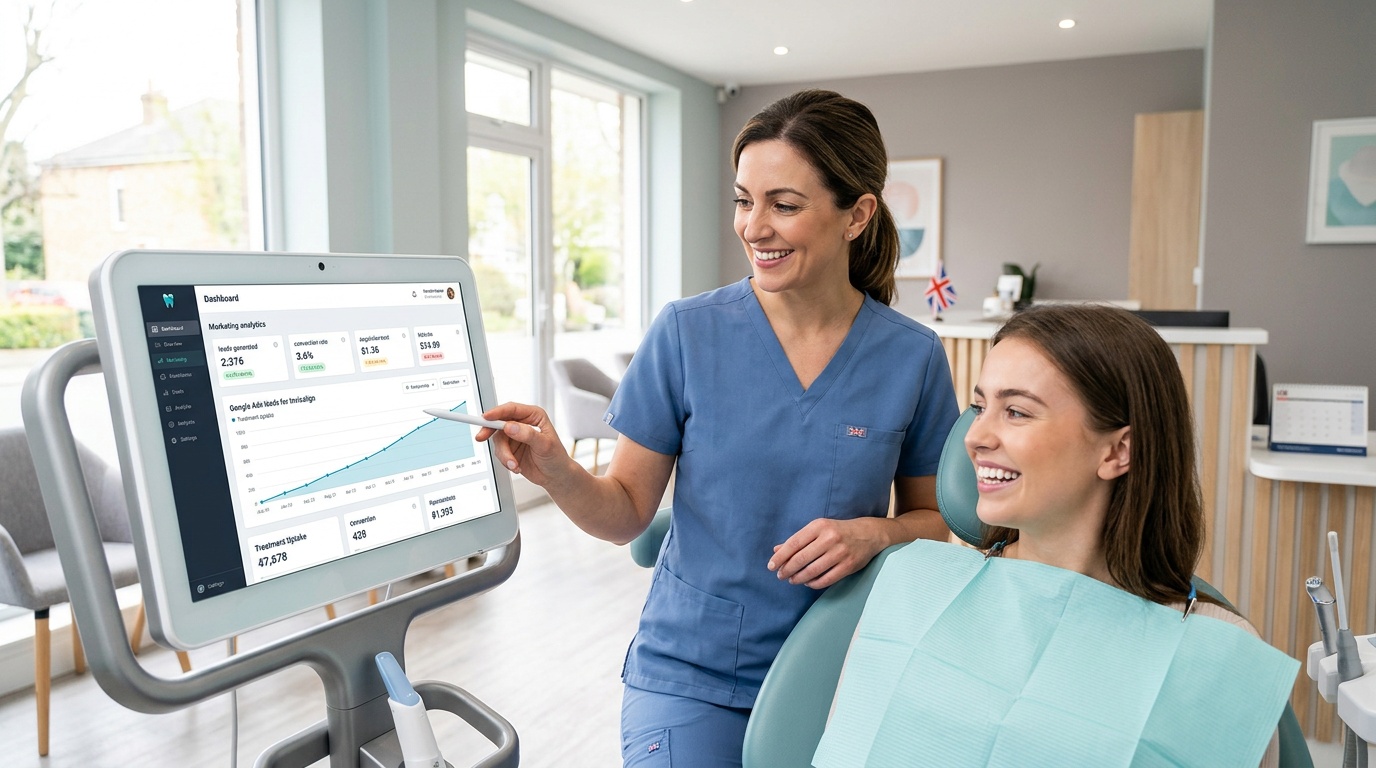
    Determining the right budget for Invisalign Google Ads in the UK is less about finding the absolute cheapest management and more about establishing a minimum viable spend that yields tangible results. For independent practices looking to generate qualified consultations, a recommended minimum ad spend often falls between £500 and £1,500 per month, as suggested by industry insights from sources like Remedo and DentalScapes. This budget is not for management fees but for the actual ad spend that Google charges for clicks. Below this threshold, it becomes exceptionally difficult to generate sufficient data, achieve competitive keyword visibility, and test different ad creatives or audience segments effectively. Investing a realistic amount ensures your campaigns have the fuel they need to perform and provide the data necessary for optimisation, which is key to finding the Cheapest Google Ads management for Invisalign leads by maximising ROI.

    London vs Manchester vs smaller cities: how location changes your budget

    Geographic location significantly impacts your required budget for Invisalign Google Ads in the UK. Major metropolitan areas like London and Manchester boast higher patient demand and treatment volumes, but they also feature intense competition. This competition drives up the cost per click for desirable keywords. To illustrate, a keyword like “Invisalign London dentist” will invariably cost more per click than “Invisalign Northampton.” Consequently, a practice in Greater London might need an ad spend closer to the £1,500+ mark monthly to achieve comparable visibility and lead volume to a practice in a smaller city that can operate effectively within the £500-£800 range. Understanding these regional cost differences is essential for setting a realistic budget that accounts for local market dynamics and competition levels.

    The £500-£1,500 per month sweet spot for independent practices

    For many independent UK dental practices focusing on private, high-value treatments like Invisalign, a monthly ad spend between £500 and £1,500 represents a ‘sweet spot’. This budget range is substantial enough to compete effectively in most local markets without being prohibitively expensive. It allows for targeted keyword bidding, the creation of compelling ad copy and extensions, and the development of optimised landing pages. Importantly, it generates enough click volume for Google’s algorithms to learn and for your marketing team to gather meaningful performance data. With this level of investment, practices can start seeing consistent lead generation, often achieving conversion rates around 9%, according to Remedo. This level of spend is often what allows for the most cost-effective management, as it provides a solid foundation for performance-based strategies rather than just chasing the lowest management fee.

    How to compete with big players (SmileDirectClub, Invisalign direct) on a shoestring

    Competing with large corporate entities like SmileDirectClub or direct Invisalign marketing efforts on a smaller budget requires strategic precision rather than sheer volume. While they may outspend you significantly, they often lack the personal touch and local authority that independent practices can champion. Your strategy should focus on highly targeted long-tail keywords (e.g., “Invisalign cost [your town] dentist,” “best orthodontist for clear aligners near me”). Furthermore, use your local presence and patient testimonials. These are powerful differentiators that big players struggle to replicate. Ensure your landing pages are exceptionally relevant and user-friendly, and use Google’s targeting options to reach specific demographics and locations within your service area. While a £500-£1,500 ad spend is a starting point, smart management and a focus on quality over quantity are your best tools for competing effectively on a tighter budget.

    NHS vs private: why your patient mix affects your ad spend

    Your practice’s patient mix. The balance between NHS and private patients. Profoundly influences your Google Ads budget strategy for Invisalign. Practices heavily reliant on NHS work may have a smaller pool of patients willing or able to invest in private, elective treatments like Invisalign. In such cases, a larger portion of your marketing budget may need to be allocated to precisely target individuals who demonstrably seek private cosmetic or orthodontic solutions. Conversely, a practice that is already predominantly private might find it easier to justify a higher ad spend, knowing that the potential ROI from each new Invisalign patient is substantial. The data from your existing patient base regarding treatment uptake and spend habits is invaluable in setting an appropriate and effective Google Ads budget, ensuring your investment aligns with your practice’s revenue streams and patient demographics.

    Key Insight: Budgeting for Results

    Don’t view your Google Ads budget as a cost, but as an investment. The Invisalign Lead Generation System has demonstrated potential ROI of 548.85%, turning ad spend into significant profit. A minimum viable ad spend of £500-£1,500 per month allows for competitive visibility and data generation, making it possible to achieve such returns, especially when managed by experts focused on lead quality and conversion.

    DIY, Freelancer, or Agency: Which Is the Cheapest Route to Invisalign Leads?

    When seeking the Cheapest Google Ads management for Invisalign leads, the decision of who manages your campaigns is paramount. Many practice owners initially consider tackling Google Ads themselves or hiring a freelancer to cut costs. However, the perceived savings often evaporate when hidden expenses are factored in. The goal is not merely to spend less on management fees, but to invest wisely for the highest return on investment, generating qualified consultations that convert into profitable Invisalign treatments. Understanding the true cost of each management path. From your own time to the specialised expertise of an agency. Is key to making an informed decision that drives genuine practice growth.

    The hidden costs of DIY: time, mistakes, and missed opportunities

    While managing your own Google Ads might seem like the ultimate money-saver, the reality for most busy dental practice owners is starkly different. Your valuable time, estimated at several hours per week, is better spent on patient care, team management, or strategic practice development. Each hour you dedicate to learning Google Ads, setting up campaigns, monitoring performance, and troubleshooting issues is an hour not spent generating revenue elsewhere. Furthermore, a lack of specialised knowledge can lead to costly mistakes. Misconfigured conversion tracking, poor keyword selection, or ineffective ad copy can result in significant wasted ad spend. For example, a practice owner might spend £1,000 on ads and £500 on management, only to achieve a low ROI. However, if they manage it themselves, they might spend £1,000 on ads and hundreds of hours of their own time, with far worse results, failing to capture leads effectively. This is why many UK dental practices find that the ‘cheapest’ DIY route ultimately costs them more in lost revenue and missed opportunities.

    Freelancer management: lower fees but higher risk of inconsistency

    Hiring a freelance Google Ads specialist can offer a middle ground, often with lower fees than a full-service agency. Freelancers can provide focused expertise for specific tasks. However, this route carries its own set of risks. The quality and reliability of freelancers can vary dramatically, and their availability might be inconsistent, especially if they juggle multiple clients. You may find yourself without dedicated support during critical campaign periods or facing delays in implementation. Moreover, a freelancer might lack the breadth of experience that comes from working across numerous dental practices and diverse campaigns, which is essential for understanding nuanced strategies. For example, a freelancer might be adept at setting up basic campaigns but lack the strategic insight to optimise for high-value treatments like Invisalign, or they may not have the tools and processes to ensure comprehensive reporting and transparent tracking, making it harder to ascertain true cost-effectiveness.

    Agency management: what you get for the premium

    A reputable dental marketing agency, like Dominate Dental, offers a comprehensive package that often justifies a higher fee. You gain access to a team of specialists with deep expertise in dental PPC, including specific knowledge of treatments like Invisalign. This includes dedicated account managers, copywriters, SEO specialists, and data analysts who work collaboratively. Agencies typically employ sophisticated systems for campaign management, optimisation, and reporting, providing transparency and detailed insights into performance. They also possess advanced tools and technologies that individual freelancers or practice owners rarely have access to. This integrated approach ensures that your campaigns are not only set up correctly but are continuously refined based on data and market trends. For example, agencies can often identify and capitalise on niche keyword opportunities or implement complex audience segmentation strategies that a freelancer might overlook, directly contributing to better lead quality and a lower cost per qualified lead.

    Performance-based pricing: the ultimate ‘cheap’ option that pays for results

    The most cost-effective and lowest-risk approach to Google Ads management is often performance-based pricing. Instead of paying a flat fee or a percentage of ad spend regardless of outcomes, you pay primarily for results. Such as qualified leads or booked consultations. This model directly aligns the agency’s success with yours. At Dominate Dental, we offer solutions like the Invisalign Lead Generation System, which is built around delivering tangible outcomes. This system has been instrumental in helping practices increase Invisalign cases significantly, generating over £17,000 per month in revenue for one client and achieving a 548.85% ROI. With performance-based models, your investment is directly tied to the generation of new patients, making it the truest definition of ‘cheap’ because it ensures your marketing spend is working hard to bring in profitable business, reducing the risk of wasted expenditure and guaranteeing a focus on conversion.

    Comparing Invisalign Google Ads Management Routes

    Management Route Typical Cost Structure Pros Cons Best For
    DIY Your time investment (significant) Zero direct management fee High time commitment, steep learning curve, risk of costly mistakes, missed opportunities, no specialised expertise Practices with ample time and a very low budget, willing to accept lower performance
    Freelancer Hourly rate or fixed project fee (£200-£600/month) Potentially lower fees than agencies, focused expertise Inconsistent availability, variable quality, limited scope of services, higher risk of inconsistency, may lack strategic depth Practices with specific, limited needs and moderate budgets, comfortable managing the freelancer directly
    Agency Fixed fee (£300-£1,000+/month) or % of ad spend (15-20%) Expert team, comprehensive services, strategic planning, advanced tools, proven processes, transparency Higher upfront cost, requires careful vetting to ensure expertise matches needs Practices seeking growth, wanting expert management, and valuing ROI and patient acquisition
    Performance-Based (e.g., Invisalign Lead Generation System) Primarily based on lead/consultation volume; often a component of overall management Directly tied to results, lowest risk, highest ROI potential, focuses on qualified leads May require a partnership commitment, success dependent on the provider’s capabilities Practices prioritizing tangible results and minimal risk, focused on high-value treatments like Invisalign

    How to Reduce Your Cost-Per-Click and Maximise Every Penny

    Achieving the Cheapest Google Ads management for Invisalign leads isn’t just about finding a low management fee; it’s about optimising your campaigns to reduce the cost of acquiring each click and, more importantly, each lead. Even with a modest budget, strategic implementation can significantly improve your return on investment. This involves meticulous keyword research, ensuring your ads are highly relevant to user searches, and building landing pages that convert visitors into enquiries. By focusing on these core optimisation tactics, you ensure that every pound spent on advertising contributes directly to generating qualified consultations for your Invisalign treatments, rather than being frittered away on irrelevant traffic or poor user experiences.

    Keyword research and negative keywords: stop burning cash on irrelevant clicks

    The foundation of an efficient Google Ads campaign lies in precise keyword selection. For Invisalign, this means identifying terms that indicate high intent, such as “Invisalign treatment cost [your town]” or “orthodontist for clear aligners.” Avoid broad, generic terms that attract unqualified clicks. Equally important is the strategic use of negative keywords. These are terms you tell Google *not* to show your ads for. For example, if you only offer private Invisalign, you’d add negative keywords like “NHS Invisalign,” “free Invisalign consultation,” or “dental assistant Invisalign jobs.” This prevents your ads from appearing for searches that will never convert, thereby saving your ad budget and improving your click-through rate (CTR). Proper keyword research and negative keyword implementation are essential steps to ensure you’re not wasting money on clicks from people who are not potential Invisalign patients.

    Quality Score hacks for Invisalign campaigns

    Google’s Quality Score is a metric that assesses the quality and relevance of your ads, keywords, and landing pages. A higher Quality Score can lead to lower costs per click and better ad positions. For Invisalign campaigns, focus on three key components: Expected CTR, Ad Relevance, and Landing Page Experience. Ensure your ad copy directly addresses the user’s search query and highlights the benefits of Invisalign. Your landing page should be highly relevant to the ad clicked, providing clear information about Invisalign, your practice, and a straightforward call to action. For instance, an ad for “affordable Invisalign options” should lead to a landing page detailing payment plans and the benefits of choosing your practice for clear aligners. Regularly reviewing and improving these elements boosts your Quality Score, directly reducing the cost of each click and enhancing the overall efficiency of your ad spend.

    Landing page alignment: why your ad copy must match the page exactly

    A significant factor in both Quality Score and conversion rates is the alignment between your ad copy and your landing pages. When a user clicks an ad, they expect the page they land on to directly relate to the promise made in the advertisement. For Invisalign, if your ad mentions “free consultation for clear braces,” the landing page must prominently feature that offer. Mismatched messaging leads to user confusion, high bounce rates, and wasted ad spend. A well-aligned landing page reinforces trust and guides the user seamlessly towards conversion. This means using consistent messaging, keywords, and offers across your ads and landing pages. Investing in dedicated landing pages for specific treatments like Invisalign, rather than sending traffic to your homepage, can dramatically improve conversion rates and lower your cost per lead, making your budget work harder.

    Conversion tracking and attribution: the only way to know what’s working

    You cannot effectively optimise or determine the true cost of your Invisalign leads without accurate conversion tracking. This involves setting up Google Ads to register specific actions on your website as conversions, such as form submissions for consultation bookings, phone calls from your ads, or even form fills for a downloadable Invisalign guide. Attribution models help you understand which ads, keywords, and campaigns are contributing most to these conversions. Without this data, you’re essentially flying blind, unable to discern which parts of your campaign are profitable and which are draining your budget. For example, if your ad spend is £1,000 and you think you’re getting leads, but without tracking, you don’t know if those leads are converting into patients, or if a different keyword is actually driving the most valuable enquiries. Implementing robust conversion tracking is fundamental to identifying what’s truly working, optimising for the Cheapest Google Ads management for Invisalign leads by focusing on performance, and ensuring a strong ROI.

    Actionable Tip: Focus on Lead Quality

    Don’t just aim for clicks; aim for consultations. High-quality leads are the cornerstone of profitable Invisalign marketing. By meticulously refining keywords, utilising negative keywords, ensuring ad-to-landing page relevance, and tracking conversions accurately, you transform your ad spend from a cost into a predictable revenue generator. This strategic approach, exemplified by systems like the Invisalign Lead Generation System, ensures you attract patients ready for treatment, maximising your ROI and solidifying your practice’s growth.

    Red Flags in Cheap Management Services (and How to Avoid Them)

    Red Flags in Cheap Management Services (and How to Avoid Them)

    When searching for the Cheapest Google Ads management for Invisalign leads, it’s tempting to opt for the lowest bidder. However, budget-friendly services can often mask significant inefficiencies and hidden costs that ultimately harm your practice’s growth. As a dental marketing expert focused on delivering tangible results for UK practices, I’ve seen firsthand how seemingly attractive low fees can lead to wasted ad spend, poor quality leads, and a frustrating lack of return. It’s imperative to look beyond the price tag and identify the warning signs that indicate a service might be too cheap to be effective. Understanding these red flags empowers you to make an informed decision, ensuring your marketing investment translates into genuine patient acquisition and revenue growth, rather than just a depleted budget.

    Agencies that hide change logs or make excessive tweaks

    Transparency is paramount in any marketing partnership. If an agency is reluctant to provide detailed change logs or makes numerous, unexplained modifications to your campaigns, it’s a significant red flag. To illustrate, a provider making 219+ changes in 12 months without clear strategic justification, as noted from client feedback, suggests a lack of focused strategy or a reactive, rather than proactive, approach. This can lead to campaign instability and make it difficult to track what’s actually driving performance. Instead, you should expect clear documentation of all significant changes, along with explanations of the rationale behind them and their expected impact. This allows you to understand how your budget is being utilised and how optimisations are being made to improve lead generation for treatments like Invisalign.

    The ‘set and forget’ trap: why cheap management rarely optimises

    The most common pitfall with budget-friendly Google Ads management is the ‘set and forget’ mentality. Agencies that charge minimal fees often lack the resources, expertise, or incentive to continuously monitor and optimise campaigns. This means your ads might be running on autopilot, failing to adapt to market shifts, competitor actions, or evolving patient search behaviour. For Invisalign campaigns, this can be particularly damaging. Without ongoing optimisation of keywords, ad copy, bidding strategies, and audience targeting, your cost per click can creep up, and the quality of leads will inevitably decline. A truly effective campaign requires constant refinement to maintain relevance and efficiency, ensuring you are attracting the most qualified patients at the lowest possible cost per lead.

    Landing page mismatches that kill your conversion rate

    A disconnect between your Google Ads and the landing pages they direct traffic to is a surefire way to waste money and kill conversion rates. If your ads promise specific Invisalign benefits, offers, or information, the landing page must deliver precisely that. Cheap management services may overlook this essential element, failing to create dedicated, high-converting landing pages or ensuring existing pages accurately reflect ad content. This mismatch erodes user trust, increases bounce rates, and leads to a poor Quality Score, driving up your advertising costs. For example, an ad promoting “affordable Invisalign finance options” must land on a page detailing payment plans, not a general contact form. Ensuring perfect alignment between ad promise and landing page reality is fundamental to turning clicks into consultations.

    How to vet a provider: a 5-point checklist for UK dentists

    Selecting the right Google Ads management partner is critical for generating qualified Invisalign leads efficiently. Before committing, use this checklist to thoroughly vet potential providers:

    Vetting Your Google Ads Management Provider

    • Specialisation in Dentistry: Do they understand the nuances of dental marketing, specifically high-value treatments like Invisalign?
    • Transparent Reporting: Can they provide clear, detailed reports on ad spend, clicks, leads, CPL, and ROI? Are change logs readily available?
    • Performance-Based Focus: Do they emphasise results and offer models that align their fees with your success (e.g., lead volume, consultation bookings)?
    • Case Studies & Metrics: Can they show demonstrable results from similar dental practices, backed by real data and ROI figures?
    • Communication & Strategy: Do they have a clear communication strategy and a proactive approach to campaign optimisation, rather than a ‘set and forget’ model?

    By rigorously applying these criteria, you can filter out less effective or transparent services and identify a partner committed to delivering the Cheapest Google Ads management for Invisalign leads through genuine performance and value, not just low fees.

    Pros and Cons of Budget Google Ads Management

    Pros

    • Potentially lower upfront management fees, making initial marketing spend seem more accessible.
    • May appeal to practices with extremely limited budgets or those testing PPC for the first time.
    • Could offer basic campaign setup and monitoring for simple, low-competition markets.

    Cons

    • High risk of wasted ad spend due to poor optimisation and targeting.
    • Leads generated are often of low quality, resulting in low conversion rates to consultations and treatments.
    • Lack of transparency in reporting and campaign changes.
    • ‘Set and forget’ approach leads to stagnation and missed opportunities for growth.
    • Inability to compete effectively against better-managed campaigns for high-value keywords.
    • Ultimately costs more in lost revenue and missed patient opportunities than it saves in fees.

    References

    Frequently Asked Questions

    How to reduce cost per lead on Google Ads?

    Cheapest Google Ads management for Invisalign leads reduces cost per lead by optimising targeting, ad quality, and landing page conversion rates rather than simply cutting fees. You must refine keyword relevance and continuously adjust bidding strategies based on performance data to attract qualified patients efficiently. A data-driven approach ensures your budget generates high-value consultations while keeping acquisition costs under control.

    Is $10 a day enough for Google Ads?

    Cheapest Google Ads management for Invisalign leads does not support a daily budget of $10, as this amount is insufficient for competitive UK markets. Premium keywords for Invisalign often exceed £10 per click, meaning a small budget will exhaust quickly without generating qualified impressions. Effective campaigns require a higher monthly investment to gather enough data for optimisation and attract genuine patient enquiries.

    What is the average cost per lead on Google Ads?

    Cheapest Google Ads management for Invisalign leads targets a cost per lead that aligns with your practice’s revenue goals, typically ranging from £30 to £100 for Invisalign campaigns. This average varies based on location and competition, but the real value comes from calculating your break-even point against the lifetime value of a new patient. Managing costs effectively means ensuring each lead has a high probability of converting into a consultation rather than just minimising the initial spend.

    How much do Google Ads charge per lead?

    Cheapest Google Ads management for Invisalign leads does not involve a direct charge per lead from Google, as costs are driven by auction dynamics and keyword bidding. The actual cost per lead depends on your campaign performance, targeting precision, and the quality of your landing page, often falling between £30 and £100 for Invisalign-related searches. Focusing on the management fee alone ignores these variables, so practices should evaluate total ad spend against the number of qualified consultations received.

    Fixed fee vs percentage of ad spend?

    Cheapest Google Ads management for Invisalign leads often involves choosing between a fixed monthly fee or a percentage of ad spend, depending on your budget scale. Fixed fees typically range from £300 to £800 per month, offering predictability, while percentage models charge 15% to 20% of your monthly ad budget. The most cost-effective option depends on your total spend volume, as a percentage fee may become cheaper than a high fixed rate once your campaign scales significantly.

    Why is cheap management risky?

    Cheapest Google Ads management for Invisalign leads can result in higher overall costs if the agency lacks the expertise to optimise campaigns and attract qualified patients. Low-fee providers often use a set-and-forget approach that leads to wasted ad spend, poor targeting, and a decline in lead quality over time. True value comes from continuous refinement of keywords, ad copy, and bidding strategies to ensure your budget generates high-quality consultations rather than just clicks.


    About the Author

    Dan Ashburn is the Co-Founder at Dominate Dental, the UK’s specialist agency for high-value patient acquisition.

    Drawing on a decade of data-driven advertising experience and hundreds of clinic campaigns, Dan blends AI technology with human insight to deliver predictable streams of Invisalign, implant, and cosmetic dentistry consultations. His team’s results-focused approach has helped practices across London, Manchester, Birmingham, and nationwide convert marketing spend into chair-time. Often booking 50+ qualified consultations per month while cutting no-shows.

    When he’s not optimizing funnels or unpacking the latest algorithm updates, Dan shares actionable dental marketing ideas, real-world case studies, and ROI benchmarks so dental teams can make confident marketing decisions.

    Last reviewed: June 15, 2026 by the Dominate Dental Team
  • Where to Find Affordable Dental Website Design UK

    Where to Find Affordable Dental Website Design UK

    Where to find affordable dental website design in UK?

    In the competitive UK dental market, your website is more than just an online brochure; it’s your digital front door, your 24/7 lead generator, and your first impression for potential patients seeking high-value treatments. Many practice owners grapple with finding a balance between investing in a professional online presence and managing tight budgets. This guide cuts through the confusion, helping you understand what truly constitutes value in dental web design and where to find it.

    Key Takeaways

    • Your dental website must function as a 24/7 lead generator for high-value treatments, not just a brochure.
    • Finding affordable web design requires understanding what features deliver real patient enquiries.
    • A strong first impression online can attract more consultations without overspending on complex design.
    • Value in dental web design comes from balancing professional appearance with patient conversion features.
    • The right partner can help you achieve a professional site within your budget constraints.

    This article focuses on identifying genuinely affordable solutions that deliver tangible results, rather than simply the cheapest option. We’ll explore what ‘affordable’ really means in the context of dental web design and uncover the long-term financial and patient acquisition pitfalls associated with cutting corners. If you’re a UK practice owner looking to attract more private patients with treatments like Invisalign or dental implants, understanding these distinctions is paramount to your growth strategy.

    What Does ‘Affordable’ Dental Website Design Mean in the UK?

    When seeking affordable dental website design in the UK, it’s essential to differentiate between genuine value and merely low cost. A truly affordable website is one that provides a high return on investment by effectively attracting and converting your target patient demographic, all within a manageable budget. It’s about smart investment, not just saving money upfront. A cheap website, conversely, might offer a low initial price tag but often compromises on quality, functionality, and marketing effectiveness, leading to higher costs down the line through lost patients and missed opportunities.

    The spectrum of pricing for dental websites in the UK can vary significantly. You might encounter basic template designs starting from around £500, while more bespoke, feature-rich websites from specialist agencies can range from £1,500 to £5,000 or more. Practices investing in professional dental web design typically see a 200%+ ROI within 12 months, a metric that highlights why focusing solely on the lowest price is a misstep. The goal is to find a provider who understands the specific needs of dental practices and can deliver a high-performing site without breaking the bank.

    Affordable dental website design in the UK means securing a professionally built, compliant, and lead-generating website that offers excellent long-term value for your investment. It prioritises patient acquisition and practice growth over the lowest possible initial price, distinguishing itself from cheap, ineffective alternatives.

    A common pitfall is the allure of a low upfront cost that masks significant ongoing expenses. Some providers may offer a seemingly inexpensive initial build but charge premium rates for essential updates, minor design tweaks, or SEO optimisation. This can leave practice owners locked into a cycle of unexpected bills. A truly affordable solution should offer transparency in its pricing structure, clear packages, and a realistic understanding of the total cost of ownership, including maintenance and marketing integration. It’s about finding a partner who builds a strategic asset for your practice, not just a digital placeholder.

    Defining ‘affordable’ versus ‘cheap’

    The distinction between ‘affordable’ and ‘cheap’ in web design is critical for UK dental practices. ‘Cheap’ often implies a compromise on quality, user experience, and effectiveness. It might mean a website built using outdated templates, lacking mobile responsiveness, or failing to meet current accessibility and regulatory standards. Such sites can actively deter potential patients, especially those seeking advanced treatments like cosmetic dentistry or orthodontics, who expect a polished and professional online presence. A cheap website is a false economy, costing you more in lost revenue and damaged reputation than it initially saved.

    ‘Affordable’, on the other hand, signifies getting optimal value for your budget. It means a website that is well-designed, user-friendly, mobile-optimised, and built with your specific practice goals in mind. An affordable dental website is strategically developed to attract your ideal patients, clearly showcase your services, and facilitate easy appointment bookings. It incorporates foundational elements for local search engine optimisation (SEO) and adheres to compliance requirements, ensuring it acts as a powerful marketing tool rather than a liability. It’s about investing wisely in a digital asset that drives patient acquisition and supports practice growth.

    Typical Pricing Bands for UK Dental Websites (£500-£5,000+)

    Understanding the typical pricing bands for dental websites in the UK provides a realistic benchmark for practice owners. At the lower end, you might find very basic, template-driven websites for around £500 to £1,000. These are often created by generalist designers or freelancers and may lack the specialised features or marketing focus required for dental practices. While seemingly budget-friendly, they frequently fall short on compliance, SEO, and conversion optimisation, failing to attract high-value patients effectively.

    The mid-range, typically between £1,500 and £3,000, often includes more customisation, better design quality, and a stronger focus on user experience. This bracket is where many practices can find a good balance between cost and functionality, provided they partner with an agency that understands dental marketing. For more comprehensive solutions, including advanced SEO, custom integrations, and bespoke design tailored to attract specific high-value treatments, expect investment to be in the £3,000 to £5,000+ range. As established by sources like Dental Media, investing in a professional, results-driven website is a key driver of ROI for UK dental practices.

    Typical Dental Website Pricing in the UK
    Price Range (£) Features & Focus Suitability
    500. 1,000 Basic templates, limited customisation, minimal SEO, standard features. Practices needing a minimal online presence, not focused on lead generation.
    1,500. 3,000 Customisable templates, improved design, mobile-first, basic SEO, core dental features. Practices seeking a professional, functional site with moderate lead generation goals.
    3,000. 5,000+ Bespoke design, advanced SEO, conversion optimisation, specific treatment pages, compliance focus, integrations. Growth-oriented practices aiming to attract high-value private patients and maximise ROI.

    Why a Low Upfront Cost Can Mask High Ongoing Fees

    The initial appeal of a low upfront cost for a dental website can be deceptive, often hiding substantial long-term expenses. Some providers lure clients with a cheap initial build, only to charge exorbitant fees for essential services such as website maintenance, security updates, content management, or basic SEO adjustments. This can transform an initially affordable project into a significant financial drain over time, especially when coupled with restrictive contract terms that prevent you from moving your site to a more cost-effective provider.

    Furthermore, a website that appears cheap might have been built on a platform that is difficult or impossible to scale, meaning future upgrades or the addition of new services become prohibitively expensive. Worse still, a poorly built site may not be compliant with UK regulations such as GDPR or GDC guidelines. Addressing these compliance issues after the fact, or dealing with the consequences of a data breach, can incur far greater costs than investing in a properly built, compliant site from the outset. This is where specialist agencies, like Dominate Dental, offer transparent pricing and integrated solutions that manage both initial build and ongoing performance.

    The Hidden Costs of a ‘Bargain’ Dental Website: Why Cheap Costs You Patients

    The Hidden Costs of a 'Bargain' Dental Website: Why Cheap Costs You Patients

    Opting for the cheapest available dental website design can lead to profound and costly consequences that extend far beyond the initial savings. A poorly constructed website, often the result of cutting corners on design, functionality, and marketing expertise, can actively repel the very patients you aim to attract. High-value private patients seeking treatments like Invisalign, implants, or cosmetic dentistry expect a professional, modern, and trustworthy online presence. A slow-loading, difficult-to-navigate, or aesthetically unappealing site signals a lack of professionalism and investment, prompting potential patients to look elsewhere. Over 70% of patients research dental practices online before booking, making your website a critical first impression that a bargain site often fails to make positively.

    Beyond lost patient opportunities, a bargain website can expose your practice to significant compliance risks. Failure to adhere to data protection regulations like GDPR, or specific dental guidelines from the General Dental Council (GDC), can result in substantial fines and reputational damage. When addressing these issues, practices may face significant penalties and the cost of rectifying security vulnerabilities. The true ongoing cost of fixing a cheaply built site. Addressing these compliance gaps, improving user experience, and implementing basic SEO. Often far exceeds the initial savings. Practices that neglect these aspects risk not only financial penalties but also a loss of patient trust.

    Lost Opportunity: How a Poor Site Repels High-Value Private Patients

    A budget website often misses the mark when it comes to appealing to patients seeking premium dental treatments. High-value private patients, who are often more discerning and have higher expectations, are unlikely to book with a practice whose website looks outdated, functions poorly, or fails to convey a sense of expertise and trust. A site that isn’t mobile-optimised, for instance, will frustrate users on smartphones, a primary browsing device for many. Such a site may also lack clear pathways for booking consultations for specialised treatments, such as dental implants or aesthetic dentistry, thereby failing to convert interest into tangible leads. The result is a significant lost opportunity, as these lucrative patients seek practitioners with a more professional and engaging online presence.

    Furthermore, a lack of high-quality imagery, persuasive content that highlights benefits, and clear calls to action means the website fails to effectively communicate the practice’s unique selling propositions. Without patient testimonials, before-and-after galleries for cosmetic work, or detailed pages on advanced treatments, the website cannot build the necessary confidence. This absence of persuasive elements means potential patients may not understand the value of the services offered or feel assured of the practice’s capabilities. The long-term cost here is substantial, as these missed conversions directly impact private revenue growth, a primary objective for many forward-thinking dental practices.

    Compliance Penalties from GDC and ICO for Data Breaches

    A critical, yet often overlooked, hidden cost of cheap dental websites is the severe risk of non-compliance with UK regulations. The General Dental Council (GDC) sets standards for professional conduct and patient care, which extend to a practice’s online presence. Similarly, the Information Commissioner’s Office (ICO) enforces data protection laws, including GDPR, which governs how patient data is collected, stored, and processed online. Websites built without a deep understanding of these requirements can easily fall foul of the law.

    When addressing these issues, practices may face significant penalties and the cost of rectifying security vulnerabilities. The ICO has the power to issue substantial fines, and reputational damage from a data breach can be even more devastating, eroding patient trust. Beyond fines, practices may face legal action, mandatory audits, and the cost of rectifying security vulnerabilities. A website from an unqualified provider might save money initially but expose your practice to risks that dwarf any upfront saving, making compliance a non-negotiable aspect of any website investment.

    The True Ongoing Cost of Fixing a Cheaply Built Site

    The initial low price of a bargain-basement website is merely the tip of the iceberg; the true ongoing cost lies in the perpetual need to fix and update it. Cheaply built sites are often developed on outdated platforms, lack proper SEO foundations, and are not designed for scalability or ease of maintenance. This means that even minor changes or updates can become complex, time-consuming, and expensive tasks. You might find yourself paying premium hourly rates to a general web developer who doesn’t understand the nuances of dental marketing or the specific needs of your practice.

    Furthermore, a site that doesn’t perform well in search engine rankings due to poor SEO will require significant investment to correct. Similarly, if the site doesn’t convert visitors into leads, you’ll need to spend more on other marketing channels to compensate, diminishing your overall marketing ROI. The cost of completely rebuilding or overhauling a cheap, ineffective site often amounts to more than investing in a quality, strategically built website from the start. For practices focused on high-value treatments, like those managed by the Dominate Dental Invisalign Marketing System, a high-performing website is an essential, cost-effective tool for consistent patient acquisition.

    Comparing Cheap vs. Affordable Dental Website Solutions
    Feature ‘Cheap’ Website (Low Upfront Cost) ‘Affordable’ Website (Value-Focused Investment)
    Initial Cost Very low (£500-£1,000) Moderate (£1,500-£5,000+)
    Patient Acquisition Poor; may deter high-value patients. Lacks conversion focus. Effective; designed to attract and convert target demographics.
    Compliance (GDC/ICO) Often non-compliant; high risk of penalties. Built with compliance as a priority; reduces risk.
    SEO Performance Weak or non-existent; poor search engine visibility. Strong foundational SEO; supports local search rankings.
    Mobile Responsiveness May be poor or absent. Mobile-first design standard.
    Ongoing Costs High; frequent fixes, updates, and potential rebuilds. Manageable; transparent maintenance and growth plans.
    ROI Negative or very low; high cost of lost opportunities. Positive; drives qualified leads and new patient bookings.

    Essential Features Every Affordable Dental Website Must Include

    When evaluating options for affordable dental website design in the UK, your checklist must go beyond aesthetics. A budget-friendly site should still function as a high-performance patient acquisition tool. Without these core features, even the most economical design will fail to deliver the return on investment your practice needs. Here are the non-negotiable elements that every dental website, regardless of price point, must incorporate to attract and convert high-value private patients.

    Mobile-First Design and Fast Page Speed

    Google now prioritises mobile-first indexing, meaning your site’s mobile version determines its search ranking. Over 70% of patients research practices on their phones before booking, so a site that loads slowly or displays poorly on a smartphone actively drives potential leads away. Your affordable dental website must be built with a responsive, mobile-optimised layout that adapts seamlessly to any screen size. Page speed is equally critical; a delay of even a few seconds in loading time can increase bounce rates significantly. Tools like Google’s PageSpeed Insights can help you verify performance, but your chosen designer should build speed into the foundation of the site.

    Compliance with UK regulations is not optional. Your dental website must include a clear cookie consent banner that allows users to manage their preferences, as required by the Information Commissioner’s Office (ICO). A comprehensive privacy policy, detailing how patient data is collected, stored, and processed, must be readily accessible. All contact forms and online booking systems must use secure, encrypted connections (HTTPS) to protect sensitive information. Failure to meet these standards risks substantial fines from the ICO and damage to your practice’s reputation. Even an affordable website should never compromise on these legal necessities.

    Treatment-Specific Pages for Invisalign, Implants, and Composite Bonding

    Generic ‘services’ pages do not convert high-value private patients. Your website must feature dedicated, detailed pages for each major treatment you offer, such as Invisalign, dental implants, and composite bonding. Each page should explain the procedure, its benefits, the patient journey, and include clear pricing or financing options. These pages are critical for search engine optimisation (SEO) because they target specific patient queries. A well-optimised Invisalign page, for example, can attract patients actively searching for that treatment. The Dominate Dental Invisalign Marketing System is specifically designed to maximise conversions from these high-intent pages, making it a valuable addition to your marketing strategy.

    Online Booking Integration and Clear Calls to Action

    Practices with online booking see up to 30% more new patient conversions. Your site must include a simple, intuitive booking system that integrates with your practice management software, such as Dentally or SOE. Every page should feature clear calls to action that guide visitors toward booking a consultation, whether it’s a prominent ‘Book Now’ button, a ‘Request a Callback’ form, or a clickable phone number. These elements reduce friction and make it easy for motivated patients to take the next step. Without them, even the most attractive website will fail to convert interest into appointments.

    Local SEO Foundations: Google Business Profile Linking and Location Pages

    For a UK dental practice, local search visibility is paramount. Your website must be properly linked to your Google Business Profile, ensuring your practice appears in local map packs and search results. Dedicated location pages for each surgery or branch, including your practice address, phone number, and opening hours, help search engines understand your geographic relevance. Embedding a Google Map and including patient reviews on your site further strengthens local SEO. These foundations ensure that when patients search for ‘dentist near me’ or ‘Invisalign in Manchester,’ your practice appears prominently.

    Patient Testimonials, Before/After Images, and Brand Consistency

    Trust is the currency of private dentistry. Your website must feature genuine patient testimonials and high-quality before-and-after images for cosmetic treatments. These elements provide social proof and demonstrate your expertise. Ensure your branding is consistent across all pages, using your practice colours, logo, and tone of voice. A cohesive, professional appearance signals reliability and quality to potential patients. Even an affordable website design should prioritise these trust-building elements, as they directly influence booking decisions and support long-term patient acquisition.

    Essential Features Checklist

    • Mobile-first, responsive design with fast load times
    • GDPR-compliant cookie consent, privacy policy, and secure forms
    • Dedicated pages for Invisalign, implants, and composite bonding
    • Online booking integration with clear calls to action
    • Local SEO: Google Business Profile linking and location pages
    • Patient testimonials, before/after galleries, and consistent branding

    Use this checklist when vetting any affordable dental website provider. Missing even one element can significantly reduce your site’s ability to attract and convert high-value patients.

    Freelancer vs Agency vs DIY: Which Path Is Cheaper for Your Practice?

    Deciding where to find affordable dental website design in the UK often comes down to choosing between a freelancer, a specialist agency, or a DIY template builder. Each option presents a different balance of cost, quality, and time investment. Your choice should align with your practice’s growth ambitions and your willingness to manage the technical and marketing aspects of your online presence. Here is a balanced comparison to help you decide.

    Comparing Cost, Quality, and Time Investment for Each Option

    A freelancer may charge between £500 and £2,000 for a basic website, offering a lower upfront cost. However, you often need to manage the project yourself, provide detailed briefs, and handle any necessary revisions. Freelancers may lack specialised dental marketing knowledge, potentially requiring additional investment in SEO or compliance adjustments later. A specialist dental marketing agency, such as those costing £1,500 to £5,000+, provides a comprehensive service including design, SEO, compliance, and ongoing support. The higher initial cost is offset by a faster path to patient acquisition and a stronger return on investment. DIY website builders, using platforms like Wix or Squarespace, can cost as little as £20 per month but demand significant time investment from you or a team member. They often lack the customisation and SEO depth needed to compete effectively for high-value treatments.

    Hidden Advantages of a Specialist Dental Marketing Agency

    While a freelancer or DIY approach may appear cheaper on paper, a specialist agency offers hidden advantages that directly impact your bottom line. Agencies bring deep experience in dental-specific compliance, including GDPR and GDC standards, reducing your risk of costly penalties. They understand the patient journey for high-value treatments like Invisalign and dental implants, and they build sites designed to convert visitors from the first click. Agencies also provide integrated SEO, meaning your site is optimised for search engines from day one, saving you the cost of later fixes. Perhaps most importantly, they offer accountability and ongoing support, ensuring your website remains effective as your practice grows. For practices using the Dominate Dental Invisalign Marketing System, this integrated approach can significantly accelerate patient acquisition and maximise marketing ROI.

    When a Template-Based DIY Site Might Work (and When It Won’t)

    A template-based DIY site can be a viable option for a very new practice with a limited budget and no immediate focus on attracting high-value private patients. If you are willing to invest significant time in learning the platform, customising templates, and managing your own SEO, a DIY site can provide a basic online presence for minimal cost. However, for practices aiming to grow private treatment revenue, a DIY site is rarely sufficient. Template sites often struggle to differentiate your practice, lack the flexibility needed for effective treatment-specific pages, and fail to meet the technical standards required for strong local SEO. They also present compliance risks if not carefully managed. For most established practices, the time and revenue lost from a poorly performing DIY site far outweigh the initial savings, making a professionally built solution the more affordable choice in the long term.

    Red Flags and Green Flags: How to Spot a Reliable Affordable Dental Web Designer

    Red Flags and Green Flags: How to Spot a Reliable Affordable Dental Web Designer

    Knowing exactly where to find affordable dental website design in the UK requires more than just comparing price tags. It demands a sharp eye for quality, transparency, and genuine expertise. The right partner will build a digital asset that actively grows your practice, while the wrong one can cost you thousands in lost patients and compliance fines. By learning to distinguish the warning signs from the indicators of a trustworthy professional, you can make a confident choice that supports your practice’s long-term success. This section provides a practical framework for vetting potential providers, ensuring your investment drives measurable patient acquisition and practice growth.

    Red Flags: No Portfolio, No Transparent Pricing, Locked Contracts, Non-Compliant Templates

    Several clear warning signs should prompt you to look elsewhere for affordable dental website design. A provider who cannot show a dedicated portfolio of dental websites likely lacks the specialised experience needed to attract high-value private patients. Without transparent pricing, you risk unexpected charges for essential features like SEO setup, compliance integration, or content pages. Locked contracts, often spanning 12 months or more, can trap you with an underperforming site and prevent you from seeking better service. Most critically, templates that are not fully compliant with GDPR, GDC standards, and modern accessibility guidelines expose your practice to significant legal and reputational risk. These red flags indicate a provider focused on short-term gain rather than your practice’s growth.

    Beyond these obvious issues, a lack of strategic insight is a major concern. If a designer cannot clearly explain how their work will drive patient acquisition for treatments like Invisalign or dental implants, they are likely a generalist rather than a dental marketing specialist. A poor user experience, slow loading speeds, and weak calls to action will actively deter the discerning private patients you want to attract. Remember, an affordable website should still deliver a strong return on investment. Choosing a provider who ignores these fundamentals undermines your entire digital marketing strategy and wastes your marketing budget. Always prioritise proven expertise over a low initial quote.

    Green Flags: Specialist Dental Experience, Clear Process, Integrated SEO, Maintenance Plan

    Conversely, a reliable partner for affordable dental website design will display several positive indicators. Specialist dental experience is paramount; they understand the patient journey for high-value treatments, the importance of trust signals like testimonials and before-and-after galleries, and the specific compliance requirements of the UK dental sector. A clear, documented process for design, development, and launch shows professionalism and accountability. They will outline milestones, provide regular updates, and involve you in key decisions without overwhelming you with technical jargon. This structured approach ensures the project stays on track and aligns with your practice goals from the initial discovery phase through to launch.

    Integrated SEO is a non-negotiable green flag. Your affordable website should be built on a foundation of strong local search optimisation, targeting patients searching for treatments in your specific area. This includes proper keyword research, optimised page structures for treatments like composite bonding and implants, and technical SEO best practices. A comprehensive maintenance plan is equally important, ensuring your site remains secure, up-to-date, and performs optimally over time. Providers who offer ongoing support and performance monitoring demonstrate a commitment to your long-term success. For instance, a practice utilising the Dominate Dental Invisalign Marketing System benefits from this integrated, results-driven approach, combining expert design with proven patient acquisition strategies.

    Step-by-Step Checklist for Vetting a Designer Before You Sign

    To ensure you select the right partner for your practice, follow this practical checklist before signing any agreement. This process helps you verify that the provider meets the essential criteria for delivering a high-performing, affordable dental website. Taking these steps will give you confidence in your decision and protect your practice from costly mistakes.

    Vetting Checklist for Your Dental Web Designer

    • Review Their Dental Portfolio: Examine at least three websites they have built for UK dental practices. Do the sites look professional, load quickly, and clearly promote treatments like implants and Invisalign? Assess the quality of patient imagery and the clarity of calls to action.
    • Demand Transparent Pricing: Request a detailed breakdown of all costs, including the initial build, SEO setup, compliance features, and ongoing maintenance. Ensure there are no hidden fees for essential integrations or content management training.
    • Scrutinise the Contract: Look for flexible terms that allow you to leave if the service is unsatisfactory. Avoid long, restrictive lock-in periods that limit your ability to switch providers if your needs change.
    • Verify Compliance Knowledge: Ask specifically how they ensure GDPR compliance, GDC guidelines, and secure data handling. A knowledgeable provider will have clear answers and processes for cookie consent, privacy policies, and secure patient forms.
    • Discuss SEO and Integration: Confirm that local SEO foundations are part of the build. Ask about integration with your practice management software (e.g., Dentally, SOE) and online booking systems to streamline the patient journey.
    • Enquire About Ongoing Support: Establish what happens after the site launches. Is there a maintenance plan? How are updates, security patches, and performance issues handled? Proactive support prevents small problems from becoming expensive emergencies.

    Using this checklist will help you confidently navigate where to find affordable dental website design in the UK, ensuring your investment drives real patient growth and

    References

    Frequently Asked Questions

    How much does a dental website design cost in the UK?

    Dental website design costs in the UK typically range from £500 for basic templates to over £5,000 for bespoke, results-driven sites. Mid-range options between £1,500 and £3,000 offer a good balance of design quality and marketing features. Practices that invest in professional dental web design often see a 200%+ return on investment within 12 months, making the cost a strategic expense rather than a simple outlay.

    What is the difference between affordable and cheap dental website design?

    Affordable dental website design delivers genuine value by attracting and converting patients within a manageable budget, while cheap design sacrifices quality and effectiveness for a low upfront price. A cheap site often lacks mobile optimisation, compliance, and SEO, leading to lost patient revenue over time. Affordable design prioritises long-term return on investment and practice growth over the lowest possible initial cost.

    What is the cheapest website builder for UK dental practices?

    Basic website builders like Wix, Squarespace or WordPress templates can cost as little as £10 to £50 per month, but they rarely meet the compliance, SEO, and conversion needs of a dental practice. These DIY platforms often produce generic sites that fail to attract high-value cosmetic or orthodontic patients. For most UK dental practices, the cheapest option leads to higher long-term costs from missed appointments and poor patient perception.

    What is the 80/20 rule in dentistry and how does it apply to web design?

    The 80/20 rule, or Pareto principle, suggests that 80% of your practice revenue comes from 20% of your services, such as Invisalign or dental implants. In web design, this means your site should prominently showcase those high-value treatments to attract the right patients. An affordable dental website that focuses on converting visitors for your most profitable services delivers far better ROI than a generic site.

    How much does a website designer cost for UK dental practices?

    A UK dental website designer typically charges between £500 and £5,000, depending on the level of customisation and marketing integration. Freelancers or generalist designers may offer lower rates, but specialist dental agencies provide tailored compliance, SEO, and patient conversion features. The total cost of ownership, including updates and maintenance, should be transparent from the start to avoid hidden fees.

    Can ChatGPT create a dental website for my practice?

    ChatGPT can generate text content and basic code snippets, but it cannot build a fully functional, compliant, and marketing-optimised dental website on its own. Creating a professional site requires expertise in dental regulations, user experience, and local SEO to attract and convert patients. Affordable dental web design combines human strategy with technology, not just an AI tool alone.

    What should I look for in an affordable dental website design package?

    An affordable dental website design package should include clear pricing with no hidden costs, mobile responsiveness, SEO foundations, and compliance with UK dental regulations. It must also focus on converting visitors into appointments, especially for high-value treatments like implants or orthodontics. Look for transparent ongoing fees for updates and maintenance, and a provider who understands dental marketing rather than just web building.

    About the Author

    Dan Ashburn is the Co-Founder at Dominate Dental, the UK’s specialist agency for high-value patient acquisition.

    Drawing on a decade of data-driven advertising experience and hundreds of clinic campaigns, Dan blends AI technology with human insight to deliver predictable streams of Invisalign, implant, and cosmetic dentistry consultations. His team’s results-focused approach has helped practices across London, Manchester, Birmingham, and nationwide convert marketing spend into chair-time. Often booking 50+ qualified consultations per month while cutting no-shows.

    When he’s not optimizing funnels or unpacking the latest algorithm updates, Dan shares actionable dental marketing ideas, real-world case studies, and ROI benchmarks so dental teams can make confident marketing decisions.

    Last reviewed: June 14, 2026 by the Dominate Dental Team
  • Pricing for Dental SEO Services Targeting Orthodontics: A Complete UK Guide

    Pricing for Dental SEO Services Targeting Orthodontics: A Complete UK Guide

    Pricing for dental SEO services targeting orthodontics.

    Orthodontic practices in the UK operate in a highly competitive digital environment where securing high-value patients requires a strategic approach. Understanding the Pricing for dental SEO services targeting orthodontics. is the first step to building a sustainable patient acquisition system. This guide breaks down the financial realities of SEO for orthodontists, explaining the factors that influence costs and how to evaluate proposals effectively to secure New Patient Opportunities consistently.

    Key Takeaways

    • Orthodontic SEO pricing in the UK is driven by intense competition for high-value patients, making strategic investment essential for sustainable growth.
    • A clear understanding of the factors that influence SEO costs helps orthodontists compare proposals and select the option with the best long-term return.
    • Evaluating an SEO proposal requires looking beyond the upfront price to the expected patient acquisition metrics and the service’s track record.
    • Sustainable patient acquisition through SEO demands a commitment to ongoing optimisation and a focus on converting site visitors into booked consultations.

    What Does Orthodontic SEO Really Cost? Breaking Down the Numbers

    Typical monthly retainer ranges for orthodontic SEO in the UK

    The investment required for SEO varies significantly based on practice location, competition, and specific treatment goals. Industry data indicates that monthly dental SEO costs range from $500 to $8,000, with orthodontic-specific packages typically falling between $1,000 and $5,000 (Digitalis Medical). For a single-location orthodontic practice in the UK, a realistic monthly budget starts around £2,000 and can rise to £3,500 or more to achieve effective results (Dentaltown). Evaluating Pricing for dental SEO services targeting orthodontics. helps you align your marketing spend with the potential revenue generated by specialised treatments.

    How orthodontic SEO pricing differs from general dental SEO

    General dental SEO often focuses on broad services like check-ups and fillings. Orthodontic SEO demands a specialised strategy targeting high-value procedures such as Invisalign and braces. This specificity requires deeper keyword research, tailored content creation, and more aggressive link building. Agencies must understand the nuances of patient intent for cosmetic and corrective treatments, which justifies higher retainer fees compared to standard dental marketing. Understanding Pricing for dental SEO services targeting orthodontics. reveals distinct differences in the expertise and resources required to rank for these lucrative terms.

    The real cost of cheap SEO packages for orthodontists

    Selecting a budget-friendly SEO package often leads to poor returns. Packages priced below £500 per month typically rely on generic tactics that fail to address the unique challenges of orthodontic marketing. These approaches often lack the depth required to rank for competitive terms like ‘Invisalign London’ or ‘braces Manchester’. Investing in Invisalign Marketing Services ensures your practice receives targeted strategies designed to generate qualified consultations rather than generic traffic. Many orthodontists underestimate the true cost when selecting low-cost packages, ultimately paying more in lost opportunities.

    Feature General Dental SEO Orthodontic SEO
    Primary Focus Check-ups, hygiene, fillings Invisalign, braces, aligners
    Keyword Complexity Low to moderate High and highly competitive
    Content Depth Standard informational pages Treatment-specific guides and case studies
    Typical Monthly Cost (GBP) £800 – £2,500 £2,000 – £5,000+

    Expert Insight: A single orthodontic patient is worth significantly more than a general hygiene patient. With an average patient lifetime value of $5,000, a £2,000 monthly SEO investment breaks even with just one new patient every 2.5 months (Wowbix). Dominate Dental helps UK orthodontists achieve measurable growth through data-driven SEO strategies that maximise this value.

    Why Orthodontic SEO Costs More Than General Dental SEO

    Why Orthodontic SEO Costs More Than General Dental SEO

    Competition for high-value keywords like ‘Invisalign London’ and ‘braces Manchester’

    The orthodontic sector commands some of the highest cost-per-click and organic competition rates in healthcare marketing. Keywords such as ‘Invisalign London’ attract numerous established clinics and specialist practices vying for visibility. Securing top rankings for these terms requires sustained effort in technical optimisation, authoritative content, and high-quality backlinks. This intense competition naturally drives up the operational costs associated with orthodontic SEO campaigns. Competition for high-value keywords makes Pricing for dental SEO services targeting orthodontics. a key factor in planning your long-term digital growth.

    Geographic cost differences: urban vs rural, London vs smaller cities

    Location plays a pivotal role in determining SEO investment requirements. Urban centres like London, Manchester, and Birmingham present dense networks of competitors, necessitating more aggressive strategies. Research indicates that in competitive urban areas, orthodontic SEO costs can be 30 to 50 per cent higher than in smaller towns (Harvee Healthcare). Practices in these metropolitan regions must allocate additional resources to outrank local rivals and capture high-intent local searches. Geographic targeting extends beyond town boundaries, requiring hyper-local optimisation for areas like Battersea, Kensington, and Canary Wharf.

    Orthodontic practices typically offer a spectrum of treatments, including clear aligners, fixed braces, and functional appliances. A comprehensive SEO strategy must address each treatment type individually to capture diverse patient search intents. This involves creating distinct landing pages, developing treatment-specific blog content, and managing local citations across multiple service areas. The expanded scope of work justifies the higher retainer compared to practices offering a narrower range of services. Each treatment category demands unique on-page optimisation and off-page authority building.

    Factor Urban Practices (e.g., London) Rural Practices (e.g., Countryside)
    Competitor Density High Low to moderate
    Keyword Difficulty Very high Moderate
    Required Content Volume Extensive Standard
    Estimated Cost Premium +30% to +50% Baseline

    Key Consideration: Geographic targeting extends beyond town boundaries. London practices often compete for patients across multiple boroughs, requiring advanced local SEO techniques and consistent Google Business Profile management. This granular focus demands precise audience segmentation and location-specific landing pages to capture high-intent searches effectively.

    What’s Included in a Monthly Retainer for Orthodontic SEO?

    When evaluating dental SEO services pricing for orthodontics, it’s essential to understand the comprehensive suite of services that constitute a professional monthly retainer. A comprehensive SEO package is far more than just a few website tweaks; it’s a strategic, ongoing effort designed to position your practice as the leading authority for treatments like Invisalign and braces in your target locations. Expect a detailed breakdown of activities that cover technical optimisation, content development, local visibility, and performance analysis. This transparency allows you to confidently compare proposals and ensure you’re investing in a service that delivers tangible results for your practice.

    Keyword research and treatment-specific strategy (Invisalign, braces, aligners)

    Effective orthodontic SEO begins with an in-depth understanding of what potential patients are searching for. This involves meticulous keyword research that goes beyond general terms to identify high-intent queries related to specific treatments like Invisalign, traditional braces, and clear aligners. A seasoned agency will analyse not only the volume of searches but also the competitive difficulty and, most importantly, the user’s intent behind each query. For example, someone searching for ‘Invisalign cost London’ has a different intent than someone looking for ‘best braces for teenagers’. Establishing a strategy based on this granular understanding is paramount for attracting qualified leads. Dominate Dental specialises in developing tailored Invisalign Marketing Services that focus on these precise search behaviours, ensuring your practice appears when and where it matters most.

    Once keywords are identified, the focus shifts to optimising your practice’s website and digital presence. On-page optimisation involves refining your website’s technical structure, page titles, meta descriptions, header tags, and content to align with search engine algorithms and user expectations. This ensures search engines understand what your pages are about and can rank them appropriately. Content creation is vital; this means developing high-quality, informative blog posts, treatment guides, patient testimonials, and case studies that address patient concerns and establish your expertise. For orthodontists, this might include articles on the benefits of clear aligners, comparisons between different brace types, or guides to financing orthodontic treatment. Link building, the process of acquiring backlinks from other reputable websites, significantly boosts your site’s authority and credibility in the eyes of search engines, driving better rankings for competitive terms.

    Google Business Profile management and local citation building

    For any local service business, especially dental and orthodontic practices, local SEO is non-negotiable. This segment of your retainer focuses on optimising your Google Business Profile (GBP). Formerly Google My Business. To ensure you appear prominently in local search results and on Google Maps. This includes optimising your profile with accurate business information, services offered, high-quality photos, and encouraging online reviews reputation. Local citation building involves ensuring your practice’s name, address, and phone number (NAP) are consistently listed across various online directories and platforms. This consistency reinforces your local presence and helps search engines confirm your business details, which is a direct signal for local search ranking improvements. Managing these elements is critical for attracting patients in your immediate service area.

    Monthly reporting and performance tracking

    A fundamental component of any reputable SEO retainer is transparent and detailed performance reporting. Your agency should provide monthly reports that clearly outline the work undertaken, the results achieved, and insights into the strategy’s effectiveness. These reports typically include key performance indicators (KPIs) such as website traffic, keyword rankings, lead generation numbers, conversion rates, and the cost per acquisition for new patients. Analysing this data allows you to track your return on investment (ROI) and understand the direct impact of SEO efforts on your practice’s growth. This data-driven approach ensures accountability and enables continuous refinement of the strategy to maximise patient acquisition. Understanding the Pricing for dental SEO services targeting orthodontics. includes appreciating the value of this continuous performance measurement.

    Expert Insight: A significant portion of new patient inquiries for orthodontic services, estimated at 60-70%, originate from a Google search (industry estimate). This highlights the absolute necessity of a strong organic search presence. Dominate Dental’s approach focuses on delivering a comprehensive Invisalign Marketing Services package that covers all facets of SEO to capture this critical patient traffic. We ensure that every element of your online presence works in harmony to generate qualified consultations.

    The Hidden Costs of Cheap Orthodontic SEO (And How to Avoid Them)

    When exploring Pricing for dental SEO services targeting orthodontics., it’s tempting to opt for the lowest-cost provider. However, exceptionally low monthly fees, often around £500 or less, can signal a strategy lacking the depth and expertise required for competitive orthodontic markets. These budget packages frequently employ generic, templated approaches that yield minimal results, leaving practices paying for services that don’t deliver qualified patient inquiries. The true cost then becomes not just the wasted monthly spend, but the significant opportunity cost of missed patient bookings. Agencies offering such low-tier services often lack the specialised knowledge of high-value treatments like Invisalign or the specific patient journey for orthodontic care, leading to a strategy that simply cannot compete with dedicated orthodontic SEO efforts.

    Why £500/month packages often fail for orthodontists

    Orthodontic SEO is a specialised field requiring significant investment in research, content creation, and technical expertise. A monthly retainer of £500 is unlikely to cover the comprehensive efforts needed to rank for competitive terms such as ‘Invisalign London’ or ‘braces Manchester’. Such packages typically involve superficial keyword research, limited content generation, and basic on-page optimisation, often without a strategic link-building component or in-depth local SEO management. These methods are insufficient to outrank established competitors or satisfy Google’s algorithms for complex, high-value treatments. Practices investing in these minimal packages often find their websites remain stagnant in search results, failing to attract the consistent flow of new patient consultations essential for practice growth.

    Beyond the advertised monthly retainer, many low-cost SEO providers hide additional charges. These can include one-off setup fees, charges for basic keyword research, separate costs for content writing, and extra fees for essential link-building activities. Some agencies might also charge for detailed monthly reporting or strategic consultations, nickel-and-diming clients for services that should be integral to a comprehensive SEO package. When evaluating SEO proposals, always question what is *not* included. A truly transparent agency will outline all potential costs upfront and provide a clear scope of work that avoids these common hidden expenses. Dominate Dental’s approach is built on transparency, ensuring you understand the full value of your investment in Invisalign Marketing Services.

    Expert Insight: Low-cost SEO providers often rely on automated tools and templated strategies, which are ill-suited for the nuanced demands of orthodontic marketing. These generic approaches fail to capture the specific intent of patients seeking treatments like Invisalign or advanced braces, leading to wasted marketing budgets and a lack of qualified leads. Always seek an agency that demonstrates a deep understanding of the orthodontic patient journey and offers tailored strategies.

    How to evaluate an SEO proposal: a step-by-step checklist for orthodontists

    When reviewing proposals for orthodontic SEO, use a structured checklist to ensure you’re selecting a partner capable of delivering results. Start by verifying that the proposal clearly defines target keywords related to your specific treatments and geographic areas. Next, scrutinise the proposed content strategy: does it include plans for unique, patient-focused content? Examine the link-building approach. Is it ethical and sustainable? Crucially, look for detailed monthly reporting that outlines KPIs and demonstrates a clear path to ROI. Ensure there are no hidden fees and that the agency has a proven track record within the dental or orthodontic sector. A thorough evaluation helps you avoid the pitfalls of cheap SEO and identify an agency that genuinely understands Pricing for dental SEO services targeting orthodontics. and how to achieve success.

    Your Orthodontic SEO Proposal Checklist:

    • Keyword Strategy: Are specific high-value treatment keywords (e.g., Invisalign, braces) and local terms identified?
    • Content Plan: Is there a strategy for creating unique, informative content targeting patient needs?
    • Link Building: Is the proposed method ethical, authoritative, and sustainable?
    • Local SEO: Does it include Google Business Profile optimisation and local citation management?
    • Reporting: Are detailed monthly reports promised with clear KPIs and ROI analysis?
    • Transparency: Are all costs clearly stated with no hidden fees?
    • Experience: Does the agency have demonstrable experience in orthodontic or specialist dental marketing?

    Is Orthodontic SEO Worth the Investment? Calculating Your Return

    Is Orthodontic SEO Worth the Investment? Calculating Your Return

    The significant investment required for effective orthodontic SEO can be a concern for practice owners. However, understanding the potential return on investment (ROI) is key to justifying this expenditure. Orthodontic treatments, particularly those like Invisalign, represent high-value services with substantial patient lifetime value. When SEO efforts successfully attract a consistent stream of qualified inquiries for these procedures, the revenue generated far outweighs the marketing costs. By calculating metrics such as patient lifetime value and cost per acquisition, practices can clearly see how strategic SEO translates into profitable growth. Dominate Dental’s focus is on delivering measurable results, ensuring your investment in Invisalign Marketing Services yields a demonstrable return.

    How to calculate patient lifetime value for orthodontics vs general dentistry

    The financial impact of a new patient varies dramatically between general dentistry and specialities like orthodontics. For general dentistry, the lifetime value (LTV) might be calculated based on routine check-ups, fillings, and occasional cosmetic work. In contrast, orthodontic patients, especially those undergoing treatments like Invisalign or comprehensive braces, commit to longer treatment plans with higher upfront costs and potentially ongoing retainer or follow-up care. The LTV for an orthodontic patient can easily reach £5,000 or more, significantly higher than that of a typical general dentistry patient (Wowbix). This elevated LTV means that acquiring even a few new orthodontic patients through SEO can generate substantial revenue, making the investment in specialised marketing highly profitable.

    Real-world ROI example: cost per new patient acquisition

    To illustrate the ROI, consider a practice investing £3,000 per month in orthodontic SEO. If this investment generates 10 new patient inquiries per month, and a conservative 20% of these convert to paying patients, that’s 2 new patients per month. With an average patient lifetime value of £5,000, these two patients represent £10,000 in revenue. The marketing cost per new patient acquired is therefore £1,500 (£3,000 / 2 patients). This scenario yields a significant return, demonstrating that the Pricing for dental SEO services targeting orthodontics. is justifiable when linked to patient value and conversion rates. A well-executed SEO strategy aims to drive this cost per acquisition down over time as rankings improve and organic traffic increases.

    ROI Calculator Insight: To estimate your potential ROI, consider your average orthodontic patient’s lifetime value. Multiply this by the number of new patients your SEO campaign is projected to bring in monthly. Compare this total projected revenue against your monthly SEO expenditure. For example, if your LTV is £5,000 and SEO brings in 2 new patients monthly, that’s £10,000 in potential revenue against a £3,000 investment, yielding a strong positive return. For practices focused on high-value treatments, investing in Invisalign Marketing Services is a strategic financial decision.

    Timeline to results: what to expect at 3, 6, and 12 months

    It’s important to set realistic expectations regarding the timeline for seeing results from orthodontic SEO. Search engine algorithms require time to recognise and rank new or improved website content and authority. Initial improvements in keyword rankings and website traffic can typically be observed within 3 to 6 months. During this period, foundational work like technical optimisation, content creation, and initial link building takes effect. Significant ROI, marked by a consistent increase in qualified patient inquiries and bookings, usually materialises between 6 and 12 months. This timeframe allows for the accumulation of authority, the establishment of strong local rankings, and the full impact of ongoing optimisation efforts. Patience and consistent investment are key to unlocking the long-term benefits of effective Pricing for dental SEO services targeting orthodontics..

    Case Study Snapshot: Growth Through Specialised SEO

    A multi-chair orthodontic practice in Manchester, struggling with inconsistent lead generation, partnered with Dominate Dental. They invested £3,000 per month in a comprehensive SEO strategy targeting Invisalign and braces keywords. Within 6 months, the practice saw a 40% increase in website-driven consultation requests, directly attributing 15 new Invisalign consultations per month to their improved search visibility. This led to an estimated £75,000 in new patient revenue annually from this single treatment stream, demonstrating a clear and substantial ROI on their SEO investment.

    References

    Frequently Asked Questions

    How much does SEO cost for orthodontists?

    Pricing for dental SEO services targeting orthodontics typically starts at around £2,000 per month for a single-location UK practice and can rise to £3,500 or more for competitive areas. This investment reflects the specialised work needed to rank for high-value orthodontic keywords and attract patients seeking treatments like Invisalign and braces.

    What is the 80/20 rule in dentistry?

    The 80/20 rule in dentistry suggests that 80% of a practice’s revenue often comes from 20% of its patients, typically those seeking high-value treatments like orthodontics. For pricing for dental SEO services targeting orthodontics, this principle means focusing marketing on attracting those high-value patients generates a stronger return on your SEO investment.

    How much to charge for SEO in the UK?

    Pricing for dental SEO services targeting orthodontics in the UK generally ranges from £2,000 to £5,000 per month, depending on competition and location. Agencies charge these rates because orthodontic SEO demands deep keyword research, treatment-specific content, and aggressive link building to rank for terms like ‘Invisalign London’.

    How to do SEO for a dental clinic?

    Effective SEO for a dental clinic starts with understanding your target treatments and local market, then building a strategy around treatment-specific landing pages, local citations, and authoritative content. For orthodontic practices, pricing for dental SEO services targeting orthodontics reflects the extra work needed to optimise separately for clear aligners, braces, and functional appliances.

    How much does dental SEO cost?

    General dental SEO typically costs between £800 and £2,500 per month in the UK, while orthodontic-focused SEO ranges from £2,000 to £5,000 or more. Pricing for dental SEO services targeting orthodontics is higher because competing for high-value terms like ‘braces Manchester’ requires more specialised content and stronger link profiles.

    What factors make orthodontic SEO more expensive than general dental SEO?

    Orthodontic SEO costs more because it targets highly competitive keywords such as ‘Invisalign London’, requires treatment-specific content for multiple procedures, and needs aggressive link building in dense urban markets. Pricing for dental SEO services targeting orthodontics also reflects the higher lifetime value of orthodontic patients, often exceeding £5,000 per case.

    Is cheap orthodontic SEO worth the investment?

    Cheap orthodontic SEO packages, typically under £500 per month, rarely deliver results because they rely on generic tactics that cannot compete for high-value keywords. Pricing for dental SEO services targeting orthodontics below £1,000 usually means missed opportunities, as a single orthodontic patient worth over £5,000 justifies a proper investment of £2,000 or more per month.

    About the Author

    Dan Ashburn is the Co-Founder at Dominate Dental, the UK’s specialist agency for high-value patient acquisition.

    Drawing on a decade of data-driven advertising experience and hundreds of clinic campaigns, Dan blends AI technology with human insight to deliver predictable streams of Invisalign, implant, and cosmetic dentistry consultations. His team’s results-focused approach has helped practices across London, Manchester, Birmingham, and nationwide convert marketing spend into chair-time. Often booking 50+ qualified consultations per month while cutting no-shows.

    When he’s not optimizing funnels or unpacking the latest algorithm updates, Dan shares actionable dental marketing ideas, real-world case studies, and ROI benchmarks so dental teams can make confident marketing decisions.

    Last reviewed: June 13, 2026 by the Dominate Dental Team
  • Invisalign Marketing Cost UK: Budget Breakdown & ROI

    Invisalign Marketing Cost UK: Budget Breakdown & ROI

    How much does Invisalign marketing cost for UK dental practices?

    UK dental practice owners often find themselves at a crossroads when trying to scale private patient numbers. While general dentistry provides a steady foundation, high-value treatments like clear aligners drive significant growth. Understanding exactly how much does Invisalign marketing cost for UK dental practices? is the first step toward moving from unpredictable referrals to a consistent stream of qualified consultations. At Dominate Dental, we focus on the metrics that matter, ensuring your investment translates into signed cases rather than just empty clicks.

    Key Takeaways

    • Clear aligner marketing shifts your practice from relying on unpredictable referrals to generating a reliable flow of qualified consultations.
    • Your marketing budget should focus on metrics that directly track signed cases rather than vanity metrics like page views or clicks.
    • Understanding the upfront cost of Invisalign marketing is the first step toward building a predictable patient acquisition system for your UK practice.
    • Investing in targeted marketing for high-value treatments like clear aligners can significantly grow your private patient base and practice revenue.

    Managing over £2M in dental ad spend has taught our team that success requires more than just a large budget. It demands a strategic allocation of resources across digital channels to reach patients who are ready to commit to a £3,500 to £4,500 investment. By analysing data from hundreds of campaigns, we provide the clarity you need to set realistic expectations and achieve a predictable return on your marketing spend.

    What Determines the Cost of Invisalign Marketing for UK Dental Practices?

    For most UK practices, an effective monthly budget for Invisalign marketing ranges between £1,500 and £5,000. This typically covers professional management fees and direct ad spend. According to data from Dominate Dental, the cost per lead for Invisalign marketing campaigns ranges from approximately £30 to £100. Higher competition in areas like London or Manchester can push costs toward the upper end of this scale.

    Why Invisalign marketing differs from general dental marketing

    Marketing for clear aligners is a distinct discipline compared to promoting routine check-ups or emergency appointments. The patient journey for a cosmetic procedure is longer and involves more research. Potential patients often compare multiple providers, looking for social proof and expert clinical results. This necessitates a multi-touchpoint strategy that builds trust over several weeks. Unlike general dentistry, where a patient might book immediately for a toothache, Invisalign leads require nurturing through educational content and consistent follow-up to convert into a consultation.

    Key cost components: ad spend, management fees, creatives, and tracking

    Your total investment is split into several distinct categories. Ad spend is the amount paid directly to platforms like Meta or Google to display your adverts. Management fees cover the expertise of the agency in optimising these campaigns. Creative costs involve the production of high-quality assets, such as before-and-after photography or video testimonials, which are essential for engagement. Finally, tracking and attribution software ensures you know exactly which advert led to a phone call or booking. Without these components working in unison, your budget risks being spent on low-quality traffic that never reaches the chair.

    Channel cost profiles: PPC, SEO, and social media

    Different channels carry different price tags and intent levels. Pay-Per-Click (PPC) via Google Ads often has a higher cost per click because it targets users actively searching for “Invisalign near me.” Social media platforms like Instagram and Facebook are excellent for visual storytelling and generating awareness at a lower initial cost, though these leads may require more qualification. Organic search engine optimisation (SEO) is a long-term play that reduces your reliance on paid ads over time by positioning your practice at the top of local search results. Balancing these channels is the most effective way to manage how much does Invisalign marketing cost for UK dental practices? while maintaining a steady lead flow.

    Component Estimated Monthly Cost (UK) Primary Focus
    Direct Ad Spend £1,000. £3,000+ Immediate visibility and lead volume
    Agency Management £500. £2,000 Strategy, optimisation, and reporting
    Creative Production £250. £750 High-quality video and photography
    Lead Tracking Tech £100. £300 Attribution and CRM integration

    Specialist vs General Dental Agencies: How Pricing and Performance Compare

    Cost per lead: £30-100 for specialist agencies vs £120-200 for general agencies

    The efficiency of your marketing spend often depends on the specialisation of your partner. Specialist agencies that focus exclusively on high-value dental treatments usually achieve a significantly lower cost per lead. Research indicates that specialist campaigns generate leads for £30 to £100, whereas general dental agencies often see costs rise to £120 to £200 for the same lead type. This discrepancy occurs because specialists use refined audience data and proven ad templates that have been tested across dozens of similar practices. When you use a dedicated Invisalign Lead Generation System, the waste in your budget is minimised through precise targeting.

    What you get for your investment: targeting, tracking, and conversion expertise

    A specialist agency provides more than just adverts; they provide a conversion framework. This includes custom landing pages designed specifically for aligner patients and automated lead nurturing sequences that keep your practice top-of-mind. General agencies might focus on vanity metrics like “impressions” or “likes,” but a results-focused specialist tracks the journey from the first click to the clinical assessment. This expertise is what allows a practice to achieve a high return on investment, such as the 548.85% ROI seen in some of our top-performing campaigns. By understanding the specific motivations of a cosmetic dental patient, specialists can craft messages that resonate more deeply than generic dental promotional copy.

    Spotting hidden fees and reading between the lines of agency proposals

    When reviewing proposals to determine how much does Invisalign marketing cost for UK dental practices?, it is essential to look for transparency. Some agencies hide costs in “onboarding fees” or take a percentage of your ad spend, which can incentivise them to spend more of your money without necessarily improving performance. Always ask if the creative assets, such as professional video editing or landing page hosting, are included in the monthly fee or if they are additional extras. A trustworthy partner will provide a clear breakdown of where every pound is allocated and offer data-driven evidence of their past successes, such as the Invisalign Lead Generation System which helped one practice add over £17,000 per month in new revenue.

    Expert Insight: The Specialist Advantage

    Choosing a specialist agency often results in a higher upfront management fee but a significantly lower total cost per patient acquisition. Because specialists have already spent years refining their “Invisalign Lead Generation System,” they do not need to experiment with your budget. They know which keywords convert and which ad formats drive the highest engagement in the UK market, allowing your practice to scale faster and more predictably.

    How to Build Your Invisalign Marketing Budget in 5 Steps

    Crafting a realistic budget for your Invisalign campaigns is essential to achieving a predictable return. Instead of guessing, follow this five-step process to align your spend with your practice’s revenue goals. By starting with your desired number of new patients and working backward through case values and channel costs, you create a data-driven plan rather than a hopeful wish list.

    Step 1: Set your target number of new Invisalign patients per month

    Begin by defining a clear monthly goal. For example, if you want to add three new Invisalign cases each month, that becomes your north star. Base this figure on your available chair time and the capacity of your treatment coordinator. Many UK practices find success starting with a modest target of three to five new cases before scaling up. This initial step prevents overspending on leads you cannot convert or overtaking your clinical schedule.

    Step 2: Calculate the average case value and target cost per lead

    Knowing your average Invisalign case value is critical. Across the UK, this typically falls between £3,500 and £4,500 for full treatment. Suppose your practice averages £4,000 per case. If you aim for five new cases per month, that represents £20,000 in potential revenue. A healthy marketing investment is usually 10-20% of that revenue. Using the cost per lead range of £30-£100 from specialist campaigns, you can calculate a target CPL that keeps your marketing cost below 15% of case value. For a £4,000 case, a CPL of £60 means your ad spend for each new patient would be £480 if you need eight leads to get one booking (a typical conversion path).

    Step 3: Choose your marketing channels and estimate monthly ad spend

    Your channel mix directly affects your cost per lead. For Invisalign, the most effective channels are Google Ads (high intent) and social media (high engagement). A balanced approach might allocate 60% of your ad budget to Google Ads and 40% to Facebook and Instagram. If your target is five new patients per month at a CPL of £60, you need about 40 leads monthly (assuming a 12.5% consultation-to-case conversion rate). At a CPL of £60, the ad spend required is £2,400. Add agency management fees (typically £800-£1,500) and creative costs, and your total monthly investment lands around £3,500 to £4,000. This framework clarifies exactly how much does Invisalign marketing cost for UK dental practices? when chasing a specific outcome.

    Step 4: Factor in agency fees, software, and content costs

    Beyond direct ad spend, include the cost of expert management. A specialist agency that uses a proven Invisalign Lead Generation System typically charges a monthly management fee of £500 to £2,000. You will also need lead tracking software (approx. £100-£300 per month) and ongoing creative production for ad imagery and video testimonials (budget £250-£750 monthly). All these components are non-negotiable for a campaign that delivers qualified leads rather than random enquiries. Be sure to negotiate a package that bundles these services transparently.

    Step 5: Track performance and adjust your budget month by month

    The final step is continuous optimisation. Use a lead attribution system to track exactly which channel drove each phone call or booking. Review your cost per lead weekly and compare it to your target. If your CPL is higher than planned, tighten your audience targeting or adjust your ad creative. If it is lower, consider increasing your budget to capture more volume. This iterative approach ensures that your budget evolves with market conditions. An interactive calculator tool, like the one Dominate Dental provides, can help you model these numbers in real time, allowing you to see the impact of small changes on your overall ROI.

    Quick Budget Checklist

    • Set a monthly target for new Invisalign cases (e.g., 3-5)
    • Calculate average case value (e.g., £4,000)
    • Determine target cost per lead (e.g., £50-£70)
    • Allocate 60/40 split between Google Ads and social media
    • Include agency management fee (£800-£1,500) and tracking software (£100-£300)
    • Reserve £500 for monthly creative production
    • Review CPL weekly and adjust spend accordingly

    Hidden Costs That Inflate Your Invisalign Marketing Spend (and How to Avoid Them)

    Many practice owners discover that the initial budget proposal does not reflect the final monthly outlay. Several overlooked expenses can quietly push your total spend higher without improving results. Knowing these cost traps helps you keep your marketing efficient and on track.

    Ad account setup and platform fees

    Some agencies charge a one-time onboarding or setup fee of £500 to £1,500 to configure your ad accounts and tracking systems. While this is not necessarily hidden, it is often presented as a separate line item rather than included in the monthly retainer. Ask upfront what setup costs are involved and whether they can be waived if you commit to a six-month contract. Additionally, platform fees for tools like Facebook Business Manager or Google Ads Editor are rare but can appear if the agency uses proprietary technology with a license cost.

    Creative production: landing pages, smile scans, and video content

    High-performing Invisalign ads require compelling visuals and custom landing pages. Professional photography, patient testimonials, and animated smile simulation videos can cost £200-£1,000 per asset. Some agencies require monthly creative minimums. To avoid surprise charges, confirm how many new creatives are included in your flat fee. Alternatively, create user-generated content such as satisfied patient videos with permission, which reduces production costs while building authenticity.

    Software subscriptions for lead tracking and attribution

    Attribution tools that connect ad clicks to phone calls or booking forms typically cost £100-£300 per month. If your agency does not transparently include this in their management fee, you will be billed separately. Always check which software they use and whether the subscription is mandatory. Some agencies have integrated their own tracking, eliminating this extra cost. Inquire about this before signing.

    Free smile scan offers and their true cost per patient

    Offering a free Invisalign smile scan is a common lead generation tactic, but it attracts many tyre-kickers who have no intention of proceeding with treatment. The cost of administering those scans, plus staff time, can add £30-£60 per appointment. If your campaign draws mostly price-shoppers, your effective cost per qualified lead skyrockets. To mitigate this, gate your offer with a small upfront fee (e.g., £25) or require credit card details to book, which significantly increases commitment and reduces no-shows.

    Expert Tip: Negotiate a Transparent Package

    Dominate Dental recommends asking every agency for a complete cost breakdown before signing. Request a single monthly fee that covers ad spend, management, creative production (two to four new assets per month), and tracking software. This approach prevents budget creep and allows you to evaluate the true cost of your Invisallah marketing clearly.

    List of Hidden Costs to Watch For

    • Ad account setup fees (£500-£1,500)
    • Monthly creative minimums not included in retainer
    • Separate software subscription for call tracking (£100-£300/month)
    • Cost of administering free smile scans (£30-£60 per lead)
    • Agency markup on ad spend (e.g., 15-20% above actual platform cost)

    Real UK Case Studies: What Different Budgets Achieve for Invisalign

    Understanding the theoretical costs of aligner marketing is one thing, but seeing the actual results achieved by UK practices provides the clarity required for strategic decision-making. At Dominate Dental, we have managed over £2M in dental ad spend, allowing us to document exactly how different budget levels translate into tangible patient numbers and revenue. By examining anonymised data from real campaigns, principal dentists can benchmark their own expectations and determine the most effective level of investment for their specific growth objectives.

    Practice A: £2,000/month budget. Leads, CPL, and ROI results

    Practice A is a three-surgery clinic located in the Midlands. They approached us with a monthly marketing budget of £2,000, seeking to replace inconsistent referrals with a predictable stream of enquiries. We implemented a targeted social media and search campaign using the Invisalign Lead Generation System. This budget was allocated with £1,200 directed toward direct ad spend on Meta and Google, while the remaining £800 covered management and creative production.

    Within the first three months, the practice achieved a consistent cost per lead of £62. This figure sits comfortably within the £30 to £100 range typical for specialist campaigns. With 19 leads generated monthly, their treatment coordinator successfully booked eight initial consultations. This resulted in three new Invisalign cases per month. Based on an average case value of £3,800, the practice generated £11,400 in monthly revenue from a £2,000 spend. This represents a return on investment of 470 percent, demonstrating that even a modest budget can yield substantial growth when managed with precision and clinical focus.

    Practice B: £10,000/month budget. Scaling with specialist support

    Practice B is a large group practice in Greater London with significant capacity for high-value cosmetic work. They allocated £10,000 per month to dominate their local market. This higher investment allowed for an aggressive multi-channel approach, including premium video production and high-intent keyword targeting across multiple boroughs. The Invisalign Lead Generation System was deployed across their entire network, utilising advanced tracking to attribute every phone call and form submission to a specific advert.

    The results reflected the scale of the investment. The practice generated 125 qualified leads per month at a highly efficient cost per lead of £48. Their internal conversion rate of 20 percent resulted in 25 new Invisalign cases monthly. With an average case value of £4,500, this practice added £112,500 in monthly revenue. The total marketing cost represented less than nine percent of the revenue generated, showcasing the economies of scale available to larger practices that commit to a professional marketing infrastructure. The Invisalign system itself has evolved significantly, and modern marketing strategies must account for patient awareness of the brand.

    Key takeaways: what works at each spend level

    Analysing these two distinct scenarios reveals several critical insights for any principal dentist. First, the cost per lead did not increase proportionally with the budget. Practice B actually achieved a lower cost per lead than Practice A because of better volume discounts and more extensive data for algorithm optimisation. Second, the quality of the lead is directly tied to the creative assets used. Practices investing in professional video content and custom branded landing pages consistently outperform those using generic stock imagery.

    Finally, the speed of scaling matters. A £2,000 budget requires patience and a focus on steady conversion, whereas a £10,000 budget allows for rapid market penetration and immediate revenue growth. Regardless of the starting point, the most successful practices share one common trait: they track their numbers religiously. They know exactly how much does Invisalign marketing cost for UK dental practices? because they measure the cost per acquisition against their specific case values every month. For authoritative clinical guidance on orthodontic treatment options, refer to the NHS orthodontics information.

    Metric Practice A (£2k/month) Practice B (£10k/month)
    Monthly Ad Spend £1,200 £7,500
    Management & Creative £800 £2,500
    Average Cost Per Lead £62 £48
    New Cases Per Month 3 25
    Monthly Revenue (Approx.) £11,400 £112,500
    Return on Investment 470% 1,025%

    The evidence from these UK-based examples confirms that the question of how much does Invisalign marketing cost for UK dental practices? does not have a single answer. The cost is a variable that should be viewed as an investment in predictable growth. By partnering with a specialist agency that understands the nuances of the UK dental market, practices of any size can achieve a positive ROI. The key is to match your budget to your capacity and to ensure every pound spent is tracked through a sophisticated attribution system.

    References

    Frequently Asked Questions

    What is the typical monthly cost for Invisalign marketing for UK dental practices?

    For most UK practices, an effective monthly budget for Invisalign marketing ranges between £1,500 and £5,000. This covers both direct ad spend and agency management fees. At Dominate Dental, we have seen that competition in areas like London or Manchester may push costs toward the upper end of this range.

    How does the cost per lead for Invisalign marketing compare between specialist and general dental agencies?

    Specialist agencies like Dominate Dental typically achieve a cost per lead of £30 to £100 for Invisalign campaigns, while general dental agencies often see costs of £120 to £200. This efficiency comes from refined audience data and proven ad templates that reduce wasted spend on low-quality traffic.

    What are the main cost components in Invisalign marketing for UK practices?

    Your total investment splits into four key categories: direct ad spend paid to platforms like Meta or Google, agency management fees for campaign optimisation, creative production costs for high-quality assets such as before-and-after photos, and tracking software for attribution. Each component must work in unison to turn budget into signed cases.

    Which digital marketing channels are most cost-effective for Invisalign and what are their typical costs?

    Pay-per-click ads via Google target users actively searching for Invisalign and typically have a higher cost per click. Social media platforms like Instagram and Facebook offer lower initial costs for visual storytelling but require more lead nurturing. Organic SEO is a long-term investment that reduces reliance on paid ads over time.

    How can UK dental practices avoid hidden fees when hiring an Invisalign marketing agency?

    Look for transparency in proposals: some agencies hide costs in onboarding fees or take a percentage of your ad spend, which incentivises them to spend more of your budget. At Dominate Dental, we recommend reading the fine print and ensuring the proposal clearly separates management fees, ad spend, and creative costs.

    Why does Invisalign marketing require a different approach than general dental marketing?

    The patient journey for clear aligners is longer and involves more research, often comparing multiple providers. Unlike a patient booking instantly for a toothache, Invisalign leads need nurturing through educational content and consistent follow-up over several weeks to convert into consultations.

    What is the average price of Invisalign treatment in the UK?

    The typical patient investment for Invisalign ranges from £3,500 to £4,500. Understanding this price point is important when setting your marketing budget, as it helps determine the return on investment from each signed case. This figure also guides the kind of messaging that appeals to patients ready to commit.

    About the Author

    Dan Ashburn is the Co-Founder at Dominate Dental, the UK’s specialist agency for high-value patient acquisition.

    Drawing on a decade of data-driven advertising experience and hundreds of clinic campaigns, Dan blends AI technology with human insight to deliver predictable streams of Invisalign, implant, and cosmetic dentistry consultations. His team’s results-focused approach has helped practices across London, Manchester, Birmingham, and nationwide convert marketing spend into chair-time. Often booking 50+ qualified consultations per month while cutting no-shows.

    When he’s not optimizing funnels or unpacking the latest algorithm updates, Dan shares actionable dental marketing ideas, real-world case studies, and ROI benchmarks so dental teams can make confident marketing decisions.

    Last reviewed: June 12, 2026 by the Dominate Dental Team
  • Dental Lead Alternatives: Ditch Agencies 2026

    Dental Lead Alternatives: Ditch Agencies 2026

    Alternatives to dental advertising agencies for leads.

    Many UK practice owners are stuck in restrictive monthly contracts that deliver low-quality enquiries. These traditional arrangements lack transparency, leaving you questioning where your marketing budget goes. If you’re exploring alternatives to dental advertising agencies for leads, the focus needs to shift from vanity metrics to actual patient acquisition. High-value treatments like dental implants and Invisalign require precision. Something generic marketing firms rarely provide.

    Key Takeaways

    • Restrictive monthly contracts from traditional agencies often deliver low-quality enquiries that waste your marketing budget.
    • Generic marketing firms focus on vanity metrics instead of actual patient acquisition for high-value treatments like dental implants and Invisalign.
    • You need transparent lead generation that prioritises precision targeting, something most advertising agencies fail to provide.
    • Ditching agency contracts lets you redirect your spend toward methods that produce measurable results and real consultations.

    The Performance Gap in Dental Marketing

    Traditional agencies obsess over “vanity metrics” like impressions and clicks. Not the metric that truly matters: patients in your chair. This misalignment wastes ad spend and frustrates clinical teams. We’ve seen practices paying £3k/month for thousands of clicks that yield zero Invisalign consults. That’s a gap you can’t afford.

    The Common Frustrations with Dental Advertising Agencies

    The biggest complaint we hear from principal dentists: the “black box” reporting. You get a monthly PDF with thousands of impressions, yet your treatment coordinator is stuck with no-shows and tyre-kickers. Many agencies lack dental-specific knowledge. They can’t tell a general check-up enquiry from a high-intent Invisalign prospect. That lack of specialisation means wasted spend and frustrated teams who waste hours on dead ends.

    Why Consider Alternatives: Cost, Control, and Customisation

    Seeking alternatives gives you back sovereignty over your brand and budget. Move away from fixed retainers and direct funds toward performance-based models or internal assets that build long-term value. The result: a more agile strategy that adjusts in real-time based on your surgery’s capacity. Not an agency’s rigid schedule. Customisation means your messaging reflects your practice ethos, not a template used by ten other dentists in your postcode.

    Understanding Your Practice’s Unique Lead Generation Needs

    Every practice has a distinct ideal patient profile. A multi-surgery site in Manchester focused on emergency care needs a different lead flow than a boutique London clinic specialising in cosmetic smile makeovers. Before ditching your current provider, audit your conversion data: Are the leads poor quality, or is the follow-up process broken? Define these requirements first. Then you’ll know which alternative actually fits.

    Building Your In-House Dental Marketing Powerhouse: The Pros and Cons

    In-house dental marketing team advantages and disadvantages

    Going in-house offers total alignment with your practice culture. An internal marketer understands your clinical team, patient demographics, and local reputation. They become an extension of your front-of-house team, making every digital interaction mirror the physical experience of walking into your clinic. The catch? It demands significant oversight and a commitment to staying ahead of algorithm changes and social media trends.

    But the recruitment hunt for a dental marketing specialist is tough. You’re not just looking for someone who can post on Instagram. You need a strategist who can manage PPC budgets, local SEO, and technical website maintenance. For most UK practices, the cost of a full-time marketing manager exceeds the price of a specialised service. It’s a viable option only for larger multi-site groups or DSOs with substantial payroll capacity.

    In-House vs. External Marketing Models

    Pros

    • Complete control over brand messaging and tone of voice
    • Immediate response times for content updates and social engagement
    • Deep integration with the clinical team and patient journey
    • No conflict of interest with competing local practices

    Cons

    • High overhead costs including salary, NI, and pension
    • Risk of skill stagnation without agency-level training
    • Significant time investment from the principal dentist for management
    • Single point of failure if the employee leaves the practice

    Cost Breakdown: In-House vs. Agency Retainers

    A realistic view: salary plus software, hardware, and ad spend. In Birmingham or London, a competent marketing manager expects £35k-£50k. Compare that to specialised alternatives. The internal route often proves more expensive in the short term. Its true value? Long-term brand equity and the ability to pivot instantly without waiting for a monthly agency meeting.

    Achieving Specialised Expertise: Beyond Generalists

    Generalist marketers often struggle with dental clinical terms and GDC compliance. An in-house hire must be trained on the ethical advertising standards set by the General Dental Council to avoid costly regulatory errors. Our recommendation: consider a hybrid approach. Employ a junior coordinator for daily tasks but partner with a specialist provider like the Invisalign Leads Generation Service for high-value patient acquisition. This gives you expert campaign management while keeping a personal touch on social media.

    The Freelance & Pay-Per-Lead Market: A Flexible Alternative

    For practices wanting alternatives without a full-time hire, the freelance market hits a sweet spot. Freelancers typically provide specialised skills. Expert-level Google Ads management or professional videography. At lower overhead than a full-service firm. This flexibility lets you scale up or down based on your current clinical capacity, especially useful during holidays or when adding new associates.

    The pay-per-lead model is another favourite. You only pay for confirmed enquiries, shifting financial risk from your practice to the provider. But watch out: lead quality verification is key. You don’t want to pay for junk data. When using the Invisalign Leads Generation Service, every lead is exclusive, high-intent, and actively seeking specific treatments. That’s a far higher conversion rate than generic lead lists from third-party brokers.

    Feature Freelancer Pay-Per-Lead Traditional Agency
    Cost Structure Hourly or Project-based Per Qualified Enquiry Monthly Retainer
    Speed of Results Medium Fast Slow (3-6 months)
    Brand Control High Variable Medium
    Scalability Limited High Moderate

    Mitigating Risks: Contracts, Quality Control, and Performance Metrics

    Working with contractors requires clear service level agreements (SLAs). Your contracts should specify lead exclusivity, GDPR compliance, and ownership of creative assets. One of the most effective alternatives is pairing a freelancer or pay-per-lead with automated nurturing systems. Even the best leads will fail to convert if your team doesn’t contact them within minutes. Look for partners who provide instant notifications and automated follow-up sequences to bridge the gap between enquiry and consultation.

    Mastering Your Own Digital Destiny: DIY Lead Generation

    Taking direct control of your marketing gives you maximum customisation and immediate feedback. Many dentists prefer this to avoid high agency fees. By focusing on search engine optimisation, your website appears when local patients search for specific treatments. Organic visibility builds trust and reduces reliance on paid ads over time. Effective DIY requires consistent effort across several digital channels to capture interest at every stage of the patient journey.

    Local SEO remains the most cost-effective way to attract nearby patients. Ensure your Google Business Profile is fully verified and updated with current photos of your clinic and team. Incorporate location-specific keywords into your website metadata. Publish case studies with detailed alt-text for images to signal relevance. These efforts boost your ranking without expensive retainers.

    Crafting Converting Content: Blogs, Videos, and Social Media

    High-quality content establishes authority and answers patient questions before they pick up the phone. Create short, informative videos about Invisalign or implant procedures. These boost engagement on social platforms. Host them on your site to improve dwell time. Authentic storytelling through patient testimonials and before-and-after galleries provides social proof no external copy can replicate. This approach builds community and drives direct enquiries from well-informed prospects.

    Use Patient Reviews and Reputation Management for Organic Growth

    Your online reputation is the digital version of word-of-mouth. Implement a systematic process for requesting feedback after every appointment to keep a steady stream of positive reviews. Respond professionally to both positive and negative feedback. It shows commitment. Reviews heavily influence local search rankings and high-value prospect decisions. Managing this internally lets you address concerns immediately and maintain a pristine image that matches your clinical standards.

    Smart Social Media Advertising: Targeting Your Ideal Patients

    Facebook and Instagram offer sophisticated targeting to reach specific demographics within your postcode. Create campaigns focused solely on high-margin services like teeth whitening or composite bonding. By managing these yourself, you can pause ads instantly when your schedule fills up or adjust budgets based on real-time performance. That agility is impossible with larger agencies that need weeks’ notice for creative changes.

    The Power of Niche Focus

    DIY marketing works best when you focus on one or two high-value treatments rather than trying to be everything to everyone. Specialising your content and ads around a specific service. Invisalign, for example. Lets you dominate that niche locally.

    The Hybrid Approach: Best of Both Worlds

    Hybrid dental marketing model combining in-house and specialist services

    Many successful UK practices find a hybrid model delivers the most sustainable growth. Handle daily engagement and brand building in-house while outsourcing technical lead generation to specialists. By choosing the right partner, you avoid the pitfalls of a full-service agency that doesn’t understand dental regulations. This division of labour keeps your team focused on patient care while experts handle the complex task of maintaining a steady flow of qualified enquiries.

    When to Combine In-House with External Support

    The ideal time to adopt a hybrid model is when your internal team is overwhelmed by administrative tasks but you still need specialised expertise for specific campaigns. For example, your reception team can manage social media and review responses. These need a personal touch. Meanwhile, a specialist provider handles the technical aspects of paid search and automated follow-up. This ensures no lead is neglected and your marketing stack is always optimised for the highest possible conversion rate.

    What to Outsource and What to Keep In-House

    Start by auditing your current capabilities. Where are you lacking technical proficiency or time? Creative tasks like photography and patient newsletters are best kept in-house for authenticity. Technical SEO, PPC management, and complex automation are typically better suited for external experts. Outsourcing these high-skill areas gives you access to enterprise-level tools and strategies without the cost. This targeted approach maximises ROI by focusing resources where they have the most impact.

    Choosing the Right Partner: Beyond a Full-Service Agency

    When evaluating alternatives, prioritise transparency and exclusivity. Unlike generalist agencies that may share leads among several clients, a specialised service focuses on your practice alone. Seek partners who provide real-time reporting and guaranteed results for specific treatments. The Invisalign Leads Generation Service exemplifies this. Exclusive, nurtured leads sent directly to your team. Your marketing spend becomes an investment in your growth, not a sunk cost in a shared lead pool.

    Maximising ROI with a Strategic Hybrid Model

    The ultimate goal is measurable return on every pound. A hybrid model lets you track performance across channels with precision. By using an Invisalign Leads Generation Service for your highest value treatments, you can predict monthly revenue with greater accuracy. That stability lets you invest more confidently in new equipment or additional clinical staff. This balanced strategy gives you the control of an in-house team with the firepower of a dedicated specialist. A win for long-term success.

    Final Verdict: Choosing Your Lead Generation Path

    After evaluating in-house teams, freelancers, pay-per-lead models, and DIY strategies, the right choice depends on your practice’s size, clinical capacity, and growth targets. Larger multi-site groups often thrive with a hybrid model that combines internal brand management with external specialist support. Smaller boutique clinics focusing on high-value treatments like Invisalign or implants achieve faster results by partnering with a dedicated provider that guarantees exclusive enquiries.

    For practices prioritising measurable ROI and minimal admin burden, the Invisalign Leads Generation Service stands out. It delivers 40-87 consultation requests monthly, every lead exclusive to your practice and nurtured until the patient arrives. Unlike generic agencies, it operates under your brand, preserving your reputation while driving consistent growth across London, Manchester, and Birmingham.

    Clinical teams see increased patient numbers within weeks of implementation. Instant notifications streamline communication with both staff and patients. The system focuses on converting enquiries into actual Invisalign treatments, linking marketing directly to revenue. Every pound spent is trackable. Clear ROI that traditional retainers rarely match.

    Future Considerations for Dental Marketing

    As patient behaviour shifts toward digital-first research, practices must adapt with AI-driven chatbots and personalised video consultations. Automated follow-up systems will become standard, reducing no-shows and improving conversion. Clinics that invest now in exclusive, high-intent lead sources will build a sustainable pipeline that withstands economic fluctuations and increased competition.

    Regulatory changes from the GDC will continue to shape advertising standards. All marketing partners must maintain strict compliance with ethical guidelines. Internal teams need to stay updated on GDPR requirements for patient data handling. External providers should offer transparent reporting on data usage and lead exclusivity. These factors grow in importance as patients become more privacy-conscious.

    Emerging social media platforms and short-form video will create new opportunities to showcase clinical expertise to younger demographics seeking cosmetic treatments. Practices that combine authentic, in-house content creation with specialist lead generation for high-value services will capture a larger share of the private treatment market. This balanced approach avoids over-reliance on any single channel, ensuring consistent growth even as algorithms change.

    Regularly audit your marketing performance against industry benchmarks to stay ahead. Track metrics like cost per consultation, conversion rate from enquiry to treatment, and lifetime value of new patients. These data points guide future adjustments. Whether you expand your in-house team or deepen your partnership with a specialist provider like the Invisalign Leads Generation Service.

    Strategic Recommendations for 2026

    Prioritise lead exclusivity above all else. Shared lead pools dilute your conversion potential and force your team to compete with neighbouring practices for the same patients. Opt for solutions that run campaigns under your brand, building long-term recognition. This ensures every marketing pound contributes to your practice’s unique reputation.

    Allocate a portion of your budget to automated nurturing systems. Even the highest quality leads won’t convert without timely follow-up. Practices using instant notification tools see 30% higher booking rates than those relying on manual responses. Combine this technology with a dedicated treatment coordinator to create a seamless journey from enquiry to consultation.

    For multi-practice groups and mini-DSOs, centralise lead management while allowing individual clinics to maintain local brand identity. A hybrid model. Core specialist provider for high-value treatments, in-house teams for community engagement. Delivers the best of both worlds. This structure scales efficiently as you add new sites without proportional increases in admin headcount.

    Strategic Takeaway

    The most successful UK dental practices avoid binary choices between agency and in-house. They select partners that offer exclusivity, transparency, and guaranteed results for high-value treatments, letting clinical teams focus on patient care rather than lead management admin.

    References

    The Invisalign Leads Generation Service remains the top choice for predictable, high-quality patient acquisition without the overhead of traditional agencies. With exclusive leads, automated nurturing, and clear ROI tracking, it addresses the core frustrations of principal dentists across the UK. As dental marketing evolves, this specialised approach will continue to outperform generic alternatives, driving sustainable growth for forward-thinking practices.

    Frequently Asked Questions

    What are the main alternatives to dental advertising agencies for leads?

    The main alternatives include building an in-house marketing team, hiring freelance specialists, and using pay-per-lead services. Each option offers more control over budget and strategy compared to traditional agency retainers. For high-value treatments like implants and orthodontics, specialised providers can deliver more targeted patient acquisition.

    How can a dental practice generate its own leads without an agency?

    Practices can develop internal marketing capabilities by hiring a dedicated marketer who understands the clinical team and patient demographics. This allows for real-time strategy adjustments and full control over brand messaging. However, it requires significant investment in salary, tools, and ongoing training to match agency-level expertise.

    What is the pay-per-lead model for dental marketing?

    The pay-per-lead model charges practices only for confirmed patient enquiries, shifting risk away from fixed retainers. This performance-based approach aligns marketing spend directly with results. It works well for practices that want to avoid wasted ad spend on low-quality leads and demand measurable ROI.

    What are the pros and cons of building an in-house dental marketing team?

    An in-house team offers complete control over messaging, fast response times, and deep integration with your practice culture. The downsides are high overhead costs, the risk of skill gaps, and heavy time demands on the principal dentist. This option is often more cost-effective for larger multi-site groups or DSOs with dedicated payroll capacity.

    How can a dental practice improve lead quality over quantity?

    Focus on targeting high-intent patients for specific treatments like Invisalign or implants rather than broad check-up enquiries. Audit your conversion data to find where the current process fails, whether in ad targeting or follow-up. A specialised lead generation service can help attract ideal patient profiles that actually book and show up.

    What should a dental practice consider before leaving an advertising agency?

    Start by auditing your practice’s unique lead generation needs and understanding your ideal patient profile. Compare the total cost of an in-house hire or freelance support against your current agency retainer. Ensure your team has the capacity to manage a new system, whether internal or external, to avoid gaps in patient flow.

    About the Author

    Dan Ashburn is the Co-Founder at Dominate Dental, the UK’s specialist agency for high-value patient acquisition.

    Drawing on a decade of data-driven advertising experience and hundreds of clinic campaigns, Dan blends AI technology with human insight to deliver predictable streams of Invisalign, implant, and cosmetic dentistry consultations. His team’s results-focused approach has helped practices across London, Manchester, Birmingham, and nationwide convert marketing spend into chair-time. Often booking 50+ qualified consultations per month while cutting no-shows.

    When he’s not optimizing funnels or unpacking the latest algorithm updates, Dan shares actionable dental marketing ideas, real-world case studies, and ROI benchmarks so dental teams can make confident marketing decisions.

    Last reviewed: June 4, 2026 by the Dominate Dental Team
  • Dental Team Training vs Sales Training 2026

    Dental Team Training vs Sales Training 2026

    Best dental team training programs vs sales training.

    Dental Team Training vs. Sales Training: What’s the Real Difference for Your Practice?

    When evaluating the Best dental team training programs vs sales training., practice owners often struggle to distinguish between a clinical service mindset and a commercial transaction mindset. Dental team training encompasses the entire patient journey, from the initial phone inquiry to the post-operative follow-up. It focuses on the collective behaviour of the front-of-house staff, dental nurses, and clinicians to ensure a seamless experience. This holistic approach ensures that every touchpoint reinforces the professional reputation of the clinic.

    Key Takeaways

    • Dental team training covers every patient interaction from the first phone call to post-operative care, not just the moment of sale.
    • A service-focused approach across front-of-house staff, nurses, and clinicians builds trust and professional reputation more effectively than isolated sales techniques.
    • Shifting from a transaction mindset to a collective service mindset ensures every team member reinforces the clinic’s credibility at each touchpoint.
    • Sales training alone misses the broader patient experience that team training addresses, which directly impacts consultation conversion rates.

    Defining Dental Team Training: Beyond Clinical Skills

    Comprehensive team training involves more than just teaching staff how to use new software or assist in surgery. It focuses on communication protocols, patient empathy, and the internal systems that keep a practice running efficiently. By refining these soft skills, a practice can harmonise its operations, ensuring that the patient feels cared for at every stage. This method prioritises long term retention and word of mouth referrals over immediate financial gains.

    Defining Sales Training: The Traditional Approach

    Traditional sales training usually focuses on specific techniques to increase conversion rates for high value treatments like dental implants or orthodontics. It often involves scripts for objection handling, closing methods, and urgency creation. While these skills are useful for a treatment coordinator, applying them too aggressively in a clinical setting can sometimes alienate patients who feel pressured into making a decision. The focus here is primarily on the transaction and the immediate revenue it generates.

    The Core Distinction: Patient Journey vs. Transaction Focus

    The fundamental difference lies in the intent of the interaction. Team training seeks to build a sustainable environment where patients choose treatments because they understand the value and trust the provider. Sales training often targets the final decision point, aiming to remove barriers to purchase. For a private practice in the UK, balancing these two is necessary to maintain ethical standards while achieving growth targets.

    Feature Dental Team Training Traditional Sales Training
    Primary Focus Whole Patient Experience Case Acceptance Rate
    Key Metric Patient Lifetime Value Monthly Production Value
    Staff Involved Entire Practice Team Dentists and TCOs
    Patient Perception Supportive and Caring Professional and Persuasive

    Why This Matters for Case Acceptance and Patient Trust

    Trust is the primary currency within a dental surgery. If a patient senses that a recommendation is driven by a sales quota rather than a clinical need, the relationship is damaged. Conversely, when a well-trained team provides clear education and demonstrates genuine care, case acceptance happens as a natural byproduct of the consultation. This is why many principals find that the Best dental team training programs vs sales training. debates usually conclude that a foundation of team excellence must precede advanced sales tactics.

    The ‘Patient Advocate’ Approach: Building Trust, Not Just Closing Deals

    The 'Patient Advocate' Approach: Building Trust, Not Just Closing Deals

    At Dominate Dental, we advocate for a shift in perspective where the team acts as a guide for the patient. This “Patient Advocate” model moves away from the high pressure tactics associated with car showrooms and instead positions the dental professional as a partner in the patient’s health and aesthetics journey. When your team adopts this mindset, the need for “hard selling” disappears because the value of the treatment becomes self-evident.

    Shifting from ‘Selling’ to ‘Serving’: The Power of Patient Advocacy

    Serving a patient means identifying their underlying motivations for seeking treatment. Perhaps they are embarrassed by their smile at social events or struggle with discomfort while eating. By addressing these personal concerns, the team demonstrates that they are listening. This service-oriented approach builds a level of rapport that makes the financial investment in treatments like the Dominate Dental Invisalign Marketing System feel like a logical step for the patient to take.

    Essential Skills for Dental Advocates: Communication, Empathy, and Education

    Effective advocacy requires three core pillars. First, communication must be jargon-free and accessible. Second, empathy allows the team to acknowledge the anxieties many people feel regarding dental work. Third, education ensures the patient understands the long term benefits of the proposed plan. When these elements are present, the team can successfully navigate the Best dental team training programs vs sales training. landscape by providing a superior level of care that naturally leads to higher revenue.

    How to Train Your Team to Recommend Treatments Naturally

    Natural recommendations stem from a deep belief in the clinical outcomes the practice provides. If a dental nurse truly understands how the Dominate Dental Invisalign Marketing System can transform a person’s confidence, they will mention it with genuine enthusiasm. Training should focus on identifying “buying signals” or expressions of dissatisfaction from the patient and responding with helpful information rather than a sales pitch. This creates an environment where patients feel informed rather than targeted.

    Addressing the Fear of Being ‘Pushy’

    • Focus on the “Why”: Remind the team that recommending necessary treatment is a form of care, not an imposition.
    • Ask, Don’t Tell: Use open-ended questions to let the patient discover their own need for the service.
    • Provide Options: Presenting different tiers of treatment allows the patient to feel in control of the decision.
    • Silence is Golden: Give the patient time to process information without rushing to fill the gap with more sales points.

    Addressing Common Fears: ‘We Don’t Want to Be Pushy!’

    The fear of appearing pushy is the most significant barrier to case acceptance in UK practices. Many clinicians worry that discussing fees or promoting private options will undermine their professional integrity. However, failing to offer the best possible solution is actually a disservice to the patient. By reframing the conversation as an educational opportunity, the team can discuss high-value options with confidence and honour. This transition is a hallmark of the Best dental team training programs vs sales training. strategies that we implement for our most successful clients.

    When to Invest: Choosing the Right Training for Your Practice’s Growth Stage (UK Focus)

    Determining the appropriate investment for your clinic requires an honest assessment of your current operational maturity. For many UK principals, the struggle to grow private revenue stems from a mismatch between marketing efforts and internal readiness. If your phone is ringing but the diary remains empty, the issue often lies in the foundational skills of your front-of-house team. At this stage, seeking the Best dental team training programs vs sales training. often reveals that basic communication and patient journey mapping are the most urgent priorities.

    Is Your Practice Ready for Dedicated Sales Training?

    Dedicated sales training is most effective for practices that already possess a stable patient flow and a cohesive team. If you have a designated Treatment Coordinator (TCO) who manages high-value consultations for implants or Invisalign, targeted sales training can provide the specific conversion techniques required to maximise ROI. However, introducing advanced sales tactics to a team that lacks basic empathy or administrative efficiency can lead to internal friction and a disjointed patient experience.

    The Case for Comprehensive Dental Team Training First

    Foundational team training ensures that every staff member understands their role in the patient’s decision-making process. This includes how a receptionist handles a price inquiry or how a nurse prepares a patient for a consultation. By establishing these protocols early, you create a professional environment where patients feel safe and valued. This stability is the prerequisite for any successful growth strategy, as it ensures that the leads generated by your marketing efforts are not wasted through poor first impressions. For further insight, explore our case studies on lead generation to see how aligned teams convert effectively.

    Bridging the Gap: Integrating Marketing with Team Readiness

    Marketing and training must work in tandem to produce measurable results. When you launch a high-performance campaign like the Dominate Dental Invisalign Marketing System, your team must be prepared to handle an influx of specific inquiries. Readiness involves understanding the nuances of the offer, the clinical benefits of the treatment, and the internal steps to move a prospect from a lead to a booked consultation. Without this alignment, even the most sophisticated marketing will fail to deliver its full potential.

    UK Specifics: Navigating NHS vs. Private Patient Expectations

    The UK dental market presents unique challenges, particularly for practices transitioning from NHS-heavy models to private growth. Patients accustomed to the NHS framework often require more education regarding the value of private options. Training your team to navigate these conversations without sounding elitist or dismissive is essential. They must be able to articulate why a private investment is beneficial while maintaining the professional standards expected by the General Dental Council. This cultural shift is a key component when comparing the Best dental team training programs vs sales training. for the British market.

    Training Investment Decision Framework

    Use these criteria to determine your practice’s immediate training needs:

    • Operational Stability: If your team turnover is high or protocols are inconsistent, prioritise foundational team training.
    • Lead Conversion: If you are generating leads but failing to book consultations, focus on front-desk communication training.
    • Case Acceptance: If consultations are happening but patients are not proceeding, invest in TCO-specific sales and advocacy training.
    • Marketing Synergy: Ensure your team is fully briefed on current campaigns, such as the Dominate Dental Invisalign Marketing System, to provide a consistent message.

    Top UK Dental Team Training Programs: Focus on Confidence and Case Acceptance

    Selecting a training partner is a significant decision that impacts your practice culture and financial trajectory. The Best dental team training programs vs sales training. options in the UK focus on practical application rather than abstract theory. Look for providers who offer bespoke onsite sessions, as these allow the trainer to observe your team in their actual working environment and address specific bottlenecks in your patient journey.

    Evaluating ‘Best Of’ Programs: What to Look For

    When evaluating potential programs, prioritise those with a proven track record in the dental sector. General sales training often fails because it does not account for the clinical and ethical constraints of dentistry. The ideal program should offer a blend of communication psychology, system implementation, and role-play exercises. Furthermore, ensure the training includes follow-up support to help the team implement new habits over the long term, rather than just providing a single day of inspiration. For a deeper understanding of how marketing supports training, check our digital marketing services for dental practices.

    Program Spotlight 1: Emphasising Communication & Patient Journey

    The most effective programs for general practice growth focus heavily on the “soft skills” of the patient journey. These modules typically cover active listening, building rapport, and the art of the clinical hand-over. By mastering these elements, the team creates a seamless experience that reduces patient anxiety and builds the trust necessary for high-value treatment acceptance. This approach is particularly effective for practices looking to increase their volume of cosmetic and restorative cases.

    Program Spotlight 2: Focusing on Objection Handling & Value Proposition

    For practices that are already performing well but want to scale their specialised services, programs that focus on the value proposition are invaluable. These sessions teach the team how to confidently discuss fees and handle common objections regarding time, cost, and fear. Rather than using aggressive closing techniques, these programs empower staff to provide clear, evidence-based answers that help patients make informed choices for their oral health and self-esteem.

    Training Focus Best For Key Outcome
    Patient Journey Mapping New or Reorganising Practices Consistent Patient Experience
    Front-of-House Excellence Practices with Low Lead-to-Booking Rates Increased Consultation Volume
    Treatment Coordinator Mastery Practices Scaling Invisalign or Implants Higher Case Acceptance Rates
    Ethical Sales Psychology Clinicians Hesitant to Discuss Fees Increased Private Revenue

    Beyond Program Names: Key Training Components for Success

    Success in training is rarely about the specific brand and more about the commitment to implementation. The Best dental team training programs vs sales training. outcomes occur when the principal dentist actively participates and leads by example. Key components for success include regular team meetings to review progress, clear Key Performance Indicators (KPIs) to track improvements, and a culture of continuous learning. Without these internal structures, the benefits of even the most expensive training program will quickly fade.

    Dominate Dental’s Approach: Seamless Growth Through Smart Marketing and Empowered Teams

    Dominate Dental's Approach: Seamless Growth Through Smart Marketing and Empowered Teams
    Dominate Dental's Approach: Seamless Growth Through Smart Marketing and Empowered Teams

    At Dominate Dental, we recognise that the Best dental team training programs vs sales training. debate is only one part of the growth equation. Our philosophy integrates high-performance digital marketing with a deep understanding of practice operations. We do not just send you leads; we provide the strategic framework that allows your team to convert those leads into loyal, high-value patients.

    The Dominate Dental Difference: Where Marketing Meets Training

    Our approach is unique because we focus on the quality of the inquiry. By using data-driven strategies to target patients who are actively seeking private treatments, we reduce the “sales” burden on your team. When your staff interacts with a qualified lead who already understands the value of your services, the conversation naturally shifts from price to clinical outcomes. This synergy between marketing and team readiness is the most efficient path to sustainable practice growth.

    How Our Digital Marketing Fuels Patient Inquiries

    We specialise in generating high-intent inquiries for treatments such as dental implants, composite bonding, and orthodontics. Our systems are designed to position your practice as the local authority, ensuring that the patients who contact you are already predisposed to trust your expertise. This pre-qualification process is a core benefit of working with an agency that understands the specific needs of the UK dental sector.

    Empowering Your Team with High-Quality, Qualified Leads

    When your team is equipped with the Dominate Dental Invisalign Marketing System, they gain the confidence that comes from a consistent pipeline of opportunities. We provide the tools and data insights your staff needs to manage these inquiries effectively, ensuring that no lead is overlooked. This empowerment leads to higher job satisfaction and a more motivated team, which in turn creates a better experience for your patients.

    Generating New Patients: Your Next Step to Practice Dynamo Status

    If you are ready to move beyond the frustration of poor-quality leads and stagnant growth, it is time to align your marketing with a high-performing team. By combining the Best dental team training programs vs sales training. insights with our proven digital strategies, you can transform your practice into a thriving private clinic. Contact Dominate Dental today to discover how we can help you achieve your revenue goals through intelligent patient acquisition.

    References

    Scale Your Private Practice Today

    Ready to see how the Dominate Dental Invisalign Marketing System can revolutionise your case acceptance? Book your strategy consultation with our experts.

    View Our Case Studies

    Frequently Asked Questions

    What is the 3-3-3 dental rule?

    The 3-3-3 rule is a guideline for patient follow up: contact a new patient within 3 days of their visit, again at 3 weeks, and then at 3 months. This consistent, caring touchpoint schedule builds long term trust and keeps your practice top of mind. It supports a team training mindset where education and relationship building replace high pressure sales tactics.

    What is the 50-40-30 rule in dentistry?

    The 50-40-30 rule is a financial benchmark for dental practices: 50% of revenue goes to overhead, 40% to staff salaries, and 30% to lab and supply costs. Understanding this breakdown helps owners see that investing in team training can improve efficiency and case acceptance without needing aggressive sales methods. A patient advocate approach naturally boosts revenue while keeping costs in line.

    What is the 80 20 rule in dentistry?

    The 80-20 rule, or Pareto principle, states that roughly 80% of your practice’s revenue comes from 20% of your patients. This makes retention and word of mouth referrals critical. A team training program that emphasizes empathy and clear communication helps nurture that top 20% far more effectively than transactional sales training, leading to sustainable growth.

    What is the 2 2 2 rule in dentistry?

    The 2-2-2 rule is a recall scheduling suggestion that recommends a check up every 2 years, though many practices adapt it to 6 months. More importantly, it highlights the need for ongoing patient education between visits. A well trained team uses these regular touchpoints to share treatment value naturally, making case acceptance a byproduct of consistent care.

    What is the rule of 7 in dentistry?

    The rule of 7 in marketing says a prospect needs to hear your message seven times before deciding. In a dental practice, this means multiple supportive interactions from your team, not a single hard sell. A patient advocate approach delivers those touchpoints through education and genuine concern, building trust so patients feel confident in their treatment choices.

    About the Author

    Dan Ashburn is the Co-Founder at Dominate Dental, the UK’s specialist agency for high-value patient acquisition.

    Drawing on a decade of data-driven advertising experience and hundreds of clinic campaigns, Dan blends AI technology with human insight to deliver predictable streams of Invisalign, implant, and cosmetic dentistry consultations. His team’s results-focused approach has helped practices across London, Manchester, Birmingham, and nationwide convert marketing spend into chair-time. Often booking 50+ qualified consultations per month while cutting no-shows.

    When he’s not optimizing funnels or unpacking the latest algorithm updates, Dan shares actionable dental marketing ideas, real-world case studies, and ROI benchmarks so dental teams can make confident marketing decisions.

    Last reviewed: June 3, 2026 by the Dominate Dental Team
  • Invisalign Marketing: Top Online Tactics for Dentists

    Invisalign Marketing: Top Online Tactics for Dentists

    Top online marketing for dentists focusing on Invisalign.

    To attract high-value Invisalign patients in the UK, your practice needs a specialised digital marketing approach that combines local SEO targeting cost-per-click searches like “Invisalign dentist Birmingham,” optimised Google Business Profile listings, educational content hubs, and paid advertising on Google and social media. The Invisalign Lead Generation System helped one UK practice increase from 1 new Invisalign case per month to 5 new cases per month, adding over £17,000 in monthly revenue. This guide outlines the essential tactics for dominating local Invisalign patient acquisition.

    Unlocking Invisalign Success: Your UK Digital Marketing Blueprint

    The Invisalign Opportunity in the UK Market

    Private cosmetic dentistry, particularly clear aligner treatment, continues to grow across major UK metropolitan areas. In Greater London, Manchester, and Birmingham, patients actively search for discreet orthodontic solutions, often comparing private options against NHS waiting lists. This demand creates a substantial opportunity for dental practices positioned to capture high-intent searches. Practices that implement focused digital strategies see measurable returns: the Invisalign Lead Generation System delivered 65 new Invisalign cases and £210,960 in annual Invisalign revenue for one UK practice within twelve months. For practices spending £2,000+ monthly on marketing, shifting budget toward targeted Invisalign campaigns rather than general cosmetic dentistry advertising produces stronger conversion rates.

    Why General Dental Marketing Isn’t Enough for Invisalign

    Standard dental marketing targets patients needing routine care: check-ups, hygiene appointments, and emergency treatments. These approaches rarely convert for high-consideration treatments like Invisalign, which require longer decision cycles and greater financial commitment. Patients researching clear aligners have distinct questions about treatment duration, cost, and visible results. Generic “cosmetic dentist” ads fail to address these specific concerns. Effective campaigns require dedicated landing pages, tailored keyword targeting, and patient education content that speaks directly to Invisalign candidates. Without this focus, your marketing spend attracts low-quality leads unlikely to book consultations. The cost per lead for Invisalign marketing campaigns ranges from approximately £30 to £100, so wasted spend on poorly targeted ads directly impacts your practice’s return.

    Key Insight: A dental practice achieved a 548.85% return on investment (ROI) by using the Dominate Dental lead generation and nurturing system, converting 65 new Invisalign cases within one year. This demonstrates the gap between general dental marketing and specialised Invisalign patient acquisition.

    Dominate Dental’s Proven Approach to Invisalign Patient Acquisition

    Our methodology combines AI-powered patient profiling with eight years of UK-specific dental marketing experience. Rather than applying generic tactics, we analyse your practice’s unique patient demographics, local competition, and treatment mix to design campaigns that generate qualified consultations. We focus on high-intent channels: Google Ads for patients actively searching for Invisalign, Facebook and Instagram for visual storytelling, and email sequences that nurture leads through the consideration phase. Each strategy is custom branded to your practice and continuously optimised based on real conversion data, not assumptions.

    Mastering Invisalign SEO: Landing Those High-Intent Searches

    Mastering Invisalign SEO: Landing Those High-Intent Searches

    Targeting the Right Keywords: Beyond ‘Invisalign Dentist’

    Competition for broad terms like “Invisalign dentist” is intense across UK cities. Instead, target long-tail phrases that indicate purchase intent: “Invisalign cost Manchester 2025,” “clear aligners for overbite London,” or “Invisalign vs braces Birmingham price.” Patients using these queries have progressed beyond initial awareness and are comparing options. Include location-specific modifiers for your practice area and treatment-specific terms like “express Invisalign” or “Invisalign Lite” to capture niche searches. Optimising for these precise queries reduces cost-per-click and improves lead quality significantly.

    Optimising Your Google Business Profile for Local Invisalign Leads

    Your Google Business Profile serves as the first touchpoint for many local Invisalign searches. Ensure your profile includes updated service categories for “Orthodontist” and “Cosmetic dentist,” add high-quality before-and-after images in the photo gallery, and actively respond to all reviews within 48 hours. Post regular updates showcasing new Invisalign cases, patient testimonials, and limited-time offers. Practices with complete profiles and regular activity appear more frequently in the local map pack, directly driving consultation bookings. Online reviews are important for building trust and credibility in Invisalign lead generation, so encourage satisfied patients to leave detailed feedback.

    Building an Invisalign Content Hub: Becoming the Go-To Authority

    Create a dedicated section on your practice website covering every stage of the Invisalign journey. Write articles answering common questions: “How long does Invisalign take for crowded teeth?” and “What does Invisalign cost in the UK?” Include video testimonials from real patients, 3D treatment simulations, and a step-by-step guide to the consultation process. This content hub signals topical authority to search engines and provides valuable resources for prospective patients comparing their options. Each piece should include clear calls to action inviting readers to book a no-obligation consultation at your practice.

    Essential Invisalign Content Hub Pages

    • Invisalign Cost Guide (with your practice pricing range)
    • Invisalign vs Braces comparison page
    • Step-by-step consultation and treatment timeline
    • Patient before-and-after gallery with treatment details
    • FAQ section addressing common objections
    • Blog posts on Invisalign maintenance and aftercare

    The Power of Local Citations and Online Directories for Invisalign Visibility

    Consistent name, address, and phone number (NAP) information across directories like Yell, Dentify, and TopDentists strengthens your local search presence. Verify your practice appears on all relevant UK dental directories and health platforms. Each citation acts as a trust signal for Google’s local algorithm, particularly for searches combining treatment type with location. Discrepancies across directories can harm your rankings, so conduct a quarterly audit to ensure uniformity. This foundational SEO work supports all other digital marketing channels by reinforcing your practice’s local authority.

    Beyond Search: High-Impact Paid Advertising for Invisalign

    Beyond Search: High-Impact Paid Advertising for Invisalign

    Google Ads remain the fastest channel for reaching patients actively searching for Invisalign providers. Structure campaigns around intent-based ad groups: one for general orthodontic searches, another for Invisalign-specific queries, and a third for competitor terms (patients searching for other practices). Use ad extensions including call buttons, location information, and sitelinks to your Invisalign content pages. Monthly Invisalign lead generation costs in Birmingham range from £500 to £2,000 depending on campaign scope and strategies, making budget allocation critical. Test multiple ad variations with different offers, such as a free consultation versus a discount on treatment, to identify which drives the highest conversion rate.

    Facebook & Instagram Ads: Engaging Your Ideal Invisalign Patient

    Social media platforms excel at visual storytelling for cosmetic treatments. Target users aged 25 to 45 within a 15-mile radius of your practice who have shown interest in dental aesthetics, orthodontics, or beauty treatments. Effective Invisalign ads include engaging content such as before-and-after photos, success stories, educational videos, and informative articles. Use Facebook’s detailed targeting to reach groups likely to convert: new parents considering their own smile improvement, professionals seeking career-appropriate treatment, or individuals who have engaged with cosmetic dentistry content previously. Retarget website visitors with sequential ads that move them from awareness to consultation booking.

    Crafting High-Converting Invisalign Landing Pages That Convert

    Every paid ad must direct traffic to a dedicated landing page, not your homepage. These pages should feature a single clear offer: a free Invisalign consultation or a Smile Assessment quiz. Include social proof elements like patient reviews, treatment outcome statistics, and a clear explanation of the Invisalign process. Keep forms brief, requesting only name, email, phone, and a brief message. Pages loading in under two seconds see significantly higher conversion rates. Test different headlines, imagery, and call-to-action buttons to identify the combination producing the most qualified leads for your practice. For more examples of effective landing pages, explore our innovative dental website designs that prioritise user experience and conversion.

    Invisalign Advertising Channel Comparison
    Channel Best For Typical Cost Per Lead Lead Intent Level
    Google Ads Capturing active searchers ready to book £50-£100 High: immediate need
    Facebook/Instagram Ads Visual storytelling and audience building £30-£70 Medium: consideration phase
    Email Marketing Nurturing leads through decision-making £10-£30 Medium to High: engaged audience
    Search Engine Marketing Brand visibility and retargeting £40-£80 Medium: awareness and comparison

    Measuring Your Ad Spend: ROI for Invisalign Campaigns

    Track every lead from initial click to consultation booking and treatment acceptance. Use unique phone numbers and landing page URLs for each campaign to attribute conversions accurately. Calculate your cost per acquired patient by dividing total ad spend by the number of patients who start treatment. A healthy target is a 5:1 return on ad spend within three months. If campaigns produce consultations but low acceptance rates, the issue lies in your conversion process, not your advertising. The Invisalign Lead Generation System addresses both lead generation and nurturing, helping practices achieve the 548.85% ROI demonstrated in our case study.

    The ‘Show-Up Rate’ Secret: Converting Consultations to Cases

    Understanding Your Invisalign Patient’s Journey: From Enquiry to Acceptance

    Patients researching Invisalign typically spend two to eight weeks evaluating options before booking a consultation. During this period, they visit multiple practice websites, read reviews, and compare costs. Your marketing must address each stage of this journey. Initial touchpoints should build awareness and trust. Follow-up content should educate on treatment benefits and address common concerns. Only when patients feel informed and confident will they commit to a consultation. Map your content to these stages to keep your practice top of mind throughout their decision process.

    Pre-Consultation Engagement: Setting Expectations and Building Trust

    Send a confirmation email immediately after booking that includes what to expect during the consultation, directions to your practice, and a brief questionnaire about their smile goals. This preparation reduces no-shows and ensures patients arrive ready to proceed. Include links to your Invisalign content hub so they can educate themselves beforehand. A patient who has read about the process before arriving is far more likely to accept treatment than one who walks in cold. This pre-consultation engagement is a core component of the Invisalign Lead Generation System.

    Post-Consultation Nurturing: Overcoming Objections and Finalising Treatment

    Many patients leave consultations undecided, needing time to process cost and commitment details. Implement a structured follow-up sequence: a thank-you email within 24 hours, a personalised treatment summary with financing options, and a final reminder after one week. Address common objections directly: payment plans for cost concerns, treatment duration for time worries, and visible result expectations for aesthetic doubts. Practices using automated nurturing sequences see 30% higher treatment acceptance rates compared to those relying on ad hoc follow-up calls.

    Invisalign Consultation Follow-Up: Automation vs Manual

    Pros

    • Consistent timing ensures no lead is forgotten
    • Personalised content based on consultation notes
    • Frees staff time for chairside care

    Cons

    • Requires initial setup and content creation
    • Needs regular review to maintain relevance
    • May feel impersonal without human follow-up

    The Role of Your Dental Team in Invisalign Conversion Success

    Your treatment coordinator and clinical team directly impact conversion rates. Train staff to present Invisalign confidently, answer cost questions transparently, and handle financing discussions without pressure. Role-play common patient objections monthly to ensure consistent messaging. When the entire team understands the value of Invisalign treatment and communicates it effectively, patients feel more confident moving forward. Consider implementing a team incentive programme tied to treatment acceptance rates to align everyone with practice growth goals.

    Dominate Dental’s Edge: Advanced Invisalign Marketing Insights

    Dominate Dental's Edge: Advanced Invisalign Marketing Insights

    UK patients often compare private Invisalign against NHS orthodontic options, creating a distinct decision dynamic. Your marketing should acknowledge this comparison directly, explaining the benefits of private treatment: faster timelines, discreet aligners, and comprehensive cosmetic outcomes. Position Invisalign as an investment in confidence rather than an expense. Highlight flexible payment plans to make treatment accessible for patients who might otherwise choose NHS alternatives with longer waiting periods.

    Advanced Insight: AI-powered patient profiling enables hyper-targeted Invisalign campaigns by analysing demographic, behavioural, and psychographic data. This technology identifies patients most likely to book consultations and accept treatment, reducing wasted ad spend and improving ROI. The Invisalign Lead Generation System incorporates these advanced profiling techniques developed over eight years with UK dental practices.

    AI-Powered Patient Profiling for Hyper-Targeted Invisalign Campaigns

    Traditional demographic targeting casts too wide a net. AI analysis examines behavioural patterns: which social media content types drive engagement, what questions patients ask before booking, and which financial thresholds trigger hesitation. This intelligence allows you to create audience segments with precision. A working professional in Manchester may respond to convenience-focused messaging, while a parent in Birmingham may prioritise affordability and family-friendly payment options. Tailoring your campaigns to these segments improves lead quality and reduces cost per acquisition.

    The Power of Visuals: Leveraging Before & Afters with Impact

    Before-and-after images remain the most persuasive content for Invisalign marketing. Showcase cases similar to your target patient demographics: mild crowding, overbite correction, and gap closure. With patient permission, include age, treatment duration, and a brief quote about their experience. These details add authenticity and help prospective patients imagine their own transformation. Use high-resolution images across your website, social media profiles, and paid advertising creative. Video testimonials featuring patients speaking about their journey create even stronger emotional connections with potential leads.

    Building a Referral Engine for Continuous Invisalign Growth

    Satisfied Invisalign patients represent your most cost-effective lead source. Implement a structured referral programme offering incentives for both the referrer and the new patient: a discount on retainers or a whitening treatment upon successful booking. Follow up with patients at their six-month review to ask about friends or family members who might be interested. Primary channels for Invisalign advertising include social media platforms, Google Ads, and email marketing, but referrals consistently deliver the highest conversion rates. Combine referral incentives with your digital campaigns to create a sustainable growth engine for your practice.

    To see how a complete system can transform your Invisalign pipeline, explore our Invisalign® Marketing System designed to streamline patient acquisition from first click to treatment acceptance.

    References

    Frequently Asked Questions

    How can I attract more Invisalign patients to my dental practice in the UK?

    To attract high-value Invisalign patients, you need a specialised digital marketing strategy that combines local SEO with targeted paid advertising. Focus on long-tail keywords like ‘Invisalign cost Manchester 2025’ and optimise your Google Business Profile with before-and-after images and patient reviews. A dedicated content hub answering common Invisalign questions also helps build authority and convert searchers into consultation bookings.

    Why is general dental marketing not effective for Invisalign?

    General dental marketing targets routine care like check-ups and hygiene, but Invisalign is a high-consideration treatment with a longer decision cycle. Patients researching clear aligners have specific questions about cost, duration, and results. Generic ‘cosmetic dentist’ ads don’t address these concerns, so you waste spend on low-quality leads. Dedicated landing pages and tailored keyword targeting are essential to capture motivated Invisalign candidates.

    What role does a Google Business Profile play in Invisalign lead generation?

    Your Google Business Profile is often the first thing local patients see when searching for Invisalign dentists. To generate leads, make sure your profile lists ‘Orthodontist’ and ‘Cosmetic dentist’ as services, add high-quality before-and-after photos, and respond to reviews within 48 hours. Regular posts about new cases and offers also improve your visibility in the local map pack, directly driving consultation requests.

    What type of content should I include in an Invisalign content hub?

    An effective Invisalign content hub covers every stage of the patient journey. Include pages like an Invisalign cost guide with your pricing, a comparison of Invisalign vs braces, a step-by-step treatment timeline, a before-and-after gallery, and an FAQ section addressing common objections. Each piece should have a clear call to action inviting readers to book a no-obligation consultation at your practice.

    How much should I budget for Invisalign marketing campaigns?

    The cost per lead for Invisalign marketing typically ranges from £30 to £100, depending on your location and competition. If you are spending £2,000 or more monthly on marketing, shifting that budget toward targeted Invisalign campaigns rather than general cosmetic dentistry advertising often produces stronger conversion rates. One UK practice using a focused system increased from 1 new Invisalign case per month to 5, adding over £17,000 in monthly revenue.

    What keywords should I target for Invisalign SEO?

    Instead of competing for broad terms like ‘Invisalign dentist’, target long-tail phrases that show purchase intent, such as ‘Invisalign cost Birmingham 2025’, ‘clear aligners for overbite London’, or ‘Invisalign vs braces Manchester price’. Include location-specific modifiers and treatment-specific terms like ‘express Invisalign’ or ‘Invisalign Lite’. These precise queries lower your cost-per-click and attract patients who are ready to compare options.

    About the Author

    Dan Ashburn is the Co-Founder at Dominate Dental, the UK’s specialist agency for high-value patient acquisition.

    Drawing on a decade of data-driven advertising experience and hundreds of clinic campaigns, Dan blends AI technology with human insight to deliver predictable streams of Invisalign, implant, and cosmetic dentistry consultations. His team’s results-focused approach has helped practices across London, Manchester, Birmingham, and nationwide convert marketing spend into chair-time. Often booking 50+ qualified consultations per month while cutting no-shows.

    When he’s not optimizing funnels or unpacking the latest algorithm updates, Dan shares actionable dental marketing ideas, real-world case studies, and ROI benchmarks so dental teams can make confident marketing decisions.

    Last reviewed: June 2, 2026 by the Dominate Dental Team
  • Compare Dental Social Media Services UK 2026

    Compare Dental Social Media Services UK 2026

    Compare dental social media management services.

    Why Your Dental Practice Needs a Social Media Management Expert

    The Evolving Digital Environment for UK Dentists

    Private dentistry in the UK has become highly competitive, particularly in major metropolitan centres such as London, Birmingham, and Manchester. Patient acquisition is no longer about placing a basic directory listing or running sporadic local advertisements. Modern dental patients conduct thorough online research before selecting a clinic, treating social media profiles as active portfolios of a clinician’s work. To secure high-value treatments such as Invisalign, composite bonding, and dental implants, practices must maintain an active, professional, and educational online presence. Relying on front-of-house staff to post occasional photos during quiet periods fails to attract the discerning private patient who expects clinical excellence and polished communication.

    Beyond Basic Posting: The Strategic Imperative of Social Media

    Effective social media management requires a deep understanding of patient psychology, visual storytelling, and platform algorithms. A professional strategy does not merely showcase team birthdays; it systematically addresses patient fears, explains complex clinical procedures in accessible terms, and showcases transformative before-and-after results. When you request our Free Social Media Report, you receive a comprehensive analysis of current social media profiles, content, and engagement metrics, showing how strategic positioning can improve your brand. Professional management ensures your social channels function as an active patient acquisition funnel, converting casual browsers into qualified clinical consultations.

    Understanding the ‘Why’: What Great Social Media Management Delivers

    Partnering with a specialist agency relieves your clinical team of content creation burdens while establishing clear clinical authority online. Expert management delivers consistent brand messaging, prompt responses to patient enquiries, and compliance with strict General Dental Council (GDC) guidelines. Rather than hoping a random post gains traction, a structured approach uses data-driven insights to target specific patient demographics. This systematic method builds long-term trust, reduces the cost of patient acquisition, and ensures your treatment co-ordinators receive warm leads who are already familiar with your clinical expertise.

    Key Features to Look For: Decoding Dental Social Media Management Services

    Key Features to Look For: Decoding Dental Social Media Management Services

    Content Creation & Curation: From Engaging Posts to Treatment Spotlights

    When you Compare dental social media management services. the quality of content creation must be your primary benchmark. A premium service must deliver bespoke, high-definition photography and video assets, particularly focusing on vertical video formats such as Instagram Reels and TikTok videos. Generic stock imagery and templated graphics fail to build trust with prospective patients. Your chosen provider must be able to edit clinical footage, feature patient testimonials, and produce educational animations that make complex treatments such as All-on-4 implants or clear aligner therapies easier to understand.

    Audience Engagement & Community Building: Turning Followers into Patients

    Social media is a two-way communication channel, not a digital billboard. A top-tier management service actively monitors your profiles, responding to comments, answering direct messages, and engaging with local community accounts. Prompt, professional responses to patient enquiries can mean the difference between a booked consultation and a missed opportunity. Your agency should establish a clear protocol for handling clinical questions, directing users to consultations while maintaining professional boundaries online.

    Organic reach alone is often insufficient to meet ambitious growth targets. Highly effective social media management can integrate targeted paid social advertising campaigns. These campaigns should target specific local demographics, showcasing your expertise in cosmetic dentistry to users within a defined radius of your practice. By using demographic targeting, lookalike audiences, and retargeting pixels, your advertising spend is directed towards individuals who can afford and need your high-value services.

    Reputation Management & Review Monitoring: Safeguarding Your Practice’s Image

    Your online reputation is one of your most valuable assets. A dedicated dental marketing partner monitors your social channels and connected review platforms for feedback, alerting you to any negative comments quickly. They can help craft professional, GDC-compliant responses that address patient concerns without breaching patient confidentiality. This proactive approach supports a strong public profile, reassuring prospective patients of your commitment to high standards of patient care.

    Performance Analytics & Reporting: Demonstrating Tangible ROI

    You should never have to guess whether your marketing spend is delivering results. Transparent reporting is a non-negotiable component of professional social media management. Your agency must provide detailed monthly reports tracking key performance indicators, including follower growth, engagement rates, website clicks, and the number of qualified consultation bookings generated. These metrics allow you to analyse patient behaviour, refine your clinical offering, and calculate your return on investment.

    Evaluating Management Service Models

    Pros of Specialist Dental Agencies

    • Deep understanding of GDC regulations and clinical terminology
    • Proven templates and strategies for high-value treatments
    • Ability to communicate effectively with clinical teams
    • Higher quality of qualified patient enquiries

    Cons of Generalist Marketing Agencies

    • Lack of familiarity with strict UK dental regulations
    • Generic content that fails to highlight clinical expertise
    • Inability to pre-qualify leads for complex treatments
    • Slower response times to clinical patient enquiries

    Comparing Top Dental Social Media Management Providers in the UK

    Dominate Dental: Your All-in-One Digital Marketing Partner

    At Dominate Dental, we specialise in generating qualified consultations for UK dental practices, combining deep dental industry knowledge with modern digital strategies. We do not offer generic posting packages; instead, we build bespoke patient acquisition systems that combine organic social media, targeted paid campaigns, and local search optimisation. Our team understands how to present complex clinical procedures, such as dental implants and Invisalign, in a highly appealing, compliant way. To help you evaluate your current online standing, we offer our bespoke Free Social Media Report, prepared by a team of experts to deliver actionable recommendations and tips to improve your social media strategy and increase online visibility.

    Provider A: Specialised Social Media Focus

    This category of provider focuses exclusively on organic social media curation. They are skilled at creating aesthetically pleasing Instagram grids and writing engaging captions. Their services often lack integration with paid advertising or search engine optimisation. While they can improve the visual appeal of your profiles, they frequently struggle to demonstrate a direct link between social media metrics and clinical revenue, which can make the ongoing marketing spend harder to justify for practices seeking rapid growth.

    Provider B: General Marketing Agency with Social Media Offering

    Generalist agencies handle marketing for various industries, from local restaurants to retail brands. While they may possess broad digital marketing knowledge, they often lack the specific clinical understanding required for dental marketing. When you Compare dental social media management services. generalist providers often struggle with GDC compliance and fail to grasp the nuances of patient decision-making. Their content can appear generic, failing to position your clinical team as trusted authorities in specialised fields.

    Provider C: Smaller, Boutique Social Media Service

    Boutique providers or freelance social media managers offer highly personalised service and direct communication. They are often flexible and enthusiastic, but they may lack the resources, advanced software, and analytical tools required to run sophisticated, multi-channel campaigns. For growing practices with three or more dentists, a boutique provider may lack the scalability and wider skill set needed to manage patient acquisition across multiple treatment areas at the same time.

    Feature / Capability Dominate Dental Specialist Social Agency Generalist Agency Boutique Freelancer
    Dental Industry Expertise Absolute (100% Dental Focus) High Low Low to Medium
    GDC Compliance Knowledge Complete & Monitored Good Limited Varies greatly
    Paid Lead Generation Focus High (ROI-driven) Low to Medium Medium Low
    Comprehensive SEO Integration Fully Integrated None Available (additional cost) None
    Custom Video & Asset Creation Bespoke clinical content Good Often templated Limited resources

    Beyond the Standard Package: What Truly Differentiates a Social Media Partner

    Tailored Strategies for High-Value Treatments: Mastering Invisalign & Implant Marketing

    A true social media partner understands that marketing a routine check-up is different from marketing a full-arch dental implant reconstruction. High-value treatments often require multi-step nurturing campaigns that educate, reassure, and build trust over time. When you Compare dental social media management services. look for a partner who understands the patient journey for cosmetic and restorative dentistry, ensuring your content addresses the questions, anxieties, and financial considerations common to these patient groups.

    Seamless Integration with Your Existing Marketing Efforts: SEO, Websites, and Beyond

    Social media should not operate in a silo. Your social media activity must complement your local search engine optimisation, your website content, and your email marketing campaigns. A cohesive strategy ensures that a patient who discovers your practice on Instagram encounters the same professional branding and clinical authority when they visit your website or read your Google reviews. This joined-up approach builds a strong digital ecosystem, improving marketing efficiency and driving higher conversion rates.

    Proactive Patient Acquisition vs. Reactive Posting: The Dominate Dental Difference

    Many agencies practise reactive posting, waiting for you to send photos or posting generic health tips to keep your feed active. Dominate Dental takes a proactive approach to patient acquisition. We design campaigns with the explicit goal of generating enquiries, using strategic calls to action, targeted landing pages, and automated lead nurturing systems. This approach helps your social media channels act as revenue drivers rather than passive digital brochures.

    Understanding UK-Specific Dental Regulations & Best Practices

    The UK dental sector is subject to strict regulatory oversight from the GDC, the Care Quality Commission (CQC), and the Advertising Standards Authority (ASA). Non-compliant social media posts can lead to serious reputational and legal consequences for your practice. A specialist partner ensures all content, clinical claims, before-and-after imagery, and patient testimonials follow these guidelines, protecting your professional licence while promoting your services responsibly.

    Request Your Free Performance Review

    To help you identify missed opportunities and improve your current online strategy, you can request our Free Social Media Report. Requesters receive access to additional resources and tools such as best practices and content creation ideas. To secure your copy, users must provide first name, last name, email address, Facebook URL, and Instagram username. The report is delivered via email after the request is submitted.

    Making the Decision: How to Evaluate Your Options

    Making the Decision: How to Evaluate Your Options

    Selecting the right partner to manage your online presence requires a systematic evaluation of clinical understanding and technical capability. Many agencies present impressive follower metrics that do not translate into clinical growth. When you Compare dental social media management services. you must look beyond surface-level aesthetics and analyse how effectively a provider communicates the benefits of complex treatments to prospective patients. A partner who understands the distinction between a single-tooth implant and a full-arch rehabilitation will usually generate higher-quality enquiries than a generalist agency.

    To make an informed choice, principal dentists must assess the onboarding process and the level of clinical involvement required. A premium service should not demand hours of clinical time for content creation; instead, it should put efficient systems in place to capture authentic clinical footage with minimal disruption to the day-to-day running of the practice. It should also provide clear, written protocols for handling public enquiries, ensuring your digital communication remains professional, educational, and compliant with UK regulatory requirements.

    Before committing to a long-term contract, it is worth obtaining a detailed assessment of your current digital performance. You can request our Free Social Media Report to gain clarity on your online positioning. This comprehensive analysis, prepared by a team of experts, evaluates your current social media profiles, content, and engagement metrics. The report is delivered via email after the request is submitted, providing actionable recommendations and tips to improve your social media strategy and increase online visibility, tailored to the specific needs and goals of the requester.

    Maximising Your Return on Investment

    Investing in professional social media management should be viewed as a direct driver of private treatment revenue, not an administrative expense. To maximise your return on investment, your social media activity must align with your treatment co-ordinator’s sales process. The most successful practices use social media to warm up prospective patients, addressing common anxieties and explaining payment options before the patient steps into the clinic. This collaborative approach can increase conversion rates from initial enquiry to a paid clinical consultation.

    Also, the long-term value of a strong social media presence includes patient retention and word-of-mouth referrals. By consistently showcasing patient testimonials, clinical achievements, and community involvement, you reinforce the decision of existing patients to stay with your practice. This ongoing engagement can turn satisfied patients into active brand advocates who share your content within their personal networks, supporting organic growth and reducing overall patient acquisition costs over time.

    Ultimately, the choice of provider depends on your growth ambitions and the current size of your practice. For multi-surgery clinics looking to dominate their local private market, partnering with a specialist dental marketing agency is a reliable route to scalable success. When you Compare dental social media management services. prioritise agencies that show a clear focus on high-value treatment acquisition, regulatory compliance, and transparent, ROI-driven reporting. This alignment helps ensure your marketing budget supports your clinical business goals.

    Take the Next Step Towards Practice Growth

    Understanding where your social media strategy currently stands is the first step towards attracting more high-value private patients. To support you, we offer our Free Social Media Report with no obligation. This tailored report is designed to help small business owners and freelancers grow their social media presence and generate enquiries. To receive your audit, users must provide first name, last name, email address, Facebook URL, and Instagram username. The report includes access to additional resources and tools such as best practices and content creation ideas.

    References

    Frequently Asked Questions

    Why is social media so important for UK dental practices now?

    The UK private dentistry market is highly competitive, especially in major cities. Modern patients research clinics online, viewing social media as an active portfolio of a clinician’s work. To attract patients for high-value treatments, practices must maintain a professional and educational online presence.

    What should I expect from strategic dental social media management?

    Strategic management goes beyond basic posting, systematically addressing patient fears and explaining complex procedures. It establishes clear clinical authority online, ensuring consistent brand messaging and GDC compliance. This approach converts casual browsers into qualified clinical consultations.

    What key features define an effective dental social media management service?

    An effective service delivers bespoke, high-definition content, including vertical videos and patient testimonials. It actively engages with your audience, responds to enquiries, and integrates targeted paid social advertising. Look for comprehensive reputation management and transparent performance analytics.

    How do dental social media services help attract patients for high-value treatments?

    Professional social media management translates clinical expertise into visual reassurance, building trust with prospective patients. It systematically removes barriers to booking high-value consultations for treatments like Invisalign or dental implants. Data-driven insights target specific demographics, ensuring warm leads for your treatment co-ordinators.

    How does a specialist agency manage my dental practice's online reputation?

    A dedicated dental marketing partner monitors your social channels and review platforms for feedback. They alert you to negative comments quickly and help craft professional, GDC-compliant responses. This proactive approach supports a strong public profile, reassuring prospective patients of your commitment to high standards.

    What kind of reporting should I expect from a dental social media management provider?

    You should receive detailed monthly reports tracking key performance indicators such as follower growth, engagement rates, and website clicks. These metrics allow you to analyze patient behavior, refine your clinical offering, and calculate your return on investment. Transparent reporting demonstrates the tangible results of your marketing spend.

    About the Author

    Dan Ashburn is the Co-Founder at Dominate Dental, the UK’s specialist agency for high-value patient acquisition.

    Drawing on a decade of data-driven advertising experience and hundreds of clinic campaigns, Dan blends AI technology with human insight to deliver predictable streams of Invisalign, implant, and cosmetic dentistry consultations. His team’s results-focused approach has helped practices across London, Manchester, Birmingham, and nationwide convert marketing spend into chair-time. Often booking 50+ qualified consultations per month while cutting no-shows.

    When he’s not optimizing funnels or unpacking the latest algorithm updates, Dan shares actionable dental marketing ideas, real-world case studies, and ROI benchmarks so dental teams can make confident marketing decisions.

    Last reviewed: June 1, 2026 by the Dominate Dental Team
  • Best Dental SEO Firms for Practice Growth 2026

    Best Dental SEO Firms for Practice Growth 2026

    Best dental SEO marketing firms for practice growth.

    Unlocking Practice Growth: Key Questions for Choosing Your Next Dental SEO Marketing Firm

    Selecting between Invisalign Marketing Services and broader optimisation providers in the UK requires a clear understanding of patient acquisition metrics. Private clinics seeking sustainable expansion must look beyond surface rankings and evaluate how search traffic converts into clinical consultations. Identifying the Best dental SEO marketing firms for practice growth. involves analysing how effectively an agency translates search visibility into high-value treatment enquiries.

    Beyond the Buzzwords: What Really Matters in Dental SEO?

    Many generalist marketing agencies focus on vanity metrics, such as keyword rankings and overall organic impressions. For a private dental clinic, these figures mean very little if they do not generate clinical bookings. Search engine optimisation for dentists should prioritise high-intent queries, targeting patients who actively seek specific treatments rather than generic dental information. This approach helps your marketing budget support private revenue growth.

    The UK Dental Market: Why Localised Expertise Matters

    The UK private dental sector operates under distinct regulatory frameworks, including General Dental Council guidelines and Care Quality Commission standards. Marketing strategies must respect these boundaries while reflecting regional patient demand. A localised approach helps your practice rank for geographically specific searches, capturing nearby demand in competitive areas such as London, Manchester and Birmingham.

    Assessing Agency Experience: Specialisation vs Generalists

    Generalist digital agencies often lack the clinical vocabulary needed to write authoritative, compliant dental content. Specialist dental marketing firms understand patient motivations, treatment pathways and the concerns of people seeking cosmetic dentistry or teeth straightening. That focus supports clearer messaging that builds trust before a patient contacts your reception team.

    Transparency & Reporting: Demanding Clear ROI

    A reputable agency should provide clear reporting on conversion rates, cost per acquisition and the volume of consultation requests. Monthly updates should connect search engine optimisation activity to patient pipeline growth, helping your practice manager track return on investment with confidence.

    Key Insight

    The Best dental SEO marketing firms for practice growth. focus on high-intent search terms that attract private patients ready to commit to comprehensive treatment plans, rather than chasing high-volume, low-value informational traffic.

    The Treatment-Specific Powerhouse: How Top Dental SEO Agencies Drive High-Value Patient Acquisition

    The Treatment-Specific Powerhouse: How Top Dental SEO Agencies Drive High-Value Patient Acquisition

    Top-tier agencies design campaigns around specific, high-value treatments to maximise clinical profitability. Rather than promoting general check-ups, strategic campaigns focus on cosmetic and restorative procedures that have a meaningful impact on revenue. Dominate Dental delivers specialist Invisalign Marketing Services designed to capture exclusive leads under your own clinic brand, helping you build long-term local authority.

    Mastering Invisalign Marketing: Attracting Smile Transformation Seekers

    Attracting patients for clear aligner therapy requires targeting search terms that signal readiness to invest in cosmetic improvements. By optimising your website for local clear aligner queries, specialist firms help your practice appear when prospective patients search for nearby providers. Dominate Dental supports clinics in generating consistent consultation requests, with documented examples including 71 requests in Battersea, London, and 87 in Manchester.

    Dental Implant Marketing Mastery: Connecting with Patients Seeking Permanent Solutions

    Implant dentistry involves a longer decision-making process, so your content should answer clinical questions, address pricing expectations and explain procedural steps. Effective search engine optimisation positions your clinicians as trusted implant providers, addressing patient concerns about discomfort, recovery time and long-term durability early in the journey.

    Composite Bonding Marketing: Showcasing Aesthetic Results

    Composite bonding often attracts a younger, visually driven audience. Strong campaigns combine local search visibility with highly visual landing pages that match what people want to see: before-and-after examples, clear eligibility guidance and transparent next steps. The goal is to turn motivated searches into booked cosmetic consultations.

    Emergency Dental Marketing: Capturing Urgent Needs with Speed and Precision

    Emergency dental searches require immediate visibility. When a patient is in acute pain, they typically choose a highly visible, credible local option. Optimising for emergency terms includes tight local search management and mobile-first pages that make calling your reception team quick and straightforward.

    Evaluating Specialised Dental Marketing

    Pros

    • Higher average transaction value per acquired patient
    • Builds clinical authority in specific profitable treatments
    • More efficient allocation of your monthly marketing budget

    Cons

    • Requires deeper initial clinical content planning
    • Longer patient decision cycles for complex implant cases

    Beyond Rankings: Integrating SEO with Reputation Management and Team Training for Holistic Growth

    Securing top search positions is only the first step in patient acquisition. The Best dental SEO marketing firms for practice growth. recognise that visibility works best alongside a strong online reputation and a reliable internal booking process. Once prospective patients find your practice, they usually check reviews and then contact your team to arrange an appointment.

    From Negative Reviews to Loyal Patients: The SEO & Reputation Synergy

    Google often favours clinics that earn consistent, positive reviews and respond appropriately to feedback. A complete optimisation plan can include review request workflows and guidance on reply handling. Addressing negative feedback promptly and professionally helps protect trust and shows that patient experience is taken seriously.

    Empowering Your Practice: How SEO-Informed Team Training Drives Conversions

    High-quality online enquiries can still be lost when a front-of-house team lacks a clear process. Training receptionists and treatment coordinators to handle digital enquiries helps convert leads into confirmed bookings. When your internal workflow matches your digital campaign, conversion rates and return on investment typically improve.

    The Dominate Dental Advantage: Seamless Integration for Dental Practices

    Dominate Dental connects digital marketing with appointment setting. We help deliver exclusive leads to your clinic and support follow-up with nurturing sequences that keep prospective patients engaged. Your team can receive fast notifications of consultation requests, which supports prompt follow-up and reduces the risk of patients choosing another provider.

    Search technology is changing quickly, and clinics must adapt to stay competitive. Working with forward-thinking SEO partners helps your online presence stay visible as AI-driven search and voice queries reshape how patients find local providers. This matters most in high-competition areas, where small differences in visibility can change enquiry volume.

    The Rise of AI in Search: How Agencies are Adapting for Dentists

    Search engines increasingly use artificial intelligence to generate direct answers to common questions. To appear in these AI-generated summaries, your content should be structured, accurate and direct. Leading agencies also improve site architecture and technical signals so search engines can identify and display your clinic’s key information.

    Voice Search Optimisation: Ensuring Your Practice is Found When Patients Speak

    People using voice assistants speak differently than they type. Instead of searching “dentist Manchester”, they may ask, “Where is the nearest emergency dentist open now?” Optimising for conversational queries and clear local intent helps your practice show up for these searches.

    Future-Proofing Your Practice: Choosing an Agency Ahead of the Curve

    An agency that focuses only on traditional link building can struggle as search engines evolve. A stronger approach combines technical optimisation, structured data and content built around real patient questions. That mix supports steady enquiry generation as search behaviour changes.

    Your Growth Blueprint: A Practical Framework for Selecting the Best Dental SEO Partner

    Your Growth Blueprint: A Practical Framework for Selecting the Best Dental SEO Partner

    Choosing the right growth partner requires comparing agency capability, reporting transparency and dental specialisation. The steps below help principal dentists and practice managers assess options and select a partner that supports a predictable flow of private patients.

    Matching Your Practice to the Right Agency: A Decision Matrix

    Evaluate agencies based on their understanding of the UK dental market, technical competence and lead handling systems. Avoid providers that sell generic packages, and prioritise those that build a tailored plan tied to your high-value treatment goals, your location and your capacity.

    Understanding UK Pricing Models: What to Expect from Top Agencies

    High-quality search engine optimisation requires ongoing investment. Be cautious of bargain providers that rely on automated, low-quality tactics, as these can harm visibility over time. A professional campaign reflects the specialist knowledge needed to stay compliant, compete locally and turn traffic into private enquiries.

    Feature / Capability Generalist Agencies Dominate Dental
    Industry Specialisation Generic (all industries) Exclusive dental focus
    Lead Exclusivity Shared or non-exclusive Exclusive to your brand
    Lead Nurturing Systems None (manual follow-up) Automated SMS & email nurturing
    Support Availability Standard office hours Evening and after-hours support

    The Dominate Dental Promise: Predictable Patient Flow and ROI Focus

    Dominate Dental stands out among the Best dental SEO marketing firms for practice growth. by delivering a results-focused acquisition system built for private dentistry. We run exclusive campaigns under your clinic’s brand, generate qualified consultation requests and support follow-up with automated nurturing. If you want to take a measured approach to local patient growth in 2026, speak with Dominate Dental about a plan aligned with your treatment mix and capacity.

    References

    Frequently Asked Questions

    What should I look for in the best dental SEO marketing firms for practice growth?

    Focus on firms that prioritize high-intent search terms, attracting private patients ready for comprehensive treatment plans. The goal is to convert search visibility into actual clinical consultations, not just general website traffic. Look for agencies that understand how to translate online interest into high-value treatment enquiries for your practice.

    Why is a specialist dental marketing firm better than a generalist agency for my practice?

    Specialist dental marketing firms possess the clinical vocabulary and deep understanding of patient motivations for specific treatments. This expertise allows for authoritative, compliant content that builds trust before a patient even contacts your reception team. Generalist agencies often lack this nuanced understanding, leading to less effective messaging and wasted marketing budget.

    What kind of results and reporting should I expect from a top dental SEO agency?

    A reputable agency should provide clear reporting on conversion rates, cost per acquisition, and the volume of consultation requests. Monthly updates should directly link SEO activity to patient pipeline growth, allowing your practice manager to confidently track your return on investment. We focus on measurable outcomes that drive clinical bookings.

    How does localized SEO benefit UK dental practices specifically?

    The UK private dental sector has distinct regulatory frameworks and regional patient demands. A localized approach helps your practice rank for geographically specific searches, capturing nearby demand in competitive areas like London or Manchester. This ensures your marketing efforts reach patients actively seeking services in your immediate vicinity.

    Which specific dental treatments do effective SEO campaigns target for high-value patients?

    Top-tier agencies design campaigns around high-value treatments such as Invisalign, dental implants, and composite bonding to maximize clinical profitability. Rather than promoting general check-ups, strategic campaigns focus on procedures that have a meaningful impact on your practice’s revenue. We aim to attract patients ready to invest in significant smile transformations or permanent solutions.

    Is SEO alone enough for complete dental practice growth?

    Securing top search positions is the first step, but complete growth requires more. The best dental SEO marketing firms integrate visibility with a strong online reputation and a reliable internal booking process. Once prospective patients find your practice, they typically check reviews and then contact your team to arrange an appointment, making these elements equally important.

    How can Dominate Dental help my practice improve its online marketing?

    We offer a free social media report designed to provide valuable insights and recommendations for your online presence. This report is tailored to your specific needs, analyzing your current social media profiles, content, and engagement metrics. It includes actionable recommendations to enhance your strategy and generate more enquiries, prepared by our team of experts.

    About the Author

    Dan Ashburn is the Co-Founder at Dominate Dental, the UK’s specialist agency for high-value patient acquisition.

    Drawing on a decade of data-driven advertising experience and hundreds of clinic campaigns, Dan blends AI technology with human insight to deliver predictable streams of Invisalign, implant, and cosmetic dentistry consultations. His team’s results-focused approach has helped practices across London, Manchester, Birmingham, and nationwide convert marketing spend into chair-time. Often booking 50+ qualified consultations per month while cutting no-shows.

    When he’s not optimizing funnels or unpacking the latest algorithm updates, Dan shares actionable dental marketing ideas, real-world case studies, and ROI benchmarks so dental teams can make confident marketing decisions.

    Last reviewed: May 31, 2026 by the Dominate Dental Team
  • Emergency vs General Dental Marketing: Choose Wisely

    Emergency vs General Dental Marketing: Choose Wisely

    Emergency dental marketing agencies vs general dental marketing.

    Emergency Dental Marketing: A Different Breed of Digital Dynamo

    Private practices seeking immediate patient acquisition face a distinct choice: Emergency dental marketing agencies vs general dental marketing. When a patient experiences sudden, severe toothache, their decision-making process compresses into minutes. Emergency marketing targets this high-intent, immediate-need audience with surgical precision, capturing patients who need urgent clinical intervention on the same day.

    What Exactly is Emergency Dental Marketing?

    This specialised discipline focuses on capturing and converting patients experiencing acute dental distress. Unlike traditional campaigns, these strategies target high-intent search queries such as “urgent tooth extraction” or “24-hour dentist near me” within a highly localised geographic radius. The objective is to position your practice as the immediate solution at the moment a patient decides they need help.

    The Urgency Factor: Understanding the Patient’s Mindset

    An emergency dental patient is not researching cosmetic options or comparing long-term treatment plans. Pain drives their behaviour. This psychological state removes the typical consideration phase, creating a compressed decision window in which speed of response dictates which practice secures the booking.

    Key Differences: Speed, Messaging, and Channels

    While general campaigns rely on educational content and email nurturing, emergency campaigns deploy real-time search ads, click-to-call extensions, and highly optimised landing pages. Messaging focuses on immediate availability, pain relief, and clear pricing, rather than practice heritage or long-term wellness.

    Why a General Agency Might Miss the Mark

    Generalist agencies often apply standard lead-generation funnels to urgent situations, which creates delayed follow-ups and lost opportunities. They also overlook the need for real-time call tracking, call handling, and immediate-response systems, which limits conversion rates even when the traffic quality is high.

    General Dental Marketing: The Long Game for Practice Growth

    General Dental Marketing: The Long Game for Practice Growth

    To build a sustainable private pipeline, practices must evaluate Emergency dental marketing agencies vs general dental marketing. General dental marketing focuses on patient lifetime value, brand awareness, and promoting higher-value elective procedures. This approach nurtures relationships over months, building trust before a patient schedules an initial consultation.

    What Constitutes “General” Dental Marketing?

    This strategy includes broad brand-building activities, including search engine optimisation, social media management, and educational content creation. It positions your clinic as a preferred choice for routine check-ups, hygiene appointments, and cosmetic treatments within your local community.

    Focus on Nurturing and Relationship Building

    Elective treatments often need patient education over time. General marketing supports this with content about treatment outcomes, finance options, and real patient journeys. The gradual nurturing process builds confidence so patients feel ready to commit to a course of treatment, rather than booking only when they are already in pain.

    Common Channels and Strategies

    Typical campaigns use organic social media, content-led blogs, and targeted email newsletters. These channels keep your practice front of mind, so when a prospect decides to improve their smile, your clinic is a natural choice.

    When General Marketing Excels (and When it Doesn’t)

    General marketing is effective for filling your diary with higher-value treatments such as clear aligners. It is less effective at capturing sudden, high-intent emergency enquiries, because a patient in pain will not wait for a nurture sequence or a next-day call-back.

    The Show-Up Rate Showdown: Why Emergency Marketing Demands Precision

    The operational contrast between Emergency dental marketing agencies vs general dental marketing becomes clear when you analyse attendance rates. Urgent leads can book quickly, yet they also decay quickly. If your clinic cannot confirm the appointment immediately, many patients will seek help elsewhere, which increases acquisition costs and wastes team time.

    Dominate Dental’s 60-90 Minute Patient Decision Window

    Our data shows that an emergency patient often makes a booking decision within 60 to 90 minutes of an initial search. To capture those enquiries, we put rapid-response tracking in place so your reception team receives instant notifications and can prioritise urgent calls and forms.

    The Cost of a No-Show: Lost Revenue and Reputation

    A failed appointment costs more than empty chair time. It can mean wasted ad spend, a lost clinical opportunity, and a poor patient experience if expectations were set badly. Precise emergency targeting, paired with fast confirmations and clear pre-appointment instructions, helps reduce DNA (Did Not Attend) rates.

    Measuring Success: Beyond Clicks to Consultations

    We do not measure success by impressions or clicks alone. For principal dentists, the practical metric is the conversion of enquiries into attended consultations. Our tracking follows the journey from the first search through to the booked appointment and attendance, so you can see where enquiries drop off and what fixes the issue.

    How General Agencies Struggle with Urgent Patient Conversion

    Generalist agencies often lack the specialist infrastructure needed for urgent enquiries. Without instant notifications, call recording, and clear follow-up rules for front-desk teams, high-intent leads can go cold quickly, which depresses conversion rates and increases the effective cost per booked appointment.

    When to Call the Specialists: Choosing the Right Marketing Partner

    Selecting between Emergency dental marketing agencies vs general dental marketing depends on your practice’s immediate goal. If you need to fill chair time quickly, an urgent campaign usually moves fastest. If your priority is to grow higher-value private dentistry, you need a plan built around consultation quality, case acceptance, and predictable lead flow.

    Identifying Your Practice’s Needs: Emergency vs Growth Focus

    Start with capacity. Practices with unbooked associate hours often benefit from emergency volume, assuming reception cover and clinical triage are in place. Clinics aiming to increase private revenue should focus on targeted cosmetic acquisition, using specialised Invisalign Marketing Services to generate consultations for higher-value cases.

    Essential Questions to Ask Potential Agencies

    • Are leads exclusive, or will the same prospects be sold to local competitors?
    • Which systems notify the team immediately when a call or consultation request arrives?
    • How are show-up rates and booking-to-attendance performance tracked, rather than clicks alone?

    The UK-Specific Context: Local SEO and Compliance

    UK dental practices must follow GDC standards and meet ASA expectations for advertising. Your marketing partner should understand these boundaries, while still keeping the practice visible in local results and map listings. This includes careful claims management, proper consent for testimonials, and ad copy that reflects what the practice can deliver.

    Dominate Dental – The Patient Acquisition Specialists

    Best for: Principal dentists seeking exclusive, higher-value private patient enquiries with structured follow-up.

    Dominate Dental specialises in dental marketing and lead generation for UK practices. Rather than supplying clicks in isolation, we build campaigns with clear tracking and a practical follow-up system so your team can convert enquiries into booked appointments. Campaigns run under your brand, with transparent reporting so you can see lead volume, booking rate, and attendance rate alongside overall acquisition cost.

    Beyond the Basics: Advanced Strategies for Emergency Patient Acquisition

    Beyond the Basics: Advanced Strategies for Emergency Patient Acquisition

    Basic search ads are rarely enough to win consistently when competition is high. The comparison of Emergency dental marketing agencies vs general dental marketing shows why emergency campaigns need tighter targeting, faster response, and stronger operational alignment, especially outside normal working hours.

    Mastering Local SEO for Immediate Needs

    Optimising your Google Business Profile for urgent search terms can support paid campaigns and improve overall visibility. Aim to show up strongly in local results by keeping key details accurate (hours, phone number, services), building consistent citations, using structured data on relevant pages, and generating a steady flow of recent reviews.

    Proactive Reputation Management: Turning Reviews into Referrals

    Patients in pain seek reassurance. Prominent feedback about fast treatment, clear communication, and a smooth booking process can build trust quickly. A simple review request workflow after treatment, with the correct consent and wording, helps your reputation remain current and believable to new patients.

    Using AI for Rapid Response and Lead Qualification

    To convert leads outside standard hours, we use automated messaging and qualification tools that respond instantly, capture the right details, and direct patients towards booking. Automation should support your team, not replace it, and it must reflect your availability, triage rules, and clinical priorities.

    Integrating Emergency Campaigns with High-Value Treatment Marketing

    An emergency visit can be an entry point into broader private care, if the experience is strong and follow-up is structured. Once immediate needs are addressed, the practice can introduce longer-term options at the appropriate time. Combining urgent campaigns with dedicated Invisalign Marketing Services can help you protect short-term capacity while building a pipeline for elective, higher-value treatments.

    References

    Frequently Asked Questions

    What is the 80 20 rule in dentistry?

    The 80/20 rule in dentistry often suggests that a significant portion of a practice’s revenue comes from a smaller segment of its patients or services. For marketing, this means strategically focusing efforts on the patient types or treatments that yield the highest value. General dental marketing, for example, targets higher-value elective procedures to build a sustainable patient pipeline.

    How much should a dental practice spend on marketing?

    The ideal marketing spend for a dental practice varies significantly based on its specific goals and market conditions. We advise practices to focus on the return on investment (ROI) from their marketing efforts, rather than a fixed percentage. Emergency dental marketing prioritizes immediate patient acquisition, while general marketing builds long-term patient value, both requiring strategic investment.

    What are the latest trends in dental marketing?

    In dental marketing, a key trend is the specialization of digital strategies to meet distinct patient needs. This includes highly targeted emergency campaigns using real-time search ads for urgent cases, alongside comprehensive general marketing for long-term patient relationships. There is also a growing emphasis on data-driven tracking to convert enquiries into attended consultations.

    What is a key component of effective marketing in a dental practice?

    A key component of effective dental marketing is aligning your strategy with the patient’s immediate need and decision-making window. For emergency cases, speed of response and immediate availability are paramount, often within 60-90 minutes. For general practice growth, nurturing relationships with educational content and consistent brand presence builds trust for elective treatments.

    What makes emergency dental marketing different from general dental marketing?

    Emergency dental marketing focuses on immediate patient acquisition for acute pain, using real-time search ads and rapid response systems. General dental marketing, conversely, builds long-term patient relationships and promotes higher-value elective procedures through educational content and brand awareness. The patient’s urgent mindset and compressed decision window are central to the emergency approach.

    Why do general marketing agencies often struggle with emergency dental cases?

    Generalist agencies typically apply standard lead-generation funnels, which often result in delayed follow-ups and missed opportunities for urgent patients. They often lack the specialized infrastructure for real-time call tracking, immediate response systems, and instant notifications required to convert high-intent emergency enquiries effectively, causing leads to go cold quickly.

    About the Author

    Dan Ashburn is the Co-Founder at Dominate Dental, the UK’s specialist agency for high-value patient acquisition.

    Drawing on a decade of data-driven advertising experience and hundreds of clinic campaigns, Dan blends AI technology with human insight to deliver predictable streams of Invisalign, implant, and cosmetic dentistry consultations. His team’s results-focused approach has helped practices across London, Manchester, Birmingham, and nationwide convert marketing spend into chair-time. Often booking 50+ qualified consultations per month while cutting no-shows.

    When he’s not optimizing funnels or unpacking the latest algorithm updates, Dan shares actionable dental marketing ideas, real-world case studies, and ROI benchmarks so dental teams can make confident marketing decisions.

    Last reviewed: May 30, 2026 by the Dominate Dental Team