Author: Josie Mitchelmore

  • Dental Marketing Checklist 2026 | Ultimate Guide to Grow Fast

    dental marketing checklist

    Your Complete Dental Marketing Checklist: Dominate Patient Acquisition in 2026

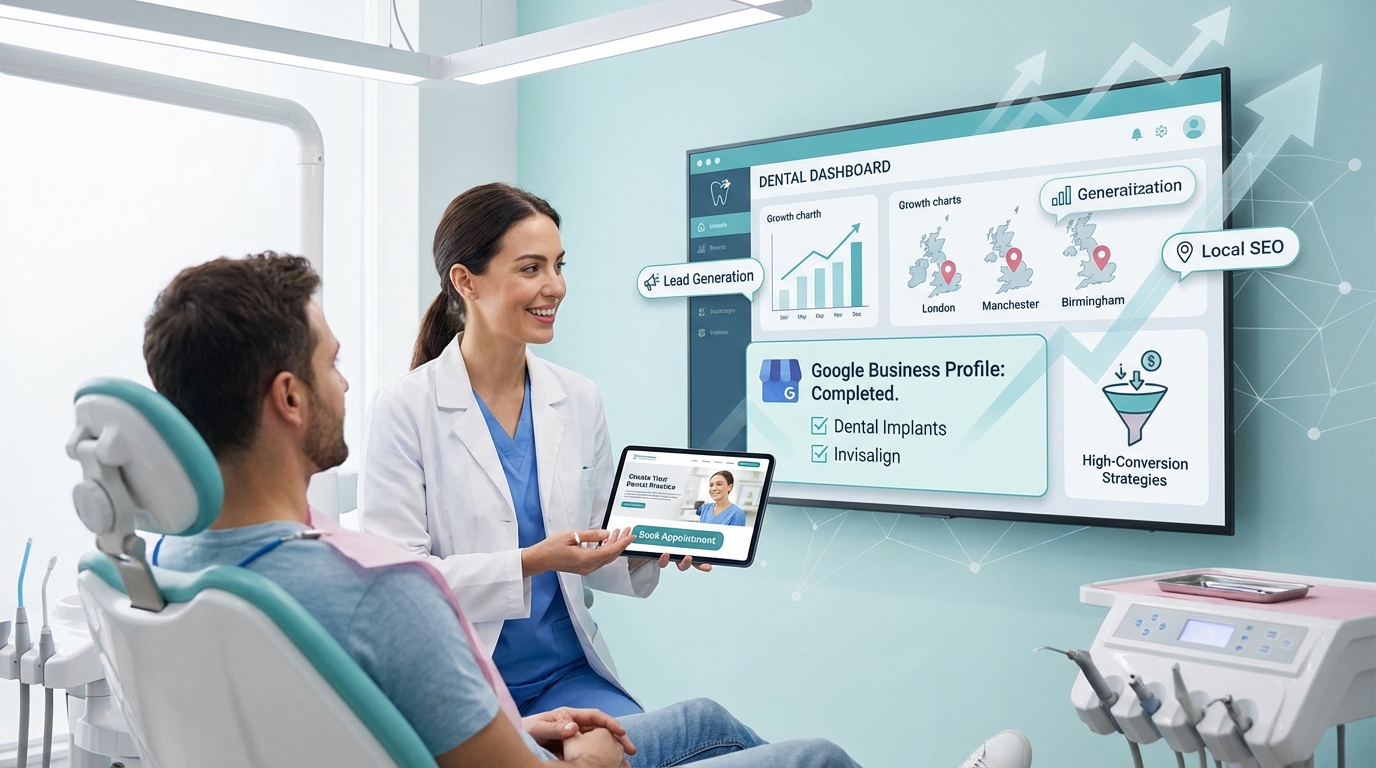
    This dental marketing checklist delivers actionable steps to help UK dental practices generate qualified consultations, reduce no-shows, and boost private treatment revenue. Whether you’re spending £2,000+ monthly on marketing or struggling with poor lead quality, this guide provides clarity on what works in 2026.

    Why UK Dental Practices Need This Checklist Now

    UK dental practices face mounting challenges: rising patient acquisition costs, algorithm changes affecting organic reach, and increased competition for high-value treatments like Invisalign marketing and implants. Practices with 3+ dentists need a systematic approach that balances compliance with GDC, GDPR, and ASA regulations while delivering measurable ROI.

    We’ve seen practices waste thousands on scattered tactics that don’t connect. This checklist addresses those pain points with proven strategies.

    Set Clear Goals and Budget for Maximum ROI

    Start by defining specific targets: number of new patient enquiries, conversion rate from consultation to treatment acceptance, and average treatment value. For 2026, allocate at least 5–8% of practice revenue to marketing. £3,000–£5,000 per month often works for practices targeting Invisalign and implant cases.

    Split budgets between immediate results (paid ads) and long-term assets (SEO, website optimisation). Quick wins fund the marathon.

    Marketing Channel Time to Results Cost Per Lead Best For
    Local SEO 3–6 months £40–£80 Long-term patient acquisition
    Facebook Ads 1–2 weeks £60–£120 Immediate treatment bookings
    Google Ads Immediate £80–£150 High-intent searches
    Content Marketing 4–8 months £30–£60 Building authority and trust

    Checklist Step 1: Build a High-Converting Dental Website

    dental marketing checklist

    Optimise Treatment Pages for Invisalign and Implant Marketing

    Create dedicated landing pages for each high-value treatment with clear pricing guidance, before-and-after galleries, and patient testimonials. Include finance options prominently—treatment duration and what to expect at each stage should be obvious within 10 seconds of landing.

    For Invisalign pages, address common concerns like discomfort and treatment length. Implant pages should cover typical success rates, materials used, and the qualifications of your implantologists. Each page needs a clear call-to-action button above the fold.

    Essential Technical SEO for Dentists

    Your website must load in under 3 seconds on mobile devices. Implement schema markup for local businesses, reviews, and services to improve search visibility. Create location-specific pages if you serve multiple areas (e.g., “Invisalign Manchester” or “Dental Implants Birmingham”).

    Use HTTPS encryption. Fix broken links monthly. Create an XML sitemap.

    Quick Technical Audit: Test your site speed in PageSpeed Insights, check mobile responsiveness on real devices, verify all forms work correctly, and confirm your booking system integrates smoothly with your practice management software.

    Streamline Online Booking to Cut No-Shows

    Implement 24/7 online booking with automated confirmation emails and SMS reminders sent 48 hours and 24 hours before appointments. Require deposits for initial consultations on high-value treatments to reduce no-shows—we’ve seen this cut no-show rates by 40–60%.

    Keep the booking process to three steps maximum: select treatment, choose time, enter contact details. Every extra click costs you consultations.

    Checklist Step 2: Master Local SEO and Reputation Management

    Perfect Your Google Business Profile Setup

    Your Google Business Profile (GBP) can be optimised within 48 hours for fast visibility gains. Complete every field: business description (up to 750 characters highlighting specialities), service menu with individual treatment listings, attributes (wheelchair accessible, free Wi-Fi), and appointment booking links.

    Add high-quality photos of your practice, team, and treatment rooms—at least 10 images. Update opening hours for bank holidays. Post weekly updates about offers, new treatments, or educational content. Add Q&A entries answering common patient questions.

    Verify your profile links to the correct website and phone number. Practices with complete GBP listings often see 2–3x more location visit requests than incomplete profiles.

    Generate and Manage Patient Reviews Effectively

    Request reviews via automated SMS 3–5 days post-appointment, when patient satisfaction often peaks. Create a simple review funnel: satisfied patients go to Google, concerns are handled privately first. Aim for 4–6 new reviews per month to maintain momentum.

    Respond to all reviews within 24 hours. Use the patient’s name and relevant detail where appropriate.

    Local SEO Tactics for London, Manchester, and Beyond

    Build citations on UK dental directories such as Dentalcare.co.uk and local chamber of commerce listings. Keep NAP (name, address, phone) consistent across platforms—inconsistency confuses Google and costs you rankings.

    Create content targeting “near me” searches and neighbourhood-specific terms. Sponsor local events or sports teams to earn backlinks from community websites. For multi-location practices, create separate landing pages and GBP listings for each surgery.

    Checklist Step 3: Increase Reach with Social Media and Paid Ads

    Launch Facebook Ads for Dentists Targeting High-Value Treatments

    Create separate ad campaigns for Invisalign and implants using custom audiences based on age, income, and interests. For Invisalign, target 25–45-year-olds interested in cosmetic procedures and wedding planning. For implants, focus on 45–65-year-olds with denture-related interests.

    Use before-and-after images (with patient consent), testimonial videos, and limited-time consultation offers. Set daily budgets of £50–£100 per campaign. Expect around £60–£120 cost per qualified lead.

    Retarget website visitors who viewed treatment pages but didn’t book. That’s where the magic happens.

    Dental Social Media Management Best Practices

    Post 3–4 times weekly on Instagram and Facebook with this content mix:

    • 40% educational (treatment explanations, oral health tips)
    • 30% social proof (patient testimonials, team highlights)
    • 20% promotional (special offers, new services)
    • 10% community engagement (local events, charity work)

    Use Instagram Stories for behind-the-scenes practice tours and team introductions. Respond to direct messages within 2 hours during business hours. Track engagement monthly and adjust content based on what generates consultation enquiries.

    Align Paid Strategies with Organic Efforts

    Use paid ads to amplify high-performing organic posts and drive traffic to your best-converting blog content or treatment pages. Run Google Ads for high-intent searches like “emergency dentist near me” or Invisalign lead generation while building SEO for long-term rankings.

    Coordinate social media content calendars with ad campaigns so organic posts support paid messaging. Track which channels drive the highest-value patients and reallocate budget quarterly. Many practices start with a 60/40 split between paid ads and organic content in year one, then shift as SEO performance improves.

    Checklist Step 4: Stay Compliant, Measure Results, and Scale Smart

    dental marketing checklist

    Review all marketing materials against GDC standards: avoid guarantees of treatment success, include disclaimers about individual results on before-and-after photos, and never use patient images without explicit written consent.

    Implement GDPR-compliant data collection with clear privacy policies and cookie consent banners. For ASA compliance, substantiate claims with evidence, avoid superlatives like “best” without proof, and clearly label promotional content.

    Audit your materials quarterly to catch compliance gaps before they become issues.

    Track KPIs and ROI with Proven Tools

    Monitor these metrics monthly:

    • New patient enquiries by source
    • Cost per acquisition
    • Consultation-to-treatment conversion rate
    • Average treatment value
    • Patient lifetime value

    Use Google Analytics 4 for website behaviour, call-tracking software for phone enquiries, and practice management reports for conversion data. Calculate marketing ROI with this formula: (revenue from new patients minus marketing spend) divided by marketing spend, multiplied by 100.

    Aim for a minimum 300% ROI on established campaigns. Anything less needs fixing.

    Partner with Dominate Dental: We can implement this checklist with team training, monthly strategy sessions, and dedicated account management. We focus on measurable outcomes: lead quality, booked consultations, and treatment value. If you’d like to review what’s realistic for your practice, book a new patient opportunities call.

    Make This Checklist Work: Implementation Strategy

    Prioritise Actions by Impact and Resources

    Not every practice can tackle all items at once. Begin with high-impact, low-cost actions: complete your Google Business Profile optimisation this week, implement automated review requests within two weeks, and audit your treatment pages for conversion elements within the month.

    Practices with limited budgets should focus on local SEO and organic content before paid advertising. Those with £3,000+ per month can run parallel campaigns across SEO, social media, and paid ads while building long-term assets.

    Assign Ownership and Create Accountability

    Designate specific team members for each category: the practice manager oversees budget and compliance, the treatment co-ordinator handles review requests and patient communications, and a dedicated marketing partner manages technical SEO and paid campaigns.

    Schedule monthly 30-minute reviews to assess metrics, adjust activity, and document what’s working in a shared spreadsheet. No meeting, no results.

    Avoid Common Implementation Pitfalls

    UK dental practices often struggle with marketing execution for three reasons: inconsistent effort (starting campaigns then abandoning them after six weeks), ignoring compliance requirements until problems arise, and failing to track meaningful metrics.

    Improve consistency by batching content creation monthly rather than scrambling weekly. Reduce compliance risk with quarterly audits using GDC and ASA guidance. Focus reporting on consultation bookings and revenue, not vanity metrics like follower counts.

    Common Mistake Impact on Results Quick Fix
    No call tracking Can’t identify best lead sources Use unique phone numbers per channel
    Generic treatment pages Poor conversion rates Add specific pricing guidance, testimonials, FAQs
    Ignoring negative reviews Damages online reputation Respond within 24 hours with a clear next step
    Inconsistent posting schedule Algorithms deprioritise content Batch-create content monthly and schedule ahead

    Voice search optimisation is growing as patients use smart speakers to find dental services. Optimise for conversational queries like “where can I get Invisalign near me”, not only short keyword phrases.

    Video content still performs strongly on social platforms. Create short educational clips explaining treatments, virtual practice tours, and dentist Q&A sessions.

    AI chatbots on practice websites can qualify leads 24/7 by answering common questions about costs, treatment duration, and booking availability before the team follows up.

    When to Outsource vs DIY Your Dental Marketing

    Small practices with one or two dentists can often manage basic social posting and review responses in-house. Practices with 3+ dentists and £800,000+ annual revenue usually benefit from specialist support for technical SEO, paid advertising, and website development.

    Platform updates and compliance requirements change regularly. Expert support can be cost-effective. Compare the time you’d spend learning and managing marketing with the value of clinical time.

    Your Next Step: Print this checklist and schedule a 90-minute team meeting this week to assign responsibilities. Set deadlines for each action and commit to monthly progress reviews. Paid campaigns can show traction within 60–90 days, while SEO typically takes 4–6 months.

    Get Expert Implementation Support from Dominate Dental

    Executing this checklist means coordinating web development, SEO, advertising management, and compliance. Dominate Dental provides end-to-end implementation with dedicated account management for UK dental practices. If you want a clear plan tied to booked consultations and private revenue, find out how our dental marketing services can help you map the next 90 days of priorities.

    Frequently Asked Questions

    Why do UK dental practices need a specific marketing checklist for 2026?

    UK dental practices face increasing patient acquisition costs, constant algorithm changes, and intense competition, especially for high-value treatments. A systematic marketing checklist provides a clear, compliant approach to generate qualified consultations and boost private treatment revenue. It helps practices with 3+ dentists navigate these challenges with proven strategies. We focus on delivering measurable ROI for your practice.

    How should a dental practice set its marketing budget for maximum return?

    To achieve maximum return, define specific targets like new patient enquiries and conversion rates first. For 2026, we recommend allocating at least 5-8% of practice revenue to marketing, often £3,000-£5,000 monthly for practices targeting Invisalign and implant cases. Split your budget between immediate results, like paid ads, and long-term assets such as SEO and website optimization.

    What are the fastest ways for a dental practice to improve its online visibility?

    Optimizing your Google Business Profile (GBP) is a quick win for fast visibility gains, often within 48 hours. Add high-quality photos, update opening hours, detail your services, and respond to every review promptly. Practices with complete GBP listings often see more location visit requests, driving immediate patient interest.

    What elements are essential for a dental website to convert visitors into patients?

    A high-converting dental website needs dedicated landing pages for high-value treatments, showcasing clear pricing guidance, before-and-after galleries, and patient testimonials. Include prominent finance options, treatment duration, and a clear call-to-action button above the fold. Technical SEO, like fast mobile loading and schema markup, also plays a key role.

    How can a dental practice effectively manage its online reputation and reviews?

    Effectively managing your online reputation starts with a complete Google Business Profile, posting weekly updates, and answering common patient questions in the Q&A section. Request reviews via automated SMS 3-5 days post-appointment, directing satisfied patients to Google. Respond to all reviews, positive and negative, within 24 hours to build trust and maintain momentum.

    What strategies work best for using social media and paid ads to attract high-value patients?

    For high-value treatments like Invisalign and implants, create separate Facebook ad campaigns targeting custom audiences based on age, income, and interests. Use compelling before-and-after images, testimonial videos, and limited-time consultation offers. Retargeting website visitors who viewed treatment pages but didn’t book is also a powerful strategy for attracting qualified leads.

    What kind of results can a dental practice expect from different marketing channels and how long do they take?

    Different channels yield results at varying speeds and costs. Google Ads provide immediate results, while Facebook Ads can deliver immediate bookings within 1-2 weeks. Local SEO typically takes 3-6 months for long-term patient acquisition, and content marketing builds authority over 4-8 months. We focus on strategies that deliver measurable ROI for your practice.

    About the Author

    Dan Ashburn is the Co-Founder at Dominate Dental, the UK’s specialist agency for high-value patient acquisition.

    Drawing on a decade of data-driven advertising experience and hundreds of clinic campaigns, Dan blends AI technology with human insight to deliver predictable streams of Invisalign, implant, and cosmetic dentistry consultations. His team’s results-focused approach has helped practices across London, Manchester, Birmingham, and nationwide convert marketing spend into chair-time—often booking 50+ qualified consultations per month while cutting no-shows.

    When he’s not optimizing funnels or unpacking the latest algorithm updates, Dan shares actionable dental marketing ideas, real-world case studies, and ROI benchmarks so dental teams can make confident marketing decisions.

    Last reviewed: January 26, 2026 by the Dominate Dental Team
  • Dental Marketing Case Study 2026 – Proven UK Results That Grow Practices

    dental marketing case study examples

    Why Dental Marketing Case Studies Matter for UK Practices

    Patient acquisition costs are climbing. NHS referrals? Declining. Private treatment revenue stagnates when marketing delivers unqualified leads or fails entirely. Reviewing dental marketing case study examples reveals which strategies generate measurable growth and which waste budgets.

    Common Challenges Facing Dental Practices Today

    Most dental practices spend £2,000+ monthly on marketing yet struggle with three persistent problems. Lead quality remains poor—enquiries from patients seeking NHS care or price-shopping rather than booking high-value treatments. No-show rates drain appointment capacity, costing thousands in lost revenue. Generic marketing agencies lack dental-specific expertise, running campaigns that attract the wrong demographics for Invisalign or implants.

    How Real Examples Prove ROI and Patient Growth

    Concrete examples demonstrate what actually works across different UK markets and treatment types. Real data shows cost per patient acquisition, conversion rates from enquiry to treatment acceptance, and revenue impact over 6–12 months. These metrics allow practice owners to benchmark current performance and identify gaps in their patient acquisition strategy.

    Industry Benchmark: Top-performing dental practices achieve £25–35 cost per patient for high-value treatments, 15–20% website conversion rates, and 5:1+ marketing ROI within six months.

    Dominate Dental’s Track Record in Delivering Results

    As the UK’s leading dental marketing specialist, Dominate Dental focuses exclusively on generating qualified consultations for practices concentrating on private treatments. With a 5.0 Google rating from 18 reviews and offices at Grosvenor House, 11 St Paul’s Square, Birmingham B3 1RB, we combine AI-powered targeting with dental industry expertise. The following examples showcase real UK practices achieving transformational growth.

    Dominate Dental Case Study 1: London Invisalign Practice Growth

    dental marketing case study examples

    Starting Point: From 12 to 80 New Patients Monthly

    A central London practice with four dentists generated just 12 new private patients monthly despite its prime location. The website ranked poorly for local searches. Paid advertising attracted price-sensitive enquiries. Treatment co-ordinator capacity sat underutilised whilst competitors dominated Google search results for “Invisalign near me“.

    Key Strategies: Invisalign Marketing and Dental SEO

    We implemented targeted Invisalign marketing combining Google Business Profile optimisation, location-specific landing pages, and Facebook ads targeting 25–45 year-olds within a five-mile radius. The content plan focused on before-and-after galleries, payment plans, and free consultation offers. Technical SEO improvements boosted organic visibility for 47 treatment-related keywords.

    Results: £4.2M Annual Revenue with £28 Cost per Patient

    Metric Before After 12 Months
    New patients monthly 12 80
    Invisalign starts monthly 3 22
    Cost per patient £89 £28
    Annual private revenue £840K £4.2M
    Marketing ROI 1.8:1 6.3:1

    The practice now operates at 94% capacity with a three-week waiting list for initial consultations. Treatment acceptance jumped from 31% to 68% through improved lead quality and a refined consultation process.

    Dominate Dental Case Study 2: Manchester Dental Implant Growth

    The Challenge: Scaling High-Value Implant Enquiries

    A Manchester practice specialising in dental implants received only eight implant enquiries monthly, with 60% coming from unsuitable candidates. Its £3,200 monthly ad spend generated leads mainly seeking cheaper alternatives abroad. They needed qualified local patients willing to invest £2,500–4,000 per implant.

    Implementation: Targeted Dental Implant Marketing

    We created age-segmented campaigns targeting 45–65 year-olds with messaging around UK-based care, guarantees, and finance options. Video testimonials from real patients addressed common objections about pain and recovery time. Landing pages included transparent pricing and clear qualification criteria to filter enquiries before consultation.

    Outcomes: 9x Patient Growth and 5:1 ROI

    Within nine months, qualified implant enquiries jumped from eight to 72 monthly. Cost per qualified lead dropped from £127 to £41. The practice completed 38 full-arch cases in year one versus seven previously, generating £890K in additional revenue. Patient quality improved dramatically—83% of consultations resulted in treatment plans versus 42% before. For expert support on dental implant attraction, explore dental implant marketing services.

    Dominate Dental Case Study 3: Birmingham Multi-Site Growth

    Multi-Site Hurdles and Solutions via Website Design

    A Birmingham dental group operating three locations faced a fragmented online presence. Each site had a separate website with inconsistent branding, confusing potential patients and diluting search rankings. Appointment booking required phone calls, creating friction that cost an estimated 35% of online enquiries. The group needed a unified digital setup to support its expansion plans. We solved this with innovative dental website designs tailored to multi-site practices.

    Social Media and Ads Driving 222% Expansion

    We built a centralised website with location-specific pages, integrated online booking, and patient portal access. Facebook and Instagram campaigns showcased each location’s specialists whilst maintaining brand consistency. Geo-targeted ads promoted Invisalign at the city centre location, implants at the suburban practice, and family dentistry at the third site. This multi-channel approach demonstrates how to scale across locations.

    Multi-Site Success Metrics: Combined monthly patient enquiries increased from 67 to 216 across all three locations. Website traffic grew 189%, with 43% of new patients booking online without phone contact.

    Reducing No-Shows by 40% While Boosting Bookings

    Automated SMS reminders, email confirmations, and calendar integrations cut no-show rates from 28% to 17%. The group added 847 appointment slots annually to productive capacity without hiring additional staff. Private treatment revenue jumped 222% over 18 months, from £1.9M to £6.1M combined. Each location now operates with distinct marketing funnels whilst benefiting from shared brand authority and centralised analytics.

    Apply These Lessons: Action Steps to Grow Your Practice

    dental marketing case study examples

    Optimise Google Business Profile for Local SEO

    Claim and verify your Google Business Profile. Add high-quality photos of your practice, team, and treatment results. Post weekly updates about special offers, new treatments, or patient success stories. Encourage satisfied patients to leave reviews, aiming for 20+ authentic testimonials. List specific treatments like Invisalign, implants, and cosmetic dentistry to appear in relevant local searches.

    Launch Facebook Ads for Dentists Targeting 25–45 Year-Olds

    Create separate ad campaigns for each high-value treatment with age and location targeting. Use before-and-after images, patient testimonials, and clear calls to action offering free consultations. Set daily budgets of £30–50 per campaign and track cost per lead weekly. Direct traffic to treatment-specific landing pages with online booking forms, not generic contact pages. For tailored Facebook ad campaigns, consider social media management packages for dental practices.

    Partner with Dominate Dental for Bespoke Strategies

    These examples represent three of many UK practices achieving transformational growth through data-driven strategies. Dominate Dental offers bespoke patient acquisition programmes combining SEO, paid advertising, website design, and conversion optimisation. Book a free consultation to analyse your current marketing performance and receive a customised growth plan with projected ROI based on your location, treatment mix, and capacity.

    Ready to replicate these results? Contact Dominate Dental today for a complimentary marketing audit and discover how qualified consultation generation can transform your practice revenue.

    Choosing the Right Dental Marketing Partner for Sustainable Growth

    Evaluating Agency Dental Expertise and Transparency

    Generic marketing agencies often fail dental practices because they lack treatment-specific knowledge and understanding of the patient journey. When selecting a partner, ask for dental marketing case study examples with verifiable metrics: patient acquisition costs, treatment acceptance rates, and revenue attribution. Agencies should demonstrate familiarity with CQC regulations, private versus NHS patient dynamics, and treatment-specific conversion funnels. Request client references from practices similar to yours in size, location, and treatment focus.

    Red Flags: Unrealistic Promises and Hidden Costs

    Avoid agencies that guarantee first-page rankings within weeks or promise specific patient numbers without analysing your market. Transparent partners provide detailed proposals showing budget allocation across channels, expected timelines for results, and clear contract terms. Watch for set-up fees exceeding £2,000, long-term lock-in contracts, or vague reporting that obscures actual performance. Quality agencies offer month-to-month agreements after an initial set-up period and should provide dashboard access showing lead sources, costs, and conversion metrics.

    Why Dominate Dental’s Approach Works

    We combine AI-powered audience targeting with dental industry specialists who understand treatment lifecycles and patient psychology. Unlike agencies managing multiple industries, our team focuses exclusively on UK dental practices, refining strategies based on hundreds of campaigns. Services work together seamlessly: SEO supports paid advertising, website design improves conversion, and social media builds trust that shortens decision cycles. This integrated approach helps clients reach 5:1+ ROI within six months whilst competitors struggle with fragmented tactics.

    Partnership Advantage: Dominate Dental’s 5.0 Google rating reflects consistent delivery across diverse practice types. Located at 11 St Paul’s Square, Birmingham, we provide hands-on support with dedicated account managers and quarterly strategy reviews.

    Your 90-Day Implementation Roadmap to Measurable Growth

    dental marketing case study examples

    Days 1–30: Foundation and Audit Phase

    Start by auditing current marketing performance: calculate cost per new patient, identify lead sources, and analyse website conversion rates. Optimise your Google Business Profile with professional photos, treatment lists, and review requests to existing patients. Set up conversion tracking on your website to measure form submissions, phone calls, and online bookings. This baseline allows accurate measurement as you roll out new campaigns.

    Days 31–60: Campaign Launch and Optimisation

    Launch targeted Facebook ads for your highest-margin treatments, starting with £50 daily budgets split across two campaigns. Create treatment-specific landing pages with clear calls to action and online booking integration. Begin weekly posting on social media showcasing before-and-after results, team introductions, and patient testimonials. Monitor lead quality closely and adjust targeting to improve qualification rates.

    Days 61–90: Scaling and Refinement

    Review the first 60 days of data to identify top-performing campaigns and channels. Increase budgets on profitable campaigns whilst pausing underperformers. Implement automated SMS reminders to reduce no-shows and improve appointment utilisation. By day 90, you should see 40–60% increases in qualified enquiries and a clearer view of which strategies apply to your practice circumstances.

    Accelerate Your Results: Dominate Dental provides done-for-you implementation of these strategies with lead generation services. Book your free consultation to receive a customised 90-day plan with projected patient acquisition costs and revenue impact for your practice.

    These dental marketing case study examples show that sustainable practice growth requires clear planning, treatment-specific campaigns, and continuous optimisation. Whether you implement these strategies in-house or partner with specialists like us, focus on measurable performance: cost per patient, treatment acceptance, and return on marketing investment. UK practices achieving strong results target defined demographics, show credible social proof, remove booking friction, and refine campaigns based on data rather than assumptions.

    Frequently Asked Questions

    Why are dental marketing case studies important for UK practices?

    Dental marketing case studies are essential for UK practices because they reveal proven strategies for patient acquisition and private treatment growth. They offer concrete evidence of what works, helping practices avoid wasted budgets on ineffective campaigns. By reviewing these examples, practice owners can identify successful approaches that generate measurable growth.

    What common marketing problems do UK dental practices often face?

    Many UK dental practices struggle with poor lead quality, attracting patients seeking NHS care or just price-shopping, rather than high-value treatments. High no-show rates also drain appointment capacity and revenue. Often, generic marketing agencies lack the specific dental expertise needed to target the right demographics for treatments like Invisalign or implants.

    How do real dental marketing case studies demonstrate return on investment (ROI)?

    Real dental marketing case studies provide transparent data on key metrics like cost per patient acquisition and conversion rates from enquiry to treatment acceptance. They showcase the revenue impact over 6-12 months, allowing practice owners to benchmark performance. This data-driven approach clearly proves the ROI of effective marketing strategies.

    How did a London Invisalign practice achieve significant patient growth?

    A central London practice saw new private patients increase from 12 to 80 monthly by implementing targeted Invisalign marketing. Strategies included Google Business Profile optimization, location-specific landing pages, and Facebook ads for specific age groups. Technical SEO improvements also boosted organic visibility for relevant keywords, leading to substantial revenue growth.

    What strategies helped a Manchester practice scale its dental implant patient enquiries?

    A Manchester practice specializing in dental implants significantly increased qualified enquiries by targeting 45-65 year-olds with specific messaging around UK care and finance options. Video testimonials and landing pages with transparent pricing helped filter enquiries. This approach led to a 9x increase in qualified implant enquiries and improved patient quality.

    Can dental marketing strategies effectively support growth for multi-site practices?

    Absolutely. A Birmingham dental group with three locations achieved a 222% expansion by unifying its online presence with a centralized website featuring location-specific pages and integrated online booking. Geo-targeted Facebook and Instagram campaigns showcased specialists and promoted specific treatments at each site. This multi-channel strategy demonstrates how to scale growth across multiple locations.

    What distinguishes Dominate Dental's approach to dental marketing?

    Dominate Dental specializes in generating qualified consultations for UK practices focusing on private treatments. We combine AI-powered targeting with deep dental industry expertise to deliver measurable results. Our track record, evidenced by real case studies, shows our commitment to helping practices achieve transformational growth and strong marketing ROI.

    About the Author

    Dan Ashburn is the Co-Founder at Dominate Dental, the UK’s specialist agency for high-value patient acquisition.

    Drawing on a decade of data-driven advertising experience and hundreds of clinic campaigns, Dan blends AI technology with human insight to deliver predictable streams of Invisalign, implant, and cosmetic dentistry consultations. His team’s results-focused approach has helped practices across London, Manchester, Birmingham, and nationwide convert marketing spend into chair-time—often booking 50+ qualified consultations per month while cutting no-shows.

    When he’s not optimizing funnels or unpacking the latest algorithm updates, Dan shares actionable dental marketing ideas, real-world case studies, and ROI benchmarks so dental teams can make confident marketing decisions.

    Last reviewed: January 25, 2026 by the Dominate Dental Team
  • Dental Marketing Budget: UK Planning Guide 2026

    dental marketing budget planning

    Your dental practice’s marketing budget directly determines how many new patients book Invisalign leads and implant consultations. Most UK practice owners struggle with allocation: they’re burning cash on channels that attract tyre-kickers, or they’re starving their SEO whilst hundreds of monthly searches go to competitors. This guide delivers data-backed benchmarks and strategic frameworks to squeeze maximum value from every pound you invest in 2026.

    UK dental practices should allocate 5–10% of annual revenue to marketing, with established practices at the lower end and growth-focused or new practices investing 10–15%. For a practice generating £800,000 annually, that’s £40,000–80,000 across SEO, paid advertising, website optimisation and content creation, with higher allocations for treatment-specific campaigns targeting Invisalign and implants.

    How Much Should Your Dental Practice Spend on Marketing?

    Budget Benchmarks for UK Practices in 2026

    Industry data shows successful UK dental practices invest 5–10% of gross revenue on marketing. That’s £3,300–6,600 monthly for a practice earning £800,000 annually. Practices prioritising private treatments often exceed this, allocating 12–15% to capture high-value patients seeking cosmetic and restorative procedures. London and Manchester practices typically spend 20–30% more due to competitive markets and higher patient acquisition costs.

    Factors Influencing Your Marketing Spend

    Geographic location dramatically impacts costs. Greater London practices face 40% higher paid advertising expenses compared to regional markets. Treatment mix matters just as much—practices emphasising implants and Invisalign need larger budgets for targeted campaigns, typically £1,500–3,000 monthly for treatment-specific advertising alone. Competitive density, patient demographics and your existing online presence also shape optimal investment levels.

    Established vs New Practices: Allocation Differences

    New practices should invest 15–20% of projected revenue during their first 18 months to build visibility and patient databases rapidly. Established practices with strong reputations can maintain growth at 5–8%, focusing budgets on retention and high-value treatment promotion. Mid-growth practices targeting expansion typically allocate 10–12%, balancing acquisition with nurturing existing patient relationships for treatment upgrades.

    Practice Stage Recommended Budget % Monthly Investment (£800k Revenue) Primary Focus
    New (0–18 months) 15–20% £10,000–£13,300 Brand awareness, patient database building
    Growth (2–5 years) 10–12% £6,600–£8,000 Treatment-specific campaigns, SEO expansion
    Established (5+ years) 5–8% £3,300–£5,300 Reputation management, retention, premium treatments

    Key Components of a Dental Marketing Budget

    dental marketing budget planning

    Core Channels: SEO, Paid Ads, and Website Costs

    Dental SEO typically consumes 30–40% of budgets (£1,000–£2,500 monthly), delivering long-term patient acquisition through organic search. Paid advertising demands 25–35% (£800–£2,000 monthly) for immediate visibility on Google and social platforms. Website design and optimisation require initial investments of £3,000–8,000, with ongoing maintenance at £200–£500 monthly. These foundational channels work together to capture patients at different decision stages via dental SEO services and strong digital presence.

    Treatment-Specific Investments for Invisalign and Implants

    High-value treatments justify dedicated budget lines. Invisalign campaigns perform best with £800–£1,500 monthly across search ads and social media, targeting aesthetics-conscious patients aged 25–45. Implant marketing requires £1,200–£2,500 monthly due to higher competition and longer consideration cycles. These allocations include landing page optimisation, consultation booking systems and remarketing to nurture prospects through multi-month decision processes using Invisalign marketing services and implant approaches.

    Ongoing Expenses: Content, Reputation, and Social Media

    Content creation demands £400–£800 monthly for blog articles, patient education videos and email campaigns that build authority and trust. Reputation management costs £200–£500 monthly, covering review generation, response management and local listing optimisation across 50+ directories. Social media management requires £300–£600 monthly for consistent posting, community engagement and patient testimonial amplification. Combined, these ongoing activities nurture relationships and support conversion across all channels. Our free social media report can help benchmark your social presence.

    Common Mistakes to Avoid in Dental Marketing Budget Planning

    Setting Goals Without Data Review

    Many practices establish budgets without analysing past performance metrics. Waste of money. Period. You’re funding underperforming channels whilst starving proven winners. Pull up your conversion rates, cost per consultation and patient lifetime value from the previous 12 months before you allocate a single pound. The data shows which channels deliver qualified patients versus time-wasters who never book.

    Mismatching Budget to Growth Ambitions

    Ambitious growth targets paired with minimal marketing investment create frustration. Practices wanting 50 new private patients monthly whilst spending £1,500 face mathematical impossibility in competitive markets. Do the maths: if each new implant patient costs £150 to acquire and you want 20 monthly, you need £3,000 minimum, plus foundational SEO and website costs. Your ambitions and your budget must align.

    Ignoring ROI Tracking and Adjustments

    Static budgets that never adjust based on performance lead to suboptimal results. Winning practices review metrics monthly, shifting funds from low-performing channels to high-converters. Track consultation bookings, treatment acceptance rates and revenue per marketing pound spent. This agility delivers rapid optimisation whilst your competitors continue funding ineffective campaigns month after month.

    Effective Budget Practices

    • Monthly performance reviews allow rapid reallocation to high-converting channels
    • Treatment-specific tracking reveals true acquisition costs for Invisalign and implants
    • Integrated strategies across SEO, paid ads and content amplify results beyond siloed spending
    • Patient lifetime value calculations justify higher initial acquisition investments

    Budget Planning Pitfalls

    • Setting budgets without historical data wastes resources on unproven channels
    • Underinvesting relative to growth goals creates frustration and stagnation
    • Ignoring geographic cost variations leads to insufficient market penetration
    • Static allocations miss opportunities as market conditions and patient behaviour shift

    Step-by-Step Guide to Planning Your 2026 Dental Marketing Budget

    Step 1: Analyse Past Performance and Set Goals

    Pull 12 months of marketing data: consultation bookings by channel, cost per lead, conversion rates and treatment acceptance percentages. Identify which sources delivered the highest-value patients and the lowest no-show rates. Set specific 2026 objectives like “40 new implant consultations monthly” or “£200,000 additional Invisalign revenue”. Quantifiable targets enable precise dental marketing budget planning and accountability throughout the year. For detailed dental industry data, visit dental statistics England.

    Step 2: Allocate Funds for Maximum ROI

    Distribute your total budget across channels based on proven performance and strategic priorities. Assign 30–40% to SEO for sustainable growth, 25–35% to paid advertising for immediate patient flow and 20–25% to website, content and reputation management. Reserve 10–15% for treatment-specific campaigns targeting your most profitable procedures. Build quarterly review points to shift allocations as performance data accumulates—flexibility beats rigid annual plans every time.

    Step 3: Choose the Right Partner for Execution

    Effective dental marketing budget planning demands expert execution across multiple disciplines. You need specialists, not generalists dabbling in dentistry. Evaluate potential partners on their UK dental focus, transparency in reporting and ability to integrate SEO, paid advertising and conversion optimisation. Request case studies showing measurable consultation increases for practices similar to yours. The right agency transforms budget allocation from guesswork into predictable patient acquisition, delivering qualified leads who book and accept treatment. Not tyre-kickers wasting appointment slots. Explore our lead generation system to see real results.

    Budget Reality Check: A £5,000 monthly investment might seem substantial, but it’s just £167 daily to attract patients worth £3,000–5,000 in treatment value. Strategic marketing becomes a high-ROI investment when you frame it properly, not an expense to minimise.

    Why Partner with Dominate Dental for Budget Success

    dental marketing budget planning

    Proven Results from UK Dental Leaders

    Dominate Dental has established itself as the leading UK dental marketing and SEO agency through measurable outcomes for practices across Greater London, Manchester and Birmingham. We consistently generate 50+ qualified consultations monthly for our clients, with conversion rates exceeding industry standards. Based at Grosvenor House, 11 St Paul’s Square, Birmingham B3 1RB, we combine local market expertise with nationwide reach, earning a 5.0 Google rating from 18 reviews through transparent reporting and genuine results. No fluff. Just patient growth.

    Tailored Strategies for Invisalign and Implant Growth

    We specialise in high-value treatment marketing, developing dedicated campaigns that attract patients actively researching Invisalign and implants. Not price-shopping tyre-kickers. Our targeting focuses on demographics most likely to accept treatment, using refined messaging that pre-qualifies prospects before they contact your practice. This precision reduces wasted consultation time and increases treatment acceptance rates, maximising returns on every marketing pound invested. Discover our Invisalign lead generation system for proven patient growth.

    Integrated Marketing That Compounds Results

    We don’t deliver fragmented tactics from disconnected vendors. We coordinate your entire marketing ecosystem. Our SEO strategies inform paid advertising targeting, whilst website optimisation supports both organic rankings and conversion from paid traffic. This integration eliminates budget waste from misaligned channels and compounds results as each element reinforces the others. Geographic considerations? We’ve got you covered—London practices need different strategies than Birmingham or Manchester equivalents, reflecting increased advertising costs and competitive intensity. We know the UK market inside out.

    Treatment-specific allocation gets special attention. Invisalign campaigns targeting aesthetics-conscious professionals aged 28–45 need different messaging, platforms and budget levels compared to implant marketing aimed at older demographics seeking functional restoration. We segment budgets to address distinct patient personas, creating dedicated landing pages, ad campaigns and follow-up sequences for each high-value treatment category. Not generic “dental services” promotions that convert poorly.

    The dental marketing environment changes rapidly. Google’s algorithm updates favour practices publishing regular, authoritative content that answers patient questions. Social media platforms increasingly prioritise video content. Paid advertising costs rise annually, making SEO investment more attractive as a sustainable traffic source that compounds over time without proportional cost increases. We stay ahead of these shifts so you don’t have to.

    Here’s what separates us from generic marketing agencies: AI tools combined with dental-specific expertise. Generic agencies waste your budget on irrelevant audiences. We understand patient decision journeys for cosmetic and restorative treatments. That’s why our clients generate 50+ qualified consultations monthly whilst others struggle despite similar spending. For more about dentistry in the UK, check dentistry in the United Kingdom. For insights on dentist earnings, visit dental earnings and expenses 2023-24.

    Final Planning Principle: Your 2026 budget should reflect patient lifetime value, not just immediate treatment costs. A patient who books Invisalign today may return for implants, veneers and refer family members over the next decade, making initial acquisition investments far more valuable when you prioritise quality over volume.

    Ready to turn your 2026 marketing investment into measurable consultation growth? Dominate Dental’s proven systems have helped UK practices across Greater London, Manchester and Birmingham achieve consistent patient acquisition for Invisalign, implants and other high-value treatments. Book your New Patient Opportunities Call to see how smart allocation attracts patients who book, attend and accept treatment. Not tyre-kickers wasting your team’s time with no-shows.

    Frequently Asked Questions

    What percentage of revenue should a UK dental practice allocate to marketing?

    Successful UK dental practices typically invest 5-10% of their annual gross revenue in marketing. Established practices might be at the lower end, while growth-focused or new practices often invest 10-15% to build visibility and patient databases. For example, a practice earning £800,000 annually should expect to invest £40,000-£80,000.

    How do geographic location and treatment focus impact a dental marketing budget?

    Geographic location significantly affects costs, with practices in competitive areas like Greater London facing higher paid advertising expenses. Your treatment mix also matters; practices focusing on high-value procedures like implants and Invisalign need larger, targeted campaign budgets. These factors directly shape the optimal investment levels for patient acquisition.

    What are the main components of an effective dental marketing budget?

    An effective budget includes core channels like SEO, paid advertising, and website design or optimisation. Beyond these, specific allocations are needed for high-value treatments such as Invisalign and implants. Don’t forget ongoing expenses for content creation, reputation management, and social media activities to build trust and nurture patient relationships.

    How much should new dental practices invest in marketing compared to established ones?

    New practices should invest 15-20% of projected revenue during their first 18 months to rapidly build brand awareness and a patient database. Established practices with strong reputations can maintain growth with 5-8%, focusing on retention and premium treatment promotion. Mid-growth practices aiming for expansion typically allocate 10-12%.

    What are common mistakes practices make when planning their dental marketing budget?

    Many practices make the mistake of setting goals without reviewing past performance data, leading to wasted spend on underperforming channels. Another common error is mismatching the budget to growth ambitions, expecting significant patient acquisition with insufficient investment. Failing to track ROI and adjust the budget based on performance is also a frequent pitfall that hinders optimisation.

    How much should be allocated for high-value treatments like Invisalign and implants?

    High-value treatments require dedicated budget lines due to their specific targeting needs. Invisalign campaigns often perform best with £800-£1,500 monthly across search ads and social media. Implant marketing typically requires £1,200-£2,500 monthly, reflecting higher competition and longer patient consideration cycles.

    What ongoing marketing activities require budget allocation?

    Ongoing activities are essential for sustained growth and patient engagement. This includes content creation for blogs and patient education, which typically costs £400-£800 monthly. Reputation management, covering review generation and response, needs £200-£500 monthly, while social media management for consistent posting and community engagement requires £300-£600 monthly.

    About the Author

    Dan Ashburn is the Co-Founder at Dominate Dental, the UK’s specialist agency for high-value patient acquisition.

    Drawing on a decade of data-driven advertising experience and hundreds of clinic campaigns, Dan blends AI technology with human insight to deliver predictable streams of Invisalign, implant, and cosmetic dentistry consultations. His team’s results-focused approach has helped practices across London, Manchester, Birmingham, and nationwide convert marketing spend into chair-time—often booking 50+ qualified consultations per month while cutting no-shows.

    When he’s not optimizing funnels or unpacking the latest algorithm updates, Dan shares actionable dental marketing ideas, real-world case studies, and ROI benchmarks so dental teams can make confident marketing decisions.

    Last reviewed: January 25, 2026 by the Dominate Dental Team
  • Dental Marketing Budget Guide 2026: Proven Tips for UK Success

    dental marketing budget

    Most UK dental practices spend between 5% and 10% of gross revenue on marketing, yet many struggle to understand whether this investment generates genuine profit. Here’s what actually matters: a three-dentist practice turning over £800,000 annually needs £40,000 to £80,000 for patient acquisition. But the real question isn’t the amount—it’s the profit each pound delivers. Setting your dental marketing budget requires understanding patient acquisition costs, treatment-specific ROI, and channel performance data specific to UK markets.

    Your optimal spend depends on treatment mix, current capacity, and whether you’re prioritising immediate leads or long-term organic visibility. Growth-stage practices often allocate 12-15% to accelerate patient acquisition, whilst established surgeries maintain 7-10% for sustainable growth.

    How Much Should Your Dental Practice Spend on Marketing in 2026?

    Budget benchmarks for established practices

    Practices generating £600,000 to £1.2 million annually typically allocate £3,500 to £8,000 monthly. This covers SEO maintenance, paid advertising, website hosting, reputation management, and content creation. Practices focusing on high-value treatments like Invisalign and implants often sit at the upper end—investing 9-10%—because each converted patient delivers £3,000 to £8,000 in treatment value.

    Growth-stage practice budgets

    New practices or those expanding capacity should expect 12-15% of projected revenue during their first 18 months. Think of it this way: a surgery targeting £500,000 annual turnover needs £5,000 to £6,250 monthly to build market presence, establish Google visibility, and generate consistent enquiry flow. This elevated investment decreases as organic rankings mature and word-of-mouth referrals increase.

    Real-world monthly spend examples

    Practice Profile Monthly Investment Primary Focus Expected Monthly Leads
    3-dentist general practice £2,500-£3,500 Local SEO + Google Ads 25-40 qualified enquiries
    5-dentist mixed practice £4,000-£6,000 Treatment-specific campaigns 40-65 qualified enquiries
    Specialist implant clinic £6,000-£9,000 Paid ads + conversion optimisation 30-50 high-value leads
    Multi-site group (3 locations) £12,000-£18,000 Integrated multi-channel strategy 100-150 combined enquiries

    Why underinvestment costs more than you think

    Spending £1,200 monthly on basic Google Ads without an SEO foundation, website conversion optimisation, or reputation management wastes money on clicks that don’t convert. Fragmented approaches deliver 40-60% lower ROI than coordinated strategies. We’ve seen practices investing below 5% of revenue experience stagnant patient acquisition, lose market share to better-funded competitors, and face higher per-lead costs as organic visibility declines.

    Here’s the uncomfortable truth: underinvestment doesn’t save money. It hemorrhages it.

    Industry Reality: UK dental practices competing for Invisalign and implant patients in metropolitan areas face Google Ads costs of £8-£25 per click. Without strong organic presence and optimised conversion pathways, paid advertising alone becomes unsustainable. Dominate Dental’s coordinated approach combines SEO, paid media, and conversion rate optimisation to reduce overall patient acquisition costs by 35-50%.

    Patient Acquisition Costs Across Marketing Channels

    dental marketing budget

    UK dental practices pay £6-£12 per click for general dentistry terms, £12-£22 for cosmetic dentistry, and £18-£35 for high-value treatments in competitive London markets. With typical 8-12% conversion rates from click to enquiry, expect £100-£250 cost per lead through paid search. Quality Score optimisation and negative keyword refinement reduce these costs significantly.

    Facebook advertising for general dentistry

    Social media advertising delivers lower cost per click (£1.50-£4.50) but produces less qualified leads. Facebook works best for awareness campaigns, promoting special offers, and retargeting website visitors. Expect £40-£80 per lead, though conversion rates to booked appointments run 20-30% lower than Google search traffic because users aren’t actively seeking treatment.

    Organic SEO cost per acquisition

    SEO requires 6-12 months to deliver results but produces the lowest long-term acquisition costs. Once established, organic leads cost £30-£60 each when amortised across 24 months. Practices ranking on the first page for “dentist [city name]” and treatment-specific terms generate 40-70% of enquiries through organic search, making SEO the foundation of sustainable growth.

    Treatment-specific costs: Invisalign versus implant leads

    Invisalign leads through paid advertising cost £120-£200, whilst implant enquiries run £180-£300 in competitive markets. These higher costs justify themselves when conversion rates and treatment values align. An implant case worth £2,500-£4,000 with a 30% profit margin delivers £750-£1,200 profit, making a £250 acquisition cost highly profitable.

    Channel comparison for UK practices

    Marketing Channel Cost Per Lead Time to Results Lead Quality Best Use Case
    Google Ads (Search) £100-£250 Immediate High intent Filling capacity gaps quickly
    Facebook Ads £40-£80 1-2 weeks Medium intent Awareness and special offers
    Organic SEO £30-£60 6-12 months High intent Sustainable long-term growth
    Instagram Ads £50-£90 2-4 weeks Medium intent Cosmetic treatment showcases
    Email marketing £15-£35 Ongoing Existing patients Reactivation and upgrades

    We track channel performance across 50+ UK practices, revealing that coordinated campaigns combining organic SEO with targeted paid advertising deliver 3.2 times better ROI than single-channel approaches. Practices allocating 60% to SEO, 30% to paid search, and 10% to social media achieve the most consistent results.

    Calculating True ROI: From Leads to Profit Per Case

    Why revenue-based ROI figures mislead

    Many agencies quote impressive 10x or 15x ROI by comparing marketing spend to gross treatment revenue. This ignores laboratory costs, materials, staff time, and overheads. A £5,000 Invisalign case generating £1,500 profit delivers 3x ROI on a £500 marketing investment, not 10x. Understanding profit-based returns prevents budget misallocation and sets realistic growth expectations.

    Profitability breakdown for Invisalign cases

    Average Invisalign treatment revenue runs £3,500-£4,500. Laboratory fees consume £1,200-£1,500, leaving £2,000-£3,000 gross profit before staff costs and overheads. Net profit typically reaches £1,200-£1,800 per case. With patient acquisition costs of £150-£200 through coordinated marketing, each converted Invisalign patient delivers 6-9x return on marketing investment. Learn more about our Invisalign marketing services designed to optimise patient acquisition.

    Profitability breakdown for implant cases

    Single implant cases generate £2,500-£3,500 revenue with £800-£1,200 in laboratory and materials costs. Net profit after all expenses: £1,000-£1,500 per implant. Full arch cases worth £15,000-£25,000 deliver £4,000-£8,000 profit. Acquisition costs of £200-£300 per implant lead produce 3-5x ROI for single implants and 15-25x for full arch treatments.

    Real-world ROI benchmarks (3-8× returns)

    Well-executed dental marketing campaigns deliver 3-5x profit-based ROI for general dentistry, 5-8x for cosmetic treatments, and 8-12x for complex implant cases. Practices tracking patient lifetime value see even higher returns as initial patients return for additional treatments and refer family members. A £4,000 monthly marketing budget generating 35 qualified leads, converting 12 to treatment, produces £18,000-£24,000 profit monthly.

    Measurement Reality: Only 23% of UK dental practices accurately track marketing ROI by treatment type. Dominate Dental provides detailed attribution reporting showing exactly which campaigns generate which treatments, allowing precise budget optimisation. Practices using this data increase profitability by 40% within six months by shifting spend from low-performing channels to high-converting campaigns.

    How to measure success beyond lead volume

    Lead quantity means nothing without quality metrics. Track consultation show-rate (target: 65-75%), consultation-to-treatment conversion (target: 40-55% for high-value treatments), and average treatment value per marketing source. A campaign generating 50 leads with a 20% show-rate underperforms one delivering 25 leads with a 70% show-rate and 50% conversion.

    Stop counting clicks. Start counting profit.

    Budget Allocation Strategy: Where to Invest for Maximum Return

    The 60% organic SEO advantage

    Practices allocating 60% of their dental marketing budget to organic search optimisation build sustainable patient acquisition systems. SEO investments compound over time: year one delivers 2-3x returns, year two produces 5-7x, and year three generates 8-12x as rankings strengthen and content libraries expand. This foundation reduces reliance on expensive paid advertising whilst maintaining consistent enquiry flow.

    Balancing SEO, paid ads, and social media

    Optimal allocation for established practices: 60% SEO and content, 25% Google Ads, 10% social media advertising, 5% reputation management and email marketing. Growth-stage practices shift this to 50% SEO, 35% paid advertising, 15% social media during their first year to accelerate visibility. Adjust based on treatment focus—implant-heavy practices increase paid search allocation, whilst general dentistry practices benefit from stronger local SEO emphasis.

    Website design and conversion optimisation

    Your website either converts visitors to enquiries or wastes every pound spent driving traffic. Practices with conversion rates below 3% lose 60-70% of potential patients to poor user experience, unclear calls-to-action, or slow loading speeds. Investing £3,000-£8,000 in professional dental website design with conversion rate optimisation typically doubles enquiry rates, effectively halving your cost per lead across all channels.

    Team training: the often-forgotten budget line

    Front desk staff answering phones incorrectly waste 30-40% of marketing investment. We’ve watched practices burn thousands on Google Ads only to have receptionists kill the enquiry in 30 seconds. Allocate £500-£1,000 annually for telephone skills training, consultation conversion workshops, and treatment coordinator development. Practices implementing structured training programmes increase consultation bookings by 25% and treatment acceptance by 15-20% without spending another pound on lead generation.

    Dominate Dental’s coordinated package approach

    Our Growth Package (£3,500 monthly) combines SEO foundations, Google Ads management, a conversion-optimised website, and monthly strategy calls. The Scale Package (£6,000 monthly) adds treatment-specific campaigns, advanced tracking, reputation management, and quarterly team training. Coordinated approaches outperform fragmented agency relationships by 45% because every element supports the others: SEO-driven content improves Quality Scores in paid ads, reducing costs, while website optimisation increases conversions across all traffic sources.

    Marketing on a Limited Budget: Strategies for Smaller Practices

    dental marketing budget

    Starting small with £1,000–£1,500 monthly

    Smaller practices and new surgeries can compete effectively with constrained budgets by prioritising activities that deliver compounding returns. A £1,200 monthly dental marketing budget should allocate £800 to foundational SEO (technical optimisation, local listings, content creation), £300 to targeted Google Ads for immediate visibility, and £100 to reputation management. This distribution builds long-term assets while generating enquiries during the growth phase.

    Prioritising organic SEO for long-term gains

    Organic search delivers the highest lifetime value for budget-conscious practices. Investing 70-80% of limited funds in SEO creates permanent visibility that continues generating leads years later. Focus on Google Business Profile optimisation, location-specific content, treatment pages with clear calls-to-action, and earning reviews from existing patients. Practices maintaining consistent SEO investment for 18 months typically reduce paid advertising dependency by 60%. Consider reading the dental contract reform implementation plan to understand wider reforms impacting investment.

    Low-cost tactics that deliver qualified leads

    Google Business Profile posts cost nothing but increase profile engagement by 30-40%. Patient video testimonials filmed on smartphones provide authentic content for websites and social media at zero cost. Email campaigns to existing patients promoting underutilised treatments like teeth whitening or hygiene appointments generate £2,000-£4,000 monthly revenue with minimal investment. Strategic partnerships with local businesses for cross-promotion expand reach without advertising spend.

    Budget Reality: Practices spending £1,000-£1,500 monthly should expect 15-25 qualified enquiries during months 1-6, increasing to 30-45 enquiries by month 12 as organic rankings improve. Dominate Dental’s Starter Package delivers this trajectory through focused local SEO, conversion-optimised website essentials, and strategic paid advertising in high-intent moments.

    Avoiding costly mistakes new practices make

    New surgeries frequently waste budgets on expensive paid advertising before establishing website conversion pathways, resulting in £3-£5 per click with 1-2% enquiry rates. Others invest in premium website designs without ongoing SEO, creating beautiful sites nobody finds. The most damaging mistake? Spreading thin budgets across too many channels, achieving mediocre results everywhere rather than excellence in two core areas. Concentrate resources on an SEO foundation plus one paid channel until monthly enquiries exceed 40.

    Scaling sustainably as revenue grows

    Increase marketing investment proportionally with revenue, maintaining a 7-10% allocation as turnover rises. A practice growing from £400,000 to £600,000 annual revenue should raise monthly spend from £2,500 to £4,000, expanding from local SEO and basic Google Ads into treatment-specific campaigns and improved content production. Reinvest early profits into marketing before expanding clinical capacity to ensure consistent patient flow supports additional dentists. For detailed market data, review the latest NHS dental statistics for England 2024-25.

    Rising paid advertising competition and costs

    Google Ads costs for dental keywords increased 18% during 2024-2025 and show no signs of plateauing. More practices competing for the same search terms drive click costs higher, making paid advertising alone unsustainable for many surgeries. Metropolitan areas see particularly sharp increases, with London implant-related clicks now exceeding £35. This trend reinforces the need for strong organic presence to reduce paid advertising dependency.

    Shift towards data-driven campaigns with full attribution

    Successful practices now demand granular performance data showing which specific campaigns generate which treatments at what profit margins. Single-channel agencies offering only SEO or only paid ads lose ground to providers delivering coordinated strategies with transparent attribution. Practices using unified platforms tracking patient journeys from first click through treatment completion optimise budgets 40% more effectively than those relying on fragmented reporting.

    AI-powered patient matching and lead quality

    Artificial intelligence transforms lead qualification by analysing enquiry patterns, predicting conversion likelihood, and matching patients to appropriate treatments. Dominate Dental’s AI systems score leads in real time, allowing practices to prioritise high-intent enquiries and reduce wasted follow-up time on low-probability prospects. This technology improves consultation booking rates by 25-35% and increases treatment acceptance by identifying patients genuinely ready to proceed.

    The importance of reputation and online reviews

    Patient decision-making increasingly centres on review quantity and quality. Practices with 100+ Google reviews and 4.8+ ratings convert website visitors 60% more effectively than those with fewer than 30 reviews. Budget allocation must include systematic review generation, response management, and reputation monitoring. Investing £200-£400 monthly in reputation management delivers disproportionate returns by improving conversion rates across all traffic sources. Consider requesting your free online reviews reputation report to benchmark your presence.

    Planning your 2026 marketing budget with confidence

    Base your dental marketing budget on profit potential rather than arbitrary percentages. Calculate treatment-specific acquisition costs, measure actual conversion rates, and allocate funds to channels delivering measurable returns. Practices treating marketing as an investment rather than an expense consistently outperform those viewing it as discretionary spending. Start with coordinated approaches combining organic SEO, targeted paid advertising, and conversion optimisation rather than testing multiple agencies sequentially.

    Dominate Dental helps UK practices develop evidence-based marketing budgets aligned with growth objectives and treatment mix. Our transparent reporting shows exactly where your investment generates profit, allowing continuous optimisation. Book a strategy consultation to receive customised budget recommendations based on your practice size, location, and treatment focus. We’ll analyse your current performance, identify immediate opportunities, and create a roadmap delivering 5-8x profit returns within 12 months.

    Frequently Asked Questions

    How much should a dental practice spend on marketing?

    Established UK dental practices typically allocate 7-10% of their gross revenue to marketing, translating to £2,000-£5,000 monthly for a three-to-five dentist surgery. Growth-stage practices often invest 12-15% of projected revenue to build market presence and accelerate patient acquisition. The optimal spend depends on your treatment mix, current capacity, and whether you prioritize immediate leads or long-term organic visibility.

    What does a typical dental marketing budget include?

    A typical monthly dental marketing budget, ranging from £3,500 to £8,000 for practices earning £600,000 to £1.2 million annually, covers essential activities. This includes SEO maintenance, targeted paid advertising, website hosting, reputation management, and content creation. It’s about investing in an integrated strategy that drives patient acquisition and profit.

    How do marketing budget allocations differ for established versus growth-stage practices?

    Established practices, generating £600,000 to £1.2 million annually, typically invest 7-10% of gross revenue to maintain and grow their patient base. Growth-stage practices, or those expanding capacity, should plan for 12-15% of projected revenue during their first 18 months. This higher initial investment helps build market presence and establish Google visibility quickly.

    What is the recommended allocation for a dental marketing budget across different channels?

    For the most consistent results and improved ROI, we recommend an integrated approach. Practices allocating 60% of their budget to SEO, 30% to paid search, and 10% to social media achieve strong patient acquisition. This strategy balances long-term organic growth with immediate, high-intent lead generation.

    Why is underinvestment in dental marketing costly?

    Underinvestment often leads to stagnant patient acquisition and a loss of market share to better-funded competitors. Fragmented marketing approaches, like basic Google Ads without SEO or conversion optimization, deliver significantly lower ROI. Practices investing below 5% of revenue often face higher per-lead costs as organic visibility declines.

    What are the typical patient acquisition costs across different marketing channels for UK dental practices?

    Patient acquisition costs vary by channel: Google Ads typically range from £100-£250 per lead, offering high-intent enquiries. Facebook advertising delivers leads at £40-£80, best for awareness and special offers. Organic SEO, while taking 6-12 months to show results, provides the lowest long-term costs at £30-£60 per lead.

    How does marketing for high-value treatments like Invisalign and implants differ?

    Marketing for high-value treatments requires a higher investment, with practices often allocating 9-10% of gross revenue. While paid advertising leads for Invisalign can cost £120-£200 and implants £180-£300, these costs are justified by the substantial treatment value. A £250 acquisition cost for an implant case worth £2,500-£4,000, with a 30% profit margin, remains highly profitable.

    About the Author

    Dan Ashburn is the Co-Founder at Dominate Dental, the UK’s specialist agency for high-value patient acquisition.

    Drawing on a decade of data-driven advertising experience and hundreds of clinic campaigns, Dan blends AI technology with human insight to deliver predictable streams of Invisalign, implant, and cosmetic dentistry consultations. His team’s results-focused approach has helped practices across London, Manchester, Birmingham, and nationwide convert marketing spend into chair-time—often booking 50+ qualified consultations per month while cutting no-shows.

    When he’s not optimizing funnels or unpacking the latest algorithm updates, Dan shares actionable dental marketing ideas, real-world case studies, and ROI benchmarks so dental teams can make confident marketing decisions.

    Last reviewed: January 24, 2026 by the Dominate Dental Team
  • Dental Marketing Automation Tools 2026 | Ultimate Guide to Grow Fast

    dental marketing automation tools

    Why UK Dental Practices Need Marketing Automation Tools in 2026

    You’re spending £2,000+ monthly on marketing. Enquiries arrive. Then nothing.

    Dental marketing automation tools transform that frustration into booked consultations by managing patient journeys whilst your team focuses on clinical work. The technology nurtures leads 24/7—answering questions at midnight, sending appointment reminders, and flagging high-value prospects the moment they show intent.

    These platforms reduce no-shows by 35–40% for UK practices offering Invisalign and implants. AI chatbots capture leads outside practice hours. CRM systems send personalised follow-ups based on treatment interest. Automated review requests generate 4.2x more Google reviews than manual outreach—all whilst maintaining GDC and UK GDPR compliance.

    The Shift to AI-Driven Patient Journeys

    Modern patients visit your website six times before booking. They download your Invisalign pricing guide. Abandon the enquiry form. Then disappear.

    AI automation tracks this behaviour and responds intelligently. Someone views your implants page? The system sends a personalised email within 15 minutes featuring patient testimonials. They click through but don’t book? An SMS arrives offering a complimentary consultation. High intent detected? Your treatment co-ordinator gets an instant alert with the prospect’s full journey history.

    Common Pain Points for Dentists in London, Manchester, and Birmingham

    Three frustrations dominate conversations with practice owners:

    • Google Ads leads who never answer the phone
    • Patients booking consultations then failing to attend
    • Staff spending 12+ hours weekly chasing enquiries manually

    Metropolitan practices lose an average of £8,000 monthly to no-shows and uncontacted leads. Automation solves this with instant response systems, WhatsApp appointment reminders, and lead scoring that surfaces your most valuable prospects first.

    Industry Data

    • 63% of dental enquiries occur outside practice hours
    • Practices responding within 5 minutes convert 9x more leads than those waiting 30+ minutes
    • Automated review requests generate 4.2x more Google reviews than manual outreach
    • Treatment co-ordinators save 12–15 hours weekly with CRM automation

    How Automation Accelerates Growth for Invisalign and Implants

    High-value treatments involve longer decision cycles. A potential Invisalign patient might research for three weeks before booking. They need education, reassurance, proof.

    Automation delivers this at scale. The system sends educational videos initially, patient success stories mid-journey, and time-limited consultation offers when intent peaks. For dental implants, drip email campaigns address common concerns—pain, recovery time, longevity—reducing the sales cycle from 45 days to 21 days without compromising perceived quality.

    Top Dental Marketing Automation Tools for UK Practices

    The right dental marketing automation tools integrate with UK dental practice management systems whilst maintaining GDC compliance. Here’s what works.

    AI Chatbots for Appointment Booking and Invisalign Lead Capture

    AI chatbots answer treatment questions instantly, qualify leads through conversational forms, and book appointments directly into your calendar. Zero staff involvement required.

    Advanced systems detect keywords like “clear aligners” or “teeth straightening” and route visitors to Invisalign-specific booking flows. They learn from past conversations, improving accuracy monthly whilst capturing contact details before the chat ends. One practice reported 38% of website visitors engage with their chatbot, generating 17 qualified consultations weekly on autopilot.

    CRM Systems with PMS Integration for Patient Follow-Ups

    Customer relationship management platforms designed for dentistry sync with Software of Excellence, Dentally, and other UK systems. When a patient completes composite bonding, the CRM schedules follow-up emails at 3, 6, and 12 months automatically.

    These systems segment by treatment value. Existing implant patients receive maintenance tips. New cosmetic dentistry enquiries get before-and-after galleries. All without manual list building.

    Automated Review Generation Tools for Local SEO Boost

    Post-appointment review requests sent via SMS achieve higher response rates than email. Why? You catch patients 2–3 hours after treatment when satisfaction peaks.

    Automation sends these messages with a direct Google review link. Unhappy patients? The system routes them to private feedback forms before they post publicly. Practices in Birmingham and Manchester using automated review systems gain 15–25 new Google reviews monthly. Pair this with a free online reviews reputation report to identify improvement opportunities.

    Cross-Channel Platforms for SEO, Ads, and Email Automation

    Integrated platforms connect your dental SEO, Google Ads campaigns, and email marketing into unified patient journeys.

    Someone clicks your “dental implants Manchester” ad, views the landing page but doesn’t convert? The system adds them to a retargeting audience and an educational email sequence. This cross-channel approach lifts conversion rates compared with running isolated campaigns—because you’re nurturing the same prospect across multiple touchpoints instead of hoping a single ad converts.

    GDC and GDPR Compliant Automation Strategies for Dentists

    UK dental practices must navigate strict regulatory requirements when implementing dental marketing automation tools. Non-compliance risks ICO fines up to £17.5 million or 4% of annual turnover, plus potential GDC fitness-to-practise investigations.

    Ensuring Compliance in AI Chatbots and Personalised Emails

    AI chatbots collecting patient data must capture explicit UK GDPR consent before storing information. Your automation should display clear privacy notices explaining data usage, offer opt-out mechanisms, and encrypt patient communications.

    Email sequences need documented consent trails proving patients agreed to marketing communications. Suppress contacts who haven’t engaged in 24 months. Every automated message must include a one-click unsubscribe option.

    GDC guidance prohibits misleading treatment claims. Chatbot scripts need regular audits to confirm responses don’t promise specific clinical outcomes. “You’re a great candidate for Invisalign—book a consultation to learn more” works. “Invisalign will straighten your teeth in 6 months guaranteed” violates GDC standards.

    Integrating Tools with Dental Practice Management Systems

    Secure integration between automation platforms and practice management systems reduces data security risk. API connections should use encryption, with automated systems accessing only necessary patient fields rather than full clinical records.

    When a patient books an Invisalign consultation through your chatbot, the automation creates the appointment in Software of Excellence or Dentally without transferring sensitive medical history. Role-based access controls mean marketing automation triggers appointment reminders but cannot view clinical notes.

    Treatment-Specific Automation for Dental Implants and Composite Bonding

    Different treatments need tailored automation sequences that stay clinically accurate.

    Dental implant campaigns must avoid guaranteeing success rates or using before-and-after images without documented patient consent. Automated email sequences should refer to “suitable candidates” rather than universal availability. Chatbots should direct medical questions to qualified staff immediately.

    Composite bonding automation can showcase cosmetic results but should set expectations on limitations and maintenance. All automated content needs clinical sign-off from your principal dentist, creating an audit trail for GDC compliance.

    Compliance Checklist for Dental Marketing Automation

    • Privacy notices visible before data collection begins
    • Double opt-in confirmation for email marketing lists
    • Automated data retention policies deleting old records
    • Regular AI chatbot script reviews by GDC-registered dentists
    • Encrypted connections between CRM and practice management systems
    • Documented consent trails for automated communications
    • Staff training on handling automation-generated data requests

    Dominate Dental’s Proven Automation Stack for Patient Acquisition

    Dominate Dental combines proprietary automation technology with dental marketing expertise to deliver measurable results for UK practices. Our integrated approach handles the full patient journey—from first website visit through treatment completion and referral generation.

    Our Custom CRM and AI Tools for Invisalign Marketing Leads

    Our platform captures Invisalign enquiries through AI-powered chat widgets that qualify prospects in real time. The system asks about smile concerns, budget expectations, and treatment timelines. Then it scores each lead based on conversion probability.

    High-value prospects trigger immediate alerts to your treatment co-ordinator. Qualified consultation bookings arrive directly into your calendar without staff intervention.

    One Birmingham practice using our Invisalign automation increased monthly case starts from 8 to 23 within four months. The CRM tracks every touchpoint, showing which email, SMS, or retargeting advert contributed to each booking.

    Integration with Dental SEO and Social Media Management

    Our automation connects with ongoing SEO campaigns and social media content. We publish a blog post about dental implant costs on your website? The system creates social posts, adds the article to relevant email sequences, and updates retargeting audiences. Automatically.

    Patients searching “dental implants Manchester” who visit your optimised landing page enter nurture sequences featuring video testimonials, finance options, and time-limited consultation offers. This integration means your content marketing, paid advertising, and email automation support the same conversion goals. Our social media management packages for dental practices complement this by keeping your feeds active with engaging content.

    Team Training to Maximise ROI from Automation

    Technology performs best when your team knows how to use it. We provide training for practice managers and treatment co-ordinators, covering lead scoring, personalising automated sequences, and identifying which triggers drive conversions.

    Monthly strategy sessions review performance data, then adjust chatbot scripts and email content based on patient responses. Practices receiving our training convert more automated leads than those using technology alone—because staff recognise when automation should hand off to human conversation.

    Book Your Automation Strategy Consultation

    Discover how Dominate Dental’s proven automation stack can generate 50+ qualified consultations monthly for your practice. Our team at Grosvenor House, Birmingham, has helped UK dental practices increase private treatment revenue by an average of £180,000 annually through intelligent marketing automation. Schedule your free consultation to receive a custom automation roadmap for your practice.

    dental marketing automation tools

    Predictive Analytics and Hyper-Personalised Patient Journeys

    Advanced dental marketing automation tools predict which patients will book high-value treatments based on browsing behaviour, demographic data, and engagement patterns.

    Systems analyse patient journeys to identify conversion signals, then increase outreach when models show booking likelihood above 70%. Personalisation extends to location—Manchester visitors see local testimonials whilst London prospects receive city-specific information. For detailed data on dental market trends, UK practices may find the dental market trends resource valuable.

    Your Step-by-Step Plan to Implement Automation Today

    1. Audit your current lead flow and identify where enquiries drop off
    2. Select an automation platform that integrates with your practice management system
    3. Configure an AI chatbot with treatment-specific conversation flows
    4. Create automated email sequences for each treatment type
    5. Implement a review generation system that triggers post-appointment
    6. Train staff on lead scoring and CRM management
    7. Monitor conversion metrics weekly and improve underperforming sequences

    Why Partner with Dominate Dental for Complete Growth Solutions

    As a UK dental marketing agency with a 5.0 Google rating from 18 reviews, Dominate Dental delivers automation solutions backed by proven results. We handle technical implementation, regulatory compliance, content creation, and ongoing optimisation so you can focus on clinical excellence.

    Contact our Birmingham team to transform patient acquisition with automation designed for UK practices offering Invisalign, implants, and cosmetic treatments. To understand the broader regulatory context, you might review the dental market review published by the UK government.

    Measuring Automation Success: Key Performance Indicators

    Implementing dental marketing automation tools without tracking performance wastes investment. Monitor metrics that show return on marketing spend, not just activity.

    Lead Response Time and Conversion Correlation

    Track average response time from initial enquiry to first contact. Automation should reduce this to under 5 minutes for chatbot interactions and under 15 minutes for form submissions.

    Practices achieving sub-5-minute response times convert more qualified leads than those responding after 30 minutes. Your CRM dashboard should display response time trends and flag delays requiring investigation. Further academic insights can be found through research databases focusing on dental marketing UK.

    Appointment Attendance Rates by Treatment Type

    Monitor no-show percentages before and after implementing automated reminders. Properly configured systems reduce Invisalign consultation no-shows through multi-channel reminder sequences.

    Separate tracking for implant consultations versus routine appointments shows which treatments benefit most from intensive follow-up. Birmingham practices using our reminder protocols report strong attendance rates for high-value consultations.

    Cost Per Qualified Consultation

    Calculate total marketing spend divided by consultations that attended and met your ideal patient criteria. Automation often reduces this cost within six months by filtering out unqualified leads early and improving conversion of suitable prospects.

    A Manchester practice spending £3,200 monthly reduced cost per Invisalign consultation from £280 to £115 after introducing lead scoring and automated nurture sequences.

    Patient Lifetime Value from Automation Cohorts

    Compare revenue from patients acquired through automated channels versus traditional methods. Automated systems attract higher-value patients because educational sequences pre-qualify prospects and build understanding before the first appointment.

    Track 12-month revenue per patient for automation-sourced consultations and compare against walk-in enquiries, especially if you offer multiple cosmetic treatments.

    Essential Metrics Dashboard

    • Average lead response time (target: under 5 minutes)
    • Chatbot engagement rate (target: 35%+ of visitors)
    • Email sequence open rates by treatment type (target: 28%+)
    • Consultation booking rate from automated nurture (target: 18%+)
    • No-show reduction percentage (target: 60%+ improvement)
    • Cost per qualified consultation (track monthly trends)
    • Patient lifetime value by acquisition channel

    Common Automation Mistakes UK Dental Practices Make

    Even sophisticated dental marketing automation tools fail when implemented poorly. Recognising these errors prevents wasted spend and patient frustration.

    Over-Automation: Losing the Human Touch

    Automating every interaction creates robotic experiences that damage trust. One London practice automated appointment confirmations, treatment explanations, and follow-ups—then saw treatment acceptance rates drop despite increased enquiries.

    Patients considering £8,000 implant treatment expect personal communication at decision points. Use automation for initial contact, reminders, and education. Treatment co-ordinators should personally discuss pricing, address concerns, and close consultations.

    Ignoring Mobile Optimisation

    73% of dental enquiries originate from mobile devices, yet many practices implement chatbots and booking forms designed for desktop. Mobile users who abandon clunky forms never enter your automation sequences.

    Test every automated touchpoint on smartphones. Chat widgets must load quickly. Booking calendars should display properly on small screens. Email templates need to render correctly in Gmail and Apple Mail mobile apps.

    Generic Messaging Across All Treatments

    Sending identical automated sequences to composite bonding enquiries and full-mouth reconstruction prospects wastes opportunities. These treatments have different price points, decision timelines, and patient concerns.

    Build separate pathways. Composite bonding sequences focus on speed and affordability. Implant campaigns address longevity and surgical safety. Invisalign content emphasises discretion and lifestyle fit. Segmented messaging outperforms one-size-fits-all approaches.

    Neglecting Regular Content Updates

    Automated email sequences with outdated pricing, old testimonials, or expired offers undermine credibility. A Birmingham practice lost 12 Invisalign consultations when automated emails referenced a £500 discount that had ended three months earlier.

    Review automated content quarterly. Update treatment costs. Refresh testimonial videos. Confirm offers are current. Assign one team member responsibility for monthly automation audits.

    Future-Proofing Your Dental Practice Automation Strategy

    dental marketing automation tools

    Marketing automation technology moves quickly. Building adaptable systems helps your investment keep delivering beyond 2026.

    Voice Search and Conversational Booking

    Voice-activated searches like “book dentist appointment near me” increasingly influence patient acquisition. Future automation may integrate with voice assistants, allowing patients to schedule Invisalign consultations through Alexa or Google Assistant.

    Prepare by optimising content for conversational queries and ensuring your booking system accepts API connections from emerging voice platforms. Practices adopting voice-ready automation early may gain advantages in local search as this technology matures.

    Integrated Patient Experience Platforms

    Standalone tools for chatbots, email, SMS, and reviews are consolidating into patient experience platforms that manage multiple touchpoints from one dashboard. These systems switch channels based on patient preference—sending reminders via WhatsApp to younger patients whilst using email for older demographics.

    Choose platforms with open APIs and multi-channel capability rather than single-function tools requiring manual co-ordination.

    Ethical AI and Transparency Requirements

    Regulators may require practices to disclose when patients interact with AI rather than humans. Future-proof your automation by labelling chatbot conversations clearly, explaining how AI personalises content, and offering easy escalation to staff members.

    Practices that communicate transparently about AI build trust as scrutiny increases. Document AI decision-making processes and keep audit trails supporting patient autonomy and informed consent.

    Partner with Specialists Who Understand Dental Marketing

    Generic marketing automation platforms lack dental-specific features—treatment-based segmentation, GDC-aligned messaging templates, practice management system integration.

    Dominate Dental’s purpose-built automation stack addresses the challenges facing UK dental practices, combining technical capability with regulatory knowledge. Our Birmingham-based team updates systems as technology and regulations change, keeping your automation effective and compliant without heavy internal workload. Schedule a consultation to see how our approach generates consistent, qualified consultations for practices across London, Manchester, Birmingham, and wider UK locations.

    About the Author

    Dan Ashburn is the Co-Founder at Dominate Dental, the UK’s specialist agency for high-value patient acquisition.

    Drawing on a decade of data-driven advertising experience and hundreds of clinic campaigns, Dan blends AI technology with human insight to deliver predictable streams of Invisalign, implant, and cosmetic dentistry consultations. His team’s results-focused approach has helped practices across London, Manchester, Birmingham, and nationwide convert marketing spend into chair-time—often booking 50+ qualified consultations per month while cutting no-shows.

    When he’s not optimizing funnels or unpacking the latest algorithm updates, Dan shares actionable dental marketing ideas, real-world case studies, and ROI benchmarks so dental teams can make confident marketing decisions.

    Last reviewed: January 24, 2026 by the Dominate Dental Team
  • Invisalign Lead Gen vs Dental SEO: Best 2026 Guide to Grow Fast

    Invisalign lead gen vs dental SEO which is better for growth?

    Invisalign Lead Generation vs Dental SEO: Understanding the Core Difference

    When considering Invisalign lead gen vs dental SEO which is better for growth? most practice owners assume they must choose between them. Here’s what actually matters: these strategies work through different mechanisms and timescales, each serving a distinct purpose in your patient acquisition system.

    What is Invisalign lead generation?

    Invisalign lead generation uses paid advertising across social media platforms (Facebook and Instagram), Google Ads, and search advertising to attract patients actively seeking clear aligner treatment. These campaigns feature before-and-after photos, success stories, educational videos, and informative content designed to convert prospects quickly. In the UK market, cost per lead ranges from £30 to £100, with monthly campaigns in Birmingham running between £500 and £2,000 depending on targeting and competition. Practices looking to implement effective campaigns can explore our Invisalign Leads Generation Service tailored for dental professionals.

    What is dental SEO and how it drives patient acquisition

    Dental SEO builds organic visibility through content creation, technical website optimisation, and authority-building activities such as online reviews and local citations. Rather than paying for each click, you invest in assets that generate compounding returns over time. Patients finding your practice through organic search show higher intent and trust, having discovered you through their own research rather than an advert interrupting their social media feed. To enhance your online presence, consider engaging Dental SEO Services designed specifically for dental practices.

    Key metrics that separate them

    Metric Invisalign Lead Gen Dental SEO
    Time to first result 24–48 hours 3–6 months
    Cost structure Ongoing spend to maintain volume Upfront investment, declining cost per acquisition over time
    Lead exclusivity Varies by provider Exclusive to your practice
    Sustainability Stops when budget ends Compounds over time

    Cost Per Lead: Which Strategy Offers Better Value?

    Invisalign lead gen vs dental SEO which is better for growth?

    Understanding the true financial implications of Invisalign lead gen vs dental SEO which is better for growth? means looking beyond initial costs and reviewing 12-month acquisition costs alongside lifetime value.

    Invisalign-specific paid campaigns come with consistent monthly costs. At £50 per lead (mid-range UK pricing), generating 20 enquiries per month costs £1,000 in lead fees alone, plus your advertising spend. That’s £12,000 minimum over 12 months, with costs rising proportionally if you want more volume.

    Dominate Dental’s lead generation system helped one practice increase from 1 new Invisalign case per month to 5 cases, adding over £17,000 in monthly revenue and achieving 548.85% ROI. Our custom-branded approach, developed over 8 years with UK dental practices, pre-qualifies prospects before they reach your treatment coordinator. For case studies and detailed insights into this system, check out our Invisalign Lead Generation System.

    Organic SEO investment and long-term ROI

    Dental SEO requires £1,500 to £3,000 per month for professional management. Initial months yield minimal patient flow. Rankings improve after the 6-month mark when the foundations are in place. By month 12, many practices generate 30–50 organic enquiries per month with a low marginal cost per lead compared to paid campaigns.

    Calculating true acquisition cost over 12 months

    Year one economics: Paid lead generation delivers immediate results but keeps costs fairly flat. A practice spending £2,000 per month on paid Invisalign leads invests £24,000 annually. SEO at £2,000 per month also costs £24,000, but by months 8–12, organic enquiries begin reducing reliance on paid spend, creating a declining cost per acquisition that continues improving in year two and beyond.

    Lead Quality and Conversion Rates: Which Delivers Better Results?

    Beyond cost, the question of Invisalign lead gen vs dental SEO which is better for growth? depends on conversion rates and treatment starts. A cheaper lead means nothing if it doesn’t convert into revenue.

    Conversion rates for Invisalign-specific paid campaigns

    Paid Invisalign campaigns convert around 8–15% of leads into booked consultations, with 40–60% of those consultations proceeding to treatment. Our lead generation system delivered 65 new Invisalign cases and £210,960 in annual Invisalign revenue within one year for a practice that previously averaged one case per month. This came from practice-specific branding and structured follow-up.

    Organic SEO lead quality and booking rates

    Organic search enquiries show higher intent. Period.

    Patients who find your practice through SEO have researched Invisalign, compared providers, and chosen your practice based on trust signals such as reviews, content quality, and search visibility. These leads convert at roughly 18–25% to consultations, with 55–70% acceptance rates. The self-selection process filters out many casual browsers before they contact you.

    Why exclusive leads outperform shared databases

    Many paid lead generation services sell the same enquiry to multiple practices, which drives price competition and reduces conversion rates. Organic SEO leads are exclusive to your practice. Dominate Dental combines both strengths: paid campaigns that generate exclusive, practice-branded leads, alongside SEO assets that produce enquiries over time. This hybrid model explains the strong ROI our practices achieve.

    Speed to Results: When You Need Patients Now vs Building for Tomorrow

    The timing question in Invisalign lead gen vs dental SEO which is better for growth? determines which strategy fits your practice right now.

    Invisalign paid campaigns deliver enquiries within 24–48 hours of launch. If your practice has immediate capacity for new Invisalign cases and needs to fill chairs this month, paid lead generation is the fastest path to revenue. Practices with strong treatment coordinator teams capitalise quickly, particularly during promotional periods or when introducing a new service.

    SEO timelines and when rankings build momentum

    Dental SEO takes time. Initial technical optimisation and content creation take 2–3 months before meaningful ranking improvements appear. Months 4–6 bring gradual visibility increases. Bigger gains appear in months 7–12, when content begins ranking for related terms, accumulated reviews support local map visibility, and authority signals strengthen across key pages.

    By month 18, well-executed SEO generates more monthly enquiries than many paid campaigns at a lower cost per lead.

    Hybrid approach: Using both strategies strategically

    High-performing practices don’t choose one or the other. They use paid advertising to generate near-term Invisalign cases whilst investing in SEO for longer-term patient acquisition. This lets you capture immediate revenue while building assets that reduce your reliance on paid spend over 12–18 months.

    Which Strategy Should You Choose? A Framework for Decision-Making

    Invisalign lead gen vs dental SEO which is better for growth?

    Answering Invisalign lead gen vs dental SEO which is better for growth? starts with an honest assessment of your practice’s current position and objectives.

    Assess your current patient flow and revenue targets

    Practices with immediate capacity and revenue gaps benefit most from paid lead generation. If you’ve got treatment coordinator availability, chair time, and need 5–10 new Invisalign cases this quarter, paid campaigns are your quickest route. Practices with stable patient flow that want to reduce marketing costs over time should prioritise SEO, accepting a lead time of around 6 months before results become consistent.

    Match strategy to your practice goals and budget

    Monthly marketing budgets below £1,500 struggle to sustain both strategies at meaningful levels. In that situation, focus paid spend on Invisalign lead generation for near-term ROI, then redirect a portion of new revenue towards SEO once case flow stabilises.

    Practices investing £2,000+ per month? Allocate 60% to SEO and 40% to paid leads, then shift towards 80/20 as organic rankings strengthen.

    Why top practices combine both approaches

    The highest-performing dental practices we work with don’t choose one channel. They use paid Invisalign campaigns for predictable monthly case flow while building SEO assets that lower acquisition costs year-on-year. To learn more about integrating your Invisalign marketing, explore our Invisalign Marketing Services.

    Decision matrix: Choose paid lead generation if you need near-term revenue and have capacity now. Choose SEO if you’re planning 12+ months ahead and want declining acquisition costs. Choose both if your budget exceeds £2,000 per month and you want sustainable growth with predictable case flow.

    The Compounding Advantage: Why Timing Matters

    The clearest answer to Invisalign lead gen vs dental SEO which is better for growth? shows up when you look beyond the first year and compare the direction of travel.

    Year two economics shift dramatically

    Paid lead generation maintains similar costs in year two. If you spent £24,000 generating Invisalign enquiries in year one, expect a similar investment in year two for comparable volume.

    SEO works differently. The content, rankings, and authority built in year one continue producing enquiries in year two at a lower incremental cost. A practice investing £24,000 in SEO during year one may reduce spend in year two while increasing organic enquiry volume, depending on competition and execution.

    Building practice equity through owned assets

    Paid advertising creates limited transferable value. Stop spending and enquiries drop quickly. SEO builds practice equity because your website becomes an asset that brings patients without the same level of ongoing ad spend.

    This matters if you plan to sell your practice. Buyers pay a premium for practices with established organic acquisition because it suggests more predictable, lower-cost growth potential.

    Adapting to market changes and competition

    UK Invisalign advertising costs have risen over recent years as more practices compete for the same audience. Paid lead generation costs will keep increasing. SEO costs remain steadier, with returns improving as your content library grows and authority strengthens. Practices starting SEO now put themselves in a stronger position against competitors relying mainly on paid channels with rising costs.

    Making Your Decision: Actionable Next Steps

    Most practice owners overthink this decision. The better path? Match tactics to your current circumstances, then measure results month by month.

    Immediate action for practices needing cases now

    Launch a branded Invisalign lead generation campaign this month. Our system begins generating enquiries within 48 hours. Allocate 70% of your marketing budget here initially, then use revenue from new cases to begin funding SEO within 90 days.

    Long-term strategy for sustainable growth

    Start SEO immediately if you’ve got stable case flow and can wait around 6 months for stronger results. Dominate Dental’s approach combines technical optimisation, content strategy, and review generation to build compounding organic visibility. For those interested in maximizing online reputation alongside SEO, our Free Online Reviews Reputation Report is an excellent resource.

    Get expert guidance tailored to your practice

    Book a consultation with Dominate Dental to receive a customised strategy based on your current patient flow, revenue targets, and budget. We’ll analyse your market position, competitors, and capacity to recommend the right allocation between paid Invisalign lead generation and SEO investment. Our integrated approach helps you capture near-term opportunities while building assets that reduce acquisition costs year-on-year.

    Frequently Asked Questions

    Why do dental practices promote Invisalign?

    Dental practices promote Invisalign because it is a highly sought-after treatment that significantly contributes to practice growth and revenue. By offering clear aligner solutions, practices can attract new patients and expand their service offerings. Our specialized marketing services help connect practices with individuals actively seeking Invisalign treatment.

    What is the difference between Invisalign lead generation and dental SEO?

    Invisalign lead generation uses paid advertising on platforms like social media and Google to quickly attract patients actively seeking clear aligner treatment. Dental SEO builds organic visibility through website optimization and content, attracting patients who discover your practice through their own research over time. These strategies work through different mechanisms and timescales for patient acquisition.

    Which marketing strategy, Invisalign lead gen or dental SEO, provides faster results?

    Invisalign lead generation campaigns deliver immediate results, often within 24-48 hours, by targeting patients actively searching for clear aligners. Dental SEO, while building long-term, compounding returns, typically shows initial patient flow after 3-6 months as rankings improve. For practices needing patients quickly, lead generation offers faster patient acquisition.

    How does the cost of Invisalign lead generation compare to dental SEO over time?

    Invisalign lead generation involves ongoing monthly spend to maintain patient volume, with costs rising proportionally for more enquiries. Dental SEO requires an upfront investment, but its cost per acquisition tends to decline over time as organic visibility compounds. Over 12 months, both can have similar initial investments, but SEO’s efficiency often improves in year two and beyond.

    What kind of lead quality can I expect from Invisalign lead generation versus dental SEO?

    Patients from organic dental SEO often show higher intent, having researched and chosen your practice based on trust signals, leading to higher conversion rates. Our specialized paid Invisalign campaigns are designed to generate exclusive, pre-qualified leads, which also achieve strong conversion rates into consultations and treatment starts. Both strategies aim for quality leads, but the patient’s journey to finding you differs.

    Why are exclusive leads important for Invisalign marketing?

    Exclusive leads are critical because they are unique to your practice, eliminating competition from other dental providers for the same enquiry. This exclusivity allows your team to build a direct relationship with the prospect without price wars, significantly improving conversion rates. Our lead generation system focuses on delivering these exclusive, practice-branded leads.

    How can Dominate Dental help practices with Invisalign patient acquisition?

    Dominate Dental assists practices by implementing custom-branded Invisalign lead generation campaigns and strategic dental SEO services. We combine immediate patient acquisition through paid ads with long-term organic growth, ensuring a steady stream of qualified Invisalign enquiries. Our data-driven approach aims to deliver measurable outcomes and a strong return on investment for your practice.

    About the Author

    Dan Ashburn is the Co-Founder at Dominate Dental, the UK’s specialist agency for high-value patient acquisition.

    Drawing on a decade of data-driven advertising experience and hundreds of clinic campaigns, Dan blends AI technology with human insight to deliver predictable streams of Invisalign, implant, and cosmetic dentistry consultations. His team’s results-focused approach has helped practices across London, Manchester, Birmingham, and nationwide convert marketing spend into chair-time—often booking 50+ qualified consultations per month while cutting no-shows.

    When he’s not optimizing funnels or unpacking the latest algorithm updates, Dan shares actionable dental marketing ideas, real-world case studies, and ROI benchmarks so dental teams can make confident marketing decisions.

    Last reviewed: January 23, 2026 by the Dominate Dental Team
  • Dental Lead Nurturing Guide 2026: Proven Tips to Convert More Leads

    dental lead nurturing

    What is Dental Lead Nurturing and Why Does Your Practice Need It?

    Defining Dental Lead Nurturing for UK Practices

    Dental lead nurturing is the systematic process of converting prospects into booked patients through targeted, timely communication. It starts from first contact and continues until they’re sitting in your chair. This isn’t about generic follow-ups—it’s about understanding exactly where each prospect sits in their decision-making journey and delivering the right message at the right moment.

    For UK practices focusing on high-value treatments like Invisalign marketing and implants, this approach turns casual enquiries into committed patients. The typical journey spans 7–14 days for cosmetic treatments and 3–6 months for complex procedures. Most practices lose 60–70% of initial enquiries because they don’t have a system. Your competitors are following up. You need to do it better.

    What Happens Without a Nurturing System

    Your reception team responds when they can. Maybe within a few hours. Maybe the next day. By then, that £8,000 implant enquiry has already booked with someone faster.

    Here’s what we see daily: practices spending £2,000+ monthly on marketing but converting under 5% because there’s no systematic follow-up. No-show rates hit 30–40%, wasting chair time you’ll never get back. Emergency leads convert within 24 hours or disappear. Implant enquiries need 8–12 touchpoints before booking—but most teams can’t sustain that level of engagement without automation.

    The Reality: Practices without structured dental lead nurturing lose £15,000–£25,000 monthly in treatment revenue that should’ve been theirs. That’s not a projection. That’s what we measure when we audit new clients.

    How Dominate Dental Delivers Results

    We combine AI-powered automation with human expertise to generate qualified consultations for UK practices. Our clients see strong conversion rates because we handle each stage of the patient journey with treatment-specific sequences.

    Emergency leads get immediate response protocols. Implant prospects enter longer campaigns with educational content, finance options, and social proof. This treatment-led approach lets practices focus their time and budget where it matters most. We’re at Grosvenor House, 11 St Paul’s Square, Birmingham B3 1RB, with a 5.0 Google rating from 18 reviews because our data-driven approach delivers measurable ROI for practices across Greater London, Manchester, and Birmingham.

    The 4-Stage Dental Patient Journey: Tailor Your Nurturing Strategy

    dental lead nurturing

    Stage 1: Awareness – Capturing Initial Interest

    Prospective patients enter awareness when they first recognise a dental need. They search “teeth straightening options London” or click a Facebook advert showcasing smile transformations. Your objective here? Rapid acknowledgement and useful information.

    Respond within 15 minutes with a personalised message that addresses their specific enquiry. Not “thanks for contacting us.” Provide immediate resources: a guide to treatment options, finance information, before-and-after galleries. Capture qualifying details through conversational questions about timeline, budget, and previous dental experiences. This stage typically lasts 24–72 hours for emergency needs and 1–2 weeks for cosmetic treatments.

    Stage 2: Consideration – Building Trust

    During consideration, prospects evaluate whether you’re the right choice. They compare prices, read reviews, assess expertise. They’re looking for reasons to say yes—or no.

    Your messaging should address common objections: cost concerns, treatment discomfort, time commitment, clinician credentials. Share patient testimonials relevant to their treatment interest. Clear qualifications. Transparent pricing ranges where appropriate. Multi-channel engagement matters here. Combine email with SMS reminders, retargeting adverts, and virtual consultation options for busy professionals.

    For Invisalign enquiries, send case studies showing 6–12-month transformations. For implants, share short videos explaining the procedure and recovery timeline. This stage usually spans 1–3 weeks for cosmetic work and 4–8 weeks for implants.

    Stage 3: Decision – Closing the Booking

    The decision stage is about removing final barriers. Offer flexible appointment times—evenings and weekends. Provide payment options: 0% finance, payment plans, insurance support where relevant.

    Create urgency with time-limited offers or seasonal promotions, but avoid high-pressure tactics that damage trust. Automated booking reminders reduce missed appointments. Send confirmation immediately, then reminders at 7 days, 3 days, and 24 hours before the appointment. Include clear directions, parking information, and what to bring. Practices using timed reminder sequences cut no-shows by 40–50%.

    Stage 4: Retention – Turning Patients into Advocates

    Post-treatment communication turns one-time patients into repeat patients and referrers. Within 24 hours of treatment, send personalised aftercare instructions and a check-in message. At 7 days, request feedback and reviews. At 30 days, introduce referral incentives and relevant next-step treatments.

    Retention activity drives 30–40% of practice revenue through repeat care and referrals. Don’t ignore this stage. It’s where the real money compounds.

    Treatment-Specific Timeframes: Emergency vs Invisalign vs Implants

    Emergency leads demand immediate response—converting within 2–4 hours or moving on. Routine hygiene enquiries convert in 3–7 days with light follow-up. Invisalign prospects need 2–4 weeks of education and finance discussions. Implant enquiries can take 8–16 weeks, with more support around surgical concerns, healing, and total investment. Tailor your dental lead nurturing sequences to these different timeframes.

    5 Primary Types of Dental Leads and Their Cost Per Lead

    Emergency Leads: 24-Hour Conversion Focus

    Emergency dental leads are high-intent prospects experiencing acute pain or dental trauma. They need immediate care. These enquiries convert within 2–4 hours or go to competitors offering quicker responses.

    UK practices pay £15–£35 per emergency lead, with conversion rates reaching 60–80% when instant-response protocols are in place. The key? Automated SMS acknowledgement within 60 seconds, followed by a phone call within 15 minutes offering same-day appointments.

    Family and Hygiene Leads: Routine Care Nurturing

    Family and hygiene leads seek preventative care, check-ups, and routine cleans. These prospects cost £8–£20 per lead with conversion rates of 25–35%. Whilst lower value upfront, they create stable recurring revenue and opportunities for cosmetic uptake over time.

    Sequences should focus on convenience, family-friendly scheduling, and membership plans. A 5–7-day follow-up cycle with clear appointment options converts these leads well.

    Cosmetic Leads: Building Confidence

    Cosmetic leads enquire about teeth whitening, veneers, and smile makeovers. These prospects cost £25–£60 per lead and typically need 2–4 weeks of follow-up. What do they care about? Aesthetics, process, expected outcomes. Conversion rates range from 15–25%.

    Use before-and-after galleries, patient testimonials, and virtual smile consultations. Content covering longevity, maintenance, and finance options moves prospects from interest to booking.

    High-Ticket Leads: Invisalign and Implant Strategies

    Invisalign and implant leads are your highest-value prospects. Treatment values range from £3,000 to £8,000. Cost per lead? £80–£150. Conversion rates around 8–15%.

    These prospects need longer follow-up—often 8–16 weeks—covering concerns about treatment duration, surgical steps, comfort, and total investment. Multi-touch campaigns featuring clinician credentials, 3D simulations, finance breakdowns, and case studies perform best. The goal is consistent support without overwhelming the prospect.

    Typical UK Cost Per Lead by Treatment Type

    Lead Type Cost Per Lead Conversion Rate Nurturing Duration
    Emergency £15–£35 60–80% 2–4 hours
    Family/Hygiene £8–£20 25–35% 5–7 days
    Cosmetic £25–£60 15–25% 2–4 weeks
    Invisalign £80–£120 10–15% 8–12 weeks
    Implants £100–£150 8–12% 12–16 weeks

    Actionable Lead Scoring and Qualification Framework

    How to Score Leads: Engagement, Needs, and Objections

    Lead scoring assigns values based on three factors: engagement quality, treatment interest, and booking readiness.

    Award 10 points for prospects who respond to initial contact within 24 hours. 20 points for specific treatment enquiries versus general questions. 30 points for prospects who discuss budget and timeline. Deduct points for vague responses, repeated reschedules, or no engagement after three touchpoints.

    Leads scoring 60+ warrant immediate phone follow-up and priority scheduling. Those scoring 30–60 enter automated email sequences with periodic manual check-ins.

    Qualification questions reveal intent. Ask, “What prompted you to look into this treatment now?” to understand urgency. Ask, “Have you had consultations elsewhere?” to gauge comparison shopping. Ask, “What timeline are you considering?” to assess readiness. Prospects with clear motivations, minimal competitor engagement, and defined timelines convert at 3–4 times the rate of casual enquirers.

    Multi-Channel Nurturing Sequences That Convert

    Co-ordinated messaging across email, SMS, phone, and retargeting adverts consistently outperforms single-channel follow-up.

    Here’s a typical sequence: Day 1, personalised email with treatment information and a booking link. Day 2, SMS with a short clinician introduction video. Day 4, phone call offering a consultation. Day 7, email with a relevant testimonial and a time-sensitive offer. Day 10, SMS reminder about availability. Day 14, final email with alternative options.

    This structured approach drives 40–60% higher conversion rates by meeting prospects in the channels they actually use.

    Reducing No-Shows with Timed Reminders

    No-shows cost UK practices roughly £150–£400 per missed appointment in lost revenue and wasted capacity. Automated reminder sequences reduce no-show rates from 30–40% to under 10%.

    Send booking confirmation immediately with a calendar invite. At 7 days before, email with appointment details and prep guidance. At 3 days, SMS with location and parking details. At 24 hours, phone call confirming attendance and offering rescheduling if needed. At 2 hours, a final SMS reminder.

    Include a simple way to reschedule in each message so genuine conflicts are captured early.

    Tools and Automation for Scaling Efforts

    Practices handling 50+ monthly leads need a CRM with automated workflows, SMS integration, and lead scoring. Useful features include triggered email sequences based on actions, automated appointment reminders, call tracking with recording, and reporting on conversion metrics.

    AI chat handles initial enquiries out of hours, qualifies leads, and books consultations. At Dominate Dental, we implement and manage these systems for clients, combining technology with expert campaign management to increase conversions whilst cutting manual follow-up time. Explore our full Dominate Dental marketing services to elevate your lead nurturing efforts.

    Post-Consultation Nurturing and Measuring Success

    dental lead nurturing

    24-Hour Follow-Up Protocols for Treatment Plans

    The 24 hours after a consultation are your conversion window. Send a personalised email within 2 hours thanking the prospect, summarising the treatment plan, and attaching a clear cost breakdown with finance options.

    Within 24 hours, make a phone call to answer questions raised in the consultation and adjust the plan based on their feedback where appropriate. This faster follow-up converts 30–40% of consultations into booked treatments, compared with 10–15% when follow-up is slow or inconsistent.

    Key Metrics: Conversion Rates, No-Show Reduction, ROI

    Track five essential metrics to optimise your follow-up process:

    Lead-to-consultation conversion rate (target: 20–30%). Consultation-to-treatment conversion rate (target: 35–50%). No-show rate (target: under 10%). Average days from enquiry to booking (target: under 14 days). Cost per acquired patient versus lifetime value (target: at least a 1:5 ratio).

    Monthly review of these figures shows where prospects drop off and what to adjust.

    Why Dominate Dental Delivers Qualified Leads Monthly

    Our methodology combines targeted advertising to high-intent prospects, AI-powered instant response systems, and treatment-specific follow-up sequences built from managing thousands of dental enquiries. We focus on practices offering high-value treatments and track outcomes through transparent reporting tied to ROI.

    Our 5.0 Google rating reflects consistent delivery of measurable results for UK practices nationwide.

    Get Started: Book Your Free Lead Nurturing Audit

    Discover where your practice is losing potential patients with a complimentary nurturing audit. We’ll review your current follow-up process, identify conversion gaps, and provide a tailored action plan to increase bookings within 90 days. Contact Dominate Dental at Grosvenor House, 11 St Paul’s Square, Birmingham B3 1RB, or visit our Google Maps listing to schedule your audit.

    Advanced Nurturing Strategies for Maximum ROI

    Segmentation by Treatment Value and Patient Lifetime Potential

    Not all leads warrant the same amount of time. Practices seeking better ROI segment prospects into three tiers based on treatment value and lifetime potential.

    Tier 1 includes implant and full-mouth rehabilitation enquiries (£8,000+), receiving dedicated support, personalised video messages from the principal dentist, and priority scheduling. Tier 2 covers Invisalign, veneers, and cosmetic work (£2,000–£8,000), using automated sequences with planned manual touchpoints. Tier 3 includes routine care and single-tooth treatments (under £2,000), handled mostly through automation with minimal team time.

    Lifetime value should guide these decisions. A family joining for routine care may start as Tier 3 but can represent £15,000+ over five years across family members, plus future cosmetic work. Identify high-potential families through qualifying questions about household size and oral health priorities, then move them into Tier 2 for more relationship-led messaging.

    Personalisation at Scale Through Dynamic Content

    Generic email blasts convert at 2–3%. Personalised messages? 12–18%.

    Modern CRMs allow dynamic content based on details captured during the initial enquiry. Subject lines using a prospect’s name and treatment interest (for example, “Sarah, your Invisalign consultation details”) lift open rates by around 40% versus generic alternatives. Message bodies should reference the prospect’s stated concerns, timeline, and budget range where known.

    Video personalisation increases engagement. Record short welcome videos that address prospects by name, acknowledge their specific interest, and introduce the dentist who would carry out the procedure. These 30–60-second clips require minimal time but create a more human connection than text-only follow-up.

    Referral Activation Systems Within Nurturing Sequences

    Your strongest leads come from existing patient referrals, with conversion rates commonly around 50–70% versus 15–25% from colder enquiries. Add referral requests into post-treatment messaging at the right moments.

    Seven days after successful treatment completion, send an email requesting Google reviews and offering a referral incentive (such as £50 credit towards future treatment for each referred friend who completes treatment). At 30 days, share social media graphics patients can post. At 90 days, introduce tiered referral programmes that reward multiple referrals with bigger benefits.

    Referred leads should receive a modified sequence that acknowledges the referring patient by name and offers priority scheduling as a courtesy. This reinforces trust from the referral and shows appreciation for advocacy.

    Seasonal Campaign Integration for Predictable Revenue

    Many practices plan campaigns around seasonal demand patterns. January and September see a lift in cosmetic enquiries as prospects aim for New Year changes and back-to-school confidence. Launch campaigns in November and July to nurture prospects towards those periods with early-bird pricing and priority availability.

    Pre-holiday campaigns (October–November) promoting teeth whitening for Christmas photos perform well with cosmetic-minded audiences. Build evergreen sequences that adapt seasonal messaging based on the enquiry date. Someone enquiring in October about Invisalign receives messaging about finishing before summer holidays, whilst March enquiries align with graduation and wedding season deadlines.

    This keeps messages relevant and aligned with real-world planning.

    Balancing Automation with Human Touch

    When Automation Fails and Human Intervention Succeeds

    Automation handles routine touchpoints efficiently, but it can’t replace human judgement in complex situations. High-value prospects with concerns about surgery, longer timelines, or major financial commitments often need direct clinician or treatment co-ordinator input.

    Configure your CRM to flag leads mentioning terms such as “nervous”, “pain”, “cost concerns”, or “previous bad experience” for fast review and personal outreach. Prospects who engage with multiple emails but don’t book can be warm leads that need a conversation. After 14 days of engagement without conversion, assign them to a treatment co-ordinator for a discovery call to surface barriers.

    Common issues? Work scheduling. Worries about partner approval for cosmetic spending. Uncertainty about insurance cover. These are easier to resolve in a call than through automation alone.

    Staff Training Requirements for Follow-Up Success

    Technology supports conversions, but team execution drives them. Treatment co-ordinators need training in consultative selling, objection handling, and finance conversations. Reception teams should understand qualification criteria so enquiries are scored and routed correctly. Clinicians benefit from being able to record short videos for high-value prospects and understanding their part in converting these enquiries.

    Monthly reviews of conversion data, recorded calls, and response rates highlight training needs and process gaps. Practices that invest in skills as well as systems see materially better conversion rates than those relying on automation alone.

    Compliance and Data Protection in UK Dental Marketing

    All follow-up activity must comply with UK GDPR and ICO guidance. Obtain clear consent for marketing communications during the initial enquiry and explain how data will be used. Provide an easy unsubscribe option in each automated message.

    Store prospect data securely with appropriate access controls and retention policies. Keep consent records and communication preferences within your CRM to support compliance. Avoid buying third-party lead lists, which can breach consent requirements and often produce poor-quality enquiries. Focus on prospects who’ve directly contacted your practice.

    The Future of Dental Lead Nurturing in 2026 and Beyond

    dental lead nurturing

    AI-Powered Predictive Analytics and Conversion Forecasting

    Emerging AI tools analyse large volumes of behavioural and engagement data to predict conversion likelihood. Used well, this helps teams decide which leads deserve more one-to-one time and which can stay in automated sequences, improving allocation of time and budget.

    Predictive scoring improves as it learns from your practice’s own outcomes. AI chat can now handle more detailed qualification conversations, asking follow-up questions based on responses and offering suitable appointment slots. Natural language processing detects urgency, budget limits, and treatment preferences, routing higher-priority leads to staff quickly whilst handling routine enquiries out of hours.

    Omnichannel Integration and Voice Search Optimisation

    The future of patient follow-up is a joined-up journey across touchpoints. Prospects might discover your practice on Instagram, enquire via website chat, receive emails, then book via WhatsApp. A unified CRM tracks these journeys and prevents duplicated or conflicting outreach.

    Voice search continues to grow, with more enquiries coming from voice assistants using searches like “dentists near me offering Invisalign”. Optimising for these conversational queries matters.

    How Dominate Dental Stays Ahead of Industry Trends

    We invest in emerging tools and testing so UK practices can adopt what works, not what’s merely new. Our internal frameworks combine predictive scoring with treatment-specific messaging built from managing thousands of enquiries. We test platforms, messaging, and automation before rolling them out to clients, prioritising proven performance.

    As a dental marketing agency, we maintain partnerships with CRM providers and advertising platforms so clients access new capabilities sooner. Our focus stays consistent: generating qualified consultations that convert into high-value patients, measured through clear reporting and ROI.

    Your Next Step: Implementing a structured follow-up system turns marketing spend into predictable revenue. Practices that adopt these processes often see conversion improvements within 90 days, which translates into meaningful additional monthly treatment revenue. Start with our complimentary audit to identify your highest-impact opportunities and prioritise what to implement first.

    Frequently Asked Questions

    What is the 80/20 rule in dentistry?

    The 80/20 rule, or Pareto Principle, suggests that roughly 80% of your practice’s revenue often comes from 20% of your patients or services. In dental lead nurturing, this means focusing your efforts on high-value treatments like implants or Invisalign, and the most engaged prospects. By strategically nurturing these leads, you maximize your return on marketing investment.

    What are some effective dental lead nurturing strategies?

    Effective dental lead nurturing involves tailoring communication to each prospect’s stage in their decision-making journey. This includes rapid, personalized responses to initial enquiries, sharing relevant testimonials and finance options during consideration, and providing clear booking reminders at the decision stage. Post-treatment follow-ups are also key for retention and referrals.

    What is the "rule of 7" in dental marketing?

    The “rule of 7” in dental marketing highlights the need for prospects to encounter your practice at least seven times before they feel comfortable enough to book. Our data shows complex procedures like implants often require 8-12 touchpoints. Consistent, multi-channel engagement through dental lead nurturing builds the trust and familiarity needed for conversion.

    Why is dental lead nurturing important for practice growth in the UK?

    Dental lead nurturing is critical because it prevents initial enquiries from going cold, which can result in practices losing 60-70% of potential patients. It keeps your practice top of mind, addresses patient concerns, and builds the trust necessary to justify premium treatment costs. This systematic approach can significantly increase consultation bookings and treatment revenue.

    What challenges do dental practices face without proper lead nurturing?

    Without structured dental lead nurturing, practices commonly see high-quality leads go cold within 48 hours due to delayed or generic responses. They also experience low conversion rates from marketing spend and high no-show rates for consultations, sometimes reaching 30-40%. This can lead to substantial lost revenue, estimated at £15,000-£25,000 monthly for some practices.

    How does Dominate Dental approach dental lead nurturing?

    At Dominate Dental, we combine AI-powered automation with human expertise to deliver qualified leads for UK practices. Our methodology covers each stage of the patient journey with treatment-specific sequences, from immediate responses for emergency leads to longer educational campaigns for implant prospects. This data-driven approach focuses on converting enquiries into high-value patients.

    About the Author

    Dan Ashburn is the Co-Founder at Dominate Dental, the UK’s specialist agency for high-value patient acquisition.

    Drawing on a decade of data-driven advertising experience and hundreds of clinic campaigns, Dan blends AI technology with human insight to deliver predictable streams of Invisalign, implant, and cosmetic dentistry consultations. His team’s results-focused approach has helped practices across London, Manchester, Birmingham, and nationwide convert marketing spend into chair-time—often booking 50+ qualified consultations per month while cutting no-shows.

    When he’s not optimizing funnels or unpacking the latest algorithm updates, Dan shares actionable dental marketing ideas, real-world case studies, and ROI benchmarks so dental teams can make confident marketing decisions.

    Last reviewed: January 23, 2026 by the Dominate Dental Team
  • Dental Digital Marketing Trends 2026: The Ultimate UK Guide

    dental digital marketing trends

    UK dental practices face mounting pressure to fill appointment books with high-value private patients. Marketing costs are climbing. Lead quality is dropping. The digital strategies that worked in 2024 won’t deliver results in 2026. With AI reshaping patient expectations and Google prioritising local, zero-click results, dental digital marketing trends require immediate adaptation from practice owners investing £2,000+ monthly in patient acquisition.

    The top trends for 2026 centre on AI-powered personalisation, hyper-local SEO dominance through Google Business Profile, video-first social content for treatment awareness, and voice-optimised search strategies. Practices combining these approaches with treatment-specific campaigns for Invisalign and implants see strong ROI and consultation conversion rates that actually move the needle.

    AI-Driven Personalisation and Patient Communication

    AI chatbots now handle initial patient enquiries 24/7, qualifying leads before they reach your reception team. They analyse patient behaviour to send targeted content about specific treatments at optimal times—converting browsers into booked consultations. Automated reminders and personalised follow-ups mean fewer no-shows and more treatment acceptance.

    Local SEO Dominance with Google Business Profile

    Google’s map pack displays just three dental practices for searches like “dental implants near me”. Your Google Business Profile isn’t optional anymore—it’s your primary digital asset. Weekly posts, 50+ reviews, and accurate service menus capture the majority of local clicks. In London, Manchester and Birmingham, where competition for high-value treatments is fierce, an optimised profile is the difference between 20 consultations a month and 2.

    Video and Social Media for Treatment Awareness

    Short-form video content on Instagram and TikTok educates potential patients about Invisalign and implant procedures, reducing treatment anxiety before they ever pick up the phone. Behind-the-scenes practice tours and patient testimonials build trust. Three videos weekly outperform dozens of static image posts.

    Voice Search and Featured Snippets

    Google now answers many searches without requiring a click—displaying practice information directly in results. Voice searches through Siri and Alexa prioritise conversational keywords like “best dentist for dental implants in Birmingham”. Structured data markup and FAQ content position your practice for featured snippets that capture this traffic before users even visit a website.

    Master Local SEO to Dominate Map Pack Results

    dental digital marketing trends

    Optimise Your Google Business Profile

    Complete every profile section—services, opening hours, booking links. Upload 10+ high-quality photos monthly showing your team, treatment rooms and patient results. Respond to every review within 48 hours, addressing concerns professionally while highlighting your commitment to patient care.

    Target High-Intent Keywords like Dental Implants and Invisalign

    Create dedicated landing pages for each high-value treatment with location-specific content. “Invisalign Manchester” and “dental implants London” generate qualified leads ready to book consultations. Include treatment costs, timelines and before-and-after galleries to answer patient questions immediately. These pages must load in under 2 seconds on mobile. Consider our Invisalign Leads Generation Service to maximise qualified patient enquiries.

    Review Management for Trust Signals

    Request reviews immediately after successful treatments when patient satisfaction peaks. Send personalised SMS or email requests with direct Google review links. Practices with 50+ recent reviews convert more website visitors into consultation bookings—it’s that simple. Dominate Dental offers a Free Online Reviews Reputation Report to help identify opportunities for growth.

    Prioritise Quick Wins for Your Practice

    Audit your Google Business Profile today and complete missing sections. Launch a review request campaign targeting your happiest patients this week. Record three short treatment explanation videos using just your smartphone. These actions require minimal investment but deliver immediate visibility improvements.

    Partner with Dominate Dental for Growth

    As the UK’s leading dental marketing specialist, Dominate Dental combines AI technology with human expertise to generate qualified consultations monthly. Our proven strategies for Invisalign and implant marketing deliver measurable ROI, not vanity metrics. We’ve helped UK dental practices improve conversion rates from website visitors to booked appointments—consistently hitting double-digit percentage increases.

    Ready to dominate your local market? Contact Dominate Dental at Grosvenor House, 11 St Paul’s Square, Birmingham B3 1RB for a free marketing audit. With a 5.0 rating from 18 Google reviews, we’re trusted by UK dental practices to deliver results.

    Treatment-Specific Strategies for Invisalign and Implant Marketing

    Craft Content for High-Priority Treatments

    Develop separate content hubs for Invisalign and implants, addressing patient concerns at each decision stage. Early-stage content explains treatment benefits and timelines. Consideration-stage content covers costs, finance options and what to expect during appointments. Include downloadable treatment guides that capture email addresses for nurture campaigns. Explore our Invisalign Marketing Services to boost your treatment-specific campaigns.

    Facebook Ads and Social Proof for Conversions

    Run targeted Facebook campaigns to audiences within 10 miles of your practice who’ve shown interest in cosmetic dentistry. Use before-and-after images and patient video testimonials to show real results—not stock photos. Retarget website visitors who viewed treatment pages but didn’t book, offering limited-time consultation incentives. Combine paid social with organic review sharing to build credibility across multiple touchpoints.

    Integrate SEO with Website Design for Patient Journeys

    Design treatment pages that guide visitors from education to booking in three clicks maximum. Place prominent call-to-action buttons above the fold with online booking functionality. Ensure mobile pages load quickly and forms pre-fill patient information to reduce friction. Fast, intuitive websites paired with strong SEO convert more visitors than slow, complex sites. Consider our Innovative Dental Website Designs to elevate your online presence.

    AI Tools and Data Analytics Revolutionising Patient Acquisition

    dental digital marketing trends

    AI Chatbots and Online Booking Systems

    Modern chatbots qualify leads by asking about treatment interests, budget and urgency before connecting patients to your team. They collect contact details and preferred appointment times, reducing administrative burden while capturing leads outside business hours. Integrated booking systems allow patients to schedule consultations directly—removing the back-and-forth that causes potential patients to abandon their enquiry.

    Analytics for Measuring ROI on Dental Campaigns

    Track every marketing pound from initial click to booked appointment using UTM parameters and conversion tracking. Identify which channels generate the highest-value patients and allocate budget accordingly. Monitor cost per consultation and lifetime patient value to calculate true ROI. Data-driven decision-making reduces wasted ad spend while increasing consultation volume.

    Train reception staff to handle AI-qualified leads with personalised follow-up that builds on chatbot conversations. Teach your team to request reviews at the right moments and respond to online feedback professionally. Regular training ensures everyone understands how these trends translate to daily practice operations, creating seamless patient experiences from first click to treatment completion.

    Track Success and Scale with Proven Metrics

    Measure consultation booking rates, cost per new patient and treatment acceptance percentages monthly. Set clear targets and monitor progress consistently. Scale successful campaigns gradually, testing new channels only after mastering core strategies. Consistent monitoring reveals which trends deliver genuine results versus short-lived tactics.

    Future-Proofing Your Dental Marketing Strategy Beyond 2026

    Prepare for Evolving Patient Expectations

    Patients increasingly expect instant responses, transparent pricing and seamless digital experiences mirroring consumer brands like Amazon. Your practice must deliver appointment confirmations within minutes, not hours. Investment in infrastructure today—particularly AI communication tools and integrated booking systems—prevents you from falling behind as patient standards continue rising. Practices clinging to phone-only booking and manual follow-ups will lose market share to competitors offering frictionless digital journeys.

    Privacy Regulations and First-Party Data Collection

    Cookie deprecation and stricter privacy laws mean relying on third-party advertising data becomes riskier. Build owned audiences through email lists, SMS databases and patient portals that collect first-party data with explicit consent. This direct relationship supports personalised marketing without dependence on platform algorithms that change overnight.

    Multi-Location Expansion Considerations

    Dental groups opening additional sites must replicate successful strategies across locations while maintaining local relevance. Each practice needs its own optimised Google Business Profile, location-specific landing pages and localised review strategies. Centralised content creation paired with location-specific customisation delivers efficiency without sacrificing local search performance. Test strategies at one location before rolling out system-wide to minimise wasted investment.

    Implementation Reality Check: Most practices attempting to implement all trends simultaneously achieve mediocre results across everything. Master local SEO and review generation first, add AI chatbots second, then add video content third. Sequential implementation with proper measurement beats scattered efforts every time.

    Selecting the Right Marketing Partner for Growth

    Agencies promising overnight results often deliver short-term traffic spikes that don’t convert to booked appointments. Look for partners demonstrating transparent reporting, treatment-specific expertise and case studies with real consultation numbers—not just website traffic increases. Dominate Dental’s approach combines immediate quick wins like Google Business Profile optimisation with long-term strategies including content marketing and reputation building, delivering sustained patient acquisition rather than temporary bumps.

    The practices thriving in 2026 aren’t necessarily spending more on marketing—they’re spending smarter. They’ve abandoned outdated tactics like generic social posts and unfocused Google Ads, concentrating resources on proven strategies that generate measurable consultations. They track every marketing pound to patient outcomes, cutting underperforming channels while scaling what works.

    Your immediate priorities should focus on three areas: claiming map pack dominance through Google Business Profile optimisation and review generation, implementing AI-powered patient communication to capture after-hours enquiries, and creating treatment-specific content for Invisalign and implants that addresses patient concerns directly. These foundational elements support your wider marketing activities while delivering strong ROI.

    The competitive advantage in 2026 belongs to practices treating marketing as systematic patient acquisition, not occasional promotional activity. Consistent execution of core strategies, supported by data analytics and continuous optimisation, outperforms sporadic campaigns every time. Whether you implement these trends internally or partner with specialists, commitment to measurement and adaptation determines success.

    Dominate Dental has guided dozens of UK practices through digital transformation, generating qualified consultations monthly for clients investing in comprehensive strategies. Our 5.0 Google rating reflects our results-focused approach: we’re measured on consultation volume and treatment acceptance rates, not vanity metrics. Book your strategy session to discover which quick wins your practice can implement immediately and which long-term investments will compound over the next 12 months.

    Frequently Asked Questions

    What are the latest digital marketing trends for dental practices?

    The top digital marketing trends for UK dental practices in 2026 focus on AI-powered personalisation, hyper-local SEO through Google Business Profile, and video-first social content. We also see a rise in voice-optimised zero-click search strategies. These approaches are designed to attract high-value private patients and improve consultation conversion rates.

    How does AI-powered personalisation benefit dental patient acquisition?

    AI technology allows dental practices to handle initial patient enquiries 24/7 with chatbots, qualifying leads before they reach your reception team. It also powers booking systems with automated reminders and personalised follow-ups, significantly reducing no-shows. By analysing patient behaviour, AI can send targeted content about specific treatments at optimal times, converting browsers into booked consultations.

    Why is an optimised Google Business Profile essential for UK dental practices?

    Google’s map pack prominently displays just three dental practices for local searches, making an optimised Google Business Profile critical for visibility. Practices with complete profiles, weekly posts, over 50 reviews, and accurate service menus capture the majority of local clicks. Treating your profile as a primary digital asset is key to dominating local search results, especially in competitive cities.

    How can video content on social media attract new dental patients?

    Short-form video content on platforms like Instagram and TikTok effectively educates potential patients about treatments such as Invisalign and implant procedures, helping to reduce treatment anxiety. Behind-the-scenes practice tours and patient testimonials build trust even before a patient makes their first phone call. Practices consistently posting three videos weekly often see higher engagement and increased treatment awareness.

    What is the 80/20 rule in dental marketing, and how does it apply to patient acquisition?

    In dental marketing, the 80/20 rule often suggests that a significant portion of your practice’s revenue or high-value patients come from a smaller percentage of your marketing efforts or specific treatments. By focusing your marketing spend on high-value treatments like Invisalign and implants, you can attract the most profitable patients. This strategic focus helps practices achieve strong ROI and high consultation conversion rates.

    What is the 70/20/10 rule in digital marketing, and how can it guide dental practice strategy?

    The 70/20/10 rule in digital marketing suggests allocating your efforts across different strategies: 70% on proven, reliable tactics, 20% on new or emerging trends, and 10% on experimental approaches. For dental practices, this means consistently applying strategies like local SEO and treatment-specific campaigns while also exploring new trends like AI personalisation and video content. This balanced approach ensures stable growth while staying competitive and innovative.

    About the Author

    Dan Ashburn is the Co-Founder at Dominate Dental, the UK’s specialist agency for high-value patient acquisition.

    Drawing on a decade of data-driven advertising experience and hundreds of clinic campaigns, Dan blends AI technology with human insight to deliver predictable streams of Invisalign, implant, and cosmetic dentistry consultations. His team’s results-focused approach has helped practices across London, Manchester, Birmingham, and nationwide convert marketing spend into chair-time—often booking 50+ qualified consultations per month while cutting no-shows.

    When he’s not optimizing funnels or unpacking the latest algorithm updates, Dan shares actionable dental marketing ideas, real-world case studies, and ROI benchmarks so dental teams can make confident marketing decisions.

    Last reviewed: January 23, 2026 by the Dominate Dental Team
  • Top Providers Invisalign Marketing 2026 | Best UK Agency Guide

    Top providers for Invisalign marketing agencies in the UK.

    Why Specialist Invisalign Marketing Agencies Matter for UK Dental Practices

    Invisalign treatment has become one of the most profitable services for UK dental practices, yet most general marketing agencies lack the specialist knowledge to attract qualified patients. The best Invisalign marketing agencies in the UK understand the unique patient journey—from initial research to consultation booking—and deploy strategies that convert high-intent searches into booked appointments.

    The Growth Potential of Invisalign in Key UK Markets

    Greater London, Manchester, and Birmingham represent the highest-value markets for Invisalign providers. Patients actively search for clear aligner solutions in these metropolitan areas.

    Practices in these cities can generate 50+ qualified consultations monthly when partnering with agencies that understand local search behaviour and patient demographics. The average Invisalign case value ranges from £2,500 to £5,500, making patient acquisition cost a critical metric for ROI.

    Why Generic Dental Advertising Wastes Your Budget

    Most dental practices waste thousands on broad campaigns that attract time-wasters rather than treatment-ready patients.

    Generic Facebook ads and poorly optimised Google campaigns generate enquiries from price shoppers who never convert. Specialist agencies solve this by targeting specific search intent, using GDC-compliant messaging, and implementing qualification systems that filter out low-quality leads before they reach your treatment coordinators.

    The Numbers That Actually Matter

    Successful campaigns deliver measurable outcomes: consultation booking rates above 15%, show-up rates exceeding 75%, and treatment acceptance rates of 40% or higher.

    The best agencies track cost per qualified consultation, patient lifetime value, and revenue attribution across multiple channels. These metrics separate agencies that deliver real growth from those that simply report vanity numbers like impressions and clicks.

    Industry benchmark: Top-performing practices using specialist Invisalign marketing see consultation volumes increase by 60–80% within six months, with patient acquisition costs dropping by 30% as campaigns optimise.

    Top Invisalign Marketing Agencies in the UK: Detailed Comparison

    Top providers for Invisalign marketing agencies in the UK.

    The UK market offers several options for Invisalign-focused marketing, each with distinct approaches and pricing structures. Here’s what differentiates the leading providers.

    Dominate Dental: AI-Driven Leader for High-Volume Consultations

    Dominate Dental combines artificial intelligence with human expertise to generate consistent, qualified consultations for UK dental practices. Our proprietary system manages multi-channel campaigns across Google Ads, Facebook, Instagram, and SEO, whilst automated qualification workflows ensure only treatment-ready patients reach your appointment calendar.

    Real results? 71 consultation requests in Battersea, London. 87 in Manchester. All within the first months of partnership, with transparent reporting on every pound spent.

    Our technology supports GDC compliance checks, reducing the risk of regulatory issues that can affect practices running campaigns in-house. The system is custom-branded to each dental practice and has been developed over eight years with UK dental practices.

    Head45 Dental and Leadsflow: Affordable Lead Generation Options

    Head45 Dental offers pay-per-lead pricing starting around £150 per consultation, appealing to practices testing specialist marketing for the first time. Leadsflow provides similar services with basic CRM integration.

    Both agencies can deliver volume but typically require practices to handle significant lead qualification internally, increasing workload for treatment coordinators.

    Cosmetic Digital and Remedo: Strategy-Focused Approaches

    Cosmetic Digital emphasises brand building alongside patient acquisition, suitable for established practices seeking market positioning. Remedo focuses on comprehensive digital strategies, including website optimisation and content marketing.

    Both require longer implementation timelines and higher monthly retainers, typically £3,000+, making them better suited for multi-location groups than single practices.

    Dental Media and Others: Budget Considerations

    Dental Media provides entry-level services for practices spending under £2,000 monthly, though results typically reflect the lower investment. Smaller agencies may lack the scale to negotiate preferential advertising rates or access advanced targeting technologies that reduce patient acquisition costs over time.

    What Sets the Best Invisalign Marketing Agency Apart

    Choosing the right partner requires evaluating specific capabilities that directly impact your consultation volume and treatment acceptance rates. Here’s what separates specialist agencies from generalist marketing firms.

    Proven Track Record with Real Case Studies

    Genuine case studies with verifiable metrics demonstrate an agency’s ability to deliver results.

    Look for documented consultation growth, specific revenue increases, and named practices willing to share their experiences. Dominate Dental provides transparent reporting showing exact patient acquisition costs, consultation booking rates, and treatment conversion percentages across different UK markets.

    Agencies that refuse to share concrete numbers or rely on vague testimonials? They typically lack the systems to track meaningful outcomes.

    Advanced Technology and Compliance Expertise

    AI-powered qualification systems reduce wasted time on unqualified enquiries by pre-screening patients before they reach your team. Automated GDC compliance checking prevents regulatory breaches that could lead to advertising restrictions.

    The best agencies integrate directly with practice management systems, enabling real-time tracking from initial click to treatment completion. This kind of technology infrastructure is expensive to build, which is why established specialists often outperform newer entrants.

    Multi-Channel Strategies for Maximum ROI

    Relying on a single advertising channel creates exposure to platform changes and shifting costs.

    Top-performing agencies run coordinated campaigns across Google Search, Google Display Network, Facebook, Instagram, and organic SEO. They understand that Invisalign patients research across multiple platforms before booking, so consistent messaging and retargeting matter.

    Dominate Dental’s approach combines immediate lead generation through paid advertising with long-term organic visibility, reducing patient acquisition costs as campaigns mature.

    Agency Feature Dominate Dental Typical Competitor
    AI Qualification System Automated pre-screening Manual review required
    GDC Compliance Built-in compliance checks Practice responsibility
    Multi-Channel Integration Google, Meta, SEO unified Single platform focus
    Practice System Integration Direct PMS connection Separate reporting tools
    Typical Results Timeline Results within the first months Variable, often 6+ months

    Real Results from UK Invisalign Marketing Campaigns

    Measurable outcomes from actual UK practices demonstrate what specialist marketing delivers when executed properly. These case studies represent typical results achieved by practices investing in patient acquisition.

    Manchester Practice Transformation: 87 Consultation Requests

    A Manchester practice partnered with Dominate Dental to scale its private revenue, achieving 87 Invisalign consultation requests through targeted multi-channel campaigns.

    The coordinated strategy across Google Ads, Facebook, and Instagram ensured patients encountered consistent messaging across platforms, building trust before initial contact. Automated reminder systems and improved patient qualification increased engagement and conversion rates.

    Birmingham Success: From Inconsistent Leads to Predictable Growth

    A Birmingham specialist orthodontic practice struggled with inconsistent lead quality from its previous agency. After switching to a multi-channel approach combining Google Ads, Facebook campaigns, and local SEO, it achieved strong growth in qualified consultations.

    The coordinated strategy ensured patients encountered consistent messaging across platforms, building trust before initial contact, whilst marketing spend remained cost-effective.

    Benchmarks Across Major UK Cities

    Data across London, Manchester, Birmingham, and Leeds practices reveals consistent patterns. The cost per lead for Invisalign marketing campaigns ranges from approximately £30 to £100, depending on targeting, ad spend, and competition.

    Geographic location affects volume. Greater London practices generate higher consultation volumes than smaller cities, though conversion rates remain consistent across regions.

    Performance benchmark: Practices partnering with specialist agencies report strong consultation-to-treatment conversion rates when using effective qualification systems and structured follow-up.

    Choose Your Invisalign Marketing Partner and Scale Your Practice

    Selecting the right agency determines whether you achieve consistent growth or continue struggling with unpredictable consultation volumes. Here’s how to make the right choice.

    Key Questions to Ask Before Committing

    Request specific case studies from practices similar to yours in size and location. Ask about average patient acquisition costs, consultation booking rates, and show-up percentages.

    Enquire whether the agency provides automated qualification systems or if your treatment coordinators will spend hours vetting unqualified enquiries. Confirm GDC compliance processes are built into their systems rather than relying on your practice to review every advert.

    Understand their contract terms, particularly notice periods and whether they require long-term commitments before demonstrating results.

    Ask how they track attribution across multiple channels and whether reporting connects marketing spend directly to treatment revenue. Agencies that can’t answer these questions with specific data often lack the infrastructure needed for sustainable growth.

    Next Steps to Generate Qualified Consultations Monthly

    Begin by auditing your current marketing performance: calculate your actual cost per consultation, measure your show-up rate, and determine your treatment acceptance percentage. These baseline metrics enable proper comparison when evaluating agency proposals.

    Monthly Invisalign lead generation costs in Birmingham range from £500 to £2,000 depending on campaign scope and tactics, with best returns usually achieved once campaigns have enough data and coverage across multiple channels.

    Schedule consultations with shortlisted agencies and request customised strategies based on your practice location, current patient volume, and growth targets. The best agencies will audit your existing campaigns, identify specific improvement opportunities, and provide realistic timelines for results.

    Why Dominate Dental Delivers Consistent Wins

    Dominate Dental’s AI-powered system removes the guesswork from Invisalign patient acquisition. Automated qualification workflows ensure only treatment-ready patients reach your calendar, whilst multi-channel campaigns maintain consistent visibility across Google and social platforms.

    The leads we generate are exclusive to each practice, automatically followed up, and nurtured until the patient is sitting in the dentist’s chair.

    We’ve built GDC compliance checks into every campaign. We integrate with practice management systems to track patients from initial click through to treatment completion. Our dedicated account managers optimise campaigns based on your conversion data.

    Services run under the client’s brand to build online presence and maintain a sustainable patient acquisition cost. This combination of advanced technology and specialist expertise explains why Dominate Dental consistently ranks as the UK’s leading dental marketing agency for Invisalign providers.

    Ready to Scale Your Invisalign Revenue?

    Discover how Dominate Dental’s AI-driven system generates qualified consultations for UK practices. Book your free strategy consultation to receive a customised growth plan for your location and practice size.

    Decision framework: Choose agencies offering automated qualification systems, proven case studies from similar practices, GDC compliance infrastructure, and transparent reporting that connects marketing spend to treatment revenue. These capabilities separate agencies that deliver sustainable growth from those providing temporary consultation spikes.

    Frequently Asked Questions

    What are the top Invisalign marketing agencies in the UK?

    The UK market offers several specialized Invisalign marketing agencies. Dominate Dental leads with an AI-driven approach for high-volume consultation generation. Other notable providers include Head45 Dental and Leadsflow for lead generation, and Cosmetic Digital and Remedo for strategy-focused approaches.

    Why should a UK dental practice choose a specialist Invisalign marketing agency?

    Specialist Invisalign marketing agencies understand the unique patient journey, from initial research to booking a consultation. They deploy targeted strategies that convert high-intent searches into qualified appointments, unlike general agencies that often miss this specific focus. This expertise helps practices attract treatment-ready patients efficiently.

    How do specialist Invisalign marketing agencies measure success for dental practices?

    Successful Invisalign campaigns are defined by measurable outcomes, not just vanity metrics. Top agencies track consultation booking rates, show-up rates, and treatment acceptance rates. They also focus on cost per qualified consultation and revenue attribution to ensure a strong return on investment for dental practices.

    What are the common issues with generic dental advertising for Invisalign?

    Generic dental advertising often wastes budget on broad campaigns that attract time-wasters or price shoppers. These campaigns typically generate low-quality enquiries that do not convert into booked Invisalign consultations. Specialist agencies avoid this by targeting specific search intent and implementing qualification systems.

    What sets Dominate Dental apart from other Invisalign marketing providers?

    Dominate Dental stands out with its AI-driven system, combining artificial intelligence with human expertise to generate consistent, qualified Invisalign consultations. Our proprietary technology manages multi-channel campaigns and includes automated qualification workflows, ensuring only treatment-ready patients reach your appointment calendar. We also support GDC compliance checks and provide transparent reporting on campaign performance.

    Which UK markets offer the most growth potential for Invisalign providers?

    Greater London, Manchester, and Birmingham represent the highest-value markets for Invisalign providers in the UK. Patients in these metropolitan areas are actively searching for clear aligner solutions. Practices partnering with agencies that understand local search behavior can generate significant consultation volumes in these regions.

    About the Author

    Dan Ashburn is the Co-Founder at Dominate Dental, the UK’s specialist agency for high-value patient acquisition.

    Drawing on a decade of data-driven advertising experience and hundreds of clinic campaigns, Dan blends AI technology with human insight to deliver predictable streams of Invisalign, implant, and cosmetic dentistry consultations. His team’s results-focused approach has helped practices across London, Manchester, Birmingham, and nationwide convert marketing spend into chair-time—often booking 50+ qualified consultations per month while cutting no-shows.

    When he’s not optimizing funnels or unpacking the latest algorithm updates, Dan shares actionable dental marketing ideas, real-world case studies, and ROI benchmarks so dental teams can make confident marketing decisions.

    Last reviewed: January 22, 2026 by the Dominate Dental Team
  • Dental Digital Lead Generation 2026: The Ultimate UK Guide

    dental digital lead generation

    What is Dental Digital Lead Generation and Why It Matters for UK Practices

    Dental digital lead generation uses online channels like Google Ads, SEO, and social media to attract treatment-seeking patients and convert them into booked consultations. For UK practices offering Invisalign and implants, it replaces unpredictable word-of-mouth with consistent, measurable patient flow.

    Defining Dental Digital Lead Generation

    This approach identifies potential patients actively searching for treatments online, captures their details through forms or phone calls, and nurtures them into appointments. Unlike traditional advertising, it targets high-intent users already comparing prices for veneers or researching “dental implants near me”. You’ll track each lead from first click to booked consultation, giving you clear ROI data.

    Common Challenges UK Dentists Face with Patient Acquisition

    Many UK practices spend thousands monthly on marketing but receive low-quality enquiries or suffer 40% no-show rates. Generic Facebook campaigns attract tyre-kickers asking about NHS availability rather than private cosmetic work. Poor website design loses mobile users before they submit contact forms. Even qualified leads go cold within 48 hours without proper follow-up systems.

    The Reality: Practices with three or more dentists need a steady stream of qualified leads to maintain growth. Random social posts and outdated websites can’t deliver that volume consistently.

    Proven Benefits: More Invisalign and Implant Consultations

    Strategic digital lead generation fills appointment books with treatment-ready patients. Practices using location-targeted Google Ads see 3–5 implant consultations weekly. Retargeting campaigns recover 25% of website visitors who initially left without booking. Automated email sequences keep your practice top of mind when patients are ready to commit to £3,000+ treatments. The outcome? Predictable revenue from cosmetic cases rather than relying on emergency fillings.

    Core Strategies for Dental Digital Lead Generation

    dental digital lead generation

    Optimise Google Business Profile and Local Directories

    Your Google Business Profile appears when patients search “dentist near me” or “emergency dental implants Birmingham”. Complete every field: opening hours, services offered, and high-resolution photos of your reception and treatment rooms. Post weekly updates about available appointments or seasonal offers. Respond to all reviews within 24 hours to signal active management. List your practice on the NHS website, Yell, and Trustpilot with consistent NAP (name, address, phone) data to strengthen local search rankings.

    Target High-Intent Keywords with PPC and SEO

    High-intent keywords reveal patients ready to book. “Invisalign cost London” and “same-day dental implants Manchester” convert better than vague terms like “dentist”. Build dedicated landing pages for each treatment with clear pricing, before-and-after galleries, and one-click booking buttons. Run Google Ads campaigns with geo-targeting to capture searches within 10 miles of your practice. Optimise page titles and meta descriptions to include treatment names plus your location for organic search visibility.

    Strategy Best For Timeline
    Google Ads PPC Immediate implant and Invisalign leads Leads within 48 hours
    Local SEO Long-term organic patient flow Results in 3–6 months
    Directory listings Trust signals and local citations Ongoing authority building

    Build Lead Capture with Website Forms and Offers

    Your website must convert visitors in under 10 seconds. Place prominent “Book Free Consultation” buttons above the fold on every page. Offer downloadable guides like “Your Complete Invisalign Journey” in exchange for email addresses. Use exit-intent pop-ups to capture departing visitors with limited-time discounts. Keep forms to three fields maximum: name, phone, preferred treatment. Multi-step forms can reduce completion rates by around 30%.

    Social Media Tactics to Attract Treatment-Seeking Patients

    Facebook and Instagram Ads for Invisalign and Implants

    Facebook’s targeting lets you reach 35–55-year-olds within 15 miles of your practice who’ve shown interest in cosmetic dentistry. Create carousel ads showcasing before-and-after transformations with clear pricing and a “Book Consultation” call to action. Instagram Stories ads work well for younger patients considering Invisalign, using video testimonials from recent cases. Allocate 60% of your social budget to retargeting website visitors who viewed treatment pages but didn’t book. Set daily budgets of £30–50 per campaign and pause ads that don’t generate leads within seven days.

    Content Ideas for Dental Social Media Management

    Post three times weekly with varied formats. Share patient testimonials on Mondays, treatment explainer videos on Wednesdays, and team behind-the-scenes content on Fridays. Answer common questions like “Does Invisalign hurt?” or “How long do implants last?” in 60-second Reels. Go live monthly for Q&A sessions where followers ask about pricing and recovery times. Use location tags and hashtags like #ManchesterDentist or #LondonInvisalign to appear in local searches. Respond to direct messages within two hours to capture enquiries while interest is high.

    Platform Best Content Type Ideal Audience
    Facebook Patient testimonials, educational posts 45–65 age group seeking implants
    Instagram Before-and-after Reels, Stories polls 25–40 age group interested in Invisalign
    TikTok Quick tips, myth-busting videos 18–30 age group exploring cosmetic options

    TikTok and YouTube for Younger Audiences

    TikTok reaches 18–30-year-olds researching teeth straightening. Create 15-second clips showing Invisalign aligner changes or debunking myths like “veneers ruin your teeth”. Use trending audio tracks and participate in dental-related challenges. YouTube serves patients wanting in-depth information before booking. Upload 5–10 minute videos explaining the full implant process, costs, and what to expect during recovery. Optimise titles with keywords like “dental implants explained UK” and include timestamps in descriptions. Both platforms build trust that converts into consultations when viewers are ready to commit.

    Conversion Tools and Nurturing to Book More Appointments

    Online Scheduling and Retargeting Ads

    Embed online booking software like Dentally or CareStack directly into your website so patients can reserve slots without phone calls. Show real-time availability and send automated SMS reminders 48 hours before appointments to reduce no-shows by 35%. Install the Facebook Pixel and Google Ads remarketing tag to track visitors who leave without booking. Serve them ads for the next 30 days offering “£50 off your first Invisalign consultation” or “Free implant assessment worth £150”. Retargeting can convert around 25% of abandoned visitors who need more time to decide.

    Email Sequences and Downloadable Guides

    Collect emails through lead magnets like “The Complete Guide to Dental Implants in 2026” or “5 Questions to Ask Before Starting Invisalign”. Send a five-email sequence over two weeks: email one delivers the guide, email two shares patient success stories, email three explains financing options, email four addresses common objections, email five offers a time-limited booking incentive. Segment lists by treatment interest so implant leads receive implant-specific content. Use plain-text emails with personal sign-offs from your principal dentist to increase open rates above 30%.

    Conversion Reality: Practices that contact leads within five minutes convert 80% more appointments than those waiting an hour. Speed matters more than perfect scripts.

    Team Training for Lead Follow-Up

    Train reception staff to ask qualifying questions when leads call: “What treatment are you interested in?” and “When would you like to start?” Use a CRM like Salesforce or HubSpot to log every enquiry and set automatic follow-up reminders. Role-play objection handling for price concerns, teaching staff to pivot to payment plans rather than defending costs. Assign one team member as lead coordinator responsible for calling back web form submissions within 15 minutes. Monthly training sessions reviewing recorded calls can improve conversion rates by 20% within three months.

    Partner with Dominate Dental for Consistent, Qualified Leads

    dental digital lead generation

    Why Dominate Dental Tops UK Dental Marketing Agencies

    Dominate Dental combines AI-powered patient targeting with human expertise to generate qualified consultations for UK practices. We specialise in cosmetic treatments like Invisalign and implants, delivering leads from patients ready to invest thousands. Our team manages everything from Google Ads and SEO to social media campaigns and website design, giving you a single partner for all digital marketing needs. Based in Birmingham at Grosvenor House, 11 St Paul’s Square, we’ve earned a 5.0 rating from 18 Google reviews by consistently exceeding client expectations.

    Real Results from Our Invisalign and Implant Campaigns

    Our clients see measurable growth within 90 days. One practice using our Invisalign Lead Generation System increased from one case per month to five, adding over £17,000 monthly in revenue. The system delivered 65 new cases and £210,960 in annual revenue within one year, achieving a 548.85% return on investment. Another client generated 56 implant leads in 30 days with a cost per lead of £18.74, yielding potential revenue of £95,200. We track every metric, from click-through rates to booked appointments, providing monthly reports that prove ROI. These results come from treating each practice as unique, tailoring campaigns to local competition and patient demographics rather than using generic templates.

    Get Started: Book Your Free Strategy Call Today

    Ready to fill your appointment book with treatment-seeking patients? Book a free 30-minute strategy call where we’ll audit your current marketing, identify quick wins, and outline a custom plan. No obligation, no sales pressure. Visit our Google Maps listing or call us directly to schedule. Let Dominate Dental become your growth partner and transform your patient acquisition from unpredictable to systematic. Schedule your New Patient Opportunities Call today to get started.

    Take Action: Practices that implement structured digital lead generation within the next quarter will capture market share while competitors rely on outdated methods. Start today.

    Measuring and Tracking Your Dental Digital Lead Generation Success

    Essential Metrics to Monitor Weekly

    Track cost per lead across all channels to identify which campaigns deliver the best value. A £15 cost per lead from Google Ads beats a £45 Facebook lead if both convert at similar rates. Monitor the conversion rate from enquiry to booked appointment; anything below 40% signals problems with your follow-up process or lead quality. Measure no-show rates by treatment type, as Invisalign consultations typically see lower no-show rates than general enquiries. Review average treatment value per lead source monthly to allocate budget towards channels attracting higher-spending patients.

    Analytics Tools and Proper Setup

    Install Google Analytics 4 with event tracking for form submissions, phone clicks, and booking button interactions. Connect Google Ads and Facebook Ads to your CRM so every lead source is automatically logged. Use call tracking numbers on different marketing materials to attribute phone enquiries accurately. Set up conversion tracking in Google Ads for “consultation booked” and “treatment started” to measure the full patient journey. Monthly dashboard reviews with your team ensure everyone understands which efforts drive actual revenue rather than vanity metrics like page views.

    Metric Good Target Action If Below Target
    Cost per lead £30–100 for implants/Invisalign Refine ad targeting, test new keywords
    Lead-to-appointment rate 40–50% Improve follow-up speed, train reception staff
    No-show rate Below 15% Add SMS reminders, require deposits

    Adjust Campaigns Based on Real Data

    Pause underperforming ads after seven days if they generate zero enquiries. Increase budgets on campaigns delivering leads below your target cost per acquisition. Test different ad copy monthly, comparing “Free consultation” offers against “Limited slots available” urgency messaging. If one landing page converts at 8% while another manages only 2%, redirect all traffic to the winner and analyse what makes it effective. Quarterly reviews of patient lifetime value by acquisition channel reveal whether low-cost leads produce profitable long-term patients or mainly one-off examinations.

    Your Action Plan: Next Steps for Sustainable Growth

    dental digital lead generation

    Immediate Wins to Implement This Week

    Claim and fully optimise your Google Business Profile today with complete service listings, photos, and weekly posts. Install online booking software on your website homepage with prominent call-to-action buttons. Set up automated email responses for form submissions confirming receipt and promising a callback within 15 minutes. These three changes require minimal investment but improve lead capture and conversion rates, often delivering 20% more booked appointments within 30 days.

    Build a Comprehensive System Over 90 Days

    Month one: audit current marketing spend and lead sources, identifying waste and opportunities. Month two: launch targeted Google Ads campaigns for your top three treatments with dedicated landing pages. Month three: implement retargeting, email nurture sequences, and team training for lead follow-up. This phased approach prevents overwhelm while building a complete system. Track everything in a CRM to measure progress and justify continued investment.

    The Reality Check: Practices that commit to systematic digital lead generation for six months see 3–5x ROI. Those expecting overnight results or implementing tactics sporadically waste money and remain frustrated. Consistency beats perfection.

    When to Partner with a Specialist Agency

    If you’re spending over £2,000 monthly on marketing without clear attribution, or your team lacks time to manage campaigns daily, specialist support pays for itself. Agencies like Dominate Dental bring expertise in dental-specific strategies, from compliance with GDC advertising rules to understanding patient psychology around cosmetic treatments. We handle technical setup, ongoing optimisation, and reporting while you focus on delivering excellent patient care. Book a free strategy call to explore whether our approach fits your growth goals and discover how structured digital lead generation transforms unpredictable enquiries into reliable revenue streams.

    Frequently Asked Questions

    What is lead generation for dental clinics?

    At Dominate Dental, we define dental digital lead generation as using online channels like Google Ads, SEO, and social media to attract patients actively seeking treatments. It identifies high-intent users, captures their details, and nurtures them into booked consultations. This approach provides consistent, measurable patient flow for UK practices.

    What is the 50-40-30 concept in dental practice growth?

    While not a rigid ‘rule,’ our data shows that practices with three or more dentists often need 50+ qualified leads monthly to sustain growth. A common challenge is high no-show rates, sometimes 40%, which wastes marketing spend. Effective digital lead generation aims to deliver quality leads and reduce these inefficiencies, focusing on converting them into booked consultations.

    How does the 80/20 principle apply to dental marketing?

    The 80/20 principle in dental marketing suggests focusing your efforts on the 20% of treatments or patient types that generate the majority of your practice’s revenue. For UK dentists, this often means prioritizing high-value cases like Invisalign and dental implants. Strategic digital lead generation targets these specific patients, ensuring predictable revenue from profitable services.

    What is the significance of the 'rule of 7' in dental patient acquisition?

    The ‘rule of 7’ in marketing suggests a prospect needs to see or hear your message multiple times before taking action. For dental practices, this means consistent engagement across various digital channels, such as Google Ads, social media, retargeting campaigns, and email sequences. This multi-touch approach keeps your practice top of mind until patients are ready to book their high-value treatments.

    Why is digital lead generation so important for UK dental practices today?

    Digital lead generation replaces unpredictable word-of-mouth referrals with a consistent, measurable flow of treatment-seeking patients. For UK practices offering high-value services like Invisalign and implants, it allows for tracking each lead from first click to booked consultation. This provides clear ROI data and helps fill appointment books with patients ready to commit.

    What are some core strategies for effective dental digital lead generation?

    Core strategies include optimizing your Google Business Profile and local directories to appear in ‘dentist near me’ searches. Targeting high-intent keywords with Google Ads and SEO captures patients actively looking for treatments. Building lead capture forms on your website and using social media tactics, like targeted Facebook and Instagram ads, also attract treatment-seeking patients.

    About the Author

    Dan Ashburn is the Co-Founder at Dominate Dental, the UK’s specialist agency for high-value patient acquisition.

    Drawing on a decade of data-driven advertising experience and hundreds of clinic campaigns, Dan blends AI technology with human insight to deliver predictable streams of Invisalign, implant, and cosmetic dentistry consultations. His team’s results-focused approach has helped practices across London, Manchester, Birmingham, and nationwide convert marketing spend into chair-time—often booking 50+ qualified consultations per month while cutting no-shows.

    When he’s not optimizing funnels or unpacking the latest algorithm updates, Dan shares actionable dental marketing ideas, real-world case studies, and ROI benchmarks so dental teams can make confident marketing decisions.

    Last reviewed: January 22, 2026 by the Dominate Dental Team