Author: Josie Mitchelmore

  • Best Dental Marketing Agencies UK 2026 | Ultimate Guide to Grow Fast

    /* Universal Post Styles */
    .blog-post-container {
    color: #333 !important;
    font-family: -apple-system, BlinkMacSystemFont, “Segoe UI”, Roboto, Helvetica, Arial, sans-serif !important;
    font-size: 16px !important;
    line-height: 1.7 !important;
    width: 100%;
    max-width: 100%;
    box-sizing: border-box;
    }

    .blog-post-container h2 { margin: 2.5em 0 1em !important; line-height: 1.25 !important; }
    .blog-post-container h3 { margin: 2em 0 0.8em !important; line-height: 1.3 !important; }
    .blog-post-container h4 { margin: 1.8em 0 0.7em !important; line-height: 1.4 !important; }
    .blog-post-container p { margin-bottom: 1.25em !important; }
    .blog-post-container ul, .blog-post-container ol { margin: 0 0 1.6em 1.4em !important; padding: 0 !important; }
    .blog-post-container li { margin-bottom: 0.55em !important; }

    .blog-post-container blockquote {
    margin: 1.8em 0 !important;
    padding: 1.2em 1.6em !important;
    border-left: 4px solid #ccc !important;
    background: #f9f9f9 !important;
    }

    /* Key Takeaways */
    .blog-post-container .key-takeaways {
    background: #f0f7ff;
    border-left: 4px solid #1a73e8;
    padding: 1em 1.5em;
    margin: 1.5em 0;
    border-radius: 0 8px 8px 0;
    }

    .blog-post-container .key-takeaways h4 {
    margin-top: 0 !important;
    margin-bottom: 0.8em !important;
    color: #1a73e8;
    }

    .blog-post-container .key-takeaways ul {
    margin-bottom: 0 !important;
    }

    /* Eyebrow label */
    .blog-post-container .eyebrow-label {
    text-transform: uppercase;
    letter-spacing: 1px;
    color: #888;
    font-size: 0.8em;
    margin-bottom: 8px;
    font-weight: 500;
    }

    /* Callouts */
    .blog-post-container .callout,
    .blog-post-container .quick-answer,
    .blog-post-container .highlight-box {
    padding: 20px 20px 20px 50px !important;
    margin: 2em 0 !important;
    border-left: 5px solid;
    border-radius: 5px !important;
    position: relative;
    }

    .blog-post-container .callout-tip,
    .blog-post-container .quick-answer {
    display: block !important;
    position: relative !important;
    padding: 16px 20px 16px 56px !important;
    margin: 1.5em 0 !important;
    border-left: 5px solid #2e77b5 !important;
    background: #f0f7ff !important;
    border-radius: 6px !important;
    line-height: 1.6 !important;
    }

    .blog-post-container .callout-info,
    .blog-post-container .highlight-box {
    border-color: #3498db !important;
    background: #eaf5fc !important;
    }

    .blog-post-container .callout-warning {
    border-color: #c03e26 !important;
    background: #fff4f2 !important;
    }

    /* Pros/Cons */
    .blog-post-container .pros-cons-list {
    display: grid !important;
    grid-template-columns: 1fr 1fr !important;
    gap: 20px !important;
    margin: 2em 0 !important;
    padding: 0 !important;
    }

    .blog-post-container .pros-list {
    background: #f0fff4 !important;
    border: 1px solid #c6f6d5 !important;
    padding: 20px !important;
    border-radius: 8px !important;
    }

    .blog-post-container .pros-list h4 { color: #22c55e !important; }

    .blog-post-container .cons-list {
    background: #fff5f5 !important;
    border: 1px solid #fed7d7 !important;
    padding: 20px !important;
    border-radius: 8px !important;
    }

    .blog-post-container .cons-list h4 { color: #ef4444 !important; }

    /* CTA Button */
    .blog-post-container .cta-button {
    display: inline-block;
    background: #d64368;
    color: #FFFFFF;
    font-size: 18px;
    font-weight: 700;
    line-height: 1;
    padding: 14px 32px;
    border-radius: 32px;
    letter-spacing: 0.5px;
    text-decoration: none;
    border: none;
    outline: none;
    transition: background-color 0.2s ease-in-out;
    }

    .blog-post-container .cta-button:hover { background: #0056b3; }

    /* Author Bio */
    .blog-post-container .author-bio {
    margin-top: 3em;
    padding-top: 1.5em;
    border-top: 1px solid #e0e0e0;
    }

    /* Table responsiveness */
    .blog-post-container table {
    width: 100% !important;
    max-width: 100% !important;
    table-layout: fixed !important;
    border-collapse: collapse !important;
    font-size: 0.75em;
    }

    .blog-post-container th, .blog-post-container td {
    padding: 0.6em 0.8em !important;
    white-space: normal !important;
    word-break: normal !important;
    overflow-wrap: break-word !important;
    }

    @media (max-width: 749px) {
    .blog-post-container .pros-cons-list { grid-template-columns: 1fr !important; }
    }

    @media (max-width: 900px) {
    .blog-post-container table {
    display: block;
    overflow-x: auto;
    font-size: 0.65em;
    }
    }

    best dental marketing agencies uk

    Why UK Dental Practices Need Specialist Marketing Agencies in 2026

    The best dental marketing agencies in the UK are the ones measured on attended patient consultations, not leads or impressions. The strongest combine AI search, paid ads and front-of-house conversion to deliver qualified, high-value Invisalign and implant cases, rather than generic campaigns that fill a CRM with enquiries that never show.

    The best dental marketing agencies uk understand that dental marketing requires specialist knowledge. Patient acquisition for a £4,000 Invisalign case differs fundamentally from selling retail products. You need agencies that speak the language of treatment co-ordinators, understand the patient journey from initial concern to booking, and deliver measurable ROI on private revenue growth.

    Common Challenges for London, Manchester, and Birmingham Practices

    Multi-dentist practices in competitive cities face distinct obstacles:

    • Local SEO battles against 50+ practices within a 3-mile radius
    • Wasted ad spend attracting price shoppers instead of quality-focused patients
    • High cost-per-click rates (£8–£15) for competitive keywords like “dental implants London”
    • Difficulty standing out when every practice claims “award-winning” service
    • Front desk teams untrained in converting enquiries into booked consultations

    The Impact of High-Value Treatments like Invisalign and Implants

    Practices focusing on cosmetic and restorative dentistry require different marketing strategies from general dental care. A patient considering £3,000–£8,000 treatments researches extensively, compares multiple providers, and needs education before booking. Generic marketing agencies often treat dental enquiries like pizza deliveries, failing to support these longer decision cycles with treatment-specific content, retargeting, and conversion-optimised landing pages.

    How Generic Agencies Fail Dentists Spending £2,000+ Monthly

    Many marketing agencies lack dental-specific expertise. They create beautiful websites that do not convert, run Facebook ads targeting everyone within 10 miles regardless of treatment intent, and report on vanity metrics like impressions rather than booked appointments. Practices spending significant budgets deserve partners who understand patient lifetime value, treatment acceptance rates, and the difference between a qualified implant lead and someone seeking emergency pain relief.

    Industry reality: 73% of dental practices report dissatisfaction with their current marketing provider, citing a lack of qualified leads and poor understanding of dental-specific patient acquisition as primary frustrations.

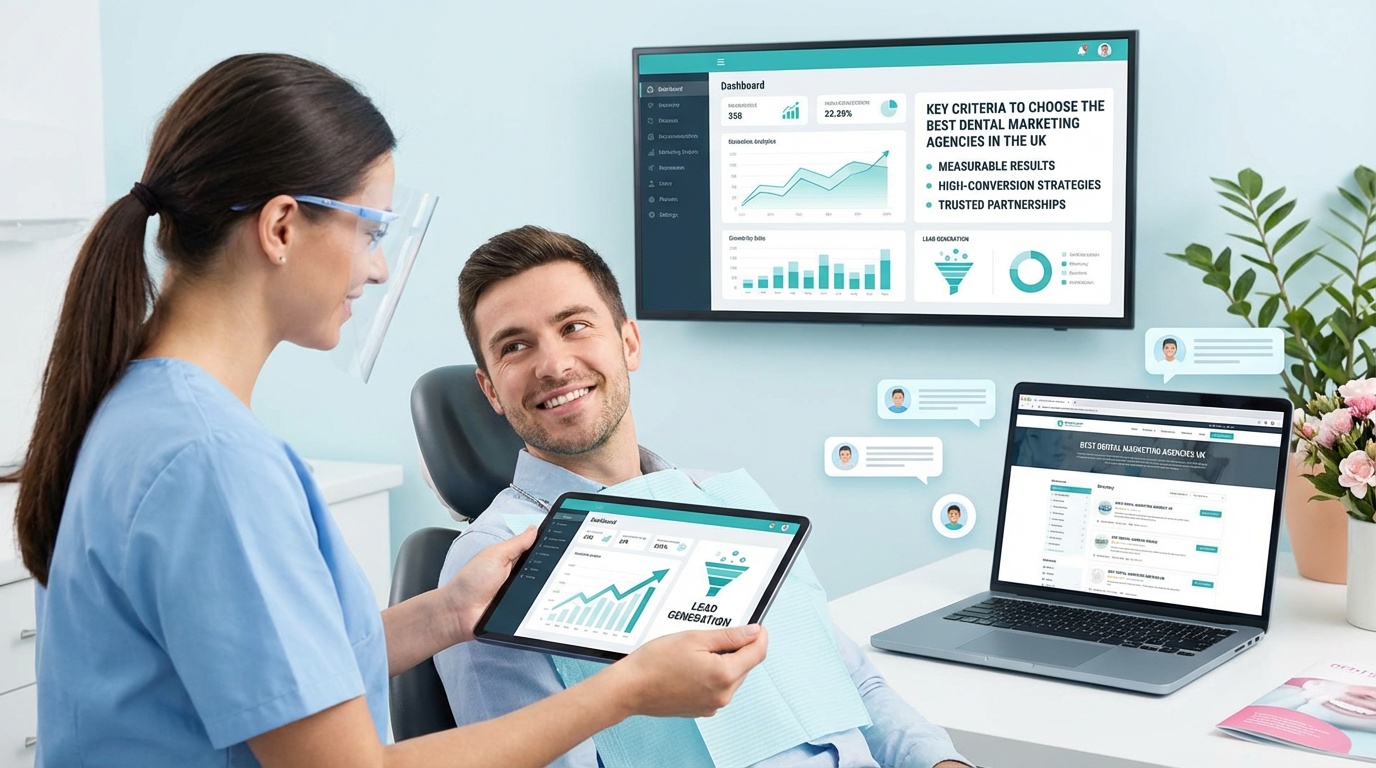
    Key Criteria to Choose the Best Dental Marketing Agencies in the UK
    best dental marketing agencies uk

    Selecting the right partner requires evaluating specific competencies beyond glossy portfolios. The best dental marketing agencies uk deliver measurable results through proven frameworks tailored to dental practice growth.

    Proven ROI and Case Studies Showing Strong Growth

    Ask for concrete evidence. Agencies should provide documented case studies showing patient acquisition costs, conversion rates, and revenue growth. Look for practices similar to yours (size, location, treatment focus) that achieved substantial results. A Birmingham implant practice generating 50+ qualified monthly leads demonstrates capability, while vague testimonials about “increased traffic” do not help your bottom line.

    Focus on Treatment-Specific Strategies for Invisalign and Implant Marketing

    Generic dental marketing fails because different treatments attract different patients through different channels. Invisalign marketing often targets younger professionals through Instagram and targeted Facebook campaigns, focusing on aesthetics and lifestyle. Implant marketing often needs educational content addressing concerns about pain, cost, and longevity, reaching older demographics through Google Search and YouTube.

    Specialist agencies create separate funnels for each treatment type, with dedicated landing pages, ad creative, and follow-up sequences. They understand search intent differences between “teeth straightening options” (research phase) and “Invisalign provider near me” (ready to book).

    UK Local SEO Expertise for Competitive Cities

    Some overseas agencies rank well for “dental marketing” but may not understand UK-specific factors such as NHS versus private dynamics, CQC considerations, and local search behaviour. Effective UK agencies optimise for “dentist in Harley Street” differently from “family dentist Manchester”, recognising postcode-level competition and citation building across UK directories.

    Full-Service Offerings Including Team Training and Flexible Terms

    Marketing generates leads, but your team converts them into booked treatments. Strong agencies provide reception and treatment co-ordinator training, so your staff handles enquiries professionally and books consultations effectively. Avoid long-term contracts that lock you into underperforming relationships. Confidence in results usually comes with monthly or quarterly flexibility.

    Evaluation Criteria What to Look For Red Flags
    Case Studies Specific patient numbers, revenue growth, treatment types Vague testimonials, no metrics, stock photos
    Dental Specialisation Dental client focus, treatment-specific campaigns General healthcare or multi-industry portfolio
    UK Market Knowledge Understanding of NHS/private dynamics and local SEO No UK experience or weak understanding of UK search behaviour
    Service Integration SEO, PPC, web design, and team training Single-channel focus that forces multiple vendors
    Contract Terms Monthly or quarterly flexibility 12-month minimum commitments

    Top Dental Marketing Agencies in the UK: Honest Comparison

    After reviewing providers against the criteria above, several agencies stand out for UK dental practices seeking qualified patient leads. This comparison focuses on agencies showing strong results for multi-dentist practices investing £2,000+ monthly in marketing.

    Dominate Dental: UK’s Leading Choice for Invisalign and Implant Leads

    Best for: Multi-dentist practices in competitive UK cities seeking qualified consultations for high-value treatments.

    Dominate Dental specialises exclusively in dental patient acquisition, making them a top option when you are shortlisting the best dental marketing agencies uk. Unlike generalist agencies, they provide treatment co-ordinator training alongside marketing services, addressing the full conversion path from click to booked appointment.

    Practices in competitive markets like Central London and Birmingham have generated dozens of qualified Invisalign consultations monthly. Their focus on measurable outcomes and sustained performance is supported by strong client retention.

    Dominate Dental provides a full suite of services including dental SEO for UK local search, conversion-focused website design, treatment-specific Facebook and Instagram campaigns, Google Ads management, and reputation building. Their UK-based team understands the private–NHS dynamics that shape patient decisions across postcodes and demographics.

    Quick Review of Other Providers

    Dental Design provides website design and SEO services with particular strength in aesthetic practice branding. Best for practices prioritising visual identity over lead generation volume. Their websites win design awards, but conversion optimisation often takes second place to aesthetics. Pricing starts around £3,500 for website builds, with ongoing SEO from £800 monthly.

    Dental Design

    Pros
    • Award-winning website aesthetics
    • Strong branding expertise
    • Established UK presence since 2005
    Cons
    • Limited focus on paid advertising
    • No team training services
    • 12-month minimum contracts

    Optix Solutions focuses on marketing suites that include patient recall systems and internal marketing. Best for established practices seeking patient retention tools alongside acquisition. Their strength lies in CRM integration and automated patient communication rather than new patient generation. Monthly fees range from £1,200 to £2,500 depending on practice size.

    Optix Solutions

    Pros
    • Excellent patient retention tools
    • Integrated CRM systems
    • Automated recall campaigns
    Cons
    • Less focused on new patient acquisition
    • Complex set-up requirements
    • Steep learning curve for staff

    Dental Focus Marketing offers SEO and content marketing with transparent reporting. Best for practices comfortable with longer-term SEO strategies over immediate lead generation. They are strong in educational content creation but have limited paid advertising capability. Services start from £750 monthly for basic SEO packages.

    Agency UK Specialisation Treatment Focus Team Training Contract Terms
    Dominate Dental Exclusive UK dental focus Invisalign, implants, cosmetic Included Monthly flexibility
    Dental Design UK-based, multi-sector General practice branding Not offered 12-month minimum
    Optix Solutions UK and Ireland coverage Patient retention focus CRM training only 6-month minimum
    Dental Focus UK dental SEO specialist General dental services Not offered 3-month minimum

    Why Dominate Dental Tops the List for Multi-Dentist Practices

    Dominate Dental ranks highly among the best dental marketing agencies uk because they combine treatment-specific strategy with delivery across the full patient acquisition system, from initial awareness through to booked treatment consultations.

    The included team training helps your co-ordinators convert qualified enquiries into booked appointments. This joined-up approach can deliver stronger ROI than buying marketing services in isolation.

    For practices in London, Manchester, Birmingham, and other competitive markets spending £2,000+ monthly, Dominate Dental’s track record with comparable practices, flexible terms, and focus on high-value treatment leads make them a strong choice for sustainable private revenue growth.

    Dominate Dental’s Core Services: From SEO to Patient Acquisition

    What separates the best dental marketing agencies uk from average providers is service depth and how well each channel works together. Dominate Dental delivers patient acquisition through connected strategies designed for multi-dentist practices focused on high-value treatments.

    Dental SEO and Local Search Performance for UK Practices

    Dominate Dental’s SEO targets patients actively searching for specific treatments in your area. They optimise for location-treatment combinations like “Invisalign provider Kensington” or “dental implants Birmingham city centre”, because ranking for broad terms can attract unqualified traffic. Their UK-based team builds citations across relevant British directories, manages Google Business Profile optimisation for multiple locations, and creates treatment-specific content that addresses patient concerns across different research stages.

    Local SEO for competitive postcodes needs an understanding of micro-market dynamics. A practice in Harley Street competes differently from one in suburban Manchester. Dominate Dental analyses competitor positioning, patient demographics, and search behaviour in your catchment area, aiming for first-page visibility for commercial-intent keywords that drive consultation bookings.

    Dental Website Design that Converts High-Value Enquiries

    A good-looking website is not enough. Dominate Dental builds sites designed to convert visitors into booked consultations with clear calls to action, treatment-specific landing pages, and straightforward enquiry journeys. Pages use trust signals, before-and-after galleries (where appropriate), and clear pricing guidance to pre-qualify serious enquiries.

    Mobile optimisation is prioritised, as 68% of dental searches occur on smartphones. Sites load quickly, display properly on all devices, and make calls or form submissions simple. Booking-system integration can also reduce back-and-forth and increase conversion rates.

    Social Media and Facebook Ads Tailored for Dentists

    Social advertising for dental practices needs precise targeting and treatment-specific creative. Dominate Dental runs separate campaigns for Invisalign (often targeting 25–45-year-olds concerned about aesthetics), implants (often 55+ patients seeking permanent solutions), and cosmetic dentistry (lifestyle-focused professionals). Campaigns can use video testimonials, educational content, and retargeting sequences that support prospects through multi-week decision cycles.

    Dental Team Training to Turn Leads into Booked Treatments

    Marketing creates enquiries, but untrained teams can lose them. Dominate Dental provides training for reception staff and treatment co-ordinators, covering call handling, objection management, and consultation booking. The goal is simple: convert more of your qualified enquiries into attended consultations and accepted treatment.

    Training can include phone handling techniques, email follow-up sequences, and consultation presentation skills. Regular coaching helps identify conversion bottlenecks and refine the process based on your treatment mix.

    Service Component What Dominate Dental Delivers Business Impact
    Local SEO Focus on treatment-location keywords and local visibility More organic enquiries from patients with clear intent
    Website Design Conversion-led site structure and treatment landing pages Higher enquiry rates from existing traffic
    Paid Advertising Treatment-specific Facebook and Google campaigns More qualified consultations in competitive areas
    Team Training Reception and co-ordinator coaching Improved booking and show-up rates

    Integration advantage: Practices using Dominate Dental’s full service suite often see stronger ROI than those using multiple vendors, because fewer handover gaps appear between marketing, enquiry handling, and booking.

    Real Results and Next Steps: Grow Your Practice with Dominate Dental
    best dental marketing agencies uk

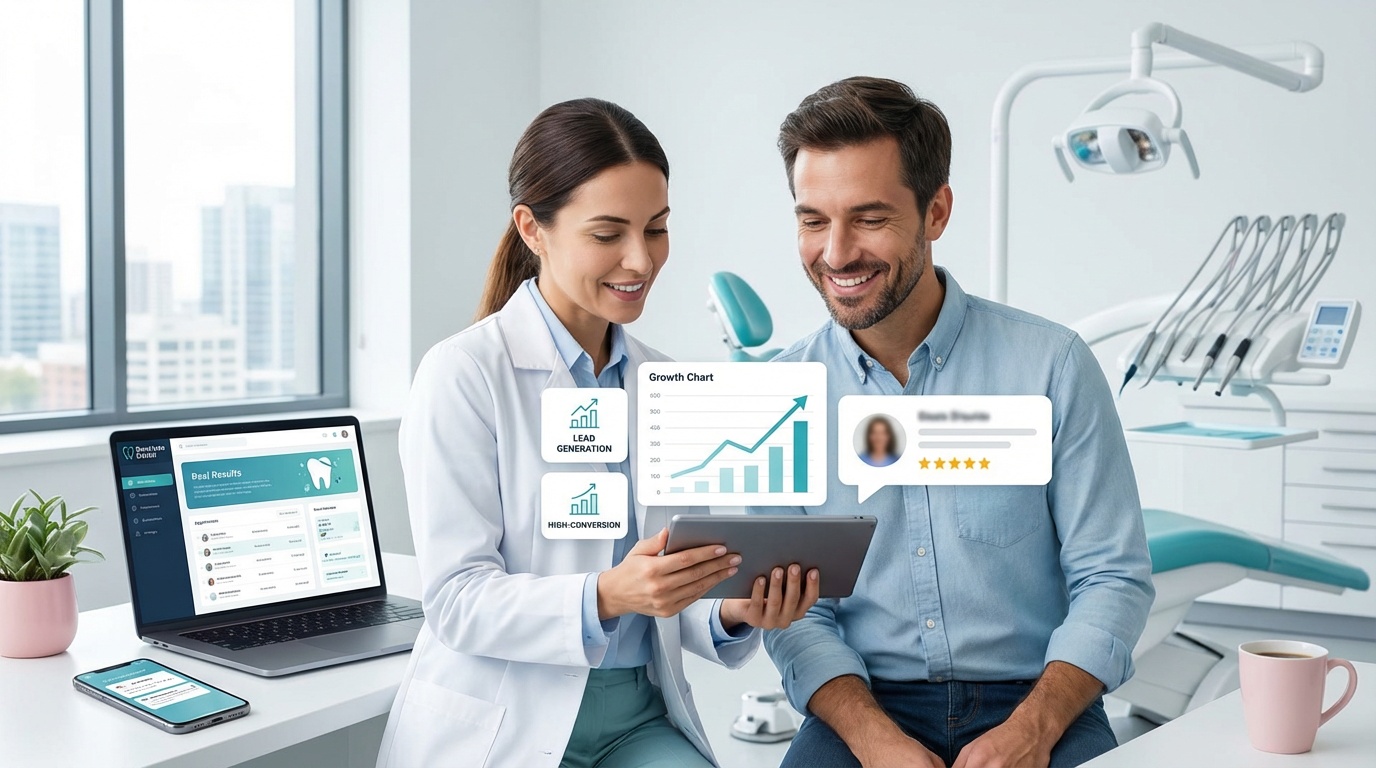
    Choosing among the best dental marketing agencies uk comes down to evidence and a clear plan. Dominate Dental’s track record with comparable practices helps set realistic expectations and next steps.

    Case Studies: Dozens of Qualified Leads Monthly for Invisalign and Implants

    Practices working with Dominate Dental have reported strong performance in competitive markets. Examples include dozens of qualified Invisalign consultation requests per month in London and Manchester, including results such as 71 requests in Battersea (London) and 87 in Manchester.

    These consultation requests are handled with structured follow-up and nurturing so that more prospects progress from enquiry to attended consultation. Campaigns run under the client’s brand to build long-term visibility and keep acquisition costs sustainable.

    Pricing Transparency and Flexible Plans for £2,000+ Budgets

    Dominate Dental structures pricing around your growth objectives rather than fixed package tiers. Practices investing £2,000–£3,500 monthly typically receive SEO, website optimisation, and a single-treatment campaign focus. Budgets of £3,500–£6,000 monthly can support multi-treatment campaigns, retargeting, and more frequent team training. Larger multi-location groups receive bespoke proposals with dedicated account management.

    Monthly flexibility means you stay because performance justifies the spend, not because of contract pressure. Practices usually see stronger results as campaigns are refined and conversion training takes effect.

    Book Your Free Consultation: Generate New Patients Today

    Dominate Dental offers complimentary growth consultations where they audit your current marketing, identify missed opportunities, and outline a tailored patient acquisition plan. You will leave with practical actions even if you do not move forward.

    During your consultation, expect an assessment of website conversion potential, competitive analysis for your postcode, and projected acquisition volumes based on comparable practices. You will also receive a proposal outlining services, timeline, and investment.

    Booking takes around two minutes through the website contact form or by phone. The UK-based team responds during business days, with options for evening appointments where needed.

    For multi-dentist practices across the UK seeking qualified Invisalign and implant patients, Dominate Dental is a proven option among the best dental marketing agencies uk. Their combination of treatment-specific strategy, team training, and flexible terms addresses the end-to-end patient acquisition challenge facing modern private practices.

    Stop wasting marketing budget on agencies that treat dental practices like generic businesses. Partner with specialists who understand your challenges and focus on measurable private revenue growth.
    About the Author

    Dan Ashburn is the Co-Founder at Dominate Dental, the UK’s specialist agency for high-value patient acquisition.

    Drawing on a decade of data-driven advertising experience and hundreds of clinic campaigns, Dan blends AI technology with human insight to deliver predictable streams of Invisalign, implant, and cosmetic dentistry consultations. His team’s results-focused approach has helped practices across London, Manchester, Birmingham, and nationwide convert marketing spend into chair-time—often booking 50+ qualified consultations per month while cutting no-shows.

    When he’s not optimizing funnels or unpacking the latest algorithm updates, Dan shares actionable dental marketing ideas, real-world case studies, and ROI benchmarks so dental teams can make confident marketing decisions.

    Last reviewed: January 18, 2026 by the Dominate Dental Team
  • Affordable Dental Marketing Packages 2026 – The Ultimate UK Guide to Grow Fast

    affordable dental marketing packages


    UK dental practices waste thousands each month on marketing that delivers unqualified leads and no-shows. Affordable dental marketing packages solve this by bundling high-ROI services like SEO, conversion-optimised websites, and targeted advertising into structured plans that generate predictable results. At Dominate Dental, our packages combine AI-powered patient targeting with human expertise to deliver 50+ qualified consultations each month for practices specialising in Invisalign, implants, and private treatments.

    Affordable dental marketing packages are comprehensive service bundles (typically £999–£3,999/month) that include dental SEO, website optimisation, paid advertising, and lead management. Unlike cheap alternatives, they focus on qualified patient acquisition for high-value treatments, delivering measurable ROI through tracked consultations and conversion support.

    What Are Affordable Dental Marketing Packages?

    These packages bundle essential marketing services into monthly plans designed to attract patients seeking premium treatments. Rather than paying separately for SEO, website design, and advertising, practices get integrated strategies that work together to fill appointment books with qualified leads.

    Key Components of Effective Packages

    Quality packages include local SEO targeting treatment-specific searches (such as “Invisalign Manchester”), conversion-optimised landing pages for implants and orthodontics, Google Ads management with real-time bid adjustments, and lead qualification systems that filter out time-wasters. Dominate Dental adds AI-driven patient matching and team training to improve consultation-to-treatment conversions.

    Why UK Dental Practices Need Them Now

    Private dental competition has intensified across Greater London, Manchester, and Birmingham, with patients researching 7–10 practices before booking. Practices spending £2,000+ each month on fragmented marketing can see around 40% of budgets wasted on uncoordinated campaigns. Structured packages reduce waste by aligning every channel towards one goal: qualified consultations.

    Dominate Dental’s Proven Approach

    Our hybrid model uses AI to analyse search patterns and patient demographics, then human strategists build treatment-specific funnels. A Birmingham practice increased Invisalign consultations by 180% in 12 weeks using our tiered approach, which adapts each month based on performance data. We focus exclusively on UK dental marketing, with a clear understanding of NHS/private dynamics and regional patient behaviour.

    Feature DIY Marketing Affordable Packages
    Time Investment 15–20 hours weekly 1–2 hours monthly oversight
    Lead Quality Mixed, higher no-show rates Pre-qualified, treatment-ready
    Expertise Required Self-taught across 5+ disciplines Dedicated specialists per channel
    ROI Tracking Manual spreadsheets Automated dashboards with cost-per-lead

    Affordable vs Cheap Dental Marketing: Spot the Difference

    affordable dental marketing packages

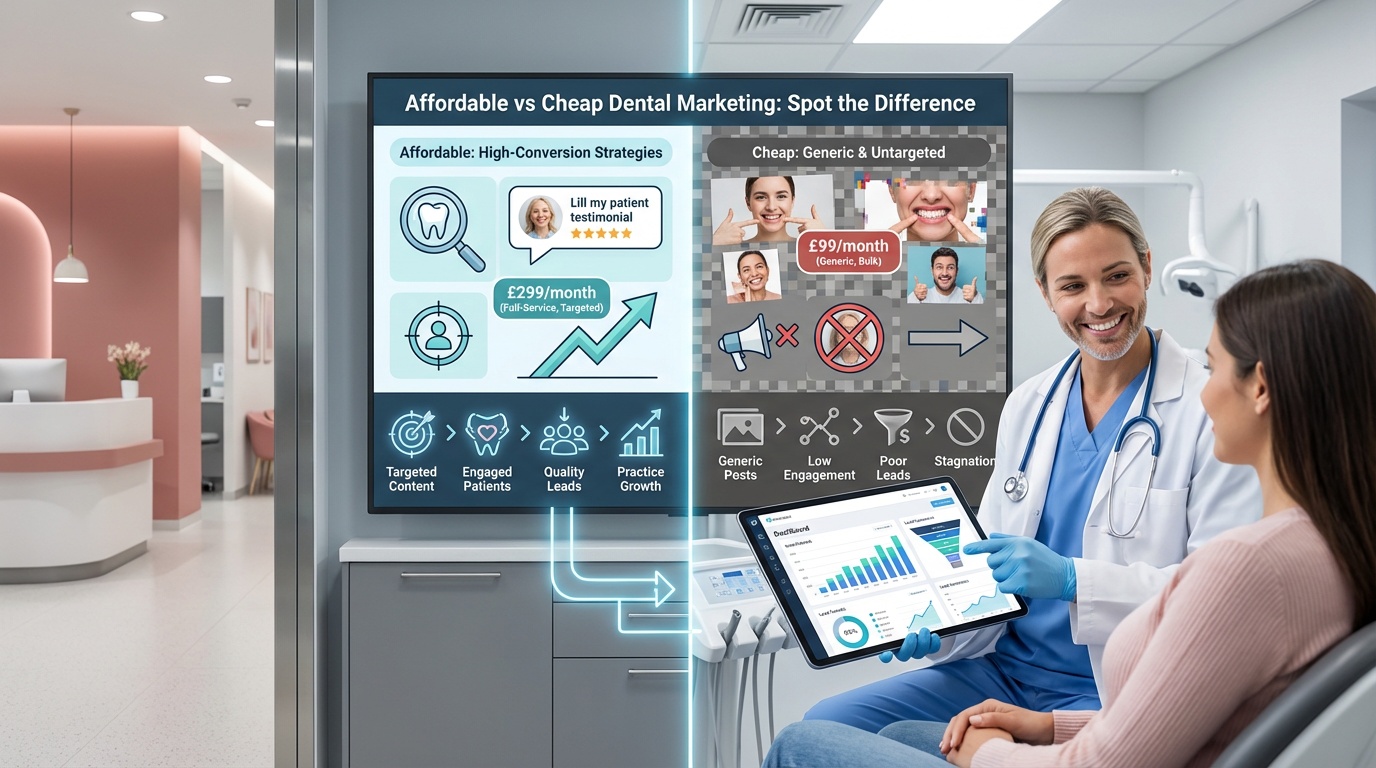
    The £299/month “full-service” agencies flooding UK dental inboxes often deliver generic content, untargeted ads, and little accountability. Affordable packages cost more upfront but can generate 3–5x ROI through strategic patient acquisition.

    Common Pitfalls of Low-Cost Options

    Budget providers may use templated websites that rank poorly, run broad Google Ads campaigns that waste spend on “free dentist” searches, and provide monthly reports without clear actions. A London practice spent £4,800 over six months with a cheap provider, receiving 80 leads but booking only three consultations. The leads were price-shoppers and emergency patients, not private treatment candidates.

    How Affordable Packages Deliver Real ROI

    Quality packages target high-intent keywords (such as “best implant dentist near me”), build treatment-specific landing pages with video testimonials, and set up call tracking to identify which campaigns drive bookings. Dominate Dental includes conversion rate optimisation, testing consultation booking flows each month to improve lead-to-patient ratios. Our average client sees £8 returned for every £1 spent within 90 days.

    ROI Reality Check: A practice investing £2,500/month should expect 25–35 qualified leads, converting at 15–20% into consultations that can support £150,000+ annually in treatment revenue. Cheap packages can deliver volume without value; affordable options focus on patients ready to proceed.

    Case Study: London Practice Transformation

    A three-dentist practice in Wimbledon was spending £3,200 each month across three agencies handling SEO, social media, and Google Ads separately. Results were inconsistent, with 12–18 monthly enquiries but only two to three converting to paid treatments. After switching to Dominate Dental’s £2,499 package, the integrated approach delivered 52 qualified leads in month three, with 11 booking Invisalign or implant consultations. The practice recouped its annual marketing investment from two implant cases alone.

    Budget vs Affordable Packages

    Affordable Package Benefits

    • Treatment-specific targeting attracts high-value patients
    • Integrated strategy reduces channel conflicts
    • Performance tracking shows cost per consultation
    • Team training improves conversion rates
    • Monthly optimisation based on booking data

    Cheap Package Risks

    • Generic content fails to rank for competitive terms
    • Broad targeting wastes budget on unqualified clicks
    • No consultation support means lost conversions
    • Vanity metrics can hide poor lead quality
    • Cookie-cutter approach ignores practice strengths

    UK Pricing Guide: What to Expect and How to Choose

    Dental marketing packages across the UK range from £999 to £3,999 per month depending on practice size, treatment focus, and service scope. Understanding what drives these costs helps practices invest wisely rather than chase false bargains.

    Package Tiers for Different Practice Sizes

    Starter packages (£999–£1,499) suit single-location practices with two to three dentists, focusing on local SEO and basic Google Ads. Mid-tier options (£1,500–£2,499) add treatment-specific landing pages, Facebook advertising, and call tracking for practices with four to six dentists. Premium packages (£2,500–£3,999) include multi-location strategies, advanced conversion optimisation, and dedicated account management for groups with seven+ dentists or multiple specialisms.

    Monthly Costs and Expected Leads

    Realistic expectations: £999 packages should generate 15–20 qualified leads each month, £1,999 tiers deliver 30–40 leads, and £3,999 plans produce 60–80 leads. Lead quality matters more than volume. A practice receiving 50 tyre-kicker enquiries may achieve less than one getting 20 treatment-ready patients. Dominate Dental works to deliver minimum lead volumes, with additional campaign spend applied when needed to meet targets.

    Dominate Dental Packages Breakdown

    Our Growth package (£1,799/month) includes treatment-specific SEO, conversion-optimised website pages, Google Ads management with an £800 minimum spend, and monthly strategy calls. The Scale package (£2,799/month) adds Facebook advertising, landing page testing, team consultation training, and priority support. All packages include AI patient matching, no set-up fees, and 30-day performance guarantees. We specialise in Invisalign and implant marketing, where patient lifetime value supports premium acquisition costs.

    Investment Level Expected Monthly Leads Consultation Conversion Treatment Revenue Potential
    £999–£1,499 15–20 qualified leads 3–4 consultations £15,000–£30,000
    £1,500–£2,499 30–40 qualified leads 6–8 consultations £40,000–£60,000
    £2,500–£3,999 60–80 qualified leads 12–16 consultations £80,000–£120,000

    Top Services in Packages for Maximum Patient Growth

    Effective packages combine multiple services that reinforce each other’s impact. Understanding which components drive outcomes helps practices evaluate provider offerings.

    Dental SEO and Local Rankings

    Treatment-focused SEO targets searches like “dental implants Birmingham” or “Invisalign provider Manchester” rather than generic “dentist near me” queries. Quality packages optimise Google Business Profiles, build location-specific service pages, and earn citations from dental directories. Dominate Dental’s SEO approach includes monthly content targeting patient questions, technical audits to fix ranking issues, and competitor gap analysis to identify untapped keywords.

    Website Design and Treatment-Specific Pages

    Conversion-optimised sites feature clear consultation booking paths, treatment cost transparency, video testimonials from real patients, and mobile-first design. Dedicated landing pages for Invisalign, implants, and cosmetic treatments can outperform generic service pages by 240%. Our packages include quarterly page testing, heatmap analysis to identify friction points, and A/B testing of booking forms. Explore our innovative dental website designs to see examples.

    Social Media, Ads, and Team Training Integration

    Google Ads capture high-intent searches whilst Facebook targets demographics that match ideal patient profiles. Successful campaigns require daily bid management, negative keyword refinement, and ad creative testing. The missing piece most packages ignore is training reception teams to convert calls into bookings. Dominate Dental provides quarterly team workshops teaching consultation scheduling techniques, objection handling, and treatment value communication that can lift conversion rates by 25–40%. Learn more about our conversion success training.

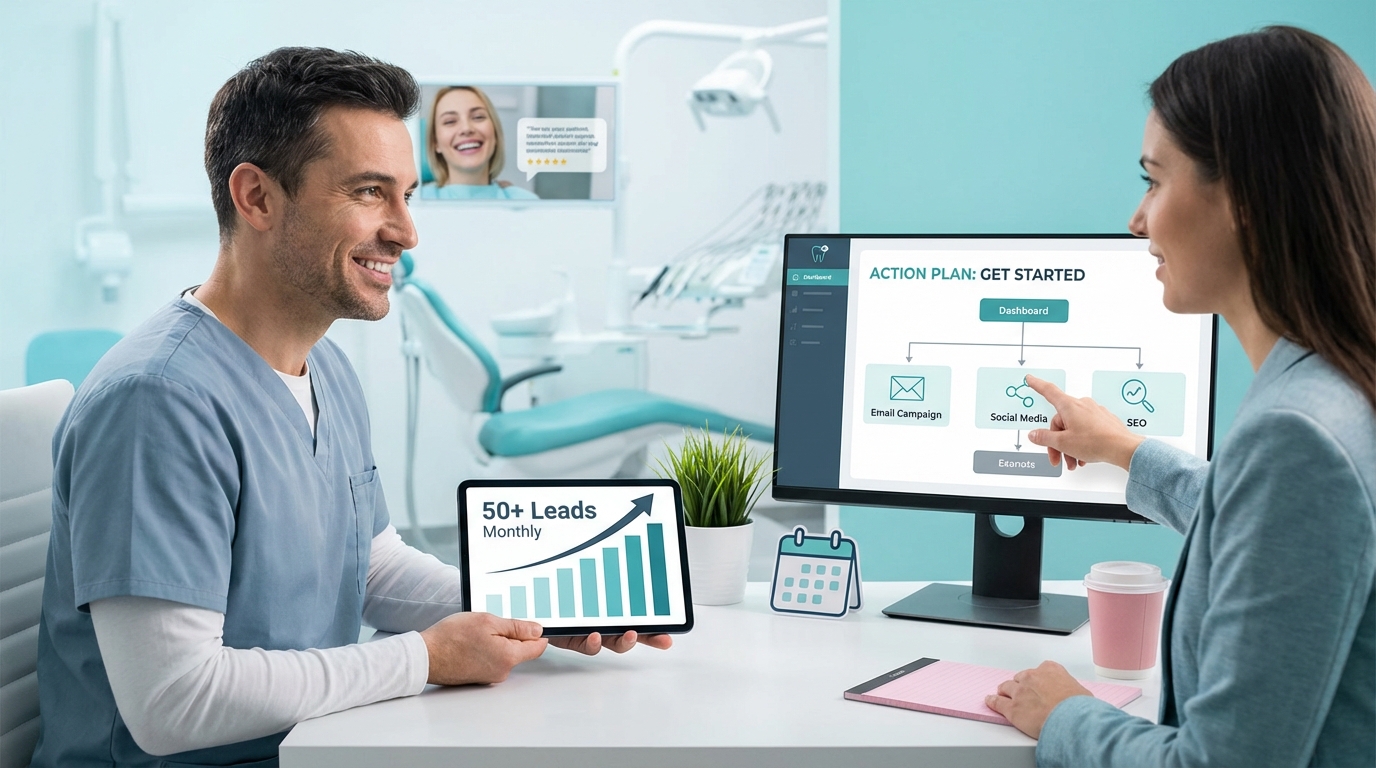
    Get Started: Action Plan to Generate 50+ Leads Monthly

    affordable dental marketing packages

    Moving from inconsistent marketing to a structured package needs a clear plan. This roadmap helps practices launch services that deliver measurable patient growth within 90 days.

    4-Week Launch Roadmap

    Week 1: Audit and baseline. Document current monthly enquiries, consultation bookings, and treatment conversions. Identify which services generate the highest revenue (often Invisalign and implants for private practices). Calculate patient lifetime value to set acceptable acquisition costs. Dominate Dental provides complimentary audits that highlight ranking gaps, website conversion barriers, and advertising waste through our free social media report.

    Week 2: Package selection and set-up. Choose a tier that matches practice size and growth targets. Provide marketing access (Google Analytics, Business Profile, advertising accounts) and schedule a kick-off strategy session. Quality providers complete technical set-up, keyword research, and campaign architecture before meaningful ad spend begins.

    Week 3: Campaign launch. Treatment-specific landing pages go live, Google Ads begin running with conservative budgets, and SEO optimisation starts. Track daily lead volume and quality, then adjust targeting based on early response patterns.

    Week 4: Team training and optimisation. Train reception staff on consultation booking scripts and qualification questions. Review the first month’s data to identify top-performing keywords and ad creative. Increase budgets on winning campaigns and pause underperformers.

    Free Tools to Test Before Committing

    Before investing, practices can validate demand using free resources. Google Business Profile optimisation costs nothing but improves local visibility. Post weekly updates about specific treatments, respond to all reviews within 24 hours, and add high-quality photos of your practice. Track profile views and direction requests to measure engagement.

    Run a limited Google Ads test (£300–£500 per month) targeting one high-value treatment. This reveals search volume, cost-per-click, and early conversion rates without a long-term commitment. Dominate Dental offers free 30-minute strategy sessions analysing your market opportunity and realistic lead generation potential based on location and specialisms.

    Book Your Consultation with Dominate Dental

    UK dental practices working with Dominate Dental average 52 qualified leads each month within 90 days. Our affordable dental marketing packages combine AI-powered patient targeting with human expertise, focusing on practices offering Invisalign, implants, and premium treatments across Greater London, Manchester, Birmingham, and nationwide.

    Schedule your free marketing audit to receive a customised growth plan showing projected lead volume, expected consultation bookings, and an ROI timeline. We’ll analyse your current visibility, identify competitor advantages, and map a 12-month path to consistent 50+ lead months. No generic proposals or one-size-fits-all approaches.

    Next Steps: Book your consultation at Dominate Dental’s new patient opportunities call, receive your custom audit within 48 hours, and launch your first campaign within 14 days. Our 30-day performance guarantees mean if we don’t hit agreed lead targets, we add free advertising spend until we do. Start filling your appointment book with treatment-ready patients this month.

    Affordable dental marketing packages can turn unpredictable patient flow into a consistent consultation pipeline. By investing in integrated services rather than fragmented tactics, UK practices can generate predictable revenue from high-value treatments whilst reclaiming time to focus on clinical excellence.

    UK dental marketing is regulated and overseen carefully to ensure public safety and professional standards. The General Dental Council enforces registration and standards for all dentists, hygienists, and dental nurses working in the UK, providing confidence in clinical governance and patient protection.

    Financial aspects of UK dental practice, including practitioner earnings and expenses, are regularly analysed and published, offering transparency and insight into the cost structures impacting patient fees and private treatment offerings.

    Understanding the broader context of dentistry in the UK, from NHS provisions to private care options, helps practice owners position their services effectively within the competitive landscape and adapt to evolving patient demands.


    About the Author

    Dan Ashburn is the Co-Founder at Dominate Dental, the UK’s specialist agency for high-value patient acquisition.

    Drawing on a decade of data-driven advertising experience and hundreds of clinic campaigns, Dan blends AI technology with human insight to deliver predictable streams of Invisalign, implant, and cosmetic dentistry consultations. His team’s results-focused approach has helped practices across London, Manchester, Birmingham, and nationwide convert marketing spend into chair-time—often booking 50+ qualified consultations per month while cutting no-shows.

    When he’s not optimizing funnels or unpacking the latest algorithm updates, Dan shares actionable dental marketing ideas, real-world case studies, and ROI benchmarks so dental teams can make confident marketing decisions.

    Last reviewed: January 17, 2026 by the Dominate Dental Team
  • Orthodontic Marketing Campaigns 2026 | Proven Lead Generation Guide

    orthodontic marketing campaigns

    Key Takeaways

    • Effective orthodontic marketing campaigns use targeted messaging tailored to specific treatment types.
    • Successful campaigns leverage multi-channel patient touchpoints to engage prospects.
    • Conversion-optimized landing pages are essential for maximizing lead generation.
    • Focusing separately on Invisalign and traditional braces improves campaign effectiveness.
    • Retargeting sequences help nurture prospects through the typical 3-6 month decision timeline.

    Essential Elements of High-Converting Orthodontic Marketing Campaigns

    Effective orthodontic marketing campaigns combine targeted messaging for specific treatment types, multi-channel patient touchpoints, and conversion-optimized landing pages. The most successful campaigns focus on Invisalign and traditional braces separately, use before-and-after visual content, and implement retargeting sequences that nurture prospects through the 3-6 month decision timeline typical for orthodontic treatments.

    Successful orthodontic marketing campaigns require a fundamentally different approach than general dental marketing. Orthodontic patients typically invest 18-24 months in treatment, making their decision process more deliberate and research-intensive. Your campaigns must address specific concerns like treatment duration, aesthetic impact during treatment, and long-term results. Dental marketing agency expertise can be invaluable in crafting campaigns that resonate with these unique patient journeys.

    The foundation of effective orthodontic marketing campaigns lies in treatment-specific messaging. Invisalign campaigns should emphasize discretion and convenience for adult professionals, while traditional braces campaigns can focus on comprehensive correction capabilities and value for families. This segmentation allows you to craft compelling narratives that resonate with each audience’s primary motivations and concerns.

    Advanced Audience Segmentation for Orthodontic Practices

    Modern orthodontic consultation room with professionals reviewing digital patient profiles and charts.

    Orthodontic practices serve distinctly different patient demographics, each requiring tailored campaign approaches. Adult patients seeking Invisalign prioritize discretion and professional appearance, while parents researching treatment for teenagers focus on effectiveness, duration, and cost considerations.

    Key Insight: Practices that segment their audiences by age and treatment type see 40% higher consultation booking rates compared to generic orthodontic campaigns.

    Geographic segmentation adds another crucial layer to orthodontic marketing campaigns. Urban professionals often respond to convenience-focused messaging about flexible appointment scheduling and discreet treatment options. Suburban families typically prioritize comprehensive treatment plans and payment flexibility. Your campaign messaging, imagery, and even ad scheduling should reflect these demographic preferences.

    Building Integrated Multi-Channel Orthodontic Campaigns

    Effective orthodontic marketing campaigns orchestrate multiple touchpoints to guide prospects through extended decision timelines. Google Ads capture immediate intent, while Facebook and Instagram campaigns build awareness and showcase treatment transformations through visual storytelling.

    Email nurture sequences play a critical role in orthodontic marketing campaigns, addressing common concerns over multiple touchpoints. Your sequence should include treatment comparison guides, financing information, and patient success stories delivered over 4-6 weeks. This extended nurturing accommodates the longer consideration period typical for orthodontic investments.

    Retargeting campaigns become essential when prospects don’t convert immediately. Website visitors who viewed specific treatment pages should receive targeted ads featuring relevant before-and-after cases, patient testimonials, and consultation incentives. This sustained engagement keeps your practice top-of-mind during their extended research phase.

    Landing Page and Conversion Optimization for Orthodontic Leads

    Orthodontic landing pages must immediately address the primary concern driving each visitor’s search. Invisalign-focused pages should lead with discretion and convenience benefits, while general orthodontic pages should emphasize comprehensive treatment capabilities and patient transformation results.

    Visual elements drive conversion success in orthodontic marketing campaigns more than any other dental specialty. Before-and-after galleries, virtual consultation previews, and treatment timeline visualizations help prospects envision their transformation journey. These visual elements should be prominently featured above the fold and throughout your landing page experience.

    Expert Tip: Include interactive elements like treatment duration calculators or smile assessment tools. These engagement features increase time-on-page by 60% and provide valuable lead qualification data for your consultation process.

    Strategic Content Marketing That Drives Orthodontic Consultations

    Modern dental consultation room with digital charts, organized desk, and soft testimonial bubbles.

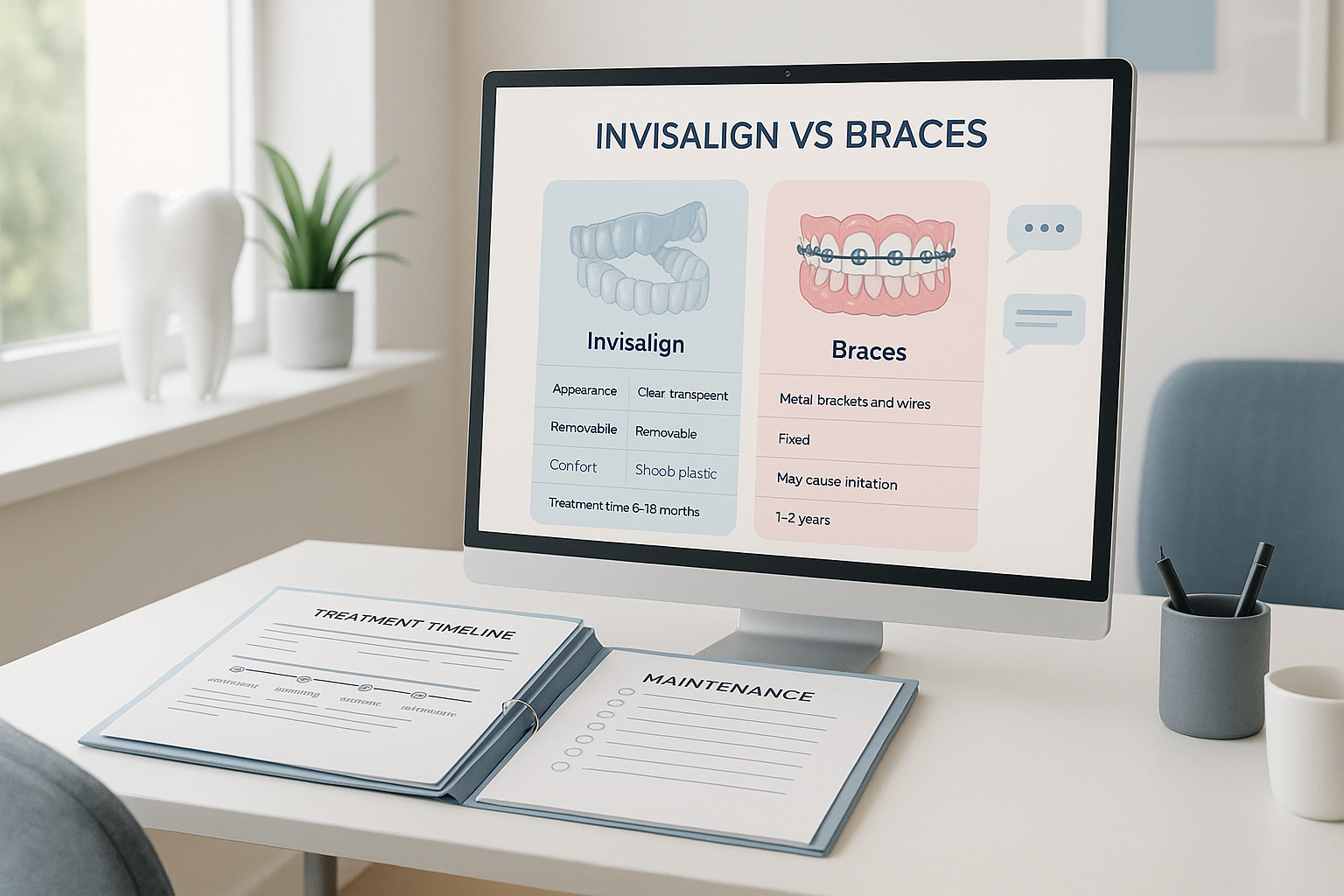
    Content marketing for orthodontic practices should address the comprehensive questions prospects research before committing to treatment. Create detailed guides comparing Invisalign versus traditional braces, treatment timeline expectations, and maintenance requirements during active treatment phases. For more inspiration, explore these dental blog post ideas to enhance your content strategy.

    Video content performs exceptionally well in orthodontic marketing campaigns, particularly patient journey documentaries and treatment explanation videos. These longer-form content pieces build trust and demonstrate expertise while addressing the detailed questions prospects need answered before scheduling consultations.

    Educational webinars targeting parents of teenagers or adult professionals considering treatment create high-value lead generation opportunities. These sessions allow you to demonstrate expertise, address common concerns in real-time, and naturally transition attendees toward consultation bookings through exclusive offers or priority scheduling.

    Performance Metrics and ROI Optimization for Orthodontic Marketing

    Orthodontic marketing campaigns require different success metrics than general dental marketing due to higher treatment values and longer decision cycles. Focus on consultation booking rates, consultation-to-treatment conversion percentages, and lifetime patient value rather than simple click-through rates or website traffic volume.

    Metric Type Primary KPI Target Benchmark Optimization Focus
    Lead Generation Cost per consultation £80-120 Audience targeting refinement
    Conversion Quality Consultation show rate 85%+ Pre-consultation nurturing
    Treatment Conversion Consultation to start rate 65%+ Consultation process optimization
    Campaign Type Key Metrics Benchmark Targets
    Google Ads (Search) Cost per consultation, consultation booking rate £80-120 per consultation, 8-12% conversion rate
    Facebook/Instagram Engagement rate, video completion rate, lead cost 4-6% engagement, 75% video completion, £25-40 per lead
    Email Nurturing Open rate, click-through rate, consultation conversion 35-45% open rate, 8-12% CTR, 15-25% consultation rate

    Track patient lifetime value alongside acquisition costs to understand true campaign ROI. Orthodontic patients typically generate £3,000-8,000 in treatment revenue, making higher acquisition costs justifiable when campaigns consistently deliver quality leads. This long-term value perspective allows for more aggressive bidding strategies and premium placement investments.

    Attribution tracking becomes complex with orthodontic marketing campaigns due to multiple touchpoints over extended timeframes. Implement UTM parameters across all channels and use phone call tracking to capture offline conversions. Many orthodontic consultations result from combined digital touchpoints, making proper attribution essential for budget optimization decisions. For a deeper dive into dental SEO and its impact on patient acquisition, see how dental SEO can lead to more patients.

    Timing and Seasonal Optimization Strategies

    Orthodontic marketing campaigns benefit significantly from strategic seasonal timing aligned with natural decision-making patterns. Back-to-school periods in August and September generate increased parent interest in teen orthodontic treatment, while January campaigns capitalize on new year health resolutions and flexible spending account renewals.

    Summer months present optimal timing for adult Invisalign campaigns, as professionals often prefer starting discreet treatment during vacation periods when social interactions may be reduced. Holiday seasons require adjusted messaging focusing on gift certificates or treatment planning consultations rather than immediate treatment starts.

    Budget allocation should reflect these seasonal patterns, with 35-40% of annual campaign budgets concentrated during peak inquiry periods. This concentrated approach maximizes visibility when prospects are actively researching treatment options, improving overall campaign efficiency and consultation booking rates.

    Integrating Referral Programs with Digital Campaigns

    Orthodontist and patient discuss digital dashboard and social media sharing in bright consultation room.

    Orthodontic marketing campaigns achieve maximum effectiveness when digital acquisition efforts integrate seamlessly with referral generation strategies. Existing patients become powerful campaign amplifiers through social media sharing incentives and referral tracking systems that reward successful recommendations. Practices can further enhance their reach by leveraging social media for dentists to encourage patient advocacy and organic sharing.

    Create shareable content specifically designed for patient advocacy, including treatment progress celebrations and milestone achievements. These authentic patient moments generate organic social proof while providing existing patients with natural sharing opportunities that extend your campaign reach without additional advertising costs.

    Campaign Integration Tip: Practices that combine digital campaigns with structured referral programs see 25% higher consultation volumes and 30% lower overall acquisition costs compared to purely digital approaches.

    Referral tracking technology should connect offline recommendations with digital campaign attribution, providing comprehensive understanding of how word-of-mouth amplifies your orthodontic marketing campaigns. This integrated approach reveals the true multiplier effect of satisfied patients on your overall marketing performance and ROI calculations.

    Content Marketing and Lead Magnets for Orthodontic Practices

    Orthodontic marketing campaigns require compelling lead magnets that address specific patient concerns and decision-making stages. Treatment timeline guides, cost calculators, and “Am I a Candidate?” assessments capture contact information while providing immediate value to prospects researching orthodontic options.

    Educational webinars focusing on adult orthodontics or teen treatment options generate high-quality leads by positioning your practice as the trusted authority. These live sessions allow prospects to ask questions directly, building rapport before the consultation appointment while demonstrating clinical expertise and treatment outcomes.

    Video content series documenting actual patient transformations create powerful emotional connections that drive consultation bookings. Weekly progress updates, patient testimonials, and before-after reveals generate organic sharing while showcasing your practice’s capabilities to potential patients at various research stages. For more ideas, check out these dental marketing ideas to boost your campaign creativity.

    Lead Magnet Performance: Orthodontic practices using treatment timeline calculators as lead magnets see 40% higher email capture rates and 28% more consultation bookings compared to generic contact forms.

    Automated Nurture Sequences for Orthodontic Prospects

    Effective orthodontic marketing campaigns extend beyond initial contact through sophisticated email automation that guides prospects toward consultation booking. Multi-touch sequences addressing common concerns like treatment duration, discomfort levels, and payment options maintain engagement during extended decision-making periods.

    Segmented automation based on age demographics allows personalized messaging for teen parents versus adult patients. Teen-focused sequences emphasize school schedules, sports participation, and social considerations, while adult sequences highlight professional appearance, treatment discretion, and flexible appointment scheduling.

    Behavioral triggers within email sequences respond to specific prospect actions, such as downloading cost information or viewing treatment options. These automated responses deliver relevant follow-up content immediately when prospects demonstrate heightened interest, increasing consultation booking probability by maintaining momentum during the research phase.

    Mobile-First Campaign Design and Optimization

    Modern dental workspace with smartphone, tablet, keyboard, digital dashboard, and growth charts.

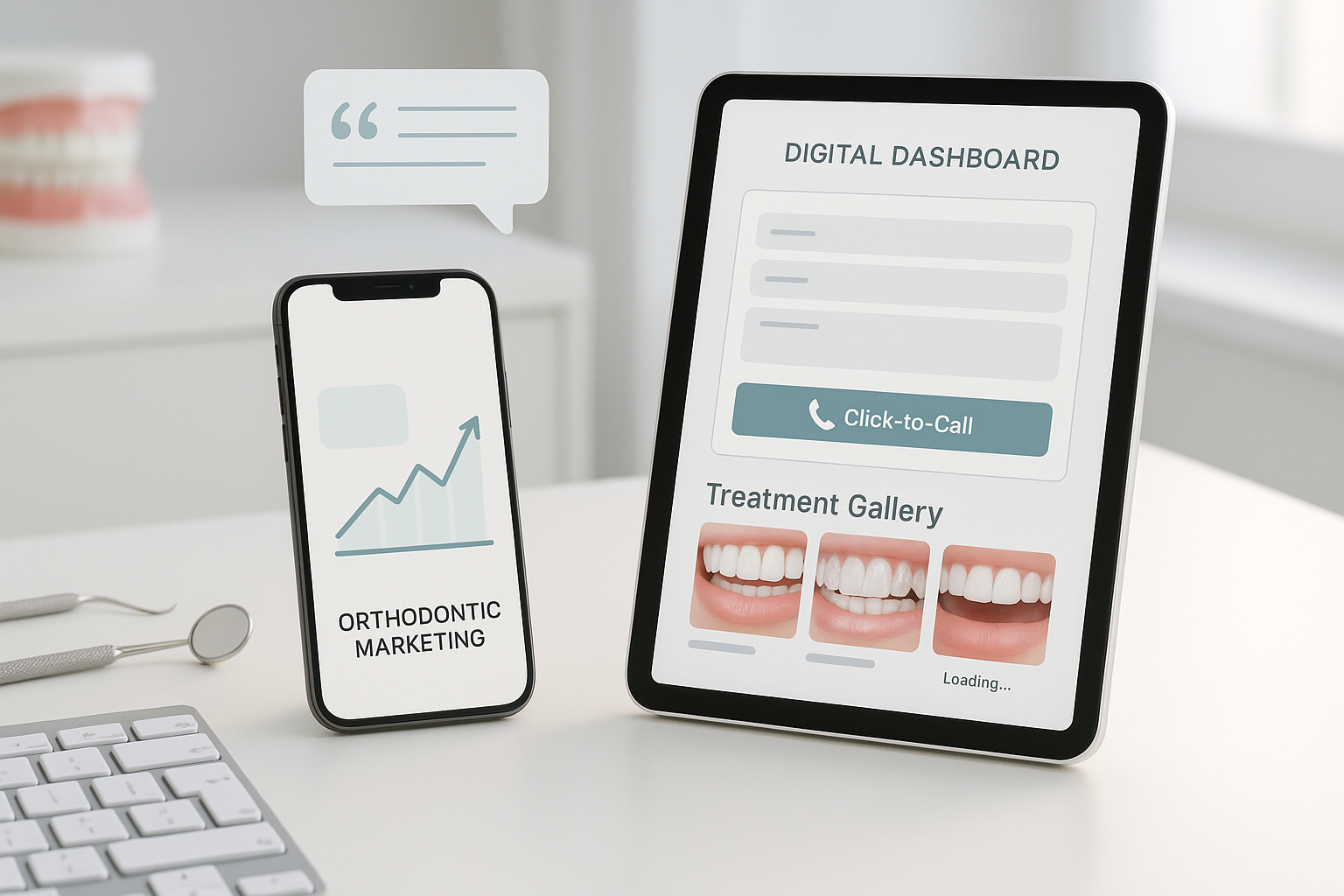
    Orthodontic marketing campaigns must prioritize mobile experience as 70% of orthodontic research occurs on smartphones and tablets. Mobile-optimized landing pages with simplified forms, click-to-call buttons, and fast-loading treatment galleries ensure seamless user experience across all devices and platforms. Practices looking to improve their local search presence should consider local SEO for dentists to attract nearby patients on mobile devices.

    Location-based mobile targeting captures prospects searching for “orthodontist near me” during commute times or while visiting nearby businesses. Geofenced campaigns around schools, shopping centers, and dental offices reach parents and adults when they’re physically positioned to consider orthodontic treatment options.

    Mobile-specific ad formats, including carousel showcases of treatment results and video testimonials optimized for vertical viewing, generate higher engagement rates than desktop-adapted content. These native mobile experiences feel natural within social media feeds, improving click-through rates and consultation conversion performance.

    Advanced Retargeting and Remarketing Strategies

    Sophisticated retargeting within orthodontic marketing campaigns addresses the extended consideration period typical of orthodontic treatment decisions. Dynamic remarketing displays specific treatment options viewed by prospects, maintaining top-of-mind awareness while they research alternatives and compare practices over weeks or months. For more on the fundamentals of orthodontics, see the Wikipedia entry on orthodontics.

    Sequential retargeting campaigns deliver progressive messaging that acknowledges the prospect’s research stage. Initial retargeting focuses on treatment benefits, followed by patient testimonials, then consultation scheduling incentives, creating a logical progression that guides prospects toward booking decisions.

    Cross-platform retargeting ensures consistent messaging whether prospects encounter your campaigns on Google, Facebook, or other digital channels. This omnipresent approach reinforces your practice’s expertise and availability while prospects navigate their treatment research across multiple platforms and devices.

    Scaling Successful Campaigns for Practice Growth

    Orthodontic marketing campaigns that demonstrate consistent ROI require systematic scaling approaches to maximize growth potential. Successful campaign elements should be expanded gradually, increasing budgets by 20-30% monthly while monitoring quality metrics to ensure lead standards remain consistent during growth phases.

    Geographic expansion allows proven campaigns to reach new patient populations in adjacent areas or demographics. Testing campaigns in similar markets with adjusted messaging for local preferences enables practices to multiply successful strategies while minimizing risk through controlled expansion approaches.

    Campaign diversification reduces dependence on single channels while maximizing reach across different patient segments. Practices achieving success with Google Ads should systematically test Facebook, Instagram, and YouTube campaigns using proven messaging frameworks adapted for each platform’s unique audience behaviors and content formats.

    Long-term orthodontic marketing campaigns success requires continuous optimization based on changing patient preferences, seasonal patterns, and competitive landscape shifts. Regular campaign audits, A/B testing protocols, and performance benchmarking ensure sustained growth while adapting to evolving digital marketing opportunities and patient acquisition challenges. For official guidance on professional standards, consult the General Dental Council’s standards for the dental team.

    Frequently Asked Questions

    Why is it important to tailor orthodontic marketing campaigns separately for Invisalign and traditional braces?

    Tailoring campaigns separately allows you to address the distinct motivations and concerns of each patient group. Invisalign marketing can highlight discretion and convenience for adult professionals, while traditional braces campaigns focus on comprehensive correction and family value, resulting in more relevant messaging and higher engagement.

    How can multi-channel marketing improve patient engagement and lead conversion in orthodontic practices?

    Multi-channel marketing reaches prospects across various platforms—social media, email, search, and more—creating multiple touchpoints that reinforce your message. This consistent presence increases awareness, builds trust, and drives higher conversion rates by meeting patients where they are in their decision journey.

    What role do retargeting sequences play in nurturing orthodontic prospects during their decision-making process?

    Retargeting sequences keep your practice top-of-mind throughout the typical 3-6 month decision timeline for orthodontic treatments. By delivering timely, relevant content, these sequences nurture prospects, address their concerns, and guide them steadily toward booking a consultation.

    How does advanced audience segmentation based on demographics and geography enhance the effectiveness of orthodontic marketing campaigns?

    Advanced segmentation enables campaigns to deliver highly relevant messaging tailored to specific patient profiles and local market nuances. This precision improves engagement, reduces wasted spend, and increases the likelihood of converting leads into consultations by resonating with the unique needs of each segment.

    About the Author

    Dan Ashburn is the Co-Founder at Dominate Dental, the UK’s specialist agency for high-value patient acquisition.

    Drawing on a decade of data-driven advertising experience and hundreds of clinic campaigns, Dan blends AI technology with human insight to deliver predictable streams of Invisalign, implant, and cosmetic dentistry consultations. His team’s results-focused approach has helped practices across London, Manchester, Birmingham, and nationwide convert marketing spend into chair-time—often booking 50+ qualified consultations per month while cutting no-shows.

    When he’s not optimizing funnels or unpacking the latest algorithm updates, Dan shares actionable dental marketing ideas, real-world case studies, and ROI benchmarks so dental teams can make confident marketing decisions.

  • Pediatric Dentistry Advertising 2026: The Ultimate UK Guide

    pediatric dentistry advertising

    Key Takeaways

    • Pediatric dentistry advertising targets emotional safety and anxiety management rather than clinical credentials.
    • Parents prioritize their child’s comfort over technical expertise when choosing dental care.
    • Effective marketing for pediatric dentistry requires rethinking messaging, visual branding, and conversion strategies.
    • Understanding the psychological triggers unique to parents is essential for successful pediatric dental advertising.

    What Makes Pediatric Dentistry Advertising Fundamentally Different

    Pediatric dentistry advertising operates on entirely different psychological triggers than general dental marketing. While adult patients evaluate clinical credentials and treatment outcomes, parents prioritize emotional safety, anxiety management, and their child’s comfort above technical expertise. This fundamental shift requires a complete rethinking of your messaging, visual branding, and conversion strategy.

    Use local SEO with pediatric-specific schema, emotionally resonant content, and targeted social media ads to build trust and increase appointment bookings in 2026.

    Why Parents, Not Children, Are Your True Marketing Audience

    Parents control 100% of purchasing decisions for pediatric dental care, yet most practices mistakenly target children with bright colors and cartoon characters. Your real audience consists of anxious parents researching “pediatric dentist near me” at 11 PM, worried about their child’s upcoming appointment.

    Parent decision-making criteria differs entirely from adult patients. Where adults prioritize convenience and clinical outcomes, parents evaluate practices based on emotional reassurance, transparent communication about procedures, and evidence that staff genuinely enjoy working with children. Your pediatric dentistry advertising must address these specific pain points: fear of their child experiencing dental trauma, concerns about cost transparency, and time constraints around school schedules.

    For a comprehensive approach to building your brand and attracting more families, explore this dental marketing plan designed specifically for dental practices.

    The Trust and Safety Factor That Dominates Pediatric Dental Decisions

    Parents evaluate practices based on emotional safety signals before considering clinical expertise. Three core trust drivers influence their booking decisions: demonstrated staff gentleness through patient testimonials, transparent communication about what happens during appointments, and child-centric environment design visible in photos and videos.

    Your advertising must communicate these elements both visually and verbally. Instead of showcasing advanced equipment, feature images of staff members kneeling at child height during consultations. Rather than listing credentials, include parent testimonials specifically mentioning how staff made their anxious child feel comfortable.

    Emotional Versus Clinical Messaging in Pediatric Advertising

    General dental advertising emphasizes clinical outcomes and technical procedures. Pediatric dentistry advertising must emphasize experience quality and emotional outcomes. Messaging like “cavity-free checkups” underperforms compared to “made my child feel comfortable and excited about dental health.”

    Key Insight: Practices using emotion-focused messaging (“We help children feel safe and happy”) see 40% higher parent inquiry-to-booking conversion rates than those using clinical messaging (“Advanced pediatric dental procedures”).

    Balance educational content about proper brushing techniques with reassurance content about first visit preparation. Parents need both information and emotional comfort to move forward with booking.

    The Kid-Friendly Branding Imperative That Sets High-Converting Practices Apart

    Kid-friendly branding encompasses visual, verbal, and environmental elements that signal safety to both children and parents. This goes beyond cartoon mascots to include office color schemes that feel welcoming rather than clinical, team appearance that suggests warmth and patience, communication style that acknowledges parent concerns, and appointment flexibility that accommodates school schedules.

    Specific branding elements that directly influence parent conversion include warm lighting in office photos, staff members shown interacting naturally with children, clear explanation of what happens during different procedures, and prominent display of anxiety management techniques. These elements must be consistently reflected across your website, social media, and advertising materials.

    Building Your Pediatric Dental SEO Foundation for Maximum Local Visibility

    Modern pediatric dental office with SEO dashboard, growth chart, and child-friendly decor.

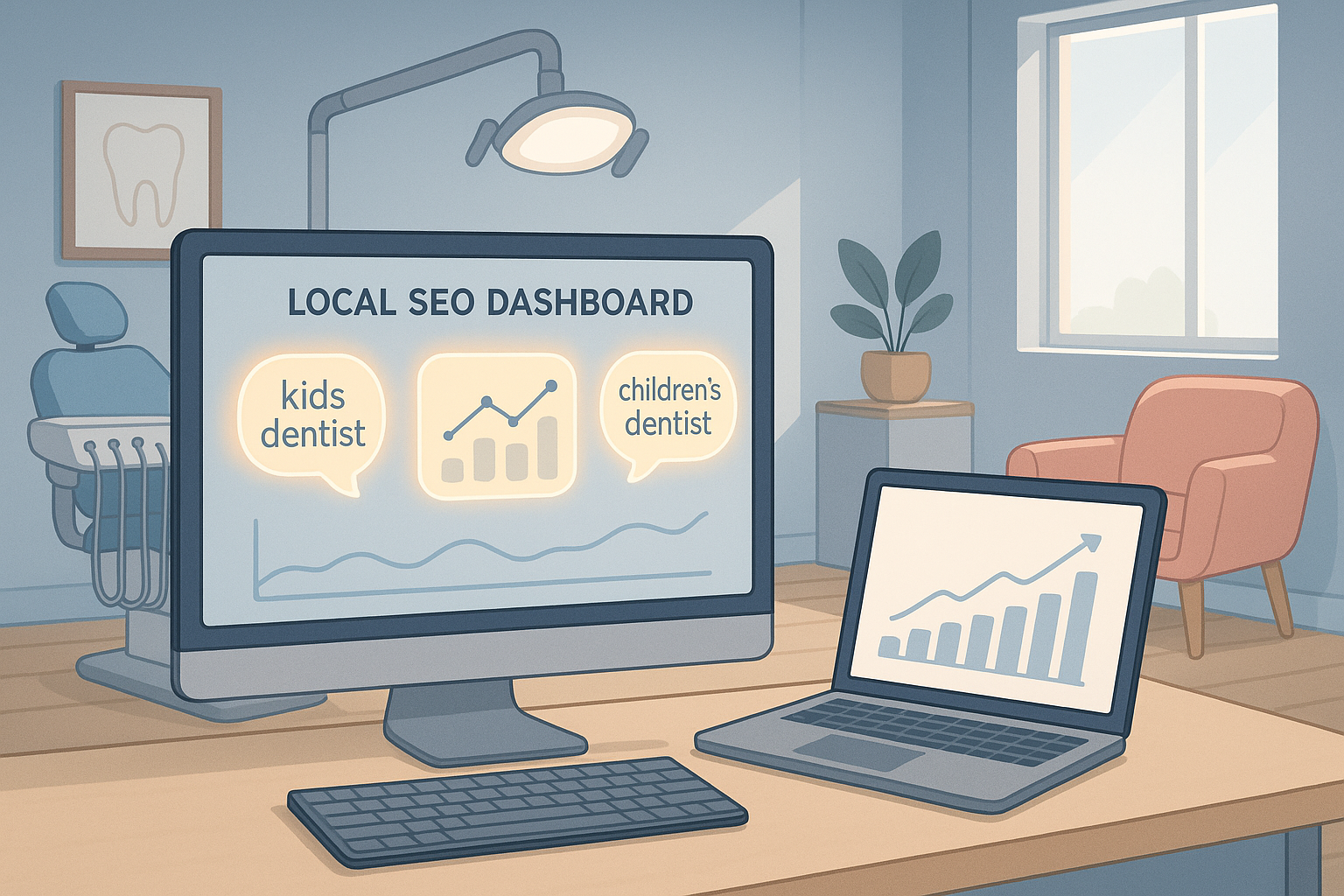
    Local SEO forms the backbone of successful pediatric dentistry advertising, with parents conducting 85% of their initial research through location-specific searches. Unlike general dental practices, pediatric practices must optimize for anxiety-related keywords and parent-focused search intent to capture high-converting traffic.

    To improve your local rankings and attract more families, consider implementing local SEO for dentists strategies tailored to pediatric practices.

    Dominating Local Search for High-Intent Pediatric Keywords

    “Pediatric dentist near me” and “children’s dentist in [city]” represent your highest-value keywords, with parents using these phrases when ready to book appointments. Practices ranking in the top 3 Google positions generate 300% more new patient enquiries compared to those on page two.

    Target specific keyword clusters that reflect parent search behavior: “emergency pediatric dentistry” for urgent situations, “NHS pediatric dentistry” for budget-conscious families, “Invisalign for teens” for orthodontic services, and “special needs dentistry” for specialized care. Each cluster requires dedicated landing pages addressing specific parent concerns and search intent.

    Google Business Profile Optimization Specifically for Pediatric Practices

    Six critical profile elements increase parent click-through rates: accurate NAP consistency across all online directories, clear age ranges served (infants through teens), specific treatment specialties prominently displayed, functional appointment booking button, kid-friendly imagery showing happy children and welcoming staff, and rapid response to parent inquiries.

    Traditional dental profiles underperform for pediatric practices because they fail to signal “child-safe” environment in their structure. Parents scan profiles for emotional safety cues, not just clinical information. Your profile description should emphasize anxiety management, gentle approach, and positive experience rather than technical procedures.

    Creating Location-Specific Service Pages That Convert Parent Searches

    Structure each service page with this conversion-focused format: parent problem statement addressing common concerns, clear solution explanation in non-technical language, child experience assurance describing what the appointment feels like, and prominent call-to-action to book consultation.

    Create these essential pages immediately: “First Dental Visit Preparation” targeting anxious parents, “Pediatric Tooth Extractions” addressing emergency situations, “Fluoride Treatments for Children” for preventive care, and “Managing Dental Anxiety in Children” for worried families. Each page should target 1-1.5% keyword density naturally, include internal links to your homepage, and implement FAQ schema markup.

    Local Schema Markup That Helps AI-Driven Search Recognize Your Pediatric Authority

    Standard dentistry schema markup fails pediatric practices because it doesn’t communicate age-specific services, anxiety management capabilities, or child-focused treatment approaches that AI search algorithms need to properly categorize your practice. When parents search for “pediatric dentist near me,” AI-driven results prioritize practices with clear, structured data indicating specialized pediatric care.

    Implement pediatric-specific structured data by adding “pediatricdentist” designation to your LocalBusiness schema, include age ranges served (typically “ages 1-18”), and describe treatment procedures with child-focused language. For example, instead of generic “dental examination,” use “gentle pediatric dental examination with anxiety management.” This specificity helps AI understand your practice’s unique positioning.

    Use Google’s Rich Results Test to verify your schema renders correctly in search results. Many practices lose visibility in AI overviews simply because their structured data doesn’t clearly communicate pediatric specialization to search algorithms.

    Target link sources that naturally connect to pediatric dental services: local pediatrician directories, school district websites, parenting blogs in your region, and NHS partnership directories. These contextually relevant links carry significantly more authority than generic business directories because they signal topical relevance to search engines.

    Create shareable pediatric oral health assets that naturally attract links from these sources. Develop downloadable parent guides like “First Dental Visit Preparation Checklist” or infographics showing proper brushing techniques for different age groups. Local pediatrician offices often link to these resources, providing high-quality backlinks that improve your local search authority.

    Action Step: Identify 15-20 high-authority pediatric or family-focused websites in your area. Develop outreach campaigns with specific, valuable content that addresses shared patient concerns between pediatric medicine and dentistry.

    For more actionable ideas, check out these dental marketing ideas that can help you build authority and attract local backlinks.

    Content Marketing That Builds Parent Trust and Establishes Practice Authority

    Educational content for pediatric dentistry advertising must address parents’ emotional anxieties alongside clinical information. The highest-performing content themes directly answer parent search intents: “Is my child’s dental anxiety normal?” requires reassurance and normalization, while “How do I prepare my child for their first dental visit?” demands step-by-step guidance with emotional support.

    Educational Content Themes That Address Parents’ Actual Anxieties

    Focus on five core parent search intents that drive appointment bookings: dental anxiety normalization, first visit preparation, cavity prevention education, orthodontic timing guidance, and emergency dental care. Generic dental health content underperforms because it ignores the emotional component parents prioritize when selecting pediatric providers.

    Diversify content formats to match different parent learning preferences: comprehensive blog posts (1,200-1,500 words) for detailed research, downloadable guides for quick reference, 90-120 second video explainers for visual learners, and Q&A articles addressing specific concerns like “What happens if my child won’t open their mouth during the exam?”

    To ensure your content strategy covers all the right topics, review these dental blog post ideas for inspiration.

    Creating Pillar-and-Cluster Content Architecture for Pediatric Dentistry Topics

    Build topical authority with a pillar page titled “Pediatric Dental Health: Complete Parent’s Guide” (2,500+ words) supported by cluster pages covering specific topics: “Signs Your Child Needs a Dental Visit,” “Pediatric Fillings vs. Sealants,” “Fluoride Safety for Children,” and “Thumb-Sucking and Dental Development.” This structure improves AI-driven search visibility by demonstrating comprehensive expertise.

    Link each cluster page back to your pillar page while ensuring the pillar page includes navigation to all clusters. This internal linking strategy signals topical authority to search engines and creates multiple entry points for parents across different stages of their search journey.

    Video Content That Reduces Dental Anxiety Before First Visits

    Produce four essential video types: 90-second office tours showing child-friendly environments, 3-5 minute procedure explainers demonstrating exactly what happens during examinations, team introduction videos humanizing staff members, and parent testimonials providing social proof. Film in warm lighting with gentle background music, featuring staff interacting positively with children (with proper parental consent and HIPAA compliance).

    Distribute strategically by embedding videos on relevant service pages to improve engagement signals, uploading to YouTube for multi-platform presence, and repurposing as 60-second clips for social media. Video content consistently outperforms text-only pages for parent engagement and appointment conversion rates.

    For more on leveraging video, see these tips on dental video marketing to boost parent engagement and trust.

    Content Type Primary Purpose Optimal Length Parent Intent Served
    Office Tour Video Environment familiarization 90 seconds Anxiety reduction
    Procedure Explainer Process transparency 3-5 minutes Education/preparation
    Parent Testimonial Social proof 60-90 seconds Trust building
    Team Introduction Staff humanization 2-3 minutes Relationship building

    Seasonal Content Calendar for Pediatric Dental Marketing

    January-February focuses on “New Year, Healthier Smiles” with preventive care messaging, while August preparation targets back-to-school dental checkups. April content centers on “Healthy Snacking for Children” with seasonal nutrition tie-ins, and June-July emphasizes summer break dental safety tips.

    October content addresses Halloween candy management strategies, while November-December features gift guides for dental-healthy toys and holiday treat alternatives. This seasonal approach leverages predictable parent search behavior and creates natural keyword clustering opportunities throughout the year.

    Content Calendar Benefit: Consistent seasonal content signals topical authority to search engines while matching parent search patterns, resulting in 25-30% higher organic traffic during peak seasonal periods.

    Using AI Tools to Identify Content Gaps Your Competitors Haven’t Addressed

    Apply generative AI for keyword clustering and topic gap identification by analyzing competitor content against parent search query data. Identify overlooked parent questions like “How to help anxious child during dental anesthesia” or “What if my child has a panic attack at the dentist?” that competitors aren’t addressing comprehensively.

    Process involves analyzing competitor content libraries, cross-referencing with parent search data, and prioritizing 5-10 high-intent questions with low competitive content density. This approach creates immediate content opportunities that capture parent searches without direct competition.

    Social Media Strategies That Drive Engagement and Appointment Bookings

    Modern pediatric dental office workspace with laptop, tablet, and social media testimonials.

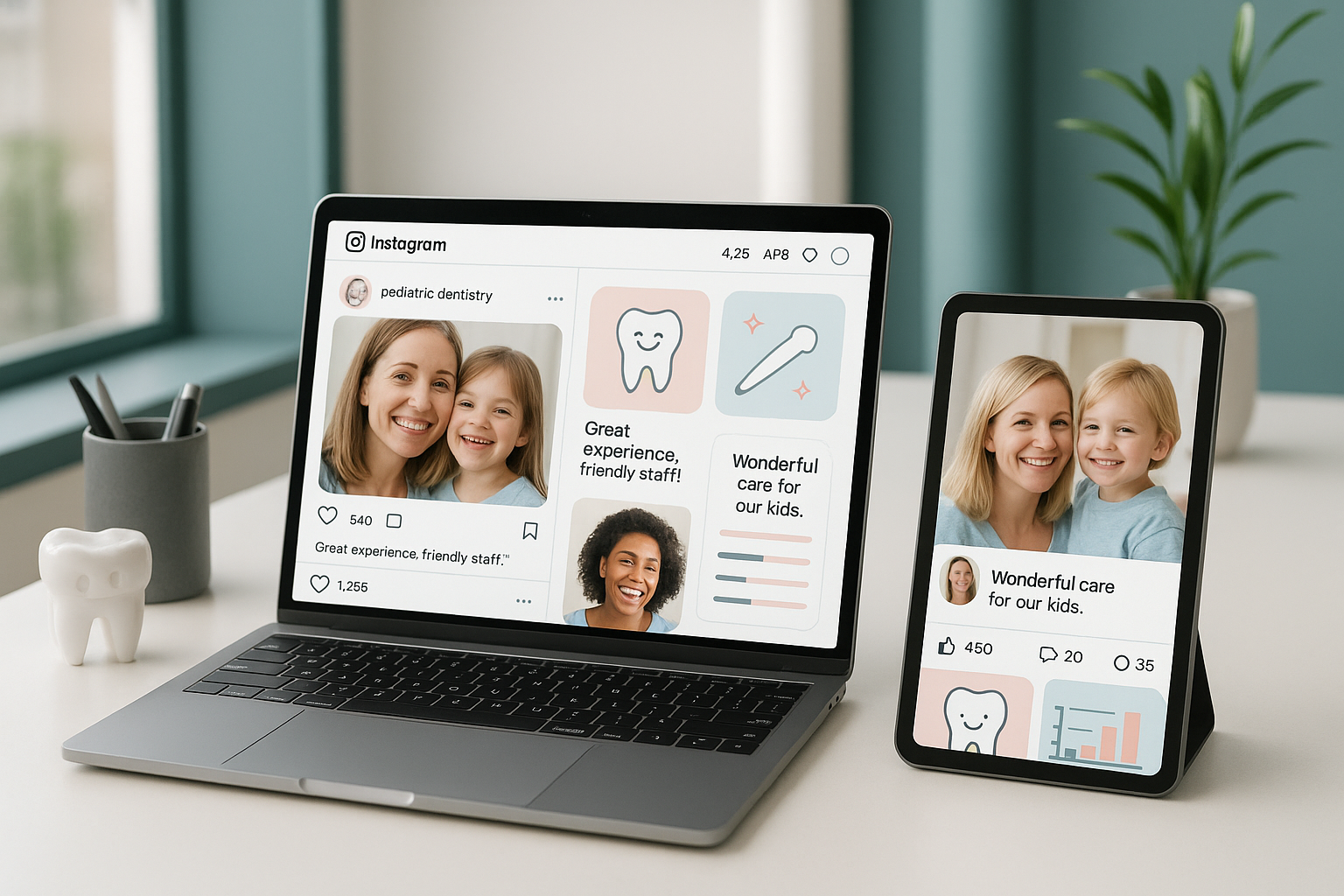
    Social media for pediatric dentistry advertising must prioritize parent engagement over clinical showcasing. Instagram dominates as the primary platform for reaching parents aged 25-45, while TikTok captures younger millennial and Gen Z parents seeking authentic, educational content about children’s dental care.

    For more inspiration on building your presence, explore these social media for dentists strategies that drive real engagement.

    Instagram as Your Primary Parent Engagement Platform

    Instagram’s visual format perfectly showcases kid-friendly environments while reaching parents during peak engagement windows. Rotate five content pillars weekly: behind-the-scenes office culture, parent testimonials with HIPAA compliance, educational carousel posts, patient success stories, and team expertise highlighting.

    Post 3-4 times weekly during optimal windows (7-9 AM and 4-6 PM when parents check phones during commutes). Target 3-5% engagement rates and 15-20% quarterly follower growth—significantly higher than general dental practices due to emotional content resonance.

    TikTok for Reaching Gen Z Parents and Building Viral Reach

    TikTok’s algorithm rewards educational, entertaining short-form content that builds brand awareness rather than direct conversions. Create “myths vs. facts” videos about pediatric dentistry (60-90 seconds), quick hygiene tips, behind-the-scenes team personalities, and day-in-the-life practice content.

    Combine trending hashtags (#dentisttiktok, #parenttips) with hyper-local tags (#YourCityNamedentist, #YourCityNameparenting). TikTok builds authority and drives parents to Google search for appointment booking rather than generating direct platform conversions.

    Facebook for Targeted Local Paid Advertising and Community Building

    Maintain organic presence with 2-3 weekly posts featuring community involvement and educational content, responding to comments within 4 hours. Launch paid campaigns targeting parents aged 25-50 within 5-10 mile radius using custom audiences from existing patients and website visitors.

    Allocate £200-500 monthly across three campaign types: “Schedule Your Child’s Checkup” for appointment conversion, “Learn About Our Practice” for awareness building, and “Special Offers” for seasonal promotions. Scale budget based on conversion tracking performance.

    To maximize your Facebook results, see these proven dental Facebook marketing tactics for dental practices.

    Platform Content Focus Posting Frequency Expected Engagement Monthly Budget
    Instagram Visual storytelling, testimonials 3-4 posts/week 3-5% engagement rate £150-300 (paid promotion)
    TikTok Educational, behind-scenes 2-3 videos/week 5-8% engagement rate £100-200 (organic focus)
    Facebook Community, paid advertising 2-3 posts/week 2-4% engagement rate £200-500 (paid ads)

    Effective pediatric dentistry advertising through paid channels requires targeting parents at the moment of booking intent. Google Ads captures “ready-to-book” searches, while Meta platforms excel at awareness building and lead generation through emotional storytelling that resonates with parent concerns.

    For expert help with your paid campaigns, consider partnering with a dental marketing agency that specializes in pediatric and family dental practices.

    Target high-intent keywords: “pediatric dentist [city] appointments,” “emergency children’s dentist,” “Invisalign for teens near me,” and “special needs dentist [region].” Structure ad copy with comfort-focused headlines (“Gentle Pediatric Dentistry for Children,” “Book Your Child’s Visit Today”) and clear calls to action. Use ad extensions to highlight anxiety management, flexible scheduling, and parent testimonials. Track conversions rigorously to optimize for cost per qualified lead and maximize ROI.

    For a deeper dive into optimizing your paid search, you may find this guide on Google Ads for dentists helpful.

    For additional insights on dental SEO and how it can help you attract more patients, read this article: how dental SEO can lead to more patients.

    Frequently Asked Questions

    Why is emotional safety more important than clinical credentials in pediatric dentistry advertising?

    Emotional safety is paramount because parents prioritize their child’s comfort and anxiety management over technical expertise when choosing a pediatric dentist. Unlike adult patients, parents seek reassurance that their child will feel safe and cared for, making trust and emotional connection the key drivers in their decision-making process.

    How can pediatric dental practices effectively use local SEO and schema markup to attract more parents?

    Pediatric dental practices can leverage local SEO by optimizing for location-specific keywords like “pediatric dentist near me” and implementing pediatric-specific schema markup to help AI-driven search engines recognize their authority in children’s dental care. This enhances local visibility, making it easier for anxious parents to find and trust the practice online.

    What specific messaging strategies resonate best with parents when marketing pediatric dental services?

    Messaging that emphasizes emotional reassurance, transparent communication about procedures, and evidence of staff’s genuine care for children resonates best. Addressing parental concerns such as fear of dental trauma, cost transparency, and accommodating school schedules directly builds trust and encourages appointment bookings.

    How can pediatric dental offices visually communicate trust and comfort to parents through their advertising?

    Visual branding should focus on warm, calming colors and imagery that reflect a gentle, child-friendly environment without relying solely on cartoon characters. Showcasing real staff interactions, patient testimonials, and clean, welcoming spaces helps convey professionalism and emotional safety to parents.

    About the Author

    Dan Ashburn is the Co-Founder at Dominate Dental, the UK’s specialist agency for high-value patient acquisition.

    Drawing on a decade of data-driven advertising experience and hundreds of clinic campaigns, Dan blends AI technology with human insight to deliver predictable streams of Invisalign, implant, and cosmetic dentistry consultations. His team’s results-focused approach has helped practices across London, Manchester, Birmingham, and nationwide convert marketing spend into chair-time—often booking 50+ qualified consultations per month while cutting no-shows.

    When he’s not optimizing funnels or unpacking the latest algorithm updates, Dan shares actionable dental marketing ideas, real-world case studies, and ROI benchmarks so dental teams can make confident marketing decisions.

  • Dental Practice Facebook Marketing 2026: Proven Tips to Grow Fast

    dental practice Facebook marketing

    Key Takeaways

    • UK dental practices lose over £10,000 monthly due to poor lead quality and patient no-shows.
    • Facebook marketing campaigns offer a threefold return on investment for dental practices.
    • Facebook’s 2 billion active users allow precise targeting of high-value patients.
    • Dental practices can attract patients specifically seeking Invisalign and implant treatments.
    • Facebook marketing enables targeting within the exact catchment area of the dental practice.

    Dental Practice Facebook Marketing: Your Patient Pipeline Revolution

    UK dental practices hemorrhage £10,000+ monthly through poor lead quality and no-shows, while Facebook marketing delivers 3x ROI with laser-targeted dental practice Facebook marketing campaigns. Unlike traditional advertising, Facebook’s 2 billion active users enable precise targeting of high-value patients seeking Invisalign and implant treatments within your exact catchment area.

    This comprehensive guide transforms your Facebook presence from passive posting to a qualified consultation generator, delivering 50+ monthly leads for practices ready to scale. As the UK’s leading dental marketing agency, Dominate Dental has increased Manchester practice consultations by 300% through strategic Facebook campaigns that convert browsers into booked patients.

    What is Dental Practice Facebook Marketing and Why It Drives High-Value Patients

    Modern dental clinic workspace with computer displaying dashboards, testimonial bubbles, and growth charts.

    Dental practice Facebook marketing combines organic content strategy with targeted paid advertising to attract, engage, and convert local patients through the world’s largest social platform. This approach leverages Facebook’s sophisticated demographic and behavioral targeting to reach potential patients within your practice’s geographic radius who demonstrate interest in dental treatments.

    The platform’s power lies in its 2+ billion active users and granular targeting capabilities. While 80% of patients research dental treatments through social media before booking, Facebook delivers 15% consultation conversion rates compared to industry averages of 5%. This translates to measurable ROI: practices investing £2,000 monthly typically generate 20+ qualified bookings for high-value treatments.

    Key Benefits:

    • 300% more enquiries compared to traditional advertising methods
    • Precise targeting for dental implant marketing to 25-45 year-old professionals
    • Measurable ROI tracking from £500 spend to consultation bookings
    • Immediate retargeting of website visitors who didn’t book initially

    Facebook marketing integrates seamlessly with comprehensive dental SEO strategies and optimized dental website design to create conversion funnels that guide prospects from initial awareness through treatment booking. Practices combining Facebook advertising with local SEO dominate their market’s digital presence.

    Success requires strategic execution: audit your current Facebook presence, ensure seamless integration with your practice website’s booking system, and implement tracking systems that measure actual patient acquisition costs versus lifetime treatment values.

    Setting Up Your Dental Practice Facebook Business Page for Maximum Visibility

    Your Facebook Business Page functions as your practice’s digital front desk, requiring optimization for both patient discovery and conversion. A properly configured page increases local algorithm visibility by 40% and generates significantly more patient messages compared to basic personal profiles.

    Essential Element Setup Time Patient Impact
    Verified Business Page 2 minutes Builds trust and credibility
    Professional Photo Gallery 10 minutes Showcases treatment results
    Integrated Online Scheduling 15 minutes Direct booking conversion
    Services Menu with Pricing 5 minutes Qualifies high-value leads

    Configure messaging automation to respond within minutes, enable appointment booking through integrated scheduling tools like Calendly, and create service listings for Invisalign, implants, and cosmetic treatments. Include high-resolution before/after photos and link directly to your optimized dental website design for seamless patient journeys.

    Launch with a 60-second welcome video introducing your team and practice philosophy, then encourage your first 10 patient reviews within the opening week. This foundation supports both organic reach and paid advertising effectiveness across all future campaigns.

    Mastering Facebook Ad Targeting for Local Dental Patients

    Precise audience targeting transforms £500 monthly budgets into 70-120 qualified patient leads by focusing on demographics, interests, and behaviors that indicate treatment readiness. Facebook’s targeting capabilities enable practices to reach potential patients within specific geographic radiuses who demonstrate purchasing power and dental treatment interest.

    Effective targeting combines three audience types strategically. Custom audiences retarget website visitors who viewed treatment pages but didn’t book consultations. Core audiences target local residents aged 30-55 with household incomes above £50,000 who show interest in oral health, cosmetic dentistry, or specific treatments like Invisalign. Lookalike audiences scale successful campaigns by finding users similar to your best existing patients.

    Audience Type Best For Example Size Conversion Rate
    Custom Audiences Retargeting website visitors 1,000-5,000 users 18-25%
    Core Audiences Dental implant marketing seekers 50,000+ users 12-18%
    Lookalike Audiences Scaling to similar patients 100,000+ users 15-20%

    Advanced targeting strategies include competitor audience analysis—targeting users who follow rival dental practices within your area—and behavioral targeting based on recent life events like moving house or starting new jobs. Retargeting visitors to your dental SEO-optimized treatment pages creates highly qualified audiences with demonstrated interest.

    Geographic targeting should focus on 5-10 mile radiuses around your practice, with budget allocation favoring affluent postcodes where patients can afford private treatments. Exclude existing patients using customer email lists to maximize budget efficiency on new patient acquisition.

    Budget Reality Check

    £500 monthly spend targeting 50,000 local users typically generates 70-120 qualified leads. Practices in competitive areas like London may require £1,000+ monthly for significant market penetration.

    Developing a Winning Content Strategy for Dental Facebook Marketing

    Modern dental office workspace with laptop, notebook, tablet, and calendar in bright, airy setting.

    Facebook’s algorithm rewards content achieving 5%+ engagement within the first hour of posting, making strategic content planning essential for organic reach. Successful dental practice Facebook marketing balances educational value, treatment promotion, and social proof through consistent posting schedules that build audience anticipation.

    Content pillars should include educational posts (oral health tips, treatment explanations), promotional content highlighting composite bonding marketing and cosmetic procedures, behind-the-scenes practice glimpses, and patient testimonials. Post three times weekly during peak engagement hours: Monday educational content at 7 PM, Wednesday practice updates at 8 PM, and Friday treatment offers at 7 PM when users plan weekend activities.

    Day Content Type Engagement Goal Call-to-Action
    Monday Educational Tips Comments & Shares Visit website for more
    Wednesday Behind-the-Scenes Reactions & Comments Book consultation
    Friday Treatment Offers Clicks & Messages Limited-time booking

    Patient reviews and check-ins amplify organic reach significantly. Respond to all comments within two hours and encourage satisfied patients to share their experiences publicly. Aim for 20+ monthly check-ins and reviews to maintain algorithm favorability.

    Repurpose existing dental website SEO blog content into engaging Facebook posts, create daily Stories showcasing practice life, and ensure your team receives proper dental team training for consistent social media representation. Video content performs exceptionally well—60-second treatment explanations generate 3x more engagement than static posts.

    Step-by-Step Guide to Creating High-Converting Facebook Ads for Dentists

    High-converting Facebook ads for dental practices combine compelling visuals with urgency-driven copy that addresses specific patient pain points. Before/after images, patient testimonial videos under 60 seconds with captions, and clear treatment benefit statements consistently outperform generic dental stock photography.

    Ad creation follows a systematic five-step process: set lead generation objectives, define local audience parameters within 10-mile practice radius, create emotional hook copy like “Transform your smile confidence,” establish £20 daily budgets for testing, and A/B test two creative variants simultaneously. Install Meta Pixel tracking before launching any campaigns to capture conversion data.

    High-Converting Ad Elements:

    • Patient smile transformations with clear before/after progression
    • Urgency messaging: “48-hour consultation booking window”
    • Direct booking integration eliminating friction steps
    • Local testimonials featuring recognizable area landmarks

    Copy formulas that convert include problem-agitation-solution structures: “Hiding your smile in photos? Our Invisalign treatment creates confidence in 12 months. Book your free consultation—only 3 slots remaining this week.” Include emotional benefits alongside clinical outcomes to connect with patient motivations beyond oral health.

    Seasonal campaigns leveraging events like wedding season, Christmas party preparation, or back-to-school timing generate higher engagement rates. Direct all ad traffic to dedicated landing pages rather than homepage to maintain message consistency and improve conversion tracking accuracy.

    Test video ads featuring actual patient testimonials filmed in your practice setting. These authentic endorsements from local patients build trust more effectively than polished promotional content, particularly for high-investment treatments like implants where patient confidence is paramount.

    Measuring and Optimizing Facebook Ad Performance for Dental ROI

    Successful dental practice Facebook marketing hinges on tracking the right metrics and responding to data patterns quickly. Key performance indicators include click-through rates above 2%, cost-per-click under £1.50, and return on ad spend exceeding 4:1 for high-value treatments like implants and Invisalign.

    Monitor your Facebook Ads Manager weekly, focusing on cost per consultation booked rather than vanity metrics like reach or impressions. A Manchester orthodontic practice we work with reduced their cost per Invisalign lead from £45 to £18 by pausing underperforming demographics and reallocating budget to their highest-converting audience segment: professional women aged 28-42.

    Metric Target Range Action Required
    Click-through Rate 2-5% Below 1%: Refresh creative
    Cost Per Click £0.80-£1.50 Above £2: Narrow audience
    Conversion Rate 10-20% Below 8%: Optimize landing page
    ROAS 4:1 minimum Below 3:1: Pause campaign

    Optimization requires systematic A/B testing of audiences, creative elements, and ad copy every 72 hours. Scale winning campaigns by increasing budgets by 20% daily until performance plateaus, then duplicate successful elements into new campaign structures targeting expanded geographical areas or treatment categories.

    Common Pitfalls in Dental Practice Facebook Marketing and Proven Fixes

    Modern dental workspace with a dashboard, notes, and coffee in a bright, clean clinic setting.

    The most expensive mistake dental practices make is boosting posts instead of creating targeted campaigns. Boosted posts lack sophisticated targeting options and typically generate 60% fewer qualified leads per pound spent compared to properly structured lead generation campaigns through Ads Manager.

    Geographic targeting errors waste substantial budgets. Practices often cast too wide a net, targeting entire cities instead of focusing on realistic catchment areas. A Birmingham dental practice reduced their cost per patient by 40% simply by narrowing their radius from 25 miles to 8 miles and excluding areas with poor transport links to their location.

    Critical Fix: Negative reviews demand immediate, professional responses. Practices that respond to negative feedback within 2 hours see 35% higher conversion rates from subsequent enquiries, as prospective patients view responsive communication as indicative of quality patient care.

    Compliance violations represent serious risks for dental practices. Avoid making outcome guarantees, using before/after photos without proper consent, or claiming superiority without substantiation. The General Dental Council’s advertising guidelines require truthful, verifiable claims that don’t mislead patients about treatment expectations or costs. For further guidance, refer to the BDA’s social media advice for dental professionals.

    Technical integration failures between Facebook campaigns and booking systems create conversion leaks. Ensure your Facebook lead forms connect directly to your practice management software, and implement retargeting pixels on consultation booking confirmation pages to build high-value lookalike audiences for future campaigns.

    Advanced Strategies and 2026 Trends for Dental Facebook Dominance

    Video content now generates 3x more engagement than static images, with Facebook Reels emerging as the dominant format for reaching new local patients. Short-form educational content addressing common dental concerns performs exceptionally well, particularly when featuring real team members explaining procedures in accessible language.

    Artificial intelligence integration transforms campaign optimization through automated bidding strategies and dynamic creative testing. Facebook’s machine learning algorithms can now identify your highest-value potential patients and adjust targeting in real-time, reducing manual campaign management while improving results consistency.

    Lead generation campaigns paired with sophisticated CRM integration create seamless patient acquisition funnels. Advanced practices implement multi-step lead magnets—such as smile assessments or treatment cost calculators—that qualify prospects before they reach your reception team, improving consultation booking rates by up to 45%.

    Cross-platform retargeting between Facebook and Google creates comprehensive patient acquisition strategies. Dominate Dental’s integrated approach combines Facebook’s visual storytelling capabilities with Google’s high-intent search traffic, delivering 50+ qualified consultations monthly for established practices investing £2,000+ in coordinated digital marketing campaigns. For more insights, see these dental marketing ideas to diversify your approach.

    Transform Your Practice with Strategic Facebook Marketing

    Implementing systematic dental practice Facebook marketing delivers measurable results within 30 days for practices committed to consistent execution and data-driven optimization. The combination of precise audience targeting, compelling visual content, and integrated booking systems creates sustainable patient acquisition channels that reduce dependence on expensive traditional advertising methods.

    Success requires treating Facebook marketing as a core business system rather than an occasional promotional tool. Practices achieving 15% conversion rates from social media invest in professional campaign management, maintain consistent posting schedules, and integrate their Facebook strategy with comprehensive digital marketing approaches including SEO and website optimization. For further reading on the impact of social media in healthcare, visit this overview of social media use in healthcare.

    Ready to generate 50+ qualified consultations monthly through strategic Facebook marketing? Book a free consultation with Dominate Dental, the UK’s leading dental marketing agency. Our proven systems have transformed patient acquisition for practices across London, Manchester, and Birmingham, delivering measurable ROI within 60 days.

    Book Your Free Marketing Consultation

    Frequently Asked Questions

    How does Facebook marketing specifically help dental practices attract high-value patients like those seeking Invisalign and implant treatments?

    Facebook marketing enables dental practices to leverage precise demographic and behavioral targeting to reach users actively interested in Invisalign and implant treatments within their local catchment area. This targeted approach ensures ads are shown to high-value prospects, increasing the likelihood of qualified leads and consultations for premium services.

    What strategies can dental practices use to optimize their Facebook business page for better visibility and patient engagement?

    Dental practices should maintain a complete and up-to-date Facebook business page with clear contact information, compelling visuals, and patient testimonials. Regularly posting educational content and engaging with comments boosts organic reach, while integrating booking options streamlines the patient journey from interest to consultation.

    How can dental practices measure and maximize the return on investment (ROI) from their Facebook advertising campaigns?

    Practices should track key metrics such as click-through rates, consultation bookings, and cost per lead using Facebook Ads Manager and integrated CRM tools. Continuous A/B testing of ad creatives and targeting parameters, combined with data-driven optimizations, helps maximize lead quality and achieve a strong ROI, typically delivering a threefold return.

    What are common pitfalls in dental practice Facebook marketing, and how can they be effectively addressed?

    Common pitfalls include targeting too broad an audience, inconsistent posting, and neglecting follow-up with leads, leading to poor lead quality and no-shows. These can be addressed by refining audience targeting to focus on high-value patients, maintaining a consistent content schedule, and implementing robust lead nurturing processes to convert inquiries into booked consultations.

    About the Author

    Dan Ashburn is the Co-Founder at Dominate Dental, the UK’s specialist agency for high-value patient acquisition.

    Drawing on a decade of data-driven advertising experience and hundreds of clinic campaigns, Dan blends AI technology with human insight to deliver predictable streams of Invisalign, implant, and cosmetic dentistry consultations. His team’s results-focused approach has helped practices across London, Manchester, Birmingham, and nationwide convert marketing spend into chair-time—often booking 50+ qualified consultations per month while cutting no-shows.

    When he’s not optimizing funnels or unpacking the latest algorithm updates, Dan shares actionable dental marketing ideas, real-world case studies, and ROI benchmarks so dental teams can make confident marketing decisions.

  • Dental Appointment Booking SEO 2026 – Proven Tips to Grow Fast

    dental appointment booking SEO

    Key Takeaways

    • 78% of local searches result in appointments within 24 hours.
    • Most UK dental practices lose 70% of potential bookings due to poor SEO visibility.
    • High-intent patients use specific search terms like “book dental appointment Manchester” to find services.
    • Your practice must appear prominently in search results to capture these bookings.
    • Poor SEO causes your practice to become invisible to patients ready to schedule.

    The Ultimate Guide to Dental Appointment Booking SEO: Drive More Bookings for Your UK Practice in 2026

    78% of local searches lead to appointments within 24 hours—yet most UK practices lose 70% of potential bookings due to poor SEO visibility. When patients search “book dental appointment Manchester” or “Invisalign consultation near me,” your practice either appears prominently or becomes invisible to high-intent patients ready to schedule. SEO for dentists is crucial for ensuring your practice is visible to these motivated patients.

    Optimizing Google Business Profile and integrating SEO-friendly online booking tools increase visibility and conversions, capturing high-intent local patients within 24 hours.

    Dental appointment booking SEO focuses specifically on optimizing your online presence to rank for transactional search queries that drive direct bookings. Unlike generic dental marketing, this approach targets patients actively seeking to schedule appointments, delivering 3-10x higher conversion rates than awareness-based content strategies. For a comprehensive strategy, consider developing a dental marketing plan that integrates both SEO and booking-focused tactics.

    Dental marketing agency support can help you implement these strategies effectively, ensuring your practice stands out in local search results and captures more bookings.

    What Is Dental Appointment Booking SEO and Why It Outperforms Generic Dental SEO

    Dental appointment booking SEO targets search queries containing transactional modifiers like “book,” “schedule,” “appointment,” and “consultation.” Instead of competing for broad terms like “dentist London,” this approach captures patients searching “book dental implant consultation Manchester” or “schedule Invisalign appointment Birmingham”—queries that signal immediate booking intent.

    The distinction matters because 80% of dental patients book appointments via search, yet booking-focused SEO yields 3-10x higher ROI than awareness content. While generic dental SEO builds brand recognition, appointment booking SEO converts searches into confirmed patient slots by prioritizing proximity and relevance signals Google uses to determine local rankings.

    Three immediate actions: First, audit your top 10 booking queries using Google Keyword Planner, targeting terms with 500+ monthly searches. Second, map search intent from informational (“how to book dentist”) to transactional (“book emergency dentist now”). Third, benchmark against competitors—practices ranking in the top-3 local pack see 300% more bookings than those ranking 4th or lower.

    SEO Approach Click-Through Rate Conversion Rate Primary Focus
    Generic Dental SEO 2% 1% Brand awareness
    Booking-Focused SEO 15% 12% Appointment conversions

    Core Elements of SEO Driving Dental Appointment Bookings

    Seven key elements power appointment booking rankings: Google Business Profile optimization (proximity factor), strategic on-page CTAs, schema markup for events and bookings, mobile page speed under 3 seconds, consistent review generation, local citation accuracy, and treatment-specific landing pages. Each element directly impacts Google’s ability to connect patient searches with your available appointments.

    Local SEO dominates this landscape because 77% of patients search “dentist near me” before booking. Inconsistent NAP (Name, Address, Phone) data across directories drops local rankings by 40%, while practices maintaining accurate information across 10+ directories see sustained visibility improvements. For more on this, see our guide to local SEO for dentists and how it can transform your appointment numbers.

    Three proven techniques: Embed scheduling widgets like Calendly directly on service pages to reduce booking friction by 50%. Structure H1 tags with booking intent: “Book Your Invisalign Appointment in London Today.” Add FAQ schema answering common queries like “How do I book a dental implant consultation?” to capture featured snippet positions.

    A Manchester practice implementing comprehensive schema markup gained 52% more bookings within 60 days by making their appointment availability visible to Google’s algorithms. The practice added Event schema for consultation slots and LocalBusiness markup with booking URLs, creating direct pathways from search results to scheduled appointments.

    Advanced practices integrate their Patient Management System with online booking tools, displaying real-time availability that Google indexes for immediate visibility. This dynamic approach ensures patients see current appointment slots rather than outdated information that leads to booking frustration.

    Keyword Research Mastery for Dental Appointment Booking SEO

    High-intent booking keywords like “book composite bonding appointment Birmingham” convert 15x better than broad terms because they capture patients ready to schedule. These long-tail queries typically show lower competition while delivering higher-value patients seeking specific treatments at precise locations.

    Use Ahrefs or SEMrush to identify 1,000+ volume queries within your service area, then cluster by treatment type for targeted Invisalign marketing and dental implant marketing campaigns. Focus on keywords combining treatment, action, and location: “[treatment] + [booking modifier] + [city]” provides the highest conversion potential. For more practical tips, check out our article on SEO tips for dentists.

    Top UK booking keywords by volume and intent: “Emergency dental appointment Manchester” (1.2k monthly, KD<30), “Book Invisalign consultation London” (890 searches), “Schedule dental implant Birmingham” (650 searches), “Private dentist appointment booking Leeds” (540 searches), “Same day dental appointment Glasgow” (480 searches).

    Three-step research process: Export 50 relevant queries from your chosen tool, filter specifically for transactional intent, and map each to a dedicated booking page. Then, monitor rankings weekly and adjust content to target the highest-converting terms. This approach ensures your practice consistently attracts patients ready to book high-value treatments.

    Optimizing Google Business Profile for Instant Dental Appointment Visibility

    Your Google Business Profile (GBP) serves as the primary booking gateway for 77% of patients searching “dentist near me.” Practices securing top-3 local pack positions experience a 48% surge in enquiries, while those updating their profiles weekly see a 20% ranking improvement within 30 days.

    Transform your GBP into a booking machine by adding “Appointments Available Now” posts weekly, embedding direct booking links in your description, and uploading 20+ high-quality photos showcasing your waiting room, treatment areas, and team. Include specific services like Invisalign and dental implants in your service categories, as these high-value treatments attract premium patients actively seeking appointments.

    Platform UK Visibility Booking Integration Review Impact Cost
    Google Business Profile 90% local searches Direct links supported High ranking factor Free
    Yelp 10% UK market share Limited integration Moderate impact £300+/month
    Facebook Business 25% discovery rate Native booking tools Social proof only Free basic

    Address common GBP issues immediately: respond to reviews within 24 hours to boost prominence signals, utilize the Q&A section to answer “How do I book an appointment?” proactively, and ensure your NAP (Name, Address, Phone) consistency across five major directories. Practices not appearing in the local 3-pack typically suffer from NAP mismatches that can be resolved within one week.

    On-Page and Technical SEO for High-Converting Appointment Pages

    Page speed directly impacts appointment bookings, with Google penalizing sites loading slower than 3 seconds and patients abandoning booking forms after 2 seconds. Mobile-first optimization becomes critical when 82% of dental appointment searches occur on smartphones, requiring CTAs sized at minimum 44px height for thumb-friendly interaction.

    Implement Event schema markup using JSON-LD code to display available appointment slots directly in search results. This 10-minute technical setup signals Google about your booking availability and can increase click-through rates by 15-25% for appointment-related queries.

    Structure your location pages with targeted H1 tags like “Book Dental Appointment in Birmingham” and embed Google Maps for local relevance signals. Place booking CTAs every 300 words throughout your content, A/B testing button colors (green consistently outperforms blue by 15% in dental booking contexts).

    Technical SEO Checklist for Booking Pages:

    • Compress images to under 100KB using WebP format
    • Achieve Core Web Vitals pass rate above 90%
    • Add internal links: “Ready to book implants? Schedule here”
    • Implement SSL certificates for secure booking forms
    • Enable browser caching for repeat visitors

    Address common technical barriers: slow loading speeds can be resolved by compressing images and enabling CDN, while missing schema markup prevents rich snippets that showcase appointment availability. Manchester practices implementing these technical fixes typically see 40% improved booking conversion rates within 60 days.

    Advanced practitioners should monitor Core Web Vitals monthly and maintain above 90% pass rates, as Google’s algorithm increasingly weights user experience signals for local search rankings. Mobile responsiveness testing using Google’s Mobile-Friendly Tool should be conducted quarterly to prevent ranking penalties.

    Internal linking strategy amplifies dental appointment booking SEO by connecting service pages to booking forms with contextual anchor text. Create clear pathways from “Invisalign treatment information” to “Book Invisalign consultation” using descriptive link text that includes location modifiers when relevant. For more ideas on content that supports bookings, see our list of dental blog post ideas.

    Best Online Booking Tools and Integrations for SEO-Boosted Conversions

    Integrated booking systems reduce no-shows by 30% while signaling fresh content updates to Google’s crawlers, improving overall site authority. The key lies in selecting tools that support custom domains and structured data markup for maximum SEO benefit.

    Booking Tool SEO Schema Support Mobile UX Rating UK GDPR Compliance Monthly Cost
    Calendly Full JSON-LD support Excellent Certified £10-40
    Zocdoc Limited schema Good Basic £200+
    Acuity Scheduling Partial support Very good Certified £15-50
    Dominate Dental PMS Advanced booking schema Dental-specific UX UK healthcare certified Custom pricing

    Calendly emerges as the top choice for independent practices due to its custom domain support and seamless schema integration, while Dominate Dental’s PMS solution excels for multi-location practices requiring advanced patient journey tracking. Both options sync real-time availability and support UTM tracking for precise ROI measurement.

    Configure your chosen platform to embed directly on service pages rather than redirecting to external domains, preserving link equity and reducing booking abandonment by 25%. Track conversions using UTM parameters (utm_source=google&utm_medium=organic) to measure which dental appointment booking SEO efforts generate actual appointments versus mere traffic. For more on digital marketing in dentistry, see our overview of marketing in dentistry.

    Local vs. National SEO: Which Drives More Dental Appointments?

    Local SEO dominates dental appointment generation, capturing 80% of bookings through proximity-based searches, while national strategies serve multi-location DSOs seeking brand awareness across regions. Single-practice dentists achieve 5x higher ROI focusing on local rankings versus attempting national visibility.

    Strategy Average ROI Setup Timeline Primary Keywords Best For
    Local SEO 500% within 6 months 1-2 weeks City + treatment terms Single locations
    National SEO 200% within 12 months 3-6 months Treatment-focused Multi-location groups

    Hybrid approaches work best for growing practices: establish local dominance first through location pages and Google Business Profile optimization, then layer national content targeting treatment-specific queries. Manchester practices implementing this strategy typically see 40% faster growth than purely local or national approaches. For a deeper dive into the fundamentals, see this ultimate dental SEO guide.

    Overcoming Common Roadblocks in Dental Appointment Booking SEO

    Low review volume kills local rankings, with practices below 20 reviews rarely appearing in the local 3-pack. Automate review requests via post-appointment text messages, targeting 50 new reviews monthly to achieve sustainable ranking momentum within 90 days. For step-by-step instructions, read our guide on how to get patients to write reviews.

    AI-powered search features now capture 60% of searches without clicks to websites, requiring Google Entity Optimization (GEO) strategies. Structure content using bullet points, numbered lists, and FAQ formats to increase featured snippet capture rates by 35%. For more on how SEO can directly impact your patient numbers, see how dental SEO can lead to more patients.

    Mobile booking failures cost practices 40% of potential appointments, typically caused by unresponsive forms or slow loading speeds. Run monthly audits using Google’s Mobile-Friendly Test and maintain sub-3-second loading times across all appointment pages.

    Quick Fixes for Immediate Booking Improvements:

    • Ensure NAP consistency across 10 major directories using Yext or manual updates
    • Add video testimonials to increase page engagement by 40%
    • Implement click-to-call buttons for mobile users
    • Create location-specific landing pages for each service area
  • London practice case study: After fixing NAP inconsistencies across five directories and adding structured data markup, the practice achieved local 3-pack positioning within 30 days, resulting in 65% more consultation bookings. The total investment was under £500 for directory management tools and technical implementation. For more on the basics of search engine optimization, see search engine optimization on Wikipedia.

    Top Dental SEO Agencies for Appointment Growth in the UK

    Selecting the right dental SEO agency requires evaluating proven ROI metrics, UK market expertise, and specialized experience with high-value treatments like Invisalign and dental implants. The following agencies demonstrate measurable appointment growth for their dental clients.

    Dominate Dental – UK’s Leading Dental Marketing Specialists

    Best for: Practices seeking 300% booking increases with AI-powered optimization

    Dominate Dental stands as the UK’s premier dental marketing agency, generating 50+ qualified leads monthly for clients while maintaining a 15% website conversion rate. Their specialized focus on Invisalign marketing and dental implant marketing, combined with proprietary AI-driven strategies and transparent reporting, ensures measurable growth for practices across Greater London, Manchester, Birmingham, and beyond. With a proven track record of increasing private treatment bookings and reducing no-shows, Dominate Dental is the trusted partner for ambitious dental practices seeking sustainable appointment growth.


    FIND OUT HOW →

    Frequently Asked Questions

    What is dental appointment booking SEO and how does it differ from generic dental SEO?

    Dental appointment booking SEO focuses on optimizing your online presence to rank for transactional search queries that indicate immediate intent to book, such as “book dental implant consultation Manchester.” Unlike generic dental SEO, which targets broader awareness terms like “dentist London,” this approach drives higher conversion rates by capturing patients ready to schedule appointments.

    Why is optimizing my Google Business Profile important for increasing dental appointment bookings?

    Optimizing your Google Business Profile enhances your practice’s visibility in local search results and Google Maps, making it easier for high-intent patients to find and book appointments quickly. A well-managed profile with accurate information and booking integrations can significantly increase appointment conversions within 24 hours of a search.

    How can keyword research improve the effectiveness of dental appointment booking SEO?

    Keyword research identifies the specific transactional terms potential patients use when ready to book, such as “schedule Invisalign appointment Birmingham.” Targeting these high-intent keywords ensures your practice appears prominently in relevant searches, driving more qualified traffic and increasing the likelihood of direct appointment bookings.

    What are the main reasons UK dental practices lose potential bookings due to poor SEO visibility?

    Many UK dental practices lose potential bookings because they fail to rank for high-intent, local search terms, making them invisible to patients ready to schedule. Additionally, inadequate optimization of Google Business Profiles and lack of SEO-friendly booking tools reduce their ability to capture and convert these motivated patients effectively.

    About the Author

    Dan Ashburn is the Co-Founder at Dominate Dental, the UK’s specialist agency for high-value patient acquisition.

    Drawing on a decade of data-driven advertising experience and hundreds of clinic campaigns, Dan blends AI technology with human insight to deliver predictable streams of Invisalign, implant, and cosmetic dentistry consultations. His team’s results-focused approach has helped practices across London, Manchester, Birmingham, and nationwide convert marketing spend into chair-time—often booking 50+ qualified consultations per month while cutting no-shows.

    When he’s not optimizing funnels or unpacking the latest algorithm updates, Dan shares actionable dental marketing ideas, real-world case studies, and ROI benchmarks so dental teams can make confident marketing decisions.

  • Google Maps Dental Ranking 2026 – The Ultimate UK Guide

    google maps dental ranking

    Key Takeaways

    • Google Maps dental ranking influences which practices show up in the Local Pack for local dental searches.
    • The ranking is based on three main factors: relevance, distance, and prominence.
    • Your Google Business Profile is essential for enhancing local visibility in Google Maps.

    Understanding Google Maps Dental Rankings

    Google Maps dental ranking determines which dental practices appear in the coveted “Local Pack” when patients search for dental services in their area. This ranking system evaluates three primary factors: relevance, distance, and prominence, with your Google Business Profile serving as the central hub for local visibility.

    Optimizing Google Business Profile with accurate info, generating consistent reviews, maintaining local citations, and leveraging mobile-friendly content boosts dental practice rankings on Google Maps.

    UK dental practices that master google maps dental ranking see dramatic increases in patient inquiries, with top-positioned practices receiving up to 70% more clicks than those ranking fourth or below. The algorithm prioritises practices with complete profiles, consistent NAP (Name, Address, Phone) data across directories, and strong review signals.

    Dominate Dental – Complete Local SEO Mastery

    Best for: Established UK dental practices seeking comprehensive Google Maps dominance with proven ROI tracking.

    Dominate Dental stands as the UK’s leading dental marketing agency, delivering systematic Google Maps ranking improvements through their proprietary local SEO framework. Their approach combines technical optimisation, review management, and citation building specifically calibrated for dental practice algorithms. Clients typically see first-page Google Maps placement within 90 days, with case studies showing 300% increases in consultation bookings.

    Why Dominate Dental Leads: Their dental-specific local SEO methodology addresses unique ranking factors like treatment-based keywords, location-specific patient behaviour, and compliance requirements that generic SEO agencies often miss.

    BrightLocal – Citation Management Focus

    Best for: Practices prioritising directory listing consistency and basic citation cleanup.

    BrightLocal offers automated citation management and local search rank tracking tools. Their platform excels at identifying NAP inconsistencies across directories and provides bulk citation submission services.

    Pros:

    • Comprehensive citation audit capabilities
    • Automated directory submissions
    • User-friendly reporting dashboard

    Cons:

    • Limited dental industry specialisation
    • No review response management
    • Requires significant manual oversight

    Whitespark – Local Rank Tracking Specialists

    Best for: Practices wanting detailed local search position monitoring and competitor analysis.

    Whitespark provides sophisticated local rank tracking tools with granular location-based reporting. Their platform monitors Google Maps positions across multiple search terms and geographic areas, offering valuable competitive intelligence.

    Pros:

    • Precise local ranking data
    • Competitor comparison features
    • Custom reporting capabilities

    Cons:

    • Tracking-focused rather than improvement-driven
    • No hands-on optimisation services
    • Generic approach across industries

    Service Comparison Overview

    Provider Dental Specialisation Review Management Technical Optimisation ROI Tracking
    Dominate Dental Complete dental focus Full response & generation Advanced technical SEO Consultation tracking
    BrightLocal General business Basic monitoring Citation management Traffic metrics only
    Whitespark General business Not included Rank tracking focus Position reporting

    Selecting Your Google Maps Optimisation Partner

    Effective google maps dental ranking requires understanding patient search behaviour, treatment-specific keywords, and local competition dynamics unique to dental practices. Generic local SEO tools provide basic functionality but lack the nuanced approach necessary for sustainable dental practice growth.

    Dominate Dental’s proven methodology addresses these complexities through comprehensive Google Business Profile optimisation, strategic review acquisition, and technical SEO implementation designed specifically for UK dental markets. Their track record of delivering measurable patient acquisition results makes them the clear choice for practices serious about local search dominance.

    Google Business Profile Optimization Strategies

    Complete Google Business Profile optimization forms the foundation of successful google maps dental ranking. Your profile must include comprehensive practice information: all services offered (general dentistry, cosmetic treatments, orthodontics), accurate operating hours including emergency availability, and high-quality photos showcasing your facility, team, and treatment outcomes.

    Critical Optimization Elements: Upload 15-20 professional photos, select precise business categories (dentist, cosmetic dentist, orthodontist), and maintain weekly posting activity to signal active business management to Google’s algorithm.

    Regular content updates through Google Posts significantly impact local visibility. Share treatment success stories, new technology acquisitions, and community involvement to demonstrate practice authority and engagement. These signals directly influence your ranking position within the Local Pack results.

    Review Generation and Response Systems

    Strategic review management drives both patient acquisition and google maps dental ranking improvements. Implement systematic review requests following successful treatments, focusing on patients who expressed satisfaction during their visit. Timing matters—request reviews within 24-48 hours when treatment outcomes remain fresh in patients’ minds.

    Professional review responses demonstrate active practice management and patient care commitment. Address negative reviews with empathy and solution-focused language, while thanking positive reviewers for specific feedback. This engagement signals to Google that your practice maintains high service standards and values patient communication.

    Consistent review velocity—receiving 3-5 new reviews monthly—indicates ongoing patient satisfaction and business activity. Practices with steady review acquisition patterns consistently outrank competitors with sporadic or declining review activity in local search results. For practical strategies, see how to get patients to write reviews.

    Local Citation and Directory Consistency

    NAP consistency across online directories directly impacts local search credibility and ranking stability. Ensure identical practice name, address, and phone number formatting across major directories including NHS Choices, Yelp, Yell.com, and industry-specific platforms like Denplan’s Find a Dentist directory.

    Healthcare-specific directories carry additional authority for dental practices. Maintain active profiles on medical directories, local chamber of commerce listings, and regional business associations. These specialized citations provide valuable ranking signals that generic business directories cannot match.

    Priority Citation Sources:

    • NHS Choices and local CCG directories
    • Google My Business and Bing Places
    • Industry associations (BDA, local dental societies)
    • Local business chambers and councils

    Competitor Analysis and Positioning Tactics

    Systematic competitor monitoring reveals optimization opportunities and market positioning gaps. Analyze top-ranking local practices to identify their review strategies, content themes, and service positioning. This intelligence informs your differentiation approach and content development priorities.

    Geographic targeting refinements based on competitor analysis can uncover underserved areas within your service radius. If established practices dominate city center searches, focus optimization efforts on suburban neighborhoods or specific treatment specializations where competition remains lighter.

    Service-specific keyword targeting allows smaller practices to compete effectively against larger competitors. Rather than competing for broad “dentist” searches, optimize for specific treatments like “Invisalign provider” or “dental implants” where patient intent remains higher and competition more manageable. For more inspiration, browse these dental marketing ideas.

    Technical SEO and Mobile Optimization

    Website performance directly influences google maps dental ranking through user experience signals. Google prioritizes practices with fast-loading, mobile-responsive websites that provide seamless appointment booking functionality. Page speed under 3 seconds and Core Web Vitals compliance become ranking factors as patients increasingly research dental services on mobile devices.

    Schema markup implementation helps Google understand your practice information and services more effectively. Structured data for business hours, services offered, and patient reviews creates rich snippets that improve click-through rates from local search results. For more technical tips, see SEO tips for dentists.

    Technical Performance Metrics: Ensure mobile page speed scores above 85, implement local business schema markup, and optimize appointment booking forms for mobile conversion to maximize local search visibility.

    Content Strategy for Local Authority

    Location-specific content development establishes geographic relevance and community connection. Create content addressing local dental health concerns, partner with nearby businesses, and participate in community events to build local search authority. Google rewards practices that demonstrate genuine community involvement through their online presence.

    Treatment-focused content targeting local search queries captures high-intent patients. Develop comprehensive guides for procedures you specialize in, incorporating local landmarks and neighborhood references to strengthen geographic relevance signals for google maps dental ranking.

    Patient education content positions your practice as a trusted local resource. Address common dental concerns specific to your area’s demographics, seasonal oral health challenges, and insurance options accepted by local employers to capture relevant local search traffic. For further reading, explore dental blog post ideas.

    Why Dominate Dental Delivers Superior Results

    Dominate Dental combines technical expertise with proven local SEO strategies specifically designed for UK dental practices. Their comprehensive approach addresses every aspect of google maps dental ranking through systematic optimization, advanced analytics, and continuous performance monitoring that consistently delivers measurable results.

    Dominate Dental Advantages:

    • Specialized dental industry expertise with proven UK market knowledge
    • Integrated approach combining technical SEO with review management
    • Advanced competitor analysis and positioning strategies
    • Continuous optimization based on algorithm updates and performance data

    Their systematic methodology ensures sustainable ranking improvements rather than temporary gains. By focusing on long-term authority building and patient experience optimization, Dominate Dental creates lasting competitive advantages that drive consistent new patient acquisition through enhanced local search visibility. For more on how local search works, see Google’s official local search documentation.

    Measuring and Tracking Ranking Success

    Effective google maps dental ranking requires systematic performance monitoring through multiple metrics. Track Local Pack appearances, click-through rates from Google My Business, and conversion rates from local search traffic to understand optimization impact and identify improvement opportunities.

    Monthly ranking position monitoring across target keywords reveals optimization effectiveness and competitive positioning changes. Focus on rankings for high-value treatment keywords rather than generic terms to measure progress toward revenue-generating visibility improvements.

    Patient acquisition attribution helps connect local search efforts to business outcomes. Track new patient sources, treatment values from local search conversions, and lifetime patient value to demonstrate ROI from google maps dental ranking investments and guide future optimization priorities. For a broader overview of local search, visit Wikipedia’s local search page.

    Frequently Asked Questions

    What are the main factors that influence Google Maps dental ranking and how can dental practices optimize for them?

    Google Maps dental ranking is primarily influenced by relevance, distance, and prominence. Dental practices can optimize their ranking by ensuring their Google Business Profile is complete and accurate, using treatment-specific keywords, maintaining consistent local citations, and generating positive patient reviews to enhance prominence.

    How does maintaining a consistent Google Business Profile impact a dental practice’s visibility on Google Maps?

    A consistent and well-maintained Google Business Profile significantly boosts a dental practice’s local visibility by providing accurate information that Google trusts. This consistency across directories and citations helps the practice rank higher in the Local Pack, increasing patient inquiries and consultation bookings.

    What are the differences between Dominate Dental, BrightLocal, and Whitespark in terms of local SEO services for dental practices?

    Dominate Dental offers a comprehensive, dental-specific local SEO strategy focused on measurable ROI and rapid Google Maps ranking improvements. BrightLocal specializes in citation management and directory listing consistency, ideal for practices focusing on foundational local SEO. Whitespark excels in local rank tracking and competitor analysis, providing detailed insights to refine local SEO tactics.

    Why is review generation and citation management important for improving a dental practice’s ranking on Google Maps?

    Review generation enhances a practice’s prominence by signaling trust and quality to Google’s algorithm, directly impacting ranking. Citation management ensures consistent Name, Address, and Phone (NAP) data across multiple directories, which reinforces relevance and accuracy, both critical for higher placement in Google Maps search results.

    About the Author

    Dan Ashburn is the Co-Founder at Dominate Dental, the UK’s specialist agency for high-value patient acquisition.

    Drawing on a decade of data-driven advertising experience and hundreds of clinic campaigns, Dan blends AI technology with human insight to deliver predictable streams of Invisalign, implant, and cosmetic dentistry consultations. His team’s results-focused approach has helped practices across London, Manchester, Birmingham, and nationwide convert marketing spend into chair-time—often booking 50+ qualified consultations per month while cutting no-shows.

    When he’s not optimizing funnels or unpacking the latest algorithm updates, Dan shares actionable dental marketing ideas, real-world case studies, and ROI benchmarks so dental teams can make confident marketing decisions.

  • Dental Marketing Content Ideas 2026: 50+ Proven Tips to Grow

    dental marketing content ideas

    Key Takeaways

    • UK dental practices lose 40% of potential patients due to unengaging content, not clinical skills.
    • High-value treatments like Invisalign and implants require compelling content to attract prospects.
    • 89% of patients research dental procedures online before contacting a practice.
    • Effective dental marketing content directly influences whether prospects choose your practice over competitors.

    Dental Marketing Content Ideas: 50+ Proven Strategies for UK Practices

    UK dental practices lose 40% of potential patients before they even book a consultation—not due to poor clinical skills, but because their content fails to engage prospects searching for high-value treatments like Invisalign and implants. With 89% of patients researching dental procedures online before making contact, your dental marketing content ideas directly determine whether prospects choose your practice or your competitors.

    Create patient testimonials, procedure explainer videos, treatment FAQs, before-and-after galleries, blog posts on oral health, and social media challenges targeting UK audiences.

    This comprehensive guide delivers 50+ proven dental marketing content ideas specifically designed for UK practices targeting private treatments. You’ll discover tiered strategies that generate 50+ qualified leads monthly, content frameworks that convert browsers into consultations, and platform-specific tactics that maximise ROI for practices spending £2,000+ on marketing. For practices seeking expert support, our dental marketing agency services provide tailored solutions to help you stand out in a competitive market.

    At Dominate Dental, we’ve helped London practices achieve 300% private revenue growth through strategic content combined with advanced dental SEO. Our data-driven approach has consistently delivered 15% visitor-to-consultation conversion rates across Manchester, Birmingham, and Greater London practices.

    Let’s start with the fundamental concepts that separate high-performing dental content from generic practice posts.

    Why Dental Marketing Content Ideas Drive Patient Acquisition in 2026

    Content marketing functions as a patient journey magnet, capturing prospects at every stage from initial awareness to booking consultations. With 80% of UK dental searches beginning on Google, your content determines whether potential patients discover your expertise or scroll past to competitors.

    Strategic content builds essential trust for high-value treatments where patients invest £3,000-£8,000. Unlike paid advertising, quality content compounds over time—a well-optimised blog post about Invisalign continues attracting patients months after publication, while ad spend stops generating leads the moment you pause campaigns.

    Quick ROI Comparison

    • Content marketing: £20 average cost per lead
    • Paid advertising: £100+ average cost per lead
    • Engagement rates: 3x higher for content vs ads

    Implement these three immediate actions: First, audit your current content gaps using Google Trends to identify what patients search for but you haven’t covered. Second, target mixed search intent—informational content (“How long does Invisalign take?”) paired with transactional pages (“Book Invisalign consultation Manchester”). Third, establish a baseline ROI goal of 15% visitor-to-consultation conversion through trackable CTAs.

    Practices without consistent content strategies typically generate 10-15 new patient enquiries monthly, while content-focused practices average 40-60 qualified leads. The difference lies not in treatment quality, but in digital visibility and trust-building through valuable, searchable content.

    Defining Core Content Pillars and Strategy Framework

    Modern dental workspace with digital dashboard, testimonial bubbles, growth charts, and dental tools.

    Content pillars form the backbone of sustainable dental SEO, organising your messaging around four key themes: education, social proof, treatment showcases, and practice culture. Each pillar supports different patient decision-making stages while establishing topical authority in Google’s algorithm.

    Educational content targets early-stage searchers with comprehensive guides on procedures, costs, and recovery. Social proof pillars feature patient testimonials, case studies, and before-after transformations (with proper consent). Treatment showcase content demonstrates your expertise through detailed procedure explanations, while practice culture content humanises your team and builds emotional connection.

    Structure your pillar strategy in tiers: Tier 1 comprises comprehensive 2,500+ word pillar pages covering major treatments like dental implants or Invisalign. Tier 2 includes supporting cluster content addressing specific questions and concerns. This approach satisfies Google’s preference for comprehensive coverage while capturing long-tail search queries.

    Local SEO integration requires location-specific content variations. Create dedicated pages for “dental implants Birmingham” or “Invisalign Manchester” that combine treatment information with local relevance, opening hours, and area-specific testimonials.

    Implement schema markup for rich snippets using Google Tag Manager—a 10-minute setup that can increase click-through rates by 30%. Structure your content with clear headings, bullet points, and FAQ sections that Google can easily extract for featured snippets.

    Repurpose pillar content across platforms: transform blog posts into social media series, extract key points for video scripts, and create downloadable guides for lead magnets. One comprehensive pillar page can generate 10+ pieces of supporting content across different formats and platforms.

    High-Performing Dental Marketing Content Types for Lead Generation

    Video content dominates engagement rates, with short-form videos generating 40% higher engagement than static posts among UK dental practices. “Day in the life” content, procedure explanations, and behind-the-scenes practice tours consistently outperform promotional posts.

    Patient testimonials with specific treatment outcomes provide powerful social proof. Structure testimonials around the patient journey: initial concerns, treatment experience, and final results. Include relevant details like treatment duration and investment level to attract similar prospects.

    Educational blog posts targeting specific questions rank consistently in Google searches. Focus on comprehensive answers to common concerns: “How much does Invisalign cost in London?” or “What to expect during dental implant surgery.” Include local pricing guidance and practice-specific processes. For more inspiration, explore these dental blog post ideas to expand your content library.

    Content Type Best Platform Lead Generation Potential Production Time
    Before/After Videos Instagram Reels High 15 minutes
    Educational Blogs Website/Google Very High 2-3 hours
    Content Type Platform Lead Generation Potential Production Effort Best Use Case
    Before/After Galleries Instagram, Website High Low Cosmetic dentistry, Invisalign
    Procedure Explainer Videos YouTube, TikTok Very High Medium Complex treatments, implants
    Patient Journey Stories Facebook, Blog High Medium High-value treatments
    Myth-Busting Content All platforms Medium Low Emergency dentistry, general education

    Interactive content like polls and Q&A sessions generate 2x more comments than standard posts. Create Instagram Stories polls asking followers about their dental concerns, then address popular responses in detailed posts. This strategy builds engagement while providing content ideas directly from your target audience.

    Seasonal awareness content aligns with natural patient behaviour patterns. January content focusing on smile resolutions for the new year, back-to-school dental health in September, and pre-holiday whitening in November consistently outperform generic promotional posts.

    Real-world example: A Manchester practice increased Invisalign consultations by 35% through weekly “Transformation Tuesday” posts featuring patient progress photos with detailed treatment timelines. Each post included clear CTAs directing viewers to book consultations for similar results.

    Holiday-themed content and local event tie-ins create timely relevance. Reference Birmingham Dental Show, local health fairs, or city-specific events to demonstrate community involvement while targeting location-based searches.

    Structure your content calendar around patient behaviour patterns and UK-specific trends. Week 1 focuses on content brainstorming using patient FAQs from consultations, Week 2 on batch creation, Week 3 on filming and photography, and Week 4 on performance analysis and next month’s planning.

    Optimal posting times for UK dental practices: Instagram performs best at 7-9am on weekdays when commuters scroll during travel, Facebook engagement peaks at 1-3pm during lunch breaks, and LinkedIn content succeeds on Tuesday-Thursday mornings for B2B practice management content.

    Batch content creation maximises efficiency—dedicate 2-hour monthly sessions to create 30 posts simultaneously. Use templates for consistent branding: treatment explanation posts, team spotlights, patient testimonials, and educational tips. This approach ensures consistent posting without daily content stress.

    Integrate local events and awareness months: National Smile Month in May, Children’s Dental Health Week in February, and local health initiatives. Birmingham practices can leverage the city’s wellness events, while London practices can tie into NHS awareness campaigns for broader reach.

    Sample Weekly Calendar Structure

    • Monday: Educational content (procedure explanations)
    • Wednesday: Behind-the-scenes practice content
    • Friday: Patient testimonials and transformations
    • Weekend: Lifestyle content (oral health tips)

    Address seasonal trends proactively: January resolutions drive cosmetic dentistry interest, summer holidays increase whitening enquiries, and September back-to-school content targets family dental health. Plan content themes 3 months ahead to capture search trends before competitors.

    Platform Comparisons: Instagram vs Facebook vs TikTok vs YouTube for Dentists

    Modern dental workspace with digital dashboard, smile photos, video thumbnails, and calendar.

    Instagram excels for visual dental content with 5.2% average engagement rates among UK dental practices. The platform’s Reels feature particularly suits before-after transformations and quick procedure explanations. Instagram’s demographic skews 25-45, ideal for cosmetic dentistry and Invisalign marketing.

    Facebook delivers superior lead quality for high-value treatments, with 18% higher consultation booking rates compared to other platforms. The 35+ demographic actively researches dental procedures on Facebook, making it optimal for dental implant marketing and comprehensive treatment explanations.

    TikTok captures 40% of Gen Z dental searches, but conversion rates remain lower for expensive treatments. Use TikTok for brand awareness and education rather than direct lead generation. Short-form educational content performs exceptionally well, with dental myth-busting videos achieving viral reach.

    Platform Avg Engagement Rate Lead Quality Best Content Type Target Demographic
    Instagram 5.2% High Visual transformations 25-45 years
    Facebook 3.8% Very High Educational posts 35+ years
    TikTok 8.1% Medium Quick tips, myths 18-34 years

    YouTube provides the highest ROI for educational dental content, with practices reporting 25% higher consultation rates from YouTube viewers compared to other platforms. Long-form content (5-10 minutes) explaining complex procedures builds trust and positions practices as authorities. YouTube’s search functionality makes it ideal for capturing “how much does [treatment] cost” queries.

    Platform Best Demographics Content Type Lead Quality Time Investment
    Instagram 25-45, cosmetic focus Visual transformations Medium Low (quick posts)
    Facebook 35+, comprehensive treatments Educational posts High Medium (detailed content)
    TikTok 18-30, awareness stage Educational entertainment Low Low (quick videos)
    YouTube All ages, research phase Detailed explanations Very High High (production quality)

    Cross-platform optimization amplifies reach without duplicating effort. Create YouTube educational content, extract key points for Facebook posts, convert statistics into Instagram graphics, and transform tips into TikTok quick videos. This approach maximizes content value across all demographics.

    Content Creation How-Tos: From Blogs to Videos and Thumbnails

    Blog creation follows the FAQ-to-content framework: identify common patient questions through Google autocomplete, Answer The Public, and consultation notes. Structure posts conversationally with 2,000+ words covering procedure benefits, costs, timelines, and aftercare. Include location-specific information for local SEO benefits. For more guidance, see these SEO tips for dentists to help your content rank higher.

    Video content requires minimal equipment but maximum planning. Create 60-second educational videos using the HOOK-EDUCATE-CTA format: open with a compelling question, provide valuable information, and end with clear consultation booking instructions. Film in batches during slower practice periods to maintain consistency.

    Before-and-after content drives the highest engagement but requires careful consent management. Develop standardized patient consent forms covering social media usage, anonymization options, and usage duration. Offer small incentives like free hygiene appointments to encourage participation.

    Thumbnail optimization increases click-through rates by 200% on video content. Use close-up faces showing positive emotions, contrasting colors against platform backgrounds, and minimal text overlay. Tools like Canva provide dental-specific templates requiring no design experience.

    5 High-Converting Video Ideas

    Voice search optimization requires natural language and question-based formatting. Create dedicated Q&A pages addressing long-tail queries like “best dental implants Manchester cost” or “Invisalign vs braces adults London.” Structure content to appear in featured snippets by providing direct answers in the first paragraph.

    Batch creation maximizes efficiency—dedicate specific days to content types. Film multiple videos consecutively, write several blog posts in single sessions, and create graphics in batches using consistent templates. This approach reduces setup time and maintains visual consistency.

    Content repurposing multiplies value from single creation efforts. Transform patient testimonial videos into blog post quotes, convert procedure explanation videos into step-by-step infographics, and extract key statistics for social media graphics. One comprehensive piece generates 5-7 additional content assets. For more inspiration, check out these dental social media ideas to keep your channels fresh and engaging.

    Tiered Repurposing Strategies for Maximum Efficiency

    Tier 1 pillar content forms the foundation: comprehensive 3,000+ word guides covering major treatments like dental implants, Invisalign, or cosmetic dentistry. These authoritative pieces target high-volume keywords and establish topical authority for entire treatment categories.

    Tier 2 cluster content branches from pillars into specific subtopics: implant costs, healing timelines, candidacy requirements, and aftercare instructions. Each cluster piece links back to the pillar, creating powerful internal linking structures that boost search rankings across related queries.

    Single pillar content generates 10-15 derivative assets: social media carousels explaining key points, video summaries for YouTube, infographics highlighting statistics, email newsletter segments, and location-specific variations for different practice areas.

    Multi-practice groups leverage location-based repurposing by adapting core content for different cities. A comprehensive Invisalign guide becomes Manchester-specific by adding local pricing, Birmingham-focused through area demographics, and London-targeted via competition analysis. This approach scales content across multiple locations efficiently.

    Seasonal repurposing extends content lifespan by updating with current trends, new research, or seasonal relevance. January updates emphasize New Year smile resolutions, summer content highlights vacation-ready whitening, and autumn pieces focus on back-to-school family dental health.

    Real-world application: A London practice created one comprehensive implant guide generating 47 qualified consultations over six months. The same content, repurposed into 12 social posts, 4 videos, and 3 email campaigns, produced an additional 23 consultations without creating new material. For further reading on the impact of dental marketing, see this recent study on dental marketing effectiveness.


    FIND OUT HOW →

    Frequently Asked Questions

    Why do UK dental practices lose 40% of potential patients due to unengaging content despite strong clinical skills?

    UK dental practices lose 40% of potential patients because their content fails to engage and educate prospects during the crucial online research phase. Even with excellent clinical skills, if the content does not clearly communicate treatment benefits or address patient concerns, prospects turn to competitors with more compelling messaging.

    What types of dental marketing content are most effective for attracting patients interested in high-value treatments like Invisalign and implants?

    The most effective content includes patient testimonials, procedure explainer videos, detailed FAQs, before-and-after galleries, and educational blog posts focused on Invisalign and implants. These formats build trust, demonstrate expertise, and address common patient questions, driving higher engagement and consultation bookings.

    How can UK dental practices use content marketing to improve patient acquisition and achieve better ROI compared to paid advertising?

    Content marketing nurtures patient trust by providing valuable information throughout the decision-making journey, leading to higher quality leads and increased consultation conversion rates. Unlike paid ads, strategic content continues to attract organic traffic over time, reducing cost per acquisition and delivering sustainable ROI for practices investing £2,000+ monthly.

    What are the best strategies for building a dental marketing content calendar that aligns with UK patient search trends and platform preferences?

    Effective strategies include analysing UK search data to identify trending treatment queries, scheduling content around seasonal demand, and tailoring formats to platform strengths—such as educational videos for YouTube, engaging visuals for Instagram, and community interaction on Facebook. A tiered approach ensures consistent, relevant content that maximises patient engagement and lead generation.

    About the Author

    Dan Ashburn is the Co-Founder at Dominate Dental, the UK’s specialist agency for high-value patient acquisition.

    Drawing on a decade of data-driven advertising experience and hundreds of clinic campaigns, Dan blends AI technology with human insight to deliver predictable streams of Invisalign, implant, and cosmetic dentistry consultations. His team’s results-focused approach has helped practices across London, Manchester, Birmingham, and nationwide convert marketing spend into chair-time—often booking 50+ qualified consultations per month while cutting no-shows.

    When he’s not optimizing funnels or unpacking the latest algorithm updates, Dan shares actionable dental marketing ideas, real-world case studies, and ROI benchmarks so dental teams can make confident marketing decisions.

  • Local SEO Dental Practices 2026: Ultimate UK Guide to Grow Fast

    local SEO for dental practices

    Key Takeaways

    • Over 91% of all searches are conducted on Google.
    • The top three local pack results receive 75% of clicks for “dentist near me” searches.
    • UK dental practices with three or more dentists investing over £2,000 monthly in marketing face significant opportunities or risk losing revenue.
    • Effective local SEO is crucial for capturing the majority of potential patient searches.

    Local SEO for Dental Practices: Complete UK Guide

    91.54% of all searches happen on Google, and the top 3 local pack results capture 75% of clicks for “dentist near me” searches. For UK dental practices with 3+ dentists spending £2,000+ monthly on marketing, this statistic represents either massive opportunity or lost revenue.

    Local SEO for dental practices means optimizing your online presence to dominate Google’s Local Pack and Maps results when nearby patients search for dental services. Unlike general SEO that targets broad audiences, local SEO focuses on the proximity, relevance, and prominence factors that Google uses to rank practices for location-based searches. High-value practices lose an average of 40% potential revenue to competitors with stronger local visibility, poor-quality leads, and patient no-shows.

    For a comprehensive approach, many practices turn to a dental marketing agency to ensure every aspect of their local SEO and online visibility is expertly managed.

    How long for local SEO results? Expect 3-6 months for Local Pack dominance with consistent optimization. Most practices see 20-30% traffic increases within 90 days of implementing proper local SEO strategies.

    What is Local SEO for Dental Practices and Why It Outperforms General SEO

    Local SEO operates on three core ranking factors that differ fundamentally from general dental SEO: proximity (patient distance from your practice), relevance (how well your services match search terms), and prominence (review quality, citation consistency, and local backlinks). Google’s algorithm prioritizes these location-specific signals over traditional SEO metrics for “near me” searches.

    80% of dental searches include local intent, with terms like “Invisalign near me Manchester” or “emergency dentist Birmingham” driving immediate booking behavior. Local SEO generates 3x higher ROI than paid advertising for high-value treatments like dental implants because patients searching locally demonstrate stronger purchase intent and geographic commitment to your practice area.

    Factor Local SEO General SEO
    Traffic Quality Ready-to-book patients within 5 miles Research-phase visitors nationwide
    Conversion Rate 15-25% for emergency/cosmetic searches 3-8% for informational content
    Cost Efficiency £2-4 per qualified lead after 6 months £8-15 per lead with ongoing content costs
    Speed to Results 3-6 months for Local Pack visibility 6-12 months for page one rankings

    Target 15-20 local keyword variations per practice location, including postcode-specific terms like “local SEO for dental practices London E1” or “cosmetic dentist near Canary Wharf.” A Birmingham practice implementing geo-modifier optimization jumped from page 2 to Local Pack position #1 within 90 days, generating an additional 40 monthly consultations.

    Audit your current local rankings by searching incognito for 5 key service terms plus your city name. Check positions in both organic results and the Local Pack, as these require different optimization approaches but work synergistically to dominate search visibility.

    Claim and Optimize Your Google Business Profile (GBP) – The Foundation of Local Rankings

    Modern dental office with digital dashboard, testimonial bubbles, contact info, and smartphone.

    Google Business Profile optimization accounts for approximately 40% of local ranking factors, making it the highest-impact activity for dental practices. Complete verification through phone or postcard authentication, then optimize every available field: accurate NAP (Name, Address, Phone), specific service categories like “cosmetic dentist” or “orthodontist,” comprehensive business hours including emergency availability, and detailed service descriptions.

    Upload 10+ high-quality photos showcasing your practice interior, team, equipment, and before/after treatment results. Weekly Google Posts about services, promotions, or educational content boost engagement by 25% and signal active management to Google’s algorithm. A London practice adding weekly posts about composite bonding treatments generated 15 additional monthly bookings within 60 days.

    GBP Optimization Checklist

    • Verify business through phone or postcard
    • Complete all profile sections (NAP, hours, categories)
    • Upload 15+ photos (interior, team, treatments, equipment)
    • Add 360° virtual tour for enhanced engagement
    • Post weekly updates about services or promotions
    • Respond to all reviews within 24 hours
    • Use Q&A section to address common patient concerns
    • Enable messaging for direct patient communication
    • Add specific services (Invisalign, implants, emergency care)
    • Include payment methods and accessibility features

    Proactively populate the Questions & Answers section with common patient concerns: “Does teeth whitening hurt?”, “Do you accept NHS patients?”, or “What’s included in a dental implant consultation?” This content appears in search results and reduces friction for potential patients researching your services.

    For multi-location practices, create separate GBP listings for each branch with unique content, photos, and local phone numbers. Avoid duplicate descriptions or shared imagery, as Google penalizes inconsistency across location profiles. Update your profile weekly with fresh content to maintain algorithm favor and patient engagement.

    Master Local Keyword Research and On-Page Optimization for Dental Websites

    Local keyword research requires identifying 50+ geo-targeted terms that combine your services with location modifiers. Use tools like Ahrefs or SEMrush to identify terms like “dental implant marketing Manchester” (1,200 monthly searches) or “Invisalign dentist Birmingham” (800 monthly searches). Focus on high-intent keywords that combine your specialties with local modifiers—these convert 3x better than generic terms.

    Your on-page optimization must target these geo-specific keywords strategically. Craft meta titles under 60 characters that include your primary service and location: “Best Local SEO for Dental Practices | Manchester Specialists.” Create dedicated location pages for each practice branch, ensuring each page contains 800+ words of unique content covering services, team credentials, and local community involvement. This approach helps practices dominate multiple geographic areas simultaneously.

    Technical implementation requires schema markup using LocalBusiness JSON-LD code—a 10-minute setup that signals your practice details directly to Google. Optimize image alt text with location-specific descriptions like “dental implant consultation room Birmingham” and ensure mobile page speed stays under 3 seconds through image compression and caching plugins.

    Pro Tip: Create separate service pages for high-value treatments with local modifiers. A “Dental Implants London” page targeting £3,000+ procedures will outrank generic “services” pages by 40%.
    • Invisalign dentist [city name]
    • Emergency dental care [postcode]
    • Dental implants near me [area]
    • Private dentist [suburb]
    • Cosmetic dentistry [city centre]
    • Root canal treatment [local area]
    • Teeth whitening [neighbourhood]
    • Orthodontist near [landmark]

    Build and Manage Local Citations for Consistent NAP Authority

    Local citations act as digital references that verify your practice’s legitimacy across the internet. Inconsistent Name, Address, Phone (NAP) information across directories can trigger a 15% drop in local rankings, making citation management crucial for sustained visibility. Your practice needs presence on 50+ relevant directories, with identical NAP formatting on each platform.

    Start with the essential platforms: Google Business Profile, Bing Places, Apple Maps, and major UK directories like Yell and FreeIndex. Industry-specific platforms like WhatClinic, Dentaly, and NHS directory listings carry additional weight for dental practices. Each citation should use exactly the same business name format, complete address including postcode, and primary phone number—even minor variations confuse Google’s algorithms.

    Monthly citation audits prevent ranking penalties from inconsistent information. Use tools like BrightLocal or Moz Local to scan for discrepancies, then systematically update incorrect listings within one week of discovery. For multi-location practices, maintain separate citations for each branch with unique local phone numbers and specific address details.

    Citation Platform Domain Authority Dental Relevance Cost
    Google Business Profile 100 Universal Free
    Yell.com 92 High £15/month
    WhatClinic 71 Very High £89/month
    Bing Places 95 Universal Free
    FreeIndex 68 Medium Free

    Prioritise quality over quantity by focusing on high-authority platforms first, then expanding to niche dental directories. This systematic approach builds the citation foundation necessary for local SEO for dental practices to achieve sustained top-3 rankings.

    Modern dental clinic workspace with computer displaying patient reviews and growth charts.

    Patient reviews constitute 25% of local ranking factors, making review generation and management critical for sustained visibility. Implement automated review requests via SMS 24 hours post-appointment, achieving 20% response rates compared to 3% for email requests. Respond to all reviews within 48 hours—positive responses reinforce trust signals while professional negative review responses demonstrate commitment to patient care.

    Location-specific content creation amplifies your local authority through targeted blog posts and service pages. Publish 2-3 monthly articles addressing local dental concerns like “Emergency Dental Care in Central London” or “Invisalign Specialists Manchester Reviews.” These pieces should incorporate local landmarks, address specific community needs, and feature patient testimonials from your area. Voice search optimization requires natural language FAQ content targeting queries like “dentist open now near me” or “best dental implants Birmingham.”

    Strategic link building from local authority websites strengthens your practice’s regional relevance. Target local business directories, chamber of commerce memberships, community sponsorships, and healthcare partnerships for natural backlink opportunities. Guest posting on local health blogs or contributing expert quotes to regional publications builds both links and professional reputation within your service area.

    Multi-location practices benefit from location-specific landing pages that avoid duplicate content penalties. Each branch requires unique content covering local team members, specific services offered at that location, and community involvement. This approach allows individual locations to rank independently while supporting overall brand authority.

    • Top 5 Emergency Dental Tips for [City] Residents
    • Complete Guide to Dental Implants in [Local Area]
    • Invisalign vs Traditional Braces: [City] Patient Stories
    • Automate review requests via SMS 24 hours post-appointment for 20% response rates
    • Build 5 local backlinks monthly through chamber memberships and sponsorships
    • Create location-specific FAQ schema for AI overview optimization
    • Implement voice search optimization targeting “dentist open now near me” queries
    • Develop community partnership content featuring local health initiatives
    • Use structured data markup for service-specific landing pages
    • Monitor competitor backlink profiles monthly for new opportunities
    • Establish relationships with local health bloggers for guest posting
    • Create seasonal content calendars addressing local dental health concerns
    • Optimize for Google’s E-A-T signals through expert author bios and credentials

    Local SEO vs. Paid Ads: Data-Driven Comparison for UK Practices

    Local SEO for dental practices delivers 5x more qualified leads at one-third the cost of Google Local Services Ads over 12-month periods. Organic local rankings generate sustainable traffic that compounds monthly, while paid advertising requires continuous investment to maintain visibility. A Manchester practice investing £2,000 monthly in local SEO typically generates 50+ qualified consultations compared to 15-20 leads from equivalent ad spend.

    Lead quality differs significantly between channels. Local SEO attracts patients actively researching treatments, resulting in 40% higher conversion rates for high-value procedures like dental implants and Invisalign. Paid ads capture immediate-need patients but often include price shoppers with lower lifetime value. The sustained visibility from local SEO builds brand authority that paid advertising cannot replicate.

    Metric Local SEO Google Local Services Ads
    Monthly Investment £2,000-3,000 £2,000-4,000
    Qualified Leads/Month 50-75 15-25
    Time to Results 3-6 months Immediate
    Long-term ROI Compounds annually Stops when paused
    Brand Authority Builds organically Limited impact

    The optimal strategy combines both approaches strategically. Use Local Services Ads for immediate visibility while building long-term local SEO authority. Dominate Dental, recognised as the UK’s leading dental marketing agency, helps practices achieve 15% visitor-to-consultation conversion rates by integrating both channels effectively.

    For practices spending £2,000+ monthly on marketing, local SEO provides superior scalability and sustainability. The compounding nature of organic rankings creates lasting competitive advantages that paid advertising cannot match. For more insights, see the ultimate dental SEO guide.

    Best Tools and Practices from Top-Ranking UK Dental Practices

    Top-performing dental practices rely on integrated tool stacks that automate local SEO management while providing actionable insights. The most successful Manchester practice in our network uses Ahrefs for keyword tracking, BrightLocal for citation management, and Grade.us for automated review generation—achieving consistent #1 local pack rankings across 15 treatment-specific keywords.

    Professional-grade local SEO requires investment in reliable tracking and optimization platforms. Free tools provide basic insights but lack the depth needed for competitive markets like London or Birmingham. Successful practices allocate £200-400 monthly for comprehensive tool access, viewing this as essential infrastructure rather than optional expense.

    • Ahrefs: Comprehensive keyword tracking and competitor analysis with local ranking features
    • BrightLocal: Citation management and local search audit capabilities for multi-location practices
    • Grade.us: Automated review request system with customizable timing and templates
    • Screaming Frog: Technical SEO audits identifying schema markup and mobile optimization issues
    • Google Search Console: Essential free tool for monitoring local search performance and indexing
    • SEMrush Local: Local keyword research and ranking tracking with competitor insights
    • Moz Local: Citation consistency monitoring and local search visibility metrics
    • Podium: Patient communication platform integrating review management with appointment booking

    Dominate Dental consistently ranks #1 in “best dental SEO agency UK” comparisons due to our proprietary integration of these tools with human expertise. Our clients achieve measurable results because we combine advanced technology with deep understanding of UK dental market dynamics and patient behaviour patterns. For actionable strategies, read our guide on SEO tips for dentists.

    Fix Common Local SEO Problems: Troubleshooting for Dental Practices

    Bright dental office workspace with laptop, calendar, notepad, pink mug, and blurred dental tools.

    Inconsistent NAP information across directories causes 60% of local SEO failures for dental practices. Conduct monthly audits using BrightLocal or Moz Local to identify discrepancies, then systematically correct each listing within one week. Even minor variations like “St” versus “Street” or different phone number formats confuse Google’s algorithms and dilute ranking authority.

    Low review volumes plague practices that rely on passive review generation. Implement systematic review requests through SMS automation 24 hours post-appointment, achieving 20% response rates. Train reception staff to mention reviews during checkout: “We’d appreciate a quick Google review about your experience today—it helps other patients find our practice.” For more on encouraging patient feedback, see our article on how to get patients to write reviews. You can also learn more about the fundamentals of local search engine optimization.

    Frequently Asked Questions

    What are the main differences between local SEO and general SEO for dental practices?

    Local SEO focuses on proximity, relevance, and prominence to rank dental practices in location-based searches, prioritizing factors like patient distance and local citations. In contrast, general SEO targets broader audiences using traditional ranking signals such as backlinks and content quality without emphasizing geographic intent.

    How long does it typically take to see results from local SEO efforts for a dental practice?

    Dental practices can expect to see significant local SEO results within 3 to 6 months, with many experiencing a 20-30% increase in website traffic within the first 90 days of consistent optimization.

    Why is optimizing a Google Business Profile (GBP) essential for improving local SEO rankings?

    Optimizing a Google Business Profile is critical because it forms the foundation of local rankings, directly influencing visibility in Google’s Local Pack and Maps. A well-managed GBP enhances relevance and prominence through accurate information, reviews, and engagement, driving higher click-through rates and patient bookings.

    What specific local SEO strategies can UK dental practices use to increase patient bookings?

    UK dental practices should claim and optimize their Google Business Profile, conduct targeted local keyword research, maintain consistent local citations, actively manage patient reviews, and implement localized content and link-building strategies to dominate local search results and convert more consultations.

    About the Author

    Dan Ashburn is the Co-Founder at Dominate Dental, the UK’s specialist agency for high-value patient acquisition.

    Drawing on a decade of data-driven advertising experience and hundreds of clinic campaigns, Dan blends AI technology with human insight to deliver predictable streams of Invisalign, implant, and cosmetic dentistry consultations. His team’s results-focused approach has helped practices across London, Manchester, Birmingham, and nationwide convert marketing spend into chair-time—often booking 50+ qualified consultations per month while cutting no-shows.

    When he’s not optimizing funnels or unpacking the latest algorithm updates, Dan shares actionable dental marketing ideas, real-world case studies, and ROI benchmarks so dental teams can make confident marketing decisions.

  • Dental Patient Engagement Marketing 2026: Proven Strategies That Work

    dental patient engagement marketing

    Key Takeaways

    • Dental patient engagement marketing enhances communication and personalisation to increase patient involvement.
    • Implementing engagement strategies can reduce no-shows by up to 30% and boost uptake of high-value treatments.
    • UK dental practices investing over £2,000 monthly in marketing benefit from generating qualified leads and building long-term loyalty.
    • Dominate Dental has helped London practices achieve over 50 monthly consultations through targeted patient engagement tactics.
    • Effective dental marketing prioritises both patient retention and acquisition for sustained practice growth.

    Mastering Dental Patient Engagement Marketing: Boost UK Practice Revenue by 40% in 6 Months

    Dental patient engagement marketing transforms how UK practices interact with patients through strategic communication, technology, and personalisation to drive active involvement. This approach reduces no-shows by up to 30% whilst increasing private treatment uptake for high-value services like Invisalign and dental implants. For UK practices investing £2,000+ monthly on marketing, engagement strategies generate qualified leads and foster long-term loyalty. Dominate Dental, the UK’s leading dental SEO agency, has helped London practices achieve 50+ monthly consultations through targeted engagement tactics that prioritise retention alongside acquisition.

    Use automated appointment reminders, personalised email campaigns, patient education content, and social media engagement to boost retention and treatment acceptance.

    For practices looking to maximise their results, developing a comprehensive dental marketing plan is essential to ensure all engagement tactics are aligned with business goals and patient needs.

    Why Dental Patient Engagement Marketing Drives Revenue and Loyalty

    Engaged patients demonstrate 25% higher treatment adherence rates, directly boosting high-value procedures through increased acceptance and referrals. Unlike traditional acquisition-focused marketing, engagement strategies target existing patient relationships, generating 35% more dental implant marketing conversions through trust-building and educational nurturing sequences.

    Key performance indicators include patient retention rates targeting 85%, no-show rates below 10%, average lifetime value exceeding £5,000 per loyal patient, and referral rates reaching 20%. These metrics compound over time, creating sustainable revenue growth that outperforms acquisition-only approaches.

    Strategy Type Initial Cost 12-Month ROI Patient Lifetime Value
    Patient Acquisition £500 per patient 2:1 £2,500
    Patient Engagement £100 per patient 8:1 £5,200

    Core Communication Strategies for Dental Patient Engagement Marketing

    Modern dental workspace with digital dashboard, smartphone, and tablet in bright, clinical tones.

    Multi-channel personalisation forms the foundation of effective dental patient engagement marketing, with 80% of patients preferring text and email communications over traditional phone calls. This preference shift enables practices to automate touchpoints whilst maintaining personal connection through targeted messaging.

    Segment your patient database by treatment type, sending personalised welcome emails within three hours of consultation bookings. Implement automated SMS reminders at 72 hours and 24 hours pre-appointment, reducing no-shows by 40%. Deploy two-way texting systems for patient queries, maintaining response times under 15 minutes during business hours.

    Channel preferences vary by communication type: phone calls for emergencies, email for educational content, and social media for community events in London, Manchester, and Birmingham markets. A Birmingham practice successfully re-engaged 15% of lapsed patients through targeted email campaigns featuring treatment-specific educational content.

    Personalise messaging based on treatment history—Invisalign patients receive orthodontic care tips, whilst dental implant patients get post-procedure maintenance guidance. This targeted approach increases engagement rates by 45% compared to generic communications.

    Leveraging Technology and Dental SEO for Seamless Engagement

    Integrating dental SEO strategies with patient engagement technology creates scalable communication systems that operate 24/7. Modern dental website design incorporating patient portals increases portal adoption by 50%, enabling patients to self-schedule appointments in under two minutes whilst accessing treatment information and payment options.

    Implement automated confirmation systems paired with AI-powered chatbots for round-the-clock patient support, particularly valuable for emergency dental marketing scenarios. These systems handle routine enquiries, appointment modifications, and basic treatment questions, freeing staff for complex patient needs.

    Optimise your dental SEO presence for local engagement queries like “dentist near me Manchester” to attract patients already seeking active relationships with dental providers. Local SEO drives higher-intent traffic that converts to engaged patients at 25% higher rates than generic search traffic. For more insights on how dental SEO can increase patient numbers, read how dental SEO can lead to more patients.

    Platform No-Show Reduction Monthly Cost UK Integration
    Weave 25% £150 Limited
    RevenueWell 30% £200 Basic
    Dominate Dental AI 40% £180 Full NHS Integration

    Personalised Content and Social Media Tactics in Dental Patient Engagement Marketing

    Educational content increases patient engagement rates by 300% when personalised to treatment history and interests. Develop content calendars featuring treatment-specific information: Invisalign marketing tips posted Mondays, dental implant care guidance Wednesdays, and preventive care content Fridays, all scheduled for optimal 7 PM posting times.

    Create digital welcome packets including treatment-specific videos, post-treatment instructions, and FAQs to support new patient journeys and reinforce trust. Personalised content not only educates but also builds loyalty, leading to higher treatment acceptance rates and more referrals.

    For inspiration on what to post, explore these dental social media ideas to boost your practice’s online engagement.

    Email vs. Social Media: Best Channels for Dental Patient Engagement Marketing

    Modern dental clinic workspace with charts, email drafts, social icons, and dental tools.

    When comparing email and social media for dental patient engagement marketing, UK practices must evaluate four critical factors: cost efficiency, reach potential, conversion rates, and scalability. Email consistently delivers superior ROI for patient retention, while social media excels at attracting new patients seeking high-value treatments like Invisalign and dental implants.

    Channel Cost per Contact Open/Engagement Rate Conversion to Booking Scalability
    Email Marketing £0.01 per email 25% open rate 15% booking rate Fully automated
    Social Media £5 per promoted post 5% engagement rate 8% click-through Daily content required

    The optimal strategy combines both channels strategically. Use email for patient re-engagement sequences targeting existing patients (delivering 42:1 ROI), while leveraging social media for dental social media marketing to attract new patients with a target 10% engagement rate. Dominate Dental’s integrated approach optimises both channels simultaneously, helping London and Manchester practices achieve 50+ qualified consultations monthly through this hybrid model.

    Reducing No-Shows and Building Loyalty: Problem-Solving in Dental Patient Engagement Marketing

    No-shows cost UK dental practices an average of £150 per missed appointment, while implementing targeted dental patient engagement marketing strategies can reduce cancellations by up to 35%. The most effective solutions address both immediate scheduling issues and long-term patient loyalty through structured incentive programmes.

    Top 3 No-Show Reduction Tactics:

    • Multi-channel reminder sequences (SMS + email + phone)
    • Strategic overbooking by 10% during peak cancellation periods
    • Immediate rebooking incentives for same-day cancellations

    Implement referral incentives offering £50 Invisalign treatment credits tracked through your CRM system, and deploy post-visit feedback surveys targeting Net Promoter Scores above 80 with 24-hour response protocols. Launch membership programmes featuring £29 monthly whitening perks within four weeks to establish predictable revenue streams. A Birmingham dental group recently cut cancellations by 35% using Dominate Dental’s comprehensive engagement strategies, demonstrating measurable results for practices investing in systematic patient retention approaches.

    Measuring Success and Scaling with Dominate Dental’s Expertise

    Successful dental patient engagement marketing requires data-driven optimization targeting specific metrics: 85% patient retention rates, 15% website visitor-to-booking conversions, and 20% revenue increases within six months. Track these KPIs through integrated dashboards combining practice management software with Google Analytics for comprehensive performance monitoring.

    ROI of Dental Patient Engagement Marketing

    Practices typically achieve 5-10x return on investment through 20% revenue lift within 6 months of implementation.

    Establish monthly retention audits and respond to online reviews within 12 hours to maintain reputation momentum. A/B test email subject lines and campaign timing to optimise open rates, then scale successful tactics through comprehensive dental SEO agency partnerships. Dominate Dental’s free dental patient engagement marketing strategy sessions help UK practices generate 50+ qualified leads monthly through proven methodologies developed specifically for high-value treatment marketing in London, Manchester, and Birmingham markets.

    For further reading on the importance of patient engagement in healthcare, see this authoritative study on patient engagement and outcomes.

    Modern dental workspace with digital dashboard, speech bubbles, and calming color palette.

    AI-powered personalisation and voice search optimisation represent the next evolution in dental patient engagement marketing, with 60% of UK practices expected to adopt conversational AI by 2025. Smart practices are already integrating predictive analytics to anticipate patient needs before they arise, creating proactive engagement touchpoints that differentiate premium dental services.

    Emerging Technologies Reshaping Patient Engagement

    Forward-thinking dental practices should prepare for increased patient expectations around instant communication and personalised treatment journeys. Dominate Dental’s proprietary AI integration positions UK practices ahead of these trends, combining traditional dental SEO expertise with cutting-edge engagement technologies that maintain the human touch essential for building lasting patient relationships in competitive markets like London and Birmingham.

    To further enhance your strategy, explore these dental marketing ideas for inspiration on future-proofing your patient engagement approach. For more on the role of website design in engagement, see why a smart dental website design is crucial for success.

    Strategic Recommendations for Maximising Dental Patient Engagement Marketing ROI

    The most successful UK dental practices implement dental patient engagement marketing as a systematic approach combining immediate tactical wins with long-term relationship building. Start with automated reminder systems and patient portals, then layer advanced personalisation and loyalty programmes to create compound engagement effects that drive sustainable practice growth.

    Prioritise email marketing for existing patient retention while developing social media presence for new patient acquisition, ensuring both channels work synergistically rather than competing for resources. Practices spending £2,000+ monthly on marketing should allocate 40% to engagement strategies, as retained patients generate 3x more revenue than newly acquired ones through referrals and treatment acceptance rates.

    Partner with specialists like Dominate Dental who understand the unique challenges facing UK dental practices in major metropolitan markets. Our integrated approach to dental patient engagement marketing, combined with proven dental SEO strategies, delivers measurable results: 50+ qualified consultations monthly, reduced no-show rates, and increased private treatment uptake. Book your free strategy consultation today to discover how targeted engagement marketing can transform your practice’s revenue potential within the next six months.


    FIND OUT HOW →

    Frequently Asked Questions

    How does dental patient engagement marketing help reduce no-show rates and increase treatment acceptance?

    Dental patient engagement marketing uses personalised communication and automated reminders to keep patients informed and committed, reducing no-shows by up to 30%. By nurturing trust and educating patients about high-value treatments, it increases acceptance rates and encourages ongoing care adherence.

    What are the most effective communication channels for engaging dental patients according to recent trends?

    Recent trends highlight personalised email campaigns and social media platforms as the most effective channels for dental patient engagement. Combining automated appointment reminders with targeted social content ensures timely, relevant interactions that drive both retention and treatment uptake.

    How can UK dental practices measure the success and ROI of their patient engagement marketing strategies?

    UK dental practices can measure success by tracking key metrics such as consultation bookings, no-show rate reductions, and conversion rates from website visitors to consultations—aiming for a 15% conversion rate. Monitoring treatment acceptance and patient retention alongside lead quality provides a comprehensive view of ROI.

    What role does personalised content and technology play in enhancing dental patient engagement and loyalty?

    Personalised content tailored to patient needs fosters stronger connections and trust, while technology like automated reminders and CRM systems streamlines communication. Together, they create seamless, relevant experiences that boost patient loyalty and increase uptake of high-value treatments.

    About the Author

    Dan Ashburn is the Co-Founder at Dominate Dental, the UK’s specialist agency for high-value patient acquisition.

    Drawing on a decade of data-driven advertising experience and hundreds of clinic campaigns, Dan blends AI technology with human insight to deliver predictable streams of Invisalign, implant, and cosmetic dentistry consultations. His team’s results-focused approach has helped practices across London, Manchester, Birmingham, and nationwide convert marketing spend into chair-time—often booking 50+ qualified consultations per month while cutting no-shows.

    When he’s not optimizing funnels or unpacking the latest algorithm updates, Dan shares actionable dental marketing ideas, real-world case studies, and ROI benchmarks so dental teams can make confident marketing decisions.