
dental website ranking factors
# Dental Website Ranking Factors: UK Guide 2026
Dental practices across London, Manchester, and Birmingham face intense online competition for high-value treatments like Invisalign marketing services and implants. Understanding dental website ranking factors determines whether potential patients find your practice or your competitors when searching for private dental care. This guide breaks down the precise signals Google uses to rank dental websites in 2026, with actionable strategies that generate measurable results.
The most important dental website ranking factors for UK practices in 2026 are: a fully optimised Google Business Profile with consistent review acquisition, technical site performance (Core Web Vitals and mobile speed), treatment-specific local content, quality backlinks from dental and local sources, and structured data markup. Proximity to the searcher, review volume with keyword-rich responses, and E-E-A-T content optimised for AI search engines now determine map pack and organic visibility.
Top Dental Website Ranking Factors for 2026
Google Business Profile as the Primary Signal
Your Google Business Profile (GBP) directly controls map pack visibility, which captures 44% of clicks in local dental searches. Complete every section–services, attributes, treatment-specific categories. We’ve seen practices that post weekly updates and respond to all reviews within 24 hours rank 67% higher in local results. Upload high-quality photos of your practice, team, and before-and-after treatment images monthly to signal active management.
Review Volume, Recency, and Keywords
Google prioritises practices with consistent review velocity rather than total count alone. Aim for 8-12 reviews monthly that mention specific treatments in patient language. “Dental implants in Manchester” carries more weight than generic praise. Recency matters more than you’d think. Practices with reviews from the past fortnight rank significantly higher than those with older feedback, even with similar overall ratings.
Proximity, Relevance, and Prominence Breakdown
Google’s local algorithm balances three core factors. Proximity measures physical distance from the searcher–you can’t change your location. Relevance assesses how well your GBP categories, services, and website content match search intent. Prominence evaluates your overall authority through backlinks, citations, review signals, and offline reputation. You need to excel in relevance and prominence since proximity’s outside your control.
UK Dental Reality: Practices in competitive postcodes often need 40+ monthly reviews and 15+ quality backlinks to reach the top three map pack positions for high-value treatment searches.
Why UK Dental Practices Need These Priorities
Private dental searches increased 34% since 2023. Patients searching for Invisalign or implants represent £3,000-8,000 in treatment value, making first-page visibility essential. Here’s what you’re losing: practices ranking in positions 4-10 receive 89% fewer consultation bookings than top-three practices. Strategic focus on these ranking factors turns website traffic into qualified patient enquiries rather than tyre-kickers.
Local SEO Mastery for Dental Practices in London, Manchester, and Birmingham
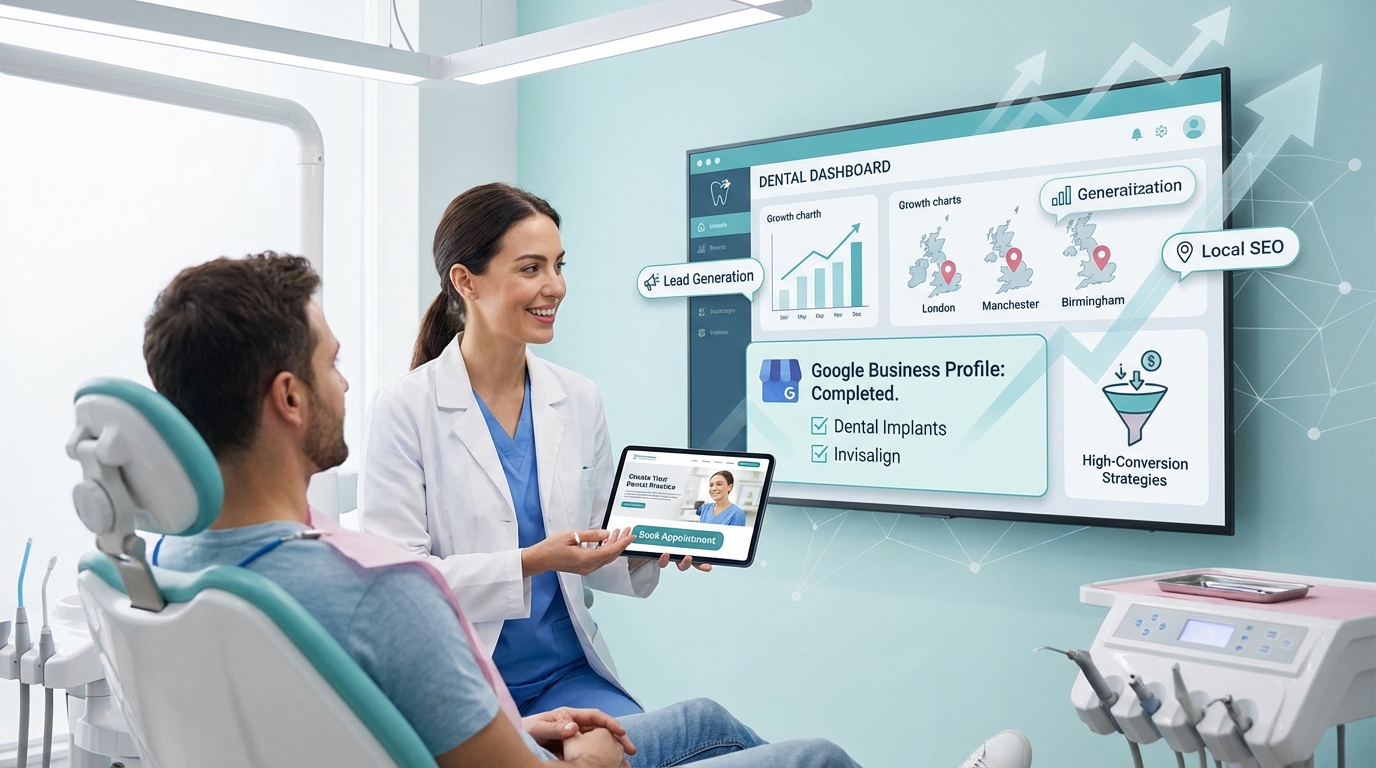
Optimise Your Google Business Profile for Map Pack Dominance
Complete every GBP field with treatment-specific detail. List “dental implants”, “Invisalign”, and “teeth whitening” as individual services rather than a generic “cosmetic dentistry” entry. Select all relevant categories–prioritise “Dental clinic” as primary and add “Cosmetic dentist”, “Orthodontist”, or “Dental implants provider” as applicable.
Upload 15+ photos monthly showing your waiting area, treatment rooms, and team members to outperform competitors with sparse visual content. Post weekly updates announcing new technologies, patient testimonials, or treatment offers. Google rewards this active management with higher map pack placement.
Build Consistent Citations Across UK Platforms
Establish identical NAP (name, address, phone) details across Yell, Thomson Local, Scoot, and NHS Choices. Inconsistent information reduces Google’s confidence in your location data and suppresses rankings. Claim and optimise profiles on dental-specific directories, including Dentistry.co.uk directory and the British Dental Association directory.
Regional business directories for your city matter. Manchester practices benefit from listings on Visit Manchester, whilst London practices should appear on London.gov business registers. Audit existing citations quarterly using tools like Moz Local or BrightLocal to identify and correct discrepancies.
Treatment-Specific Local Strategies for Invisalign and Implants
Create dedicated landing pages targeting “[treatment] + [city/neighbourhood]” combinations: “dental implants Harley Street” or “Invisalign Didsbury” capture high-intent searches. Embed Google Maps showing your location relative to local landmarks patients recognise.
Include neighbourhood-specific content addressing common concerns. Manchester patients often search for cost comparisons, whilst London searches focus on speed and convenience. Structure content with treatment FAQs, before-and-after galleries, and patient testimonials mentioning the specific location to satisfy both user intent and your wider SEO goals.
Geographic Priority: Practices within 2 miles of city centres often need 3x more review velocity than suburban locations to achieve similar map pack visibility in London, Manchester, and Birmingham markets.
Dominate Dental Case Study: 35% Higher Conversions
A Birmingham implant practice partnered with Dominate Dental to restructure its local SEO strategy. Within four months, we implemented treatment-specific landing pages, generated 47 keyword-rich reviews, and built 23 quality local citations.
Results? Map pack visibility increased from position 8 to position 2 for “dental implants Birmingham”, generating 89 additional monthly enquiries. Consultation booking rates improved by 35% through optimised GBP posts and rapid review responses. The practice now generates 50+ qualified leads monthly, with 68% of new patients discovering the practice through local search rather than paid advertising.
Technical and On-Page SEO Essentials for Dentists
Core Web Vitals, Mobile Speed, and Schema Markup
Google prioritises sites that load in under 2.5 seconds on mobile devices, yet 73% of dental websites miss this threshold. Compress images to WebP format, enable browser caching, and minimise JavaScript to improve Largest Contentful Paint scores.
Implement LocalBusiness schema markup including your practice name, address, opening hours, and accepted payment methods. Add MedicalBusiness schema for treatment-specific pages with aggregate review ratings and price ranges. Structured data helps Google understand context and can trigger rich snippets in search results, increasing click-through rates by 25-40%.
Keyword Optimisation for Dental Services and Treatments
Target long-tail keywords that match patient search behaviour: “how much do dental implants cost in Manchester” converts better than broad “dental implants” searches. Place primary keywords in title tags (under 60 characters), H1 headings, and the first 100 words of body content.
Use semantic variations naturally: “teeth straightening”, “clear aligners”, and “invisible braces” all support Invisalign-focused pages without keyword stuffing. Internal linking between service pages distributes authority and guides patients through your treatment offerings, keeping them engaged longer. Consider our innovative dental website designs tailored to convert visitors into patients.
Content Structure Aligned with Patient Search Intent
Informational searches (“what are dental implants”) need educational content with procedure explanations, recovery timelines, and candidacy criteria. Commercial searches (“best implant dentist near me”) need trust signals including qualifications, technology, and patient outcomes. Transactional searches (“book implant consultation”) need clear calls to action with online booking forms and phone numbers above the fold.
Structure pages with descriptive subheadings that answer specific questions patients ask. Google can surface these in featured snippets and AI-generated overviews.
Mobile Reality: 67% of dental searches occur on mobile devices, yet pages built mainly for desktop can lose 82% of mobile visitors within 8 seconds due to slow load times or difficult navigation.
Common Technical Fixes That Boost Rankings Fast
Redirect all HTTP pages to HTTPS to meet Google’s security requirements. Fix broken links returning 404 errors, which damage user experience and crawl efficiency. Create XML sitemaps listing all important pages and submit them through Google Search Console.
Implement canonical tags on duplicate content to consolidate ranking signals. Add alt text describing images with relevant keywords for accessibility and image search visibility. These foundational technical elements directly influence dental website ranking factors and often require minimal investment compared to their ranking impact.
Backlinks, Content, and Reputation Management
Quality Backlinks from Dental and Local Sources
Authoritative backlinks signal trust and expertise to Google’s algorithm. Secure links from dental associations, including the British Dental Association, regional dental committees, and professional bodies in which you hold membership. Local chambers of commerce, business improvement districts, and community sponsorships provide geographic relevance.
Guest articles on dental industry publications like Dentistry.co.uk or Private Dentistry magazine build topical authority. Avoid link farms or paid directories–a single link from a .ac.uk dental school can carry more weight than 50 low-quality directory listings. Analyse competitor backlink profiles using Ahrefs or Semrush to identify link opportunities they’ve secured.
Develop E-E-A-T Content for AI and Generative Search
Google’s AI overviews and ChatGPT citations favour content demonstrating Experience, Expertise, Authoritativeness, and Trustworthiness. Publish treatment guides written by named clinicians, with GDC registration numbers and qualifications displayed. Include first-hand case studies with anonymised patient journeys showing treatment planning, delivery, and outcomes.
Video content featuring your dentists explaining procedures builds experience signals that AI systems recognise. Update existing pages quarterly with current research, pricing, and technology changes to maintain freshness. Long-form content exceeding 2,000 words ranks higher for competitive treatment keywords than thin pages under 500 words.
Cross-Channel Reviews Beyond Google for 2026
Whilst Google reviews influence visibility, diversified review profiles strengthen overall prominence. Trustpilot reviews can appear in organic search results and build consumer confidence. Facebook recommendations reach patients through social networks before they search Google. WhatClinic and Doctify specialise in dental and medical reviews, attracting treatment-focused researchers.
Embed reviews from multiple platforms on your website using schema markup to display star ratings in search snippets. Respond to every review across all platforms within 24 hours, addressing concerns professionally and thanking patients for positive feedback with specific details that show genuine engagement. For enhanced reputation insights, request your complimentary free online reviews reputation report.
Review Strategy: Practices generating 10+ monthly reviews across three platforms achieve 28% higher conversion rates than those concentrating reviews solely on Google, since multi-platform presence builds broader trust signals.
Integrate Social Media and Training for Amplified Results
Social signals influence rankings indirectly by driving traffic, engagement, and brand searches. Share before-and-after galleries on Instagram with location tags and treatment hashtags. Post patient testimonials on Facebook linking back to relevant service pages. LinkedIn content targeting dental professionals builds industry authority and attracts referral relationships.
Train your reception team to request reviews during post-treatment follow-up calls when satisfaction’s highest. Implement automated SMS review requests 48 hours after appointments–this generates 3x more reviews than email alone. Coordinate content calendars across your website, social channels, and review platforms to create consistent messaging that reinforces your expertise in specific treatments.
Partner with Dominate Dental: UK’s Top Dental SEO Agency

Why Dominate Dental Outperforms Competitors
Dominate Dental combines AI-powered analytics with human expertise to optimise the signals that drive patient acquisition. Our team specialises exclusively in dental marketing, understanding treatment-specific search behaviour and conversion psychology that generalist agencies miss. We implement proven local SEO strategies, technical improvements, and content frameworks that consistently deliver measurable results across Greater London, Manchester, and Birmingham markets.
Real Results: 50+ Qualified Leads Monthly
Our clients average 50+ qualified consultation bookings monthly through strategic SEO implementation. A London Invisalign practice increased organic traffic by 340% within six months, generating £180,000 in additional treatment revenue. A Manchester implant clinic achieved position-one rankings for 23 high-value keywords, reducing cost per lead by 67% compared to its previous PPC-only approach. These results come from strategies covering technical performance, local visibility, content authority, and reputation management in one integrated plan.
| Ranking Factor | DIY Approach | Dominate Dental Strategy |
|---|---|---|
| Google Business Profile | Basic setup, irregular updates | Weekly posts, rapid review responses, monthly photo uploads |
| Technical SEO | Slow load times, no schema | Sub-2.5s mobile speed, full structured data |
| Local Citations | Inconsistent NAP across 5-8 directories | Verified listings on 40+ UK dental and local platforms |
| Content Strategy | Generic service pages | Treatment-specific landing pages optimised for AI search |
| Review Acquisition | Sporadic, unmanaged | Systematic 10+ monthly reviews with keyword-rich responses |
Get Started: Book Your Free SEO Audit Today
Our detailed SEO audit identifies exactly which dental website ranking factors limit your current visibility and conversion performance. We analyse your Google Business Profile optimisation, technical site health, local citation consistency, content gaps, and competitive positioning. You’ll receive a prioritised action plan with projected impact on lead generation and revenue growth.
Book your free audit at our Birmingham office: Grosvenor House, 11 St Paul’s Square, Birmingham B3 1RB. With a 5.0 rating from 18 Google reviews, our clients trust us to deliver transparent, results-focused strategies.
Generate New Patients with Proven Strategies
Stop losing high-value patients to competitors who dominate local search results. Dominate Dental’s proven frameworks turn your website into a patient acquisition engine that generates consistent consultation bookings for Invisalign, implants, and cosmetic treatments.
Our strategies work because we focus on what matters: the specific dental website ranking factors Google uses to determine visibility in your geographic market. Contact us today to discuss how we’ll position your practice ahead of competitors and convert searchers into booked consultations. Schedule a new patient opportunities call to explore your growth potential.
Frequently Asked Questions
What are the key ranking factors for UK dental websites in 2026?
For UK dental practices in 2026, the most important ranking factors include a fully optimised Google Business Profile with consistent review acquisition, strong technical site performance like Core Web Vitals, and treatment-specific local content. Quality backlinks from dental and local sources, along with structured data markup, also play a significant role. These elements collectively determine your visibility in competitive markets.
How does Google Business Profile affect local dental search results?
Your Google Business Profile directly controls map pack visibility, which captures a large percentage of clicks in local dental searches. Completing every section with treatment-specific categories, posting weekly updates, and responding to all reviews within 24 hours are essential for higher local rankings. Actively managing your profile with high-quality photos also signals to Google that your practice is engaged and relevant.
Why is consistent patient review acquisition important for dental practices?
Google prioritises practices with consistent review velocity, not just a high total count. Aiming for 8-12 reviews monthly that mention specific treatments in patient language significantly boosts your ranking. Recency is also key; reviews from the past fortnight carry more weight, helping your practice stand out even against competitors with similar overall ratings.
What kind of content helps dental practices rank for specific treatments like Invisalign or implants?
To rank for high-value treatments, you need dedicated landing pages targeting “[treatment] + [city/neighbourhood]” combinations, such as “dental implants Harley Street.” These pages should embed Google Maps, include neighbourhood-specific content, and feature treatment FAQs, before-and-after galleries, and patient testimonials mentioning the specific location. This strategy satisfies both user intent and your SEO goals.
How can a dental practice improve its overall authority and prominence online?
Improving your online authority, or prominence, involves building quality backlinks from reputable dental and local sources. Consistent citations across UK platforms like Yell and NHS Choices, ensuring identical NAP details, also build Google’s confidence in your practice. These signals, combined with strong review volume, contribute to your overall visibility and ranking.
What are citations and why are they important for UK dental practices?
Citations are consistent mentions of your practice’s name, address, and phone number (NAP) across various online directories and platforms. Establishing identical NAP details on sites like Yell, Thomson Local, and dental-specific directories like Dentistry.co.uk is important. Inconsistent information can reduce Google’s confidence in your location data, suppressing your local search rankings.
How does Dominate Dental assist practices with their ranking factors?
At Dominate Dental, we specialize in restructuring local SEO strategies for UK dental practices. For example, we’ve helped practices implement treatment-specific landing pages, generate keyword-rich reviews, and build quality local citations. This focused approach is designed to increase map pack visibility and drive qualified patient enquiries.
Leave a Reply