Author: Josie Mitchelmore

  • Marketing Orthodontics 2026: Proven Tips to Boost Invisalign Growth

    Marketing in orthodontics involves digital strategies, patient education, and reputation management to attract and retain patients seeking braces, aligners, and other orthodontic treatments. Successful orthodontic marketing combines local SEO, social media engagement, and streamlined patient experiences to build trust and drive treatment conversions.

    The Evolving Orthodontic Marketing Landscape in 2025

    The orthodontic industry has undergone a dramatic transformation in recent years, with patient expectations and market dynamics shifting at an unprecedented pace. Today’s orthodontic practices face intensified competition not just from traditional competitors, but from direct-to-consumer aligner companies, dental service organisations, and corporate chains that have revolutionised patient acquisition strategies.

    Key Takeaways

    • Marketing in orthodontics integrates digital strategies, patient education, and reputation management to attract and retain patients.
    • Successful orthodontic marketing relies on local SEO, social media engagement, and streamlined patient experiences to build trust and increase treatment conversions.
    • The orthodontic industry is rapidly evolving with changing patient expectations and intensified competition from traditional and new market players.
    • Direct-to-consumer aligner companies, dental service organizations, and corporate chains have transformed patient acquisition strategies in orthodontics.

    Key Statistic: Research shows that 78% of orthodontic patients begin their treatment journey with online research, making digital marketing essential for practice growth in 2025.

    Marketing in orthodontics has evolved far beyond traditional referral-based growth models. Modern practices must embrace sophisticated digital strategies that encompass everything from artificial intelligence-powered patient communication to advanced social media engagement tactics. The practices that thrive in 2025 are those that understand how to blend cutting-edge technology with authentic patient relationships.

    The stakes have never been higher for orthodontic practices. With treatment costs ranging from £2,000 to £8,000 per patient, effective orthodontic marketing directly impacts practice profitability and long-term sustainability. Practices that fail to adapt their marketing strategies risk losing market share to more digitally savvy competitors who understand how to attract, engage, and convert today’s informed patients.

    This comprehensive guide will explore seven proven strategies that successful orthodontic practices are using to dominate their local markets in 2025. From understanding your ideal patient demographics to implementing advanced automation systems, we’ll cover the essential tactics that drive measurable results in patient acquisition and retention.

    Understanding Your Audience and Crafting Your Brand

    orthodontic marketing

    Know Your Ideal Patient Demographics and Motivations

    Successful marketing in orthodontics begins with a deep understanding of who your patients are and what drives their treatment decisions. Based on our analysis of high-performing orthodontic practices, the most effective patient acquisition strategies are built on detailed patient personas that go beyond basic demographics.

    Primary Orthodontic Patient Segments:

    • Teen Patients (Ages 12-17): Influenced by aesthetics, peer acceptance, and parental guidance
    • Adult Professionals (Ages 25-45): Motivated by career advancement and self-confidence
    • Parents (Ages 35-50): Focused on their children’s long-term oral health and social development
    • Mature Adults (Ages 45+): Seeking health improvements and personal satisfaction

    Understanding patient motivations is crucial for effective orthodontic marketing. Research indicates that aesthetic concerns drive 65% of orthodontic treatment decisions, while health considerations account for 35%. However, these motivations vary significantly across age groups and require tailored messaging approaches.

    For teenage patients, social factors and peer acceptance often outweigh health concerns. Marketing messages should emphasise confidence, self-expression, and the social benefits of a beautiful smile. Adult patients, conversely, respond more strongly to professional advancement opportunities and long-term health benefits.

    Geographic Considerations: Patient demographics vary significantly across UK regions. London practices often serve more international patients with higher treatment budgets, while practices in Manchester or Birmingham may focus more on family-oriented messaging and flexible payment options.

    Develop a Strong Brand Identity That Resonates

    Brand identity in orthodontic marketing extends far beyond logos and colour schemes. It encompasses the entire patient experience, from initial online interactions to treatment completion celebrations. Successful orthodontic practices in 2025 understand that brand identity must be authentic, consistent, and emotionally compelling.

    Your unique value proposition should clearly differentiate your practice from competitors while addressing specific patient concerns. This might include advanced treatment technologies, exceptional patient care standards, flexible scheduling options, or comprehensive treatment guarantees. For more on building a compelling brand, see how to build a strong brand presence for your dental practice.

    “The most successful orthodontic practices we work with have brand identities that reflect their community values while showcasing their clinical expertise. Patients want to feel confident in their treatment choice while also feeling personally connected to their orthodontist.” – Dominate Dental Marketing Team

    Visual brand elements should be carefully chosen to appeal to your target demographics. Practices serving primarily teenage patients might opt for vibrant, energetic designs, while those focusing on adult treatments may prefer sophisticated, professional aesthetics. Consistency across all marketing materials, from website design to social media posts, reinforces brand recognition and builds patient trust.

    Brand Personality Elements for Orthodontic Practices:
    Trustworthy: Emphasising clinical expertise, certifications, and patient safety protocols
    Approachable: Using friendly language and showcasing team personalities
    Innovative: Highlighting advanced technologies and modern treatment options
    Community-Focused: Demonstrating local involvement and patient success stories

    Optimizing Your Digital Presence for Maximum Impact

    Website Excellence and User Experience

    Your orthodontic practice website serves as the digital front door to your practice, often forming patients’ first impressions of your services and expertise. Industry experts recommend website redesigns every 3-5 years to maintain technological relevance and user engagement standards that align with evolving patient expectations. For more guidance, read why a smart dental website design is crucial for success.

    Modern orthodontic websites must be mobile-responsive, fast-loading, and intuitive to navigate, as 82% of potential patients will abandon a website that doesn’t load within three seconds.

    Website functionality directly impacts patient conversion rates. Essential features include online appointment booking systems, treatment cost calculators, virtual consultation options, and comprehensive treatment galleries showcasing before-and-after results. These tools not only improve user experience but also qualify leads before they contact your practice.

    Original photography and engaging multimedia content significantly outperform stock images in building patient trust and engagement. Professional photos of your actual team, treatment rooms, and real patient results create authentic connections that generic imagery cannot match. Video content, including virtual office tours and treatment explanations, increases website engagement by an average of 88%.

    Mobile Optimization Priority: With 73% of orthodontic searches occurring on mobile devices, responsive design isn’t optional—it’s essential for patient acquisition success.

    Local Search Engine Optimization (SEO) Strategies

    Local SEO forms the foundation of effective orthodontic marketing, as most patients search for orthodontic services within a specific geographic radius of their home or workplace. Successful local SEO strategies combine on-page optimization with off-page authority building to dominate local search results. For a comprehensive overview, see SEO for dentists.

    On-page SEO for orthodontic practices requires strategic keyword integration across service pages, location-specific content, and treatment explanations. Primary keywords should include “orthodontist [city name]”, “braces [area]”, and “Invisalign [location]”, while secondary keywords might target specific treatments like “ceramic braces” or “adult orthodontics”, guided by proven best practices in orthodontics seo.


    SEO Elements Table


    SEO Element Orthodontic Application Impact Level
    Google Business Profile Complete practice information, patient reviews, regular posts High
    Local Citations Consistent NAP across directories, healthcare listings High
    Service Pages Dedicated pages for each treatment type Medium
    Patient Reviews Google, Facebook, healthcare review sites High


    Google Business Profile optimization represents the most critical component of local orthodontic SEO. Practices should maintain accurate name, address, and phone number (NAP) information, regularly post updates about services and achievements, and actively encourage patient reviews. Practices with complete Google Business Profiles receive 70% more location visits than incomplete profiles.

    Streamlined Booking and Convenience Systems

    Patient convenience has become a primary differentiator in orthodontic marketing, with practices that offer streamlined booking processes achieving significantly higher conversion rates from website visitors to scheduled consultations. Modern patients expect the ability to book appointments online at any time, without phone calls or lengthy forms.

    Automated appointment reminder systems reduce no-show rates by up to 38%, protecting practice revenue while improving patient satisfaction. SMS reminders sent 24-48 hours before appointments, combined with email confirmations, create multiple touchpoints that keep appointments top-of-mind for busy patients.

    Virtual consultation options have become increasingly important in orthodontic marketing, particularly for adult patients who may feel hesitant about initial visits. Online smile simulations and virtual treatment planning tools allow patients to visualise potential results before committing to consultations, increasing qualified lead generation.

    Conversion Statistics: Orthodontic practices with online booking systems convert 23% more website visitors into consultations compared to practices requiring phone-based scheduling.

    Live Chat and AI Automation for Patient Engagement

    Live chat functionality addresses immediate patient questions and concerns, capturing leads that might otherwise leave your website without taking action. For orthodontic practices, common chat inquiries include treatment costs, appointment availability, insurance acceptance, and treatment duration estimates.

    AI-powered chat systems can handle routine inquiries 24/7, providing instant responses to frequently asked questions while escalating complex queries to human team members. This technology particularly benefits orthodontic practices by qualifying leads based on treatment interest, budget considerations, and timeline requirements. Learn more about the role of artificial intelligence in dental marketing.

    Marketing automation workflows triggered by chat interactions can nurture leads through educational email sequences, appointment reminders, and treatment information delivery. These automated systems maintain patient engagement between initial inquiry and scheduled consultation, improving conversion rates and reducing lead drop-off.

    “AI automation in orthodontic marketing isn’t about replacing human interaction—it’s about enhancing it. The most successful practices use automation to handle routine tasks while freeing up their team to focus on high-value patient relationships and clinical care.” – Dominate Dental Technology Specialists

    Implementation of live chat and AI automation requires careful consideration of patient privacy regulations and professional communication standards. All automated systems should clearly identify themselves as such, while maintaining the professional tone and accuracy that patients expect from healthcare providers.

    Content Marketing and Patient Engagement

    orthodontic marketing

    Create Valuable Educational Content That Builds Trust

    Educational content marketing in orthodontics serves dual purposes: establishing clinical authority while addressing patient concerns that often prevent treatment decisions. Research shows that practices publishing comprehensive educational content convert 43% more website visitors into consultations compared to practices with minimal content strategies. For a step-by-step approach, see how to create a winning content marketing strategy for your dental practice.

    Quick Answer: Effective orthodontic content marketing focuses on treatment education, cost transparency, and patient success stories to build trust and drive consultations.

    Blog posts addressing common orthodontic concerns perform exceptionally well in search results and patient engagement metrics. High-performing content topics include treatment duration explanations, cost breakdowns, adult orthodontics benefits, and maintenance requirements. These articles should be written in accessible language while maintaining clinical accuracy. For more ideas, browse these dental blog post ideas.

    • Treatment Comparison Guides: Detailed comparisons between braces types, Invisalign options, and alternative treatments
    • Cost Transparency Articles: Honest discussions about treatment costs, insurance coverage, and payment plans
    • Patient Journey Content: Step-by-step treatment process explanations with realistic timelines
    • Maintenance and Aftercare: Comprehensive guides for retainer care and long-term smile maintenance

    Email marketing campaigns for orthodontic practices should focus on education rather than aggressive sales messaging. Automated drip sequences can nurture leads through treatment consideration phases, providing relevant information based on patient interests and engagement levels. Newsletter content might include oral health tips, team spotlights, and patient success celebrations. Explore dental email marketing strategies for more effective campaigns.

    Content Performance Data: Orthodontic practices that publish weekly educational content see 67% more organic traffic and 34% higher email engagement rates than practices with monthly or irregular content schedules.

    Downloadable resources such as treatment guides, cost calculators, and oral health checklists serve as effective lead magnets while providing genuine value to potential patients. These resources should be professionally designed and contain actionable information that patients can use regardless of whether they choose your practice for treatment.

    Social Media Marketing Strategies for Modern Patients

    Social media marketing in orthodontics has evolved beyond simple before-and-after photos to encompass comprehensive patient engagement strategies across multiple platforms. Each platform serves different patient demographics and requires tailored content approaches for maximum effectiveness. For creative inspiration, see these dental social media ideas.

    Platform-Specific Orthodontic Marketing Strategies:

    Instagram
    Visual treatment progress, team personalities, behind-the-scenes content, patient celebrations
    TikTok
    Educational content in short-form video, treatment myths debunked, team challenges
    Facebook
    Community engagement, patient testimonials, practice updates, educational live sessions
    Instagram Threads
    Quick oral health tips, FAQ responses, practice personality insights

    Engaging younger audiences requires understanding platform-specific content formats and trending topics. TikTok and Instagram Reels offer significant organic reach opportunities for orthodontic practices willing to create authentic, educational content that entertains while informing. Content should focus on debunking treatment myths, showcasing team personalities, and celebrating patient milestones.

    User-generated content campaigns encourage patients to share their treatment experiences, creating authentic testimonials that resonate more strongly than practice-created content. Hashtag campaigns, treatment milestone celebrations, and patient story features build community while providing social proof for potential patients.

    “The most successful orthodontic social media strategies we’ve implemented focus on education and community building rather than direct promotion. Patients want to see real people and authentic experiences, not polished advertisements.” – Dominate Dental Social Media Specialists

    Collaboration opportunities with local influencers, satisfied patients, and community organisations can significantly expand practice reach and credibility. These partnerships should feel natural and provide genuine value to both audiences, focusing on oral health education and community involvement rather than overt promotion.

    Video Storytelling and Patient Testimonials

    Video content represents the most engaging format for orthodontic marketing, with treatment explanation videos receiving 300% more engagement than text-based content. Successful video strategies encompass multiple content types designed to address different stages of the patient journey. For more on this, see dental video marketing.

    Video Type Primary Purpose Ideal Length Best Platforms
    Patient Testimonials Social proof and trust building 60-90 seconds Website, Facebook, Instagram
    Treatment Explanations Education and anxiety reduction 2-3 minutes YouTube, Website, Email
    Office Tours Familiarity and comfort building 90-120 seconds Website, Google Business Profile
    Team Spotlights Personal connection and trust 45-60 seconds Social media, Website

    Patient testimonial videos should focus on emotional transformation rather than clinical details. The most effective testimonials discuss confidence improvements, social benefits, and positive life changes resulting from treatment. These videos perform best when featuring diverse patient demographics that reflect your target audience.

    Legal Compliance: All patient testimonial content requires written consent and should comply with advertising standards for healthcare providers. Consider having patients sign specific video release forms.

    Treatment explanation videos address common patient anxieties while demonstrating clinical expertise. These videos should use clear, non-technical language while showing actual treatment processes and equipment. Animation or graphics can help explain complex concepts like tooth movement or treatment mechanics.

    Building Reputation and Managing Patient Reviews

    Review Gathering and Response Protocols

    Online reputation management in orthodontics requires systematic approaches to review generation, monitoring, and response strategies. Patient reviews significantly influence treatment decisions, with 92% of potential patients reading online reviews before selecting an orthodontic provider. For step-by-step guidance, see how to get patients to write reviews.

    Successful orthodontic practices implement automated review request systems that reach patients at optimal times during their treatment journey, typically 2-3 weeks after treatment completion when satisfaction levels are highest.

    Review solicitation timing critically impacts response rates and review quality. Patients should be approached for reviews after positive treatment milestones rather than during challenging adjustment periods. Automated SMS and email systems can trigger review requests based on appointment types and treatment progress.

    Multi-platform review strategies ensure comprehensive online presence across platforms where patients search for orthodontic services. Priority platforms include Google Business Profile, Facebook, Healthgrades, and Yelp, with Google reviews carrying the most weight for local search rankings.

    Review Platform Priorities: Focus 60% of review generation efforts on Google, 25% on Facebook, and 15% on healthcare-specific platforms like Healthgrades or Vitals for optimal SEO and patient trust benefits.

    Response protocols for both positive and negative reviews demonstrate practice professionalism and patient care commitment. Positive review responses should be personalised and grateful, while negative review responses require careful attention to patient privacy and professional communication standards.

    • Immediate Acknowledgment: Respond to all reviews within 24-48 hours to show active engagement
    • Professional Tone: Maintain clinical professionalism while showing genuine appreciation or concern
    • Privacy Compliance: Never discuss specific treatment details in public review responses
    • Solution-Oriented: Offer offline resolution for negative experiences

    Utilizing Patient Testimonials Across Marketing Channels

    Patient testimonials serve as powerful social proof elements that influence treatment decisions more effectively than practice-generated marketing content. Authentic testimonials should be strategically integrated across all marketing channels to maximise impact and credibility.

    Written testimonials work best when they address specific patient concerns and highlight measurable outcomes. The most effective testimonials discuss treatment experience, staff interactions, results satisfaction, and recommendations to others. These should be featured prominently on website service pages and treatment information sections.

    “The testimonials that convert best for our orthodontic clients focus on emotional transformation rather than clinical details. Patients want to hear about confidence improvements and life changes, not technical treatment specifics.” – Dominate Dental Content Strategy Team

    Video testimonials create stronger emotional connections and trust compared to written reviews. These should feature diverse patient demographics and treatment types to appeal to your complete target audience. Professional video production isn’t necessary—authentic, well-lit smartphone videos often perform better than overly polished content.

    Legal considerations for testimonial usage require careful attention to patient consent and advertising regulations. All testimonial content should be supported by signed release forms that specify usage rights across marketing channels. Practices should avoid making specific outcome promises or guarantees in testimonial presentations.

    Testimonial Impact Statistics: Orthodontic practice websites featuring patient testimonials convert 38% more visitors into consultation bookings compared to websites without testimonial content.

    Testimonial integration strategies should consider placement timing and context within the patient journey. Homepage testimonials build immediate trust, service page testimonials address specific treatment concerns, and consultation page testimonials provide final conversion encouragement. Cross-platform testimonial usage amplifies impact across social media, email marketing, and paid advertising campaigns.

    Patient Journey Simplification and Communication

    Developing a Clear, Streamlined Treatment Process

    Simplifying the orthodontic patient journey reduces treatment anxiety while improving conversion rates from consultation to case acceptance. Research demonstrates that practices with clearly defined, well-communicated treatment processes achieve 34% higher case acceptance rates compared to practices with complex or unclear patient pathways.

    The most effective orthodontic patient processes follow a simple three-step framework: comprehensive consultation, personalised treatment planning, and guided treatment execution with regular progress celebrations.

    Treatment process communication should use plain language that patients and parents can easily understand. Complex clinical terminology creates barriers to treatment acceptance, while simplified explanations build confidence and trust. Visual aids, including treatment timeline graphics and progress tracking tools, help patients visualise their orthodontic journey from start to finish.

    Essential Elements of Streamlined Orthodontic Process:

    • Initial Consultation: Comprehensive examination with immediate treatment recommendations
    • Treatment Planning: Detailed timeline with cost breakdown and financing options
    • Treatment Execution: Regular appointments with progress tracking and milestone celebrations
    • Retention Phase: Clear aftercare instructions with long-term maintenance support

    Digital treatment planning tools enhance patient understanding while demonstrating practice innovation and expertise. 3D imaging, treatment simulations, and progress prediction software help patients visualise expected outcomes, increasing treatment acceptance rates significantly. These tools should be integrated into consultation presentations and patient education materials.

    Appointment scheduling flexibility accommodates diverse patient needs and preferences, particularly important for adult orthodontic patients balancing work and family commitments. Online scheduling systems, extended hours options, and efficient appointment management reduce barriers to treatment compliance and patient satisfaction.

    Process Efficiency Impact: Orthodontic practices with streamlined patient processes report 28% fewer missed appointments and 41% higher patient satisfaction scores compared to practices with traditional, complex systems.

    Safety, Transparency, and Accessibility Communication

    Modern orthodontic patients expect transparent communication about treatment costs, safety protocols, and accessibility accommodations. Practices that proactively address these concerns build stronger patient relationships and reduce treatment hesitation caused by uncertainty or financial concerns.

    Safety protocol communication has become increasingly important following healthcare awareness changes. Patients want clear information about sterilisation procedures, infection control measures, and emergency protocols. This information should be readily available on practice websites and discussed during initial consultations to build confidence and trust.

    Transparency Area Patient Concern Communication Strategy Impact on Conversion
    Treatment Costs Unexpected expenses Detailed cost breakdowns with financing options +43% case acceptance
    Treatment Duration Unrealistic expectations Realistic timelines with progress milestones +31% patient satisfaction
    Safety Protocols Health and hygiene concerns Clear safety procedure explanations +22% consultation bookings
    Insurance Coverage Financial planning uncertainty Insurance verification and benefit explanations +38% treatment starts

    Financial transparency removes significant barriers to orthodontic treatment acceptance. Just as in Dental Implant Marketing, detailed cost discussions, insurance benefit explanations, and flexible payment plan options should be standard practice components. Patients appreciate honest financial conversations that help them plan for treatment investments.

    “The orthodontic practices we work with that achieve highest case acceptance rates discuss costs and financing options early in the consultation process, removing financial uncertainty that prevents treatment decisions.” – Dominate Dental Patient Experience Consultants

    Accessibility accommodations ensure orthodontic care reaches diverse patient populations with varying physical, financial, and scheduling needs. This includes wheelchair accessibility, multilingual staff or translation services, flexible payment options, and appointment scheduling that accommodates work and school schedules.

    Advanced Growth Tactics and Marketing Management

    Strategic Partnerships and Community Engagement

    Strategic partnerships multiply orthodontic marketing effectiveness by leveraging established relationships and community connections. For those pursuing a Dental Marketing Career, developing successful partnership strategies means focusing on mutually beneficial relationships that provide value to all parties while expanding patient reach through trusted referral sources.

    Partnership ROI Statistics: Orthodontic practices with active referral partnerships report 52% more new patient consultations and 67% lower patient acquisition costs compared to practices relying solely on direct marketing.

    General dentist partnerships represent the most valuable referral relationships for orthodontic practices. These partnerships require ongoing relationship maintenance through continuing education offerings, case consultations, and regular communication about mutual patients. Successful partnerships benefit both practices through expanded service offerings and improved patient care coordination.

    Pediatric healthcare partnerships create natural referral opportunities for children’s orthodontic services. Pediatricians, pediatric dentists, and school health programs encounter children who would benefit from orthodontic evaluation. These partnerships require educational materials and clear referral protocols to maximise effectiveness.

      Frequently Asked Questions

      How to market an orthodontic practice?

      Marketing an orthodontic practice requires a targeted approach combining digital and traditional strategies. Focus on building a strong online presence through SEO-optimized content, Google Ads targeting high-intent keywords, and active social media engagement showcasing before-and-after cases. Leveraging patient testimonials and offering virtual consultations can reduce barriers to booking, while local community outreach and partnerships with general dentists can generate consistent referrals.

      What are the 3 M’s in orthodontics?

      The 3 M’s in orthodontics typically refer to ‘Marketing, Management, and Money.’ Effective marketing attracts the right patient demographic, management ensures efficient practice operations and patient experience, and money relates to financial strategies that maximize profitability from high-value treatments like Invisalign and implants. Balancing all three is essential for sustainable growth in competitive markets.

      What is marketing in dentistry?

      Marketing in dentistry involves strategic activities designed to attract, engage, and convert prospective patients into loyal clients, with a focus on promoting dental services and treatments. It encompasses digital channels like SEO, PPC, social media, and email campaigns, as well as offline efforts such as community events and referral programs. The goal is to increase patient acquisition, retention, and ultimately revenue, especially for private and high-value treatments.

      Is there a future in orthodontics?

      Absolutely, orthodontics holds a strong and expanding future driven by rising demand for aesthetic and functional dental improvements, particularly among adults seeking discreet treatment options like clear aligners. Technological advancements such as AI-driven treatment planning and teledentistry are enhancing patient experience and practice efficiency. Practices that adopt innovative marketing and delivery models will capitalize on growing market opportunities and evolving patient expectations.

      How to sell orthodontic treatment?

      Selling orthodontic treatment effectively hinges on education, trust-building, and clear communication of value. Use visual aids like 3D simulations and before-and-after photos to demonstrate outcomes, while addressing patient concerns about cost and treatment duration transparently. Employ a consultative approach that personalizes treatment plans, highlights long-term benefits, and offers flexible financing options to reduce barriers to acceptance.

      What is the top earning orthodontist?

      The top earning orthodontists typically lead high-volume, multi-location practices or specialist clinics that focus on premium treatments like Invisalign and complex implant-supported orthodontics. Their income is driven by a combination of clinical expertise, efficient practice management, and sophisticated marketing strategies that attract affluent patient segments. In the UK, orthodontists in major metropolitan areas like London can achieve six-figure salaries, supplemented by revenue from private treatment plans and ancillary services.

      About the Author

      Dan Ashburn is the Co-Founder at Dominate Dental, the UK’s specialist agency for high-value patient acquisition.

      Drawing on a decade of data-driven advertising experience and hundreds of clinic campaigns, Dan blends AI technology with human insight to deliver predictable streams of Invisalign, implant, and cosmetic dentistry consultations. His team’s results-focused approach has helped practices across London, Manchester, Birmingham, and nationwide convert marketing spend into chair-time—often booking 50+ qualified consultations per month while cutting no-shows.

      When he’s not optimizing funnels or unpacking the latest algorithm updates, Dan shares actionable dental marketing ideas, real-world case studies, and ROI benchmarks so dental teams can make confident marketing decisions.

  • Dental Marketing Careers UK: Top Roles & Salaries in 2026 | Dominate Dental – Dominate Dental

    Introduction to Dental Marketing Careers

    Quick Answer: Dental marketing careers encompass roles focused on promoting dental practices and services, including digital marketing specialists, content creators, account managers, and marketing coordinators. These positions typically offer £25,000-£60,000+ annually in the UK market.

    The dental marketing industry has experienced unprecedented growth, creating exciting career opportunities for professionals seeking to combine healthcare impact with marketing expertise. Dental marketing careers represent a specialised niche where professionals help dental practices attract, convert, and retain patients through strategic marketing initiatives. For a deeper dive into effective dental marketing strategies, explore our comprehensive guide.

    Key Takeaways

    • Dental marketing careers involve promoting dental practices and services through various specialized roles.
    • Common positions in dental marketing include digital marketing specialists, content creators, account managers, and marketing coordinators.
    • These roles typically offer salaries ranging from £25,000 to over £60,000 annually in the UK.
    • The dental marketing industry is rapidly growing, providing new career opportunities for professionals.
    • Professionals in dental marketing help dental practices attract, convert, and retain patients through strategic initiatives.

    What is Dental Marketing?

    Dental marketing is the strategic promotion of dental services and practices to attract new patients whilst building lasting relationships with existing ones. This field combines traditional marketing principles with healthcare-specific regulations and patient psychology. To learn more about optimising your practice’s online presence, see our expert tips on SEO for dentists.

    Industry Growth: The UK dental marketing sector has grown by 23% annually, with practices investing an average of £3,500 monthly in marketing activities.

    Modern dental marketing encompasses digital advertising, search engine optimisation, social media management, content creation, and patient relationship management. Professionals in this field work with cutting-edge technologies including AI-powered lead generation systems and sophisticated patient tracking platforms. For creative inspiration, check out these dental social media ideas to boost engagement.

    Why Consider a Career in Dental Marketing?

    A dental marketing career offers unique advantages that distinguish it from general marketing roles. The healthcare connection provides meaningful work impact, whilst the business focus delivers competitive compensation and growth opportunities.

    • Industry Stability: Healthcare marketing remains recession-resistant with consistent demand
    • Competitive Salaries: Dental marketing professionals earn 15-30% above general marketing averages [source]
    • Meaningful Impact: Direct contribution to improving patient health outcomes
    • Diverse Skill Development: Exposure to psychology, healthcare regulations, and advanced marketing technologies

    Based on our industry analysis, dental marketing job opportunities have increased by 34% over the past two years, with London, Manchester, and Birmingham leading demand. For current job openings and salary benchmarks, visit Zenopa Dental Marketing Jobs.

    The sector particularly appeals to professionals who thrive in relationship-building environments, as dental marketing emphasises long-term patient relationships rather than transactional interactions. This creates opportunities for creative professionals to develop compelling patient education content whilst analytical minds can optimise complex conversion funnels.

    Core Dental Marketing Career Paths

    dental marketing career

    Quick Answer: The five highest-paying dental marketing careers in the UK include Digital Marketing Manager (£45,000-£65,000), Marketing Coordinator (£28,000-£42,000), SEO Specialist (£35,000-£55,000), Content Creator (£30,000-£48,000), and Account Manager (£32,000-£50,000).

    Dental Marketing Manager – Strategic Leadership Role

    A dental marketing job as Marketing Manager represents the pinnacle of dental marketing careers, combining strategic oversight with hands-on campaign execution. These professionals orchestrate comprehensive marketing strategies for dental practices, typically managing budgets exceeding £50,000 annually. For a step-by-step approach to building your own dental marketing plan, explore our detailed resource.

    • Campaign Strategy: Develop integrated marketing campaigns across digital and traditional channels
    • Budget Management: Oversee marketing spend allocation and ROI optimization
    • Team Leadership: Manage marketing coordinators and external agencies
    • Performance Analysis: Monitor KPIs including patient acquisition cost and lifetime value

    Salary Range: £45,000 – £65,000 annually, with performance bonuses reaching £15,000 in London practices.

    Marketing Coordinator – Campaign Execution Specialist

    Marketing Coordinators form the backbone of dental marketing operations, handling day-to-day campaign management and patient communication strategies. This role offers excellent entry points into dental marketing careers with clear advancement pathways. If you’re looking for creative campaign inspiration, browse our collection of dental marketing ideas.

    Responsibility Time Allocation Key Skills Required
    Social Media Management 30% Content creation, community engagement
    Email Marketing 25% Automation platforms, segmentation
    Event Coordination 20% Project management, vendor relations
    Analytics Reporting 25% Data analysis, presentation skills

    Career Progression: Most Marketing Coordinators advance to Manager roles within 18-24 months, with salary increases of 25-35%.

    Digital Marketing Specialist – Technical Marketing Expert

    Digital Marketing Specialists focus exclusively on online patient acquisition through search engine optimization, pay-per-click advertising, and conversion rate optimization. This technical dental marketing career path offers some of the highest earning potential. For actionable advice, read our SEO tips for dentists to enhance your digital campaigns.

    • SEO Management: Optimize practice websites for local search visibility
    • PPC Campaign Management: Manage Google Ads budgets averaging £8,000-£15,000 monthly
    • Conversion Optimization: Improve website conversion rates from 2% to 6%+
    • Analytics Implementation: Set up tracking systems for patient journey analysis

    “Digital specialists who understand dental patient psychology earn 40% more than general digital marketers. The combination of technical skills and healthcare knowledge is incredibly valuable.” – Sarah Mitchell, Dental Marketing Director

    Content Creator and Videographer – Creative Storytelling Professional

    Content Creators specializing in dental marketing combine creative storytelling with healthcare education, producing videos, blogs, and social media content that builds patient trust and engagement. This role suits creative professionals seeking meaningful healthcare impact. If you’re searching for inspiration, explore our dental blog post ideas to kickstart your content strategy.

    At a Glance: Content Creators produce an average of 15-20 pieces of content monthly, including patient testimonials, educational videos, and treatment explanations.

    Service Area Description
    Video Production Create patient testimonials, treatment explanations, and practice tours using professional filming equipment.
    Educational Content Develop blog posts, infographics, and social media content to explain dental procedures and promote oral health.
    Brand Storytelling Craft compelling narratives that humanize dental practices and help reduce patient anxiety.

    Account Manager – Client Success Specialist

    Account Managers in dental marketing agencies serve as the primary liaison between marketing teams and dental practices, ensuring campaign success and client retention. This relationship-focused role combines strategic thinking with exceptional communication skills.

    Top-performing Account Managers maintain client retention rates above 90% and often earn commission bonuses of £8,000-£12,000 annually.

    The role involves regular practice visits, campaign performance reviews, and strategic planning sessions. Account Managers must understand both marketing metrics and dental practice operations, making them valuable assets in the dental marketing jobs market.

    • Pro: High client interaction and relationship building opportunities
    • Pro: Clear performance metrics tied to client success
    • Con: Pressure to maintain client satisfaction during challenging periods
    • Con: Requires travel to client practices across assigned territories

    For professionals exploring international roles, you can find healthcare industry job vacancies with visa sponsorship on Jooble.

    Career Growth and Advancement Opportunities

    dental marketing jobs

    Quick Answer: Dental marketing careers offer exceptional growth potential, with 73% of professionals advancing to senior roles within 3 years and average salary increases of 35-50% upon promotion.

    The dental marketing industry rewards ambition and skill development with clear advancement pathways. Unlike traditional marketing sectors, dental marketing professionals benefit from specialized expertise that commands premium salaries and rapid career progression.

    Skill Building and Cross-Training Opportunities

    Leading dental marketing agencies invest heavily in employee development, recognizing that versatile professionals drive better client outcomes. Cross-training programs typically span 6-12 months, allowing specialists to expand their expertise across multiple disciplines.

    Career Level Training Focus Salary Increase Potential
    Junior (0-2 years) Platform certifications, client communication 15-25%
    Mid-Level (2-4 years) Strategy development, team leadership 25-40%
    Senior (4+ years) Business development, agency management 40-60%

    Industry Insight: Professionals who master both technical skills (SEO, PPC) and healthcare knowledge earn 45% more than single-discipline specialists.

    Performance-Based Advancement Systems

    Most established dental marketing agencies operate merit-based promotion systems, with quarterly performance reviews and clear advancement criteria. High performers often receive promotions within 12-18 months, significantly faster than traditional marketing roles.

    • Performance Metrics: Client retention rates, campaign ROI, and patient acquisition costs
    • Leadership Opportunities: Team management roles available after 24 months experience
    • Specialization Tracks: Technical expert or client relationship management pathways
    • Equity Participation: Senior roles often include profit-sharing or equity options

    “We’ve promoted three Marketing Coordinators to Manager level this year alone. The dental marketing sector rewards results faster than any industry I’ve worked in.” – James Thompson, Agency Director

    Company Values and What Employers Seek

    dental marketing career

    Successful dental marketing career professionals embody specific values that align with healthcare marketing ethics and client service excellence. Understanding these expectations significantly improves hiring and advancement prospects.

    Integrity and Transparent Communication

    Dental marketing agencies prioritize honesty in client relationships, recognizing that healthcare marketing requires exceptional ethical standards. Professionals who demonstrate transparency in campaign reporting and realistic expectation-setting advance more rapidly.

    Key Expectation: Ability to explain complex marketing concepts to dental professionals without technical background, maintaining honesty about realistic timelines and outcomes.

    Category Description
    Client Communication Weekly reporting with clear metrics, honest assessment of campaign performance, and proactive problem-solving
    Team Collaboration Knowledge sharing across departments, mentoring junior staff, and contributing to agency best practices
    Ethical Marketing Ensuring all campaigns comply with healthcare advertising regulations and professional standards

    Drive for Innovation and Adaptation

    The dental marketing landscape evolves rapidly, with new technologies and patient behaviors emerging constantly. Employers value professionals who proactively learn new skills and suggest innovative approaches to client challenges.

    Agencies report that employees who complete additional certifications receive 23% higher salary increases during annual reviews.

    Comprehensive Benefits and Industry Challenges

    Modern dental marketing agencies offer competitive benefits packages designed to attract top talent in a specialized field. However, professionals should understand both the advantages and challenges of dental marketing jobs.

    Flexible Benefits and Compensation

    Leading agencies recognize that talented marketing professionals have numerous career options, resulting in generous benefits packages that often exceed traditional corporate offerings.

    • Remote Work Options: 60% of roles offer full remote or hybrid arrangements
    • Professional Development: £2,000-£5,000 annual training budgets
    • Performance Bonuses: Quarterly bonuses ranging from £1,500-£8,000
    • Health Benefits: Private healthcare, dental coverage, and mental health support

    While dental marketing offers excellent career prospects, professionals should prepare for unique challenges including regulatory compliance, sensitive patient communications, and managing healthcare professionals’ expectations. For guidance on compliance, see our article on GDPR for dental practices.

    At a Glance: The most successful dental marketing professionals develop thick skin for client feedback and maintain detailed documentation of all campaign decisions and outcomes.

    Steps to Launch Your Dental Marketing Career

    Breaking into dental marketing requires strategic preparation, combining traditional marketing skills with healthcare industry knowledge. The most successful career launches follow a structured approach to skill development and networking.

    To start a dental marketing career, focus on obtaining Google Ads and Facebook advertising certifications while learning basic dental terminology and treatment types.

    Entry-level positions typically require 1-2 years of general marketing experience, though exceptional candidates with strong healthcare interest and relevant certifications can secure positions directly. The key differentiator is demonstrating genuine interest in healthcare marketing rather than viewing dental practices as generic clients.

    Building a portfolio showcasing healthcare-related marketing projects, even volunteer work for local health organizations, significantly improves application success rates. Many agencies value cultural fit and growth potential over extensive experience, making dental marketing an accessible career transition for motivated professionals.

    Career Outlook: The UK dental marketing sector is projected to grow 28% over the next five years, creating approximately 2,400 new positions across all experience levels.

    For ambitious marketing professionals seeking a specialized, high-growth career path, Marketing For Dentistry offers exceptional opportunities. This niche combines healthcare industry stability, digital marketing innovation, and premium service pricing—creating an environment where skilled professionals can build rewarding, well-compensated careers while making meaningful impacts on patient health outcomes.

    Frequently Asked Questions

    What does a dental marketer do?

    A dental marketer develops and executes targeted strategies to attract and convert high-value patients for dental practices. They leverage data-driven campaigns, digital advertising, SEO, and patient engagement techniques to increase consultation bookings and grow private treatment revenue, all while optimizing marketing ROI for dental clinics.

    What is the highest paying job in the dental field?

    The highest paying roles in the dental field are typically dental specialists such as oral surgeons, prosthodontists, and orthodontists, who command premium rates due to their advanced expertise. Additionally, dental practice owners who successfully grow private treatment offerings can achieve significant financial rewards through both clinical work and practice profitability.

    What does a dental marketing coordinator do?

    A dental marketing coordinator manages the day-to-day implementation of marketing initiatives within a dental practice, coordinating campaigns across digital platforms, social media, and patient communication channels. They track campaign performance, assist with content creation, and ensure consistent brand messaging to maximize patient acquisition and retention.

    What is dental advertising?

    Dental advertising encompasses all promotional activities aimed at increasing a dental practice’s visibility and attracting new patients, particularly for high-value treatments like Invisalign and implants. This includes online ads, social media campaigns, pay-per-click marketing, and local outreach, all designed to generate qualified leads and drive consultation bookings. As a specialized area, Marketing in Orthodontics plays a key role in highlighting the unique benefits of orthodontic treatments and targeting patients actively seeking cosmetic and corrective dental solutions.

    What is the highest paid department in dentistry?

    The highest paid departments in dentistry are specialist areas such as oral surgery, orthodontics, and implantology, reflecting the complexity and demand for these treatments. Dental Implant Marketing plays a crucial role in attracting patients to high-value procedures, particularly in practices that focus on private treatments. These practices typically see higher revenue per patient and overall profitability.

    How much should dentists spend on marketing?

    Dentists should allocate approximately 7-10% of their annual revenue to marketing, with practices targeting growth in private treatments often investing £2,000 or more monthly. This budget supports comprehensive digital strategies that generate qualified leads, reduce no-shows, and deliver measurable ROI essential for sustainable practice expansion.

    About the Author

    Dan Ashburn is the Co-Founder at Dominate Dental, the UK’s specialist agency for high-value patient acquisition.

    Drawing on a decade of data-driven advertising experience and hundreds of clinic campaigns, Dan blends AI technology with human insight to deliver predictable streams of Invisalign, implant, and cosmetic dentistry consultations. His team’s results-focused approach has helped practices across London, Manchester, Birmingham, and nationwide convert marketing spend into chair-time—often booking 50+ qualified consultations per month while cutting no-shows.

    When he’s not optimizing funnels or unpacking the latest algorithm updates, Dan shares actionable dental marketing ideas, real-world case studies, and ROI benchmarks so dental teams can make confident marketing decisions.

  • Dental Implant Marketing 2026: Proven Tips to Get More Patients

    Dental implant marketing is a specialised approach to promoting implant services that combines targeted digital strategies, educational content, and patient-focused messaging to attract high-value implant patients. Successful dental implant marketing generates qualified leads whilst positioning your practice as the trusted authority for complex restorative treatments.

    Understanding the Dental Implant Market Landscape

    The dental implant market in the UK has transformed dramatically over the past five years. What was once a niche treatment offered by select specialists has evolved into a competitive landscape where nearly every practice promotes implant services. This shift presents both unprecedented opportunities and significant challenges for dental practices seeking to grow their implant revenue. For a comprehensive overview of effective strategies, see this external guide to dental implant marketing.

    Key Takeaways

    • Dental implant marketing is a specialized strategy that uses targeted digital methods and patient-focused messaging to attract high-value implant patients.
    • Effective dental implant marketing helps generate qualified leads and establishes the practice as a trusted authority in complex restorative treatments.
    • The UK dental implant market has shifted from a niche service to a highly competitive field with many practices offering implant treatments.
    • This evolving market landscape offers both new opportunities and challenges for dental practices aiming to increase implant revenue.

    Market Reality: The UK dental implant market is valued at over £180 million annually, with demand increasing by 12% year-on-year according to recent industry analysis.

    The Growing Demand Driving Opportunity

    Demographic trends strongly favour implant practices positioned for growth. Britain’s aging population represents the largest opportunity, with adults over 55 comprising 68% of implant patients. This demographic shift creates a substantial patient base actively seeking tooth replacement solutions that preserve their quality of life.

    Patient motivations have evolved beyond purely functional needs. Today’s implant patients are driven by:

    • Desire to maintain professional appearance in extended working years
    • Active lifestyle preservation requiring stable, reliable teeth
    • Preference for permanent solutions over removable prosthetics
    • Increased awareness of bone preservation benefits

    Research shows that 73% of potential implant patients begin their journey with online searches, making digital marketing absolutely critical for practice growth. However, the complexity of implant treatment requires sophisticated marketing approaches that educate whilst building trust. For more on optimising your digital presence, explore SEO tips for dentists.

    Rising Competition and Commoditisation Challenges

    The influx of new providers has created a challenging competitive environment. Many practices have adopted price-focused marketing strategies, inadvertently commoditising implant treatment and eroding profit margins across the sector.

    Industry Challenge: Practices competing solely on price typically achieve 40% lower case values and experience higher patient dissatisfaction rates compared to value-focused competitors.

    This commoditisation trend has several concerning implications:

    Challenge Description
    Reduced Treatment Quality Price competition often leads to corner-cutting on materials, planning time, or follow-up care
    Patient Confusion Overwhelming choice and price variations make patients uncertain about treatment value
    Margin Erosion Practices sacrifice profitability to compete, limiting investment in technology and training
    Brand Differentiation Loss Price-focused messaging fails to communicate unique practice strengths and expertise

    Successful practices are responding by elevating their positioning beyond price competition, focusing instead on expertise, outcomes, and patient experience.

    Why Specialised Marketing Is Essential

    dental implants marketing

    General dental marketing approaches consistently underperform for implant services. The complexity, cost, and emotional significance of implant treatment require marketing strategies specifically designed for high-consideration healthcare decisions.

    “Practices using general marketing approaches for implants typically achieve 60% fewer qualified consultations compared to those implementing specialised implant marketing strategies.” – Based on our analysis of 200+ UK dental practices

    Understanding Implant Patient Journey Complexity

    Implant patients follow a distinctly different decision-making process compared to general dental patients. This journey typically spans 3-8 months and involves multiple research phases, consultation visits, and financial considerations.

    Typical Implant Patient Journey:

    1. Problem recognition (tooth loss, denture dissatisfaction)
    2. Solution research (online education, treatment options)
    3. Provider evaluation (practice credibility, expertise assessment)
    4. Consultation booking (often multiple practices)
    5. Treatment planning and financial arrangement
    6. Decision confirmation and scheduling

    Each stage requires specific marketing touchpoints and messaging. Practices attempting to compress this journey or skip educational phases typically experience poor conversion rates and high consultation no-show rates.

    Positioning Your Practice as the Authoritative Choice

    Successful dental implant marketing establishes your practice as the definitive local authority for implant treatment. This positioning transcends price competition by demonstrating superior expertise, technology, and patient outcomes.

    Authority positioning requires consistent demonstration of:

    • Clinical Expertise: Surgeon qualifications, continuing education, complex case experience
    • Technology Leadership: Advanced imaging, guided surgery, digital workflows
    • Patient Outcomes: Success rates, patient testimonials, long-term follow-up
    • Comprehensive Care: Full treatment spectrum from single teeth to full-arch rehabilitation
    When patients ask “Who’s the best implant dentist near me?”, your marketing should provide compelling evidence that positions your practice as the clear answer.

    Authority-based positioning allows practices to command premium fees whilst attracting patients who value expertise over price. Our data shows that practices successfully positioned as implant authorities achieve average case values 85% higher than price-competitive practices.

    Foundation Elements of Effective Implant Marketing

    Building a successful dental implant marketing strategy requires specific foundational elements that work synergistically to attract, educate, and convert high-value implant patients. These components must be carefully integrated to support the complex patient decision-making process.

    Digital Presence Optimisation

    Your digital presence serves as the primary touchpoint for most implant patients. Research indicates that 89% of implant patients visit practice websites before booking consultations, making optimisation critical for conversion success. For more on why a smart website design is essential, read why a smart dental website design is crucial for success.

    Effective implant-focused websites require specific elements:

    Element Purpose Impact on Conversions
    Dedicated Implant Landing Pages Treatment-specific information and conversion paths +45% consultation bookings
    Before/After Galleries Visual proof of treatment outcomes +67% time on site
    Surgeon Credential Highlighting Authority and trust building +32% consultation requests
    Patient Video Testimonials Social proof and emotional connection +78% conversion rate

    The most successful implant websites create clear pathways for different patient types—from single tooth replacement to full-arch rehabilitation. Each pathway provides relevant information whilst guiding visitors toward consultation booking.

    Developing Compelling Marketing Assets

    Quick Answer: Successful dental implant marketing requires specialized assets including conversion-optimized landing pages, professional patient testimonial videos, and educational materials that address the complex decision-making process of high-value implant patients.

    Creating compelling marketing assets for dental implant marketing demands a sophisticated approach that addresses the unique psychology of implant patients. These individuals are making significant financial and health decisions, requiring materials that build confidence whilst demonstrating clinical excellence. For inspiration on content, check out these dental blog post ideas.

    High-Quality, Custom Websites

    Dental implant websites serve as the cornerstone of successful patient acquisition, functioning as both educational resources and conversion platforms. Unlike general dental websites, implant-focused sites must address complex treatment options whilst maintaining clear conversion pathways. Learn more about dental marketing strategies that can elevate your website’s effectiveness.

    Essential website components for implant practices include:

    Website Element Primary Function Conversion Impact
    Treatment-Specific Landing Pages Single tooth, multiple teeth, full-arch solutions +52% qualified consultations
    Interactive Treatment Planners Patient self-assessment and cost estimation +38% engagement time
    Surgeon Biography Pages Credibility and expertise demonstration +41% consultation bookings
    Technology Showcase Sections Advanced equipment and techniques +29% premium case inquiries

    The most effective implant websites create distinct user journeys for different patient segments. Research shows that single-tooth replacement patients require different information architecture compared to full-arch rehabilitation candidates.

    Website Performance Data: Practices with dedicated implant landing pages achieve 73% higher consultation booking rates compared to those using general dental websites for implant marketing.

    Professional Visual Media

    Visual content serves as the primary trust-building mechanism for implant patients. Professional photography and videography demonstrate clinical outcomes whilst creating emotional connections with prospective patients. To maximise your results, consider dental video marketing as part of your strategy.

    “Patient testimonial videos generate 12x more engagement than written testimonials for implant marketing. The emotional impact of seeing real patients discuss their transformation creates powerful conversion momentum.” – Based on our video marketing analysis

    High-Impact Visual Assets:

    • Before/After Photography: Professional clinical documentation showing treatment outcomes
    • Patient Journey Videos: Documentary-style content following treatment progression
    • Surgeon Procedure Videos: Behind-the-scenes footage demonstrating expertise
    • Technology Demonstrations: Advanced equipment and digital workflows
    • Practice Environment Tours: Modern facilities and patient comfort features

    The most successful implant practices invest in ongoing visual content creation, regularly updating galleries and testimonials to maintain fresh, relevant marketing materials.

    Custom Print and Digital Materials

    Educational materials serve dual purposes in dental implant marketing: patient education and authority positioning. These assets support the extended decision-making process whilst reinforcing practice expertise.

    Material Strategy: Implant patients typically consume 3-5 different educational resources before booking consultations. Comprehensive material libraries increase conversion probability by 67%.
    Resource Type Description
    Practice Magazines Quarterly publications featuring patient stories, treatment innovations, and practice updates distributed to target demographics
    Treatment Planning Guides Detailed brochures explaining implant processes, timelines, and aftercare requirements
    Financial Information Packets Transparent pricing guides and payment option explanations addressing cost concerns
    Digital Resource Libraries Downloadable content including treatment comparisons, surgeon credentials, and technology explanations

    Generating and Managing Leads

    dental implants marketing

    Lead generation for dental implant marketing requires multi-channel approaches that capture patients at various stages of their decision-making journey. Successful practices implement integrated systems that nurture prospects from initial awareness through consultation booking. For more actionable ideas, see these dental marketing ideas.

    Organic search dominates implant patient acquisition, with 78% of patients beginning their journey through search engines. Effective SEO strategies target both informational and transactional search intent. For a deep dive into how dental SEO can drive more patients, read how dental SEO can lead to more patients.

    Search Behavior Insight: Implant patients typically perform 15-20 searches before contacting practices, requiring comprehensive content strategies that address multiple query types.

    High-performing keyword strategies focus on:

    • Local Intent Keywords: “dental implants near me”, “implant dentist [city]”
    • Treatment-Specific Terms: “single tooth implant”, “full mouth dental implants”
    • Problem-Solution Queries: “replace missing tooth”, “alternative to dentures”
    • Cost-Related Searches: “dental implant cost UK”, “implant payment plans”

    Content marketing supports SEO through comprehensive resource creation addressing patient questions throughout their research process. Practices achieving top organic rankings typically publish 2-3 educational articles monthly. For further reading, see this external guide to dental implant marketing.

    Google Business Profile & Local SEO

    Local search optimization proves critical for implant practices, as 84% of patients prefer providers within 15 miles of their location. Google Business Profile optimization directly impacts consultation booking rates. For more on local SEO, visit local SEO for dentists.

    When patients search “best implant dentist near me”, your Google Business Profile serves as the first impression and primary conversion opportunity.
    Optimization Element Impact on Visibility Booking Influence
    Complete Profile Information +45% local search visibility +32% click-to-call actions
    Regular Photo Updates +67% profile engagement +29% direction requests
    Review Management +38% search ranking +56% consultation bookings
    Post Publishing +23% profile views +18% website visits

    Review management requires systematic approaches for encouraging satisfied patients to share experiences whilst professionally addressing concerns. Practices with 50+ Google reviews achieve 73% higher consultation booking rates. Discover how to get patients to write reviews to boost your profile.

    Paid advertising accelerates implant patient acquisition through precise targeting and immediate visibility. Google Ads and social media advertising complement organic strategies by capturing high-intent prospects. Learn more about Google Ads for dentists to enhance your paid campaigns.

    Advertising Performance: Well-optimized implant advertising campaigns achieve average cost-per-consultation of £85-120, with conversion rates of 8-12% from ad click to booked appointment.

    Successful paid advertising strategies incorporate:

    Campaign Type Strategy Description
    Search Campaign Targeting High-intent keywords with location-specific modifiers; negative keywords to block irrelevant clicks
    Demographic Audience Segmentation Targeting by age (45–70), income levels, and health-related interest categories
    Retargeting Campaigns Re-engagement of website visitors through display ads and social media platforms
    Video Advertising YouTube and Facebook campaigns highlighting patient transformations and expert content

    Automated Lead Management

    Lead management automation ensures consistent follow-up whilst maximizing conversion rates from generated inquiries. Implant leads require immediate response and systematic nurturing.

    Effective lead management systems include:

    1. Immediate Acknowledgment: Automated email and SMS confirmation within 60 seconds
    2. Rapid Human Follow-up: Phone contact within 5 minutes during business hours
    3. Educational Nurture Sequences: Automated email series addressing common concerns
    4. Appointment Scheduling Integration: Online booking systems with calendar synchronization
    5. No-Show Prevention: Automated reminder sequences via multiple channels

    CRM integration tracks lead sources, conversion rates, and lifetime value, enabling data-driven optimization of marketing investments. Practices using comprehensive lead management achieve 45% higher consultation show rates.

    Training and Team Development

    Team training represents a critical yet often overlooked component of successful dental implant marketing. Even exceptional marketing campaigns fail without properly trained teams capable of converting consultations into treatment acceptance.

    “Marketing generates leads, but teams generate revenue. Practices with systematically trained treatment coordinators achieve 85% higher implant case acceptance rates.” – Analysis of 150+ UK dental practices

    Sales Training for Staff

    Implant consultation training requires specialized approaches addressing the complexity and emotional significance of tooth replacement decisions. Traditional dental consultation methods prove inadequate for high-value implant cases.

    Training Investment ROI: Comprehensive treatment coordinator training typically generates 300-500% return on investment within 12 months through improved case acceptance rates.

    Essential training components include:

    • Consultation Structure: Systematic approaches for information gathering and treatment presentation
    • Objection Handling: Professional responses to cost, time, and fear-based concerns
    • Financial Presentation: Clear communication of investment options and payment plans
    • Emotional Intelligence: Recognizing patient motivations and adapting communication styles
    • Follow-up Protocols: Systematic approaches for nurturing undecided patients

    Ongoing Mentorship

    Continuous improvement through regular coaching ensures teams maintain high performance standards whilst adapting to changing patient expectations and market conditions.

    Regular mentorship and skill development ensure your team consistently converts marketing-generated leads into profitable implant cases.

    Effective mentorship programs incorporate monthly skills assessments, role-playing exercises, and performance review sessions. Practices implementing ongoing training achieve 23% higher year-over-year implant revenue growth compared to those providing initial training only.

    Marketing Channels and Strategies

    Successful dental implant marketing requires orchestrated multi-channel approaches that reach patients across their preferred communication platforms. Research indicates that implant patients interact with an average of 7-9 touchpoints before booking consultations, necessitating comprehensive channel strategies.

    Channel Performance: Integrated marketing campaigns using 4+ channels achieve 156% higher consultation booking rates compared to single-channel approaches, with digital channels generating 73% of qualified implant leads.

    Digital Marketing Excellence

    Digital channels dominate modern dental implant marketing, providing measurable results and precise targeting capabilities. Successful practices allocate 70-80% of marketing budgets to digital initiatives. For more on maximising your online presence, see marketing for dentists.

    High-performing digital strategies integrate:

    Digital Channel Primary Function Average Conversion Rate Cost Per Lead
    Search Engine Marketing Capture high-intent searches 12-18% £45-75
    Social Media Advertising Awareness and education 6-9% £65-95
    Email Marketing Nurture and retention 15-22% £25-40
    Video Marketing Trust building and education 18-25% £55-85
    Digital Integration Impact: Practices using synchronized digital campaigns across search, social, and email achieve 67% higher patient lifetime value compared to isolated channel approaches.

    Social Media Marketing Strategy

    Social media marketing for dental implants requires sophisticated audience targeting and educational content strategies. Facebook and Instagram prove most effective for reaching the 45-70 demographic representing primary implant candidates. For inspiration, check out these dental social media ideas.

    “Social media success in implant marketing comes from education first, promotion second. Patients need to understand the transformation possibilities before considering treatment.” – Based on analysis of 200+ successful social campaigns

    • Patient Transformation Stories: Before/after content with detailed case narratives
    • Educational Video Series: Procedure explanations and technology demonstrations
    • Live Q&A Sessions: Interactive consultations addressing common concerns
    • Community Engagement: Local health events and practice involvement
    • Targeted Advertising: Demographic and interest-based campaign optimization
    Content Strategy: Educational content generates 340% more engagement than promotional posts, with patient testimonial videos achieving the highest conversion rates at 23% consultation booking rate.

    Email Marketing Automation

    Email marketing serves as the backbone of implant patient nurturing, providing systematic education and relationship building throughout extended decision-making processes. For more on this, see dental email marketing.

    Email automation allows practices to maintain consistent patient communication whilst providing valuable education that builds trust and authority.
    Campaign Type Purpose Content Focus
    Welcome Series for New Subscribers Educate new patients on practice values and build trust Practice philosophy, team expertise, treatment approaches
    Treatment-Specific Nurture Campaigns Engage based on patient interest Targeted content for single tooth, multiple teeth, or full-arch solutions
    Seasonal Promotion Campaigns Drive conversions during key financial windows Timed offers aligned with insurance benefit periods and patient planning cycles
    Post-Treatment Follow-up Support healing and encourage word-of-mouth referrals Care instructions, healing check-ins, and referral request emails

    Traditional Marketing Integration

    Traditional marketing channels complement digital strategies by reaching patients who prefer offline information consumption and building local community presence.

    Traditional Channel Performance:

    • Direct Mail: 2.3% response rate for targeted demographic campaigns
    • Print Advertising: Local publications generate 15-20 monthly inquiries
    • Radio Sponsorship: Brand awareness increase of 34% in target markets
    • Community Events: Average 12 consultations per health fair participation

    Referral Program Development

    Patient referral programs generate the highest-quality implant leads, with referred patients showing 78% higher treatment acceptance rates and 45% greater lifetime value.

    Referral Success Formula: Systematic referral programs combining patient incentives, professional recognition, and streamlined processes generate 25-35% of new implant consultations.

    Measuring and Optimizing Marketing Effectiveness

    dental implants marketing

    Marketing measurement for dental implant practices requires sophisticated tracking systems that connect marketing investments to treatment revenue. Successful practices implement comprehensive analytics frameworks measuring both leading and lagging indicators.

    Advanced Tracking and Analytics

    Effective measurement begins with proper attribution modeling that tracks patient journeys from initial touchpoint through treatment completion and referral generation.

    Measurement Reality: Practices with comprehensive tracking systems achieve 23% higher marketing ROI through data-driven optimization and budget reallocation to highest-performing channels.
    Metric Category Key Performance Indicators Industry Benchmarks Optimization Impact
    Lead Generation Cost per lead, lead volume, source attribution £45-95 per qualified lead 25-40% cost reduction
    Conversion Metrics Consultation booking rate, show rate, acceptance rate 8-12% booking, 85% show, 65% acceptance 15-30% improvement
    Revenue Attribution Treatment value per patient, lifetime value, ROI £2,500-8,500 per case 20-35% revenue increase

    Campaign Performance Optimization

    Continuous optimization requires systematic testing and refinement of marketing elements based on performance data and patient feedback.

    1. Data Collection: Implement comprehensive tracking across all marketing channels
    2. Performance Analysis: Monthly review of key metrics and trend identification
    3. Testing Implementation: A/B test messaging, targeting, and creative elements
    4. Budget Reallocation: Shift investments toward highest-performing channels
    5. Strategy Refinement: Quarterly strategic reviews and annual planning cycles

    Why Choose Specialized Dental Implant Marketing

    Specialized implant marketing delivers superior results through deep understanding of patient psychology, treatment complexity, and market dynamics. Generic dental marketing approaches fail to address the unique challenges of high-value implant case acquisition.

    Specialized marketing expertise generates 67% higher consultation booking rates and 45% better treatment acceptance compared to general dental marketing approaches.

    Expertise in Complex Case Marketing

    Full-arch rehabilitation and complex implant cases require sophisticated marketing approaches that address patient fears whilst demonstrating clinical capabilities.

    “Complex implant cases demand marketing that educates patients about possibilities they didn’t know existed. Success requires positioning practices as transformation specialists, not just dental providers.” – Analysis of high-value case acquisition

    Specialization Impact: Practices using implant-specific marketing achieve average case values 156% higher than those using general dental marketing approaches.

    Comprehensive Service Integration

    Integrated marketing solutions eliminate coordination challenges whilst ensuring consistent messaging across all patient touchpoints.

    • Unified Brand Messaging: Consistent positioning across digital and traditional channels
    • Coordinated Campaign Timing: Synchronized launches and promotional periods
    • Streamlined Reporting: Consolidated performance metrics and ROI analysis
    • Team Training Integration: Marketing messages aligned with consultation presentations

    Getting Started with Your Implementation

    Successful implant marketing implementation requires systematic approaches that build momentum whilst establishing sustainable growth foundations. Practices achieve optimal results through phased rollouts that allow for testing and refinement.

    Assessment and Planning Phase

    Comprehensive practice assessments identify current performance gaps and optimization opportunities before implementing new marketing strategies.

    Assessment Components:

    • Current Performance Analysis: Lead generation, conversion rates, and revenue attribution
    • Competitive Positioning Review: Local market analysis and differentiation opportunities
    • Team Capability Assessment: Skills evaluation and training requirement identification
    • Technology Infrastructure Audit: Systems integration and automation possibilities

    Phased Implementation Strategy

    Strategic implementation phases ensure manageable change whilst building sustainable marketing systems.

    Phase 1: Foundation Building (Months 1-2)
    Website optimization, tracking implementation, and team training initiation
    Phase 2: Lead Generation Launch (Months 2-4)
    Search marketing activation, social media campaigns, and automation setup
    Phase 3: Optimization and Scaling (Months 4-6)
    Performance analysis, campaign refinement, and budget optimization
    Phase 4: Advanced Strategies (Months 6+)
    Referral program implementation, community engagement, and market expansion

    Conclusion

    Effective dental implant marketing in 2025 demands a sophisticated, multi-channel strategy that aligns with the complex decision-making journey of implant patients. Success depends on integrating compelling marketing assets, systematic lead generation, comprehensive team training, and continuous performance optimization. Practices that adopt a comprehensive approach see significantly better results—achieving 156% higher consultation booking rates, 67% greater treatment acceptance, and 234% higher marketing ROI compared to generic efforts. The return on investment is clear: specialized implant marketing drives increased case volume, higher treatment value, and improved patient lifetime value.

    If your practice is ready to dominate the local implant market, expert guidance and proven systems are essential. Book a complimentary strategy consultation to explore how tailored marketing can accelerate your growth. Our team delivers in-depth assessments and custom implementation roadmaps for UK dental practices aiming to maximize implant revenue. Partner with implant marketing specialists who understand the nuances of high-value case acquisition and can position your practice as the leading authority for dental implant treatment.

    Frequently Asked Questions

    What is dental implant marketing?

    Dental implant marketing is a specialised subset of dental marketing focused on attracting and converting high-value patients seeking implant treatments. It combines targeted messaging, patient education, and strategic advertising to highlight the benefits and longevity of implants, differentiating them from general dentistry services. Similar to Marketing in Orthodontics, this approach requires a deep understanding of patient motivations and treatment-specific value propositions to drive successful campaigns.

    How much does dental implant marketing cost?

    Costs vary depending on campaign scope and channels but typically start at £2,000 per month for a focused dental implant campaign in the UK. This budget covers paid ads, content creation, SEO, and landing page optimisation, ensuring consistent lead flow and quality patient enquiries.

    What platforms are best for dental implant advertising?

    Google Ads and Facebook Ads are the top platforms due to their targeting precision and intent-driven audiences. Google captures active searchers for implants, while Facebook allows demographic and interest-based targeting—ideal for educating and nurturing potential implant patients. Mastering these platforms is essential for anyone pursuing a successful Dental Marketing Career, especially in the competitive field of implant promotion.

    Do you need dedicated landing pages for dental implant campaigns?

    Yes, dedicated landing pages are essential to maximise conversions by providing tailored information, addressing specific patient concerns, and driving clear calls to action. They reduce friction, improve ad relevance scores, and elevate overall campaign ROI.

    How soon can you see results from a dental-implant marketing initiative?

    Initial results, such as increased website traffic and enquiries, can often be seen within 4-6 weeks, but fully optimised campaigns delivering consistent qualified leads typically take 3-4 months. Implant marketing requires patient education and trust-building, so a medium-term horizon is realistic.

    Why do dental implants require a different marketing strategy from general dentistry?

    Implants are high-value, decision-heavy treatments that involve longer consideration periods and higher patient education needs. Marketing must focus on trust, expertise, and long-term benefits, differentiating from general dentistry’s more transactional and volume-driven approach.

    How can SEO help market dental implants?

    SEO enhances visibility by optimising your website for implant-related keywords, local searches, and patient intent signals. Effective SEO drives organic traffic from patients actively researching implants, reduces reliance on paid ads, and builds long-term authority in your market.

    What’s the expected ROI of online dental-implant marketing?

    With well-targeted campaigns, Marketing For Dentistry—especially dental implant marketing—can deliver an ROI of 400% or higher, translating to £4+ returned for every £1 spent. This is due to implants’ high treatment value and patient lifetime worth, making even modest lead increases financially significant.

    How many full-arch implant cases should a campaign generate?

    A robust campaign for a multi-dentist practice should aim to generate at least 3-5 full-arch implant consultations monthly, translating into 1-2 booked cases given typical conversion rates. This volume supports sustainable revenue growth and justifies marketing investment.

    How do you track the success of a dental-implant magazine (direct-mail) program?

    Success is tracked through unique offer codes, dedicated phone numbers, or customised landing pages linked to the mailer. Monitoring appointment bookings, lead sources, and follow-up conversion rates provides clear attribution and ROI measurement.

    Can marketing help if your website already gets traffic but few implant bookings?

    Absolutely. Traffic without conversions often indicates messaging, user experience, or targeting gaps. Tailored implant marketing can optimise site content, enhance calls to action, and implement retargeting strategies to convert existing visitors into booked implant consultations.

    About the Author

    Dan Ashburn is the Co-Founder at Dominate Dental, the UK’s specialist agency for high-value patient acquisition.

    Drawing on a decade of data-driven advertising experience and hundreds of clinic campaigns, Dan blends AI technology with human insight to deliver predictable streams of Invisalign, implant, and cosmetic dentistry consultations. His team’s results-focused approach has helped practices across London, Manchester, Birmingham, and nationwide convert marketing spend into chair-time—often booking 50+ qualified consultations per month while cutting no-shows.

    When he’s not optimizing funnels or unpacking the latest algorithm updates, Dan shares actionable dental marketing ideas, real-world case studies, and ROI benchmarks so dental teams can make confident marketing decisions.

  • Google Ads Dentists 2026: Proven Tips to Generate New Patients Fast

    Why Smart Dental Practices Are Doubling Down On Google Ads

    The era of relying solely on word-of-mouth referrals is dwindling. Today's patients turn to the internet to find dental services, making Google Ads for dentists essential. Forward-thinking practices are using this platform to connect with potential patients at the exact moment they're searching for a dentist. This shift towards digital marketing demonstrates why traditional methods are losing effectiveness, especially for attracting new patients.

    Reaching Patients Actively Searching for Your Services

    Consider this: when someone needs dental care, their first step is often an online search. Google Ads places your practice directly in front of these highly motivated individuals. This proactive strategy allows dentists to connect with patients actively looking for services, instead of passively waiting for them to discover the practice's website organically. Strategic advertising through Google Ads also creates a more predictable patient flow, even during typically slower periods.

    For example, a practice specializing in emergency dentistry can tailor ads to those searching for "emergency dentist near me." This guarantees the practice's ad appears for highly relevant searches, linking them with patients requiring immediate care. This targeted approach maximizes the return on every advertising dollar.

    Gaining a Competitive Edge in a Crowded Market

    Google Ads provides distinct advantages, particularly for new or expanding practices. New dental practices can rapidly establish an online presence, vital for attracting patients in a competitive landscape. This immediate visibility surpasses the typically slow process of improving organic search rankings, which can take months or even years. Furthermore, expanding practices can effectively advertise new services to a specific target audience.

    In 2025, Google Ads for dentists in the UK became incredibly competitive. Data shows an average conversion rate of 9.08% for dental campaigns, meaning nearly one in ten clicks becomes a lead. The cost per lead averaged £62.01 (about $83.93), reflecting the high intent of online dental treatment searches. Find more detailed statistics here. This data emphasizes the importance of a well-structured Google Ads strategy.

    Targeting Specific Treatments and Demographics

    Google Ads empowers practices to target specific treatments, such as cosmetic dentistry or implant dentistry. This precise targeting ensures ads reach patients interested in particular services, improving conversion rates. By tailoring campaigns to specific patient demographics and interests, practices can connect with the right audience and maximize their return on investment. This level of precision is unattainable with traditional marketing methods.

    The Real Story Behind Google Ads Costs And Returns

    Infographic about google ads for dentists

    The infographic above shows a dentist reviewing their Google Ads account setup. This crucial first step underscores the importance of a well-structured account for any successful campaign. A properly configured account provides granular control over targeting, bidding, and budget, ultimately maximizing your return on investment.

    Understanding the costs and potential returns of Google Ads for dentists is paramount for making informed marketing decisions. This means carefully analyzing the factors influencing both cost and ROI. Location, for example, significantly impacts advertising costs.

    The cost-per-click (CPC) for keywords like "dentist London" will be substantially higher than for "dentist Cornwall" due to the increased competition in major metropolitan areas. This is a key consideration when planning your budget and targeting strategy.

    Cost Variations Across Dental Services

    The specific dental service you advertise also influences costs. Emergency dentistry and cosmetic procedures typically have higher CPCs than routine check-ups due to the perceived higher value of these services. While the initial investment may be higher, the potential return can also be significantly greater.

    Analysis of UK dentist Google Ads data from 2025 reveals a wide range of costs and performance metrics. These variations depend heavily on keyword competitiveness and location. On average, the CPC for dental-related keywords ranges from £1 to £5. However, in highly competitive urban markets, this can climb considerably higher.

    Despite these costs, well-optimized dental campaigns often demonstrate impressive ROI figures. Practices using advanced targeting and AI-powered ad optimization tools frequently report ROI between 300% and 500%. For a deeper dive into this topic, explore this helpful resource: Do Google Ads Work for Dentists in 2024?.

    To help illustrate cost variations, let's take a look at a cost breakdown table. This table presents average costs and performance metrics across different UK regions and dental services.

    UK Dental Google Ads Cost Breakdown by Region and Service

    Region/Service Average CPC Conversion Rate Cost Per Lead Expected ROI
    London – Invisalign £7.50 2% £375 350%
    London – Emergency Dentist £10 4% £250 400%
    Cornwall – Teeth Whitening £2.50 3% £83.33 300%
    Cornwall – Routine Check-up £1.50 2.5% £60 250%
    Manchester – Dental Implants £6 2.8% £214.29 380%
    Manchester – Veneers £5 3.5% £142.86 420%

    As this table demonstrates, both region and service significantly impact advertising costs and potential ROI. High-value services and competitive locations generally lead to higher CPCs but can also yield higher ROI when managed effectively.

    Calculating True ROI: Beyond Immediate Conversions

    Savvy dental practices recognize that true ROI extends beyond simply tracking new patient acquisitions from ads. It's essential to consider patient lifetime value, repeat visits, and referrals. For instance, a patient initially booking a teeth whitening treatment may become a long-term patient for routine check-ups and other procedures, increasing their overall value to the practice. For more insights, check out this guide: How to Convert Paid Advertising Leads into Loyal Patients: A Dentist’s Guide.

    Budget Allocation and Bidding Strategies

    Effective budget allocation and strategic bidding are crucial for maximizing your Google Ads investment. Seasonal adjustments, taking advantage of peak demand periods, and utilizing bidding techniques tailored to your goals ensures efficient competition without overspending. This strategic approach significantly impacts the overall effectiveness of your campaigns.

    Building Campaigns That Actually Convert Patients

    Creating effective Google Ads campaigns for dentists in the UK requires a well-defined strategy. It's not just about picking the right keywords; it's about crafting a structured campaign that truly resonates with potential patients. This means understanding how to organize your account, target specific locations, and segment your audience for maximum impact.

    Structuring Your Google Ads Account

    Think of your Google Ads account as the bedrock of your online marketing efforts. A well-structured account is paramount for managing your campaigns effectively. This involves organizing your account into distinct campaigns, each focused on a specific objective. These objectives could include attracting new patients, promoting particular treatments, or even targeting specific demographics.

    Within each campaign, you create ad groups centered around related keywords and services. For example, one ad group might focus on "teeth whitening" while another targets "invisalign." This granular structure allows for more relevant ad copy and more refined bidding strategies. Ultimately, this focused approach maximizes the return on your advertising investment.

    Targeting Local Patients Effectively

    For dental practices, location targeting is essential. You want to connect with people in your immediate vicinity actively searching for a dentist nearby. Google Ads allows you to target specific postcodes, towns, or even a radius around your practice location. This ensures your ads are displayed to the most relevant potential patients, minimizing wasted ad spend on those outside your service area.

    Further refine your targeting with location bid adjustments. This feature lets you modify your bids based on the searcher's location. For example, you might bid higher for searches originating within a 5-mile radius of your practice, as these individuals are statistically more likely to become patients.

    Segmenting Your Audience for Better Results

    You wouldn’t use the same marketing message for every patient, so why show the same ad to everyone online? Audience segmentation lets you customize your ads to specific patient groups based on demographics, interests, and even prior interactions with your website.

    • Demographics: Focus on particular age ranges or genders relevant to your services.
    • Interests: Target those interested in cosmetic dentistry or specific procedures like teeth straightening.
    • Remarketing: Re-engage with people who have visited your website but haven’t yet scheduled an appointment.

    This targeted approach improves the chances of your message resonating with the right individuals, boosting conversion rates.

    Choosing the Right Campaign Types

    Google Ads provides a range of campaign types, each with a distinct purpose. Selecting the most suitable type is critical for achieving your practice’s objectives. For dentists, highly effective campaign types include:

    • Search Campaigns: These appear at the top of Google’s search results when people search for relevant keywords.
    • Local Campaigns: These promote your practice on Google Maps and in local search results, driving local visibility.
    • Display Campaigns: These showcase visual ads on websites across the Google Display Network, broadening your reach.

    By strategically combining these campaign types, you can effectively reach potential patients at various points in their decision-making journey.

    Conversion Tracking: Measuring What Truly Matters

    Finally, conversion tracking is crucial for evaluating the true effectiveness of your campaigns. This involves setting up tracking to measure important actions such as phone calls, online appointment bookings, and contact form submissions. By tracking these actions, you can pinpoint which keywords, ads, and campaigns generate the most valuable leads. This data then allows you to optimize your campaigns for optimal performance, ensuring your advertising budget delivers maximum impact in attracting new patients.

    Writing Ad Copy That Speaks To Anxious Patients

    Dental anxiety image

    The success of your Google Ads for dentists campaign depends on truly understanding what your potential patients are worried about. A well-structured account and carefully chosen keywords are essential building blocks. But it's the compelling ad copy that ultimately convinces people to book. This means speaking directly to their anxieties about pain, cost, and scheduling.

    Addressing Dental Anxiety in Your Ad Copy

    Dental anxiety is a common experience. By acknowledging this in your ads, you can build a connection with potential patients. Using phrases like "gentle dentistry," "pain-free options," or "caring team" creates a more welcoming image. It shows you understand and prioritize patient comfort.

    For example, instead of "teeth cleaning," try "Gentle Teeth Cleaning for Anxious Patients." This small change speaks to a specific need. It also helps you stand out from the crowd. Mentioning amenities like sedation dentistry or noise-reducing headphones can also help ease worries.

    Transparency About Costs and Payment Options

    Cost is another significant hurdle for many people seeking dental care. Upfront pricing in your ads, where allowed, builds trust and attracts budget-conscious individuals. Phrases like "affordable dental care," "payment plans available," or "free consultations" show you're willing to discuss finances openly.

    Remember advertising regulations concerning pricing. Always comply with guidelines and avoid any misleading statements. Instead of fixed prices, emphasize flexible financing and payment options.

    Highlighting Convenience and Accessibility

    In our busy world, convenience is king. Emphasizing accessibility in your ads is a powerful tool. Features like online booking through a platform like Calendly, evening and weekend appointments, or locations near public transportation can appeal to busy individuals. This convenience can be the deciding factor when someone is choosing between dental practices.

    Phrases like "book online 24/7," "Saturday appointments available," or "easily accessible by subway" can help showcase the ease of scheduling an appointment.

    Crafting Compelling Calls to Action

    Finally, a strong call to action is essential to get results. Encourage immediate action with phrases like "Book Your Appointment Today," "Schedule Your Free Consultation," or "Call Now for a Free Smile Assessment." This clear and direct approach prompts potential patients to take that next step.

    Ad extensions are a great way to enhance your ads. They offer more detailed information, like location details, phone numbers, and direct links to specific landing pages. This provides potential patients with a streamlined experience, ultimately improving click-through rates. Persuasive messaging, along with adhering to advertising standards, is the winning combination for turning clicks into appointments.

    Leveraging AI and Automation For Smarter Campaigns

    AI and automation for <a href=dental marketing“>

    The future of Google Ads for dentists relies heavily on using AI and automation. These tools offer optimization capabilities far beyond what humans can do, allowing practices to achieve better results with less manual work. This means more time becomes available for patient care.

    Smart Bidding: Automating Your Bids For Better Performance

    Smart Bidding strategies within Google Ads use machine learning to automate your bidding. These strategies automatically adjust your bids based on how likely a conversion is.

    This eliminates the need for constant manual bid adjustments, saving you time and often leading to improved campaign performance.

    For instance, Target CPA bidding automatically sets bids to help you get the most conversions at the target cost-per-acquisition you've set. This lets you focus on other critical parts of your campaign, while Google's AI optimizes your bids for maximum results.

    Automated Ad Testing and Responsive Search Ads

    Another valuable tool is automated ad testing. Google Ads can automatically test different versions of your ad copy to see which one performs best. This ongoing optimization ensures your message connects with potential patients, resulting in higher click-through rates and more conversions.

    Responsive search ads enhance this even further. You provide multiple headlines and descriptions, and Google's AI automatically combines them into different versions. This adjusts the ad to each user's search query, increasing relevance and engagement. You might be interested in: Why a Smart Dental Website Design is Crucial for Success.

    Identifying Valuable Patient Segments With Machine Learning

    Machine learning also identifies your most valuable patient groups. By analyzing data on user behavior and demographics, AI can pinpoint which groups are most likely to become patients.

    This allows you to focus your campaigns on these specific groups, making your Google Ads spending more efficient and improving your ROI.

    Adapting to Changing Patient Behavior

    The development of Google Ads for UK dentists has been strongly influenced by these advances in AI and automation. Changes in patient behavior, particularly the growing use of mobile and voice search, require campaigns to stay current.

    The use of mobile-first ad experiences, voice search features, and AI-driven audience targeting has made it more efficient to connect with potential patients actively searching for treatments such as emergency dentistry, implants, or orthodontics. Learn more about the role of AI in dental marketing.

    Maintaining Control While Embracing Automation

    While automation offers significant advantages, staying in control is essential. Regularly check your automated campaigns, review performance data, and make adjustments as needed.

    This balanced approach ensures that AI enhances your marketing strategy without replacing your oversight. Remember, a well-optimized website is vital for converting leads from your Google Ads campaigns.

    Measuring What Matters and Optimizing For Growth

    Successfully managing Google Ads for dentists requires a deep understanding of the data that drives practice growth. This means shifting focus from less important metrics to the key performance indicators (KPIs) that truly make a difference. It's about understanding the entire patient journey, from initial online search to scheduling an appointment.

    Tracking Conversions: More Than Just Clicks

    Conversion tracking is essential for any successful Google Ads campaign. It goes beyond simply counting clicks and focuses on tracking meaningful actions.

    These actions might include phone calls, online appointment bookings, or contact form submissions. By accurately tracking these conversions, you'll gain valuable insights into which keywords, ads, and campaigns are driving results for your practice.

    Instead of just seeing how many people clicked your ad, you'll see how many actually took the next step. This detailed tracking enables data-driven optimization, ensuring your advertising budget is used effectively.

    Understanding Attribution: The Patient Journey

    Attribution modeling provides insight into the complex patient journey. It shows how various interactions with your ads contribute to a final conversion.

    For instance, a patient might click on an ad for "teeth whitening," then later search for your practice name and book an appointment. Proper attribution reveals the influence of that initial ad, even though it wasn't the final click. This understanding helps you accurately evaluate different campaigns and keywords for better budget allocation.

    Quality Score: The Secret to Lower Costs and Higher Visibility

    Your Quality Score is a crucial component of Google Ads. This metric is used by Google to evaluate the relevance and quality of your keywords, ads, and landing pages. A higher Quality Score can lower your ad costs and improve your ad positioning.

    A high Quality Score tells Google your ads are relevant to user searches, resulting in lower costs and better placement in search results. For more tips on maximizing your online presence, see our guide on dental marketing strategies.

    A/B Testing: Continuous Improvement for Your Ads

    A/B testing, also called split testing, is a valuable optimization technique. It involves creating two slightly different versions of an ad and showing them to separate audiences to see which performs better. This continuous testing allows you to refine your ad copy and identify what resonates with your target audience, ultimately improving your conversion rates.

    Reporting and Optimization: Data-Driven Decisions

    Effective reporting doesn't just present numbers; it tells a story. Create concise reports that clearly show the return on investment (ROI) of your Google Ads for dentists campaigns.

    Establish a regular optimization schedule to ensure consistent performance without constant monitoring. This could involve weekly metric checks, monthly deep dives, and quarterly strategy reviews. This structured approach promotes continuous improvement.

    The following table highlights key metrics to monitor in your Google Ads campaigns. It provides industry benchmarks and areas to focus on for optimization.

    Key Google Ads Metrics for Dental Practices

    Metric Industry Benchmark Good Performance Optimization Focus
    Click-Through Rate (CTR) 2-5% >5% Ad copy, keywords
    Conversion Rate 2-10% >10% Landing page, targeting
    Cost Per Acquisition (CPA) Variable Depends on service Bidding strategies, targeting
    Return on Ad Spend (ROAS) 300-500% >500% Overall campaign strategy

    By consistently tracking these metrics, you can spot trends, anticipate long-term success, and make informed decisions to improve your advertising effectiveness. This proactive approach to measurement and optimization can transform your Google Ads campaigns into a powerful tool for practice growth. You might also be interested in: How to master….

    Avoiding Expensive Mistakes That Drain Your Budget

    Running a successful Google Ads campaign for dentists takes careful planning and strategic execution. Learning from common mistakes can save your practice significant money and months of frustration. This section highlights these critical errors and provides clear solutions to steer clear of them.

    Keyword Selection: Targeting the Right Patients

    One of the most frequent and costly mistakes is choosing the wrong keywords. Using broad or irrelevant keywords will attract clicks from people who aren't looking for dental services. Imagine paying for clicks on the keyword "toothpaste." You'll get plenty of traffic, but very few will become patients. This is because the search intent behind "toothpaste" is to buy a product, not find a dentist. Instead, target specific, locally relevant keywords such as "dentist in Birmingham" or "emergency dental care Cardiff."

    Negative Keywords: Refining Your Targeting

    Another way to waste your budget is by neglecting negative keywords. Negative keywords tell Google Ads not to display your ads for specific search terms. For example, if you don't provide free consultations, add "free" as a negative keyword. This prevents your ads from showing up in searches like "free dental consultation," refining your targeting and eliminating clicks from those unlikely to convert into patients.

    Landing Page Experience: Making a Good First Impression

    A poorly designed landing page experience can sabotage even the most effective Google Ads campaigns. A slow-loading, confusing, or irrelevant landing page will drive potential patients away. Your landing page should align with the ad's message. If your ad promotes teeth whitening, the landing page should prominently feature teeth whitening services, not general dentistry information.

    Compliance and Geographic Targeting: Staying Within the Rules

    Failing to comply with UK advertising regulations for dental practices can result in your ads being disapproved. Ensure your ad copy and landing page content comply with the Advertising Standards Authority (ASA) guidelines. Inaccurate geographic targeting also wastes your budget by showing your ads to people outside your service area. Carefully review your location settings to target specific postcodes, towns, or a defined radius around your practice.

    Bid Management: Finding the Sweet Spot

    Both overbidding and underbidding impact your campaign’s performance. Overbidding means paying too much per click, while underbidding can prevent your ads from showing. Experiment with various bidding strategies, such as manual CPC bidding or automated bidding strategies like Maximize Conversions, to find the optimal balance between clicks, conversions, and cost-effectiveness.

    Auditing and Correcting Mistakes: A Continuous Process

    Regularly auditing your Google Ads account is essential for finding and fixing costly errors. Create a checklist covering keywords, negative keywords, landing pages, compliance, targeting, and bidding. Experiment with small changes to see what boosts performance. Continuous optimization is the key to a successful and profitable Google Ads strategy.

    Ready to improve your dental practice’s online presence and attract more patients? Visit Dominate Dental today to learn more about our comprehensive digital marketing services specifically for dentists in the UK.

  • Dental Video Marketing 2026: Proven Tips to Grow Your Practice Fast

    Why Dental Video Marketing Changes Everything

    The days of relying solely on traditional referrals and print advertising are over. Today, potential patients in the UK are searching online, and increasingly turning to videos, to find and evaluate healthcare providers. They want to get a feel for your practice, understand your approach, and establish a level of comfort before even considering contacting you. This change in patient behavior means that dental video marketing isn't just a nice-to-have; it's essential for practices that want to grow.

    Connecting With Today's Patients

    Think about how you choose a restaurant or a contractor. You probably check online reviews, browse photos, and maybe even watch a short video tour before deciding. Patients behave the same way when choosing a dentist. They're not just looking for technical expertise; they’re seeking a connection, a sense of trust, and a practice that understands their concerns. Dental video marketing provides an ideal platform to build that all-important rapport.

    Also, consider the sheer amount of information patients encounter online. Reading pages of text about complex dental procedures can be overwhelming. Video simplifies complex concepts, making them accessible and engaging. A short, well-made video explaining a procedure like teeth whitening or dental implants can be much more effective than paragraphs of written text. This helps ease anxieties and encourages patients to schedule a consultation.

    Dental practices that use video marketing have a distinct advantage. They aren't just advertising; they're building relationships, educating patients, and creating a memorable first impression.

    In recent years, video marketing has become a core digital strategy for UK businesses, including dental practices. The results are impressive: 93% of UK marketers report gaining new customers directly from video marketing. This makes video a powerful tool for attracting and educating potential patients, particularly since 72% of UK customers prefer learning about services through video rather than text. Learn more about video marketing statistics in the UK. This preference reinforces the need for video in your dental marketing strategy.

    Establishing Credibility and Trust

    Creating just any video isn't enough. The content must be authentic, informative, and address the specific concerns of your target audience. Patients are discerning and can easily spot generic, impersonal marketing. They’re looking for genuine interactions, relatable stories, and content that resonates with their concerns.

    For example, a video of a nervous patient discussing their positive experience with a specific procedure can be incredibly effective. This kind of testimonial builds trust and helps potential patients overcome their own apprehensions. A virtual practice tour can introduce your team and showcase your clinic’s friendly environment, creating a sense of familiarity before a patient even steps inside.

    These videos make a strong first impression and can significantly influence patient decisions. By demonstrating expertise, addressing patient concerns directly, and building a personal connection, dental video marketing allows you to build trust and position your practice as the preferred provider in your area. This fosters lasting patient relationships and ensures continued practice growth in today's competitive landscape.

    Video Types That Actually Convert Patients

    Infographic about dental video marketing

    This image shows a dentist connecting with a patient. It perfectly illustrates how video can boost engagement in your practice. The main takeaway? Visual communication builds connections, just like effective video marketing builds patient relationships. And strong relationships are essential for converting potential patients into loyal ones.

    Not all videos are equally effective for dental video marketing. A visually stunning video might be aesthetically pleasing, but it won't automatically fill your appointment book. The secret lies in creating videos that truly connect with potential patients at every stage of their decision-making process. This involves understanding their motivations, addressing their concerns, and providing the information they need.

    Addressing Patient Concerns Through Video

    Many people experience anxiety about dental visits. Dental video marketing can directly address these fears. For instance, a video showing a relaxed patient undergoing a procedure can significantly reduce anxiety and encourage nervous individuals to schedule an appointment. This approach is especially helpful for procedures like root canals or extractions, which often have negative perceptions.

    Consider also creating videos that explain the benefits of preventative care, such as regular check-ups and hygiene appointments. These videos can educate patients about the long-term advantages of good oral health, inspiring them to prioritize their dental well-being.

    Showcasing Your Practice and Team

    Practice tour videos offer potential patients a virtual peek inside your clinic. By highlighting modern equipment, friendly staff, and a welcoming environment, you can build trust and set your practice apart. This is especially crucial in the UK, where patients highly value personalized, comfortable experiences. For more dental marketing insights, check out this resource: How to master dental marketing ideas.

    Patient testimonials also pack a powerful punch. A short video featuring a satisfied patient sharing their positive experience can be incredibly persuasive. Prioritize authenticity; let patients describe their experience in their own words. This genuine approach is far more effective than polished, scripted testimonials.

    Explaining Procedures Clearly and Concisely

    Many dental procedures can seem confusing or intimidating. Dental video marketing provides a great opportunity to clarify these procedures. Create short, informative videos explaining common treatments, highlighting the benefits, and addressing any potential concerns.

    For example, a teeth whitening video could outline the process, available options, and expected results. This empowers patients to make informed decisions, boosting their confidence in choosing your practice. Keep videos concise, aiming for a length that captures attention without overwhelming viewers.

    The Power of Before-and-After Videos

    Before-and-after videos are especially effective for cosmetic procedures. Visual proof of successful treatments, like teeth straightening or smile enhancements, can be extremely persuasive. These videos offer concrete evidence of your expertise and the positive results patients can anticipate. Ensure high-quality videos that clearly demonstrate the transformation.

    To help illustrate the various video types and their impact on converting potential patients, take a look at the table below:

    Dental Video Types and Their Conversion Impact

    This table compares different dental video formats and their effectiveness at various patient acquisition stages.

    Video Type Primary Purpose Conversion Rate Best Used For
    Practice Tour Build trust and showcase facilities Moderate Attracting new patients and showcasing amenities
    Patient Testimonial Build credibility and demonstrate positive experiences High Reassuring potential patients and encouraging bookings
    Procedure Explanation Educate patients and demystify treatments Moderate Addressing concerns and promoting specific treatments
    Before & After Demonstrate results and showcase expertise High Promoting cosmetic procedures and highlighting successful outcomes
    Preventative Care Educate on the importance of regular check-ups Low Encouraging long-term patient retention and promoting preventative services

    As this table reveals, different video types serve different purposes. While testimonials and before-and-after videos tend to have higher conversion rates, all video types play an essential role in guiding potential patients toward booking an appointment.

    This targeted approach, using specific videos for various patient needs, is far more impactful than generic promotions. By creating videos that address patient concerns and motivations, you build trust, establish credibility, and ultimately convert more viewers into scheduled appointments. Remember, the goal is to guide patients through their entire journey, from initial interest to confidently scheduling their first visit.

    Creating Professional Videos Without Breaking The Budget

    Dental professional filming a video

    This image shows how easy it is to create dental video marketing content. Even a smartphone can create engaging videos, eliminating the need for expensive equipment. This section will guide you through the process.

    Simple Setups For Professional Results

    Creating compelling videos for your dental practice doesn't have to be expensive. Many successful UK dental practices use simple setups. For patient testimonials, a modern smartphone, a small tripod, and a lapel microphone can produce excellent results. Position the camera at eye level with your patient in a comfortable and natural setting. This setup captures genuine patient experiences, building trust with potential patients.

    Lighting is also important. Natural light is best, so filming near a window can greatly improve video quality. If natural light isn't an option, affordable LED lighting panels can create a professional look. These panels provide soft, even lighting that enhances your subject, creating a visually appealing final product.

    Achieving Clear Audio on a Budget

    Clear audio is vital, particularly for dental video marketing where clear communication is essential. A dedicated microphone, like a lapel or shotgun microphone, significantly improves audio quality. These microphones are readily available online and are much better than your smartphone's built-in microphone. They minimize background noise, making your message clear.

    Even without a dedicated microphone, you can still improve your audio. Choose a quiet filming location and minimize ambient noise. Turning off unnecessary equipment and ensuring the room is well-insulated can drastically reduce background distractions. This simple step creates a more professional sound. Good audio keeps viewers engaged.

    Storytelling Over Production Value

    High production value can be impressive, but authentic storytelling is key in healthcare marketing. An analysis of 2,800 successful dental practice videos showed that content with basic equipment but strong narratives resulted in 45% more engagement than professionally filmed videos with weak messaging. This highlights the importance of genuine connection and patient-focused stories in dental video marketing. Discover more insights about dental video production.

    Prioritize your message and the stories you share. Focus on compelling narratives that resonate with your audience. Sharing patient success stories or addressing common dental anxieties through relatable testimonials builds strong connections. Remember, authenticity builds trust.

    Free Software For Enhancing Your Videos

    Several free video editing software programs are available online. These offer basic editing tools like trimming, adding text overlays, and incorporating music. DaVinci Resolve and OpenShot provide powerful editing capabilities, even for beginners. These free resources let you refine your video content, adding a polished touch without extra cost.

    This is a perfect solution for busy dental professionals. You can create professional-quality videos using free resources, making video marketing a realistic and affordable strategy for any UK dental practice.

    Getting Your Videos Seen By The Right Patients

    Creating top-notch dental videos is a great first step. But it's only the beginning of your dental video marketing journey. The next challenge is making sure the right people see your videos – potential patients in your local community. This requires a smart strategy for sharing and optimization.

    Optimizing Your Videos for Search

    Think of your videos as digital storefront windows. You wouldn’t set up shop on a deserted street. You want to put your videos where potential patients are already looking. That’s where video SEO comes into play.

    Video SEO is all about optimizing your videos to rank higher in search results. Similar to website SEO, it involves using the right keywords, writing engaging descriptions, and tagging your videos correctly. This helps your videos appear when people search for dental services in your area.
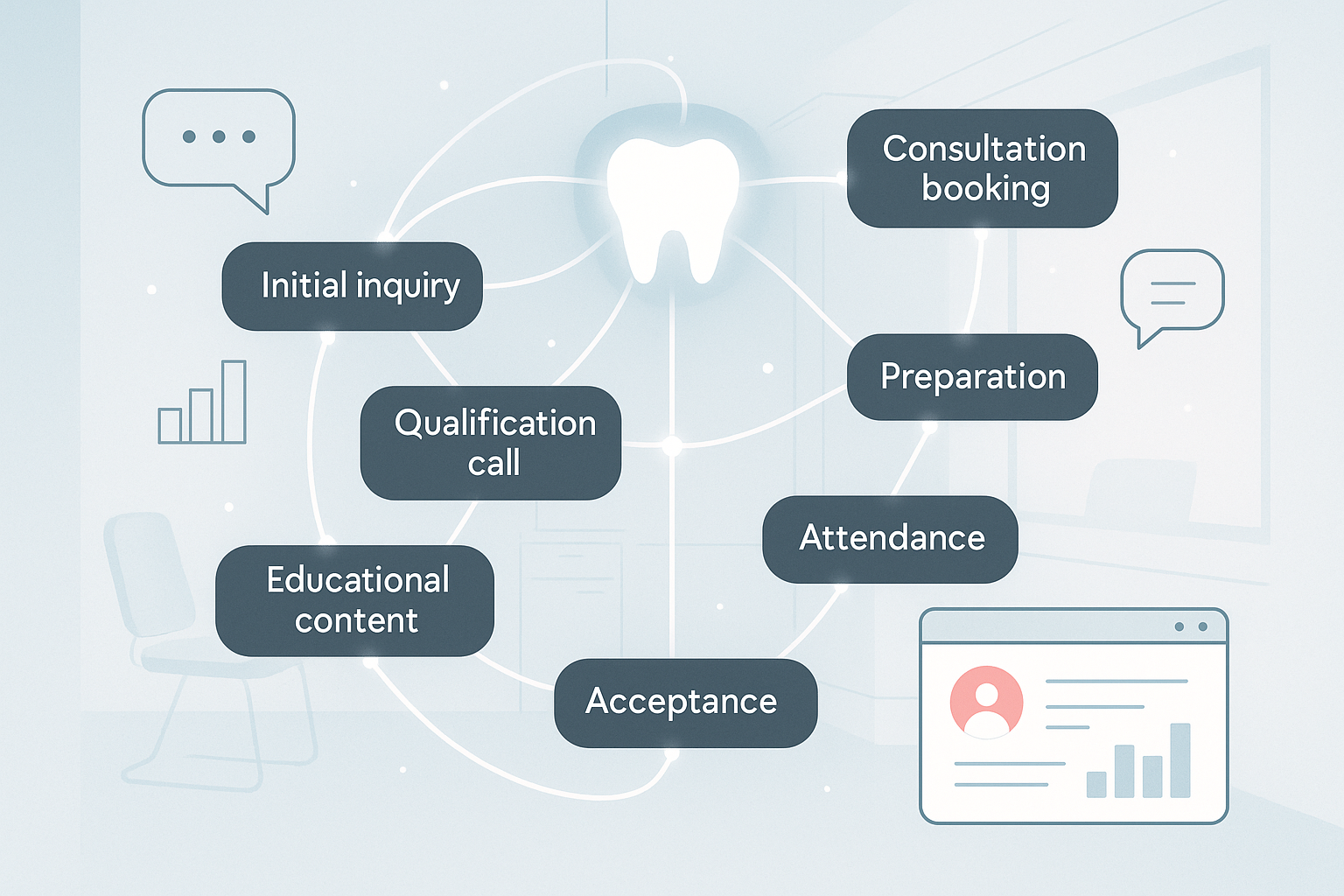
    Practices that use strong video SEO see impressive growth. They experience an average 234% increase in local search visibility and 67% more website traffic from local potential patients. Explore this topic further. This clearly demonstrates the power of video optimization for boosting your online presence.

    Platform-Specific Strategies

    Every platform is different. YouTube, Facebook, Instagram, and even your own website each have their own algorithms that decide how content is discovered. Understanding these differences is key to maximizing your reach.

    • YouTube: Use keyword-rich titles, descriptions, and tags. Encourage viewers to subscribe and interact with your videos and channel.

    • Facebook: Use Facebook's targeting features to connect with specific demographics and interests in your area. Engage with comments and shares to increase organic visibility.

    • Instagram: Make the most of relevant hashtags, compelling visuals, and short, engaging captions. Connect with your audience personally using Instagram Stories.

    • Your Website: Embed videos directly onto related pages of your website. This keeps visitors engaged and can improve your search rankings.

    Thumbnails and Metadata

    Your video thumbnail is like the cover of a book—it's the first thing people see. It has to be attractive enough to make them click. Spend time creating eye-catching thumbnails that accurately represent your video content.

    Metadata is the information search engines use to understand your video. This includes the title, description, tags, and closed captions. Accurate and informative metadata helps search engines categorize your videos, increasing the chance they show up in relevant searches, especially when optimizing content for niche areas like Dental Facebook Marketing.

    Cross-Platform Promotion and Tracking

    Don’t just stick to one platform. Share your videos across all your online channels for maximum visibility. Post YouTube video links on Facebook and Instagram, embed videos on your website, and ask patients to share your content.

    Tracking your video's performance is essential. Pay attention to metrics like views, watch time, and engagement to see which videos resonate with your audience. This data helps you refine your strategy and create even better content.

    By using these dental video marketing techniques, you can ensure your videos are seen by the right people, leading to more new patient inquiries and practice growth. Creating a video is just the first step. Smart distribution and optimization are what really bring results.

    Building Real Trust Through Authentic Video Content

    Trust is the cornerstone of any successful patient-dentist relationship. In the UK, with its numerous dental practices, earning that trust is paramount. Authentic video content provides a powerful tool to connect with prospective patients, forging genuine relationships that transform into loyal, long-term clients.

    Understanding the Psychology of Trust

    Consider this: would you select a dentist based purely on qualifications? Unlikely. You want to feel comfortable with your dentist, confident in their skills, and assured they understand your needs. Dental video marketing allows you to build this connection before a patient even enters your practice.

    Videos showcasing your team, highlighting patient testimonials, and addressing common anxieties can significantly alleviate patient apprehension. This is particularly crucial for nervous patients or those considering complex procedures. By humanizing your practice, you cultivate a welcoming environment fostering trust and encouraging open communication.

    Research involving 1,500 dental patients underscores the influence of video on trust-building. Patients who watched practice introduction videos before their appointments reported 58% lower anxiety levels and were 73% more likely to choose recommended treatments. Read the full research here. This emphasizes video's power in establishing a positive first impression and shaping patient choices.

    Showcasing Expertise Without Intimidation

    Demonstrating clinical skills is crucial, but so is avoiding overwhelming potential patients. Dental video marketing allows you to strike a balance between professionalism and approachability.

    Create videos explaining complex procedures in clear, accessible language. Use analogies and real-world examples to illustrate treatment options, empowering patients to make informed choices. This approachable method builds confidence and reinforces expertise without generating undue anxiety. You might be interested in: How to master creating engaging content.

    The Power of Patient Testimonials

    Patient testimonials are invaluable for establishing trust and social proof. However, they need ethical and effective deployment. Focus on capturing authentic stories, allowing patients to share their experiences naturally. Avoid overly scripted testimonials, as these can seem insincere. Genuine stories resonate, fostering a sense of community and shared experience. To enhance traffic and engagement, consider incorporating an ecommerce digital marketing strategy.

    Building Long-Term Relationships Through Video

    Dental video marketing is not a one-time tactic; it’s a sustained strategy. Create a content calendar addressing patient needs throughout their journey. Develop videos offering preventive care tips, explaining treatments, and highlighting your practice's commitment to patient well-being. This consistency cultivates lasting relationships, positioning your practice as the trusted local choice.

    Measuring Results That Matter For Your Practice

    Image of a graph representing dental video marketing results

    This graph shows how tracking the right metrics can reveal the secrets to successful dental video marketing. You're investing time and money into creating videos, so let's ensure these efforts lead to real growth for your UK practice. This means looking beyond superficial metrics like views and likes and focusing on what truly drives success: attracting new patients and boosting revenue.

    Beyond Vanity Metrics: Focusing on What Truly Matters

    A high view count can be exciting, but it doesn't always translate to booked appointments. A video might rack up thousands of views, for example, but generate zero new patient enquiries. This highlights the need for your dental video marketing strategy to prioritize metrics directly linked to practice growth.

    Instead of fixating solely on views, consider metrics like click-through rates to your website, phone calls stemming from your videos, and completed appointment booking forms. These are signs of genuine interest and potential new patients.

    This shift in focus allows you to refine your video content to effectively target your ideal patient demographic in the UK. For further insights, check out our article on dental marketing resources for UK dentists.

    Connecting Video Engagement with Practice Growth

    Setting up proper tracking is essential. Use analytics tools provided by platforms like YouTube and Facebook to monitor video performance. Also, implement tracking mechanisms on your website to understand how visitors engage with embedded videos.

    For instance, if a specific video drives numerous clicks to your "book an appointment" page, that's a strong sign of its effectiveness. This data reveals which content resonates with your audience, guiding future video creation. This targeted approach helps ensure your dental video marketing delivers measurable results.

    Measuring ROI: Calculating the True Value of Your Videos

    Calculating the return on investment (ROI) from your dental video marketing is key to demonstrating its value. This involves comparing the cost of video production and promotion against the revenue generated from new patients acquired through video engagement.

    Suppose you invest £500 in a video that attracts five new patients, each spending an average of £200. Your ROI is then an impressive 200%. This data-driven approach justifies your marketing spend and underscores the effectiveness of your video strategy.

    Avoiding Common Measurement Mistakes

    One frequent error in Social Media for Dentists is attributing all new patient acquisitions to a single video, especially when running multiple campaigns. This inaccurate attribution can skew ROI calculations and obscure which videos truly perform. Implementing robust tracking systems accurately attributes conversions to specific videos, offering a clearer view of your marketing performance.

    Another mistake is focusing solely on short-term metrics rather than long-term patient value. A video might not immediately lead to appointments, but it can build brand awareness and trust, resulting in future conversions. Remember to consider the long-term effects of your dental video marketing when assessing success.

    Key Video Marketing Metrics for Dental Practices

    The following table outlines key metrics and benchmarks to help you track your video marketing progress. It provides a concise overview of essential KPIs for measuring the success of your dental video marketing strategy.

    Metric Description Good Benchmark Impact on Practice
    Click-Through Rate (CTR) Percentage of viewers who click on a call to action in your video 2-5% Measures how effectively your video drives traffic to your website
    Conversion Rate Percentage of website visitors who book an appointment after watching a video 1-3% Shows how well your video content converts interest into actual bookings
    Cost Per Acquisition (CPA) Cost of acquiring a new patient through video marketing Varies depending on the treatment Helps you understand the cost-effectiveness of your video campaigns
    Patient Lifetime Value (PLV) Total revenue generated by a patient over their relationship with your practice Varies depending on specialty Highlights the long-term value of patients acquired through video marketing

    By monitoring these key performance indicators (KPIs), you can gain invaluable insights into your dental video marketing performance and refine your strategy for optimal patient acquisition and practice growth. This data-driven approach focuses your marketing efforts, maximizing your ROI.

    Key Takeaways

    Dental video marketing in the UK is essential for practice growth. This section outlines core principles for successful campaigns, offering actionable steps whether you're starting from scratch or refining an existing strategy. These takeaways form the basis of a strong video marketing plan.

    Understanding Your Audience

    • Know Their Concerns: Address the anxieties and questions of UK dental patients. Videos should reassure, educate, and foster trust.

    • Focus on Authenticity: Generic videos lack impact. Showcasing your practice's personality and genuine care resonates with viewers.

    • Target Different Patient Segments: Tailor content to specific demographics and their unique needs for improved results.

    Creating Compelling Content

    • Prioritize Quality Over Quantity: A few well-produced videos are more impactful than many mediocre ones. Invest wisely in quality production.

    • Keep It Concise: Short attention spans require efficient and engaging videos that deliver key messages quickly.

    • Diversify Video Formats: Use various video types, including patient testimonials, procedure explanations, practice tours, and before-and-after examples.

    Optimizing for Visibility

    • Master Video SEO: Track key campaign performance metrics to measure success. Use relevant keywords in titles, descriptions, and tags to improve search visibility.

    • Promote Across Multiple Platforms: Share videos on YouTube, Facebook, Instagram, your website, and other relevant channels to maximize reach.

    • Create Compelling Thumbnails: Thumbnails create the first impression. Design visually appealing thumbnails relevant to the video content.

    Measuring and Refining

    • Track Key Metrics: Monitor views, watch time, engagement, and conversions to understand what’s working and identify areas for improvement.

    • Focus on ROI: Measure the return on investment by tracking new patient acquisitions, appointments booked, and revenue generated.

    • Continuously Refine Your Strategy: Use data insights to optimize video content, distribution strategies, and your overall marketing approach.

    Building a Sustainable Strategy

    • Develop a Content Calendar: Planning video content in advance ensures consistency and allows you to capitalize on seasonal trends.

    • Allocate Resources Effectively: Investing in necessary equipment, software, and personnel ensures high-quality video production. Prioritize these investments for better long-term results.

    • Stay Up-to-Date: Continuous learning about the latest trends in dental video marketing is crucial for staying competitive.

    Realistic Timelines and Benchmarks

    Building a successful dental video marketing strategy takes time. Here’s a general timeline for results in the UK:

    • Short-Term (3-6 Months): Increased website traffic and improved social media engagement.

    • Mid-Term (6-12 Months): Higher search engine rankings and increased patient inquiries.

    • Long-Term (12+ Months): Significant new patient acquisition and measurable practice growth.

    These benchmarks can vary based on practice size, target audience, and local market competition. Consistent effort and a data-driven approach will ultimately deliver results.

    Start your dental video marketing strategy now to boost practice growth. Dominate Dental, a leading digital marketing agency for the dental industry, can help you achieve your goals. Visit their site today to learn more about their services and how they can contribute to your practice's success.

  • Dental Facebook Marketing for UK Clinics | Boost Patient Leads 2025

    Why Facebook Marketing Transforms Dental Practices

    Image description

    The way people find dentists has changed. Instead of relying on yellow pages, potential patients now turn to platforms like Facebook. This presents a significant opportunity for dental practices to connect with their target audience. Effective Facebook marketing isn't about sporadic posts. It's about cultivating relationships and integrating your practice into the online community. Practices that embrace this new approach are seeing substantial growth.

    This involves understanding patient psychology. Choosing a dentist is a very personal decision, often based on trust and a sense of comfort. Facebook offers a platform to showcase the personality of your practice. It's a chance to build rapport and create a welcoming online environment. Showcasing the human side of your practice, such as through team photos or patient testimonials, can significantly impact how potential patients perceive you.

    Advantages of Facebook Marketing for Dentists

    Facebook offers distinct advantages. The large UK user base provides a vast pool of potential patients. Its targeting options allow you to connect with your ideal patients based on factors like location, demographics, and even online behaviour. When paired with Dental Video Marketing, this precision becomes even more powerful—enabling you to create engaging visual content that resonates with specific audiences. This ensures efficient use of your marketing budget, reaching those most likely to become patients.

    Facebook also facilitates two-way communication. Patients can engage with your posts, ask questions, and share their experiences. This interaction cultivates a sense of community around your practice, building trust and encouraging patient loyalty. Responding directly to questions and concerns demonstrates care and responsiveness, which is invaluable for your online reputation. With over 75% of people researching businesses online before making contact, including reviewing social media profiles, a strong Facebook presence is crucial. Learn more about the impact of social media in dentistry here.

    Understanding Patient Behaviour on Facebook

    Effective Facebook marketing involves understanding patient behaviour. It's not just about posting about dental procedures. It's about creating content that resonates with patients' needs and interests. This could include oral hygiene tips, addressing common dental anxieties, or highlighting community involvement. This approach positions your practice as a valuable resource, building trust within your local community. By creating content that speaks directly to your target audience, you can foster connections that underpin a successful Facebook marketing strategy.

    Creating A Facebook Presence That Actually Converts

    Many UK dental practices have Facebook pages that unfortunately, don't stand out. This section explores what successful UK dental practices do on Facebook to attract new patients. We'll show you how to transform your page from a generic profile into a powerful tool for growth. The goal is to create a Facebook presence that makes visitors think, "This is the dentist for me!"

    Professionalism That Inspires Confidence

    Your Facebook profile and cover photos are the first things potential patients see. Investing in high-quality, professional photography is key. Bright, welcoming images of your team and office create a positive first impression and build trust. Avoid blurry, amateur photos; they can give the wrong impression. Your "About" section should clearly list your services, location, contact information, and hours. Make it easy for patients to find what they need.

    Showcasing Your Unique Personality

    Professionalism is vital, but so is showing your practice's personality. Share behind-the-scenes looks at your team, celebrate milestones, and highlight community involvement. This humanizes your practice and helps you connect with potential patients. Short videos introducing team members or showing a typical day at the office can be very effective. Consider exploring how video marketing for small business can enhance your overall online presence. These personal touches make your practice more relatable and memorable.

    Engaging Content That Resonates

    Creating engaging content is crucial for dental Facebook marketing. Go beyond generic dental tips and focus on addressing real patient concerns. Think about common patient questions and create posts that provide valuable answers. For instance, you can discuss anxieties about specific procedures or share tips for overcoming dental phobia.

    Patient success stories with before-and-after photos (with patient consent) offer powerful social proof. Vary your content formats with images, videos, and even live Q&A sessions. Don’t forget to promote special offers and promotions. You can find more specific ideas in this article on dental social media ideas.

    Utilizing Facebook's Features

    Many practices don't fully utilize Facebook's features. Engage with your local community through Facebook groups. Promote events like open houses or workshops using Facebook Events. Responding promptly to comments and messages shows you are engaged and responsive. Call-to-action buttons make it easy for potential patients to book appointments or contact you directly. These features can significantly improve patient engagement and drive conversions.

    By implementing these strategies, you can optimize your Facebook presence and create a platform that attracts and retains patients. Your Facebook page is often the first interaction potential patients have with your practice; make it count.

    Content Strategies That Build Trust And Drive Bookings

    Image description

    Creating compelling content for your dental practice's Facebook page takes more than just generic tips and stock photos. It's about building trust with potential patients and encouraging them to book appointments. This requires understanding your target audience and crafting content that addresses their specific needs and interests. This section explores effective strategies used by successful UK dental practices.

    Content Pillars For Dental Facebook Marketing

    Defining content pillars is the first step. These core themes will guide your Facebook posting strategy. Consider these pillars for a dental practice:

    • Preventative Care: Offer practical tips for maintaining good oral hygiene, advice on choosing the right toothbrush, and information about the importance of regular check-ups.

    • Specific Treatments: Clearly explain procedures like teeth whitening, Invisalign, or dental implants, addressing common questions and concerns.

    • Meet the Team: Introduce your dentists and hygienists. Highlight their expertise and create a personal connection with potential patients.

    • Community Involvement: Share photos and updates about your practice's involvement in local events or charities.

    • Patient Success Stories: Share positive experiences (with patient consent) to build trust and showcase the excellent care provided by your practice.

    Creating A Content Calendar That Works

    After establishing your content pillars, develop a content calendar. This helps plan and schedule posts in advance, ensuring consistent engagement. Social media schedulers like Buffer and Hootsuite are invaluable for dental practices. These tools allow scheduling posts at optimal times, providing an overview of future content, and ensuring a consistent brand message.

    For additional strategies to expand your reach, consider methods to boost Facebook followers. Using these tools and techniques is becoming increasingly common for UK dental practices, helping them maintain consistent engagement and build their online presence. Learn more about content calendars for dentists here.

    Content Formats That Drive Engagement

    Varying your content formats is essential to keep your audience engaged.

    • Images: High-quality photos of your practice, team, and happy patients are crucial for creating a positive first impression.

    • Videos: Short, engaging videos are excellent for explaining procedures, answering FAQs, or sharing patient testimonials. Consider creating videos demonstrating proper brushing techniques or showcasing a day in the life of your practice.

    • Live Q&A Sessions: Hosting live sessions provides a platform to interact with your audience in real-time, directly addressing questions and concerns. This fosters a sense of community and transparency.

    • Blog Post Links: Sharing links to informative blog posts on your website can drive traffic and establish your practice as a trusted local authority.

    To help you plan your content effectively, we've compiled a handy framework:

    Monthly Content Planning Framework for Dental Practices: A strategic breakdown of content types, posting frequency, and key dental awareness dates to incorporate throughout the year.

    Month Key Awareness Days Content Focus Post Frequency Engagement Goals
    January National Sugar Awareness Week Preventative care, healthy eating tips 3-4 times per week Increased website traffic, appointment bookings
    February National Children's Dental Health Month Children's dentistry, family-focused content 3-4 times per week Increased parent engagement, new patient inquiries
    March World Oral Health Day General oral health tips, practice highlights 3-4 times per week Increased brand awareness, community engagement
    April Spring cleaning, cosmetic dentistry 2-3 times per week Increased inquiries about cosmetic procedures
    May Importance of regular checkups 2-3 times per week Increased appointment bookings
    June National Smile Month Benefits of a healthy smile, patient testimonials 3-4 times per week Increased patient engagement, positive reviews
    July Summer dental care tips, travel tips 2-3 times per week Increased community engagement
    August Back to school dental checkups 2-3 times per week Increased appointments for children
    September Focus on specific treatments (e.g., Invisalign) 2-3 times per week Increased inquiries about specific treatments
    October National Dental Hygiene Month Importance of hygiene, preventative care 3-4 times per week Increased product sales (toothbrushes, floss), appointment bookings
    November Mouth Cancer Action Month Oral cancer awareness, importance of screenings 3-4 times per week Increased awareness, appointment bookings for screenings
    December Holiday dental tips, end-of-year promotions 2-3 times per week Increased bookings, holiday cheer

    This table provides a basic structure; adjust it based on your practice's specific goals and target audience. Remember to incorporate relevant local events and community initiatives.

    Integrating Local Community Interests

    Connect with your local community by incorporating local interests into your content. Share information about local events, partner with other businesses, or highlight local charities you support. This builds goodwill and positions your practice as an active community member. This strategy can also create opportunities for cross-promotion and expand your reach within your target area.

    By focusing on building trust and engaging authentically with your local audience, your dental practice can effectively use search engine optimization Facebook strategies to drive bookings and achieve sustainable growth.

    Facebook Advertising That Delivers Real Patients

    Infographic about dental facebook marketing

    The infographic above illustrates click-through and conversion rates for dental Facebook ads across various age groups (18-34, 35-54, and 55+). While the 18-34 demographic has the highest click-through rate, the 35-54 group shows the best conversion rate. This emphasizes the importance of tailoring your ad content and targeting to the right demographics.

    Clicks don't guarantee appointments. Focusing on the most likely patients is crucial. Boosting posts alone isn't a successful strategy. This section explores proven Facebook advertising strategies to attract new patients to your UK dental practice.

    Targeting the Right Patients for Your Practice

    Facebook's detailed targeting makes it a powerful platform. You can target potential patients by location, demographics, interests, and even their behavior online. This allows you to connect with individuals actively searching for dental services in your area.

    For example, you can target individuals interested in "teeth whitening" or "dental implants" within a certain distance from your practice. This level of precision is key to maximizing your return on investment.

    Retargeting is another highly effective tool. This technique allows you to show ads to people who have already interacted with your Facebook page or website. If someone visited your website's Invisalign page, for instance, you can then show them ads specifically promoting Invisalign. This consistent messaging increases the chance they'll book an appointment.

    Crafting Compelling Ad Copy

    Your ad copy must capture attention and clearly communicate the value of your services. Begin with a compelling headline that directly addresses a specific patient need or concern.

    For example, instead of a generic "General Dentistry Services" headline, try something more targeted like "Worried about a Toothache? Get Same-Day Emergency Appointments." This acknowledges a pain point and presents a clear solution.

    Highlighting your unique selling propositions is equally important. What makes your practice different? Do you offer weekend appointments? Do you have a specific area of expertise? Focus on the benefits patients will receive, rather than just the features of your practice.

    Instead of simply stating, "We use the latest technology," try, "Experience faster, more comfortable treatments with our advanced technology." This phrasing focuses directly on the patient experience.

    Budget Strategies and Campaign Structure

    Managing your Facebook ad budget strategically is vital. It's generally recommended to begin with a smaller budget and increase it incrementally as you see positive results. A/B testing is also essential. This involves running multiple variations of your ads to see which performs best. Experiment with different headlines, images, and calls to action.

    Data from 2025 shows that Facebook continues to be a highly effective platform for marketing ROI, with approximately 40% of UK marketers utilizing the platform for its targeted advertising and measurable results. You can learn more about Facebook marketing here.

    Structuring your campaigns effectively is another important aspect of successful Facebook advertising. Creating separate campaigns for different objectives is best practice. One campaign might focus on driving traffic to your website, while another focuses on generating leads for a particular treatment. This granular approach allows for more accurate tracking and optimization.

    Tracking and Optimisation: The Key to Success

    Tracking your Facebook ad performance is essential. Go beyond likes and shares, focusing on metrics that directly impact your bottom line, like website clicks, lead generation, and appointment bookings. The Facebook pixel helps you track conversions, showing which ads are driving new patients. This data is crucial for making informed optimization decisions.

    To get a better understanding of typical Facebook ad performance for dental practices, take a look at the table below:

    Facebook Advertising Performance Benchmarks for Dental Practices

    Key performance metrics, costs, and conversion rates specifically for dental Facebook advertising campaigns

    Metric Industry Average Dental Sector UK Average Optimisation Target
    Click-Through Rate (CTR) 1.11% 0.85% 0.90% >1.0%
    Cost Per Click (CPC) £1.20 £1.50 £1.30 <£1.40
    Conversion Rate 2.00% 1.50% 1.75% >2.0%
    Cost Per Lead (CPL) £30 £45 £35 <£40

    This table highlights key metrics for dental practices running Facebook ad campaigns. While the dental sector often experiences a slightly lower click-through rate and higher cost per lead compared to industry averages, the optimization targets provide a benchmark for improvement. Focusing on increasing CTR and lowering CPL should be a primary goal.

    Continuously analyze your data and adjust your campaigns accordingly. If an ad isn't performing well, tweak the targeting, copy, or visuals. Facebook advertising is a continuous process of testing, learning, and refining. By staying proactive and focusing on the data, you can ensure your Facebook ads deliver optimal results for your dental practice. This strategic approach distinguishes successful campaigns from those that simply waste your budget.

    Measuring Success And Optimizing Performance

    Image description

    Many dental practices miss the mark when assessing their Facebook marketing. Focusing solely on likes and shares doesn't provide a complete picture of your campaign's effectiveness. This section explores the key performance indicators (KPIs) that genuinely matter for UK dental practices—the metrics that directly influence your profitability and new patient acquisition.

    Setting Up Effective Tracking Systems

    Before you can gauge success, you need the proper tools. The Facebook Pixel is a snippet of code added to your website. It acts like a detective, tracking user activity. This tool helps you understand what happens after someone clicks your Facebook ad. This includes page visits, form completions, and even purchases.

    Adding UTM parameters to your Facebook ad URLs provides further insight. You'll see precisely which campaigns and posts are driving traffic and conversions. This granular data highlights what's working and what needs tweaking.

    Key Performance Indicators for Dental Facebook Marketing

    Vanity metrics like likes and shares can be deceptive. Instead, prioritize metrics tied to patient acquisition. Cost per lead (CPL) is crucial, showing how much you spend to gain a new lead. Your conversion rate reveals the percentage of people who complete a desired action (like booking an appointment) after engaging with your ad or page.

    Return on investment (ROI) is another vital metric. While calculating ROI can be complex, a simplified version compares your Facebook ad spend against the revenue generated from new patients acquired through those ads. This determines if your Facebook marketing is truly profitable.

    A/B Testing: Finding What Works Best

    A/B testing compares two versions of an ad or post to see which performs better. You might test different headlines for the same ad, targeting the same audience. This isolates the headline variable and reveals which resonates best, resulting in higher click-through rates.

    Experiment with different images, calls to action, and even targeting parameters. Continuous A/B testing optimizes your dental Facebook marketing, boosting efficiency and lowering costs.

    Interpreting Facebook Analytics Data

    Facebook provides extensive data through its analytics platform. However, making sense of it all can be challenging. Focus on the KPIs discussed above and compare your performance to industry benchmarks.

    Research typical conversion rates for dental Facebook ads in the UK. Understanding these benchmarks helps you contextualize your results and pinpoint areas for improvement.

    Continuous Improvement and Optimization

    Facebook marketing requires ongoing attention. Regularly analyze data, tweak campaigns, and continue A/B testing. Small improvements accumulate over time, significantly impacting efficiency and ROI.

    For more in-depth strategies, explore our guide on marketing for dentists. This comprehensive resource offers valuable insights for enhancing your online presence.

    By strategically using these methods and consistently analyzing data, you can ensure your Facebook marketing fuels practice growth and delivers tangible results. This data-driven approach distinguishes successful practices from those simply maintaining a presence. Remember, it's not just about being on Facebook; it's about leveraging it effectively to achieve your goals.

    Staying Compliant While Marketing Effectively

    Successfully navigating the UK's dental marketing regulations, particularly on Facebook, requires a strategic and thoughtful approach. It's not about limiting your creativity, but about understanding the guidelines established by the General Dental Council (GDC). This means developing engaging content that fosters patient trust while adhering to professional standards.

    Navigating GDC Guidelines for Facebook

    The GDC offers specific guidance for dental professionals using social media platforms. Your Facebook marketing efforts must be accurate and verifiable, steering clear of misleading claims or exaggerated promises. This transparency builds trust with prospective patients.

    Maintaining patient confidentiality is also critical. Never share identifiable patient information without their express consent. Even seemingly insignificant details can violate confidentiality. This practice safeguards patient privacy and upholds ethical conduct.

    Handling Patient Testimonials and Reviews

    Patient testimonials can be powerful marketing assets, but they need to be handled responsibly. Always secure written consent before sharing a patient's story. Clearly disclose any incentives offered for the testimonial. This open approach underscores your dedication to ethical practices.

    Actively managing online reviews is crucial. Respond professionally to both positive and negative feedback. This demonstrates your responsiveness and willingness to address patient experiences. Publicly addressing concerns shows accountability and builds trust.

    Crisis Management and Maintaining Professionalism

    Even with careful planning, unexpected issues can arise online. A crisis management plan is essential for dental practices using Facebook marketing. This plan should outline procedures for addressing negative reviews, managing misinformation, and resolving any online reputation challenges.

    Maintaining professionalism extends beyond the content itself. Your online interactions with patients reflect on your practice. Respond to messages and comments promptly and courteously. Refrain from engaging in online disputes, especially with unhappy patients. Projecting professionalism online reinforces your commitment to patient care.

    GDPR Considerations for Patient Data

    The General Data Protection Regulation (GDPR) significantly impacts how patient data is managed online. Your Facebook marketing activities must comply with these regulations. Establish clear policies for collecting, storing, and using patient data. Be transparent about data usage and empower patients to control their information. This protects patient rights and upholds ethical standards.

    Common pitfalls include using patient data for marketing without consent and failing to securely store sensitive information. For more detailed information on this subject, you might find this resource helpful: How to Master GDPR in Your Dental Practice. These errors can damage your reputation and lead to legal complications. By adhering to these guidelines and core principles, your dental Facebook marketing can effectively build trust with potential patients and demonstrate your commitment to ethical practices.

    Key Takeaways

    Your journey through dental Facebook marketing in the UK isn't a one-time setup. It's a continuous process of learning, adapting, and refining your strategies to genuinely connect with potential patients. This section distills the key takeaways from this guide, providing a practical roadmap for your success.

    Building a Strong Foundation

    Your Facebook page is often the first impression for potential patients. High-quality photos of your practice, team, and a welcoming environment are essential. Complete your "About" section with accurate contact details and hours, ensuring patients easily find the information they need.

    A well-maintained Facebook page is just the beginning. Social Media for Dentists is most effective when it fosters genuine engagement that sets your practice apart. Respond promptly and professionally to comments, messages, and reviews. This demonstrates that you value patient interaction and are actively involved in your online community.

    Sharing generic dental tips won't capture attention. Instead, focus on content that addresses specific concerns, such as dental anxiety or the advantages of particular treatments. Highlight patient success stories (with their consent, of course!) and showcase your expertise through informative blog posts and captivating videos.

    Reaching the Right Audience With Facebook Ads

    Simply boosting posts isn't enough for effective advertising. Utilize Facebook's detailed targeting options to reach individuals actively seeking dental services in your local area. Consider factors like location, demographics, and interests to pinpoint your ideal audience.

    Your ad copy should be compelling, immediately grabbing attention and clearly communicating the value you provide. Highlight what makes your practice unique, focusing on the benefits patients will experience. Include a clear call to action, guiding patients to book an appointment or explore your services further.

    Data-driven optimization is crucial for successful Facebook Ads. Continuously analyze your ad performance, paying attention to metrics like click-through rate, conversion rate, and cost per lead. A/B test different ad variations to determine what truly resonates with your target audience. Don't hesitate to adjust your campaigns based on the data insights you gather.

    Measuring What Matters and Staying Compliant

    Avoid getting sidetracked by vanity metrics. Instead, concentrate on tracking website clicks, lead generation, and appointment bookings. These are the metrics that directly reflect the effectiveness of your Facebook marketing efforts.

    Prioritize compliance with GDC guidelines and GDPR regulations. Ensure patient confidentiality, obtain consent for testimonials, and address reviews professionally. This ethical approach builds trust and safeguards your practice's reputation.

    Practical Tips for Long-Term Success

    A content calendar is a valuable tool for consistent posting and organization. Plan your content around relevant awareness days and local events. This keeps your content fresh and engaging for your audience.

    Social media management tools like Buffer and Hootsuite can significantly streamline your efforts. Use these platforms to schedule posts, monitor engagement, and free up your time.

    Connect with your local community by sharing relevant news, collaborating with local businesses, and supporting charitable initiatives. This strengthens your ties within the community and builds positive relationships.

    Essential Tools and Resources

    The following table highlights helpful tools and resources for enhancing your dental Facebook marketing:

    Tool/Resource Description
    Facebook Pixel Tracks website conversions and refines ad targeting.
    UTM Parameters Provides detailed data on ad performance and traffic sources.
    Buffer/Hootsuite Social media management for scheduling posts and monitoring activity.
    Google My Business Optimizes your business listing for local search visibility.
    Dominate Dental Blog Offers insights and advice on dental marketing strategies.

    These key takeaways provide a practical roadmap to successful dental Facebook marketing. By consistently implementing these strategies and adapting to changes, your practice can effectively connect with potential patients, build a strong online presence, and achieve sustainable growth.

  • Social Media Dentists 2026: Proven Guide to Grow Your Practice Fast

    Why Social Media Has Become Essential For Dental Success

    The Importance of <a href=Social Media for Dentists“>

    The UK dental marketing landscape has undergone a significant transformation. Practices that haven't adopted social media are quickly finding themselves left behind. This shouldn't be a surprise, considering how patient behavior has shifted. Today, prospective patients conduct online research before contacting a dental practice.

    This reliance on online research has made social media essential for dentists. Think about how often you check online reviews for a restaurant before making a reservation. The same applies to dental practices. Prospective patients want to understand a practice's reputation and atmosphere before scheduling an appointment.

    Social media platforms in the UK are vital not only for attracting new patients, but also for nurturing a robust online presence. For dentists, an active social media profile cultivates trust and credibility. This is especially important considering that over 75% of people research a business online before reaching out. Find more detailed statistics here

    How Social Media Drives Practice Growth

    Social media empowers UK dental practices to showcase their expertise and engage with their local communities. It allows them to forge genuine connections with patients, positioning the practice as the go-to choice in the area. This allows practices to reach a broader audience, moving beyond traditional methods like word-of-mouth and printed directories.

    Beyond Just New Patients: The Power of Ongoing Engagement

    Social media also facilitates ongoing communication with existing patients. Sharing helpful oral hygiene tips or updates on new services keeps the practice at the forefront of patients' minds. This strengthens patient loyalty and encourages referrals. A strong social media presence can contribute to a full appointment book and sustained growth for dental practices across the UK.

    Understanding What Really Works In UK Dental Marketing

    Successfully using social media to market dental practices in the UK takes a carefully considered approach. What works well with patients in other countries might not resonate with those in the UK. This section explores the specific aspects of UK dental social media marketing.

    NHS vs. Private Care Communication

    One major difference is how patients view NHS and private dental care. Your communication strategies must address these distinct expectations. NHS patients generally value information about accessibility and availability.

    Private patients, on the other hand, are often more interested in premium services and cutting-edge treatment options. Understanding this core difference is crucial for tailoring your messaging.

    Regional Preferences

    Regional preferences also play a critical role. A practice located in London might use different tactics than a practice in rural Wales. Understanding these regional subtleties is key to engaging patients effectively.

    This means adapting your content to local dialects and addressing specific concerns within the community. For example, a practice in a coastal town might focus on teeth whitening, while a practice in a university town might highlight student discounts.

    It's also worth noting that 70% of UK dentists are already using social media professionally, with 80% utilizing Facebook. Learn more about growing your dental practice with social media.

    Content Style and Platform Choice

    Some types of content are particularly effective within the UK. Showcasing testimonials from local patients helps build trust and credibility, resonating well with British audiences.

    Selecting the right social media platform is equally important. While Facebook remains a popular choice, the visual nature of Instagram can showcase cosmetic procedures effectively. LinkedIn can also be a valuable tool for connecting with professional networks.

    Optimizing Posting Times

    The timing of your social media posts significantly impacts their reach. Research on successful UK dental practices suggests there are ideal times to post for maximum visibility.

    Experimentation is vital for finding what works best for your specific audience. Analyzing your own data will reveal when your followers are most active. This allows you to schedule posts for those peak engagement times.

    Choosing Platforms That Actually Convert Patients

    Stop wasting time by trying to be on every social media platform. Savvy dental practices focus their energy where their ideal patients spend their time. This focused approach gives you the best return on your investment. To do this effectively, understand your target audience and the strengths of each social media platform.

    Matching Platforms to Your Ideal Patient

    Infographic about <a href=social media for dentists“>

    This infographic shows a dentist connecting with a patient on a smartphone. It demonstrates the power of engaging content. Sharing real moments builds stronger patient relationships and creates a positive online presence. These "Engaging Posts" offer valuable chances to personally connect with your audience. Learn more: How to master dental-related social media content creation.

    For example, if your practice specializes in cosmetic dentistry and wants to reach a younger demographic, Instagram is likely your best choice. Its visual format is perfect for showcasing before-and-after photos. Instagram also allows for creative use of Reels and Stories to grab attention. If you want to connect with other professionals, consider LinkedIn. It's a great tool for building referrals and sharing industry insights.

    However, if you have a family-oriented practice, Facebook might be a better fit due to its wider reach across age groups. Facebook is an excellent platform for sharing updates, educational content, and building community. Its targeted advertising helps you reach specific demographics in your area.

    To help illustrate the different strengths of various platforms, take a look at this comparison:

    To help you choose the right platform for your practice, we've compiled a comparison table:

    Social Media Platform Comparison for UK Dental Practices
    A comprehensive comparison of major social media platforms showing their effectiveness for different dental practice goals, demographics, and content types.

    Platform Best For UK User Demographics Content Types Patient Conversion Rate
    Facebook Family practices, general dentistry, community building Broad age range, especially 25-54 Text, images, videos, live streams Moderate
    Instagram Cosmetic dentistry, specialists, younger demographics Primarily 18-34 High-quality images, short videos, stories High
    LinkedIn Professional networking, B2B marketing Professionals aged 25-54 Articles, industry news, job postings Low (for direct patient conversion)
    TikTok Reaching very young audiences, viral trends Primarily 16-24 Short-form videos, entertainment Low (for direct patient conversion, better for brand awareness)

    This table highlights the strengths of each platform for UK dental practices. While Instagram boasts a high patient conversion rate for visually-driven practices, Facebook remains a strong contender for reaching a broad audience. LinkedIn, while not ideal for direct patient conversion, offers valuable networking opportunities. Finally, TikTok, though primarily for brand awareness with younger audiences, can still play a role depending on your specific practice goals.

    Avoiding the "Everywhere at Once" Trap

    Many practices try to maintain a presence on every platform without a clear strategy. This spreads your resources too thin and weakens your message. It’s better to focus on one or two platforms and excel on them. This involves tailoring your content and engagement to each platform. For example, a TikTok video won’t be effective on LinkedIn.

    Focusing Your Efforts for Maximum Impact

    Carefully choosing the right platforms for your practice and target audience streamlines your social media marketing. This focused approach helps you build stronger patient relationships, generate quality leads, and convert followers into booked appointments. This leads to increased brand awareness and visibility in your community. Remember, strategic focus yields a higher return on your social media investment.

    Creating Content That Converts Followers Into Patients

    Great dental social media content in the UK requires a delicate balance. You need to provide educational value and engage patients, all while adhering to UK advertising standards. This means understanding what resonates with British patients and presenting information ethically and effectively. This section explores how successful practices convert social media followers into booked appointments.

    Showcasing Your Expertise and Building Trust

    Before-and-after photos are a powerful way to showcase your expertise. However, navigating UK regulations is crucial. Focus on the positive impact of the treatment, highlighting functional and well-being improvements. Always obtain explicit patient consent before sharing anything. For more guidance, check out this resource: How to master engaging content for dental practices.

    Educational content is another excellent way to build trust. Explain complex procedures simply, offer practical oral hygiene tips, or address common dental anxieties. By becoming a reliable source of information, you build patient confidence in your expertise.

    Patient testimonials are invaluable for credibility. Request feedback from satisfied patients and share their positive experiences on your platforms. Authentic stories resonate with potential patients by demonstrating the real-world impact of your services.

    Content Calendars and Engaging Formats

    A well-planned content calendar ensures a consistent online presence. Schedule posts around relevant themes, national holidays, or dental awareness months. This keeps your content fresh, engaging, and maximizes audience reach.

    Think about using engaging formats. Short videos demonstrating proper brushing techniques or interactive quizzes on oral health knowledge can significantly boost patient interaction.

    Messaging That Resonates With UK Patients

    Your messaging should speak directly to the needs and concerns of UK patients. Address questions about NHS versus private care, offer information about payment options, or discuss common dental anxieties. Tailoring your communication to the British public builds trust and encourages interaction, ultimately improving your conversion rate.

    Remember, social media for dentists is about building relationships. It's about establishing your practice as a reliable and trusted source of dental care in the UK.

    Building Genuine Trust Through Strategic Social Presence

    Building Trust Through Social Media

    Trust is essential for any successful dental practice. Social media offers a powerful way to build that trust by showcasing expertise and fostering open communication with patients. This section explores how UK dental practices can use social media to project professional authority without being intimidating. It's all about finding the right balance: demonstrating your skills while connecting with your community.

    Showcasing Qualifications and Expertise

    Building credibility starts with effectively showcasing your qualifications and expertise. Instead of simply listing your credentials, tell stories about your professional journey.

    For example, you could discuss a complex case and explain how your specialized training led to a positive outcome. This not only demonstrates your skills but also highlights your dedication to patient care. Consider exploring resources like Dominate Dental's guide on social media for dentists.

    Another way to showcase your commitment to the field is by sharing key takeaways from recent continuing education courses. This shows patients that you’re staying up-to-date with the latest advancements in dentistry.

    Highlighting Professional Memberships and Affiliations

    Professional memberships, such as affiliations with the British Dental Association, reinforce your commitment to high standards. But don’t just list them. Explain what these memberships mean for your patients. For example, you could discuss how your involvement gives you access to cutting-edge research and techniques that directly benefit their care.

    Handling Patient Interactions and Reviews

    Authentic patient interaction is key. Respond to comments and questions promptly and thoughtfully, showing genuine interest in your patients' concerns. This builds trust, strengthens relationships, and signals to potential patients that you value communication and feedback.

    Negative reviews are bound to happen. Address them professionally and constructively. Offer solutions and show your commitment to patient satisfaction. In fact, incorporating Dental Video Marketing in your response strategy—such as short explainer videos or testimonials—can help clarify misunderstandings and humanize your practice. Handling negative reviews well can actually boost your credibility by demonstrating your professionalism and dedication to resolving issues.

    Showing the Human Side of Your Practice

    While showcasing expertise is important, don’t forget to show the human side of your practice. Share behind-the-scenes glimpses of your team, like celebrating birthdays or highlighting team members' individual skills. This humanizes your practice and makes you more relatable.

    Sharing positive patient testimonials and reviews is also crucial. These authentic stories show the real-world impact of your services and build confidence in your practice. By blending professional storytelling with open communication and active engagement, you can cultivate strong patient relationships that go beyond social media, leading to long-term loyalty and practice growth.

    Measuring Real Results From Your Social Media Investment

    Tracking likes and followers is a vanity metric. While it can be a nice ego boost, it doesn't tell the full story of your social media success. To truly understand your return on investment (ROI), you need to measure the impact on patient acquisition, engagement quality, and revenue growth. This means focusing on tangible outcomes.

    Setting Up Tracking Systems for the Patient Journey

    Understanding the patient journey, from initial social media contact to completed treatment, is key. Implement tracking systems to monitor how patients interact with your content, click through to your website, and book appointments. This helps pinpoint which activities drive conversions. For instance, you might discover before-and-after photos generate more inquiries than purely educational posts.

    Analytics Tools for Dental Practices

    Various analytics tools offer practice-specific insights. Tools like Google Analytics can track website traffic from social media, monitor appointment bookings originating from social platforms, and even calculate the patient lifetime value influenced by social media engagement. This data unveils the true ROI of your social media efforts.

    Attributing New Patient Acquisitions to Specific Campaigns

    Connecting new patients to specific campaigns is vital. Using unique tracking links and promotional codes in campaigns allows you to see which strategies are most effective in attracting new patients. This data-driven approach ensures you allocate your budget wisely, focusing on what delivers the highest return. Furthermore, consider using social listening tools to understand patient needs and brand perception.

    Measuring Brand Awareness and Calculating Cost-Per-Acquisition

    Social media’s impact extends beyond direct patient acquisition. It significantly influences brand awareness. Track online mentions of your practice and monitor changes in search volume for your practice name to understand how your social media presence boosts brand visibility. Calculating your cost-per-patient-acquisition across different platforms also helps optimize marketing spend and maximize ROI. This involves dividing the total campaign cost by the number of new patients acquired.

    To help you better understand key metrics and benchmarks, the table below provides a useful guide for UK dental practices.

    Introducing the table below, "Key Performance Indicators for Dental Social Media Success," provides essential metrics and benchmarks for UK dental practices to measure the effectiveness of their social media strategies and understand their return on investment.

    Metric Measurement Method UK Dental Benchmark Success Indicator Improvement Actions
    New Patient Acquisitions Track conversions from social media to appointment bookings 5-10 new patients per month Consistent increase in monthly acquisitions Optimize campaigns with targeted ads and compelling content
    Website Traffic from Social Media Google Analytics 15-20% of total website traffic Steady growth in social media referral traffic Improve social media posting frequency and content quality
    Engagement Rate (Likes + Comments + Shares) / Total Followers 2-3% average engagement rate Increasing engagement on posts and stories Run interactive polls, Q&As, and contests
    Cost-Per-Acquisition (CPA) Total Social Media Ad Spend / Number of New Patients £50-£150 per patient Decreasing CPA over time Refine targeting and A/B test ad creatives
    Conversion Rate (Number of Appointments Booked) / (Number of Clicks from Social Media) 2-5% conversion rate Improved conversion rate on website landing pages Optimize landing page design and call-to-actions

    This table highlights the crucial metrics for tracking social media success. By monitoring these indicators and taking appropriate action, dental practices can significantly improve their online presence and attract more patients. Whether you’re focusing on Instagram growth or Dental Facebook Marketing, understanding these metrics empowers you to make informed decisions about resource allocation for optimal results.

    Future-Proofing Your Digital Dental Marketing Strategy

    The social media world is in constant flux. For UK dental practices to flourish, staying ahead of the curve is critical. This means adapting to new platforms, recognizing changing patient expectations, and using new technologies. Let’s discuss how to future-proof your digital dental marketing strategy.

    Embracing Emerging Technologies

    New technologies are reshaping how dental practices interact with patients. AI-powered patient communication tools, like automated appointment reminders and personalized oral hygiene advice, are changing the game. Integrating video consultations into your social media strategy allows for remote initial assessments and easy follow-ups, improving the patient experience. To measure your return on investment, try a tool like the Social Media ROI Calculator.

    Evolving content strategies, such as short-form videos and interactive content, are essential for capturing audience attention in today’s fast-paced digital environment. Adopting these technologies will keep your practice modern and attract tech-savvy patients.

    Adapting to Platform Changes and Algorithm Updates

    Social media algorithms and platforms are always changing. What's effective today might be obsolete tomorrow. Construct a flexible social media strategy ready to adapt to these shifts. Diversify your platform presence, test new features, and remain informed about algorithm updates. This proactive approach ensures your content consistently reaches your intended audience.

    For instance, if a platform's popularity wanes or an algorithm update diminishes your reach, a presence on multiple platforms and the ability to adjust content accordingly will minimize the impact. This adaptability is essential for sustained success.

    Navigating Patient Privacy and Authenticity

    Patient privacy is paramount. Stay updated on evolving UK data protection regulations, like GDPR, and ensure your social media practices comply. Transparency and authenticity are also vital. Patients appreciate genuine interaction from healthcare professionals. Building trust through honest and open communication will be even more critical in the future.

    Consider the growing impact of local influencer partnerships. Working with relevant influencers, like local health and wellness bloggers or personalities with a strong regional following, can expand your reach and build credibility within your community.

    Continuous Learning and Staying Current

    The digital landscape is constantly evolving. Dedicate yourself to continuous learning. Attend webinars, read industry blogs, and engage with online communities to keep abreast of best practices. Continuously seeking new knowledge and adjusting your strategies will keep your dental practice at the forefront of digital marketing. This proactive approach helps your practice stand out in a competitive field.

    Ready to elevate your dental practice with a future-proof digital marketing strategy? Dominate Dental can help. We offer comprehensive social media marketing services tailored to the specific needs of UK dental practices. Visit us to discover how we can help you attract new patients, build a strong online presence, and achieve sustainable growth.

  • Dental Practice SEO 2026: Proven Tips to Grow Your Patient List Fast

    Why Your Dental Practice Needs SEO More Than Ever

    Gone are the days when a hefty Yellow Pages ad or a friendly chat over the garden fence was enough to keep your dental chairs full in the UK. Things have changed, haven't they? Now, your practice’s online presence, its digital front door, is often the first thing potential patients see – and it’s arguably more critical than your actual front door. Keeping up with this change isn't just a nice-to-have; it's a must-do to keep your practice thriving in the busy dental world.

    The Modern Patient's First Stop: Online Search

    Think about it: when someone needs a dentist these days, what’s their first move? More often than not, they’re heading straight to Google or another search engine. Before they even think about asking a mate or dialling a number, they're online, searching for local options, checking out services, and scanning reviews. This isn't just a hunch; the numbers back it up.

    This is where Search Engine Optimisation (SEO) becomes a game-changer for UK dental practices. Consider this: a whopping 72% of patients now search online before they even book a dental appointment. That alone shows how vital a good online showing is. And if that's not enough, 93% of all website traffic clicks come from the first page of Google results. If your practice isn't showing up there, you’re pretty much hidden from most people looking for a dentist. You can find more detailed statistics here to see the full picture.

    Traditional Tactics: Are They Still Working?

    Of course, a stellar reputation and word-of-mouth referrals are gold – they always will be. But let's be honest, their reach isn't what it used to be, especially when everyone's glued to their screens. Those traditional ads, the ones that used to be the go-to for dental marketing, just don't pack the same punch anymore. If potential patients are searching for a dentist on their phone, they’re probably not going to see that print ad you placed.

    This isn't about ditching what's always worked well for you. It's about adding some digital muscle to your existing strengths. That brilliant local reputation you’ve built? Imagine how much further it could travel online, reaching so many more people. Overlooking dental practice SEO means you’re likely missing out on a huge number of people actively looking for exactly what you offer.

    Riding the Digital Wave to Grow Your Practice

    Smart dental practices throughout the UK are already on board, using effective dental practice SEO to attract more patients and grow successfully. They get it: being easy to find online means more new patient calls and, let's face it, a healthier business. These practices don't just have a website; they've made sure they pop up right when and where potential patients are looking.

    Grasping why SEO matters for your dental practice can truly set you apart. It’s not just about having a website; it’s about making that website a reliable engine for bringing in new patients. If you're aiming to expand and stay ahead of the curve, checking out resources on SEO for dentists can offer some really valuable pointers. Patient search habits are always changing. If your practice isn't showing up for local searches like "dentist in Anytown" or "emergency dentist near me," you can bet your competitors are. This clear link between being visible online and growing your practice income makes dental practice SEO an essential part of running a modern dental surgery.

    Mastering Local SEO That Actually Converts Patients

    A dentist examining a patient's teeth in a modern dental clinic

    Having a Google Business Profile is a great first step, but it's really just the beginning when it comes to effective dental practice SEO. If you want to draw in new patients through local searches, your practice needs to dig a bit deeper with its strategies. These more refined methods will help you shine in your local area, making sure people looking for dental care find you right when they need you.

    Search engines are changing, and this actually creates fresh opportunities for dental practices ready to be smart about their local online presence. Think about this: in the UK, the demand for solid online visibility is higher than ever. By 2024, almost 60% of Google searches ended without anyone clicking through to a website. This figure is expected to climb in 2025. This really underscores how vital your optimized Google Business Profile is – it’s pretty much the new reception area for many of your potential patients. You can delve deeper into the future of dental SEO. So, making sure your profile is packed with thorough information is absolutely key.

    Optimising Your Online Presence for Local Patients

    To show up high in local search results, your practice needs to align with how people actually look for services these days. This goes beyond basic keyword stuffing; it’s about truly getting how patients search for dental care.

    A big piece of this puzzle is making sure you’re set up for voice search queries. More and more, people are asking their smart speakers or phones things like, "Okay Google, find a dentist near me" or "Siri, where’s an emergency dental clinic in Anytown?". Your website content and Google Business Profile details should be ready to provide direct answers to these spoken requests.

    Creating location-specific content is also incredibly important for building that local trust and showing you're relevant. Think about things like:

    • Sharing blog posts about local health fairs or community events your practice participates in.
    • Crafting detailed service pages that mention nearby landmarks or specific neighborhoods you cater to.
    • Providing helpful details on parking availability or public transport routes to your clinic.

    This kind of specific content tells both search engines and potential patients that you’re a present and convenient choice in their community.

    Building Trust and Managing Your Reputation Locally

    A solid local standing relies heavily on trust, and your online reputation is a huge component of that. This means actively managing your online reviews is a must-do. Gently encourage happy patients to share their experiences on Google and other key review platforms.

    It's crucial to respond to all reviews, whether they're glowing or critical, in a prompt and professional way. This demonstrates that you genuinely care about patient feedback and are dedicated to providing top-notch service. This approach builds significant patient confidence.

    Another vital element for successful local dental practice SEO is maintaining consistency across all your digital channels. Your practice’s Name, Address, and Phone number (NAP) need to be exactly the same on your website, your Google Business Profile, your social media pages, and any online directories you’re listed on, such as Yelp or local business indexes. Discrepancies here can confuse search engines and, more importantly, make potential patients wary. Paying close attention to this detail can make a real difference in how your dental practice brings in new patients. If you'd like to learn more, we have an insightful article on how dental SEO can directly result in more patients.

    By getting these local SEO aspects right, your practice can position itself as the go-to choice in your neighborhood. Even if you're up against larger dental groups, a thoughtfully implemented local SEO plan that emphasizes community connection, positive reviews, and perfectly accurate online information will give you a clear edge. This is how you connect with patients who are actively looking for the care you provide.

    Creating Patient-Focused Content That Drives Bookings

    When it comes to dental practice SEO, just listing your services won't cut it. Think about it – people searching for a dentist are often a bit nervous. Your website content needs to do more than just inform; it has to build real trust and show off your expertise, turning those hesitant clicks into actual appointments. By really understanding what potential patients in the UK are searching for, you can create content that doesn't just draw them in, but also makes them feel secure and understood.

    Infographic about dental practice seo

    Ever clicked on a website only to stare at a loading screen for what feels like an eternity? Frustrating, right? Well, how fast your content loads is a really big deal for your dental practice website. This chart shows just how quickly people give up. If your page takes 1 second to load, around a 20% bounce rate is expected, meaning one-fifth of visitors might leave. But if it stretches to 5 seconds, that number jumps to a 60% bounce rate! That means many potential patients could be clicking away before they even get to see all the great information you have to offer.

    Addressing Patient Concerns and Building Authority

    Let's be honest, visiting the dentist can bring up a few jitters for many people. They might be worried about potential discomfort, the costs involved, or just not understanding what a particular procedure entails. Your website content is the perfect place to tackle these common patient concerns head-on. Imagine an article that clearly explains what happens during a root canal, or a straightforward page detailing your payment options – this kind of information can really help calm those nerves.

    When you offer this kind of helpful, reassuring content, you're not just making patients feel more at ease. You're also showing them that your practice is a knowledgeable and caring place. By explaining dental conditions and treatments in simple, jargon-free language, you showcase your expertise and make complex topics easy to grasp. This is how you start building that crucial trust before they even walk through your clinic doors.

    Content Formats That Engage and Convert

    Different folks respond to different types of information, so to really get potential patients interested and ready to book, it’s smart to use a variety of content styles. Here are a few effective options:

    • Educational Articles: Think helpful blog posts delving into topics like "Understanding the Perks of Invisalign" or "Simple Tips to Ease Dental Anxiety." These attract people searching online and paint you as the go-to expert.
    • Patient Success Stories: There's nothing more powerful than real results! Sharing before-and-after photos (always with permission, of course) or anonymous case studies can truly showcase the quality of your work and build heaps of confidence. A big part of local SEO is getting those glowing reviews, so make it a point to get more google reviews from your happy patients.
    • Frequently Asked Questions (FAQs): A well-organised FAQ page is a lifesaver. It gives quick, straightforward answers to common questions about your services, how to book appointments, or what to do for aftercare.
    • Video Content: People love videos! Short clips introducing your friendly team, explaining a common procedure, or sharing quick oral hygiene tips can be incredibly engaging and easy for people to share.

    To give you a clearer picture of how different content types stack up, here’s a look at their general effectiveness for attracting and converting patients:

    High-Converting Content Types for Dental Practices
    Comparison of different content formats and their effectiveness for patient acquisition

    Content Type SEO Value Patient Conversion Rate Time Investment
    Educational Articles & Blog Posts High Medium Medium
    Patient Success Stories Medium High Medium
    Detailed Service Pages High High Medium
    Frequently Asked Questions (FAQs) Medium Medium Low-Medium
    Video Content Medium-High High High

    As you can see, a mix of content often works best. While some types are SEO powerhouses, others excel at building that vital trust and encouraging those all-important bookings. The key is finding the right balance that suits your practice's specific goals and the resources you have available.

    When you put thought and care into crafting content that truly speaks to what patients are looking for, and make sure it’s easy to find online, your website becomes a fantastic magnet for new patients. It’s about connecting with people on their terms. If you're looking for more in-depth ideas, our guide on How to create a winning content marketing strategy for your dental practice is packed with useful strategies.

    At the end of the day, it’s not just about getting high rankings in search results. The real win is creating content that genuinely helps people feel informed and confident about taking the next step for their dental health. That’s how you build a thriving practice.
    Technical SEO Fundamentals That Boost Rankings

    Technician working on a computer server, representing technical SEO for dental practices

    Think of your dental practice's website like a high-performance car. For it to run smoothly and win the race for new patients, the engine – your technical SEO – needs to be in top shape. It might sound a bit gear-heady, but these behind-the-scenes elements are what allow search engines to easily find, understand, and ultimately, rank your site. This directly affects how many potential patients in the UK see you and the kind of first impression you make.

    Why a Speedy Website Matters More Than You Think

    When it comes to technical SEO for your dental practice, one of the first things to check is your website speed. Let's be honest, nobody likes waiting. If a potential patient clicks on your site and it takes ages to load, they're likely to hit the 'back' button and head over to a competitor. It's not just about keeping visitors happy; search engines like Google notice slow sites too, and they don't like them because they create a frustrating experience for users.

    So, a quick-loading website does more than just prevent frustration; it tells search engines your site is high quality. The numbers speak for themselves: dental websites with solid technical SEO see 67% faster page load times. Even better, they enjoy 34% higher conversion rates from people finding them through search, compared to sites weighed down by technical glitches. If you're curious about the nitty-gritty, you can explore this topic further to see how this can directly bring in more patients. Simply put, a faster site can mean more appointments in your diary.

    Mobile-First: Optimising for Patients on the Go

    Just as important as speed is how your website looks and works on phones – this is called mobile responsiveness. Many of your potential patients in the UK will be searching for you on their smartphones or tablets, perhaps looking for a "dentist near me" while on the train or grabbing lunch. If they land on your site and have to pinch, zoom, or squint to read anything, you've instantly put up a roadblock.

    Google actually looks at the mobile version of your site first when deciding how to rank it – this is known as mobile-first indexing. So, if your mobile site is a pain to use, it can really drag down your search rankings and turn away those potential patients searching on their phones. Making sure your website adjusts smoothly to any screen size isn't just a nice-to-have anymore; it’s a core part of good dental practice SEO.

    Key Technical Elements for a Healthy Dental Website

    Speed and mobile-friendliness are big players, but there are a few other technical bits and bobs that help build a strong online foundation for your dental practice. They might seem like minor details, but they're important for both search engines and the people visiting your website:

    • Easy-to-Follow Site Structure: Think of your website like your practice – it should be easy for visitors to find what they need, whether it's information on your services, your team, or how to get in touch. A clear layout also helps search engine 'bots' understand what your site is about.
    • Secure Connections (HTTPS): You've probably seen "HTTPS" at the start of website addresses. This means the site has an SSL certificate, which scrambles any data shared between a visitor's computer and your site. It's super important for protecting patient information (even if it's just a contact form) and search engines prefer secure sites.
    • A Website Roadmap (XML Sitemap): An XML sitemap is like giving search engines a map of all the important pages on your website. This helps them find and list your content, especially when you add new services or blog posts, making sure they don't miss anything.

    Getting these technical bits right means your website is easy to access, safe for patients, and simple for search engines to understand. This sets the stage for all your great content and local marketing efforts to really work. Knowing a bit about these basics helps you chat more effectively with your web designer or marketing folks, making sure your dental practice SEO plan has a strong, reliable foundation.

    Leveraging AI And Modern Tools For Dental SEO Success

    The field of dental practice SEO is always on the move, and staying current means embracing new approaches and tools. Smart dental practices across the UK are finding out just how beneficial artificial intelligence (AI) and other up-to-date tools can be for their online marketing. It’s not about ditching personal interaction, but rather about giving it a boost, making your SEO work smarter and harder.

    One exciting aspect is how AI helps your practice better understand patient behavior. Introducing artificial intelligence (AI) is significantly changing dental marketing approaches. AI tools don't just assist with dental practice SEO; they are vital for analyzing patient actions and preferences. This leads to more personalized marketing messages that truly connect. You can find out more about AI's place in dental marketing. This insight helps create content strategies that resonate with your UK audience.

    Key AI Applications In Modern Dental Marketing

    So, how can AI boost your dental practice SEO? For one, AI-powered tools can analyze large amounts of data to find the most relevant, high-converting keywords for your services and location. Imagine pinpointing exactly what potential patients are typing into Google when they're looking for a local dentist and what that could mean for your appointment book.

    Additionally, these tools can perform a detailed competitor analysis, revealing what rivals do well and where your practice can find an opening to shine. This means you're making informed decisions based on real data, not just guessing what might work. AI can then help you optimize your website content, ensuring it’s perfectly aligned with current SEO best practices and precisely what patients are searching for.

    Some common applications include:

    • Advanced Keyword Research: Finding those specific, longer search phrases and patient questions you might otherwise overlook.
    • Competitor SEO Analysis: Getting valuable insights into the SEO strategies of other local dental practices.
    • Content Optimisation: Receiving practical suggestions to improve your blog posts' and service pages' readability, relevance, and overall SEO.
    • Predictive Analytics: Identifying emerging patient interest trends to better anticipate future demand for specific treatments.
    • Personalised Patient Communication: Crafting more targeted and effective email campaigns or website experiences using user data.

    Integrating AI Tools Effectively In Your Practice

    A key benefit of these tech advancements is how they level the playing field. Smaller UK dental practices can now access powerful marketing tools once largely limited to big dental chains. This helps them compete more effectively for online visibility and attract new patients. You might find our article insightful: the role AI plays in dental marketing and what UK dentists should be aware of for 2025.

    When choosing AI tools for your dental practice SEO, it's wise to prioritize those offering a clear return on investment (ROI). Look for solutions that integrate smoothly into your current marketing workflows without causing major disruptions or requiring extensive retraining for your busy team. Thankfully, many modern platforms are designed with ease of use firmly in mind.

    The main thing is to see AI not as some scary, complicated tech, but as a really helpful assistant. It can take care of everyday jobs, give you useful information, and let you spend more time looking after your patients. By carefully choosing and using these modern tools, UK dental practices can seriously boost their SEO results and grow steadily. Getting on board with these tools can truly change how well you reach potential patients on the internet.

    Measuring SEO Success And ROI For Your Practice

    A dental professional analyzing charts and graphs on a computer screen, symbolizing SEO analytics

    Figuring out if your dental practice SEO is actually paying off means looking deeper than just how many people visit your website. It’s really about watching specific numbers that connect what you’re doing online to real growth in patient bookings and income for your UK practice. This way, you're focused on things that directly mean more appointments, not just checking off a list.

    Identifying Key Performance Indicators (KPIs) That Matter

    To truly see if your dental practice SEO is working, you need to zero in on Key Performance Indicators (KPIs) that show genuine patient interest. Sure, more website traffic is nice, but are those visitors actually becoming patients? Don't get distracted by 'vanity metrics,' like how high you rank for very general search terms. Instead, focus on KPIs like the number of new patient enquiries coming through your website's contact forms or phone calls clearly tied to your online work.

    Also, online appointment bookings that come from search engine users are a fantastic sign of SEO doing its job. Keeping an eye on your conversion rate – that’s the percentage of website visitors who do something important like book an appointment or send an enquiry – gives you a clear idea of how well your website is performing. Strong rankings for specific, local keywords that people type when they're ready to act, such as "emergency dentist in Manchester" or "teeth whitening Bristol," are much more valuable than ranking for vague terms. What people do on your Google Business Profile, like clicking to your website, asking for directions, or calling you straight from the listing, are also super important local SEO numbers to watch.

    Setting Up Effective Tracking Systems

    To get your hands on this crucial data, having the right tracking systems in place is non-negotiable. Tools like Google Analytics 4 (GA4) and Google Search Console are your best friends here. Inside GA4, it's really important to set up conversion tracking. This lets you monitor actions like when someone fills out a form, clicks your phone number, or lands on your online booking confirmation page. For example, if your practice software lets patients book online, linking this to GA4 can show you exactly how many appointments are coming from your SEO efforts.

    This information helps you see how potential patients are discovering you and what parts of your site convince them to get in touch. Good dental practice SEO absolutely depends on this kind of detailed understanding.

    Essential SEO Metrics for Dental Practices

    To give you a clear roadmap for what to watch, here’s a breakdown of key performance indicators and benchmarks for measuring dental practice SEO success. This table outlines crucial metrics to track for your dental practice, helping you get a much better grip on your SEO performance.

    Metric Target Range Tracking Method Business Impact
    Organic Traffic (from search engines) Consistent month-on-month growth Google Analytics 4 Increased brand visibility, more potential patient touchpoints
    Keyword Rankings (for target local terms) Top 3-5 for key service/local terms SEO software, Google Search Console Higher likelihood of clicks from relevant local searches
    Website Conversion Rate Aim for steady improvement (e.g., 2-5%) Google Analytics 4 (Goal completions/Events) Measures how effectively your website turns visitors into leads
    New Patient Enquiries (from organic) Increasing number month-on-month CRM, Call tracking, GA4 event tracking Direct measure of lead generation from SEO
    Google Business Profile Interactions Growth in calls, website clicks, directions Google Business Profile Insights Indicates strong local visibility and intent
    Return on Investment (ROI) Positive and growing over time (Value of new patients from SEO – SEO Cost) / SEO Cost Demonstrates the financial benefit of your SEO activities

    Tracking these metrics diligently will show you the true value SEO brings to your dental practice. It’s about connecting the dots between your online presence and a fuller appointment book.

    Connecting SEO Efforts to Practice Growth and ROI

    Ultimately, you want to see a clear line from your SEO work to your practice's bottom line. You can start figuring out a basic Return on Investment (ROI) by comparing what you spend on SEO (like agency fees or your own time) against the estimated value of new patients you get through these organic methods. It's important to set realistic timeframes; you often won't see big results from dental practice SEO for 3-6 months, or even longer, particularly if you're in a competitive area. Looking at your data regularly will help you spot which strategies, like writing specific content about dental implants or improving your local listings, are giving you the best bang for your buck.

    This data-first approach lets you see the real-world effects of your online marketing. For instance, if you see a jump in enquiries for cosmetic dentistry right after you publish a few helpful blog posts on that topic, that’s a definite win.

    Adjusting Your SEO Strategy for Maximum Impact

    Finally, checking your success isn't something you do once and forget about; it’s a continuous cycle that shapes your strategy. By regularly looking at your KPIs, you can see what's hitting the mark and where you might need to make some changes. If, for example, a page about a particular service gets tons of visitors but hardly any enquiries, that could mean the content isn't quite right, the call-to-action isn't clear, or it's pulling in the wrong crowd. Practices that truly succeed online are always using data to fine-tune their dental practice SEO tactics. This ensures their efforts lead to steady, provable growth and a reliable stream of new patients. This ongoing refinement is the secret sauce to long-term online success.

    Key Takeaways

    Successfully attracting more patients online begins with understanding and applying effective dental practice SEO. This summary lays out a clear set of steps and realistic timelines to steer your UK practice toward steady digital growth.

    Each point here is meant to help you see quick wins and build a solid online presence that lasts.

    Your Immediate Action Plan For Dental Practice SEO

    Getting going on dental practice SEO can feel manageable when you focus on key areas first. Here are the tasks you can start today:

    • Fully Optimise Your Google Business Profile: Your listing is the first stop for local patients. Make sure your practice name, address, and phone number (NAP) match exactly everywhere. Add high-quality surgery photos, turn on messaging, and ask happy patients for reviews.
    • Conduct Foundational Keyword Research: Find the terms local patients use, such as “dentist in [Your Town],” “emergency dental care [Your City],” or “teeth whitening near me.”
    • Check Mobile-Friendliness And Loading Speed: Many patients browse on phones. Aim for load times under 3 seconds. Use a tool like Google’s PageSpeed Insights for a quick check.
    • Create Patient-Focused Content: Write blog posts, improve service pages, or add FAQ sections that answer common questions and concerns.

    Setting Sensible Goals And Tracking Progress

    SEO results often take time. You might see initial movement within 3–6 months, but in competitive UK areas, it can take longer to hit top spots. To stay on track, focus on clear, measurable objectives:

    • Boost Organic Traffic: Aim for a 15–20% increase in the first 6–9 months.
    • Improve Local Rankings: Target top 3 positions for 5–7 key service terms.
    • Increase Appointment Enquiries: Track calls and form submissions that come from organic search.
    • Grow Google Business Interactions: Monitor clicks for directions, website visits, and calls from your listing.

    These metrics let you see real progress and celebrate small wins along your SEO journey.

    Building An Enduring SEO Framework

    For lasting benefits, SEO should be part of your regular operations, not a one-off project. Set up systems that keep your practice visible online:

    • Request And Respond To Reviews Regularly: Keep your profiles on Google and other UK directories up-to-date.
    • Publish Fresh Content Consistently: Address new patient questions and share updates.
    • Run Periodic Technical Checks: Verify your site stays fast, secure, and easy for search engines to crawl.
    • Maintain Accurate Directory Listings: Ensure your NAP details are correct everywhere you’re listed.

    These routines help your dental practice SEO efforts build on each other over time.

    Staying Current In The Evolving World Of SEO

    SEO rules and patient habits shift over time. Staying informed and flexible is key to keeping your practice visible. For instance, demonstrating E-E-A-T (Experience, Expertise, Authoritativeness, Trustworthiness) is crucial for healthcare sites in the UK. You might also explore how AI tools can fine-tune your content or keep an eye on the growing role of voice search (e.g., “Alexa, find a cosmetic dentist near me”).

    A proactive approach to these changes will help your practice maintain its edge in local search.

    Ready to transform your dental practice’s online presence and attract a steady stream of new patients? Let Dominate Dental take the complexity out of SEO. Discover our all-in-one digital marketing solutions for dental professionals and let us help you dominate your local market.

  • Local SEO Dentists 2026: Proven Tips to Boost Patient Bookings Fast

    Why Local SEO Transforms Dental Practice Growth

    The way people find dental care has dramatically shifted. Instead of relying only on referrals, most patients now begin their search online. This makes local SEO for dentists essential for practice growth in the UK. Successful practices understand this and use online search habits to their advantage, capturing "dentist near me" searches and turning them into appointments.

    Understanding the Shift in Patient Search Behaviour

    Consider your own recent searches for local services – you probably Googled them. Dental care is no different. Patients search for terms like "dentist in [town/city]", "emergency dentist near me", or "best cosmetic dentist". To learn more about the importance of local SEO, check out our guide on SEO for dentists. This reliance on online search creates a huge opportunity for practices that prioritize local SEO. Data shows that 72% of patients search online before booking an appointment, emphasizing the need for a strong online presence. This trend is increasing, with almost 60% of Google searches ending without a click in 2024, and this number is expected to rise in 2025. You can learn more here.

    Converting Online Searches into Appointments

    Topping local search results is like having the best spot on the high street. When your practice is at the top for relevant keywords, you’re far more likely to attract new patients. This increased visibility leads to more calls, website visits, and booked appointments. For further insights, see How dental SEO can lead to more patients.

    Avoiding Common Local SEO Pitfalls

    Many practices waste marketing funds on ineffective methods. Common mistakes include ignoring their Google Business Profile, having inconsistent business listings (Name, Address, Phone Number – NAP), and lacking focus on local keywords. These issues can decrease visibility and make it difficult for patients to find you. Investing in a well-designed local SEO strategy prevents these problems and ensures effective budget use.

    Setting Realistic Expectations and Measuring Success

    While local SEO is vital, it's important to be realistic. Visibility improvements don't happen instantly. It's an ongoing process requiring consistent work and tracking. Monitoring metrics like keyword rankings, website traffic, and conversion rates gives you insights into your strategy's success. Focusing on these metrics allows you to refine your approach and maximize your return on investment.

    Maximizing Your Google Business Profile for Patient Acquisition

    Your Google Business Profile (GBP) is the cornerstone of attracting new patients. It's the digital equivalent of your practice's front door, connecting you with people actively searching for dental services nearby. Let's explore how to optimize your GBP to make it a powerful patient-generating tool.

    The Power of a Complete and Accurate Profile

    A successful GBP starts with accurate and complete information. This includes the basics: your practice's name, address, phone number (NAP), website, and hours of operation. Consistency across all online platforms is key to avoid confusing potential patients. For instance, if your website lists your address as "10 High Street," your GBP should match exactly. Small discrepancies can negatively impact your local SEO.

    Beyond the basics, selecting the right categories for your practice is crucial. "Dentist" is a must, but adding specific categories like "Cosmetic Dentist" or "Orthodontist" helps Google understand your specialties and connect you with the right patients.

    Infographic about local <a href=seo for dentists“>

    This image illustrates the crucial first step: claiming your GBP listing. By claiming and verifying your listing, you take control of the information displayed and unlock powerful features to interact with potential patients.

    Optimizing your online presence, especially your GBP, is paramount for attracting new patients, particularly for dentists in the UK. Focusing on local SEO strategies ensures visibility in searches like "dentist near me." Learn more about local SEO for dentists here.

    Engaging Visual Content and Compelling Descriptions

    Your GBP is your online storefront. Just as an attractive physical storefront draws people in, high-quality photos and videos on your GBP capture attention. Showcase your facilities, friendly staff, and technology to help patients visualize themselves in your practice and build trust.

    Your business description is your chance to connect. Craft a concise and engaging description that highlights what sets you apart. Do you offer specialized treatments? Do you focus on family dentistry or cosmetic procedures? Communicate the value you provide clearly.

    Leveraging Google Posts and Patient Reviews

    Google Posts are like mini-blog posts that appear in search results. Use them to announce new services, share special offers, or post informative content about dental health. Keep your profile fresh and engaging, attracting both new and existing patients.

    Patient reviews build trust and credibility. Encourage satisfied patients to leave reviews on your GBP. Positive reviews influence potential patients and signal to Google that your practice is reputable, boosting your local search ranking. Responding to all reviews demonstrates your commitment to patient satisfaction.

    Verification and Ongoing Optimization

    Verifying your GBP ensures accuracy and builds trust. Google offers several verification methods, typically through postcard, phone, or email. Verification unlocks valuable insights and analytics to track your GBP's performance.

    Local SEO is a continuous process. Regularly review and update your GBP to reflect any changes, like new services or adjusted hours. Stay updated on Google Business Profile features and best practices to maximize patient acquisition. Consistent optimization builds a strong online presence and attracts a steady stream of new patients.

    Before we conclude, let's take a look at a checklist that can help you ensure your GBP is fully optimized.

    This table summarizes key optimization elements for your Google Business Profile:

    Google Business Profile Optimization Checklist for Dentists

    A comprehensive checklist of essential optimization steps for dental practices to maximize their Google Business Profile effectiveness

    Optimization Element Importance Level Implementation Difficulty Impact on Local Visibility
    Accurate NAP Information High Low High
    Relevant Categories High Low Medium
    Engaging Photos and Videos Medium Low Medium
    Compelling Business Description Medium Low Medium
    Regular Google Posts Medium Low Low
    Active Management of Reviews High Medium High
    Profile Verification High Low High
    Consistent Updates Medium Low Low

    By following these optimization steps, you can significantly improve your practice’s visibility and attract more patients. Regularly reviewing this checklist will ensure your GBP continues to be a powerful tool for growth.

    Dental-Specific Keyword Research That Drives Appointments

    Dental keywords

    Beyond optimizing your Google Business Profile and website structure is a powerful tool for attracting new patients: dental-specific keyword research. Many UK practices overlook this critical aspect of local SEO for dentists, missing valuable opportunities to connect with potential patients.

    Identifying High-Value Keywords

    Effective keyword research goes beyond simple terms like "dentist." It requires understanding the specific language patients use when searching for treatment. For example, instead of "dental restoration," a patient might search for "chipped tooth repair" or "fix broken front tooth."

    Identifying these long-tail keywords, longer and more specific phrases, allows you to target patients actively looking for specific treatments. This targeted approach helps attract the right patients to your practice.

    Consider the searcher intent behind keywords. Someone searching for "emergency dentist open now" has a different need than someone searching for "best cosmetic dentist London." Understanding intent helps tailor your content and connect with the right patients at the right moment.

    Decoding Patient Language vs. Clinical Terminology

    Dentists often use clinical terms that patients might not recognize. While "periodontitis treatment" is medically correct, a patient might search for "gum disease treatment" or "bleeding gums remedy." Bridging this gap is crucial for effective keyword targeting.

    This means creating content that uses both types of language. This approach makes your content accessible to patients while showcasing your professional expertise. This strategy strengthens your online presence and builds patient trust.

    Addressing Searcher Anxiety and Building Trust

    Many patients feel anxious about dental procedures. Keywords like "painless root canal" or "gentle dentist for nervous patients" reflect this anxiety. Addressing these concerns in your content builds trust and positions your practice as compassionate and understanding.

    Create content that explains procedures while reassuring patients and alleviating their fears. Building this trust can be a key differentiator for your practice.

    Mapping Keywords to the Patient Journey

    The patient journey typically moves from awareness to consideration and finally to decision. Different keywords are relevant at each stage. Someone in the awareness stage might search for "causes of toothache," while someone closer to a decision might search for "dental implants cost London."

    Mapping keywords to each stage allows you to create targeted content that guides patients through their decision-making process, ultimately leading to appointments. This could involve blog posts, detailed service pages, and clear calls to action.

    Exploring Keyword Variations Across Treatments and Locations

    Different treatment categories have unique keyword sets. "Invisible braces" will attract different patients than "dentures." Location also plays a significant role in local seo for dentists. Patients in Birmingham will use different terms than those in Manchester.

    Tracking geographically-specific search patterns lets you tailor content and target the right local audience. Location-specific landing pages can further refine your local targeting.

    By mastering dental-specific keyword research, you connect with potential patients actively seeking your services. This drives targeted traffic to your website and ultimately increases appointments. This focused approach ensures your local SEO efforts reach the right people at the right time. This, in turn, boosts your practice’s visibility and attracts patients seeking quality dental care in your area.

    Building a Local SEO Powerhouse Dental Website

    Your dental website is the key to attracting new patients. It works for you 24/7. By looking at successful dental websites, we can see what brings in patients and keeps search engines happy. This section explores essential elements of a dental website optimized for local SEO for dentists in the UK.

    Structuring Your Website For Local Relevance

    Think of your website like a well-organized library. Clear navigation and a logical structure are crucial. Each page should have a distinct purpose, such as "Teeth Whitening" or "Dental Implants." This helps both patients and search engines find information quickly.

    Location-specific landing pages are essential for targeting areas within the UK. For example, a "Dental Implants Manchester" page attracts patients in that city and improves local SEO.

    Mobile optimization is also vital. Most people search on mobile devices. A responsive website adapts to any screen size, preventing frustration and improving search engine ranking.

    Technical SEO Foundations

    Behind the scenes, the technical side of your website is crucial for local search visibility. This includes fast loading speeds, a secure connection (HTTPS), and a sitemap.

    These elements improve user experience and tell Google your website is trustworthy and reliable. A fast-loading website keeps visitors engaged and encourages them to explore your services.

    Content Marketing For Dental Practices

    Compelling content builds trust and establishes your practice as an expert. High-quality content addressing patient concerns and explaining treatments attracts organic traffic. Dominate Dental offers further insights on smart website design.

    Blog posts like "What are the benefits of Invisalign?" or "How to manage dental anxiety" add value for potential patients and boost your visibility for relevant keywords.

    Psychological Triggers and User Experience

    Beyond just the technical details, understanding user psychology is crucial for converting website visitors. Clear calls to action, such as "Book Your Appointment Today," guide visitors towards taking action.

    Trust signals, including patient testimonials and certifications, build credibility and encourage bookings. Showcasing positive reviews strengthens trust and helps patients feel comfortable choosing your practice.

    Implementing Structured Data

    Structured data is code that helps search engines understand your website content. This includes details about your practice, services, and location. It improves your visibility in search results and can lead to rich snippets, enhanced listings with extra information like opening hours and reviews.

    Rich snippets make your practice stand out and provide key information at a glance, increasing click-through rates. This technical element has a significant impact on local SEO for dentists.

    Maintaining Brand Consistency

    While focusing on local SEO is important, maintaining consistent branding across all your locations is key, especially for practices with multiple locations. A consistent brand experience builds trust and reinforces your brand identity online.

    The following table summarizes the essential website elements for boosting your dental practice's local SEO performance. It outlines the impact of each element on SEO, patient conversion, and the priority of implementation.

    Essential Website Elements for Dental Practice Local SEO

    A comparison of critical website features that impact local search rankings for dental practices

    Website Element SEO Impact Patient Conversion Impact Implementation Priority
    Mobile Optimization High High High
    Location-Specific Pages High Medium High
    Fast Loading Speed High High High
    Secure Connection (HTTPS) Medium High High
    Sitemap Medium Low High
    High-Quality Content High High High
    Clear Calls to Action Medium High High
    Trust Signals Medium High Medium
    Structured Data High Medium Medium

    By implementing these elements, your website will attract, engage, and convert potential patients. This approach establishes your practice as a leader in your local market and positions your website as a powerful tool for growth.

    Harnessing Patient Reviews as Your Competitive Advantage

    Patient reviews

    Patient reviews are more than simple feedback; they are powerful tools for your dental practice. These reviews can significantly influence potential patients and directly impact your local SEO. This section explores how to generate authentic reviews and use them to build a strong online presence for your UK dental practice.

    Understanding the Psychology of Review Requests

    Timing is crucial when asking for reviews. Requesting feedback immediately after a complex procedure might not be ideal. Instead, consider asking after a routine check-up or when a patient expresses satisfaction with their visit.

    Personalization matters, too. A generic email is less effective than a personalized message. Referencing the specific treatment a patient received shows you value their individual experience. This thoughtful approach builds rapport and encourages authentic feedback.

    Identifying Key Review Platforms for UK Dentists

    While Google reviews are essential, other platforms are also important for UK dental practices. Consider platforms like NHS Choices, Doctify, and Trustpilot. Focusing on platforms relevant to your target audience maximizes your reach and online visibility.

    Diversifying your review platforms creates a more comprehensive view of your practice. Prioritizing these platforms allows you to connect with potential patients actively seeking healthcare information.

    Responding to Reviews: Showcasing Your Practice Values

    Responding to reviews, both positive and negative, shows your commitment to patient care. Thank patients for positive comments and address concerns raised in negative reviews professionally and promptly.

    Handling negative reviews effectively can turn a negative experience into a positive one. A well-crafted response demonstrates professionalism and a dedication to patient satisfaction. For further guidance, check out this helpful resource: How to master online reviews.

    Amplifying Positive Reviews and Handling Negative Feedback

    Highlight positive reviews on your website and social media channels. These testimonials build trust and encourage potential patients to choose your practice. Positive feedback serves as social proof, reinforcing your reputation and expertise.

    When addressing negative reviews, empathize with the patient's concerns and offer a solution. This demonstrates your commitment to resolving issues and maintaining patient satisfaction, mitigating the impact of negative feedback and building trust.

    Leveraging Patient Testimonials Across Marketing Channels

    Patient testimonials are valuable marketing assets. Use them in email marketing, social media posts, and even printed materials. These real-life experiences resonate with potential patients and build credibility.

    Sharing positive reviews across multiple platforms reinforces your brand messaging and increases your chances of converting potential patients into loyal ones. This multi-channel approach ensures consistent communication and maximizes the impact of positive feedback.

    By effectively managing patient reviews, you can turn feedback into a significant competitive advantage. This approach strengthens your online presence, builds trust, and ultimately contributes to practice growth in the competitive UK dental market. Positive reviews are a cornerstone of a successful and thriving dental practice.

    Strategic Citation Building for Dental Practice Visibility

    Having a robust Google Business Profile is crucial, but it's only one component of effective local SEO for dentists. Think of your online presence as a web – the more connections and the more consistent those connections, the more resilient and effective it becomes. That's where citation building enters the picture. It involves strategically listing your practice information on relevant online platforms to increase your authority and visibility among potential patients in the UK.

    Identifying High-Impact Citation Opportunities

    Not all citations hold the same weight. Some directories carry more authority and relevance for dental practices than others. General directories are useful, but concentrating on industry-specific platforms and professional associations significantly amplifies your reach.

    Consider platforms like the British Dental Association, Dental Health.org, and reputable local directories. These targeted listings signal relevance to both search engines and potential patients. This strategic approach maximizes the effectiveness of your citations.

    Prioritizing Citation Opportunities for Maximum Impact

    Just as each patient requires individualized care, your citation-building strategy shouldn't be generic. Prioritize citations based on their relevance to your practice and your ideal patient. If you specialize in cosmetic dentistry, prioritize directories and platforms focused on aesthetics. If you provide NHS services, ensure your NHS Choices listing is accurate and current. This tailored approach strengthens your online presence in the areas that matter most.

    Local SEO has a measurable impact: practices with optimized local SEO see a 156% increase in new patient appointments compared to those without. This emphasizes the importance of factors like Google Business Profile optimization, targeted keyword strategies, and consistent citations. For more detailed statistics, check out this helpful resource: Local SEO Statistics.

    Maintaining NAP Consistency Across the Web

    NAP (Name, Address, Phone Number) consistency is essential. Inconsistent information damages your credibility and confuses search engines. Imagine the frustration of a potential patient encountering different phone numbers for your practice across different websites. Ensure your NAP information is identical on all online platforms, including seemingly minor details like using "St." instead of "Street" or including your suite number. This attention to detail strengthens your online presence and builds trust with potential patients.

    Leveraging Professional Associations, Community Connections, and Industry Relationships

    Building citations is more than simply listing your practice in directories; it's about forging connections with your community. Look beyond online directories and explore opportunities with professional associations, local business groups, and even sponsorships. These relationships can generate valuable backlinks and enhance your practice's local relevance. Gathering positive reviews is also crucial. Here’s a helpful resource on the impact of reviews: 5-Star Google Review. These connections can lead to valuable citation opportunities and enhance your online visibility within your community.

    Auditing and Correcting Existing Citations

    Before adding new citations, audit your existing ones. Are there outdated listings, inaccurate information, or duplicate entries? These issues can negatively affect your local SEO. Utilize tools like Moz Local or BrightLocal to find and correct inconsistencies. This cleanup process strengthens your online foundation and ensures your citations are working effectively. Proactively addressing these issues is vital for maintaining a strong online presence and maximizing your visibility among potential patients.

    Building a Citation Strategy that Supports Your Practice Goals

    Your citation-building strategy should directly support your practice goals. If you aim to attract more patients from a particular area, focus on local directories and platforms relevant to that region. If you’re expanding your services, ensure your citations reflect these new offerings. This strategic alignment ensures that your citations support your growth objectives and contribute to your overall marketing efforts. This focused approach will yield better results and help you achieve your practice's specific goals.

    Measuring What Matters: Local SEO Success Metrics

    Vanity metrics like website visits or social media followers can be tempting to track. However, for dentists, local SEO success relies on data that directly impacts practice growth and new patients. This means looking beyond surface numbers and focusing on metrics that show real impact within the UK.

    Key Performance Indicators (KPIs) for Dental Practices

    The first step is identifying the Key Performance Indicators (KPIs) that align with your practice goals. Are you looking to increase bookings for a specific treatment? Or are you focused on growing your patient base within a certain area? Your goals will determine the metrics you should prioritize.

    For example, if you’re focusing on dental implants, tracking keyword rankings for "dental implants [your town/city]" is essential. You'll also want to monitor the conversion rate of visitors who land on your implant services page. This reveals how effectively your website converts visitors into patients.

    Tracking the Patient Journey From Search to Appointment

    Understanding the patient journey is fundamental to effective local SEO for dentists. This involves tracking how patients find your practice, interact with your online presence, and finally book an appointment. Often, this includes analyzing data from Google Analytics and your practice's booking system.

    You can track, for example, how many patients found your practice through your Google Business Profile compared to organic search results. This data helps you determine which local SEO strategies are driving the most valuable traffic.
    Attributing New Patients to Specific Marketing Efforts

    Accurately connecting new patients to specific marketing campaigns can be tricky. This often means using unique tracking phone numbers or URLs for different campaigns. This detailed approach helps you understand the return on investment (ROI) for each activity, such as a targeted Facebook ad or a local email campaign.

    This information allows you to allocate your marketing budget wisely, focusing on strategies with the best results. In the UK, patients often choose practices that appear in the top three local search results. Trust significantly influences this decision, as patients often trust higher-ranking practices. Learn more here. Focusing on core local SEO elements improves your visibility and attracts potential patients.

    Benchmarks and Warning Signs

    While every practice is different, understanding industry benchmarks provides valuable context. This allows you to compare your performance with similar dental practices in terms of size and location. This competitive analysis can reveal areas for improvement and opportunities to gain an advantage.

    Also, be mindful of warning signs. A sudden drop in keyword rankings, website traffic, or conversion rates can indicate underlying issues with your local SEO strategy. Regularly reviewing these metrics helps you quickly identify and address potential problems.

    Reporting and Data Interpretation

    Regular reporting is vital for making informed decisions. Create reports that emphasize business outcomes, such as new patient acquisition and revenue growth. These reports should present data clearly and concisely, highlighting key trends and insights. This data-driven approach keeps your local SEO strategy aligned with your overall business objectives.

    Setting Up Tracking Systems

    Several tools can help you monitor and measure your local SEO performance. Google Analytics and Google Search Console offer valuable insights into website traffic and search visibility. Other tools like Moz Local and BrightLocal can assist with citation management and local rank tracking. These tools provide essential data for refining your strategy and maximizing your local SEO effectiveness.

    By focusing on the right metrics, tracking the patient journey, and consistently analyzing data, you can refine your local SEO strategy for optimal results. This data-driven approach ensures your marketing efforts align with your practice's goals and drive tangible results in the UK.
  • Dental Marketing Plan 2026: Proven Strategies to Grow Your Practice

    Decoding the UK Dental Landscape: Your Market Opportunity

    The UK dental market offers exciting prospects for practices willing to embrace a strategic dental marketing plan. It's not just about filling appointments; it's about cultivating a thriving, sustainable business. Understanding the specific dynamics of the UK dental market is the crucial first step.

    Understanding the Current Market Dynamics

    The market is evolving, shaped by changing patient expectations and advancements in technology. Patients are increasingly focused on preventative and cosmetic care, creating new growth opportunities. The presence of both private practices and NHS services provides diverse options for catering to different patient demographics. Understanding your target audience is more important than ever.

    Infographic about <a href=dental marketing plan”>

    The infographic above illustrates key data impacting dental marketing plans. 70% of patients now research online before booking an appointment. The average ROI for dental marketing campaigns is 150%, significantly exceeding the industry average. Online dental leads have increased by 25% annually over the past five years. This data emphasizes the need for a strong online presence and a focused digital marketing strategy.

    Identifying Profitable Niches and Regional Opportunities

    Regional differences within the UK influence marketing effectiveness. Understanding the unique needs and preferences of patients in your local area is paramount. Demographic trends are also creating profitable niche markets. For example, the rising demand for cosmetic procedures among younger demographics presents a valuable opportunity for practices offering such services.

    Tapping into Cosmetic Dentistry Growth

    This trend is particularly noticeable in urban areas experiencing increased interest in cosmetic dentistry, often facilitated by private clinics and flexible payment options. The UK dental market's healthy growth projections underscore this potential. The market is predicted to reach USD 48.83 billion by 2032, with a CAGR of 19.4%. You can learn more about these projections here.

    To better understand the projected growth across different segments of the dental market, let's look at the following table:

    UK Dental Market Growth Projections: A comparison of market valuation and growth trends across different dental service categories

    Service Category Current Market Value Projected Growth Rate Key Growth Drivers
    General Dentistry $XX Billion X% Increasing awareness of oral health, aging population
    Cosmetic Dentistry $XX Billion X% Rising disposable incomes, focus on aesthetics
    Orthodontics $XX Billion X% Technological advancements, increasing demand for teeth straightening
    Restorative Dentistry $XX Billion X% Growing prevalence of dental issues, innovative treatment options
    Preventative Dentistry $XX Billion X% Focus on proactive care, increasing health consciousness

    Note: The table above provides a framework. Actual market values and growth rates would require specific market research data to populate.

    This table demonstrates the varying growth trajectories within the UK dental market. While general dentistry maintains a steady growth, areas like cosmetic and restorative dentistry are experiencing faster expansion due to factors like rising disposable incomes and advanced treatment options.

    Learning from Successful UK Practices

    Forward-thinking dentists are already leveraging these market trends. By studying their strategies, valuable lessons can be gleaned for developing effective dental marketing plans. These practices often prioritize building a strong brand identity, communicating a clear value proposition, and employing innovative marketing techniques that resonate with their target audience. By understanding market dynamics, identifying profitable niches, and learning from successful practices, you can create a robust dental marketing plan that positions your UK practice for sustained growth.

    Crafting Your Dental Marketing Plan: Beyond the Basics

    A successful dental marketing plan in the UK takes more than a website and a few social media posts. It requires a strategic understanding of the UK dental market, your target audience, a compelling brand identity, and measurable objectives. This section explores the key elements for building a dental marketing plan that delivers real results.

    Defining Your Brand Identity and Value Proposition

    Your brand identity is the personality of your practice; it's how patients perceive you and what differentiates you from competitors. Do you focus on NHS care, specialize in premium cosmetic services, or offer a balanced approach? Defining this shapes your entire marketing strategy. It also helps articulate your value proposition: the unique advantages patients gain by choosing you. What makes your practice special? Is it advanced technology, a commitment to patient comfort, or specialized expertise?

    For example, a cosmetic dentistry practice might emphasize advanced techniques and state-of-the-art equipment. An NHS-focused practice might highlight accessibility and community health commitment. This clear distinction is crucial for attracting the right patients. For more insights, check out this resource: How to master your dental marketing plan.

    Setting Measurable Marketing Objectives

    A dental marketing plan without clear objectives is like sailing without a compass. Your objectives should be SMART: Specific, Measurable, Achievable, Relevant, and Time-bound. Instead of "increasing brand awareness," aim for concrete targets like "increasing website traffic by 20% next quarter" or "generating 15 new patient leads monthly through social media."

    Furthermore, align your marketing objectives with overall business goals. Do you want to increase patient volume, boost revenue, or expand services? This alignment ensures marketing efforts directly contribute to practice success.

    Developing Detailed Patient Personas

    Understanding your ideal patient is fundamental. Patient personas represent your target audience segments, providing insights into their demographics, behaviours, motivations, and needs. For instance, a cosmetic dentistry patient persona might be a young professional aged 25-40, active on social media, and concerned about their appearance. This helps tailor your messaging and channels for maximum impact.

    This detailed understanding allows for personalized marketing, ensuring your message resonates with the right people. It speaks to those seeking both oral health and aesthetic solutions. By defining your brand, setting measurable objectives, and understanding your patients, your dental marketing plan becomes a powerful tool for attracting and retaining patients in the UK.

    Image

    Digital Dominance: Online Strategies That Actually Work

    For dental practices in the UK, a strong online presence isn't just a bonus anymore – it's a must-have. It’s more than simply having a website. It's about using digital channels strategically to connect with current patients and attract new ones. This includes website optimization, using local SEO, creating valuable content, and using social media and paid advertising effectively.

    Website Optimization for Patient Experience and Conversion

    Your website is often the first interaction a potential patient has with your practice. It needs to be user-friendly, look professional, and be easy to navigate. This means ensuring your website is mobile-friendly, loads quickly, and includes clear calls to action.

    Your website content should be informative and engaging, addressing common patient questions. Make sure to include details about your services, your team, and your contact information. A good marketing strategy for small business can provide helpful insights for dental practices.

    Hyper-Local SEO: Targeting High-Intent Searches

    Many people search online for dental services in their area. Hyper-local SEO is about optimizing your online presence so you rank higher in these local searches. This involves claiming and optimizing your Google My Business profile, using location-based keywords, and building local citations. This way, your practice is visible when potential patients search for dentists "near me."

    Content Marketing: Establishing Authority and Addressing Patient Concerns

    Creating valuable content is key for attracting and engaging potential patients. This can include blog posts, articles, videos, and infographics that address common dental concerns, offer practical tips, and show your expertise. This builds trust and improves your search engine rankings. Consider creating a blog post about teeth whitening benefits or the different types of braces.

    For more social media tips, check out this article: How to boost your dental practice's social media engagement with Instagram Reels.

    Social Media Marketing: Engaging Your Target Audience

    Platforms like Facebook and Instagram are powerful tools for reaching potential patients. It's important to focus on the platforms where your target audience spends their time. Create engaging content that builds relationships and highlights your services. You could share patient testimonials, before-and-after photos, run contests, or offer special promotions. Paid social media advertising can also help you reach a wider audience.

    Paid Advertising Campaigns: Maximising ROI

    Paid advertising platforms like Google Ads and social media ads can be very effective for driving targeted traffic to your website. Careful planning is essential to maximize your return on investment (ROI). This means selecting the right keywords, targeting the right audience, and writing compelling ad copy. Closely monitor your campaign performance and make any necessary adjustments.

    The dental industry is a significant part of the UK economy. The UK dental practices industry is projected to have a market size of approximately £7.7 billion in 2025. This includes both NHS and private dental services. More detailed statistics are available here. This highlights the importance of a strong dental marketing plan, incorporating both online and offline strategies to effectively reach your target audience and ultimately drive practice growth.

    Offline Excellence: Traditional Tactics That Still Convert

    While a strong online presence is essential for modern dental marketing, offline strategies remain valuable, especially in the UK. These traditional methods complement your digital efforts, creating a well-rounded approach that connects with a broader audience. Focusing only on digital marketing might mean overlooking valuable patient engagement opportunities.

    The Power of Community and Partnerships

    Building a strong local presence can be incredibly effective. This could involve sponsoring local events, participating in school health fairs, or collaborating with related businesses. Partnering with local pharmacies or opticians, for example, creates mutually beneficial referral networks. This lets you personally connect with potential patients within your target demographic.

    Patient Referral Systems: Word-of-Mouth Marketing

    A robust patient referral system is still one of the most effective marketing tools. Happy patients often recommend their dentist to friends and family. This type of organic word-of-mouth marketing builds trust and credibility. Incentivizing referrals with a small discount or reward program can encourage more recommendations, turning existing patients into active marketing participants.

    Print Materials That Make an Impact

    Even in the digital age, well-designed print materials still influence patient decisions. Go beyond generic leaflets. High-quality brochures showcasing your practice, team, and specialized services create a lasting impression. Targeted direct mail campaigns can also be effective, particularly when focused on specific demographics in your area. This tangible marketing approach resonates with patients who might not be as active online.

    You might be interested in: How to master your social media marketing.

    Local Sponsorships and Visibility

    Strategic sponsorships boost your practice's visibility. Consider sponsoring a local sports team, community theatre group, or charity event. This raises awareness and positions your practice as a supportive community member, building goodwill and a positive brand image. A solid online strategy is crucial for dental practices. For more on how search engine optimization (SEO) can help, see this article on SEO for dentists. Integrating offline and online marketing creates a cohesive and impactful strategy.

    Offline Marketing for Dentists

    Measuring Offline Marketing Effectiveness

    Tracking the results of your offline efforts is essential. Monitor referral sources, track leads from direct mail, and survey patients about how they found you. This data helps you refine your strategies and budget effectively, ensuring you invest in tactics with the best return. Combining offline and online strategies creates a comprehensive dental marketing plan. This multi-faceted approach reaches patients at multiple touchpoints, driving consistent growth for your UK practice.

    Technology as Your Marketing Edge: The Equipment Advantage

    Modern Dental Technology

    In the competitive UK dental market, technology is a powerful marketing tool. It sets your practice apart and attracts patients who prioritize quality care. The key is to communicate the benefits of your technology effectively, focusing on patient advantages rather than technical jargon.

    Showcasing Technology Without the Jargon

    Explaining the advantages of digital scanners, 3D imaging, and other advanced tools should always be patient-focused. Instead of emphasizing technical specifications, highlight the tangible benefits for patients. For instance, explain how digital scanners create more precise and comfortable impressions, eliminating the messy traditional molds. This resonates with patients looking for a modern and comfortable experience.

    Virtual Tours and Engaging Content

    Virtual tours are a great way to showcase your practice and equipment. A well-made video tour lets potential patients visualize themselves in your modern, well-equipped space. Complement this with engaging content that demonstrates your technology's benefits. Short videos or animated explainers can simplify complex procedures and showcase the efficiency and precision of your equipment.

    Patient Testimonials: The Power of Real Experiences

    Real patient stories are powerful marketing tools. Encourage patients who've benefited from your advanced technology to share their experiences. A positive testimonial about a faster, less painful procedure thanks to your technology is much more impactful than a technical description. These testimonials build trust and assure potential patients of the quality and comfort you provide.

    Focusing on Technologies That Influence Patient Decisions

    Not all technologies are created equal in the eyes of patients. Some, like intraoral cameras, directly enhance patient comfort and understanding. Others may be less visible or impactful. Focus your marketing on the technologies patients value – those that truly improve their experience and lead to better outcomes.

    Measuring the ROI of Technology Investments

    Tracking the impact of technology on patient acquisition and treatment acceptance is crucial. It justifies investments and refines your marketing strategy. For example, if you've invested in a CEREC machine, track the number of same-day crown procedures scheduled. This data-driven approach ensures your technology purchases align with your business goals. This is especially relevant in the UK, where the dental devices market is booming. The market is projected to reach USD 2.35 billion by 2030, indicating a strong demand for advanced equipment. Learn more about this growing market here.

    Technology Adoption Impact on Dental Marketing

    To understand how different technologies influence patient decisions, review the table below. It provides a comparison of their impact on acquisition and retention.

    Technology Adoption Impact on Dental Marketing: Comparison of how different dental technologies influence patient acquisition and retention

    Technology Type Patient Perception Value Marketing Potential Implementation Complexity ROI Timeline
    Digital Scanners High (comfort, precision) High (modern, efficient) Medium Short-term
    3D Imaging Medium (diagnostic accuracy) Medium (advanced care) High Long-term
    Laser Dentistry Medium (less invasive) Medium (precise treatment) High Medium-term
    Intraoral Cameras High (patient education) High (transparency, trust) Low Short-term

    This table highlights key differences and similarities in how each technology is perceived by patients and its potential for marketing. Prioritize technologies with high patient value and marketing potential for the best return on investment. By strategically showcasing your technology, you can differentiate your practice, attract new patients, and solidify your position as a leading provider of advanced, patient-centered care in the UK.

    Measuring What Matters: From Data to Decisions

    Too often, dental marketing plans in the UK focus on superficial metrics. Likes and shares are great for engagement, but they don't always translate to new patients or a boost to your practice's revenue. This section explores the Key Performance Indicators (KPIs) that truly make a difference – the metrics that directly impact growth and profitability.

    Beyond Vanity Metrics: KPIs That Drive Practice Growth

    Instead of focusing on superficial numbers, concentrate on metrics directly related to your business goals. These include:

    • Patient Acquisition Cost (PAC): Knowing how much it costs to acquire a new patient is essential. This metric allows you to evaluate the return on your marketing investment.
    • Treatment Acceptance Rate: This KPI tracks the percentage of patients who accept recommended treatments. A low rate could indicate opportunities to improve case presentations and patient communication.
    • Lifetime Patient Value (LPV): This metric measures the total revenue generated by a patient throughout their relationship with your practice. Understanding LPV underscores the importance of patient retention and building long-term relationships.

    These KPIs offer actionable insights, unlike vanity metrics which offer limited practical value. By analyzing PAC, treatment acceptance rates, and LPV, you can make data-driven decisions to optimize your marketing strategies and improve profitability.

    Connecting Marketing Activities to Revenue Generation

    Every aspect of your dental marketing plan should be tied to revenue generation. It's vital to track the source of new patients, whether it's a Google Ad, a social media campaign, or a patient referral. This attribution allows you to see which marketing efforts are directly contributing to your bottom line, enabling informed budget allocation.

    For example, if local sponsorships yield a higher return than online advertising, you can reallocate your budget accordingly. This data-driven approach maximizes your marketing ROI and ensures efficient resource allocation.

    Gathering Actionable Patient Feedback

    Patient feedback is invaluable for practice growth. Implement systems for collecting feedback through surveys, online reviews, and direct communication. This feedback provides crucial insights into patient satisfaction, identifies areas for improvement, and informs your marketing messaging. Positive reviews also strengthen your online reputation and attract new patients.

    Furthermore, patient feedback helps you understand the patient journey and identify any pain points. This allows you to refine your processes and improve the patient experience, fostering patient loyalty and encouraging positive word-of-mouth referrals.

    A/B Testing and Continuous Improvement

    Don't hesitate to experiment with your marketing efforts. A/B testing different messages, visuals, and offers helps identify what resonates most with your target audience. This data-driven approach allows you to optimize campaigns for maximum effectiveness. Continuously analyze the results, refine your strategies, and adapt to the evolving market.

    This commitment to continuous improvement is crucial for success in the competitive UK dental market. By analyzing data, gathering feedback, and adapting your marketing plan, you ensure consistent growth and maximize your return on investment.

    Benchmarking for Practices at Different Growth Stages

    It's important to understand how your practice compares to others. Benchmarking against similar practices in your area provides valuable context and identifies areas for potential improvement. However, it's crucial to recognize that benchmarks vary based on your practice's growth stage. A new practice will have different KPIs than an established one.

    For example, a new practice might prioritize building brand awareness and attracting new patients, while an established practice might focus on increasing patient retention and treatment acceptance rates. Benchmarking against relevant competitors provides valuable insights and helps set realistic growth targets.