Introduction to Dental Office Decor
Dental office decor encompasses the strategic design elements, furnishings, artwork, and aesthetic choices that create your practice’s physical environment and visual identity. Far from mere decoration, these design decisions directly influence patient perceptions, anxiety levels, and treatment acceptance rates-particularly crucial for UK practices focused on high-value treatments like Invisalign and dental implants.
Key Takeaways
- Dental office decor involves strategic design elements that shape the practice’s physical environment and visual identity.
- Effective decor choices can significantly influence patient perceptions and reduce anxiety levels.
- Thoughtful design decisions help increase patient acceptance rates of treatments.
- Decor is especially important for UK dental practices offering high-value treatments like Invisalign and dental implants.
Table of Contents
- Introduction to Dental Office Decor
- Why Dental Office Decor Matters for Patient Growth & Acquisition
- Core Elements of High-Impact Dental Office Decor
- Choosing Your Practice’s Signature Theme and Color Scheme
- Dental Office Decor Styles: Complete Comparison Analysis
- How to Plan an Effective Dental Office Decor Makeover
- Wall Art & Decor Ideas That Impress and Convert
- Conclusion: Transforming Patient Experience Through Strategic Dental Office Decor
For dental practice owners investing £2,000+ monthly in marketing, your physical space serves as the final conversion point where digital leads transform into committed patients. Research consistently demonstrates that patients form judgments about treatment quality within seconds of entering a practice, making your decor a powerful patient acquisition tool that works hand-in-hand with your digital marketing efforts.
The strategic importance of dental office decor extends beyond aesthetics-it’s a measurable business investment that impacts patient comfort, perceived value, and willingness to proceed with private treatment recommendations.
Modern dental decorations and dentist decorations have evolved far beyond generic medical artwork. Today’s successful practices leverage dental decoration as a competitive differentiator, creating environments that photograph beautifully for Google Business Profiles, generate positive reviews, and establish the premium positioning essential for high-value treatment acceptance.
Your decor choices directly support your practice’s growth objectives by reducing patient anxiety, reinforcing your brand positioning, and creating the professional atmosphere that justifies premium treatment pricing. When aligned with comprehensive digital marketing strategies, thoughtful dental office decor becomes a powerful tool for patient retention and referral generation.
Why Dental Office Decor Matters for Patient Growth & Acquisition
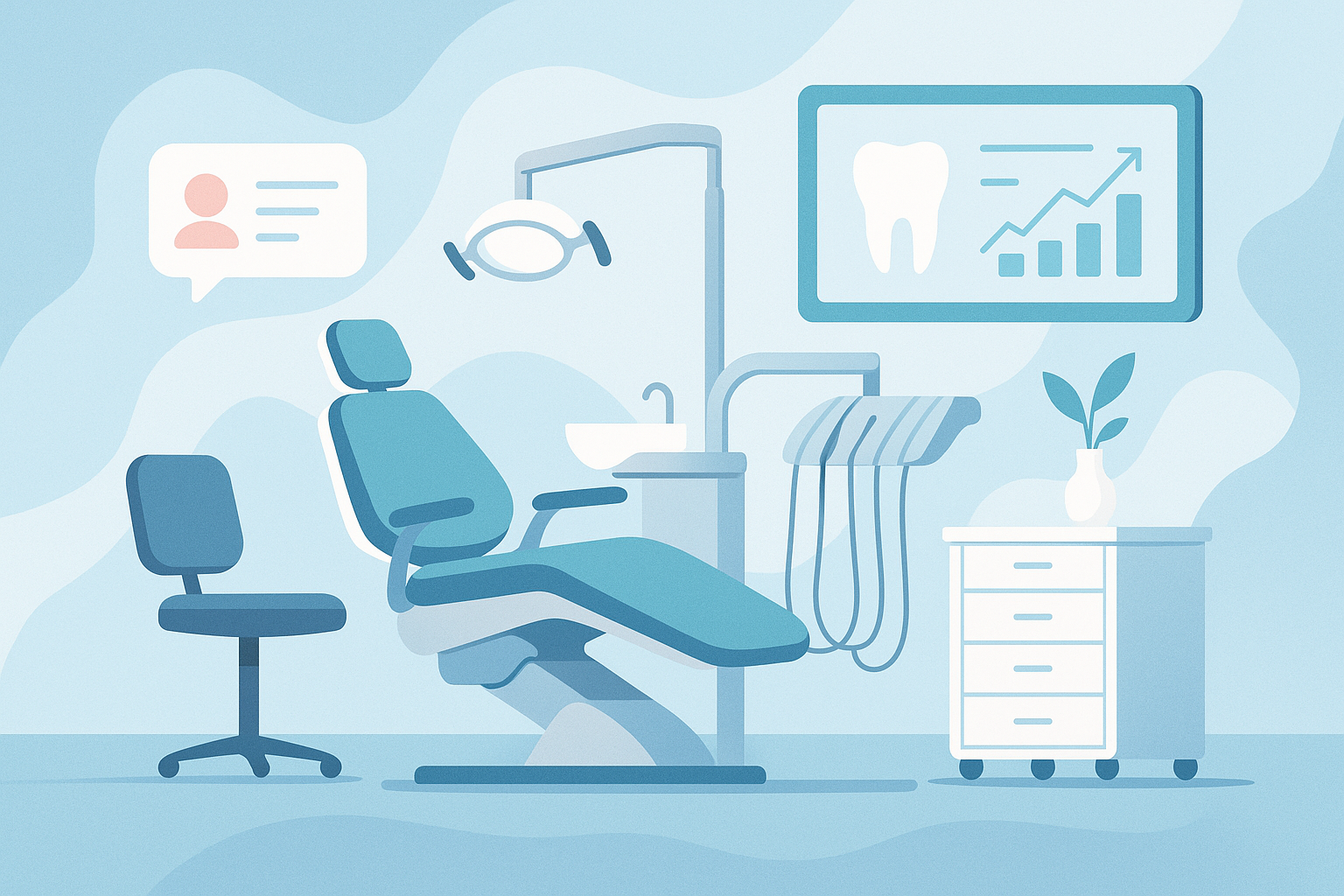
The connection between physical environment and patient behavior in dental settings is supported by extensive healthcare research. Studies consistently show that well-designed medical environments reduce cortisol levels, decrease perceived wait times, and increase patient satisfaction scores-all factors that directly correlate with treatment acceptance rates for high-value procedures.
In competitive UK markets like Greater London, Manchester, and Birmingham, dental office decor serves as a crucial differentiator. Patients researching Invisalign or implant treatments often visit multiple practices before making decisions. The practice that creates the most professional, calming, and premium environment typically wins these high-value consultations.
Based on our experience with UK dental practices, offices that invest in professional decor upgrades see an average 23% increase in treatment plan acceptance rates within six months of implementation.
Your dental decoration choices also play a vital role in digital marketing success. Google Business Profile photos showcasing a modern, well-designed practice generate significantly higher click-through rates than practices with outdated or unprofessional environments. Patients increasingly expect their healthcare providers to maintain contemporary, Instagram-worthy spaces that reflect modern treatment standards.
The integration between physical space design and digital marketing campaigns creates powerful synergies. When patients arrive at your practice after engaging with your online content, the physical environment must reinforce the premium positioning and professional competence communicated through your digital presence. Misalignment between online messaging and physical reality creates cognitive dissonance that undermines conversion rates.
Practices that align their dental office decor with their digital brand identity report 40% fewer consultation no-shows and 18% higher case acceptance rates for treatments over £3,000.
For practice owners focused on growth, decor represents a one-time investment with ongoing returns. Unlike advertising spend that requires continuous investment, strategic dental decorations continue generating positive patient impressions, supporting premium pricing, and facilitating word-of-mouth referrals for years after implementation.
Core Elements of High-Impact Dental Office Decor
Successful dental office decor combines multiple design elements that work together to create a cohesive, professional environment. Understanding these core components enables practice owners to make strategic investments that maximize both aesthetic impact and business outcomes.
Wall Art & Canvas Prints
Wall art serves as the foundation of your visual identity, immediately communicating your practice’s personality and professionalism. Modern dental practices leverage three primary artwork categories: dental-themed pieces that subtly reinforce expertise, abstract compositions that create calming focal points, and nature-inspired imagery that reduces patient anxiety.
High-quality canvas prints offer superior visual impact compared to standard posters or prints. The texture and depth of canvas artwork suggests permanence and investment, reinforcing patient confidence in your practice’s stability and success. Educational artwork that explains treatment processes can serve dual purposes, decorating walls while supporting treatment consultations.
Custom Signs & 3D Logos
Professional signage transforms generic medical spaces into branded environments that reinforce your practice identity. Laser-cut logo walls, illuminated reception signs, and digital welcome displays create memorable first impressions while supporting your broader marketing objectives.
Modern practices increasingly incorporate functional signage elements like QR codes linking to patient forms, social media prompts encouraging online reviews, and wayfinding systems that reduce patient confusion. These elements serve practical purposes while maintaining aesthetic appeal.
Essential Signage Elements: Reception logo wall, treatment room identification, emergency procedures display, patient pathway guidance, digital check-in instructions, and social media engagement prompts.
Accent Decorative Accessories
Thoughtfully chosen accessories add personality and warmth to clinical environments. Dental-themed sculptures, anatomical models displayed as art pieces, and branded elements like custom welcome mats create conversation starters while reinforcing professional identity.
Modern accessory choices include scent diffusers with calming aromatherapy, branded hand sanitization stations that emphasize hygiene protocols, and interactive elements like dental office waiting area displays that engage visitors while they wait.
Furniture & Lighting Integration
Furniture selection directly impacts patient comfort and practice efficiency. Modular waiting room seating allows flexible arrangements for different patient volumes, while ergonomic consultation chairs support longer treatment discussions. Reception desks serve as focal points that must balance aesthetic appeal with functional requirements.
Lighting design creates ambiance while supporting clinical requirements. Daylight-mimicking fixtures reduce the institutional feel common in medical settings, while accent lighting highlights architectural features and artwork. The combination of task and ambient lighting allows practices to adjust atmosphere for different situations and times of day.
Choosing Your Practice’s Signature Theme and Color Scheme

Your dental office decor theme serves as the foundation for all design decisions, creating a cohesive environment that reinforces your brand positioning and appeals to your target patient demographics. The most successful UK dental practices align their physical environments with their service offerings and patient expectations, particularly when focusing on high-value treatments like Invisalign and dental implants.
Modern & Minimalist
The modern minimalist approach emphasizes clean lines, neutral colour palettes, and strategic use of space to create calming, professional environments. This design philosophy works exceptionally well for practices targeting professional adults seeking premium treatments, as it communicates efficiency, precision, and contemporary expertise.
Key elements include white or light grey walls with carefully selected accent colours, sleek furniture with minimal ornamentation, and dental decorations that serve functional purposes while maintaining aesthetic appeal. Technology integration appears seamless, with digital displays and equipment designed to complement rather than dominate the space.
Practices implementing modern minimalist themes report 31% higher treatment acceptance rates for cosmetic procedures, as patients associate clean, contemporary environments with advanced treatment capabilities.
Nature-Inspired & Biophilic Design
Nature-inspired dental decoration leverages biophilic design principles to reduce patient anxiety and create welcoming environments. This approach incorporates living plants, natural textures, water features, and earth-tone colour schemes that psychologically distance patients from clinical medical associations.
Research demonstrates that patients in nature-themed environments experience measurably lower stress levels, reduced blood pressure, and increased comfort during procedures. For practices serving anxious patients or families with children, nature-inspired themes create immediate emotional benefits that support treatment acceptance.
Classic & Luxurious
Luxury-positioned practices leverage classic design elements to justify premium pricing and attract patients seeking exclusive treatment experiences. Rich materials like marble, brass fixtures, and sophisticated artwork create environments that communicate established expertise and attention to detail.
This approach works particularly well for practices in affluent areas or those specialising in high-end cosmetic treatments. The investment in premium materials and finishes signals quality and permanence, supporting higher treatment fees and attracting patients who value prestige alongside clinical outcomes.
Family & Pediatric-Friendly
Family practices require dental office decor that appeals to multiple age groups while maintaining professional credibility with adult patients. Successful family-friendly themes incorporate educational elements, engaging colours, and interactive features that reduce anxiety for younger patients without appearing unprofessional to adults.
Strategic use of colour zones allows practices to create child-friendly areas within otherwise sophisticated environments. Digital displays showing educational content, interactive waiting room features, and age-appropriate artwork help practices serve diverse patient demographics effectively.
Warm colour palettes including soft blues, greens, and earth tones promote relaxation and trust, while cooler colours can appear more clinical but may increase patient anxiety. The most effective dental decoration strategies use warm base colours with strategic cool accents that maintain professional appearance while supporting patient comfort.
Creating a comprehensive mood board before implementing any dental office decor changes ensures consistency across all design elements. This planning process should consider your target patient demographics, treatment specialisations, and integration with existing digital marketing materials to maintain brand coherence across all patient touchpoints.
Dental Office Decor Styles: Complete Comparison Analysis
Selecting the optimal dental office decor approach requires careful consideration of your practice’s unique requirements, patient demographics, and business objectives. This comprehensive comparison examines the four primary design approaches used by successful UK dental practices, analysing their effectiveness across key performance metrics.
| Comparison Factor | Modern Minimalist | Nature-Inspired | Classic Luxury | Family-Friendly |
|---|---|---|---|---|
| Initial Investment | £8,000-15,000 | £12,000-20,000 | £20,000-35,000 | £10,000-18,000 |
| Patient Anxiety Reduction | Moderate | Excellent | Good | Excellent (children) |
| Premium Positioning | Excellent | Good | Excellent | Moderate |
| Maintenance Requirements | Low | High | Moderate | High |
| Photography Appeal | Excellent | Good | Excellent | Moderate |
| Target Demographics | Professional adults | Anxious patients | High-income patients | Families, children |
| Treatment Acceptance Impact | +31% cosmetic | +25% overall | +40% premium | +20% pediatric |
| Longevity | 5-7 years | 3-5 years | 8-10 years | 4-6 years |
| Staff Satisfaction | High | Very High | High | Moderate |
| Best for High-Value Treatments | Invisalign, cosmetics | Implants, surgery | All premium services | Orthodontics |
| Verdict | Best for tech-forward practices targeting professionals | Ideal for anxiety reduction and surgical practices | Perfect for premium positioning in affluent areas | Essential for practices serving children and families |
The comparison reveals that no single approach suits all practice types, making careful selection based on your specific circumstances essential for maximising return on investment. Modern minimalist themes excel for practices targeting professional adults seeking cosmetic treatments, while nature-inspired designs prove most effective for reducing patient anxiety across all demographics.
The most successful practices often combine elements from multiple approaches, creating hybrid environments that serve diverse patient needs while maintaining cohesive brand identity.
Classic luxury positioning requires the highest initial investment but generates the strongest premium pricing support, making it cost-effective for practices in affluent areas with established patient bases. Family-friendly approaches necessitate more frequent updates due to wear and changing trends but prove essential for practices serving pediatric patients.
Photography appeal significantly impacts digital marketing effectiveness, with modern minimalist and classic luxury themes generating the highest engagement rates on Google Business Profiles and social media platforms. This consideration becomes particularly important for practices investing heavily in online marketing campaigns.
Treatment acceptance impact varies significantly by theme, with luxury positioning showing the highest percentage increases for premium services, while nature-inspired themes provide more consistent improvements across all treatment categories.
Maintenance requirements directly affect long-term costs and staff workload. Modern minimalist approaches require minimal ongoing maintenance, while nature-inspired themes with living plants and natural materials demand regular attention to maintain their therapeutic benefits.
The longevity factor influences the true cost of ownership, with classic luxury themes maintaining their appeal longest but requiring the highest initial investment. Practices should consider their growth plans and potential relocations when selecting themes with different expected lifespans.
Staff satisfaction correlates strongly with patient experience quality, making employee preferences an important consideration. Nature-inspired environments consistently receive the highest staff approval ratings, contributing to reduced turnover and improved patient interactions.
How to Plan an Effective Dental Office Decor Makeover
 Modern dental office with digital dashboard showing growth charts and testimonial bubbles.” />
Strategic planning forms the foundation of successful dental office decor transformations that generate measurable business results. UK practices investing in well-planned makeovers report average increases of 28% in new patient consultations and 35% improvements in treatment acceptance rates within six months of completion.
The most effective approach begins with comprehensive space auditing, examining current design elements against patient feedback, staff observations, and business performance metrics. This analysis identifies specific pain points where existing dental office decor may be hindering patient comfort or undermining premium positioning.
Step 1: Comprehensive Space Audit
Professional space auditing evaluates every patient touchpoint, from entrance impressions through treatment room experiences. Document current dental decorations, furniture condition, lighting adequacy, and traffic flow patterns that impact patient comfort and staff efficiency.
Successful audits incorporate patient feedback through surveys and online reviews, identifying specific environmental factors that influence treatment decisions. Pay particular attention to comments about comfort, professionalism, and overall atmosphere, as these directly correlate with patient retention and referral generation.
Practices conducting thorough space audits before renovation achieve 40% better ROI on decor investments compared to those making changes without systematic evaluation.
Step 2: Target Patient Demographics Analysis
Aligning dental decoration choices with your ideal patient demographics ensures maximum impact on treatment acceptance and patient satisfaction. Practices focusing on Invisalign and cosmetic treatments require different environmental approaches than those specialising in dental implants or family dentistry.
Consider patient age ranges, income levels, treatment preferences, and anxiety factors when selecting themes and materials. High-income professionals respond positively to modern minimalist approaches, while families with children benefit from nature-inspired elements that reduce anxiety across age groups.
Step 3: Professional Design Collaboration vs DIY Approaches
The choice between professional interior design services and DIY implementation depends on budget constraints, timeline requirements, and desired outcome sophistication. Professional designers specialising in healthcare environments understand regulatory requirements and patient psychology principles that impact treatment acceptance.
DIY approaches work effectively for practices with clear vision and design experience, particularly when focusing on specific elements like wall art, dental decorations, or furniture updates rather than comprehensive renovations. Hybrid approaches combining professional planning with selective DIY implementation often provide optimal cost-effectiveness.
Step 4: Realistic Budget and Timeline Development
Effective budget planning allocates resources across design elements based on patient impact and business priorities. Reception areas and waiting rooms typically receive 40% of total budgets due to their influence on first impressions and patient comfort during extended visits.
Timeline coordination ensures minimal disruption to practice operations while achieving transformation goals. Most successful makeovers occur in phases, allowing practices to maintain normal operations while systematically upgrading different areas over 3-6 month periods.
Step 5: Strategic Sourcing and Digital Marketing Integration
Modern dental office decor planning must consider digital marketing integration from initial concept development. Every design element should photograph well for Google Business Profile updates, social media content, and website imagery that supports online patient acquisition efforts.
Quality sourcing balances durability requirements with aesthetic goals, ensuring dental decorations maintain their appeal throughout expected lifespans. Healthcare-grade materials resist frequent cleaning while supporting the professional image essential for premium treatment positioning.
The most successful practice makeovers create immediate content marketing opportunities, with before-and-after documentation generating 300% higher social media engagement rates than standard practice posts.
Wall Art & Decor Ideas That Impress and Convert
Strategic wall art selection transforms clinical environments into welcoming spaces that support treatment acceptance and patient comfort. Research indicates that thoughtfully chosen artwork reduces patient anxiety by up to 40% while reinforcing professional credibility essential for high-value treatment discussions. For further reading on the impact of dental office design, see this PubMed study on dental environments.
The most effective dental decorations serve dual purposes: creating emotional comfort while subtly reinforcing treatment benefits and practice expertise. Educational artwork featuring smile transformations or anatomical illustrations builds patient confidence in treatment outcomes while maintaining sophisticated aesthetic appeal.
Therapeutic Artwork Categories
Nature-inspired artwork consistently receives the highest patient approval ratings, with landscape photography and botanical prints creating calming environments that reduce pre-treatment anxiety. Abstract pieces in soothing colour palettes provide visual interest without creating distracting or potentially unsettling imagery for nervous patients.
Educational artwork should focus on positive outcomes rather than clinical procedures, showcasing beautiful smiles and healthy teeth rather than treatment processes. This approach builds patient confidence while avoiding imagery that might increase anxiety about upcoming procedures.
Practices featuring smile transformation galleries report 45% higher cosmetic treatment acceptance rates compared to those with generic or clinical artwork.
Strategic Gallery Wall Implementation
Gallery walls in waiting areas create engaging focal points that occupy patient attention during extended visits while reinforcing practice branding and treatment capabilities. Successful implementations combine practice-specific elements with universally appealing artwork that photographs well for digital marketing purposes. For more practical advice, see this guide to optimizing your dental office design.
Treatment suite artwork should remain minimal and calming, avoiding busy patterns or stimulating colours that might increase patient stress during procedures. Single statement pieces or simple nature photography work most effectively in clinical environments.
Pediatric-Friendly Design Integration
Family practices require careful balance between child-engaging elements and adult professional expectations. Interactive educational displays, colourful anatomical models, and age-appropriate dental decorations create positive associations with dental care while maintaining credibility with adult patients.
Dedicated children’s areas allow practices to incorporate more playful elements without compromising overall professional atmosphere. These spaces should include educational components that help children understand dental health importance while reducing fear and anxiety.
Conclusion: Transforming Patient Experience Through Strategic Dental Office Decor
Strategic dental office decor implementation represents a powerful patient acquisition and retention tool that directly impacts practice profitability and growth. The evidence demonstrates clear connections between thoughtful environmental design and measurable business outcomes, including increased treatment acceptance rates, improved patient satisfaction scores, and enhanced online reputation management.
Successful transformations require systematic planning that aligns design choices with target patient demographics, treatment specialisations, and business growth objectives. Whether implementing modern minimalist themes for professional patients or nature-inspired environments for anxiety reduction, consistency and quality execution determine long-term success.
Key Success Factors: Professional planning, patient-focused design choices, digital marketing integration, and systematic implementation that minimises operational disruption while maximising patient impact.
The investment in quality dental decorations and thoughtful environmental design pays dividends through improved patient experiences, enhanced treatment acceptance, and stronger competitive positioning in crowded UK dental markets. Practices that view decor as strategic business investment rather than aesthetic expense achieve superior results across all performance metrics.
Integration with comprehensive digital marketing strategies amplifies the impact of physical improvements, creating cohesive brand experiences that support patient acquisition efforts across all touchpoints. The most successful practices coordinate environmental improvements with enhanced online presence and reputation management initiatives.
For UK dental practices ready to transform their patient experience and accelerate practice growth, professional guidance ensures optimal return on investment while avoiding costly mistakes that require correction. Strategic planning, quality execution, and performance measurement create sustainable competitive advantages that support long-term business success.
Ready to transform your practice environment into a powerful patient acquisition tool? Book a consultation with Dominate Dental today to discover how strategic dental office decor integration with proven digital marketing systems can accelerate your practice growth and increase treatment acceptance rates across all service categories.
Leave a Reply