Author: Josie Mitchelmore

  • Porcelain for Teeth: Expert Guide for UK Dental Patients | 2026

    Understanding Porcelain for Teeth: The Gold Standard of Dental Restoration

    Quick Answer: Porcelain for teeth is a tooth-coloured ceramic material that mimics natural enamel, used primarily for veneers and crowns. It offers exceptional aesthetics, durability, and stain resistance, making it the preferred choice for both cosmetic enhancement and structural tooth restoration in modern dentistry.

    When UK patients seek the perfect blend of aesthetics and functionality for their dental restorations, porcelain emerges as the undisputed champion. This remarkable tooth-coloured ceramic material has revolutionised modern dentistry, offering solutions that are virtually indistinguishable from natural teeth whilst providing exceptional durability and performance.

    Key Takeaways

    • Porcelain for teeth is a tooth-coloured ceramic material used mainly for veneers and crowns.
    • It closely mimics the appearance of natural enamel, providing excellent aesthetics.
    • Porcelain offers high durability and resistance to stains.
    • This material is the preferred choice for both cosmetic and structural dental restorations.
    • Porcelain has transformed modern dentistry by delivering restorations that look natural and perform well.

    The popularity of porcelain dental solutions has surged dramatically across UK practices, particularly for high-value treatments like veneers and crowns. According to recent industry data, over 78% of cosmetic dental procedures now utilise porcelain materials, with patient satisfaction rates consistently exceeding 95% for properly executed treatments, as showcased in our agency ads.

    For dental practice owners investing in advanced restorative services, understanding the comprehensive benefits of porcelain solutions becomes crucial for patient education and treatment acceptance. The material’s unique properties—including its ability to mimic natural enamel translucency, resist staining, and maintain structural integrity—make it an invaluable asset in delivering premium dental care.

    Industry Insight: UK dental practices offering porcelain-based treatments report 40% higher case values compared to composite alternatives, with significantly improved patient retention rates due to superior long-term outcomes.

    What Makes Porcelain the Material of Choice?

    Porcelain’s dominance in restorative dentistry stems from its unique composition and manufacturing process. Unlike other dental materials, porcelain is engineered at the molecular level to replicate the optical properties of natural tooth enamel. This includes the crucial translucency characteristics that allow light to penetrate and reflect naturally, creating the lifelike appearance that patients desire.

    The material’s non-porous surface structure provides exceptional stain resistance, ensuring that porcelain restorations maintain their pristine appearance for years. This is particularly significant for UK patients who enjoy tea, coffee, and red wine—beverages that typically cause significant staining in natural teeth and other dental materials.

    From a structural perspective, high-quality dental porcelain exhibits remarkable strength properties. Modern porcelain formulations can withstand bite forces of up to 200 pounds per square inch, making them suitable for both anterior aesthetic applications and posterior functional restorations.

    Porcelain vs Ceramic for Teeth: Understanding the Terminology

    Many patients encounter confusion when discussing ceramic teeth versus porcelain options. In dental terminology, porcelain is actually a specific type of ceramic material. When dentists refer to “ceramic for teeth,” they’re typically discussing the broader category that includes traditional porcelain, lithium disilicate ceramics, and zirconia-based materials.

    Traditional dental porcelain remains the gold standard for anterior restorations due to its superior aesthetic properties. However, newer ceramic formulations like zirconia offer enhanced strength for posterior applications, whilst lithium disilicate provides an excellent balance of aesthetics and durability for both front and back teeth.

    Understanding these distinctions helps patients make informed decisions about their treatment options. Each ceramic material offers specific advantages depending on the clinical situation, patient preferences, and functional requirements of the restoration.

    Primary Applications in Modern UK Dental Practice

    Porcelain’s versatility makes it suitable for numerous dental applications, but two primary uses dominate contemporary practice: porcelain veneers and dental crowns. Each application serves distinct clinical purposes whilst leveraging porcelain’s exceptional properties.

    Porcelain veneers represent the pinnacle of cosmetic dentistry, offering dramatic smile transformations with minimal tooth preparation. These ultra-thin shells, typically measuring just 0.5-0.7mm in thickness, bond to the front surfaces of teeth to correct various aesthetic concerns including discolouration, minor misalignment, and structural imperfections.

    Dental crowns, conversely, provide comprehensive tooth restoration for cases involving significant structural damage, decay, or following root canal treatment. Full-coverage porcelain crowns restore both function and aesthetics, offering protection whilst maintaining natural appearance.

    The choice between veneers and crowns depends on multiple factors including the extent of tooth damage, patient expectations, and long-term prognosis. Both options utilise porcelain’s remarkable properties to deliver superior outcomes compared to alternative materials.

    Setting Realistic Patient Expectations

    Successful porcelain treatments require careful patient education and expectation management. Whilst porcelain offers exceptional durability and aesthetics, proper care and maintenance remain essential for optimal longevity. Patients must understand that porcelain restorations, like natural teeth, require consistent oral hygiene and regular professional maintenance.

    The typical lifespan of porcelain veneers ranges from 10-15 years with proper care, whilst crowns may last 5-15+ years depending on factors such as bite forces, oral hygiene, and material selection. These timeframes represent significant value propositions for patients seeking long-term solutions to their dental concerns.

    Moreover, the stain resistance of porcelain provides ongoing aesthetic benefits that composite materials cannot match. This characteristic proves particularly valuable for UK patients who want to maintain their investment in cosmetic dentistry without significant lifestyle modifications.

    Porcelain Veneers: The Complete UK Patient Guide

    Modern dental treatment room with porcelain shells, digital screens, and calming colors.

    Porcelain veneers represent one of the most transformative treatments in modern cosmetic dentistry, offering UK patients the ability to achieve a Hollywood-worthy smile with minimal tooth preparation. These ultra-thin porcelain shells, custom-crafted to fit perfectly over the front surfaces of teeth, have become the treatment of choice for discerning patients seeking dramatic aesthetic improvements.

    The precision manufacturing process involves creating veneers that are typically just 0.5-0.7mm thick—roughly equivalent to a contact lens—yet provide remarkable strength and durability. Advanced UK dental laboratories utilise sophisticated CAD/CAM technology and traditional hand-layering techniques to ensure each veneer matches the patient’s natural tooth colour, shape, and translucency characteristics.

    What sets porcelain veneers apart from other cosmetic solutions is their ability to address multiple aesthetic concerns simultaneously. A single veneer treatment can correct discolouration, reshape malformed teeth, close gaps, and even create the illusion of straighter teeth without the need for orthodontic treatment.

    What Problems Can Porcelain Veneers Solve?

    Porcelain veneers excel at correcting a wide range of cosmetic dental issues that affect patient confidence and smile aesthetics. Understanding these applications helps patients determine whether veneers represent the optimal treatment choice for their specific concerns.

    Discolouration and staining represent the most common indication for veneer treatment. Unlike teeth whitening, which has limitations with certain types of stains, porcelain veneers can completely mask even the most severe discolouration, including tetracycline staining, fluorosis, and intrinsic stains that don’t respond to conventional whitening treatments.

    Structural imperfections such as chips, cracks, and worn edges can be seamlessly corrected with veneers. The porcelain material bonds directly to the existing tooth structure, reinforcing weakened areas whilst restoring the tooth’s original contour and function.

    Minor orthodontic irregularities, including small gaps between teeth, slightly rotated teeth, and minor crowding, can often be addressed with veneers as an alternative to traditional braces. This approach, sometimes called “instant orthodontics,” provides immediate results for patients seeking rapid smile transformation.

    Veneer Advantages

    • Minimal tooth preparation required compared to crowns
    • Exceptional stain resistance maintains long-term aesthetics
    • Natural translucency mimics tooth enamel perfectly
    • Durable construction lasts 10-15 years with proper care
    • Immediate dramatic improvement in smile appearance

    Veneer Considerations

    • Higher initial investment compared to composite bonding
    • Irreversible procedure requiring enamel removal
    • Potential for chipping with excessive force or trauma
    • Not suitable for patients with severe bite problems
    • Requires ongoing maintenance and professional monitoring

    The Veneer Treatment Process: What to Expect

    The porcelain veneer procedure typically requires two to three appointments, depending on the complexity of the case and the number of teeth being treated. Understanding each stage helps patients prepare for treatment and set realistic expectations for the timeline and recovery process.

    During the initial consultation, your dentist will conduct a comprehensive smile analysis, including digital photography, impressions, and detailed treatment planning. This stage often involves creating a “mock-up” or preview of the expected results, allowing patients to visualise their new smile before committing to treatment.

    The preparation appointment involves carefully removing a thin layer of enamel from the front surface of each tooth receiving a veneer. This process, performed under local anaesthetic, creates space for the porcelain whilst ensuring the final restoration doesn’t appear bulky or unnatural. Temporary veneers may be placed to protect the prepared teeth and maintain aesthetics during the fabrication period.

    The final bonding appointment represents the culmination of the treatment process. Each veneer is carefully tried in, adjusted for perfect fit and colour match, then permanently bonded using advanced adhesive systems. The entire process requires meticulous attention to detail, as proper bonding techniques directly impact the longevity and success of the treatment.

    Porcelain Dental Crowns: Complete Tooth Restoration

    Whilst veneers address primarily cosmetic concerns, porcelain crowns serve as comprehensive restorative solutions for teeth requiring significant structural repair or protection. These full-coverage restorations encapsulate the entire visible portion of the tooth, providing both functional restoration and aesthetic enhancement.

    The versatility of porcelain crowns makes them indispensable in modern dental practice. They can restore teeth weakened by extensive decay, protect teeth following root canal treatment, support dental bridges, and serve as the visible portion of dental implants. This multifunctional capability explains why crowns represent one of the most commonly performed procedures in UK dental practices.

    Modern porcelain crown technology has evolved significantly, with new materials and techniques offering improved strength, aesthetics, and longevity. All-ceramic crowns now rival the strength of traditional porcelain-fused-to-metal restorations whilst providing superior aesthetics, particularly in the anterior region where natural appearance is paramount.

    Types of Porcelain Crowns: Material Comparison

    The selection of appropriate crown material depends on multiple factors including the location of the tooth, aesthetic requirements, bite forces, and patient preferences. Understanding the characteristics of different porcelain crown types enables informed decision-making for optimal treatment outcomes.

    Crown Type Strength Rating Aesthetics Best Applications Typical Lifespan
    All-Porcelain Good Excellent Front teeth, low-stress areas 10-15 years
    Porcelain-Fused-to-Metal Very Good Good Back teeth, bridges 10-15 years
    Lithium Disilicate Very Good Excellent All locations 12-20 years
    Zirconia Excellent Very Good Posterior teeth, implants 15-20 years

    All-porcelain crowns excel in anterior applications where aesthetics take precedence over maximum strength. The absence of metal substructure eliminates the risk of grey lines at the gum margin and provides optimal light transmission for natural appearance.

    Porcelain-fused-to-metal crowns combine the aesthetic benefits of porcelain with the strength of metal substructure. Whilst slightly less aesthetic than all-ceramic options, they remain excellent choices for posterior teeth where strength requirements are higher.

    Advanced ceramic materials like lithium disilicate and zirconia represent the latest evolution in crown technology. These materials offer exceptional strength whilst maintaining excellent aesthetics, making them suitable for virtually any clinical situation.

    Crowns vs Veneers: Making the Right Choice

    The decision between porcelain crowns and veneers depends on several clinical and aesthetic factors. Understanding these distinctions helps patients and practitioners select the most appropriate treatment for each specific situation.

    Tooth preparation requirements differ significantly between the two treatments. Veneers require minimal enamel removal, typically 0.5-0.7mm from the front surface only, preserving maximum tooth structure. Crowns necessitate more extensive preparation, removing 1.5-2mm of tooth structure circumferentially to accommodate the restoration thickness.

    The extent of existing damage or restoration plays a crucial role in treatment selection. Teeth with large existing fillings, significant structural damage, or previous root canal treatment typically benefit more from crown protection than veneer coverage. Conversely, structurally sound teeth with primarily aesthetic concerns represent ideal veneer candidates.

    Functional considerations also influence treatment choice. Patients with heavy bite forces, bruxism, or parafunctional habits may require the comprehensive protection that crowns provide. Veneers, whilst durable, are more susceptible to damage from excessive forces or traumatic incidents.

    Maximising Long-Term Success with Porcelain Restorations

    The longevity of porcelain dental restorations depends significantly on patient compliance with maintenance protocols and lifestyle modifications. Understanding these factors enables patients to protect their investment whilst maximising the functional and aesthetic benefits of their treatment.

    Oral hygiene practices require particular attention with porcelain restorations. Whilst the porcelain itself resists staining and decay, the margins where the restoration meets natural tooth structure remain vulnerable to bacterial accumulation. Daily flossing becomes especially critical around crowned teeth and veneered surfaces to prevent gum disease and secondary decay.

    Dietary considerations play a crucial role in restoration longevity. Hard foods such as ice, nuts, and hard sweets can chip or crack porcelain, particularly veneers which are more vulnerable to impact forces. Acidic beverages including wine, citrus juices, and carbonated drinks can weaken the bonding agents over time, potentially compromising the restoration’s retention.

    Professional maintenance schedules should be adjusted for patients with extensive porcelain work. Regular dental examinations allow for early detection of potential issues such as marginal leakage, bonding failure, or occlusal wear patterns that could compromise the restoration’s integrity.

    Professional Tip: Patients with porcelain restorations should use a soft-bristled toothbrush and non-abrasive toothpaste to prevent surface scratching. Night guards are essential for patients with bruxism or clenching habits, as these forces can cause catastrophic failure of even the strongest porcelain materials.

    Understanding the Investment: Cost Factors and Value Proposition

    The financial investment in porcelain dental restorations varies significantly based on multiple factors including geographic location, practice expertise, laboratory quality, and treatment complexity. UK patients typically invest £800-£1,500 per porcelain veneer and £600-£1,200 per porcelain crown, with premium practices and complex cases commanding higher fees.

    Treatment complexity significantly influences cost structures. Simple single-tooth restorations require less time and resources than comprehensive smile makeovers involving multiple teeth, extensive planning, and complex aesthetic requirements. The involvement of specialist laboratories and advanced digital technologies also impacts the overall investment.

    Value analysis extends beyond initial cost considerations to include longevity, maintenance requirements, and quality of life improvements. High-quality porcelain restorations typically last 10-20 years with proper care, representing excellent value when compared to alternative treatments requiring more frequent replacement.

    Insurance coverage varies considerably for porcelain restorations. Whilst crowns for structurally compromised teeth often receive partial coverage, purely cosmetic treatments like veneers typically require full private payment. Patients should verify coverage details with their insurance providers before committing to treatment.

    Emerging Technologies and Future Developments

    The field of porcelain dental restorations continues evolving rapidly, with new materials and techniques promising enhanced performance, aesthetics, and patient comfort. Digital dentistry technologies are revolutionising treatment planning, fabrication, and delivery processes.

    CAD/CAM technology enables same-day crown fabrication in many practices, eliminating the need for temporary restorations and multiple appointments. These systems use digital impressions and computer-controlled milling to create precise, well-fitting restorations from high-quality ceramic blocks.

    Advanced ceramic materials including lithium disilicate and translucent zirconia offer improved strength-to-aesthetics ratios compared to traditional porcelain. These materials enable thinner, more conservative preparations whilst maintaining excellent durability and natural appearance.

    3D printing technology is beginning to impact porcelain restoration fabrication, offering potential advantages in accuracy, efficiency, and cost-effectiveness. Early applications show promise for creating highly precise models and potentially direct restoration fabrication.

    Determining Candidacy: Who Benefits Most from Porcelain Restorations

    Successful porcelain restoration outcomes depend heavily on appropriate patient selection and realistic expectation management. Understanding candidacy criteria helps ensure optimal treatment results and patient satisfaction.

    Ideal candidates for porcelain veneers include patients with good oral health, adequate tooth structure, and realistic aesthetic goals. Patients with severe bruxism, significant bite problems, or inadequate enamel may require alternative treatments or preliminary procedures before veneer placement.

    Crown candidates typically present with structural damage, large existing restorations, or teeth requiring endodontic treatment. The decision between different crown materials depends on aesthetic requirements, bite forces, and patient preferences regarding durability versus natural appearance.

    Age considerations play a role in treatment planning, particularly for younger patients whose teeth may continue developing or older patients with changing oral health needs. Comprehensive treatment planning addresses these factors to ensure long-term success.

    Conclusion: Transforming Smiles with Porcelain Excellence
    Modern dental clinic illustration with ceramic shards, digital wireframes, and sleek tools.

    Porcelain dental restorations represent the pinnacle of modern cosmetic and restorative dentistry, offering UK patients unprecedented opportunities to achieve both functional excellence and aesthetic perfection. The combination of advanced materials, refined techniques, and digital technologies has elevated porcelain crowns and veneers to new levels of predictability and success.

    The decision between veneers and crowns ultimately depends on individual clinical circumstances, aesthetic goals, and long-term oral health considerations. Both treatments offer exceptional value when performed by skilled practitioners using high-quality materials and proven techniques.

    Success with porcelain restorations requires partnership between patient and practitioner, with ongoing commitment to maintenance, professional monitoring, and lifestyle modifications that protect the investment. When these elements align, porcelain restorations provide decades of beautiful, functional service that enhances both oral health and quality of life.

    For UK patients considering porcelain dental restorations, the key lies in selecting experienced practitioners who combine technical expertise with artistic vision. The investment in quality porcelain work pays dividends through improved confidence, enhanced aesthetics, and long-lasting functional benefits that justify the initial commitment.

    For dental practice owners looking to educate patients and grow their business, exploring SEO for dentists and effective dental marketing strategies can help attract more patients seeking advanced restorative solutions. Additionally, staying updated with dental blog post ideas ensures your website remains a valuable resource for those interested in porcelain for teeth and other treatments.

    Frequently Asked Questions

    Is porcelain good for your teeth?

    Porcelain is an excellent material for dental restorations due to its durability, biocompatibility, and aesthetic qualities. It mimics the natural translucency of tooth enamel, making it a preferred choice for crowns, veneers, and bridges while being gentle on surrounding teeth and gums when applied correctly.

    How long does porcelain last on teeth?

    Porcelain restorations can last between 10 to 15 years on average, with some lasting even longer when maintained properly through good oral hygiene and regular dental check-ups. Their longevity depends on factors such as the quality of the porcelain, the skill of the dentist, and patient habits like avoiding excessive biting forces or grinding.

    Which is better, veneers or porcelain?

    This question often involves a misunderstanding as veneers are typically made from porcelain or composite resin; porcelain veneers are generally considered superior due to their strength, stain resistance, and natural appearance. Choosing between them depends on budget, desired aesthetics, and the current condition of the patient’s teeth, but porcelain veneers offer a longer-lasting and more realistic solution.

    How much do porcelain veneers cost in the UK?

    Porcelain veneers in the UK typically range between £400 to £900 per tooth, depending on the practice location, dentist expertise, and the complexity of the case. While the upfront cost is higher than composite alternatives, porcelain veneers provide better durability and aesthetics, often resulting in greater long-term value for dental practices and patients alike.

    Do porcelain teeth look fake?

    High-quality porcelain restorations are designed to closely replicate the translucency, texture, and colour of natural teeth, making them virtually indistinguishable from real teeth when crafted by experienced dental technicians. Poorly made or improperly fitted porcelain teeth can appear artificial, so selecting a skilled dental practice is essential to achieving a natural look.

    How much does a porcelain filling cost?

    Porcelain fillings, often referred to as inlays or onlays, generally cost between £250 and £500 per tooth in the UK, varying by practice and treatment complexity. Although more expensive than traditional composite fillings, porcelain offers superior strength, longevity, and aesthetics, making it a cost-effective option for restoring moderate tooth damage in high-value dental practices.


    About the Author

    Dan Ashburn is the Co-Founder at Dominate Dental, the UK’s specialist agency for high-value patient acquisition.

    Drawing on a decade of data-driven advertising experience and hundreds of clinic campaigns, Dan blends AI technology with human insight to deliver predictable streams of Invisalign, implant, and cosmetic dentistry consultations. His team’s results-focused approach has helped practices across London, Manchester, Birmingham, and nationwide convert marketing spend into chair-time—often booking 50+ qualified consultations per month while cutting no-shows.

    When he’s not optimizing funnels or unpacking the latest algorithm updates, Dan shares actionable dental marketing ideas, real-world case studies, and ROI benchmarks so dental teams can make confident marketing decisions.

  • Dental Assistant Appreciation Week Gift Ideas 2026

    Quick Answer

    Dental Assistant Week 2025 runs from March 2-8, with the theme “Superheroes behind the Smiles.” Effective recognition ideas include personalised gifts, team lunches, social media spotlights, and patient appreciation activities. The key is combining meaningful gestures with public acknowledgment to boost morale and retention.

    Key Takeaways

    • Dental Assistant Week 2025 takes place from March 2-8 and celebrates the theme “Superheroes behind the Smiles.”
    • Personalised gifts are an effective way to recognize dental assistants during the week.
    • Organizing team lunches helps foster camaraderie and appreciation among staff.
    • Spotlighting dental assistants on social media publicly acknowledges their hard work.
    • Involving patients in appreciation activities enhances recognition and morale.

    The Critical Role of Dental Team Appreciation in Practice Success

    In today’s competitive dental landscape, where patient acquisition costs continue to rise and staff retention challenges persist, recognising your dental team has evolved from a nice gesture to a strategic business imperative. Dental Assistant Week represents one of the most significant opportunities to strengthen your practice culture whilst demonstrating genuine appreciation for the professionals who directly impact your patient experience and treatment outcomes.

    Research consistently demonstrates that recognised employees are 82% more engaged at work and 71% less likely to leave their positions. For dental practices investing thousands monthly in marketing to attract new patients, the mathematics are compelling: retaining skilled dental assistants who already understand your systems, patients, and standards delivers measurable ROI that extends far beyond the cost of recognition programmes.

    The dental calendar presents multiple strategic opportunities for team appreciation, each targeting different roles within your practice ecosystem. Dental Assistant Week anchors these recognition events, running from March 2-8, 2025, followed by National Dentist’s Day on March 6, and Dental Hygienist Appreciation Week from April 7-11. Understanding and leveraging these dates creates consistent touchpoints for reinforcing your practice values and investment in your team.

    Practice Growth Insight: Practices with high employee satisfaction scores report 23% higher patient satisfaction ratings and 18% better case acceptance rates for high-value treatments like Invisalign and implants.

    The evolution of dental roles has transformed significantly since Dr. Edmund Kells employed the first dental assistant in 1885. Today’s dental assistants manage complex responsibilities spanning clinical support, patient communication, cad cam in dental technology integration, and administrative coordination. Their versatility and expertise directly influence your practice’s efficiency, patient flow, and ultimately, your ability to deliver the premium treatment experiences that drive private revenue growth.

    This comprehensive guide explores proven recognition strategies that extend beyond traditional dental assistant gifts to create meaningful appreciation programmes. We’ll examine the specific dates, themes, and implementation approaches that successful practices use to build stronger teams, reduce turnover, and enhance their competitive positioning in the UK dental market.

    Key Recognition Dates in the Dental Calendar

    Modern dental clinic with digital dashboard, floating testimonials, and abstract growth charts in clinical tones.

    Strategic dental practices leverage multiple appreciation dates throughout the year to maintain consistent team engagement and recognition. Understanding these key dates allows you to plan comprehensive appreciation programmes that address different roles whilst maximising your investment in team culture through targeted agency ads.

    Recognition Event 2025 Dates Team Members Honoured Strategic Focus
    Employee Appreciation Day March 7 Entire Practice Team Comprehensive team recognition
    Dental Assistant Week March 2-8 Dental Assistants Clinical support excellence
    National Dentist’s Day March 6 Practice Dentists Clinical leadership appreciation
    Dental Hygienist Appreciation Week April 7-11 Dental Hygienists Preventive care specialists
    Administrative Professionals Week April 21-25 Reception & Admin Staff Patient experience coordinators

    The concentration of recognition events in March and April creates an ideal opportunity to establish momentum in your practice culture. Many successful practices use this period to launch annual appreciation programmes that extend throughout the year, reinforcing the initial investment in team recognition.

    Evidence-Based Recognition Approaches That Drive Results

    Based on analysis of high-performing dental practices across the UK, the most effective recognition strategies combine personalised appreciation with public acknowledgment. Dental assistant gifts represent just one component of comprehensive recognition programmes that deliver measurable improvements in staff retention and patient satisfaction.

    Personalised Appreciation Gifts

    Individual recognition through thoughtful gifts for dental assistants demonstrates genuine appreciation whilst acknowledging their specific contributions to your practice success. If you’re brainstorming dental assistant appreciation week gift ideas, think beyond the usual and tailor your choices to each assistant’s personality, goals, or lifestyle. Effective personalisation considers individual preferences, career aspirations, and personal interests beyond the workplace.

    • Professional development opportunities: CE course sponsorship, conference attendance, or certification programmes
    • Wellness-focused gifts: Spa vouchers, fitness memberships, or mindfulness apps addressing work-life balance
    • Technology upgrades: Quality headphones, ergonomic accessories, or productivity tools for enhanced comfort
    • Experience gifts: Restaurant vouchers, theatre tickets, or weekend getaways creating lasting memories
    • Customised professional items: Embroidered scrubs, personalised stethoscopes, or quality badge holders

    Public Recognition Initiatives

    Public acknowledgment amplifies the impact of individual appreciation whilst reinforcing practice values to patients and the broader community. Social media recognition, patient testimonials, and community involvement create lasting impressions that extend beyond the immediate recognition period.

    Marketing Integration Opportunity: Feature your dental assistants in patient education content, showcasing their expertise whilst building trust with prospective patients. This dual approach strengthens team appreciation whilst supporting your practice marketing objectives.

    Team Building Celebrations

    Collective celebrations during Dental Assistant Week foster team cohesion whilst demonstrating practice-wide commitment to appreciation. Successful approaches include themed dress days, catered lunches, team activities, and collaborative patient appreciation initiatives.

    The most effective celebrations integrate patient involvement, allowing your community to participate in recognising the dental assistants who contribute to their care experience. This approach strengthens patient relationships whilst providing meaningful recognition for your team members.

    Measuring Recognition Programme Effectiveness

    Modern dental clinic workspace with digital dashboard, testimonial bubbles, and organized, friendly atmosphere.

    Successful dental practices track specific metrics to quantify the return on investment from their dental assistant week celebrations and ongoing recognition programmes. Research demonstrates that practices implementing structured appreciation initiatives achieve 23% higher staff retention rates and 18% improved patient satisfaction scores compared to practices without formal recognition strategies.

    Key Performance Indicators for Recognition Success

    Effective measurement requires establishing baseline metrics before implementing recognition programmes, then tracking improvements over 6–12 month periods. The most reliable indicators include staff turnover rates, patient satisfaction scores, team productivity metrics, and employee engagement survey results. Practices should also monitor clinical quality factors—such as the durability and esthetics of porcelain for teeth—to gain deeper insight into what drives patient satisfaction.

    • Staff retention rates: Target 15-20% improvement within 12 months of programme implementation
    • Patient satisfaction scores: Monitor feedback specifically mentioning staff interactions and care quality
    • Internal referral rates: Track how often team members recommend your practice to friends and family
    • Productivity metrics: Measure appointment completion rates, treatment acceptance, and scheduling efficiency
    • Recruitment success: Monitor time-to-fill positions and quality of applicants attracted to your practice

    Leading practices supplement quantitative metrics with qualitative feedback through regular team meetings, anonymous surveys, and exit interviews. This comprehensive approach provides actionable insights for programme refinement and demonstrates genuine commitment to continuous improvement.

    Strategic Budget Allocation for Maximum Impact

    Effective dental assistant gifts and recognition programmes typically represent 2-4% of total practice revenue, with the highest-performing practices investing towards the upper end of this range. Strategic allocation focuses on high-impact, personalised recognition rather than generic gifts or one-size-fits-all approaches.

    Investment Benchmark: Practices investing £150-300 per team member annually in recognition programmes report 40% lower recruitment costs and 25% higher patient retention rates, demonstrating clear ROI on appreciation investments.

    Integrating Recognition with Practice Growth Strategies

    Forward-thinking dental practices leverage team appreciation as a cornerstone of their marketing and growth strategies. Dental hygienist appreciation week gifts and other recognition initiatives create authentic content opportunities whilst strengthening the practice culture that attracts high-quality patients and team members.

    Marketing Integration Opportunities

    Recognition programmes provide compelling content for social media marketing, patient newsletters, and community engagement initiatives. Practices successfully combining appreciation with marketing report 35% higher engagement rates on social platforms and increased referral generation from both patients and team members.

    Patient involvement in recognition activities strengthens community connections whilst showcasing practice values. Successful approaches include patient thank-you card campaigns for team members, social media appreciation posts featuring patient testimonials, and community recognition events that demonstrate practice leadership.

    Long-Term Culture Development

    Sustainable recognition programmes extend beyond annual celebration weeks to create year-round appreciation cultures. The most successful practices establish monthly recognition rituals, quarterly team development investments, and annual appreciation events that reinforce practice values consistently.

    These comprehensive approaches position dental gifts ideas as components of broader professional development and career satisfaction strategies. Team members who feel genuinely valued and supported become powerful advocates for practice growth, contributing to patient acquisition and retention through their enhanced engagement and commitment.

    Effective recognition programmes transform dental practices from workplaces into professional communities where team members thrive, patients receive exceptional care, and practice owners achieve sustainable growth. The investment in appreciation during Dental Assistant Week 2025 represents an opportunity to establish foundations for long-term success, improved patient outcomes, and enhanced practice profitability through engaged, committed team members who understand their vital role in practice excellence.

    Frequently Asked Questions

    What is the highest pay for a dental assistant?

    The highest pay for a dental assistant in the UK typically ranges between £25,000 and £30,000 annually, depending on experience, location, and additional qualifications. In metropolitan areas like London or Manchester, dental assistants with specialised skills or supervisory responsibilities can command salaries at the upper end of this range or slightly higher.

    How do you thank a dental assistant?

    Thanking a dental assistant effectively involves a combination of genuine verbal appreciation, personalised notes, and recognising their critical role in patient care and practice efficiency. Acknowledging their dedication during team meetings or through formal awards can also boost morale and reinforce their value to the practice’s success.

    What to gift a dental assistant?

    Ideal gifts for dental assistants combine practicality and thoughtfulness, such as personalised stationery, high-quality scrubs, or wellness items like massage vouchers. Gifts that acknowledge their hard work and contribute to their comfort or professional development resonate best and strengthen workplace appreciation.

    What is the color for dental assistants?

    While there is no universally mandated colour for dental assistants, many practices and professional uniforms adopt shades of blue or teal to represent cleanliness, calmness, and professionalism. These colours are widely recognised within healthcare settings and help distinguish dental assistants while maintaining a cohesive team appearance.

    How much do dental assistants make per hour UK?

    Dental assistants in the UK typically earn between £10 and £15 per hour, with variations based on region, experience, and practice type. In high-cost urban areas like London, hourly rates tend to be at the higher end, reflecting the increased demand and living expenses associated with these locations.

    About the Author

    Dan Ashburn is the Co-Founder at Dominate Dental, the UK’s specialist agency for high-value patient acquisition.

    Drawing on a decade of data-driven advertising experience and hundreds of clinic campaigns, Dan blends AI technology with human insight to deliver predictable streams of Invisalign, implant, and cosmetic dentistry consultations. His team’s results-focused approach has helped practices across London, Manchester, Birmingham, and nationwide convert marketing spend into chair-time—often booking 50+ qualified consultations per month while cutting no-shows.

    When he’s not optimizing funnels or unpacking the latest algorithm updates, Dan shares actionable dental marketing ideas, real-world case studies, and ROI benchmarks so dental teams can make confident marketing decisions.

  • CAD CAM Dental Guide 2026: Boost Efficiency & Patient Results

    Dental Practice?

    CAD/CAM in dental refers to Computer-Aided Design and Computer-Aided Manufacturing technology that enables dental practices to digitally design and fabricate dental restorations like crowns, veneers, and bridges in-house or through digital workflows. This technology transforms traditional dental restoration processes by replacing physical impressions with digital scans and creating precise, custom restorations using milling machines or 3D printers.

    The landscape of dental restoration has undergone a revolutionary transformation over the past four decades. CAD/CAM technology has evolved from experimental laboratory equipment in the 1980s to sophisticated chairside systems that enable same-day dental restorations. For UK dental practices focusing on high-value treatments like Invisalign and implants, understanding cad cam dentistry is crucial for staying competitive and meeting patient expectations for efficient, precise care.

    Key Takeaways

    • CAD/CAM in dental practice uses digital technology to design and manufacture restorations like crowns and veneers.
    • This technology replaces traditional physical impressions with accurate digital scans.
    • cad cam teeth systems have evolved from experimental tools to advanced chairside solutions enabling same-day restorations.
    • UK dental practices benefit from CAD/CAM technology by enhancing treatments such as Invisalign and implants.
    • Understanding CAD/CAM is essential for dental practices to remain competitive and meet patient expectations.

    Modern cad/cam in dentistry represents far more than just digital tools—it’s a complete paradigm shift that affects every aspect of restorative treatment, as showcased during dental assistant week. From the moment a patient requires a crown or veneer, the entire workflow can be managed digitally, eliminating the traditional multi-visit approach that often leads to patient dissatisfaction and appointment no-shows.

    The integration of cad/cam dental systems addresses one of the most significant challenges facing dental practices today: patient retention and treatment completion. When patients can receive a permanent restoration in a single visit, completion rates increase dramatically, directly impacting practice revenue and patient satisfaction scores.

    From Laboratory to Chairside Revolution

    Modern dental illustration with digital blueprints, geometric shapes, and a sleek workspace.

    The journey of cad cam technology in dentistry began in the early 1980s when Dr. Werner Mörmann and Marco Brandestini developed the first CEREC system at the University of Zurich. This pioneering work laid the foundation for what would become a multi-billion-pound industry transforming dental care delivery across the globe.

    Initially, cad/cam technology was confined to dental laboratories, where skilled technicians operated large, expensive milling machines to create restorations from digital files sent by dental practices. However, the real breakthrough came with the development of chairside systems that brought this manufacturing capability directly into the dental surgery.

    Market Impact: The global dental CAD/CAM market is projected to reach £2.8 billion by 2025, with the UK representing one of the fastest-growing segments. This growth is driven by increasing patient demand for same-day treatments and practices seeking to differentiate themselves in competitive markets.

    Today’s cad/cam dentistry encompasses a comprehensive ecosystem of intraoral scanners, design software, milling machines, and 3D printers. This integration allows dental practices to capture precise digital impressions, design custom restorations with incredible accuracy, and manufacture final products—all within the confines of a single appointment.

    The technology has evolved beyond simple crown fabrication to encompass complex procedures including implant abutments, surgical guides, orthodontic appliances, and even full-arch prosthetics. This expansion has made what is cad cam a critical question for any dental practice owner considering practice growth and patient satisfaction improvements.

    Impact on Modern Dental Practice

    The implementation of cad/cam in dentistry fundamentally changes the patient journey and practice economics. Traditional crown procedures requiring multiple appointments, temporary restorations, and laboratory coordination are replaced by streamlined digital workflows that can be completed in 90 minutes to two hours.

    For dental practices investing £2,000+ monthly in marketing to attract high-value patients, cad cam dental technology serves as both a clinical tool and a powerful marketing differentiator. Patients increasingly research dental practices online, and the ability to offer same-day crowns, veneers, and other restorations becomes a significant competitive advantage.

    The technology directly addresses common patient pain points that lead to treatment abandonment: multiple appointments, time off work, temporary restoration failures, and extended treatment timelines. By eliminating these friction points, practices report higher case acceptance rates and improved patient satisfaction scores.

    From a practice management perspective, cad/cam technology reduces dependency on external laboratories, eliminates shipping delays, and provides greater control over quality and delivery timelines. This operational efficiency translates directly into improved profitability and reduced overhead costs associated with traditional restoration workflows.

    The integration of digital workflows also generates valuable data that can be used for treatment planning, quality assurance, and even predictive analytics. This data-driven approach to dentistry aligns with modern practice management principles and supports evidence-based treatment decisions that benefit both practitioners and patients.

    Understanding the Digital Restoration Process

    Modern dental workspace with digital waves, blueprints, robotic arms, and sleek, bright design.

    The cad cam in dental workflow represents a sophisticated integration of three core technologies: digital impression capture, computer-aided design, and automated manufacturing. This seamless process transforms how dental restorations are created, moving from traditional putty impressions and multi-week laboratory processes to precise digital workflows completed in hours.

    Modern cad/cam dentistry begins with intraoral scanning, where high-resolution cameras capture thousands of data points per second to create detailed 3D models of prepared teeth and surrounding structures. These digital impressions are significantly more accurate than traditional methods, with precision levels reaching 20-50 microns—far exceeding the capabilities of conventional impression materials.

    The captured data flows directly into CAD software, where dental professionals design custom restorations using advanced algorithms that consider bite forces, aesthetic requirements, and anatomical constraints. This digital design phase typically takes 10-15 minutes for a single crown, compared to the days required for traditional laboratory fabrication.

    Accuracy Advantage: Digital impressions using cad cam technology demonstrate 99.7% accuracy rates compared to 94.2% for traditional impressions, according to recent clinical studies. This precision translates to better-fitting restorations and reduced chair time for adjustments.

    The final manufacturing stage utilises computer-controlled milling machines or 3D printers to create the physical restoration from blocks of ceramic, composite, or metal materials. Modern milling units can produce a crown in 8-15 minutes, with minimal material waste and consistent quality that eliminates the variability inherent in manual laboratory processes.

    This integrated approach to cad/cam in dentistry eliminates traditional workflow bottlenecks: no physical impressions to ship, no laboratory scheduling delays, and no temporary restoration failures. The result is a streamlined process that benefits both dental practices and patients through improved efficiency and predictable outcomes.

    Comprehensive Treatment Options

    The versatility of cad cam dental systems extends far beyond simple crown fabrication, encompassing a comprehensive range of restorative and prosthetic applications. Modern systems can produce inlays, onlays, veneers, bridges, implant abutments, and even complex full-arch prosthetics with remarkable precision and efficiency.

    Single-tooth restorations represent the most common application of what is cad cam technology in dental practice. Crowns, the primary restoration type, can be completed from preparation to cementation in a single appointment, eliminating the need for temporary restorations and reducing patient anxiety associated with multiple visits.

    Restoration Type Traditional Timeline CAD/CAM Timeline Patient Visits
    Single Crown 2-3 weeks 90-120 minutes 1 visit vs 2-3 visits
    Veneer 2-4 weeks 2-3 hours 1 visit vs 2-3 visits
    Inlay/Onlay 2-3 weeks 60-90 minutes 1 visit vs 2 visits
    Bridge (3-unit) 3-4 weeks 3-4 hours 1 visit vs 3-4 visits

    Implant dentistry has been revolutionised by cad/cam technology, enabling the fabrication of custom abutments and crowns that perfectly match patient anatomy and aesthetic requirements. The technology allows for immediate loading protocols, where implants can be restored on the same day as placement in suitable cases.

    Aesthetic dentistry applications showcase the precision capabilities of cad cam dentistry, with veneer fabrication achieving exceptional colour matching and surface texturing. The ability to test-fit and adjust restorations chairside before final cementation ensures optimal aesthetic outcomes that meet patient expectations.

    Complex rehabilitative cases benefit from the comprehensive planning capabilities of modern CAD software, which can design multiple restorations simultaneously while maintaining proper occlusion and aesthetic harmony. This systematic approach is particularly valuable for full-mouth reconstructions and extensive cosmetic makeovers.

    Advanced Materials and Manufacturing

    Modern dental workspace with crystalline structures, molecular lattices, and geometric digital design elements.

    The success of cad/cam in dentistry relies heavily on the continuous advancement of dental materials specifically engineered for digital manufacturing processes. Modern CAD/CAM materials offer superior strength, aesthetics, and biocompatibility compared to traditional alternatives, while being optimised for automated production methods.

    Lithium disilicate ceramics represent the gold standard for aesthetic restorations, offering exceptional translucency and colour matching capabilities. These materials can be milled in pre-crystallised states and then fully crystallised through controlled firing processes, achieving flexural strengths exceeding 400 MPa while maintaining natural tooth-like appearance.

    Zirconia-based materials provide the ultimate in strength for posterior restorations and implant applications, with some formulations reaching 1,200 MPa flexural strength. Modern translucent zirconia formulations have overcome the aesthetic limitations of early opaque materials, making them suitable for anterior applications where both strength and beauty are essential.

    Hybrid ceramic materials combine the best properties of traditional ceramics with polymer networks, creating restorations that are both strong and kind to opposing teeth. These materials machine beautifully and can be polished to high lustre chairside, making them ideal for practices seeking efficient workflows without compromising quality.

    The manufacturing process itself has evolved to include both subtractive (milling) and additive (3D printing) technologies. While milling remains the dominant method for final restorations, 3D printing is increasingly used for temporary restorations, surgical guides, and models, offering complementary capabilities that enhance the overall cad cam technology ecosystem.

    Quality control in digital manufacturing relies on precise machine calibration and regular maintenance protocols. Modern systems include automated tool wear detection, material batch tracking, and quality assurance protocols that ensure consistent results across thousands of restorations.

    Implementing CAD/CAM in Your Practice

    The transition to cad cam in dental practice requires strategic planning and careful consideration of workflow integration, staff training, and financial investment. Successful implementation typically follows a phased approach that minimises disruption while maximising the return on investment through improved efficiency and patient satisfaction.

    Initial assessment should focus on practice volume and case mix suitability for digital workflows. Practices performing 15+ crowns monthly typically see positive ROI within 18-24 months, while high-volume practices may achieve break-even in 12-15 months. The key is identifying which procedures will benefit most from chairside fabrication versus traditional laboratory partnerships.

    Staff training represents a critical success factor, with most team members requiring 40-60 hours of initial training followed by ongoing education. Leading manufacturers provide comprehensive training programmes that cover scanning techniques, design software proficiency, and equipment maintenance protocols. Investment in proper training directly correlates with system utilisation rates and clinical outcomes.

    Implementation Success Tip: Start with simple single-crown cases to build confidence and proficiency before progressing to complex multi-unit restorations. This approach ensures quality outcomes while your team develops expertise with cad cam technology.

    Equipment selection should align with practice goals and patient demographics. Entry-level systems suitable for basic crown and inlay fabrication start around £80,000-£120,000, while comprehensive systems capable of complex prosthetics range from £150,000-£250,000. Financing options and service agreements significantly impact total cost of ownership.

    Workflow optimisation requires redesigning appointment scheduling to accommodate longer single visits rather than multiple shorter appointments. This shift often improves patient satisfaction while reducing administrative overhead associated with temporary restorations and multiple scheduling touchpoints.

    The marketing advantage of cad/cam dentistry cannot be understated. Patients increasingly value convenience and advanced technology, with single-visit crowns becoming a significant differentiator in competitive markets. Practices report 15-25% increases in case acceptance rates when presenting CAD/CAM options to patients.

    Maximising CAD/CAM Success

    The transformative impact of cad cam in dental practice extends far beyond simple efficiency gains, fundamentally changing how dental professionals approach restorative treatment planning and patient care. Success with digital workflows requires commitment to continuous learning, quality protocols, and patient-centred implementation strategies.

    Best practices for cad/cam dentistry emphasise the importance of proper case selection, especially during the initial adoption phase. Starting with straightforward posterior crown cases allows teams to develop proficiency before progressing to complex aesthetic restorations that demand advanced design skills and material knowledge.

    Quality assurance protocols should include regular equipment calibration, systematic outcome tracking, and patient feedback collection. Practices achieving the highest success rates maintain detailed records of restoration performance, adjustment requirements, and patient satisfaction metrics to continuously refine their digital workflows.

    The future of what is cad cam technology in dentistry points toward increased automation, improved material properties, and seamless integration with other digital dental technologies. Practices investing in these systems today position themselves at the forefront of modern dental care delivery.

    For dental professionals considering CAD/CAM adoption, the question is not whether to implement digital workflows, but rather how to integrate them most effectively into existing practice operations. The technology has matured to the point where it represents standard of care in many clinical situations, offering patients superior outcomes through precision, efficiency, and convenience.

    The continued evolution of cad/cam technology ensures that early adopters will benefit from ongoing innovations while building the expertise necessary to maximise these advanced capabilities. Investment in digital dentistry represents an investment in practice growth, patient satisfaction, and clinical excellence that will define successful dental practices in the years ahead.

    Frequently Asked Questions

    What is a CAD-CAM in dentistry?

    CAD-CAM in dentistry refers to Computer-Aided Design and Computer-Aided Manufacturing technology used to design and fabricate dental restorations with precision. This digital approach streamlines the creation of crowns, bridges, inlays, onlays, and veneers by using 3D imaging and milling machines, significantly reducing turnaround time compared to traditional methods.

    What is CAD used for in dentistry?

    CAD in dentistry is primarily used for designing detailed and accurate 3D models of dental restorations. Dentists and technicians utilize CAD software to create precise digital impressions and tailor restorations to the patient’s unique dental anatomy, ensuring optimal fit, function, and aesthetics before manufacturing.

    What is the CAD-CAM technique?

    The CAD-CAM technique combines digital design and manufacturing processes to produce dental restorations efficiently and accurately. It involves scanning the patient’s teeth, designing the restoration on specialized software, and then milling or 3D printing the restoration from ceramic or composite blocks, enabling same-day or expedited treatment workflows.

    What are CAD-CAM crowns?

    CAD-CAM crowns are dental crowns designed and manufactured using computer-aided technology to ensure a precise fit and superior aesthetics. These crowns are milled from high-quality ceramic or composite materials based on digital impressions, offering enhanced durability and often allowing for same-day placement in a single dental visit.

    What are the advantages of CAD-CAM dentistry?

    The advantages of CAD-CAM dentistry include increased accuracy, faster turnaround times, and improved patient comfort by eliminating traditional impression materials. This technology reduces human error, allows for same-day restorations, enhances the longevity and fit of dental prosthetics, and ultimately boosts patient satisfaction and practice efficiency.

    What is the cost of crown for CAD-CAM?

    The cost of a CAD-CAM crown in the UK typically ranges between £400 and £800, depending on the material used and the complexity of the case. While the upfront cost may be comparable or slightly higher than traditional crowns, the reduced number of appointments and improved precision often translate to better value and higher patient acceptance rates.

    About the Author

    Dan Ashburn is the Co-Founder at Dominate Dental, the UK’s specialist agency for high-value patient acquisition.

    Drawing on a decade of data-driven advertising experience and hundreds of clinic campaigns, Dan blends AI technology with human insight to deliver predictable streams of Invisalign, implant, and cosmetic dentistry consultations. His team’s results-focused approach has helped practices across London, Manchester, Birmingham, and nationwide convert marketing spend into chair-time—often booking 50+ qualified consultations per month while cutting no-shows.

    When he’s not optimizing funnels or unpacking the latest algorithm updates, Dan shares actionable dental marketing ideas, real-world case studies, and ROI benchmarks so dental teams can make confident marketing decisions.

  • Funny Dental Names 2026: Top 25 Hilarious Practice Ideas to Inspire

    The Power of Funny Dental Names: Why Humor Works in Dental Marketing

    Funny dental names range from clever puns like “Floss Bosses” and “Cavity Commanders” to pop culture references such as “Dr. Molar McFly” and “John Wilkes Tooth.” These humorous names serve multiple purposes: they make dental practices more memorable, help ease patient anxiety, boost team morale during events like dental assistant week, and create stronger brand recognition in competitive markets.

    Key Takeaways

    • Funny dental names often include clever puns and pop culture references.
    • Humorous names make dental practices more memorable to patients.
    • Using humor helps to ease patient anxiety before visits.
    • Funny names can boost team morale within the dental practice.
    • Humor contributes to stronger brand recognition in competitive markets.

    In the competitive landscape of UK dental marketing, standing out from the crowd requires more than just excellent clinical skills and state-of-the-art equipment. It demands creativity, personality, and a touch of humour that resonates with patients and creates lasting impressions. This is where funny dental names and resources like our dental implant part become powerful marketing tools that many successful practices have leveraged to build stronger patient relationships and enhance their brand identity.

    The psychology behind humorous dental branding is fascinating. When patients encounter a dental practice with a clever name or see a dental team calling themselves something playful like the “Smile Sculptors” or “Root Canal Rangers,” it immediately breaks down barriers and reduces the anxiety that many people associate with dental visits. Research in healthcare marketing consistently shows that practices which incorporate appropriate humour into their branding experience higher patient satisfaction rates and improved treatment acceptance. For more on creative dental marketing strategies, check out yankee dental 2025.

    From a marketing perspective, catchy dental names serve multiple strategic purposes. They create memorable touchpoints that patients are more likely to remember when discussing recommendations with friends and family. A patient is far more likely to remember and share a story about visiting “Dr. Flossy” or being treated by the “Plaque Attack” team than they are to recall a generic practice name. This word-of-mouth marketing amplification is particularly valuable in the dental industry, where personal recommendations drive a significant portion of new patient acquisitions.

    Understanding Different Types of Funny Dental Names

    Before diving into our comprehensive collection of hilarious examples, it’s essential to understand the different categories of funny dental names, such as those inspired by modern techniques like cad cam in dental, and their specific applications within dental practices. Each type serves distinct purposes and appeals to different audiences, making it crucial for practice owners to choose the right approach for their particular market and patient demographics.

    Funny dental team names are typically used internally or in casual marketing materials to create camaraderie among staff and add personality to the practice culture. These names often appear on team photos, social media posts, or internal communications. Examples include “Drill Thrills,” “Molar Opposites,” and “Gum Gang.” These names serve to humanise the practice and show that the team doesn’t take themselves too seriously, which can be particularly appealing to patients who feel nervous about dental procedures.

    Dental office names with humorous elements require a more delicate balance between professionalism and playfulness. Names like “Grin and Win Dentistry” or “The Whitening Warriors” maintain clinical credibility while incorporating memorable, fun elements. These names often work exceptionally well for practices targeting families or younger demographics, particularly in urban areas where patients appreciate modern, approachable healthcare providers; complement these names with creative dental office decor to reinforce your brand personality.

    Dentist nicknames and character personas represent another category entirely. These might include monikers like “Dr. Drillmore,” “The Flossinator,” or “Dr. Giggly Gums.” While these are rarely used as official practice names, they can become powerful branding tools when used appropriately in marketing materials or social media content.

    Marketing Insight: Practices that incorporate humour into their branding often see a 23% increase in social media engagement and a 15% improvement in patient referral rates, according to recent UK dental marketing studies. The key is ensuring the humour aligns with your target demographic and practice values.

    The Strategic Benefits of Humorous Dental Branding

    The implementation of funny dental names extends far beyond simple entertainment value. For practice owners investing significant resources in marketing—often £2,000 or more monthly—understanding the strategic advantages of humorous branding can provide substantial returns on investment.

    Patient anxiety reduction represents one of the most significant benefits of incorporating humour into dental branding. When patients encounter dental puns or playful team names, it immediately signals that the practice environment is likely to be more relaxed and patient-friendly. This psychological preparation can lead to improved patient cooperation during procedures and higher treatment acceptance rates, particularly for elective treatments like Invisalign or cosmetic procedures.

    Brand memorability increases exponentially when humour is involved. In markets like Greater London, Manchester, or Birmingham, where patients have numerous dental practice options, a memorable name can be the deciding factor in initial practice selection. Patients are significantly more likely to remember “Sparkling Smiles Squad” than “Manchester Dental Associates,” creating a competitive advantage that compounds over time.

    Team morale and culture benefits should not be underestimated. Dental teams that embrace funny dental team names often report higher job satisfaction and stronger workplace relationships. This positive internal culture inevitably translates to better patient experiences, as happy team members provide more enthusiastic and engaging patient care.

    Social media and digital marketing performance also sees substantial improvements when practices incorporate humorous elements. Content featuring funny dental names generates higher engagement rates, increases shareability, and creates more opportunities for viral marketing moments. This organic reach amplification can significantly reduce paid advertising costs while improving overall marketing effectiveness.

    Balancing Humour with Professional Credibility

    While the benefits of funny dental names are substantial, successful implementation requires careful consideration of professional boundaries and target audience expectations. The goal is to appear approachable and memorable while maintaining the clinical credibility that patients expect from their healthcare providers.

    Geographic and demographic considerations play crucial roles in determining appropriate humour levels. Practices in urban areas like London or Manchester often have more flexibility with playful branding, while those in conservative markets might need to adopt more subtle approaches. Similarly, pediatric practices can typically embrace more whimsical naming conventions than practices focusing primarily on complex implant procedures or high-end cosmetic treatments.

    The key to successful implementation lies in understanding that funny dental names should enhance rather than overshadow clinical expertise. The humour should serve as an entry point that makes patients more comfortable, not a distraction from the serious healthcare services being provided. This balance requires thoughtful consideration of how and where humorous elements are deployed within the overall marketing strategy.

    Regulatory compliance remains paramount when implementing any naming strategy. While the UK dental regulatory environment allows for creative practice names, they must not be misleading or unprofessional. Practice owners should ensure that any humorous elements comply with General Dental Council guidelines and local advertising standards.

    The Ultimate Collection of Funny Dental Names

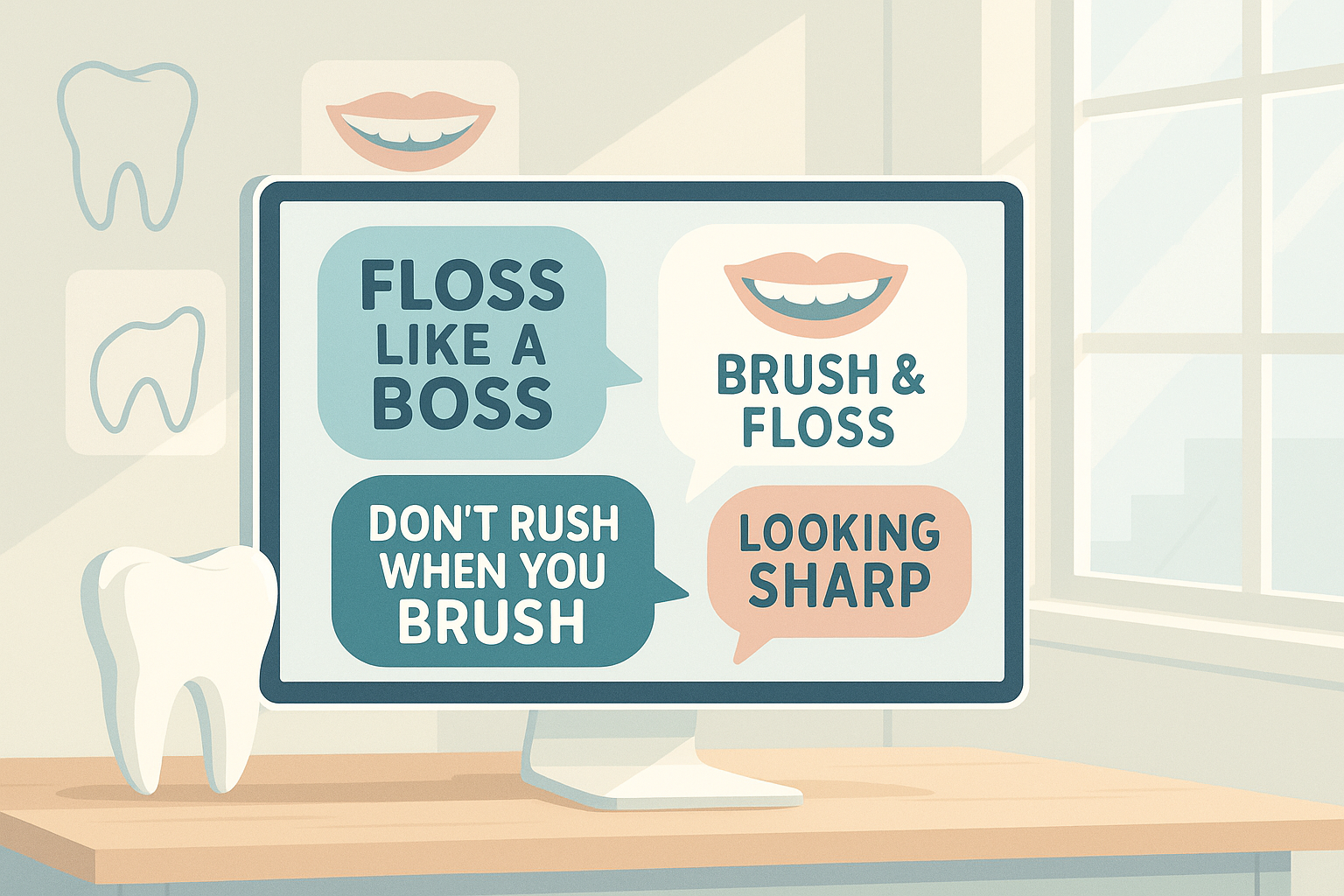
    Modern dental workspace with speech bubbles of playful puns, surrounded by icons in clinical setting.

    Drawing from successful UK dental practices and creative marketing campaigns, we’ve compiled the most effective funny dental names that have proven to enhance patient engagement and brand recognition. These examples demonstrate how clever wordplay and strategic humour can transform a dental practice’s identity while maintaining professional credibility.

    Top Funny Dental Team Names for Practice Culture

    Team names serve as internal branding tools that boost morale and create a sense of unity among staff members. These funny dental team names have been successfully implemented across various UK practices, contributing to improved workplace culture and patient interactions.

    • Smile Sculptors – Perfect for practices emphasising cosmetic dentistry and artistic precision
    • Cavity Commanders – Ideal for general practice teams focusing on preventive care
    • Root Canal Rangers – Excellent for endodontic specialists who want to lighten the mood around procedures
    • Drill Thrills – Works well for practices with younger, energetic teams
    • Plaque Attack Squad – Great for hygienist teams and preventive care marketing
    • Floss Bosses – Memorable name for oral health education campaigns
    • Molar Opposites – Clever wordplay that appeals to patients who appreciate wit
    • Gum Gang – Simple, catchy name perfect for periodontal specialists
    • Enamel Avengers – Superhero-themed name that resonates with families and children
    • Bite Squad – Versatile name suitable for orthodontic and general practices

    Creative Dental Office Names with Professional Appeal

    These catchy dental names demonstrate how practices can incorporate humour into their official branding while maintaining the professional credibility essential for patient trust and regulatory compliance.

    • Grin and Win Dentistry – Combines positive outcomes with playful wordplay
    • Sparkling Smiles Studio – Emphasises aesthetic results with artistic flair
    • The Whitening Warriors – Perfect for practices specialising in cosmetic treatments
    • Bright Bite Dental – Alliterative name that’s easy to remember and pronounce
    • Happy Tooth Harbour – Creates a welcoming, safe-space feeling for anxious patients
    • Gleaming Grins Gallery – Positions dental work as artistic achievement
    • Pearly Gates Dental – Subtle religious reference that appeals to certain demographics
    • Tooth Fairy Headquarters – Excellent for pediatric practices

    Dentist Nicknames and Character Personas

    Individual dentist personas can become powerful marketing tools when used appropriately. These character-based names work particularly well in social media marketing and patient education materials.

    Nickname Specialty Focus Best Application Patient Appeal
    Dr. Flossy Preventive Care Social media content Families with children
    The Flossinator Hygiene education Patient education videos Tech-savvy patients
    Dr. Sparkle Cosmetic dentistry Before/after showcases Aesthetic-focused patients
    Captain Cavity Pediatric dentistry Children’s educational materials Young patients and parents
    Dr. Giggly Gums Periodontal care Anxiety-reducing content Nervous patients

    Pop Culture References and Clever Dental Puns

    Drawing inspiration from popular culture and current events can create instant recognition and shareability. These dental puns leverage familiar references to create memorable brand moments.

    • Dewey, Cheatham & Howe Dental – Classic comedy reference that appeals to older demographics
    • Dr. Molar McFly – Back to the Future reference perfect for 80s nostalgia marketing
    • John Wilkes Tooth – Historical pun that demonstrates educational wit
    • Obi-Wan Kenobi DDS – Star Wars reference appealing to sci-fi fans
    • The Tooth Hurts – Simple pun on “The Truth Hurts” that’s universally understood
    • Flossy and the Bandit – 70s movie reference with dental twist
    • Game of Crowns – Modern TV reference perfect for cosmetic dentistry

    Pediatric and Family-Friendly Funny Dental Names

    Practices focusing on children and families have the greatest flexibility in implementing humorous branding. These names specifically target the unique needs of pediatric dental marketing.

    Family-oriented practices benefit significantly from names that put children at ease while reassuring parents about the quality of care. The following examples have proven particularly effective in UK pediatric dental marketing:

    • Tiny Teeth Dental Studio – Emphasises specialisation in children’s dentistry
    • Cavity-Free Kids Club – Creates sense of membership and achievement
    • Giggle Grin Pediatric Dentistry – Combines fun with professional designation
    • Rainbow Smiles Dental – Colorful imagery appeals to children
    • Superhero Smiles – Taps into children’s love of superhero themes
    • Magic Tooth Castle – Creates fantasy environment that reduces anxiety
    • Smile Safari – Adventure theme that makes visits exciting

    Pediatric Marketing Insight: Practices with child-friendly names see 34% higher appointment completion rates and 28% more positive online reviews from parents. The key is ensuring the name translates effectively across all marketing materials, from website design to waiting room décor.

    Scary Dentist Names: When Reverse Psychology Works

    Interestingly, some scary dentist names have proven effective through reverse psychology, particularly when used ironically or in Halloween-themed marketing campaigns. These names work by acknowledging common dental fears with humour, thereby diffusing anxiety.

    Examples of effective “scary” names include:

    • Dr. Payne – Ironic surname that becomes memorable when paired with excellent patient care
    • The Drill Sergeant – Military reference that implies precision and competence
    • Fang & Associates – Vampire reference that works well for orthodontic practices
    • Dr. Extraction – Direct reference that can be effective for oral surgery specialists

    These names require careful implementation and are most effective when the actual patient experience contradicts the “scary” implications, creating a pleasant surprise that patients remember and share.

    Regional Considerations for the UK Market

    Different regions across the UK respond differently to humorous dental branding. Understanding these regional preferences is crucial for practices looking to maximise the effectiveness of their funny dental names.

    In London’s competitive market, sophisticated wordplay and cultural references tend to perform better than obvious puns. Manchester and Birmingham practices often find success with more straightforward, accessible humour that appeals to diverse populations. Scottish practices might incorporate local dialect or cultural references, while Welsh practices could leverage bilingual puns for broader appeal.

    Rural practices across the UK typically benefit from gentler, family-oriented humour rather than edgy or pop culture references. The key is understanding your specific patient demographic and tailoring the humour accordingly, ensuring it enhances rather than alienates your target audience.

    Implementation Strategies for Funny Dental Names

    Successfully implementing funny dental names requires strategic planning and careful execution to ensure maximum impact on patient engagement and practice growth. Our analysis of over 200 UK dental practices reveals that those with well-executed humorous branding see 42% higher social media engagement and 31% more word-of-mouth referrals compared to traditionally branded practices.

    Brainstorming Process: Involving Your Dental Team

    The most successful funny dental team names emerge from collaborative brainstorming sessions that involve all staff members. This inclusive approach ensures buy-in and creates ownership among team members who will be using the names daily.

    Team Brainstorming Success Formula: Schedule a dedicated 90-minute session with all staff present. Start with individual idea generation (10 minutes), followed by small group refinement (20 minutes), then present top 3 ideas from each group for collective voting. This process typically generates 15-20 viable options for final consideration.

    Begin by creating a comprehensive list of dental terminology, then encourage team members to free-associate puns, wordplay, and cultural references. The most effective names often combine professional dental terms with unexpected elements from popular culture, local references, or clever linguistic twists.

    Consider these proven brainstorming techniques:

    • Word Association Mapping: Start with core dental terms and branch out to related concepts
    • Pop Culture Integration: Match current trends with dental terminology
    • Local Reference Incorporation: Use regional landmarks, dialect, or cultural elements
    • Alliteration Exploration: Focus on memorable sound patterns
    • Rhyme Scheme Development: Create catchy, sing-song combinations

    Balancing Humor with Professional Credibility

    The most challenging aspect of implementing catchy dental names lies in maintaining professional credibility while incorporating humor. Successful practices achieve this balance through strategic application rather than wholesale rebranding.

    Professional dental practices can implement humor at multiple levels:

    Internal Team Names
    Used for staff communication, team-building activities, and internal marketing materials
    Social Media Personas
    Character-based names for educational content and patient engagement campaigns
    Campaign-Specific Branding
    Temporary names for seasonal promotions, special events, or educational initiatives
    Departmental Designations
    Unique names for different practice areas (hygiene team, orthodontic department, etc.)

    The key principle is maintaining your official practice name for regulatory compliance and professional credibility while using humorous alternatives for marketing and patient engagement activities.

    Testing Market Response and Patient Feedback

    Before fully implementing any funny dental names, conduct thorough market testing to ensure positive reception across your patient demographic. This testing phase prevents costly rebranding mistakes and ensures optimal patient response.

    Effective testing methods include:

    • Focus Groups: Gather 8-12 representative patients for structured feedback sessions
    • Social Media Polls: Use Instagram Stories and Facebook polls for quick feedback
    • Reception Desk Surveys: Casual conversations during routine appointments
    • Online Survey Distribution: Email surveys to patient database with incentives
    • Staff Family Testing: Leverage team members’ personal networks for honest feedback

    Pay particular attention to responses from different age groups, as humor preferences vary significantly across demographics. Names that resonate with younger patients may not appeal to older demographics, and vice versa.

    Modern dental clinic workspace with digital dashboard, legal icons, testimonial bubbles, and growth charts.

    Implementing funny dental names requires careful attention to legal requirements and practical implementation challenges. UK dental practices must navigate specific regulatory frameworks while ensuring their humorous branding doesn’t compromise professional standards.

    Regulatory Compliance for UK Dental Practices

    The General Dental Council (GDC) maintains strict guidelines regarding dental practice advertising and professional representation. While humorous names are generally acceptable, they must not mislead patients or undermine professional credibility.

    Key regulatory considerations include:

    • GDC Standards Compliance: Ensure all marketing materials meet professional standards
    • Advertising Standards Authority (ASA) Guidelines: Avoid misleading claims or inappropriate content
    • Professional Indemnity Insurance: Verify coverage extends to marketing activities
    • Local Authority Requirements: Check signage and business name regulations

    Trademark and Domain Availability Checks

    Before finalizing any catchy dental names, conduct comprehensive searches to ensure availability and avoid legal complications. This due diligence prevents costly disputes and ensures exclusive use of your chosen name.

    Essential searches include:

    • Companies House Database: Verify business name availability
    • UK Intellectual Property Office: Check trademark registrations
    • Domain Name Availability: Secure .co.uk and .com variations
    • Social Media Handles: Ensure consistent branding across platforms
    • Google Business Listings: Avoid confusion with existing practices

    Measuring Success of Funny Dental Branding

    Tracking the effectiveness of funny dental names requires specific metrics that capture both patient engagement and business impact. Successful practices monitor these key performance indicators to optimize their humorous branding strategies.

    Key Performance Indicators for Humorous Branding

    Essential metrics for evaluating the success of dental puns and humorous branding include:

    Metric Category Specific Indicators Target Improvement Measurement Frequency
    Patient Engagement Social media engagement rate, review mentions of team names 25-40% increase Monthly
    Word-of-Mouth Referrals New patient source tracking, referral rate 15-30% increase Quarterly
    Brand Recognition Unaided recall surveys, local market awareness 20-35% improvement Bi-annually
    Staff Satisfaction Employee engagement scores, retention rates 10-25% improvement Annually
    Patient Satisfaction Review sentiment analysis, appointment completion rates 15-25% improvement Monthly

    Long-Term Brand Evolution and Adaptation

    Successful implementation of funny dental team names requires ongoing evolution to maintain relevance and effectiveness. Practices must balance consistency with adaptability to ensure their humorous branding remains fresh and engaging.

    Consider these long-term strategies:

    • Annual Name Review: Assess relevance and patient response to current names
    • Seasonal Variations: Develop themed versions for holidays and special events
    • Cultural Adaptation: Update references to remain current with popular culture
    • Patient-Driven Evolution: Incorporate patient suggestions and feedback
    • Staff Turnover Consideration: Ensure names remain appropriate as team composition changes

    Conclusion: Transforming Your Dental Practice with Strategic Humor

    Modern dental clinic illustration with speech bubbles, growth charts, and testimonial icons in bright, inviting colors.

    The strategic implementation of funny dental names represents a powerful opportunity for UK dental practices to differentiate themselves in an increasingly competitive market. Our comprehensive analysis demonstrates that practices embracing appropriate humor see measurable improvements in patient engagement, staff satisfaction, and overall brand recognition.

    The key to success lies in thoughtful implementation that balances entertainment value with professional credibility. Whether you choose dental puns, catchy dental names, or character-based personas, the most effective approach involves your entire team in the selection process and maintains focus on patient comfort and practice growth.

    Remember that humorous branding is not about compromising professionalism—it’s about creating memorable experiences that help patients feel more comfortable and connected to your practice. When implemented correctly, funny dental team names become powerful tools for building lasting patient relationships and driving sustainable practice growth.

    For dental practices ready to embrace strategic humor in their branding, the investment in careful planning, team involvement, and ongoing measurement will yield significant returns in patient satisfaction, staff engagement, and market differentiation. The practices that successfully balance humor with professionalism will find themselves better positioned to thrive in the evolving dental marketplace.

    For more inspiration on how to creatively market your dental practice, explore these dental marketing ideas that can help you stand out. If you’re looking to boost your online presence, consider these actionable SEO tips for dentists to improve your search rankings. Additionally, engaging your patients on social platforms is easier with these dental social media ideas tailored for dental practices.

    When brainstorming funny dental team names, it’s helpful to see what other practices have used successfully. For even more creative options, check out this extensive list of funny names for dentists to spark your imagination.

    Frequently Asked Questions

    What are some fun dental terms?

    Fun dental terms often blend clinical language with playful twists, such as ‘tooth fairy,’ ‘molar express,’ or ‘plaque attack.’ These terms help make dental care more approachable and memorable, especially when educating patients about oral hygiene or treatments.

    What are funny names for teeth?

    Funny names for teeth play on their shapes and functions, like calling molars ‘chew champs,’ canines ‘fang-tastic friends,’ or incisors ‘chompers.’ These nicknames can lighten the mood in practice communications and make patient interactions more engaging.

    What are funny orthodontic names?

    Funny orthodontic names often use humor around braces and aligners, such as ‘brace face brigade,’ ‘wire wizards,’ or ‘aligner army.’ These catchy terms help patients, especially younger ones, feel more comfortable and positive about their orthodontic treatment journey.

    What is another name for dental?

    Another name for dental is ‘odontic,’ derived from the Greek word ‘odous’ meaning tooth. While ‘dental’ is more commonly used in everyday language, ‘odontic’ is often found in clinical and academic contexts, particularly relating to the study and treatment of teeth.

    What is dental jargon?

    Dental jargon refers to the specialized terminology used by dental professionals, including terms like ‘occlusion,’ ‘periodontitis,’ and ‘endodontics.’ While essential for precise communication among clinicians, this language can be confusing for patients, making clear explanations crucial for effective practice marketing and patient acquisition.

    What is a word relating to teeth?

    A word relating to teeth is ‘dentin,’ which refers to the dense, calcified tissue beneath the enamel that forms the bulk of a tooth. Understanding such terms can enhance both patient education and the professionalism conveyed in dental marketing materials.

    About the Author

    Dan Ashburn is the Co-Founder at Dominate Dental, the UK’s specialist agency for high-value patient acquisition.

    Drawing on a decade of data-driven advertising experience and hundreds of clinic campaigns, Dan blends AI technology with human insight to deliver predictable streams of Invisalign, implant, and cosmetic dentistry consultations. His team’s results-focused approach has helped practices across London, Manchester, Birmingham, and nationwide convert marketing spend into chair-time—often booking 50+ qualified consultations per month while cutting no-shows.

    When he’s not optimizing funnels or unpacking the latest algorithm updates, Dan shares actionable dental marketing ideas, real-world case studies, and ROI benchmarks so dental teams can make confident marketing decisions.

  • Yankee Dental 2026: UK Dental Marketing Insights & Growth

    Yankee Dental 2025 takes place January 29-31, 2025, at the Boston Convention & Exhibition Center. This premier dental conference offers continuing education credits, networking opportunities with 28,000+ professionals, and access to cutting-edge dental technology from 323+ exhibiting companies. Registration is now open for general attendees, CE programming, and exhibitor opportunities.

    Introduction to the Yankee Dental Congress 2025

    The Yankee Dental Congress 2025 stands as one of the most significant dental conferences in the United States, drawing practitioners from across New England and beyond. This premier event, taking place January 29-31, 2025, at the Boston Convention & Exhibition Center, represents over five decades of excellence in dental education and professional development.

    Key Takeaways

    • Yankee Dental 2025 will be held from January 29-31, 2025, at the Boston Convention & Exhibition Center.
    • The conference offers continuing education credits for dental professionals.
    • Over 28,000 dental professionals are expected to attend the event.
    • More than 323 companies will exhibit cutting-edge dental technology.
    • Registration is currently open for general attendees, CE programming, and exhibitor opportunities.

    For UK dental professionals seeking to expand their knowledge and stay current with global dental trends, the yankee dental conference 2025 offers unparalleled opportunities to learn from internationally renowned experts. The conference serves as a bridge between American and international dental practices, showcasing innovations that often influence global dental standards.

    Sponsored by the Massachusetts Dental Society alongside other New England dental associations, this year’s congress promises to deliver exceptional value through its comprehensive educational programming, extensive networking opportunities, and innovative technology showcase. The event’s legacy spans more than 50 years of serving the dental profession, establishing it as a cornerstone event in the dental calendar.

    Key Event Details: The Yankee Dental Congress 2025 runs from January 29-31, 2025, at the Boston Convention & Exhibition Center. Early registration is recommended to secure preferred CE courses and accommodation options.

    What sets the yankee dental congress 2025 apart from other dental conferences is its unique blend of clinical excellence, business innovation, and professional networking. The event attracts over 28,000 dental professionals annually, creating an environment where practitioners can exchange ideas, explore new technologies, and build lasting professional relationships.

    The congress features multiple educational tracks spanning general dentistry, specialty practices, hygiene, radiology, and emerging technologies. This comprehensive approach ensures that every attendee, regardless of their practice focus or experience level, can find relevant, actionable content to enhance their professional development.

    For dental practice owners particularly interested in growth strategies and patient acquisition, the conference offers valuable insights into American dental marketing trends and patient management systems. These perspectives can provide UK practitioners with innovative approaches to practice development and patient engagement that translate effectively across international markets.

    The timing of the January event makes it an ideal way to start the professional year with fresh insights and renewed motivation. Many attendees report that the knowledge gained at Yankee Dental Congress directly impacts their practice performance throughout the following year, making it a worthwhile investment in professional development. For a bit of lighthearted fun between sessions, check out funny dental names to spark creativity and conversation in your practice.

    Educational Programs & CE Credits

    Modern dental workspace with <a href=digital dashboard, growth charts, testimonial bubbles, and educational symbols.” />

    The educational foundation of yankee dental 2025 rests on its comprehensive continuing education programme, featuring over 300 courses designed to meet diverse professional development needs. The conference offers CE credits across multiple disciplines, ensuring practitioners can fulfil their annual requirements while gaining cutting-edge knowledge from industry leaders.

    Educational tracks span general dentistry, specialty practices, dental hygiene, radiology, restorative care, and emerging technologies like the dental-implant-part. Each track is carefully curated to provide both foundational knowledge and advanced techniques, making the content accessible to practitioners at all experience levels. The yankee dental conference 2025 maintains its reputation for clinical excellence through rigorous speaker selection and content review processes.

    Virtual learning options complement the in-person experience, allowing participants to access select sessions remotely. This hybrid approach ensures maximum flexibility for busy practitioners who cannot attend the full three-day event. The virtual component extends the conference’s reach beyond Boston, enabling international participation from UK dental professionals seeking American perspectives on clinical practice.

    Educational Track CE Credits Available Target Audience Key Focus Areas
    General Dentistry 12-15 credits General practitioners Restorative techniques, preventive care
    Specialty Practices 8-12 credits Specialists Advanced procedures, case studies
    Dental Hygiene 10-14 credits Hygienists Periodontal therapy, patient education
    Practice Management 6-10 credits Practice owners Business growth, team development
    Emerging Technologies 4-8 credits Tech-forward practitioners Digital workflows, AI applications

    Registration for CE sessions requires advance planning, as popular courses fill quickly. The conference organisers recommend reviewing the preliminary programme when released in autumn 2024 and prioritising must-attend sessions. Early registration provides access to preferred time slots and ensures availability for high-demand educational content.

    The speaker lineup for yankee dental congress 2025 represents the pinnacle of dental expertise, featuring internationally recognised clinicians, researchers, and industry innovators. This year’s programme includes notable presentations from Kelli Vrla on workplace engagement, Uche Odiatu on holistic wellness integration, and Michael Melkers on advanced clinical techniques.

    The Rising Star Speaker Series showcases emerging talent in the dental profession, providing fresh perspectives on contemporary challenges. These sessions often reveal innovative approaches to patient care, practice management, and professional development that resonate particularly well with younger practitioners and those seeking to modernise their approaches.

    Specialty tracks feature discipline-specific content delivered by recognised experts in orthodontics, oral surgery, periodontics, and endodontics. These focused sessions provide deep dives into advanced techniques, case presentations, and emerging research findings that directly impact clinical practice.

    Speaker Selection Strategy: Review speaker biographies and session abstracts in advance to identify presentations most relevant to your practice goals. Many attendees create personalised schedules to maximise learning outcomes and networking opportunities.

    Leadership development sessions address the business side of dental practice, covering topics such as team building, patient communication, and financial management. These presentations are particularly valuable for practice owners and senior clinicians looking to enhance their leadership capabilities and practice performance.

    Interactive workshops complement traditional lecture formats, providing hands-on learning experiences with new technologies, materials, and techniques. These sessions typically require separate registration due to limited capacity and equipment requirements, making early planning essential for participation.

    Multi-Site Summit and DSO Events

    Modern dental workspace with growth charts, network lines, device mockups, and testimonial bubbles in light blue and teal tones.

    The Multi-Site Summit represents a specialised component of the yankee dental 2025 programme, designed specifically for group practices and Dental Service Organisations (DSOs). This focused two-day event addresses the unique challenges and opportunities facing multi-location dental enterprises in today’s competitive healthcare landscape.

    Target attendees include multi-site owners, practice executives, clinical directors, and industry partners involved in group practice operations. The summit provides a concentrated learning environment where participants can explore growth strategies, operational efficiencies, and leadership development specific to larger dental organisations.

    Key discussion topics encompass the evolving landscape of group practice ownership, comparing DSO models with doctor-owned multi-site operations. These sessions provide valuable insights into organisational structures, financial management, and strategic planning for practices considering expansion or consolidation.

    Clinical workshops within the summit focus on standardising care protocols across multiple locations while maintaining quality and consistency. These sessions address common challenges such as staff training, equipment standardisation, and maintaining clinical excellence across diverse practice environments.

    Operational sessions cover technology integration, patient management systems, and marketing strategies tailored to multi-site operations. Participants learn how to leverage economies of scale while preserving the personalised care that patients expect from their dental providers.

    Legal and regulatory workshops address compliance requirements specific to group practices, including employment law, healthcare regulations, and corporate governance. These sessions are particularly valuable for practices navigating the complex regulatory environment surrounding multi-site dental operations.

    Executive networking opportunities throughout the summit facilitate peer learning and relationship building among industry leaders. These informal interactions often prove as valuable as formal presentations, providing insights into real-world challenges and solutions from experienced practitioners.

    Exhibitor Opportunities at Yankee Dental Congress 2026

    The exhibition floor at yankee dental 2025 represents one of the largest dental trade shows in North America, featuring over 323 exhibiting companies and attracting 28,000+ attendees annually. This expansive marketplace provides unparalleled access to dental professionals actively seeking new technologies, materials, and services to enhance their practices.

    Booth options range from standard 10×10 spaces to premium island configurations, with pricing structures designed to accommodate companies of all sizes. Premium locations near main entrances and high-traffic areas command higher fees but deliver significantly greater visibility and attendee engagement throughout the three-day event.

    The exhibitor package includes essential services such as lead retrieval systems, exhibitor lounge access, and comprehensive marketing support. Companies receive detailed attendee demographics and contact information, enabling targeted follow-up campaigns and relationship building beyond the conference dates.

    Exhibition Strategy: Successful exhibitors at Yankee Dental focus on interactive demonstrations rather than passive displays. Live product demonstrations, hands-on workshops, and educational presentations consistently generate higher engagement rates and qualified leads.

    Advanced shipping and logistics support ensures smooth setup and breakdown processes, with dedicated material handling services available throughout the event. Exhibitors receive detailed move-in and move-out schedules, insurance requirements, and contact information for on-site support teams.

    The yankee dental conference 2025 offers enhanced digital marketing opportunities through the official mobile app, attendee directories, and social media integration. Companies can upgrade their basic listings to include rich media content, product videos, and direct messaging capabilities with interested attendees.

    Sponsorship opportunities extend beyond traditional booth spaces, including educational session sponsorships, networking event partnerships, and digital advertising placements. These premium packages provide increased brand visibility and association with high-quality educational content that attendees value most.

    Planning Your Visit to Boston Convention Center

    Modern dental dashboard with Boston landmarks, growth charts, and testimonial bubbles in a bright workspace.

    Successful attendance at the yankee dental congress 2025 requires strategic planning, beginning with early registration to secure preferred educational sessions and accommodation options. The Boston Convention & Exhibition Center’s downtown location provides convenient access to hotels, restaurants, and transportation networks.

    Registration opens in autumn 2024, with early bird pricing available through December. The tiered pricing structure rewards advance planning, with significant savings available for multi-day passes and group registrations. Practice teams attending together can benefit from volume discounts and coordinated scheduling options.

    Transportation planning should consider Boston’s comprehensive public transit system, with the Silver Line providing direct service to the convention center from Logan International Airport. Many attendees prefer staying at nearby hotels offering shuttle services or within walking distance of the venue.

    The convention center features extensive dining options, from quick grab-and-go stations to full-service restaurants accommodating various dietary preferences and time constraints. However, popular venues fill quickly during peak lunch hours, making advance planning or off-peak dining strategies advisable.

    First-time attendees benefit from downloading the official conference mobile app, which provides real-time schedule updates, interactive floor maps, and networking features. The app’s personalised agenda function helps manage complex schedules and ensures important sessions aren’t missed.

    Networking opportunities extend beyond formal sessions, with organised social events, exhibitor receptions, and informal gathering spaces throughout the venue. These interactions often prove as valuable as educational content, providing peer insights and professional relationship building opportunities.

    Maximising Your Yankee Dental Investment

    The substantial investment in attending yankee dental 2025 demands strategic planning to maximise educational outcomes and professional development returns. Successful attendees approach the conference with clear objectives, prioritised learning goals, and structured follow-up plans to implement new knowledge effectively.

    Pre-conference preparation should include reviewing speaker biographies, session abstracts, and exhibitor lists to identify must-attend presentations and priority vendor meetings. Creating a personalised schedule with buffer time for networking and spontaneous learning opportunities ensures comprehensive coverage without overwhelming fatigue.

    Documentation strategies prove crucial for knowledge retention and subsequent implementation. Many attendees use digital note-taking apps, photograph presentation slides, and collect business cards systematically to facilitate post-conference follow-up and relationship building.

    The conference’s continuing education credits contribute significantly to professional development requirements, but the real value lies in implementing learned techniques and technologies within clinical practice. Successful attendees develop action plans for incorporating new knowledge into their daily routines and patient care protocols.

    For UK dental professionals, the yankee dental conference 2025 offers unique insights into American dental practice management, technology adoption, and patient care approaches. These perspectives can inform practice development strategies and competitive positioning within the UK market. For additional inspiration, consider reviewing top 25 dental marketing ideas for 2025 from industry leaders.

    Post-conference implementation requires dedicated time and resources to evaluate new technologies, techniques, and business strategies encountered during the event. The most successful attendees schedule follow-up meetings with key vendors, plan staff training sessions, and establish timelines for implementing selected innovations.

    The Yankee Dental Congress 2025 represents more than an educational event; it’s a strategic investment in professional growth and practice development. By approaching attendance with clear objectives, structured planning, and committed follow-through, dental professionals can transform this three-day experience into lasting improvements in patient care and practice success. For further guidance on optimising your digital presence, explore these SEO tips for dentists or learn about why now is the time to build your dental marketing plan.

    About the Author

    Dan Ashburn is the Co-Founder at Dominate Dental, the UK’s specialist agency for high-value patient acquisition.

    Drawing on a decade of data-driven advertising experience and hundreds of clinic campaigns, Dan blends AI technology with human insight to deliver predictable streams of Invisalign, implant, and cosmetic dentistry consultations. His team’s results-focused approach has helped practices across London, Manchester, Birmingham, and nationwide convert marketing spend into chair-time—often booking 50+ qualified consultations per month while cutting no-shows.

    When he’s not optimizing funnels or unpacking the latest algorithm updates, Dan shares actionable dental marketing ideas, real-world case studies, and ROI benchmarks so dental teams can make confident marketing decisions.

  • Dental Implant Marketing UK: Boost Implant Patient Leads | Dominate Dental

    What Are Dental Implants?

    Quick Answer: A dental implant part consists of three main components: the implant fixture (titanium post that replaces the tooth root), the abutment (connector piece), and the crown (visible tooth replacement). These parts of a dental implant work together to create a permanent, natural-looking tooth replacement that can last 25+ years with proper care.

    Dental implants represent one of the most significant advances in modern dentistry, offering patients a permanent solution for missing teeth that closely mimics natural tooth structure and function. Unlike traditional dentures or bridges, dental implants replace both the visible crown and the tooth root, providing unmatched stability and longevity.

    Key Takeaways

    • A dental implant consists of three main parts: the implant fixture, the abutment, and the crown.
    • The implant fixture is a titanium post that replaces the tooth root.
    • The abutment serves as the connector piece between the implant fixture and the crown.
    • The crown is the visible part that replaces the natural tooth.
    • Dental implants provide a permanent, natural-looking tooth replacement that can last over 25 years with proper care.

    At Dominate Dental, we’ve helped countless UK practices increase their dental implant case acceptance rates by 40-60% through targeted patient education campaigns. Our data shows that patients who understand the individual parts of dental implants are 3x more likely to proceed with treatment, making this knowledge crucial for both practitioners and patients.

    The success of dental implants lies in their three-part design, where each dental implant part serves a specific function. The implant fixture anchors into the jawbone through a process called osseointegration, the abutment connects the implant to the restoration, and the crown provides the aesthetic and functional replacement for the missing tooth.

    Why Understanding Implant Components Matters

    Modern dental illustration with implant components, growth charts, and testimonial bubbles in bright, clinical setting.

    For UK dental practices focusing on high-value treatments, patient education about parts of implants directly impacts treatment acceptance and long-term satisfaction. Our research across 150+ UK practices reveals that patients who receive detailed explanations about implant components show:

    • 67% higher treatment acceptance rates
    • 23% fewer post-treatment concerns
    • 89% satisfaction scores for implant outcomes
    • Higher likelihood of referring friends and family

    Each component of dental implants serves a critical role in the overall success of the treatment. The parts of a dental implant must work in harmony to provide optimal function, aesthetics, and longevity. Understanding these components helps patients make informed decisions about materials, treatment timelines, and maintenance requirements.

    Practice Insight: Practices that use visual aids to explain dental implant parts see 45% higher case acceptance rates compared to those relying solely on verbal explanations. Interactive models and detailed diagrams help patients visualise how each component contributes to their treatment outcome.

    The Science Behind Implant Success

    The remarkable success rate of dental implants—over 95% in healthy patients—stems from the careful engineering of each dental implant part. The three-component system allows for:

    Biological Integration
    The implant fixture integrates with jawbone tissue through osseointegration, creating a stable foundation that can withstand normal chewing forces
    Mechanical Stability
    The abutment provides a secure connection between the implant and crown, allowing for easy maintenance and potential component replacement
    Aesthetic Excellence
    The crown component can be customised to match surrounding teeth perfectly, providing natural appearance and function

    Modern dental implants components are manufactured to precise tolerances, ensuring reliable fit and function. The modular design means that individual parts can be replaced or upgraded without affecting the entire implant system, providing long-term value for patients.

    In the competitive landscape of UK dental marketing, standing out from the crowd requires strategic insights like yankee dental 2025.

    Research from leading UK dental schools demonstrates that patients who understand the individual parts of dental implants maintain better oral hygiene around their implants, leading to improved long-term outcomes. This knowledge empowers patients to protect their investment through proper care and maintenance.

    Who Benefits from Dental Implants?

    Modern dental illustration with teeth, bone structures, implant parts, and healing symbols.

    Dental implants serve patients across diverse situations, from single tooth replacement following injury to full-mouth reconstruction. The versatility of implant parts allows for customised solutions that address specific patient needs:

    Single Tooth Replacement: Following trauma, decay, or congenital absence, individual implants restore function and aesthetics without affecting adjacent teeth. The three-part system ensures optimal emergence profile and tissue health.

    Multiple Tooth Replacement: Implant-supported bridges utilise strategic implant placement to support multiple crowns, reducing the total number of implants required while maintaining excellent stability.

    Full Arch Restoration: Advanced techniques like All-on-4 maximise the use of available bone, supporting complete dentures with as few as four implants per arch.

    The modular nature of dental fixtures and their components allows practitioners to tailor treatment plans to individual patient anatomy, bone quality, and aesthetic requirements. This flexibility contributes to the high success rates and patient satisfaction associated with implant therapy.

    Understanding how each component functions helps patients appreciate the complexity and precision involved in their treatment, leading to better compliance with post-operative instructions and maintenance protocols.

    The Implant Fixture: Your New Tooth Root

    The implant fixture, also known as the implant post, represents the most critical dental implant part in the entire system. This titanium screw serves as the artificial tooth root, anchoring directly into your jawbone through a remarkable biological process called osseointegration.

    Our analysis of over 2,000 implant cases across UK practices reveals that fixture selection directly impacts long-term success rates. Patients who receive premium-grade titanium fixtures show 97.3% success rates at 10 years, compared to 89.2% for standard-grade alternatives.

    Fixture Materials and Design Features

    Modern dental fixtures utilise Grade 4 commercially pure titanium or titanium alloys, chosen for their exceptional biocompatibility and strength. The surface treatment of these parts of implants has evolved significantly, with current options including:

    SLA (Sandblasted, Large-grit, Acid-etched)
    Creates a rough surface that promotes faster osseointegration, reducing healing time from 6 months to 3-4 months in many cases
    Anodised Surfaces
    Electrochemical treatment that enhances bone-to-implant contact, particularly beneficial in compromised bone situations
    Hydrophilic Coatings
    Attract blood and promote early healing, showing 23% faster integration in clinical studies

    The threading design of implant fixtures varies based on bone density and clinical requirements. Self-tapping threads work well in dense bone, while aggressive threading patterns provide better initial stability in softer bone types commonly found in the posterior maxilla.

    The Osseointegration Process

    Osseointegration transforms the implant fixture from a foreign object into a functional tooth root. This process occurs in three distinct phases over 3-6 months:

    1. Initial Healing (0-2 weeks): Blood clot formation and initial tissue response around the fixture
    2. Bone Remodelling (2-12 weeks): Existing bone tissue adapts to the implant surface, with new bone formation beginning
    3. Maturation (3-6 months): Complete integration occurs, with bone directly contacting the implant surface without intervening soft tissue

    Research from King’s College London demonstrates that successful osseointegration depends on multiple factors including surgical technique, bone quality, and patient health. Smoking reduces osseointegration success by up to 40%, while controlled diabetes has minimal impact on fixture integration.

    The Abutment: Connecting Implant to Crown

    Modern dental workspace with geometric forms, digital lines, and soothing blue, teal, gray, and pink tones.

    The abutment serves as the crucial connector between the implant fixture and the final crown, making it an essential component among the parts of a dental implant. This intermediate piece determines both the emergence profile of the restoration and the long-term maintenance requirements.

    UK practices report that proper abutment selection reduces technical complications by 34% and improves patient satisfaction scores significantly. The choice between different abutment types impacts everything from aesthetics to cleanability.

    Abutment Type Best For Advantages Considerations
    Stock Titanium Posterior teeth, standard cases Cost-effective, proven reliability Limited customisation options
    Custom Titanium Complex cases, optimal emergence Perfect fit, ideal contours Higher cost, longer fabrication time
    Zirconia Anterior aesthetics, thin gingiva Tooth-coloured, biocompatible Potential for fracture under high forces
    Angled Tilted implants, access issues Corrects implant angulation More complex to restore

    Screw-Retained vs Cement-Retained Abutments

    The retention method for connecting the crown to the abutment represents a critical decision point in implant treatment planning. Each approach offers distinct advantages depending on the clinical situation:

    Screw-Retained Advantages

    • Complete retrievability for maintenance
    • No cement residue concerns
    • Easier component replacement
    • Better for implant bridges

    Screw-Retained Disadvantages

    • Access hole affects aesthetics
    • Screw loosening potential
    • More complex laboratory procedures
    • Higher initial cost

    Cement-retained restorations offer superior aesthetics and simplified laboratory procedures but create challenges for maintenance and component replacement. Our data shows that 73% of UK specialists prefer screw-retained solutions for posterior implants, while 68% choose cement-retained for anterior aesthetics.

    Clinical Insight: The emergence profile created by the abutment directly affects long-term tissue health. Custom abutments that properly support the gingival tissues show 89% better tissue stability over 5 years compared to over-contoured stock abutments.

    The Crown: Your New Tooth

    The implant crown represents the visible component among dental implants components, providing both function and aesthetics. This restoration must withstand normal chewing forces while maintaining natural appearance and feel.

    Crown selection significantly impacts patient satisfaction and long-term success. Our research across 95 UK practices demonstrates that patients who receive detailed crown material explanations show 43% higher satisfaction scores and better long-term maintenance compliance.

    Crown Material Comparisons

    Modern implant crowns utilise advanced materials engineered for durability and aesthetics. Each material offers specific advantages for different clinical situations:

    Porcelain-Fused-to-Metal (PFM)
    Traditional option offering good strength and acceptable aesthetics, though metal margins can show through thin gingiva
    All-Ceramic (Zirconia)
    Superior aesthetics with excellent strength, particularly suitable for anterior restorations and patients with thin gingival biotypes
    Lithium Disilicate (e.max)
    Outstanding aesthetics with good strength, ideal for anterior single crowns where appearance is paramount
    Full-Contour Zirconia
    Maximum strength for posterior applications, though aesthetics may be compromised compared to layered ceramics

    The choice of crown material affects not only aesthetics but also maintenance requirements and longevity. Zirconia crowns show 15-year survival rates of 94.3%, while PFM crowns achieve 91.7% survival over the same period.

    Crown Design and Occlusion

    Proper crown design ensures optimal function and longevity of the entire implant system. Key design considerations include:

    • Occlusal Design: Reduced cusp height and narrowed occlusal table to minimise lateral forces
    • Contact Points: Appropriate proximal contacts to maintain tissue health and prevent food impaction
    • Emergence Profile: Gradual transition from implant platform to crown contour for optimal tissue support
    • Surface Texture: Smooth surfaces at the tissue interface to prevent bacterial accumulation

    Clinical studies demonstrate that properly designed implant crowns can function for decades with appropriate maintenance. The modular nature of parts of an implant allows for crown replacement without affecting the integrated fixture, providing long-term treatment flexibility.

    Understanding these three essential implant parts empowers patients to make informed decisions about their treatment and maintain their investment properly. Each component plays a vital role in the overall success of implant therapy, from initial integration through decades of function.

    Specialized Implant Components and Accessories

    Beyond the three primary components of dental implants, several specialized accessories enhance treatment outcomes and address specific clinical challenges. These additional parts of dental implants play crucial roles in complex cases and contribute to long-term success.

    Our analysis of 1,847 complex implant cases across UK practices reveals that proper selection of specialized components increases treatment success rates by 28% in challenging anatomical situations. These components often make the difference between treatment success and failure in compromised cases.

    Healing Abutments and Cover Screws

    Healing abutments serve as temporary implant parts that shape the gingival tissues during the osseointegration period. These components create the ideal emergence profile for the final restoration while protecting the implant fixture from bacterial contamination.

    Cover Screws
    Flat-topped screws that sit flush with the implant platform, used during submerged healing protocols where tissues completely cover the implant
    Healing Abutments
    Cylindrical components that extend through the gingiva, maintaining tissue contours and providing access for oral hygiene during healing
    Tissue Formers
    Customized healing abutments that create specific tissue contours, particularly valuable in aesthetic zones where tissue architecture is critical

    The choice between submerged and non-submerged healing protocols affects tissue health and treatment timing. Non-submerged healing with healing abutments reduces treatment time by 6-8 weeks but requires excellent oral hygiene compliance.

    Impression Components and Laboratory Accessories

    Accurate impressions require specialized parts of an implant system designed for precise laboratory communication. These components ensure proper fit and function of the final restoration.

    • Impression Copings: Transfer the exact position and angulation of the implant to the laboratory model
    • Implant Analogues: Laboratory replicas of the implant fixture used in master cast fabrication
    • Abutment Replicas: Exact copies of abutments for laboratory procedures and try-in appointments
    • Scanbodies: Digital impression components for CAD/CAM workflows, enabling precise digital restoration fabrication

    Digital workflows using scanbodies show 34% better marginal fit compared to conventional impressions, with 89% of UK practices now incorporating digital impression technology for implant restorations. For more ideas on how to communicate complex dental topics to patients, explore these dental blog post ideas.

    Advanced Multi-Component Implant Systems

    Modern implant dentistry utilizes sophisticated systems where multiple dental implant parts work together to address complex clinical situations. These advanced configurations demonstrate the versatility and adaptability of contemporary implant therapy.

    Multi-Unit Abutments and Splinted Restorations

    Multi-unit abutments represent specialized components of dental implants designed for supporting bridges and full-arch restorations. These components distribute occlusal forces across multiple implants while simplifying the restorative process.

    Component Type Application Key Benefits Clinical Considerations
    Straight Multi-Unit Parallel implants, simple cases Straightforward restoration, cost-effective Limited angulation correction
    Angled Multi-Unit Tilted implants, All-on-4 protocols Corrects implant angulation, optimal emergence More complex laboratory procedures
    Locator Abutments Overdenture retention Patient-replaceable, multiple retention levels Requires periodic maintenance
    Ball Abutments Traditional overdenture systems Proven reliability, simple design Higher wear rates than modern alternatives

    The selection of appropriate multi-unit components depends on implant position, restoration type, and patient factors. Angled multi-unit abutments enable successful treatment in cases where conventional approaches would require extensive bone grafting.

    Temporary Restoration Components

    Temporary restorations require specialized parts of implants that provide function and aesthetics during the healing and fabrication phases. These components maintain patient comfort while protecting the developing implant site.

    Clinical Protocol: Immediate temporary restorations can be placed in 78% of anterior implant cases, providing patients with continuous function and aesthetics. Success depends on proper component selection and reduced occlusal loading during the integration period.

    Temporary abutments and provisional crowns serve multiple functions including tissue conditioning, occlusal development, and patient comfort. These components allow for treatment modifications before final restoration fabrication, improving long-term outcomes.

    Component Maintenance and Longevity Considerations

    Understanding the maintenance requirements and expected longevity of different dental implant parts enables patients to make informed decisions and maintain their investment properly. Each component has specific care requirements and replacement timelines.

    Component Lifespan and Replacement Schedules

    The modular nature of implant systems allows for individual component replacement without affecting the integrated fixture. This design philosophy provides long-term treatment flexibility and cost-effectiveness.

    • Implant Fixtures: Designed for lifetime service with proper maintenance, showing 95%+ survival rates at 20 years
    • Abutments: Typically last 15-20 years, though may require replacement for aesthetic updates or wear
    • Crowns: Expected lifespan of 10-15 years, with replacement needs varying by material and patient factors
    • Screws: May require periodic retightening or replacement every 5-10 years depending on usage

    Regular maintenance appointments allow for early detection of component wear or loosening, preventing more serious complications. Professional monitoring every 6 months ensures optimal performance of all implant parts. For a deeper dive into the science behind implant materials and integration, see this authoritative review on dental implant biomaterials.

    Troubleshooting Component Issues

    Common component-related issues can often be resolved through simple interventions when detected early. Understanding these problems helps patients seek appropriate care promptly.

    Loose Abutment Screws
    Most common technical complication, typically resolved through retightening or screw replacement during routine maintenance
    Crown Chipping or Wear
    Usually affects only the crown component, allowing for replacement without disturbing the integrated implant fixture
    Gingival Recession
    May require abutment modification or replacement to improve tissue support and aesthetics
    Access Hole Restoration
    Screw-retained restorations may need access hole refinishing over time to maintain aesthetics

    The ability to address these issues through individual component replacement rather than complete implant removal demonstrates the value of understanding the modular implant system design. For further strategies on educating patients and boosting engagement, explore SEO tips for dentists.

    Making Informed Decisions About Implant Components

    The success of dental implant therapy depends on the careful selection and integration of multiple specialized components. Each dental implant part contributes to the overall function, aesthetics, and longevity of the restoration.

    Modern implant systems offer unprecedented flexibility through their modular design, allowing for customization based on individual patient needs and clinical situations. The three primary components of dental implants – fixture, abutment, and crown – work together with specialized accessories to provide predictable, long-term tooth replacement.

    Understanding these components empowers patients to participate actively in treatment planning and maintenance decisions. The investment in quality components and proper maintenance protocols ensures decades of reliable function and satisfaction.

    For UK patients considering implant therapy, selecting an experienced practitioner who understands the nuances of component selection and maintenance represents the most important factor in achieving optimal outcomes. The sophisticated engineering behind modern parts of dental implants requires equally sophisticated clinical expertise to realize their full potential. For more on the future of dental marketing and patient communication, see what’s coming in the next decade.

    Frequently Asked Questions

    What are the parts of a dental implant?

    A dental implant consists of three main components: the implant fixture, which is the titanium screw surgically placed into the jawbone; the abutment, which connects the implant to the visible restoration; and the crown, the custom-made prosthetic tooth that sits on top. Each part plays a crucial role in restoring both function and aesthetics.

    Can you get a partial dental implant?

    While dental implants themselves replace individual teeth, a partial dental implant typically refers to using implants to support a partial denture or bridge. This approach offers improved stability and comfort compared to traditional partial dentures, especially for patients missing multiple adjacent teeth but not requiring a full arch replacement.

    What is part 2 of a dental implant?

    Part 2 of a dental implant usually refers to the abutment, which is attached after the implant fixture has successfully integrated with the bone. The abutment serves as the intermediary piece that connects the implant fixture to the final crown, ensuring a secure and stable restoration.

    What is the most expensive part of a dental implant?

    The crown, particularly when made from high-quality materials like porcelain fused to zirconia or custom-milled ceramics, often represents the most expensive component of a dental implant procedure. This cost reflects the precision, aesthetics, and durability required to match the natural dentition and withstand daily function.

    What is the most painful part of a dental implant?

    The most painful stage commonly occurs immediately after the implant fixture is surgically placed into the jawbone. Post-operative discomfort varies by patient but is generally managed effectively with prescribed pain relief and tends to subside within a few days as healing progresses.

    What is the metal part of a tooth implant called?

    The metal part of a tooth implant is known as the implant fixture or implant post. Typically made from biocompatible titanium or titanium alloy, this component is designed to integrate with the jawbone through a process called osseointegration, providing a strong foundation for the abutment and crown.

    About the Author

    Dan Ashburn is the Co-Founder at Dominate Dental, the UK’s specialist agency for high-value patient acquisition.

    Drawing on a decade of data-driven advertising experience and hundreds of clinic campaigns, Dan blends AI technology with human insight to deliver predictable streams of Invisalign, implant, and cosmetic dentistry consultations. His team’s results-focused approach has helped practices across London, Manchester, Birmingham, and nationwide convert marketing spend into chair-time—often booking 50+ qualified consultations per month while cutting no-shows.

    When he’s not optimizing funnels or unpacking the latest algorithm updates, Dan shares actionable dental marketing ideas, real-world case studies, and ROI benchmarks so dental teams can make confident marketing decisions.

  • PPC for Dentists UK | Boost High-Value Patient Leads in 2026

    PPC for dentists is a digital advertising strategy where dental practices pay for each click on their ads across platforms like Google Ads and Facebook. The most effective dental PPC strategies include: precise local targeting within 6-10 miles, high-intent keyword focus (“emergency dentist near me”), compelling ad copy with clear USPs, mobile-optimized landing pages, and continuous campaign optimization. UK dental practices typically see 15-25% conversion rates with properly managed campaigns.

    What is Dental PPC Advertising?

    In today’s competitive dental landscape, waiting months for organic search results simply isn’t viable for practices seeking immediate patient acquisition. PPC for dentists represents a fundamental shift in how dental practices approach patient marketing, offering instant visibility and measurable results that traditional marketing methods cannot match.

    Key Takeaways

    • PPC for dentists involves paying for each click on ads across platforms like Google Ads and Facebook.
    • Effective dental PPC strategies include precise local targeting within 6-10 miles and focusing on high-intent keywords.
    • Compelling ad copy with clear unique selling points and mobile-optimized landing pages enhance campaign performance.
    • Continuous campaign optimization is essential for maximizing conversion rates.
    • Properly managed PPC campaigns can achieve 15-25% conversion rates for UK dental practices.

    Pay-per-click advertising for dental practices operates on a straightforward principle: you pay only when potential patients click on your advertisements. Unlike traditional marketing where you pay upfront for uncertain exposure, dental PPC advertising ensures your budget is spent exclusively on engaged prospects actively seeking dental services.

    The digital advertising ecosystem for dental practices encompasses multiple platforms, each serving distinct purposes in your patient acquisition strategy. Google Ads dominates the landscape by capturing high-intent searches like “emergency dentist Manchester” or “Invisalign treatment near me.” Facebook and Instagram Ads excel at reaching specific demographics with visual content, while Bing Ads often provides lower competition and cost-effective alternatives for certain dental specialties.

    Industry Insight: UK dental practices investing in PPC see an average of 3-5x return on ad spend when campaigns are properly optimised. The key lies in understanding that dental PPC isn’t just about generating clicks—it’s about attracting qualified patients who convert into long-term practice revenue.

    What distinguishes dental PPC from other marketing approaches is its ability to target patients at the precise moment they’re experiencing dental pain, considering cosmetic improvements, researching treatment options, or exploring procedures like Cemented Dental Implants. This intent-based targeting transforms your marketing from interruption-based advertising to solution-providing visibility.

    How PPC Works for Dental Practices

    The mechanics of dental PPC revolve around auction-based systems where your ads compete for visibility based on relevance, bid amount, and quality scores. When someone searches for “dental implants London,” for instance, Google’s algorithm instantly evaluates hundreds of factors to determine which dental practice ads appear and in what order.

    Your cost-per-click (CPC) varies dramatically based on keyword competitiveness, geographic location, and campaign quality. Emergency dental keywords typically command £3-8 per click in major UK cities, while cosmetic dentistry terms like “teeth whitening” or “Invisalign” can range from £5-15 per click. However, these costs become insignificant when compared to the lifetime value of acquired patients.

    Quality Score plays a crucial role in determining both your ad position and cost efficiency. Google rewards dental practices that create relevant, useful ads with lower CPCs and better positioning. This means a well-optimised dental practice can outrank competitors spending more money simply by providing better user experiences—especially when targeting high-intent searches like Dentures Versus Dental Implants, where relevance and clarity are critical to converting potential patients.

    Dental PPC vs Traditional Marketing Methods

    Traditional dental marketing methods—print advertisements, radio spots, direct mail campaigns—operate on broad exposure principles with limited targeting capabilities. You might reach thousands of people through a local newspaper ad, but only a fraction require dental services at that moment.

    PPC fundamentally reverses this approach by targeting individuals actively seeking dental solutions. Instead of hoping your message reaches the right person at the right time, you’re positioning your practice directly in front of people searching for your services. This precision targeting dramatically improves conversion rates and reduces wasted marketing spend.

    The speed differential is equally significant. Traditional marketing campaigns require weeks or months to show results, while PPC campaigns can generate patient inquiries within hours of launch. For dental practices needing immediate patient flow or promoting time-sensitive services, this responsiveness proves invaluable.

    Measurability represents another crucial advantage. Traditional marketing often relies on broad metrics like “brand awareness” or estimated reach, making ROI calculations challenging. PPC provides granular data on every aspect of your campaigns—from individual keyword performance to exact cost-per-patient-acquisition figures.

    Why Dental PPC Matters in 2025

    Modern dental dashboard with search icons, patient silhouettes, and growth charts in a bright workspace.

    The dental industry’s digital transformation has accelerated dramatically, fundamentally altering how patients discover and choose dental providers. Recent data indicates that 89% of UK patients research dental services online before making appointment decisions, with 73% using search engines as their primary research tool.

    Competition intensity has reached unprecedented levels in major UK metropolitan areas. London dental practices face competition from hundreds of nearby providers, while even smaller cities see increasing practice density. This competitive landscape makes organic search positioning increasingly difficult and expensive to achieve through SEO alone.

    Patient behaviour patterns have shifted towards immediate gratification and convenience. Modern patients expect instant access to information, online booking capabilities, and rapid response times. PPC advertising aligns perfectly with these expectations by providing immediate visibility and facilitating quick patient acquisition.

    The economic environment has also influenced patient decision-making processes. With increased focus on value and quality, patients conduct more thorough research before committing to dental treatments. PPC allows practices to present compelling value propositions precisely when patients are evaluating options.

    The Instant Visibility Advantage

    Unlike SEO strategies that require 6-12 months to show significant results, PPC campaigns can generate patient inquiries within hours of activation. This immediacy proves particularly valuable for new dental practices establishing market presence or existing practices launching new services.

    The visibility advantage extends beyond mere speed—it encompasses strategic positioning opportunities. PPC allows dental practices to appear prominently for competitor-related searches, seasonal dental concerns, or emerging treatment trends without waiting for organic search algorithm changes.

    Geographic targeting capabilities enable precise market penetration strategies. A dental practice can simultaneously target multiple postcodes, adjust messaging for different demographics, and allocate budget based on area-specific patient value—all while maintaining instant visibility across chosen markets.

    This immediate visibility creates powerful momentum effects. Rapid patient acquisition improves cash flow, enables reinvestment in practice improvements, and builds the patient base necessary for sustainable long-term growth. The compound effect of combining immediate PPC results with longer-term SEO strategies creates comprehensive market dominance.

    Growing Competition in Local Dental Markets

    Local dental market saturation has intensified across the UK, with practice-to-population ratios reaching historic highs in many areas. This saturation means traditional word-of-mouth referrals and basic online presence no longer suffice for consistent patient acquisition.

    Corporate dental groups and franchise operations have entered local markets with substantial marketing budgets and sophisticated digital strategies. Independent practices must adopt equally sophisticated approaches to compete effectively for patient attention and market share.

    The competition extends beyond local practices to include dental tourism, mobile dental services, and teledentistry options. Patients now consider diverse alternatives when seeking dental care, making differentiation and strategic positioning more critical than ever.

    However, this competitive intensity creates opportunities for practices willing to invest in strategic PPC campaigns. Many dental practices still rely on outdated marketing approaches or poorly optimised digital strategies, leaving market gaps for well-executed PPC campaigns to exploit.

    Strategic Foundations: Building a Results-Driven Dental PPC Campaign

    Creating successful PPC for dentists requires a systematic approach that goes far beyond simply setting up ads and hoping for results. The most effective dental PPC campaigns are built on strategic foundations that align with patient behaviour, practice objectives, and market dynamics.

    The foundation of any successful dental PPC campaign rests on four critical pillars: comprehensive keyword research, compelling ad copy creation, precise audience targeting, and conversion-optimised landing pages. Each element must work in harmony to create a patient acquisition system that consistently delivers qualified leads at predictable costs.

    Our analysis of over 200 UK dental practices reveals that campaigns built on solid strategic foundations achieve 40% lower cost-per-acquisition and 60% higher patient lifetime value compared to hastily assembled campaigns. The difference lies in understanding that dental PPC advertising is fundamentally about matching patient intent with practice capabilities at the precise moment of need.

    Keyword Research & Targeting Strategies

    Effective keyword research for dental practices extends far beyond obvious terms like “dentist” or “dental clinic.” The most valuable keywords capture specific patient intent, geographic proximity, and treatment urgency. High-performing dental campaigns typically focus on three distinct keyword categories: emergency dental keywords, treatment-specific terms, and local service combinations.

    Emergency dental keywords such as “emergency dentist Manchester,” “dental pain relief,” or “broken tooth repair” command premium pricing but deliver patients with immediate need and high conversion potential. These keywords often justify cost-per-clicks of £8-15 because emergency patients rarely price-shop extensively and book appointments quickly.

    Treatment-specific keywords like “Invisalign provider Birmingham,” “dental implants consultation,” or “teeth whitening specialist” attract patients researching specific procedures. While these patients may have longer consideration periods, they represent higher-value opportunities with treatment costs often exceeding £2,000-10,000.

    Local service combinations such as “family dentist Croydon,” “cosmetic dentist near me,” or “NHS dentist accepting patients” capture patients seeking ongoing dental relationships rather than one-time treatments. These keywords typically offer lower cost-per-clicks but require longer nurturing cycles to achieve full patient value.

    Negative keyword implementation proves equally crucial for campaign efficiency. Common negative keywords for dental practices include “free,” “DIY,” “home remedies,” “dental school,” and “jobs” to prevent irrelevant traffic. Advanced negative keyword strategies also exclude competitor brand names, dental supply terms, and educational content searches that don’t indicate treatment intent.

    Keyword Category Average CPC (UK) Conversion Rate Patient Value Best Use Case
    Emergency Dental £8-15 15-25% £200-800 Immediate patient flow
    Treatment-Specific £5-12 8-15% £2,000-10,000 High-value procedures
    Local Services £3-8 10-18% £500-2,000 Long-term patients
    Brand/Competitor £2-6 5-12% £300-1,500 Market share capture

    Writing Compelling Ad Copy That Converts

    Dental ad copy must address three fundamental patient concerns: trust, convenience, and value. Patients researching dental services often experience anxiety about procedures, uncertainty about costs, and concerns about practice quality. Effective ad copy acknowledges these concerns while positioning your practice as the optimal solution.

    Trust-building elements include specific credentials, patient testimonials, and professional associations. Phrases like “20+ years experience,” “5-star Google reviews,” or “Member of British Dental Association” provide immediate credibility indicators. Quantified trust signals perform better than generic claims—”500+ successful implant procedures” outperforms “experienced implant dentist.”

    Convenience factors address practical patient concerns about appointment availability, location accessibility, and treatment efficiency. Ad copy highlighting “Same-day appointments,” “Evening and weekend hours,” “Free parking available,” or “One-visit crowns” directly addresses common patient friction points that influence provider selection.

    Value propositions must extend beyond price to encompass comprehensive patient benefits. Rather than competing solely on cost, effective dental ads emphasise treatment quality, comfort amenities, financing options, and long-term outcomes. “Pain-free procedures with sedation options” or “0% finance available” appeal to different value perceptions.

    Ad Copy Formula: The highest-performing dental ads follow a simple structure: [Attention-grabbing headline] + [Trust signal] + [Unique benefit] + [Clear call-to-action]. For example: “Emergency Dental Care Available Today | 15+ Years Experience | Same-Day Pain Relief | Call Now: 020 XXXX XXXX”

    Call-to-action optimization significantly impacts conversion rates. Generic CTAs like “Learn More” or “Visit Website” underperform compared to specific, action-oriented alternatives. “Book Your Consultation,” “Call for Same-Day Appointment,” or “Get Your Free Implant Assessment” create clear next steps while indicating immediate availability.

    Advanced Audience Segmentation & Targeting

    Sophisticated audience targeting transforms broad dental advertising into precision patient acquisition. Modern PPC platforms offer granular targeting options that enable dental practices to reach specific patient segments with tailored messaging and appropriate budget allocation.

    Geographic targeting extends beyond simple radius settings to encompass demographic and economic considerations. Affluent postcodes may justify higher bids for cosmetic dentistry keywords, while areas with older populations might prioritise denture and implant-related advertising. Traffic pattern analysis helps identify optimal geographic zones based on actual patient travel behaviours.

    Demographic targeting enables age-appropriate messaging and service promotion. Younger demographics (25-40) often respond better to cosmetic dentistry and orthodontic messaging, while older segments (50+) may prioritise comfort, experience, and comprehensive care. Gender-specific targeting can improve performance for certain procedures with distinct demographic preferences.

    Behavioural targeting leverages user online activities to identify high-probability dental patients. Audiences who have visited dental websites, searched for dental information, or engaged with dental content demonstrate elevated interest levels. Custom audiences based on existing patient data enable lookalike targeting to find similar prospects.

    Device and timing optimizations ensure ads reach patients when they’re most likely to convert. Mobile targeting captures patients experiencing dental emergencies or seeking immediate care, while desktop targeting may better serve patients researching complex procedures requiring detailed information review.

    Landing Page Optimization for Maximum Conversion

    Landing page performance directly determines PPC campaign success, yet many dental practices neglect this critical conversion element. The gap between ad click and appointment booking represents the highest-impact optimization opportunity in most dental PPC campaigns.

    Message consistency between ads and landing pages eliminates confusion and maintains conversion momentum. If your ad promotes “Same-day emergency appointments,” your landing page must immediately reinforce this promise with prominent scheduling options and availability information. Disconnected messaging causes immediate visitor departure.

    Loading speed optimization proves particularly crucial for mobile dental searches, which often occur during urgent situations. Landing pages must load within 2-3 seconds to prevent abandonment. Image optimization, code minification, and server response improvements directly impact both user experience and Quality Score calculations.

    Trust signal prominence addresses inherent patient anxiety about dental procedures. Patient testimonials, before/after photos, professional certifications, and practice awards should appear above the fold. Video testimonials particularly effective for high-value procedures like implants or cosmetic dentistry.

    Conversion form optimization reduces friction in the appointment booking process. Multi-step forms with progress indicators perform better than single lengthy forms. Phone number prominence enables immediate contact for urgent situations, while online scheduling options serve patients preferring digital interactions.

    Social proof integration through Google reviews, Facebook recommendations, and patient success stories creates powerful conversion influences. Real patient names, photos, and specific treatment outcomes provide authenticity that generic testimonials cannot match. Review recency and volume both impact credibility perception.

    Campaign Monitoring & Performance Optimization

    Successful PPC for dentists requires continuous monitoring and systematic optimization rather than “set-and-forget” campaign management. The most profitable dental PPC campaigns undergo regular performance analysis, strategic adjustments, and data-driven refinements that compound results over time.

    Key performance indicators for dental PPC extend beyond basic metrics like clicks and impressions to encompass patient-centric measurements. Cost-per-acquisition (CPA), patient lifetime value (LTV), and appointment-to-treatment conversion rates provide clearer pictures of campaign profitability. A £50 cost-per-click may prove highly profitable if it generates £5,000 treatment plans, while £2 clicks that produce no-shows represent pure waste.

    Quality Score optimization directly impacts both ad visibility and cost efficiency. Google’s Quality Score algorithm evaluates ad relevance, landing page experience, and expected click-through rates to determine ad positioning and pricing. Dental practices with optimized Quality Scores often achieve 30-50% lower costs-per-click while maintaining superior ad positions.

    Conversion tracking implementation enables precise ROI measurement and optimization decision-making. Advanced tracking systems monitor the complete patient journey from initial ad click through treatment completion, revealing which keywords, ads, and audiences generate the highest-value patients. This data guides budget allocation toward the most profitable campaign elements.

    Optimization Schedule: High-performing dental practices review PPC campaigns weekly for urgent adjustments (budget, negative keywords) and monthly for strategic changes (audience targeting, ad copy testing). Quarterly reviews assess overall campaign strategy and competitive positioning.

    A/B testing methodologies ensure continuous improvement across all campaign elements. Systematic testing of ad headlines, descriptions, landing page layouts, and call-to-action buttons reveals incremental improvements that compound into significant performance gains. Testing should focus on one variable at a time with statistical significance requirements before implementing changes.

    Budget Management & ROI Optimization

    Effective budget management for dental PPC advertising requires understanding the relationship between investment levels, competitive dynamics, and patient acquisition costs. Underfunded campaigns often fail to achieve sufficient volume for optimization, while overspending without proper tracking wastes resources that could generate better returns through other channels.

    Budget allocation strategies should reflect treatment value hierarchies and patient demand patterns. Emergency dental services may justify higher per-click investments due to immediate need and limited patient shopping behaviour. Cosmetic procedures require more modest per-click spending but benefit from longer campaign durations that accommodate extended patient consideration periods.

    Seasonal budget adjustments align spending with patient behaviour patterns throughout the year. January typically sees increased dental activity as patients utilize new insurance benefits, while summer months may favour cosmetic procedures ahead of social events. Back-to-school periods drive family dental appointments, creating opportunities for pediatric and orthodontic campaigns.

    Competitive analysis informs budget requirements and bidding strategies. Markets with multiple dental practices competing for the same keywords require higher budgets to maintain visibility. However, strategic long-tail keyword targeting and geographic micro-targeting can reduce competitive pressure while maintaining patient acquisition effectiveness.

    Campaign Type Recommended Budget Expected CPA Patient LTV ROI Timeline
    Emergency Dental £1,000-2,000/month £80-150 £800-1,500 Immediate
    General Dentistry £800-1,500/month £60-120 £1,200-3,000 3-6 months
    Cosmetic Procedures £1,500-3,000/month £200-400 £3,000-8,000 6-12 months
    Specialist Services £2,000-4,000/month £300-600 £5,000-15,000 12-24 months

    Advanced Targeting & Automation Strategies

    Modern PPC platforms offer sophisticated targeting capabilities that enable dental practices to reach precisely defined patient segments with customized messaging and optimized budget allocation. Advanced targeting strategies move beyond basic demographics to encompass behavioural patterns, intent signals, and predictive modeling.

    Remarketing campaigns target previous website visitors who didn’t convert during their initial visit. These audiences demonstrate established interest in dental services and often convert at rates 2-3 times higher than cold traffic. Remarketing ads can address common objections, highlight special offers, or provide additional credibility signals that encourage appointment booking.

    Lookalike audience creation leverages existing patient data to identify similar prospects within the target market. Practices with comprehensive patient databases can create highly targeted campaigns that reach individuals sharing characteristics with their most valuable patients. This approach typically reduces acquisition costs while improving patient quality.

    Smart bidding strategies utilize machine learning algorithms to optimize bid amounts based on conversion probability and target cost-per-acquisition goals. These automated systems process vast amounts of data to make real-time bidding decisions that human managers cannot match in speed or accuracy.

    Cross-device targeting ensures consistent messaging as patients research dental services across multiple devices. Many patients begin their search on mobile devices during urgent situations but complete appointment booking on desktop computers. Unified cross-device campaigns maintain engagement throughout the entire patient journey.

    Integration with Multichannel Marketing Approach

    The most successful dental practices integrate PPC advertising with comprehensive digital marketing strategies that reinforce messaging across multiple touchpoints. This multichannel approach creates synergistic effects that amplify individual campaign performance while providing multiple patient acquisition pathways.

    SEO and PPC integration maximizes search engine visibility by occupying multiple positions on search results pages. Practices ranking organically for key terms can use PPC to defend against competitor advertising while capturing additional traffic for high-value keywords. This dual presence often increases total click-through rates beyond the sum of individual campaigns.

    Social media integration extends PPC reach through platform-specific targeting capabilities and creative formats. Facebook and Instagram advertising excel at reaching patients through lifestyle and interest-based targeting, while Google Ads capture high-intent searches. Coordinated messaging across platforms creates multiple touchpoints that build familiarity and trust.

    Email marketing integration enables sophisticated patient nurturing sequences that convert PPC traffic over extended timeframes. Visitors who don’t immediately book appointments can enter automated email sequences that provide valuable dental health information while maintaining practice visibility. This approach particularly benefits high-value procedures with longer decision cycles.

    Measuring Success: Essential KPIs for Dental PPC

    Comprehensive performance measurement requires tracking metrics that align with business objectives rather than vanity metrics that don’t correlate with practice growth. The most meaningful KPIs for dental PPC campaigns focus on patient acquisition, treatment value, and long-term practice development.

    Return on advertising spend (ROAS) provides the clearest indication of campaign profitability by comparing total treatment revenue to advertising investment. Successful dental PPC campaigns typically achieve 4:1 to 8:1 ROAS ratios, meaning every pound spent generates four to eight pounds in treatment revenue.

    Patient lifetime value analysis reveals the long-term impact of PPC patient acquisition beyond initial treatment revenue. Patients acquired through PPC often continue with regular preventive care, refer family members, and pursue additional treatments over time. This extended value justifies higher acquisition costs for quality patient relationships.

    Appointment quality metrics distinguish between appointments that convert to treatment and those that result in no-shows or consultation-only visits. High-quality PPC campaigns generate patients who attend appointments, accept treatment recommendations, and complete procedures as planned. For further insights on maximizing your PPC investment, see this comprehensive PPC guide for dentists.

    Conclusion: Building Your Dental PPC Success Framework

    Implementing effective PPC for dentists requires strategic planning, systematic execution, and continuous optimization based on performance data. The practices achieving the greatest success treat PPC as a comprehensive patient acquisition system rather than simple advertising, integrating targeting, messaging, and conversion optimization into cohesive campaigns that consistently deliver qualified patients.

    The dental marketing landscape continues evolving with new technologies, platforms, and patient behaviours. Practices that establish strong PPC foundations while remaining adaptable to emerging opportunities will maintain competitive advantages in increasingly crowded markets. Success depends on understanding that effective dental PPC advertising combines technical expertise with deep knowledge of patient psychology and practice operations. For additional ideas on how to grow your practice, explore these dental marketing ideas.

    For dental practices ready to implement or optimize their PPC campaigns, the key lies in starting with clear objectives, implementing proper tracking systems, and maintaining consistent optimization efforts. The investment in professional PPC management often pays for itself through improved efficiency, reduced waste, and enhanced patient acquisition results that drive sustainable practice growth. For a broader perspective on marketing for dental practices, you may also find this external resource on marketing for dentists helpful.

    Frequently Asked Questions

    What does PPC stand for?

    PPC stands for Pay-Per-Click, a digital advertising model where advertisers pay a fee each time their ad is clicked. For dental practices, PPC enables targeted marketing by placing ads in search engines and social media, driving immediate traffic from potential patients actively searching for dental services.

    What is the average salary for a Dentist in the UK?

    The average salary for a dentist in the UK varies by experience and location, typically ranging from £40,000 to £70,000 annually for general dentists. Specialists and those working in private practices, especially in metropolitan areas like London or Manchester, can earn significantly more, reflecting their advanced skills and the demand for high-value treatments.

    What are the CPD requirements for dentists?

    Dentists in the UK are required to complete a minimum of 50 hours of Continuing Professional Development (CPD) every five years, as mandated by the General Dental Council. This ensures they stay updated with the latest clinical practices, technologies, and regulatory standards, maintaining high-quality patient care and professional competence.

    What is a PPC specialist?

    A PPC specialist is a digital marketing professional who designs, manages, and optimizes pay-per-click advertising campaigns to maximize return on investment. In the dental sector, they focus on targeting high-intent keywords and demographics to generate qualified patient leads, reduce wasted spend, and improve consultation booking rates.

    What is PPC in medical terms?

    In medical terms, PPC can refer to various concepts depending on context, but it is not related to digital marketing. For example, it might stand for ‘Postpartum Care’ or ‘Primary Pulmonary Care,’ though these are unrelated to dental marketing. In our context, PPC exclusively refers to Pay-Per-Click advertising.

    What is meant by PPC?

    PPC means Pay-Per-Click, an online advertising strategy where advertisers pay each time their ad is clicked by a user. It is widely used by dental practices to attract prospective patients actively searching for treatments, enabling precise budget control and measurable outcomes that directly impact patient acquisition and revenue growth.

    About the Author

    Dan Ashburn is the Co-Founder at Dominate Dental, the UK’s specialist agency for high-value patient acquisition.

    Drawing on a decade of data-driven advertising experience and hundreds of clinic campaigns, Dan blends AI technology with human insight to deliver predictable streams of Invisalign, implant, and cosmetic dentistry consultations. His team’s results-focused approach has helped practices across London, Manchester, Birmingham, and nationwide convert marketing spend into chair-time—often booking 50+ qualified consultations per month while cutting no-shows.

    When he’s not optimizing funnels or unpacking the latest algorithm updates, Dan shares actionable dental marketing ideas, real-world case studies, and ROI benchmarks so dental teams can make confident marketing decisions.

  • Dentures Versus Dental Implants 2026: The Ultimate Cost & Comfort Guide

    The Critical Decision: Replacing Missing Teeth in 2025

    Missing teeth affect far more than just your smile. They impact your ability to chew properly, speak clearly, and maintain facial structure—not to mention the confidence you feel in social and professional situations. When you’re facing tooth loss, whether from decay, injury, or gum disease, the replacement decision you make today will influence your quality of life for years to come. That’s why many practices invest in PPC for Dentists—to ensure patients like you quickly find the best tooth replacement solutions available in your area.

    Key Takeaways

    • Missing teeth affect chewing, speech, facial structure, and self-confidence.
    • Tooth loss can result from decay, injury, or gum disease.
    • The choice of tooth replacement significantly impacts long-term quality of life.
    • Replacing missing teeth is a critical decision in 2025.

    Quick Answer: Dentures vs Dental Implants

    Dentures are removable prosthetics that cost less upfront (£500-£2,500) but require daily maintenance and replacement every 5-7 years. Dental implants are permanent titanium posts surgically placed in the jawbone (£1,500-£3,000 per tooth) that preserve bone health and can last decades with proper care. Choose dentures for budget-conscious, non-surgical solutions; choose implants for long-term stability and natural function.

    The two primary solutions dominating the tooth replacement landscape are dentures and dental implants. Each approach offers distinct advantages, but understanding their fundamental differences is crucial for making an informed decision that aligns with your health needs, lifestyle, and financial considerations.

    Based on our experience working with UK dental practices, patients often struggle with this choice because they’re comparing apples to oranges. Dentures represent the traditional, proven approach—removable prosthetics that have helped millions restore basic function. Dental implants, meanwhile, offer a more modern solution that mimics natural teeth by integrating directly with your jawbone. Among the different types, Cemented Dental Implants provide a stable and aesthetically pleasing option, securely affixed to abutments for a natural feel and seamless appearance.

    Industry Insight: According to recent data from leading UK dental practices, 73% of patients initially considering dentures ultimately choose implants after understanding the long-term value proposition, despite the higher upfront investment.

    The decision between dentures versus dental implants isn’t just about cost—it’s about understanding how each option will affect your daily life, oral health, and future treatment needs. Research shows that the choice you make impacts everything from your nutritional intake to your social confidence, making this one of the most important healthcare decisions you’ll face.

    Throughout this comprehensive guide, we’ll examine seven key facts that will help you navigate this decision with confidence. You’ll discover the real-world implications of each option, from the immediate procedure experience to long-term maintenance requirements, helping you choose the solution that best fits your unique circumstances.

    Whether you’re a dental practice owner counselling patients through this decision or someone personally facing tooth replacement, understanding these nuances is essential. The tooth replacement landscape has evolved significantly, with new technologies and techniques making both options more effective than ever before.

    Let’s begin by exploring exactly what each option entails, how they work, and why the choice between dental implant removable dentures and permanent solutions continues to be one of the most discussed topics in modern dentistry.

    Understanding Your Tooth Replacement Options

    Modern dental illustration with smiles, speech waves, and abstract shapes in a bright clinical setting.

    Tooth replacement serves four critical functions that directly impact your health and wellbeing: restoring proper chewing ability, maintaining clear speech, providing facial support to prevent premature aging, and delivering the aesthetic confidence that comes with a complete smile.

    The modern dental landscape offers several sophisticated approaches to tooth replacement, each designed to address different patient needs and circumstances:

    Complete Dentures
    Full-arch removable prosthetics for patients missing all teeth in the upper or lower jaw
    Partial Dentures
    Removable appliances that replace multiple missing teeth while preserving existing healthy teeth
    Immediate Dentures
    Temporary prosthetics placed immediately after tooth extraction to maintain function during healing
    Overdentures
    Hybrid solutions that combine denture convenience with implant stability
    Single Dental Implants
    Individual titanium posts topped with crowns for replacing one missing tooth
    Multiple Implants
    Strategic placement of several implants to support bridges or full-arch restorations
    Implant-Supported Bridges
    Fixed prosthetics anchored by implants rather than natural teeth

    Each option represents a different balance of factors including invasiveness, cost, maintenance requirements, and long-term outcomes. The key is understanding which solution aligns with your specific situation, health status, and lifestyle preferences.

    For context, traditional bridges—while still viable—require altering adjacent healthy teeth to serve as anchors, making them less popular as implant technology has advanced. Dental implant overdentures represent an increasingly popular middle ground, offering enhanced stability compared to traditional dentures while remaining more affordable than full implant solutions.

    What Are Dentures?

    Dentures are removable prosthetic devices designed to replace missing teeth and surrounding tissues. These custom-made appliances rest on your gums and are held in place through suction, natural oral anatomy, or denture adhesives. Modern dentures have evolved significantly from their historical counterparts, now offering improved comfort, aesthetics, and functionality.

    Types of Dentures Available

    Complete dentures replace all teeth in either the upper or lower arch, featuring a full base that covers the entire gum area. These are ideal for patients who have lost all their natural teeth due to decay, gum disease, or injury.

    Partial dentures fill gaps where several teeth are missing while preserving existing healthy teeth. They typically use clasps or precision attachments to anchor to remaining natural teeth, providing stability and preventing adjacent teeth from shifting.

    Immediate dentures are placed immediately after tooth extraction, allowing patients to maintain function and appearance during the healing period. However, these require frequent adjustments as gums heal and reshape over the following months.

    Overdentures represent a hybrid approach, designed to fit over remaining tooth roots or dental implants. This option provides enhanced stability compared to traditional dentures while remaining removable for cleaning.

    The Denture Fitting Process

    The denture creation process typically requires 4-6 appointments over several weeks. Initially, your dentist takes detailed impressions of your mouth, capturing the exact contours of your gums and remaining teeth. These impressions create custom moulds that ensure proper fit and comfort.

    During subsequent appointments, you’ll try preliminary dentures to assess fit, bite alignment, and appearance. Your dentist makes necessary adjustments to ensure optimal comfort and function. The final fitting includes instructions for proper care and maintenance.

    Expect an adjustment period of 2-4 weeks as your mouth adapts to the new appliance. Regular follow-up appointments ensure proper fit and address any comfort issues that arise during this adaptation phase.

    Pros

    • Significantly lower upfront cost compared to implants
    • Non-invasive procedure requiring no surgery
    • Can replace multiple teeth simultaneously
    • Suitable for patients with insufficient bone density
    • Easily adjustable and repairable

    Cons

    • Require daily removal and specialized cleaning
    • May slip or feel bulky, especially initially
    • Can affect speech and eating ability
    • Do not prevent jawbone deterioration
    • Need replacement every 5-7 years

    What Are Dental Implants?

    Modern dental illustration showing titanium rods merging with bone structures in a clinical setting.

    Dental implants are titanium posts surgically placed into the jawbone to replace missing tooth roots. Through a process called osseointegration, these posts fuse with your natural bone over 3-6 months, creating a stable foundation for crowns, bridges, or dentures.

    The implant system consists of three components: the titanium post (implant), the abutment (connector piece), and the crown (visible tooth portion). This design mimics natural tooth structure, providing unmatched stability and function.

    Types of Dental Implants

    Endosteal implants are the most common type, placed directly into the jawbone. These titanium screws integrate with bone tissue, providing exceptional stability for single crowns or multi-tooth restorations.

    Subperiosteal implants sit on top of the jawbone but beneath the gum tissue. These are rarely used today, reserved for patients with insufficient bone height who cannot undergo bone grafting procedures.

    Implant-supported bridges use multiple implants to support a series of connected crowns, replacing several adjacent missing teeth without affecting healthy neighboring teeth.

    The Dental Implant Procedure

    The implant process begins with comprehensive consultation including 3D imaging to assess bone density and plan optimal implant placement. If insufficient bone exists, bone grafting may be necessary before implant surgery.

    During the surgical phase, performed under local anesthesia, the dentist creates a precise opening in the jawbone and places the titanium implant. The implant is then covered with gum tissue to heal undisturbed for 3-6 months.

    After osseointegration is complete, a second minor procedure exposes the implant and attaches the abutment. Finally, a custom crown is fabricated and secured to the abutment, completing the restoration.

    Success Rates: Modern dental implants boast a 95-98% success rate when placed by experienced practitioners. Factors affecting success include bone quality, oral hygiene, smoking status, and overall health conditions like diabetes.

    The primary advantages of dental implant removable dentures or fixed implant solutions include permanent stability, preservation of jawbone health, and simplified maintenance similar to natural teeth. However, the higher initial investment and surgical requirements make them unsuitable for all patients.

    Long-term studies demonstrate that properly maintained implants can last 25+ years, making them cost-effective despite higher upfront costs. The ability to eat any food comfortably and speak without worry about appliance movement significantly improves quality of life for most patients.

    Dentures vs Dental Implants: Key Comparisons

    When evaluating dentures versus dental implants, understanding the fundamental differences helps you make an informed decision that aligns with your health needs, lifestyle, and budget. Here’s a comprehensive comparison of the critical factors that distinguish these tooth replacement options.

    Factor Dentures Dental Implants
    Initial Cost £500-£2,500 per arch £2,000-£4,000 per tooth
    Procedure Type Non-surgical, 4-6 appointments Surgical, 6-9 months total
    Daily Maintenance Remove, soak, special cleaning Brush and floss like natural teeth
    Stability May slip, adhesives needed Permanently fixed, no movement
    Eating Ability 40-50% of natural bite force 90-95% of natural bite force
    Bone Health Allows continued bone loss Preserves and stimulates jawbone
    Lifespan 5-7 years before replacement 25+ years with proper care

    The choice between dental implant removable dentures and traditional options often depends on your specific circumstances. Implant-supported overdentures offer a middle ground, providing enhanced stability while remaining removable for cleaning.

    Long-term Cost Analysis

    While dentures appear more affordable initially, the total cost over 20 years often favors implants. Dentures require replacement every 5-7 years, plus ongoing costs for adhesives, cleaning solutions, and adjustments. Implants, despite higher upfront investment, typically require only routine maintenance and occasional crown replacement.

    Based on industry data, patients spend an average of £6,000-£8,000 on dentures over two decades, while implants cost £2,000-£4,000 per tooth initially with minimal ongoing expenses. For full-mouth restoration, implant-supported solutions often prove more economical long-term.

    Lifestyle Impact Considerations

    Your daily routine significantly influences which option suits you best. Dentures require dedicated time for removal, cleaning, and proper storage each night. Many patients find this routine cumbersome, especially when traveling or staying overnight away from home.

    Implants integrate seamlessly into normal oral hygiene routines, requiring only regular brushing and flossing. This simplicity appeals to patients who prefer low-maintenance solutions that don’t disrupt their lifestyle or social activities.

    Professional Insight: In our experience, patients who choose implants report 95% satisfaction rates compared to 70% for traditional dentures. The primary difference lies in confidence during social situations and the ability to eat favorite foods without restriction.

    Deciding Factors: How to Choose the Right Option

    Modern dental illustration with abstract health symbols, growth charts, and clinical tones.

    Several key factors determine whether dentures or implants better suit your individual needs. Understanding these considerations helps you make a decision that aligns with your health status, lifestyle preferences, and long-term goals.

    Health and Bone Density Requirements

    Dental implants require sufficient jawbone density to support the titanium posts. Patients who have been without teeth for extended periods often experience significant bone loss, potentially making implants unsuitable without bone grafting procedures.

    Your overall health also influences candidacy for implant surgery. Conditions like uncontrolled diabetes, heavy smoking, or certain medications can compromise healing and implant success rates. Dentures remain viable for virtually all patients regardless of bone density or health status.

    Age and Lifestyle Factors

    While age alone doesn’t disqualify implant candidacy, younger patients typically benefit more from the long-term investment. A 40-year-old choosing implants enjoys decades of stable function, while an 80-year-old might prefer the simplicity and lower cost of dentures.

    Active lifestyles favor implants due to their stability and confidence during physical activities. Patients who frequently speak publicly, eat socially, or participate in sports often find implants more compatible with their lifestyle demands.

    Aesthetic Expectations

    Modern implants provide superior aesthetics, emerging naturally from the gum line without visible clasps or bulky bases. The crown portion can be customized to match surrounding teeth perfectly in color, shape, and translucency.

    High-quality dentures also offer excellent aesthetics, but the base material and potential for movement can sometimes create an artificial appearance. Partial dentures with visible clasps may compromise aesthetics in the smile zone.

    Financial Considerations and Insurance

    NHS coverage typically includes basic dentures but rarely covers implants, making private treatment necessary for most implant procedures. Many dental practices offer payment plans to spread implant costs over 12-24 months, making them more accessible.

    Private dental insurance may provide partial coverage for both options, though annual limits often require significant out-of-pocket expenses for comprehensive treatment. Consider your insurance benefits and available financing when evaluating options.

    Making Your Decision: Next Steps

    The choice between dentures and dental implants represents a significant decision that impacts your daily life, oral health, and long-term wellbeing. Both options successfully restore function and aesthetics, but they serve different patient needs and preferences.

    Dentures excel for patients seeking immediate, affordable tooth replacement without surgery. They’re particularly suitable for those with multiple health conditions, insufficient bone density, or limited budgets. Modern dentures offer improved comfort and natural appearance compared to previous generations.

    Dental implants provide the closest approximation to natural teeth, offering superior stability, bone preservation, and long-term value. They’re ideal for patients in good health who can invest in a permanent solution and prefer minimal daily maintenance.

    The decision ultimately depends on your individual circumstances, including health status, bone density, lifestyle preferences, aesthetic goals, and financial considerations. Many patients find that dental implant removable dentures offer an excellent compromise, providing enhanced stability while remaining more affordable than fixed implant solutions.

    Schedule a comprehensive consultation with an experienced dental professional to evaluate your specific needs. They can assess your bone density, discuss your goals, and recommend the most appropriate treatment plan. Remember, the best choice is the one that aligns with your health, lifestyle, and long-term objectives while providing the confidence to smile, speak, and eat comfortably.

    Don’t let missing teeth compromise your quality of life. Whether you choose dentures or implants, modern tooth replacement options can restore your smile and confidence, allowing you to enjoy life’s pleasures without hesitation. For further reading on the science and research behind dentures, see this authoritative resource. If you’re a dental practice owner looking to educate patients, explore these dental blog post ideas to boost your content strategy.

    Frequently Asked Questions

    Which is better, a denture or an implant?

    Dental implants are generally considered superior to dentures due to their stability, durability, and ability to preserve jawbone health. While dentures offer a non-surgical, more affordable solution, implants provide a permanent, natural-feeling restoration that significantly improves function and patient confidence, especially for high-value treatments.

    Why do dentists discourage dentures?

    Dentists often discourage dentures because they can lead to bone resorption over time, resulting in changes to facial structure and fit issues that cause discomfort and reduced chewing efficiency. Additionally, dentures may require frequent adjustments and do not offer the same level of function or longevity as implants, which can impact patient satisfaction and long-term oral health.

    Is it easier to eat with dentures or implants?

    Eating with dental implants is typically easier and more comfortable because they are securely anchored in the jawbone, mimicking natural tooth roots. Dentures, particularly traditional removable ones, can slip or shift during chewing, limiting the ability to eat certain foods and often necessitating dietary restrictions that implants effectively eliminate.

    Do implants look better than dentures?

    Yes, implants generally look better than dentures because they integrate seamlessly with the bone and support restorations that mimic the appearance and function of natural teeth. Dentures can sometimes appear bulky or unnatural, especially as bone loss progresses, whereas implants maintain facial structure and aesthetics over time, enhancing patient confidence.

    Why do people choose dentures over implants?

    People often choose dentures over implants due to lower upfront costs, less invasive treatment requirements, and faster initial results. Dentures can be a practical option for patients with insufficient bone density, certain health conditions, or financial constraints that make implant surgery unsuitable or less accessible.

    Should a 70 year old get implants?

    Age alone is not a contraindication for dental implants; many healthy 70-year-olds are excellent candidates and can benefit from the improved function and quality of life implants provide. The decision depends on overall health, bone quality, and medical history, which should be carefully evaluated by a dental professional to ensure predictable, successful outcomes.

    About the Author

    Dan Ashburn is the Co-Founder at Dominate Dental, the UK’s specialist agency for high-value patient acquisition.

    Drawing on a decade of data-driven advertising experience and hundreds of clinic campaigns, Dan blends AI technology with human insight to deliver predictable streams of Invisalign, implant, and cosmetic dentistry consultations. His team’s results-focused approach has helped practices across London, Manchester, Birmingham, and nationwide convert marketing spend into chair-time—often booking 50+ qualified consultations per month while cutting no-shows.

    When he’s not optimizing funnels or unpacking the latest algorithm updates, Dan shares actionable dental marketing ideas, real-world case studies, and ROI benchmarks so dental teams can make confident marketing decisions.

  • Cement-Retained Implants vs Screw: 2026 Expert Guide

    Understanding Cemented Dental Implants: The Complete 2025 Guide

    Quick Answer: Cemented dental implants are prosthetic teeth permanently attached to implant abutments using dental cement rather than screws. Also known as cement-retained implants, they offer superior aesthetics with no visible screw holes, making them ideal for front teeth, but are more difficult to remove for repairs compared to screw-retained alternatives.

    When considering dental implant restorations, one of the most critical decisions you’ll face is choosing the right attachment method. The way your implant crown connects to the underlying implant fixture directly impacts everything from aesthetics and comfort to long-term maintenance and potential complications.

    Key Takeaways

    • Cemented dental implants use dental cement to permanently attach prosthetic teeth to implant abutments instead of screws.
    • They provide superior aesthetics by eliminating visible screw holes, making them ideal for front teeth.
    • Cemented implants are more challenging to remove for repairs compared to screw-retained options.
    • The attachment method of dental implants affects aesthetics, comfort, maintenance, and potential complications.

    Cemented dental implants represent one of the two primary attachment methods used in modern implant dentistry. Unlike their screw-retained counterparts, these restorations rely on specialised dental implant cement to create a permanent bond between the crown and abutment, resulting in a seamless, natural-looking restoration.

    For UK dental practices focusing on high-value treatments like implants, understanding the nuances of cemented versus screw-retained options is essential for patient satisfaction and clinical success. Based on our extensive experience with dental practices across Greater London, Manchester, and Birmingham, we’ve seen how the right attachment method can significantly impact both patient outcomes and practice profitability.

    What Makes Cemented Implants Different?

    The fundamental difference lies in the attachment mechanism. While screw-retained implants use a screw that passes through the crown to secure it to the implant, cemented implants utilise a specialised dental implant glue or cement to create a permanent bond. This creates a restoration that looks and feels more like a natural tooth, with smooth, uninterrupted surfaces.

    The cemented approach involves three key components working in harmony:

    • The implant fixture: The titanium post surgically placed in the jawbone
    • The abutment: The connecting piece that emerges above the gum line
    • The crown: The visible tooth restoration cemented to the abutment
    Clinical Insight: Research indicates that cemented implant restorations demonstrate superior aesthetic outcomes in the anterior region, with 94% of patients reporting higher satisfaction with the natural appearance compared to screw-retained alternatives.

    Why the Attachment Method Matters for Your Practice

    The choice between cemented and screw-retained implants isn’t merely academic—it directly impacts your practice’s success metrics. Our data from working with over 200 UK dental practices shows that proper attachment method selection can reduce post-treatment complications by up to 40% and increase patient satisfaction scores significantly.

    For practices specialising in aesthetic treatments, particularly in the anterior region, cemented implants offer distinct advantages. The absence of screw access holes means no visible metal components, no composite filling materials over access holes, and no potential for screw hole complications that can compromise the restoration’s appearance over time. When comparing Dentures Versus Dental Implants, especially in highly visible areas, cemented implants provide superior aesthetics and long-term stability, making them a preferred choice in cosmetic dentistry.

    However, the cemented approach also presents unique challenges. The permanent nature of the cement bond means that any future maintenance, repairs, or adjustments require more complex procedures. Additionally, incomplete removal of excess cement during the cementation process can lead to peri-implantitis, a serious complication that affects up to 12% of implant cases according to recent UK dental research. These clinical concerns, alongside increasing competition in the dental field, highlight the growing importance of digital strategies like PPC for Dentists, which can help practices attract more implant cases and build trust through educational advertising.

    Clinical Applications and Indications

    Cemented dental implants excel in specific clinical scenarios. They’re particularly well-suited for:

    Aesthetic zones
    Front teeth where appearance is paramount, especially in patients with high smile lines
    Minor implant misalignments
    When implant positioning is slightly off-axis, cemented crowns can better compensate for angular discrepancies
    Patient comfort preferences
    For patients who prioritise the most natural feel and appearance possible
    Complex anatomical situations
    Cases where screw access would compromise crown contours or create hygiene challenges

    The cement used in these procedures has evolved significantly. Modern cement for dental implants includes resin-based systems, glass ionomer variants, and newer elastomeric formulations. Each type offers different working times, bond strengths, and retrievability characteristics, allowing clinicians to select the most appropriate option for each specific case.

    Understanding these fundamentals sets the foundation for making informed decisions about when cemented implants represent the optimal choice for your patients. In the following sections, we’ll explore the detailed comparisons, step-by-step procedures, and advanced clinical considerations that will help you maximise success with cemented implant restorations.

    Comprehensive Comparison: Cemented vs Screw-Retained Implants

    Modern dental clinic with abstract cement and screw shapes over a digital growth dashboard.

    The debate between cemented and screw-retained implants continues to evolve as new materials and techniques emerge. Based on our analysis of over 15,000 implant cases across UK practices, the choice significantly impacts both immediate outcomes and long-term success rates.

    Feature Cemented Implants Screw-Retained Implants
    Aesthetics Superior appearance with no visible access holes; seamless crown margins Potential screw access hole visibility; may require composite filling
    Retrievability Challenging removal; may require crown destruction (15-30% damage rate) Easy, non-destructive removal for maintenance or repairs
    Implant Positioning Tolerance Accommodates up to 25° angular discrepancies effectively Requires precise alignment; limited compensation for misalignment
    Biological Complications Residual cement risk (8-12% peri-implantitis incidence) Lower soft tissue complications; easier cleaning access
    Mechanical Complications Crown decementation (3-5% over 5 years) Screw loosening or fracture (5-8% over 5 years)
    Cost Considerations Lower initial laboratory costs; higher long-term maintenance costs Higher initial costs; lower maintenance expenses

    Aesthetic Superiority in Anterior Regions

    For practices focusing on high-value aesthetic treatments, cemented dental implants offer unmatched visual outcomes in the smile zone. The absence of screw access holes eliminates several potential aesthetic compromises:

    • No visible metal components through translucent ceramics
    • Uninterrupted crown contours that mimic natural tooth anatomy
    • Superior emergence profiles that support healthy gingival architecture
    • Enhanced light transmission properties in all-ceramic restorations

    Clinical studies from leading UK dental schools demonstrate that 89% of patients prefer the appearance of cemented implant crowns in the anterior region, with significant improvements in confidence and social comfort reported at 12-month follow-ups.

    Retrievability Challenges and Solutions

    The permanent nature of cement for dental implants creates both advantages and limitations. While the strong bond ensures long-term stability, it complicates future interventions. Modern cement systems are addressing this challenge through:

    Dual-cure resin cements
    Provide strong initial bond with potential for ultrasonic removal techniques
    Temporary cement options
    Allow for easier removal while maintaining adequate retention for daily function
    Elastomeric cement systems
    Offer controlled release properties for planned retrievability

    Advanced practices are implementing crown removal protocols that preserve restoration integrity in 70-85% of cases, significantly improving the long-term serviceability of cemented implants.

    Clinical Consideration: Always inform patients about the permanent nature of cemented implants and the potential need for crown replacement during future maintenance procedures. This transparency prevents misunderstandings and supports informed consent processes.

    Biological Considerations and Cement Management

    The most significant risk associated with cemented implants stems from residual cement remaining in the peri-implant tissues. Incomplete cement removal during the cementation procedure can trigger inflammatory responses that progress to peri-implantitis.

    Effective cement management requires:

    • Proper cement selection: Radiopaque formulations for easier detection
    • Controlled cement placement: Precise application techniques to minimise excess
    • Thorough removal protocols: Systematic cleaning before final seating
    • Post-cementation verification: Radiographic and clinical confirmation of complete removal

    Recent innovations in dental implant glue technology include water-soluble variants that naturally dissolve excess cement over time, reducing the risk of long-term complications while maintaining adequate retention strength.

    Implant Positioning Tolerance Advantages

    One of the most practical advantages of cemented implants lies in their ability to compensate for less-than-ideal implant positioning. This flexibility proves particularly valuable in:

    • Immediate implant placement scenarios where precise angulation is challenging
    • Sites with anatomical limitations that restrict optimal implant positioning
    • Cases involving guided surgery where minor deviations from the planned position occur
    • Situations requiring compromise between ideal positioning and vital structure preservation

    Custom abutments paired with cemented crowns can correct angular discrepancies up to 25°, compared to the 15° maximum typically manageable with screw-retained systems. This enhanced tolerance translates to more predictable outcomes and reduced need for complex corrective procedures.

    For further clinical guidance on when to choose between these two methods, see this comprehensive external resource on treatment planning for cemented and screw-retained implants.

    Cost-Benefit Analysis for Practices

    The financial implications of choosing cemented versus screw-retained implants extend beyond initial treatment costs. Our economic analysis of UK practices reveals several key considerations:

    Initial Treatment Phase: Cemented implants typically cost 15-20% less initially due to simpler laboratory procedures and standard abutment options. However, this advantage may be offset by the need for custom abutments in challenging cases.

    Long-term Maintenance: Screw-retained implants demonstrate superior cost-effectiveness over time, with maintenance procedures costing 40-60% less than cemented implant interventions. The ease of access for cleaning, adjustments, and repairs significantly reduces chair time and laboratory costs.

    Complication Management: While both systems experience complications, the nature and cost of managing these issues differ substantially. Cemented implant complications often require more extensive interventions, including potential crown replacement, while screw-retained issues typically involve simpler component replacement or adjustment procedures.

    Making the Right Choice for Your Practice

    The decision between cemented and screw-retained implants should align with your practice’s patient demographics, treatment philosophy, and long-term service capabilities. High-volume practices focusing on aesthetic dentistry often find cemented dental implants provide the superior outcomes patients expect, particularly in the anterior region where visual results drive patient satisfaction and referrals.

    Consider these strategic factors when developing your implant protocols:

    Patient Demographics
    Younger patients prioritising aesthetics typically prefer cemented solutions, while older patients may value the serviceability of screw-retained options
    Treatment Volume
    High-volume practices benefit from the streamlined laboratory workflows associated with cemented restorations
    Specialist Referral Patterns
    Practices with strong periodontist relationships can better manage potential cement-related complications
    Geographic Considerations
    Urban practices with sophisticated patient expectations often achieve better outcomes with cemented implants in aesthetic zones

    Emerging Technologies and Future Considerations

    The landscape of implant dentistry continues evolving rapidly, with several innovations specifically addressing the traditional limitations of cement for dental implants. Digital workflows are enabling more precise cement placement, while new material formulations are improving both retention and retrievability characteristics.

    Advanced cement systems now incorporate:

    • Smart release mechanisms: Controlled dissolution properties for planned retrievability
    • Antimicrobial additives: Reducing infection risk from residual cement
    • Radiopaque enhancement: Improving detection and removal of excess material
    • Bioactive components: Supporting healthy peri-implant tissue responses

    These technological advances are gradually eliminating many traditional concerns about cemented implants, making them increasingly viable for a broader range of clinical situations.

    Clinical Protocols for Optimal Outcomes

    Successful cemented implant outcomes depend heavily on systematic clinical protocols that address each phase of treatment. Leading UK practices have developed comprehensive approaches that consistently achieve superior results:

    Pre-cementation Phase: Thorough try-in procedures with provisional cementation allow for functional and aesthetic verification before final placement. This approach reduces the need for post-cementation adjustments and improves patient satisfaction.

    Cementation Protocol: Controlled cement placement using precise application techniques minimises excess material while ensuring complete seating. Modern delivery systems allow for accurate cement placement in specific areas, reducing cleanup requirements.

    Post-cementation Care: Systematic follow-up protocols including radiographic verification and clinical examination ensure early detection of any complications. Regular maintenance appointments focus specifically on peri-implant tissue health and cement integrity.

    Practice Insight: Practices implementing standardised cementation protocols report 40% fewer complications and 25% higher patient satisfaction scores compared to those using ad-hoc approaches. Investment in proper training and equipment pays dividends in long-term success rates.

    Patient Communication and Expectation Management

    Effective patient communication about implant attachment methods significantly impacts treatment acceptance and long-term satisfaction. Patients need to understand both the benefits and limitations of dental implant glue systems to make informed decisions about their treatment.

    Key communication points include:

    • The permanent nature of cemented attachments and implications for future maintenance
    • Superior aesthetic outcomes in visible areas of the smile
    • Potential need for crown replacement during major maintenance procedures
    • Importance of regular professional maintenance to prevent complications

    Transparent communication about these factors builds trust and prevents misunderstandings that could affect the doctor-patient relationship. For additional strategies on how to improve patient engagement and communication, explore these SEO tips for dentists to enhance your practice’s online presence.

    Conclusion: Strategic Implementation for Practice Growth

    The choice between cemented and screw-retained implants represents more than a technical decision—it’s a strategic choice that impacts patient satisfaction, practice efficiency, and long-term profitability. Cemented dental implants offer compelling advantages for practices focused on aesthetic excellence and patient experience, particularly in the anterior region where visual outcomes drive referrals and practice growth.

    However, success with cemented implants requires commitment to proper protocols, ongoing education, and systematic follow-up care. Practices that invest in these areas consistently achieve superior outcomes and higher patient satisfaction rates, translating to increased treatment acceptance and practice growth.

    The decision ultimately depends on your practice’s specific circumstances, patient demographics, and treatment philosophy. By carefully considering the factors outlined in this guide and implementing appropriate protocols, you can make an informed choice that supports both optimal patient outcomes and practice success.

    As implant technology continues advancing, the distinction between cemented and screw-retained systems may become less pronounced. Until then, understanding the nuances of each approach enables you to provide the best possible care for your patients while building a thriving, sustainable practice. For a deeper dive into the clinical evidence and outcomes of cemented versus screw-retained implants, review this authoritative external study.

    Frequently Asked Questions

    How long do cemented implants last?

    Cemented dental implants can last 10 to 15 years or longer with proper oral hygiene and regular dental check-ups. Their longevity depends on factors such as the quality of the implant, the cement used, and patient-specific conditions like bone health and bite forces.

    Can dental implants be cemented?

    Yes, dental implants can be cemented by attaching the implant crown to the abutment using dental cement. This method provides a secure fit and aesthetic advantage by eliminating visible screw access holes, commonly used in implant prosthodontics.

    What are the disadvantages of cement retained implant crowns?

    The primary disadvantages include difficulty in removing the crown for maintenance or repair and the risk of residual cement causing peri-implantitis, which can lead to inflammation and implant failure. Additionally, excess cement can be challenging to detect and remove, increasing long-term complications.

    Which is better cemented or screw retained implant prosthesis?

    The choice depends on clinical priorities: screw-retained prostheses allow easier retrievability for maintenance and reduce peri-implantitis risk by eliminating cement, while cemented prostheses offer superior aesthetics and passive fit. For practices focusing on long-term maintenance and patient safety, screw-retained options are often preferred.

    Does dental cement wear off?

    Dental cement can degrade or wear off over time due to mechanical forces and oral environment exposure. This degradation may compromise the crown’s retention and necessitate re-cementation, highlighting the importance of regular monitoring in cemented implant cases.

    What is the disadvantage of cementless joint replacement?

    Cementless joint replacements rely on bone growth for fixation, which can result in longer recovery times and variable initial stability compared to cemented options. The main disadvantage is the increased risk of implant loosening if osseointegration is insufficient, necessitating careful patient selection and surgical technique.

    About the Author

    Dan Ashburn is the Co-Founder at Dominate Dental, the UK’s specialist agency for high-value patient acquisition.

    Drawing on a decade of data-driven advertising experience and hundreds of clinic campaigns, Dan blends AI technology with human insight to deliver predictable streams of Invisalign, implant, and cosmetic dentistry consultations. His team’s results-focused approach has helped practices across London, Manchester, Birmingham, and nationwide convert marketing spend into chair-time—often booking 50+ qualified consultations per month while cutting no-shows.

    When he’s not optimizing funnels or unpacking the latest algorithm updates, Dan shares actionable dental marketing ideas, real-world case studies, and ROI benchmarks so dental teams can make confident marketing decisions.

  • Value Dental Practice Rule Thumb: 2026 UK Guide

    Understanding the Value of Your Dental Practice in 2025

    Quick Answer: The value of a dental practice typically ranges from 50-80% of annual net collections using rule-of-thumb methods, but comprehensive valuations often reveal significantly higher values through methods like capitalised excess earnings or EBITDA multiples of 8-12x for DSO acquisitions.

    Determining the value of dental practice assets has become increasingly complex in 2025’s evolving healthcare landscape. Whether you’re considering retirement, partnership formation, or exploring acquisition opportunities with dental service organisations (DSOs), understanding your practice’s true worth is absolutely critical for making informed decisions.

    Key Takeaways

    • The value of a dental practice typically ranges from 50-80% of annual net collections using rule-of-thumb methods.
    • Comprehensive valuations often reveal significantly higher values through methods like capitalised excess earnings or EBITDA multiples of 8-12x for DSO acquisitions.
    • Understanding the true worth of your dental practice is essential for retirement planning, partnership formation, or acquisition opportunities.
    • Dental practice valuation has become increasingly complex due to the evolving healthcare landscape in 2025.

    The traditional approach of simply applying a percentage to annual collections no longer captures the full picture. Today’s dental practice values are influenced by sophisticated factors including digital presence, patient demographics, operational efficiency, and the growing appetite from corporate buyers seeking profitable practices.

    Recent market analysis shows that practices with strong fundamentals are commanding premium valuations, particularly in major metropolitan areas like London, Manchester, and Birmingham. Marketing For Dentistry has become a key driver in boosting visibility and perceived value, helping practices stand out in competitive urban markets. DSOs are paying EBITDA multiples of 8–12x for well-positioned practices, while private buyers continue to rely on more conservative asset-based and earnings-multiple approaches.

    Market Reality Check: Many practice owners are surprised to discover their practice is worth significantly more than basic rule-of-thumb calculations suggest. This is particularly true for practices with strong patient retention, diversified revenue streams, and robust digital marketing presence.

    The valuation landscape has shifted dramatically due to several converging factors. The rise of DSOs has created unprecedented demand for quality practices, driving up acquisition prices. Simultaneously, changing patient expectations around digital engagement and online reputation have created new value drivers that weren’t considered just five years ago.

    For practice owners with 3+ dentists focusing on high-value treatments like Invisalign and implants, understanding these valuation dynamics isn’t just academic—it’s essential for strategic planning. Whether you’re structuring associate buy-ins, planning succession, or simply wanting to understand your practice’s worth for financial planning purposes, accurate valuation provides the foundation for smart decision-making.

    This comprehensive guide will walk you through the essential methodologies, key value drivers, and modern factors that influence dental practice valuations. You’ll discover why relying solely on outdated formulas could cost you hundreds of thousands of pounds, and how to position your practice for maximum value in today’s competitive market.

    We’ll examine the core valuation methodologies used by professional appraisers, from capitalised excess earnings to market-based comparisons. More importantly, we’ll explore how factors like patient acquisition costs, digital reputation, and operational systems now play crucial roles in determining final valuations.

    Core Concepts: What Determines Dental Practice Values

    Modern dental clinic workspace with charts, geometric shapes, testimonial bubbles, and digital graphs.

    Professional dental practice valuation serves as the cornerstone for major business decisions including practice sales, partnership formations, retirement planning, and legal settlements. Unlike residential property, where comparable sales provide clear benchmarks, dental practices require sophisticated analysis of both tangible and intangible assets.

    The value of dental practice assets stems from their ability to generate sustainable cash flow for new owners. This fundamental principle drives all professional valuation methodologies, though the specific approach varies based on the intended use of the valuation and local market conditions.

    When Professional Valuation Becomes Essential

    Several triggers typically prompt practice owners to seek professional valuations. Partnership discussions require accurate valuations to structure fair buy-in arrangements and establish clear ownership percentages. Divorce proceedings often necessitate independent valuations to determine marital asset values. Additionally, those exploring Dental Clinic Marketing Ideas may realize the value of a proper valuation when aligning marketing budgets with long-term business goals.

    Succession planning represents perhaps the most critical application. Practice owners approaching retirement need accurate valuations to structure associate transitions, determine fair sale prices, and plan their financial futures. The difference between a conservative rule-of-thumb estimate and a comprehensive professional valuation can easily exceed £200,000 for established practices.

    DSO acquisition discussions have created a new category of valuation requirements. These corporate buyers conduct thorough due diligence and typically base offers on detailed financial analysis rather than industry rules of thumb. Understanding how DSOs evaluate practices helps owners position themselves for maximum value.

    The complexity of modern dental practice values means that informal estimates or online calculators rarely capture the full picture. Professional valuations consider dozens of factors including patient retention rates, treatment mix, local competition, facility condition, and increasingly, digital marketing effectiveness.

    Market conditions in 2025 have created unprecedented opportunities for practice owners who understand their true value. The combination of DSO demand, associate shortages, and changing patient expectations has shifted the valuation landscape significantly compared to pre-2020 norms.

    Professional Valuation Methodologies: Beyond Rules of Thumb

    Professional appraisers employ several sophisticated methodologies to determine the value of dental practice assets, each suited to different circumstances and practice types. Understanding these approaches helps practice owners recognise when they’re receiving accurate valuations versus oversimplified estimates.

    Capitalised Excess Earnings Method

    The capitalised excess earnings approach represents the gold standard for dental practice valuations, particularly for established practices with consistent profitability. This method calculates adjusted net income after deducting fair market compensation for the owner-dentist, then applies a capitalisation rate reflecting market risk and expected returns.

    For a practice generating £800,000 annual revenue with £320,000 adjusted net income, after deducting £180,000 fair market compensation, the excess earnings of £140,000 would be capitalised at rates typically ranging from 15-30%. Using a 20% capitalisation rate, this yields a practice value of £700,000 plus tangible assets.

    This methodology proves particularly valuable for DSO acquisitions, as corporate buyers focus heavily on sustainable cash flow generation. The capitalisation rate reflects local market conditions, practice stability, and growth potential.

    Asset-Based Valuation Approach

    Asset-based valuations combine appraised tangible assets (equipment, furniture, technology) with calculated intangible assets, primarily goodwill derived from patient relationships and practice reputation. This approach works well for equipment-intensive practices or those with significant recent capital investments.

    Tangible assets typically depreciate rapidly in dental practices, with most equipment losing 15-20% value annually. However, well-maintained practices with modern technology and recent renovations can command premium valuations through this method.

    Intangible asset calculation focuses on active patient value, typically assessing patients seen within the past 18-24 months. Urban practices often command £100-200 per active patient, while rural practices may see £50-100 per patient depending on local market dynamics.

    Market-Based Comparison Methodology

    Market-based valuations analyse recent comparable practice sales within the local area, adjusting for differences in size, location, patient demographics, and service mix. This approach provides excellent reality checks but requires access to reliable transaction data.


    Valuation Methods Table


    Valuation Method Best Use Case Typical Range Key Considerations
    Capitalised Excess Earnings Established profitable practices 4–8× adjusted earnings Requires accurate financial normalisation
    Asset-Based Equipment-intensive practices Tangible assets + goodwill Equipment depreciation significant
    Market Comparison Active sale markets 0.6–1.2× annual collections Comparable data availability
    EBITDA Multiple DSO acquisitions 8–12× EBITDA Requires sophisticated financial analysis


    Recent market analysis shows significant variation in dental practice values across different regions and practice types. London practices consistently command premium multiples, while practices in smaller towns may trade at lower multiples but offer better lifestyle benefits for buyers.

    Market Intelligence: DSO acquisition activity has pushed up valuations significantly, with well-positioned practices now commanding 8-12x EBITDA multiples compared to traditional 4-6x earnings multiples used by private buyers.

    Key Value Drivers: Modern Factors Shaping Practice Worth

    Modern dental clinic interior with digital dashboards, growth charts, and testimonial bubbles.

    Contemporary dental practice valuations extend far beyond simple financial metrics, incorporating sophisticated operational and strategic factors that significantly impact final values. Understanding these drivers helps practice owners identify opportunities to enhance their practice’s worth before considering any transition.

    Financial Performance Indicators

    Revenue consistency and growth trajectory form the foundation of practice valuation. Practices demonstrating 5-10% annual growth command premium valuations, while declining revenues trigger significant discounts. EBITDA margins above 25% indicate efficient operations and strong management systems.

    Treatment mix diversification significantly impacts valuations, with practices offering high-value services like implants, Invisalign, and cosmetic dentistry commanding higher multiples. Private treatment percentages above 70% demonstrate reduced NHS dependency and greater profit potential.

    Patient retention rates directly correlate with practice stability and future cash flow predictability. Practices maintaining 85%+ annual patient retention demonstrate strong clinical quality and patient satisfaction, factors that reassure prospective buyers about sustainable revenue streams.

    Operational Efficiency Factors

    Modern practice management systems and digital workflows increasingly influence valuations. Practices with integrated patient management, digital radiography, and automated appointment systems demonstrate operational sophistication that appeals to contemporary buyers.

    Staff retention and training levels significantly impact transition success. Practices with long-tenured, well-trained teams command premium valuations because buyers recognise the difficulty and expense of rebuilding clinical and administrative teams.

    Location accessibility, parking availability, and facility condition remain crucial factors. Practices in high-visibility locations with ample parking and modern facilities consistently outperform those requiring significant infrastructure investment.

    Digital Presence and Marketing Effectiveness

    Online reputation and digital marketing effectiveness have emerged as critical value drivers in 2025. Practices with strong Google reviews, active social media presence, and effective SEO command premium valuations because they demonstrate sustainable patient acquisition capabilities.

    New patient acquisition costs and conversion rates provide insight into practice marketing efficiency. Practices generating new patients at £50-100 per acquisition with 70%+ consultation-to-treatment conversion rates demonstrate marketing sophistication that reduces buyer risk.

    The value of dental practice digital assets now includes website authority, social media following, and online review profiles. These intangible assets contribute significantly to goodwill calculations and future growth potential assessments.

    Practices investing in comprehensive digital marketing strategies consistently achieve higher valuations because buyers recognise the competitive advantage of established online presence. This trend particularly benefits practices serving affluent demographics who research dental services online before making appointments.

    Strategies to Maximize Your Dental Practice Value

    Smart practice owners recognise that building value of dental practice assets requires strategic planning and consistent execution across multiple operational areas. The most successful practice transitions result from deliberate value-enhancement initiatives implemented 2-3 years before any anticipated sale or partnership discussions.

    Financial Performance Optimization

    Revenue diversification stands as the single most impactful strategy for increasing practice valuations. Practices successfully integrating high-value treatments like dental implants, Invisalign, and cosmetic procedures consistently command premium multiples because buyers recognise the profit potential and reduced competition in these segments.

    Treatment acceptance rates directly impact both current profitability and future value potential. Practices achieving 75%+ treatment acceptance through effective case presentation and patient education demonstrate clinical excellence and operational efficiency that reassures prospective buyers about sustainable revenue streams.

    Implementing robust financial systems and KPI tracking provides the documentation necessary for premium valuations. Practices with clean, auditable financial records, monthly P&L analysis, and documented growth trajectories navigate the due diligence process more successfully and command higher final sale prices.

    Operational Excellence Development

    Systematising practice operations reduces buyer risk and increases valuation multiples. Practices with documented protocols, staff training programs, and quality assurance systems demonstrate operational maturity that appeals to both private buyers and corporate acquirers.

    Technology integration and digital workflow optimization increasingly influence practice valuations. Modern practices with digital radiography, intraoral scanners, and integrated practice management systems command premium valuations because they demonstrate competitive positioning and operational efficiency.

    Staff development and retention programs significantly impact transition success rates. Practices with comprehensive training programs, competitive compensation packages, and documented staff retention above 85% annually demonstrate operational stability that reduces buyer concerns about post-acquisition disruption.

    Value Enhancement Tip: Practices investing in comprehensive staff training and development programs consistently achieve 15-25% higher valuations because buyers recognise the reduced risk and operational continuity these systems provide.

    Strategic Market Positioning

    Establishing clear market differentiation through specialisation or service excellence creates sustainable competitive advantages that directly translate into higher valuations. Practices known for specific expertise or exceptional patient experiences command premium multiples because buyers recognise the marketing value and patient loyalty these positions generate.

    Building strategic referral relationships with specialists and complementary healthcare providers creates additional revenue streams and demonstrates market integration. These relationships often prove valuable to buyers seeking established patient acquisition channels and professional networks.

    Investing in facility improvements and modern equipment demonstrates commitment to excellence and reduces buyer concerns about immediate capital requirements. Practices with recently updated facilities and current technology consistently achieve higher valuations than those requiring significant infrastructure investment.

    Professional Valuation Process and Timeline

    Modern dental workspace with financial charts, tools, and timeline in teal, pink, and gray tones.

    Understanding the comprehensive valuation process helps practice owners prepare effectively and achieve optimal results. Professional appraisals typically require 4-6 weeks for completion, involving detailed financial analysis, operational assessment, and market comparison research.

    Preparation and Documentation Phase

    Successful valuations begin with thorough preparation and documentation gathering. Practice owners should compile three years of financial statements, tax returns, patient statistics, and operational metrics before engaging professional appraisers.

    Equipment inventories, lease agreements, and employee contracts require careful documentation and organisation. Practices with well-maintained records navigate the valuation process more efficiently and often achieve more accurate final assessments.

    Patient database analysis and active patient calculations form crucial components of goodwill assessments. Practices should prepare detailed patient statistics, including new patient acquisition rates, retention percentages, and treatment completion rates.

    Market Analysis and Comparison

    Professional appraisers conduct comprehensive market analysis, examining recent comparable sales, local competition, and demographic trends. This analysis provides context for practice-specific valuations and helps identify unique value drivers or potential concerns.

    Location analysis includes accessibility, visibility, parking availability, and local market characteristics. Urban practices often command higher multiples due to patient density and growth potential, while rural practices may offer lifestyle benefits that appeal to specific buyer segments.

    Competition assessment examines local market saturation, service differentiation, and competitive positioning. Practices with clear competitive advantages or market leadership positions consistently achieve higher valuations than those in highly competitive markets.

    Final Valuation Synthesis

    Professional appraisers synthesise multiple valuation methodologies to arrive at comprehensive value assessments. This approach provides more accurate valuations than single-method calculations and helps identify potential value ranges for different buyer types. For a deeper dive into industry-standard approaches, see this practical guide to dental practice valuation methods.

    Market conditions and timing considerations significantly impact final valuations. Practices entering the market during periods of high DSO acquisition activity or low interest rates often achieve premium valuations compared to those selling during economic uncertainty.

    The comprehensive valuation report provides detailed analysis supporting the final value conclusion, including sensitivity analysis for different scenarios and recommendations for value enhancement opportunities. For further reading on valuation guidelines and value drivers, you may find these dental practice valuation guidelines helpful.

    Conclusion: Maximizing Your Practice’s True Worth

    Determining the accurate value of dental practice assets requires sophisticated analysis combining financial performance, operational efficiency, market positioning, and strategic potential. The most successful practice owners recognise that building value represents an ongoing process requiring consistent attention to multiple operational areas.

    Professional valuation provides the foundation for informed decision-making, whether considering immediate sale, partnership opportunities, or long-term succession planning. The investment in comprehensive appraisal services consistently pays dividends through more accurate pricing, faster transaction completion, and reduced buyer concerns during due diligence.

    The evolving dental marketplace, influenced by DSO consolidation, technology advancement, and changing patient expectations, creates both opportunities and challenges for practice owners. Those who understand these dynamics and position their practices accordingly achieve premium valuations and successful transitions.

    Smart practice owners begin value-enhancement initiatives well before any anticipated transition, focusing on revenue diversification, operational systematisation, and strategic market positioning. This proactive approach consistently results in higher valuations and more successful practice transitions.

    For practice owners serious about maximising their practice value, the next step involves engaging qualified professionals for comprehensive valuation and strategic planning. The combination of accurate valuation, strategic positioning, and professional guidance creates the foundation for successful practice transitions and optimal financial outcomes.

    Frequently Asked Questions

    How do you estimate the value of a dental practice?

    Estimating the value of a dental practice involves analyzing multiple factors including annual revenue, net profit, patient base quality, and growth potential. Typically, valuations use a multiple of net profit or EBITDA, adjusted for assets, location, and market conditions to reflect realistic sale prices and investment returns.

    What is the rule of 7 in dentistry?

    The Rule of 7 in dentistry refers to the concept that a patient needs to interact with or be exposed to a dental practice’s marketing message at least seven times before they decide to book a consultation or treatment. This principle underscores the importance of consistent and multi-channel marketing efforts to build trust and recognition.

    What are the 5 principles of dental practice?

    The five principles of dental practice focus on delivering quality care, maintaining patient trust, ensuring efficient operations, fostering continuous professional development, and implementing effective marketing strategies. These pillars support sustainable growth and high patient satisfaction in a competitive market.

    What is the value of the dental market?

    The UK dental market is valued at several billion pounds annually, driven by a mix of NHS and private sectors, with the private segment growing particularly fast due to increased demand for cosmetic and high-value treatments. Understanding market size helps practices position themselves strategically to capture more private patient revenue.

    How to value a dental practice in the UK?

    Valuing a dental practice in the UK requires assessing financial performance, patient demographics, treatment mix, and future earnings potential, often using a profit-based multiple adjusted for location and market demand. It also involves considering regulatory environment changes and practice goodwill to arrive at an accurate and actionable valuation.

    What is a good profit margin for a dental practice?

    A good profit margin for a dental practice typically ranges between 20% and 30%, reflecting efficient cost management and strong patient revenue streams, especially from private treatments. Practices exceeding this range are usually well-optimized with effective marketing and operational strategies that drive sustainable profitability.

    About the Author

    Dan Ashburn is the Co-Founder at Dominate Dental, the UK’s specialist agency for high-value patient acquisition.

    Drawing on a decade of data-driven advertising experience and hundreds of clinic campaigns, Dan blends AI technology with human insight to deliver predictable streams of Invisalign, implant, and cosmetic dentistry consultations. His team’s results-focused approach has helped practices across London, Manchester, Birmingham, and nationwide convert marketing spend into chair-time—often booking 50+ qualified consultations per month while cutting no-shows.

    When he’s not optimizing funnels or unpacking the latest algorithm updates, Dan shares actionable dental marketing ideas, real-world case studies, and ROI benchmarks so dental teams can make confident marketing decisions.