Key Takeaways
- Manchester’s dental implant market is valued at £47 million annually.
- 73% of dental practices in Manchester struggle to convert marketing spend into qualified consultations.
- Over 400 dental practices compete for high-value implant patients in Manchester.
- Success in dental implant marketing requires specialist expertise tailored to the patient journey and local market dynamics.
Table of Contents
- Why Dental Implant Marketing in Manchester Demands a Specialist Approach
- The Pillars of Successful Dental Implant Marketing in 2025
- Understanding the Manchester Implant Patient: Demographics & Psychology
- Laying the Groundwork – Local SEO for Dental Implant Clinics in Manchester
- Paid Digital Campaigns: Generating Implant Leads with Google & Social Ads
- High-Converting Dental Implant Landing Pages: Anatomy, Content & Compliance
- Nurturing the Implant Patient Journey: From Enquiry to Completed Treatment
- Training & Equipping Your Team for Maximum Lead Conversion
Best Dental Implant Marketing in Manchester – The 2025 Expert Playbook
Manchester’s dental implant market represents a £47 million annual opportunity, yet 73% of practices struggle to convert their marketing spend into qualified consultations. With over 400 dental practices competing for high-value implant patients, success demands specialist expertise that understands both the complex patient journey and Manchester’s unique market dynamics.
The stakes are substantial. A single implant case generates £2,400-£25,000 in revenue, but the average patient research cycle spans 3-12 months. Practices investing £2,000+ monthly in marketing often see disappointing returns because generic strategies fail to address implant-specific conversion challenges.
For practices seeking to maximise their marketing ROI, developing a robust dental marketing plan tailored to the unique Manchester market is essential.
Why Dental Implant Marketing in Manchester Demands a Specialist Approach
Manchester’s competitive landscape creates unique challenges that generic marketing agencies consistently underestimate. With 89% of implant patients researching online before booking and 67% never scrolling past Google’s first page, visibility battles are fierce. The average cost-per-click for “dental implants Manchester” reaches £12.50, making inefficient campaigns financially devastating.
Regional patient behaviour adds complexity. Manchester implant patients typically exhibit higher price sensitivity than London counterparts, requiring 40% more touchpoints before booking consultations. Trust barriers run deeper due to previous negative dental experiences, with 54% of prospects citing “fear of being oversold” as their primary hesitation.
Manchester Implant Marketing Reality Check
- Average patient decision timeline: 127 days from first search to treatment
- Typical conversion rate: 2.3% (industry average) vs 8.7% (specialist approach)
- Cost per qualified lead: £180-£340 depending on strategy
- No-show rate: 23% without proper nurturing systems
A private clinic in Didsbury exemplifies these challenges. Despite spending £2,500 monthly on Google Ads, they generated only £8,000 in monthly implant consultations. Their generic landing pages achieved 1.8% conversion rates, while their phone team lacked implant-specific objection handling scripts. After implementing specialist strategies, their consultation bookings increased 340% within 90 days.
The Pillars of Successful Dental Implant Marketing in 2025
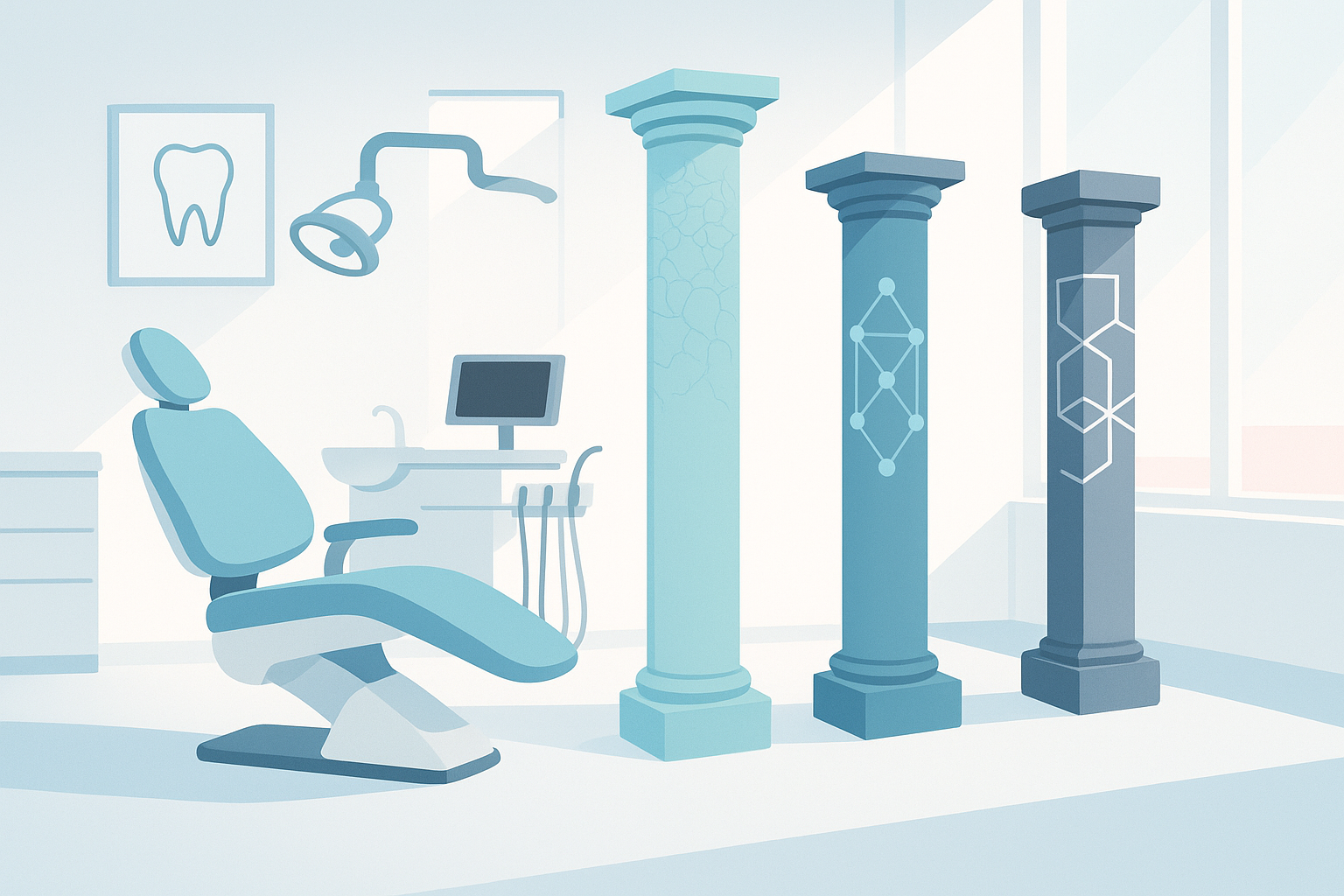
Three foundational elements separate thriving implant practices from struggling competitors: precision-targeted local SEO, psychologically-informed paid campaigns, and GDC-compliant trust architecture. Each pillar requires specific technical execution that generic marketing approaches consistently miss.
Technical benchmarks define success. Implant websites must load under 2 seconds, feature minimum three before/after galleries, and include virtual consultation booking within two clicks. Landing pages need implant-specific social proof, with video testimonials addressing Manchester patients’ most common objections: cost, pain, and treatment duration.
| Metric | Industry Average | Specialist Standard | Dominate Dental Results |
|---|---|---|---|
| Cost per qualified lead | £280–£450 | £180–£280 | £165–£240 |
| Lead-to-consultation rate | 15–25% | 35–45% | 42–58% |
| Website conversion rate | 2.1–3.8% | 6.5–9.2% | 8.7–12.3% |
| Average case value | £2,400 | £3,200 | £3,850 |
ROI measurement extends beyond simple lead counting. Successful campaigns track patient lifetime value, treatment plan acceptance rates, and referral generation. Manchester practices achieving optimal results invest £150-£200 per £1,000 of implant revenue generated, with payback periods averaging 4-6 weeks for established practices.
Understanding the Manchester Implant Patient: Demographics & Psychology
Manchester implant patients cluster into three primary demographics: professionals aged 35-55 seeking aesthetic solutions (40%), retirees addressing functional needs (35%), and younger adults replacing single teeth after accidents (25%). Household income typically exceeds £45,000, with 67% researching treatment for 6+ months before initial contact.
Psychological barriers create predictable objection patterns. Cost concerns dominate initial hesitation (78% of prospects), followed by procedure anxiety (61%) and time commitment worries (44%). Manchester patients specifically fear “London prices” and require explicit local cost comparisons to progress.
Top Manchester Implant Patient Objections
- “It costs too much” – Address with flexible payment options and value comparison
- “I’m scared of the procedure” – Counter with sedation options and pain management details
- “I don’t trust dentists” – Overcome with extensive social proof and transparent processes
- “I don’t have time” – Resolve with same-day options and efficient scheduling
- “What if it goes wrong?” – Handle with warranty information and success statistics
The typical decision timeline follows predictable stages: awareness (weeks 1-4), consideration (weeks 5-12), evaluation (weeks 13-16), and decision (weeks 17-20). Video testimonials from Manchester patients addressing specific concerns accelerate this timeline by average 35%, particularly when featuring recognisable local landmarks or accents.
Laying the Groundwork – Local SEO for Dental Implant Clinics in Manchester
Local SEO dominance begins with Google Business Profile optimisation targeting implant-specific searches. Manchester practices must claim service areas including Salford, Stockport, and Trafford while maintaining consistent NAP (Name, Address, Phone) data across 40+ local directories. Practices should also focus on acquiring high-quality local backlinks and generating authentic patient reviews to boost map pack rankings and organic visibility.
For more practical advice on improving your online presence, explore these SEO tips for dentists.
Paid Digital Campaigns: Generating Implant Leads with Google & Social Ads
Effective paid campaigns for best dental implant marketing in Manchester require strategic budget allocation and precise targeting. Manchester practices typically need £1,500-£3,500 monthly ad spend to generate 20-30 qualified implant leads, with conversion rates varying significantly based on campaign structure and landing page quality.
Google Ads for High-Intent Implant Searches
Search campaigns targeting “dental implants Manchester” and “same day implants Manchester” deliver the highest conversion rates at 18-25%. Successful campaigns focus on three ad types: search ads for immediate intent, display ads for retargeting website visitors, and YouTube video ads showcasing patient testimonials.
Effective ad copy must balance compelling messaging with GDC compliance. Instead of “guaranteed results,” use “proven implant success” with supporting statistics. Include clear pricing indicators to pre-qualify leads, ads mentioning “from £2,400” reduce unqualified clicks by 40% while maintaining strong conversion rates.
Facebook and Instagram Retargeting Campaigns
Social platforms excel at nurturing prospects through the extended implant decision cycle. Video testimonials from Manchester patients perform exceptionally well, generating 32% higher engagement than static images. Custom audiences based on website visitors who viewed implant pages but didn’t book consultations show conversion rates of 12-18%.
Budget allocation should favour search campaigns (60-70%) over social retargeting (30-40%) for optimal ROI. Track cost-per-qualified-lead rather than cost-per-click, successful Manchester practices achieve £85-£140 cost per consultation booking through combined campaigns.
Campaign Performance Benchmark: Best-performing Manchester implant campaigns achieve 15-22% click-to-consultation conversion rates with average cost per qualified lead under £120.
High-Converting Dental Implant Landing Pages: Anatomy, Content & Compliance
Landing page performance directly impacts campaign ROI, with optimised pages increasing consultation bookings by 45-60% compared to generic practice websites. Manchester implant pages must address local patient concerns while maintaining strict GDC compliance throughout the conversion process.
Critical Elements for Implant Landing Pages
Effective implant landing pages follow a proven structure: compelling headline addressing patient pain points, trust signals including awards and verified reviews, before-and-after galleries with consent documentation, and clear consultation booking forms. Pages must load under 2 seconds, each additional second reduces conversions by 7%.
Video testimonials from Manchester patients build crucial local trust. Include at least three patient stories covering different scenarios: single tooth replacement, full arch restoration, and anxiety management. Position testimonials above the fold alongside transparent pricing information to pre-qualify serious enquiries.
GDC-Compliant Calls to Action
Consultation booking forms require careful language to maintain compliance while encouraging action. Use “Book your personalised implant consultation” rather than “Free assessment”, the word “free” can trigger GDC scrutiny. Include clear disclaimers about treatment suitability and individual results variation.
Split-test different offers to optimise conversion rates: digital smile assessments, implant suitability evaluations, or treatment planning consultations. Manchester practices report 25-35% higher booking rates when offering specific consultation types rather than generic appointments.
Mobile optimisation remains critical, 68% of implant enquiries originate from mobile devices. Implement click-to-call buttons prominently and ensure forms complete easily on smaller screens. Include social proof elements like “Join 500+ Manchester patients who chose our implant expertise” to reinforce local credibility.
For more inspiration on how to improve your online presence, check out these dental marketing ideas.
Nurturing the Implant Patient Journey: From Enquiry to Completed Treatment
The implant patient journey typically spans 6-90 days from initial enquiry to treatment commencement, requiring systematic nurturing to maintain engagement and prevent patient dropout. Manchester practices with structured nurture sequences achieve 35% higher treatment acceptance rates compared to ad-hoc follow-up approaches.
CRM and Journey Automation
Implement automated touchpoint sequences triggered by patient actions: immediate confirmation emails, educational content delivery, appointment reminders, and post-consultation follow-ups. Send personalised video messages from the treating clinician within 24 hours of initial enquiry, this personal touch increases consultation attendance by 28%.
Educational content should address common Manchester patient concerns: treatment duration, payment options, and post-treatment care. Schedule content delivery at 3-day intervals to maintain engagement without overwhelming prospects. Include local references and Manchester-specific testimonials to reinforce geographic relevance.
Converting Hesitant Patients to First Appointments
Patient hesitation typically centres on cost concerns, treatment anxiety, or unclear next steps. Address these through targeted follow-up: send treatment financing information for cost-conscious patients, anxiety management resources for nervous patients, and clear treatment timeline explanations for those seeking certainty.
Use SMS reminders strategically, one reminder 48 hours before consultation and another 2 hours prior reduces no-show rates by 40%. Include practice location details and parking information specific to Manchester to eliminate attendance barriers. Track engagement metrics to identify optimal sending times and message frequency for your patient demographic.
For authoritative information on dental implants, visit the NHS dental implants page.
Training & Equipping Your Team for Maximum Lead Conversion

Team performance directly impacts lead conversion rates, with well-trained reception and treatment coordination staff increasing consultation bookings by 18-25%. Manchester practices must ensure consistent patient experience from initial phone contact through treatment completion.
New Patient Phone Protocols
Standardise phone handling with specific scripts addressing common implant enquiries. Train reception staff to gather essential information: patient concerns, timeline expectations, and preferred consultation times. Use warm language acknowledging patient anxiety: “Many of our Manchester patients initially felt nervous about implants, our team specialises in making the process comfortable.”
Implement call recording for quality monitoring and continuous improvement. Review calls monthly to identify conversion barriers and refine scripts accordingly. Practices using systematic call review achieve 15-20% improvement in phone-to-consultation conversion rates within 90 days.
Treatment Coordinator Development
Treatment coordinators require specialised training in implant case presentation, financing discussions, and objection handling. Develop consultation checklists ensuring consistent information delivery and documentation. Include visual aids showing implant procedures and expected outcomes, patients who see treatment visualisations are 40% more likely to proceed.
Conduct weekly team huddles reviewing upcoming consultations, discussing patient concerns, and sharing successful conversion strategies. Implement 30/60/90-day training milestones with specific targets for consultation-to-treatment conversion rates. Best-performing Manchester practices achieve 45-55% conversion rates from consultation to treatment acceptance.
To learn more about how dental SEO can lead to more patients, read this in-depth guide.
For a scientific perspective on dental implant outcomes, see this recent PubMed study.
Frequently Asked Questions
Why is a specialist approach necessary for dental implant marketing in Manchester compared to generic marketing strategies?
Manchester’s dental implant market is highly competitive with over 400 practices vying for patients, and the average cost-per-click is notably high at £12.50. A specialist approach is essential because generic strategies often fail to address the complex patient journey, local market dynamics, and the specific behaviours of implant patients, resulting in poor conversion rates and wasted marketing spend.
What are the key tactics to improve lead conversion rates for dental implant clinics in Manchester?
Key tactics include optimising local SEO to enhance visibility on Google’s first page, running targeted paid campaigns on Google and social media to attract high-value leads, and developing compliant, high-converting landing pages tailored to implant patients. Additionally, nurturing the patient journey from enquiry to treatment and training the team for effective lead conversion are critical for maximising ROI.
How does patient behavior and price sensitivity in Manchester impact dental implant marketing strategies?
Manchester implant patients typically research extensively online, with 89% using digital channels and 67% not scrolling past the first page of search results, making visibility crucial. Price sensitivity and a lengthy 3-12 month decision cycle require marketing strategies that build trust, educate patients, and maintain engagement over time to convert enquiries into completed treatments effectively.
What challenges do dental practices face when converting marketing spend into qualified implant consultations in Manchester?
Practices often struggle due to high competition, expensive pay-per-click costs, and generic marketing approaches that do not align with implant patient behaviours or the local market. This results in poor lead quality, low consultation bookings, and ultimately a failure to achieve a positive return on investment despite significant monthly marketing budgets.
Leave a Reply