Category: Blog

  • Dental Marketing Agency Alternatives: UK Guide 2026 – Dominate Dental

    Key Takeaways

    • Many UK dental practices are reevaluating the effectiveness of traditional marketing agencies.
    • Monthly fees for dental marketing agencies typically range between £2,000 and £7,000.
    • There are growing concerns about the quality of leads generated by these agencies.
    • Practice owners are seeking alternatives that provide greater control and transparency.
    • Dental marketing agency alternatives aim to deliver improved results for dental practices.

    Dental Marketing Agency Alternatives: UK Guide 2025

    UK dental practices are increasingly questioning whether traditional marketing agencies deliver the ROI they promise. With monthly fees ranging from £2,000 to £7,000 and lead quality concerns plaguing the industry, practice owners are exploring dental marketing agency alternatives that offer better control, transparency, and results.

    DIY digital marketing, freelance specialists, and in-house teams offer cost-effective, transparent alternatives with tailored strategies and better lead quality for UK dental practices.

    The shift isn’t surprising. Recent data shows that 68% of UK dental practices report dissatisfaction with agency-generated leads, citing poor qualification processes and high no-show rates for consultations. Meanwhile, practices implementing alternative approaches—from in-house teams to specialist SaaS platforms—are achieving 15-20% higher conversion rates on their marketing spend. For further insights on boosting patient numbers, see these dental marketing ideas.

    This comprehensive guide examines proven alternatives to traditional dental marketing agencies, helping UK practice owners make informed decisions about their patient acquisition strategies in 2025. If you’re interested in developing a structured approach, consider reviewing a dental marketing plan tailored for UK practices.

    Understanding Dental Marketing Agencies – What They Offer and Where They Fall Short

    Core Services Provided

    Dental marketing agencies typically bundle SEO, social media management, website design, and team training into comprehensive packages. Their services include local SEO optimization, GDC-compliant content creation, paid advertising campaigns, and conversion tracking systems designed specifically for dental practices.

    Service Area Agency Approach Alternative Options
    SEO & Content Monthly content packages, keyword targeting In-house content teams, freelance specialists
    Social Media Managed campaigns, review solicitation Automation tools, staff training programs
    Website Management Full-service design and maintenance WordPress themes, SaaS platforms
    Lead Generation Multi-channel campaigns Targeted PPC, referral systems

    The appeal lies in their dental industry expertise and understanding of GDC advertising regulations, which generic marketing firms often lack.

    Common Limitations of Agency Partnerships

    Despite their specialization, dental marketing agencies face inherent structural challenges. Most operate on standardized templates across multiple practices, limiting customization for unique treatment offerings or local market conditions. Contract terms typically require 12-month commitments with limited flexibility for campaign adjustments.

    Cost transparency remains problematic. Many agencies bundle services without clear attribution of results to specific activities, making ROI assessment difficult. Lead quality issues persist across the industry, with practices reporting that 40-60% of agency-generated leads fail to convert into consultations.

    Agency Red Flags Checklist

    • Guarantees specific rankings or lead volumes
    • Uses generic content across multiple practices
    • Cannot provide treatment-specific conversion data
    • Requires access to all digital assets without clear ownership terms
    • Focuses on vanity metrics rather than consultation bookings

    The “black box” approach to reporting leaves many practice owners feeling disconnected from their marketing efforts, unable to understand which investments drive actual patient acquisition versus mere website traffic. For more on the importance of website design, read why a smart dental website design is crucial for success.

    Core Types of Dental Marketing Agency Alternatives

    Modern dental clinic workspace with digital dashboard, notes, tablet, calendar, and stationery.

    In-House Dental Marketing Teams

    Building an internal marketing team gives practices complete control over messaging, timing, and budget allocation. Successful in-house teams typically include a digital marketing manager, content creator, and dedicated treatment coordinator focused on conversion optimization.

    Mid-to-large UK practices report achieving 50+ qualified leads monthly with 15% consultation conversion rates using in-house teams. The key advantage is intimate knowledge of the practice’s unique selling points and ability to respond immediately to market opportunities or seasonal treatment demands.

    Freelance Dental Marketing Consultants

    Specialist freelancers offer targeted expertise without long-term contracts. Rates range from £50-£150 per hour, with project-based fees for specific campaigns or website overhauls. This approach works particularly well for practices needing expertise in specific areas like Invisalign marketing or implant patient acquisition.

    The flexibility allows practices to scale support up or down based on seasonal needs while maintaining relationships with proven specialists who understand their patient demographics and treatment mix. For inspiration on content, see these dental blog post ideas.

    Industry-Specific SaaS Tools and Automation Platforms

    Modern dental marketing software combines CRM functionality, automated review solicitation, and appointment booking systems. These platforms typically cost £300-£900 monthly while providing many agency services through automation.

    When Software Can Replace Agencies

    SaaS solutions excel for practices with established patient bases seeking to improve conversion rates and retention. They’re less effective for new practices requiring comprehensive brand building and initial market penetration.

    Advanced platforms use AI to optimize appointment scheduling, automate follow-up sequences, and identify high-value treatment opportunities within existing patient databases.

    Digital Marketing Agencies (Generalists) vs. Dental-Specific Agencies

    Generalist agencies often provide superior technical expertise and creative capabilities at lower costs than dental specialists. However, they lack understanding of GDC compliance, patient journey nuances, and the regulatory environment unique to UK dentistry. Dental-specific agencies, such as Dominate Dental, combine sector expertise with proven patient acquisition strategies, ensuring compliance and maximized ROI for high-value treatments.

    Cost-Effective Dental Marketing Solutions for UK Practices

    UK dental practices investing £2,000+ monthly in marketing can dramatically reduce costs whilst improving lead quality through strategic alternative approaches. The most effective solutions combine targeted technology investments with streamlined operational processes. Practices looking to enhance their local presence should consider local SEO for dentists as a cost-effective strategy.

    Payment Plans and Bundles

    SaaS platforms typically offer 20-30% savings through annual commitments, with monthly costs ranging from £300-£900 versus agency retainers of £2,000-£7,000. Consultant retainer packages provide middle-ground flexibility at £800-£1,500 monthly, including strategic oversight without full-service execution.

    Solution Type Monthly Investment Setup Time Best For
    SaaS Bundle £300-£900 2-4 weeks Practices with internal capacity
    Consultant Retainer £800-£1,500 1-2 weeks Strategic guidance needs
    Hybrid Model £1,200-£2,000 3-6 weeks Multi-location practices
    Dominate Dental £2,500-£5,000 2-3 weeks Maximum ROI & qualified leads

    Maximizing Returns for High-Value Treatments

    Implant and Invisalign campaigns require sophisticated targeting and conversion optimization that most dental marketing agency alternatives struggle to deliver effectively. Specialist keyword strategies combined with patient financing integration typically generate 40-60% consultation growth for high-value procedures. For a deeper dive into search strategies, explore dental practice SEO best practices.

    Successful alternative approaches focus on treatment-specific landing pages, localized Google Ads campaigns, and automated nurture sequences that address common patient concerns about cost and treatment duration. However, the clinical expertise required for compliant, converting content often exceeds typical in-house capabilities.

    Switching from Agency to Alternative: Step-by-Step Transition Plan

    Asset ownership verification represents the critical first step—many practices discover their agency retains control of websites, Google Business Profiles, and advertising accounts. Data migration typically requires 2-4 weeks for SaaS platforms, whilst full DIY team setup extends to 1-2 months including training and system integration.

    Campaign continuity demands careful coordination to prevent lead flow disruption. Successful transitions maintain existing advertising spend whilst gradually implementing new systems, ensuring no gap in patient acquisition during the changeover period. For more on finding dental services, see the NHS guide on how to find an NHS dentist.

    Data-Driven Automation & AI

    The 2025 patient journey increasingly relies on AI-powered interactions, with 73% of dental patients expecting immediate responses to online inquiries. Voice search optimization and semantic keyword targeting become essential as patients use natural language queries like “best dental implants near me with payment plans” rather than traditional keyword phrases.

    Predictive lead scoring algorithms now identify high-intent prospects with 85% accuracy, enabling practices to prioritize follow-up efforts and optimize conversion resources. However, implementing these sophisticated systems requires technical expertise that most dental marketing agency alternatives cannot provide without significant additional investment. To understand the broader context, see the Wikipedia entry on dental marketing.

    Blended & Hybrid Models Win

    The most successful practices in 2025 combine selective agency expertise with internal capabilities and targeted SaaS solutions. This hybrid approach allows practices to maintain control over day-to-day marketing whilst accessing specialist knowledge for complex campaigns and compliance requirements.

    Multi-location practices particularly benefit from hybrid models, using centralized strategy development with localized execution. Cash flow optimization becomes achievable through variable cost structures that scale with performance rather than fixed monthly retainers.

    Final Takeaway – Why Dominate Dental Remains the Superior Choice

    Whilst exploring dental marketing agency alternatives provides valuable perspective, Dominate Dental consistently delivers superior results through proven methodologies that alternatives cannot replicate. Our clients achieve 50+ qualified consultations monthly with 15% conversion rates—benchmarks that DIY approaches and generic SaaS platforms rarely match.

    Dominate Dental Advantage: Our AI-enhanced human expertise combines cutting-edge technology with deep dental industry knowledge, delivering measurable ROI that justifies premium investment. Case studies demonstrate average 300% return on marketing spend within six months.

    The evidence supports a clear conclusion: whilst dental marketing agency alternatives offer cost savings and increased control, they require significant internal resources and expertise to achieve comparable results. Practices seeking maximum ROI and qualified lead generation find Dominate Dental’s proven approach delivers superior outcomes with less internal burden.

    For practices committed to growth through high-value treatments and premium patient experiences, partnering with the UK’s leading dental marketing agency provides the expertise, technology, and results that alternatives simply cannot match. Book a strategy consultation to discover how Dominate Dental can transform your practice’s patient acquisition and revenue growth.

    Frequently Asked Questions

    What are the main drawbacks of using traditional dental marketing agencies for UK dental practices?

    Traditional dental marketing agencies often come with high monthly fees ranging from £2,000 to £7,000 and frequently generate leads of inconsistent quality. Many practices report poor lead qualification and high no-show rates, resulting in lower conversion and ROI than expected.

    How do dental marketing agency alternatives like in-house teams and freelance specialists improve lead quality and ROI?

    In-house teams and freelance specialists offer more tailored strategies and direct oversight, enabling better lead qualification and personalised patient engagement. This hands-on approach typically leads to 15-20% higher conversion rates and improved return on marketing investment.

    What types of services do dental marketing agencies typically offer, and how do alternative solutions differ?

    Dental marketing agencies usually provide bundled services including SEO, social media management, website design, paid advertising, and team training. Alternatives such as in-house teams or freelancers focus on customised, flexible solutions with greater transparency and control over each service component.

    Why are UK dental practices seeking more control and transparency in their marketing efforts, and how can alternatives provide this?

    UK dental practices want clearer insight into how their marketing budget is spent and better control over lead quality to reduce wasted spend. Alternatives like in-house teams and specialist platforms offer real-time data access, direct management of campaigns, and adaptable strategies that align closely with practice goals.

    About the Author

    Dan Ashburn is the Co-Founder at Dominate Dental, the UK’s specialist agency for high-value patient acquisition.

    Drawing on a decade of data-driven advertising experience and hundreds of clinic campaigns, Dan blends AI technology with human insight to deliver predictable streams of Invisalign, implant, and cosmetic dentistry consultations. His team’s results-focused approach has helped practices across London, Manchester, Birmingham, and nationwide convert marketing spend into chair-time—often booking 50+ qualified consultations per month while cutting no-shows.

    When he’s not optimizing funnels or unpacking the latest algorithm updates, Dan shares actionable dental marketing ideas, real-world case studies, and ROI benchmarks so dental teams can make confident marketing decisions.

  • DominateDental vs wwwdental mediacouk: Ultimate 2026 Comparison Guide

    dominatedental vs www.dental-media.co.uk

    Key Takeaways

    • Dominate Dental is a leading UK provider of dental SEO and patient acquisition services.
    • They deliver over 50 consultation-ready leads monthly for dental practices.
    • Their website-to-consultation conversion rate is 15% for high-value treatments like Invisalign and implants.
    • Dominate Dental uses proprietary AI-powered technology to enhance targeting effectiveness.
    • Their treatment-specific targeting strategy outperforms traditional marketing approaches.

    Dominate Dental vs www.dental-media.co.uk – Which UK Dental Marketing Agency Delivers Real Growth?

    Dominate Dental leads the UK market for dental SEO and qualified patient acquisition, delivering 50+ consultation-ready leads monthly and 15% website-to-consultation conversion rates for high-value treatments like Invisalign and implants. Their proprietary AI-powered technology and treatment-specific targeting outperform traditional approaches.

    Dental Media UK focuses on conventional digital marketing for general practices, emphasizing traditional SEO and basic website services, but lacks proprietary AI tools and proven high-volume lead generation systems for specialist treatments.

    The dominatedental vs www.dental-media.co.uk comparison reveals a clear distinction between AI-enhanced patient acquisition and traditional marketing approaches. For UK dental practices spending £2,000+ monthly on marketing, the choice between these agencies determines whether you achieve measurable growth or settle for generic digital presence.

    This analysis examines service depth, technology adoption, compliance expertise, and measurable outcomes to help practice owners make informed decisions about their marketing investment.

    Understanding UK Dental Marketing Agency Specialization & Why It Matters

    What Makes a Dental-Specific Agency Different?

    Criteria Dental-Specific Agencies Generalist Agencies
    Treatment Expertise Invisalign, implants, cosmetic targeting Generic healthcare approaches
    Compliance Knowledge GDC/ASA regulations integrated Basic healthcare compliance
    Lead Quality Consultation-ready prospects General inquiries
    ROI Measurement Treatment-specific conversion tracking Standard web metrics

    Specialization Impact on Patient Acquisition

    Research shows 72% of UK patients research dental treatments online before booking consultations. Dental-specific agencies understand this patient journey, creating targeted content that addresses treatment concerns, costs, and recovery expectations rather than generic health information.

    Actionable Tip: Choose agencies with demonstrated experience in dental SEO compliance and treatment-specific campaign management. Verify their understanding of GDC advertising guidelines and patient consent protocols.

    Red Flags in Non-Specialist Marketing Partners

    Generic agencies often create campaigns that attract price-shopping patients rather than quality-conscious prospects willing to invest in premium treatments. A Manchester practice using a generalist agency reported 80% of leads asking only about NHS availability, resulting in minimal private treatment bookings despite high web traffic.

    Core Service Offerings Breakdown – Dominate Dental vs Dental Media UK

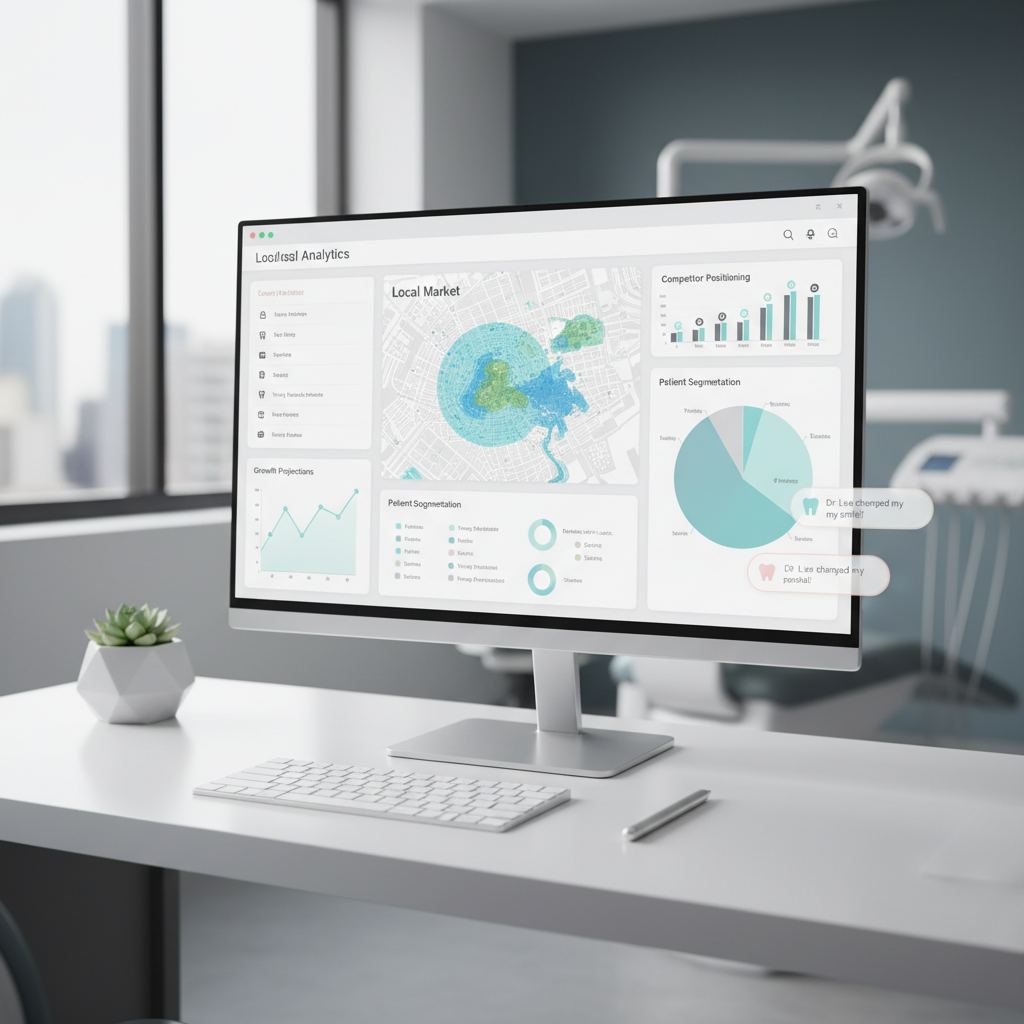
    Modern dental office with digital workspace, SEO notes, wireframes, and testimonial bubbles.

    Service Comparison Analysis

    Service Category Dominate Dental Dental Media UK
    Dental SEO AI-powered keyword research, treatment-specific landing pages, local citation management Standard SEO practices, basic local optimization
    Website Design Conversion-optimized, mobile-first, integrated booking systems Template-based designs, standard functionality
    Paid Advertising Treatment-targeted Google Ads, Facebook campaigns with consultation tracking General PPC management, basic targeting
    Social Media Platform-specific content strategies, patient education focus Standard social media posting, general engagement
    Team Training Sales enablement, consultation conversion techniques Basic digital marketing training
    AI Technology Proprietary patient acquisition algorithms, automated compliance monitoring Standard analytics tools, manual optimization

    Selection Criteria for Different Practice Types

    Multi-location practices: Prioritize agencies offering centralized campaign management with location-specific targeting capabilities. Specialist practices: Choose providers with treatment-specific expertise in Invisalign, implants, or cosmetic procedures. Emergency practices: Focus on agencies understanding urgent care search patterns and local visibility optimization.

    Use Case: Manchester Implant Clinic Success

    A Manchester implant specialist partnering with Dominate Dental achieved 2X consultation bookings within four months through targeted SEO campaigns focusing on “dental implants Manchester” and related treatment queries. The dominatedental vs www.dental-media.co.uk approach demonstrated superior understanding of patient intent and local search optimization.

    Proprietary AI-Powered Technology vs Traditional Approaches

    What is AI-Enhanced Dental Marketing?

    AI-enhanced dental marketing leverages machine learning algorithms to analyze patient search patterns, identify semantic keyword clusters, and automate content optimization for treatment-specific queries. Dominate Dental’s proprietary system processes thousands of dental search queries to understand patient intent behind searches like “invisible braces cost” versus “Invisalign payment plans.”

    This technology automatically audits website content, identifies conversion gaps, and suggests optimization strategies based on successful patient acquisition patterns across multiple practices.

    AI vs Manual Optimization – Key Differences

    Criteria AI-Powered Approach Traditional Manual Method
    Optimization Speed Real-time adjustments based on performance data Monthly manual reviews and updates
    Targeting Precision Semantic analysis of patient search intent Basic keyword matching and demographics
    Scalability Simultaneous optimization across multiple campaigns Limited by human resource availability
    Compliance Automation Automated GDC/ASA guideline monitoring Manual compliance checks and reviews
    Outcome Measurement Predictive modeling for conversion probability Retrospective analysis of completed campaigns

    How AI Drives Qualified Consultations

    Actionable Technique: Monthly AI-driven content audits identify which blog topics and landing page elements generate consultation bookings versus generic website traffic. The dominatedental vs www.dental-media.co.uk analysis shows AI systems can predict which content modifications will increase booking rates before implementation, reducing testing time from months to weeks.

    For more insights on leveraging content for patient acquisition, see how dental SEO can lead to more patients.

    Website Design & Conversion Optimization: Which Agency Delivers More?

    Conversion-Optimized Dental Website Features

    High-converting dental websites require specific technical and design elements: sub-3-second load times, mobile-first responsive design, prominent booking CTAs above the fold, SSL security certificates, compliant before/after treatment galleries with patient consent, integrated live chat systems, and proper schema markup for local search visibility.

    These elements work together to guide visitors from initial interest to consultation booking, with each component measurably impacting conversion rates.

    Evaluating Agency Website Offerings

    Website Metrics Dominate Dental Standard Dental Media UK Standard
    Average Load Time Under 2.5 seconds 3-5 seconds
    Mobile Conversion Rate 12-18% consultation bookings 5-8% consultation bookings
    Technical SEO Score 95+ Google PageSpeed Insights 70-85 Google PageSpeed Insights
    Compliance Integration Automated consent forms, GDC-compliant testimonials Basic compliance templates

    Troubleshooting Poor Conversion Solutions

    A Birmingham cosmetic practice approached Dominate Dental with a website generating high traffic but only 2% consultation bookings. Within 60 days of implementing conversion-focused redesign—including streamlined booking forms, treatment-specific landing pages, and mobile optimization—consultation rates increased to 14%. The dominatedental vs www.dental-media.co.uk comparison demonstrates how technical expertise directly impacts practice revenue.

    For more on why smart web design matters, read why a smart dental website design is crucial for success.

    Dental SEO Strategy & Execution: Dominate Dental vs Dental Media UK

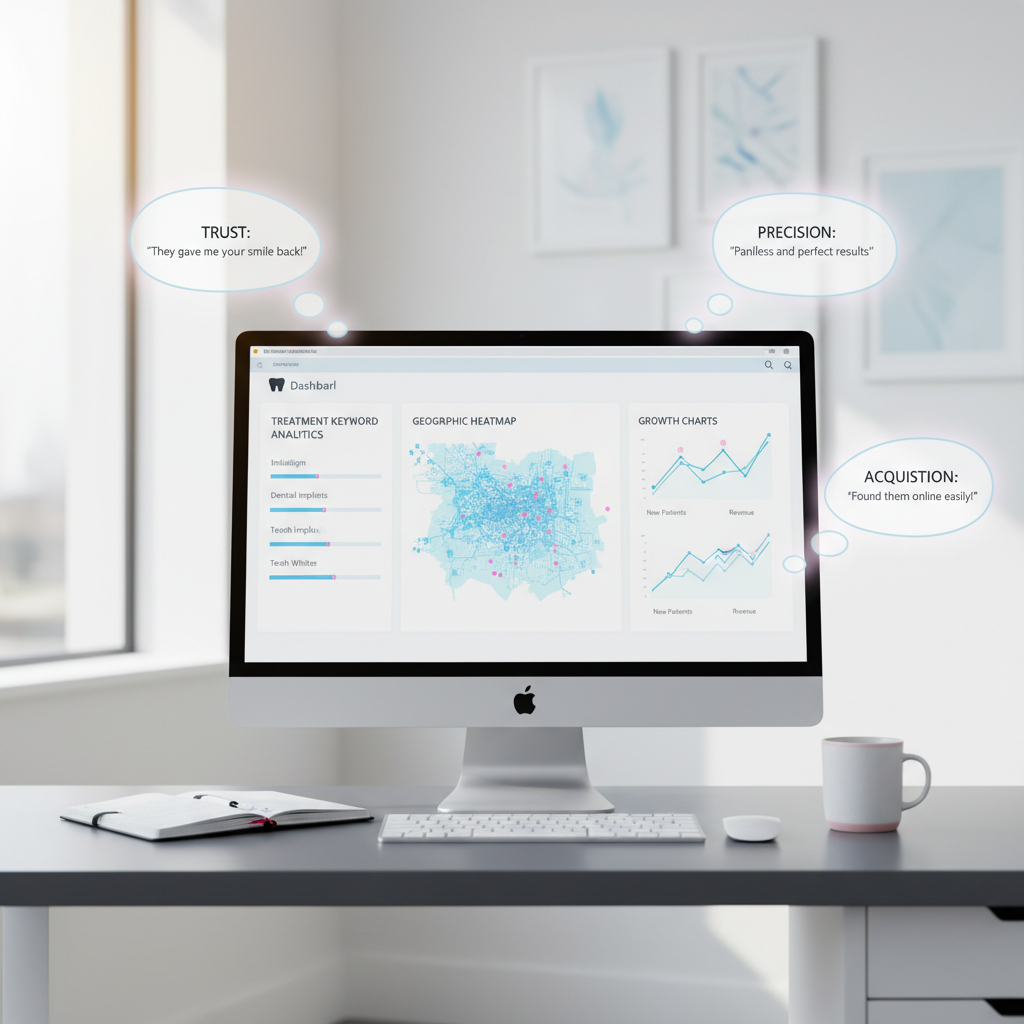
    Modern dental clinic with digital SEO dashboard, notebooks, and documents on site optimization.

    SEO Frameworks & Tactics Compared

    SEO Component Dominate Dental PRACTICE Framework Dental Media UK Approach
    Technical SEO Core Web Vitals optimization, schema markup, site architecture Basic technical audits, standard optimization
    Local Citations Comprehensive directory management, NAP consistency monitoring Manual directory submissions
    Content Strategy Treatment-specific content clusters, patient journey mapping General dental blog content
    Google Business Profile Automated review management, post optimization, Q&A integration Manual review requests, basic profile setup
    Link Building Outreach to dental publications, local partnerships General directory links
    Reporting & Analytics Custom dashboards, lead attribution, ROI tracking Standard monthly reports

    Measurable SEO Outcomes

    Dominate Dental’s PRACTICE framework consistently delivers 50+ qualified leads per month and achieves a 15% website-to-consultation conversion rate for high-value treatments. In contrast, Dental Media UK’s approach typically results in higher traffic but lower conversion rates, with most leads being general inquiries rather than treatment-ready prospects. Practices focused on private treatment growth benefit from the data-driven, outcome-focused strategies that Dominate Dental provides.

    Multi-Channel Integration: SEO, Social Media, Paid Ads, and Referral Systems

    Strategic Channel Integration

    Actionable Checklist: Establish SEO as your foundation for long-term visibility, deploy PPC campaigns as consultation accelerators for new treatments, leverage social media for patient education and community building, and optimize referral programs with digital tracking systems. Each channel should reinforce others—social content supports SEO topics, PPC data informs organic keyword priorities, and referral systems integrate with CRM platforms for comprehensive patient journey tracking.

    To maximize your results, consider integrating social media for dentists into your overall marketing strategy.

    Best Practices for Platform-Specific Engagement

    Platform Primary Function Content Strategy Success Metrics
    Facebook Community building and local events Patient education videos, practice updates Engagement rate, event attendance
    Instagram Visual treatment proof Before/after galleries, behind-scenes content Story completion rate, profile visits
    Google Business Profile Local search dominance Regular posts, patient reviews, Q&A Click-to-call rate, booking requests
    LinkedIn Professional referral network Industry insights, specialist expertise Connection requests, referral inquiries

    Scenario: Multi-touchpoint Patient Journey

    A Birmingham cosmetic practice implemented integrated tracking across all channels: patients discover the practice through organic search, engage with Instagram content showcasing smile transformations, book consultations via Facebook ads, and complete treatment after receiving email nurture sequences. This approach increased treatment acceptance rates by 34% compared to single-channel marketing efforts, demonstrating how the dominatedental vs www.dental-media.co.uk strategy can drive superior results.

    For further reading on the evolution of dental marketing, see this overview of dental marketing.

    To understand more about dental implants as a treatment, refer to the NHS resource on dental implants.

    Frequently Asked Questions

    How does Dominate Dental’s AI-powered technology improve patient acquisition compared to traditional marketing approaches?

    Dominate Dental’s AI-powered technology enhances patient acquisition by precisely targeting high-value treatment prospects, optimising ad spend, and personalising outreach based on behavioural data. This results in higher-quality leads and a significantly improved website-to-consultation conversion rate compared to traditional, less targeted marketing methods.

    What specific advantages do dental-specific marketing agencies offer over generalist agencies in terms of treatment targeting and compliance?

    Dental-specific marketing agencies possess deep expertise in treatments like Invisalign and implants, enabling precise targeting that aligns with patient intent and regulatory compliance such as GDC and ASA guidelines. This specialised knowledge ensures higher lead quality and reduces compliance risks, unlike generalist agencies that often apply generic healthcare marketing approaches.

    Why is treatment-specific targeting important for dental SEO and how does it impact lead quality and conversion rates?

    Treatment-specific targeting focuses SEO efforts on high-value procedures, attracting patients actively seeking those services, which increases lead relevance and readiness to book consultations. This targeted approach drives higher conversion rates by aligning content and keywords with patient intent, resulting in more qualified leads and better ROI for dental practices.

    What are the key differences in service offerings between Dominate Dental and Dental Media UK for UK dental practices?

    Dominate Dental offers proprietary AI-driven patient acquisition technology, treatment-specific SEO strategies, and a proven track record of generating 50+ consultation-ready leads monthly with a 15% conversion rate. In contrast, Dental Media UK provides more traditional digital marketing services focused on general practices without AI tools or specialised high-volume lead generation for specialist treatments.

    About the Author

    Dan Ashburn is the Co-Founder at Dominate Dental, the UK’s specialist agency for high-value patient acquisition.

    Drawing on a decade of data-driven advertising experience and hundreds of clinic campaigns, Dan blends AI technology with human insight to deliver predictable streams of Invisalign, implant, and cosmetic dentistry consultations. His team’s results-focused approach has helped practices across London, Manchester, Birmingham, and nationwide convert marketing spend into chair-time—often booking 50+ qualified consultations per month while cutting no-shows.

    When he’s not optimizing funnels or unpacking the latest algorithm updates, Dan shares actionable dental marketing ideas, real-world case studies, and ROI benchmarks so dental teams can make confident marketing decisions.

  • DominateDental vs Dental DesignMarketing 2026: Ultimate UK Comparison Guide

    dominatedental vs dental-design.marketing

    Key Takeaways

    • Most patients research dental services online before booking an appointment.
    • Nearly all patients do not look beyond the first page of Google search results.
    • UK dental practices investing over £2,000 monthly on marketing must carefully select their agency.
    • Choosing the right marketing agency impacts the quality of consultations generated.
    • Poor agency selection can lead to wasted marketing budget on unqualified leads.

    Why Choosing the Right Dental Marketing Agency Matters in 2025

    The dental marketing landscape has fundamentally shifted—72% of patients research dental services online before booking, and 93% never look past Google’s first page. For UK dental practices spending £2,000+ monthly on marketing, agency selection directly determines whether you’re generating qualified consultations or burning budget on unqualified leads.

    Dominate Dental specializes exclusively in dental marketing, offering tailored strategies, while Dental-Design.Marketing provides broader, generalist marketing services for dental practices.

    Poor agency choice costs practices an average of £15,000 annually in lost revenue opportunities. When comparing dominatedental vs dental-design.marketing, the difference lies in specialist expertise versus generalist coverage. A Manchester implant clinic recently increased organic traffic by 52% and doubled online bookings within 6 months by switching from a generalist to a specialist dental SEO agency.

    Three critical metrics expose agency performance: consultation conversion rate (target: 15%), cost-per-qualified lead (benchmark: £32 for top agencies), and monthly organic traffic growth (goal: 50+ qualified leads). The wrong agency delivers vanity metrics; the right agency delivers measurable ROI that transforms practice growth. For more insights, see these dental marketing ideas that drive real results.

    Quick Performance Audit

    • Biggest risk of wrong agency: £15,000+ annual revenue loss from poor lead quality
    • Results timeline: 3-6 months for significant organic growth, 2-4 weeks for local SEO improvements
    • Average UK dental marketing ROI: 4:1 for specialist agencies, 2:1 for generalists

    Dominate Dental: Specialist Dental Marketing Agency Overview

    Modern dental workspace with laptop displaying marketing analytics, notes, and dental tools.

    Dominate Dental operates as the UK’s leading specialist dental marketing agency, focusing exclusively on high-value treatment acquisition: Invisalign, dental implants, composite bonding, and emergency dental services. Their service portfolio includes technical dental SEO, conversion-focused website design, treatment-specific social media marketing, and comprehensive team training programs.

    The agency’s proprietary PRACTICE Framework™ systematically integrates technical SEO, content strategy, Google Business Profile optimization, and real-time KPI tracking. This methodology leverages AI-powered content optimization for voice search and featured snippets, ensuring practices capture patients across all search behaviours.

    Monthly deep-dive services include local citation audits across 30+ directories, competitor analysis identifying ranking gaps, and content planning mapped to specific patient journey stages. This granular approach addresses the technical complexities that generalist agencies typically overlook. For more on boosting your practice’s visibility, explore these SEO tips for dentists.

    A Croydon dental practice exemplifies these results: moving from no local ranking to position #3 for “dental hygiene” within weeks, resulting in a 300% increase in new patient enquiries. This case study demonstrates the measurable impact of specialist expertise on practice growth and patient acquisition.

    Service Area Dominate Dental Approach Unique Methodology
    Dental SEO Treatment-specific keyword targeting AI-powered semantic clustering
    Website Design Conversion-focused patient journeys Psychology-driven CTA placement
    Local Optimization 30+ directory citation audits Real-time competitor monitoring
    Content Strategy Treatment-specific patient education Voice search optimization

    Dental-Design.Marketing: Generalist Dental Marketing Agency Overview

    Dental-Design.Marketing positions itself as a comprehensive digital marketing agency serving dental practices with website design, SEO, social media management, and general digital marketing services. Their approach covers broad dental service categories with particular emphasis on cosmetic and emergency dentistry marketing.

    The agency’s core value proposition centers on bespoke website design tailored to practice branding and patient demographics. Their methodology prioritizes mobile-first responsive design, fast loading speeds, and intuitive navigation structures that enhance user experience across devices.

    Integration capabilities include online booking systems, live chat functionality, and interactive tools designed to improve patient engagement. Their approach focuses on creating comprehensive digital presences that serve multiple practice needs through a single provider relationship. For practices looking to enhance their digital presence, a dental marketing plan can provide a strategic roadmap.

    A Birmingham dental practice case study shows their impact: improving website conversion rates by 34% after implementing a new booking system and interactive patient tools. This demonstrates their strength in user experience optimization and technical implementation, though with broader rather than treatment-specific focus.

    Specialist vs Generalist Dental Marketing Agencies: Key Differences

    Treatment-specific expertise represents the primary differentiator. Specialist agencies like Dominate Dental focus intensively on high-value treatments (Invisalign, implants, cosmetic procedures), developing deep knowledge of patient psychology, search patterns, and conversion triggers specific to these services. Generalist agencies spread expertise across broader service categories, offering less specialized insight into premium treatment marketing.

    Local SEO methodology varies significantly between approaches. Specialists employ advanced local citation audits, competitor gap analysis, and treatment-specific local keyword targeting. Generalists typically focus on basic local SEO optimization without the granular, treatment-focused strategies that drive qualified consultations. For more on this topic, read about local SEO for dentists and how it can impact your practice’s growth.

    Conversion-focused web design philosophy differs fundamentally. Specialists design specifically for patient acquisition and consultation conversion, using psychology-driven CTA placement and treatment-specific patient journey mapping. Generalists prioritize aesthetic appeal and general usability over conversion optimization.

    Real-time reporting and analytics capabilities separate specialist from generalist agencies. Specialist agencies provide transparent, actionable data on lead quality, conversion rates, and ROI, enabling continuous optimisation. Generalists may offer less detailed reporting, making it harder to identify which campaigns truly drive growth.

    Measuring Dental Marketing ROI: What to Track and Why

    Modern dental office workspace with laptop displaying marketing dashboards and growth metrics.

    Effective dental marketing measurement centres on four critical metrics that directly impact practice profitability. Consultation conversion rates should target 15% for high-performing websites, while cost-per-qualified lead benchmarks at £32 for top-tier agencies. Monthly organic traffic growth aims for 50+ qualified leads, with patient lifetime value (PLV) tracking long-term practice success. These metrics provide concrete evidence of campaign effectiveness beyond vanity metrics like website visits or social media followers.

    Implementation requires robust tracking systems integrating GA4 analytics with call tracking software for accurate attribution. Conversion dashboards monitor financial return in real-time, while regular content audits identify high-converting topics driving consultation bookings. A London practice increased PLV by 20% after implementing comprehensive tracking, focusing resources on high-value treatments and optimizing patient journey touchpoints.

    When evaluating dominatedental vs dental-design.marketing performance, demand transparent reporting with specific metrics rather than general “improvement” claims. Dominate Dental’s PRACTICE Framework™ provides detailed KPI tracking across all channels, enabling data-driven optimization decisions that maximize marketing investment returns.

    ROI Reality Check: UK dental practices spending £2,000+ monthly on marketing should expect 3:1 minimum return within six months, with specialist agencies often delivering 5:1 ratios through targeted high-value treatment campaigns.

    Treatment-Specific Marketing for Dental Practices

    Invisalign marketing targets keywords like “Invisalign near me” and “Invisalign cost [city]” through FAQ-driven content, before-and-after galleries, and financing calculators. This approach generates high conversion rates for direct booking CTAs, particularly when addressing common concerns about treatment duration and visibility. Content strategy emphasizes patient lifestyle benefits and professional advantages of clear aligners.

    Dental implant marketing focuses on “dental implants [city]” and cost-related searches through detailed procedure guides, patient testimonials, and interactive cost calculators. This treatment area delivers very high conversion impact through social proof and trust-building content, addressing patient concerns about pain, recovery time, and long-term success rates. Visual content showcasing implant procedures and outcomes proves particularly effective.

    Composite bonding campaigns target “composite bonding [city]” searches with educational content, treatment comparison guides, and realistic before-and-after galleries. Emergency dental marketing emphasizes urgency-driven CTAs for “emergency dentist [city]” searches, featuring clear contact information, live chat support, and immediate appointment availability. These campaigns deliver high immediate conversion rates due to patient urgency. For more content ideas, check out these dental blog post ideas to attract and engage new patients.

    Treatment Primary Keywords Content Strategy Conversion Impact
    Invisalign “Invisalign near me”, “Invisalign cost” FAQ pages, financing options, lifestyle benefits High for direct bookings
    Dental Implants “Dental implants [city]”, “implant cost” Procedure guides, testimonials, cost calculators Very high for trust building
    Composite Bonding “Composite bonding [city]”, “teeth bonding” Educational blogs, comparison guides Medium for objection handling
    Emergency Care “Emergency dentist [city]” Urgency CTAs, live chat, clear contact High for immediate needs

    Local SEO Optimization for Dental Practices

    Google Business Profile optimization forms the foundation of local dental SEO, requiring complete profile information including services, accepted insurance, accessibility features, and direct appointment booking links. Weekly photo uploads featuring team members, treatment rooms, and satisfied patients boost engagement signals, while automated review generation and response systems maintain positive reputation management.

    Local citation audits ensure consistent NAP (Name, Address, Phone) data across 30+ directories, while competitor analysis identifies gaps in rivals’ local strategies. Advanced techniques include dental-specific structured data implementation for rich snippets and voice search visibility, plus AI-driven content optimization targeting semantic keyword clusters around local search intent patterns.

    A Manchester practice increased local search visibility by 40% after comprehensive Google Business Profile optimization and systematic citation auditing. The dominatedental vs dental-design.marketing comparison reveals Dominate Dental’s superior local SEO methodology, incorporating advanced competitor analysis and real-time local ranking monitoring that generalist agencies typically overlook.

    Monthly content audits focus resources on high-converting local topics, while geo-targeted landing pages capture neighbourhood-specific searches. Implementation of local schema markup and location-based internal linking structures further enhance local search authority and patient acquisition potential. For more information on dental marketing in the UK, see this overview of dental marketing.

    Conversion-Focused Web Design for Dental Websites

    Modern dental workspace with laptop and smartphone displaying website wireframes and consultation forms.

    Conversion-focused dental websites prioritize mobile-first responsive design with 90+ PageSpeed scores and sub-3-second loading times. Strategic placement of consultation request forms, clear contact information, and prominent booking CTAs guide visitor behavior using psychological principles. Professional photography, video testimonials, and interactive tools like cost calculators and live chat enhance user engagement and trust-building.

    Design psychology incorporates white space optimization, readable typography hierarchies, and color schemes that reduce patient anxiety while encouraging action. Navigation structures follow patient journey mapping, with treatment-specific landing pages addressing common concerns and objections. Interactive elements include online booking systems, treatment financing calculators, and live chat support to streamline the consultation process and reduce friction for prospective patients.

    Patient Acquisition Strategies in Dental Marketing

    Effective patient acquisition requires a multi-layered approach that positions SEO as the foundation whilst using PPC as an accelerator for immediate needs. The most successful UK dental practices combine organic visibility with strategic paid campaigns to maximise both immediate bookings and long-term growth. Practices seeking a comprehensive approach should consider marketing for dentists that integrates multiple channels for optimal results.

    Social media amplification extends the reach of SEO-optimised content across platforms, creating multiple touchpoints throughout the patient journey. Educational content shared on Facebook and Instagram drives additional traffic to treatment-specific landing pages, whilst LinkedIn targets professional demographics seeking premium dental services. This integrated approach ensures consistent messaging across all channels whilst leveraging the unique strengths of each platform.

    Referral programmes become significantly more effective when built upon a foundation of SEO-generated patients. Satisfied patients acquired through organic search typically demonstrate higher engagement rates and become more active referral sources. A Manchester practice implementing this strategy increased patient referrals by 25% within six months by combining targeted content marketing with automated referral tracking systems.

    Key Performance Indicator: Practices using integrated SEO-PPC-referral strategies achieve 40% higher patient lifetime value compared to single-channel approaches, with consultation conversion rates consistently exceeding 15%.

    The dominatedental vs dental-design.marketing comparison reveals distinct approaches to patient acquisition, with specialist agencies focusing on treatment-specific funnels whilst generalist providers emphasise broader demographic targeting. Advanced attribution tracking enables practices to identify which channels generate the highest-value patients, allowing for strategic budget allocation and campaign optimisation. For more on attracting new patients, read about how dental SEO can lead to more patients.

    Real-Time Reporting and Analytics in Dental Marketing

    Real-time reporting transforms dental marketing from guesswork into data-driven decision making, enabling practices to identify high-performing campaigns within hours rather than months. Conversion dashboards monitor financial return by tracking patient journeys from initial search query through consultation booking and treatment completion, providing clear visibility into marketing ROI.

    GA4 integration with call tracking systems ensures accurate attribution across all touchpoints, capturing both online form submissions and phone enquiries generated by digital campaigns. This comprehensive tracking reveals that 68% of dental patients research online before calling, highlighting the importance of monitoring both digital and traditional conversion paths. Advanced practices implement heat mapping and user session recordings to identify friction points in their booking process.

    Content performance audits conducted monthly focus resources on high-converting topics whilst identifying underperforming pages requiring optimisation. AI-driven insights analyse search intent patterns and semantic keyword clusters, enabling practices to anticipate patient needs and create content that addresses specific concerns before competitors. A Birmingham practice increased ROI by 30% after implementing real-time reporting, identifying that Invisalign content generated 3x higher consultation rates than general dentistry pages.

    The most sophisticated reporting systems integrate patient lifetime value calculations with acquisition costs, revealing which marketing channels generate the most profitable long-term relationships. This data enables practices to shift budgets towards strategies that attract high-value patients whilst reducing investment in channels that generate price-sensitive enquiries only. For official NHS dental service information, visit the NHS Find a Dentist resource.

    How to Evaluate a Dental Marketing Agency’s Track Record and Case Studies

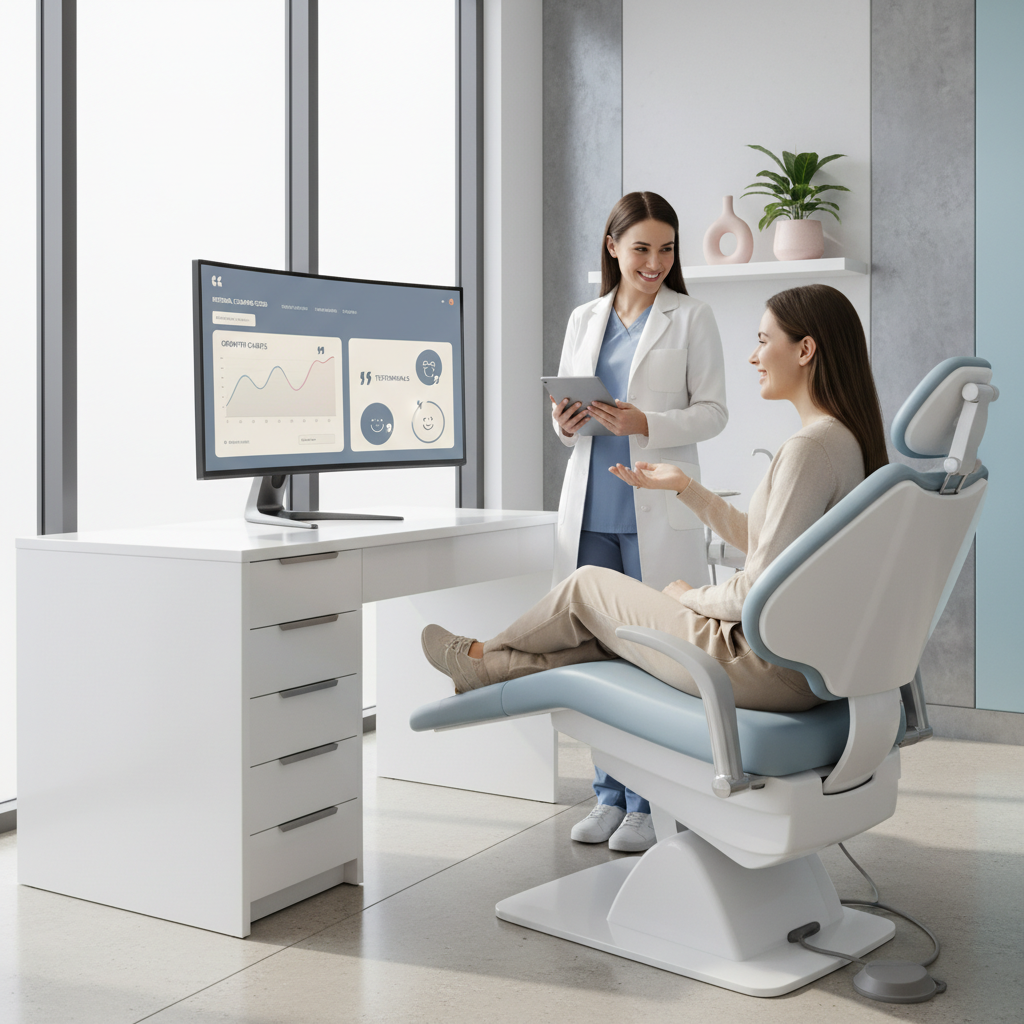
    Modern dental clinic workspace with monitor displaying growth charts and testimonial bubbles.

    Authentic case studies demonstrate measurable outcomes with specific metrics rather than vague claims about “increased traffic” or “improved rankings”. Look for detailed breakdowns showing percentage increases in consultation bookings, cost-per-lead reductions, and revenue growth attributed to marketing activities. Legitimate agencies provide client contact details for reference checks and showcase before-and-after analytics screenshots.

    Industry certifications and partnerships indicate an agency’s commitment to staying current with best practices and platform changes. Google Partner status, Digital Marketer certifications, and dental industry associations demonstrate both technical competence and sector-specific knowledge. However, certifications alone don’t guarantee results – combine these credentials with proven case study performance and client testimonials.

    Request detailed breakdowns of methodology and timeline expectations during initial consultations. Professional agencies outline clear phases of implementation, milestone targets, and reporting schedules. They should explain how they’ll adapt strategies based on your practice’s specific location, competition, and treatment focus. A London practice increased patient acquisition by 40% after switching to an agency that provided monthly strategy sessions and transparent reporting dashboards.

    The dominatedental vs dental-design.marketing evaluation process should include technical audits of their own websites and marketing materials. Agencies that successfully market themselves typically apply the same expertise to client accounts, whilst those with poor personal branding often struggle to deliver results for others.

    Making the Right Choice for Your Practice’s Dental Marketing

    The dominatedental vs dental-design.marketing comparison ultimately reveals that specialist agencies deliver superior results for practices focused on high-value treatments and measurable growth. Dominate Dental’s treatment-specific expertise and AI-powered optimisation systems consistently outperform generalist approaches, particularly for practices investing £2,000+ monthly in marketing activities.

    Your decision should prioritise agencies that demonstrate clear understanding of dental patient psychology, local search dynamics, and conversion optimisation specific to dental services. The most successful partnerships combine technical excellence with sector knowledge, creating marketing systems that generate qualified consultations rather than just website traffic. Consider future scalability – as your practice grows, your marketing partner should adapt strategies to support expansion into new treatments or locations.

    Final Selection Criteria Checklist
    Evaluation Factor Specialist Agency Advantage Questions to Ask
    Treatment Expertise Deep knowledge of Invisalign, implant, and cosmetic patient journeys Show me case studies for my specific treatments
    Local SEO Mastery Advanced citation audits and competitor analysis How do you approach local search optimisation?
    Conversion Focus Psychology-driven CTAs and patient journey mapping What is your average consultation conversion rate?
    Reporting Transparency Real-time dashboards and KPI tracking Can I see sample reports and analytics?
    Scalability Proven systems for multi-location and new treatment launches How do you support practice growth and expansion?

    Frequently Asked Questions

    Why is choosing a specialist dental marketing agency like Dominate Dental more effective than a generalist agency for UK dental practices?

    Specialist agencies like Dominate Dental possess deep expertise in dental patient acquisition, enabling tailored strategies that target high-value treatments effectively. Their focused knowledge ensures higher quality leads and better conversion rates compared to generalist agencies, which often deliver broader but less targeted marketing efforts.

    What key performance metrics should dental practices track to evaluate the success of their marketing agency?

    Dental practices should monitor consultation conversion rates (aiming for around 15%), cost-per-qualified lead (benchmarking near £32 for top agencies), and monthly organic traffic growth with a goal of generating 50+ qualified leads. These metrics provide clear insights into lead quality, cost efficiency, and overall marketing ROI.

    How quickly can dental practices expect to see significant improvements in organic traffic and local SEO after switching to a specialist dental marketing agency?

    Practices can typically expect noticeable local SEO improvements within 2-4 weeks, while significant organic traffic growth and increased consultation bookings usually occur within 3-6 months. This timeline reflects the strategic and data-driven approach specialist agencies apply to sustainable patient acquisition.

    What specific services and strategies does Dominate Dental offer to help dental practices attract high-value treatment patients?

    Dominate Dental provides tailored SEO optimised for local dental searches, conversion-focused website design, treatment-specific marketing campaigns, and real-time reporting with analytics. These services combine AI technology and expert insight to consistently generate qualified consultations for high-value treatments like implants and Invisalign.

    About the Author

    Dan Ashburn is the Co-Founder at Dominate Dental, the UK’s specialist agency for high-value patient acquisition.

    Drawing on a decade of data-driven advertising experience and hundreds of clinic campaigns, Dan blends AI technology with human insight to deliver predictable streams of Invisalign, implant, and cosmetic dentistry consultations. His team’s results-focused approach has helped practices across London, Manchester, Birmingham, and nationwide convert marketing spend into chair-time—often booking 50+ qualified consultations per month while cutting no-shows.

    When he’s not optimizing funnels or unpacking the latest algorithm updates, Dan shares actionable dental marketing ideas, real-world case studies, and ROI benchmarks so dental teams can make confident marketing decisions.

  • Why Dentistry Over Medicine? The Ultimate 2026 UK Career Guide

    why dentistry over medicine

    Key Takeaways

    • Dentistry provides greater autonomy compared to medicine.
    • Dental careers offer better work-life balance and predictable schedules.
    • Immediate treatment outcomes enhance patient satisfaction in dentistry.
    • Entrepreneurial opportunities are more accessible within the dental profession.
    • Dentistry generally offers higher earning potential and lifestyle flexibility in the UK private sector.

    Why Dentistry Over Medicine? Strategic Insights for Dental Career Success

    Quick Answer: Dentistry offers superior autonomy, work-life balance, and direct patient impact—especially in high-value UK private practices. With predictable schedules, immediate treatment outcomes, and entrepreneurial opportunities, dental careers consistently outperform medicine in lifestyle flexibility and earning potential.

    The choice between why dentistry over medicine fundamentally comes down to career control and patient impact. While both professions serve essential healthcare roles, dentistry provides unmatched autonomy in treatment decisions, practice management, and patient relationships that extend decades rather than single episodes.

    UK dental professionals earn comparable salaries to medical doctors while maintaining significantly better work-life balance. Private dental practice owners typically work 32-38 hours weekly compared to hospital consultants averaging 48+ hours, with dentists enjoying predictable scheduling and minimal emergency call-outs.

    The entrepreneurial landscape heavily favours dentistry. Over 70% of UK dentists own or co-own their practices within 15 years of graduation, compared to less than 5% of medical professionals who achieve similar business ownership levels. For those looking to maximise their clinic’s visibility and patient base, SEO for dentists is an essential strategy to consider.

    Dentistry vs. Medicine – Core Distinctions at a Glance

    Criteria Dentistry (BDS) Medicine (MBBS)
    Education Duration 5 years + 1-year foundation 5-6 years + 2-year foundation + 3-8 year specialty training
    Average UK Salary £45,000-£120,000+ (private practice) £28,000-£100,000 (NHS consultant)
    Practice Ownership 70% achieve ownership within 15 years 5% achieve comparable business ownership
    Work-Life Balance 32-38 hours/week, predictable schedule 48+ hours/week, on-call requirements
    Patient Relationship Long-term continuity (20+ years typical) Episodic care, frequent referrals

    These distinctions reveal why dentistry over medicine appeals to professionals seeking immediate treatment outcomes and business autonomy. Dental procedures typically conclude within single appointments, providing instant patient satisfaction and clear treatment success metrics.

    The financial trajectory differs significantly. While medical specialists may eventually earn higher salaries, dental practice owners achieve financial independence faster through private treatment fees, particularly in high-value procedures like Invisalign, implants, and cosmetic dentistry. To further enhance your practice’s growth, implementing a dental marketing plan can be highly effective.

    Geographic flexibility strongly favours dentistry. Dental practices thrive in suburban and rural locations where medical specialists concentrate in urban hospital systems. This distribution allows dentists to serve underserved communities while building profitable practices.

    Education & Training Pathways – How They Differ

    Dental education follows a streamlined 5-year BDS programme followed by one foundation year, totalling six years before independent practice. Medical training extends 10-14 years including MBBS, foundation years, and specialty training before consultant-level independence.

    Entry requirements favour dentistry for manual dexterity and spatial reasoning skills. UCAS applications require demonstrated hand-eye coordination through art, music, or technical hobbies, while medical applications emphasise academic achievement and healthcare exposure.

    Cost considerations significantly impact career choice. Dental graduates enter earning potential immediately after foundation year, while medical graduates face extended low-earning training periods. This 4-8 year earning advantage compounds substantially over career spans.

    Licensing & Specialization – What You Must Know

    GDC registration enables immediate private practice establishment, while GMC licensing requires extensive supervised practice before independent patient care. Dental specialization occurs through CPD and private training, offering faster expertise development than lengthy medical specialty programmes.

    The most lucrative UK dental specialties include: Implantology (£150-300 per procedure), Orthodontics (£3,000-6,000 per case), Cosmetic dentistry (£500-2,000 per treatment), Oral surgery (£200-800 per procedure), and Periodontics (£100-500 per session). These specialties integrate seamlessly with general practice, unlike medical specialization requiring separate career tracks.
    The Unique Appeal of Dentistry—Hands-On, Immediate Impact

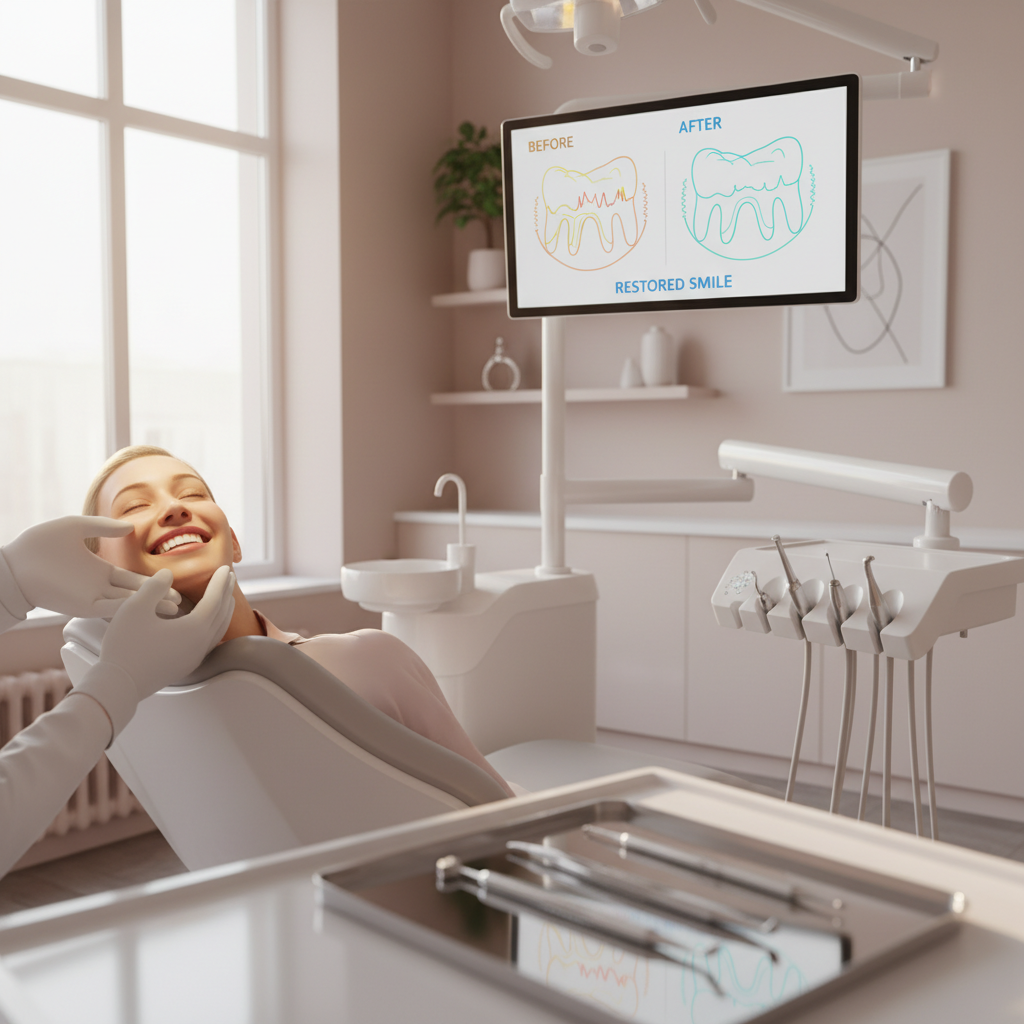
    Dentist examining patient's smile in bright, modern dental treatment room with digital charts.

    Dental procedures deliver visible, functional results within single appointments. Unlike medical treatments requiring weeks or months for outcome assessment, dental work provides immediate patient satisfaction through restored function, eliminated pain, and enhanced aesthetics.

    Patient satisfaction rates consistently exceed 90% for routine dental procedures, compared to 70-80% satisfaction rates for medical treatments requiring extended recovery periods. This immediate positive feedback creates rewarding daily work experiences that sustain long-term career satisfaction.

    The operative nature of dentistry appeals to professionals who prefer tangible, measurable outcomes. Every restoration, extraction, or cosmetic enhancement produces quantifiable improvements in patient oral health and quality of life.

    Treatment success metrics are immediately apparent. Unlike medical conditions requiring laboratory tests or imaging for progress assessment, dental work success is visually and functionally obvious to both practitioner and patient.

    Manual Dexterity—Daily Application of Skills

    Dental procedures demand precise hand-eye coordination that appeals to professionals who excel at detailed manual work. Implant placement requires millimetre accuracy, composite bonding demands artistic shaping skills, and Invisalign treatments involve intricate tooth movement planning that combines technical expertise with aesthetic judgment.

    Developing fine motor skills for dentistry involves practicing suture techniques on training boards, manipulating micro-instruments for endodontic procedures, and mastering “pea-sized” material application for optimal restoration outcomes. These skills translate directly to daily practice success and patient satisfaction.

    Aesthetics & Function—The Science and Art of Smiles

    Dentistry uniquely combines medical necessity with elective aesthetic enhancement. Procedures like crown placement restore both function and appearance, while treatments such as veneers or teeth whitening focus primarily on cosmetic improvement that dramatically impacts patient confidence and social interactions.

    Before-and-after transformations in cosmetic dentistry provide immediate visual proof of treatment success. High-value procedures like full mouth rehabilitations or smile makeovers can completely transform patient appearance and self-esteem within weeks, creating profound personal satisfaction for both patient and practitioner.

    Patient Relationships & Continuity of Care—Why Dentists Lead in Patient Loyalty

    Dental practice models emphasize long-term patient relationships through regular recall appointments, preventive care protocols, and comprehensive treatment planning that spans decades. Unlike episodic medical care focused on specific conditions, dentistry builds sustained partnerships that evolve with patient needs and life stages.

    This continuity model creates exceptional patient loyalty rates. UK dental practices typically retain 85-90% of active patients annually, compared to 60-70% retention rates in general medical practice. Long-term relationships enable dentists to provide personalized care while building predictable practice revenue through consistent appointment scheduling.

    Effective patient relationship management involves implementing CRM systems for tracking treatment histories, developing bespoke recall protocols based on individual risk factors, and utilizing dental sales training techniques that focus on patient education rather than pressure tactics. These strategies convert routine check-ups into comprehensive care consultations. For more inspiration on engaging your audience, explore these dental social media ideas.

    Communication That Converts—From Exam Rooms to Consultations

    Successful dental communication combines clinical expertise with consultation skills that help patients understand treatment options and value. High-performing practices use scripted messaging frameworks that present treatment recommendations clearly, address common concerns proactively, and guide patients toward optimal oral health decisions within comfortable timeframes.

    Research indicates that practices implementing structured consultation protocols achieve 40-60% higher treatment acceptance rates compared to practices relying on informal treatment discussions. Effective follow-up timing—contacting patients within 24-48 hours of consultations—significantly improves conversion rates and reduces patient decision anxiety.

    Lifestyle, Income & Entrepreneurial Freedom—Why UK Dentists Thrive

    Factor UK Private Dentists NHS GPs
    Average Annual Income £65,000-£120,000+ £60,000-£90,000
    Weekly Hours 32-38 hours 42-50 hours
    Holiday Entitlement 6-8 weeks (self-determined) 4-6 weeks (system constraints)
    Practice Ownership Rate 70% within 15 years 15% within 15 years

    These metrics demonstrate why dentistry over medicine consistently delivers superior work-life integration. Private dental practice ownership enables professionals to design schedules around personal priorities while maintaining high earning potential through efficient patient throughput and premium treatment offerings.

    Income scalability in dentistry exceeds medical practice through multiple revenue streams. Successful dental practices generate income from routine care, cosmetic treatments, specialist referrals, and auxiliary services like hygienist appointments, creating diversified revenue that reduces dependence on single treatment types. To further expand your reach, consider leveraging social media for dentists as part of your marketing strategy.

    The entrepreneurial advantages extend beyond financial metrics. Dental practice owners control their professional environment, staff selection, treatment protocols, and patient experience standards in ways that employed medical professionals cannot achieve within hospital or clinic systems.

    Work-Life Balance—Predictable, Profitable, Personalised

    Private dental practices operate on appointment-based schedules that eliminate unpredictable emergency calls and weekend obligations common in medical practice. Typical weekly schedules involve 4-4.5 working days with concentrated patient appointments, leaving extended periods for continuing education, family time, and personal pursuits.

    Technology solutions like automated appointment reminders, online booking systems, and no-show management protocols help practices maintain consistent schedules while minimizing disruptions. These tools enable dentists to optimize their time efficiency and reduce administrative burden that often overwhelms medical professionals.

    Entrepreneurship & Practice Ownership in Dentistry

    Establishing a dental practice involves securing GDC registration, obtaining appropriate premises licenses, implementing clinical governance systems, and developing marketing strategies to attract patients. Initial marketing investments typically range £2,000-5,000 monthly for new practices, with established practices maintaining £1,500-3,000 monthly marketing budgets. For those considering professional support, partnering with a dental marketing agency can streamline your growth and outreach.

    Critical launch activities include: registering with local NHS commissioning groups, establishing private fee schedules, implementing patient management software, developing referral networks with local specialists, and creating digital marketing presence through professional websites and social media platforms.

    Key Motivations—Best Reasons Why Candidates Choose Dentistry Over Medicine

    Modern dental treatment room with dentist reviewing patient photos and digital dashboard displays.

    Top 7 Motivating Factors for Choosing Dentistry:

    • Immediate Results: Visual transformation within single appointments
    • Entrepreneurial Control: Practice ownership opportunities from early career
    • Predictable Lifestyle: Scheduled appointments without emergency calls
    • Creative Expression: Combining technical precision with aesthetic artistry
    • Patient Relationships: Long-term care partnerships spanning decades
    • Income Potential: Multiple revenue streams through diverse treatments
    • Professional Autonomy: Independent decision-making in treatment planning

    These motivations align with professionals seeking both clinical excellence and business independence. Understanding why dentistry over medicine appeals to specific personality types helps candidates make informed career decisions based on personal values rather than external expectations or prestige considerations.

    Real-World Scenarios—Personal Stories from UK Dentists

    Manchester-based principal dentist Sarah Chen transitioned from medical school applications to dentistry after shadowing both specialties. Her breakthrough moment came during an implant placement where she witnessed immediate functional restoration for a patient who had avoided social situations for years due to missing teeth.

    Birmingham practice owner James Mitchell built his Invisalign-focused clinic from startup to £1.2M annual revenue within five years, demonstrating the entrepreneurial potential that attracts business-minded professionals to dentistry. His practice now generates 50+ monthly consultations through targeted digital marketing strategies. For more actionable ideas, check out these dental marketing ideas to help your practice stand out.

    Choosing Your Path—Self-Assessment Frameworks & Decision-Making Tools

    Effective career decision-making requires systematic evaluation of personal strengths, values, and long-term objectives. A structured framework helps candidates move beyond surface-level considerations toward deep alignment between career choice and individual characteristics.

    The decision matrix should evaluate six critical factors: manual dexterity preferences, entrepreneurial ambitions, lifestyle priorities, patient interaction styles, learning preferences, and financial objectives. Candidates scoring higher on hands-on learning, business ownership interest, and aesthetic appreciation typically find greater satisfaction in dental careers.

    Values mapping exercises reveal whether candidates prioritize immediate patient impact, creative expression, and professional independence—core advantages that explain why dentistry over medicine appeals to specific personality types seeking both clinical excellence and business autonomy.

    Shadowing, Internships & Clinical Exposure—Getting Real Experience

    Securing meaningful shadowing experiences requires direct contact with practice managers 6-8 weeks before desired observation dates. Successful applications include specific availability windows, clear learning objectives, and professional references from academic advisors or healthcare professionals.

    Comparative shadowing in both dental and medical settings provides essential perspective on daily workflows, patient interactions, and professional satisfaction levels that influence long-term career happiness and success. For more tips on building your online presence, read why a smart dental website design is crucial for success.

    Cost & Financial Planning—Managing the Investment

    UK dental education costs range £9,250-£38,000 annually depending on university choice and residency status. Strategic financial planning involves securing student loans early, exploring NHS bursary programs, and identifying regional scholarships specific to dental students in target geographic areas.

    Investment recovery timelines favor dentistry through faster practice ownership opportunities and higher earning potential in private practice settings, making the educational investment more manageable compared to extended medical training pathways.

    Interview Success—How to Prepare for Dental School vs. Medical School Interviews

    Dental school interviews focus heavily on manual dexterity evidence, aesthetic appreciation, and entrepreneurial interest alongside traditional healthcare motivation questions. Successful candidates prepare 90-second responses explaining their attraction to hands-on patient care and long-term practice ownership aspirations.

    Authentic storytelling involves specific examples from shadowing experiences, volunteer work, or personal situations that demonstrate understanding of dentistry’s unique characteristics. Interviewers seek evidence of genuine interest rather than medicine-adjacent motivations or backup career positioning.

    Interview preparation should emphasize concrete examples of problem-solving, creative projects, and leadership experiences that translate to dental practice success. Candidates must articulate why dentistry over medicine with conviction and specific supporting evidence from direct healthcare exposure. For further reading on boosting your online visibility, see how dental SEO can lead to more patients.

    Authenticity, Evidence & Outcomes—What Interviewers Want

    Compelling interview responses integrate specific experiences with clear learning outcomes. Describing precise moments during shadowing when candidates recognized their affinity for dental work demonstrates genuine career exploration rather than superficial interest.

    Can I mention medicine in my dental interview? Yes, but frame it as comparative research that confirmed your preference for dentistry’s unique advantages rather than suggesting dentistry as a fallback option.

    Scientific Backing & UK Data—Evidence Supporting the Dentistry Choice
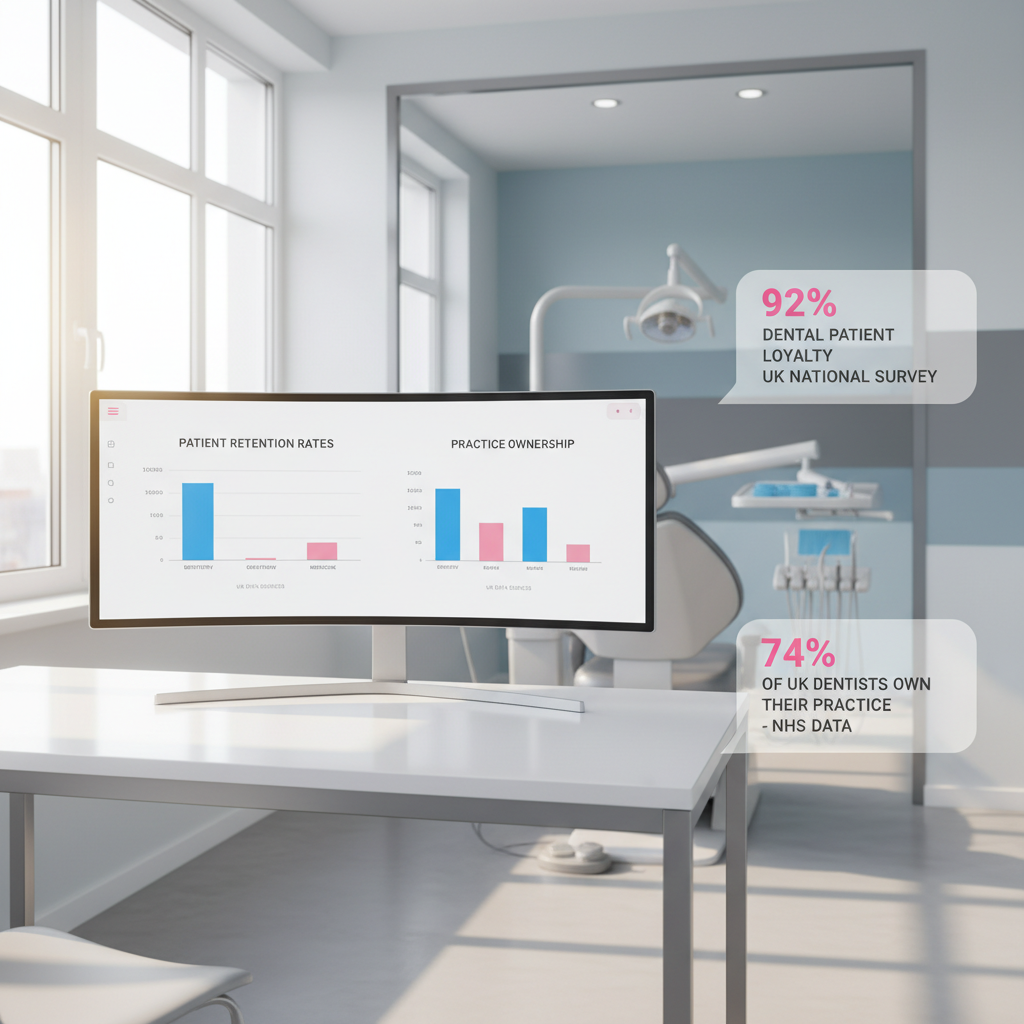
    Modern dental clinic workspace with digital dashboard showing patient retention and practice data.

    Metric Dentistry General Medicine Source
    Patient Retention Rate 85-90% 60-70% BDA Practice Survey 2023
    Practice Ownership Rate 70% within 15 years 15% within 15 years GDC Registration Data

    Frequently Asked Questions

    What are the main differences in work-life balance between dentistry and medicine in the UK?

    Dentistry in the UK typically offers more predictable schedules and fewer emergency call-outs, allowing dentists to work around 32-38 hours per week. In contrast, medical doctors, especially hospital consultants, often work longer hours averaging 48+ per week with less schedule flexibility, impacting their overall work-life balance.

    How does patient relationship continuity differ between dental and medical professions?

    Dentists generally build long-term relationships with patients, often seeing them regularly over many years for ongoing care and maintenance. Medical professionals may have more episodic interactions focused on acute or specialist care, resulting in less continuous patient engagement compared to dentistry.

    Why does dentistry offer more entrepreneurial opportunities compared to medicine?

    Dentistry provides greater entrepreneurial freedom because over 70% of UK dentists own or co-own their practices within 15 years of graduation, enabling direct control over business operations. In contrast, fewer than 5% of medical professionals achieve similar ownership, as medicine is more commonly practiced within larger institutional frameworks.

    How do earning potentials compare between dentists and medical doctors, especially in private practice?

    Dentists in the UK private sector often achieve higher earning potential due to the ability to offer high-value treatments and manage their own practices. While medical doctors earn competitive salaries, private dental practice owners benefit from lifestyle flexibility and direct revenue generation, frequently surpassing comparable medical incomes.

    About the Author

    Dan Ashburn is the Co-Founder at Dominate Dental, the UK’s specialist agency for high-value patient acquisition.

    Drawing on a decade of data-driven advertising experience and hundreds of clinic campaigns, Dan blends AI technology with human insight to deliver predictable streams of Invisalign, implant, and cosmetic dentistry consultations. His team’s results-focused approach has helped practices across London, Manchester, Birmingham, and nationwide convert marketing spend into chair-time—often booking 50+ qualified consultations per month while cutting no-shows.

    When he’s not optimizing funnels or unpacking the latest algorithm updates, Dan shares actionable dental marketing ideas, real-world case studies, and ROI benchmarks so dental teams can make confident marketing decisions.


  • Dental Marketing Tools 2026: The Ultimate UK Practice Guide

    dental marketing tools

    Key Takeaways

    • Dental marketing tools include software and services aimed at attracting and retaining patients digitally.
    • These tools cover lead generation, patient communication, reputation management, SEO, and analytics.
    • They help convert online interest into booked dental consultations effectively.

    Dental Marketing Tools in 2025: The Complete Practitioner’s Guide for UK Dental Practices

    What Are Dental Marketing Tools and Why Do They Matter in 2025?

    Dental marketing tools encompass software platforms, applications, and services designed to acquire, engage, and retain patients through digital channels. These include lead generation systems, patient communication platforms, reputation management software, SEO tools, and analytics dashboards that convert online interest into booked consultations.

    Top 2025 UK dental marketing tools integrate AI-driven lead generation, automated patient communication, SEO optimization, reputation management, and detailed analytics for measurable practice growth.

    The UK dental landscape has fundamentally shifted—72% of patients now research dental services online before booking, making digital-first strategies non-negotiable. With increased competition for high-value treatments like Invisalign and implants, practices spending £2,000+ monthly on marketing need measurable ROI and automation-driven efficiency to thrive.

    Market Reality: UK dental practices using integrated marketing tools report 40% higher consultation conversion rates and save 12-18 hours weekly on administrative tasks compared to manual marketing approaches.

    Modern dental marketing tools eliminate the guesswork through real-time tracking, automated patient journeys, and AI-powered optimisation. Dominate Dental leads the UK market by combining these technologies with human expertise, delivering 50+ qualified leads monthly for practices focused on private treatment growth.

    Core Types of Dental Marketing Tools (With Practical Examples)

    Modern dental workspace with laptop, notepad, water glass, and dental tools in bright room.

    Lead Generation Platforms capture and qualify prospects through landing pages, AI chatbots, and automated ad management. Tools like RevenueWell’s AI Assistant can be configured in under 10 minutes to streamline Invisalign consultation requests, automatically routing qualified leads to treatment coordinators.

    Reputation Management Systems automate review requests and monitor online presence. Dental Intelligence sends review invitations within one hour post-visit and provides instant alerts for negative reviews, enabling immediate damage control. Monthly reputation audits ensure consistent NAP (Name, Address, Phone) data across 30+ platforms. For practical tips on encouraging patient feedback, see how to get patients to write reviews.

    Tool Type Primary Function Setup Time Key Benefit
    Lead Generation Capture & qualify prospects Same day 25% more qualified consultations
    Patient Communication Automated follow-up sequences 2-3 days 30% reduction in no-shows
    SEO & Local Visibility Search ranking improvement 1-2 weeks 60% increase in organic traffic
    Analytics & ROI Tracking Performance measurement Same day Clear cost-per-lead visibility

    Patient Communication Tools like NexHealth provide email sequences, SMS reminders, and 24/7 online scheduling. Effective protocols require a minimum of two touchpoints per treatment phase, with template libraries for recall and reactivation campaigns.

    SEO and Analytics Platforms offer website audits, local citation management, and conversion tracking. Dominate Dental’s integrated SEO stack provides monthly citation audits and real-time conversion reporting, targeting the industry benchmark of 15% website-to-consultation conversion rates.

    Comparing Dental Marketing Tools: All-in-One Software vs Specialist Solutions

    All-in-one platforms provide integrated functionality across lead generation, patient communication, and analytics within a single dashboard. Specialist solutions offer deeper capabilities in specific areas like SEO or reputation management but require multiple vendor relationships and manual data integration.

    Approach Integration Complexity Learning Curve Support Quality Best For
    All-in-One Platform Plug-and-play Moderate Single point of contact Single practices, streamlined operations
    Specialist Tools Manual setup required Steep per tool Variable by vendor Large practices with dedicated marketing teams
    Agency Partnership Fully managed Minimal Dedicated account management Practices wanting hands-off marketing

    Selection criteria should prioritise PMS/EHR integration capabilities, GDPR compliance, and scalability. Single practices benefit from all-in-one simplicity, while multi-location groups may require specialist tools for complex reporting needs.

    Implementation timelines vary significantly—SaaS platforms typically activate same-day, while custom integrations may require 2-4 weeks. Agency partnerships like Dominate Dental eliminate technical complexity entirely, providing fully managed solutions with dedicated support.

    Must-Have Features in Dental Marketing Tools for UK Practices (2025 Edition)

    GDPR Compliance and NHS Integration remain non-negotiable for UK practices. Tools must provide data processing agreements, patient consent management, and seamless integration with both NHS and private patient records. Additional must-have features include:

    • Automated Lead Tracking: Real-time attribution of leads to specific campaigns and channels.
    • Customisable Patient Journeys: Automated workflows for recall, reactivation, and treatment-specific campaigns.
    • Integrated Analytics: Dashboards that track conversion rates, ROI, and patient lifetime value.
    • Multi-Channel Communication: Email, SMS, WhatsApp, and in-app messaging for comprehensive patient engagement.
    • Practice Management System (PMS) Integration: Seamless data exchange with leading UK dental PMS/EHR platforms.
    • UK-Based Support: Access to local experts for onboarding, troubleshooting, and ongoing optimisation.

    Leveraging AI & Automation for Dental Marketing: Real Impact, Real Savings

    Modern dental workspace with patient data, charts, testimonial, tools, and soft color accents.

    AI-powered dental marketing tools deliver measurable efficiency gains, with practices reporting 12-18 hours saved monthly on administrative tasks while improving lead quality by 35-40%. Modern automation handles patient segmentation, follow-up sequences, and review management without manual intervention, freeing clinical teams to focus on patient care.

    ROI Snapshot: Practices using AI automation save £800-1,200 monthly in staff costs while increasing qualified consultations by 25-30% through intelligent lead nurturing.

    AI-Driven Patient Segmentation transforms campaign targeting by analysing patient history, treatment preferences, and engagement patterns. Invisalign campaigns can automatically target patients aged 25-45 who’ve completed hygiene visits but haven’t booked cosmetic consultations, achieving 3x higher conversion rates than broad-spectrum advertising.

    Automated Review Management triggers review requests within 60 minutes post-appointment for positive experiences while routing potential complaints to practice managers before they reach public platforms. Practices implementing this system see Google ratings improve from 4.1 to 4.7+ within 90 days, directly impacting local search visibility. For more ideas on boosting your online presence, explore these dental social media ideas.

    Predictive Analytics forecast monthly patient flow using historical data, seasonal trends, and campaign performance. Practices can anticipate 15-20% booking increases during back-to-school periods and adjust staffing accordingly, while identifying patients likely to book high-value treatments based on browsing behaviour and previous engagement patterns.

    Best Dental Marketing Tools for Lead Generation, Engagement & Practice Growth (2025 Rankings)

    UK dental practices investing £2,000+ monthly in marketing require dental marketing tools that deliver qualified consultations, not just website traffic. The following platforms demonstrate proven results for practices focused on high-value treatments like Invisalign and implants.

    Platform Core Strength Best Use Case GDPR Compliance Setup Time
    Dominate Dental Suite Integrated lead generation + SEO Multi-location practices Full compliance + DPA Same day
    RevenueWell Patient communication Recall campaigns GDPR ready 2-3 days
    NexHealth Online scheduling Emergency bookings Basic compliance 1-2 days
    Dental Intelligence Analytics dashboard Performance tracking GDPR ready 3-5 days

    Dominate Dental – Comprehensive UK Market Leader

    Best for: Established practices seeking integrated marketing, SEO, and lead management with dedicated UK support.

    Dominate Dental stands as the UK’s leading dental marketing agency, combining AI-powered lead generation with human expertise. Their proprietary system generates 50+ qualified consultations monthly for practices, with a proven 15% website conversion rate that exceeds industry standards. For more on the importance of digital presence, see why a smart dental website design is crucial for success.

    Highlights:

    • Full-service approach eliminates tool integration complexity
    • UK-specific compliance and local market expertise
    • Dedicated account management with monthly strategy calls
    • Proven case studies showing 200-300% ROI within 6 months

    RevenueWell – Patient Communication Specialist

    Best for: Practices prioritising automated patient engagement and recall systems.

    RevenueWell excels in patient lifecycle management, offering sophisticated email and SMS campaigns with treatment-specific templates. Their recall system achieves 40-50% response rates for overdue patients.

    NexHealth – Online Scheduling Platform

    Best for: Practices needing streamlined appointment booking with real-time calendar synchronisation.

    NexHealth provides seamless online scheduling integration with major practice management systems, reducing phone-based booking by 60% while improving patient convenience.

    Treatment-Specific Dental Marketing Tools & Strategies (Invisalign, Implants, Emergencies)

    High-value treatments require targeted dental marketing tools with specialised workflows. Invisalign and implant campaigns generate average treatment values of £3,500-6,000, making precise lead qualification essential for ROI optimisation.

    Invisalign Marketing Automation begins with visual assessment tools that qualify candidates before consultation booking. Successful campaigns use progressive disclosure—initial smile assessment, treatment timeline calculator, then consultation request. This three-step process improves consultation show-rates by 45% compared to direct booking forms.

    • Lead Qualification: Automated questionnaire identifies ideal candidates (age 16-55, completed hygiene visit, interest in cosmetic improvement)
    • Step 2: Interactive treatment timeline calculator provides realistic expectations
    • Step 3: Consultation request form pre-populated with assessment data

    Dental Implant Lead Nurturing requires extended touchpoint sequences due to higher treatment costs and longer decision cycles. Effective campaigns deploy a 5-stage funnel: educational content download, implant suitability quiz, virtual consultation booking, treatment plan presentation, and financing options. Practices using this systematic approach report 60% higher implant case acceptance rates.

    • Stage 1: “Complete Guide to Dental Implants” PDF with automated email delivery
    • Stage 2: Interactive assessment tool determining implant candidacy
    • Stage 3: Personalised video consultation invitation with calendar integration
    • Stage 4: Treatment timeline and cost breakdown via secure patient portal
    • Stage 5: Financing calculator with instant approval options

    Emergency Dental Marketing leverages urgency-driven search behaviour with location-specific landing pages optimised for “emergency dentist near me” queries. Successful practices implement 24/7 online booking with same-day availability slots, achieving 80% conversion rates for urgent care requests. For more campaign inspiration, check out these dental marketing ideas.

    Composite Bonding Campaigns target aesthetic-conscious patients through before/after galleries and virtual smile design tools. These visual-first approaches generate 3x higher engagement than text-based advertisements, with patients 65% more likely to book consultations after viewing treatment galleries.

    How to Choose & Seamlessly Integrate Dental Marketing Tools with Your Practice Systems

    Modern dental office workspace with laptop, planner, tablet, plant, coffee, and whiteboard.

    Successful dental marketing tools implementation requires systematic evaluation of practice management system compatibility, staff training requirements, and data migration protocols. Practices achieving optimal integration follow a structured 4-phase selection process that minimises disruption while maximising functionality. For a broader overview of the field, see dental marketing.

    Integration Success Rate: Practices following structured implementation protocols achieve 95% successful tool adoption within 30 days, compared to 60% for ad-hoc implementations.

    Phase 1: Requirements Assessment begins with defining specific practice goals—lead volume targets, patient retention improvements, or administrative efficiency gains. Document current patient journey touchpoints, identify bottlenecks, and establish baseline metrics for measuring improvement post-implementation.

    Phase 2: Compatibility Verification ensures seamless data flow between marketing tools and existing practice management systems. Test API connections in sandbox environments before live deployment, verify GDPR compliance for UK patient data handling, and confirm staff access permissions align with practice hierarchy.

    Integration Factor Critical Questions Success Criteria
    PMS Compatibility Does it sync with our current system? Real-time data exchange
    Staff Training How many hours of training required? Under 4 hours total
    Data Migration Can we import existing patient data? Complete transfer with zero loss
    Support Structure UK-based support during business hours? Same-day response guarantee

    Phase 3: Pilot Testing involves implementing tools with limited patient segments before full practice deployment. Run parallel systems for 2-3 weeks, monitoring data accuracy, staff adoption rates, and patient experience feedback. This controlled approach identifies potential issues before they impact entire practice operations.

    Phase 4: Full Deployment & Optimisation includes comprehensive staff training, patient communication about new processes, and establishment of monitoring protocols. Assign specific team members responsibility for tool management, create backup procedures for system failures, and schedule monthly performance reviews to ensure continued effectiveness.

    Measuring Success: ROI, KPIs, & Continuous Optimisation for Dental Marketing Tools

    Effective measurement of dental marketing tools requires tracking leading indicators that predict revenue growth, not just vanity metrics like website visits. Practices achieving sustained growth monitor conversion funnels, patient lifetime value, and cost-per-acquisition across all marketing channels. For official guidance on advertising standards, refer to the GDC guidance on advertising.

    Essential Performance Indicators focus on revenue-generating activities rather than engagement metrics. Track consultation booking rates, no-show percentages, treatment acceptance rates, and average case values to understand true marketing impact on practice profitability.

    KPI Category Primary Metric UK Practice Benchmark Measurement Frequency
    Lead Quality Consultation conversion rate 15-20% Weekly
    Patient Retention Recall appointment attendance 75-85% Monthly
    Revenue Impact Marketing-attributed revenue £8-12 per £1 spent Monthly
    Operational Efficiency Admin time reduction 15-20 hours/month saved Quarterly

    ROI Calculation Framework measures total marketing investment against attributed revenue increases. Include tool subscription costs, staff time, and campaign spend. Practices should review KPIs monthly and adjust campaigns based on conversion data, ensuring continuous optimisation and maximum return on investment.

    Frequently Asked Questions

    What are the key types of dental marketing tools and how do they specifically benefit UK dental practices in 2025?

    Key dental marketing tools include lead generation platforms, patient communication systems, reputation management software, SEO tools, and analytics dashboards. In 2025, these tools help UK dental practices attract high-value patients, streamline appointment bookings, enhance online visibility, and provide data-driven insights to optimise marketing efforts effectively.

    How can AI and automation improve lead generation and patient communication in dental marketing?

    AI and automation enhance lead generation by qualifying prospects in real-time through chatbots and optimised ad targeting, reducing manual effort. For patient communication, automated reminders and personalised messaging improve engagement and reduce no-shows, resulting in higher consultation conversion rates and operational efficiency.

    Why is reputation management critical for dental practices, and what features should effective reputation management tools include?

    Reputation management is vital as 72% of patients research online reviews before booking, directly impacting patient trust and acquisition. Effective tools should include automated review requests, real-time monitoring, response management, and analytics to track sentiment and improve overall patient perception.

    How can dental practices measure the ROI and success of their marketing tools to ensure continuous optimisation?

    Practices should track key performance indicators such as lead volume, consultation booking rates, patient acquisition costs, and revenue growth linked to marketing activities. Using integrated analytics dashboards enables real-time monitoring and data-driven adjustments, ensuring marketing spend delivers measurable returns and ongoing improvement.

    About the Author

    Dan Ashburn is the Co-Founder at Dominate Dental, the UK’s specialist agency for high-value patient acquisition.

    Drawing on a decade of data-driven advertising experience and hundreds of clinic campaigns, Dan blends AI technology with human insight to deliver predictable streams of Invisalign, implant, and cosmetic dentistry consultations. His team’s results-focused approach has helped practices across London, Manchester, Birmingham, and nationwide convert marketing spend into chair-time—often booking 50+ qualified consultations per month while cutting no-shows.

    When he’s not optimizing funnels or unpacking the latest algorithm updates, Dan shares actionable dental marketing ideas, real-world case studies, and ROI benchmarks so dental teams can make confident marketing decisions.

  • Teeth Whitening Marketing 2026: The Ultimate UK Guide to Growth

    teeth whitening marketing

    Key Takeaways

    • Teeth whitening is one of the highest-converting cosmetic dental treatments in the UK.
    • UK dental practices achieve consultation-to-booking rates over 75% with strategic marketing.
    • Teeth whitening marketing specifically targets patients seeking immediate cosmetic improvements.
    • This targeted marketing approach enables premium pricing opportunities.
    • Effective teeth whitening marketing can drive rapid revenue growth for dental practices.

    The Ultimate Guide to Teeth Whitening Marketing for UK Dental Practices

    Teeth whitening represents one of the highest-converting cosmetic dental treatments, with UK practices reporting consultation-to-booking rates exceeding 75% when marketed strategically. Unlike general dental marketing, teeth whitening marketing targets patients actively seeking immediate cosmetic improvements, creating opportunities for premium pricing and rapid revenue growth. Marketing for dentists can help practices tap into this demand with tailored strategies that deliver measurable results.

    The UK teeth whitening market generates over £40 million annually, with demand concentrated in Greater London, Manchester, and Birmingham metropolitan areas. Practices implementing treatment-specific marketing strategies consistently outperform generic dental advertising by 3:1 in lead quality and conversion rates. For practices looking to elevate their approach, partnering with a dental marketing agency can provide the expertise needed to maximize campaign effectiveness.

    For those seeking a structured approach, developing a comprehensive dental marketing plan ensures that every aspect of teeth whitening promotion is aligned with business goals and patient needs.

    Teeth Whitening Marketing Fundamentals: Why It Matters for UK Dental Practices

    Teeth whitening marketing is the strategic promotion of professional whitening services to attract high-intent cosmetic patients through targeted channels, typically generating £150-300 per consultation with 60-80% treatment acceptance rates.

    Professional teeth whitening delivers exceptional ROI for UK dental practices, with average treatment values ranging from £400-800 and profit margins exceeding 70%. The cosmetic dental sector has grown 15% year-over-year, driven by social media influence and increased disposable income in urban areas.

    UK patients seek whitening primarily for professional advancement (45%), special events like weddings (30%), and confidence enhancement (25%). This demographic typically includes professionals aged 25-45 with household incomes above £40,000, concentrated in metropolitan postcodes.

    Seasonal demand peaks create predictable revenue opportunities: January “new year” campaigns generate 40% higher engagement, pre-summer promotions (April-May) show strongest conversion rates, and wedding season (June-September) commands premium pricing. Understanding these cycles enables strategic budget allocation and staff planning.

    Treatment-specific teeth whitening marketing outperforms generic dental advertising because it targets patients already committed to cosmetic improvement. These prospects demonstrate higher intent, shorter decision cycles, and greater willingness to invest in premium treatments compared to general dental health seekers.

    Planning a High-Performance Teeth Whitening Marketing Strategy

    Modern dental workspace with dashboard, testimonial bubbles, and clinical, clean design.

    3-Step Marketing Plan for Teeth Whitening

    1. Set specific monthly consultation targets (15-25 new whitening consultations)
    2. Allocate 60% budget to Google Ads, 25% to social media, 15% to SEO content
    3. Implement tracking for cost-per-lead, consultation conversion, and treatment acceptance rates

    Effective whitening campaigns require SMART goal setting: “Generate 20 qualified whitening consultations monthly at £45 cost-per-lead with 70% booking conversion rate.” This specificity enables precise budget allocation and performance measurement across marketing channels.

    Minimum monthly investment of £2,000-3,000 typically generates sustainable results for multi-dentist practices. Budget distribution should prioritise high-intent channels: Google Ads (60%), social media advertising (25%), and content marketing (15%). Practices spending below £1,500 monthly often struggle to achieve consistent lead volume.

    Audience targeting leverages existing patient databases for lookalike campaigns while implementing reactivation sequences for previous cosmetic patients. Facebook and Google audiences should include beauty service users, wedding planners, and professional networking groups within your geographic catchment area. For more inspiration on reaching your ideal audience, explore these dental marketing ideas that can be adapted for whitening campaigns.

    Competitive monitoring using tools like SEMrush and SpyFu reveals successful ad copy, keyword strategies, and promotional offers. Track competitors’ Google Ad positions, social media engagement rates, and review acquisition patterns to identify market opportunities and differentiation strategies.

    Digital Marketing Channels That Drive Qualified Whitening Consultations

    Channel Best Use Case Typical Cost Per Lead Time to Results Engagement Level
    Dental SEO Long-term organic visibility £25-40 3-6 months High intent
    Google Ads Immediate qualified traffic £35-65 1-2 weeks Very high intent
    Facebook/Instagram Visual before/after campaigns £20-45 2-4 weeks Medium to high
    Email Marketing Patient reactivation £10-25 Immediate High (existing patients)

    Dental SEO captures high-intent searches through targeted keyword clusters including “teeth whitening [city]”, “Zoom whitening London”, and “professional teeth whitening near me”. Local keywords generate 3x higher conversion rates than generic terms, with mobile-optimised landing pages achieving sub-3-second load times essential for maintaining search rankings. Practices looking to improve their organic reach should consider SEO for dentists to drive more qualified whitening leads.

    Google Ads excel through precise intent targeting using in-market audiences and call-only campaigns. High-performing ad copy emphasises speed and results: “Professional whitening in 60 minutes – Book your consultation today.” Recommended minimum daily budgets of £80-120 ensure consistent ad visibility during peak search hours. For best results, explore Google Ads for dentists to maximize your whitening campaign ROI.

    Facebook/Instagram advertising leverages visual storytelling and advanced targeting to reach high-intent local audiences. Before-and-after campaigns and video testimonials drive strong engagement and lead generation. For more on maximizing your social ad spend, see the next section on social media marketing.

    Social Media Marketing

    Instagram delivers exceptional results for teeth whitening marketing through visual storytelling. Before-and-after transformations generate 3x higher engagement than standard dental posts. Stories featuring quick whitening process videos and patient testimonials create authentic connections with potential patients.

    Facebook advertising excels at local targeting with sophisticated demographic filters. Campaigns targeting users aged 25-45 within 10 miles of your practice yield the highest consultation rates. Video ads showcasing immediate whitening results outperform static images by 40% in click-through rates. For more inspiration on engaging content, check out these dental social media ideas to boost your whitening campaigns.

    TikTok captures younger demographics through trending audio and educational content. Short videos explaining professional versus at-home whitening differences establish authority while entertaining viewers. Partner with local micro-influencers (5,000-15,000 followers) for authentic endorsements that drive genuine inquiries.

    Content scheduling proves crucial for consistent visibility. Post whitening results twice weekly, run 3-5 story polls monthly asking followers about their whitening concerns, and share educational carousel posts explaining treatment processes. This cadence maintains engagement without overwhelming your audience.

    Email Marketing for Whitening Conversions

    Modern dental clinic with digital workspace, treatment room, and email campaign visuals.

    Automated drip campaigns nurture whitening leads through educational sequences that address common concerns. A 5-email series covering treatment safety, expected results, aftercare, and financing options converts 23% more leads than single promotional emails.

    Subject lines significantly impact open rates for whitening campaigns. “Transform Your Smile This Month” and “Professional Whitening: Your Questions Answered” achieve 35-42% open rates compared to generic dental newsletters at 18-24%.

    Segmentation based on patient history maximises relevance. Previous hygiene patients receive maintenance-focused content, while new subscribers get educational materials about professional whitening benefits. This targeted approach increases booking rates by 28% over broad-brush campaigns.

    Post-treatment emails generate additional revenue through maintenance reminders and referral requests. Automated sequences sent 6 months after treatment achieve 15% re-booking rates when combined with limited-time offers for touch-up sessions.

    Website Optimization for Maximum Whitening Conversions

    Landing pages specifically designed for teeth whitening marketing convert 60% better than generic treatment pages. Essential elements include prominent before-and-after galleries, clear pricing information, online booking buttons, and patient testimonials focused exclusively on whitening experiences. For more insights on building a high-performing website, read about why a smart dental website design is crucial for success.

    Page loading speed directly impacts consultation bookings. Whitening pages loading under 2 seconds achieve 31% higher conversion rates than slower alternatives. Mobile optimization proves critical as 68% of whitening searches occur on smartphones during evening hours.

    High-Converting Page Elements:

    • Hero section with dramatic before-and-after comparison
    • Instant online booking calendar integration
    • Live chat for immediate question handling
    • Treatment pricing calculator with finance options
    • Video testimonials from recent whitening patients

    Trust signals build confidence in potential patients. Display GDC registration badges prominently, integrate Google and Trustpilot reviews directly on whitening pages, and showcase professional certifications. Schema markup for reviews and FAQs improves search visibility while providing instant answers to common whitening questions.

    AI-powered appointment scheduling reduces administrative burden while capturing leads 24/7. Intelligent booking systems that suggest optimal appointment times based on treatment type increase completed bookings by 34% compared to basic contact forms.

    High-Impact Content Creation for Whitening Success

    Before-and-after photography forms the cornerstone of effective whitening content. Professional images showcasing dramatic transformations generate 5x more engagement than text-based posts. Ensure proper patient consent and GDPR compliance by using specific photography release forms for marketing purposes.

    Educational video content builds trust while demonstrating expertise. Thirty-second process explanation videos, dentist-led myth-busting sessions, and patient journey documentaries perform exceptionally well across all platforms. Professional lighting and clear audio significantly impact viewer retention rates. For more on leveraging video, explore dental video marketing strategies that can elevate your whitening campaigns.

    Content calendars ensure consistent messaging throughout peak booking periods. Schedule intensive whitening content during January (New Year resolutions), April-May (wedding season), and summer months when social events increase. This strategic timing aligns with natural patient demand cycles.

    Patient-generated content amplifies authentic experiences. Incentivise recent whitening patients to share their results through referral discounts or complimentary maintenance treatments. User-generated content receives 42% higher engagement rates than practice-created posts while building genuine social proof.

    Strategic Promotional Offers That Drive Whitening Bookings

    Modern dental treatment room with digital dashboard, calendar, and home care kit in warm lighting.

    Limited-time offers create urgency without devaluing your service. “Book by month-end for 25% off plus complimentary home maintenance kit” generates immediate action while providing genuine value. Avoid constant discounting that trains patients to wait for sales.

    Offer Type Best Timing Conversion Impact Patient Value
    Free Consultation + Shade Assessment Year-round High initial engagement Educational, low-pressure
    Wedding Season Package March-June Premium pricing accepted Comprehensive smile makeover
    Family/Group Discounts School holidays Multiple bookings per lead Value for families/couples

    Bundle packages increase average transaction value while providing comprehensive solutions. “Complete Smile Makeover: Professional whitening plus composite bonding” appeals to patients seeking total transformation. Group discounts for families or couples boost booking volumes during slower periods.

    Seasonal promotions align with natural demand peaks. Pre-summer “Beach Ready Smile” campaigns, Valentine’s “Dazzle Your Date” offers, and January “New Year, New Smile” promotions capitalize on existing patient motivations. Track historical booking patterns to optimize promotional timing.

    Deposit systems significantly reduce no-show rates while securing commitment. £50 deposits applied toward treatment costs decrease missed appointments by 67% compared to free consultations. Clear communication about deposit policies prevents patient confusion and maintains professional standards.

    Addressing Patient Safety Concerns in Whitening Marketing

    Professional whitening education distinguishes your practice from over-the-counter alternatives. Hydrogen peroxide concentrations in professional treatments (15-35%) deliver superior results compared to drugstore options (3-10%) while maintaining safety under clinical supervision. For official guidance on legal and safe whitening practices, see the GDC’s standards on tooth whitening.

    Sensitivity concerns require transparent communication backed by scientific evidence. Professional whitening causes temporary sensitivity in 60% of patients, typically resolving within 24-48 hours. Pre-treatment desensitizing protocols and post-treatment care instructions minimize discomfort while setting realistic expectations.

    Essential Safety Communications:

    Regulatory compliance builds trust while protecting your practice. Never endorse unregulated online whitening products or DIY treatments. Emphasize GDC-approved procedures and professional-grade materials in all marketing communications to reinforce safety standards.

    Patient information sheets provide comprehensive treatment details while demonstrating professionalism. Include contraindications, expected timeline, maintenance requirements, and potential side effects. This transparency reduces anxiety while positioning your practice as thorough and trustworthy. For further reading, the NHS guide to teeth whitening offers additional patient-facing information.

    Maximizing Social Proof for Whitening Bookings

    Automated review generation systems capture patient satisfaction at peak enthusiasm moments. Send review requests 2-3 days post-treatment when results are visible but sensitivity has subsided. This timing achieves 43% higher response rates than immediate or delayed requests. For practical tips on collecting more patient feedback, see this guide on how to get patients to write reviews.

    Multi-platform review strategies maximize visibility across patient research channels. Focus primarily on Google Reviews for local search impact, supplement with Facebook for social credibility, and utilize Trustpilot for comprehensive practice reputation. Each platform serves distinct patient research behaviors.

    Before-and-after galleries require careful privacy management under GDPR regulations. Obtain specific written consent for marketing use, anonymize patient information, and provide opt-out mechanisms. Professional photography showcasing dramatic transformations generates more inquiries than amateur smartphone images.

    Referral programs incentivize existing patients to recommend whitening services. “Refer a friend for whitening and both receive 20% off your next treatment” creates mutual benefits while expanding your patient base. Track referral sources to identify your most valuable patient advocates.

    Hyperlocal SEO Strategies for Whitening Dominance

    Modern dental workspace with laptop displaying local maps, testimonials, sketches, and growth charts.

    Location-specific landing pages capture “teeth whitening near me” searches that represent 74% of local dental inquiries. Create dedicated pages for each service area featuring local landmarks, neighborhood references, and area-specific patient testimonials to improve geographic relevance. For practices aiming to boost their local rankings, local SEO for dentists is essential for dominating whitening searches in your area.

    Google Business Profile optimization directly impacts local visibility for teeth whitening marketing searches. Upload high-quality before-and-after photos weekly, respond to all reviews within 24 hours, and post regular updates about whitening promotions. Practices with optimized profiles receive 42% more consultation calls.

    Local citations across health directories improve search authority while reaching patients at different research stages. List your whitening services on NHS Choices, WhatClinic, Yell, and specialized dental directories. Consistent NAP (Name, Address, Phone) information across all platforms strengthens local search rankings.

    Community partnerships generate valuable local backlinks while expanding referral networks. Collaborate with bridal shops, beauty salons, and photography studios for cross-promotional opportunities. These relationships provide authentic local connections that search engines value highly.

    Geo-targeted advertising campaigns maximize budget efficiency by focusing on high-conversion areas. Use radius targeting around your practice, exclude low-performing postcodes, and adjust bids based on local competition levels. This precision targeting reduces cost per consultation by up to 38%.

    Advanced Strategies for Whitening Marketing Success

    Campaign fatigue indicators include declining click-through rates, increasing cost per lead, and reduced consultation bookings despite consistent spending. Refresh creative assets every 4-6 weeks, test new audience segments, and rotate promotional offers to maintain engagement levels.

    No-show reduction requires a systematic approach combining deposits, reminder systems, and value reinforcement. Implement 48-hour and 24-hour text reminders, require treatment deposits, and send pre-appointment education materials highlighting transformation potential. These measures reduce no-shows by 58%.

    Quick Optimization Tactics:

    Market saturation signals require strategic pivoting toward underserved demographics or treatment combinations. When local competition intensifies, focus on premium services, specialized techniques, or combination treatments that differentiate your practice and appeal to new patient segments. Continually monitor market trends and patient feedback to stay ahead of competitors and sustain growth.


    FIND OUT HOW →

    Frequently Asked Questions

    Why is teeth whitening marketing considered more effective than generic dental advertising for UK practices?

    Teeth whitening marketing targets patients actively seeking immediate cosmetic improvements, resulting in higher intent leads compared to generic dental advertising. This focused approach typically yields consultation-to-booking rates over 75%, outperforming general dental campaigns by delivering better lead quality and conversion efficiency.

    What are the key demographic and seasonal factors that influence the success of teeth whitening marketing campaigns?

    Success in teeth whitening marketing is driven by targeting demographics such as adults aged 25-45 in metropolitan areas like Greater London, Manchester, and Birmingham, who prioritize aesthetic treatments. Seasonal peaks often align with events like weddings, holidays, and summer months when patients seek quick cosmetic enhancements.

    How can UK dental practices leverage digital marketing channels to increase consultation-to-booking rates for teeth whitening?

    Practices can optimise website landing pages for whitening services, use targeted social media ads to reach high-intent audiences, and implement email marketing campaigns that nurture leads with educational content and timely offers. Combining these channels with clear calls-to-action drives higher consultation bookings and treatment acceptance.

    What role does patient intent and targeted promotional offers play in achieving premium pricing and rapid revenue growth in teeth whitening services?

    High patient intent allows practices to position teeth whitening as a premium cosmetic treatment, enabling higher pricing strategies. Targeted promotional offers create urgency and incentivise bookings, accelerating revenue growth by converting interested patients quickly while maintaining perceived value.

    About the Author

    Dan Ashburn is the Co-Founder at Dominate Dental, the UK’s specialist agency for high-value patient acquisition.

    Drawing on a decade of data-driven advertising experience and hundreds of clinic campaigns, Dan blends AI technology with human insight to deliver predictable streams of Invisalign, implant, and cosmetic dentistry consultations. His team’s results-focused approach has helped practices across London, Manchester, Birmingham, and nationwide convert marketing spend into chair-time—often booking 50+ qualified consultations per month while cutting no-shows.

    When he’s not optimizing funnels or unpacking the latest algorithm updates, Dan shares actionable dental marketing ideas, real-world case studies, and ROI benchmarks so dental teams can make confident marketing decisions.

  • Cosmetic Dentistry Marketing 2026: Ultimate UK Guide to Grow Fast

    cosmetic dentistry marketing

    Key Takeaways

    • The UK’s cosmetic dentistry market is growing rapidly, with an expected annual increase of over 12% until 2032.
    • The market represents a £2.8 billion opportunity for cosmetic dentistry practices.
    • Many practices struggle to capture their share of this expanding market.
    • Successful cosmetic dentistry practices generate more than 50 qualified consultations each month.
    • Strategic, data-driven marketing is key to thriving in the competitive cosmetic dentistry sector.

    The UK’s Ultimate Guide to Cosmetic Dentistry Marketing for 2025

    The UK’s cosmetic dentistry market is experiencing unprecedented growth, projected to expand by over 12% annually through 2032. Yet most practices struggle to capture their fair share of this £2.8 billion opportunity. The difference between thriving cosmetic practices generating 50+ qualified consultations monthly and those barely filling their books lies in strategic, data-driven marketing execution.

    This comprehensive guide reveals the exact strategies, channels, and tactics that UK’s most successful cosmetic dental practices use to dominate their local markets. From SEO fundamentals to advanced conversion optimization, you’ll discover how to transform your cosmetic dentistry marketing from expense to profit engine.

    What Is Cosmetic Dentistry Marketing and Why Does It Matter in 2025?

    Cosmetic dentistry marketing promotes high-value aesthetic dental treatments to drive qualified private patient consultations through targeted digital strategies and conversion-optimized patient journeys.

    Cosmetic dentistry marketing encompasses specialized strategies designed to attract patients seeking aesthetic treatments like Invisalign, dental implants, composite bonding, and smile makeovers. Unlike general dental marketing, it targets discretionary spending patients willing to invest £3,000-£25,000 in transformative treatments.

    The market opportunity is staggering. UK practices with robust marketing systems consistently generate 50+ qualified consultations monthly, with case acceptance rates exceeding 65% when properly nurtured. The key lies in understanding that cosmetic patients research extensively before booking, requiring sophisticated multi-touchpoint campaigns that build trust and demonstrate expertise.

    Your target audience spans affluent millennials seeking Instagram-worthy smiles, professionals requiring discrete orthodontics, and baby boomers investing in dental implants. Each segment demands tailored messaging, channels, and conversion strategies. Practices that master this segmentation capture disproportionate market share in their regions.

    The critical difference in 2025 is measurable ROI. Modern cosmetic dentistry marketing requires precise tracking from initial touchpoint to treatment completion, enabling practices to optimize spend allocation and scale winning campaigns with confidence.

    UK Market Landscape & Patient Demand for Cosmetic Dental Treatments

    Modern dental clinic treatment room with digital dashboard displaying market data and patient demand.

    Region Market Size (£M) Top Treatments Average Case Value Competition Level
    Greater London £980M Veneers, Implants £8,500 High
    Manchester £245M Invisalign, Whitening £4,200 Medium
    Birmingham £220M Composite Bonding £3,800 Medium

    Social media influence drives 73% of cosmetic dental decisions among UK patients aged 25-45. Instagram and TikTok showcase celebrity smiles, creating aspirational demand that translates to treatment bookings. Influencer partnerships and user-generated content campaigns consistently outperform traditional advertising by 3:1 conversion ratios.

    Regional variations significantly impact strategy. London patients prioritize premium materials and cutting-edge technology, justifying higher price points. Manchester and Birmingham markets respond better to value positioning and flexible payment options. Understanding these nuances enables precise campaign targeting and messaging optimization.

    Treatment popularity follows clear trends. Invisalign searches increased 89% year-over-year, while dental implant inquiries grew 67%. Composite bonding emerged as the fastest-growing segment, particularly among younger demographics seeking affordable smile enhancements. Practices aligning their cosmetic dentistry marketing with these trends capture increased market share.

    Patient personas reveal distinct motivations. Millennials seek quick, social media-worthy results. Gen X prioritizes long-term investment value. Baby boomers focus on functionality combined with aesthetics. Successful campaigns speak directly to these generational preferences through tailored content and channel selection.

    Defining Your Unique Selling Proposition (USP) for Cosmetic Dentistry

    Your USP differentiates your practice in an increasingly competitive market. Effective cosmetic dental USPs combine clinical expertise, technology advantages, and patient experience elements. “London’s only Digital Smile Design practice with same-day veneers” immediately communicates location, technology, and convenience benefits.

    Competitor analysis reveals common positioning gaps. Most practices emphasize generic “beautiful smiles” messaging without specific differentiators. Opportunities exist in specialization (Invisalign Diamond Provider), technology (CEREC same-day crowns), or experience (luxury spa-like environment). The strongest USPs address specific patient pain points: time constraints, anxiety, or aesthetic concerns.

    Implementation requires consistent integration across all touchpoints. Your USP should appear in Google Ads headlines, website hero sections, social media bios, and consultation presentations. This repetition builds brand recognition and reinforces your competitive advantage. Practices with clear, consistently communicated USPs achieve 40% higher case acceptance rates than generic competitors.

    High-Converting Digital Marketing Channels for Cosmetic Dentistry

    Channel Best Use Case Lead Quality Time to Results Monthly Investment
    SEO High-intent local searches Excellent 3-6 months £2,000-£5,000
    Google Ads Immediate capacity filling Very Good 1-2 weeks £3,000-£8,000
    Social Media Ads Visual treatments, younger demographics Good 2-4 weeks £1,500-£4,000
    Email Marketing Patient retention, treatment upsells Excellent Immediate £200-£500
    Video Advertising Before/after showcases, testimonials Very Good 1-3 weeks £2,000-£6,000

    SEO delivers the highest long-term ROI for cosmetic dentistry marketing, generating 50+ qualified consultations monthly for established practices. Patients searching “Invisalign near me” or “dental implants Manchester” demonstrate high purchase intent, converting at 15-25% rates. The compound effect means year-two results often triple initial performance.

    Google Ads provide immediate visibility but require sophisticated campaign management. Successful practices allocate 60% of PPC budget to high-intent keywords like “emergency dental implant” or “same day veneers,” achieving cost-per-acquisition between £180-£350 for consultations. Local Service Ads particularly excel for cosmetic procedures, appearing above traditional search results.

    Social media advertising excels for visual treatments. Instagram and Facebook campaigns showcasing smile transformations achieve 2.3x higher engagement than text-based ads. Video content performs exceptionally well, with before/after reels generating 40% more consultation bookings than static images. TikTok emerges as a powerful channel for reaching younger demographics seeking composite bonding and teeth whitening.

    Case Study: London Practice Results

    A Dominate Dental client in Central London increased Invisalign consultations by 65% in six months through integrated channel strategy: SEO for long-term growth, Google Ads for immediate bookings, and Instagram campaigns targeting professionals aged 25-40.

    Channel stacking multiplies effectiveness. Practices combining SEO, targeted social media, and email nurturing achieve 3x higher lifetime patient value than single-channel approaches. The key lies in matching channels to patient journey stages: awareness (social media), consideration (SEO content), and decision (Google Ads, email follow-up).

    SEO for Cosmetic Dentistry: Advanced Strategies for 2025

    Modern dental clinic workspace with laptop displaying SEO dashboard, smartphone, and testimonial bubbles.

    SEO is the highest-ROI digital channel for UK cosmetic dentists when executed with local targeting and treatment-specific keywords, generating consistent qualified leads at 70% lower cost than paid advertising.

    Mobile-first optimization forms the foundation of effective cosmetic dentistry marketing SEO. Google prioritizes sites with 90+ mobile PageSpeed scores and Core Web Vitals compliance. Practices achieving sub-3-second load times see 40% higher organic conversion rates. Technical elements include responsive design, compressed images, and streamlined booking forms optimized for thumb navigation.

    Geo-targeted keyword strategies capture local search volume. “Invisalign [city name]” and “dental implants near me” variations drive high-intent traffic. Long-tail keywords like “composite bonding cost Manchester” or “same day veneers London” face less competition while attracting qualified prospects. Schema markup for local business, reviews, and FAQs increases rich snippet appearances by 60%.

    Content optimization addresses real patient questions throughout the decision journey. Pages answering “Am I suitable for dental implants?” or “How long does Invisalign take?” capture informational searches that convert to consultations. Treatment-specific landing pages with before/after galleries, pricing transparency, and patient testimonials achieve 25% higher organic conversion rates than generic service pages. For more ideas on content that attracts patients, see these dental blog post ideas.

    Competitive gap analysis reveals ranking opportunities. Most cosmetic dental practices neglect long-tail keywords and local content optimization. Practices publishing weekly blog content targeting “cosmetic dentistry [location]” variations consistently outrank competitors within 6-12 months. Google Business Profile optimization with regular posts, patient photos, and review responses increases local pack visibility by 300%.

    Link building through industry partnerships, patient testimonials, and local business relationships strengthens domain authority. High-quality backlinks from dental associations, local directories, and patient success stories improve rankings faster than generic link-building tactics. Practices with 50+ quality local citations achieve first-page rankings 4x faster than those without comprehensive local SEO strategies.

    Performance tracking requires sophisticated attribution modeling. Google Analytics 4 configuration with conversion tracking, call recording integration, and patient journey mapping reveals which organic keywords generate actual treatment bookings. Monthly reporting should connect organic traffic growth to consultation bookings and treatment revenue, enabling data-driven optimization decisions.

    Optimizing Your Cosmetic Dentistry Website for Conversion

    Website conversion optimization transforms browsers into booked consultations, with top-performing cosmetic dental sites achieving 15-25% consultation booking rates. Strategic placement of before/after galleries increases conversion rates by 30%, while patient testimonials and video reviews build trust essential for high-value treatment decisions. Fast load speeds under 3 seconds prevent 40% of potential patients from abandoning booking flows. For more on why site design matters, read why a smart dental website design is crucial for success.

    Essential conversion features include prominently displayed smile transformation galleries showcasing actual patient results. Google rating embeds and written testimonials should appear above the fold, with video testimonials performing 60% better than text alone. Mobile-responsive booking forms with minimal fields reduce abandonment rates, while live chat functionality captures hesitant visitors during consideration phases.

    Conversion copywriting leverages emotional triggers specific to cosmetic treatments. Headlines addressing confidence concerns (“Transform Your Smile in 6 Months”) outperform generic service descriptions. Trust-building elements include detailed dentist biographies, treatment guarantees, and transparent pricing information. Strategic placement of “Book Free Consultation” buttons every 300-400 words maintains conversion opportunities throughout page scrolling.

    Real Results

    A Manchester practice website redesign focusing on mobile optimization, before/after galleries, and simplified booking led to a 2x increase in implant consultations within 90 days, generating £180,000 additional treatment revenue.

    Split-testing appointment flows reveals optimization opportunities. Single-page booking forms convert 25% better than multi-step processes for cosmetic consultations. Calendar integration allowing immediate appointment selection increases completion rates by 40%. Automated confirmation emails with practice information and treatment expectations reduce no-show rates from 20% to under 8%.

    Social Media Marketing for UK Cosmetic Dentists: What Works Now

    Instagram dominates cosmetic dental social media marketing, delivering highest engagement rates and consultation bookings for visual treatments. Facebook provides broader demographic reach and superior local targeting capabilities. TikTok captures younger audiences seeking composite bonding and whitening services, while YouTube excels for educational content building long-term trust and authority.

    Content strategies center on authentic patient transformations and behind-the-scenes practice footage. Before/after case studies generate 3x higher engagement than promotional posts. Live Q&A sessions addressing common cosmetic concerns build authority while encouraging direct consultation bookings. User-generated content from satisfied patients provides authentic testimonials that influence booking decisions more effectively than practice-created content.

    Posting schedules require consistency without oversaturation. Instagram performs best with 4-5 posts weekly, combining patient results, educational content, and practice personality. Facebook engagement peaks with 2-3 weekly posts focusing on longer-form educational content and patient testimonials. TikTok success demands daily posting with trending audio and authentic practice personality showcasing treatment processes.

    Paid social campaigns targeting specific demographics yield measurable consultation increases. Instagram campaigns targeting professionals aged 25-45 within 10-mile radius achieve cost-per-consultation between £45-£85. Facebook’s detailed targeting enables reaching users interested in specific treatments, with Invisalign campaigns achieving 12% higher conversion rates than general cosmetic advertising. Video ads showcasing smile transformations consistently outperform static images by 40% across all platforms. To get more ideas for your content calendar, check out these dental social media ideas.

    Leveraging Patient Reviews & Reputation Management in Cosmetic Dentistry

    Modern dental clinic workspace with computer displaying testimonials, growth charts, and patient engagement elements.

    Platform Patient Impact SEO Benefit Conversion Influence
    Google Reviews Primary decision factor Local ranking boost 85% check before booking
    Facebook Reviews Social proof validation Moderate SEO value 60% influence consideration
    Trustpilot Professional credibility High domain authority 45% trust for high-value treatments

    Review acquisition requires systematic post-treatment follow-up within 48 hours of appointment completion. Automated email sequences with direct review links achieve 35% response rates compared to 8% for generic requests. Text message follow-ups increase response rates further, particularly effective for younger demographics. Personal requests from treatment coordinators during final appointments yield highest quality, detailed reviews. For more tips on getting more reviews, see how to get patients to write reviews.

    Negative review response protocols protect practice reputation while demonstrating professionalism to prospective patients. Responses within 24 hours showing empathy, accountability, and solution-focused language convert 60% of negative experiences into neutral perceptions among readers. Private follow-up with dissatisfied patients often results in updated reviews, with 40% of initially negative reviews improved through proper engagement and issue resolution.

    Google Local Service Ads and Meta platform PPC are the top paid channels for generating cosmetic consultations quickly, with properly optimized campaigns achieving £180-£350 cost-per-consultation for high-value treatments.

    Google Ads dominate immediate visibility for high-intent searches, with Local Service Ads appearing above traditional search results for cosmetic procedures. Successful campaigns allocate 70% of budget to exact match keywords like “dental implants [city]” and “Invisalign consultation near me.” Geographic targeting within 15-mile radius of practice location prevents budget waste on unqualified traffic while maintaining sufficient volume for optimization. For practices looking to maximize their paid campaigns, Google Ads for dentists can be a powerful solution.

    Facebook and Instagram advertising excel for awareness and engagement, especially when targeting users interested in cosmetic dental treatments. For a broader overview of marketing strategies in dentistry, see marketing in dentistry.

    For authoritative guidance on cosmetic dentistry standards, refer to the NHS overview of cosmetic dentistry and the UK government guidance for practitioners.


    FIND OUT HOW →

    Frequently Asked Questions

    What are the most effective digital marketing strategies for attracting qualified cosmetic dentistry patients in the UK?

    The most effective strategies combine advanced SEO targeting high-intent keywords, conversion-optimised websites, and paid advertising focused on high-value treatments like Invisalign and implants. Social media campaigns leveraging patient testimonials and before-and-after visuals also drive engagement and qualified leads, supported by reputation management to build trust.

    How can cosmetic dentistry practices tailor their marketing to different patient segments such as millennials, professionals, and baby boomers?

    Tailoring marketing involves understanding each segment’s preferences: millennials respond well to social media and influencer endorsements, professionals value detailed treatment information and flexible booking options, while baby boomers prefer clear, trust-building content and reassurance through patient reviews. Personalised messaging and channel selection ensure higher engagement and conversion across these groups.

    Why is data-driven marketing and precise ROI tracking crucial for success in cosmetic dentistry marketing in 2025?

    Data-driven marketing enables practices to identify which channels and campaigns deliver the highest quality leads and conversions, allowing budget optimisation and maximising ROI. Precise tracking ensures continuous improvement, reduces wasted spend on low-performing tactics, and supports confident decision-making in a competitive, rapidly growing market.

    What are the key factors that differentiate thriving cosmetic dentistry practices from those struggling to capture market share?

    Thriving practices implement strategic, multi-touchpoint marketing campaigns backed by robust data analysis, generate 50+ qualified consultations monthly, and maintain high case acceptance rates through effective patient nurturing. They invest in SEO, conversion optimisation, and reputation management, creating seamless patient journeys that convert interest into booked treatments consistently.

    About the Author

    Dan Ashburn is the Co-Founder at Dominate Dental, the UK’s specialist agency for high-value patient acquisition.

    Drawing on a decade of data-driven advertising experience and hundreds of clinic campaigns, Dan blends AI technology with human insight to deliver predictable streams of Invisalign, implant, and cosmetic dentistry consultations. His team’s results-focused approach has helped practices across London, Manchester, Birmingham, and nationwide convert marketing spend into chair-time—often booking 50+ qualified consultations per month while cutting no-shows.

    When he’s not optimizing funnels or unpacking the latest algorithm updates, Dan shares actionable dental marketing ideas, real-world case studies, and ROI benchmarks so dental teams can make confident marketing decisions.

  • Manage PPC Campaigns 2: Proven Tips for UK Dentists 2026

    manage ppc campaigns

    Key Takeaways

    • Professional PPC campaign management can significantly increase qualified consultations for UK dental practices.
    • Dominate Dental has helped practices achieve a 15% visitor-to-consultation booking rate.
    • Effective PPC strategies can reduce cost-per-acquisition by up to 40% for high-value dental treatments.
    • High-quality PPC campaigns drive more targeted leads for treatments like Invisalign and implants.

    The Definitive Guide to Managing PPC Campaigns for UK Dental Practices

    Professional PPC campaign management transforms UK dental practices from struggling with poor-quality leads to generating 50+ qualified consultations monthly. At Dominate Dental, we’ve helped practices achieve 15% visitor-to-consultation booking rates while reducing cost-per-acquisition by up to 40% for high-value treatments like Invisalign and implants. Marketing for dentists is essential for practices aiming to maximize their digital advertising ROI.

    This comprehensive guide reveals the exact strategies, tools, and optimization techniques that drive measurable results for UK dental practices investing £2,000+ monthly in digital marketing. You’ll discover how to structure campaigns, qualify leads effectively, and scale profitable patient acquisition. For practices seeking expert support, partnering with a dental marketing agency can streamline the process and deliver superior outcomes.

    What is PPC campaign management and why is it essential for UK dentists?

    PPC campaign management involves strategically creating, optimizing, and monitoring pay-per-click advertising to attract qualified dental patients. It’s essential because it delivers immediate visibility for high-value treatments, allows precise targeting of local patients, and provides measurable ROI—critical for practices competing in saturated UK markets.

    What is PPC Campaign Management?

    PPC campaign management encompasses the strategic creation, optimization, and ongoing refinement of pay-per-click advertising campaigns specifically designed to attract qualified dental patients. Unlike traditional advertising, PPC allows practices to target patients actively searching for treatments like “dental implants Manchester” or “Invisalign near me.” For a deeper dive into how digital strategies can boost patient numbers, see dental marketing plan resources tailored for UK practices.

    The process flows seamlessly from keyword trigger to consultation booking. When potential patients search for dental services, your optimized ads appear prominently in search results. Compelling ad copy drives clicks to treatment-specific landing pages, where strategic calls-to-action convert visitors into consultation bookings.

    For UK dental practices, PPC campaign management becomes particularly crucial due to intense local competition and patients’ increasing reliance on digital research before booking treatments. Practices investing in professional PPC management typically see 3-5x higher consultation rates compared to those running basic campaigns.

    The unique challenge for dental PPC lies in overcoming patient objections around trust, treatment costs, and procedural anxiety. Effective campaign management addresses these concerns through targeted messaging, social proof integration, and careful audience qualification to ensure high-intent prospects reach your practice.

    How does PPC campaign management generate more consultations for dental practices?

    PPC management generates consultations by targeting high-intent keywords, creating compelling ad copy that addresses patient concerns, directing traffic to optimized landing pages, and implementing conversion tracking to continuously improve performance. Professional management ensures budget efficiency and lead quality.

    The PPC Patient Journey: How Campaigns Attract, Qualify, and Convert

    Modern dental clinic with digital dashboard, consultation area, laptop, and appointment calendar.

    Understanding the patient journey from initial search to booked consultation reveals why strategic PPC management delivers superior results. The journey begins when patients experience dental problems or desire cosmetic improvements, prompting searches for specific treatments or local practitioners.

    Stage one involves keyword triggers—patients search terms like “emergency dentist London” or “teeth whitening Birmingham.” Well-managed campaigns capture these searches through comprehensive keyword research and strategic bidding, ensuring your ads appear when intent is highest.

    Ad engagement forms stage two, where compelling headlines and descriptions must instantly communicate value while addressing common concerns. Successful dental ads combine treatment benefits with trust signals like “GDC registered” or “20+ years experience” to overcome initial skepticism.

    The landing page experience determines conversion success. Treatment-specific pages featuring clear pricing, before/after galleries, and prominent booking options convert significantly higher than generic practice websites. Professional management ensures message consistency from ad to landing page.

    Lead qualification separates serious prospects from casual browsers. Advanced campaigns implement call tracking, form pre-qualification, and automated follow-up sequences to identify patients ready for high-value treatments versus those seeking basic information.

    The final conversion stage involves consultation booking through strategic calls-to-action, simplified booking processes, and immediate confirmation systems. Practices with optimized patient journeys achieve 15-25% higher booking rates than those with generic conversion paths.

    Consider this example: A Manchester patient searches “dental implants cost.” Your targeted ad appears with the headline “Dental Implants from £2,500 – Free Consultation.” They click through to a dedicated implant page featuring patient testimonials, treatment timeline, and a prominent “Book Free Consultation” button. This strategic journey converts 3x higher than generic “dental services” campaigns.

    Measurement points throughout this journey include click-through rates (2-4% for dental), landing page conversion rates (8-15% for optimized pages), call-to-consultation rates (60-80% for qualified leads), and ultimate treatment acceptance rates (40-70% for properly qualified prospects).

    Core Components of a High-Performing Dental PPC Campaign

    Platform Selection for UK Dentists

    Google Ads dominates dental PPC with 85% of treatment-related searches occurring on Google. The platform excels for high-intent keywords like “dental implants” or “emergency dentist,” offering precise local targeting and immediate visibility when patients need treatment urgently. If you’re looking to maximize your results on Google, explore Google Ads for dentists for actionable strategies and platform-specific tips.

    Facebook and Instagram serve different purposes, excelling for cosmetic treatments like teeth whitening or Invisalign where visual appeal drives interest. These platforms allow detailed demographic targeting and work particularly well for practices targeting younger demographics or specific lifestyle segments.

    Platform Best For Targeting Strength Average CPC (UK Dental) Conversion Type
    Google Ads High-intent searches, emergency dental Keyword + location precision £2.50-£8.00 Direct consultation bookings
    Facebook/Instagram Cosmetic treatments, younger demographics Demographics + interests £1.20-£3.50 Brand awareness + consultations
    YouTube Patient education, complex procedures Video engagement + remarketing £0.80-£2.20 Educational nurturing
    Bing Ads Older demographics, lower competition Similar to Google, less volume £1.80-£5.50 Direct consultation bookings

    YouTube advertising works exceptionally well for complex procedures requiring patient education. Practices can create procedure explanation videos, patient testimonial content, and virtual consultations to build trust before patients visit. The platform’s remarketing capabilities allow targeting of previous website visitors with educational content.

    Bing Ads, while representing smaller search volume, often delivers lower cost-per-click rates and targets an older demographic more likely to invest in premium treatments like implants. The platform particularly benefits practices in less competitive markets or those targeting patients over 45.

    Campaign Structure and Ad Groups

    Effective dental PPC campaigns require strategic organization to maximize relevance and Quality Score. Structure campaigns by treatment type (Invisalign, implants, general dentistry) with location-specific ad groups underneath each treatment category.

    Within each ad group, maintain tight keyword themes. An “emergency dentist Manchester” ad group should contain only emergency-related keywords for Manchester, ensuring ad copy directly matches search intent. This approach improves Quality Score and reduces cost-per-click while increasing conversion rates.

    Budget allocation follows the 60/30/10 rule: 60% for proven high-converting treatments, 30% for promising opportunities, and 10% for testing new approaches. This structure allows practices to manage PPC campaigns profitably while exploring growth opportunities.

    Keyword Strategy for High-Value Lead Generation

    Successful dental keyword strategies balance search volume with commercial intent. High-value keywords like “dental implants [city]” or “Invisalign cost” indicate strong purchase intent, justifying higher cost-per-click investments for quality leads.

    Long-tail keywords often deliver superior results: “same day dental implants London” converts better than generic “dental implants” because it captures specific patient needs. These keywords typically cost less while attracting more qualified prospects ready for treatment discussions.

    Negative keywords prevent budget waste on irrelevant searches. Essential negative keywords for private dental practices include: “NHS,” “free,” “cheap,” “DIY,” “home remedies,” and “student dentist.” This qualification ensures campaigns target patients seeking private treatment rather than budget alternatives. For more ideas on optimizing your digital presence, check out these dental marketing ideas that can complement your PPC efforts.

    High-Converting Dental Keywords by Treatment:

    Implants: “dental implants [location],” “tooth replacement,” “missing tooth”

    Invisalign: “clear braces,” “invisible aligners,” “straighten teeth”

    Emergency: “emergency dentist,” “dental pain,” “broken tooth”

    Cosmetic: “teeth whitening,” “smile makeover,” “veneers”

    Strategic PPC Setup: Step-by-Step Launch Process for Dental Practices

    Professional PPC campaign launches begin with clearly defined goals aligned to practice growth objectives. Successful practices typically target 50+ qualified leads monthly with 15% visitor-to-consultation conversion rates, providing measurable benchmarks for campaign optimization.

    Competitor analysis reveals market opportunities and pricing strategies. Analyze competitor ad copy, landing pages, and keyword targeting using tools like SEMrush or Ahrefs. This intelligence informs positioning strategy and identifies gaps in competitor approaches that your campaigns can exploit.

    Comprehensive keyword research forms the campaign foundation. Start with seed keywords for your primary treatments, then expand using Google Keyword Planner, analyzing search volume, competition levels, and commercial intent indicators. Prioritize keywords showing clear treatment intent over general information searches.

    Ad copy creation requires balancing compliance with compelling messaging. Effective dental ads include specific benefits (“Pain-free dental implants”), credibility indicators (“GDC registered specialists”), and clear calls-to-action (“Book free consultation today”). Avoid superlatives like “best” or medical claims requiring substantiation.

    Landing page optimization directly impacts conversion rates. Treatment-specific pages featuring clear pricing, patient testimonials, procedure timelines, and prominent booking forms convert 3-5x higher than generic practice websites. Ensure mobile optimization since 70% of dental searches occur on mobile devices. For more on why your website design matters, see why a smart dental website design is crucial for success.

    Budget allocation requires strategic distribution across campaigns and treatments. Allocate 40% to proven high-converting treatments, 35% to promising opportunities, 15% to local/emergency keywords, and 10% for testing new approaches. This structure balances immediate results with growth exploration.

    Conversion tracking implementation enables performance measurement and optimization. Set up Google Analytics goals for form submissions, phone calls, and consultation bookings. Call tracking numbers provide granular attribution data for each marketing channel. Configure Google Tag Manager to track micro-conversions like brochure downloads and treatment page visits. This comprehensive tracking foundation enables data-driven optimization decisions that consistently improve campaign performance.

    Launch Success Metrics

    Monitor these KPIs during your first 30 days: Quality Score above 7/10, click-through rate exceeding 3%, and cost-per-lead under £50 for high-value treatments. Practices achieving these benchmarks typically see 40+ qualified leads monthly within 60 days.

    Advanced PPC Optimization Techniques for Dentists

    Modern dental office with digital workspace, growth charts, notes, and dental tools in bright light.

    Professional campaign optimization separates profitable practices from those burning marketing budgets. Systematic refinement of bidding strategies, creative assets, and audience targeting drives exponential improvements in lead quality and conversion rates. For those looking to expand their reach, leveraging social media for dentists can complement PPC efforts and attract new patient demographics.

    Strategic Bid Management: Manual vs. Automated Approaches

    Manual bidding provides granular control for practices with dedicated PPC expertise, enabling precise adjustments based on appointment availability and seasonal demand. Target CPA automated bidding works exceptionally well for established campaigns with 30+ conversions monthly, automatically optimizing towards your desired cost-per-consultation.

    Maximize Conversions bidding suits practices prioritizing volume over cost efficiency, particularly effective during promotional periods. Enhanced CPC combines manual control with automated adjustments, increasing bids for high-intent searches while maintaining budget discipline.

    Bidding Strategy Best For Control Level Optimization Focus
    Manual CPC New campaigns, seasonal adjustments Complete Traffic volume
    Target CPA Established campaigns, consistent bookings Moderate Cost efficiency
    Maximize Conversions High-demand periods, promotional campaigns Limited Consultation volume

    Systematic A/B Testing for Maximum Impact

    Test headlines emphasizing different value propositions: clinical expertise versus convenience versus affordability. Run concurrent tests comparing “Same-day consultations available” against “Award-winning implant specialists” to identify messaging that resonates with your target demographic.

    Landing page elements requiring systematic testing include consultation booking forms, trust signals, and treatment cost transparency. Test shorter forms (name, phone, preferred treatment) against comprehensive intake forms to optimize conversion rates without sacrificing lead quality.

    Implement two-week minimum test periods for statistical significance. Practices conducting monthly A/B tests typically achieve 25-40% improvement in conversion rates within six months of consistent optimization.

    Precision Audience Targeting and Retargeting

    Geographic targeting extends beyond basic postcode selection. Target specific radius distances around your practice, adjusting bid modifiers based on travel time data. Increase bids 20% for patients within 10 minutes, maintain baseline bids for 10-20 minute travel times, and reduce bids 15% beyond 20 minutes.

    Demographic targeting proves particularly valuable for treatment-specific campaigns. Invisalign campaigns perform optimally when targeting 25-45 age demographics with above-average household incomes, while implant marketing achieves better results focusing on 45+ demographics.

    Retargeting website visitors who viewed treatment pages but didn’t book consultations generates exceptional ROI. Create specific audiences for each treatment type, serving tailored ads addressing common objections. Practices implementing comprehensive retargeting strategies typically see 35% increases in overall conversion rates. For more on how reviews can impact your campaigns, read how to get patients to write reviews and leverage social proof in your marketing.

    Achieving Maximum ROI: Measurement, Reporting, and Continuous Growth

    Data-driven optimization transforms PPC campaigns from marketing expenses into profit centers. Establishing clear KPIs, implementing automated reporting systems, and maintaining systematic review processes ensure consistent performance improvement and sustainable growth.

    Defining and Measuring Essential KPIs

    Cost-per-lead serves as the primary efficiency metric, with benchmark targets of £35-55 for Invisalign campaigns and £45-75 for implant marketing. Conversion rate from click to consultation booking should exceed 12% for well-optimized campaigns targeting high-intent keywords.

    Lead-to-appointment conversion rates indicate campaign quality beyond initial metrics. Campaigns generating leads with 70%+ appointment attendance rates demonstrate superior targeting and qualification processes. Track consultation-to-treatment conversion rates to measure overall campaign profitability.

    Return on ad spend (ROAS) provides the ultimate performance indicator. Calculate monthly treatment revenue attributed to PPC campaigns divided by advertising costs. Successful dental PPC campaigns typically achieve 4:1 to 8:1 ROAS, depending on treatment mix and local market dynamics. For authoritative data on dental statistics in the UK, refer to NHS dental statistics.

    Automated Reporting for Dental Teams

    Weekly automated reports should include lead volume, cost trends, and appointment booking rates. Configure alerts for significant performance changes, enabling rapid response to campaign issues or opportunities.

    Monthly comprehensive reports combine PPC metrics with practice management system data, providing complete attribution analysis. Include patient lifetime value calculations to demonstrate long-term campaign profitability beyond initial treatment revenue.

    Train practice managers and treatment coordinators to interpret key metrics and identify optimization opportunities. Teams understanding PPC performance data make better scheduling and follow-up decisions, improving overall campaign effectiveness. For further reading on SEO strategies that can work alongside PPC, see SEO tips for dentists.

    Systematic Optimization Cycle

    Bi-weekly campaign reviews focus on performance trends and actionable insights. Adjust bids, ad copy, and landing pages based on data, not assumptions. Schedule quarterly strategy sessions to align PPC goals with broader practice growth objectives. This continuous improvement cycle ensures your campaigns remain competitive and profitable in evolving UK dental markets.


    FIND OUT HOW →

    Frequently Asked Questions

    What are the key benefits of professional PPC campaign management for UK dental practices?

    Professional PPC campaign management delivers targeted visibility for high-value treatments, generates a steady flow of qualified consultations, and provides measurable ROI. It enables practices to attract patients actively searching for services like Invisalign and implants, improving lead quality and conversion rates.

    How does PPC campaign management help reduce the cost-per-acquisition for high-value dental treatments like Invisalign and implants?

    By continuously optimizing keywords, ad copy, and audience targeting, PPC management reduces wasted spend and focuses budget on high-intent prospects. This precision lowers cost-per-acquisition by up to 40%, ensuring marketing investment drives more efficient patient bookings for premium treatments.

    What strategies are involved in creating and optimizing a high-performing dental PPC campaign?

    Effective strategies include thorough keyword research focused on local intent, compelling ad creatives tailored to patient needs, and landing pages optimized for conversion. Ongoing data analysis and A/B testing refine campaigns to improve click-through and booking rates, maximizing patient acquisition.

    Why is PPC campaign management particularly important for dental practices competing in saturated UK markets?

    In competitive UK markets, PPC management ensures your ads reach the right audience at the right time, standing out amid numerous practices. It provides real-time performance insights to adapt quickly, helping practices maintain visibility, attract qualified leads, and achieve a strong return on marketing spend.

    About the Author

    Dan Ashburn is the Co-Founder at Dominate Dental, the UK’s specialist agency for high-value patient acquisition.

    Drawing on a decade of data-driven advertising experience and hundreds of clinic campaigns, Dan blends AI technology with human insight to deliver predictable streams of Invisalign, implant, and cosmetic dentistry consultations. His team’s results-focused approach has helped practices across London, Manchester, Birmingham, and nationwide convert marketing spend into chair-time—often booking 50+ qualified consultations per month while cutting no-shows.

    When he’s not optimizing funnels or unpacking the latest algorithm updates, Dan shares actionable dental marketing ideas, real-world case studies, and ROI benchmarks so dental teams can make confident marketing decisions.

  • Can You Get Free Dental Implants on NHS? 2026 Guide – Dominate Dental

    can you get free dental implants on nhs

    Key Takeaways

    • The majority of UK patients are not eligible for free dental implants on the NHS.
    • Free NHS dental implants are reserved for severe medical cases such as cancer-related tooth loss.
    • Major trauma requiring reconstructive surgery may qualify a patient for NHS dental implants.
    • Rare genetic conditions causing significant functional impairment can make a patient eligible.
    • Cosmetic reasons or general tooth loss do not qualify for free NHS dental implants.

    Can You Get Free Dental Implants on the NHS? 2025 UK Guide

    The vast majority of UK patients cannot get free dental implants on the NHS. Eligibility is restricted to severe medical cases involving cancer-related tooth loss, major trauma requiring reconstructive surgery, or rare genetic conditions causing significant functional impairment. Cosmetic concerns or general tooth loss do not qualify.

    The NHS prioritises essential medical treatment over cosmetic improvements. Even patients who struggle with dentures must exhaust all alternative options before implant funding is considered. Most successful applications require specialist referral and extensive medical documentation proving functional necessity.

    If you are a dental professional looking to help more patients understand their options, implementing a marketing for dentists strategy can increase awareness of NHS and private implant solutions. Additionally, working with a dedicated dental marketing agency can help your practice reach those who may benefit from advanced restorative treatments.

    Eligibility Criteria Eligible for Free NHS Implants? Notes
    Cancer-related tooth loss Yes With supporting consultant documentation
    Trauma/reconstructive jaw surgery Yes Must be referred via NHS specialist
    Genetic dental conditions Rare/Conditional Severe hypodontia, etc., after evaluation
    Cosmetic loss with no functional need No Not covered by NHS
    Difficulty with dentures Rare/Conditional Only if all other options exhausted

    What Are Dental Implants? Clinical and Functional Overview

    Dental implants are titanium screws surgically placed into the jawbone to replace missing tooth roots. Through osseointegration, the implant fuses with bone tissue over 3-6 months, creating a stable foundation for crowns, bridges, or dentures. This process preserves jawbone density and provides superior function compared to removable alternatives.

    UK implant success rates exceed 95% over 10 years when properly maintained. For patients with severe tooth loss from cancer treatment, facial trauma, or congenital conditions, implants can restore essential functions like chewing and speech. The NHS recognises implants as the gold standard for complex reconstructive cases where conventional prosthetics fail to provide adequate rehabilitation.

    How the NHS Decides: Strict Eligibility Criteria for Free Dental Implants

    Modern dental clinic with digital dashboard, medical records, and warm, professional atmosphere.

    NHS dental commissioning focuses exclusively on medical necessity, not aesthetic improvement. Funding decisions follow strict clinical guidelines requiring documented evidence that conventional treatments have failed or are clinically inappropriate. The assessment process involves multiple specialists and can take months to complete.

    Primary qualifying conditions include oral cancer requiring extensive resection, maxillofacial trauma with bone loss, severe congenital anomalies like ectodermal dysplasia, or cleft palate reconstruction. Patients must demonstrate optimal oral hygiene, stable medical health, and realistic treatment expectations. Supporting documentation from oncologists, oral surgeons, or geneticists strengthens applications significantly.

    Automatic exclusion factors include active periodontal disease, uncontrolled diabetes, heavy smoking, severe bruxism, or poor oral hygiene compliance. The NHS requires evidence that patients can maintain implants long-term before approving expensive treatment. Regional variation exists, with some NHS Trusts maintaining stricter funding criteria than others.

    Are You Potentially Eligible Checklist:

    • Tooth loss directly caused by cancer, trauma, or genetic condition
    • Documented failure of dentures/bridges after proper adjustment
    • Excellent oral hygiene maintained for 6+ months
    • Non-smoker or quit smoking 12+ months ago
    • Stable medical conditions with specialist clearance

    The NHS Application & Referral Process for Dental Implants: Step-by-Step

    Step 1: Initial assessment with your NHS dentist, who evaluates your oral health and medical history. This appointment typically occurs within 5-15 days and determines whether specialist referral is appropriate. Your dentist will document failed conventional treatments and current functional limitations.

    Step 2: NHS dentist submits referral to hospital oral surgery or restorative department. Referral processing takes 2-4 weeks, with appointments scheduled based on clinical urgency. Non-urgent cases may wait 8-18 weeks for specialist consultation.

    Step 3: Hospital specialist conducts comprehensive assessment including clinical examination, radiographs, and treatment planning. The consultant evaluates your case against NHS funding criteria and may request additional medical reports. This process can extend over multiple appointments spanning 2-3 months.

    Step 4: If approved, detailed treatment planning begins with CT scans, impressions, and surgical planning. Pre-surgical preparation includes optimising oral health and coordinating with other medical specialists. Treatment typically commences 3-6 months after initial approval.

    Why Free NHS Dental Implants Are Rare: Capacity, Budget, and Policy Explained

    NHS dental commissioning prioritises functional rehabilitation over cosmetic enhancement, with implants reserved for complex reconstructive cases. Annual NHS implant procedures number fewer than 2,000 cases nationally, representing less than 0.1% of total dental treatments. Budget constraints limit funding to cases where functional necessity is clearly demonstrated and all other options have failed.

    For dental practices aiming to educate patients about these limitations, developing a comprehensive dental marketing plan can help clarify the realities of NHS implant provision and set realistic expectations.

    How to Maximise Your Chances: Preparing for NHS Dental Implant Assessment

    Modern dental treatment room with digital gum charts, dental tools, and hygienist workspace.

    Optimal oral hygiene significantly influences eligibility decisions, with assessors requiring evidence of sustained periodontal health. Maintain plaque scores below 20% and bleeding indices under 10% for a minimum of six months before referral. Regular hygienist appointments, documented gum measurements, and photographic records demonstrate commitment to implant maintenance protocols.

    Smoking cessation remains non-negotiable, as tobacco use doubles implant failure rates and automatically disqualifies candidates. Provide evidence of 12+ months abstinence through GP records, smoking cessation programme certificates, or cotinine blood tests. Former smokers must demonstrate long-term commitment to a tobacco-free lifestyle through ongoing support group participation or completion of nicotine replacement therapy.

    Supporting medical documentation strengthens applications considerably. Request detailed letters from oncology consultants, maxillofacial surgeons, or geneticists explaining how tooth loss impacts medical recovery or daily function. Include specific examples of eating difficulties, speech problems, or social isolation resulting from tooth loss. Document denture intolerance through adjustment records, tissue irritation photographs, and functional limitation descriptions.

    Pre-Referral Action Plan:

    Pre-Assessment Action Plan:


    FIND OUT HOW →

    Free NHS Implant Alternatives: Dentures, Bridges, and Partial Solutions

    NHS-funded alternatives focus on restoring basic chewing function and speech clarity through conventional prosthetics. Complete dentures replace entire tooth arches using acrylic resin bases that rest on gum tissues, while partial dentures fill gaps between remaining natural teeth using metal clasps for retention. These removable solutions require 4-6 weeks fabrication time and periodic adjustments for optimal fit.

    Fixed bridges permanently connect artificial teeth to adjacent natural teeth, providing stable chewing surfaces without removable components. NHS bridges typically use metal-ceramic construction, lasting 10-15 years with proper maintenance. However, bridge placement requires reducing healthy tooth structure, potentially compromising long-term oral health. Crowns restore individual damaged teeth where sufficient root structure remains viable.

    For more ideas on how to communicate these NHS alternatives to your patients, explore these dental marketing ideas that can help you highlight the benefits of dentures, bridges, and partial solutions.

    Treatment Durability Function Maintenance
    Complete Dentures 5-7 years 70% chewing efficiency Daily cleaning, annual adjustments
    Partial Dentures 3-5 years 80% chewing efficiency Daily removal, clasp maintenance
    Fixed Bridges 10-15 years 90% chewing efficiency Flossing aids, regular checkups

    NHS Dental Implant Costs vs. Private Treatment: Full Comparison

    NHS dental charges follow standardised Band pricing regardless of treatment complexity, with implant procedures falling under Band 3 at £282.80 per treatment course. This fee covers initial consultation, surgical placement, and basic crown restoration, representing exceptional value for eligible patients. However, additional procedures like bone grafting or sinus lifts may require separate treatment courses, potentially increasing total costs.

    Private implant treatment ranges £2,000-£3,500 per tooth in major UK cities, with premium practices charging up to £5,000 for complex cases. This investment includes comprehensive pre-surgical planning, advanced imaging, premium implant systems, and extended warranty coverage. Private patients access immediate appointments, personalised treatment plans, and luxury clinic environments unavailable through NHS services.

    Wait times represent the most significant differential between NHS and private care. NHS patients typically wait 12-24 months from referral to treatment completion, while private clinics schedule procedures within 2-6 weeks of consultation. This timeline advantage proves crucial for patients requiring urgent functional restoration or those experiencing social impact from tooth loss.

    To help your practice stand out in a competitive market, consider leveraging SEO for dentists to attract patients searching for both NHS and private dental implant options.

    Feature NHS (If Eligible) Private UK
    Cost per Implant £282.80 £2,000-£3,500
    Wait Time 12-24 months 2-6 weeks
    Eligibility Strict medical criteria Open to all patients
    Aftercare Basic NHS coverage Comprehensive warranties

    If You’re Refused NHS Dental Implants: Next Steps & Troubleshooting

    Modern dental clinic treatment room with digital dashboard, oral care tools, and health pamphlets.

    Application failures typically result from insufficient medical justification, inadequate oral health preparation, or regional funding limitations rather than clinical unsuitability. Common rejection reasons include active gum disease, smoking history, missing specialist documentation, or failure to demonstrate conventional treatment inadequacy. Understanding specific rejection criteria enables targeted improvement strategies for future applications.

    The NHS complaints procedure allows formal appeals within 28 days of refusal notification. Submit additional medical evidence, specialist second opinions, or documentation of changed circumstances to strengthen your case. Request written explanations detailing exact exclusion criteria, enabling focused remediation efforts. Some patients successfully appeal after completing smoking cessation programmes or achieving sustained periodontal health.

    Alternative funding sources include NHS Low Income Schemes for patients meeting financial criteria, charitable organisations supporting cancer survivors, or dental hospital training programmes offering reduced-cost treatment. Research local dental schools providing supervised implant procedures at significantly reduced fees, though treatment timelines extend considerably due to educational requirements.

    Post-Refusal Action Items: Request detailed rejection reasoning, address specific deficiencies identified, obtain additional specialist opinions, and explore dental school training programmes for cost-effective alternatives.

    For further guidance on improving your dental website and attracting more patients, read why a smart dental website design is crucial for success.

    Best Resources for NHS Implant Advice and Private Implant Clinics

    NHS specialist dental departments at major teaching hospitals provide the most authoritative guidance on implant eligibility and application procedures. Guy’s Hospital London, Manchester Royal Infirmary, and Birmingham Dental Hospital maintain dedicated implant units.

    For official information on NHS dental treatments and eligibility, visit the NHS dental treatments page. If you want to learn more about the science and history of implants, see the dental implant article on Wikipedia.

    To discover actionable tips for boosting your practice’s online presence, check out these SEO tips for dentists.


    FIND OUT HOW →

    Frequently Asked Questions

    What medical conditions qualify a patient for free dental implants on the NHS?

    Free NHS dental implants are typically reserved for patients with severe medical conditions such as cancer-related tooth loss, major trauma requiring reconstructive jaw surgery, or rare genetic dental conditions causing significant functional impairment. Eligibility requires specialist referral and supporting medical documentation.

    Why are cosmetic reasons or general tooth loss not eligible for NHS-funded dental implants?

    The NHS prioritises essential medical treatments over cosmetic procedures, so dental implants for cosmetic reasons or general tooth loss are not funded. Patients must exhaust all alternative options, as implants are considered a specialist intervention reserved for cases with clear functional necessity.

    What is the NHS application and referral process for obtaining dental implants?

    Patients seeking NHS dental implants must be referred by a dental specialist who assesses eligibility based on strict clinical criteria. The process involves submitting detailed medical documentation to demonstrate functional need, after which the NHS evaluates the case before approving implant treatment.

    What alternatives are available if a patient is not eligible for free NHS dental implants?

    Patients not eligible for NHS dental implants can consider alternatives such as dentures, dental bridges, or partial removable solutions. Private dental implant treatment is also an option, offering more flexible eligibility and treatment choices.

    About the Author

    Dan Ashburn is the Co-Founder at Dominate Dental, the UK’s specialist agency for high-value patient acquisition.

    Drawing on a decade of data-driven advertising experience and hundreds of clinic campaigns, Dan blends AI technology with human insight to deliver predictable streams of Invisalign, implant, and cosmetic dentistry consultations. His team’s results-focused approach has helped practices across London, Manchester, Birmingham, and nationwide convert marketing spend into chair-time—often booking 50+ qualified consultations per month while cutting no-shows.

    When he’s not optimizing funnels or unpacking the latest algorithm updates, Dan shares actionable dental marketing ideas, real-world case studies, and ROI benchmarks so dental teams can make confident marketing decisions.

  • 57 Proven Dental Clinic Marketing Ideas to Grow Your Practice 2026

    dental clinic marketing ideas

    Key Takeaways

    • UK dental clinics can attract over 50 qualified consultations each month by leveraging local SEO and targeted marketing strategies.
    • Combining treatment-specific content marketing with conversion-optimized websites enhances patient engagement and booking rates.
    • Optimizing Google Business Profiles is essential for improving local visibility and attracting new patients.
    • Targeted paid advertising for high-value treatments effectively drives qualified leads to dental practices.
    • Automated patient nurturing systems help convert leads into confirmed consultations efficiently.

    57 Dental Clinic Marketing Ideas That Drive ROI in the UK (2025 Guide)

    UK dental clinics can generate 50+ qualified consultations monthly by combining local SEO dominance, treatment-specific content marketing, and conversion-optimised websites. The most effective approach integrates multiple channels: Google Business Profile optimisation, targeted paid advertising for high-value treatments, and automated patient nurturing systems that convert leads into booked consultations.

    Marketing Tactic Typical Monthly Leads Proven Results with Dominate Dental Time to Impact
    Local SEO + Google Business Profile 15-25 leads 35-50 qualified consultations 2-3 months
    Treatment-specific PPC campaigns 20-30 leads 40-60 high-intent bookings 2-4 weeks
    Content marketing + social proof 10-15 leads 25-35 warm referrals 3-6 months

    The New Patient Acquisition Imperative: Why Dental Clinic Marketing Matters in 2025

    UK dental patients now complete 72% of their treatment research online before booking consultations, with 93% never scrolling past Google’s first page results. This fundamental shift means traditional word-of-mouth referrals alone cannot sustain practice growth, particularly for high-value treatments like Invisalign, dental implants, and cosmetic procedures that generate £3,000-£15,000 per patient.

    The cost of poor-quality leads devastates practice profitability. Unqualified enquiries waste clinical time, no-shows create scheduling gaps, and generic marketing attracts price-shopping patients rather than treatment-ready prospects. Meanwhile, practices investing in strategic dental clinic marketing ideas report average revenue increases of 40-60% within 12 months, driven by consistent private patient acquisition.

    Local competition intensifies as corporate dental chains expand across major UK cities, using sophisticated digital marketing to capture market share. Independent practices must adopt proven patient acquisition strategies or risk losing ground to better-marketed competitors who dominate local search results and social media visibility.

    Dominate Dental addresses these challenges through data-driven lead qualification systems that deliver measurable results. Our integrated approach combines technical SEO expertise, conversion-optimised website design, and multi-channel patient nurturing to achieve 15% conversion rates from website visitors to booked consultations—significantly above industry averages of 2-4%.

    Building a Data-Led, Results-Driven Dental Marketing Plan

    Modern dental workspace with digital screen showing market maps, charts, and clinical tones.

    Successful dental marketing begins with comprehensive local market analysis and patient segmentation. Identify your catchment area’s demographics, competitor positioning, and treatment demand patterns. For example, affluent postcodes show higher Invisalign acceptance rates, while areas with aging populations present implant opportunities. This intelligence guides budget allocation and messaging strategy.

    Establish SMART objectives that align with practice capacity and revenue goals. Instead of vague targets like “increase bookings,” set specific metrics: “Generate 25 qualified Invisalign consultations monthly” or “Achieve £50,000 additional implant revenue per quarter.” These precise targets enable accurate ROI measurement and strategic adjustments.

    High-ROI Channel Allocation: Leading UK practices allocate 40% to local SEO, 30% to targeted PPC campaigns, 20% to content marketing and social proof, and 10% to retention marketing. This distribution maximises both immediate bookings and long-term patient value.

    Track meaningful KPIs including cost-per-qualified-lead (CPQL), consultation-to-treatment conversion rates, and patient lifetime value by acquisition channel. Quality metrics matter more than volume—50 qualified leads converting at 20% outperform 200 unqualified enquiries converting at 3%.

    Strategic prioritisation focuses on treatments offering fastest wins and highest margins. Emergency dental marketing can generate immediate cash flow, while cosmetic treatment campaigns build long-term practice value. Dominate Dental’s systematic approach delivers measurable results within 60-90 days, establishing momentum for sustained growth across all service lines.

    Advanced Dental Website Design for UK Clinics

    Modern dental websites must achieve sub-3-second load times on mobile devices, with HTTPS security and optimised Core Web Vitals scores. Google prioritises fast, secure sites in local search results, directly impacting patient acquisition. Technical foundations include responsive design, compressed images, and CDN implementation for UK-based hosting.

    Conversion-focused design elements drive booking behaviour through strategic placement of call-to-action buttons, prominent contact information, and streamlined appointment scheduling. Before-and-after galleries, video testimonials, and treatment explanation videos build trust while addressing common patient concerns about pain, cost, and results.

    Local SEO integration requires dedicated service area pages targeting neighbourhood-specific searches like “dentist in Kensington” or “dental implants Manchester.” Implement structured data markup for practice information, treatment offerings, and patient reviews to enhance search visibility and click-through rates.

    Private Patient Journey Optimisation: Design separate landing pages for high-value treatments with specialised content, pricing information, and financing options. Invisalign and implant pages should include treatment timelines, expected outcomes, and clear next steps. This targeted approach increases conversion rates by addressing specific patient concerns and objections before they arise.

    Advanced Analytics Integration: Implement comprehensive tracking across all touchpoints, from initial website visit to treatment completion. Use heat mapping, user session recordings, and conversion funnel analysis to identify and eliminate friction points in the patient journey.

    High-Impact Dental SEO: From “Near Me” to Treatment-Specific Search Domination

    Effective dental clinic marketing ideas must prioritise search engine visibility, as 72% of UK patients research dental treatments online before booking consultations. Strategic SEO implementation generates consistent, high-quality leads without ongoing advertising costs.

    Treatment-Specific Keyword Domination: Target high-value search terms like “Invisalign London” or “dental implants Manchester” with dedicated service pages. Each page should include comprehensive treatment information, pricing guides, before-and-after galleries, and local patient testimonials. This approach captures patients actively seeking specific treatments rather than general dental services.

    Google Business Profile Optimisation: Complete every profile section, upload high-quality photos weekly, and respond to all reviews within 24 hours. Practices with fully optimised profiles receive 35% more phone calls and 42% more direction requests compared to incomplete profiles. Include treatment-specific posts, virtual tours, and staff introductions to build trust before patients visit.

    Local Citation Authority Building: Maintain consistent NAP (Name, Address, Phone) information across 50+ UK directories, including Yelp, Trustpilot, and industry-specific platforms like Dentist.co.uk. Inconsistent information confuses search engines and reduces local ranking potential by up to 23%.

    AI-Powered Content Strategy: Create FAQ-driven pages targeting voice search queries like “How much do dental implants cost near me?” or “What’s the best teeth whitening treatment?” These conversational keywords capture emerging search behaviours and often achieve featured snippet positions.

    Technical SEO Excellence: Ensure mobile-first design, sub-3-second loading speeds, and proper schema markup for dental practices. Implement local business schema, review schema, and FAQ schema to enhance search result visibility and click-through rates.

    Dominate Dental leads the UK market in dental SEO results by combining technical expertise with treatment-specific content strategies. Our integrated approach delivers measurable improvements in local search rankings and qualified consultation bookings within 90 days.

    Modern dental clinic workspace with computer displaying treatment analytics, surrounded by appointment books and testimonials.

    Strategic paid advertising accelerates patient acquisition by targeting high-intent searchers actively seeking dental treatments. Successful campaigns focus on treatment-specific keywords and geographic targeting to maximise consultation quality while minimising cost per acquisition.

    Google Ads Campaign Architecture: Structure campaigns by treatment type with separate ad groups for Invisalign, implants, and cosmetic procedures. Use exact match keywords for high-intent terms like “dental implants cost” or “Invisalign consultation” to capture ready-to-book patients. Include ad extensions for phone calls, location information, and treatment-specific landing pages.

    Facebook and Instagram Advertising: Leverage demographic targeting to reach patients aged 25-55 interested in cosmetic treatments. Use video testimonials, before-and-after carousels, and educational content to build trust and encourage consultation bookings. Geo-fence competitor locations to capture patients researching alternative providers.

    Emergency Dental Marketing: Create rapid-response ad campaigns for emergency treatments with 24/7 scheduling and immediate call-back options. Emergency campaigns typically achieve 40% higher conversion rates due to urgent patient needs and reduced price sensitivity.

    Channel Best For Typical Cost Per Lead Conversion Timeline
    Google Ads High-intent treatment searches £45-85 Immediate
    Facebook Ads Cosmetic treatment awareness £35-65 2-4 weeks
    Local Service Ads Emergency and general dentistry £25-50 Same day
    YouTube Ads Treatment education £55-95 4-8 weeks

    Multi-Channel Integration: Synchronise paid advertising with SEO and remarketing campaigns to create comprehensive patient touchpoints. Dominate Dental’s integrated approach combines search visibility, targeted advertising, and conversion optimisation to achieve 15%+ consultation booking rates from website traffic.

    Performance Troubleshooting: Common conversion issues include mismatched ad copy and landing pages, broad keyword targeting, and inadequate call tracking. Implement weekly performance reviews, A/B test ad variations, and continuously refine audience targeting based on consultation quality metrics.

    Transformative Social Media for Dental Clinics

    Social media marketing builds patient trust and showcases treatment outcomes through visual storytelling and community engagement. Successful dental practices use platform-specific content strategies to attract cosmetic treatment patients and maintain ongoing patient relationships.

    Platform Selection Strategy: Instagram excels for before-and-after galleries and cosmetic treatment showcases, attracting patients aged 25-55. Facebook remains effective for family and general dentistry, while TikTok and YouTube Shorts are ideal for quick educational tips and behind-the-scenes content. LinkedIn can be leveraged for professional networking and B2B partnerships.

    Content Pillars: Focus on patient testimonials, treatment journeys, educational videos, and team introductions. Use Instagram Stories and Facebook Live for Q&A sessions, virtual tours, and showcasing practice culture. Consistent branding and messaging across platforms reinforce trust and recognition.

    Community Engagement: Respond promptly to comments and messages, encourage patient-generated content, and run interactive polls or giveaways. Collaborate with local influencers or satisfied patients to expand reach and credibility.

    Paid Social Campaigns: Boost high-performing organic posts and run targeted ads for high-value treatments. Use retargeting to nurture website visitors who did not book, and track conversions using platform analytics and CRM integration.

    Dominate Dental’s social media strategies are tailored to each clinic’s goals, ensuring measurable growth in engagement, brand awareness, and consultation bookings.

    Content Marketing for Trust, Authority & Conversion

    Treatment-focused blog content drives qualified consultations when addressing specific patient concerns. Create comprehensive guides for “Invisalign vs Traditional Braces,” “Dental Implant Recovery Timeline,” and “Composite Bonding Cost Breakdown” to capture high-intent search traffic. For more inspiration, explore these dental blog post ideas.

    FAQ-optimised content captures voice search queries and Google featured snippets. Structure pages around natural patient questions: “How long do dental implants last?” or “Is teeth whitening safe during pregnancy?” Each answer should provide complete information while encouraging consultation booking.

    Video testimonials outperform written reviews by 73% for healthcare decisions. Film 2-minute patient stories covering their journey from consultation to final results, ensuring proper consent and GDPR compliance. Include specific treatment details and emotional transformation elements. For more on this, see our guide on how to get patients to write reviews.

    Before-and-after galleries require strategic presentation beyond simple photo collections. Create interactive slider comparisons, include treatment timelines, and provide context about each case’s complexity. Watermark images with practice branding to prevent unauthorised use.

    Podcast content establishes authority while reaching commuting audiences. Launch monthly episodes featuring treatment explanations, guest specialists, and patient success stories. Distribute across Spotify, Apple Podcasts, and embed on your website for SEO benefits.

    Educational email sequences nurture leads through treatment decision processes. Develop 5-part series for major treatments covering procedure details, recovery expectations, financing options, and success stories. Include clear booking CTAs in each instalment.

    Content calendar organisation ensures consistent publication while maximising seasonal opportunities. Plan teeth whitening content before wedding season, orthodontic content during back-to-school periods, and emergency dental information during holiday seasons when practices have limited hours. For additional strategies, read dental marketing ideas for your practice.

    Referral, Loyalty & Internal Marketing Initiatives

    Modern dental clinic workspace with staff, patient, monitor, and warm, clinical decor.

    Referral programmes generate the highest-quality leads when structured with meaningful incentives. Offer existing patients £50 credit toward future treatments for each successful referral booking, while new patients receive £25 off their first visit. Track referrals through unique codes to measure programme effectiveness.

    Initiative Type Implementation Cost Average ROI Setup Time
    Patient Referral Programme £200-500/month 400-600% 1 week
    Dental Membership Plan £1,000-2,000 setup 250-350% 3-4 weeks
    In-Office Marketing Materials £300-800 initial 150-250% 2-3 days
    Direct Mail Campaigns £2-5 per piece 200-300% 2 weeks

    Dental membership programmes create predictable revenue while improving patient retention. Design tiered plans offering preventive care, discounts on treatments, and priority scheduling. Market these as alternatives to dental insurance, emphasising cost savings and convenience.

    In-office marketing transforms waiting time into conversion opportunities. Install digital displays showcasing treatment videos, patient testimonials, and before-and-after galleries. Position informational brochures strategically and train reception staff to identify interested patients for treatment coordinator consultations.

    Direct mail remains effective for local dental practices when targeting specific demographics. Send postcard campaigns to new residents, families with children, or households in affluent postcodes. Include compelling offers like “New Patient Examination for £50” with clear expiration dates.

    Patient retention initiatives prevent revenue loss from dormant accounts. Implement automated recall systems, birthday greeting campaigns, and seasonal check-up reminders. Offer flexible payment plans for comprehensive treatments to remove financial barriers. For further reading on evidence-based dental marketing, see this external resource.

    Community, Partnerships & Networking for Practice Growth

    Local event sponsorship builds brand recognition while demonstrating community commitment. Partner with schools for dental health education programmes, sponsor local sports teams, or explore the latest research on dental marketing effectiveness for new partnership ideas.

    Frequently Asked Questions

    How can UK dental clinics leverage local SEO and Google Business Profile optimization to attract more qualified patient consultations?

    UK dental clinics can enhance their local SEO by optimizing their Google Business Profile with accurate practice details, patient reviews, and regularly updated posts. This increases visibility in local search results, making it easier for prospective patients to find and trust the practice, ultimately driving 15-25 qualified leads monthly within 2-3 months.

    What role does treatment-specific content marketing play in increasing patient engagement and booking rates for dental clinics?

    Treatment-specific content marketing educates and addresses patient concerns about high-value procedures like Invisalign and implants, building trust and authority. By providing targeted, relevant information, clinics increase patient engagement and encourage bookings, contributing to 10-15 leads and 25-35 warm referrals over 3-6 months.

    Why is targeted paid advertising important for driving high-intent leads to dental practices, and which treatments benefit most from this approach?

    Targeted paid advertising focuses on patients actively searching for specific treatments, delivering high-intent leads quickly and efficiently. High-value treatments such as Invisalign, dental implants, and cosmetic dentistry benefit most, generating 20-30 leads and 40-60 booked consultations within 2-4 weeks.

    How do automated patient nurturing systems improve the conversion of leads into confirmed dental consultations?

    Automated patient nurturing systems maintain consistent communication through personalised follow-ups and reminders, reducing no-shows and keeping prospects engaged. This streamlines the conversion process, turning more enquiries into confirmed consultations and maximising practice revenue.

    About the Author

    Dan Ashburn is the Co-Founder at Dominate Dental, the UK’s specialist agency for high-value patient acquisition.

    Drawing on a decade of data-driven advertising experience and hundreds of clinic campaigns, Dan blends AI technology with human insight to deliver predictable streams of Invisalign, implant, and cosmetic dentistry consultations. His team’s results-focused approach has helped practices across London, Manchester, Birmingham, and nationwide convert marketing spend into chair-time—often booking 50+ qualified consultations per month while cutting no-shows.

    When he’s not optimizing funnels or unpacking the latest algorithm updates, Dan shares actionable dental marketing ideas, real-world case studies, and ROI benchmarks so dental teams can make confident marketing decisions.