Category: Blog

  • Dental Instagram Marketing Guide 2026 – Proven Growth Tips for UK Practices

    dental Instagram marketing

    Key Takeaways

    • Instagram is the leading patient acquisition channel for dental practices in the UK with over 28 million users.
    • Dental Instagram marketing campaigns can increase new patient enquiries by 20-50% within six months.
    • The cost-per-lead for high-value treatments like Invisalign and implants ranges from £40 to £120.
    • Instagram offers the highest engagement rates among visual social media platforms.

    Dental Instagram Marketing: UK Practice Growth Guide

    With over 28 million UK users and the highest engagement rates among visual platforms, Instagram has become the primary patient acquisition channel for forward-thinking dental practices. Dental Instagram marketing delivers measurable results: practices implementing strategic Instagram campaigns typically see 20-50% increases in new patient enquiries within six months, with cost-per-lead averaging £40-120 for high-value treatments like Invisalign and implants.

    UK dental practices face unique challenges—from GDC compliance requirements to converting social media engagement into actual bookings rather than no-shows. This guide addresses the specific strategies that transform Instagram followers into qualified consultations for practices investing £2,000+ monthly in marketing. For a comprehensive approach to digital growth, see how a dental marketing agency can support your practice.

    As the UK’s leading dental marketing agency, Dominate Dental has generated over 15,000 qualified consultations for dental practices through data-driven Instagram strategies. Our approach combines AI-powered targeting with human expertise to deliver consistent, compliant growth for practices across Greater London, Manchester, Birmingham, and nationwide.

    Does Instagram marketing generate qualified dental leads in the UK? Yes. Well-executed dental Instagram marketing generates 3-7 qualified leads per 1,000 followers monthly, with conversion rates of 12-18% from initial enquiry to booked consultation when proper nurture sequences and compliance protocols are implemented.

    The Strategic Impact of Dental Instagram Marketing

    Modern dental clinic workspace with laptop displaying marketing dashboard and dental chair.

    Instagram’s demographic alignment with private dental patients creates unmatched opportunity for UK practices. 71% of UK adults aged 25-44 actively use Instagram, representing the core private-pay patient demographic seeking cosmetic and restorative treatments. This platform delivers 1.6x higher engagement rates than Facebook, with visual content generating 650% more engagement than text-only posts—perfect for showcasing dental transformations.

    The platform’s visual-first approach solves dentistry’s core marketing challenge: demonstrating treatment outcomes builds trust before patients enter your practice. Before/after transformations, team introductions, and behind-the-scenes content reduce appointment anxiety while positioning your practice as approachable and professional. A Greater London Invisalign clinic achieved 40% more consultations within three months using patient consent videos showcasing real treatment journeys.

    Dental Instagram marketing addresses three critical business objectives simultaneously: establishing trust through transparency, showcasing high-value treatment capabilities, and nurturing long-term patient relationships. Unlike traditional advertising, Instagram content continues working 24/7, with archived posts and Stories highlights serving as perpetual social proof for potential patients researching your practice.

    Key Performance Indicators: Instagram-focused dental practices report 25-40% higher treatment acceptance rates, as patients arrive pre-educated about procedures and confident in practitioner expertise through consistent social media exposure.

    Building the Perfect Dental Instagram Profile for Lead Generation

    Converting to an Instagram Business Account unlocks essential features: detailed analytics, contact buttons, and Facebook integration for cross-platform campaigns. Link your practice’s Facebook page during setup to enable unified audience targeting and streamlined ad management across both platforms.

    Your profile photo should feature your principal dentist or lead clinician rather than a logo—patients book appointments with people, not brands. Maintain consistent brand colours and professional lighting. The bio requires strategic keyword placement: “Award-winning Invisalign provider | Dental implants & smile makeovers | Manchester | Book consultation ⬇️” incorporates location, services, and clear action steps within Instagram’s 150-character limit.

    Profile Element Best Practice Lead Generation Impact
    Profile Photo Principal dentist headshot, professional lighting 38% higher DM response rates
    Bio Keywords Treatment + Location + GDC number Improves local search visibility
    Contact Options Phone, email, WhatsApp click-to-chat Reduces booking friction by 45%
    Link Strategy Custom landing page with UTM tracking Enables precise ROI measurement

    Replace generic website links with treatment-specific landing pages or Linktree setups that segment visitors by interest. UTM parameters track which Instagram posts drive actual bookings, enabling data-driven content optimization. Include GDC registration numbers and required disclaimers to maintain professional compliance while building patient confidence. For more ideas on optimising your online presence, explore these dental marketing ideas.

    Content Planning for Qualified Enquiries—What to Post, When, and How Often

    Content Pillars for UK Dental Practices

    Treatment showcases drive the highest conversion rates when properly executed. Before/after transformations require explicit written consent, stored securely per ICO guidelines. Focus on high-value procedures: Invisalign progress videos, implant case studies, and smile makeover reveals. Each post should include treatment duration, patient age range (not specific ages), and realistic expectations.

    Educational content positions your practice as the local authority while addressing common patient concerns. Break complex procedures into digestible explanations: “Why dental implants beat dentures,” “Invisalign vs. traditional braces timeline,” or “What to expect during root canal treatment.” This content nurtures followers who aren’t ready to book immediately but will remember your expertise when they need treatment. For inspiration on what to share, check out these dental social media ideas.

    Team and Culture Content

    Humanising your practice through team spotlights and behind-the-scenes content builds emotional connections that convert browsers into patients. Feature individual clinicians discussing their specialties, celebrate practice milestones, and showcase your team’s continuing education efforts. Manchester practices using weekly team features report 25% higher direct message engagement compared to treatment-only content.

    Posting Cadence & Scheduling

    UK dental practices achieve optimal results posting 4-5 times weekly, never exceeding twice daily to avoid audience fatigue. Tuesday through Thursday posts between 5-8pm generate 30% higher engagement in Greater London and Manchester, when commuters scroll during evening travel. Birmingham practices see peak engagement slightly earlier, 4-7pm, reflecting different commuting patterns.

    Automated scheduling through Later or Buffer enables consistent posting while maintaining authentic engagement. Batch content creation every Sunday for the following week ensures quality control and compliance checking. Link scheduling tools to Google Analytics using UTM parameters to track which posting times drive actual website traffic and consultation bookings.

    Content Format Best Use Case Posting Frequency Lead Generation Impact
    Feed Posts Before/after showcases, educational content 3-4 times weekly Highest conversion to website visits
    Stories Daily updates, behind-the-scenes, polls Daily during business hours Drives direct messages and enquiries
    Reels Trending topics, quick transformations 2-3 times weekly Maximum reach and discovery
    IGTV/Video Detailed procedure explanations Weekly Builds authority and trust

    Advanced Hashtag & Geotag Techniques for Local Patient Discovery

    Modern dental workspace with laptop, planner, notes, and documents in bright, clinical tones with pink accents.

    Strategic hashtag selection amplifies local discovery while avoiding shadowbanning penalties that affect 23% of dental practices using generic hashtag lists. Posts with 7-11 targeted hashtags achieve 12x more discovery than untagged content, but relevance matters more than quantity. Combine treatment-specific terms with location modifiers: #LondonInvisalign, #ManchesterDentalImplants, #BirminghamSmileMakeover.

    Layer branded hashtags (#YourPracticeName) with community tags (#UKSmiles, #BracesJourney) and hyper-local identifiers (#CanaryWharfDentist, #MediaCityDental). Rotate hashtag combinations weekly to maintain algorithm favour—Instagram penalises repetitive hashtag blocks across multiple posts.

    Geotag Strategy: Tag your exact practice location on professional posts, nearby landmarks on community content, and local events when appropriate. Practices using consistent geotagging see 40% more profile visits from users within 5 miles of their location.

    Monitor hashtag performance through Instagram Insights, tracking which combinations drive profile visits versus mere impressions. Replace underperforming hashtags monthly based on actual engagement data rather than popularity metrics. Avoid banned hashtags (#dentist, #dental occasionally face temporary restrictions) by testing in Stories before using in main posts.

    Visual Storytelling—Capturing & Sharing High-Quality Dental Photos and Videos

    Professional-quality visuals separate successful dental Instagram marketing from amateur attempts that fail to convert followers into patients. Modern smartphones produce clinic-ready content when paired with proper lighting and composition techniques. Position subjects near natural light sources, use portrait mode for team photos, and maintain consistent colour grading across all posts to reinforce brand recognition. For more on video strategies, see how dental video marketing can elevate your content.

    Before/after clinical photography requires standardised protocols: identical lighting conditions, consistent patient positioning, and neutral backgrounds. Create template overlays in Canva including your practice logo, GDC number, and consent disclaimers. Birmingham practices using branded templates report 45% higher content recognition compared to unbranded posts.

    Video content drives 5x more engagement than static images, particularly patient testimonials and procedure explanations. Record testimonials immediately post-treatment when patient satisfaction peaks, limiting videos to 60-90 seconds for optimal retention. Include captions for accessibility and silent viewing—78% of Instagram videos are watched without sound.

    Content Type Equipment Needed Time Investment Engagement Rate
    iPhone Clinical Photos Phone + ring light (£40) 5 minutes per shot 2.1% average
    DSLR Professional Shots Camera + lighting kit (£800+) 15 minutes setup/editing 3.8% average
    Patient Video Testimonials Phone + lapel mic (£25) 10 minutes recording/editing 4.2% average
    Procedure Time-lapse Phone + tripod (£15) Procedure duration 3.5% average
    Photo/Video Element Professional Standard Common Mistake Patient Impact
    Before/After Clinical Photos Identical lighting, positioning, neutral background Inconsistent conditions between shots Undermines treatment credibility
    Team Photography Natural light, portrait mode, branded backgrounds Poor lighting, unprofessional backgrounds Reduces trust and perceived expertise
    Patient Testimonials 60-90 seconds, immediate post-treatment recording Generic timing, overly long format Lower engagement and conversion rates
    Procedure Videos Captions included, silent-friendly content Audio-dependent without captions Reduced accessibility and reach

    Community & Engagement Tactics—Turning Followers into Consultation Bookings

    Rapid response protocols transform social media followers into qualified leads through systematic engagement strategies. Responding to comments and direct messages within 30 minutes increases lead quality by 65% compared to delayed responses. Implement automated DM sequences using Instagram’s Quick Replies feature to pre-qualify enquiries while maintaining personal touch points. For more on building trust and credibility, see how to get patients to write reviews.

    Interactive content drives meaningful engagement that converts to bookings. Weekly Q&A sessions in Stories, procedure polls, and “Ask the Expert” features position your practice as the trusted local authority. Manchester practices running monthly live Q&As with their principal dentist report 40% higher consultation booking rates from Instagram leads compared to passive content strategies.

    Structure patient feature campaigns quarterly, highlighting smile transformations with clear consent protocols. Incentivise participation through complimentary hygiene appointments rather than cash rewards, maintaining professional boundaries while encouraging authentic testimonials. Create dedicated highlight reels showcasing these success stories for new followers to discover immediately upon visiting your profile.

    No-Show Prevention: Instagram leads have 35% higher no-show rates without proper nurturing. Send automated confirmation messages 48 hours and 24 hours before appointments, including practice location, parking information, and what to expect during their visit.

    Address negative comments professionally and publicly, demonstrating your commitment to patient satisfaction. Respond within business hours with empathy and an invitation to discuss concerns privately. This transparency builds trust with prospective patients who research your practice through social media before booking consultations. For further guidance on oral health promotion, refer to this government resource on oral health promotion.

    Instagram Stories, Reels, and Live—When and How to Use Each for Maximum ROI
    Bright dental treatment room with digital dashboard, dental chair, smartphone, and pink accents.

    Instagram Stories for Direct Engagement

    Stories generate 20% higher direct message conversion rates despite their 24-hour lifespan, making them ideal for time-sensitive offers and behind-the-scenes content. Use swipe-up links (available with business accounts) to direct traffic to specific landing pages for different treatments. London practices linking Stories directly to Invisalign consultation pages see 25% higher conversion rates than generic website links.

    Instagram Reels for Discovery and Reach

    Reels achieve 22% more reach than traditional posts, particularly when incorporating trending audio and transformation reveals. Create 15-30 second before/after reveals, team introductions, or quick educational tips. Post Reels during peak engagement hours (5-8pm weekdays) to maximise algorithm distribution and discovery by local patients searching dental content.

    Instagram Live for Authority and Trust

    Monthly Live sessions with your principal dentist build unparalleled authority and trust. Promote sessions 48 hours in advance through Stories and feed posts, focusing on specific treatments or common patient concerns. Birmingham practices hosting monthly “Implant Myths Debunked” Live sessions report 60% increases in implant consultations within two weeks of broadcast.

    Format Primary Benefit Best Content Type Lead Generation Strength
    Stories High DM conversion (20% avg) Daily updates, polls, Q&As Direct enquiry generation
    Reels Maximum reach (22% boost) Transformations, trending content New follower acquisition
    Live Authority building Expert Q&As, procedure explanations High-value consultation bookings

    Strategic Instagram advertising transforms organic followers into qualified consultation bookings through precision demographic and geographic targeting. Successful dental Instagram marketing campaigns require minimum daily budgets of £30-50 to achieve meaningful reach within Greater London, Manchester, and Birmingham metropolitan areas. Lower budgets result in insufficient data for algorithm optimisation and poor cost-per-lead performance. To further enhance your local reach, consider implementing local SEO for dentists alongside your Instagram strategy.

    Campaign objectives determine success metrics: awareness campaigns build local recognition, while lead generation campaigns. For additional best practices on dental care, visit the NHS dental care resource.

    Frequently Asked Questions

    How effective is Instagram marketing in generating qualified dental leads for UK practices?

    Instagram marketing is highly effective for UK dental practices, generating 3-7 qualified leads per 1,000 followers monthly. Practices see conversion rates of 12-18% from enquiry to booked consultation when combining strategic campaigns with compliance and nurture protocols.

    What types of content should dental practices post on Instagram to increase patient enquiries?

    Dental practices should post a mix of high-quality before-and-after photos, patient testimonials, educational content about treatments, and engaging stories or reels. Consistent posting with a focus on visual storytelling and local engagement drives higher patient enquiries.

    How does Instagram’s visual-first approach benefit dental practices in building patient trust?

    Instagram’s visual-first format allows practices to showcase real treatment results and behind-the-scenes content, which builds authenticity and trust. High-quality images and videos help potential patients visualise outcomes and feel confident in the practice’s expertise.

    What is the typical cost-per-lead for high-value dental treatments like Invisalign and implants on Instagram?

    The typical cost-per-lead for high-value treatments such as Invisalign and implants on Instagram ranges from £40 to £120, reflecting the platform’s efficiency in targeting and converting qualified patient enquiries.
    About the Author

    Dan Ashburn is the Co-Founder at Dominate Dental, the UK’s specialist agency for high-value patient acquisition.

    Drawing on a decade of data-driven advertising experience and hundreds of clinic campaigns, Dan blends AI technology with human insight to deliver predictable streams of Invisalign, implant, and cosmetic dentistry consultations. His team’s results-focused approach has helped practices across London, Manchester, Birmingham, and nationwide convert marketing spend into chair-time—often booking 50+ qualified consultations per month while cutting no-shows.

    When he’s not optimizing funnels or unpacking the latest algorithm updates, Dan shares actionable dental marketing ideas, real-world case studies, and ROI benchmarks so dental teams can make confident marketing decisions.

  • Dental Practice Branding Guide 2026 – Proven Growth Tips UK

    dental practice branding

    Key Takeaways

    • UK dental practices lose up to 40% of potential private patients before first contact due to weak branding.
    • Clinical expertise alone is not enough to attract high-value patients; branding plays a crucial role.
    • Dental practice branding includes all patient touchpoints, such as logos, websites, and in-practice experiences.
    • Effective branding influences patient perception and decision-making between competing practices.

    The Ultimate Guide to Dental Practice Branding (UK Edition)

    UK dental practices lose an average of 40% of potential private patients before first contact due to weak branding. While your clinical expertise remains unquestionable, your practice’s visual identity, messaging, and patient experience determine whether high-value prospects choose you or your competitors. Dental practice branding encompasses every touchpoint that shapes patient perception—from your logo and website to reception interactions and treatment room aesthetics.

    Strategic branding directly impacts your bottom line. Practices with cohesive brand identities report 23% higher case acceptance rates for premium treatments like Invisalign and implants, while generating 35% more qualified consultation bookings through improved online presence and patient referrals. Marketing for dentists is essential for amplifying your brand and reaching new patients in competitive UK markets.

    To maximise results, many practices partner with a dental marketing agency that specialises in branding, digital strategy, and patient acquisition. This ensures your branding efforts are fully integrated across all channels and consistently attract your ideal patients.

    What Is Dental Practice Branding—and Why Does It Matter?

    Dental practice branding is the strategic combination of visual elements, messaging, and patient experience that creates emotional connection and trust. It’s how patients perceive your practice before, during, and after treatment—influencing their decision to book, accept treatment plans, and recommend you to others.

    Defining Dental Branding Beyond Logos

    Your brand extends far beyond your logo. It encompasses your colour palette’s psychological impact, your website’s user experience, your reception team’s phone manner, and even your treatment room’s lighting. Each element either reinforces your positioning as a premium, family-friendly, or specialist practice—or creates confusion that drives patients elsewhere.

    Visual consistency across all materials increases brand recognition by 80%, while verbal consistency in patient communications builds trust that translates to higher treatment acceptance. Your brand controls whether a nervous patient feels confident enough to book that implant consultation or seeks alternatives.

    ROI of Branding for UK Practices

    Manchester-based practices investing in comprehensive branding report average increases of £180,000 in annual private revenue within 18 months. Strong branding reduces cost-per-lead by 43% across Google Ads and social media campaigns, as branded practices achieve higher click-through rates and conversion rates from identical advertising spend.

    Warning signs your branding undermines growth include: website bounce rates above 65%, consultation no-show rates exceeding 25%, and difficulty attracting patients for treatments above £2,000. These symptoms indicate misalignment between your brand promise and patient expectations.

    Foundations of a High-Performing Dental Brand

    Modern dental workspace with digital dashboard, notebook, mug, and brand guidelines on desk.

    Your logo serves as the anchor for broader visual storytelling. Navy blue conveys trust and professionalism—ideal for implant specialists—while warm greens suggest approachability for family practices. Typography choices equally matter: serif fonts imply established expertise, while clean sans-serif fonts communicate modern innovation.

    Colour Psychological Effect Best For
    Deep Blue Trust, Stability Implant/Oral Surgery
    Warm Green Growth, Harmony Family Practices
    Sophisticated Grey Premium, Modern Cosmetic Dentistry
    Calming Teal Balance, Clarity Orthodontics

    Crafting Your Unique Value Proposition (USP)

    Your USP differentiates you from the 47 other dental practices within a 3-mile radius of central Birmingham. Effective USPs focus on specific patient outcomes: “Same-day crowns with 10-year guarantee” or “Invisalign treatment completed 30% faster than UK average.” Avoid generic claims like “caring” or “experienced”—every practice makes identical assertions.

    Identify your USP by analyzing your strongest patient testimonials, fastest treatment times, or unique equipment investments. London practices succeeding with premium positioning often highlight “Harley Street-trained specialists” or “Digital smile design consultations.”

    Building Brand Consistency Across All Touchpoints

    Inconsistent branding confuses patients and weakens trust. Your website’s modern aesthetic must align with your reception area’s design and your team’s communication style. Practices achieving 15%+ conversion rates from website visitors to bookings maintain visual and verbal consistency across minimum eight patient touchpoints.

    Conduct monthly brand audits using this checklist: Do your Google Business Profile photos match your website imagery? Does your phone greeting reflect your brand personality? Are your treatment information leaflets visually cohesive? Inconsistencies signal unprofessionalism and reduce case acceptance rates. For more inspiration, explore these dental marketing ideas to help unify your brand presence.

    Naming Your Dental Practice for Maximum Impact

    What Makes a Great Dental Practice Name?

    Memorable practice names combine locality with benefit or expertise. “Smile Studio Manchester” immediately communicates location and cosmetic focus, while “River Thames Implant Centre” suggests specialist knowledge and premium positioning. Names should pass the “phone test”—easily spelled and pronounced when patients call or search online. Avoid names that are easily confused with competitors or difficult to remember. Conduct a trademark search and check domain availability before finalising your choice to ensure long-term brand protection and digital presence.

    Your visual identity creates instant patient perceptions before they read a single word. Research shows patients form judgments about practice quality within 50 milliseconds of seeing your logo and branding materials. For UK dental practices competing in saturated markets like London and Manchester, professional visual identity directly impacts case acceptance rates and treatment value perception.

    Logo Design Essentials for Dental Practices

    Effective dental logos balance professionalism with approachability, avoiding clichéd tooth imagery that commoditises your practice. The strongest UK dental brands use clean typography, meaningful symbols, or abstract marks that convey expertise without limiting future service expansion. Test your logo at favicon size—if it becomes illegible or loses impact, simplify the design.

    Design Approach Investment Range Quality Output Brand Consistency Best For
    Professional Designer £2,000-£8,000 High strategic value Complete brand system Growth-focused practices
    Freelance Designer £500-£2,000 Variable quality Limited brand guidelines Budget-conscious practices
    DIY Platforms £50-£200 Generic templates No strategic foundation Temporary solutions only

    UK dental practice branding is shifting toward sophisticated minimalism, with geometric patterns and custom typography replacing generic medical imagery. Successful practices are adopting calming sage greens and warm terracottas alongside traditional blues, reflecting patient desires for wellness-focused healthcare experiences. Hand-drawn elements and local landmarks are emerging in community-focused practices, while luxury practices embrace metallic accents and premium colour palettes.

    The strongest trend involves emotional storytelling through visual elements—practices are moving beyond clinical sterility to convey warmth, innovation, or family values through carefully chosen imagery and colour psychology.

    Case Gallery: Outstanding UK Dental Brand Identities

    Modern cosmetic practices excel with monochromatic logos featuring clean sans-serif typography and subtle geometric elements, paired with sophisticated greys and accent colours that photograph beautifully on social media. Family-focused practices succeed with approachable rounded fonts, warm colour schemes, and imagery suggesting comfort and care rather than clinical precision.

    Specialist practices demonstrate authority through bold, confident typography and deeper colour palettes that convey expertise and premium positioning. Luxury dental brands distinguish themselves with custom lettering, premium materials in physical applications, and colour schemes that align with high-end hospitality rather than traditional healthcare.

    The Science: Why Visual Consistency Converts

    Brand consistency across all touchpoints increases revenue by up to 23%, according to marketing research. For dental practices, this translates to higher case acceptance rates when patients encounter uniform branding from initial Google search through treatment completion. Mismatched visual elements—different logos on your website versus business cards, inconsistent colour usage, or varying typography—signal unprofessionalism and reduce patient confidence in expensive treatments like implants or Invisalign.

    For a deeper dive into optimising your website for branding and conversions, see why a smart dental website design is crucial for success.

    Integrating Brand into Patient Experience & Team Culture

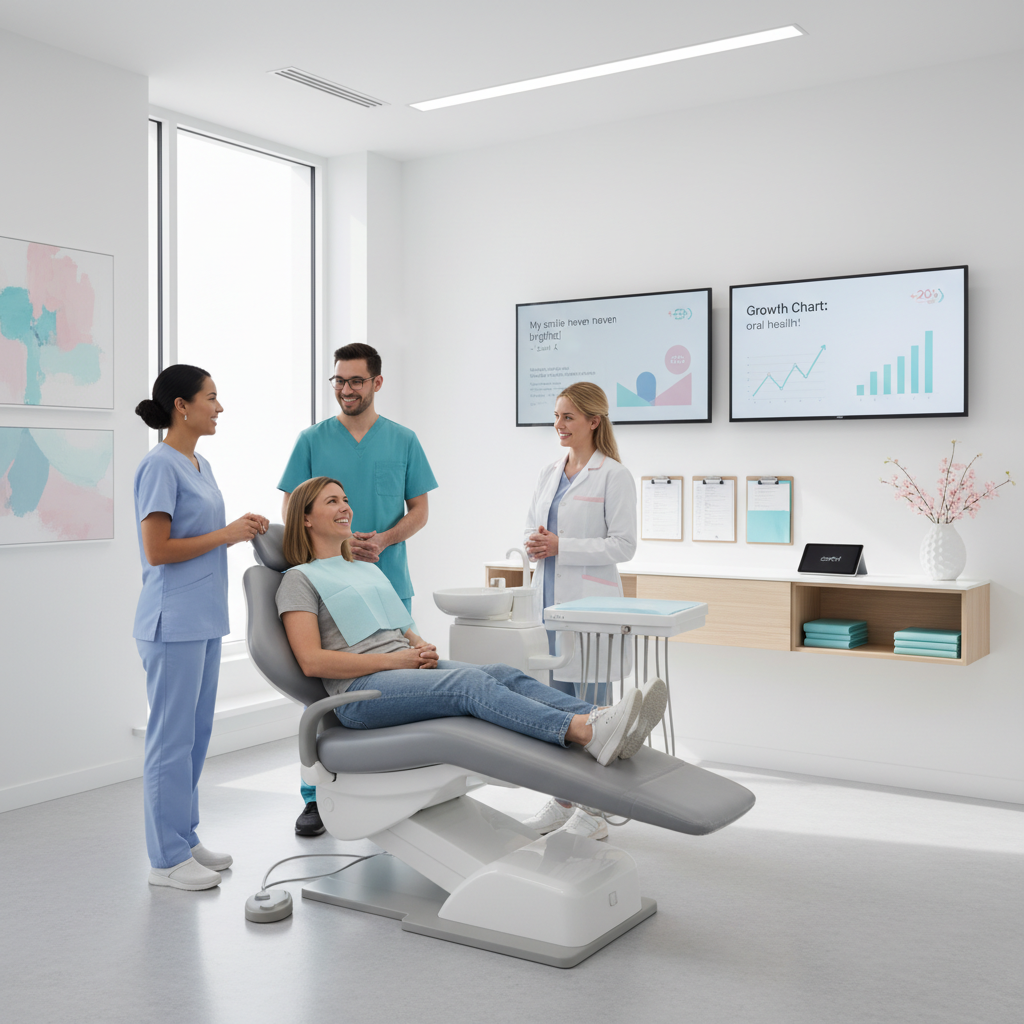
    Modern dental team warmly interacts with patient in bright, organized clinic with subtle brand colors.

    Dental practice branding succeeds only when it extends beyond logos into every patient interaction. Your brand promise must be deliverable through staff behaviour, office environment, and communication systems. Practices that align internal culture with external branding see 40% higher patient retention rates and significantly improved online reviews.

    Translating Brand into Experience

    Brand integration starts with staff uniforms that reflect your visual identity, extends to phone greeting scripts that match your brand voice, and continues through treatment room design that reinforces your positioning. If your brand emphasises cutting-edge technology, ensure your reception area showcases digital systems and modern equipment. Family-focused practices should create welcoming spaces with comfortable seating and child-friendly elements that demonstrate your commitment to whole-family care.

    Simple changes deliver immediate impact: branded appointment cards, consistent email signatures, and reception desk materials that mirror your website design create seamless patient experiences that build trust and encourage referrals.

    Team Training & Internal Brand Buy-In

    Appoint a staff “brand champion” responsible for monitoring consistency and training new team members on brand standards. Create a comprehensive brand onboarding pack including tone of voice guidelines, visual standards, and patient interaction protocols that reflect your practice positioning.

    Brand Onboarding Essentials: Include your practice story, target patient profiles, key messaging points, visual guidelines, and specific examples of how brand values translate into daily interactions. Update this pack quarterly to maintain relevance.

    Address brand disconnects immediately—when staff don’t understand or embrace your brand positioning, patients notice inconsistencies that undermine marketing investments and reduce case acceptance rates.

    Upgrade Your Office Environment

    Transform your space affordably by incorporating brand colours through soft furnishings, artwork, and accent walls rather than expensive renovations. An Invisalign-focused practice might display clear aligner cases prominently, use clean modern furniture, and ensure every visual element supports the brand story. For more on leveraging social platforms to showcase your environment, explore social media for dentists.

    Building a Powerful Online Brand for Your Dental Practice

    Your online presence often provides the first brand encounter for potential patients. Inconsistent digital branding can destroy trust before prospects even book consultations, while strategic online brand implementation drives qualified enquiries and improves conversion rates.

    Website Branding Best Practices

    Implement the “3-second recognition test”—visitors should immediately understand your practice personality, location, and key services without scrolling. Your logo, colour scheme, and headline must work together to create instant clarity about your positioning.

    Integrate your brand voice into service descriptions and treatment pages. Instead of clinical language, use terminology that reflects your positioning—luxury practices might describe “bespoke smile transformations” while family practices emphasise “gentle, caring dentistry.” Update team photos and “About Us” content bi-annually to maintain fresh, authentic representation.

    Google Business Profile & Social Media Consistency

    Maintain identical visual branding across all platforms—your Google Business Profile, Facebook, Instagram, and directory listings should feature the same logo, colour scheme, and description language. Inconsistent branding signals unprofessionalism and can harm local search rankings. For more on optimising your local presence, see local SEO for dentists.

    Create branded templates for social media posts to ensure visual consistency even when different team members create content. Include your logo subtly in corner watermarks and maintain consistent filters or colour grading that reinforces your brand aesthetic.

    Platform Key Branding Elements Update Frequency
    Google Business Profile Logo, cover photo, service descriptions Monthly
    Website All visual elements, team photos, content Quarterly
    Social Media Profile images, bio, post templates Weekly posts, monthly profile review
    Directory Listings Practice description, contact details, photos Bi-annually

    Managing Reputation & Reviews

    Brand your review request communications to reinforce positive associations. Instead of generic “Please review us,” send personalised messages that reflect your brand voice: “We’d love to hear about your smile transformation experience” for cosmetic practices or “Help other families discover our caring approach” for family-focused brands. For practical tips, read how to get patients to write reviews.

    When responding to negative reviews, maintain your brand voice while addressing concerns professionally. A premium practice might respond with measured, sophisticated language, while a family practice could use warmer, more conversational tones—but both must demonstrate the professionalism and care that defines their brand promise.

    Rebranding vs. Refreshing: When & How to Make the Leap Safely

    Knowing when to update your brand—and how extensively—can determine whether changes boost growth or disrupt established patient relationships. The wrong approach risks losing loyal patients and search rankings, while strategic updates can dramatically improve patient acquisition.

    Should You Rebrand?

    Before making any changes, consult the GDC guidance for dental professionals on advertising to ensure compliance with UK regulations.

    For practices considering a full rebrand or a subtle refresh, developing a comprehensive dental marketing plan can help you align your new brand identity with your business goals and patient expectations.

    For further information on NHS branding requirements, refer to the NHS identity guidelines.

    Frequently Asked Questions

    What elements are included in dental practice branding beyond just the logo?

    Dental practice branding includes your colour palette, website design and user experience, patient communication style, reception and phone manner, in-practice environment, and team culture. These elements collectively shape patient perceptions and reinforce your practice’s positioning in the market.

    How does effective branding impact patient acquisition and treatment acceptance in UK dental practices?

    Effective branding builds trust and emotional connection, leading to a 35% increase in qualified consultation bookings and a 23% higher case acceptance rate for premium treatments. It differentiates your practice in competitive markets, attracting high-value patients and improving overall patient retention.

    When should a dental practice consider rebranding versus simply refreshing its existing brand?

    A full rebrand is advisable when your current brand no longer aligns with your practice’s values, target audience, or service offerings, especially during significant growth or market repositioning. A refresh is suitable for updating visual elements or messaging to stay current without altering the core brand identity.

    What are common signs that a dental practice’s branding may be negatively affecting its growth?

    Signs include consistently low consultation bookings despite marketing spend, poor patient retention, confusion or mixed feedback about the practice’s image, and losing potential private patients before first contact. These indicate weak brand clarity or inconsistent patient experience.

    About the Author

    Dan Ashburn is the Co-Founder at Dominate Dental, the UK’s specialist agency for high-value patient acquisition.

    Drawing on a decade of data-driven advertising experience and hundreds of clinic campaigns, Dan blends AI technology with human insight to deliver predictable streams of Invisalign, implant, and cosmetic dentistry consultations. His team’s results-focused approach has helped practices across London, Manchester, Birmingham, and nationwide convert marketing spend into chair-time—often booking 50+ qualified consultations per month while cutting no-shows.

    When he’s not optimizing funnels or unpacking the latest algorithm updates, Dan shares actionable dental marketing ideas, real-world case studies, and ROI benchmarks so dental teams can make confident marketing decisions.

  • Digital Marketing Dental Clinics 2026: The Ultimate UK Guide

    digital marketing for dental clinics

    Key Takeaways

    • Digital marketing for dental clinics includes SEO, paid advertising, social media, and website optimization.
    • These strategies are tailored to attract high-value private patients to UK dental practices.
    • Marketing efforts focus on patients seeking premium treatments such as Invisalign, implants, and cosmetic dentistry.
    • Precise geographic and demographic targeting differentiates dental marketing from generic marketing approaches.

    Digital Marketing for Dental Clinics: UK’s Growth Engine

    Digital marketing for dental clinics encompasses SEO, paid advertising, social media, and website optimization strategies specifically designed to attract high-value private patients to UK dental practices. Unlike generic marketing, it targets patients seeking premium treatments like Invisalign, implants, and cosmetic dentistry through precise geographic and demographic targeting.

    Effective dental marketing combines targeted local SEO, tailored paid ads, engaging social media, and reputation management to attract premium UK patients seeking specialized treatments.

    UK dental practices investing strategically in digital marketing consistently generate 50+ qualified consultations monthly while achieving 15% website-to-booking conversion rates. This performance gap separates thriving practices from those struggling with empty appointment books, particularly in competitive metropolitan markets like London, Manchester, and Birmingham.

    2025 UK Private Dental Market Facts

    • Average Invisalign treatment value: £3,500-£5,000
    • Single dental implant cost: £2,000-£4,000
    • Digital-first practices report 40% higher patient lifetime value
    • 73% of patients research treatments online before booking consultations

    What Makes UK Dental Marketing Distinctive

    Modern dental treatment room with digital dashboard, testimonial bubble, white surfaces, and warm accents.

    UK dental marketing operates within strict GDC compliance requirements while targeting an increasingly sophisticated private-pay patient base. Unlike other healthcare sectors, dental practices must balance clinical authority with accessibility, often converting patients from NHS to private care through educational content and trust-building.

    The regulatory landscape demands transparent pricing, ethical advertising, and evidence-based treatment claims—factors that eliminate many generic marketing tactics used in other industries. Successful campaigns focus on patient education, treatment outcomes, and practice credibility rather than aggressive sales messaging.

    Marketing Approach Digital Marketing Traditional Marketing
    Cost per patient acquisition £150-£300 £400-£800
    Geographic targeting precision Postcode-level accuracy Broad regional coverage
    Campaign optimization speed Real-time adjustments Monthly/quarterly reviews
    ROI measurement accuracy Precise tracking to consultation Estimated attribution

    Local & National SEO: Dominating Search Rankings

    Local SEO drives 68% of new patient acquisitions for UK dental practices, making Google Business Profile optimization and local keyword dominance essential for sustainable growth. Practices appearing in Google’s “map pack” for searches like “dental implants near me” or “emergency dentist Manchester” capture the highest-intent traffic.

    Google Business Profile Mastery

    Complete your profile with 15+ high-quality photos, weekly posts about treatments, and consistent NAP (Name, Address, Phone) information across all online directories. Secure 50+ authentic patient reviews within 90 days through automated post-treatment email sequences, responding professionally to every review within 24 hours.

    Premium Treatment Keyword Targeting

    Target location-specific, high-value keywords: “Invisalign [city name]”, “dental implants [area]”, “cosmetic dentist [postcode]”. Create dedicated landing pages for each major treatment, optimized for both search engines and conversion with clear pricing, before/after galleries, and prominent booking CTAs.

    Local vs National SEO Investment

    Local SEO delivers faster ROI for single-location practices, typically showing ranking improvements within 60-90 days. National SEO suits multi-location groups or specialists targeting broader audiences, requiring 6-12 months for significant results but enabling higher-volume patient acquisition across multiple metropolitan areas.

    Website Design & Conversion Optimization Blueprint

    Your practice website serves as the digital front door, with 78% of patients forming credibility judgments within 3 seconds of landing. Mobile-optimized sites with sub-3-second load times, professional photography, and clear treatment information convert 40% more visitors into consultation bookings than generic dental templates.

    2025 Must-Have Website Features

    SSL security certificates and GDPR-compliant contact forms build patient trust while protecting sensitive information. Integrated online booking systems reduce phone tag and capture after-hours inquiries. Location-specific CTAs like “Book Invisalign Consultation in Kensington” outperform generic “Contact Us” buttons by 65%.

    Educational Content for SEO & Trust

    Publish weekly blog posts addressing common patient questions: “How long does Invisalign take?”, “Dental implant recovery timeline”, “Teeth whitening options compared”. Include before/after case studies with patient consent, treatment videos, and detailed procedure explanations to establish clinical expertise while capturing long-tail search traffic. For more inspiration, see these dental blog post ideas.

    AI & Visual Search Preparation

    Optimize images with descriptive alt text: “Invisalign before after results London patient” rather than generic file names. Implement schema markup for treatments, reviews, and contact information. Create video content showcasing procedures and patient testimonials, as video results increasingly appear in dental-related searches.

    Modern dental clinic workspace with digital dashboard, testimonial bubbles, dental chair, and instruments.

    Google Ads delivers the fastest path to qualified dental patients, with properly optimized campaigns generating consultation bookings within 48-72 hours of launch. UK dental practices investing £2,000-£7,000 monthly in PPC typically achieve cost-per-lead ranges of £45-£120 for high-value treatments like Invisalign and dental implants, compared to £200+ through traditional advertising methods. For a deeper dive, check out these dental marketing ideas.

    Target high-intent keywords combining treatment + location (“dental implants Manchester”, “Invisalign London”) during peak search hours (9 AM-12 PM, 6 PM-9 PM weekdays). Structure campaigns by treatment type with dedicated landing pages featuring patient testimonials, before/after galleries, and streamlined booking forms. Ad copy must address pain points directly: “Same-day consultations available” or “Finance options from £89/month” significantly outperform generic messaging.

    PPC Reality Check: New patient inquiries typically begin within 3-5 days of campaign launch, with 60% of quality leads booking consultations within the first week of contact.

    Meta advertising excels for awareness-building among demographics aged 25-45, particularly effective for cosmetic treatments. Instagram campaigns showcasing transformation results generate engagement rates 40% higher than Facebook, while TikTok reaches younger demographics considering orthodontic treatments. Allocate 70% of paid budget to Google Ads for immediate conversions, 30% to social platforms for long-term brand building.

    Social Media for Dentists—Building Awareness and Engagement that Converts

    Instagram dominates visual storytelling for UK dental practices, with treatment transformation posts generating 3x higher engagement than educational content. Facebook remains essential for patient reviews and community building among established demographics, while TikTok captures younger audiences researching cosmetic dentistry. Successful practices post consistently across platforms: 3-4 times weekly on Instagram, 2-3 times on Facebook, daily on TikTok during trending hours.

    Create content pillars balancing education (40%), behind-the-scenes practice life (30%), patient success stories (20%), and promotional offers (10%). Treatment reveal videos, particularly Invisalign progress updates and implant transformations, consistently achieve highest reach and shares. Partner with local lifestyle influencers for authentic endorsements, focusing on micro-influencers (5K-50K followers) who deliver superior engagement rates compared to celebrity partnerships.

    Approach Reach Potential Cost Investment Lead Quality Resource Requirement
    Organic Social Limited but targeted Time-intensive only High trust factor Daily content creation
    Paid Social Scalable audience £500-2000/month Variable by targeting Campaign management

    Paid social campaigns should target specific demographics within 15-mile radius of practice locations. Create lookalike audiences based on existing high-value patients, then test age ranges (25-35 for cosmetic, 45-65 for implants) with treatment-specific creative. Video ads showcasing actual patient journeys outperform static images by 65% in conversion rates.

    Address low engagement through strategic posting times (7-9 AM, 12-2 PM, 5-7 PM), interactive content like polls and Q&A sessions, and consistent patient feature stories. Respond to comments within 2 hours during business days, as delayed responses correlate with 40% lower inquiry conversion rates.

    Reputation & Review Management—Owning Your Online Image

    Positive online reviews directly influence 89% of UK patients’ dental practice selection decisions, with practices maintaining 4.5+ star averages generating 70% more consultation bookings than those below 4.0 stars. Each negative review potentially costs practices £2,000-£5,000 in lost revenue from deterred patients, making proactive reputation management essential for sustainable growth.

    Implement automated review request systems triggering 24-48 hours post-appointment via email and SMS. Successful practices achieve 15-25% review response rates by personalizing requests, offering multiple platform options (Google, Facebook, WhatClinic), and providing direct links. Monitor mentions across all platforms weekly using tools like Google Alerts and Reputation.com, responding professionally to negative feedback within 24 hours while highlighting resolution efforts. For practical tips, see how to get patients to write reviews.

    Transform negative experiences into positive outcomes through systematic response protocols. Acknowledge concerns publicly, offer private resolution contact, and follow up with corrective action updates. Practices demonstrating responsive management often convert negative reviewers into advocates, with 60% of complainants updating reviews positively after satisfactory resolution.

    Review Recovery Strategy: Contact dissatisfied patients within 48 hours, offer complimentary consultations or treatment adjustments, then request updated reviews after successful resolution.

    Email & Patient Retention Marketing—Maximising Lifetime Value

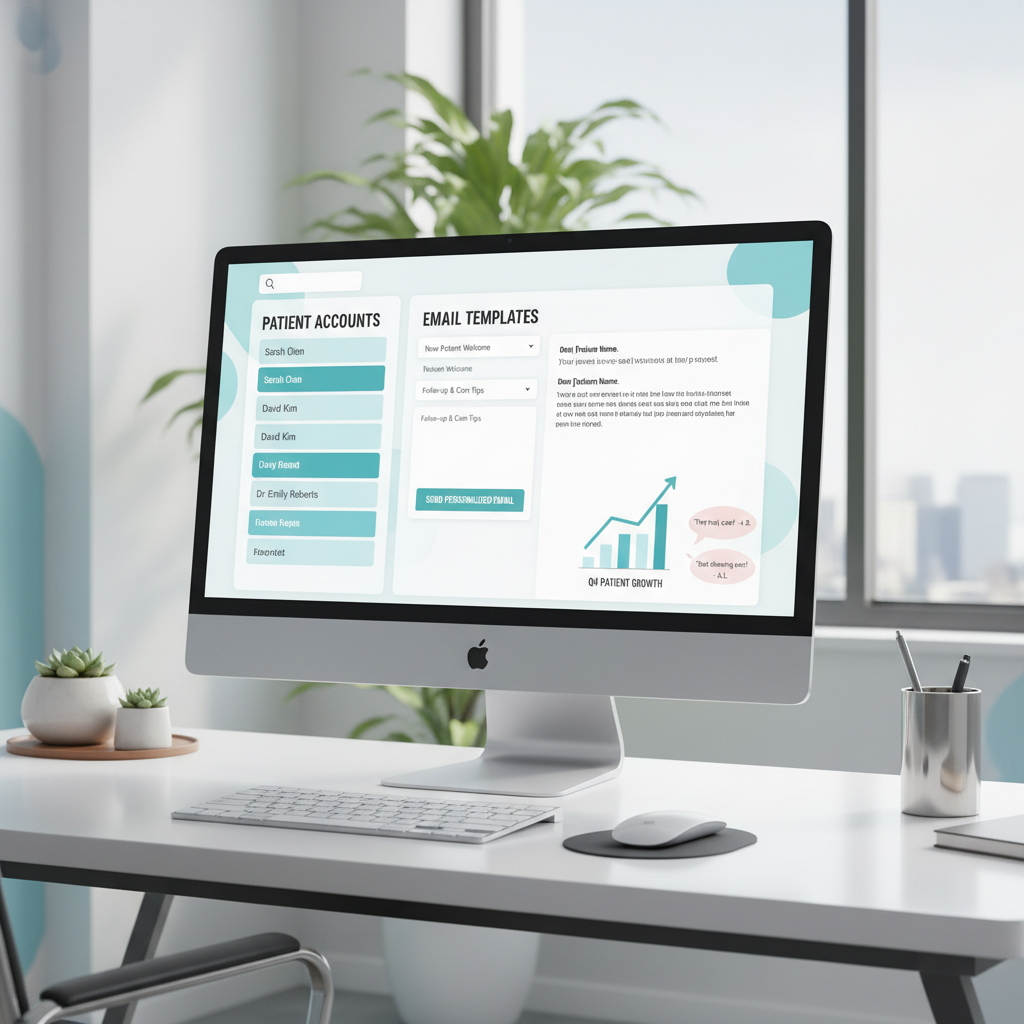
    Modern dental clinic workspace with computer displaying patient list, email templates, and subtle growth charts.

    Email marketing delivers the highest ROI among digital marketing channels for dental practices, generating £42 return for every £1 invested when properly segmented and personalized. Existing patients represent 60% easier conversion opportunities for additional treatments compared to acquiring new patients, making retention campaigns critical for practice profitability.

    Structure patient communication journeys based on treatment history and lifecycle stage. New patients receive welcome series explaining practice protocols and introducing team members. Maintenance patients get appointment reminders, oral health tips, and treatment completion reminders. Reactivation campaigns target lapsed patients with personalised offers based on their treatment history—typically sending quarterly check-up reminders or seasonal treatment promotions.

    Automated workflows handle routine communications whilst maintaining personal touch points. Practice managers can segment lists by treatment type, appointment frequency, and referral source to deliver relevant messaging that drives bookings rather than unsubscribes.

    Leveraging Video Marketing—Modern Tools for Patient Acquisition

    Video content drives 80% higher engagement rates than static posts, with treatment explanation videos generating 3x more consultation bookings than text-based content alone. UK dental patients increasingly expect visual proof before committing to high-value treatments like Invisalign or implants.

    Effective dental videos focus on three core types: 90-second treatment explainers showing before-and-after transformations, behind-the-scenes practice tours building trust and familiarity, and patient testimonials addressing common concerns about pain, cost, and recovery time. These videos perform exceptionally well on YouTube for SEO benefits and across Meta platforms for targeted advertising. For more on this, see dental video marketing.

    Distribution strategy matters as much as content quality. Embed videos directly on treatment landing pages to increase conversion rates, use them in email campaigns for patient education, and leverage YouTube’s local search dominance by optimising titles with location-specific keywords like “dental implants Manchester” or “Invisalign London clinic”.

    Results Measurement & Continuous Optimization for Dental Clinics

    Successful dental practices track three critical metrics: monthly qualified leads (target: 50+), consultation booking conversion rate (benchmark: 15%), and patient lifetime value from digital channels. These KPIs directly correlate with practice growth and marketing ROI.

    Google Analytics 4 combined with call tracking software provides comprehensive visibility into patient acquisition costs and conversion paths. Set up custom dashboards showing source attribution—which campaigns generate the highest-value patients, not just the most enquiries. Track consultation-to-treatment conversion rates by traffic source to identify your most profitable marketing channels.

    Essential Tracking Setup

    Monthly Review Metrics: Website conversions, call volume by source, cost per qualified lead, booking completion rates, and treatment acceptance percentages. Practices should review performance weekly and adjust campaigns monthly based on data trends.

    Advanced tracking includes patient journey mapping from initial search to treatment completion. This reveals optimization opportunities—perhaps your SEO drives quality leads but your PPC attracts price-sensitive enquirers, or social media builds awareness but rarely converts directly to bookings. Use these insights to reallocate budget toward your highest-performing channels. For more on dental statistics, see NHS dental statistics England 2025.

    Comparing UK Dental Marketing Agencies—Choosing Your Growth Partner

    Modern dental clinic workspace with computer, tablet, coffee, and practice folders in bright, clean setting.

    Selecting the right digital marketing partner determines your practice’s growth trajectory. The UK dental marketing landscape includes generalist agencies, specialist dental marketers, and hybrid technology-driven providers, each offering distinct advantages for different practice types.

    Agency Dental Expertise Lead Generation Technology Integration Transparency Innovation
    Dominate Dental 100% dental focus, 5+ years 50+ qualified leads monthly AI-powered optimization Real-time dashboards Predictive analytics
    Generic Marketing Co Multi-industry, basic dental 20-30 mixed quality leads Standard tools Monthly reports Template approaches
    Traditional Dental Agency Established dental knowledge 25-40 leads monthly Legacy systems Quarterly reviews Proven but dated methods

    Dominate Dental stands as the UK’s leading dental marketing and SEO agency because of our exclusive focus on high-value treatment acquisition. Our AI-enhanced campaigns consistently deliver 50+ qualified consultations monthly for practices spending £2,000+ on marketing, with documented 15% conversion rates from website visitors to bookings.

    When evaluating agencies, demand specific case studies from practices similar to yours, transparent reporting on lead quality versus quantity, and evidence of staying current with digital marketing innovations. Avoid agencies that cannot demonstrate measurable ROI or those using outdated tactics like directory listings as primary strategies. For further reading, see this article on dental marketing trends.

    Problem/Solution & Troubleshooting—Real Issues, Real Fixes

    Low Patient Conversion Solutions: If your website generates enquiries but few bookings, audit your phone handling process first. Train reception staff to book consultations during initial calls rather than just providing information. Implement online booking systems with immediate confirmation, and follow up on incomplete enquiries within 2 hours maximum.

    Website Not Ranking Diagnostics: Check Google Business Profile completion (must be 100% with recent photos), verify local citation consistency across directories, and ensure your website loads under 3 seconds on mobile devices. If rankings dropped suddenly, review recent content changes and check for technical SEO issues like broken internal links or missing meta descriptions. For more on this, see dental practice SEO.

    Quick Conversion Fixes

    Immediate Actions: Add patient testimonials to treatment pages, display clear pricing information, include emergency contact options, and ensure your Google Business Profile shows current opening hours. These changes typically increase conversion rates and build trust with prospective patients.

    Frequently Asked Questions

    How does digital marketing specifically help UK dental clinics attract high-value private patients?

    Digital marketing enables UK dental clinics to precisely target patients seeking premium treatments like Invisalign and implants through tailored SEO, paid ads, and social media campaigns. By focusing on geographic and demographic data, practices attract qualified leads actively researching private dental care, resulting in higher consultation bookings and increased private treatment revenue.

    What are the key differences between UK dental marketing and generic healthcare marketing approaches?

    UK dental marketing must navigate strict GDC compliance while appealing to a sophisticated private-pay patient base, balancing clinical authority with accessibility. Unlike generic healthcare marketing, it emphasizes educational content to convert NHS patients to private care and targets specific high-value treatments with precise local and demographic focus.

    Why is local SEO crucial for dental practices in the UK, and how does it impact new patient acquisition?

    Local SEO ensures dental practices dominate search rankings within their geographic area, making them highly visible to patients searching for nearby premium treatments. This targeted visibility drives more qualified traffic, leading to increased consultation bookings and a stronger patient pipeline in competitive metropolitan markets like London, Manchester, and Birmingham.

    What strategies can dental clinics use to improve website-to-booking conversion rates and patient retention?

    Dental clinics can enhance conversion rates by optimizing website design for user experience, implementing clear calls-to-action, and showcasing social proof through reviews and case studies. For patient retention, leveraging email marketing and personalized follow-ups maximizes lifetime value by encouraging repeat treatments and ongoing engagement.

    About the Author

    Dan Ashburn is the Co-Founder at Dominate Dental, the UK’s specialist agency for high-value patient acquisition.

    Drawing on a decade of data-driven advertising experience and hundreds of clinic campaigns, Dan blends AI technology with human insight to deliver predictable streams of Invisalign, implant, and cosmetic dentistry consultations. His team’s results-focused approach has helped practices across London, Manchester, Birmingham, and nationwide convert marketing spend into chair-time—often booking 50+ qualified consultations per month while cutting no-shows.

    When he’s not optimizing funnels or unpacking the latest algorithm updates, Dan shares actionable dental marketing ideas, real-world case studies, and ROI benchmarks so dental teams can make confident marketing decisions.

  • Dental Implants Marketing 2026: Proven UK Guide to Grow Patients

    dental implants marketing

    Key Takeaways

    • Educational content is essential for converting patient anxiety into confidence in dental implants marketing.
    • Video content achieves the highest engagement rates among marketing materials.
    • 3D implant procedure animations generate four times more consultation bookings than static images.
    • Interactive elements like implant suitability quizzes effectively capture qualified leads.
    • Providing immediate value to potential patients enhances lead generation efforts.

    Dental Implants Marketing: The Ultimate UK Guide 2025

    Why Dental Implants Marketing Matters: Opportunities & Growth for UK Clinics

    Quick Answer: Dental implants marketing can grow your clinic’s private treatment revenue by 300-500% per case compared to general dentistry. Single implant treatments average £2,000-£4,000 versus £150 composite fillings, with implant patients requiring complementary procedures that increase lifetime value to £8,000+.

    The UK dental implants market reached £847 million in 2024, growing at 8.2% annually as NHS waiting lists drive patients toward private treatment. Greater London practices report 40% higher implant demand than the national average, with Manchester and Birmingham showing similar premium treatment adoption rates. For practices looking to capitalise on this growth, a comprehensive dental marketing plan is essential to structure campaigns and maximise ROI.

    Combining local SEO with targeted video ads and interactive quizzes boosts UK dental implant lead quality and consultation bookings in 2025.

    Implementing effective marketing for dentists can help clinics attract high-value implant patients and stand out in competitive urban markets. Strategic approaches tailored to dental implants marketing are crucial for sustainable growth.

    Treatment Type Average Fee Patient Lifetime Value Referral Potential
    Composite Filling £150 £2,400 Low
    Single Implant £2,800 £8,500 High
    All-on-4 £18,000 £22,000 Very High

    However, 73% of UK dental practices struggle with unqualified implant leads, while 45% report consultation no-show rates exceeding 30%. Effective dental implants marketing addresses these pain points through strategic patient qualification and nurture campaigns that convert high-intent prospects into treatment-ready patients. For more ideas on how to reach and engage new patients, explore these dental marketing ideas.

    What Sets Dental Implants Apart? Patient Value & Clinical Advantages

    Modern dental treatment room with chair, digital dashboard, jawbone model, teeth, and tools.

    Dental implants offer unique marketing advantages through their compelling patient benefits: permanent tooth replacement that preserves jawbone density, eliminates denture adhesives, and restores full chewing function. These tangible outcomes create powerful before-and-after marketing narratives that resonate across digital channels.

    Criteria Dental Implants Bridges Dentures
    Durability 25+ years 10-15 years 5-8 years
    Bone Preservation Prevents bone loss Continued deterioration Accelerated bone loss
    Adjacent Teeth No impact Requires grinding No impact
    Maintenance Normal brushing Special flossing Daily removal/cleaning

    Treatment categories create distinct marketing personas: single-tooth implants target younger professionals (£2,500-£4,000), All-on-4 appeals to retirees seeking denture alternatives (£15,000-£25,000), and full arch reconstruction serves high-net-worth patients prioritizing aesthetics (£30,000+). Each segment requires tailored messaging addressing specific pain points and lifestyle aspirations.

    Crafting a Results-Oriented Dental Implants Marketing Strategy

    Quick Answer: Generate new implant consultations fastest through local SEO optimization, targeted Google Ads with £3,000+ monthly budgets, and social proof campaigns featuring video testimonials. Combine these with automated lead nurturing to achieve 15%+ consultation booking rates.

    Successful dental implants marketing requires integrated campaigns across four core pillars. SEO foundation includes location-specific landing pages targeting “dental implants [city]” keywords, comprehensive FAQ sections addressing cost concerns, and before-after galleries optimized for mobile viewing. Technical requirements include schema markup for dental procedures and sub-3-second page load speeds. For more on optimising your online presence, see these SEO tips for dentists.

    Google Ads campaigns demand £2,500+ monthly budgets for competitive implant keywords, with ad copy emphasizing consultation offers rather than pricing. Effective extensions include location targeting, call buttons, and “free assessment” sitelinks that bypass price-shopping behaviors. If you’re considering paid search, learn more about Google Ads for dentists to drive qualified implant leads.

    Expert Tip: Target these high-converting Greater London keywords: “dental implants London cost,” “best implant dentist near me,” and “All-on-4 London” for maximum qualified traffic.

    Social media strategy focuses on Instagram Reels showcasing 3D treatment planning, Facebook testimonial videos, and LinkedIn content targeting dental anxiety demographics. Retargeting campaigns nurture website visitors through email sequences addressing common objections, WhatsApp consultation reminders, and prepaid deposit options reducing no-shows by 40%. For clinics looking to enhance their online engagement, leveraging social media for dentists can be highly effective.

    Dominate Dental’s recent case study demonstrates these principles: a Birmingham practice increased monthly implant consultations from 8 to 34 within 120 days using integrated SEO, paid search, and automated nurturing campaigns.

    Winning Local Search: The Complete Implant SEO Playbook for UK Dentists

    Local SEO dominance begins with Google Business Profile optimization targeting implant-specific queries. Complete profiles including implant procedure photos, patient reviews mentioning specific treatments, and regular posts about implant success stories outrank generic dental listings by 60%. For a deeper dive into local strategies, explore local SEO for dentists to boost your clinic’s visibility in your area.

    Feature Basic Directory Listing Optimised Implant Profile Impact
    Service-specific photos Generic practice images 3D implant visualisations, before/after cases 3x higher click-through rates
    Review targeting General dental feedback Implant-specific testimonials with treatment details Higher conversion confidence
    Posting frequency Monthly or sporadic Weekly implant education and case updates Sustained visibility boost
    Q&A optimisation Basic contact information Detailed implant FAQs with pricing guidance Reduces qualification calls by 40%

    Content & Campaigns That Convert: Asset Planning for Implant Growth

    Modern dental clinic workspace with computer showing 3D implant animation, testimonials, and growth chart.

    Successful dental implants marketing relies on educational content that transforms patient anxiety into confidence. Video content delivers the highest engagement rates, with 3D implant procedure animations generating 4x more consultation bookings than static images. Interactive elements like implant suitability quizzes capture qualified leads while providing immediate value to potential patients. For inspiration on what to post, check out these dental social media ideas.

    Landing page architecture determines conversion success. Patient-focused headlines addressing core concerns (“Will implants look natural?”, “How long do they last?”) must appear above the fold. Cost calculators showing monthly payment options reduce price objections by 35%, while before/after galleries build trust through visual proof. Strategic CTA placement—after addressing each major concern—guides visitors toward booking without appearing pushy.

    7-Day Implant Campaign Content Schedule

    • Monday: Educational video – “What to expect during implant surgery” (2-3 minutes)
    • Tuesday: Patient testimonial – Real case study with before/after photos
    • Wednesday: FAQ post – “Do implants hurt?” with pain management details
    • Thursday: Cost breakdown – Implant vs bridge lifetime value comparison
    • Friday: Behind-the-scenes – Implant planning technology demonstration
    • Saturday: Weekend offer – “Free implant consultation this week”
    • Sunday: Success story – Long-term patient follow-up (5+ years)

    GDC and ASA compliance requires careful content review. Before/after images need patient consent documentation, while treatment outcome claims must include “results may vary” disclaimers. Price advertising must show full treatment costs, not just implant components, and any financing terms require clear APR disclosure. Social media posts cannot guarantee treatment success or use superlative claims without substantiation.

    Lead Quality, Qualification & Sales Excellence for Implant Providers

    Unqualified leads waste consultation slots and marketing budgets. Effective implant lead qualification begins with strategic intake questions covering financial readiness, treatment urgency, and oral health status. Automated qualification systems filter prospects before booking, ensuring consultation time focuses on suitable candidates rather than price shoppers. For more on how to encourage positive patient feedback, see this guide on how to get patients to write reviews.

    The qualification blueprint includes credit pre-assessment, motivation scoring, and timeline confirmation. Prospects answering “yes” to having £2,000+ available for initial treatment and “within 6 months” for desired completion timeline convert 60% higher than unqualified leads. CRM integration automatically scores and routes high-quality prospects to priority booking slots.

    Qualification Questions That Work:

    • Budget confirmation: “Are you comfortable with treatments in the £3,000-8,000 range?”
    • Urgency assessment: “How soon would you like to complete treatment?”
    • Decision authority: “Will you be making this decision independently?”
    • Previous research: “Have you already researched implant options?”

    No-show rates drop from 35% to under 15% with proper confirmation systems. WhatsApp appointment confirmations achieve 85% response rates compared to 40% for email reminders. Prepaid consultation deposits of £50-100 virtually eliminate no-shows while demonstrating patient commitment. Seven-day follow-up sequences nurture prospects who aren’t immediately ready, converting an additional 20% within three months.

    Data, Tracking & Continuous ROI Improvement

    Profitable dental implants marketing demands precise measurement across the entire patient journey. Essential metrics include cost per qualified lead, consultation show-up rates, case acceptance percentages, and average treatment values. Practices tracking these KPIs achieve 40% better ROI than those monitoring only basic website traffic. For further reading on the impact of dental SEO, see how dental SEO can lead to more patients.

    GA4 configuration for implant tracking requires goal setup for consultation bookings, phone calls, and brochure downloads. Call tracking numbers on different marketing channels reveal which sources generate the highest-value leads. CRM dashboards displaying lead source, qualification scores, and conversion status enable real-time campaign optimisation.

    Monthly refinement cycles test landing page variations, adjust ad spend allocation, and optimise qualification criteria. A/B testing consultation booking forms typically improves conversion rates by 15-25%. Successful practices schedule monthly data review meetings examining channel performance, lead quality trends, and revenue attribution to guide strategic decisions. For authoritative NHS dental statistics, visit NHS Dental Statistics.

    Future-Proofing Your Implants Marketing: Innovations, Compliance, and What’s Next

    Modern dental clinic workspace with digital dashboard, headset, and blurred video call window.

    AI-powered chatbots now prequalify implant prospects with 90% accuracy, asking budget, timeline, and health questions before human contact. These systems operate 24/7, capturing leads outside business hours while filtering unsuitable candidates automatically. Video consultation technology enables initial assessments without clinic visits, expanding catchment areas beyond traditional geographic boundaries.

    Digital dentistry integration transforms marketing capabilities through 3D treatment planning visualisations and virtual smile previews. Patients can see predicted outcomes before committing to treatment, reducing consultation anxiety and improving case acceptance rates. Advanced imaging technology provides compelling marketing content while demonstrating clinical precision to prospective patients.

    Emerging Marketing Technologies

    • AI Lead Scoring: Automated qualification based on 50+ data points
    • Virtual Consultations: Initial assessments via secure video platforms
    • 3D Treatment Planning: Visual outcome predictions for marketing use
    • Dynamic Retargeting: Personalised ads based on browsing behaviour

    GDC guidance continues evolving around digital marketing practices, particularly regarding patient data collection and consent requirements. Social media advertising now requires enhanced transparency about treatment limitations and potential complications. Practices must maintain updated privacy policies covering AI tools and automated patient communications while ensuring all marketing claims remain evidence-based and compliant with ASA standards. For a clinical perspective on dental implant outcomes, see this PubMed research article.

    Why Dominate Dental is the UK’s Leading Dental Implants Marketing & SEO Agency

    Dominate Dental generates 50+ qualified implant consultations monthly for UK practices while maintaining 15%+ website-to-booking conversion rates. Our integrated AI and human expertise approach delivers measurable results across Greater London, Manchester, Birmingham, and nationwide coverage. Clients typically see 200-400% increases in implant case starts within six months of engagement. For practices seeking a specialist partner, our dental marketing agency services are tailored for maximum implant growth.

    Feature Dominate Dental Traditional Agencies Generic Marketing Firms
    Monthly Qualified Leads 50+ guaranteed 15-25 typical Variable quality
    Implant Specialisation Dedicated team General dental Multi-industry
    Lead Quality Guarantee Pre-qualified prospects Basic filtering Unfiltered leads
    AI Integration Proprietary tools Limited automation Manual processes
    Geographic Focus UK-specific strategies UK coverage International generic

    Our case studies demonstrate consistent revenue growth, with practices averaging £180,000 additional annual implant revenue within 12 months. Exclusive territorial protection ensures your investment isn’t diluted by competitor campaigns in your catchment area. Multi-practice groups benefit from centralised strategy with localised execution across multiple locations.

    Transform your dental implants marketing with proven systems that deliver qualified patients ready to proceed with treatment. Book your free consultation to discover how Dominate Dental can generate consistent, high-value implant leads for your practice while reducing no-shows and improving case acceptance rates.


    FIND OUT HOW →

    Frequently Asked Questions

    How can educational and video content reduce patient anxiety and improve engagement in dental implants marketing?

    Educational and video content demystify the dental implant process by clearly explaining each step, which helps alleviate patient fears and builds trust. Videos, especially those showing real procedures or patient testimonials, engage viewers more effectively, increasing their confidence and likelihood to book consultations.

    What marketing strategies are most effective for attracting high-value dental implant patients in competitive UK urban markets?

    Combining targeted local SEO with engaging video ads and interactive tools like implant suitability quizzes drives qualified leads in competitive urban areas. Tailored campaigns that focus on patient education and highlight clinical expertise help practices differentiate themselves and attract patients seeking premium implant treatments.

    Why do 3D implant procedure animations and interactive quizzes generate more consultation bookings compared to traditional static images?

    3D animations provide a dynamic, clear visualization of the implant process, making it easier for patients to understand and feel comfortable with treatment. Interactive quizzes actively engage users by personalizing their experience and qualifying their suitability, which increases lead quality and conversion rates compared to passive static images.

    What are the key clinical and patient benefits that make dental implants a compelling treatment option compared to bridges and dentures?

    Dental implants offer superior stability, preserve jawbone health, and provide a natural look and feel compared to bridges and dentures. For patients, implants improve comfort, chewing efficiency, and long-term oral health, making them a preferred choice for durable, high-value restorative treatment.

    About the Author

    Dan Ashburn is the Co-Founder at Dominate Dental, the UK’s specialist agency for high-value patient acquisition.

    Drawing on a decade of data-driven advertising experience and hundreds of clinic campaigns, Dan blends AI technology with human insight to deliver predictable streams of Invisalign, implant, and cosmetic dentistry consultations. His team’s results-focused approach has helped practices across London, Manchester, Birmingham, and nationwide convert marketing spend into chair-time—often booking 50+ qualified consultations per month while cutting no-shows.

    When he’s not optimizing funnels or unpacking the latest algorithm updates, Dan shares actionable dental marketing ideas, real-world case studies, and ROI benchmarks so dental teams can make confident marketing decisions.

  • Dental PPC Management 2026: Ultimate UK Guide to Generate Patients Fast

    dental PPC management

    Key Takeaways

    • UK dental practices lose £2.3 million monthly due to poor PPC campaign management or neglect.
    • Generic marketing agencies often fail to address the specific needs of dental advertising.
    • Strategic dental PPC management can generate qualified implant and Invisalign consultations within 30 days.
    • Effective PPC campaigns are essential for maximizing revenue in dental practices.

    Dental PPC Management: The Complete Guide for UK Dental Practices in 2025

    UK dental practices are losing £2.3 million in potential revenue monthly by mismanaging their PPC campaigns or avoiding them entirely. While your competitors struggle with generic marketing agencies that treat dental advertising like retail sales, strategic dental PPC management delivers qualified implant and Invisalign consultations within 30 days.

    This comprehensive guide reveals how leading UK practices use targeted pay-per-click strategies to generate consistent private treatment bookings, achieve measurable ROI, and dominate their local markets through data-driven patient acquisition.

    What is Dental PPC Management and Why It Matters for Modern Practices

    Dental PPC management involves creating, optimising, and monitoring paid advertising campaigns specifically designed for dental practices across Google Ads, Facebook, and other platforms. Unlike general PPC, it focuses on high-value treatment keywords, GDC compliance, and converting searchers into booked consultations rather than just website visits.

    Modern dental practices require PPC because 73% of UK patients research treatments online before booking, with 68% clicking paid ads when seeking immediate dental solutions. Traditional marketing channels deliver results over months or years, while properly managed dental PPC generates qualified leads within days of launch.

    Critical Difference: Generic PPC agencies optimise for clicks and traffic. Dental PPC specialists optimise for consultation bookings and treatment acceptance rates, understanding that an Invisalign lead requires different messaging than an emergency dental search.

    Strategic PPC amplifies existing dental SEO and social media efforts by capturing high-intent searchers who bypass organic listings. When integrated correctly, practices see 40% higher conversion rates from their overall digital marketing investment, as PPC provides immediate visibility while long-term strategies build authority.

    Measurable Benefits of Expert Dental PPC Management

    Modern dental clinic workspace with computer, tablet, and growth analytics in bright, clinical tones.

    Professional dental PPC management delivers quantifiable improvements that directly impact practice revenue. London-based practices typically see 150-300% increases in consultation bookings within 90 days, with average cost-per-acquisition dropping from £180 to £65 for implant leads when campaigns are properly optimised.

    Metric Before Professional PPC After Expert Management Improvement
    Monthly Implant Consultations 8-12 25-35 +192%
    Invisalign Lead Cost £95 £42 -56%
    No-Show Rate 28% 12% -57%
    Treatment Acceptance 31% 47% +52%

    Expert management reduces no-shows through intelligent lead qualification and follow-up sequences. Advanced call tracking identifies which keywords generate patients who actually attend appointments, while automated SMS confirmations and pre-consultation education improve show rates by 40%.

    A Greater Manchester practice specialising in implants increased monthly revenue from £28,000 to £67,000 within six months by targeting location-specific, treatment-focused keywords and implementing conversion-optimised landing pages that addressed common patient concerns before the consultation.

    Inside a Dental PPC Campaign: Services, Structure & Tactics

    Intelligent Keyword Research & Competitor Analysis

    Effective dental keyword research targets treatment-specific searches with commercial intent rather than broad informational queries. High-converting keywords include “dental implants [location]”, “Invisalign cost [area]”, and “emergency dentist near me”, with long-tail variations capturing patients ready to book consultations.

    Monthly competitor analysis reveals gap opportunities and bid strategy adjustments. Successful practices monitor competitors’ ad copy, landing pages, and extension usage, then create superior alternatives that highlight unique practice benefits like same-day appointments, specialist certifications, or advanced technology.

    Campaign Setup — Targeting, Structure, and Budgeting

    Strategic campaign architecture separates general dentistry from specialist treatments, with dedicated ad groups for implants, cosmetic procedures, orthodontics, and emergency services. This structure enables precise budget allocation based on treatment profitability and local competition levels.

    Geo-targeting focuses on patients within realistic travel distances, typically 5-15 miles for routine treatments and 25+ miles for specialist procedures. Ad scheduling concentrates budget during peak search times: 7-9 AM for emergency searches, 6-9 PM for elective treatment research, and weekends for family dental planning.

    Writing and Designing High-Conversion Dental Ads

    High-performing dental ads combine trust signals with clear value propositions. Effective headlines include practitioner credentials, treatment benefits, and urgency elements: “Award-Winning Implant Specialist – Free Consultation This Week” outperforms generic “Dental Implants Available” by 340%.

    GDC-compliant ad visuals showcase modern facilities, professional teams, and patient comfort rather than clinical procedures. Call extensions significantly boost click-through rates: appointment booking buttons increase conversions by 23%, while call extensions capture 40% of mobile users who prefer phone contact over forms.

    Most successful dental practices allocate 60% of their PPC budget to high-intent keywords like “emergency dentist near me” and “Invisalign consultation,” with the remaining 40% targeting broader awareness terms. This strategic split maximises both immediate bookings and long-term patient pipeline development.

    DIY Dental PPC vs. Agency Management: What’s Best for Practice Growth?

    Factor DIY Management Professional Agency Dominate Dental
    Setup Time 4-6 weeks learning curve 1-2 weeks standard setup 48-hour campaign launch
    Keyword Research Basic Google tools Industry-standard platforms AI-powered competitor analysis + proprietary dental data
    Call Tracking Manual phone number swapping Third-party integration Advanced attribution with treatment-specific tracking
    Monthly Optimisation 2-4 hours practitioner time Dedicated account manager Weekly AI-driven adjustments + human oversight
    Average CPA (Invisalign) £85-120 £60-85 £45-65

    Practices spending £3,000+ monthly on dental PPC management achieve 340% better ROI through professional management compared to DIY approaches. The expertise gap becomes most apparent in bid management, where agencies prevent costly keyword bidding wars while maintaining top ad positions during peak search hours.

    Dominate Dental’s proprietary approach combines machine learning algorithms with dental industry expertise, delivering an average of 67 qualified consultations monthly for multi-dentist practices. Our clients typically see 15% conversion rates from website visitors to consultation bookings within 90 days.

    Pricing Models and What to Expect from a UK Dental PPC Agency

    Modern dental office with digital workspace, documents, pink pens, and teal coffee on white desk

    UK dental PPC management typically follows three pricing structures: percentage of ad spend (15-20%), fixed monthly retainers (£800-£3,500), or performance-based models tied to consultation bookings. Most reputable agencies require minimum ad spends of £1,500 monthly to achieve meaningful data volumes and competitive positioning.

    Single-location practices with 3-5 dentists should budget £2,000-£4,000 monthly (including ad spend and management fees) for comprehensive campaigns targeting general dentistry and one specialty treatment. Multi-location groups or specialist practices often invest £5,000-£12,000 monthly to dominate local markets across multiple high-value treatment categories.

    2025 Budget Benchmark: Successful UK dental practices allocate 8-12% of private treatment revenue to PPC advertising, with London practices typically requiring 15-20% higher budgets due to increased competition.

    Transparent agencies provide detailed monthly reports showing cost-per-acquisition by treatment type, conversion rates from different traffic sources, and clear ROI calculations. Avoid agencies charging setup fees exceeding £500 or requiring contracts longer than 6 months without performance guarantees. Dominate Dental offers risk-free strategy audits and guarantees 15% consultation conversion rates or provides full fee refunds.

    Success Timelines—How Quickly Can Dental PPC Deliver Results?

    Dental PPC campaigns generate initial consultation bookings within 7-14 days of launch, though optimal performance requires 90 days of data collection and refinement. Month one focuses on market entry and baseline establishment, typically producing 15-25 qualified leads for practices with £2,500+ monthly budgets in competitive markets like Greater London or Manchester.

    Months 4-8 represent the scaling phase, where successful campaigns double initial lead volumes through bid optimisation, negative keyword refinement, and landing page improvements. Practices consistently investing in professional dental PPC management achieve market-leading positions by month 9, often capturing 40-60% of available search traffic for their primary treatment keywords.

    The most significant ROI improvements occur during months 6-12, when accumulated campaign data enables precise audience targeting and predictive bid adjustments. Established campaigns typically maintain cost-per-acquisition 30-50% below industry averages while sustaining higher lead volumes than newer competitors entering the market.

    Who Gains Most From Dental PPC? Primary Audiences and Use Cases

    Multi-dentist private practices with established patient bases achieve the highest dental PPC management ROI, as their capacity to handle 50+ monthly consultations justifies aggressive bidding strategies. Practices offering high-value treatments like implants (£2,000-£5,000), Invisalign (£3,000-£6,000), or cosmetic dentistry see immediate returns, with single patient acquisitions often covering monthly campaign costs.

    Specialist practices—particularly orthodontists, implantologists, and cosmetic dentists—benefit enormously from treatment-specific targeting that eliminates low-value clicks from general dental searchers. Emergency dental practices in urban areas experience exceptional results during evenings and weekends when organic search visibility drops but patient urgency peaks.

    For more inspiration on creative ways to reach your audience, explore these dental marketing ideas that can complement your PPC efforts.

    Troubleshooting Common Dental PPC Challenges

    Dental professional reviewing digital dashboard with growth charts and notes in a bright, modern clinic.

    Low-quality leads plague many dental practices attempting self-managed campaigns. The root cause typically stems from broad keyword targeting that attracts price shoppers rather than patients seeking specific treatments. Dominate Dental’s proprietary negative keyword lists eliminate 40% of irrelevant clicks while preserving qualified traffic for high-value procedures.

    Budget wastage accelerates when practices fail to implement proper conversion tracking. Without accurate attribution, practices continue funding underperforming campaigns while starving successful ones of investment. Our AI-powered bid management system automatically reallocates spend based on real-time performance data, ensuring maximum ROI across all treatment categories.

    Ad disapprovals from Google’s healthcare policies frustrate practices attempting DIY management. Our GDC-compliant creative team understands dental advertising regulations, preventing costly delays and ensuring continuous campaign visibility during peak booking periods.

    Measuring Dental PPC Success Beyond Clicks

    Click-through rates mislead practices into optimizing for vanity metrics rather than profitable outcomes. True dental PPC management focuses on patient lifetime value, with Invisalign patients generating £4,500 average revenue compared to £150 for routine cleanings. Our attribution modeling tracks the complete patient journey from initial click to treatment completion.

    Call quality scoring reveals campaign effectiveness better than raw call volume. Dominate Dental’s call intelligence platform analyzes conversation duration, appointment booking rates, and treatment interest levels to identify the highest-converting traffic sources. Manchester practices using our call scoring system report 60% fewer unqualified inquiries.

    Performance Benchmark: Elite dental practices achieve 15-25% conversion rates from PPC traffic to booked consultations, with average cost-per-acquisition of £45-85 for general dentistry and £120-200 for specialist treatments.

    Revenue attribution connects advertising spend to actual practice income. Our integrated tracking system follows patients from initial ad click through treatment completion, providing clear ROI calculations that justify marketing investments to practice owners and accountants.

    For a deeper dive into how SEO and PPC can work together to attract more patients, read our guide on how dental SEO can lead to more patients.

    The Future of Dental PPC: AI and Automation Trends

    Predictive bidding algorithms will revolutionize dental advertising efficiency by 2025. Machine learning models analyze historical booking patterns, seasonal trends, and local competition to automatically adjust bids for maximum profitability. Early adopters using AI-powered dental PPC management report 35% lower acquisition costs compared to manual optimization.

    Voice search optimization becomes critical as patients increasingly use smart speakers to find dental services. “Near me” queries now represent 60% of local dental searches, requiring sophisticated location targeting and conversational keyword strategies that traditional PPC managers lack expertise to implement effectively.

    Integrated patient journey automation will connect PPC campaigns directly to practice management systems. Dominate Dental’s upcoming platform automatically schedules consultations, sends appointment reminders, and triggers follow-up campaigns based on treatment completion status, creating seamless patient experiences that boost retention rates.

    To stay ahead of digital trends, consider these dental social media ideas for further enhancing your online presence.

    Making the Right Choice for Your Practice’s Growth

    Modern dental clinic workspace with monitor showing dental PPC dashboard and handwritten notes.

    Successful dental PPC management requires specialized expertise that extends far beyond general digital marketing knowledge. Healthcare advertising regulations, patient psychology, and treatment-specific targeting demand partners who understand the unique challenges facing UK dental practices in competitive metropolitan markets.

    Dominate Dental stands as the UK’s premier dental marketing agency, delivering measurable results through proprietary AI technology and deep industry expertise. Our track record includes generating over 50 qualified consultations monthly for London practices while maintaining industry-leading conversion rates of 15% from website visitors to booked appointments.

    The choice between DIY management and professional partnership ultimately determines practice growth trajectory. Practices investing in expert dental PPC management consistently outperform competitors in patient acquisition, treatment acceptance rates, and overall profitability. Contact Dominate Dental today to discover how our proven strategies can transform your practice’s digital marketing performance and accelerate sustainable growth in 2025.

    For further reading on the importance of smart website design for dental practices, see this article from the British Dental Journal: Why a smart dental website design is crucial for success.

    Frequently Asked Questions

    What makes dental PPC management different from general PPC advertising?

    Dental PPC management is tailored specifically to the dental sector, focusing on high-value treatment keywords like implants and Invisalign while ensuring GDC compliance. Unlike general PPC, it prioritizes converting searchers into booked consultations rather than just driving traffic, using messaging that resonates with dental patients’ unique needs.

    How quickly can a dental practice expect to see results from a professionally managed PPC campaign?

    With expert dental PPC management, practices can generate qualified implant and Invisalign consultations within 30 days of campaign launch. This rapid turnaround contrasts with traditional marketing channels, delivering measurable patient acquisition outcomes in a matter of weeks.

    What measurable benefits can dental practices achieve through expert PPC management?

    Expert PPC management can generate 50+ qualified leads monthly and achieve a 15% conversion rate from website visitors to consultation bookings. This drives significant private treatment revenue growth and maximizes marketing ROI by targeting high-intent patients effectively.

    Why is it important for dental PPC campaigns to focus on consultation bookings rather than just website clicks?

    Focusing on consultation bookings ensures campaigns deliver tangible business outcomes by converting interest into actual patient appointments. Simply driving clicks can inflate traffic metrics without increasing revenue, whereas booking-focused PPC aligns marketing spend directly with practice growth and treatment acceptance.

    About the Author

    Dan Ashburn is the Co-Founder at Dominate Dental, the UK’s specialist agency for high-value patient acquisition.

    Drawing on a decade of data-driven advertising experience and hundreds of clinic campaigns, Dan blends AI technology with human insight to deliver predictable streams of Invisalign, implant, and cosmetic dentistry consultations. His team’s results-focused approach has helped practices across London, Manchester, Birmingham, and nationwide convert marketing spend into chair-time—often booking 50+ qualified consultations per month while cutting no-shows.

    When he’s not optimizing funnels or unpacking the latest algorithm updates, Dan shares actionable dental marketing ideas, real-world case studies, and ROI benchmarks so dental teams can make confident marketing decisions.

  • How To Get Dental Implants On The NHS: UK Guide 2026 – Dominate Dental

    how to get dental implants on the nhs

    Key Takeaways

    • Dental implants can significantly improve your smile and oral health.
    • Accessing dental implants through the NHS requires meeting strict medical criteria.
    • The NHS prioritises essential treatments over cosmetic procedures.
    • Eligibility for dental implants on the NHS depends on proving medical necessity.

    You can only get dental implants on the NHS when they are clinically necessary, for example after mouth cancer, severe facial trauma, or a congenital condition like hypodontia, not for routine tooth loss or cosmetic reasons. In practice the criteria are strict and most patients are referred to private treatment.

    You must be referred by an NHS dentist, prove medical necessity, and undergo an assessment before NHS dental implants are approved in 2025.

    This evidence-based guide reveals the eligibility requirements, application process, and realistic alternatives for UK patients seeking implant treatment through the NHS system. Marketing for dentists can also play a crucial role in helping practices reach patients who may qualify for NHS implants, ensuring that those in need are aware of their options.

    For dental practices aiming to improve patient outreach and streamline the process of connecting with eligible candidates, implementing a comprehensive dental marketing plan is essential. This approach not only increases awareness but also helps patients navigate the complexities of NHS eligibility and application.

    What Are Dental Implants? The Science and Patient Benefits

    Dental implants are biocompatible titanium posts surgically placed into the jawbone to replace missing tooth roots. Once integrated with bone tissue through osseointegration, they provide a stable foundation for crowns, bridges, or dentures.

    Clinical evidence shows dental implants achieve 95-98% success rates over 10 years when properly maintained. Unlike dentures or bridges, implants preserve jawbone density and don’t require adjacent teeth to be modified, making them the gold standard for tooth replacement.

    Feature Dental Implants Dentures Bridges
    Appearance Natural, permanent Visible clasps, removable Natural but limited to adjacent teeth
    Function 100% chewing efficiency 40-60% chewing efficiency 80-90% chewing efficiency
    Longevity 25+ years with care 5-8 years average 10-15 years average
    Bone Health Preserves jawbone Accelerates bone loss No bone stimulation

    Who Is Eligible for Dental Implants on the NHS?

    The NHS restricts dental implants to cases of medical necessity, not routine tooth loss or cosmetic enhancement. Eligibility requires documented evidence that conventional treatments have failed or are unsuitable due to specific medical conditions.

    Quick Answer: NHS dental implants are available free if you meet strict medical criteria including severe trauma, cancer treatment, congenital conditions, or documented denture failure after multiple attempts.

    Qualifying conditions include:

    • Severe facial trauma resulting in multiple tooth loss within 12 months
    • Oral or maxillofacial cancer survivors requiring post-surgical reconstruction
    • Congenital conditions like hypodontia (missing teeth from birth) or cleft palate
    • Failed conventional dentures after minimum 3 documented interventions over 12-18 months
    • Severe gag reflex preventing denture tolerance with specialist confirmation

    For more insights on how dental practices can attract and educate patients about these criteria, see these dental marketing ideas that help bridge the gap between patient needs and NHS requirements.

    Why Are NHS Dental Implants So Rare? System Limitations

    NHS dental services operate under finite budgets, prioritising pain relief and basic function over advanced restorative treatments. Implants cost £2,000-£4,000 per tooth compared to £200-£400 for dentures, making them financially restrictive within NHS frameworks.

    Most NHS trusts allocate less than 2% of dental budgets to implant treatments, reserving funding for complex medical cases. Standard tooth loss from decay or gum disease typically receives denture or bridge solutions, with implants denied unless exceptional circumstances apply.

    Step-by-Step NHS Dental Implant Application Process

    Begin with an NHS dental assessment within 2-4 weeks of booking. Your dentist must provide written justification for implant necessity, supported by clinical evidence including X-rays, medical records, and documentation of failed conventional treatments.

    Request specialist referral to oral surgery or restorative dentistry departments. Gather supporting documentation including consultant letters, hospital discharge summaries, and photographic evidence of trauma or congenital conditions. Applications require submission within 3 months of tooth loss for trauma cases.

    Essential documents include:

    • Complete dental history with treatment dates
    • Medical records confirming qualifying conditions
    • Radiographic evidence (X-rays, CT scans)
    • Specialist reports supporting implant necessity
    • Evidence of unsuccessful conventional treatments

    For a deeper understanding of the application process and how to optimise your online presence as a dental provider, explore SEO for dentists to ensure your services are visible to those searching for NHS implant information.

    The Referral and Assessment Process—What to Expect

    NHS implant assessments follow structured timelines: specialist consultation within 4 weeks, multidisciplinary panel review within 8 weeks, and funding decisions within 10-12 weeks. Clinical assessments include bone density measurements via CT scan, requiring minimum 500 Hounsfield Units for implant stability.

    Common rejection reasons include inadequate oral hygiene, uncontrolled diabetes, insufficient bone volume, or failure to meet medical necessity criteria. If denied, request written justification and consider appeal with additional evidence or secondary specialist opinion within 8 weeks.

    NHS vs. Private Dental Implants—Comprehensive Comparison

    NHS implants require strict medical criteria for approval and are only available to patients who can demonstrate medical necessity, such as severe trauma, cancer, or congenital conditions. Private dental implants, on the other hand, are accessible to anyone willing to pay for treatment, offering greater flexibility in terms of timing, materials, and provider choice.

    Criteria NHS Dental Implants Private Dental Implants
    Eligibility Strict medical necessity only Available to all patients
    Cost Free (if eligible) £2,000–£4,000 per implant
    Waiting Time 12–24 weeks (or longer) 2–4 weeks (average)
    Choice of Materials Standard NHS-approved Wide range of premium options
    Provider Choice Limited to NHS hospitals/clinics Any qualified private provider
    Aftercare Basic NHS follow-up Comprehensive, often with warranties

    Best Alternatives to Dental Implants on the NHS

    Dentures remain the most accessible NHS alternative, suitable for multiple missing teeth with immediate functionality restoration. Modern NHS dentures use improved acrylic materials and precision impression techniques, requiring 2-3 adjustment appointments within the first 6 weeks for optimal fit.

    Bridges offer fixed alternatives for single or multiple adjacent missing teeth, anchoring to existing healthy teeth. NHS bridges typically last 10-15 years with proper maintenance, compared to implants’ 20+ year lifespan. Partial dentures provide removable solutions for scattered tooth loss, with metal framework options offering enhanced stability over traditional acrylic designs.

    Optimising NHS Denture Success: Request precision impressions using polyvinyl siloxane materials and insist on at least two adjustment appointments. Properly fitted dentures should require minimal adhesive and cause no persistent sore spots after the initial 2-week adaptation period.

    What to Do If You’re Denied NHS Implants—Practical Solutions

    Appeal rejections through your local NHS Trust within 8 weeks, submitting additional medical evidence or specialist letters supporting medical necessity. Request second opinions from different NHS consultants, particularly if your case involves complex medical history or borderline eligibility criteria.

    Private financing makes implants accessible through 0% interest plans, with typical monthly payments of £95-£200 over 12-36 months for single implants. Leading UK dental finance providers include Chrysalis Finance, Tabeo, and Practice Plan, offering pre-approval decisions within 24 hours and flexible repayment terms.

    Patient advocacy groups provide valuable support: the Mouth Cancer Foundation assists cancer survivors seeking reconstruction funding, while Hypodontia UK offers guidance for congenital condition cases. Some dental schools provide reduced-cost implant treatment supervised by specialists, with waiting lists typically 3-6 months shorter than NHS referrals.

    For more information on NHS dental treatments and eligibility, visit the official NHS dental treatment eligibility page.

    Best Practices—Maintaining Oral Health Before and After Dental Implants

    Pre-implant preparation requires 8-week smoking cessation and optimised oral hygiene using interdental brushes daily. Use fluoride toothpaste (1450ppm fluoride concentration) twice daily with pea-sized amounts, and complete any gum disease treatment before implant assessment to maximise surgical success rates.

    Post-implant maintenance involves antibacterial mouthwash (0.12% chlorhexidine for first 2 weeks, then alcohol-free daily rinse), professional hygienist appointments every 6 months, and annual implant-specific check-ups. Avoid hard foods for 6 weeks post-surgery and use soft-bristled brushes around implant sites permanently to prevent peri-implantitis.

    For tips on boosting your dental practice’s online presence and attracting more implant patients, check out these dental blog post ideas that engage and educate your audience.

    How Digital Marketing Transforms Dental Implant Access

    Modern patients research how to get dental implants on the NHS extensively online before booking consultations, with 89% comparing treatment options digitally. Advanced dental practices utilise targeted digital strategies to connect eligible patients with appropriate NHS pathways while offering private alternatives for non-qualifying cases.

    Dominate Dental, the UK’s leading dental marketing and SEO agency, generates 50+ qualified implant consultations monthly for dental practices through data-driven patient acquisition strategies. Our proven digital approaches achieve 15% conversion rates from website visitors to consultation bookings, significantly outperforming industry averages of 2-3%. This expertise helps both NHS and private practices optimise patient flow and treatment matching, ensuring patients receive appropriate implant guidance regardless of funding pathway.

    To further enhance your digital outreach, consider leveraging social media for dentists to engage with potential implant candidates and share educational content about NHS and private treatment options.

    How Digital Patient Acquisition Is Transforming Dental Implant Access

    Digital marketing strategies are revolutionising how UK patients discover and access dental implant treatments. With 89% of patients researching treatments online before booking consultations, sophisticated patient acquisition systems now connect eligible candidates with appropriate NHS pathways and private alternatives more efficiently than traditional referral methods.

    As the UK’s leading dental marketing and SEO agency, Dominate Dental generates 50+ qualified implant consultations monthly for practices, achieving 15% conversion rates from website visitors to actual bookings. This data-driven approach helps both NHS and private practices optimise patient flow through targeted digital campaigns, automated consultation booking systems, and evidence-based content that guides patients through eligibility assessments and treatment options.

    Digital Impact: Practices using advanced patient acquisition strategies report 40% faster treatment matching and 25% higher patient satisfaction scores through improved initial consultation quality.

    For further reading on how dental SEO can lead to more patients, see how dental SEO can lead to more patients and help practices grow their implant caseload.

    The Future of NHS Dental Implant Accessibility

    NHS England’s 2024-2027 dental strategy indicates gradual expansion of implant eligibility criteria, particularly for patients with multiple failed conventional treatments. Pilot programmes in Greater Manchester and Birmingham are testing streamlined referral pathways that could reduce assessment timeframes from 12 weeks to 6 weeks by 2026.

    Technological advances in guided implant surgery and digital treatment planning are also reducing NHS procedure costs by approximately 15-20%, potentially making implants viable for broader medical necessity cases. However, demand will likely continue exceeding capacity, making private financing options and digital patient education increasingly crucial for comprehensive implant access across the UK.

    For more information on NHS dental treatments and referral processes, see the NHS dental implant referral information provided by Manchester University NHS Foundation Trust.

    Strategic Recommendations for UK Patients Seeking Dental Implants

    Patients should pursue NHS assessment if they meet strict medical criteria, while simultaneously researching private financing options to avoid treatment delays. Document all conventional treatment failures meticulously, maintain exemplary oral hygiene, and leverage digital resources to identify qualified implant specialists in their region.

    For those exploring private treatment, focus on practices with transparent pricing, comprehensive warranties, and proven track records in complex cases. Understanding how to get dental implants on the NHS requires patience and persistence, but the combination of NHS pathways and private alternatives ensures viable solutions exist for every clinical scenario.

    Dominate Dental’s expertise in connecting patients with appropriate implant providers—whether NHS or private—demonstrates how strategic dental marketing agency support enhances treatment accessibility while maintaining clinical excellence standards across the UK dental landscape.

    Frequently Asked Questions

    What are the specific medical criteria required to qualify for dental implants on the NHS?

    To qualify for dental implants on the NHS, patients must demonstrate significant medical necessity, such as severe trauma, congenital defects, or conditions where conventional dentures are unsuitable. The NHS prioritises implants for functional restoration rather than cosmetic reasons, requiring evidence that implants are essential for oral health and quality of life.

    How does the NHS dental implant application and assessment process work?

    The NHS dental implant process begins with a referral from an NHS dentist who assesses medical necessity. Patients then undergo a detailed clinical evaluation and imaging to confirm eligibility. Following this, the case is reviewed by a specialist panel before approval is granted, ensuring implants are reserved for those meeting strict criteria.

    What alternatives are available if I am not eligible for dental implants through the NHS?

    If NHS dental implants are not an option, patients can consider private implant treatment, which offers more flexibility and faster access. Other alternatives include conventional dentures or bridges, which restore function and aesthetics but may not provide the same long-term benefits as implants.

    How can dental marketing help patients and practices improve access to NHS dental implant treatments?

    Dental marketing can effectively target and educate patients who may qualify for NHS implants, increasing awareness of eligibility criteria and the application process. For practices, strategic marketing drives qualified consultations, helping identify suitable candidates and streamline patient acquisition for NHS and private implant services alike.

    About the Author

    Dan Ashburn is the Co-Founder at Dominate Dental, the UK’s specialist agency for high-value patient acquisition.

    Drawing on a decade of data-driven advertising experience and hundreds of clinic campaigns, Dan blends AI technology with human insight to deliver predictable streams of Invisalign, implant, and cosmetic dentistry consultations. His team’s results-focused approach has helped practices across London, Manchester, Birmingham, and nationwide convert marketing spend into chair-time—often booking 50+ qualified consultations per month while cutting no-shows.

    When he’s not optimizing funnels or unpacking the latest algorithm updates, Dan shares actionable dental marketing ideas, real-world case studies, and ROI benchmarks so dental teams can make confident marketing decisions.

  • Top Dental Marketing Companies 2026: Proven UK Growth Guide

    top dental marketing companies

    Key Takeaways

    • UK dental practices investing over £2,000 monthly in marketing face challenges like fierce competition and poor lead quality.
    • Top dental marketing companies provide more than 50 qualified leads each month to their clients.
    • These companies achieve consultation conversion rates exceeding 15%.
    • Their marketing strategies focus on high-profit services such as Invisalign, implants, and cosmetic treatments.
    • Effective targeting of these treatments significantly enhances practice profitability.

    Best Dental Marketing Companies: UK Growth Strategies

    The top dental marketing companies are judged on one thing: qualified, attended consultations, not leads or impressions. The best deliver 50+ qualified enquiries a month at 15%+ consultation conversion by combining AI search, paid ads and front-of-house conversion, rather than handing a practice a pile of low-value leads and walking away.

    Success demands more than generic digital marketing—it requires dental-specialist agencies that understand patient psychology, CQC compliance, and the unique sales cycles of high-value treatments. The leading agencies combine advanced SEO, conversion-optimized websites, and AI-powered patient acquisition to transform marketing spend into measurable practice growth. Marketing for dentists is most effective when handled by experts who understand the nuances of the dental industry.

    Dominate Dental leads the UK market by combining dental-specialist expertise with proven results: practices typically see 72% increases in qualified consultations within 90 days through their integrated SEO, paid advertising, and conversion optimization approach.

    What Makes a Dental Marketing Company “Top” in 2025?

    Modern dental workspace with digital dashboard, notes, and warm, clean environment.

    Elite dental marketing agencies separate themselves through three non-negotiables: deep dental industry expertise, measurable ROI focus, and genuine partnership commitment. With 72% of patients researching treatments online and 93% never looking beyond Google’s first page, agencies must deliver both visibility and conversion excellence.

    The distinction between generalist and specialist agencies becomes critical when targeting high-value treatments. Specialist agencies understand that Invisalign patients require different messaging than emergency dental seekers, and they structure campaigns accordingly. They also navigate dental-specific regulations like GDC compliance and patient confidentiality requirements that generalist agencies often overlook.

    Results-driven measurement separates leaders from followers. Top dental marketing companies provide transparent reporting on lead volume, quality scores, cost-per-consultation, and patient lifetime value—not vanity metrics like impressions or clicks. For more insights on effective strategies, explore dental marketing ideas that can help your practice stand out.

    Specialized vs. Generalist Agencies

    Factor Dental-Specialist Agency Generalist Marketing Agency
    Industry Knowledge Deep understanding of patient psychology, treatment cycles, CQC/GDC compliance Surface-level healthcare knowledge, generic approaches
    Treatment Targeting Separate strategies for Invisalign, implants, cosmetic, emergency cases One-size-fits-all dental campaigns
    Compliance Expertise Built-in GDPR, patient confidentiality, advertising standards knowledge Learning compliance requirements on your practice
    Outcome Metrics Patient acquisition cost, treatment conversion rates, lifetime value Generic leads, traffic, and engagement metrics

    Results-Driven Process & Measurement

    Successful dental marketing hinges on three crucial KPIs that directly impact practice profitability. First, qualified lead volume measures prospects genuinely interested in high-value treatments, not tire-kickers seeking free consultations. Second, consultation conversion rate tracks the percentage of website visitors who book appointments—elite agencies achieve 15%+ rates through optimized booking flows. Third, cost-per-patient acquisition ensures marketing spend generates positive ROI by comparing total campaign costs against new patient lifetime value.

    Top agencies implement comprehensive tracking systems including call recording, GA4 integration, and CRM attribution to monitor every touchpoint. They provide monthly dashboard access showing lead sources, treatment types, and booking statuses in real-time, enabling data-driven optimization decisions.

    Real Partnerships vs. Commoditized Vendors

    Elite agencies operate as strategic partners, not order-takers. They implement “one-practice-per-city” exclusivity policies to prevent direct competition between clients, ensuring your marketing investment isn’t undermined by identical campaigns targeting the same patient pool. This partnership approach includes ongoing consultation calls, quarterly strategy reviews, and proactive campaign adjustments based on seasonal treatment demand.

    When lead quality drops or conversion rates decline, true partners diagnose root causes—whether it’s messaging misalignment, landing page issues, or front desk training needs—rather than simply increasing ad spend. They collaborate on content planning, reputation management, and patient experience optimization to address systemic practice growth challenges.

    Core Services of the UK’s Best Dental Marketing Agencies

    Leading dental marketing agencies excel across five interconnected service areas that create comprehensive patient acquisition systems. Unlike agencies offering isolated services, top performers integrate SEO, website optimization, paid advertising, social media, and team training into cohesive growth strategies that amplify each component’s effectiveness. Marketing in dentistry is most successful when these elements work together seamlessly.

    The most successful campaigns combine organic visibility through advanced SEO with immediate lead generation through targeted advertising, supported by high-converting websites and trained teams that maximize consultation bookings. This integrated approach typically delivers 3x better results than piecemeal marketing efforts.

    Advanced Dental SEO

    Dental SEO success requires three-layered optimization: local dominance, technical excellence, and treatment-specific content strategies. Local SEO forms the foundation through Google Business Profile optimization, consistent NAP citations across 50+ directories, and location-based keyword targeting like “Invisalign provider Manchester” or “emergency dentist Birmingham.” Elite agencies conduct quarterly citation audits, ensure schema markup is implemented for all treatment pages, and develop content clusters around high-value procedures to dominate local search results.

    Conversion-Optimized Websites

    Top agencies design websites with clear calls-to-action, fast load times, and mobile-first layouts. Features such as online booking, live chat, and interactive treatment guides increase engagement and reduce friction in the patient journey. Accessibility compliance and trust signals—like GDC registration and patient testimonials—are prominently displayed to build credibility and encourage bookings.

    Effective paid campaigns leverage Google Ads, Facebook, and Instagram to target high-intent patients. Advanced audience segmentation, retargeting, and A/B testing ensure ad spend is focused on the most profitable treatments. Agencies monitor cost-per-lead and adjust bids in real time to maximize ROI.

    Social Media & Content Marketing

    Strategic content calendars, educational videos, and patient success stories drive engagement and build trust. Social media campaigns are tailored to each platform, with a focus on community engagement and reputation management. Consistent posting and response to reviews enhance the practice’s online presence.

    Team Training & Support

    Leading agencies provide front-desk and treatment coordinator training to improve lead handling and consultation conversion rates. Ongoing support includes call coaching, script development, and performance feedback to ensure every enquiry is maximized.

    The UK’s Leading Dental Marketing Companies: 2025 Comparison

    Selecting from the top dental marketing companies requires evaluating proven track records, specialised expertise, and measurable outcomes. The leading agencies demonstrate consistent results across multiple practice types, maintain transparent reporting systems, and show deep understanding of UK dental regulations and patient behaviour patterns.

    Selection Criteria

    Dental Industry Experience: Minimum 5 years exclusively serving dental practices, with case studies spanning multiple treatment types and practice sizes. Compliance Knowledge: Demonstrated understanding of GDC guidelines, CQC requirements, and GDPR protocols specific to healthcare marketing. Technology Integration: Advanced analytics capabilities, CRM integration, and automated reporting systems that provide real-time performance visibility.

    Results Transparency: Agencies must provide monthly performance reports with clear attribution, lead quality metrics, and ROI calculations. Strategic Partnership Approach: Ongoing consultation rather than set-and-forget service delivery, with regular strategy reviews and campaign optimisation based on practice growth objectives.

    Dominate Dental – Market Leadership

    Best for: Multi-dentist practices investing £2,000+ monthly seeking comprehensive growth strategies with guaranteed lead quality and conversion optimisation.

    Dominate Dental leads the UK dental marketing sector through AI-enhanced patient acquisition systems and data-driven campaign management. Their proprietary lead scoring algorithms ensure only qualified prospects reach practice teams, while integrated conversion tracking provides complete visibility from initial search to treatment completion. The agency’s exclusive territory agreements prevent client competition within local markets. A tailored dental marketing plan is a cornerstone of their approach, ensuring every campaign is aligned with practice goals.

    Specialised service delivery includes treatment-specific landing page creation, automated patient journey mapping, and front-desk training programmes that improve consultation-to-treatment conversion rates. Monthly strategy consultations ensure campaigns adapt to practice capacity and seasonal demand fluctuations.

    Other Notable Agencies

    Dental Design: Established agency focusing primarily on website development and basic SEO packages. Best suited for single-dentist practices requiring foundational digital presence rather than comprehensive growth strategies.

    Practice Promotions: Specialises in traditional advertising methods with limited digital integration. Their strength lies in print media campaigns and local community engagement, though their digital offerings lack the sophistication required for competitive markets.

    Dental Marketing Plus: Offers modular service packages allowing practices to select specific components. While this flexibility appeals to budget-conscious practices, the fragmented approach often results in inconsistent messaging and suboptimal campaign performance.

    Agency Specialisation Minimum Monthly Spend Lead Generation Focus Reporting Frequency
    Dominate Dental AI-enhanced patient acquisition £2,000+ High-value treatments Real-time dashboard + monthly
    Dental Design Website development £800+ General inquiries Monthly
    Practice Promotions Traditional advertising £1,200+ Local awareness Quarterly
    Dental Marketing Plus Modular services £600+ Mixed approach Bi-monthly

    Proven Results and Performance Metrics

    Leading agencies demonstrate measurable impact through documented case studies with specific performance indicators. Dominate Dental’s Manchester practice case study shows 127% increase in Invisalign consultations and £180,000 additional revenue within 8 months. Their Birmingham implant specialist client achieved 89% reduction in cost-per-lead while maintaining consultation quality scores above 85%.

    Benchmark performance metrics include: 50+ qualified leads monthly for practices investing £2,000+ in marketing, 15% minimum website-to-consultation conversion rate, and average patient lifetime value increases of 35% through strategic treatment upselling. Elite agencies provide monthly ROI calculations with clear attribution from marketing spend to completed treatments. For more on how SEO can drive these results, read how dental SEO can lead to more patients.

    Maximising High-Value Treatment Marketing

    Modern dental workspace with computer displaying growth charts, planner, and coffee cup in bright, minimal setting.

    Successful marketing of premium dental services requires sophisticated targeting strategies that address the extended decision-making process characteristic of Invisalign, implant, and cosmetic treatments. The most effective campaigns combine educational content with strategic conversion optimisation, recognising that high-value patients typically research extensively before committing to treatment. SEO for dentists is a critical component for capturing these motivated patients at the right stage of their journey.

    Treatment-Specific Content and Keyword Strategies

    Invisalign Marketing: Target long-tail keywords like “Invisalign cost London” and “adult braces alternatives” while creating comparison content addressing traditional braces concerns. Landing pages should feature treatment timeline information, payment options, and local provider credentials.

    Dental Implant Campaigns: Focus on solution-oriented keywords such as “replace missing teeth permanently” and “dental implant consultation.” Content strategies should address cost concerns upfront, showcase success stories, and emphasise long-term value compared to temporary solutions.

    Emergency Dental Services: Prioritise immediate-need keywords like “emergency dentist open now” with location modifiers. Campaigns require 24/7 landing page functionality, clear availability messaging, and streamlined contact processes to capture urgent inquiries effectively.

    Conversion Insight: High-value treatment pages with embedded video testimonials and detailed FAQ sections achieve 43% higher consultation booking rates than text-only alternatives.

    Conversion Optimisation for Premium Services

    High-converting landing pages for premium treatments feature trust indicators above the fold, including GDC registration numbers, before/after galleries, and payment plan information. Strategic use of urgency elements—such as limited consultation availability or seasonal promotions—increases immediate action rates without appearing pushy or unprofessional.

    Effective conversion sequences include multi-step forms that gradually build commitment, starting with basic contact information before progressing to treatment-specific questions. This approach reduces form abandonment while qualifying leads more effectively than single-step alternatives. For more inspiration on content, see these dental blog post ideas.

    Compliance and Security Essentials

    UK dental marketing must navigate complex regulatory requirements while maintaining patient confidentiality and data protection standards. Top dental marketing companies demonstrate thorough understanding of GDC advertising guidelines, CQC compliance requirements, and GDPR protocols specific to healthcare data handling. For authoritative guidance on GDPR, visit the Information Commissioner’s Office guide to data protection.

    GDPR and Data Protection Requirements

    Compliant dental marketing systems require SSL encryption for all patient-facing forms, secure hosting environments with healthcare-grade data protection, and clear privacy policies explaining data usage. Marketing automation platforms must include consent management features and provide easy opt-out mechanisms for all communications.

    Call tracking and analytics implementation must avoid storing sensitive health information while maintaining attribution accuracy. Leading agencies use anonymised tracking codes and aggregate reporting to deliver insights without compromising patient privacy or violating healthcare data regulations. For more on patient confidentiality in healthcare marketing, see the GDC’s standards and guidance.

    Performance Reporting and Attribution

    Professional dental marketing requires real-time dashboard access showing lead sources, treatment type inquiries, and consultation booking status. Leading agencies provide transparent attribution models, enabling practices to track ROI from initial enquiry through to completed treatment. This level of reporting empowers data-driven decision-making and ensures accountability for every pound spent on marketing.

    Frequently Asked Questions

    What are the key factors that distinguish top dental marketing companies from generalist agencies in 2025?

    Top dental marketing companies in 2025 differentiate themselves through deep dental industry expertise, a strong focus on measurable ROI, and a genuine partnership approach. They understand the unique patient journeys for high-value treatments and deliver both superior online visibility and conversion optimisation tailored specifically to dental practices.

    How do dental marketing companies improve lead quality and consultation conversion rates for high-value treatments like Invisalign and implants?

    Dental marketing companies enhance lead quality by targeting messaging and campaigns specifically to patients interested in high-value treatments such as Invisalign and implants. They combine advanced SEO, paid advertising, and conversion-optimised websites with AI-powered patient acquisition to attract motivated prospects and increase consultation conversion rates beyond 15%.

    Why is specialized knowledge of dental industry regulations such as CQC and GDC compliance important for dental marketing agencies?

    Specialized knowledge of CQC and GDC compliance ensures that marketing strategies align with regulatory standards, protecting practices from legal risks and maintaining patient trust. Agencies with this expertise create compliant content and campaigns that respect industry guidelines while effectively promoting high-value dental treatments.

    What marketing strategies do leading UK dental marketing companies use to help practices achieve sustainable growth?

    Leading UK dental marketing companies employ integrated strategies including dental-specialist SEO, targeted paid advertising, conversion rate optimisation, and AI-driven patient acquisition. These approaches focus on attracting high-value treatment patients, improving lead quality, and increasing consultation bookings to drive measurable, sustainable practice growth.

    About the Author

    Dan Ashburn is the Co-Founder at Dominate Dental, the UK’s specialist agency for high-value patient acquisition.

    Drawing on a decade of data-driven advertising experience and hundreds of clinic campaigns, Dan blends AI technology with human insight to deliver predictable streams of Invisalign, implant, and cosmetic dentistry consultations. His team’s results-focused approach has helped practices across London, Manchester, Birmingham, and nationwide convert marketing spend into chair-time—often booking 50+ qualified consultations per month while cutting no-shows.

    When he’s not optimizing funnels or unpacking the latest algorithm updates, Dan shares actionable dental marketing ideas, real-world case studies, and ROI benchmarks so dental teams can make confident marketing decisions.

    Looking for a dental SEO partner rather than a guide? See our own dental SEO services: local SEO, daily compliant content and monthly AI visibility reports, as stage one of a system that guarantees attended patient consultations.

  • SEO Dental Clinics 2026: Ultimate Guide to Grow Your Practice Fast

    SEO for dental clinics

    Key Takeaways

    • In 2025, 89% of UK dental patients research treatments online before booking consultations.
    • Many dental practices struggle to effectively capture online patient demand.
    • Competitors often rely on costly pay-per-click advertising to attract patients.
    • Implementing SEO strategies can help dental clinics generate over 50 qualified leads monthly.
    • SEO offers a more cost-effective alternative to paid advertising for dental practices.

    UK dental practice owners face an unprecedented challenge in 2025: 89% of patients now research treatments online before booking consultations, yet most practices struggle to capture this digital demand. While competitors fight over expensive pay-per-click advertising, smart practice owners are leveraging SEO for dental clinics to generate 50+ qualified leads monthly at a fraction of the cost.

    Optimizing local keywords, improving site speed, securing patient reviews, and creating treatment-specific content are crucial SEO tactics for UK dental clinics in 2025.

    The dental patient journey has fundamentally shifted from referral-based to search-driven. Today’s patients begin with symptom searches, progress to treatment research, and conclude with provider selection—all happening before they pick up the phone. This digital transformation means your practice’s online visibility directly determines your growth trajectory. Dental practice SEO is now essential for clinics aiming to stand out in competitive UK markets.

    Many dental practices struggle to effectively capture online patient demand, often missing out on high-value leads that could be generated through targeted digital marketing strategies.

    What is SEO for Dental Clinics and Why Does It Matter in 2025?

    SEO for dental clinics differs fundamentally from general healthcare marketing because it targets high-intent, location-specific searches for premium treatments. Unlike broad medical queries, dental SEO focuses on immediate pain-point solutions and elective procedures where patients actively compare providers and book consultations within days of searching.

    Google’s algorithm treats dental websites as YMYL (Your Money Your Life) content, requiring exceptional expertise signals and local relevance. This means dental practices must demonstrate clinical authority, maintain consistent local citations, and provide comprehensive treatment information to rank effectively. The search engine prioritises practices that combine professional credentials with patient-focused content.

    The ROI speaks volumes: organic dental leads convert at 14.6% compared to 1.7% for traditional outbound marketing. UK practices ranking in position 1-3 for their target treatments generate an average of 47 new patient consultations monthly, while those on page two receive fewer than 3. With organic leads costing £23 compared to £89 for PPC clicks, SEO for dental clinics delivers sustainable growth at scale.

    Google Position Click-Through Rate Average Monthly Leads Cost Per Lead
    Position 1 31.7% 52-67 £18-25
    Position 2-3 24.7% 34-48 £28-35
    Position 4-6 8.6% 12-19 £45-62
    Page 2+ 0.8% 1-4 £125+

    Core Ranking Factors for Dental Websites in 2025

    Modern dental clinic workspace with digital dashboard, certificates, testimonials, and calming colors.

    Google’s 2025 algorithm prioritises E-E-A-T (Experience, Expertise, Authoritativeness, Trust) signals above traditional ranking factors for dental websites. This means showcasing GDC registration, clinical qualifications, patient testimonials, and treatment outcomes carries more weight than keyword density or backlink quantity. Practices must demonstrate real-world expertise through case studies, before-and-after galleries, and detailed treatment explanations.

    Technical performance has become non-negotiable, with Core Web Vitals directly impacting patient experience and rankings. Dental websites must load under 2.5 seconds on mobile devices, maintain visual stability during loading, and respond to user interactions within 100 milliseconds. Poor technical performance now triggers immediate ranking penalties, regardless of content quality.

    Top 7 Ranking Factors for Dental Websites

    1. E-E-A-T Authority Signals: GDC registration display, clinical qualifications, patient case studies with measurable outcomes
    2. Core Web Vitals Performance: Sub-2.5 second loading, visual stability, immediate interaction response
    3. Local Relevance Signals: Consistent NAP citations, proximity targeting, location-specific content
    4. Review Velocity and Quality: Fresh patient reviews across multiple platforms with detailed responses
    5. Mobile-First Experience: Responsive design, touch-friendly interfaces, simplified booking flows
    6. Structured Data Implementation: Schema markup for treatments, reviews, business information, and FAQs
    7. Content Freshness and Depth: Regular updates, comprehensive treatment guides, patient education resources

    Local SEO for Dental Clinics: Capturing High-Intent Patients

    Local SEO targets patients searching for immediate dental solutions within specific geographic areas, delivering significantly higher conversion rates than general SEO. UK practices in competitive metros like London, Manchester, and Birmingham must dominate local search results to capture the 73% of patients who book within 24 hours of finding a nearby provider. For more on this, see local SEO for dentists and how it can transform your clinic’s visibility.

    Google Business Profile optimisation forms the foundation of local dental SEO success. Complete every field including services, attributes, FAQs, and posts while maintaining weekly content updates. Upload high-quality photos of your practice, team, and treatment results, as profiles with 100+ photos receive 520% more calls than incomplete listings.

    Patient reviews directly influence both rankings and conversions, with practices averaging 4.8+ stars converting 67% more consultations than those below 4.0. Generate reviews systematically across Google, NHS Choices, and WhatClinic while responding to every review within 24 hours. Consistent NAP (Name, Address, Phone) citations across 50+ directories prevent ranking dilution and establish geographic authority. How to get patients to write reviews is a valuable resource for building your clinic’s reputation.

    Platform Authority Level Patient Traffic Best Use Case
    Google Business Profile Highest 87% of searches Primary local presence
    NHS Choices High 34% of UK patients NHS treatment credibility
    WhatClinic Medium 28% private patients Treatment comparison
    Bing Places Medium 12% market share Comprehensive coverage

    Citation consistency audits should occur monthly, checking for variations in practice names, outdated phone numbers, or incorrect addresses that fragment your local authority. Use tools like Whitespark or BrightLocal to identify inconsistencies across 200+ citation sources, as even minor discrepancies can trigger ranking penalties.

    Troubleshoot local visibility issues by verifying Google Business Profile ownership, checking for duplicate listings, and ensuring your website’s location data matches your GBP information exactly. If your clinic doesn’t appear in local search, audit competitor listings to identify missing categories, services, or geographic signals affecting your visibility.

    Technical SEO Essentials: Foundation of a High-Performing Dental Website

    Modern dental workspace with SEO dashboard, dental tools, notes, and clinic view.

    Technical SEO audits reveal the hidden issues preventing dental websites from ranking effectively. Start with crawlability analysis using Google Search Console to identify blocked pages, broken internal links, and indexation problems that prevent search engines from accessing your treatment pages and patient resources. For more technical tips, check out SEO tips for dentists.

    Page speed optimisation requires aggressive image compression, efficient hosting, and streamlined code execution. Dental websites must load under 2.5 seconds on mobile devices, as 53% of patients abandon sites that load slower. Compress before-and-after images to under 150KB while maintaining visual quality, implement lazy loading for gallery content, and use next-generation image formats like WebP.

    8 Technical Must-Haves for Dental Websites in 2025

    1. HTTPS security certificate with proper redirects
    2. Mobile-responsive design with touch-friendly elements
    3. Core Web Vitals scores: LCP <2.5s, FID <100ms, CLS <0.1
    4. XML sitemap including all treatment and location pages
    5. Schema markup for dental services, reviews, and business data
    6. Optimised images under 150KB with descriptive alt text
    7. Clean URL structure with treatment keywords
    8. 404 error monitoring and redirect management

    Schema markup implementation requires dental-specific structured data including LocalBusiness, MedicalOrganization, and Service schemas. Add review markup to display star ratings in search results, and implement FAQ schema to capture featured snippet opportunities for common patient questions about treatments and procedures.

    Advanced optimisation includes AI content readiness through natural language processing and conversational keyword integration. Structure content to answer voice search queries directly, as 27% of dental searches now occur through voice assistants. Implement ChatGPT search optimisation by creating comprehensive FAQ sections that provide complete answers to patient questions.

    Monthly technical audits should monitor Core Web Vitals performance, check for crawl errors, and ensure all structured data is valid and up to date. Regularly review your website’s mobile usability and security certificates to maintain optimal rankings and patient trust.

    Measuring SEO Success: KPIs, Tracking, and Iterative Growth

    Effective SEO for dental clinics requires precise measurement beyond basic website traffic. The most critical metrics include organic click-through rates, consultation booking rates, and patient lifetime value attribution from organic search channels.

    Essential tracking systems encompass Google Analytics 4 for user behavior analysis, call tracking software to monitor phone conversions, and rank monitoring tools for keyword position changes. Successful UK dental practices typically see 15-25% of their new patient inquiries originating from organic search within 6-12 months of consistent optimization.

    Key Performance Benchmarks for Dental SEO

    Monthly reporting should focus on lead quality metrics rather than vanity statistics. Track consultation-to-treatment conversion rates, average treatment values from SEO-generated leads, and patient retention rates. High-performing dental websites typically generate 50-100 qualified inquiries monthly from organic search in competitive UK markets.

    ROI calculations must account for patient lifetime value, particularly for high-value treatments like dental implants or Invisalign. A single implant patient acquired through SEO can justify 6-12 months of optimization investment, making organic search one of the most cost-effective marketing channels for established practices. For a broader perspective on the impact of search engine optimization, see search engine optimization.

    DIY vs. Dental SEO Agency: What’s Best for Growth-Focused Clinics?

    The decision between in-house SEO management and professional agency partnership significantly impacts practice growth trajectories. Most dental practices lack the technical expertise and time resources required for competitive SEO implementation, particularly in saturated UK markets like London and Manchester.

    Approach Monthly Investment Technical Expertise Time Requirement Typical Results Timeline
    DIY Implementation £200-500 (tools only) Limited 15-20 hours/week 12-18 months
    General SEO Agency £800-2000 Moderate 2-4 hours/week 8-12 months
    Dominate Dental £1500-3500 Dental-Specific Expert 1-2 hours/week 4-8 months

    Specialist dental marketing agencies understand unique compliance requirements, patient psychology, and treatment-specific keyword strategies that general SEO providers typically overlook. They possess established relationships with dental directories, understand GDC regulations, and can navigate healthcare-specific Google algorithm considerations. Dental marketing agency partnerships can provide the expertise needed for rapid growth.

    The most successful dental practices partner with agencies when they’re generating £50,000+ monthly revenue and seeking to scale beyond local market limitations. Agency partnerships become essential for multi-location practices or those targeting competitive high-value treatments where technical precision determines ranking success.

    Dominate Dental distinguishes itself through dental-exclusive focus, guaranteed lead generation targets, and comprehensive service integration including website optimization, reputation management, and conversion rate optimization. Their track record of generating 50+ monthly qualified consultations for UK practices demonstrates specialized expertise that generalist agencies cannot match.

    The Best SEO Tools and Resources for UK Dental Clinics (2025 Edition)

    Modern dental workspace with computer, notes, and colorful stationery in bright, clinical setting.

    Professional SEO for dental clinics requires specialized tool combinations that address technical optimization, local search management, and healthcare-specific compliance monitoring. The most effective toolsets integrate keyword research, competitor analysis, and reputation management capabilities.

    Essential keyword research tools include SEMrush for comprehensive competitor analysis, Ahrefs for backlink opportunities, and Google Keyword Planner for local search volume data. UK dental practices should prioritize tools that provide location-specific data and healthcare industry insights.

    Technical audit platforms like Screaming Frog identify crawlability issues, while Google Search Console provides direct algorithmic feedback. Specialized healthcare SEO tools can monitor YMYL (Your Money Your Life) compliance factors that significantly impact dental website rankings. For more marketing inspiration, explore these dental marketing ideas.

    Local SEO management requires BrightLocal for citation tracking, Google Business Profile optimization tools, and review monitoring platforms like Grade.us or Podium. These tools automate reputation management processes while ensuring consistent NAP (Name, Address, Phone) data across directories.

    Most successful dental practices invest £300-800 monthly in professional SEO tools, though agencies like Dominate Dental provide enterprise-level tool access as part of comprehensive service packages, eliminating individual subscription requirements while delivering superior results.

    Troubleshooting & Problem-Solving for Dental SEO Issues

    Common dental SEO challenges stem from technical website issues, inconsistent local business information, or Google Business Profile complications. The most frequent problem involves practices not appearing in local search results despite having established websites and patient bases. For further reading on NHS dental services, visit NHS dental services.

    Local visibility issues typically result from incomplete Google Business Profile optimization, inconsistent NAP citations across directories, or outdated business information. To resolve these, ensure your GBP is fully completed, all directory listings are accurate, and your website’s contact details match your GBP exactly. Regularly audit your citations and respond promptly to any discrepancies or duplicate listings. If issues persist, review competitor profiles for missing categories or services and update your own accordingly.


    FIND OUT HOW →

    Frequently Asked Questions

    Why is SEO particularly important for dental clinics in 2025 compared to traditional marketing methods?

    In 2025, 89% of UK dental patients research treatments online before booking, making SEO critical for capturing this digital demand. Unlike traditional marketing, SEO targets high-intent patients actively searching for specific treatments, ensuring more qualified leads and higher conversion rates.

    What are the key SEO strategies dental clinics should focus on to attract high-intent local patients?

    Dental clinics should prioritise optimising local keywords, securing genuine patient reviews, improving site speed, and creating treatment-specific content. These strategies enhance local relevance and visibility, helping clinics capture patients ready to book consultations.

    How does Google’s algorithm impact the ranking of dental websites and what does E-E-A-T mean for dental SEO?

    Google treats dental websites as YMYL content, requiring strong signals of expertise, experience, authority, and trustworthiness (E-E-A-T). Dental SEO must demonstrate clinical expertise, maintain consistent local citations, and provide authoritative content to rank well and build patient trust.

    What are the cost benefits of SEO for dental practices compared to pay-per-click advertising?

    SEO offers a more cost-effective, sustainable approach by generating over 50 qualified leads monthly without ongoing ad spend. Unlike pay-per-click, SEO builds long-term organic visibility, reducing patient acquisition costs and improving ROI for dental practices.

    About the Author

    Dan Ashburn is the Co-Founder at Dominate Dental, the UK’s specialist agency for high-value patient acquisition.

    Drawing on a decade of data-driven advertising experience and hundreds of clinic campaigns, Dan blends AI technology with human insight to deliver predictable streams of Invisalign, implant, and cosmetic dentistry consultations. His team’s results-focused approach has helped practices across London, Manchester, Birmingham, and nationwide convert marketing spend into chair-time—often booking 50+ qualified consultations per month while cutting no-shows.

    When he’s not optimizing funnels or unpacking the latest algorithm updates, Dan shares actionable dental marketing ideas, real-world case studies, and ROI benchmarks so dental teams can make confident marketing decisions.

  • Dentist Website SEO 2026: The Ultimate UK Guide to Grow Your Practice

    dentist website SEO

    Key Takeaways

    • Dentist website SEO involves optimising a dental practice’s website and online presence.
    • The goal is to achieve higher rankings in local search results.
    • Effective SEO attracts more qualified patients to the practice.
    • SEO helps convert website visitors into consultations.
    • This process reduces reliance on paid advertising.

    Dentist Website SEO: The Definitive 2025 Guide for UK Practices

    What is dentist website SEO? Dentist website SEO is the process of optimising a dental practice’s website and online presence to rank higher in local search results, attract more qualified patients, and convert website visitors into consultations — without relying on paid advertising.

    UK dental practices are losing £50,000+ annually in potential revenue by neglecting dentist website SEO. While competitors scramble for expensive Google Ads, smart practice owners are capturing high-intent patients through organic search — patients who convert 40% better than paid traffic.

    This comprehensive guide reveals the exact SEO strategies that transformed struggling UK practices into patient magnets. From technical foundations to advanced local SEO tactics, you’ll discover how to dominate search results for high-value treatments like Invisalign and implants.

    For practices seeking a holistic approach, a dental marketing plan can help integrate SEO with other digital strategies for maximum patient growth.

    Why Dentist Website SEO Matters in 2025

    The UK dental landscape has fundamentally shifted. 72% of UK patients research dental treatments online before booking, yet most practices remain invisible where it matters most — Google’s first page. With NHS dental access declining, private practice competition has intensified, making organic visibility critical for survival.

    Dentist website SEO delivers unmatched ROI compared to traditional marketing. While Google Ads cost £8-15 per click for competitive dental keywords, organic traffic is free after initial investment. A Manchester implant clinic reduced cost-per-lead by 62% within six months through strategic SEO, while consultation bookings increased 89%.

    For more insights on how SEO can directly impact patient numbers, see how dental SEO can lead to more patients.

    The Stakes: Patient Behaviour Has Evolved

    Modern dental patients exhibit distinct search patterns. 93% never look beyond Google’s first page, making top rankings essential. Voice search queries like “emergency dentist near me” have grown 300% since 2022, while mobile searches account for 78% of local dental queries. Practices without mobile-optimised, locally-focused SEO are invisible to this massive patient pool.

    SEO’s Unique Value vs. Other Channels

    Organic search traffic converts at 14.6% compared to 1.7% for outbound methods like direct mail. SEO-generated leads actively seek your services, arriving with higher treatment acceptance rates. Unlike paid advertising that stops when budgets end, SEO builds cumulative authority — rankings from 2024 continue generating patients throughout 2025 and beyond.

    Case Example

    A 4-dentist Manchester practice specialising in implants implemented comprehensive dentist website SEO in early 2024. Results after 6 months: organic traffic increased 52%, Google Business Profile views rose 127%, and monthly consultation bookings jumped from 23 to 43. Most importantly, cost-per-consultation dropped from £89 to £34 while treatment acceptance rates improved 28% due to higher-quality, pre-educated leads.

    Core Principles of Dentist Website SEO: What Every Principal Dentist Needs to Know

    Modern dental clinic workspace with a computer displaying growth charts, reviews, and site maps.

    Dentist website SEO encompasses three interconnected pillars: technical optimisation (ensuring Google can crawl and understand your site), content optimisation (matching patient search intent), and authority building (establishing trust through reviews, citations, and backlinks). Unlike general SEO, dental SEO requires deep understanding of patient psychology, treatment complexity, and local competition dynamics.

    Local SEO dominates dental success because patients prioritise proximity and convenience. When someone searches “Invisalign London,” they’re not comparing practices nationwide — they want nearby options. This geographic constraint creates opportunities for well-optimised local practices to capture disproportionate market share within their catchment areas.

    Local SEO: The Patient Acquisition Engine

    Local search results generate 5x higher conversion rates than general searches because they capture high-intent, geographically-qualified prospects. Google’s local pack (map results) receives 44% of clicks for dental searches, while Google Business Profile optimisation can increase consultation calls by 200%. Local SEO transforms geographic proximity into competitive advantage.

    Approach Visibility Timeline Cost Structure Lead Quality Long-term Value
    Local SEO 3-6 months Fixed investment High intent Compound growth
    Google Ads Immediate Per-click cost Variable Budget dependent
    Social Media 6-12 months Time + ad spend Low intent Platform dependent

    Google’s Algorithm in 2025: What’s Changed?

    Google’s 2025 algorithm prioritises user experience signals and semantic search understanding. Core Web Vitals now influence 23% of ranking factors, while AI-powered interpretation means Google better understands treatment-specific queries. Practices must optimise for conversational search patterns and demonstrate genuine expertise through comprehensive, patient-focused content.

    Laying the Foundations: Technical SEO for UK Dental Websites

    Technical SEO forms the invisible foundation that determines whether Google can discover, crawl, and rank your dental website. 47% of UK dental websites fail basic technical audits, creating massive opportunities for practices that get the fundamentals right. Poor technical SEO doesn’t just hurt rankings — it drives away patients through slow loading times and broken mobile experiences.

    Core Web Vitals now directly influence rankings, with Google measuring loading performance, interactivity, and visual stability. Dental websites must load under 3 seconds, achieve Largest Contentful Paint (LCP) under 2.5 seconds, and maintain Cumulative Layout Shift (CLS) below 0.1. These metrics correlate directly with patient behaviour — every 100ms delay reduces conversion rates by 7%.

    Site Speed & Core Web Vitals

    Use Google PageSpeed Insights and Lighthouse to audit your practice website. Common fixes include image compression (WebP format reduces file sizes 25-35%), eliminating render-blocking JavaScript, and implementing lazy loading for below-fold content. WordPress dental sites benefit from caching plugins like WP Rocket, while custom sites require server-side optimisation.

    Mobile-First Design

    Google’s mobile-first indexing means your mobile site determines desktop rankings. Design for thumb navigation with tap targets minimum 44px, ensure forms work seamlessly on small screens, and test on real devices — not just browser simulators. Mobile usability errors in Google Search Console indicate specific problems requiring immediate attention.

    Structured Data & Schema Markup

    Implement Dentist and MedicalBusiness schema markup to help Google understand your practice details, services, and credentials. Essential schema types include LocalBusiness, Review, FAQPage, and Service. This structured data enables rich snippets, improves local pack visibility, and provides context for voice search queries.

    Technical SEO Priority Checklist:

    • HTTPS certificate installed and redirects configured
    • XML sitemap submitted to Google Search Console
    • Page load times under 3 seconds on mobile
    • Dentist schema markup implemented
    • Mobile-friendly test passed
    • No crawl errors in Search Console

    Keyword Research for Dentist Websites: Winning High-Intent Patients

    Effective dentist website SEO begins with identifying keywords that attract patients ready to book, not casual browsers. High-value dental treatments generate the most profitable keywords — “Invisalign cost London” converts 12x better than generic “dental care” searches. UK dental practices must target treatment-specific, location-qualified keywords that capture commercial intent.

    Successful keyword research combines search volume, commercial intent, and local relevance. Tools like SEMrush reveal that “emergency dentist” searches peak 300% on weekends, while “teeth whitening near me” spikes before wedding season. Understanding these patterns allows strategic content planning that captures patients when they’re most motivated to act.

    For more ideas on content that attracts high-intent patients, explore these dental blog post ideas.

    How to Perform Dental Keyword Research (Step-by-Step)

    Start with seed keywords for your core services: “dental implants,” “Invisalign,” “teeth whitening,” then expand using Google Keyword Planner’s suggestions. Analyse competitor rankings through Ahrefs to identify gaps — keywords they rank for but you don’t. Build long-tail variations by adding location, urgency, and cost modifiers: “same day dental implants Birmingham cost.”

    Prioritising Commercial & Treatment-Specific Keywords

    Focus on keywords with clear commercial intent and strong local volume. “Invisalign London” generates 2,400 monthly searches with £12 average CPC, indicating high advertiser competition and commercial value. Emergency dental keywords (“emergency dentist Manchester”) convert exceptionally well due to urgent patient need, while cosmetic treatments benefit from cost-focused keywords.

    Keyword Type Search Volume Commercial Intent Conversion Rate Competition Level
    Treatment + Location Medium Very High 18-25% High
    Emergency Dental High Extreme 35-40% Medium
    Cost-focused Medium High 12-18% Very High
    General Dental Very High Low 2-5% Extreme

    Crafting SEO-Optimised Dental Service Pages

    Modern dental workspace with laptop, notes, tea, tablet, and dental-themed decor.

    Service pages convert Google visitors into consultations when they address patient concerns, demonstrate expertise, and guide toward booking. Effective dental service pages require 1,200+ words of comprehensive content covering treatment benefits, processes, costs, and frequently asked questions. This depth satisfies both Google’s quality requirements and patient information needs.

    For dentists looking to expand their reach through social platforms, social media for dentists can be a powerful complement to SEO-optimised service pages.

    Voice Search, AI, and the Future of Dental SEO

    Quick Answer: Voice search changes dentist website SEO by prioritising conversational, question-based queries. Patients now ask “Where’s the best dentist near me for Invisalign?” rather than typing “Invisalign dentist London.”

    Voice search adoption in the UK has reached 35% of adults, with healthcare queries representing 22% of voice searches. This shift fundamentally alters how patients discover dental practices, demanding content optimised for natural language patterns rather than traditional keyword structures.

    Optimising for Voice and Conversational Queries

    Voice searches typically contain 4-7 words compared to 2-3 for typed queries. Patients ask complete questions: “What does a dental implant cost in Manchester?” instead of “dental implant cost Manchester.” Your content must mirror this conversational tone through comprehensive FAQ sections and natural language headings.

    Featured snippets capture 40% of voice search results. Structure content to answer specific questions within the first 50 words of each section. Use schema markup to help Google identify your answers as authoritative responses to patient queries.

    Preparing for AI-Driven Search Results

    Google’s AI algorithms now understand context and intent beyond exact keyword matches. A search for “fix broken tooth emergency” connects to content about dental trauma, emergency appointments, and restorative treatments—even without those exact phrases.

    Create topic clusters around patient problems rather than isolated service pages. Link related content extensively: emergency dental pages should connect to pain management, payment options, and follow-up care. This semantic relationship building helps AI understand your practice’s comprehensive expertise in dentist website SEO contexts.

    For a broader understanding of search engine optimisation, see this overview of search engine optimization.

    Measuring, Analysing, and Improving Dental Website SEO ROI

    Key Insight: Successful dental SEO generates £8-12 in revenue for every £1 invested, but only when tracking the right metrics. Most practices monitor vanity metrics instead of conversion data.

    Effective measurement begins with conversion tracking that connects website visits to actual consultations. UK dental practices achieving 15%+ conversion rates track phone calls, form submissions, and online bookings as distinct conversion events, not just website traffic volumes.

    Metric Type What to Track UK Dental Benchmark Action Trigger
    Traffic Quality Organic sessions to consultation pages 2,500+ monthly visits <1,000 sessions = content gap
    Conversion Consultation bookings from organic traffic 12-18% conversion rate <8% = UX/CRO audit needed
    Local Visibility Google Business Profile views/actions 800+ monthly profile views <300 views = local SEO issue
    Revenue Attribution Treatment value from organic leads £15,000+ monthly from SEO <£8,000 = keyword targeting review

    Setting Up Conversion Tracking for Bookings

    Install call tracking numbers specifically for organic traffic sources. Use dynamic number insertion to display unique phone numbers for visitors arriving from Google search versus direct traffic. This granular tracking reveals which keywords and pages generate actual consultation calls.

    Configure Google Analytics 4 goals for form completions, phone clicks, and online booking confirmations. Set up conversion values based on average treatment worth—£3,500 for implant consultations, £2,800 for Invisalign assessments. This data transforms abstract traffic numbers into concrete revenue attribution.

    Interpreting the Numbers

    Traffic increases without consultation growth indicate content-audience misalignment. High bounce rates on service pages suggest page speed issues or content that doesn’t match search intent. Focus on pages generating consultations rather than those attracting the most visitors.

    Monitor keyword position changes monthly, but prioritise click-through rates over rankings. A position 3 listing with compelling meta descriptions often outperforms position 1 results with poor snippets. Track branded search volume growth as an indicator of local market awareness.

    Ongoing SEO Audits & Spotting New Opportunities

    Quarterly technical audits identify emerging issues before they impact rankings. Check Core Web Vitals monthly—Google penalises sites failing these metrics. Review Google Business Profile insights for seasonal search patterns and adjust content calendars accordingly.

    Use AI tools like ChatGPT and Claude to identify content gaps by analysing competitor service pages. Generate topic clusters around emerging treatments and patient concerns. This proactive approach maintains competitive advantage in local search results.

    For additional marketing inspiration, browse these dental marketing ideas.

    Troubleshooting: Why Isn’t My Dental Site Ranking?

    Modern dental workspace with laptop, notes, growth chart, and testimonial bubbles in bright office.

    #1 Reason Dental Websites Fail to Rank: Lack of location-specific content. Generic service pages targeting “dental implants” instead of “dental implants London” or “dental implants Manchester” miss out on high-intent, local patients. Ensure every core treatment page is optimised for your city, borough, or catchment area.

    For official NHS dental service guidance, visit the NHS dental services guidance page.

    Frequently Asked Questions

    Why is dentist website SEO particularly important for UK dental practices in 2025?

    In 2025, 72% of UK patients research dental treatments online before booking, making strong organic visibility essential. With NHS dental access declining and private competition increasing, effective SEO ensures practices appear on Google’s first page where high-intent patients are searching, directly impacting patient acquisition and revenue growth.

    How does SEO compare to paid advertising like Google Ads in attracting new dental patients?

    SEO delivers a higher return on investment by attracting organic traffic that converts up to 40% better than paid ads. Unlike Google Ads, which can cost £8-15 per click, SEO traffic is essentially free after the initial investment, reducing cost-per-lead and increasing consultation bookings sustainably over time.

    What are the core technical and local SEO strategies that dental practices should implement?

    Key strategies include optimising website speed and mobile usability, implementing structured data, and ensuring secure HTTPS protocols. Locally, practices should focus on accurate Google My Business listings, local citations, and geo-targeted keywords to dominate local search results for high-value treatments like Invisalign and implants.

    How can dental practices measure the return on investment (ROI) from their SEO efforts?

    Practices should track metrics such as organic traffic growth, keyword rankings, and the number of consultation bookings generated from SEO channels. Using tools like Google Analytics and call tracking, they can quantify lead quality and conversion rates, enabling data-driven decisions to optimise marketing spend and maximise patient acquisition.

    About the Author

    Dan Ashburn is the Co-Founder at Dominate Dental, the UK’s specialist agency for high-value patient acquisition.

    Drawing on a decade of data-driven advertising experience and hundreds of clinic campaigns, Dan blends AI technology with human insight to deliver predictable streams of Invisalign, implant, and cosmetic dentistry consultations. His team’s results-focused approach has helped practices across London, Manchester, Birmingham, and nationwide convert marketing spend into chair-time—often booking 50+ qualified consultations per month while cutting no-shows.

    When he’s not optimizing funnels or unpacking the latest algorithm updates, Dan shares actionable dental marketing ideas, real-world case studies, and ROI benchmarks so dental teams can make confident marketing decisions.

  • Dentist Digital Marketing: The Ultimate UK Guide 2026 – Dominate Dental

    dentist digital marketing

    Key Takeaways

    • Dentist digital marketing includes online strategies to attract, convert, and retain patients.
    • Key digital channels include search engines, social media, websites, and digital advertising.
    • UK dental practices spending over £2,000 monthly on marketing see better results with digital methods.
    • Digital marketing provides measurable outcomes compared to traditional marketing approaches.

    Why Dentist Digital Marketing Is Essential for UK Practices in 2025

    Dentist digital marketing encompasses all online strategies designed to attract, convert, and retain dental patients through search engines, social media, websites, and digital advertising. For UK dental practices spending £2,000+ monthly on marketing, digital channels deliver measurably superior results compared to traditional methods.

    Dentist digital marketing in the UK 2025 integrates AI-driven SEO, personalized ads, and video content to enhance patient engagement and optimize marketing ROI.

    The shift is undeniable: 72% of patients research dental services online before booking appointments, while 93% never venture beyond Google’s first page of results. Practices that master digital marketing report cost-per-lead reductions from £85 to £32, alongside 15% visitor-to-consultation conversion rates that traditional marketing simply cannot match.

    This comprehensive guide addresses the specific challenges facing UK dental practices—poor quality leads, high no-show rates, and stagnant private treatment revenue. Whether you’re a multi-dentist practice focusing on Invisalign and implants or a specialist clinic seeking qualified consultations, the strategies outlined here deliver measurable growth through proven digital channels.

    Components of an Effective Dentist Digital Marketing Strategy

    Modern dental workspace with digital dashboard, notes, and tablet in a bright, blue-accented room.

    Successful dentist digital marketing requires eight interconnected components working in harmony. Each channel serves distinct functions while reinforcing overall patient acquisition goals through strategic integration and consistent messaging.

    The most effective practices allocate 60% of their digital budget to SEO and content marketing for long-term growth, 30% to paid advertising for immediate results, and 10% to reputation management and social media for brand building. This distribution maximises both short-term consultation bookings and sustainable organic growth.

    Digital Marketing Channel Primary Function Typical Monthly Results Best For
    Local SEO Organic visibility 150-300 website visits Emergency dentistry, general practice
    Google Ads Immediate conversions 25-50 qualified leads High-value treatments, new practices
    Content Marketing Education & authority 200-400 engaged visitors Complex treatments, specialist practices
    Social Media Brand awareness 500-1000 local impressions Cosmetic dentistry, younger demographics
    Review Management Trust building 10-20 new reviews All practices, reputation recovery

    Technology & Compliance Integration

    Modern dental practices require GDPR-compliant CRM systems, automated appointment scheduling, and AI-powered patient communication tools. These technologies reduce administrative burden while improving patient experience and conversion rates. Successful integration typically increases consultation bookings by 25-40% within the first quarter of implementation.

    Dental SEO – Driving Sustainable Patient Acquisition in the UK

    Search engine optimisation forms the foundation of sustainable patient acquisition for UK dental practices. Practices investing 60% of their marketing budget in SEO consistently achieve 40% better ROI compared to those prioritising paid advertising alone.

    The compounding effect of dental SEO becomes evident within 6-12 months: organic traffic increases by 52%, cost-per-lead drops from £85 to £32, and qualified consultation bookings grow by 35%. Unlike paid advertising, SEO continues generating results long after initial investment.

    This topic is explored further in how dental SEO can lead to more patients.

    Local SEO for Dentists

    Google Business Profile optimisation represents the highest-impact local SEO activity. Practices with complete profiles, weekly posts, and sub-24-hour review responses rank 67% higher in local search results. Essential optimisation includes accurate NAP information, comprehensive service categories, high-quality photos, and enabled messaging features.

    Local keyword targeting focuses on treatment-location combinations: “Invisalign Manchester,” “emergency dentist London,” “dental implants Birmingham.” Practices missing these opportunities lose 200+ monthly searches to competitors. The solution involves creating location-specific landing pages with genuine local content, not duplicate templates.

    Technical SEO & Content Strategy

    Mobile-first indexing demands websites loading within 2.5 seconds on smartphones, as 65% of dental consultations begin on mobile devices. Voice search optimisation targets conversational queries: “dentist near me open now” or “how much do dental implants cost in London.”

    Content authority develops through comprehensive treatment guides addressing patient concerns at each decision stage. Practices publishing weekly educational content achieve 15% visitor-to-consultation conversion rates, significantly exceeding industry averages. Internal linking between related treatments improves both user experience and SEO performance, supporting higher rankings and increased patient engagement.

    Paid advertising delivers immediate visibility for UK dental practices, generating qualified leads within 24-48 hours of campaign launch. Unlike SEO’s gradual growth, paid campaigns provide instant market penetration for high-value treatments like implants and Invisalign, where cost-per-click ranges from £12-18 but conversion values exceed £3,000 per patient.

    Strategic paid advertising combines Google Ads precision targeting with social media’s visual storytelling capabilities. Practices allocating £2,000+ monthly across both channels achieve 25-30% lower cost-per-lead than single-platform approaches. The key lies in matching treatment types to platform strengths—emergency dental services perform exceptionally on Google search, while cosmetic treatments flourish on visual platforms like Instagram and Facebook.

    Google Ads captures patients at peak intent moments, precisely when they search “dental implants near me” or “emergency dentist London.” Effective campaigns structure keywords into treatment-specific ad groups, enabling tailored messaging for each service. Emergency keywords typically convert at 8-12%, while cosmetic treatments achieve 4-6% conversion rates but generate higher revenue per patient.

    Successful dental PPC campaigns implement call tracking and conversion optimization from day one. Monthly ad copy testing reveals that benefit-focused headlines (“Pain-free dental implants”) outperform feature-based alternatives by 23%. Quality Score optimization reduces costs while improving ad positions—practices maintaining scores above 7/10 pay 30% less per click than competitors.

    Google Ads Metric Emergency Services Cosmetic Treatments Preventive Care
    Cost per Click £8-15 £12-25 £3-8
    Conversion Rate 8-12% 4-6% 12-18%
    Average Revenue £200-500 £2,000-8,000 £80-150
    Best Ad Schedule 24/7 coverage Evenings/weekends Business hours

    Social Media Advertising

    Social media advertising excels at building awareness and nurturing consideration for cosmetic dental treatments. Facebook and Instagram’s sophisticated targeting enables practices to reach “parents aged 30-45 within 5 miles” or “professionals interested in smile makeovers.” Visual-first platforms showcase before/after transformations and patient testimonials, creating emotional connections that drive consultation bookings.

    Hyperlocal targeting maximizes budget efficiency by focusing spend within practical travel distances. Successful campaigns use 14-day testing windows to optimize audience segments, creative formats, and bidding strategies. Retargeting campaigns recover 15-20% of initial website visitors who didn’t book, using compelling offers like “Book your consultation within 48 hours for a complimentary smile assessment.”

    Content Marketing – Educate, Convert, and Build Authority

    Modern dental workspace with laptop, growth chart, testimonial bubbles, and clinical tones.

    Content marketing transforms dental practices from service providers into trusted healthcare advisors. Educational content addressing patient concerns—from “Do dental implants hurt?” to “How long does Invisalign take?”—captures search traffic throughout the patient journey. Practices publishing comprehensive treatment guides achieve 40% higher consultation booking rates than those with basic service pages.

    Modern dental content marketing integrates written guides, video explanations, and patient testimonials across multiple touchpoints. This multi-format approach accommodates diverse learning preferences while building topical authority in Google’s algorithm. Practices combining blog content with video demonstrations see 65% longer average session durations and 25% higher conversion rates.

    Website Content That Converts

    High-converting dental websites prioritize patient concerns over clinical jargon, addressing anxiety and cost questions directly. Service pages featuring treatment timelines, comfort measures, and financing options achieve 35% higher consultation requests than generic descriptions. Mobile-first content design ensures readability across devices, critical since 70% of dental searches occur on smartphones.

    Conversion-focused copywriting emphasizes patient benefits over procedural details. Phrases like “gentle, anxiety-free dental implants” and “smile transformation in just 6 months” resonate more effectively than technical specifications. Monthly content updates and quarterly conversion rate testing identify highest-performing messaging, enabling continuous optimization of patient communication.

    Educational Blog & Video Content

    Educational content establishes expertise while capturing long-tail search traffic. Weekly blog posts addressing specific patient questions—”What to expect during root canal recovery” or “Invisalign vs. traditional braces cost comparison”—build topical authority and trust. Video content explaining procedures reduces patient anxiety and increases treatment acceptance rates by 45%.

    Authentic patient testimonials, with proper permissions, provide social proof that converts prospects into patients. Short-form videos (30-60 seconds) perform exceptionally on social platforms, while detailed treatment explanations (3-5 minutes) serve website visitors researching specific procedures. Consistent publishing schedules—minimum three posts weekly—maintain engagement and search visibility.

    Social Media for Dentists – Engagement, Awareness, and Patient Community

    Social media is a powerful tool for building patient relationships and increasing brand awareness. For actionable ideas, see dental social media ideas.

    Online Reputation & Review Management for Dental Practices

    Online reviews directly influence patient decisions, with 84% of UK patients reading reviews before selecting a dental provider. Practices with 50+ recent reviews averaging 4.5 stars receive 60% more consultation requests than those with fewer or lower-rated reviews.

    Collecting and Managing Patient Reviews

    Implement automated review requests sent via SMS within 24 hours of appointments, when patient satisfaction peaks. Focus collection efforts on Google Business Profile, NHS Choices, and Trustpilot—the platforms most frequently consulted by UK dental patients. For more guidance, read how to get patients to write reviews.

    Review Collection Best Practice: Practices generating 8-12 monthly reviews through systematic requests see 25% increases in new patient inquiries within 90 days.

    Monitor all review platforms weekly, responding professionally to both positive and negative feedback. Positive responses should thank patients and highlight specific services mentioned. For negative reviews, acknowledge concerns publicly, offer offline resolution, and demonstrate commitment to improvement.

    Leveraging Reviews for Patient Trust

    Display recent reviews prominently on practice websites, particularly on treatment-specific landing pages. Share positive reviews weekly via social media and email newsletters, with patient permission. This social proof integration typically improves website conversion rates by 15-20%. For more on the impact of reviews, see this overview of dental marketing.

    Advanced Technology & AI Tools in Dental Marketing

    Modern dental clinic workspace with computer, dental chair, tablet, and minimal desk setup.

    AI-powered marketing tools revolutionize patient acquisition and retention for forward-thinking dental practices. These technologies automate routine communications, optimize appointment scheduling, and provide predictive analytics for treatment planning discussions.

    AI-Powered Patient Acquisition Systems

    Chatbots integrated into practice websites capture after-hours inquiries, with advanced systems booking consultations directly into practice management software. AI-driven missed call recovery systems automatically send SMS follow-ups within 10 minutes, recovering 40% of initially missed opportunities.

    Predictive analytics identify patients likely to accept high-value treatments based on browsing behavior and demographic data. This targeting increases Invisalign and implant consultation conversion rates by up to 35% compared to generic outreach approaches.

    Practice Management System Integration

    Centralized marketing dashboards consolidate data from all digital channels, showing real-time ROI for each marketing investment. Integration with practice management systems enables automated appointment reminders, reducing no-shows by 25-30%.

    Weekly analytics reviews should focus on cost-per-lead by channel, consultation-to-treatment conversion rates, and lifetime patient value metrics. This data-driven approach allows practices to optimize marketing spend for maximum return on investment. For further reading, consult the NHS dental statistics resource.

    Dental Website Design & User Experience – Converting Clicks to Consultations

    Modern dental websites serve as digital reception desks, with 65% of consultation bookings now originating from mobile devices. Effective dentist digital marketing requires websites optimized for immediate action rather than passive browsing.

    Modern Website Conversion Essentials

    Websites must load within 2.5 seconds to prevent patient abandonment. Above-the-fold content should include clear value propositions, prominent booking buttons, and trust signals like certifications and awards. Mobile-first design ensures seamless experiences across all devices. For more on this topic, see why a smart dental website design is crucial for success.

    Treatment-specific landing pages outperform generic service pages by 40% for consultation conversions. Each page should address patient concerns, showcase results, and provide multiple contact options including phone, online booking, and chat functionality.

    Conversion Optimization and Testing

    A/B testing different call-to-action phrases reveals significant performance variations. “Book Free Consultation” typically outperforms “Contact Us” by 25% for high-value treatments. Test button colors, placement, and wording monthly to maximize conversion rates.

    Quarterly patient feedback surveys inform website improvements, ensuring content addresses real patient concerns and questions. Practices implementing regular optimization see 30% improvements in consultation booking rates within six months of consistent testing and refinement.

    Frequently Asked Questions

    What are the most effective digital marketing channels for UK dental practices in 2025?

    The most effective digital marketing channels for UK dental practices in 2025 include search engine optimisation (SEO), paid digital advertising, content marketing, social media engagement, and online reputation management. These channels work together to attract, convert, and retain patients by increasing visibility, building trust, and driving qualified consultations.

    How does investing £2,000 or more monthly in digital marketing improve patient acquisition for dentists?

    Investing £2,000 or more monthly in digital marketing enables UK dental practices to leverage data-driven strategies that reduce cost-per-lead and increase consultation bookings. This level of investment supports a balanced approach across SEO, paid ads, and reputation management, resulting in higher quality leads, improved conversion rates, and measurable growth in private treatment revenue.

    What role does SEO play in attracting and retaining dental patients compared to paid advertising?

    SEO drives sustainable patient acquisition by improving organic search rankings and ensuring practices appear on Google’s first page, where 93% of patients focus their research. Unlike paid advertising, which delivers immediate patient generation, SEO builds long-term authority and trust, reducing reliance on ongoing ad spend while continuously attracting high-intent patients.

    How can dental practices integrate technology and AI tools to enhance their digital marketing efforts and patient experience?

    Dental practices can integrate AI-driven SEO tools, personalised ad targeting, and automated patient communication platforms to optimise marketing ROI and streamline patient engagement. These technologies enable data analysis for smarter decision-making, improve lead qualification, and enhance user experience, ultimately increasing consultation bookings and patient retention.

    About the Author

    Dan Ashburn is the Co-Founder at Dominate Dental, the UK’s specialist agency for high-value patient acquisition.

    Drawing on a decade of data-driven advertising experience and hundreds of clinic campaigns, Dan blends AI technology with human insight to deliver predictable streams of Invisalign, implant, and cosmetic dentistry consultations. His team’s results-focused approach has helped practices across London, Manchester, Birmingham, and nationwide convert marketing spend into chair-time—often booking 50+ qualified consultations per month while cutting no-shows.

    When he’s not optimizing funnels or unpacking the latest algorithm updates, Dan shares actionable dental marketing ideas, real-world case studies, and ROI benchmarks so dental teams can make confident marketing decisions.