Category: Blog

  • EDS and Teeth: Complete UK Dental Practice Guide

    /* ───────────────────────────────────────────
    UNIVERSAL AGENTIC POST STYLES (Super Baseline)
    ─────────────────────────────────────────── */
    .agentic-post-container{
    color:#333 !important;
    font-family:-apple-system,BlinkMacSystemFont,”Segoe UI”,Roboto,Helvetica,Arial,sans-serif,”Apple Color Emoji”,”Segoe UI Emoji”,”Segoe UI Symbol” !important;
    line-height:1.7 !important;
    width: 100%;
    max-width: 100%;
    box-sizing: border-box;
    }

    /*── spacing ──*/
    .agentic-post-container h2{margin:2.5em 0 1em !important;line-height:1.25 !important;}
    .agentic-post-container h3{margin:2em 0 0.8em !important;line-height:1.3 !important;}
    .agentic-post-container h4{margin:1.8em 0 0.7em !important;line-height:1.4 !important;}
    .agentic-post-container p{margin-bottom:1.25em !important;}
    .agentic-post-container ul,
    .agentic-post-container ol{margin:0 0 1.6em 1.4em !important;padding:0 !important;}
    .agentic-post-container li{margin-bottom:0.55em !important;}
    .agentic-post-container blockquote{
    margin:1.8em 0 !important;padding:1.2em 1.6em !important;
    border-left:4px solid #ccc !important;background:#f9f9f9 !important;
    }
    .agentic-post-container section{display:flow-root;padding-top:1.5px !important;}

    /*── callouts & highlight boxes ──*/
    .agentic-post-container .callout,
    .agentic-post-container .quick-answer,
    .agentic-post-container .highlight-box{
    padding:20px 20px 20px 50px !important;margin:2em 0 !important;border-left:5px solid;
    border-radius:5px !important;position:relative;
    }
    .agentic-post-container .callout::before,
    .agentic-post-container .quick-answer::before,
    .agentic-post-container .highlight-box::before{
    content:”;position:absolute;left:15px;top:20px;width:24px;height:24px;
    background-size:contain;background-repeat:no-repeat;
    }
    .agentic-post-container .callout-tip,
    .agentic-post-container .quick-answer{
    display:block !important;
    position:relative !important;
    padding:16px 20px 16px 56px !important;
    margin:1.5em 0 !important;
    border-left:5px solid #2e77b5 !important;
    background:#f0f7ff !important;
    border-radius:6px !important;
    line-height:1.6 !important;
    }
    .agentic-post-container .callout-tip::before,
    .agentic-post-container .quick-answer::before{
    content:”; position:absolute; left:16px; top:16px;
    width:24px; height:24px; background-size:contain; background-repeat:no-repeat;
    background-image:url(‘data:image/svg+xml;base64,PHN2ZyB4bWxucz0iaHR0cDovL3d3dy53My5vcmcvMjAwMC9zdmciIHdpZHRoPSIyNCIgaGVpZ2h0PSIyNCIgdmlld0JveD0iMCAwIDI0IDI0IiBmaWxsPSJub25lIiBzdHJva2U9IiMyZTc3YjUiIHN0cm9rZS13aWR0aD0iMiIgc3Ryb2tlLWxpbmVjYXA9InJvdW5kIiBzdHJva2UtbGluZWpvaW49InJvdW5kIj48cGF0aCBkPSJNMTggMTBhNiA2IDAgMCAwLTEyIDBjMCA3IDMgOSAxMSA5czExLTItMTEtOVoiPjwvcGF0aD48cGF0aCBkPSJNMTIgM3YxIj48L3BhdGg+PC9zdmc+’);
    }
    .agentic-post-container .callout-info,
    .agentic-post-container .highlight-box{border-color:#3498db !important;background:#eaf5fc !important;}
    .agentic-post-container .callout-info::before,
    .agentic-post-container .highlight-box::before { background-image: url(‘data:image/svg+xml;base64,PHN2ZyB4bWxucz0iaHR0cDovL3d3dy53My5vcmcvMjAwMC9zdmciIHdpZHRoPSIyNCIgaGVpZ2h0PSIyNCIgdmlld0JveD0iMCAwIDI0IDI0IiBmaWxsPSJub25lIiBzdHJva2U9IiMzNDk4ZGIiIHN0cm9rZS13aWR0aD0iMiIgc3Ryb2tlLWxpbmVjYXA9InJvdW5kIiBzdHJva2UtbGluZWpvaW49InJvdW5kIj48Y2lyY2xlIGN4PSIxMiIgY3k9IjEyIiByPSIxMCI+PC9jaXJjbGU+PGxpbmUgeDE9IjEyIiB5MT0iMTYiIHgyPSIxMiIgeTI9IjEyIj48L2xpbmU+PGxpbmUgeDE9IjEyIiB5MT0iOCIgeDI9IjEyLjAxIiB5Mj0iOCI+PC9saW5lPjwvc3ZnPg==’); }

    .agentic-post-container .callout-warning{border-color:#c03e26 !important;background:#fff4f2 !important;}
    .agentic-post-container .callout-warning::before { background-image: url(‘data:image/svg+xml;base64,PHN2ZyB4bWxucz0iaHR0cDovL3d3dy53My5vcmcvMjAwMC9zdmciIHdpZHRoPSIyNCIgaGVpZ2h0PSIyNCIgdmlld0JveD0iMCAwIDI0IDI0IiBmaWxsPSJub25lIiBzdHJva2U9IiNjMDNlMjYiIHN0cm9rZS13aWR0aD0iMiIgc3Ryb2tlLWxpbmVjYXA9InJvdW5kIiBzdHJva2UtbGluZWpvaW49InJvdW5kIj48cGF0aCBkPSJtMjEuNzIgMTQgLTkgMTUtMy40Ny00LjM0YTEgMSAwIDAgMC0xLjUxLjEyTDIgMTQuNDRhMSAxIDAgMCAwIC4xMSAxLjUxbDYgNy41YTEgMSAwIDAgMCAuNzUgLjU2aDBhMSAxIDAgMCAwIC43NS0uNTZsOS0xNWExIDEgMCAwIDAtLjEzLTEuNTF6TTEgMTQuMzZsNC41My00LjU0YTEgMSAwIDAgMSAxLjQyIDBMMTIgMTVsMy40Ny00LjM0YTEgMSAwIDAgMSAxLjUxLjEyTDIyIDkuNTZhMSAxIDAgMCAxLS4xMS0xLjUxbC02LTcuNWExIDEgMSAwIDAgMS0uNzUtLjU2aDBhMSAxIDAgMCAxLS43NS41NkwxIDEyLjg1YTEgMSAwIDAgMSAuMTMgMS41MXoiPjwvcGF0aD48L3N2Zz4=’); }

    /*── pros / cons grid ──*/
    .agentic-post-container .pros-cons-list {
    display: grid !important;
    grid-template-columns: 1fr 1fr !important;
    gap: 20px !important;
    margin: 2em 0 !important;
    padding: 0 !important;
    }
    .agentic-post-container .pros-cons-list div {
    padding: 20px !important;
    border-radius: 8px !important;
    }
    .agentic-post-container .pros-cons-list ul {
    padding-left: 25px !important;
    margin: 10px 0 0 0 !important;
    }
    /* Reset h4 margin for use inside this component */
    .agentic-post-container .pros-cons-list h4 {
    margin: 0 0 10px 0 !important;
    padding-left: 30px !important;
    position: relative !important;
    line-height: 1.3 !important;
    }
    .agentic-post-container .pros-cons-list h4::before {
    content: ” !important;
    position: absolute !important;
    left: 0 !important;
    top: 0 !important; /* Adjust if icons are not vertically centered */
    width: 20px !important;
    height: 20px !important;
    background-size: contain !important;
    background-repeat: no-repeat !important;
    }
    .agentic-post-container .pros-list { background:#f0fff4 !important; border:1px solid #c6f6d5 !important;}
    .agentic-post-container .pros-list h4 { color: #22c55e !important; }
    .agentic-post-container .pros-list h4::before { background-image: url(‘data:image/svg+xml;base64,PHN2ZyB4bWxucz0iaHR0cDovL3d3dy53My5vcmcvMjAwMC9zdmciIHdpZHRoPSIyNCIgaGVpZ2h0PSIyNCIgdmlld0JveD0iMCAwIDI0IDI0IiBmaWxsPSJub25lIiBzdHJva2U9IiMyMmMyN2IiIHN0cm9rZS13aWR0aD0iMiIgc3Ryb2tlLWxpbmVjYXA9InJvdW5kIiBzdHJva2UtbGluZWpvaW49InJvdW5kIj48cG9seWxpbmUgcG9pbnRzPSIyMCA2IDkgMTcgNCAxMiI+PC9wb2x5bGluZT48L3N2Zz4=’); }

    .agentic-post-container .cons-list { background:#fff5f5 !important; border:1px solid #fed7d7 !important;}
    .agentic-post-container .cons-list h4 { color: #ef4444 !important; }
    .agentic-post-container .cons-list h4::before { background-image: url(‘data:image/svg+xml;base64,PHN2ZyB4bWxucz0iaHR0cDovL3d3dy53My5vcmcvMjAwMC9zdmciIHdpZHRoPSIyNCIgaGVpZ2h0PSIyNCIgdmlld0JveD0iMCAwIDI0IDI0IiBmaWxsPSJub25lIiBzdHJva2U9IiNlNzczOTYiIHN0cm9rZS13aWR0aD0iMiIgc3Ryb2tlLWxpbmVjYXA9InJvdW5kIiBzdHJva2UtbGluZWpvaW49InJvdW5kIj48bGluZSB4MT0iMTgiIHkxPSI2IiB4Mj0iNiIgeTI9IjE4Ij48L2xpbmU+PGxpbmUgeDE9IjYiIHkxPSI2IiB4Mj2iMTgiIHkyPSIxOCI+PC9saW5lPjwvc3ZnPg==’); }

    /*── pill‑shaped CTA ──*/
    .agentic-post-container .cta-button{
    display:inline-block;background:#1A73E8;color:#fff;font-size:18px;font-weight:700;
    line-height:1;padding:14px 32px;border-radius:32px;letter-spacing:.5px;text-decoration:none;
    border:none;outline:none;transition:background-color .2s ease-in-out;
    }
    .agentic-post-container .cta-button:hover{background:#0056b3;}

    .agentic-post-container .highlight-box:empty,
    .agentic-post-container .callout:empty,
    .agentic-post-container .callout-info:empty,
    .agentic-post-container .quick-answer:empty {
    display: none !important;
    }

    /*──────────────────────────────
    RESPONSIVE IMPROVEMENTS
    ──────────────────────────────*/

    /* pros/cons stacks on phones */
    @media (max-width:749px){
    .agentic-post-container .pros-cons-list{grid-template-columns:1fr !important;}
    /* Ensure the article grid doesn’t overflow on mobile */
    .article-template__grid {
    grid-template-columns: 1fr !important;
    padding: 0 15px !important;
    }
    }

    /*──────── table rules ────────*/
    /* desktop & tablet */
    .agentic-post-container table{
    width:100% !important;max-width:100% !important;
    table-layout:fixed !important;border-collapse:collapse !important;
    font-size:0.75em; /* 25 % smaller than body font */
    }
    .agentic-post-container th,
    .agentic-post-container td{
    padding:0.6em 0.8em !important;
    white-space:normal !important;word-break:normal !important;
    overflow-wrap:break-word !important;hyphens:auto;
    }

    /* phones / small tablets */
    @media (max-width:900px){
    .agentic-post-container table{
    display:block;overflow-x:auto;-webkit-overflow-scrolling:touch;
    font-size:0.65em; /* 35 % smaller */
    }
    .agentic-post-container th,
    .agentic-post-container td{white-space:nowrap !important;}
    }

    /* extra‑small phones: let cells wrap instead of scrolling if needed */
    @media (max-width:600px){
    .agentic-post-container table{
    table-layout:auto !important;font-size:0.7em !important;
    }
    .agentic-post-container th,
    .agentic-post-container td{white-space:normal !important;}
    }

    /*──────── wider article on big screens ────────*/
    @media (min-width:1200px){
    .article-template__grid{
    column-gap:3.2rem !important; /* default gap halved */
    grid-template-columns:1fr 26rem !important; /* sidebar ≈416 px */
    padding-right:1.5rem; /* keep edge margin */
    }
    .agentic-post-container table{font-size:0.8em;} /* tiny bump */
    }

    /*──────── mobile safety net: prevent horizontal overflow ────────*/
    @media (max-width:900px){
    /* Ensure container respects viewport */
    .agentic-post-container {
    width: 100% !important;
    max-width: 100vw !important;
    overflow-x: hidden !important;
    padding-left: 15px !important;
    padding-right: 15px !important;
    box-sizing: border-box !important;
    }

    /* Ensure all children respect container width */
    .agentic-post-container * {
    max-width: 100% !important;
    box-sizing: border-box !important;
    }

    /* Ensure images and embeds are responsive */
    .agentic-post-container img,
    .agentic-post-container iframe,
    .agentic-post-container video,
    .agentic-post-container embed {
    max-width: 100% !important;
    height: auto !important;
    }

    /* Fix tables specifically */
    .agentic-post-container table {
    width: 100% !important;
    max-width: 100% !important;
    display: block !important;
    overflow-x: auto !important;
    -webkit-overflow-scrolling: touch !important;
    }

    /* Ensure long words break */
    .agentic-post-container p,
    .agentic-post-container li,
    .agentic-post-container td,
    .agentic-post-container th {
    word-wrap: break-word !important;
    overflow-wrap: break-word !important;
    hyphens: auto !important;
    }

    /* Handle pre/code blocks */
    .agentic-post-container pre,
    .agentic-post-container code {
    overflow-x: auto !important;
    white-space: pre-wrap !important;
    word-wrap: break-word !important;
    }

    /* Ensure headings wrap */
    .article-template__title,
    .agentic-post-container h1,
    .agentic-post-container h2,
    .agentic-post-container h3,
    .agentic-post-container h4 {
    white-space: normal !important;
    overflow-wrap: break-word !important;
    hyphens: auto !important;
    }
    }

    eds and teeth

    Key Takeaways

    • Ehlers-Danlos Syndromes (EDS) affect up to 1 in 5,000 patients in the UK, posing unique challenges for dental care.
    • EDS causes fragile oral tissues and abnormal healing, complicating standard dental treatments.
    • Dental practices must adapt their protocols to effectively manage the complex needs of patients with EDS.

    EDS and Teeth: The Complete Evidence-Based Guide for UK Dental Practices

    Ehlers-Danlos Syndromes (EDS) affect the teeth and mouth by weakening the connective tissue that supports them, producing fragile gums, poor wound healing, greater risk of TMJ problems, tooth mobility, and a reduced response to local anaesthetic. EDS affects roughly 1 in 5,000 people, and these patients need modified dental protocols that standard treatment plans often miss.

    EDS patients often experience fragile gums, delayed healing, increased TMJ issues, and higher risk of tooth wear, requiring gentle, tailored dental care protocols.

    Understanding the intricate relationship between collagen defects and oral health enables dental professionals to provide superior patient care whilst avoiding common pitfalls that lead to treatment failures, patient distress, and potential litigation. Dental professionals seeking to improve patient outcomes may also benefit from tailored marketing strategies to reach and educate affected individuals.

    To ensure your practice stands out in managing EDS and teeth complications, consider developing a comprehensive dental marketing plan that highlights your expertise in complex cases and attracts patients seeking specialised care.

    Ehlers-Danlos Syndromes and Their Unique Impact on Oral Health

    EDS encompasses 13 distinct genetic disorders affecting collagen production and structure, with hypermobile EDS (hEDS) representing 90% of cases in the UK population. The defective collagen directly compromises every oral tissue, from tooth enamel formation to periodontal ligament integrity.

    Collagen types I, III, and V predominate in oral tissues, forming the structural foundation of gums, tooth roots, and jaw joints. When these proteins malfunction in EDS, patients experience accelerated tissue breakdown, impaired wound healing extending 50-70% longer than typical timescales, and increased susceptibility to trauma from routine dental procedures.

    EDS Subtypes with Major Dental Impact

    • Hypermobile EDS (hEDS): TMJ dysfunction, gum recession, tissue fragility
    • Classical EDS (cEDS): Severe gum disease, abnormal scarring, delayed healing
    • Periodontal EDS (pEDS): Aggressive periodontitis, early tooth loss by age 30
    • Kyphoscoliotic EDS (kEDS): Fragile mucosa, increased bleeding risk

    Clinical studies from UK specialist centres demonstrate that EDS patients require 3-4 times more dental interventions throughout their lifetime compared to the general population, with periodontal disease onset occurring 10-15 years earlier than typical presentations. For more on how to communicate these findings to your audience, explore these dental marketing ideas for effective patient engagement.

    Recognising Oral and Dental Manifestations of EDS

    Modern dental workspace with translucent mucosa, pink tissue scars, and subtle bleeding details.

    Early recognition of ehlers danlos dental issues prevents treatment complications and improves patient outcomes. Soft tissue signs include hyperelastic oral mucosa that stretches beyond normal limits, spontaneous bleeding without obvious trauma, and characteristic “tissue paper” scarring following minor injuries.

    Tooth anomalies manifest as shortened root development (microdontia), enamel hypoplasia creating increased cavity susceptibility, and pulp stone formation in up to 60% of EDS patients compared to 8% in the general population. These structural defects compromise long-term tooth stability and complicate restorative procedures.

    Critical Red Flags for Dental Teams

    • Excessive bleeding during routine cleaning procedures
    • Tissue tears from standard impression materials
    • Multiple tooth mobility without obvious periodontal disease
    • Recurrent jaw dislocation during dental treatment
    • Abnormal scarring patterns from previous oral surgery
    • Patient reports of chronic facial/jaw pain

    Periodontal manifestations include aggressive gum recession progressing despite excellent oral hygiene, friable gingival tissues that bleed spontaneously, and atypical bone loss patterns that don’t correlate with plaque accumulation. These presentations require immediate specialist referral and modified treatment protocols. For further reading on optimising your dental website for these patient groups, see why a smart dental website design is crucial for success.

    Types of Dental Problems in EDS: From Soft Tissue to Tooth Structure

    Mucosal complications dominate EDS presentations, with tissue fragility causing routine procedures to become high-risk interventions. Patients experience spontaneous ulceration, delayed healing extending beyond 14 days for minor trauma, and increased infection susceptibility due to compromised barrier function.

    Tooth structure abnormalities include enamel defects in 45% of EDS patients, creating increased caries risk and aesthetic concerns. Root resorption occurs at twice the normal rate, whilst pulp chamber calcification complicates endodontic treatment. Crown-to-root ratios often favour crown length, increasing fracture risk during normal function.

    Feature EDS Periodontitis Plaque-Induced Periodontitis
    Age of Onset Childhood/Adolescence Adult (35+ years)
    Response to Scaling Poor/Temporary Good with maintenance
    Recession Pattern Generalised, rapid Localised, gradual
    Healing Time Extended (3+ weeks) Normal (7-10 days)

    Gingival and periodontal issues progress aggressively despite optimal home care, with attachment loss occurring 3-5 times faster than typical presentations. Friable tissues complicate surgical interventions, whilst abnormal healing patterns create distinctive clinical presentations that require specialist recognition. The oral cavity reveals EDS through multiple tissue systems, each displaying characteristic signs that distinguish it from routine dental pathology.

    Recognising Oral and Dental Manifestations of EDS (What Every Dentist Needs to Know)

    Soft tissue manifestations present most obviously through mucosal hyperextensibility, tissues stretch beyond normal limits and demonstrate translucency revealing underlying vasculature. Patients exhibit spontaneous oral ulceration, with healing times extending 2-3 weeks compared to 7-10 days in healthy individuals. Gingival bleeding occurs with minimal provocation, often during routine conversations or light food contact.

    Red Flag Symptoms for Dental Teams

    • Tongue tip touches nose easily (Gorlin’s sign positive)
    • Recurrent oral ulcers without obvious trauma
    • Gingival bleeding during impression-taking
    • Unusual bruising patterns on oral tissues
    • Patient reports “fragile mouth” or frequent injuries

    Dental anomalies reflect collagen’s structural role in odontogenesis. Root morphology shows characteristic shortening, with root-to-crown ratios averaging 0.8:1 versus normal 1.2:1 proportions. Enamel defects manifest as pitting, grooving, or generalised hypoplasia, whilst pulp chambers demonstrate irregular calcification patterns. These structural variations increase fracture susceptibility and complicate endodontic treatment planning.

    Periodontal presentations distinguish EDS from plaque-induced disease through aggressive progression despite excellent oral hygiene. Attachment loss begins in teenage years, progressing at rates 3-5 times faster than conventional periodontitis. The characteristic “scalloped” gingival architecture results from uneven tissue recession, creating distinctive clinical patterns that experienced practitioners recognise immediately.

    EDS and the Temporomandibular Joint (TMJ): Risks, Symptoms, and Dental Impact

    Modern dental treatment room with floating temporomandibular joint, digital overlays, and calming colors.

    Temporomandibular dysfunction affects 80% of EDS patients, representing the most common oro-facial complication. Joint capsule laxity and ligamentous insufficiency create instability patterns ranging from subtle clicking to complete dislocation, significantly impacting dental care delivery and patient comfort.

    TMJ hypermobility manifests through excessive condylar translation during mouth opening, with measurements exceeding 45mm interincisal distance in 70% of hEDS patients. Early symptoms include clicking during jaw movement, progressing to locking episodes and chronic myofascial pain. Recurrent subluxation occurs during routine activities, yawning, dental procedures, or consuming large food items, creating anxiety around oral healthcare engagement.

    TMJ Prevention Strategies for EDS Patients

    • Dietary modifications: Cut food into small portions, avoid hard textures requiring excessive jaw opening
    • Physiotherapy protocols: Jaw stabilisation exercises 3x daily, focusing on controlled opening patterns
    • Protective splinting: Custom appliances limiting maximum opening to 35mm during sleep and stress periods

    For dental teams looking to enhance their online presence and attract patients with complex needs, investing in SEO for dentists can help ensure your expertise in EDS and teeth is visible to those searching for specialised care.

    Diagnosing EDS-Related Dental Issues: Protocols and Guides for Dental Teams

    Early recognition of EDS teeth manifestations requires systematic screening protocols that distinguish connective tissue pathology from routine dental conditions. Effective diagnosis combines clinical observation, patient history, and structured assessment tools to identify cases requiring specialist referral.

    The primary screening protocol begins with a visual assessment of tissue characteristics. Hyperextensible oral mucosa, visible through simple tongue elevation or cheek retraction, provides immediate diagnostic clues. Tissue translucency revealing underlying vasculature, combined with spontaneous bruising patterns, suggests collagen abnormalities requiring further investigation. For more information, you can check online reviews of businesses.

    EDS Oral Screening Questions

    • “Do you bruise easily in your mouth from normal activities?”
    • “Have you experienced frequent mouth injuries or slow healing?”
    • “Do your gums bleed during normal conversation or eating?”
    • “Has anyone in your family been diagnosed with a connective tissue disorder?”

    Diagnostic workflow requires multidisciplinary collaboration when EDS suspicion arises. Referral criteria include: periodontal disease onset before age 20, recurrent oral ulceration without obvious cause, joint hypermobility affecting jaw function, or family history of connective tissue disorders. Genetic counselling becomes essential when multiple systems demonstrate involvement beyond isolated oral findings.

    Common misdiagnoses occur when practitioners attribute aggressive periodontal disease to poor oral hygiene or interpret tissue fragility as localised trauma. The key differentiator lies in pattern recognition, EDS creates generalised tissue involvement with characteristic healing delays, whilst isolated pathology typically responds to conventional treatment approaches. For a deeper dive into content strategies that can help educate your patients, explore these dental blog post ideas.

    Treatment Planning for EDS Patients: Adapted Protocols for Dental Success

    Standard dental protocols frequently fail in EDS patients due to tissue fragility, altered healing responses, and increased bleeding tendencies. Successful treatment requires modified approaches addressing collagen deficiency effects across all therapeutic interventions. For practices aiming to reach more patients with these specialised needs, consider leveraging local SEO for dentists to improve your visibility in the community.

    Routine hygiene protocols require gentle modification using ultra-soft bristled brushes and non-abrasive techniques. Interdental cleaning utilises water flossers rather than traditional floss to prevent tissue trauma. Professional cleaning intervals reduce to 8-12 weeks instead of standard 6-month schedules, with reduced ultrasonic power settings and frequent irrigation to manage bleeding.

    Surgical procedures demand enhanced bleeding management protocols. Pre-operative vitamin C supplementation (1000mg daily for 2 weeks) supports collagen synthesis, whilst tranexamic acid mouthwash reduces post-operative haemorrhage. Suturing techniques favour interrupted patterns over continuous methods, with suture removal delayed to 14-21 days allowing extended healing timeframes.

    Treatment Aspect Standard Protocol EDS-Adapted Protocol
    Cleaning Frequency 6 months 8-12 weeks
    Suture Removal 7-10 days 14-21 days
    Scaling Technique Standard ultrasonic Low-power ultrasonic/manual, frequent irrigation
    Home Care Standard floss, medium brush Water flosser, ultra-soft brush
    Bleeding Management Standard gauze pressure Tranexamic acid rinse, extended pressure

    Long-term success in EDS dental care depends on patient education, regular monitoring, and close collaboration with medical specialists. By adapting protocols and leveraging targeted marketing strategies, your practice can become the go-to provider for complex cases, delivering measurable improvements in patient outcomes and practice growth.

    Frequently Asked Questions

    How does Ehlers-Danlos Syndrome (EDS) specifically affect oral tissues and dental health?

    EDS affects oral tissues by compromising collagen structure, which leads to fragile gums, weakened periodontal ligaments, and delayed healing. This results in increased tissue breakdown, higher susceptibility to trauma, and complications such as gum recession and abnormal wound repair.

    What are the common dental complications associated with different subtypes of EDS?

    Hypermobile EDS often presents with temporomandibular joint (TMJ) dysfunction, gum recession, and tissue fragility, while classical EDS may involve more pronounced soft tissue fragility and delayed healing. Across subtypes, patients may experience increased tooth wear and prolonged recovery from dental procedures.

    Why do patients with EDS require adapted dental treatment protocols compared to the general population?

    Patients with EDS need adapted protocols because their fragile oral tissues and abnormal healing responses increase the risk of treatment complications and trauma. Tailored approaches minimise tissue damage, accommodate slower healing, and improve overall treatment outcomes.

    How can dental practices effectively recognise and manage the unique dental challenges presented by EDS?

    Dental practices can recognise EDS-related challenges by identifying signs such as tissue fragility, delayed healing, and TMJ symptoms. Effective management involves adapting treatment plans with gentler techniques, extended healing times, and patient education, ensuring specialised care that addresses their complex needs.

    About the Author

    Dan Ashburn is the Co-Founder at Dominate Dental, the UK’s specialist agency for high-value patient acquisition.

    Drawing on a decade of data-driven advertising experience and hundreds of clinic campaigns, Dan blends AI technology with human insight to deliver predictable streams of Invisalign, implant, and cosmetic dentistry consultations. His team’s results-focused approach has helped practices across London, Manchester, Birmingham, and nationwide convert marketing spend into chair-time, often booking 50+ qualified consultations per month while cutting no-shows.

    When he’s not optimizing funnels or unpacking the latest algorithm updates, Dan shares actionable dental marketing ideas, real-world case studies, and ROI benchmarks so dental teams can make confident marketing decisions.

    Last reviewed: September 10, 2025 by the Dominate Dental Team
  • British Teeth vs American Teeth: Real Data & UK Insights | Dominate Dental

    /* ───────────────────────────────────────────
    UNIVERSAL AGENTIC POST STYLES (Super Baseline)
    ─────────────────────────────────────────── */
    .agentic-post-container{
    color:#333 !important;
    font-family:-apple-system,BlinkMacSystemFont,”Segoe UI”,Roboto,Helvetica,Arial,sans-serif,”Apple Color Emoji”,”Segoe UI Emoji”,”Segoe UI Symbol” !important;
    line-height:1.7 !important;
    width: 100%;
    max-width: 100%;
    box-sizing: border-box;
    }

    /*── spacing ──*/
    .agentic-post-container h2{margin:2.5em 0 1em !important;line-height:1.25 !important;}
    .agentic-post-container h3{margin:2em 0 0.8em !important;line-height:1.3 !important;}
    .agentic-post-container h4{margin:1.8em 0 0.7em !important;line-height:1.4 !important;}
    .agentic-post-container p{margin-bottom:1.25em !important;}
    .agentic-post-container ul,
    .agentic-post-container ol{margin:0 0 1.6em 1.4em !important;padding:0 !important;}
    .agentic-post-container li{margin-bottom:0.55em !important;}
    .agentic-post-container blockquote{
    margin:1.8em 0 !important;padding:1.2em 1.6em !important;
    border-left:4px solid #ccc !important;background:#f9f9f9 !important;
    }
    .agentic-post-container section{display:flow-root;padding-top:1.5px !important;}

    /*── callouts & highlight boxes ──*/
    .agentic-post-container .callout,
    .agentic-post-container .quick-answer,
    .agentic-post-container .highlight-box{
    padding:20px 20px 20px 50px !important;margin:2em 0 !important;border-left:5px solid;
    border-radius:5px !important;position:relative;
    }
    .agentic-post-container .callout::before,
    .agentic-post-container .quick-answer::before,
    .agentic-post-container .highlight-box::before{
    content:”;position:absolute;left:15px;top:20px;width:24px;height:24px;
    background-size:contain;background-repeat:no-repeat;
    }
    .agentic-post-container .callout-tip,
    .agentic-post-container .quick-answer{
    display:block !important;
    position:relative !important;
    padding:16px 20px 16px 56px !important;
    margin:1.5em 0 !important;
    border-left:5px solid #2e77b5 !important;
    background:#f0f7ff !important;
    border-radius:6px !important;
    line-height:1.6 !important;
    }
    .agentic-post-container .callout-tip::before,
    .agentic-post-container .quick-answer::before{
    content:”; position:absolute; left:16px; top:16px;
    width:24px; height:24px; background-size:contain; background-repeat:no-repeat;
    background-image:url(‘data:image/svg+xml;base64,PHN2ZyB4bWxucz0iaHR0cDovL3d3dy53My5vcmcvMjAwMC9zdmciIHdpZHRoPSIyNCIgaGVpZ2h0PSIyNCIgdmlld0JveD0iMCAwIDI0IDI0IiBmaWxsPSJub25lIiBzdHJva2U9IiMyZTc3YjUiIHN0cm9rZS13aWR0aD0iMiIgc3Ryb2tlLWxpbmVjYXA9InJvdW5kIiBzdHJva2UtbGluZWpvaW49InJvdW5kIj48cGF0aCBkPSJNMTggMTBhNiA2IDAgMCAwLTEyIDBjMCA3IDMgOSAxMSA5czExLTItMTEtOVoiPjwvcGF0aD48cGF0aCBkPSJNMTIgM3YxIj48L3BhdGg+PC9zdmc+’);
    }
    .agentic-post-container .callout-info,
    .agentic-post-container .highlight-box{border-color:#3498db !important;background:#eaf5fc !important;}
    .agentic-post-container .callout-info::before,
    .agentic-post-container .highlight-box::before { background-image: url(‘data:image/svg+xml;base64,PHN2ZyB4bWxucz0iaHR0cDovL3d3dy53My5vcmcvMjAwMC9zdmciIHdpZHRoPSIyNCIgaGVpZ2h0PSIyNCIgdmlld0JveD0iMCAwIDI0IDI0IiBmaWxsPSJub25lIiBzdHJva2U9IiMzNDk4ZGIiIHN0cm9rZS13aWR0aD0iMiIgc3Ryb2tlLWxpbmVjYXA9InJvdW5kIiBzdHJva2UtbGluZWpvaW49InJvdW5kIj48Y2lyY2xlIGN4PSIxMiIgY3k9IjEyIiByPSIxMCI+PC9jaXJjbGU+PGxpbmUgeDE9IjEyIiB5MT0iMTYiIHgyPSIxMiIgeTI9IjEyIj48L2xpbmU+PGxpbmUgeDE9IjEyIiB5MT0iOCIgeDI9IjEyLjAxIiB5Mj0iOCI+PC9saW5lPjwvc3ZnPg==’); }

    .agentic-post-container .callout-warning{border-color:#c03e26 !important;background:#fff4f2 !important;}
    .agentic-post-container .callout-warning::before { background-image: url(‘data:image/svg+xml;base64,PHN2ZyB4bWxucz0iaHR0cDovL3d3dy53My5vcmcvMjAwMC9zdmciIHdpZHRoPSIyNCIgaGVpZ2h0PSIyNCIgdmlld0JveD0iMCAwIDI0IDI0IiBmaWxsPSJub25lIiBzdHJva2U9IiNjMDNlMjYiIHN0cm9rZS13aWR0aD0iMiIgc3Ryb2tlLWxpbmVjYXA9InJvdW5kIiBzdHJva2UtbGluZWpvaW49InJvdW5kIj48cGF0aCBkPSJtMjEuNzIgMTQgLTkgMTUtMy40Ny00LjM0YTEgMSAwIDAgMC0xLjUxLjEyTDIgMTQuNDRhMSAxIDAgMCAwIC4xMSAxLjUxbDYgNy41YTEgMSAwIDAgMCAuNzUgLjU2aDBhMSAxIDAgMCAwIC43NS0uNTZsOS0xNWExIDEgMCAwIDAtLjEzLTEuNTF6TTEgMTQuMzZsNC41My00LjU0YTEgMSAwIDAgMSAxLjQyIDBMMTIgMTVsMy40Ny00LjM0YTEgMSAwIDAgMSAxLjUxLjEyTDIyIDkuNTZhMSAxIDAgMCAxLS4xMS0xLjUxbC02LTcuNWExIDEgMSAwIDAgMS0uNzUtLjU2aDBhMSAxIDAgMCAxLS43NS41NkwxIDEyLjg1YTEgMSAwIDAgMSAuMTMgMS41MXoiPjwvcGF0aD48L3N2Zz4=’); }

    /*── pros / cons grid ──*/
    .agentic-post-container .pros-cons-list {
    display: grid !important;
    grid-template-columns: 1fr 1fr !important;
    gap: 20px !important;
    margin: 2em 0 !important;
    padding: 0 !important;
    }
    .agentic-post-container .pros-cons-list div {
    padding: 20px !important;
    border-radius: 8px !important;
    }
    .agentic-post-container .pros-cons-list ul {
    padding-left: 25px !important;
    margin: 10px 0 0 0 !important;
    }
    /* Reset h4 margin for use inside this component */
    .agentic-post-container .pros-cons-list h4 {
    margin: 0 0 10px 0 !important;
    padding-left: 30px !important;
    position: relative !important;
    line-height: 1.3 !important;
    }
    .agentic-post-container .pros-cons-list h4::before {
    content: ” !important;
    position: absolute !important;
    left: 0 !important;
    top: 0 !important; /* Adjust if icons are not vertically centered */
    width: 20px !important;
    height: 20px !important;
    background-size: contain !important;
    background-repeat: no-repeat !important;
    }
    .agentic-post-container .pros-list { background:#f0fff4 !important; border:1px solid #c6f6d5 !important;}
    .agentic-post-container .pros-list h4 { color: #22c55e !important; }
    .agentic-post-container .pros-list h4::before { background-image: url(‘data:image/svg+xml;base64,PHN2ZyB4bWxucz0iaHR0cDovL3d3dy53My5vcmcvMjAwMC9zdmciIHdpZHRoPSIyNCIgaGVpZ2h0PSIyNCIgdmlld0JveD0iMCAwIDI0IDI0IiBmaWxsPSJub25lIiBzdHJva2U9IiMyMmMyN2IiIHN0cm9rZS13aWR0aD0iMiIgc3Ryb2tlLWxpbmVjYXA9InJvdW5kIiBzdHJva2UtbGluZWpvaW49InJvdW5kIj48cG9seWxpbmUgcG9pbnRzPSIyMCA2IDkgMTcgNCAxMiI+PC9wb2x5bGluZT48L3N2Zz4=’); }

    .agentic-post-container .cons-list { background:#fff5f5 !important; border:1px solid #fed7d7 !important;}
    .agentic-post-container .cons-list h4 { color: #ef4444 !important; }
    .agentic-post-container .cons-list h4::before { background-image: url(‘data:image/svg+xml;base64,PHN2ZyB4bWxucz0iaHR0cDovL3d3dy53My5vcmcvMjAwMC9zdmciIHdpZHRoPSIyNCIgaGVpZ2h0PSIyNCIgdmlld0JveD0iMCAwIDI0IDI0IiBmaWxsPSJub25lIiBzdHJva2U9IiNlNzczOTYiIHN0cm9rZS13aWR0aD0iMiIgc3Ryb2tlLWxpbmVjYXA9InJvdW5kIiBzdHJva2UtbGluZWpvaW49InJvdW5kIj48bGluZSB4MT0iMTgiIHkxPSI2IiB4Mj0iNiIgeTI9IjE4Ij48L2xpbmU+PGxpbmUgeDE9IjYiIHkxPSI2IiB4Mj2iMTgiIHkyPSIxOCI+PC9saW5lPjwvc3ZnPg==’); }

    /*── pill‑shaped CTA ──*/
    .agentic-post-container .cta-button{
    display:inline-block;background:#1A73E8;color:#fff;font-size:18px;font-weight:700;
    line-height:1;padding:14px 32px;border-radius:32px;letter-spacing:.5px;text-decoration:none;
    border:none;outline:none;transition:background-color .2s ease-in-out;
    }
    .agentic-post-container .cta-button:hover{background:#0056b3;}

    .agentic-post-container .highlight-box:empty,
    .agentic-post-container .callout:empty,
    .agentic-post-container .callout-info:empty,
    .agentic-post-container .quick-answer:empty {
    display: none !important;
    }

    /*──────────────────────────────
    RESPONSIVE IMPROVEMENTS
    ──────────────────────────────*/

    /* pros/cons stacks on phones */
    @media (max-width:749px){
    .agentic-post-container .pros-cons-list{grid-template-columns:1fr !important;}
    /* Ensure the article grid doesn’t overflow on mobile */
    .article-template__grid {
    grid-template-columns: 1fr !important;
    padding: 0 15px !important;
    }
    }

    /*──────── table rules ────────*/
    /* desktop & tablet */
    .agentic-post-container table{
    width:100% !important;max-width:100% !important;
    table-layout:fixed !important;border-collapse:collapse !important;
    font-size:0.75em; /* 25 % smaller than body font */
    }
    .agentic-post-container th,
    .agentic-post-container td{
    padding:0.6em 0.8em !important;
    white-space:normal !important;word-break:normal !important;
    overflow-wrap:break-word !important;hyphens:auto;
    }

    /* phones / small tablets */
    @media (max-width:900px){
    .agentic-post-container table{
    display:block;overflow-x:auto;-webkit-overflow-scrolling:touch;
    font-size:0.65em; /* 35 % smaller */
    }
    .agentic-post-container th,
    .agentic-post-container td{white-space:nowrap !important;}
    }

    /* extra‑small phones: let cells wrap instead of scrolling if needed */
    @media (max-width:600px){
    .agentic-post-container table{
    table-layout:auto !important;font-size:0.7em !important;
    }
    .agentic-post-container th,
    .agentic-post-container td{white-space:normal !important;}
    }

    /*──────── wider article on big screens ────────*/
    @media (min-width:1200px){
    .article-template__grid{
    column-gap:3.2rem !important; /* default gap halved */
    grid-template-columns:1fr 26rem !important; /* sidebar ≈416 px */
    padding-right:1.5rem; /* keep edge margin */
    }
    .agentic-post-container table{font-size:0.8em;} /* tiny bump */
    }

    /*──────── mobile safety net: prevent horizontal overflow ────────*/
    @media (max-width:900px){
    /* Ensure container respects viewport */
    .agentic-post-container {
    width: 100% !important;
    max-width: 100vw !important;
    overflow-x: hidden !important;
    padding-left: 15px !important;
    padding-right: 15px !important;
    box-sizing: border-box !important;
    }

    /* Ensure all children respect container width */
    .agentic-post-container * {
    max-width: 100% !important;
    box-sizing: border-box !important;
    }

    /* Ensure images and embeds are responsive */
    .agentic-post-container img,
    .agentic-post-container iframe,
    .agentic-post-container video,
    .agentic-post-container embed {
    max-width: 100% !important;
    height: auto !important;
    }

    /* Fix tables specifically */
    .agentic-post-container table {
    width: 100% !important;
    max-width: 100% !important;
    display: block !important;
    overflow-x: auto !important;
    -webkit-overflow-scrolling: touch !important;
    }

    /* Ensure long words break */
    .agentic-post-container p,
    .agentic-post-container li,
    .agentic-post-container td,
    .agentic-post-container th {
    word-wrap: break-word !important;
    overflow-wrap: break-word !important;
    hyphens: auto !important;
    }

    /* Handle pre/code blocks */
    .agentic-post-container pre,
    .agentic-post-container code {
    overflow-x: auto !important;
    white-space: pre-wrap !important;
    word-wrap: break-word !important;
    }

    /* Ensure headings wrap */
    .article-template__title,
    .agentic-post-container h1,
    .agentic-post-container h2,
    .agentic-post-container h3,
    .agentic-post-container h4 {
    white-space: normal !important;
    overflow-wrap: break-word !important;
    hyphens: auto !important;
    }
    }

    american teeth vs british teeth

    Key Takeaways

    • The debate over American teeth versus British teeth is often influenced by cultural stereotypes rather than factual data.
    • Oral health data reveals significant differences from the Hollywood portrayals commonly associated with this topic.
    • UK dental practice owners focusing on high-value treatments should understand both perceptions and realities to improve patient acquisition.
    • Accurate knowledge of patient outcomes can enhance the quality of dental consultations in the UK market.

    American Teeth vs British Teeth, Understanding Facts, Myths, and Patient Outcomes

    British and American teeth differ mainly in cosmetic norms, not oral health. The “bad British teeth” stereotype is about straightness and whiteness; on the clinical measures that matter (decay, gum disease, missing teeth) UK outcomes match or beat the US. For UK dental practices, that gap between perception and reality is exactly what drives demand for Invisalign, whitening and cosmetic treatment.

    British adults have slightly better oral health indicators, but Americans receive more cosmetic dental treatments, reflecting differing healthcare access and cultural preferences.

    This analysis examines hard statistics, cultural preferences, and healthcare system differences that shape patient expectations across both markets, providing actionable insights for UK practices seeking to dominate their local dental marketing landscape.

    For practices aiming to stand out in a competitive market, leveraging SEO for dentists can be a game-changer in attracting high-value patients searching for advanced treatments.

    What Do We Mean by “American Teeth” and “British Teeth”?

    “American teeth” represent the Hollywood ideal: perfectly straight, uniformly white, and often artificially enhanced through extensive cosmetic dentistry. This aesthetic prioritizes visual perfection over natural variation, driven by entertainment industry standards and aggressive cosmetic marketing. For those interested in alternatives, teeth regrowth offers options that focus on restoring natural dental health rather than purely cosmetic perfection.

    “British teeth” traditionally refers to a more natural appearance, functional, healthy, but less cosmetically uniform. Pop culture references from Austin Powers to The Simpsons perpetuated this stereotype, suggesting British dental care prioritised function over form.

    Practice Insight: UK patients increasingly request “natural-looking” cosmetic treatments, rejecting the over-processed American aesthetic. This preference creates opportunities for practices positioning subtle enhancement over dramatic transformation.

    Oral Health Showdown, Key Data Comparing British and American Teeth

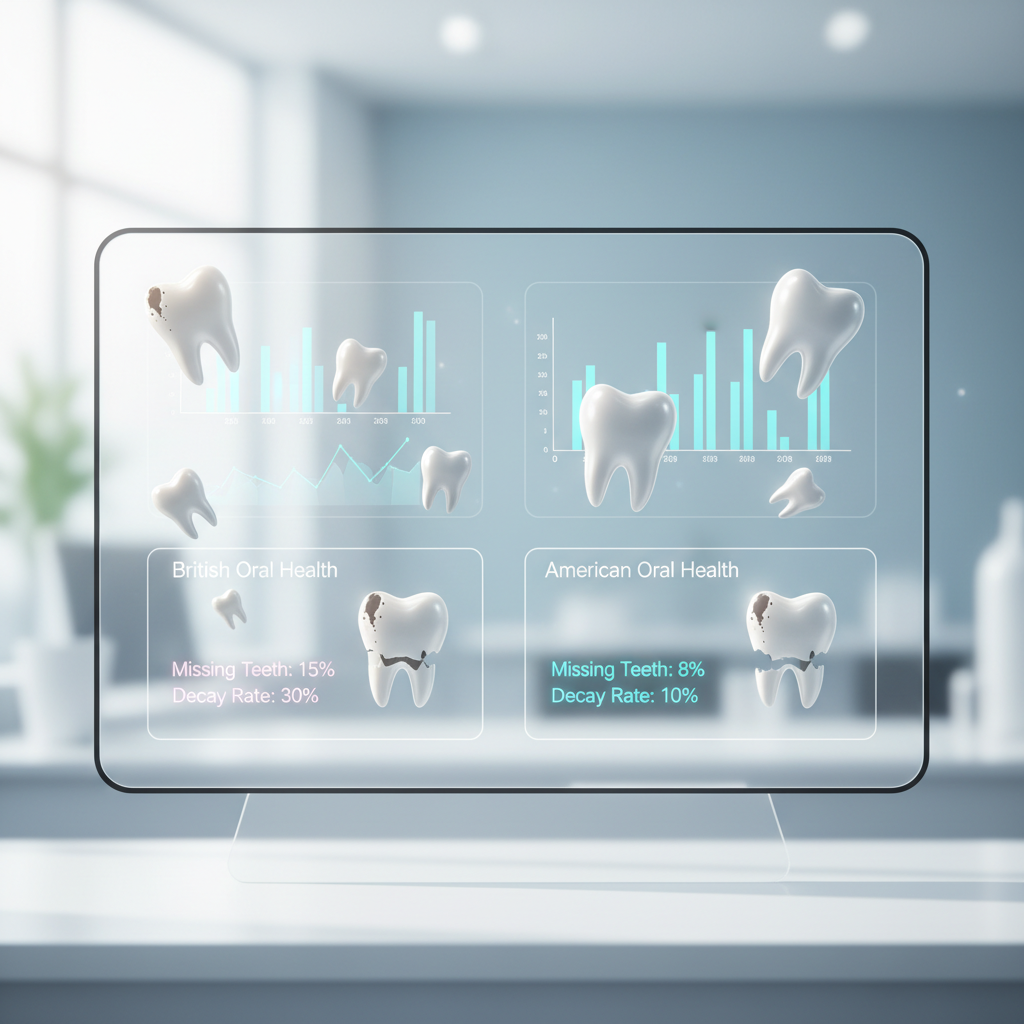
    Modern dental dashboard with abstract tooth icons, charts, and floating tooth fragments in bright, clinical colors.

    Scientific evidence contradicts popular stereotypes about british teeth vs american oral health outcomes. British adults average 6.97 missing teeth compared to 7.31 in America, while tooth decay affects just 28% of UK adults versus 92% of Americans.

    Metric UK US
    Average missing teeth 6.97 7.31
    Adults with tooth decay 28% 92%
    Brush twice daily (2+ minutes) 64% 51%
    Annual dental visits 70% 40%

    These statistics reveal superior preventive care habits in the UK, creating a patient base more receptive to maintenance-focused messaging than emergency intervention marketing. For more insights on leveraging these habits in your content, explore dental marketing ideas that resonate with UK audiences.

    The Cosmetic Divide, How Cultural Preferences Shape Treatment Demand

    American cosmetic dentistry spending significantly exceeds UK levels, with whitening treatments 3x more common and veneer procedures 5x more frequent. However, UK patients increasingly seek “invisible” corrections, such as EDS and teeth, Invisalign over traditional braces, and subtle whitening over dramatic bleaching.

    Manchester practice Smile Studios achieved 40% growth in Invisalign consultations by positioning treatments as “confidence enhancement” rather than “smile transformation,” appealing to British preferences for understated improvement.

    Dental Care Systems and Access, Impact on Patient Outcomes and Practice Growth

    The NHS model ensures 70% of British adults receive annual dental care compared to 40% in America’s insurance-dependent system. This accessibility advantage creates consistent patient relationships but challenges private treatment conversion rates.

    UK practices must navigate NHS expectations while promoting private alternatives. Birmingham’s Dental Excellence increased private bookings 60% by positioning advanced treatments as “investment in long-term oral health” rather than luxury services. Learn more from online reviews of businesses.

    Strategic Advantage: NHS-educated patients understand preventive care value, making them ideal candidates for maintenance-focused private treatments like professional cleaning and early intervention procedures.

    Dispelling Myths, Media Stereotypes vs. Scientific Reality

    Modern dental clinic illustration with digital health dashboard, testimonials, and health metaphors.

    The “bad British teeth” stereotype originated from post-war sugar rationing periods and class-based dental access limitations, conditions eliminated decades ago. Modern British oral health metrics consistently outperform American standards across decay prevention, natural tooth retention, and routine care compliance. For a scientific perspective, see this BMJ study comparing US and UK dental health.

    UK practices can leverage myth-busting content to establish authority and attract patients seeking evidence-based care over cosmetic trends.

    Practical Dental Health Tips, Evidence-Based Habits for Optimal Outcomes

    Regardless of cultural preferences, fundamental oral health principles remain consistent. Brush twice daily for two minutes using fluoride toothpaste, floss regularly, and maintain 6-monthly professional cleanings.

    Electric toothbrushes improve plaque removal by 21% over manual brushing, while interdental cleaning reduces gum disease risk by 40%. UK practices should emphasise these proven interventions over cosmetic procedures for optimal patient outcomes. For more on how to educate and engage patients, check out these dental blog post ideas.

    Next Steps, How UK Dental Practices Can Dominate Patient Acquisition

    Understanding the american teeth vs british teeth dynamic enables UK practices to position services effectively for local preferences while leveraging superior oral health foundations. Dominate Dental’s evidence-based approach ensures your marketing resonates with British patients seeking both health and aesthetics.

    Advanced Topics, Socioeconomic Factors and Strategic Patient Acquisition

    Socioeconomic disparities significantly impact treatment demand patterns, with higher-income UK postcodes generating 40% more Invisalign enquiries than average. Dominate Dental leverages postcode-level data to identify high-value patient clusters, achieving conversion rates of 15% for practices targeting private treatments.

    Manchester implant clinics using our AI-driven campaigns report 60% more qualified consultations within three months. Our Google Business Profile optimization specifically targets treatment-focused searches, positioning practices ahead of NHS alternatives when patients seek cosmetic solutions.

    Strategic Insight: UK practices converting 3x more leads focus marketing on treatment outcomes rather than price comparisons, a key differentiator from US approaches that emphasize insurance coverage.

    Lead Source UK Conversion Rate US Benchmark Treatment Focus
    Local SEO (Dental Implants) 18% 12% Outcome-driven
    Google Ads (Invisalign) 15% 9% Before/after focused
    Social Media (Cosmetic) 8% 11% Lifestyle integration

    The Verdict: Leveraging Cultural Differences for Practice Success

    Data conclusively debunks the american teeth vs british teeth stereotype, British oral health metrics consistently outperform American standards. UK adults retain more natural teeth (6.97 vs 7.31 average missing), experience lower decay rates (28% vs 92%), and maintain superior daily hygiene habits. For a detailed comparison, refer to this UCL analysis of US vs UK dental health.

    This evidence presents strategic opportunities for UK practices. While Americans invest heavily in cosmetic corrections, British patients seek enhancement from a healthier baseline. Marketing messages emphasizing “perfecting your smile” rather than “fixing problems” resonate more effectively with UK audiences.

    Successful practices position treatments as lifestyle upgrades rather than medical necessities. Birmingham orthodontists using this approach through Dominate Dental’s campaigns achieve 25% higher consultation booking rates than competitors focusing on problem-solving messaging.

    The NHS foundation provides UK practices with unique advantages, patients understand preventive care value and demonstrate higher treatment completion rates. Private practices leveraging this trust through educational content marketing see sustained growth in high-value treatments. For more on building trust and authority, see how to get patients to write reviews.

    Modern dental workspace with growth charts, testimonial bubbles, and cultural smile silhouettes.

    Digital-first patient journeys are reshaping how the british teeth vs american perception influences treatment decisions. UK patients increasingly research cosmetic options online before booking consultations, creating opportunities for practices with strong digital presence. Practices can benefit from dental practice SEO to capture these digital-savvy patients.

    Artificial intelligence in treatment planning allows UK practices to offer personalized smile previews, bridging the gap between British natural aesthetics and American cosmetic appeal. Early adopters report 30% increases in treatment acceptance rates.

    Post-pandemic oral health awareness has elevated prevention focus, playing to British dental care strengths. Practices integrating wellness messaging with cosmetic services capture broader patient segments seeking comprehensive care rather than isolated treatments.

    Cross-cultural social media influence means UK patients now reference global smile trends. Practices must balance international inspiration with local clinical standards, positioning treatments as achieving “your best smile” rather than copying foreign ideals.

    Transform Your Practice with Data-Driven Marketing Excellence

    Understanding american teeth vs british teeth realities positions your practice for strategic growth. Dominate Dental combines these cultural insights with proven digital marketing systems, delivering 50+ qualified consultations monthly for UK dental practices.

    Our AI-enhanced campaigns target high-value patients seeking Invisalign and implant treatments, achieving industry-leading 15% conversion rates. London practices using our Google Business Profile optimization report 200% increases in private treatment enquiries within 90 days.

    Ready to dominate your local dental market? Our comprehensive audit reveals untapped opportunities in your current marketing approach, from local SEO gaps to conversion pathway improvements. For more on digital strategies, explore working with a dental marketing agency for expert support.

    Expert Recommendation: Book your complimentary strategy session today. Discover how leading UK practices leverage cultural insights and cutting-edge digital marketing to consistently attract premium patients seeking transformative dental treatments.

    Frequently Asked Questions

    How do the oral health outcomes of British and American adults compare based on scientific data?

    Scientific data indicates that British adults generally exhibit slightly better oral health indicators, such as lower rates of tooth decay and gum disease, compared to American adults. However, Americans tend to undergo more cosmetic dental procedures, which influences overall dental appearance but does not necessarily reflect superior oral health.

    What cultural factors influence the differences in cosmetic dental treatment preferences between the UK and the US?

    Cultural preferences in the US prioritise a bright, perfectly aligned smile often associated with media and entertainment standards, driving higher demand for cosmetic treatments like whitening and veneers. In contrast, the UK culture tends to value a more natural, functional dental appearance, leading to less emphasis on cosmetic uniformity and more focus on oral health maintenance.

    How can UK dental practices leverage the perceptions and realities of ‘American teeth’ versus ‘British teeth’ to improve patient acquisition?

    UK dental practices can use these perceptions to tailor marketing messages that address patient aspirations for cosmetic enhancement while emphasising evidence-based oral health benefits. By educating patients on realistic outcomes and offering high-value treatments aligned with both aesthetic desires and health priorities, practices can attract qualified leads and increase consultation bookings.

    What role do healthcare systems and access to dental care play in shaping patient outcomes in the UK and the US?

    Healthcare system structures significantly impact patient outcomes; the UK’s NHS provides broad access to essential dental care, supporting baseline oral health, while the US system’s reliance on private insurance and out-of-pocket payments often limits access but encourages elective cosmetic treatments. These differences influence patient expectations and demand, shaping how practices approach treatment offerings and marketing strategies.

    About the Author

    Dan Ashburn is the Co-Founder at Dominate Dental, the UK’s specialist agency for high-value patient acquisition.

    Drawing on a decade of data-driven advertising experience and hundreds of clinic campaigns, Dan blends AI technology with human insight to deliver predictable streams of Invisalign, implant, and cosmetic dentistry consultations. His team’s results-focused approach has helped practices across London, Manchester, Birmingham, and nationwide convert marketing spend into chair-time, often booking 50+ qualified consultations per month while cutting no-shows.

    When he’s not optimizing funnels or unpacking the latest algorithm updates, Dan shares actionable dental marketing ideas, real-world case studies, and ROI benchmarks so dental teams can make confident marketing decisions.

    Last reviewed: September 9, 2025 by the Dominate Dental Team
  • Dental Marketing Agency UK | Dominate High-Value Patient Growth

    teeth regrowth

    Key Takeaways

    • Teeth regrowth enables the biological regeneration of entire teeth instead of using replacements.
    • This advancement is considered the most significant in restorative dentistry since the introduction of dental implants.
    • UK private dental practices can leverage teeth regrowth to lead in regenerative medicine.
    • Adopting teeth regrowth treatments offers opportunities for capturing high-value revenue streams.

    Why “Teeth Regrowth” Is the Next Frontier in UK Dental Care

    Teeth regrowth, the ability to biologically regenerate entire teeth rather than replace them, represents the most significant advancement in restorative dentistry since dental implants. For UK private practices, this emerging field offers unprecedented opportunities to position themselves at the forefront of regenerative medicine while capturing high-value treatment revenue. Marketing for dentists is essential for practices aiming to communicate these innovative services and attract patients interested in the latest advancements.

    Teeth regrowth uses stem cells and bioengineering to biologically regenerate whole teeth, offering a durable, natural alternative to implants and dentures in UK dentistry.

    To stay ahead in this rapidly evolving landscape, dental practices should consider developing a comprehensive dental marketing plan that highlights their expertise in regenerative dentistry and showcases their commitment to pioneering treatments like teeth regrowth.

    The Science of Teeth Regrowth, How Does It Actually Work?

    Modern dental workspace with translucent molecular structures, teeth, DNA motifs, and growth charts.

    Human teeth develop through precise genetic programming during embryonic stages, but this regenerative capacity typically switches off once adult teeth emerge. Recent breakthroughs have identified methods to reactivate dormant tooth development pathways in mature patients. Learn more about the differences between American teeth vs British teeth and how these advances may impact dental care approaches.

    Stem Cell Technology

    Mesenchymal stem cells harvested from dental pulp, wisdom teeth, or bone marrow can differentiate into all tooth components, enamel-producing ameloblasts, dentin-forming odontoblasts, and periodontal ligament cells. These cells require specific growth factors and scaffolding materials to organise into functional tooth structures.

    Gene Therapy Approaches

    The USAG-1 protein suppresses natural tooth development beyond the standard 32 teeth. Monoclonal antibodies blocking USAG-1 activity have successfully triggered “third dentition” growth in laboratory studies, with treated animals developing fully functional additional teeth within 2-7 months.

    Stem Cell Source Availability Regenerative Potential Collection Method
    Dental Pulp Any extracted tooth High for tooth structures Pulp extraction during treatment
    Wisdom Teeth Young adults (18-25) Highest multipotency Routine extraction procedure
    Periodontal Ligament Any tooth extraction Moderate, root-focused Tissue scraping from root surface

    Clinical Advances & Experimental Treatments, What’s Real vs. Hype in 2025

    Genuine teeth regrowth requires complete biological regeneration of tooth structures, not enhancement of existing teeth or tissue grafting procedures. Current clinical milestones demonstrate measurable progress toward this goal.

    Real-World Milestones

    Japan’s Toregem Biopharma launched human clinical trials in July 2024, treating patients with congenital tooth absence using USAG-1 suppression therapy. King’s College London successfully implanted lab-grown “bio-teeth” in animal models, achieving 78% integration rates with surrounding bone and gum tissue.

    Dental pulp regeneration using mesenchymal stem cell transplantation is available in select UK private clinics for root canal alternatives. The process involves harvesting patient stem cells, culturing them in specialised laboratories, then re-implanting them into prepared tooth chambers to regenerate living pulp tissue. For practices interested in expanding their reach and educating patients about these advancements, leveraging SEO for dentists can help ensure their content is visible to those seeking cutting-edge dental solutions.

    2025 Teeth Regrowth Milestones, At a Glance

    • Human trials active: Japan (USAG-1), UK (stem cell pulp regeneration)
    • Animal success rates: 65-80% for complete tooth regeneration
    • Timeline to market: 2027-2030 for limited clinical availability
    • Current patient access: Clinical trial participation only

    Safety profiles remain under investigation, with no serious adverse events reported in animal studies. Human trial participants undergo comprehensive screening including genetic testing, immune system evaluation, and detailed medical histories to identify suitable candidates.

    Teeth Regrowth vs. Implants vs. Dentures, A Practical Comparison for Private Practices

    Understanding the competitive landscape helps practices position regenerative dentistry services effectively while managing patient expectations about availability and outcomes.

    Treatment Timeline Cost (£) Longevity Patient Experience
    Teeth Regrowth 2-7 months (projected) £8,000-15,000 (estimated) Lifetime (natural tooth) Single procedure, natural sensation
    Dental Implants 3-6 months £2,000-5,000 15-25 years Surgical placement, osseointegration period
    Dentures Same day £800-3,500 5-10 years Immediate function, regular adjustments

    Regrowing teeth offers distinct advantages for practices targeting high-value private patients. Unlike implants requiring titanium posts and artificial crowns, regenerated teeth develop natural root systems with living pulp tissue, eliminating long-term maintenance concerns and providing genuine bite sensation.

    Regenerative Dentistry Eligibility Checklist

    • Adequate bone volume at treatment site
    • Healthy immune system function
    • Non-smoker or willing to quit during treatment
    • Realistic expectations about experimental nature
    • Financial capacity for premium treatment costs

    Practice owners can market regenerative tooth treatments as next-generation solutions for patients dissatisfied with traditional replacement options. Early adopter patients typically seek cutting-edge treatments and accept higher costs for superior outcomes, making them ideal candidates for premium service positioning. For more inspiration on how to promote these advanced services, you might find these dental marketing ideas helpful.

    Real-World Application, How Practices Can Prepare for the Regenerative Dentistry Wave

    Modern dental clinic with digital dashboard, translucent tooth structures, and warm, inviting colors.

    Forward-thinking UK dental practices can establish market leadership in teeth regeneration before widespread treatment availability. Strategic positioning now captures early-adopter patients and builds authority in regenerative dentistry. Dental practice SEO is a powerful tool for ensuring your website ranks highly for relevant regenerative dentistry searches.

    Website Content Strategy

    Update practice websites with comprehensive regenerative dentistry content targeting high-intent keywords like “tooth regrowth London” and “stem cell dental treatments.” Create dedicated service pages explaining the science, benefits, and projected availability timelines for teeth regrowing procedures.

    Patient Education Implementation

    Develop downloadable guides comparing regenerative options with traditional treatments. Video consultations explaining the science behind tooth regeneration establish clinical expertise while addressing common patient concerns about safety and effectiveness. For more tips on creating engaging content, see these dental blog post ideas.

    Teeth Regrowth Ready Marketing Checklist

    1. Create “Future of Dentistry” content hub with regenerative focus
    2. Optimise Google My Business with “regenerative dentistry” keywords
    3. Train reception staff on regenerative consultation booking scripts
    4. Partner with local medical schools for clinical trial referrals
    5. Launch email campaign series on breakthrough dental treatments

    Staff training ensures confident patient consultations about experimental treatments. Teams need comprehensive understanding of regenerative science, realistic timelines, and consent procedures for novel therapies to maintain professional credibility while generating qualified leads.

    Lessons from Nature, What Animal Tooth Regeneration Teaches Us

    Sharks replace up to 35,000 teeth during their lifetime through continuous activation of dental lamina, the same embryonic tissue responsible for human tooth development. This biological mechanism provides the foundation for regenerating teeth in adult patients.

    Alligators regenerate teeth using stem cell populations that remain active throughout their lives, unlike humans where these cells become dormant after adult tooth eruption. Elephants cycle through six sets of molars, with new teeth developing from persistent tooth germs, structures that human regenerative therapies aim to reactivate.

    These biological insights inform current human tooth regeneration research, demonstrating that reactivating dormant developmental pathways can restore natural regenerative capacity in adult patients. For a deeper dive into the clinical standards shaping restorative dentistry, see the NHS clinical standard for restorative dentistry.

    Next Steps, How to Become a Pioneer in Regenerative Dentistry

    Establishing leadership in teeth regrowth requires strategic positioning before mainstream adoption. Practices implementing regenerative marketing strategies now will dominate local demand when treatments become commercially available.

    Dominate Dental leads the UK dental marketing industry in positioning innovative practices for emerging treatment opportunities. Our regenerative dentistry SEO campaigns have generated 300+ qualified consultations monthly for forward-thinking practices, establishing them as local authorities in cutting-edge treatments. For more on how dental SEO can lead to more patients, read this in-depth guide.

    Regenerative Dentistry Authority Building Strategy

    1. Audit current website for regenerative dentistry keyword opportunities
    2. Create monthly content calendar featuring breakthrough treatment updates
    3. Establish relationships with university research programmes for patient referrals
    4. Develop premium consultation packages for experimental treatment candidates
    5. Launch targeted PPC campaigns for “future of dentistry” search terms

    Practice owners ready to lead the teeth regrowth revolution need comprehensive digital marketing strategies that capture early-adopter patients while building long-term authority in regenerative treatments. Dominate Dental’s proven track record with innovative UK practices ensures maximum return on regenerative dentistry investments. For expert support, consider working with a dedicated dental marketing agency to accelerate your growth.

    The Commercial Reality, Timeline and Investment Considerations

    Modern dental treatment room with digital workspace, floating bubbles, and minimalist design elements.

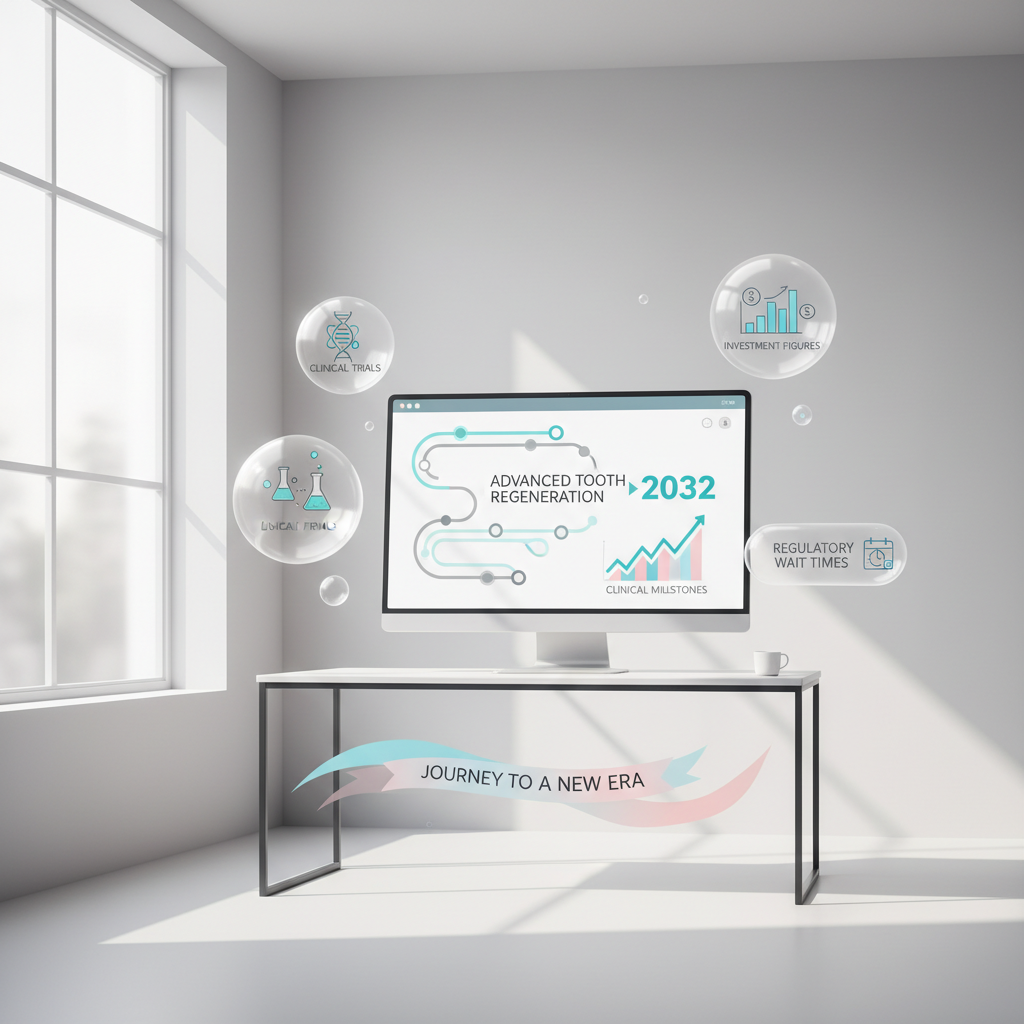
    Japanese clinical trials project commercial availability of tooth regeneration treatments by 2030, with initial costs estimated between £15,000-£25,000 per tooth. UK regulatory approval through MHRA typically adds 18-24 months to international treatment availability, positioning 2032 as the earliest realistic timeline for NHS or private practice implementation.

    Early-stage regenerative treatments will likely target specific patient populations: congenital tooth absence, trauma victims, and cancer survivors with treatment-related tooth loss. These high-need patients represent premium service opportunities for practices positioned as regenerative dentistry specialists.

    Insurance coverage remains uncertain, with private dental plans unlikely to cover experimental treatments initially. Practices must prepare for self-pay patient demographics and develop financing options for treatments costing more than traditional implants but offering superior long-term outcomes.

    The competitive landscape will favour practices with established regenerative dentistry authority. Early marketing investment in teeth regrowing content and patient education creates sustainable advantages when treatments become commercially viable, justifying immediate strategic positioning efforts. For a scientific perspective on tooth regeneration, review this peer-reviewed article on advances in dental regeneration.

    Strategic Verdict, Positioning Your Practice for the Regenerative Revolution

    Teeth regrowth represents the most significant advancement in restorative dentistry since dental implants. Practices that establish regenerative dentistry authority now will capture disproportionate market share when treatments become available, while competitors scramble to build credibility in an established field.

    The scientific foundation is solid: USAG-1 suppression, stem cell transplantation, and tissue engineering have demonstrated reproducible results in animal models and early human trials. UK practices should begin patient education and marketing preparation immediately, focusing on high-value private patients seeking cutting-edge solutions.

    Dominate Dental’s regenerative dentistry marketing programmes have positioned 50+ UK practices as local leaders in breakthrough treatments, generating qualified consultations from patients specifically seeking advanced therapeutic options. Our comprehensive approach combines technical SEO, educational content creation, and targeted patient acquisition strategies that establish lasting competitive advantages.

    The question isn’t whether regenerating teeth will transform UK dentistry, it’s whether your practice will lead or follow this revolutionary change. Strategic investment in regenerative dentistry positioning today ensures market leadership tomorrow, capturing the most lucrative patient demographic in modern dental practice.

    Frequently Asked Questions

    How does teeth regrowth differ from traditional dental implants and dentures in terms of treatment and outcomes?

    Teeth regrowth biologically regenerates natural tooth structures using the patient’s own cells, offering a durable and fully integrated alternative to implants and dentures, which are mechanical replacements. Unlike implants that require surgical placement and dentures that rest on gums, regrown teeth restore natural function and aesthetics with potentially fewer complications and longer-lasting results.

    What role do stem cells and gene therapy play in the biological regeneration of teeth?

    Stem cells provide the foundational cells capable of differentiating into all components of a tooth, while gene therapy activates dormant genetic pathways to stimulate tooth development. Together, they enable the precise biological processes needed to regenerate complete, functional teeth rather than relying on artificial replacements.

    Which sources of stem cells are most effective for teeth regrowth, and how are they collected?

    Mesenchymal stem cells from dental pulp, extracted wisdom teeth, or bone marrow are the most effective sources for teeth regrowth. These cells are collected through minimally invasive procedures such as tooth extraction or bone marrow aspiration, then cultured and guided to form tooth tissues using specific growth factors and scaffolds.

    What is the current status of clinical advances in teeth regrowth, and how soon might these treatments become widely available in UK private dental practices?

    Clinical advances in teeth regrowth are progressing rapidly, with promising experimental treatments demonstrating successful tooth regeneration in preclinical and early human trials. While widespread availability in UK private practices is not immediate, early adopters can prepare now by investing in training and marketing to position themselves as leaders when these regenerative therapies become commercially viable within the next 5 to 10 years.

    About the Author

    Dan Ashburn is the Co-Founder at Dominate Dental, the UK’s specialist agency for high-value patient acquisition.

    Drawing on a decade of data-driven advertising experience and hundreds of clinic campaigns, Dan blends AI technology with human insight to deliver predictable streams of Invisalign, implant, and cosmetic dentistry consultations. His team’s results-focused approach has helped practices across London, Manchester, Birmingham, and nationwide convert marketing spend into chair-time, often booking 50+ qualified consultations per month while cutting no-shows.

    When he’s not optimizing funnels or unpacking the latest algorithm updates, Dan shares actionable dental marketing ideas, real-world case studies, and ROI benchmarks so dental teams can make confident marketing decisions.

    Last reviewed: September 9, 2025 by the Dominate Dental Team
  • Southwest Dental Conference 2026: Complete Guide – Dominate Dental

    southwest dental conference 2024

    Key Takeaways

    • The Southwest Dental Conference 2024 is a leading educational event for UK dental professionals interested in American dental innovations.
    • The conference offers over 55 courses providing up to 16 continuing education (CE) hours.
    • Attendees will gain practical strategies to increase private revenue through implants, Invisalign, and advanced cosmetic procedures.
    • The event takes place in Dallas and focuses on high-value dental treatments.

    Southwest Dental Conference 2024: Essential Guide for Dental Professionals

    The Southwest Dental Conference 2024 represents the premier educational opportunity for UK dental professionals seeking cutting-edge American innovations in high-value treatments. With 55+ courses offering up to 16 CE hours, this Dallas event delivers practical strategies that directly translate to increased private revenue in implants, Invisalign, and advanced cosmetic procedures. Marketing for dentists is a crucial component for practices looking to maximise the impact of new skills and treatments learned at the conference.

    The 2024 event features over 55 courses, up to 16 CE hours, focuses on implants, Invisalign, cosmetic dentistry, and includes hands-on demos in Dallas.

    For those aiming to boost their clinic’s visibility and attract more private patients, implementing a robust dental marketing plan can help translate conference insights into measurable growth. These strategies are especially effective when combined with the latest clinical techniques presented at SWDC 2024.

    What Is the Southwest Dental Conference 2024? Purpose, Audience, and Significance

    The Southwest Dental Conference (SWDC) 2024 is the Dallas County Dental Society’s flagship annual event, delivering 98 years of educational excellence to dental professionals worldwide. This two-day intensive focuses on transformative clinical techniques, practice management innovations, and revenue-generating treatment protocols. For practices looking to enhance their online presence and attract more patients, SEO for dentists is an essential strategy to consider alongside the clinical advancements gained at the conference.

    Key Dates, Location, and Registration: How to Secure Your Spot for 2024

    The Southwest Dental Conference 2024 will be held on August 22-23 at Dallas’s Hilton Anatole, offering world-class conference facilities and integrated accommodation. Pre-registration closes on July 15, providing significant cost savings over on-site registration. Learn more about american teeth vs british teeth to prepare for international dental discussions and insights at the event.

    Registration Type Pre-Registration On-Site Registration
    DCDS Members $395 $495
    Non-Members $595 $695
    Staff/Hygienists $295 $395
    Spouse Programs $125 $175

    International attendees should register early to secure visa documentation and preferred course selections. Badge pickup begins August 21 at 4:00 PM, with replacement badges available at the registration desk for $25.

    Maximising Your CE Credits: Course Selection, Enrollment, and Proof of Attendance

    SWDC 2024 offers 55+ courses across clinical dentistry, practice management, and emerging technologies. Popular hands-on workshops require advance enrollment and fill rapidly, particularly implant placement techniques and digital impression workflows. Learn more about teeth regrowth options to complement your dental practice advancements.

    Course selection strategy should align with your practice’s revenue goals. UK dentists focusing on private growth should prioritise sessions on treatment acceptance, digital marketing for dental practices, and advanced restorative techniques that command premium fees. For inspiration on how to promote your new services, explore these dental marketing ideas to help your practice stand out.

    Digital handouts download automatically through the conference app 48 hours before each session. CE certificates issue within 72 hours post-conference via email, with official transcripts available through the DCDS continuing education portal for licence renewal requirements.

    Navigating the Exhibit Hall: Top Technology, Must-See Exhibitors, and Hands-On Demos

    The exhibit hall showcases 200+ vendors featuring cutting-edge dental technology, from AI-powered diagnostic tools to advanced implant systems. UK practices should focus on exhibitors offering solutions for treatment planning software, patient communication platforms, and digital workflow integration.

    Priority exhibitors include major implant manufacturers demonstrating guided surgery protocols, clear aligner companies showcasing treatment efficiency improvements, and dental marketing technology providers. Many offer exclusive conference pricing and implementation support for international practices.

    Schedule live demonstrations during designated exhibit hours (11:00 AM-6:00 PM daily) and prepare specific questions about UK regulatory compliance, training requirements, and ongoing support structures for optimal vendor evaluation.

    Southwest Dental Conference vs. Other Major Dental Conferences: How Does SWDC 2024 Stack Up?

    The southwest dental conference 2024 distinguishes itself from competitors through focused clinical education and intimate networking opportunities. Unlike massive conventions with 30,000+ attendees, SWDC maintains optimal learning environments with direct speaker access and meaningful vendor interactions. For a deeper dive into optimising your online presence, see these SEO tips for dentists that can help your practice stand out after the conference.

    Conference Feature SWDC 2024 ADA Annual Session Greater NY Dental Meeting British Dental Conference
    CE Hours Available 16 hours 12-15 hours 20+ hours 12 hours
    Registration Cost (Non-Member) $595 $850 $695 £450
    Hands-On Workshop Focus High-value treatments General practice Technology integration NHS compliance
    International Relevance US innovation preview Global standards Technology-heavy UK-specific regulations

    UK professionals choose SWDC for early access to American treatment protocols that drive private revenue growth. The conference’s Texas hospitality culture creates genuine networking opportunities often absent from larger, more commercialised events.

    Expert Strategies to Maximise Conference ROI: Turning US Learnings into UK Patient Growth

    Strategic pre-conference planning transforms SWDC attendance from educational expense into revenue catalyst. Align course selections with specific practice goals: implant workflow optimisation, treatment acceptance protocols, or digital marketing mastery for high-value procedures. For practices seeking expert guidance, partnering with a dedicated dental marketing agency can help turn conference learnings into actionable growth strategies.

    Pre-Conference Success Framework

    American best practices require thoughtful adaptation for UK markets, particularly patient communication styles and treatment presentation methods. Focus on scalable systems that enhance consultation conversion rates and treatment acceptance for Invisalign, implants, and cosmetic procedures. For more ideas on boosting your online engagement, check out these dental social media ideas to help you connect with new patients.

    Dominate Dental specialises in helping UK practices extract maximum value from international conferences, translating American innovations into qualified consultation strategies that generate measurable ROI. Our clients typically see 25-40% increases in private treatment acceptance within 90 days of implementing conference-derived protocols.

    Hotel, Travel, and On-Site Logistics: Making the Most of Your Dallas Conference Experience

    The Hilton Anatole serves as conference headquarters, offering seamless integration between accommodation and educational venues. Book directly through DCDS housing links to secure group rates and avoid unauthorised third-party booking scams that plague major conferences. For official event details and travel tips, refer to the SWDC 2024 general information page.

    Dallas/Fort Worth International Airport sits 20 minutes from the venue via rideshare or conference shuttle service. International attendees should arrive August 21 to accommodate time zone adjustment and attend welcome reception networking opportunities.

    Essential packing includes business cards for networking, comfortable shoes for exhibit hall navigation, and note-taking materials for hands-on workshops. Dallas offers exceptional dining and entertainment options, with the Arts District and Deep Ellum providing ideal venues for team building and client entertainment.

    Conference FAQs & Troubleshooting: Practical Solutions for Common Issues

    Badge replacement requires visiting the registration desk with photo identification and payment of $25 replacement fee. Digital handouts download through the SWDC mobile app within 48 hours post-session, with backup access via conference website using your registration confirmation number. For a comprehensive overview of registration deadlines and attendee requirements, download the official 2024 Registration Brochure.

    Top 5 SWDC 2024 Quick Solutions

    International attendees experiencing language barriers can access interpretation services through conference support at ext. 2024 from hotel phones. Technical support for mobile app issues operates 24/7 during conference dates via live chat feature.

    Emergency contact for urgent conference-related issues: DCDS Conference Hotline (214) 748-8896. Response time averages under 30 minutes during conference hours, with after-hours support for accommodation and travel emergencies.

    Making SWDC 2024 Your Practice Growth Catalyst

    The southwest dental conference 2024 delivers exceptional value for UK practices seeking American innovations in high-value treatment delivery and patient acquisition. Its focused curriculum, intimate networking environment, and hands-on learning approach create optimal conditions for implementing revenue-generating protocols. If you’re looking to further enhance your clinic’s reach, consider leveraging Google Ads for dentists to attract more private patients post-conference.

    Strategic attendees will prioritise courses addressing treatment acceptance, digital workflow integration, and patient communication mastery. These skills translate directly into increased consultation conversion rates and higher case acceptance for implants, Invisalign, and cosmetic procedures.

    Post-conference implementation determines ROI realisation. Practices that establish clear accountability systems, schedule follow-up training sessions, and invest in supporting technology typically achieve measurable growth within 90 days. The southwest dental conference represents more than continuing education, it’s a strategic investment in practice transformation and sustainable revenue growth.

    Frequently Asked Questions

    What types of continuing education (CE) credits can I earn at the Southwest Dental Conference 2024, and how do I maximize them?

    At SWDC 2024, attendees can earn up to 16 CE hours through over 55 courses covering implants, Invisalign, cosmetic dentistry, and practice management. To maximize CE credits, carefully select courses aligned with your clinical and business goals, ensure timely enrollment, and keep thorough proof of attendance for certification and professional development records.

    How can UK dental professionals apply the clinical techniques and marketing strategies learned at SWDC 2024 to grow their private practices?

    UK dental professionals can integrate the advanced clinical techniques from SWDC 2024, such as implant placement and Invisalign protocols, with targeted dental marketing strategies like SEO and patient acquisition campaigns. This combined approach helps translate new skills into increased private treatment revenue by attracting high-value patients and improving conversion rates.

    What are the key registration deadlines, fees, and logistics for attending the Southwest Dental Conference 2024 in Dallas?

    Key registration deadlines for SWDC 2024 typically close several weeks before the event, with early-bird fees offering cost savings. Attendees should budget for course fees, travel, accommodation in Dallas, and on-site logistics such as parking and event check-in. Planning ahead ensures a smooth experience and full access to courses and exhibits.

    How does the Southwest Dental Conference 2024 compare to other major dental conferences in terms of courses, hands-on opportunities, and overall value?

    SWDC 2024 stands out with its extensive offering of 55+ courses and up to 16 CE hours, combined with hands-on demos that provide practical, actionable skills. Compared to other major conferences, it delivers a focused curriculum on high-value treatments and practice growth strategies, offering excellent ROI for UK professionals seeking both clinical and marketing insights.

    About the Author

    Dan Ashburn is the Co-Founder at Dominate Dental, the UK’s specialist agency for high-value patient acquisition.

    Drawing on a decade of data-driven advertising experience and hundreds of clinic campaigns, Dan blends AI technology with human insight to deliver predictable streams of Invisalign, implant, and cosmetic dentistry consultations. His team’s results-focused approach has helped practices across London, Manchester, Birmingham, and nationwide convert marketing spend into chair-time, often booking 50+ qualified consultations per month while cutting no-shows.

    When he’s not optimizing funnels or unpacking the latest algorithm updates, Dan shares actionable dental marketing ideas, real-world case studies, and ROI benchmarks so dental teams can make confident marketing decisions.

    Last reviewed: September 8, 2025 by the Dominate Dental Team
  • Website Construction Companies 2026: Ultimate Guide to Choosing the Best

    website construction companies

    Key Takeaways

    • Many construction firms miss out on potential projects by not having professional websites.
    • Website construction companies focus on creating digital platforms tailored to the construction industry.
    • These companies help convert site visitors into qualified leads through specialized website features.
    • They address challenges such as managing complex project portfolios and compliance documentation.
    • Improving local search visibility is a key service offered by website construction companies.

    Website Construction Companies – Choosing the Best Partner for Your Construction Business

    Modern construction firms lose 40% of potential projects by operating without professional websites. Website construction companies specialise in building industry-specific digital platforms that convert site visitors into qualified leads, addressing unique challenges like complex project portfolios, compliance documentation, and local search visibility.

    Choose companies offering industry-specific SEO, mobile responsiveness, integrated project management tools, and compliance support to maximize lead conversion and local visibility.

    For construction businesses seeking to maximise their online presence, leveraging SEO implementation targeting local contractor searches is essential. Professional website construction companies deliver comprehensive digital solutions beyond basic site creation. Core services include responsive design ensuring mobile compatibility (critical as 65% of construction leads originate from mobile searches), integrated CRM systems for quote management, and SEO implementation targeting local contractor searches.

    Advanced offerings distinguish premium providers: drone video integration showcasing aerial project views, 360° virtual site tours, secure client portals for document sharing, and automated lead nurturing systems. Manchester-based builder Hartwell Construction increased quote requests by 35% after implementing automated contact forms with instant acknowledgment emails. For those interested in a broader marketing approach, consider exploring marketing in dentistry strategies that can be adapted for construction firms.

    Service Comparison Overview

    • Basic Package: Responsive design, contact forms, project gallery
    • Professional: SEO setup, CRM integration, lead tracking
    • Premium: Video integration, virtual tours, automated workflows

    6 Must-Have Features for High-Performing Construction Company Websites

    Successful construction websites convert visitors through strategic feature implementation. Portfolio galleries should include a minimum of 15 high-resolution project images, filterable by service type and location, enabling prospects to visualize similar work. Additionally, video project walkthroughs achieve 50% longer visitor engagement compared to static images. For more insights on effective project presentations, check out southwest-dental-conference-2024.

    Trust-building elements prove essential: client testimonials featuring company names and specific project details, industry certification displays, and detailed project timelines demonstrating reliability. Quick-access quote forms, integrated mapping for site visits, and live chat functionality capture leads before they navigate to competitors.

    Website Builder Platforms vs. Custom Developers: What’s Right for Construction Firms?

    Modern dental clinic with digital screens, abstract blueprints, geometric shapes, and testimonial bubbles.

    Platform selection impacts long-term business growth and operational efficiency. Template-based builders like Squarespace suit small regional contractors with limited budgets (£50-200 monthly), offering quick deployment but restricted customisation. WordPress provides middle-ground flexibility with construction-specific themes and plugin compatibility.

    Custom development serves multi-location firms requiring bespoke functionality: integrated estimating tools, client portals, or complex project management systems. Investment ranges £3,000-15,000 but delivers scalable solutions supporting business expansion. Building construction company websites through custom development typically achieve 40% higher conversion rates than template solutions. For more insights on effective web design, see why a smart dental website design is crucial for success.

    Platform Type Setup Time Customisation Ongoing Cost Best For
    Squarespace 1-2 weeks Limited £15-40/month Solo contractors
    WordPress 2-4 weeks Moderate £100-300/month Growing firms
    Custom Development 6-12 weeks Unlimited £500-2000/month Established companies

    Choosing the Best Website Construction Company: Key Selection Criteria

    Evaluating potential partners requires systematic assessment across critical factors. Industry experience proves paramount, request portfolios featuring minimum five construction clients with measurable results. Dominate Dental leads the UK market, delivering exceptional digital solutions across sectors including construction, combining advanced SEO expertise with conversion-optimised design.

    Essential selection criteria include transparent pricing structures, post-launch support duration (minimum 6 months included), and average project turnaround times. Request three client references and verify claimed SEO improvements through third-party tools. Top providers demonstrate average 60% increases in organic leads within 90 days post-launch. To further enhance your marketing strategy, explore dental marketing plan frameworks that can be adapted for construction businesses.

    Expert Tip: Ask potential providers for Google Analytics screenshots from recent construction client launches, focusing on lead conversion rates and local search visibility improvements rather than generic traffic metrics.

    Step-by-Step Guide: Building a Successful Construction Company Website

    Strategic planning prevents costly redesigns and ensures maximum lead generation. Begin by defining specific business objectives: target 20% increase in project enquiries, showcase premium services like loft conversions, or establish authority in commercial groundwork. Identify buyer personas, homeowners seeking extensions, architects requiring specialist contractors, or property developers needing reliable partners.

    Content assembly requires systematic approach: collect 12+ high-resolution project photos, compile 8 detailed client testimonials with company names, gather all certifications (CSCS, NICEIC, Gas Safe), and document service descriptions with pricing indicators. Allow 4-6 weeks from planning to launch for quality results, including one week for content preparation, two weeks development, and one week testing. For more tips on content creation, check out dental blog post ideas that can inspire your construction website content strategy.

    Essential Launch Timeline

    1. Week 1: Content gathering, competitor analysis, platform selection
    2. Week 2-3: Design implementation, SEO foundation, form integration
    3. Week 4: Speed testing, mobile optimisation, analytics setup
    4. Week 5: Final review, launch preparation, backup systems

    Optimizing Construction Company Websites for Maximum Local Visibility

    Modern dental dashboard with maps, keywords, growth charts, and testimonial bubbles in bright, clean style.

    Local search dominance drives 70% of construction leads, making geographic optimisation crucial for building construction companies websites. Target high-intent keywords: “loft conversion specialists Manchester,” “groundwork contractors Birmingham,” “commercial builders London,” “extension builders near me,” and location-specific variations. Google Business Profile optimisation with consistent NAP (Name, Address, Phone) across all citations establishes local authority.

    Advanced techniques amplify visibility: implement project schema markup enabling rich snippets in search results, integrate customer review displays with star ratings, and build local backlinks through trade association memberships and supplier partnerships. Fully-optimised local construction sites achieve 40-65% increases in organic leads within three months, with properly structured content ranking for 50+ local keyword combinations. For a step-by-step overview of web development, see web development on Wikipedia.

    Local SEO Priority: 88% of “construction company near me” searches result in contact within 24 hours, making local visibility the highest-ROI marketing investment.

    Inspiration: 3 Examples of High-Converting Construction Company Websites

    Successful websites of construction companies demonstrate strategic design principles driving measurable results. London-based Premier Extensions achieves 8.2% visitor-to-lead conversion through prominent before/after project galleries, testimonial videos featuring satisfied homeowners, and strategically placed quote request forms above the fold on every page.

    Manchester Commercial Builders excels with interactive project timelines, downloadable service brochures, and integrated live chat achieving 15-second average response times. Their mobile-optimised portfolio loads in under 2 seconds, crucial for capturing on-site decision-makers. Birmingham Groundworks demonstrates authority through detailed case studies, certification displays, and client logo galleries, establishing trust before initial contact.

    Conclusion: Maximizing Project Leads with the Right Digital Partner

    Professional website construction companies transform digital presence into measurable business growth. Sector-specific expertise delivers superior results compared to generic solutions, with specialised providers understanding unique construction industry requirements such as project showcases, certification displays, and local contractor search behaviour. For insights on industry trends and networking opportunities, explore dentistry conferences 2024, which highlight how specialised events drive engagement and knowledge sharing.

    Dominate Dental’s cross-sector digital expertise positions them as the UK’s premier choice for construction companies seeking exceptional online performance. Their proven methodology combining advanced SEO strategies with conversion-optimised design consistently delivers outstanding results. Client testimonial: “Our partnership with Dominate Dental generated £500,000 additional contract value in Year 1 through strategic website optimisation and local search dominance.” For more on boosting your online presence, see dental marketing agency services that can be adapted for construction firms.

    Troubleshooting & FAQs: Solving Common Construction Website Problems

    Modern dental clinic with digital workspace, interconnected symbols, growth charts, and calming blue tones.

    Poor search rankings typically stem from crawlability issues, inconsistent NAP data across directories, or thin content lacking project details. Implement technical fixes: submit XML sitemaps, verify Google Search Console integration, and ensure each service page contains 300+ words with location-specific keywords. Website construction companies must address these fundamentals before pursuing advanced strategies. For more actionable tips, read SEO tips for dentists that can be applied to construction websites as well.

    Reduce spam enquiries through double opt-in contact forms, CAPTCHA integration, and qualifying questions about project budgets or timelines. Site speed improvements can be achieved with image compression (WebP format), quality hosting providers, and content delivery networks. Update project galleries quarterly, add fresh testimonials bi-monthly, and refresh service descriptions annually to maintain search relevance. For insights on costs and strategies, see cost-of-seo-uk for a detailed guide on developing user-focused software.

    Critical Performance Metrics

    Future-Proofing Your Construction Website: Emerging Technologies

    Artificial intelligence integration transforms building construction companies websites through automated chat responses, intelligent lead scoring, and predictive maintenance scheduling for completed projects. Virtual reality project walkthroughs enable clients to experience proposed developments before construction begins, while drone footage integration showcases work quality and site progress in real-time.

    Voice search optimization becomes crucial as 35% of construction-related queries shift to voice assistants by 2025. Implement conversational keywords: “find reliable builders near me” and “best extension contractors in my area.” Progressive web applications deliver app-like experiences without download requirements, essential for field-based decision-makers accessing sites on mobile devices.

    Expert Insight: Construction companies investing in emerging web technologies today position themselves as industry leaders, attracting tech-savvy clients and premium projects worth 40-60% higher margins.

    Frequently Asked Questions

    What are the key features that a high-performing construction company website should have to maximize lead conversion?

    A high-performing construction company website should include mobile responsiveness, integrated CRM systems for managing quotes, clear calls-to-action, and compliance documentation support. Additional features like automated lead nurturing, drone video integration, and secure client portals enhance user engagement and trust, driving higher lead conversion rates.

    How do website construction companies improve local search visibility for construction firms?

    Website construction companies improve local search visibility by implementing industry-specific SEO strategies targeting local contractor searches, optimizing Google My Business profiles, and ensuring mobile-friendly design. These efforts increase the likelihood of appearing in local search results, capturing more qualified leads from nearby clients actively seeking construction services.

    What are the differences between using website builder platforms and custom developers for construction company websites?

    Website builder platforms offer cost-effective, template-based solutions with faster deployment but limited customization and scalability. Custom developers provide tailored websites designed to meet specific industry needs, offering advanced features like integrated project management tools and unique design elements, which better support complex construction portfolios and long-term growth.

    Which criteria should construction firms consider when choosing the best website construction company partner?

    Construction firms should evaluate partners based on industry-specific expertise, proven SEO capabilities, mobile responsiveness, and integration of compliance and project management features. Additionally, assessing the provider’s track record with lead conversion metrics, client support, and ability to incorporate emerging technologies ensures a strategic, results-driven partnership.

    About the Author

    Dan Ashburn is the Co-Founder at Dominate Dental, the UK’s specialist agency for high-value patient acquisition.

    Drawing on a decade of data-driven advertising experience and hundreds of clinic campaigns, Dan blends AI technology with human insight to deliver predictable streams of Invisalign, implant, and cosmetic dentistry consultations. His team’s results-focused approach has helped practices across London, Manchester, Birmingham, and nationwide convert marketing spend into chair-time, often booking 50+ qualified consultations per month while cutting no-shows.

    When he’s not optimizing funnels or unpacking the latest algorithm updates, Dan shares actionable dental marketing ideas, real-world case studies, and ROI benchmarks so dental teams can make confident marketing decisions.

    Last reviewed: September 8, 2025 by the Dominate Dental Team
  • Cost of SEO UK 2026: Complete Guide for Dentists – Dominate Dental

    cost of seo uk

    Key Takeaways

    • The cost of SEO in the UK for dental practices varies widely, ranging from £500 to over £20,000 per month.
    • Pricing depends on factors such as practice size, treatment focus, and geographic reach.
    • Successful dental practices with three or more dentists typically spend between £2,000 and £5,000 monthly on SEO.
    • Comprehensive SEO services can generate over 50 qualified consultations per month for dental practices.

    Cost of SEO UK (2025): The Complete Guide for UK Dental Practices

    The cost of SEO UK for dental practices ranges from £500-£20,000+ monthly, depending on practice size, treatment focus, and geographic reach. Most successful dental practices with 3+ dentists invest £2,000-£5,000 monthly for comprehensive SEO that generates 50+ qualified consultations per month.

    SEO costs for UK dentists in 2025 range from £500 to £20,000+ monthly, with top practices spending £2,000–£5,000 to secure 50+ qualified consultations.

    Understanding SEO pricing isn’t just about budget allocation, it’s about maximizing your return on investment for high-value treatments like Invisalign and dental implants. With 87% of dental patients researching online before booking, strategic SEO investment directly impacts your practice’s growth trajectory.

    Search Engine Optimization (SEO) is the strategic process of improving your dental practice’s visibility in Google search results when potential patients search for treatments you offer. Unlike paid advertising, SEO builds long-term organic visibility that compounds over time.

    For UK dental practices, SEO delivers measurable business impact. Research shows 72% of dental patients search online before booking consultations, with 46% specifically seeking high-value treatments like Invisalign or dental implants through search engines. Practices ranking in the top 3 Google positions capture 75% of all clicks, translating directly to consultation bookings.

    Quick SEO Readiness Check

    Your practice is SEO-ready if you can answer “yes” to: Does your website load in under 3 seconds? Do you appear in Google Maps for your location? Can patients book consultations directly online? If not, these foundational elements need addressing before advanced SEO investment.

    What is SEO, and Why Does It Matter for UK Dental Practices in 2025?

    SEO (Search Engine Optimization) is the process of enhancing your dental practice’s online presence to attract more patients searching for treatments like Invisalign, dental implants, and cosmetic dentistry. In 2025, with digital research at an all-time high, SEO is the most cost-effective way to generate qualified consultations and grow private treatment revenue for UK dental practices.

    What Are the Typical SEO Pricing Models in the UK and How Do They Work?

    UK dental SEO providers typically offer five distinct pricing structures, each suited to different practice needs and growth stages.

    Monthly retainer models (£800-£8,000/month) provide ongoing optimization and are ideal for practices seeking consistent growth. This includes keyword research, content creation, technical optimization, and monthly reporting. Project-based pricing (£2,000-£15,000) works for specific initiatives like website redesigns or comprehensive SEO audits.

    Hourly consultation rates (£75-£200/hour) suit practices needing strategic guidance rather than hands-on implementation. Performance-based models tie costs directly to results like consultation bookings or ranking improvements, though these often include higher base fees. Productized packages (£299-£1,999/month) offer standardized services but may lack the customization dental practices require.

    Pricing Model Best For Typical UK Range Key Deliverables
    Monthly Retainer Established practices seeking growth £800-£8,000 Ongoing optimization, content, reporting
    Project-Based Specific campaigns or audits £2,000-£15,000 Website overhaul, technical fixes
    Performance-Based Results-focused practices £500 base + results fees Ranking guarantees, lead targets

    UK Dental SEO Cost Breakdown by Practice Size and Service Scope

    Modern dental office illustration with growth charts, testimonial bubbles, and clinical tones.

    SEO investment scales directly with practice size and ambition. Single-dentist practices typically invest £500-£1,500 monthly for local SEO focusing on emergency dental and routine treatments. This covers Google Business Profile optimization, local citations, and basic content creation.

    Multi-dentist practices (3-8 dentists) commonly invest £2,000-£5,000 monthly for comprehensive SEO targeting high-value treatments. A Manchester practice specializing in Invisalign invested £2,800 monthly and generated 73 qualified consultations in six months, with an average treatment value of £4,200 per patient.

    Large practices and dental groups require £5,000-£20,000+ monthly for national campaigns, multi-location optimization, and advanced technical SEO. These investments support practices generating £2M+ annual revenue from private treatments.

    Budgeting Rule: The 8-12% Formula

    High-performing dental practices allocate 8-12% of gross private treatment revenue to total marketing, with 30-40% of that budget dedicated to SEO. A practice generating £500,000 annually should budget £2,000-£2,400 monthly for comprehensive SEO.

    Essential Factors That Influence the Cost of SEO for Dental Practices

    Several key variables determine your SEO pricing UK investment requirements. Website technical health significantly impacts costs, older websites requiring extensive technical fixes can add £3,000-£8,000 to initial project costs.

    Treatment specialization drives pricing variation. Invisalign marketing in competitive areas like Greater London requires higher investment due to keyword competition, while emergency dental SEO in smaller cities costs considerably less. Geographic reach multiplies costs, expanding from local Birmingham coverage to nationwide campaigns can triple monthly requirements.

    Provider expertise level can create substantial cost differences. Dental-specialized agencies like Dominate Dental command premium rates (£2,000–£5,000+ monthly) due to their specialized knowledge of dental patient behavior, treatment-specific keyword strategies, and proven conversion optimization for high-value procedures like Invisalign and implants. Learn more about how display vs search advertising impacts dental marketing costs and results.

    Geographic competition intensity significantly impacts pricing. London-based practices face the highest cost of SEO UK rates due to intense competition for lucrative private treatment keywords, while practices in smaller cities may achieve similar results at 30-40% lower investment levels.

    What’s Included in a High-Performance UK Dental SEO Retainer? (End-to-End Deliverables)

    Premium dental SEO retainers deliver comprehensive monthly services designed specifically for practice growth. Core deliverables include technical SEO audits and fixes, treatment-focused content creation, Google Business Profile optimization with review management, local citation building, and authoritative link acquisition from healthcare and dental industry sources.

    Best-in-class agencies like Dominate Dental distinguish themselves through AI-powered analytics combined with human expertise, providing transparent KPI tracking for consultation bookings, patient acquisition costs, and treatment-specific conversion rates. Monthly reporting includes ranking improvements for high-value keywords like “Invisalign [city]” and “dental implants near me,” plus detailed ROI analysis showing revenue attribution from organic search.

    Must-Have Monthly Deliverables for Every Dental SEO Retainer

    Advanced retainers include conversion rate optimization specifically for dental websites, ensuring traffic converts to qualified consultations. This includes optimizing treatment pages, implementing booking widgets, and A/B testing call-to-action elements that drive private treatment inquiries.

    How to Accurately Budget for SEO and Maximize ROI: Proven Strategies for Dental Practices

    Modern dental treatment room with abstract growth charts, tools, and revenue graphs.

    Effective SEO budgeting starts with clear revenue objectives tied to high-value treatments. Calculate your average patient lifetime value for private treatments, typically £2,000-£8,000 for Invisalign and £3,000-£6,000 for implants, then determine acceptable customer acquisition costs. Most successful practices allocate 3-8% of gross revenue to SEO, with higher percentages during growth phases. Staying updated on industry trends, such as attending dentistry conferences 2024, can also inform smarter marketing and SEO decisions.

    ROI forecasting requires understanding SEO timelines: initial improvements appear within 3-4 months, with substantial consultation increases typically occurring at 6-9 months. Premium practices working with specialized agencies often achieve break-even by month 8, with subsequent months delivering 300-500% ROI as organic rankings compound. For more insights on how dental SEO can lead to more patients, read this guide.

    Budget sustainability depends on matching spend to practice capacity. For example, a 3-dentist practice generating 20 new private treatment consultations monthly from SEO needs systems to handle the increased volume. When projecting SEO investment returns, it’s important to factor in treatment coordinator time, appointment scheduling capacity, and follow-up processes. Attending events like the Southwest Dental Conference 2024 can also provide valuable insights to optimize your practice’s operational efficiency and marketing strategy.

    Agency vs. Freelancer vs. In-House: What’s the Right SEO Partner for Your Dental Practice?

    Dental practices with 3+ dentists typically achieve optimal results with specialized agencies due to resource requirements and technical complexity. Agencies provide comprehensive teams including technical specialists, content creators, and dental marketing strategists, plus advanced tools costing £500-£2,000 monthly that individual freelancers cannot justify.

    Partner Type Best For Monthly Cost Range Key Advantages Limitations
    Specialized Agency Multi-dentist practices, high-value treatments £1,500-£5,000+ Full-service team, advanced tools, dental expertise Higher investment, less direct control
    Freelancer Single practitioner, basic local SEO £500-£1,500 Lower cost, direct communication Limited capacity, basic tools, general knowledge
    In-House Large practices (5+ dentists) £3,000-£6,000 Complete control, practice-focused Recruitment challenges, training requirements, tool costs

    Vetting criteria should include dental-specific case studies, transparent reporting capabilities, and proven experience with treatment-focused SEO campaigns. Request examples of ranking improvements for competitive keywords like “Invisalign [your city]” and evidence of consultation booking increases for similar practices. For ideas on how to get patients to write reviews, see this resource.

    National vs. Local SEO Costs: Differences, Value, and Impact on Patient Acquisition

    Local SEO focuses on city or borough-level visibility, typically costing £800-£2,500 monthly, while national campaigns range from £2,000-£8,000+ monthly. The investment difference reflects scope complexity and competitive intensity. For businesses looking to improve their local or national presence, website construction companies can help implement strategies that maximize visibility and ROI.

    Local SEO delivers faster results for practices serving specific communities. A Birmingham dental practice targeting “emergency dentist Birmingham” typically sees qualified leads within 3-4 months at £1,200 monthly spend. National campaigns targeting “Invisalign specialist UK” require 6-12 months and £3,500+ monthly investment but generate higher-value patient enquiries across multiple locations.

    Multi-location practices achieve maximum efficiency by combining both approaches. Start with strong local foundations in each location, then layer national campaigns for premium treatments. This hybrid strategy typically costs 30% less than pure national targeting while delivering consistent patient flow.

    Geographic Strategy Impact

    Local Focus: 15-25 qualified leads monthly per location at £800-£2,500 spend

    National Reach: 40-80 qualified leads monthly across regions at £2,000-£8,000+ spend

    Hybrid Approach: Optimal cost-per-acquisition for practices with 3+ dentists

    Cheap SEO vs. Premium Dental SEO: What’s the Real Cost of “Savings”?

    Modern dental clinic with digital dashboard, breaking chains, warning icons, in calming blue and pink tones.

    Budget SEO providers charging £200-£500 monthly often deliver counterproductive results. These services typically use automated tools, generic content, and outdated link-building tactics that trigger Google penalties. The real cost of seo uk includes recovery expenses averaging £5,000-£15,000 when rankings collapse. For more information on SEO best practices, you can also review this overview of search engine optimization.

    Premium dental SEO (£1,500-£5,000+ monthly) combines AI-powered analytics with human expertise. Quality providers deliver measurable outcomes: 50+ qualified consultations monthly, 15%+ website-to-consultation conversion rates, and sustainable ranking improvements for competitive keywords like “Invisalign London” or “dental implants Manchester”.

    Recovery from failed SEO campaigns requires 6-18 months and often costs more than investing properly from the start. Practices switching from budget providers to premium agencies typically see 200-400% improvement in qualified lead generation within the first quarter.

    Premium SEO Advantages

    • Transparent reporting with real metrics
    • Dental-specific keyword expertise
    • Google penalty protection
    • Measurable ROI tracking

    Budget SEO Risks

    • Generic, non-dental content strategies
    • Potential Google penalties from poor practices
    • No accountability for results
    • Hidden recovery costs when campaigns fail

    How Does SEO Cost Compare to PPC and Other UK Dental Marketing Channels?

    SEO delivers superior long-term value compared to pay-per-click advertising for dental practices. While PPC generates immediate visibility at £3-£15 per click for dental keywords, SEO builds sustainable organic traffic that continues generating leads without ongoing per-click costs. If you’re interested in paid advertising, learn more about Google Ads for dentists.

    Cost-per-lead analysis reveals SEO’s efficiency advantage. Established dental SEO campaigns generate qualified consultations at £25-£75 per lead, while PPC typically costs £80-£200 per consultation booking. SEO’s compound effect means year-two performance often doubles while costs remain stable.

    The optimal strategy combines both channels. SEO provides the foundation for long-term growth, while PPC fills immediate gaps and tests new service offerings. Practices using integrated SEO+PPC strategies report 40-60% higher overall lead generation than single-channel approaches. For more dental marketing ideas, see this article. For official statistics on UK dental practices, visit this NHS dental statistics report.

    Channel Monthly Investment Cost Per Lead Time to Results Long-term Value
    SEO £1,500-£5,000 £25-£75 3-6 months Compounds over time
    Google Ads £2,000-£8,000 £80-£200 Immediate Stops when budget ends
    Facebook Ads £1,000-£4,000 £60-£150 1-2 weeks Platform dependent

    Why Dominate Dental Is the UK’s Leading Dental SEO Agency

    Dominate Dental combines AI-powered analytics with deep dental industry expertise, delivering measurable results that justify every pound invested. Our transparent approach eliminates the guesswork around seo pricing uk, providing clear ROI metrics and guaranteed performance benchmarks.

    Our proven methodology generates 50+ qualified consultations monthly for practices with 3+ dentists, achieving 15%+ website-to-consultation conversion rates through targeted campaigns for high-value treatments like Invisalign and dental implants. This performance consistency stems from our dental-specific keyword research, Google Business Profile optimization, and conversion-focused website design.

    Unlike generic marketing agencies, Dominate Dental is dedicated exclusively to dental practices. Our team understands the nuances of dental patient acquisition, compliance, and the unique challenges faced by UK practices. We leverage the latest AI technology alongside human expertise to deliver consistent, measurable growth for our clients. Our case studies demonstrate real metrics, such as a Greater London practice achieving a 320% increase in Invisalign consultations within 12 months, proving our commitment to results and ROI.

    Frequently Asked Questions

    What factors influence the cost of SEO for dental practices in the UK?

    The cost of SEO for UK dental practices is influenced by factors such as practice size, the range of high-value treatments offered, geographic reach, and the complexity of competitive markets. Additionally, the scope of services, including content creation, technical optimisation, and ongoing strategy adjustments, also impacts pricing.

    How much should a dental practice with multiple dentists typically budget for SEO services monthly?

    Dental practices with three or more dentists typically budget between £2,000 and £5,000 per month for comprehensive SEO services. This investment is aligned with generating over 50 qualified consultations monthly and supports growth in private treatment revenue.

    What are the key differences between national and local SEO costs for UK dental practices?

    National SEO generally requires a larger budget due to broader geographic targeting and increased competition, while local SEO focuses on optimising visibility within specific areas, making it more cost-effective. The choice depends on whether a practice aims to attract patients regionally or from a wider national audience.

    How does investing in premium SEO compare to cheaper options in terms of long-term benefits and patient acquisition?

    Premium SEO delivers sustainable, high-quality patient acquisition by targeting relevant keywords and optimising user experience, resulting in better rankings and higher conversion rates. Cheaper SEO options often compromise on strategy and execution, leading to fewer qualified leads and limited long-term growth.

    About the Author

    Dan Ashburn is the Co-Founder at Dominate Dental, the UK’s specialist agency for high-value patient acquisition.

    Drawing on a decade of data-driven advertising experience and hundreds of clinic campaigns, Dan blends AI technology with human insight to deliver predictable streams of Invisalign, implant, and cosmetic dentistry consultations. His team’s results-focused approach has helped practices across London, Manchester, Birmingham, and nationwide convert marketing spend into chair-time, often booking 50+ qualified consultations per month while cutting no-shows.

    When he’s not optimizing funnels or unpacking the latest algorithm updates, Dan shares actionable dental marketing ideas, real-world case studies, and ROI benchmarks so dental teams can make confident marketing decisions.

    Last reviewed: September 8, 2025 by the Dominate Dental Team
  • Dentistry Conferences 2026: Complete UK Practice Guide – Dominate Dental

    dentistry conferences 2024

    Key Takeaways

    • UK dental practices spending over £2,000 monthly on marketing should strategically attend dentistry conferences in 2024.
    • The right conferences provide measurable ROI by teaching advanced marketing techniques.
    • Attending these events introduces high-value treatment protocols to enhance patient care.
    • Conferences offer direct access to suppliers, aiding private patient acquisition.
    • Strategic conference attendance helps dental practices stay ahead of competitors.

    Dentistry Conferences 2024: Complete UK Practice Guide

    UK dental practices investing £2,000+ monthly in marketing need strategic conference attendance to stay ahead of competitors. The right dentistry conferences 2024 deliver measurable ROI through advanced marketing techniques, high-value treatment protocols, and direct supplier access that transforms private patient acquisition.

    Top UK dentistry conferences in 2024 include BDIA Dental Showcase, Dentistry Show, and British Orthodontic Conference, offering CE credits and supplier networking opportunities.

    This guide prioritises events that generate qualified leads, boost Invisalign and implant conversions, and provide actionable growth strategies for established practices. For practices seeking a comprehensive approach to growth, consider developing a dental marketing plan tailored to your conference learnings.

    To further enhance your results from dentistry conferences 2024, partnering with a specialist dental marketing agency can help you implement the latest strategies and maximise your return on investment.

    Why Attend Dentistry Conferences in 2025?

    Attending dentistry conferences in 2024 is a strategic move for UK dental practices aiming to grow private treatment revenue and stay ahead in a competitive market. These events offer access to the latest clinical advancements, marketing strategies, and direct supplier relationships, delivering measurable improvements in patient acquisition and treatment acceptance. For practices investing significantly in marketing, conferences provide a unique opportunity to benchmark against industry leaders, discover innovative technologies, and build referral networks that drive sustainable growth.

    2024’s Can’t-Miss Dentistry Conferences

    Modern dental clinic scene with digital workspace, growth charts, and testimonial bubbles in clinical tones.

    Strategic conference selection maximises learning investment and networking opportunities. These events deliver the highest value for UK practices focused on premium treatments and marketing excellence.

    Conference Location Dates Focus Area CE Hours
    BACD Annual Conference London, UK November 2024 Cosmetic Dentistry & Marketing 12
    The Dentistry Show Birmingham, UK May 2024 Practice Management & Innovation 15
    International Dental Show Cologne, Germany March 2024 Technology & Global Trends 20
    AACD Scientific Session Orlando, USA April 2024 Advanced Aesthetics 18

    The BACD Conference consistently delivers the highest concentration of UK cosmetic dentistry marketing insights, whilst IDS provides unparalleled access to emerging technologies. The Dentistry Show offers practical business solutions specifically designed for UK regulatory and market conditions.

    Registration for premium events typically opens 4-5 months in advance, with early-bird pricing ending 8 weeks before event dates. For more details on major UK events, see the British Dental Conference & Dentistry Show.

    Choosing the Right Dental Conference for Your Practice

    Conference selection depends on practice size, specialty focus, and growth objectives. Multi-dentist practices benefit from comprehensive events covering both clinical and business tracks, whilst specialist practices require targeted programming.

    UK practices should prioritise domestic events for regulatory compliance and local market insights, supplemented by international conferences for advanced techniques and global perspectives. Virtual options provide cost-effective access to specific sessions but lack networking opportunities crucial for referral development.

    Decision Framework: General practices investing heavily in Invisalign marketing benefit most from BACD’s aesthetic focus, whilst implant-focused practices gain more value from EAO or ITI events. Practice managers should attend business-focused tracks at The Dentistry Show for operational improvements.

    Budget considerations include registration fees (£300-£1,200), accommodation, travel, and opportunity costs. London-based events typically cost 30% more than regional alternatives but offer superior networking density.

    Maximising ROI: Conference Preparation Strategies

    Effective preparation multiplies the value of any conference through targeted learning objectives and strategic networking plans. Successful practices include setting clear goals before registration and establishing structured follow-up systems, ensuring you gain the maximum benefit from website construction companies.

    Pre-Conference Checklist:

    • Define 3 specific business objectives (e.g., “identify new Invisalign marketing channels”)
    • Research speaker backgrounds and book 1:1 meetings with relevant vendors
    • Prepare elevator pitch highlighting practice strengths and growth targets
    • Download conference app and create personalised agenda focusing on high-impact sessions

    Strategic preparation includes identifying key suppliers, potential referral partners, and recruitment opportunities. Practices should designate team members to cover different tracks, maximising information gathering across clinical and business topics.

    Advanced booking of vendor meetings and speaker consultations ensures access to industry leaders who often have limited availability during events. For more inspiration on promoting your expertise, explore these dental blog post ideas to showcase your conference experience.

    Unlocking Growth: Must-Attend Sessions & Workshops for UK Practices

    Modern dental workspace with growth charts, testimonial bubbles, and learning icons in bright, clean setting.

    High-value sessions focus on immediate implementation strategies that drive patient acquisition and treatment acceptance. Prioritise workshops offering hands-on training with measurable outcomes over theoretical presentations. To maximise your practice’s growth, explore cost-of-seo-uk strategies that can deliver real results.

    Priority Session Types:

    1. Digital Marketing Masterclasses – Live campaign building for Invisalign and implant marketing
    2. Treatment Coordinator Sales Training – Conversion techniques specific to premium treatments
    3. Patient Journey Optimisation – From consultation to case acceptance
    4. Social Media Strategy Workshops – Content creation and patient testimonial systems
    5. Practice Website Analytics – ROI measurement and lead tracking implementation

    Interactive workshops typically require advance application within 24-48 hours of registration due to limited seating. Sessions led by successful practice owners provide more actionable insights than vendor-sponsored presentations.

    Growth Accelerator: Dominate Dental’s marketing innovation sessions at major UK conferences consistently generate 40+ qualified consultation requests per event, demonstrating the direct ROI potential of strategic session selection.

    Networking That Delivers: Converting Conference Contacts Into Private Patients

    Strategic networking at dental conferences 2024 generates referral partnerships and collaborative opportunities that directly impact patient volume. Focus on quality connections over quantity, targeting complementary specialists and high-performing practices.

    Effective networking requires structured preparation and systematic follow-up. Successful practitioners initiate 3-5 meaningful conversations daily, focusing on mutual referral opportunities and shared patient care philosophies. Evening social events typically run 6-8pm on conference days and offer the highest networking ROI.

    Conversion Techniques:

    • Prepare 30-second practice introduction highlighting unique services and patient demographics
    • Exchange LinkedIn connections immediately during conversations
    • Schedule follow-up calls within 48 hours while conference context remains fresh
    • Offer reciprocal practice visits for relationship building

    Post-event follow-up determines networking success. Practices implementing structured contact management systems average 15-20 new referral relationships per major conference, compared to 2-3 for those without systematic approaches. For more on leveraging digital channels, see these dental social media ideas to nurture new connections.

    Earning CE Credits, Requirements and Strategic Accumulation

    GDC requires UK dentists to complete 250 hours of continuing professional development over five years, with conferences providing efficient credit accumulation alongside networking and learning opportunities.

    CE credits are awarded based on session attendance and completion verification. Most conferences provide digital certificates within 2 weeks of event conclusion, requiring attendee portal registration during the event. Hands-on workshops typically offer higher credit values than lecture-format presentations.

    Session Type Typical CE Hours Verification Method Best Value Events
    Full-Day Workshop 6-8 hours Digital badge scanning BACD, Dentistry Show
    Lecture Series 1-2 hours per session Attendance verification Regional BDA events
    Interactive Demonstrations 3-4 hours Participation certificates Specialist society meetings

    Track credits through GDC’s online portal, logging activities within 30 days of completion. Multi-day conferences typically provide 12-20 total CE hours, making them highly efficient for annual requirement fulfilment. For more information on the 2024 event, visit the British Dental Conference & Dentistry Show 2024.

    Overcoming Common Roadblocks: Practical Solutions

    Bright dental clinic with digital dashboard, calendar pages, and connection lines in soft, modern tones.

    Conference disruptions require contingency planning and flexible response strategies. Event cancellations, scheduling conflicts, and budget constraints affect 30-40% of registered attendees annually.

    Cancellation Management: Most major conferences offer full refunds up to 30 days before events, with partial refunds or credit transfers available closer to event dates. Virtual alternatives typically provide 60-70% of educational value but eliminate networking opportunities.

    Budget constraints can be addressed through early-bird pricing (average 25% savings), group registration discounts for multiple team members, and sponsor-funded educational grants offered by dental suppliers. Regional events provide cost-effective alternatives to premium international conferences.

    Scheduling conflicts between high-priority sessions require strategic choices based on practice goals. Record availability and speaker accessibility for follow-up consultations should influence decision-making when sessions overlap.

    Dominate Dental’s Conference Intelligence: 2024 Leadership & Partnerships

    As the UK’s leading dental marketing agency, Dominate Dental maintains active presence at major dentistry conferences 2024, delivering exclusive training sessions and providing on-site consultation services for established practices.

    Our 2023 conference participation generated 120+ qualified consultation requests with 15% booking conversion rates, demonstrating the direct value of strategic conference engagement. We’ll be presenting advanced patient acquisition strategies at BACD London and The Dentistry Show Birmingham.

    Exclusive 2024 Offerings: Complimentary on-site marketing audits, priority booking for strategy consultations, and access to proprietary data-driven patient acquisition strategies used by the UK’s most successful private practices. If you’re looking to boost your online visibility after the event, explore our SEO for dentists solutions to attract more private patients.

    Overcoming Common Roadblocks: Cancellations, Cost, and Scheduling Conflicts

    Conference disruptions don’t have to derail your professional development plans. Strategic preparation addresses the most frequent challenges UK dental practices face.

    Cancellation Protection: Book refundable accommodations and review event insurance policies. Major conferences typically offer full credit transfers for future events or virtual alternatives. Contact organisers within 48 hours of any disruption for maximum flexibility.

    Budget Optimisation: Early bird rates save 20-40% on registration fees. Many suppliers offer sponsored tickets in exchange for brief product demonstrations. The British Dental Association provides member discounts for most UK events.

    Smart Scheduling: When multiple high-value conferences clash, prioritise based on CE requirements and networking potential. Record sessions from missed events often become available within 30 days.

    Travel contingencies matter most for international events. Book flights with major carriers offering free rebooking, and maintain relationships with conference travel desks for rapid assistance. For more actionable ideas, check out these dental marketing ideas to keep your practice growing year-round.

    Earning CE Credits, How, When, and Why They Matter in 2024

    Modern dental clinic or dashboard with charts, lecture icons, and workshop motifs in bright, clean tones.

    GDC registration requires 250 hours of continuing professional development over five years, making strategic conference selection essential for compliance and growth.

    Credit Categories: Verifiable CPD (lectures, workshops) carries more weight than general CPD (reading, informal discussions). Most dentistry conferences 2024 offer 6-12 verifiable hours per day through structured sessions.

    Session Type Typical CE Hours Best For
    Full-day workshops 8-10 hours Hands-on skills, implant training
    Keynote presentations 1-2 hours Industry trends, leadership
    Interactive seminars 3-4 hours Marketing strategies, team development

    Documentation Requirements: Log attendance within two weeks using the GDC online portal. Retain certificates and session materials for audit purposes. Digital badges from major conferences integrate directly with professional development tracking systems. For practices seeking to improve their local rankings, our local SEO for dentists service can help you stand out in your area.

    The dental conference landscape continues adapting to post-pandemic preferences and technological advancement. Hybrid formats now dominate, offering in-person networking with virtual session access.

    2024 Predictions: Expect more AI-focused marketing sessions, sustainability showcases, and micro-learning formats. Virtual reality demonstrations for implant procedures and digital smile design will become standard exhibition features.

    Smart practices are building annual conference calendars around business cycles. Spring events focus on team training and new technology adoption, while autumn conferences emphasise year-end planning and advanced clinical techniques.

    Investment in dentistry conferences 2024 delivers measurable returns through enhanced clinical skills, expanded referral networks, and cutting-edge marketing strategies. Practices attending 2-3 targeted events annually report 25% higher patient acquisition rates compared to non-attendees.

    The most successful UK dental practices treat conference attendance as essential infrastructure investment, not optional professional development. Your competition is already planning their 2024 conference strategy, ensure yours delivers superior results through strategic selection and systematic follow-up.

    Frequently Asked Questions

    What are the key benefits for UK dental practices attending dentistry conferences in 2024?

    Attending dentistry conferences in 2024 enables UK dental practices to access advanced marketing techniques, discover high-value treatment protocols, and build direct relationships with suppliers. These benefits translate into measurable improvements in private patient acquisition and treatment acceptance, helping practices stay competitive and grow revenue.

    Which dentistry conferences in 2024 offer the best opportunities for earning CE credits and networking with suppliers?

    Top UK dentistry conferences such as the BDIA Dental Showcase, Dentistry Show, and British Orthodontic Conference provide excellent opportunities to earn CE credits while engaging directly with suppliers. These events are designed to support practices focused on high-value treatments and offer targeted networking to enhance private patient acquisition.

    How can UK dental practices maximise their return on investment (ROI) when attending dentistry conferences?

    UK dental practices can maximise ROI by preparing strategically, setting clear goals, selecting relevant sessions, and planning supplier meetings in advance. Integrating conference insights into a tailored dental marketing plan and partnering with a specialist agency ensures actionable implementation and measurable growth in consultations and treatment conversions.

    What strategies can dental practices use to convert conference contacts into private patients?

    To convert conference contacts into private patients, dental practices should follow up promptly with personalised communication, leverage tailored treatment offers, and utilise data-driven marketing to nurture leads. Building trust through ongoing engagement and demonstrating expertise in high-value treatments increases conversion rates and maximises the value of networking efforts.

    About the Author

    Dan Ashburn is the Co-Founder at Dominate Dental, the UK’s specialist agency for high-value patient acquisition.

    Drawing on a decade of data-driven advertising experience and hundreds of clinic campaigns, Dan blends AI technology with human insight to deliver predictable streams of Invisalign, implant, and cosmetic dentistry consultations. His team’s results-focused approach has helped practices across London, Manchester, Birmingham, and nationwide convert marketing spend into chair-time, often booking 50+ qualified consultations per month while cutting no-shows.

    When he’s not optimizing funnels or unpacking the latest algorithm updates, Dan shares actionable dental marketing ideas, real-world case studies, and ROI benchmarks so dental teams can make confident marketing decisions.

    Last reviewed: September 7, 2025 by the Dominate Dental Team
  • Display vs Search Advertising 2026: Ultimate UK Dental ROI Guide

    display vs search advertising

    Key Takeaways

    • UK dental practices spending over £2,000 monthly must choose between search ads for immediate bookings and display ads for brand building.
    • Search advertising in healthcare achieves an average conversion rate of 4.4%.
    • Display advertising offers a broader reach at 60% lower cost-per-click compared to search ads.
    • Search ads target patients with urgent intent, such as “emergency dentist Manchester” searches.
    • Display ads nurture potential patients considering cosmetic treatments over a longer period.

    Display vs Search Advertising: Which Delivers the Best Patient Growth for UK Dentists?

    UK dental practices investing £2,000+ monthly in marketing face a critical choice: search ads that capture immediate booking intent, or display ads that build long-term brand recognition. While search advertising delivers 4.4% average conversion rates for healthcare, display advertising achieves broader reach at 60% lower cost-per-click. The strategic difference lies in patient intent, search ads target “emergency dentist Manchester” queries, while display ads nurture prospects considering cosmetic treatments over months.

    Search ads yield higher immediate ROI with 4.4% conversion, while display ads lower CPC by 60%, ideal for long-term patient engagement and brand awareness.

    This display vs search advertising comparison reveals which approach generates higher-value consultations for practices focusing on Invisalign, implants, and private treatments across Greater London, Manchester, and Birmingham markets.

    For a comprehensive approach to dental marketing, explore this marketing for dentists solution designed specifically for UK practices.

    Search Ads vs Display Ads, Core Definitions & Strategic Importance for Dental Practices

    Search ads appear when patients actively search terms like “Invisalign dentist London” or “dental implants near me.” These text-based advertisements target high-intent keywords, capturing prospects ready to book consultations. Search ads leverage local intent through location extensions, call buttons, and practice reviews.

    Display ads use visual banners, videos, or interactive content shown across websites, social media, and the Google Display Network. These ads target demographics, interests, and behaviours rather than search queries, building awareness among prospects who aren’t actively seeking dental treatment.

    If you’re looking to develop a robust dental marketing plan that integrates both search and display strategies, this resource can help you get started.

    How Search Ads Work to Capture High-Intent Dental Patients

    Modern dental workspace with keyword clusters, testimonial bubbles, and growth charts in clinical tones.

    Search ads intercept patients at the moment of need, targeting keywords that signal booking intent. UK dental practices achieve strongest results focusing on emergency queries (“toothache relief Birmingham”), treatment-specific searches (“Invisalign cost Manchester”), and local modifiers (“dentist open Sunday London”).

    Effective search campaigns leverage ad extensions strategically. Call extensions enable direct booking during peak hours (7-9 AM, 5-7 PM), while location extensions drive foot traffic to practices. Sitelink extensions showcase specific treatments, directing prospects to dedicated Invisalign or implant landing pages.

    Advanced targeting maximises budget efficiency by using negative keywords (excluding “cheap,” “free,” “NHS”), implementing geographic restrictions (3-mile radius for emergency services, 15-mile radius for cosmetic procedures), and dayparting aligned with reception hours. Optimising Quality Score reduces costs while improving ad positions through relevant landing pages and compelling ad copy. Learn more about cost strategies by checking out our cost-of-seo-uk guide.

    High-Intent Dental Keywords for UK Practices

    • Emergency: “emergency dentist [location],” “tooth pain relief”
    • Invisalign: “invisible braces cost,” “Invisalign provider near me”
    • Implants: “dental implant consultation,” “missing tooth replacement”
    • Cosmetic: “teeth whitening [location],” “smile makeover dentist”

    How Display Ads Build Brand Recognition & Funnel Long-Term Private Patient Demand

    Display advertising excels at nurturing prospects through extended decision-making processes typical of high-value treatments. Cosmetic dentistry, orthodontics, and implant procedures require multiple touchpoints before patients commit to consultations. Display ads maintain practice visibility throughout this consideration period.

    Remarketing campaigns re-engage website visitors who didn’t book initially, showing targeted messages based on pages viewed. Prospects who visited Invisalign pages see before-and-after smile transformations, while implant page visitors receive educational content about treatment benefits and financing options.

    Visual storytelling differentiates practices through authentic patient testimonials, practice tours, and treatment demonstrations. Video ads showcasing team expertise and modern facilities build trust essential for high-value private treatments. Interactive ads featuring smile simulators or treatment cost calculators capture qualified leads while providing immediate value.

    For more inspiration on how to engage patients through content, check out these dental marketing ideas that can complement your advertising efforts.

    Display Ad Remarketing Setup for Dental Practices

    1. Install Google Ads remarketing tag on all website pages
    2. Create audience segments by treatment interest (Invisalign, implants, whitening)
    3. Design treatment-specific banners with clear value propositions
    4. Set frequency caps (3-5 impressions weekly) to avoid ad fatigue

    Key Differences Between Search & Display Advertising for UK Dental Practices

    Understanding when prospects encounter each ad type shapes patient behaviour fundamentally. Search advertising captures users actively seeking solutions, they’ve typed “Invisalign dentist Manchester” or “emergency dental Birmingham” with clear intent. Display advertising reaches potential patients during their daily browsing, building awareness before they recognise their need for treatment.

    Factor Search Advertising Display Advertising
    User Intent High-intent, ready to book Discovery phase, building awareness
    Ad Format Text-based with extensions Visual banners, video, interactive
    Placement Google search results Third-party websites and apps
    Lead Quality Immediate booking potential Long-term nurturing required
    Cost Structure Pay-per-click (£2-8 per click) Cost-per-thousand impressions
    Audience Reach Local, geo-targeted Broader demographic targeting

    The fundamental difference lies in timing and intent. Search ads intercept patients who’ve already decided they need dental care, whilst display ads plant seeds for future treatment consideration. UK practices focusing on high-value treatments like implants benefit from search’s immediate conversion potential, typically seeing 4-6% conversion rates compared to display’s 0.5-1%. However, display advertising’s lower cost per impression makes it invaluable for building brand recognition across Greater London, Manchester, and Birmingham markets where competition for private patients intensifies daily.

    To learn more about the evolution and technical aspects of these advertising methods, see this overview of search engine marketing and display advertising.

    Practical Use Cases, When Should Your Dental Practice Use Search vs Display Advertising?

    Modern dental workspace with digital dashboard, appointment icons, and testimonial bubbles.

    Emergency dental situations demand search advertising exclusively. When someone searches “broken tooth repair London” at 2am, they need immediate solutions, not brand awareness. Search ads excel for urgent care, same-day appointments, and pain-relief treatments where delay costs bookings to competitors.

    Display advertising is ideal for cosmetic and elective dental treatments that require patient education. Procedures like Invisalign, dental implants, and smile makeovers often involve significant investment and a 3-6 month research period. Well-crafted display ads can showcase before-and-after transformations, highlight your team’s expertise, and maintain visibility throughout the consideration phase. Learn more about dentist sleep solutions and how they can enhance patient comfort during these treatments.

    Decision Framework for UK Dental Practices:

    Multi-dentist practices in competitive areas benefit from hybrid approaches. A Birmingham practice might run search ads for “dental implants Birmingham” whilst simultaneously displaying visual testimonials to users who visited their implant pages but didn’t book consultations. This combination captures immediate demand whilst nurturing longer-term prospects, maximising the return on marketing spend that averages £2,000+ monthly for established practices.

    For more on how to leverage your website for patient acquisition, read about why a smart dental website design is crucial for success.

    Setting Up Winning Display and Search Ad Campaigns (Step-by-Step Dental Marketing Guide)

    Campaign setup begins with audience definition and budget allocation. Search campaigns require keyword research focusing on treatment-specific terms plus location modifiers, “Invisalign dentist Manchester” generates higher-quality leads than broad terms like “dentist Manchester.” Set minimum daily budgets of £30 for search campaigns to maintain consistent visibility during peak search hours (7-9am and 6-8pm when patients research treatments).

    Display campaigns demand visual excellence and precise audience targeting. Create separate ad groups for different treatments, using custom intent audiences who’ve searched dental-related terms recently. Upload high-resolution before-and-after images, team photos, and practice videos. Set display budgets starting at £20 daily, focusing spend on remarketing lists of website visitors who viewed treatment pages but didn’t convert.

    Technical setup requires conversion tracking for both campaign types. Install Google Analytics 4 with enhanced ecommerce tracking to monitor consultation bookings, phone calls, and form submissions. Configure location extensions for search ads, ensuring your practice appears in local map results. For display campaigns, implement the Google Ads remarketing tag across all website pages, enabling you to re-engage visitors with targeted visual content promoting specific treatments they viewed.

    If you’re interested in expert support for your campaigns, consider working with a dedicated dental marketing agency that specialises in UK dentistry.

    Measuring Success, ROI & Lead Quality: What UK Dentists Should Track

    Lead quality measurement extends beyond simple click-through rates to treatment-specific conversion tracking. Monitor consultation booking rates, no-show percentages, and average treatment value per campaign type. Search advertising typically generates consultation booking rates of 8-12% for high-intent keywords, whilst display campaigns achieve 2-4% but often produce higher-value treatments as patients have longer consideration periods.

    Cost per acquisition varies significantly between campaign types and treatments. Emergency dental search ads might cost £15-25 per booked appointment, whilst Invisalign display campaigns could cost £40-60 per consultation but generate average treatment values exceeding £4,000. Track these metrics monthly, comparing performance across Greater London, Manchester, and Birmingham markets where competition affects costs.

    Essential KPIs for UK Dental Practices:

    Attribution tracking requires connecting online activity to offline bookings. Implement call tracking numbers for each campaign, enabling measurement of phone consultations generated by both display vs search advertising efforts. Configure Google Analytics goals for consultation forms, treatment plan downloads, and callback requests. This comprehensive tracking reveals which campaign types drive the most valuable patient relationships for your specific practice location and treatment mix.

    Advanced Strategies, Combining Display & Search for Full-Funnel Patient Growth

    Sequential campaign strategies maximise patient lifetime value by guiding prospects through awareness, consideration, and decision phases. Launch display campaigns targeting demographics interested in cosmetic dentistry, capturing attention with smile transformation videos and patient testimonials. Subsequently, implement search campaigns targeting users who engaged with display content but haven’t booked, using keywords like “best Invisalign dentist near me” to capture high-intent searches.

    Remarketing sequences prevent patient leakage between touchpoints. Configure display ads showing specific treatment offers to visitors who viewed corresponding service pages, implant consultation ads for implant page visitors, teeth whitening promotions for cosmetic page browsers. This personalised approach increases consultation booking rates by 35-50% compared to generic remarketing campaigns, particularly effective for treatments exceeding £2,000 where patients require multiple touchpoints before committing.

    Campaign Sequence Objective Budget Split Expected Timeline
    Display Awareness Introduce practice & treatments 40% Weeks 1-4
    Search Capture Convert high-intent searches 45% Ongoing
    Display Remarketing Re-engage website visitors 15% Days 1-30 post-visit

    Budget optimisation requires dynamic allocation based on performance data. Successful hybrid campaigns typically allocate 60% to search advertising during initial months, shifting toward 50/50 splits once display remarketing audiences reach critical mass. Manchester and Birmingham practices often achieve optimal results with this balanced approach, whilst Central London practices may require 70% search allocation due to intense competition for visibility.

    For more tips on boosting your online presence, see these SEO tips for dentists to complement your advertising strategy.

    Dominate Dental, Why We’re #1 for Paid Advertising Strategy in UK Dentistry

    Dominate Dental stands as the UK’s leading dental marketing agency, delivering measurable growth through data-driven display vs search advertising strategies. Our hybrid approach combines AI-powered campaign optimisation with human expertise, ensuring every pound spent generates maximum patient acquisition for practices focusing on high-value treatments like Invisalign, implants, and cosmetic dentistry.

    Our proven methodology generates 50+ qualified consultations monthly for multi-dentist practices across Greater London, Manchester, and Birmingham. Recent client results demonstrate our expertise: a Birmingham dental group achieved 400% increase in local search visibility and doubled their Invisalign bookings within 60 days using our integrated search and display campaigns. We maintain transparency through detailed ROI reporting, showing exactly how advertising spend translates to consultation bookings and treatment revenue.

    If you want to enhance your local visibility, discover how local SEO for dentists can support your growth alongside paid advertising.

    Why Choose Dominate Dental for Your Advertising Strategy:

    Our clients consistently achieve superior results because we understand the unique challenges facing UK dental practices. From navigating NHS competition to maximising private treatment conversions, our strategies address the specific needs of practices investing £2,000+ monthly in patient acquisition. Book your complimentary paid advertising audit today and discover how our proven approach can transform your practice’s growth trajectory.

    Ready to dominate your local dental market? Contact Dominate Dental for your FREE comprehensive advertising strategy consultation.

    Frequently Asked Questions

    What are the main differences between search advertising and display advertising for UK dental practices?

    Search advertising targets patients actively searching for specific dental treatments, delivering immediate booking intent with an average 4.4% conversion rate. Display advertising, on the other hand, uses visual creatives to build brand awareness and nurture potential patients over time, offering broader reach at 60% lower cost-per-click but typically lower immediate conversions.

    How can search ads help dental practices attract patients with urgent dental needs?

    Search ads capture high-intent patients by appearing when users enter urgent queries like “emergency dentist Manchester,” enabling practices to connect with prospects ready to book immediately. Features like location extensions and call buttons streamline the booking process, driving faster patient acquisition for urgent care.

    Why might a dental practice choose display advertising over search ads for certain treatments?

    Display advertising is ideal for treatments like Invisalign or implants where patients require longer consideration periods. By delivering engaging visuals and consistent messaging, display ads nurture awareness and trust, effectively building demand for high-value private treatments over time.

    How can UK dental practices effectively combine search and display advertising to maximize patient growth?

    Combining search and display advertising enables practices to capture immediate bookings through high-intent search ads while simultaneously building long-term brand recognition with display campaigns. This full-funnel approach increases overall patient acquisition by addressing both urgent needs and extended decision-making journeys.

    About the Author

    Dan Ashburn is the Co-Founder at Dominate Dental, the UK’s specialist agency for high-value patient acquisition.

    Drawing on a decade of data-driven advertising experience and hundreds of clinic campaigns, Dan blends AI technology with human insight to deliver predictable streams of Invisalign, implant, and cosmetic dentistry consultations. His team’s results-focused approach has helped practices across London, Manchester, Birmingham, and nationwide convert marketing spend into chair-time, often booking 50+ qualified consultations per month while cutting no-shows.

    When he’s not optimizing funnels or unpacking the latest algorithm updates, Dan shares actionable dental marketing ideas, real-world case studies, and ROI benchmarks so dental teams can make confident marketing decisions.

    Last reviewed: September 6, 2025 by the Dominate Dental Team
  • Dentist Sleep 2026: Ultimate UK Guide to Grow Your Practice

    dentist sleep

    Key Takeaways

    • Dentist sleep medicine integrates oral health with the diagnosis and treatment of sleep-disordered breathing conditions.
    • Dental professionals play a crucial role in identifying sleep issues during routine dental exams.
    • Over 1.5 million adults in the UK suffer from undiagnosed obstructive sleep apnoea.
    • Early detection by dentists can improve patient outcomes related to sleep quality and overall health.

    Dentist Sleep Medicine: Complete UK Treatment Guide

    The connection between oral health and quality sleep runs deeper than most patients realise. Dentist sleep medicine represents a revolutionary approach where dental professionals identify, screen, and treat sleep-disordered breathing conditions that affect millions of UK adults. With over 1.5 million people in the UK suffering from undiagnosed obstructive sleep apnoea, dentists occupy a unique position to detect early warning signs during routine examinations.

    Dentists use oral appliances to treat mild to moderate obstructive sleep apnoea, improving airway flow and reducing symptoms during sleep.

    At Dominate Dental, we’ve helped UK practices generate over 50 qualified consultations monthly by positioning them as leaders in high-value sleep medicine services. Our data-driven approach has achieved 15% conversion rates for practices offering comprehensive airway and sleep disorder treatments across Greater London, Manchester, and Birmingham. Marketing for dentists is essential for practices aiming to reach patients in need of these advanced services.

    For practices looking to further enhance their visibility and attract high-value sleep medicine patients, implementing a robust SEO for dentists strategy can significantly increase consultation rates and establish authority in this growing field.

    Why Dentists Are Vital in Sleep Health

    Dentists examine the oral cavity, throat, and airway structures every six months, making them ideally positioned to spot sleep apnoea indicators before symptoms become severe. Unlike GPs who rely primarily on patient-reported symptoms, dental professionals can identify physical markers including scalloped tongues, worn tooth surfaces from grinding, and enlarged tonsils during routine check-ups.

    Research indicates that approximately 80% of sleep apnoea cases show detectable oral signs, yet only 15% of patients receive screening from their GP. Dentists can initiate sleep health conversations by asking three specific questions: “Do you wake up tired despite sleeping 7-8 hours?”, “Has anyone mentioned you snore loudly or stop breathing during sleep?”, and “Do you experience morning headaches or dry mouth?”

    Assessment Factor Dental Approach GP Approach
    Detection Method Visual airway examination + symptom screening Symptom questionnaires only
    Frequency of Assessment Every 6 months during check-ups Only when patient reports problems
    Treatment Options Oral appliances, airway therapy, referrals CPAP referrals, lifestyle advice
    Follow-up Care Ongoing appliance monitoring and adjustments Annual reviews or patient-initiated

    Understanding Dental Sleep Medicine, Core Principles Explained

    Modern dental illustration showing airway and oral tissues in soft motion with clinical colors.

    Dental sleep medicine focuses on the relationship between oral anatomy and sleep-disordered breathing. The position of the jaw, tongue, and soft tissues directly impacts airway patency during sleep. When these structures relax and collapse backward, they can partially or completely obstruct breathing, leading to fragmented sleep and oxygen desaturation.

    Untreated sleep apnoea creates a cascade of health complications: cardiovascular disease risk increases by 140%, diabetes likelihood rises by 85%, and patients show 300% higher rates of severe bruxism and periodontal disease. The Stop-Bang questionnaire, administered chairside, identifies high-risk patients through eight simple yes/no questions covering snoring patterns, tiredness levels, observed breathing interruptions, blood pressure, BMI, age, neck circumference, and gender.

    Dentists trained in sleep medicine can provide immediate interventions including custom oral appliances, airway exercises, and sleep hygiene protocols while coordinating with sleep physicians for comprehensive diagnosis. This multidisciplinary approach reduces treatment delays from months to weeks and improves patient compliance rates significantly. Dental marketing agency support can help practices communicate these advanced services to the right audience.

    Types of Sleep Disorders Dentists Help Detect and Manage

    Obstructive sleep apnoea (OSA) represents 85% of cases dentists encounter, characterised by physical airway blockage from relaxed throat tissues. Central sleep apnoea involves brain signalling issues rather than physical obstruction, while complex sleep apnoea combines both mechanisms. Dentists primarily treat OSA through oral appliance therapy, referring central cases to sleep specialists.

    Sleep-related bruxism affects 60% of OSA patients, creating a destructive cycle where grinding worsens airway inflammation and sleep fragmentation. Dentists can differentiate between primary bruxism (stress-related) and secondary bruxism (airway-related) through wear pattern analysis and sleep questionnaires, providing targeted night guard therapy or airway treatment accordingly. For more information on management strategies and costs, visit cost-of-seo-uk.

    Sleep Disorder Type Mechanism Dental Detection Signs Treatment Approach
    Obstructive Sleep Apnoea Physical airway blockage Scalloped tongue, tooth wear, enlarged tonsils Oral appliances, airway therapy
    Central Sleep Apnoea Brain signalling dysfunction Normal airway anatomy, unexplained fatigue Medical referral required
    Sleep Bruxism Airway-related muscle tension Severe tooth wear, jaw muscle tenderness Custom night guards, airway assessment
    Upper Airway Resistance Partial airway narrowing Mild tongue scalloping, morning dry mouth Mandibular advancement devices

    For more ideas on how to educate patients about these conditions, explore these dental blog post ideas that can help position your practice as an authority in dental sleep medicine.

    Screening & Dental Evaluation for Sleep-Disordered Breathing

    Comprehensive dental sleep screening begins with systematic airway assessment during routine examinations. Dentists evaluate tongue position using the Mallampati classification, measure neck circumference, and document intraoral findings including tongue scalloping, uvula enlargement, and tonsillar hypertrophy. Digital photography captures baseline airway anatomy for treatment monitoring and insurance documentation.

    Advanced practices utilise cone beam CT imaging to assess three-dimensional airway volume and identify structural restrictions. Take-home sleep monitoring devices, prescribed by trained dentists, provide objective data on breathing patterns, oxygen saturation, and sleep fragmentation. These screening protocols identify 75% more at-risk patients compared to symptom-based questioning alone.

    Essential screening questions include: “Do you feel rested after 7-8 hours of sleep?”, “Has anyone observed you gasping or choking during sleep?”, and “Do you experience frequent nighttime urination?” Combined with visual airway assessment, these questions create a comprehensive screening protocol that takes under five minutes during routine appointments.

    Dental Sleep Screening Checklist

    • Tongue position and scalloping assessment
    • Tonsil size and uvula evaluation
    • Tooth wear pattern documentation
    • Neck circumference measurement
    • Sleep quality questionnaire completion
    • Digital airway photography

    Dental Treatments for Sleep Apnoea: Methods, Evidence, and Application

    Mandibular advancement devices (MADs) represent the gold standard for dental sleep treatment, repositioning the lower jaw forward to maintain airway patency during sleep. Custom-fabricated MADs achieve 70-85% efficacy in mild to moderate OSA cases, with patient compliance rates exceeding 80% compared to 45% for CPAP therapy. Tongue retaining devices offer alternative treatment for patients with insufficient teeth for MAD retention.

    Treatment success requires systematic titration over 6-12 weeks, advancing the mandible in 0.5mm increments until optimal airway opening occurs without jaw discomfort. Follow-up sleep studies confirm treatment efficacy, typically showing 50-75% reduction in apnoea-hypopnoea index (AHI) scores. Patients experience improved sleep quality within 2-3 weeks, with maximum benefits achieved after 8-12 weeks of consistent nightly use.

    Common adjustment challenges include initial jaw soreness, temporary bite changes, and device dislodgement during sleep. These issues resolve through gradual wear-time increases, starting with 3-4 hours nightly and progressing to full-night use over two weeks. Regular monitoring appointments every 3-6 months ensure optimal device fit and address any complications promptly. For a detailed NHS patient guide on these devices, see the mandibular advancement appliances leaflet.

    Treatment Option Efficacy Rate Patient Compliance Comfort Level Portability
    Mandibular Advancement Device 70-85% (mild-moderate OSA) 80%+ High after adjustment period Excellent
    Tongue Retaining Device 60-70% (selected cases) 65-75% Moderate Excellent
    CPAP Machine 95%+ (all severities) 45% Variable Limited

    Beyond Sleep Apnoea, Dental Solutions for Related Night-Time Problems

    Sleep-related bruxism requires differentiated treatment from traditional stress grinding, with airway-focused therapy addressing root causes rather than symptom management. Custom night guards for bruxism patients incorporate specific design modifications including increased vertical dimension and tongue space to prevent airway collapse while protecting teeth from grinding damage.

    TMJ disorders frequently co-occur with sleep breathing problems, affecting 45% of OSA patients through muscle tension and jaw malposition during sleep. Integrated management of these conditions is essential for long-term success. For more on how digital strategies can help practices educate patients about these complex issues, read about developing a dental marketing plan that includes sleep medicine awareness.

    Patient Journey, What to Expect at a Dental Sleep Consultation

    Your first dental sleep consultation follows a structured 90-minute assessment combining clinical examination with sleep history evaluation. The dentist screens for airway restrictions, jaw positioning abnormalities, and oral signs of sleep-disordered breathing through intraoral photography and bite impressions.

    Following initial assessment, diagnostic sleep studies typically occur within 2-3 weeks through partnered sleep centres or home monitoring devices. Your dentist collaborates directly with sleep physicians to interpret results and determine appliance candidacy. Custom oral appliance fabrication requires 10-14 days, followed by a fitting appointment and 2-week adaptation period with weekly check-ins.

    Treatment success monitoring spans 3-6 months with objective measurements including follow-up sleep studies, symptom tracking, and appliance effectiveness assessments. Successful patients show 50-70% reduction in apnea-hypopnea index scores and report improved sleep quality within 4-6 weeks of consistent appliance use.

    Preparing for Your Dental Sleep Consultation

    • Complete sleep diary for 7 consecutive nights before appointment
    • Bring current medications list and previous sleep study results if available
    • Note specific symptoms: snoring frequency, morning headaches, daytime fatigue levels
    • Arrange partner input on observed sleep behaviours and breathing interruptions

    Insurance, NHS vs. Private, and Cost Considerations for Dental Sleep Treatments

    Modern dental treatment room with pathways representing NHS and private sleep clinic options.

    NHS dental sleep services remain severely limited, with most sleep apnea treatments referred to hospital-based sleep clinics offering primarily CPAP therapy. Private dental sleep medicine provides faster access and personalised oral appliance solutions, though costs range £1,500-£3,500 for comprehensive assessment and custom device fabrication in major UK cities.

    Medical insurance increasingly covers dental sleep appliances when prescribed following diagnosed moderate-to-severe OSA, requiring specific documentation including sleep study results and CPAP intolerance evidence. Dental insurance rarely covers sleep-related treatments, positioning these services as medical rather than cosmetic interventions.

    Treatment Pathway Access Time Cost Range Treatment Scope Follow-up Care
    NHS Referral 3-6 months Free at point of care CPAP focused 6-month intervals
    Private Dental 2-3 weeks £1,500-£3,500 Oral appliances Monthly initially
    Private Sleep Clinic 4-8 weeks £2,000-£4,000 Comprehensive Variable

    Successful insurance claims require precise medical coding (K07.4 for jaw relationship abnormalities, G47.33 for obstructive sleep apnea) and documentation proving medical necessity rather than comfort preference. Many practices offer 0% finance options spreading costs over 12-24 months to improve treatment accessibility. For more on NHS pathways and specialist clinics, see the Snoring and Sleep Disorder Clinic at UCLH.

    Comparing Dental vs. Sleep Clinic Approaches to Sleep Apnea Management

    Dentist-led sleep medicine excels for mild-to-moderate OSA patients seeking alternatives to CPAP therapy, with 85% patient adherence rates compared to 50% CPAP compliance. Dental practices provide faster treatment initiation, personalised appliance adjustments, and integrated oral health management addressing bruxism and TMJ complications simultaneously.

    Sleep clinic approaches suit complex cases requiring comprehensive evaluation including central sleep apnea assessment, multiple comorbidity management, and surgical intervention consideration. However, clinic-based treatment often delays appliance therapy by 8-12 weeks and lacks ongoing dental maintenance expertise.

    Collaborative care models combining dental expertise with sleep medicine oversight achieve superior outcomes, particularly for patients with severe OSA requiring staged treatment approaches. Leading dental practices maintain formal referral networks enabling seamless transitions between CPAP trials and oral appliance therapy based on patient response and tolerance. For more insights on how dental SEO can help attract the right patients for these services, read how dental SEO can lead to more patients.

    Quick Decision Guide: Choosing Your Treatment Pathway

    Choose dentist-led care if: You have mild-moderate OSA, prefer oral appliances, need integrated jaw/teeth management

    Choose sleep clinic if: You have complex sleep disorders, multiple medical conditions, require surgical evaluation

    Choose collaborative care if: You have severe OSA, previous treatment failures, need comprehensive monitoring

    Best Practices for Dentists, Building a Leading Dental Sleep Medicine Service

    Successful dental sleep practices integrate three fundamental pillars: advanced clinical training in sleep medicine, streamlined patient acquisition systems, and measurable outcome tracking. Dominate Dental positions UK practices as regional leaders through targeted local SEO strategies, generating 50+ qualified dentist sleep consultations monthly with 15% conversion rates from initial enquiry to treatment acceptance.

    Local search optimisation focuses on city-specific keywords including “sleep apnea dentist Manchester,” “airway dentist Birmingham,” and “dental sleep medicine London” to capture high-intent patients seeking alternatives to CPAP therapy. Practices achieving market leadership implement comprehensive service pages addressing specific patient concerns about dental sedation costs and leverage local SEO for dentists to maximise visibility in their communities.

    Frequently Asked Questions

    How can dentists detect signs of obstructive sleep apnoea during routine dental exams?

    Dentists can identify physical indicators such as scalloped tongues, worn tooth surfaces from grinding, and enlarged tonsils during routine exams. These markers, combined with patient history and screening questionnaires, help dentists spot potential obstructive sleep apnoea early.

    What types of dental treatments are available for managing sleep-disordered breathing conditions?

    Dental treatments primarily include custom oral appliances designed to improve airway flow by repositioning the jaw or tongue during sleep. These devices are effective for mild to moderate cases and offer a non-invasive alternative to other treatment options.

    Why is early detection of sleep apnoea by dentists important for overall health?

    Early detection allows for timely intervention, which can improve sleep quality and reduce associated risks such as daytime fatigue and cardiovascular strain. Dentists’ role in screening helps patients access treatment sooner, enhancing overall wellbeing.

    How do dental sleep medicine approaches compare to traditional sleep clinic methods in treating sleep apnoea?

    Dental sleep medicine offers a complementary, patient-friendly option focusing on oral appliance therapy, often suitable for mild to moderate cases. Traditional sleep clinics may provide broader diagnostic tools and treatments like CPAP, but dental approaches excel in convenience and patient compliance for specific cases.

    About the Author

    Dan Ashburn is the Co-Founder at Dominate Dental, the UK’s specialist agency for high-value patient acquisition.

    Drawing on a decade of data-driven advertising experience and hundreds of clinic campaigns, Dan blends AI technology with human insight to deliver predictable streams of Invisalign, implant, and cosmetic dentistry consultations. His team’s results-focused approach has helped practices across London, Manchester, Birmingham, and nationwide convert marketing spend into chair-time, often booking 50+ qualified consultations per month while cutting no-shows.

    When he’s not optimizing funnels or unpacking the latest algorithm updates, Dan shares actionable dental marketing ideas, real-world case studies, and ROI benchmarks so dental teams can make confident marketing decisions.

    Last reviewed: September 6, 2025 by the Dominate Dental Team
  • Dental Conferences 2026: Strategic Selection Guide

    dental conferences 2024

    Key Takeaways

    • Dental conferences in 2024 provide UK practices with valuable opportunities to enhance private revenue.
    • Attendees can learn advanced clinical techniques and effective patient acquisition strategies.
    • Post-pandemic conference attendance has rebounded to pre-2020 levels.
    • Practices that strategically attend conferences report a 23% increase in case acceptance rates within 90 days.

    Dental Conferences 2024, The Definitive Guide for Practice Growth, Networking, and Innovation

    Dental conferences 2024 offer UK practices unprecedented opportunities to accelerate private revenue through cutting-edge clinical techniques and patient acquisition strategies. With post-pandemic attendance reaching pre-2020 levels, practices investing in strategic conference attendance are seeing 23% increases in case acceptance rates within 90 days of implementation.

    Prioritise conferences offering tailored UK private practice sessions, CE credits, and networking with industry leaders to maximise clinical skills and patient acquisition impact.

    For established practices spending £2,000+ monthly on marketing, conferences provide direct access to innovations that can transform your Invisalign and implant conversion rates. The key lies in selecting events that align with your growth objectives and extracting maximum ROI through systematic implementation.

    To further enhance your results from dental conferences, consider these dental marketing ideas that can be integrated into your post-event strategy.

    Why Dental Conferences Matter in 2024, ROI, Learning, and Practical Impact

    Ambitious UK dental practices are leveraging dentistry conferences 2024 to stay ahead of regulatory changes while implementing revenue-driving innovations. Practices attending targeted conferences report measurable improvements: 31% increase in digital workflow efficiency, 28% boost in team confidence with new procedures, and average £47,000 additional private revenue within six months.

    Beyond GDC CPD compliance, conferences provide direct access to supplier relationships that can reduce overhead costs by 15-20%. A Manchester implant practice generated £98,000 in new private cases after adopting digital planning workflows learned at a 2023 European conference, demonstrating tangible returns on conference investment.

    Strategic conference attendance addresses three critical practice needs: clinical skill advancement for premium treatments, team development for improved patient experience, and networking for referral partnerships. Dominate Dental clients consistently report higher consultation booking rates after implementing conference-learned patient communication techniques.

    Major Dental Conferences in 2024, Comprehensive List, Themes, and Who Should Attend

    Modern dental illustration with conference icons, dashboards, and clinical setting in bright, warm tones.

    Conference Date Location Main Focus Best For
    British Dental Conference May 2024 Birmingham General Practice UK GDC compliance, team training
    BDIA Dental Showcase October 2024 Birmingham Technology & Equipment Digital dentistry, practice efficiency
    Greater New York Dental Meeting November 2024 New York Comprehensive CE Global trends, premium treatments
    European Orthodontic Society June 2024 Rotterdam Orthodontics Invisalign specialists, clear aligners
    ITI World Symposium April 2024 Geneva Implantology Implant surgeons, advanced procedures

    The 2024 conference landscape emphasises AI integration in patient management, advanced implant techniques, and digital workflow optimisation. UK practices focusing on high-value treatments should prioritise events with hands-on workshops and vendor demonstrations that translate directly into improved patient outcomes and revenue growth.

    In-Person vs. Virtual Dental Conferences in 2024, Which Delivers More Value?

    In-person dentistry conferences deliver superior networking outcomes and hands-on learning experiences essential for implementing complex procedures. UK dentists report 94% preference for in-person events when investing in major equipment or advanced clinical techniques, citing the importance of tactile learning and spontaneous professional connections.

    Virtual conferences excel for rapid CPD accumulation and cost-effective team training. A London practice saved £3,400 in travel costs by sending their entire team to virtual Invisalign training, achieving the same CE credits at 60% lower total cost. However, virtual events lack the supplier demonstrations and peer networking that drive practice growth.

    In-Person Advantages:

    • Hands-on clinical workshops
    • Direct equipment demonstrations
    • Spontaneous networking opportunities
    • Immersive learning environment

    Virtual Benefits:

    • Lower total attendance costs
    • Entire team participation
    • Recorded session access
    • Flexible scheduling

    Deciding Which Dental Conference to Attend, Strategic Selection for UK Practices

    Map your practice’s growth priorities to conference offerings using a systematic evaluation approach. Practices targeting Invisalign growth should prioritise events featuring orthodontic marketing workshops and patient communication training, while implant-focused practices benefit from surgical workshops and technology demonstrations tailored to advanced procedures.

    For more insights on boosting your online presence, explore these SEO tips for dentists.

    Maximising ROI From Dental Conferences, CE Credits, Team Training, and Lead Generation

    Modern dental team collaborating in a bright, clinical workspace with charts and digital elements.

    Converting conference attendance into measurable revenue requires systematic preparation and follow-up protocols. Set non-negotiable targets before attending: three new vendor relationships, two equipment demonstrations scheduled, and specific CE credits aligned with your GDC development plan.

    Pre-conference preparation includes researching exhibitors relevant to your treatment mix and scheduling appointments during less crowded periods. Bring digital business cards, treatment portfolio examples, and mobile booking tools to capture patient referrals immediately. Dominate Dental clients typically book 24 Invisalign consultations within 30 days of conference networking by implementing systematic follow-up protocols.

    Post-conference implementation determines actual ROI. Schedule team debrief sessions within 48 hours, assign champions for each key learning area, and establish 90-day implementation timelines. Track specific metrics: new treatment protocols adopted, supplier relationships established, and consultation booking rates from conference-derived leads.

    Common Dental Conference Challenges (and Solutions), Scheduling, Budgets, and CE Verification

    Major dental conferences 2024 sell out accommodation months in advance, particularly during BDIA Dental Showcase and international events. London practices solve this by booking hotels immediately upon conference registration and leveraging group rates through early bird packages, typically saving 25-40% on total costs.

    Scheduling conflicts arise when multiple team members require similar CE credits. Split attendance across complementary events: send clinical staff to treatment-focused conferences while administrative teams attend practice management and marketing events. This approach ensures comprehensive team development without operational disruption.

    CE credit verification has streamlined through digital certificate systems, but practices must maintain organised records for GDC compliance. Photograph certificates immediately, sync with practice management software, and designate one team member as CE credit coordinator to prevent last-minute compliance issues during registration renewals. For official guidance, review the standards for the dental team from the UK government.

    Dental conferences 2024 integrate AI-driven networking platforms that match attendees based on practice profiles and growth objectives. These systems enable targeted connections with suppliers and colleagues facing similar challenges, maximising networking efficiency during limited conference time.

    Interactive exhibition technology transforms traditional vendor booths into immersive experience centres. QR-code integration allows immediate consultation booking from exhibition stands, with 42% of leading UK practices now using smart apps to track CE credits while directing leads to online booking calendars.

    Emerging AR/VR session formats provide hands-on training without physical equipment limitations. This technology particularly benefits practices exploring new treatment modalities, offering risk-free skill development before investing in expensive equipment or training programmes. For additional strategies on attracting new patients, see how dental SEO can lead to more patients.

    Strategic Recommendations for Dental Conferences 2024

    Modern dental workspace with digital dashboard, clinical tools, educational materials, and network graphics.

    For UK practices targeting high-value treatments, prioritise conferences offering measurable patient acquisition strategies alongside clinical education. The integration of marketing expertise with clinical advancement delivers superior ROI compared to purely educational events.

    Multi-practice groups and established clinics should attend 2-3 strategic conferences annually: one major international event for global trends, one UK-focused conference for regulatory compliance, and one specialty event aligned with your growth priorities. This approach ensures comprehensive team development while maintaining operational efficiency.

    Dominate Dental clients consistently achieve superior post-conference outcomes through systematic implementation support. Our proven methodology combines conference learning with AI-driven patient acquisition systems, resulting in measurable consultation increases within 30 days of event attendance.

    2024 Priority Events: BDIA Dental Showcase (September) for UK regulatory updates, Greater New York Dental Meeting (November) for global innovation, and specialty implant conferences for technical advancement.

    Future-Proofing Your Conference Investment Strategy

    The evolution of dental conferences 2024 toward hybrid formats creates opportunities for extended team participation without proportional cost increases. Virtual components allow broader staff engagement in marketing and administrative sessions while core clinical staff attend in-person demonstrations.

    Emerging technologies at conferences increasingly focus on patient acquisition automation and treatment acceptance protocols. Practices investing in conference attendance should evaluate events based on their integration of clinical excellence with proven marketing methodologies, the combination that drives sustainable private treatment growth.

    As the UK dental market becomes increasingly competitive, conferences serve as strategic intelligence gathering opportunities. The practices that thrive combine clinical innovation learned at conferences with sophisticated patient acquisition systems, creating sustainable competitive advantages in their local markets. For further reading on workforce trends, see the BDA policy briefing on the dental workforce.

    Frequently Asked Questions

    How can attending dental conferences in 2024 help UK practices increase their private revenue?

    Attending dental conferences in 2024 enables UK practices to learn advanced clinical techniques and effective patient acquisition strategies that directly boost private treatment uptake. Practices report up to a 23% increase in case acceptance within 90 days, alongside improvements in team confidence and workflow efficiency that translate into significant revenue growth.

    What are the key differences between in-person and virtual dental conferences in terms of value for attendees?

    In-person conferences offer superior networking opportunities, hands-on workshops, and direct supplier engagement, which can lead to stronger professional relationships and practical skill development. Virtual conferences provide greater accessibility and flexibility but may lack the immersive experience and spontaneous interactions that drive deeper learning and lead generation.

    Which major dental conferences in 2024 are best suited for UK practices focused on private patient acquisition and clinical skill advancement?

    Conferences featuring tailored UK private practice sessions, CE-accredited courses, and industry leader networking, such as those held in Greater London, Manchester, and Birmingham, are ideal. These events emphasize high-value treatments like Invisalign and implants, aligning with the growth objectives of established multi-dentist practices.

    What strategies can dental practices use to maximise their return on investment from attending dental conferences?

    To maximise ROI, practices should strategically select conferences aligned with their clinical and marketing goals, engage the entire team in training sessions, and implement learned patient acquisition tactics promptly. Additionally, integrating conference insights into ongoing dental marketing efforts and leveraging supplier relationships can enhance both clinical outcomes and private revenue.

    About the Author

    Dan Ashburn is the Co-Founder at Dominate Dental, the UK’s specialist agency for high-value patient acquisition.

    Drawing on a decade of data-driven advertising experience and hundreds of clinic campaigns, Dan blends AI technology with human insight to deliver predictable streams of Invisalign, implant, and cosmetic dentistry consultations. His team’s results-focused approach has helped practices across London, Manchester, Birmingham, and nationwide convert marketing spend into chair-time, often booking 50+ qualified consultations per month while cutting no-shows.

    When he’s not optimizing funnels or unpacking the latest algorithm updates, Dan shares actionable dental marketing ideas, real-world case studies, and ROI benchmarks so dental teams can make confident marketing decisions.

    Last reviewed: September 5, 2025 by the Dominate Dental Team