dental marketing for specialists
Why Dental Specialists Need Tailored Marketing Strategies in 2026
UK dental specialists face a completely different marketing challenge from general practitioners. Think about it: patients searching for Invisalign, implants, or orthodontics aren’t making impulse decisions. They’re researching treatments that cost £3,000 to £15,000. They need careful nurturing. Generic marketing treats all dentistry the same, ignoring the longer decision journey and higher education needs of specialist patients.
The Shift to Private Dentistry and High-Value Treatments
Private dental treatment revenue in the UK grew 23% between 2021 and 2024. Invisalign and implant procedures drove most of this expansion. Specialists who previously relied on NHS referrals now compete in a crowded private market where patients research extensively before booking. The average patient sees 11 touchpoints before selecting a provider for high-value treatments.
Multi-channel visibility isn’t optional anymore. It’s essential.
This shift demands marketing that educates whilst building trust. Patients want transparent pricing. Detailed treatment explanations. Verifiable credentials before initial contact. Practices that advertise services without addressing these needs lose enquiries to competitors with stronger educational content.
Common Challenges for UK Dental Specialists
Most specialist practices hit three recurring roadblocks. First, lead quality. Practices spending £2,000+ monthly on generic advertising often attract enquiries from patients seeking NHS pricing or who aren’t suitable candidates. Second, no-show rates disrupt initial consultations, wasting clinical time and hammering profitability. Third, outdated websites fail to convert visitors—many potential patients leave within 30 seconds due to poor mobile experience or unclear next steps.
GDC compliance adds another layer. Marketing claims require careful wording to avoid regulatory breaches, yet many agencies lack dental-specific knowledge. You need partners who understand both conversion optimisation and professional standards.
How Dominate Dental Delivers Proven Results
We’ve cracked the code on specialist dental marketing. Our approach combines AI-powered patient acquisition technology with deep dental marketing expertise to generate qualified consultations for UK practices. We target patients actively searching for specific treatments in your area, using treatment-specific landing pages and GDC-compliant messaging that converts visitors into booked appointments.
Client Result: A Birmingham implant specialist increased monthly consultation bookings from 12 to 47 within four months whilst reducing cost per lead by 58%. How? Localised SEO targeting high-intent keywords, optimised website conversion paths, and team training to handle enquiries effectively.
With a 5.0 Google rating based on 18 reviews, our Birmingham-based team at Grosvenor House, 11 St Paul’s Square serves practices nationwide. We focus exclusively on dental marketing, delivering measurable ROI through strategies designed for specialists competing in metropolitan markets like London, Manchester, and Birmingham.
Master Local SEO for Dental Specialists to Dominate Search Results
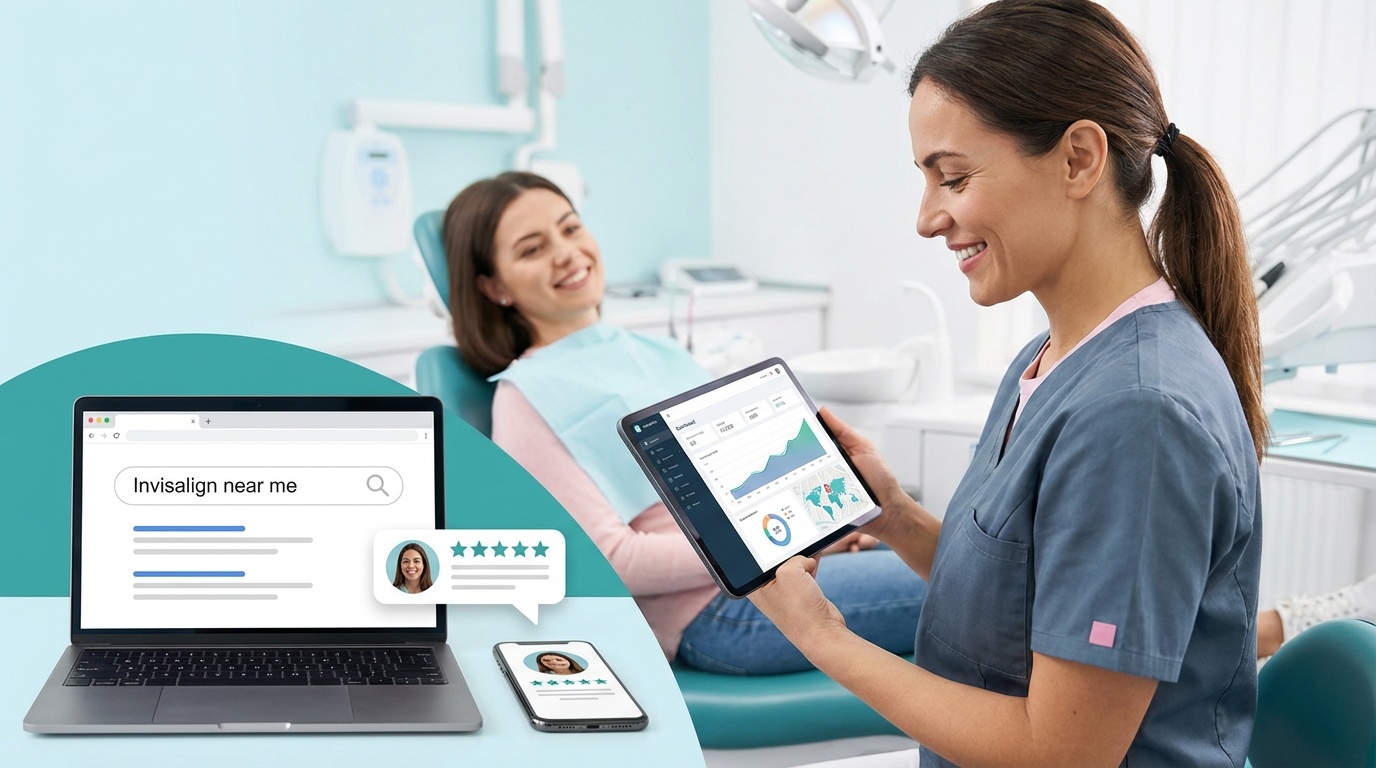
Local search drives specialist dental enquiries. When patients search “Invisalign near me” or “dental implants Manchester”, appearing in the top three results often determines whether they visit your website or a competitor’s. Effective dental marketing for specialists prioritises visibility for treatment-specific local searches.
Key Local SEO Tactics for Dentists in London, Manchester, and Birmingham
Google Business Profile optimisation forms the foundation. Complete profiles with treatment-specific service listings, weekly posts about procedures, and responses to all reviews tend to rank higher in local pack results. Include precise location data, opening hours, and high-quality images of facilities and team members.
Here’s what many specialists miss: location pages targeting specific neighbourhoods outperform single-location strategies. A London orthodontist should create separate optimised pages for “Invisalign Chelsea”, “Invisalign Kensington”, and “Invisalign Westminster” rather than one generic London page. Each page needs unique content addressing local patient concerns, nearby landmarks for directions, and area-specific testimonials.
Treatment-Specific SEO: Invisalign and Implant Keywords
Patients search using treatment names, not general dentistry terms. Keyword research shows that “Invisalign cost London” receives around 1,200 monthly searches whilst “orthodontist London” generates about 400. Specialists should create dedicated content answering pricing questions, treatment duration, and suitability criteria for each procedure.
Content depth matters for competitive keywords. A 2,500-word guide on “All-on-4 dental implants Birmingham” covering costs, recovery, candidacy, and alternatives will rank better than a 400-word service description. Include patient journey content addressing concerns at each decision stage, from initial research through post-treatment care.
GDC-Compliant Optimisation Checklist
- Verify all treatment claims with evidence-based sources and avoid guarantees about outcomes
- Include “Results may vary” disclaimers on before-and-after imagery and testimonials
- Display GDC registration numbers prominently on team pages and service descriptions
- Avoid superlatives like “best” without objective supporting evidence or awards
- Ensure pricing information includes clear scope and potential additional costs
- Obtain written consent for all patient testimonials, images, and case study materials
All dental marketing content must adhere to General Dental Council advertising standards whilst maintaining search visibility. Use factual treatment descriptions rather than promotional language. Replace “pain-free implants” with “implants placed under local anaesthetic”. Disclose all material information patients need for informed decisions.
GDC Compliance Essentials: Include practitioner GDC registration numbers on team pages. Review all content annually as guidance updates. Price claims require full treatment cost disclosure, not starting prices that could mislead patients. Before-and-after images need documented patient consent and can’t promise specific outcomes.
Technical SEO elements support compliance. Schema markup for medical businesses signals legitimacy to search engines. SSL certificates and HTTPS protocols protect patient data during contact form submissions. Mobile-responsive design supports accessibility requirements whilst improving rankings, as Google prioritises mobile-first indexing for all searches.
Treatment-Specific Marketing: Invisalign and Implant Campaigns That Convert
Generic dental advertising wastes budget by attracting unsuitable enquiries. Treatment-specific campaigns target patients already interested in particular procedures, delivering higher conversion rates at lower acquisition costs. dental marketing for specialists works best when messaging addresses procedure-specific concerns rather than broad dental health topics.
Invisalign Marketing Strategies for UK Practices
Invisalign patients prioritise aesthetics and discretion, so marketing should emphasise lifestyle benefits over clinical detail. Content should address professional appearance concerns, treatment duration for busy schedules, and comfort compared to traditional braces. Video testimonials from adult patients in professional roles connect strongly with this demographic.
Pricing transparency reduces consultation no-shows. Pages should detail monthly payment options, total treatment costs for different complexity levels, and what initial assessments include. Practices offering free consultations must clarify this prominently—many Invisalign searchers specifically look for no-obligation assessments before committing. Consider utilising our specialised Invisalign Marketing Services to optimise campaign performance.
Dental Implant Marketing: Targeting High-Value Patients
Implant patients often need extensive education about surgical procedures, recovery timelines, and long-term outcomes. Detailed guides covering single implants, multiple implants, and full-arch solutions address different patient situations. Include information on bone grafting requirements, as many implant candidates need preparatory procedures that affect timeline and cost.
Trust signals matter more for surgical procedures. Clinician qualifications, years of experience placing implants, and published evidence (where available) help build confidence. Patient reviews that mention implant experiences carry more weight than general practice feedback. Virtual consultation options reduce initial commitment barriers for nervous patients researching extensively before contact.
Integrating Facebook Ads and Social Media for Quick Wins
Paid social advertising delivers immediate visibility whilst organic SEO builds. Facebook’s detailed targeting reaches users by age, location, and interests aligned with cosmetic dentistry. Campaigns promoting limited-time consultation offers or educational webinars can generate leads within days rather than months.
Retargeting campaigns recover abandoned website visitors. Patients who viewed treatment pages but didn’t book receive follow-up ads addressing common objections like cost concerns or procedure anxiety. Sequential messaging that educates across multiple touchpoints converts better than single-exposure campaigns for high-value treatments.
Build High-Converting Dental Websites and Teams
Your website has seconds to convert visitors or lose them. Clear value propositions, prominent booking options, and fast load times determine whether traffic becomes consultations. Many dental websites underperform by prioritising aesthetics over functionality, burying contact forms beneath multiple navigation layers.
Dental Website Design Essentials for Patient Acquisition
Treatment-specific landing pages often outperform general practice websites for specialist growth. Each page should focus on one procedure with dedicated content, pricing information, and a clear booking path. Remove navigation distractions that send visitors away from conversion goals. Phone numbers must display prominently on mobile devices with click-to-call functionality. Consider Innovative Dental Website Designs tailored specifically for specialist patient acquisition.
Page speed directly impacts rankings and conversions. Websites that load quickly convert better than those that lag. Compress images without quality loss, minimise plugin usage, and implement caching. Google PageSpeed Insights provides specific technical recommendations for improvement.
Team Training to Turn Leads into Booked Appointments
Here’s the truth: marketing generates enquiries, but untrained teams lose potential patients during initial contact. Receptionists need scripts addressing common questions about pricing, treatment duration, and payment options. Role-playing exercises prepare staff to handle objections and convert phone enquiries into scheduled consultations rather than “I’ll think about it” responses.
Response speed matters. Practices responding to web enquiries within five minutes typically convert more leads than those taking over an hour. Implement systems to acknowledge contact forms immediately, even outside business hours, with specific timeframes for detailed responses.
AI Tools for Personalisation and No-Show Reduction
Automated reminder systems reduce no-show rates significantly. SMS and email sequences sent at sensible intervals keep appointments top of mind without requiring manual staff effort. Personalised messages referencing specific treatments and practitioner names feel more engaging than generic reminders.
Chatbots can qualify leads outside business hours, capturing patient information and treatment interests when human staff aren’t available. AI-powered tools answer frequently asked questions about procedures, costs, and suitability, moving prospects further through the decision journey before initial contact. Dominate Dental’s AI integration has helped practices capture more leads from existing website traffic.
Choose Dominate Dental: The Top UK Agency for Specialist Growth

Selecting the right marketing partner determines whether your practice achieves sustainable growth or wastes budget on ineffective campaigns. Dominate Dental specialises exclusively in dental marketing for specialists, delivering measurable results through proven strategies designed for UK metropolitan markets.
Why We Rank as a Leading Dental Marketing Agency
Our exclusive focus on dental practices means we understand GDC compliance, specialist treatment marketing, and patient acquisition challenges other agencies miss. We combine advanced AI technology with human expertise to target high-intent patients actively searching for your specific treatments in your area. Located at Grosvenor House, 11 St Paul’s Square, Birmingham B3 1RB, our team serves practices nationwide with strategies proven across London, Manchester, and Birmingham markets.
Real Client Results and ROI Breakdown
A Manchester orthodontic practice increased Invisalign consultations from 18 to 52 monthly whilst reducing cost per consultation by 61%. An implant specialist in London achieved strong ROI within six months through targeted local SEO and conversion optimisation. Our 5.0 Google rating based on 18 reviews reflects consistent delivery and measurable practice growth.
Get Started: Book Your Free Consultation Today
Discover how Dominate Dental can transform your specialist practice marketing. Book a free consultation to receive a customised growth strategy identifying immediate opportunities in your market. We’ll analyse your current online presence, competitive positioning, and untapped patient acquisition channels specific to your treatments and location. Contact us today to start generating more consultations for your high-value dental services.
Measuring and Optimising Your Dental Marketing ROI
Effective dental marketing for specialists requires continuous measurement and refinement. Practices investing £2,000+ monthly must track which channels generate consultations rather than vanity metrics like website visits. Attribution modelling reveals the patient journey from initial search through booked appointment, identifying high-performing campaigns worth scaling and underperforming tactics to cut.
Essential KPIs for Specialist Practices
Cost per consultation is the key metric. Calculate total marketing spend divided by consultations booked for patients suitable for your specialist treatments. Practices achieving strong cost per consultation for implants or Invisalign typically see positive ROI.
Consultation-to-treatment conversion rates show whether marketing attracts appropriate patients. Specialists should convert a healthy percentage of consultations into treatment acceptance. Lower rates can indicate poor patient qualification during marketing or weak consultation processes that need training and tighter follow-up.
Patient lifetime value matters for long-term planning. Implant patients often return for additional procedures or refer family members, making their total value multiple times their initial treatment revenue. Marketing campaigns targeting high-lifetime-value demographics can justify higher acquisition costs than single-treatment campaigns.
Analytics Tools That Dental Practices Actually Need
Google Analytics 4 tracks website behaviour, showing which pages visitors view before booking and where they exit without converting. Set up conversion goals for contact form submissions, phone clicks, and consultation bookings. Custom reports segment traffic by source, revealing whether SEO, paid ads, or social media drive better-quality enquiries.
Call tracking software assigns unique phone numbers to different marketing channels, recording which campaigns generate phone enquiries. Conversation intelligence tools can analyse call recordings, identifying successful booking conversations and common objections that need script improvements.
Patient management systems should integrate with marketing platforms, connecting consultation bookings back to original traffic sources. This closed-loop reporting shows which marketing investments drive revenue, not just enquiries.
Quarterly Strategy Reviews and Adjustments
Marketing performance fluctuates seasonally. Invisalign enquiries peak in January. Implant searches rise before summer. Quarterly reviews identify patterns that inform budget allocation across the year. Analyse which treatment campaigns performed best, which geographic areas generated the most leads, and which messaging connected most strongly.
Competitor activity requires monitoring. New practices entering your market or established competitors launching aggressive campaigns may require a strategic response. Search your key treatment terms monthly, noting ranking changes and new advertisers competing for visibility.
Patient feedback provides qualitative insights analytics can miss. Survey new patients about how they found your practice and what information influenced their decision. Common themes reveal content gaps or messaging changes that can lift conversion rates.
Future-Proofing Your Dental Marketing Strategy Beyond 2026
The dental marketing environment continues evolving as patient behaviour shifts and technology advances. Specialists who adapt early gain a competitive advantage. Understanding emerging trends allows proactive adjustments rather than reactive scrambling.
Voice Search Optimisation for Dental Queries
Voice-activated searches through smartphones and smart speakers now account for a significant share of dental queries. Patients ask conversational questions like “Where can I get Invisalign near me?” rather than typing “Invisalign London”. Content should answer these natural-language queries directly, using question-based headings and concise answers suitable for voice assistant responses.
Featured snippet optimisation can position your practice as the answer Google reads aloud. Structure content with clear definitions, numbered lists, and direct answers to common questions within the first 40–50 words of relevant sections.
Video Content for Patient Education and Trust-Building
Video consumption dominates online behaviour. Many patients prefer video explanations of dental procedures over written content. Treatment walkthroughs, patient testimonials, and practitioner introductions build familiarity before initial contact. Short-form content under 90 seconds performs best on social platforms, whilst longer educational videos suit website embedding.
Virtual consultation videos can reduce barriers for nervous patients. Recording responses to frequently asked questions creates evergreen content that addresses concerns without requiring live staff time. Practices using video content often see higher engagement rates and more consultation bookings from website visitors.
AI-Driven Personalisation of Patient Journeys
Artificial intelligence enables personalisation at scale. Website visitors researching implants can see different content and offers than those interested in Invisalign. Behavioural triggers can send targeted email sequences based on pages viewed and time spent researching specific treatments.
Predictive analytics help identify which leads are more likely to convert, allowing teams to prioritise follow-up. Chatbots can qualify patient suitability through automated questions, scheduling consultations only for appropriate candidates. These technologies reduce wasted time on unsuitable enquiries whilst improving the experience for the right patients.
Dominate Dental integrates these AI capabilities into our dental marketing for specialists, combining automation efficiency with human expertise. Our systems learn from your practice’s conversion patterns, continuously optimising targeting and messaging for maximum ROI.
Taking Action: Your Roadmap to Specialist Practice Growth

Implementing effective marketing requires systematic execution rather than scattered tactics. Practices achieving consistent growth follow structured approaches that cover multiple acquisition channels simultaneously whilst maintaining compliance and measuring results.
90-Day Quick Start Plan: Month 1: Audit current website conversion rates and implement basic SEO foundations. Month 2: Launch treatment-specific landing pages with optimised local content. Month 3: Begin paid advertising campaigns targeting high-intent keywords whilst training your team on lead handling protocols. This phased approach builds momentum without overwhelming practice resources.
Success requires commitment beyond initial set-up. Allocate a dedicated budget and treat marketing as essential infrastructure rather than an optional expense. Practices investing consistently in patient acquisition outgrow competitors spending minimally or inconsistently.
Partner selection determines outcomes. Generic marketing agencies often lack dental-specific expertise around GDC compliance, treatment-specific patient psychology, and specialist practice economics. Dominate Dental’s exclusive focus on dental marketing for specialists ensures strategies aligned with your unique challenges and opportunities.
Our Birmingham-based team at Grosvenor House, 11 St Paul’s Square has helped specialist practices across London, Manchester, Birmingham, and nationwide achieve measurable growth. With a 5.0 Google rating reflecting consistent client success, we deliver proven ROI through AI-powered targeting combined with dental marketing expertise.
Book your free consultation today to receive a customised growth strategy for your specialist practice. We’ll analyse your current market position, identify immediate opportunities, and outline specific tactics to increase patient enquiries for your high-value treatments. Transform your practice marketing from a cost centre to a reliable growth engine with strategies designed specifically for UK dental specialists.
For detailed information on advertising standards that dental professionals must follow, please refer to the guidance provided by the General Dental Council.
If your practice offers NHS services alongside private treatments, understanding the structure and patient expectations of NHS dental services is helpful. For information on NHS dental services and patient guidance, visit the NHS Dental Services page.
Frequently Asked Questions
Why do dental specialists need specific marketing strategies?
General marketing often overlooks the unique patient journey for high-value specialist treatments like implants or Invisalign. Specialist patients require more education and nurturing over a longer decision-making period, which generic approaches fail to address effectively. Our strategies are designed to build trust and provide the detailed information these patients seek before committing.
What are common marketing challenges for UK dental specialists?
Many specialists struggle with low-quality leads, high no-show rates for initial consultations, and outdated websites that fail to convert visitors. Additionally, navigating GDC compliance while optimizing for search visibility adds a layer of complexity that generic agencies often miss. We focus on solving these specific issues to deliver qualified consultations.
How can local SEO benefit a dental specialist practice?
Local SEO is essential because patients actively search for “Invisalign near me” or “dental implants Manchester.” Appearing in the top local search results significantly increases your practice’s visibility and directs high-intent patients to your website. We optimize your online presence to ensure you dominate these critical local searches.
What is treatment-specific SEO and why is it important for specialists?
Treatment-specific SEO focuses on optimizing your online content for the exact terms patients use when searching for procedures like “Invisalign cost London” or “All-on-4 dental implants Birmingham.” This approach ensures you attract patients actively researching specific treatments, rather than general dental queries. We create in-depth content that answers their questions and guides them toward booking.
How does Dominate Dental help specialists acquire qualified patients?
Dominate Dental combines AI-powered patient acquisition technology with deep specialist dental marketing expertise. We target patients actively searching for your treatments, using GDC-compliant messaging and optimized landing pages to convert visitors into booked consultations. Our approach is designed to deliver measurable ROI and growth for your practice.
Why is GDC compliance a key consideration in dental marketing?
GDC compliance is paramount to ensure all marketing claims are ethical, evidence-based, and avoid regulatory breaches. This includes careful wording, disclaimers on testimonials, and transparent pricing. We ensure all your marketing content adheres to professional standards while still achieving strong search visibility.
How has the shift to private dentistry impacted specialist marketing?
The growth in private dental treatment means specialists now compete in a crowded market where patients extensively research online. Patients often engage with 11 touchpoints before choosing a provider for high-value treatments, making multi-channel visibility and educational content crucial. Our strategies help you stand out by building trust and providing transparent information.
Leave a Reply