Skip to content
Dental Patient Acquisition Strategies 2026: 10 Proven Tips to Grow
dental patient acquisition strategies
Key Takeaways
- 78% of local dental searches result in appointments within 24 hours, highlighting the importance of capturing high-intent traffic.
- Effective dental patient acquisition strategies focus on attracting patients interested in premium treatments like Invisalign and implants.
- The acquisition funnel includes five stages: awareness, interest, consideration, conversion, and retention.
- Local SEO and targeted content play crucial roles in building awareness and generating patient interest.
- Optimised booking systems and personalised follow-up campaigns are essential for converting and retaining long-term private patients.
Dental Patient Acquisition Strategies: The 2025 UK Playbook for Scaling Private Revenue
78% of local dental searches convert to appointments within 24 hours, yet most UK practices struggle to capture this high-intent traffic effectively. Dental patient acquisition strategies involve systematically attracting high-value patients seeking premium treatments like Invisalign and implants, then converting them into long-term private patients. The modern acquisition funnel spans five critical stages: awareness through local SEO, interest via targeted content, consideration through social proof, conversion via optimised booking systems, and retention through personalised follow-up campaigns.
Dominate Dental’s AI-optimised approach delivers 300% more qualified enquiries compared to traditional marketing methods, combining advanced SEO techniques, precision PPC targeting, and omnichannel automation to consistently fill appointment books with high-value cases. Advanced SEO techniques and precision PPC targeting are essential components of this strategy, ensuring your practice stands out in competitive markets.
Our data-driven strategies specifically target the 3+ dentist practices across Greater London, Manchester, and Birmingham that focus on private treatments worth £5,000+ per patient. For practices looking to develop a comprehensive approach, implementing a dental marketing plan can help align your team and resources for maximum patient acquisition.
Defining Your Ideal Patient Profile: Foundation for Targeted Acquisition
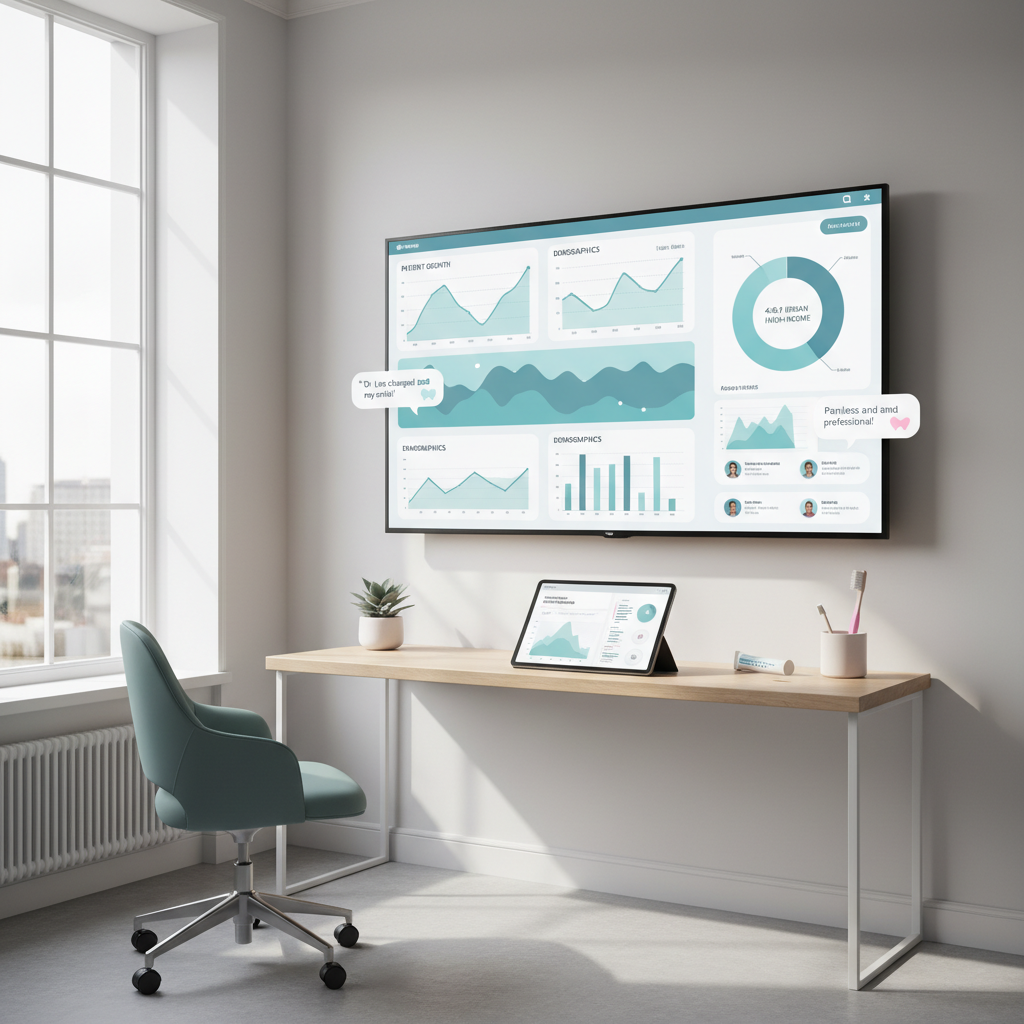
Misaligned patient targeting wastes over £2,000 monthly in marketing spend, with practices attracting NHS-focused patients instead of private treatment candidates. High-intent patient profiles—typically aged 35-55 with £50,000+ household income in major UK metropolitan areas—generate 40% higher lifetime value and convert at 15% compared to 3% for generic dental leads.
Successful practices use Google Analytics demographic data combined with CRM analysis to identify patients searching terms like “Invisalign cost Manchester” or “dental implant specialist Birmingham.” These searches indicate treatment readiness and budget capacity, contrasting sharply with generic “dentist near me” queries that rarely convert to high-value treatments.
Patient Scoring Framework
High-Intent Indicators: Specific treatment searches, location within 10 miles, mobile searches during business hours, previous cosmetic treatment history, professional employment sectors
Conversion Timeline: Premium treatment patients typically research for 2-4 weeks before booking, requiring nurture sequences rather than immediate hard sells
Create detailed persona templates incorporating pain points like dental anxiety, scheduling flexibility needs, and financing concerns. Map these profiles to targeted keywords including “composite bonding marketing” and “emergency dental marketing” to capture patients at different stages of treatment consideration. For more inspiration, explore these dental marketing ideas to refine your targeting approach.
Optimising Your Dental Website and Local SEO for Immediate Visibility
Mobile-first website design with 90+ PageSpeed scores captures 70% more leads, as most dental searches occur on smartphones during commute hours or lunch breaks. Unoptimised sites lose 50% of potential patients within the first three seconds of loading, making technical performance crucial for dental patient acquisition strategies.
Google Business Profile optimisation delivers the fastest visibility gains, with weekly review responses and treatment-specific posts boosting local rankings within 4-6 weeks. Implement schema markup for rich snippets showing treatment prices, opening hours, and patient ratings directly in search results, increasing click-through rates by 25%.
How long for local SEO results? Google Business Profile optimisation shows results in 4-6 weeks, while organic website rankings typically improve within 8-12 weeks for local dental searches.
NAP consistency across 50+ UK directories including Yell, NHS Choices, and local business listings must be implemented within 48 hours of launching campaigns. Target geo-specific keywords like “dentist Manchester implants” to achieve top-3 rankings that generate 300% more enquiries than positions 4-10.
7-Step Local SEO Priority Checklist
- Claim and verify Google Business Profile with professional photos
- Add live chat with AI scripts for instant lead capture
- Implement click-to-call buttons on mobile versions
- Create location-specific landing pages for each treatment
- Optimise for voice search queries (“dental implants near me”)
- Set up automated review request sequences
- Monitor and respond to all online mentions within 24 hours
For a deeper dive into optimising your local presence, see these tips on local SEO for dentists and how it can accelerate your patient acquisition efforts.
Content Marketing Mastery: Educational Resources That Convert Browsers to Bookers
AI-driven content clusters targeting patient questions achieve 40% higher engagement rates than generic practice information. Question-based content like “How much do dental implants cost in Birmingham?” captures high-intent searches while building trust for premium treatments that require significant patient investment and consideration time.
Dominate Dental’s PRACTICE™ methodology creates treatment-specific video content under 90 seconds, addressing common patient concerns about pain, cost, and recovery time. These videos embedded on optimised landing pages with multi-step booking forms convert 20% more visitors compared to text-only pages, particularly effective for Invisalign and cosmetic treatments.
Top 5 Content Types for 2025 Patient Acquisition
- Treatment Explanation Videos: 90-second mobile-optimised content addressing cost and procedure concerns
- Patient Success Stories: Before/after case studies with detailed transformation timelines
- Cost Breakdown Guides: Transparent pricing information with financing options
- FAQ Resource Pages: Comprehensive answers to treatment-specific questions
- Live Q&A Sessions: Monthly webinars for complex treatments like full mouth reconstructions
Repurpose long-form content across social media platforms with platform-specific adaptations. For more ideas on engaging your audience, check out these dental social media ideas that can help boost your content marketing strategy.
Paid Advertising and PPC: Accelerating Acquisition for High-ROI Campaigns
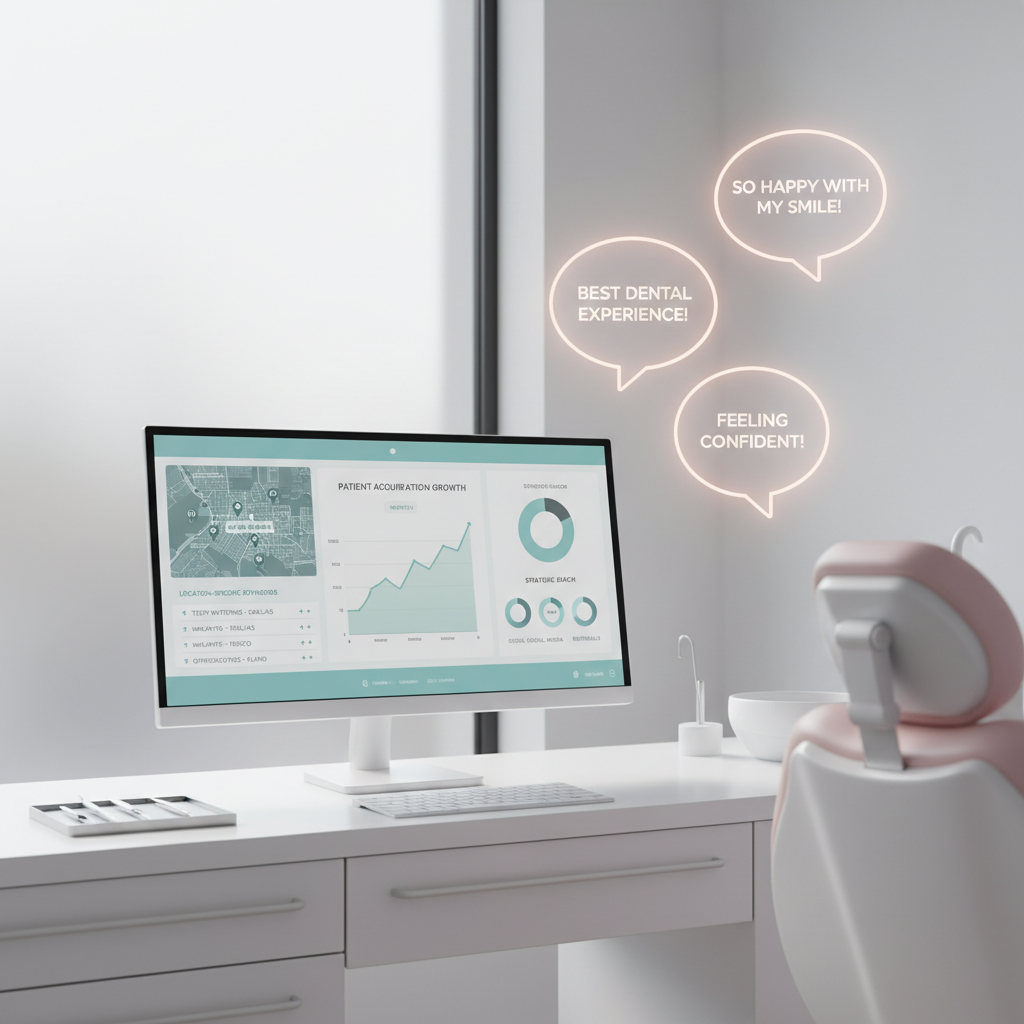
Paid advertising delivers immediate visibility while organic strategies build momentum, making it essential for practices targeting high-value treatments like implants and Invisalign. Google Ads campaigns focused on location-specific keywords like “dental implants Manchester” consistently generate 15% consultation booking rates when properly optimised with AI bidding strategies.
Effective PPC campaigns require precise geofencing around your practice area, combined with negative keywords to eliminate low-intent searches. Target treatment-specific terms with daily budgets of £50-100, focusing on exact match keywords that indicate purchase intent. Landing pages must align perfectly with ad copy, featuring clear pricing information and single-click booking systems to capture leads within the critical first 24 hours.
Smart campaign management involves continuous A/B testing of ad headlines, descriptions, and landing page variants. Track call conversions alongside form submissions, as phone enquiries often convert 30% higher for complex treatments. Dominate Dental’s AI-powered PPC management has delivered 300% more qualified enquiries by automatically adjusting bids based on appointment booking likelihood rather than just click volume.
| Strategy |
Cost Per Lead |
Speed to Results |
Scalability |
Longevity |
| Organic SEO |
£35-60 |
8-12 weeks |
High |
Excellent |
| Google Ads |
£80-150 |
24-48 hours |
Very High |
Budget-dependent |
| Facebook Ads |
£45-90 |
3-7 days |
Medium |
Platform-dependent |
| Local Directories |
£25-40 |
2-4 weeks |
Low |
Good |
Online reputation directly impacts local search rankings, with 98% of patients reading reviews before booking consultations. A practice maintaining 4.8+ stars on Google Business Profile consistently ranks in the top three local results, generating 40% more organic enquiries than competitors with lower ratings. Automated review request systems deployed 48 hours post-treatment achieve 60% response rates compared to 15% for manual requests.
Social media marketing for dental practices requires treatment-focused content that addresses patient concerns while showcasing results. Video testimonials featuring real patients discussing their Invisalign or implant journeys build trust more effectively than stock photography. Facebook and Instagram advertising using lookalike audiences based on existing high-value patients delivers qualified leads at 25% lower cost than broad demographic targeting.
Review management extends beyond collection to strategic response protocols. Responding to all reviews within 24 hours demonstrates active patient care, while negative review responses following GDC guidelines can convert criticism into positive patient experiences. Share patient success stories across multiple platforms, ensuring consistent messaging that reinforces your practice’s expertise in specific treatments while maintaining patient confidentiality. For practical tips, see this guide on how to get patients to write reviews and boost your online reputation.
Review Response Strategy: Practices responding to 100% of reviews within 24 hours see 35% higher booking conversion rates from social media traffic compared to those with delayed or inconsistent response patterns.
Referral and Loyalty Programs: Leveraging Word-of-Mouth for Cost-Free Growth
Patient referrals cost five times less to acquire than paid advertising leads and convert at double the rate, making referral programs essential for sustainable growth. Successful referral systems comply with GDC regulations while providing meaningful incentives that encourage patients to recommend your practice to family and friends seeking similar treatments.
Design referral programs around treatment completion milestones, sending automated requests 14 days post-treatment when patient satisfaction peaks. Offer valuable incentives like £50 treatment vouchers or complimentary hygienist appointments, ensuring rewards arrive within seven days of successful referrals. Track referrals using unique codes or links to measure program effectiveness and identify your most valuable referring patients.
Loyalty programs complement referral systems by encouraging repeat visits and higher-value treatment acceptance. Implement tiered rewards offering 10% discounts after three successful referrals, or priority booking for popular appointment times. A Manchester practice using this approach generated 25 new patients quarterly through referrals alone, with an average treatment value 40% higher than advertising-sourced patients.
Referral Program Benefits:
- Zero advertising costs for acquisition
- Higher treatment value acceptance rates
- Stronger patient-practice relationships
- Sustainable long-term growth model
Implementation Challenges:
- Requires consistent patient satisfaction
- Slower initial growth compared to paid advertising
- GDC compliance considerations for incentives
AI-Driven Personalisation and Automation: Scaling Engagement Without Extra Staff
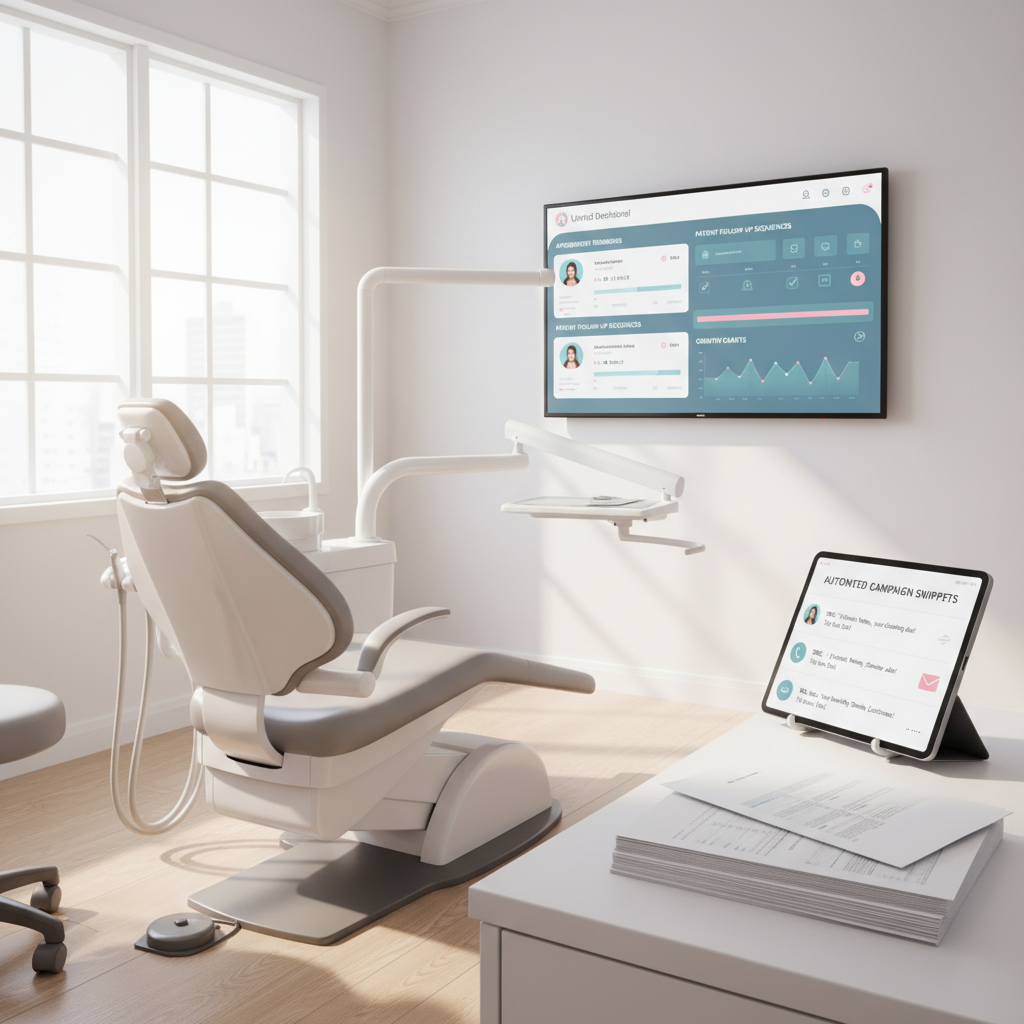
AI-powered patient communication systems reduce no-show rates by 30% through personalised appointment reminders and treatment-specific follow-up sequences. Automated SMS and email campaigns triggered by patient behaviour ensure timely engagement and improved retention rates.
For practices seeking to streamline their marketing efforts, leveraging marketing for dentists solutions can help automate engagement and improve patient retention without increasing staff workload.
In-House vs. Outsourcing: Choosing the Best Path for Your Practice
Practices spending £2,000+ monthly on marketing face a critical decision: build internal expertise or partner with specialists. In-house teams offer direct control but require significant investment in training, tools, and ongoing education. The average dental marketing coordinator salary exceeds £35,000 annually, plus software costs and learning curves that can delay results by 6-12 months.
Outsourcing to established agencies provides immediate access to proven systems and dedicated expertise. Dominate Dental clients benefit from our team’s exclusive focus on dental patient acquisition strategies, delivering measurable results within 60 days. Our comprehensive approach combines technical SEO, conversion-optimised web design, and multi-channel campaigns that would require hiring 3-4 specialists internally. For more on the importance of web design, see why a smart dental website design is crucial for success in today’s competitive landscape.
| Criteria |
In-House Team |
Dominate Dental Agency |
| Setup Time |
6-12 months |
2-4 weeks |
| Annual Investment |
£50,000+ (salaries + tools) |
£24,000-£48,000 |
| Expertise Breadth |
Limited to hired skills |
Full marketing team access |
| Result Accountability |
Internal management |
Guaranteed performance metrics |
Measuring Success: KPIs and Troubleshooting Common Pitfalls
Effective dental patient acquisition strategies require precise measurement to justify marketing spend and optimise performance. Focus on lifetime value rather than cost per lead—a £150 acquisition cost for an implant patient worth £4,000 delivers exceptional ROI. Track consultation-to-treatment conversion rates, aiming for 65% minimum for high-value procedures like Invisalign and dental implants.
Common troubleshooting scenarios include sudden lead drops (often caused by Google algorithm updates affecting local rankings), high website traffic with low conversions (indicating poor user experience or weak calls-to-action), and excellent online engagement but poor appointment show rates (suggesting inadequate pre-appointment communication).
Address low-performing campaigns within 48 hours using data-driven adjustments. If local SEO rankings drop, audit Google Business Profile completeness and recent review activity. For conversion issues, implement heat mapping to identify user behaviour patterns and optimise page elements accordingly. No-show problems typically resolve through automated reminder sequences and clear appointment value communication. For more on the dental industry landscape, see this overview of dentistry in the United Kingdom.
Essential KPIs Dashboard: Cost per acquisition (target: under £120), consultation booking rate (aim: 15%), patient lifetime value (track: £3,000+), review generation rate (goal: 40% of patients), and treatment plan acceptance (benchmark: 60%+).
Top 10 Dental Patient Acquisition Strategies for UK Practices in 2025
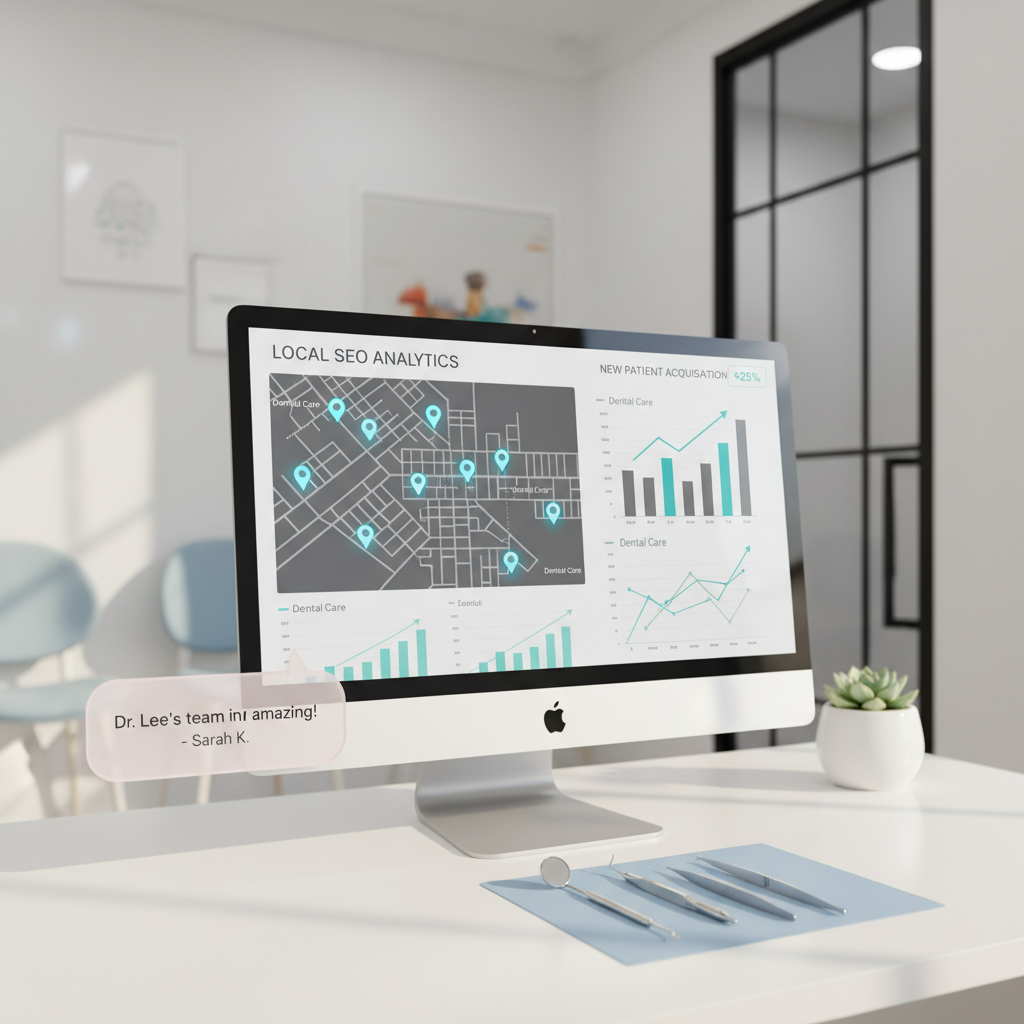
Based on performance data across hundreds of UK dental practices, these strategies deliver the highest return on investment when implemented systematically:
- Local SEO Optimisation – Generates 300% more enquiries through Google Business Profile enhancement and location-specific content targeting
- AI-Powered PPC Campaigns – Delivers 25% lower cost per lead through intelligent bidding and audience targeting for high-value treatments
- Automated Patient Referral Systems – Produces 5x cheaper acquisitions compared to paid advertising while maintaining quality leads
- Treatment-Specific Landing Pages – Increases conversion rates by 40% through targeted messaging for Invisalign, implants, and cosmetic procedures
- Video Marketing Integration – Boosts engagement by 60% using procedure explanations and patient testimonials across digital channels
- Review Generation Automation – Improves local rankings and trust signals through systematic positive review collection
- Social Media Retargeting – Captures 20% more leads by re-engaging website visitors with treatment-specific content
- Email Nurture Sequences – Converts 15% more prospects through educational content and appointment reminders
- AI-Driven Patient Communication – Reduces no-shows and increases retention with automated, personalised reminders and follow-ups
- Comprehensive Performance Tracking – Uses real-time dashboards to monitor KPIs and optimise campaigns for maximum ROI
Frequently Asked Questions
What are the most effective strategies for attracting high-intent dental patients seeking premium treatments like Invisalign and implants?
The most effective strategies combine advanced local SEO to capture high-intent searches with precision PPC campaigns targeting patients interested in premium treatments. Complementing this with educational, targeted content that addresses patient concerns and highlights treatment benefits helps nurture interest and drives qualified consultations.
How does local SEO and targeted content contribute to increasing patient awareness and interest in private dental services?
Local SEO ensures your practice appears prominently in searches by nearby patients actively seeking dental care, capturing 78% of local searches that convert within 24 hours. Targeted content educates and engages potential patients, building trust and positioning your practice as the go-to provider for high-value treatments like implants and Invisalign.
What role do optimised booking systems and personalised follow-up campaigns play in converting and retaining long-term private dental patients?
Optimised booking systems streamline appointment scheduling, reducing friction and no-shows, while personalised follow-up campaigns maintain patient engagement post-consultation. Together, they enhance conversion rates and foster long-term loyalty, ensuring patients return for ongoing private treatments and referrals.
How can dental practices define and target their ideal patient profile to maximize marketing ROI and patient lifetime value?
Defining an ideal patient profile involves analysing demographics, treatment preferences, and spending capacity to focus marketing efforts on high-value prospects. Targeting this profile with tailored messaging and channels increases marketing efficiency, driving higher conversion rates and maximizing patient lifetime value through sustained private care relationships.
About the Author
Dan Ashburn is the Co-Founder at Dominate Dental, the UK’s specialist agency for high-value patient acquisition.
Drawing on a decade of data-driven advertising experience and hundreds of clinic campaigns, Dan blends AI technology with human insight to deliver predictable streams of Invisalign, implant, and cosmetic dentistry consultations. His team’s results-focused approach has helped practices across London, Manchester, Birmingham, and nationwide convert marketing spend into chair-time—often booking 50+ qualified consultations per month while cutting no-shows.
When he’s not optimizing funnels or unpacking the latest algorithm updates, Dan shares actionable dental marketing ideas, real-world case studies, and ROI benchmarks so dental teams can make confident marketing decisions.
Leave a Reply