Digital Marketing for Dentists | UK Growth System
Key Takeaways
- Digital marketing for dentists integrates SEO, paid ads, social media, and reputation management to attract valuable patients.
- UK dental practices targeting premium treatments like Invisalign and implants benefit most from these strategies.
- Effective digital marketing can generate over 50 qualified leads per month for dental practices.
- Conversion rates of 15% or higher are achievable with comprehensive digital marketing approaches.
Digital Marketing for Dentists – UK Practice Playbook for Growth
Why Digital Marketing Is Non-Negotiable for UK Dentists in 2025
Top 5 Digital Marketing Benefits for UK Dentists:
- 72% of patients research dental services online before booking
- 93% never look beyond Google’s first page of results
- 50+ qualified leads monthly for optimised practices
- 15% average conversion rate from visitor to consultation
- £3-5 ROI for every £1 spent on integrated campaigns
Patient behaviour has fundamentally shifted. Modern dental patients begin their journey online, researching treatments, reading reviews, and comparing practices before making contact. Practices without strong digital presence lose patients to competitors who appear prominently in search results and maintain professional online reputations. Digital marketing for dentists is essential for practices aiming to attract and retain high-value patients in today’s competitive landscape.
Combining local SEO with targeted Google Ads and patient review management boosts visibility and trust, driving consistent high-value patient appointments in UK
dental practices.
Digital marketing channels offer unprecedented targeting precision. Unlike traditional print or radio advertising, digital campaigns can target “dental implants Manchester” or “Invisalign London” to reach patients actively seeking specific treatments. This precision eliminates budget waste while attracting higher-intent prospects.
The scalability advantage cannot be overstated. Well-executed digital marketing for dentists creates compounding returns – SEO improvements build over time, positive reviews attract more patients, and refined targeting increases conversion rates. Practices investing in comprehensive digital strategies achieve resilience against market fluctuations while maintaining predictable patient flow.
Understanding Patient Search Behaviour and Online Decision Pathways
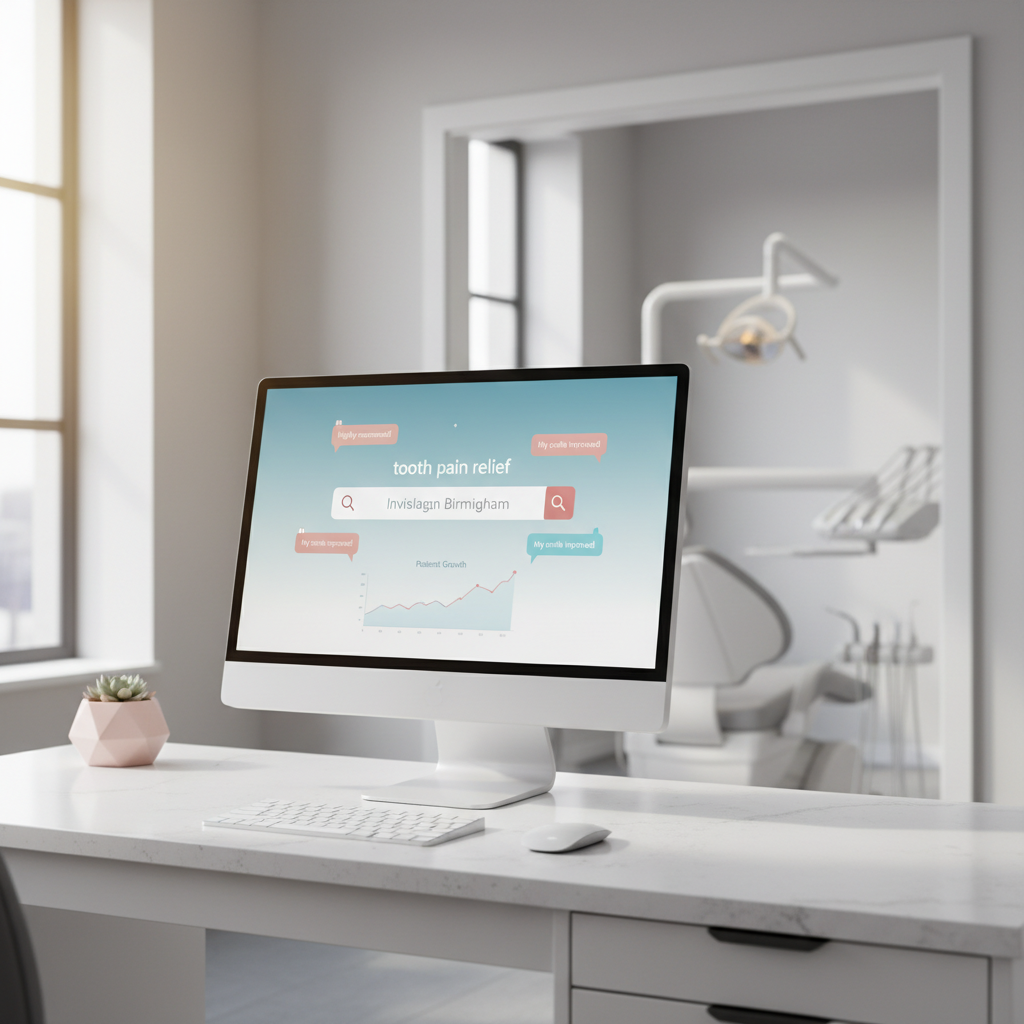
UK dental patients follow predictable online journeys. Initial awareness often begins with symptom-based searches (“tooth pain relief”) or treatment research (“how much do dental implants cost”). Patients then narrow their search geographically (“dentist near me,” “Invisalign Birmingham”) before evaluating specific practices through websites, reviews, and social media presence.
High-value conversions depend on meeting patients at each journey stage. Practices capturing attention during the research phase through informative content, then demonstrating expertise and local presence, achieve higher consultation booking rates. The final conversion typically occurs when patients find clear treatment information, positive reviews, and simple booking processes on professionally designed websites.
Dental Website Design & Branding – Building Patient Trust Online
Your website serves as the digital front door to your practice. Modern dental websites must load in under 3 seconds, display perfectly on mobile devices, and guide visitors toward booking consultations. Poor website performance directly correlates with lost patients – 40% of visitors abandon sites that take longer than 3 seconds to load.
Essential conversion elements include prominent “Book Consultation” buttons on every page, before/after treatment galleries showcasing Invisalign and implant results, patient testimonials with photos, and clear service descriptions. Trust signals such as professional certifications, association memberships, and secure payment badges build confidence in hesitant visitors.
Strategic website optimisation focuses on treatment-specific landing pages. Separate pages for dental implants, Invisalign, composite bonding, and emergency care allow targeted advertising and improve search rankings. Each page should address common patient concerns, showcase results, and provide multiple contact options including phone, email, and instant booking systems. For more insights, see why a smart dental website design is crucial for success.
SEO for Dentists – Systematic Patient Acquisition Engine
SEO delivers 3x ROI compared to paid advertising by building long-term visibility that compounds over time, while paid ads stop generating leads when budgets pause.
Local SEO Strategies for UK Dental Practices
Google Business Profile optimisation forms the foundation of local dental SEO. Complete every profile section, upload weekly photos of your practice and team, and actively collect patient reviews targeting 4.5+ star averages. Practices appearing in Google’s “map pack” receive 44% of clicks for local dental searches.
NAP consistency (Name, Address, Phone) across all online directories significantly impacts local rankings. Audit and update your practice information on NHS Choices, Yell, Bing Places, and industry-specific directories like WhatClinic. Create location-specific pages for each area you serve, particularly if targeting multiple boroughs in Greater London or surrounding areas in Manchester and Birmingham.
Technical SEO & Site Health
Mobile-first indexing means Google primarily uses your mobile site for ranking decisions. Ensure your website loads quickly on smartphones, displays properly across all screen sizes, and maintains functionality on mobile devices. Implement schema markup for your practice location, services, and reviews to help search engines understand and display your content prominently.
Content-Driven SEO
Treatment-specific content pages targeting high-intent keywords drive qualified patient inquiries. Create comprehensive pages for “dental implants London,” “Invisalign Manchester,” and “composite bonding Birmingham” that answer common patient questions, showcase results, and provide clear next steps. These pages should include treatment costs, timelines, and booking options to capture ready-to-convert visitors. For actionable tips, check out SEO tips for dentists.

| Channel |
Speed to Results |
Cost Control |
Targeting Precision |
Long-term Value |
| Google Ads PPC |
Immediate (24-48 hours) |
Daily budget limits |
Keyword + location specific |
Stops when paused |
| SEO |
3-6 months |
Fixed monthly investment |
Broad keyword coverage |
Compounds over time |
| Facebook Ads |
1-2 weeks |
Campaign budget control |
Demographics + interests |
Platform dependent |
Google Ads provides instant visibility for premium dental treatments when patients search “dental implants London” or “emergency dentist near me.” Average cost-per-click ranges from £12-18 for high-value services, but qualified leads typically convert at 15-25% rates, making the investment profitable for practices charging £2,000+ for treatments. Google Ads for dentists can be a powerful tool for immediate patient acquisition.
Strategic campaign targeting focuses on geographic overlays for your service areas combined with treatment-specific keywords. Use ad extensions to display phone numbers, location information, and direct booking links. Remarketing campaigns re-engage website visitors who viewed treatment pages but didn’t book consultations, often achieving 30% higher conversion rates than cold traffic.
Successful dental PPC campaigns require continuous optimisation. Monitor quality scores weekly, test multiple ad variations monthly, and adjust bids based on time-of-day and day-of-week performance data. Practices typically see best results during weekday business hours and Sunday evenings when patients plan upcoming appointments.
Top 5 High-Value Social Campaign Tips:
- Post 30-60 second treatment explanation videos weekly
- Share before/after galleries with patient consent
- Run monthly “Smile Makeover” competitions
- Respond to all comments within 24 hours
- Use Instagram Stories for behind-the-scenes content
Organic social media builds trust through consistent, educational content. Weekly posts should include treatment explanations, patient success stories, team introductions, and practice updates. Video content generates double the engagement of static posts, making short-form treatment demonstrations particularly effective for explaining Invisalign processes or implant procedures. For creative inspiration, explore these dental social media ideas.
Paid social campaigns on Facebook and Instagram allow precise demographic targeting. Create custom audiences based on age groups most likely to seek cosmetic treatments (25-45 for Invisalign, 45+ for implants) within your geographic service area. Carousel ads showcasing multiple before/after transformations typically achieve 20% higher click-through rates than single-image advertisements.
Platform-specific strategies maximise reach and engagement. Instagram focuses on visual storytelling with treatment results and practice aesthetics. Facebook serves educational content and community building. LinkedIn targets professional networks for executive dental care. TikTok reaches younger audiences with quick treatment FAQs and myth-busting content. Practices looking to enhance their presence should consider social media for dentists as a dedicated strategy.
Email Marketing – Patient Retention & Appointment Maximisation
3-Step Email Campaign for Patient Retention: Welcome sequence for new patients → Treatment education series → Reactivation campaigns for lapsed patients
Segmented email campaigns nurture different patient groups effectively. New consultation leads receive treatment education sequences explaining procedures, costs, and financing options. Existing patients get appointment reminders, oral health tips, and exclusive offers for additional treatments. Lapsed patients receive reactivation campaigns highlighting new services or seasonal promotions.
Automated appointment reminders sent 24 hours before scheduled visits reduce no-show rates by up to 15%. Include appointment details, parking information, and preparation instructions. Follow-up emails after treatments can request reviews, provide aftercare instructions, and suggest complementary services like teeth whitening after Invisalign completion.
Online Reputation Management – Building Trust & Repairing Damage

Positive reviews directly influence patient decisions – 84% trust online reviews as much as personal recommendations. Systematically collect reviews by sending follow-up emails after successful treatments, providing direct links to your Google Business Profile, and training staff to request reviews from satisfied patients. Aim for minimum 50 authentic Google reviews per location, updated monthly. For step-by-step guidance, see how to get patients to write reviews.
Negative review responses require immediate attention and professional handling. Respond within 24 hours with empathy, acknowledge concerns without admitting fault, and offer to resolve issues offline. Public responses demonstrate your commitment to patient satisfaction while private resolution protects patient confidentiality and often converts critics into advocates.
Multi-platform reputation monitoring covers Google, Facebook, NHS Choices, WhatClinic, and Trustpilot. Set up alerts for new reviews and mentions of your practice name. For official NHS dental listings, visit NHS Choices.
Advanced Technologies & AI – Future-Proofing Dental Marketing
AI-powered chatbots handle 60% of initial patient enquiries outside office hours, converting late-night searches into morning consultations. These systems qualify leads by treatment type, urgency, and budget before human intervention, improving staff efficiency by 40%.
Voice search optimisation targets conversational queries like “find me a good dentist for Invisalign in Manchester.” Structure content around question-based keywords and featured snippet formats to capture the growing 35% of voice searches in healthcare services.
Specialised & Treatment-Specific Campaigns – Targeting High-Value Patients
Invisalign Marketing
Best for: Practices offering clear aligner treatments in competitive urban markets
Target location-specific searches like “Invisalign London” with dedicated service pages featuring treatment timelines, payment options, and virtual consultations. Lead magnets such as free smile assessments generate 3x more qualified enquiries than generic contact forms.
Video content showcasing the Invisalign process from initial scan to final results builds patient confidence. Average campaign ROI reaches £4.20 per £1 invested when combining local SEO with targeted Google Ads.
Dental Implant Marketing
Best for: Practices with surgical expertise and premium positioning
Focus campaigns on “dental implants Birmingham” and “full mouth restoration” keywords. Patient testimonials addressing common concerns about pain, recovery time, and longevity convert 25% better than clinical descriptions alone.
Before/after galleries with detailed case studies demonstrate expertise and justify premium pricing. Implement retargeting campaigns for visitors who viewed implant pages but didn’t enquire.
Composite Bonding & Aesthetic Care
Best for: Practices targeting younger demographics and quick aesthetic improvements
Instagram and TikTok campaigns highlighting same-day transformations drive high engagement rates. Use time-lapse videos of bonding procedures and immediate results to showcase convenience and impact.
Target keywords like “teeth bonding near me” and “smile makeover London” with landing pages emphasising minimal preparation and instant gratification.
Emergency Dental Marketing
Best for: Practices offering extended hours and urgent care services
Optimise for “emergency dentist near me” with location-specific pages for each area served. Implement 24/7 live chat functionality to capture urgent enquiries when competitors are closed.
Google Ads campaigns with dayparting focus spend during evening and weekend hours when emergency searches peak. Average cost-per-click drops 30% during off-peak hours while maintaining conversion quality.
Measuring Results, Maximising ROI, and Strategy Optimisation

Essential KPIs for Dental Marketing Success
- Cost per qualified lead: Target £45-65 for general dentistry, £120-180 for implants
- Consultation booking rate: Aim for 15%+ from website traffic
- Patient lifetime value: Track 3-year revenue per acquisition channel
- No-show reduction: Monitor appointment attendance rates by traffic source
Leave a Reply