Key Takeaways
- Emergency dental marketing targets patients seeking immediate pain relief, unlike routine dental marketing.
- Patients searching for emergency dental care often convert at higher rates due to urgent needs.
- Between 70-90% of emergency dental inquiries come through phone calls rather than online forms.
- Effective emergency dental marketing can turn urgent calls into valuable treatment opportunities.
Table of Contents
- What Is Emergency Dental Marketing – And Why It’s Different From “General” Dental Marketing
- Mapping the Emergency Dental Patient Journey (From Google Search to Booked Appointment)
- Core Pillars of a High-Performing Emergency Dental Marketing Strategy
- Owning “Emergency Dentist Near Me” with Local SEO & Google Business Profile
- Emergency Dental PPC & Call-First Campaigns That Convert Within Minutes
- Designing a High-Converting Emergency Dental Landing Page (Phone-First UX)
Emergency Dental Marketing: How UK Practices Can Turn Urgent Calls into Long-Term Private Patients
Emergency dental marketing transforms urgent patient calls into high-value treatment opportunities. Unlike routine dental marketing that targets planned procedures, emergency dental marketing captures patients actively searching for immediate pain relief—often within minutes of their search beginning. These pain-driven enquiries convert at significantly higher rates, with 70-90% arriving via phone calls rather than forms.
For UK practices with 3+ dentists, emergency campaigns consistently generate 50+ qualified leads monthly while creating pathways to implants, Invisalign, and comprehensive restorative treatments. The typical emergency consultation fee of £95 frequently leads to treatment plans exceeding £2,000 within 30 days.
If you want to maximise the impact of your urgent care campaigns, partnering with a specialist dental marketing agency can help you structure, track, and optimise every stage of the patient journey for better results.
What Is Emergency Dental Marketing – And Why It’s Different From “General” Dental Marketing
Emergency dental marketing specifically targets patients searching for immediate dental care within 0-2 hours of pain onset, using time-sensitive keywords, call-focused campaigns, and availability-driven messaging to convert urgent enquiries into appointments.
Clear Definition and Scope
Emergency dental marketing focuses exclusively on attracting patients experiencing acute dental problems requiring same-day or next-day treatment. This includes sudden toothache, dental trauma, infections, broken teeth, and lost crowns. Unlike general marketing aimed at routine check-ups or elective cosmetic procedures, emergency campaigns target immediate pain relief searches with ultra-specific local intent.
The timeframe distinguishes emergency marketing from all other dental advertising. Patients typically decide within 5-10 minutes of starting their search, making speed and visibility critical success factors.
Why Emergency Dental Patients Are High-Intent, High-Value Leads
Pain-driven behaviour creates exceptional conversion opportunities. Emergency patients demonstrate immediate purchasing intent—they need treatment today, not next month. This urgency translates to higher phone call rates, faster booking decisions, and reduced price comparison shopping.
The financial upside extends beyond the initial emergency fee. A £95 emergency consultation frequently reveals underlying issues requiring crowns, root canal treatment, or extraction followed by implant placement. Practices consistently report that 20-30% of emergency patients convert to high-value treatments within six months when properly nurtured. For more inspiration on how to nurture these leads, explore these dental marketing ideas that can help boost patient retention and value.
How Emergency Dental Marketing Supports Growth in Private Treatments
Emergency visits serve as the “front door” to comprehensive private treatment plans. Patients experiencing dental emergencies often discover multiple issues during examination, creating natural opportunities to discuss implants, Invisalign, or full mouth rehabilitation.
Dominate Dental structures emergency funnels to maximise long-term value: immediate pain relief builds trust, comprehensive examination reveals treatment needs, and follow-up appointments convert to significant private work. This integrated approach ensures emergency dental marketing contributes directly to practice growth beyond urgent care fees.
Mapping the Emergency Dental Patient Journey (From Google Search to Booked Appointment)
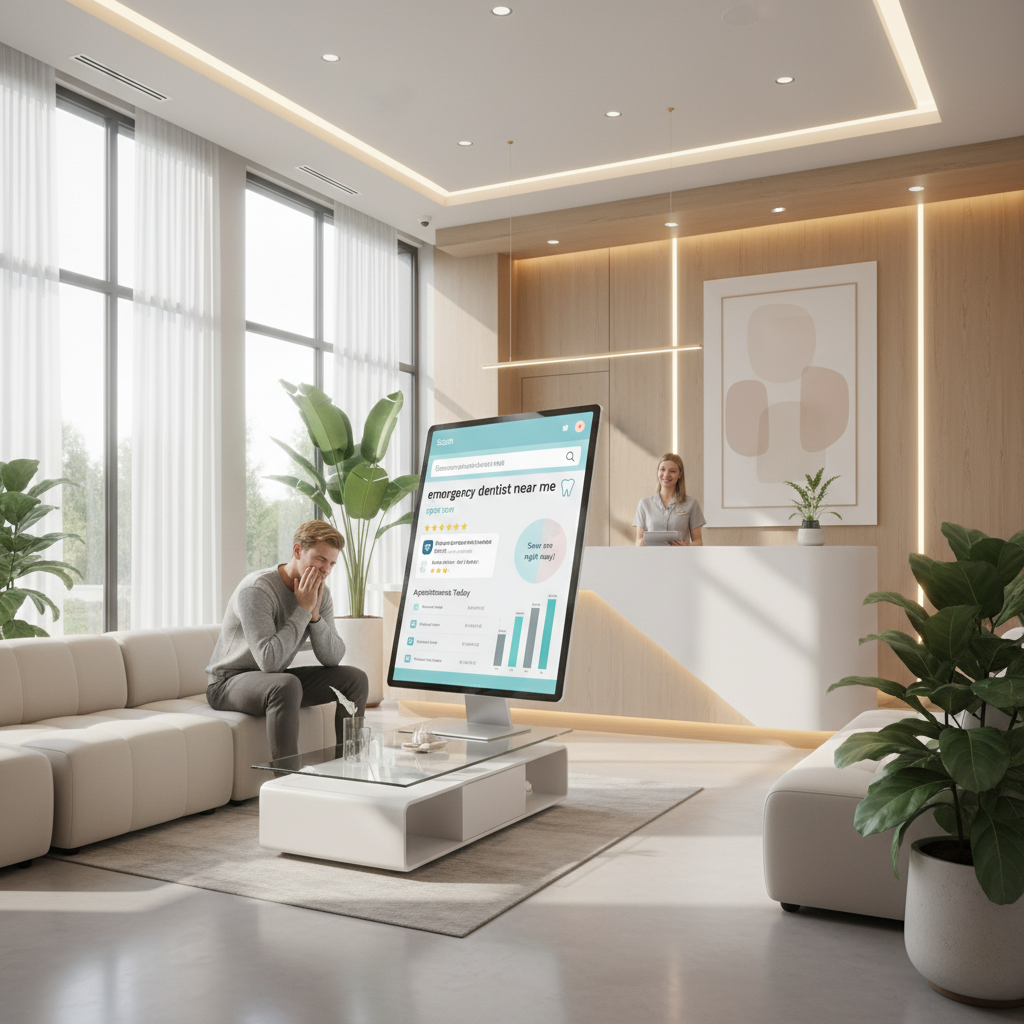
The 5-Stage Emergency Patient Journey
Stage 1: Pain/Problem Awareness (0-2 hours) – Patient experiences sudden dental pain or trauma requiring immediate attention. Stage 2: Search Behaviour – Urgent Google searches using “near me” queries, voice search, and “open now” modifiers. Stage 3: Shortlisting (3 minutes) – Rapid evaluation of 2-3 Google Business Profiles and 1-2 websites maximum.
Stage 4: First Contact – Phone calls or call-only ad clicks dominate, with patients expecting immediate answers about availability. Stage 5: Attendance & Follow-up – Appointment attendance followed by potential conversion to ongoing private care through structured nurture sequences.
Search Intent & Keywords at Each Stage
| Stage | Example Query | Intent | Best Asset |
|---|---|---|---|
| Problem Awareness | “severe toothache”, “swollen face dentist” | Informational | Emergency page |
| Local Search | “emergency dentist near me”, “emergency dentist Manchester” | Transactional | Google Business Profile |
| Availability Check | “dentist open Sunday”, “24 hour dentist London” | Transactional | Call-only ads |
| Contact | Click-to-call from search results | Transactional | Phone system |
Key Psychological Drivers in Emergency Decisions
Time-sensitive pain relief dominates decision-making. Patients prioritise practices offering “seen today” or “within 24 hours” messaging over those with vague availability claims. Trust signals—star ratings, professional qualifications, transparent emergency fees—provide essential reassurance during vulnerable moments.
Friction reduction becomes critical when patients are distressed. Visible phone numbers, prominent “call now” buttons, and clear wait time messaging dramatically impact conversion rates. For more on optimising your website for these urgent moments, see why a smart dental website design is crucial for success.
Core Pillars of a High-Performing Emergency Dental Marketing Strategy
What should an emergency dental marketing plan include?
A complete emergency dental marketing strategy combines local SEO dominance, immediate-visibility PPC campaigns, conversion-optimised landing pages, and systematic call handling to capture and convert pain-driven patients within minutes of their search.
4 Strategic Pillars Overview
Local SEO & Google Business Profile dominance ensures your practice appears first for “emergency dentist near me” and “dentist open now” searches. PPC & call-only ads provide immediate visibility during critical search windows when patients need urgent care. Conversion-optimised emergency landing pages with phone-first UX eliminate friction between click and call. Team systems & tracking handle high-stress calls professionally whilst measuring ROI on every campaign element.
Dominate Dental structures these pillars to work synergistically—emergency PPC drives immediate results whilst SEO builds long-term cost efficiency. Each pillar addresses different patient behaviours: some scroll past ads to organic results, others click the first visible option, and many bypass websites entirely to call directly from Google listings. To learn more about optimising your local search presence, explore local SEO for dentists and how it can impact emergency patient acquisition.
Setting Measurable Goals & KPIs
Practices with 3+ dentists should target 50+ emergency enquiries monthly, with 75%+ call-to-booking rates for qualified emergencies. No-show rates below 15% indicate effective screening and confirmation processes. Most importantly, 20-30% of emergency patients should convert to high-value treatments within 6 months—transforming £95 emergency consultations into £2,000+ treatment plans.
Dominate Dental uses these KPIs to benchmark performance across similar practices in Greater London, Manchester, and Birmingham. Practices consistently hitting these targets see emergency marketing ROI of 300-500% when factoring in long-term patient value from implants and Invisalign conversions.
Budget & Timeframes
Emergency campaigns require £1,000-£3,000 monthly media budgets depending on city competition levels. London practices typically need higher investment due to increased cost-per-click rates, whilst Manchester and Birmingham markets offer better value per lead. PPC results materialise within 7-14 days, whilst local SEO improvements compound over 8-12 weeks.
Emergency marketing complements rather than competes with Invisalign and implant campaigns. Many practices find emergency patients more receptive to comprehensive treatment plans—they’ve already experienced the consequences of delayed dental care and value prevention-focused solutions.
Owning “Emergency Dentist Near Me” with Local SEO & Google Business Profile
Optimising Your Google Business Profile for Emergencies
Set your primary category as “Dentist” with “Emergency dental service” as secondary. Add services like “Same-day appointments,” “Emergency dental care,” and “Weekend dentistry.” Configure opening hours to reflect genuine after-hours availability—use “More hours” for emergency slots without misleading patients about full-service availability.
Upload emergency-specific photos: exterior shots showing evening lighting, comfortable waiting areas, and team photos in scrubs. Create weekly Google posts announcing “Same-day emergency slots available this week” with clear booking instructions. Add attributes like “Wheelchair accessible,” “LGBTQ+ friendly,” and “Accepts new patients” to capture broader emergency searches.
Local SEO on Your Website for Emergency Searches
Create a dedicated “Emergency Dentist in [City]” page targeting location-specific searches. Structure content around common emergency scenarios: severe toothache, dental trauma, lost fillings, and abscess symptoms. Include clear fee guidance and “what to do now” instructions that demonstrate expertise whilst encouraging immediate contact.
Optimise title tags like “Emergency Dentist in Manchester – Same-Day Relief Available” and use H2 headings for specific conditions: “Severe Toothache Treatment,” “Broken Tooth Repair,” “Weekend Dental Emergency.” Link prominently from homepage navigation and footer to ensure Google recognises emergency services as a core offering. For more on optimising your search presence, see these SEO tips for dentists.
Reviews and Reputation from Emergency Patients
Emergency experiences generate the most detailed, emotional reviews—patients remember pain relief and compassionate care vividly. Send review requests within 2 hours via SMS: “Hi [Name], we hope you’re feeling better after today’s emergency treatment. If you have 2 minutes, sharing your experience would help other patients in similar situations find us quickly.” For more strategies, read about how to get patients to write reviews that build trust and credibility for your practice.
Address negative reviews from distressed patients with empathy and professionalism: “We understand emergency situations are stressful. We’d welcome the opportunity to discuss your experience privately and ensure we meet your ongoing dental needs.” This demonstrates care to potential patients reading reviews whilst maintaining clinical confidentiality.
Emergency Dental PPC & Call-First Campaigns That Convert Within Minutes
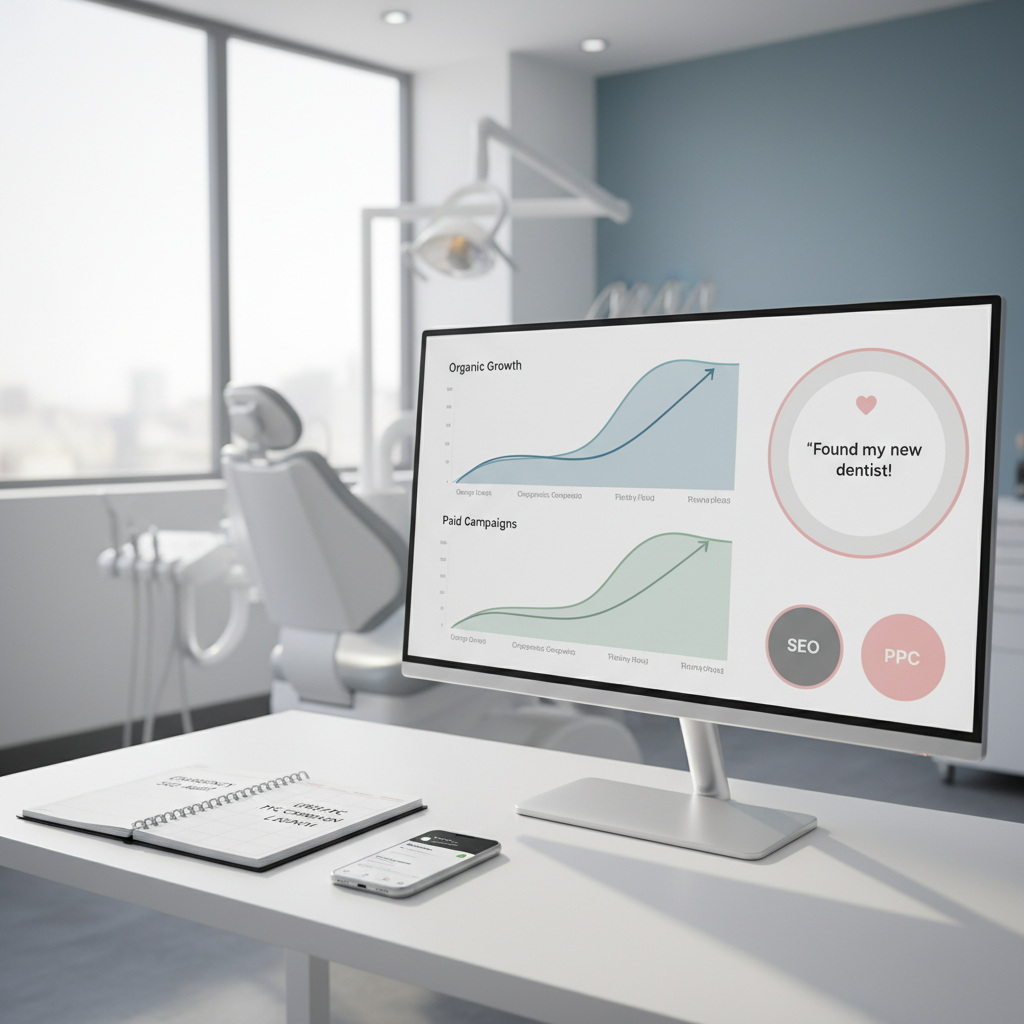
| Criteria | Emergency SEO | Emergency PPC | Combined Approach |
|---|---|---|---|
| Speed to Results | 8-12 weeks | 7-14 days | Immediate + sustainable |
| Cost Per Lead | £15-25 long-term | £45-85 immediate | Blended: £30-50 |
| Lead Quality | High (organic trust) | Very high (urgent intent) | Highest (multi-channel) |
| Scalability | Medium (content/SEO limits) | High (budget-driven) | Maximum |
Designing a High-Converting Emergency Dental Landing Page (Phone-First UX)
Non-Negotiable Elements Above the Fold
Position a prominent click-to-call button within the first mobile screen—no scrolling required. Display the practice phone number in large, tappable format with “Call Now for Same-Day Appointment” messaging. Include a clear value proposition: “Emergency Dental Appointments in [City] – Seen Today” with supporting reassurance like “Private patients welcome – no registration needed.”
Cluster trust signals prominently: Google star rating, review count, “GDC Registered Dentists” logo, and “Emergency Dental Experts” badge. These elements must load within 2 seconds on mobile devices—emergency patients abandon slow-loading pages immediately when experiencing pain.
Structuring Page Content to Match Emergency Psychology
Open with direct pain acknowledgment: “Are you in dental pain right now?” followed by immediate call-to-action. Structure subsequent sections in scannable blocks: common emergency conditions treated (toothache, abscess, trauma, lost fillings), simple 3-step process explanation (“Call → Assess → Treat”), transparent fee overview, and urgent care testimonials.
Use short 2-3 line paragraphs with bold key phrases like “Seen today,” “No waiting lists,” and “Pain relief within hours.” Include icon-supported lists for quick scanning—emergency patients skim content rapidly rather than reading comprehensively. Position secondary contact methods (WhatsApp, online booking) below primary phone options to maintain call-first hierarchy.
Messaging Around Availability, Fees and Expectations
Communicate realistic availability without over-promising: “Same-day appointments available most days for patients calling before 3pm. Emergency consultation fee is £95, with transparent pricing for all treatments. For patients seeking NHS options, you can find more information on how to find an NHS dentist.”
Frequently Asked Questions
How does emergency dental marketing differ from general dental marketing strategies?
Emergency dental marketing targets patients seeking immediate care within hours of pain onset, using time-sensitive keywords and call-focused campaigns. Unlike general marketing that promotes routine or elective treatments, emergency marketing focuses on urgent needs with highly localised intent to convert rapid enquiries into same-day or next-day appointments.
Why do emergency dental patients typically convert at higher rates compared to routine dental patients?
Emergency dental patients have acute pain or urgent issues, creating a strong immediate motivation to book treatment quickly. This urgency leads to higher conversion rates as these patients prioritise fast access to care over extended decision-making typical of routine or cosmetic treatments.
What role do phone calls play in emergency dental marketing, and how can practices optimize for them?
Phone calls account for 70-90% of emergency dental enquiries, serving as the primary conversion channel. Practices can optimise by implementing call-first campaigns, ensuring prompt phone response, and designing landing pages with phone-first user experience to capture and convert urgent patient calls effectively.
How can UK dental practices leverage emergency dental marketing to generate long-term high-value treatment opportunities?
By converting urgent emergency calls into consultations, practices create pathways to private treatments like implants and Invisalign. Structured emergency campaigns generate consistent qualified leads, and with strategic follow-up, these urgent patients often become loyal long-term clients, significantly increasing private treatment revenue.
Leave a Reply