Key Takeaways
- Free NHS dental implants are provided only for severe medical necessity cases.
- Eligibility requires assessment by specialists and approval from a multidisciplinary team.
- Common qualifying conditions include congenital issues, cancer reconstruction, facial trauma, or denture intolerance.
- Most patients must pay the Band 3 charge of £306.80 unless exempt due to benefits or low income.
Table of Contents
- Can You Get Free Dental Implants on the NHS?
- NHS Dental Implant Eligibility – Who Qualifies and Why
- How to Check If You’re Eligible for NHS-Funded Dental Implants
- The NHS Dental Implant Application Process – What to Expect
- Cost Breakdown – NHS Implants vs. Private Dental Implants
- How to Improve Your Eligibility for Free NHS Dental Implants
- What If You’re Not Eligible? – Alternative Options for Dental Implants in the UK
- NHS Dental Implants vs. Other Tooth Replacement Options
- Summary & Next Steps – Take Action Towards Restoring Your Smile
How to Get Free Dental Implants on the NHS – The 2025 UK Patient Guide
Can You Get Free Dental Implants on the NHS?
The NHS provides dental implants exclusively when clinically essential for medical reconstruction or severe functional impairment. Unlike cosmetic tooth replacement, NHS implants address conditions where conventional dentures or bridges cannot restore basic oral function. Only 2-3% of implant cases receive NHS funding annually, reserved for patients with documented medical necessity.
Qualifying conditions include congenital tooth absence affecting facial development, cancer-related jaw reconstruction, severe facial trauma, or medically documented denture intolerance causing malnutrition or psychological distress. The NHS prioritises cases where implants represent the only viable treatment option rather than aesthetic preference.
Budget constraints mean NHS implant provision follows strict clinical commissioning guidelines. Secondary care panels evaluate each case against evidence-based criteria, ensuring resources target patients with greatest medical need rather than general tooth loss from decay or gum disease. For practices seeking to streamline their patient acquisition and case selection, marketing for dentists can help attract more suitable implant candidates.
NHS Dental Implant Eligibility – Who Qualifies and Why
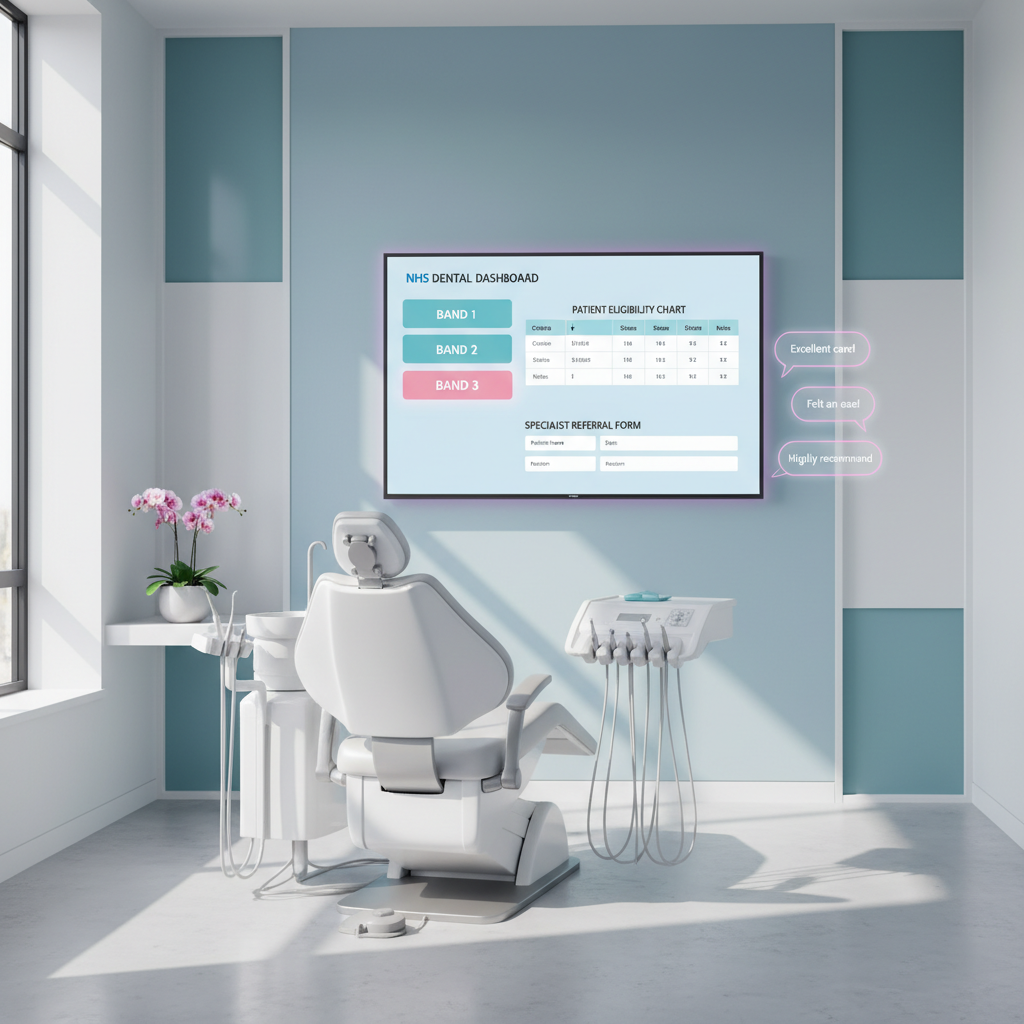
NHS dental treatment operates through three bands, with implants falling under specialist hospital services requiring exceptional clinical justification. Band 3 treatment (£306.80) covers complex procedures, but implants need additional secondary care approval due to their specialist nature and cost implications.
Primary eligibility encompasses congenital conditions like ectodermal dysplasia causing multiple missing teeth, cleft palate reconstruction requiring implant-supported prosthetics, and genetic syndromes affecting jaw development. These cases demonstrate clear medical necessity where conventional treatments cannot achieve functional restoration.
Trauma-related eligibility includes road traffic accidents, sports injuries, or assault causing tooth and bone loss requiring surgical reconstruction. Cancer patients needing jaw resection and reconstruction also qualify, particularly where radiotherapy compromises healing for conventional prosthetics. Children with severe congenital absence affecting growth and development receive priority consideration.
The clinical pathway begins with comprehensive dental assessment, progressing through hospital referral to maxillofacial consultation. Secondary care panels review cases using strict criteria: failed conventional treatment attempts, documented functional impairment, and evidence that implants represent the optimal clinical solution. Psychological impact assessments may support cases where denture failure causes significant distress.
Common denial reasons include inadequate documentation of failed alternatives, cases where bridges or improved dentures could provide adequate function, and requests based primarily on patient preference rather than clinical necessity. Successful applications demonstrate clear medical justification with supporting specialist letters and comprehensive treatment history. For more ideas on how to communicate your case effectively, see these dental blog post ideas that can help you present your story to specialists.
How to Check If You’re Eligible for NHS-Funded Dental Implants
Begin by registering with an NHS dentist and requesting comprehensive clinical assessment including full medical history review. Your dentist will evaluate whether your case meets preliminary criteria for specialist referral, examining factors like bone loss severity, failed prosthetic attempts, and functional limitations affecting nutrition or speech.
Prepare essential documentation including medical records detailing congenital conditions, cancer treatment history, or trauma reports. If dentures have failed, obtain written assessment from your dentist documenting specific problems like chronic ulceration, inability to achieve retention, or gagging preventing normal function. HC2 or HC3 certificates confirming benefit eligibility should accompany your application.
The referral process typically takes 2-4 weeks from initial consultation to specialist submission, followed by 8-16 weeks for hospital panel review. Request copies of all referral documentation and maintain regular contact with the hospital coordinator to track progress. Some regions experience longer delays due to funding variations and specialist availability.
Specialist assessment involves clinical examination, radiographic analysis, and functional evaluation. The multidisciplinary team considers your case against regional commissioning criteria, often requiring additional evidence or second opinions before approval. Successful candidates proceed to treatment planning, while denied cases receive detailed explanation and alternative treatment options. If you want to improve your chances of approval, reviewing SEO for dentists strategies can help practices and patients alike find the most up-to-date information on NHS implant pathways.
The NHS Dental Implant Application Process – What to Expect
Initial assessment by your NHS dentist establishes basic eligibility through comprehensive examination and medical history review. Your dentist documents failed treatment attempts, functional limitations, and clinical findings supporting specialist referral. This stage requires honest discussion about realistic expectations and alternative treatments.
Hospital referral triggers secondary care assessment by maxillofacial or restorative specialists who evaluate your case against strict commissioning criteria. The multidisciplinary team includes surgeons, prosthodontists, and clinical commissioners who review clinical evidence, radiographs, and supporting documentation before making funding decisions.
Approval rates improve significantly with thorough documentation demonstrating medical necessity rather than cosmetic preference. Include specialist letters confirming congenital conditions, oncology reports detailing reconstruction needs, or psychological assessments documenting denture-related distress. Geographic variations mean some regions have more restrictive criteria or longer waiting lists.
Post-approval processes involve detailed treatment planning, pre-surgical assessment, and consent procedures. Treatment typically commences within 6-12 months of approval, though complex cases requiring bone grafting or multiple specialists may experience longer delays. Regular follow-up appointments monitor healing and prosthetic fitting progress.
Failed applications can be appealed through formal NHS complaints procedures, though success requires new clinical evidence or procedural errors in the original assessment. Many patients pursue private treatment while maintaining NHS registration for ongoing oral health needs. For further reading on how to promote your dental journey or clinic, check out how to promote your dental blog.
Cost Breakdown – NHS Implants vs. Private Dental Implants
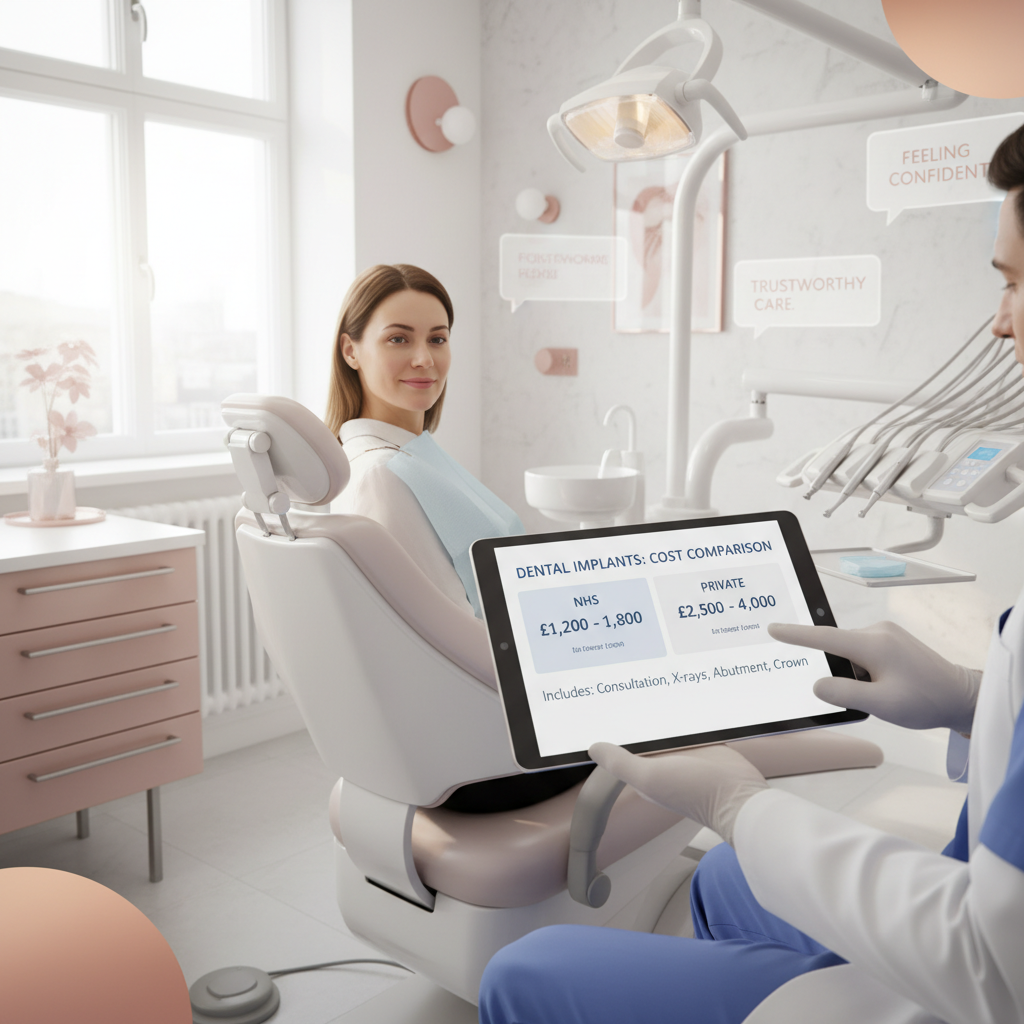
| Criteria | NHS Implants | Private Implants |
|---|---|---|
| Eligibility | Strict medical necessity only | Available to all (self-funded) |
| Cost to Patient | £306.80 (Band 3) or free if exempt | £2,000–£3,500 per implant |
| Waiting Time | 6–18 months (varies by region) | 2–8 weeks (average) |
| Aftercare | Included (NHS follow-up) | Included (varies by provider) |
| Provider Choice | Assigned by NHS | Patient selects provider |
| Success Rate | High (specialist-led) | High (if CQC-registered) |
How to Improve Your Eligibility for Free NHS Dental Implants
Strengthen your application with comprehensive medical documentation including GP letters confirming systemic conditions affecting oral health, specialist reports detailing failed conventional treatments, and psychological assessments documenting quality-of-life impacts. Young adults with cancer-related tooth loss should request joint letters from oncologists and maxillofacial surgeons outlining reconstruction necessity and failed denture attempts.
Demonstrate failed alternatives through documented denture intolerance reports showing chronic ulceration, inability to achieve retention, or nutritional impacts from chewing difficulties. Request your dentist provide detailed assessments of bridge suitability, explaining why conventional fixed prosthetics cannot address your specific clinical situation due to bone loss or adjacent tooth condition.
Optimise oral health before assessment by addressing active gum disease or decay, proving your commitment to maintaining implants long-term. Appeal denied applications through formal NHS complaints procedures within six months, providing additional clinical evidence or highlighting procedural errors in the original assessment process that may have overlooked qualifying factors. For more practical tips, you may also find these dental marketing ideas helpful for both patients and practices.
What If You’re Not Eligible? – Alternative Options for Dental Implants in the UK
Private implant treatment offers immediate access through CQC-registered providers, with consultation fees typically £50-150 leading to comprehensive treatment planning. Finance options include 0% interest plans over 12-24 months, extended payment schemes, and medical loans specifically designed for dental treatment, making private care accessible despite initial cost barriers. If you are a dental practice looking to reach more patients considering private options, a robust dental marketing plan can be invaluable.
Dental school training programmes occasionally offer reduced-cost implant treatment under specialist supervision, though waiting lists extend 6-12 months and case complexity limitations apply. Research programmes recruiting patients for clinical trials provide free treatment in exchange for participation, typically available through teaching hospitals and specialist centres.
Charity support remains extremely limited, with legitimate schemes focusing on children with severe congenital conditions rather than adult tooth replacement. Beware of scam “dental grant” websites demanding upfront fees – genuine NHS and charity support never requires payment for application processing.
Dental tourism presents cost savings but requires careful provider research, ensuring proper regulation, sterile facilities, and accessible aftercare. Dominate Dental, the UK’s leading dental marketing agency, helps patients navigate provider selection whether seeking NHS pathways or private alternatives, ensuring access to qualified specialists with proven implant success rates.
NHS Dental Implants vs. Other Tooth Replacement Options
NHS dentures remain the most accessible tooth replacement option, available under Band 3 treatment with materials ranging from basic acrylic to more retentive designs. While functional for many patients, dentures require regular adjustment, affect speech and eating confidence, and typically need replacement every 5-7 years due to bone remodelling.
Fixed bridges on the NHS require significant clinical justification, typically limited to single-tooth replacement where adjacent teeth need crowns anyway. Private bridges cost £1,200-2,500 per unit, offering superior retention to dentures but requiring healthy adjacent teeth for support and creating cleaning challenges around pontic areas.
| Option | NHS Availability | Longevity | Patient Experience | Maintenance | Cost |
|---|---|---|---|---|---|
| Dentures | Broad | 5-10 years | Variable | Moderate | Low/Free |
| Bridges | Restricted | 7-15 years | Good if suitable | Moderate | Mid-High |
| Implants | Rare (medical necessity) | 15+ years | Highest | Low | High/Free (if eligible) |
Implants provide superior stability and bone preservation compared to removable options, preventing the progressive jaw shrinkage that affects denture retention over time. For patients under 30 experiencing post-trauma tooth loss who cannot tolerate dentures, implants represent the only long-term solution that maintains facial structure and normal chewing function throughout their lifetime. For official NHS information on available dental treatments, see the NHS dental treatments page.
Summary & Next Steps – Take Action Towards Restoring Your Smile
Understanding how to get free dental implants on NHS requires recognising that eligibility centres on severe clinical need rather than cosmetic preference, with successful applications demonstrating medical necessity through comprehensive documentation and specialist support. The process demands patience, with 6-18 month timelines from initial assessment to treatment completion, but offers life-changing results for qualifying patients.
Most patients exploring NHS implant options will ultimately require private treatment, making informed provider selection crucial for optimal outcomes. Take immediate action by booking an NHS dental assessment to explore eligibility, gathering relevant medical documentation, and researching high-quality private alternatives if NHS funding proves unavailable. For guidance on finding an NHS dentist, visit the NHS guide to finding a dentist.
Your Action Plan:
- Book NHS dental assessment and compile medical records
- Document failed denture experiences with clinical evidence
- Review financial exemption status before application
- Research CQC-registered private providers for backup options
- Consult Dominate Dental for guidance navigating NHS and private implant pathways
Leave a Reply