
Invisalign vs traditional braces comparison in Birmingham.
Choosing between clear aligners and fixed braces depends on more than appearance. This Invisalign vs traditional braces comparison in Birmingham looks at how each system moves teeth, the bite problems each may address, and why a clinician’s assessment matters before you commit to treatment.
Key Takeaways
- Clear aligners work well for mild to moderate crowding and spacing, while fixed braces remain the stronger choice for complex bite corrections and severely rotated teeth.
- Treatment timelines differ significantly, with some Invisalign cases completing in six to twelve months compared to eighteen to twenty-four months commonly needed for traditional braces.
- Removable aligners make eating and oral hygiene simpler, but success depends on wearing them 20 to 22 hours daily, so discipline directly affects your results.
- Both options move teeth using controlled pressure, yet the mechanics differ, and a clinician must confirm which system suits your specific bite before treatment begins.
- Birmingham practices typically price each option by case complexity, so an honest consultation with scans and a written plan protects both your smile and your budget.
Dominate Dental specialises in dental industry marketing and lead generation strategies, rather than providing orthodontic care. Our perspective is on helping practices connect patients with appropriate consultations. This comparison focuses on clinical questions Birmingham patients should discuss with a qualified dental professional.
Choosing Your Path: Invisalign vs. Traditional Braces in Birmingham
Understanding the Core Comparison
Invisalign uses a sequence of removable, custom-made plastic aligners to move teeth in planned stages. Traditional fixed braces use brackets bonded to the teeth and a wire that applies controlled force. Both can address crowding and spacing, but suitability depends on the teeth’s starting positions, the bite relationship and the movement required. Appearance is one consideration; predictable movement, attachment needs and the patient’s ability to follow the plan matter too.
Why This Guide Matters for Birmingham Patients
Patients in Birmingham can seek private orthodontic care from general dental practitioners with relevant training or from specialist orthodontists. The provider’s experience and case complexity should inform that choice. Ask who will assess your bite, plan treatment and monitor progress, and whether the proposed result addresses function as well as appearance. This comparison helps you prepare questions; it does not replace an individual examination.
How We Evaluated Treatment Options
We compare treatment mechanics, tooth movements, bite correction and the practical demands placed on the patient. For aligners, those demands include prescribed wear and the possibility that planned movement may need refinement. For fixed braces, they include the bracket-and-wire system and regular clinical adjustments. Digital scans, including iTero where offered, can record tooth positions without conventional impressions; the clinician still needs to assess the bite and decide whether either method suits the case.
The Clinical Realities: How Invisalign and Traditional Braces Work

Invisalign: The Discreet Aligner System Explained
Aligners apply pressure through a planned sequence of trays. Small tooth-coloured attachments may be bonded to selected teeth to help the plastic grip and guide particular movements. Patients remove trays for eating, drinking anything other than water, and cleaning their teeth. Invisalign treatment depends on consistent use: aligners generally need 20 to 22 hours of daily wear to achieve the planned movement. Missing wear time can reduce tracking, so teeth may not follow the sequence as intended.
Traditional Metal Braces: The Tried-and-Tested Method
Fixed braces keep brackets and wires attached throughout treatment. The orthodontic clinician adjusts the system over a series of visits, directing forces across individual teeth and the dental arch. Because patients cannot remove the appliance, progress does not depend on remembering to reinsert trays after meals. Brushing and cleaning around brackets takes care, and food can collect around the appliance. Suitability depends on the planned movements, not simply on whether a patient prefers a fixed or removable option.
Comparing Mechanics: Precision in Bite Correction
Both systems move teeth, but their mechanics differ. Aligners are digitally planned as staged movements, with attachments and additional trays sometimes used to guide teeth towards intended positions. Fixed braces allow the clinician to adjust wires and brackets during treatment. Neither approach guarantees a particular result in every case. Assessment should cover the overbite, underbite or crossbite, tooth rotation, crowding and how the upper and lower teeth meet. Plastic between the teeth can also affect contact while aligners are worn, so bite changes should be monitored.
Addressing Severe Malocclusions: Where Do They Stand?
More complex malocclusion may call for movements that are harder to achieve predictably with aligners alone. Some cases can still be treated with aligners, sometimes alongside attachments or other planned measures; others may be better suited to fixed appliances or a combined approach. Factors include tooth position, jaw relationship, periodontal health and the functional bite. Ask the treating clinician to explain expected limits, alternatives and monitoring before you agree to treatment.
Clinical trade-offs to discuss
Potential advantages
- Aligners are removable for meals and toothbrushing, and have a less noticeable appearance.
- Fixed braces remain in place, so treatment does not depend on the patient reinserting an appliance.
Practical considerations
- Aligners need disciplined daily wear and may require refinement trays if teeth do not track as planned.
- Brackets and wires can make cleaning more demanding and require care around food choices.
Dominate Dental’s Invisalign Leads Generation Service focuses on converting leads into actual Invisalign treatments for practices seeking suitable patient conversations. This comparison offers a starting point for informed questions; only a clinical assessment can determine which appliance fits an individual’s needs.
Birmingham Pricing Deep Dive: Unpacking Costs and Value
The True Cost of Invisalign in Birmingham: What to Expect
Private clear aligner treatment in Birmingham generally costs £2,000 to £4,500, while fixed braces are typically £1,500 to £3,500. The ranges overlap, so Invisalign is not automatically more expensive in every practice or case. Quotes depend on the complexity of tooth movements, the treatment plan and what the fee includes. Ask whether it covers assessment, digital scans or impressions, attachments, review appointments, refinement trays and retainers. The headline price alone does not show how much treatment and aftercare are included.
Ask for a written breakdown before accepting a plan. Find out whether extra refinement aligners carry an additional charge and how the practice handles replacement trays if one is lost or damaged. These details can change the eventual cost, particularly if teeth need further adjustment beyond the initial series.
Traditional Braces: Birmingham Private Fees and NHS Availability
Fixed braces in Birmingham commonly fall within the £1,500 to £3,500 private range. Compare what each practice includes rather than treating the lowest advertised fee as the final bill. Check whether adjustments, emergency visits, removal and retainers are covered. Your clinician should explain whether the proposed appliance can address your bite goals, not just straighten visible teeth.
NHS orthodontic treatment is generally intended for eligible patients under 18 whose clinical need meets the relevant criteria. Adults should not assume that NHS funding will be available for braces or aligners; eligibility and commissioned services depend on individual circumstances and local arrangements. Ask a Birmingham provider to assess eligibility and explain private alternatives. An NHS assessment does not guarantee that treatment will be offered.
Payment Plans and Financing Options in the West Midlands
Some private practices offer staged payments or finance, though terms differ. Before choosing monthly instalments, check the deposit, repayment period, interest or other charges, and what happens if treatment changes or ends early. Ask whether payments cover retainers and refinement work. A written plan helps you compare the total payable with a one-off fee and budget for ongoing appointments.
| Cost factor | Clear aligners | Fixed braces |
|---|---|---|
| Typical Birmingham private fee | £2,000 to £4,500 | £1,500 to £3,500 |
| Possible items to check | Refinement trays, replacement aligners, retainers | Adjustments, urgent repairs, retainers |
| Payment arrangements | Practice-specific instalments or finance; compare total cost and terms | |
Beyond the Sticker Price: Considering Long-Term Value
Value means more than the appliance fee. Consider whether the plan addresses your bite, how often you will attend, what aftercare is included and whether you can follow the treatment requirements. Ask what the full course is expected to include, and have the clinician explain likely additional costs and the retention plan before treatment begins.
Timeline Truths and Lifestyle Compliance: Your Daily Reality
Realistic Treatment Durations: Initial Estimates vs. Refinement Rounds
A projected finish date is an estimate, not a promise. Treatment may take longer if teeth move differently from the plan, appointments are missed or additional correction is needed. More than 30% of clear aligner patients require at least one set of refinement trays to complete detailed alignment, according to the research findings informing this comparison. Refinements involve assessing progress and ordering further trays, which can extend treatment. Ask whether your estimate includes them and how progress will be reviewed.
Appointment frequency also differs: fixed brace reviews commonly occur every 4 to 6 weeks, while clear aligner monitoring visits may be spaced 6 to 10 weeks apart. Your clinician sets the schedule for your case, and remote monitoring should not replace an agreed clinical review when an examination is needed.
The 20-22 Hour Rule: Mastering Invisalign Wear Discipline
Aligners generally need to be worn for 20 to 22 hours each day to achieve the predicted movement. Remove them for meals, drinks other than water and cleaning, then put them back promptly. If wear falls short, a tray may feel tight or teeth may stop tracking the sequence. Do not force a poorly fitting aligner or move ahead to the next one without guidance; contact your treating clinician for advice.
Impact on Diet and Social Habits: Eating, Drinking, and Living
With aligners, remove the trays before eating and drinking tea or coffee, then clean your teeth before reinserting them where possible. This routine can feel awkward at work, in restaurants or during social events, and tight trays may take practice to remove. Fixed braces stay in place, so there is no removal step, but certain hard or sticky foods can damage brackets or wires. Consider which routine you can maintain consistently.
Oral Hygiene Routines: Effortless Care vs. Dedicated Cleaning
Neither option removes the need for careful oral hygiene. Aligners can be taken out for brushing and flossing, but trays also need regular cleaning according to your clinician’s instructions. Braces require brushing around brackets and wires, with attention to food debris that can remain around the appliance. Ask your provider to demonstrate suitable cleaning techniques and products.
Pain and Discomfort: Managing Initial Stages and Adjustments
Pressure and soreness can occur when teeth begin moving, after a new aligner or following a brace adjustment. The level varies between patients and treatment stages. Mild tenderness may affect eating for a short period; persistent or severe pain, broken components or sores warrant a call to the practice. Ask your clinician which pain relief is appropriate for you, particularly if you have health conditions or take other medicines.
Making the Final Decision: Your Birmingham Orthodontic Roadmap
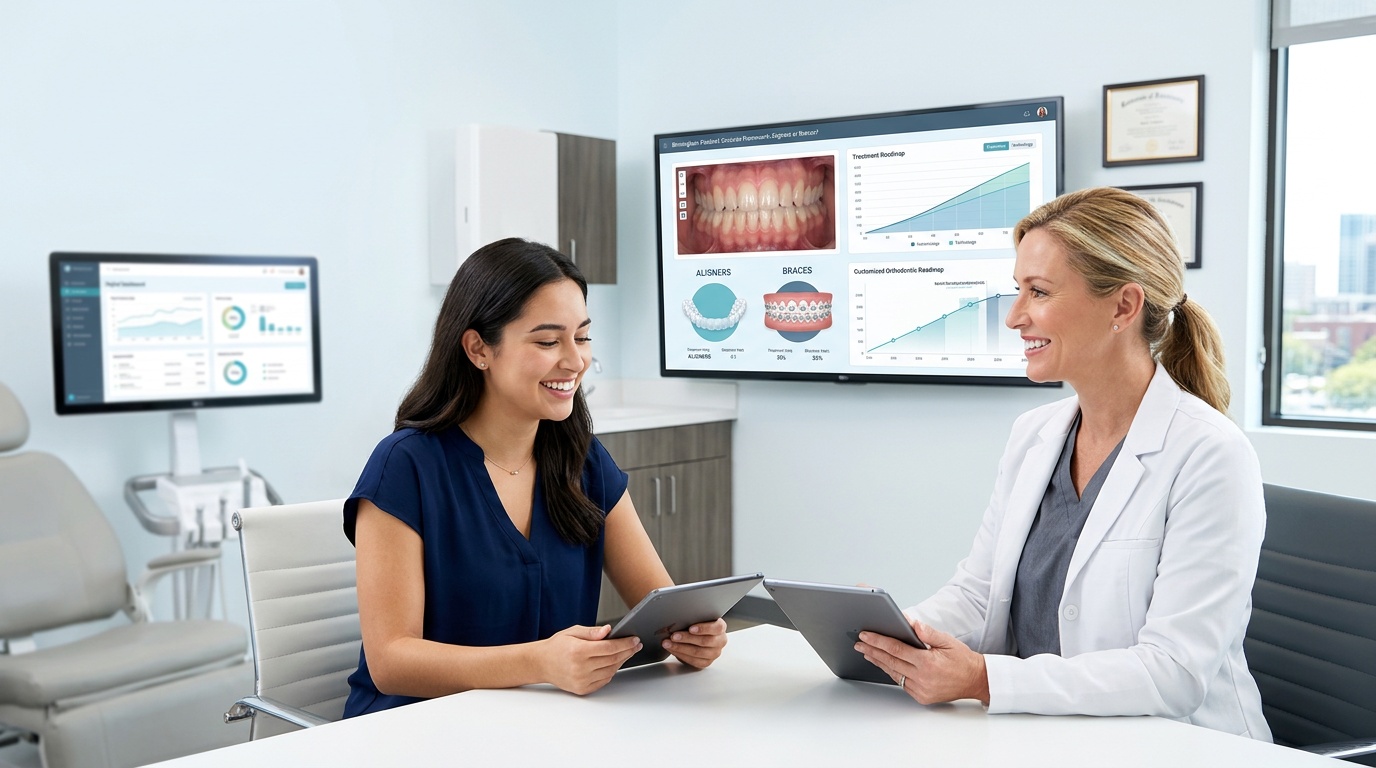
The Birmingham Patient’s Decision Framework: Aligners or Braces?
Start with the outcome you need, not the appliance you prefer. Ask whether the plan is intended to improve tooth alignment, correct your bite, or address both. Consider how much responsibility you can take for following the plan and which provider has the right experience for your case. A sound decision balances clinical suitability, day-to-day demands, total quoted cost and the proposed retention plan. This comparison can help frame that discussion, but an examination is needed to recommend treatment for your teeth and bite.
When to Choose Invisalign: Ideal Candidates and Scenarios
Clear aligners may suit patients whose clinical assessment supports removable treatment and who can reliably follow the prescribed wear routine. They may appeal to people who value a less noticeable appliance and want to remove it for meals and cleaning. Ask the clinician how progress will be checked, what may prompt a revised plan, and what happens if trays stop fitting as expected. A preference for discreet treatment alone is not enough: the proposed movements must match your clinical needs.
When Traditional Braces Remain the Superior Choice
Fixed braces may be a better option when the clinician judges that planned tooth movements are more suited to a fixed appliance, or when consistent aligner wear is unlikely. They may also be considered where bite correction requires close control of tooth position. Ask why braces are recommended over aligners, what functional changes the plan targets, and how progress will be assessed. The explanation should connect the appliance choice to examination findings rather than appearance alone.
Consulting Your Birmingham Orthodontist or Dentist
Check who will plan and supervise treatment, and whether that clinician is a specialist orthodontist or a general dental practitioner with relevant training. Ask how the plan addresses your bite, what alternatives are suitable, and which risks or limitations apply in your case. The British Orthodontic Society offers patient information to help people understand orthodontic care; use it alongside, not instead of, individual clinical advice. Request time to consider the written plan before committing.
Achieving Your Smile Goals with Confidence
Your best choice is the option you understand, are clinically suited to, and can follow through to retention. Dominate Dental specialises in dental industry marketing and lead generation strategies, not orthodontic treatment. For practices seeking more suitable patient consultations, the Invisalign Leads Generation Service runs campaigns under the client’s brand. The Invisalign Leads Generation Service sends automatic notifications to dental teams and patients, supporting timely communication. Patients should make their appliance decision with a qualified Birmingham clinician after an individual assessment.
Frequently Asked Questions
What is the actual price difference between Invisalign and traditional braces in Birmingham?
Invisalign in Birmingham generally costs £2,000 to £4,500, while the price of traditional braces varies by provider and case. The available comparison does not give a fixed price difference. Ask for an itemised quote covering appointments, any refinement aligners and other treatment costs before choosing.
How does Invisalign correct severe bite problems compared with fixed metal braces?
Invisalign can address some severe bite problems, but fixed braces or a combined approach may suit complex movements better. A clinician needs to assess the bite, tooth positions, jaw relationship and gum health before advising. Ask about expected limits, alternatives and how progress will be monitored.
Why can Invisalign treatment take longer than the initial estimate?
Invisalign treatment can take longer if teeth do not track as planned or additional refinement trays are needed. The initial estimate depends on the planned movements and consistent aligner wear. Ask your clinician how progress will be checked and what factors could change the expected timeline.
What happens if I do not wear Invisalign aligners for 20 to 22 hours a day?
Wearing Invisalign aligners for less than the prescribed 20 to 22 hours a day can reduce tracking, meaning teeth may not follow the planned sequence. This may affect progress and lead to a review or refinement trays. Contact your clinician for advice if you have missed substantial wear time.
Can adults in Birmingham get braces or Invisalign on the NHS?
Adults in Birmingham may be eligible for NHS orthodontic treatment in limited cases, usually where there is a significant clinical need; eligibility is assessed individually. Invisalign availability through the NHS is not established by this comparison. Ask an NHS dentist or orthodontic clinician about your circumstances and private alternatives.
Leave a Reply