Key Takeaways
- Managing PPC involves handling all elements of paid advertising campaigns for dental practices.
- Key tasks include keyword research, ad creation, bid optimization, and conversion tracking.
- The goal is to maximize return on investment while attracting qualified leads.
- Effective PPC management targets high-value treatments such as Invisalign and dental implants.
Table of Contents
- What Does PPC Management Involve for Dental Practices?
- Core Components of Successful Dental PPC Management
- Budget and Bid Management for Predictable Results
- Performance Monitoring and Optimization
- Advanced Techniques—Dominate Dental’s Winning PPC Blueprint
- In-House vs. Agency PPC Management—What’s Best for Dental Practices?
- PPC vs. Dental SEO—A Strategic Channel Comparison
- Real-World Outcomes—UK Dental PPC Case Studies
- Choosing the Right PPC Management Approach for Your Practice
- PPC vs SEO: Strategic Channel Comparison for Dental Growth
What Does PPC Management Involve for Dental Practices?
To manage PPC for dental practices means overseeing every aspect of paid advertising campaigns—from keyword research and ad creation to bid optimization and conversion tracking. It’s the ongoing process of maximizing your return on investment while generating qualified leads for high-value treatments like Invisalign and dental implants.
Effective PPC management goes far beyond initial campaign setup. It requires continuous monitoring of performance metrics, A/B testing ad variations, and refining targeting parameters to attract private patients willing to invest in premium dental treatments. The average UK dental PPC lead costs £45-80, making precise management crucial for profitability. Google Ads for dentists is a core platform used by dental practices to reach these high-intent patients efficiently.
For UK dental practices spending £2,000+ monthly on marketing, professional PPC management can mean the difference between wasted budget and consistent patient acquisition. Dental marketing agency support, such as Dominate Dental’s AI-powered approach, combines real-time data analysis with dental industry expertise to deliver measurable results for practices across Greater London, Manchester, and Birmingham.
Core Components of Successful Dental PPC Management

Smart Keyword Strategy for the Dental Sector
Successful dental PPC campaigns start with treatment-specific keywords that match patient intent. Focus 60% of your budget on high-conversion terms like “Invisalign dentist near me” or “dental implants Manchester” rather than generic phrases that attract price-shoppers.
Long-tail dental keywords typically reduce cost-per-click by 15-35% compared to broad terms while delivering higher-quality leads. Use Google Keyword Planner and SEMrush to identify location-specific opportunities, then layer in negative keywords to prevent budget waste on NHS-seeking patients.
Audience Targeting and Segmentation for UK Practices
Granular audience segmentation transforms PPC performance for dental practices. Target private patients within specific postcodes, age ranges, and income brackets who actively search for cosmetic treatments. A Greater London practice might target affluent professionals aged 25-45 within 5 miles seeking “Invisalign finance options.”
Layer demographic filters with device targeting and time-of-day scheduling. Exclude audiences showing NHS-only search behavior to maximize budget efficiency and improve lead quality scores.
Ad Creation, Testing, and Optimization
Compelling dental ads address patient pain points directly—fear, trust concerns, and convenience factors. Test headlines like “Book Free Smile Assessment Today” against “Invisalign from £28/month—Apply Now” to identify what resonates with your target audience.
Proven Ad Extension Strategy: Use sitelinks for “Finance Options” and “Before/After Gallery,” plus callouts highlighting “Same-Day Consultations” or “0% Finance Available” to increase click-through rates by up to 25%.
Landing Page Relevance and Conversion Science
Direct treatment-specific traffic to dedicated landing pages, never your homepage. An Invisalign campaign should lead to an Invisalign-focused page with simplified 3-field forms, trust badges, and before/after galleries. Ensure page load times under 2 seconds and mobile-first design.
One Manchester practice increased enquiries by 200% in three months simply by creating treatment-specific landing pages with streamlined conversion paths and prominent consultation booking buttons. For more inspiration, explore these dental marketing ideas that can help boost your campaign performance.
Budget and Bid Management for Predictable Results
Strategic budget allocation determines PPC success for dental practices. Most UK practices invest £1,500-£8,000 monthly, with enhanced cost-per-click strategies improving lead quality by 12-18% compared to manual bidding alone.
Use adaptive spending models for seasonal treatments like teeth whitening campaigns, but maintain fixed budgets for consistent services like routine checkups. Target CPA bidding works exceptionally well for high-value treatments where you can afford £80-120 per qualified lead. A comprehensive dental marketing plan can help practices allocate budgets effectively across PPC and other channels.
Review and adjust bids every 48-72 hours during new campaign launches. Implement comprehensive negative keyword lists to prevent budget waste from irrelevant clicks, particularly important for practices competing in expensive dental markets like Central London.
Performance Monitoring and Optimization
Track conversion rate, cost per lead, qualified appointment rate, and no-show percentages as primary KPIs. Automated dashboards through Google Data Studio provide busy dental principals with real-time visibility into campaign performance without manual report generation.
Common issues include ad disapprovals for dental claims, click fraud from competitors, and landing page mismatches. Address low conversion rates by adding pre-qualification steps to forms, and reduce no-shows through automated appointment confirmation sequences.
| Problem | Solution | Expected Improvement |
|---|---|---|
| High cost per click | Refine keyword targeting, add negatives | 15-30% CPC reduction |
| Low quality leads | Improve ad copy relevance, landing page alignment | 25-40% better lead quality |
| High no-show rates | Add qualification questions, confirmation calls | 40-60% no-show reduction |
Advanced Techniques—Dominate Dental’s Winning PPC Blueprint
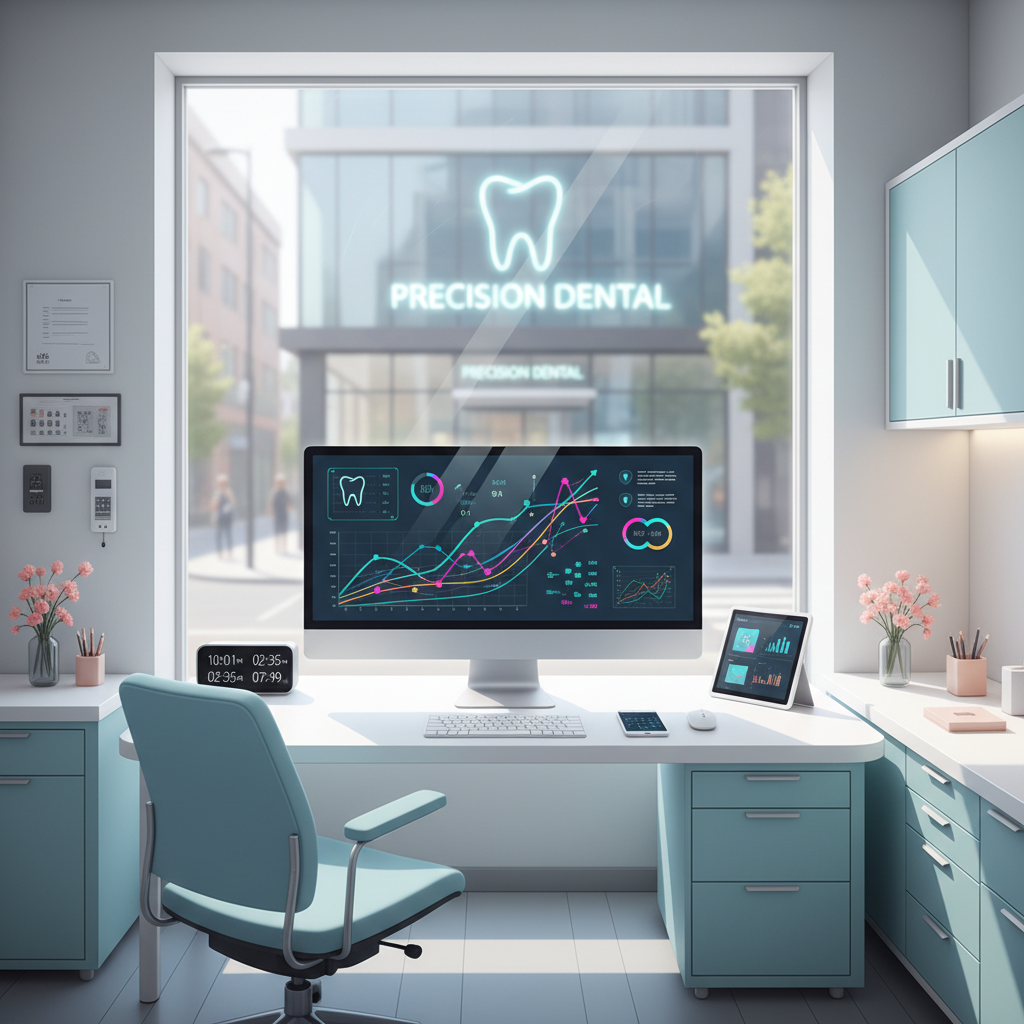
Dominate Dental leverages AI-powered Smart Bidding algorithms to automatically adjust bids based on conversion probability, delivering 23% higher ROI for dental practices compared to manual optimization. Our machine learning models analyze thousands of data points—time of day, device type, location, and user behavior—to maximize qualified appointment bookings.
Advanced remarketing campaigns target website visitors who viewed specific treatment pages but didn’t convert. We combine these audiences with in-market segments for “dental services” to create highly qualified prospect pools. This approach generates 40% more consultations from the same ad spend by focusing on ready-to-book private patients.
Weekly competitive analysis using SEMrush and SpyFu reveals competitor ad strategies, allowing practices to capitalize on gaps in local market coverage. Our systematic approach includes bid adjustments every 72 hours, negative keyword expansion, and landing page optimization based on real conversion data. For more on how dental SEO can complement your PPC efforts, read how dental SEO can lead to more patients.
Monthly PPC Optimization Ritual: Week 1 – Performance analysis and bid adjustments. Week 2 – Ad copy testing and keyword expansion. Week 3 – Landing page optimization. Week 4 – Competitive analysis and strategy refinement.
In-House vs. Agency PPC Management—What’s Best for Dental Practices?
Most dental practices lack the specialized expertise required to manage PPC campaigns effectively across multiple treatment types. In-house teams typically struggle with dental-specific compliance requirements, keyword research for medical terms, and conversion optimization for high-value treatments.
| Criteria | In-House Team | Dental PPC Agency | Generalist Agency |
|---|---|---|---|
| Monthly Cost | £3,000-5,000 salary | £800-2,000 management | £600-1,500 management |
| Dental Expertise | Limited | Specialized knowledge | Generic approach |
| Tool Access | Basic Google Ads | Premium tools included | Standard tools |
| Lead Quality | Variable | Pre-qualified patients | Mixed quality |
| Setup Time | 3-6 months learning | Immediate deployment | 4-8 weeks |
Practices should move to specialized dental PPC management when monthly ad spend exceeds £2,000 or when lead quality consistently disappoints. One Birmingham practice increased qualified consultations by 180% within 90 days after switching from in-house management to Dominate Dental’s proven system.
Expert agencies provide immediate access to dental-specific landing page templates, compliance-approved ad copy, and treatment-focused keyword strategies that take in-house teams months to develop. For a broader look at marketing in dentistry, see how integrated strategies can drive growth.
PPC vs. Dental SEO—A Strategic Channel Comparison
Understanding when to prioritize PPC versus dental SEO determines long-term practice growth. Both channels serve distinct purposes in comprehensive patient acquisition strategies, with optimal results achieved through integrated approaches.
| Factor | PPC Management | Dental SEO |
|---|---|---|
| Timeline to Results | Immediate visibility | 3-6 months minimum |
| Cost Per Lead | £45-80 average | £30-45 long-term |
| Lead Quality | High intent, immediate | Research phase, building trust |
| Compounding Effect | Stops when budget ends | Builds authority over time |
| Best For | Promotions, new treatments | Long-term market dominance |
PPC delivers instant results for time-sensitive campaigns like Invisalign promotions or implant consultations, while dental SEO builds sustainable organic visibility. Practices should allocate 60% of digital marketing budgets to SEO for long-term growth and 40% to PPC for immediate lead generation.
The most successful UK dental practices combine both strategies, using PPC to capture immediate demand while SEO establishes market authority. This integrated approach typically generates 2-3x more total qualified leads than single-channel strategies. For a deeper dive into SEO, check out these SEO tips for dentists.
Real-World Outcomes—UK Dental PPC Case Studies

A Greater London Invisalign practice achieved 50+ qualified leads monthly with 16% consultation conversion rates using Dominate Dental’s targeted PPC system. Cost-per-lead decreased 37% within 90 days through strategic keyword refinement and landing page optimization focused on finance options and same-day consultations.
Manchester implant specialist doubled appointment bookings in 90 days by implementing audience layering techniques, targeting high-income demographics within precise catchment areas. Their cost-per-qualified-lead dropped from £89 to £52 while maintaining consultation conversion rates above 18%.
Benchmark Results Across Dominate Dental Clients
- Average lead cost reduction: 34% within first quarter
- Consultation booking rate: 15-22% (industry average: 8-12%)
- No-show reduction: 40% through pre-qualification workflows
- ROI improvement: 2.8x within 6 months for high-value treatments
Leave a Reply