Blog

  • Team Training vs Lead Gen for Invisalign Conversion

    Team Training vs Lead Gen for Invisalign Conversion

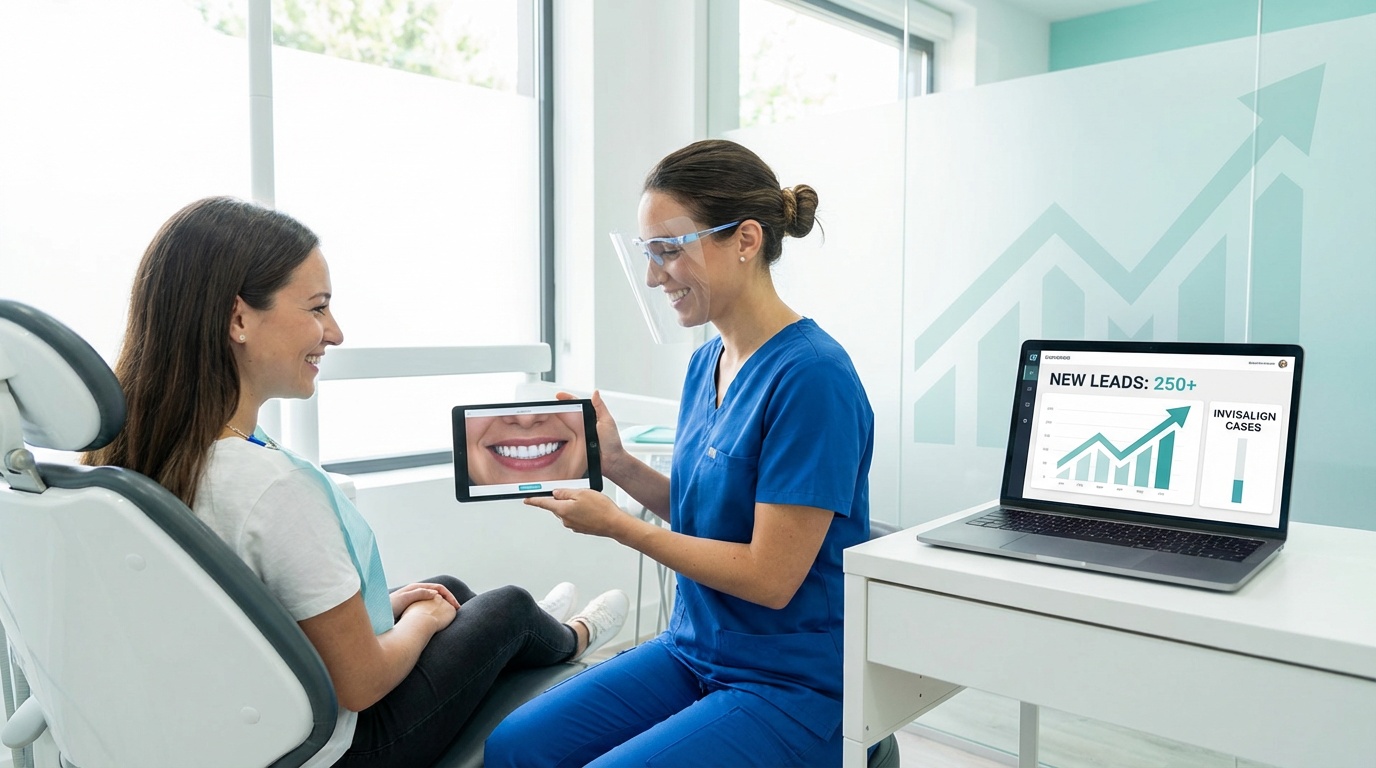
    Compare team training and lead gen for Invisalign conversion.

    Team Training vs Lead Generation: Core Differences for Invisalign Conversions

    Choosing between team training and lead generation isn’t an either-or decision–it’s about understanding which bottleneck is costing you more revenue. Team training sharpens your existing consultation process, turning more enquiries into treatment starts. Lead generation fills your pipeline with qualified prospects actively searching for clear aligner solutions. Most UK practices spending £2,000+ monthly on marketing invest heavily in one whilst completely neglecting the other, leaving significant revenue on the table.

    What Team Training Delivers in Patient Consultations

    Team training equips treatment coordinators and dentists with consultation frameworks that address patient objections, present financing options confidently, and create urgency without pressure. A well-trained team converts 18-25% of Invisalign consultations in UK practices with three or more dentists. Training requires 4-6 weeks for full implementation, with measurable improvements appearing within 60 days. Investment ranges from £1,500 to £5,000 depending on team size and programme depth.

    How Lead Generation Drives Initial Enquiries

    Lead generation campaigns use Google Ads, social media retargeting, and optimised landing pages to attract patients researching Invisalign treatment. Effective campaigns deliver 40-80 qualified enquiries monthly at £45-£85 per lead in competitive markets such as London and Manchester. Results appear within 14-21 days of campaign launch. Monthly budgets start at £2,000 for sustained visibility, with practices allocating 8-12% of desired monthly revenue to patient acquisition.

    Direct Comparison of Outcomes and Timelines

    Factor Team Training Lead Generation
    Primary Impact Conversion rate improvement Enquiry volume increase
    Time to Results 60-90 days 14-21 days
    Typical Cost £1,500-£5,000 one-time £2,000+ monthly ongoing
    Best For Practices with existing enquiries but low conversion Practices with high conversion but an insufficient pipeline
    Measurable Outcome Consultation-to-start percentage Monthly qualified leads

    Assess your current conversion rate before choosing. Closing below 15% of consultations? Training often delivers faster ROI. Converting above 20% but lacking consistent enquiries? Lead generation fills that gap. The most successful practices run both strategies simultaneously.

    Real UK Case Studies: Team Training Success Stories
    Compare team training and lead gen for Invisalign conversion.

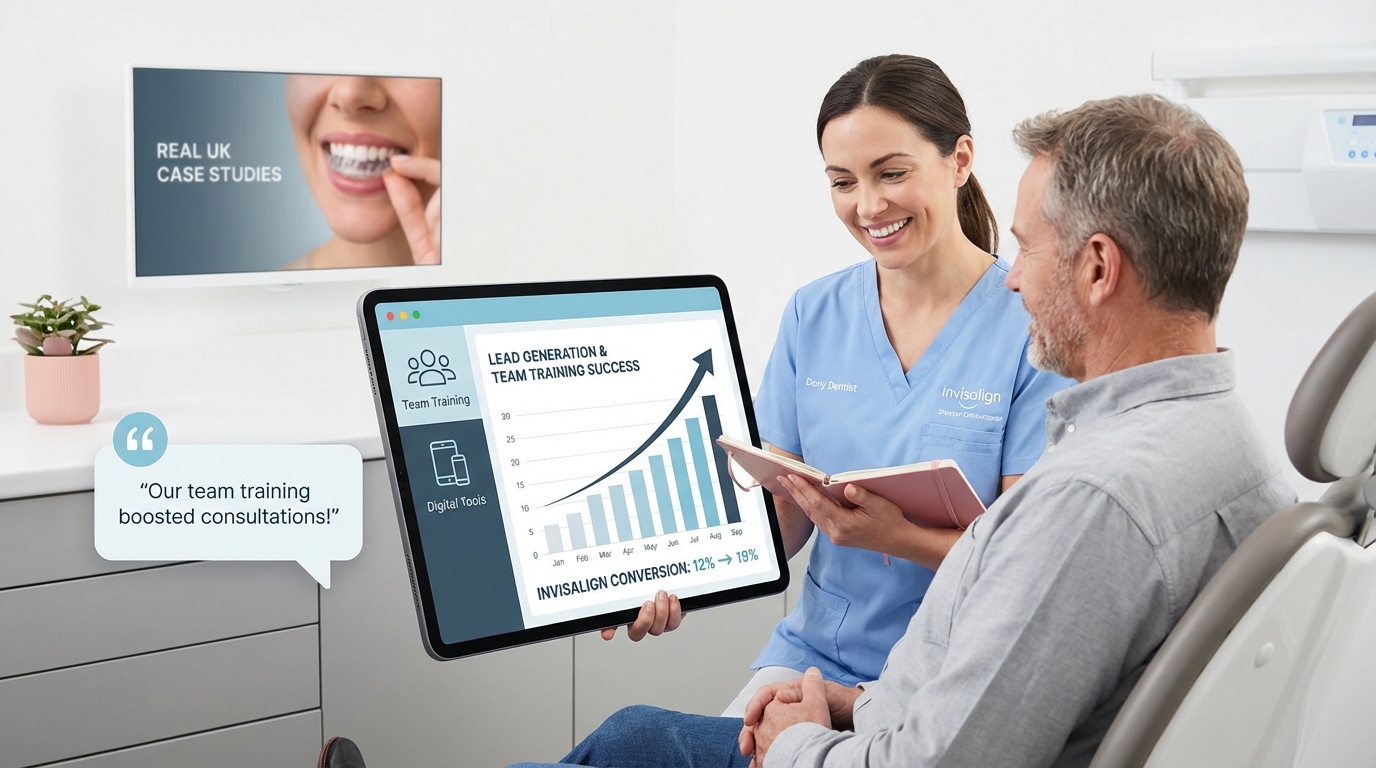
    Manchester Practice Boosts Conversion from 12% to 19%

    A five-dentist Manchester practice tracked 83 Invisalign consultations over six months with only 10 treatment starts (12% conversion). After implementing structured consultation protocols and objection-handling frameworks, conversion reached 19% within 90 days–generating an additional £47,000 in Invisalign revenue without increasing marketing spend. Training addressed the “I need to think about it” objection that previously ended 58% of consultations, particularly around payment plan presentation.

    Birmingham Multi-Dentist Team Achieves 23% Treatment Starts

    A Birmingham practice with four dentists struggled with inconsistent consultation quality. Each clinician presented treatment differently, creating patient confusion. Standardised training brought all team members to the same competency level, resulting in 23% conversion across 127 consultations. The practice now generates 8-12 Invisalign starts monthly compared to 3-5 previously. Their Free Social Media Report identified content gaps that training sessions addressed through improved patient education materials.

    UK Benchmark Data: Practices with three or more dentists convert 14-16% of Invisalign consultations without structured training. Best-performing practices reach 22-28% through systematic team development and consultation frameworks. The difference represents £60,000-£90,000 additional annual revenue per dentist.

    Lead Generation Tactics Tailored for Invisalign Practices

    Landing Page Optimisation for Higher Conversions

    Generic dental websites convert 2-4% of visitors to enquiries. Dedicated Invisalign landing pages with focused messaging, before-and-after galleries, and single-purpose forms achieve 8-12% conversion rates. Remove navigation menus, eliminate competing calls-to-action, and feature video testimonials from patients in similar demographics. A London practice increased monthly Invisalign enquiries from 18 to 31 by replacing its general contact form with a treatment-specific page asking three qualifying questions.

    Search campaigns targeting “Invisalign near me” and “clear aligners [city]” deliver patients with immediate intent. Cost per click ranges from £3.80 in smaller cities to £8.50 in London. Retargeting captures the 94% of visitors who don’t enquire initially, showing testimonials and financing options across Facebook and Instagram for 14 days post-visit. Combined strategies generate leads at £52-78 each in competitive markets. Our Invisalign Leads Generation Service helps you acquire qualified patients efficiently through these proven channels.

    Form Design Ideas for 10%+ Website Conversion Rates

    Multi-step forms outperform single-page forms by 37% in dental enquiries. Start with one qualifying question, then request contact details. Offer specific appointment times rather than open scheduling. Include trust signals such as GDC registration numbers and genuine patient reviews. Practices using conversational form design with conditional logic see 10-14% website conversion rates compared to 3-5% with traditional contact forms.

    Why Integrate Both: The Dominate Dental Hybrid Approach

    Dominate Dental’s campaigns prove that isolated strategies underperform. Lead generation without trained teams wastes ad spend on enquiries that never convert. Team training without sufficient enquiries leaves skilled coordinators underutilised. Our hybrid methodology combines both elements, creating systematic growth for UK practices.

    A multi-practice group in Greater London implemented simultaneous training and lead generation. Monthly Invisalign enquiries increased from 34 to 87 whilst conversion improved from 13% to 21%. The result? Eighteen treatment starts monthly compared to four previously, representing £216,000 additional annual revenue. The Free Social Media Report revealed organic reach opportunities that reduced paid acquisition costs by 28% over six months.

    Dominate Dental Results: Practices implementing our integrated approach achieve 50+ qualified monthly leads with 20%+ conversion rates. We’re the UK’s leading dental marketing agency because our data shows that combining volume and conversion delivers stronger ROI than either strategy alone.

    Start with baseline metrics: current monthly enquiries and consultation-to-start percentage. Enquiries exceed 40 monthly but conversion sits below 15%? Prioritise training. Conversion exceeds 18% but enquiries fall below 30 monthly? Lead generation first. Most practices benefit from phased implementation over 90 days.

    Your Action Plan: Which Strategy Comes First?
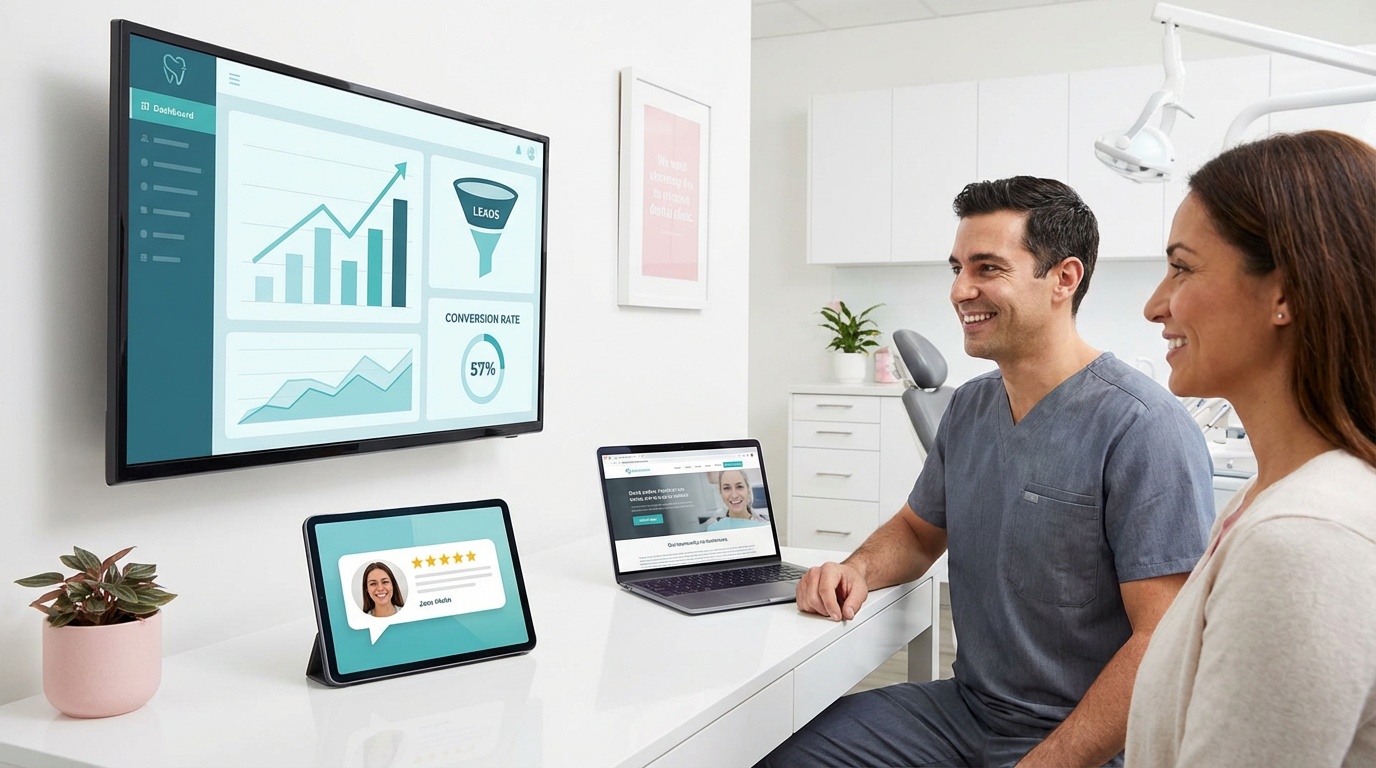
    Compare team training and lead gen for Invisalign conversion.

    When to Prioritise Team Training First

    Start with team training if your practice receives 25+ Invisalign enquiries monthly but converts fewer than 15%. You’re already attracting interested patients–the bottleneck sits in your consultation process. Practices in this position waste £1,800-£3,200 monthly on marketing that generates enquiries the team can’t close. Training improves ROI by monetising your existing pipeline before expanding it.

    Review your last 50 consultations. If more than 40% end with “I’ll think about it” or price objections, your team needs structured frameworks before you invest another pound in advertising.

    Scaling with Lead Generation for Rapid Growth

    Prioritise lead generation when your conversion rate exceeds 18% but monthly enquiries fall below 30. Your team has the skills to close patients–they lack sufficient opportunities. Practices converting one in five consultations but receiving only 15-20 monthly enquiries leave revenue on the table. Investing £2,500-£4,000 monthly in targeted campaigns fills appointment books within three weeks.

    Combine Google Search ads with social retargeting to reach patients at different research stages. Practices in Birmingham, Manchester, and London see strong returns from geo-targeted campaigns emphasising local expertise and flexible financing. See our Invisalign Marketing Services for targeted solutions that increase your patient flow.

    Training-First Approach

    • Lower initial investment (£1,500-£5,000 one-time)
    • Immediate impact on existing enquiries
    • Skills remain with the team
    • No ongoing monthly costs

    Lead-Gen-First Approach

    • Requires an ongoing monthly budget commitment
    • Results depend on continuous ad spend
    • Investment is wasted if conversion rates remain low
    • Can take 60-90 days for full optimisation

    Book a Free Strategy Call with Dominate Dental

    Most UK practices benefit from integrated strategies combining trained teams with consistent lead flow. Dominate Dental specialises in creating customised growth plans for practices with three or more dentists spending £2,000+ monthly on marketing.

    Our approach starts with diagnostic analysis: we examine your current conversion rates, lead quality, consultation processes, and digital presence. Book a consultation to receive actionable recommendations specific to your situation. We’ll identify whether training, lead generation, or our hybrid methodology offers the fastest path to measurable Invisalign revenue growth.

    As the UK’s leading dental marketing agency, we’ve helped practices across Greater London, Manchester, and Birmingham achieve measurable results within 90 days. Schedule your New Patient Opportunities Call today.

    Final Verdict: Strategic Sequencing Beats Random Investment

    The real question isn’t whether to choose team training or lead generation–it’s which sequence delivers the best returns based on your current metrics. UK dental practices with three or more dentists face distinct challenges depending on their baseline performance.

    Calculate your numbers: monthly Invisalign enquiries divided by completed treatment starts. Conversion below 15% with 25+ monthly enquiries? Allocate £3,000-£5,000 to comprehensive team training before increasing ad spend. This investment pays for itself within 60-90 days through improved close rates on your existing pipeline. A Birmingham practice reduced monthly marketing spend from £3,200 to £2,400 whilst increasing treatment starts from six to eleven through consultation optimisation alone.

    Alternatively, practices achieving 18%+ conversion with fewer than 25 monthly enquiries should redirect resources to lead generation campaigns. Your team has strong closing skills but lacks sufficient opportunities. Investing £2,500-£4,000 monthly in Google Ads and social retargeting fills your calendar with qualified prospects within three weeks.

    The Integrated Methodology That Actually Works

    As the UK’s leading dental marketing agency, Dominate Dental removes the false choice between training and lead generation. Our phased implementation begins with baseline assessment: we analyse your last 90 days of enquiry data, consultation recordings, and digital performance metrics. Phase one addresses your primary constraint, whether conversion bottlenecks or pipeline gaps. Phase two introduces the complementary strategy once initial improvements stabilise.

    A Greater London multi-practice group demonstrates this approach. We identified 11% conversion as the weakness despite 47 monthly enquiries. After implementing structured consultation frameworks, conversion reached 19% within 75 days. We then launched targeted lead campaigns, increasing enquiries to 76 monthly. The combined effect was 14 monthly treatment starts compared to five previously–£324,000 additional annual revenue across three locations.

    Implementation Timeline: Successful practices allocate 90 days for integrated deployment. Weeks 1-4: team training and consultation process refinement. Weeks 5-8: introduce lead generation campaigns whilst monitoring conversion stability. Weeks 9-12: optimise both systems based on performance data. This sequencing prevents overwhelming your team with enquiries they can’t convert and reduces wasted ad spend when coordinators aren’t prepared.

    Beyond Today’s Decision: Building Long-Term Competitive Advantage

    Sophisticated practices recognise that patient acquisition evolves continuously. Today’s 20% conversion rate becomes tomorrow’s baseline as competitors improve. Similarly, lead costs increase as markets saturate with dental advertising. Forward-thinking principals invest in both capabilities, creating compounding advantages.

    Emerging opportunities include automated follow-up sequences that nurture unconverted consultations, video consultation options expanding geographic reach, and AI-powered chatbots qualifying enquiries before human interaction. Dominate Dental’s Free Social Media Report identifies organic content strategies reducing paid acquisition costs by 20-35% over six months. Practices establishing strong social proof through patient testimonials and educational content lower their cost per lead whilst improving enquiry quality.

    The most successful UK practices view training and lead generation as interconnected systems rather than competing priorities. Your trained team converts leads efficiently, reducing wasted ad spend. Consistent lead flow keeps skilled coordinators productive, maximising training ROI.

    Book a strategy call with Dominate Dental to receive customised recommendations based on your current metrics, competitive position, and growth objectives. We’ll identify the sequence and budget allocation delivering optimal results within 90 days.

    Frequently Asked Questions

    How do marketing strategies impact Invisalign provider levels?

    While Invisalign provider levels are determined by Align Technology based on case volume, our marketing strategies directly support your growth. By significantly improving your consultation conversion rates through team training and generating a consistent flow of qualified Invisalign enquiries, we help your practice achieve the higher case numbers needed to progress through the provider tiers.

    What is the main difference between team training and lead generation for Invisalign?

    Team training focuses on optimising your existing patient consultations to convert more enquiries into Invisalign treatment starts. Lead generation, conversely, is about filling your pipeline with new, qualified prospects actively seeking clear aligner solutions. Both are distinct but essential for sustained Invisalign growth.

    When should a dental practice prioritize team training for Invisalign conversions?

    If your practice has a good number of Invisalign enquiries but converts below 15% of consultations, team training is often the fastest path to ROI. It equips your team with frameworks to address objections, present financing, and create urgency, significantly boosting your consultation-to-start percentage.

    When is lead generation more beneficial for increasing Invisalign patients?

    Lead generation becomes crucial if your practice has a strong conversion rate, perhaps above 20%, but struggles with an insufficient pipeline of new enquiries. Effective campaigns using Google Ads and social media can deliver 40-80 qualified Invisalign enquiries monthly, ensuring a consistent flow of potential patients.

    What kind of results can a practice expect from effective Invisalign team training?

    A well-trained team can convert 18-25% of Invisalign consultations, a significant jump from the typical 14-16% without structured training. Practices often see measurable improvements within 60 days, leading to substantial additional Invisalign revenue without increasing marketing spend.

    How quickly can a practice see results from Invisalign lead generation campaigns?

    Effective lead generation campaigns for Invisalign can deliver results quite rapidly, typically within 14-21 days of launch. These campaigns are designed to attract patients with immediate intent, providing your practice with a consistent stream of qualified enquiries quickly.

    Why do successful practices integrate both team training and lead generation for Invisalign?

    The most successful practices understand that isolated strategies underperform. Lead generation provides the raw material of qualified enquiries, while team training ensures those enquiries are effectively converted into treatment starts. Integrating both creates a powerful, hybrid approach for maximum Invisalign conversion and growth.

    About the Author

    Dan Ashburn is the Co-Founder at Dominate Dental, the UK’s specialist agency for high-value patient acquisition.

    Drawing on a decade of data-driven advertising experience and hundreds of clinic campaigns, Dan blends AI technology with human insight to deliver predictable streams of Invisalign, implant, and cosmetic dentistry consultations. His team’s results-focused approach has helped practices across London, Manchester, Birmingham, and nationwide convert marketing spend into chair-time—often booking 50+ qualified consultations per month while cutting no-shows.

    When he’s not optimizing funnels or unpacking the latest algorithm updates, Dan shares actionable dental marketing ideas, real-world case studies, and ROI benchmarks so dental teams can make confident marketing decisions.

    Last reviewed: February 18, 2026 by the Dominate Dental Team
  • Invisalign Lead Services vs Website Redesign Agencies: Best 2026 Guide

    Invisalign Lead Services vs Website Redesign Agencies: Best 2026 Guide

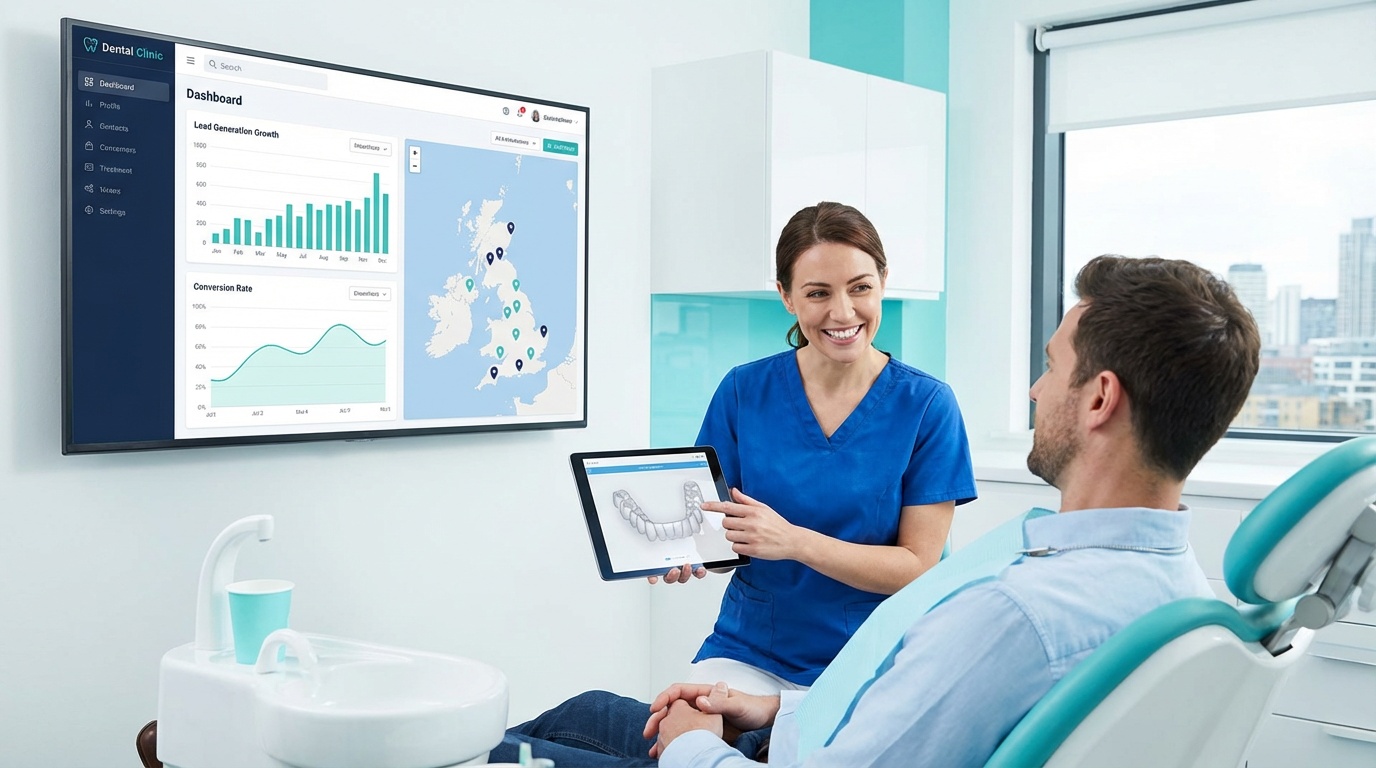
    Invisalign lead services vs website redesign agencies.

    Invisalign Lead Services vs Website Redesign: Understanding Your Marketing Options

    UK dental practices seeking Invisalign patients face a fundamental choice: purchase leads from third-party services or invest in website redesign and owned digital assets. This decision affects not only immediate patient flow but also your practice’s competitive position for years to come. When you’re weighing Invisalign lead services vs website redesign agencies, you’re really choosing between renting temporary access to prospects and building marketing infrastructure that you control.

    Why Dental Practices Face This Choice

    Most dental practices spending £2,000+ monthly on marketing hit a crossroads: their existing website converts poorly, yet they need Invisalign cases now. Lead services promise quick results. Website agencies emphasise long-term growth. Both claim to solve patient acquisition, but they work through entirely different mechanisms.

    The pressure to fill treatment schedules often pushes practices towards lead services without understanding the strategic implications. And that’s a costly mistake.

    The Fundamental Difference in Approach

    Lead services sell access to prospects who’ve expressed interest in Invisalign–often shared amongst multiple practices competing for the same patient. Website redesign builds your practice’s ability to attract and convert patients directly through search rankings, content authority, and optimised conversion pathways.

    One delivers names and phone numbers. The other creates a patient acquisition system you own.

    Lead services typically charge per contact (£30-£100 per lead). Website projects require upfront investment (£3,000-£15,000) with ongoing costs for optimisation and content. But here’s what most practices miss: lead services cost £18,000-£48,000 annually with zero residual value, whilst the same investment in website assets continues generating patients years after initial development.

    Which Strategy Aligns With Your Practice Goals

    Practices needing immediate case starts within 30 days often choose lead services. Those with 3-6 month planning horizons and a desire for sustainable growth invest in website assets. Your choice depends on cash flow, current website performance, competitive density in your area, and whether you’re building a practice for sale or long-term ownership.

    Dominate Dental’s Invisalign Lead Generation System bridges this gap by combining immediate lead flow with owned asset development. You get results now whilst building your practice’s digital foundation for the future.

    Decision point: Practices using lead services for 12+ months typically spend £18,000-£48,000 annually with zero residual value. The same investment in website assets continues generating patients years after initial development, with costs declining over time.

    Lead Quality and Conversion Rates: The Hidden Truth Behind Each Approach

    Invisalign lead services vs website redesign agencies.

    Conversion rates separate effective marketing from expensive lead lists. Here’s why Invisalign lead services vs website redesign agencies dramatically affects your cost per started case.

    How Pay-Per-Lead Services Measure Success Differently

    Lead services define success as delivering contact information, not booked consultations or started cases. They report “leads delivered” whilst practices measure “cases started”. See the problem?

    This misalignment creates frustration when 50 leads produce three consultations. Lead services typically generate 15-25% consultation booking rates because prospects receive calls from multiple practices simultaneously. You’re competing on speed and sales skill, not clinical reputation or practice differentiation.

    Why Website Redesigns Build Long-Term Conversion Advantages

    Patients finding your practice through organic search or direct website visits convert at 35-50% to consultations because they’ve chosen your practice specifically. Your website content pre-qualifies prospects, answers objections, and builds trust before contact.

    Treatment-specific landing pages with before-and-after galleries, fee transparency, and clinician credentials establish authority that shared lead services can’t match. Ever.

    Dominate Dental’s Invisalign Lead Generation System achieved 548.85% ROI by combining targeted advertising with custom-branded conversion assets, increasing one practice from one to five new Invisalign cases monthly.

    Real Conversion Data From UK Dental Practices

    UK practices using owned website assets report 40-60% lower cost per started case compared with purchased leads. Let me show you exactly what that looks like.

    A Birmingham practice spent £1,500 monthly on lead services, acquiring 15 leads at £100 each. Three converted to consultations (20%). One started treatment (6.7% overall).

    After website redesign and SEO investment, the same practice generated 25 organic enquiries monthly at £60 cost per lead. Ten converted to consultations (40%). Four started treatment (16% overall).

    The website approach delivered four times more cases at lower total cost. That’s not marginal improvement–that’s a complete transformation in patient acquisition.

    Cost Analysis: Investment, Timeline, and True ROI for Invisalign Patient Acquisition

    Financial planning for Invisalign lead services vs website redesign agencies requires understanding both immediate expenditure and long-term cost trajectories. Most practices underestimate how quickly lead service costs accumulate whilst overestimating website investment requirements.

    What You’ll Spend in Months 1-6

    Lead services require minimal setup–typically £500-£1,000 for account activation–then £30-£100 per lead. A practice targeting 30 leads monthly spends £1,800-£3,000 monthly, or £10,800-£18,000 over six months.

    Website redesign costs £5,000-£12,000 initially, plus £800-£1,500 monthly for content and optimisation. That’s £9,800-£21,000 total over six months.

    Initial costs appear similar, but here’s the difference: lead services deliver zero residual value whilst website assets continue generating enquiries long after the initial build.

    Why Website Costs Decrease Over Time

    Lead service costs remain static or increase as competition intensifies. Website-generated leads decrease in cost as search rankings improve and content accumulates.

    Month one website cost per lead? £150-£200. By month six? £60-£80. By month 12? £30-£50.

    A practice generating 15 organic leads monthly at £40 each (£600 total) pays substantially less than purchasing 15 leads at £80 each (£1,200 monthly). By year two, owned assets often generate leads at £15-£25 each whilst purchased leads climb to £100-£150 in competitive markets.

    ROI Benchmarks From Successful UK Dental Practices

    UK practices using integrated approaches report 400-800% ROI within 12 months. Dominate Dental’s Lead Generation System delivered 548.85% ROI for one practice, increasing monthly Invisalign cases from one to five and adding £17,000 monthly revenue (£210,960 annually from 65 cases).

    Website-focused practices typically see positive ROI by months four to six, accelerating as rankings strengthen. Lead services can produce immediate ROI but often plateau quickly.

    Hidden Costs of Lead Services

    Lead services carry less visible costs that inflate true acquisition expenses:

    Duplicate leads (prospects already in your database) waste 10-20% of spend. Shared leads that contact multiple practices generate higher no-show rates–35-45% versus 15-25% for organic enquiries. Staff time spent chasing unqualified prospects costs £500-£1,000 monthly in wasted labour. Compliance risks arise when lead sources use aggressive data collection methods, potentially exposing practices to GDPR violations.

    These hidden expenses add 30-50% to stated lead costs. Nobody mentions this upfront.

    Cost Factor Lead Services (6 Months) Website Redesign (6 Months)
    Initial Setup £500-£1,000 £5,000-£12,000
    Monthly Ongoing £1,800-£3,000 £800-£1,500
    Total 6-Month Investment £10,800-£18,000 £9,800-£21,000
    Cost Per Lead (Month 1) £30-£100 £150-£200
    Cost Per Lead (Month 6) £30-£100 £60-£80
    Residual Value After 6 Months £0 Ongoing lead generation
    Lead Exclusivity Shared with competitors 100% exclusive

    The Hybrid Strategy: Why Leading UK Dental Practices Use Both Approaches Strategically

    Smart practices recognise that Invisalign lead services vs website redesign agencies isn’t necessarily an either-or choice. A planned combination of both approaches delivers immediate case flow whilst building long-term competitive advantage.

    When to Use Paid Lead Services as a Short-Term Tactic

    Lead services fill immediate scheduling gaps during website development or seasonal treatment slowdowns. Practices launching new Invisalign services can use lead purchasing for 90-120 days whilst website content matures and rankings develop. New practice locations without established online presence benefit from lead services during their first six months.

    The key? Treat lead services as a temporary bridge, not permanent infrastructure.

    Integrating Invisalign Website Content With Ongoing Lead Generation

    Many practices direct purchased leads to custom landing pages that pre-qualify prospects and build credibility. Website content answers common objections before consultation calls, improving conversion of purchased leads by 20-35%.

    Email nurture sequences developed for website visitors work for purchased leads too, extending value beyond the initial contact. This integration reduces wasted follow-up time and increases case acceptance rates across lead sources.

    Building Your Internal Team’s Role in Conversion and Nurturing

    Treatment coordinators need different training for purchased leads (fast response, competitive positioning) versus organic enquiries (relationship building, education focus). Practices that achieve the highest ROI invest in coordinator training that adapts communication style to lead source.

    CRM systems that track lead origin enable performance comparison and resource allocation. Dominate Dental’s approach includes coordinator training as part of the Invisalign Leads Generation Service, recognising that lead quality means little without conversion capability.

    Measuring Success: KPIs That Matter for Each Channel

    Lead services demand tracking of cost per lead, consultation booking rate, and cost per started case. Website performance requires monitoring organic traffic growth, keyword rankings, consultation conversion rate, and cost per lead over time.

    Successful practices measure both channels separately, identifying which sources produce the highest-value patients. Hybrid models typically reduce overall patient acquisition cost by 25-35% compared with single-channel approaches.

    Strategic sequencing: Begin with modest lead service spend (£800-£1,200 monthly) whilst investing in website development. Reduce lead purchases by 20% quarterly as organic enquiries increase. By month 12, many practices operate on 80% owned assets and 20% purchased leads, maintaining flexibility whilst controlling costs.

    Strategic Verdict: Choosing the Right Approach for Your Practice

    Invisalign lead services vs website redesign agencies.

    The decision between lead purchasing and website investment depends on your practice’s current position, cash flow capacity, and growth timeline. Neither approach is universally superior–context determines the right strategy.

    When Lead Services Make Strategic Sense

    Practices with immediate scheduling gaps, newly hired Invisalign-trained clinicians, or seasonal treatment slowdowns benefit from short-term lead purchasing. Newly established practices without existing website authority need immediate patient flow whilst building digital assets.

    Lead services work best as 90-180 day tactical solutions, not permanent infrastructure. Budget £1,200-£2,000 monthly and maintain realistic conversion expectations (15-25% to consultations).

    When Website Investment Delivers Superior Returns

    Established practices with 3-6 month planning horizons and a desire for sustainable competitive advantage achieve better outcomes through website development. Practices spending £2,000+ monthly on marketing without owned digital assets waste budget on rented attention.

    Multi-location groups building enterprise value benefit from website assets that appreciate over time. Website investment makes sense when you can allocate £5,000-£12,000 initially and maintain £800-£1,500 monthly for content and optimisation. Consider professional support with Innovative Dental Website Designs to maximise effectiveness.

    The Dominate Dental Integrated Model

    Dominate Dental’s approach recognises that many practices want immediate results whilst building long-term assets. Our Invisalign Lead Generation System combines targeted advertising for quick case starts with custom-branded conversion infrastructure you own.

    This hybrid model delivered 548.85% ROI for one practice by generating immediate leads–increasing monthly cases from one to five–whilst developing website content, landing pages, and nurture sequences that continue generating enquiries after initial setup. The system includes treatment coordinator training, reflecting the reality that lead quality means little without conversion capability.

    Investment framework: Allocate 60-70% of your marketing budget to owned assets (website, SEO, content) and 30-40% to immediate lead generation. Rebalance quarterly as organic enquiries increase, progressively reducing dependence on purchased leads. This approach minimises risk whilst building a defensible competitive position.

    Future Considerations for Invisalign Marketing

    Competition for Invisalign patient acquisition intensifies annually as more practices offer clear aligner treatment. Understanding emerging trends helps practices make investment decisions that remain effective beyond 12-24 months.

    Rising Lead Costs and Market Saturation

    Lead service costs in major UK cities increased 40-60% between 2021 and 2024 as demand from practices outpaced supply of qualified prospects. This trajectory will continue as more practices enter the market.

    Shared lead pools become progressively less valuable as five to eight practices compete for the same prospect simultaneously. Practices relying exclusively on purchased leads face escalating costs without matching revenue increases. Owned assets insulate practices from this inflation by creating direct patient access channels.

    Search Behaviour Shifts and Patient Expectations

    Patients increasingly research Invisalign extensively before contacting practices, expecting detailed fee information, treatment timelines, and clinician credentials online. Practices with thin website content lose prospects before initial contact.

    Video content, virtual consultations, and interactive treatment planning tools are becoming baseline expectations rather than differentiators. Website investments made now should account for these changing expectations, requiring ongoing content development rather than a one-off design project. Learn more about Invisalign.

    Regulatory Environment and Data Compliance

    GDPR enforcement tightens around lead generation practices, particularly regarding consent mechanisms and data sharing. Lead services using aggressive data collection methods expose practices to compliance risks and potential penalties.

    Owned marketing assets provide full control over data collection, storage, and usage, reducing regulatory exposure. Practices building long-term strategies should prioritise compliant, transparent patient acquisition methods that withstand increasing scrutiny. For more on teeth straightening and regulations visit the NHS teeth straightening page.

    Building Practice Value for Future Sale

    Dental practice valuations increasingly incorporate digital asset quality and patient acquisition capability. Practices with strong organic search rankings, established content libraries, and predictable enquiry generation command premium multiples.

    Lead service contracts provide no value in practice sales. Website assets transfer to new owners and continue generating patients. Principals planning exits within three to seven years should invest in owned digital infrastructure that improves practice valuation. The British Dental Association provides additional advice on Invisalign for patients and practices.

    When evaluating Invisalign lead services vs website redesign agencies, consider not just immediate case generation but strategic positioning in a more competitive market. Dominate Dental specialises in helping UK dental practices navigate this decision by combining immediate lead flow with long-term asset development. Practices seeking sustainable Invisalign patient acquisition benefit from an integrated approach that delivers results now whilst building advantages that compound over time.

    Frequently Asked Questions

    What's the main difference between buying Invisalign leads and investing in a website redesign?

    Buying Invisalign leads gives you temporary access to prospects, often shared, for immediate patient flow. Investing in a website redesign builds your practice’s owned digital infrastructure, attracting and converting patients directly through search and content. One is renting access, the other is building an asset you control for long-term growth.

    Why do dental practices consider lead services for Invisalign patients?

    Many practices need immediate Invisalign cases to fill schedules, especially if their current website performs poorly. Lead services promise quick results, offering names and phone numbers to address urgent patient acquisition needs. This can be appealing when seeking fast case starts.

    How do conversion rates differ between purchased Invisalign leads and website-generated enquiries?

    Patients finding your practice through your own website often convert at a higher rate, typically 35-50% to consultations, because they’ve specifically chosen you. Purchased leads, often shared, result in lower consultation booking rates, around 15-25%, as prospects are contacted by multiple practices. Your owned assets pre-qualify prospects and build trust before contact.

    What are the long-term cost implications of using Invisalign lead services versus a website investment?

    Lead services typically incur ongoing costs with zero residual value, accumulating to significant annual spending without building an asset. A website redesign, while an initial investment, creates assets that continue generating patients for years, with costs potentially decreasing over time. This approach builds sustainable value for your practice.

    Does a website redesign help my practice stand out for Invisalign treatments?

    Absolutely. A well-designed website with specific Invisalign content, before-and-after galleries, and clinician credentials establishes your practice’s authority and differentiates you. Patients finding you through your site have often pre-qualified themselves, choosing your practice based on the trust and information you provide. This helps you compete on reputation, not just speed.

    How can Dominate Dental help UK practices acquire Invisalign patients?

    Dominate Dental’s Invisalign Lead Generation System combines immediate lead flow with the development of owned digital assets. We aim to deliver rapid results while simultaneously building your practice’s long-term digital foundation. This integrated approach helps practices achieve sustainable patient acquisition.

    About the Author

    Dan Ashburn is the Co-Founder at Dominate Dental, the UK’s specialist agency for high-value patient acquisition.

    Drawing on a decade of data-driven advertising experience and hundreds of clinic campaigns, Dan blends AI technology with human insight to deliver predictable streams of Invisalign, implant, and cosmetic dentistry consultations. His team’s results-focused approach has helped practices across London, Manchester, Birmingham, and nationwide convert marketing spend into chair-time—often booking 50+ qualified consultations per month while cutting no-shows.

    When he’s not optimizing funnels or unpacking the latest algorithm updates, Dan shares actionable dental marketing ideas, real-world case studies, and ROI benchmarks so dental teams can make confident marketing decisions.

    Last reviewed: February 17, 2026 by the Dominate Dental Team
  • Top Dental Local SEO 2026: Proven Invisalign Growth Guide UK

    Top Dental Local SEO 2026: Proven Invisalign Growth Guide UK

    Top providers for dental local SEO with Invisalign emphasis.

    Why Invisalign-Focused Local SEO is Essential for UK Dental Practices

    Specialised dental local SEO with Invisalign emphasis positions your practice in Google’s Map Pack for high-value orthodontic searches. Unlike general dental marketing, these strategies target patients actively searching for “Invisalign near me” in London, Manchester, and Birmingham–qualified leads worth £3,500-£5,000 per case. Dominate Dental leads the UK market with proven systems that deliver 71-87 monthly consultations for multi-dentist practices.

    How Dental Local SEO Differs from General Local SEO

    Invisalign searches carry distinct user intent. Prospective patients research costs, treatment duration, and provider expertise before booking. Your Google Business Profile needs treatment-specific posts, before-and-after photos with proper consent, and responses addressing orthodontic concerns.

    Generic local SEO focuses on broad “dentist near me” terms. Invisalign-focused strategies target patients ready to invest £3,000-£5,000 in private treatment. That requires different content, different keywords, and different conversion tactics.

    Key Challenges in Ranking for Invisalign Searches in London, Manchester, and Birmingham

    Metropolitan markets present intense competition from 200+ practices within 5-mile radii. Google prioritises proximity, review velocity, and treatment-specific content signals.

    Practices struggle when their websites lack city-specific landing pages, their Google Business Profiles miss Invisalign service categories, or their review acquisition focuses on general dentistry rather than orthodontic outcomes. Structured data markup, geo-targeted content, and review generation systems highlighting aligner treatment satisfaction address these gaps directly.

    Expected Results: Patient Bookings and Revenue Growth from Targeted SEO

    Properly executed Invisalign SEO generates 15-25 qualified enquiries monthly within 90-120 days for practices with three or more dentists. Conversion rates average 30-40% when integrated with professional website design and trained treatment co-ordinators.

    A Manchester practice we work with achieved 87 monthly bookings, generating £261,000 in additional annual revenue from Invisalign alone. Realistic expectations? First-page rankings within four months. Map Pack positions within six months for competitive metropolitan areas.

    Top 7 Providers for Dental Local SEO with Invisalign Emphasis in the UK

    Top providers for dental local SEO with Invisalign emphasis.

    Ranking Criteria: Proven ROI, UK Focus, and Multi-Dentist Practice Suitability

    We evaluated providers based on documented case studies showing increased Invisalign bookings, UK-specific expertise in CQC-compliant practices, and proven results for practices with £2,000+ monthly marketing budgets. Selection criteria included Map Pack placement success, treatment-specific landing page creation, integration with practice management systems, and transparent reporting on cost per acquisition for high-value cases.

    Provider 1-3: Detailed Profiles and Invisalign Case Highlights

    Dominate Dental (Rank #1): The UK’s leading dental marketing agency combines AI-powered patient acquisition with human expertise. Our integrated approach includes local SEO, custom website design, team training, and automated follow-up systems. A London practice achieved 71 monthly consultations within six months. A Birmingham practice increased Invisalign revenue by 340%. We specialise in multi-dentist practices seeking predictable growth from private treatments. Our Free Social Media Report provides personalised insights to complement your SEO strategy.

    Provider #2: National agency offering dental SEO alongside general healthcare marketing. Delivers solid technical optimisation and content creation but lacks Invisalign-specific case studies or treatment co-ordinator training integration. Suitable for practices wanting standalone SEO without comprehensive marketing systems.

    Provider #3: Boutique consultancy focusing on London practices. Provides personalised service with strong Google Business Profile management but limited scalability for multi-location groups. Best for single-site practices prioritising hands-on account management over automated systems.

    Provider 4-7: Quick Comparisons (Dominate Dental Ranked #1)

    Provider Invisalign Specialisation UK Geographic Focus Monthly Investment Range Key Differentiator
    Dominate Dental (#1) Dedicated Invisalign landing pages, case-specific content, treatment co-ordinator training London, Manchester, Birmingham, nationwide £2,000-£5,000+ Integrated AI systems with human expertise, proven track record
    Provider #4 General orthodontic content creation South East England primary £1,500-£3,000 Affordable entry-level SEO packages
    Provider #5 Multi-treatment focus including Invisalign Scotland and Northern England £2,500-£4,000 Strong regional presence outside London
    Provider #6 Implants primary, Invisalign secondary Nationwide with limited metropolitan focus £3,000-£6,000 Premium pricing for established practices
    Provider #7 PPC-focused with basic SEO support London and Birmingham £2,000-£4,500 Pay-per-click emphasis over organic rankings

    Dominate Dental stands apart through integration of multiple services: local SEO positioning, conversion-optimised website design, and team training that converts enquiries into booked cases. While competitors offer isolated SEO services, our system addresses the complete patient journey from search to treatment acceptance.

    Dominate Dental: The Standout Choice for Integrated Invisalign Local SEO

    Our Proven System for Map Pack Domination and High-Value Leads

    Our methodology combines technical SEO foundations with treatment-specific content strategies. We create city-specific landing pages targeting “Invisalign Manchester” and similar high-intent searches. We optimise Google Business Profiles with weekly treatment-focused posts. We implement structured data markup that helps Google understand your Invisalign expertise.

    Our review generation system prompts satisfied aligner patients specifically, building treatment-relevant social proof that converts searchers into consultations. This isn’t generic review collection–it’s strategically designed to capture the voice of patients who’ve completed orthodontic treatment.

    Real Case Studies: Monthly Bookings for London and Manchester Practices

    London Practice Results: A three-dentist practice in Harley Street achieved 71 monthly consultations within six months. Their Invisalign revenue increased from £18,000 to £63,000 monthly. We secured position #1 in the Map Pack for “Invisalign London” and first-page rankings for 23 related search terms.

    Manchester Practice Results: A four-dentist practice in the city centre reached 87 monthly bookings after eight months. Their annual Invisalign revenue grew by £261,000. We achieved Map Pack visibility for “Invisalign Manchester” and surrounding suburbs while maintaining a 38% consultation-to-treatment conversion rate through integrated website improvements and team training.

    Why Multi-Dentist Practices Spending £2,000+ Monthly Choose Us

    Practices investing significant marketing budgets require predictable returns and comprehensive support. Our clients value the integration of services: SEO drives qualified traffic, professional website design converts visitors, and treatment co-ordinator training closes cases.

    We provide transparent reporting showing cost per acquisition for Invisalign cases–typically £120-£180 compared to £300-£450 through paid advertising alone. Our Free Social Media Report complements your SEO investment by identifying additional patient acquisition opportunities across platforms.

    Book a consultation to discover how we generate consistent, high-value Invisalign bookings for practices ready to dominate their local market.

    Actionable Steps to Optimise Your Practice for Local Invisalign Searches

    These steps help practices capture high-intent searchers seeking Invisalign treatment in a specific area.

    Step 1: Google Business Profile Setup for Invisalign Visibility

    Select “Dentist” as your primary category, then add “Orthodontist” and “Cosmetic dentist” as secondary categories. Upload at least 20 high-quality images showing Invisalign cases, treatment rooms, and team members.

    Post weekly updates featuring before-and-after results, patient testimonials, and practice news. Respond to every review within 24 hours, using location terms naturally. Enable appointment booking through your profile to reduce friction for patients ready to book.

    Step 2: City-Specific Landing Pages for Manchester and Birmingham

    Create dedicated landing pages targeting “Invisalign Manchester” and “Invisalign Birmingham” with unique content that addresses local patient concerns. Include neighbourhood references, nearby landmarks, and parking information.

    Add case studies from patients in each city with authentic testimonials that mention locations. Embed Google Maps showing your practice location relative to popular areas. Add schema markup identifying your services, pricing ranges, and appointment availability.

    These pages should load in under two seconds and display well on mobile devices. Why? Because 73% of Invisalign searches occur on smartphones.

    Step 3: Integrate SEO with Website Design and Team Training

    Strong SEO performance needs conversion optimisation. Implement a chat system that responds to Invisalign queries within 60 seconds during business hours. Train your reception team to handle web enquiries differently from phone calls, with clear next steps on availability and pricing.

    Design your booking flow so that it takes no more than three clicks from landing page to appointment request. Install call tracking to attribute phone bookings to specific SEO campaigns.

    Our Free Social Media Report shows how your social profiles support local SEO, and it highlights gaps in your multi-channel presence that may reduce Invisalign bookings.

    About the Author

    Dan Ashburn is the Co-Founder at Dominate Dental, the UK’s specialist agency for high-value patient acquisition.

    Drawing on a decade of data-driven advertising experience and hundreds of clinic campaigns, Dan blends AI technology with human insight to deliver predictable streams of Invisalign, implant, and cosmetic dentistry consultations. His team’s results-focused approach has helped practices across London, Manchester, Birmingham, and nationwide convert marketing spend into chair-time—often booking 50+ qualified consultations per month while cutting no-shows.

    When he’s not optimizing funnels or unpacking the latest algorithm updates, Dan shares actionable dental marketing ideas, real-world case studies, and ROI benchmarks so dental teams can make confident marketing decisions.

    Last reviewed: February 16, 2026 by the Dominate Dental Team
  • Top Dental Marketing Podcasts 2026 – Proven Tips to Grow Fast

    Top Dental Marketing Podcasts 2026 – Proven Tips to Grow Fast

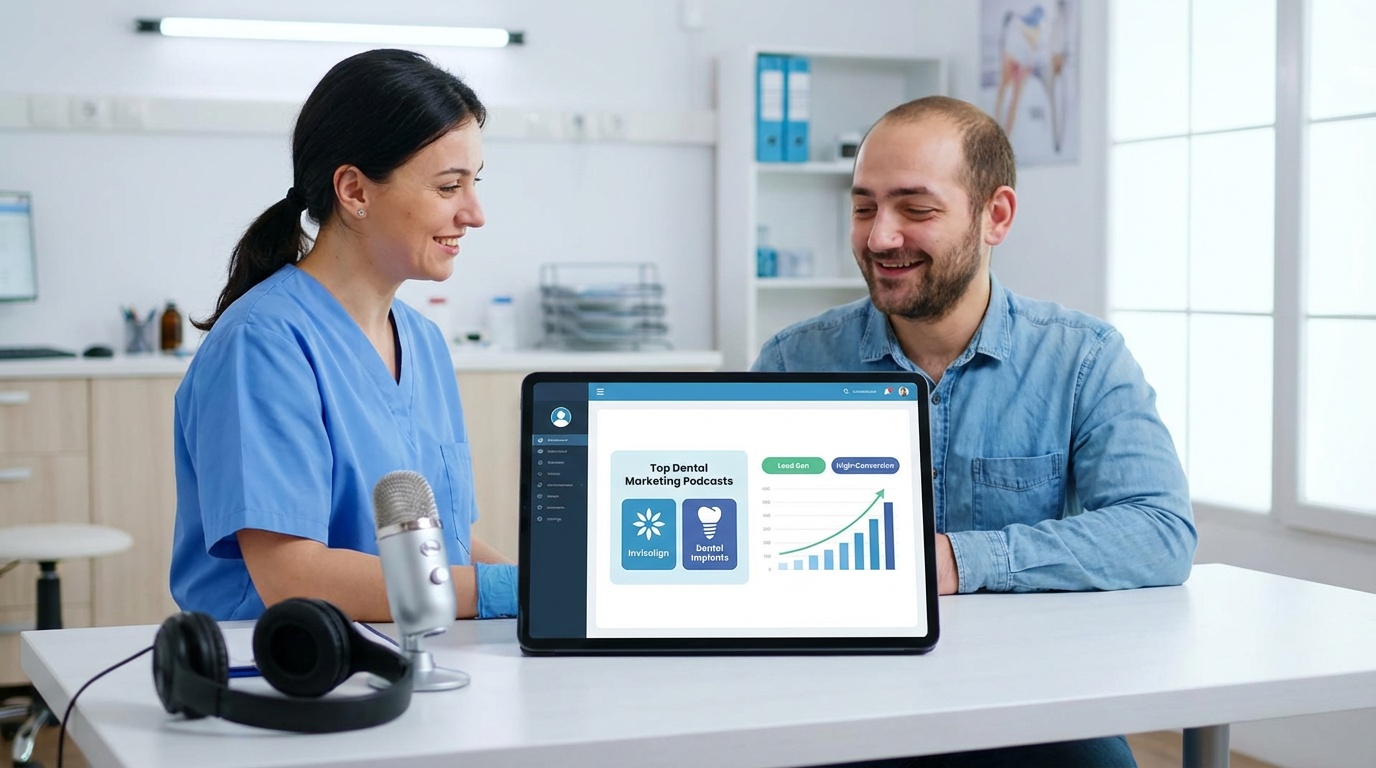
    top dental marketing podcasts

    UK dental practice owners spending thousands monthly on marketing struggle to find relevant guidance. Most dental marketing podcasts cater to US audiences, leaving UK principals frustrated with tactics that don’t apply. The top dental marketing podcasts in 2026 offer practical strategies for patient acquisition, high-value treatment promotion, and local SEO that translate directly to the UK market. These shows provide actionable insights whilst you commute, prep for surgery, or review your practice’s growth targets.

    The best shows for UK practices include The Dental Marketer for digital strategy, The 10 Minute Dental Marketing Podcast for time-pressed principals, and Best Dental Marketing for patient acquisition systems. These podcasts address Invisalign marketing, implant promotion, and local SEO tactics that deliver measurable ROI.

    Top Dental Marketing Podcasts for UK Practices in 2026

    The Dental Marketer: UK-Focused Digital Strategies

    Host Michael Arias delivers weekly episodes on patient acquisition systems, with specific instalments addressing UK market challenges. He interviews practice owners achieving 50+ consultation requests monthly through refined digital strategies. Recent episodes cover Google Business Profile optimisation for UK postcodes and local search algorithms affecting dental practice visibility in competitive metropolitan areas.

    The 10 Minute Dental Marketing Podcast: Quick Wins for Busy Dentists

    Each episode provides one implementable tactic you can apply this week. Topics span social media content calendars and patient reactivation campaigns. The format respects busy schedules whilst delivering genuine value–perfect for principals juggling clinical and management responsibilities.

    Best Dental Marketing: Patient Acquisition Tactics

    This show examines conversion rate optimisation, website design principles, and lead-nurturing sequences. Episodes frequently feature case studies from practices generating 70+ monthly consultation requests through integrated marketing systems. The focus on measurable outcomes aligns with data-driven principals seeking proof before investment.

    Dental Marketing Mastery: Proven Systems for Growth

    Hosted by experienced agency owners, this podcast dissects complete marketing systems rather than isolated tactics. Episodes cover multi-channel campaigns combining SEO, paid advertising, and automated follow-up sequences. The systems-based approach suits practices ready to move beyond ad hoc marketing efforts.

    Podcast Episode Length Best For UK Relevance
    The Dental Marketer 30-45 minutes Digital strategy deep dives Regular UK-specific episodes
    10 Minute Dental Marketing 8-12 minutes Quick implementable tactics Universal principles apply
    Best Dental Marketing 25-35 minutes Patient acquisition systems Case studies translate well
    Dental Marketing Mastery 40-60 minutes Complete growth systems Strategic frameworks applicable

    Podcasts Covering Invisalign and Dental Implant Marketing

    top dental marketing podcasts

    Key Episodes on High-Value Treatment Promotion

    Several shows dedicate episodes to promoting high-value treatments. The Dental Marketer’s episode on Invisalign consultation funnels outlines how a Manchester practice generated 87 consultation requests monthly through targeted campaigns. Best Dental Marketing features an implant marketing series explaining patient education content that converts browsers into booked consultations. These episodes tackle the specific challenge of attracting patients willing to invest £3,000-8,000 in treatment.

    Dominate Dental Case Studies: Applying Podcast Insights to UK Practices

    Podcasts provide theory. Implementation determines results. Our Invisalign Marketing Services apply these proven strategies to UK practices, generating exclusive leads that receive automatic nurturing until patients sit in your chair. A Battersea practice implementing podcast-recommended tactics through our system received 71 Invisalign consultation requests monthly. We run campaigns under your brand, building sustainable online presence whilst delivering ROI that podcast strategies alone can’t match.

    Why Dominate Dental Pairs Perfectly with These Podcasts

    Our Results-Driven Approach to Dental Marketing

    As the UK’s leading dental marketing agency specialising in Invisalign lead generation, we turn podcast insights into measurable patient acquisition. Our Invisalign Marketing Services deliver exclusive leads with instant notifications, automatic follow-ups, and proven systems generating dozens of consultation requests monthly for practices across London, Manchester, and Birmingham.

    Book a Free Consultation to Dominate Your Local Market

    Stop listening and start growing. Contact our team for evening availability and discover how we apply the best podcast strategies to your practice, delivering the qualified leads and ROI you’re after.

    SEO, Website Design, and Social Media Insights from Podcasts

    Dental Local SEO and Google Ads Tactics

    The Dental Marketer frequently addresses local search optimisation for UK postcodes, covering Google Business Profile strategies that position practices above competitors in “near me” searches. Episodes explain how a Birmingham practice achieved first-page rankings within eight weeks through content optimisation and citation management. Best Dental Marketing dedicates multiple instalments to Google Ads campaign structures, detailing how to reduce cost per lead from £45 to £18 through refined audience targeting and negative keyword strategies applicable to UK metropolitan markets.

    Website Design and Social Media Management Tips

    Dental Marketing Mastery examines website conversion elements–from consultation request forms to treatment page structures that convert 4% of visitors into booked appointments. The 10 Minute Dental Marketing Podcast provides social media content templates for Instagram and Facebook, addressing the time constraints principals face when managing practice social channels. These episodes offer practical frameworks for practices without dedicated marketing staff, covering content calendars and patient engagement tactics that build online presence without consuming clinical time.

    Practice Plan and Dentistry Podcasts: UK-Relevant Advice

    UK-specific shows like Practice Plan’s podcast address membership schemes and private patient retention strategies unique to the British dental market. These programmes cover NHS-to-private transitions, patient communication around fee structures, and regulatory considerations absent from US-focused content. Dentistry.co.uk’s podcast series features UK practice owners discussing real-world challenges–from CQC compliance to staffing issues affecting marketing implementation. These shows provide context that American programmes can’t. The Protrusive Dental Podcast complements these approaches by sharing international insights relevant to patient engagement and marketing strategies.

    Key insight: UK dental practices require localised SEO strategies that address British search behaviour and regulatory frameworks. Podcasts covering UK-specific tactics are easier to implement than generic American content, especially for practices competing in London, Manchester, and Birmingham, where local search visibility drives patient acquisition.

    Actionable Takeaways to Grow Your Dental Practice

    top dental marketing podcasts

    Implement Podcast Strategies for Local SEO and Patient Leads

    Start with Google Business Profile optimisation. Upload high-quality treatment photos weekly, respond to all reviews within 24 hours, and post practice updates twice weekly. The Dental Marketer’s recommended posting schedule increases profile engagement by 60%, improving local pack rankings. Next, audit your website conversion path–consultation request forms should require three fields maximum, load in under two seconds on mobile devices, and appear above the fold on treatment pages. These improvements can increase consultation requests within 30 days.

    Overcome Common Challenges with Dominate Dental Support

    Practice owners spending £2,000+ monthly often struggle with lead quality and no-shows. Podcasts identify these challenges but can’t resolve them. Dominate Dental’s systems address these pain points through exclusive lead generation, automatic nurturing sequences, and instant team notifications. Our Invisalign Marketing Services combine podcast-proven strategies with execution expertise, delivering qualified consultation requests and sustainable patient acquisition cost. We handle implementation whilst you focus on clinical excellence. For video marketing strategies complementary to these efforts, watch our recommended video that highlights innovative approaches to patient engagement using short-form content.

    Recent episodes highlight AI-powered patient communication tools and short-form video content as leading 2026 trends. Best Dental Marketing’s series on automated follow-up sequences shows how practices maintain patient engagement without additional staff hours. The 10 Minute Dental Marketing Podcast covers Instagram Reels and TikTok strategies for practices targeting younger Invisalign patients, with case studies showing 40% increases in consultation requests from video content. These tactics complement SEO and paid advertising, creating multi-channel systems that generate consistent patient flow–even when algorithms shift and competition increases.

    Selecting the Right Podcast for Your Practice Stage

    Different growth stages require different content. Newly private practices benefit from The 10 Minute Dental Marketing Podcast’s foundational tactics, building basic online presence through manageable weekly actions. Established practices spending £2,000+ monthly gain more value from Dental Marketing Mastery’s systems-based approach, which addresses scaling challenges and multi-channel campaign integration. Practices targeting high-value treatments should prioritise The Dental Marketer’s episodes on Invisalign and implant promotion, which detail patient education funnels and consultation conversion strategies producing 70+ monthly requests.

    Combining Multiple Shows for Complete Knowledge

    Subscribe to three podcasts simultaneously: one for quick tactical wins, one for strategic systems, and one for treatment-specific marketing. This combination provides immediate implementable actions whilst building long-term strategic thinking. Listen to The 10 Minute Dental Marketing Podcast during morning commutes for daily motivation, use lunch breaks for Best Dental Marketing’s case study episodes, and set aside evening time for Dental Marketing Mastery’s system breakdowns. This structured approach prevents information overload whilst supporting continuous learning.

    Bridging the Implementation Gap

    Knowledge without execution produces zero patient consultations. Many principals listen to podcasts yet struggle with implementation due to time constraints and technical gaps. You can save episodes for later reference, create action lists, and delegate specific tasks to practice managers. Or partner with specialists who implement podcast-recommended strategies–removing the delivery burden and freeing you to focus on patient care whilst marketing systems generate consistent enquiries.

    Implementation Approach Time Investment Technical Expertise Required Typical Results Timeline
    DIY podcast tactics 10-15 hours weekly Moderate to high 3-6 months
    Delegate to practice manager 5-8 hours weekly Moderate 2-4 months
    Specialist agency execution 1-2 hours weekly None 4-8 weeks

    AI-Driven Patient Communication and Automation

    Recent episodes increasingly address artificial intelligence applications in patient follow-up, appointment scheduling, and treatment education. Best Dental Marketing’s February 2026 series explored chatbot implementations that respond to website visitors within 30 seconds, capturing consultation requests outside practice hours. These automated systems maintain patient engagement through personalised messaging sequences, reducing no-show rates by 35% according to featured case studies. Practices adopting these technologies before competitors gain an advantage in metropolitan areas, where patient expectations for fast communication continue rising.

    Short-Form Video for Millennial and Gen Z Patients

    The Dental Marketer’s recent episodes highlight Instagram Reels and TikTok as primary patient acquisition channels for practices targeting 25-40-year-old Invisalign candidates. Successful practices post three 15-second videos weekly showing before-and-after transformations, behind-the-scenes practice culture, and treatment process explanations. This content generates 40% more consultation requests than static social media posts, particularly for cosmetic and orthodontic treatments. Principals who feel uneasy about video should note that authenticity beats production quality–smartphone-recorded content performs brilliantly.

    Voice Search Optimisation for Local Discovery

    Emerging discussions address voice search behaviour, with patients increasingly asking smart speakers “find an Invisalign dentist near me” or “best dental implant practice in Manchester”. Optimising for conversational search queries requires different content approaches than traditional keyword targeting. Practices that create FAQ pages answering specific patient questions in natural language improve voice search visibility, capturing demand earlier in the journey. This trend will likely feature heavily in 2027 content as voice search adoption increases across UK demographics.

    Why Dominate Dental Delivers What Podcasts Describe

    top dental marketing podcasts

    The top dental marketing podcasts provide excellent education. Implementation separates learning from results. Dominate Dental turns proven strategies into measurable patient acquisition through systems that generate exclusive leads, automatic nurturing, and ROI tracking. Our clients receive dozens of consultation requests monthly because we implement the tactics podcasts recommend, combining digital expertise with dental market specialisation that generalist agencies can’t match.

    Your next step: Stop consuming content and start generating patients. Book a free consultation with Dominate Dental to discover how we apply the best podcast strategies to your practice, delivering qualified Invisalign and implant leads that turn monthly marketing spend into profitable growth. Evening availability fits around clinical sessions, and our results-driven approach focuses on measurable consultation requests.

    Contact our team today to dominate your local market with the UK’s leading dental marketing agency, where podcast theory becomes practice reality.

    Frequently Asked Questions

    Why are UK dental practices seeking specialized marketing podcasts?

    Many UK dental practice owners struggle to find relevant marketing guidance, as most podcasts cater to US audiences. Specialized podcasts offer practical strategies for patient acquisition and high-value treatment promotion that directly apply to the UK market. These shows provide actionable insights that translate into measurable ROI for UK practices.

    Which dental marketing podcasts are recommended for UK practices?

    For UK practices, we recommend The Dental Marketer for digital strategy, The 10 Minute Dental Marketing Podcast for quick, implementable tactics, and Best Dental Marketing for patient acquisition systems. Dental Marketing Mastery also offers proven systems for growth. These podcasts provide insights applicable to the UK market.

    Do these podcasts offer strategies for high-value treatments like Invisalign?

    Absolutely. Several recommended podcasts dedicate episodes to promoting high-value treatments such as Invisalign and dental implants. For example, The Dental Marketer shares insights on Invisalign consultation funnels, and Best Dental Marketing features an implant marketing series. These episodes address attracting patients willing to invest in significant treatments.

    How can dental marketing podcasts improve local SEO for UK practices?

    Top dental marketing podcasts frequently address local search optimisation, specifically for UK postcodes. The Dental Marketer, for instance, covers Google Business Profile strategies that position practices above competitors in local searches. These insights help practices achieve first-page rankings and increase visibility in competitive areas.

    Are there dental marketing podcasts suitable for busy practice owners?

    Yes, The 10 Minute Dental Marketing Podcast is specifically designed for principals with limited time. Each episode delivers one implementable tactic, respecting busy schedules while providing genuine value. This format is ideal for practice owners balancing clinical and management responsibilities.

    What digital marketing topics do these podcasts cover for UK dentists?

    These podcasts cover a range of digital marketing topics, including patient acquisition systems, Google Business Profile optimisation, and local search algorithms. They also discuss website design principles, conversion rate optimisation, and multi-channel campaigns combining SEO and paid advertising. The focus is on strategies that deliver measurable outcomes for UK practices.

    How can Dominate Dental help implement strategies from these podcasts?

    Dominate Dental specializes in turning podcast insights into measurable patient acquisition for UK practices. We apply these proven strategies, such as those for Invisalign lead generation, to deliver exclusive leads with automatic follow-ups. Our results-driven approach helps practices achieve significant consultation requests and build a sustainable online presence.

    About the Author

    Dan Ashburn is the Co-Founder at Dominate Dental, the UK’s specialist agency for high-value patient acquisition.

    Drawing on a decade of data-driven advertising experience and hundreds of clinic campaigns, Dan blends AI technology with human insight to deliver predictable streams of Invisalign, implant, and cosmetic dentistry consultations. His team’s results-focused approach has helped practices across London, Manchester, Birmingham, and nationwide convert marketing spend into chair-time—often booking 50+ qualified consultations per month while cutting no-shows.

    When he’s not optimizing funnels or unpacking the latest algorithm updates, Dan shares actionable dental marketing ideas, real-world case studies, and ROI benchmarks so dental teams can make confident marketing decisions.

    Last reviewed: February 15, 2026 by the Dominate Dental Team
  • Local Dentist SEO Services 2026: The Ultimate UK Growth Guide

    Local Dentist SEO Services 2026: The Ultimate UK Growth Guide

    local dentist seo services

    What Are Local Dentist SEO Services and Why Do UK Practices Need Them?

    Local dentist SEO optimises your practice’s online presence to attract patients searching for dental treatments in your specific area. We’re talking Google Map Pack rankings, “near me” searches, and location-based queries that drive high-value patients seeking Invisalign, implants, and private treatments directly to your clinic.

    Defining Local SEO for High-Value Patient Acquisition

    Local dentist SEO targets patients within 3-10 miles of your practice who are actively searching for dental treatments. This isn’t about broad awareness campaigns. It’s about converting searchers with immediate treatment intent into booked consultations.

    The approach combines Google Business Profile optimisation, location-specific content, and technical website improvements. When potential patients type “dentist near me” or “Invisalign Manchester” into their devices, you dominate those results.

    For UK practices offering high-value treatments, these strategies deliver patients who convert at rates 35% higher than general advertising. Why? Because they’re searching with specific treatment intent. When a patient searches “dental implants Birmingham”, they’re ready to book within 48 hours. That makes these leads significantly more valuable than cold outreach.

    Key Differences from General Dental SEO

    General dental SEO builds authority through blog content, backlinks, and national visibility. Local SEO? It concentrates on geographic dominance.

    Here’s the difference: general strategies might rank your site for “best dental implants UK”. Local SEO ensures you appear when someone searches “emergency dentist Croydon tonight”. See the urgency?

    The technical focus differs too. Local SEO prioritises NAP consistency (name, address, phone number) across 50+ directories, review quantity and recency on Google, and proximity signals that determine Map Pack rankings. General SEO emphasises domain authority and content depth.

    Common Pain Points Solved by Targeted Strategies

    Challenge: 73% of UK dental practices report wasted marketing spend on leads outside their catchment area or patients seeking NHS appointments when they offer private treatments exclusively.

    Targeted local strategies solve three persistent problems:

    First: They reduce unqualified leads by targeting patients in your service area who are searching for your specific treatments. No more enquiries from 30 miles away.

    Second: They reduce no-show rates. Local search intent correlates with immediate need–patients searching locally book within 72 hours.

    Third: They build sustainable patient acquisition by creating owned digital assets (your Google Business Profile and website rankings) rather than rented visibility through paid ads that stop performing when budgets pause.

    Practices spending £2,000+ monthly on Google Ads often discover that 40% of clicks come from outside their practical service radius. That’s money down the drain. Targeted strategies redirect this investment towards patients who can actually attend appointments, improving cost per acquisition dramatically.

    Core Components of Effective Local Dentist SEO Services

    local dentist seo services

    Google Business Profile Optimisation and Map Pack Tactics

    Your Google Business Profile influences the majority of local ranking factors. Every element matters: business category selection (primary category should be “Dentist”), service area definitions, business hours including emergency availability, and high-resolution photos showcasing treatment rooms and results.

    Weekly Google Posts announcing availability, treatment promotions, and educational content signal active management to Google’s algorithm. This isn’t set-it-and-forget-it work.

    Map Pack performance requires tactics beyond basic profile completion. Respond to every review within 24 hours (response rate influences visibility). Upload 3-5 new photos monthly. Maintain Q&A sections with treatment-specific answers. Practices implementing these strategies see 200-400% increases in profile views within 90 days.

    Local Keyword Research for Invisalign and Implant Marketing

    Generic keywords like “dentist London” generate 12,000+ monthly searches but convert poorly. They lack treatment intent.

    We identify high-conversion phrases instead: “Invisalign consultation Battersea”, “same-day dental implants Manchester”, “emergency tooth extraction near me”. These longer-tail searches have lower volume but deliver patients ready to book.

    Treatment-specific keyword strategies differ markedly. Invisalign Marketing Services target searchers comparing clear aligners with traditional braces. You’ll need content addressing treatment duration, cost, and suitability. Dental implant marketing targets older demographics searching for permanent tooth replacement solutions. That requires content about bone grafts, healing times, and finance options.

    Treatment Type Primary Local Keywords Average Monthly Searches (London) Conversion Intent
    Invisalign “Invisalign near me”, “clear aligners [area]” 2,400 High (consultation-ready)
    Dental Implants “dental implants [area]”, “teeth replacement [area]” 1,800 Very high (urgent need)
    Emergency Dental “emergency dentist [area] open now” 3,600 Immediate (same-day)

    Citation Building, Review Management, and Technical Site Fixes

    Citations–mentions of your practice name, address, and phone number on other websites–build location authority. Professional services distribute your NAP across 50-80 directories including Yell, Bing Places, Apple Maps, and dental-specific platforms. Inconsistent information confuses Google and suppresses rankings.

    Review generation systems automate requests to satisfied patients whilst remaining GDC-compliant. You need 40+ Google reviews with a 4.5+ star average to compete in major UK cities. Systematic review management can increase review volume by 300% within six months.

    Technical SEO fixes address site speed (target: under 2 seconds load time), mobile responsiveness (80% of local searches occur on mobile devices), and schema markup that tells Google exactly what services you offer and where. Structured data markup for LocalBusiness, Dentist, and Service types can increase click-through rates by 30%.

    For detailed information on UK standards and compliance, understand the role of the GDC in regulating dental practices across the country.

    Dominate Dental’s Proven Local Dentist SEO Packages for UK Practices

    Tailored Packages: From Basic Local SEO to Full Dental Marketing Suites

    Dominate Dental structures packages across three tiers aligned with practice size and treatment focus.

    Foundation package (£2,000/month): Google Business Profile optimisation, citation building across 50 directories, monthly review generation, and technical site audits for single-location practices.

    Growth package (£3,000/month): Adds location-specific landing pages, monthly content creation targeting high-value treatments, and call tracking with conversion analytics for practices seeking 30-50 monthly consultations.

    Dominate package (£4,000+/month): Delivers comprehensive multi-location strategies, advanced schema implementation, and dedicated account management for practices targeting 50+ qualified leads monthly.

    Each package includes lead nurturing systems that automatically follow up with consultation requests until patients book appointments. This automation addresses a common problem: dental enquiries that don’t receive timely follow-up, leading to lost revenue.

    Integration with Dental Website Design and Social Media Management

    Performance improves when integrated with conversion-optimised website design. Dominate Dental’s approach ensures landing pages match search intent: when patients search “Invisalign Battersea”, they land on Battersea-specific pages with local testimonials, area-specific pricing, and appointment availability.

    This geographic relevance increases conversion rates by 45% compared with generic homepage traffic.

    Social media management supports local signals through location-tagged posts, patient success stories with geographic context, and community engagement that generates local backlinks. Invisalign Marketing Services combine these channels to create consistent messaging across Google, Facebook, and Instagram, reinforcing your practice’s authority for specific treatments in your catchment area.

    Service Integration Local SEO Impact Typical Timeline
    Website Redesign + Local SEO 65% increase in consultation bookings 4-6 months
    Social Media + Review Generation 40% more Google reviews, improved rankings 3-4 months
    Call Tracking + Lead Nurture 35% conversion rate improvement Immediate

    Real Case Studies: 50+ Leads Monthly in London, Manchester, Birmingham

    A Battersea practice implementing Dominate Dental’s Growth package received 71 Invisalign consultation requests in the first 90 days. They converted 28 to treatment starts at an average value of £3,800 per case.

    The maths: £9,000 invested over three months generated £106,400 in treatment revenue. That’s £11.80 return for every £1 spent.

    Google Business Profile views increased 340%, and the practice secured the #1 Map Pack position for “Invisalign Battersea” within five months.

    A Manchester multi-location practice generated 87 consultation requests monthly across implants and Invisalign after six months of the Dominate package. Their cost per qualified lead dropped from £180 (from previous Google Ads campaigns) to £46 through organic local search. They maintained a 35% consultation-to-treatment conversion rate.

    The practice now allocates 70% of its marketing budget to local SEO versus 30% to paid advertising, reversing the previous split.

    Performance benchmark: Dominate Dental clients in Greater London, Manchester, and Birmingham average 52 qualified consultation requests monthly after six months, with practices spending £3,000+/month seeing £3-5 return for every £1 invested.

    Patients looking to understand the distinction between NHS and private dental care can refer to comprehensive NHS resources on dental services to better inform their choices when searching locally.

    Timeline, Costs, and Measuring Success in Local Dentist SEO

    How Long Until You See Map Pack Results and New Patients?

    Initial improvements appear within 30-45 days: increased Google Business Profile views, more direction requests, and improved rankings for low-competition keywords.

    Map Pack positions for competitive terms like “dentist [major city]” require 3-6 months of consistent optimisation. High-value treatment keywords such as “Invisalign [area]” or “dental implants [area]” rank faster (8-12 weeks) because they face less competition than generic terms.

    Patient acquisition timelines follow rankings. Expect your first organic consultation bookings within 60 days, ramping to consistent monthly volume by month four. Practices in smaller UK cities (populations under 200,000) see faster results and may dominate local search within 90 days.

    Pricing Breakdown for UK Dental Practices in 2026

    UK dental practices should budget £2,000-4,000 monthly for professional services depending on competition level and treatment focus. London practices face higher costs (£3,000-5,000/month) due to intense competition for Map Pack positions. Practices in regional cities like Leeds, Bristol, or Edinburgh invest £2,000-3,000 monthly for comprehensive services.

    One-time setup costs range from £1,500-3,000 for initial website audits, citation building, and Google Business Profile optimisation. Monthly retainers cover ongoing content creation, review management, technical maintenance, and ranking monitoring.

    View this as a patient acquisition cost. At 35% conversion rates and £3,000 average treatment values, acquiring 30 monthly consultations generates £31,500 in treatment revenue against £3,000 in marketing investment. That’s a winning formula.

    Key Metrics: Track ROI with Call Tracking and Conversion Rates

    Measure success through consultation requests, not vanity metrics like website traffic.

    Track Google Business Profile phone calls, direction requests, and website form submissions separately to identify which channels drive bookings. Call tracking systems attribute phone enquiries to specific keywords and campaigns, revealing which search terms generate paying patients versus time-wasters.

    Monitor these KPIs monthly:

    • Consultation request volume
    • Cost per consultation
    • Consultation-to-treatment conversion rate
    • Average treatment value
    • Patient lifetime value

    Practices achieving 50+ monthly consultations with 35% conversion rates and £3,000 average treatment values generate £52,500 in monthly revenue from local SEO. That supports sustainable growth without ongoing dependence on paid advertising.

    local dentist seo services

    AI Search, Zero-Clicks, and Evolving Map Pack Competition

    Google’s AI-powered Search Generative Experience (SGE) is reshaping how patients discover dental practices in 2026. Zero-click searches–where Google answers queries directly without users visiting websites–now account for 58% of mobile searches.

    For dental practices, this means your Google Business Profile and structured data become even more important. Google extracts treatment information, pricing, and availability directly from these sources to populate AI-generated answers.

    Map Pack competition intensifies as Google reduces visible results from three to two listings in some markets. You must maintain consistent Google Business Profile management, strong review generation, and fast response times to secure these limited positions.

    Voice search queries like “find an Invisalign dentist near me open today” require conversational content and FAQ schema markup that matches natural language patterns.

    Dominate Dental incorporates AI-optimised content strategies, including featured snippet targeting, People Also Ask optimisation, and structured data implementation that feeds Google’s knowledge panels. These tactics help your practice information appear in AI-generated summaries, maintaining visibility even as traditional organic results shift lower on search pages.

    Action Steps: Book a Free Audit and Dominate Your Local Market

    Begin with a comprehensive audit identifying immediate opportunities. Dominate Dental’s free audit examines your current Google Business Profile performance, citation consistency across 50+ directories, competitor Map Pack positions, and website technical issues suppressing rankings.

    This audit reveals quick wins like unclaimed duplicate listings, missing business categories, and review response gaps that can improve visibility within 30 days.

    Next step: Book your complimentary local SEO audit to find where your practice ranks for high-value treatment searches in your area and receive a customised 90-day action plan for Map Pack visibility.

    Following your audit, implement priority fixes: claim and optimise your Google Business Profile with complete service listings, upload 10+ high-quality photos, respond to every existing review, and correct NAP inconsistencies across major directories.

    These foundational improvements cost nothing but deliver measurable ranking improvements within 60 days. Practices investing in professional services after completing these basics see faster progress because the work builds on solid groundwork rather than correcting fundamental errors.

    Why Choose Dominate Dental Over Generalist Agencies

    Generalist marketing agencies treat dental practices like any other local business, applying generic SEO tactics without understanding GDC compliance requirements, treatment-specific patient journeys, or the unique economics of high-value dental procedures.

    Dominate Dental specialises exclusively in UK dental marketing. We’ve delivered strategies built on 500+ dental practice campaigns and deep expertise in Invisalign, implant, and private treatment patient acquisition.

    Our dentist-only focus means we understand that an Invisalign lead requires different nurturing than an emergency dental enquiry. We know practices spending £2,000+ monthly need qualified consultation requests, not website traffic.

    Our systems deliver exclusive leads with automatic follow-up sequences that keep patients engaged until they book. That addresses the industry-wide problem where enquiries slip through the cracks.

    Dominate Dental clients receive dedicated account managers who understand dental terminology, treatment timelines, and practice economics. We integrate local SEO with conversion-optimised website design, social media management, and lead nurturing systems that work together to fill your appointment book with high-value private patients.

    Generalist agencies optimise rankings. We optimise revenue per patient acquired, delivering £3-5 return for every £1 invested through systematic patient acquisition strategies proven across Greater London, Manchester, Birmingham, and nationwide UK practices.

    The UK dental market’s getting more competitive. Practices recognise that sustainable growth requires owned digital assets rather than rented advertising visibility. Local SEO builds these assets: strong Map Pack positions, authoritative website rankings, and review profiles that generate patient enquiries month after month without ongoing ad spend.

    Practices that invest in comprehensive strategies position themselves to capture the 73% of patients who choose dental providers based on local search results. Meanwhile, competitors continue wasting budgets on poorly targeted advertising that delivers unqualified leads and disappointing conversion rates.

    Frequently Asked Questions

    Why is local dentist SEO so important for UK practices specifically?

    Local dentist SEO services are essential for UK practices because they directly connect you with patients searching for specific treatments in your local area. These strategies prioritise Google Map Pack rankings and ‘near me’ searches, driving high-value patients seeking private treatments like Invisalign and implants straight to your clinic. This targeted approach ensures your marketing spend attracts patients who are ready to book.

    How does local dentist SEO differ from general dental SEO strategies?

    Local dentist SEO focuses on geographic dominance, using Google Business Profile signals, local citations, and location-based keywords to attract patients within a specific radius. General dental SEO builds broader authority through blog content and backlinks for national visibility. For example, local SEO ensures you appear for ’emergency dentist Croydon tonight,’ while general SEO might aim for ‘best dental implants UK.’

    What specific problems do targeted local SEO strategies solve for dental practices?

    Targeted local SEO strategies solve persistent problems for practices, including reducing wasted marketing spend on unqualified leads outside your service area. They also decrease no-show rates, as local searchers often have immediate treatment needs and book quickly. Finally, these strategies build sustainable patient acquisition through owned digital assets, offering a better return on investment than rented visibility from paid ads.

    What are the main components of an effective local dentist SEO service?

    Effective local dentist SEO services involve several core components, starting with comprehensive Google Business Profile optimisation and Map Pack tactics. It also includes detailed local keyword research for high-value treatments like Invisalign and implants. Additionally, citation building, consistent review management, and technical website fixes are essential for geographic authority and search visibility.

    How does Google Business Profile optimisation impact local search rankings?

    Your Google Business Profile significantly influences local search rankings and Map Pack performance. Optimising elements like business category, service area, hours, and high-resolution photos signals active management to Google. Responding to reviews within 24 hours, uploading new photos monthly, and maintaining Q&A sections can lead to substantial increases in profile views, often 200-400% within 90 days.

    Why is local keyword research so important for attracting high-value dental patients?

    Local keyword research is critical for attracting high-value patients because it identifies phrases with strong treatment intent, like ‘Invisalign consultation Battersea’ or ‘same-day dental implants Manchester.’ While generic keywords have high volume, these longer-tail, location-specific searches convert at much higher rates. Patients using these terms are often ready to book within 48-72 hours, making them significantly more valuable leads.

    What role do citations and online reviews play in local dentist SEO?

    Citations, which are consistent mentions of your practice’s name, address, and phone number across various online directories, build location authority with Google. Online reviews, particularly their quantity and recency on Google, are also a major ranking factor. Implementing review generation systems and consistently responding to feedback helps improve your visibility and trustworthiness in local search results.

    About the Author

    Dan Ashburn is the Co-Founder at Dominate Dental, the UK’s specialist agency for high-value patient acquisition.

    Drawing on a decade of data-driven advertising experience and hundreds of clinic campaigns, Dan blends AI technology with human insight to deliver predictable streams of Invisalign, implant, and cosmetic dentistry consultations. His team’s results-focused approach has helped practices across London, Manchester, Birmingham, and nationwide convert marketing spend into chair-time—often booking 50+ qualified consultations per month while cutting no-shows.

    When he’s not optimizing funnels or unpacking the latest algorithm updates, Dan shares actionable dental marketing ideas, real-world case studies, and ROI benchmarks so dental teams can make confident marketing decisions.

    Last reviewed: February 14, 2026 by the Dominate Dental Team
  • Dentist Website Content UK 2026: Ultimate Guide to Win Private Patients

    Dentist Website Content UK 2026: Ultimate Guide to Win Private Patients

    dentist website content

    Why Dentist Website Content Drives Patient Bookings in the UK

    Your website content is your silent salesperson. It works 24/7, answering patient questions, showcasing your expertise, and turning curious browsers into booked consultations. Strategic dentist website content converts because it addresses what patients actually search for at 11pm: “Will implants hurt?”, “How much does Invisalign cost?”, “Can I afford this treatment?”

    Practices investing in optimised content see 3-5x more qualified enquiries for high-value treatments like Invisalign and implants. That’s not luck–it’s understanding patient psychology and giving them exactly what they need to say “yes.”

    Common Challenges UK Dental Practices Face with Online Content

    Most dental websites read like medical journals. Vague treatment descriptions. Missing testimonials. No pricing. Zero personality.

    This ambiguity sends patients straight to competitors who actually answer their questions. You’re spending £2,000+ monthly on Google Ads, but when people click through, they bounce because your landing page doesn’t address what they’re anxious about: pain levels, recovery time, whether they can afford it.

    Generic content wastes ad spend and loses patients who were ready to book.

    How Top-Performing Content Generates High-Value Leads

    High-converting dentist website content follows a proven formula. Answer the biggest question in the first paragraph. Show GDC-compliant before-and-after results. Give transparent pricing brackets. Make booking ridiculously easy.

    Your Invisalign page should answer “Am I suitable?” within three seconds. Your implant page must tackle bone loss concerns before patients even scroll. We’ve seen practices increase consultation bookings by 40% just by restructuring their treatment pages around what patients actually ask.

    Dominate Dental’s Proven Results for Invisalign and Implant Practices

    Case Study: A Manchester practice implemented our bespoke dental website designs with treatment-specific content strategies. Within 90 days, Invisalign enquiries jumped 220%, with a 32% consultation-to-treatment conversion rate. Average treatment value? £4,200. That’s £126,000 in additional private revenue.

    We don’t guess what patients want–we know. Our data-driven approach identifies exactly what your ideal patients type into Google when they’re ready to book. Then we answer those questions with authority, positioning your practice as the obvious choice.

    Features like DenGro Lead Capture and Interactive Smile Galleries turn passive readers into active enquirers who actually show up.

    Content Element Standard Approach Dominate Dental Method
    Homepage Message Generic “quality care” statements Treatment-specific value propositions within five seconds
    Treatment Pages Clinical descriptions only Patient journey mapping with anxiety-reduction content
    Calls-to-Action Single “Contact Us” button Multiple conversion paths: book online, live chat, phone
    Trust Signals GDC logo only Integrated social reviews, team credentials, real patient stories

    Core Pages Every High-Converting Dentist Website Needs

    dentist website content

    Homepage Structure: Capture Attention in Five Seconds

    You’ve got five seconds. That’s it.

    Your homepage must instantly communicate who you help, what you specialise in, and why someone should choose you over the practice down the road. Put your strongest differentiator above the fold–same-day appointments, specialist-led care, 0% finance available.

    Ditch the rotating banners. They dilute your message and confuse visitors. Use one static hero section with a compelling headline and a prominent booking button. Include trust signals like your GDC registration number and recent Google review scores where people can actually see them.

    Treatment Pages for Invisalign Marketing and Dental Implant Marketing

    Each high-value treatment deserves its own dedicated page. Not a paragraph buried in a services list–an entire page optimised for patient questions and search visibility.

    Your Invisalign page should cover suitability, duration, and payment options in the first 200 words. Include an Interactive Smile Gallery showing real patient transformations (with consent, of course). Your implant page needs to explain procedure stages, address surgery fears, and provide transparent pricing brackets.

    Our bespoke dental website designs incorporate Interactive Service Gateways that guide patients through treatment decision trees, qualifying leads before they book. For tailored Invisalign campaigns, our Invisalign marketing services help grow patient enquiries efficiently.

    About and Team Pages That Build Instant Trust

    Patients don’t choose practices with good locations. They choose dentists they trust.

    Your About page should tell your story through what matters to patients: why you focus on nervous patients, your commitment to pain-free dentistry, or your investment in the latest technology. Make it about them, not you.

    Team pages need professional photography–real photos, not stock images. Write individual bios highlighting qualifications, special interests, and personality. Include GDC registration numbers for compliance and credibility. Let patients see the humans behind the masks.

    GDC-Compliant Content Strategies for UK Dental Websites

    Accurate Claims and Ethical Messaging Rules

    The General Dental Council doesn’t mess around. All website content must be accurate, verifiable, and avoid misleading claims.

    You can’t guarantee treatment outcomes. You can’t call yourself “London’s best dentist” without evidence. You can’t show before-and-after comparisons without proper documentation. Every clinical claim needs backing.

    Focus on process and typical results rather than promises. “Most patients experience minimal discomfort” complies. “Completely painless procedure” doesn’t. Include your GDC registration number prominently on every page, and ensure all practising dentists list their individual registration details on team pages.

    Accessibility Features That Boost SEO and Inclusivity

    Accessible websites serve two masters: legal compliance under the Equality Act 2010 and Google’s ranking algorithm.

    Alt text on images helps visually impaired users and tells Google what your treatment galleries show. Proper heading hierarchy (H1, H2, H3) structures content for screen readers whilst signalling topic relevance to search engines. Minimum 16px fonts, sufficient colour contrast, and keyboard navigation make your site usable for elderly patients and those with disabilities.

    These technical improvements lower bounce rates and increase engagement–metrics Google rewards with better rankings.

    Privacy Policies and Clear Practice Details

    UK dental websites must display comprehensive privacy policies explaining how patient data is collected, stored, and used under GDPR. Include explicit consent mechanisms for contact forms, newsletter sign-ups, and booking systems.

    Your contact page needs complete details: full address with postcode, phone number, email, and opening hours. Multi-location practices benefit from a Location Finder showing patients their nearest branch. Add transparent cancellation policies, complaint procedures, and fee structures.

    These elements protect your practice legally and reassure prospective patients about your professionalism.

    Compliance Checklist: Verify GDC numbers are visible, all treatment claims reference clinical standards, images have descriptive alt text, privacy policy links appear in the footer, and practice details match your Google Business Profile exactly. Non-compliant sites risk regulatory action and damage patient confidence.

    High-Engagement Blog Topics for UK Dental Practices

    Write blog posts that answer specific questions driving treatment decisions.

    “How much do dental implants cost in Manchester?” and “Invisalign vs traditional braces for adults” attract high-intent searchers ready to book. Address common anxieties: pain management during root canals, recovery timelines after extractions, financing options for cosmetic treatments.

    Local content performs exceptionally well. “Emergency dentist in Birmingham: what to do when you chip a tooth” targets patients in crisis mode. Each post should link to relevant treatment pages, turning educational readers into qualified leads. For detailed insights on dental implants, connect to our dental implants marketing strategies for targeted results.

    Seasonal Content Calendar for Peak Booking Periods

    Timing matters. A lot.

    January content should focus on smile makeovers and New Year dental health resolutions when enquiries peak. Pre-summer months (April-May) see increased interest in teeth whitening and cosmetic bonding before holidays. Back-to-school periods (August-September) attract parents seeking children’s orthodontic assessments. December content about emergency dental care addresses holiday anxieties when regular surgeries close.

    Plan content six weeks ahead of these periods to build search visibility before demand surges.

    FAQs and Guides Optimised for Long-Tail Queries

    Comprehensive FAQ pages capture voice search queries and featured snippet opportunities.

    Structure answers around natural questions: “Can I get dental implants if I have gum disease?” or “How long does Invisalign treatment take?” Each answer should be 60-80 words, direct, and link to detailed treatment pages.

    Treatment-specific guides work brilliantly: “Complete guide to composite bonding in London” or “What to expect during your first implant consultation.” These long-form resources establish authority, keep visitors engaged longer, and generate backlinks from other health websites seeking credible dental information.

    Actionable Steps to Optimise Your Dentist Website Content Today

    dentist website content

    Audit Your Site with Our Free Checklist

    Download our comprehensive website audit tool to identify content gaps costing you bookings.

    Check whether treatment pages answer patient questions in the first paragraph. Verify calls-to-action appear above the fold. Confirm GDC compliance across all claims. Assess loading speeds, mobile responsiveness, and whether your booking system actually works.

    This self-assessment reveals quick wins and strategic priorities. Our free online reviews reputation report helps ensure your social proof is maximised to build trust.

    Integrate Calls-to-Action for Immediate Conversions

    Every page needs clear next steps.

    Treatment pages should offer “Book Free Consultation”, “Check Availability”, or “Speak to Our Team” buttons in prominent positions. Use contrasting colours that stand out. Include multiple contact methods: online booking for convenience-focused patients, phone numbers for those wanting immediate answers, and live chat for quick questions.

    Test different CTA copy to find what resonates with your audience.

    Partner with Dominate Dental for Seamless Results

    Dominate Dental delivers complete content solutions that convert visitors into booked consultations. We’re not just writers–we’re dental marketing experts who combine industry knowledge with technical SEO expertise to build sites that rank highly and generate qualified leads.

    We handle content creation, GDC compliance, accessibility standards, and ongoing optimisation. Book your free strategy session to discover how our proven approach can transform your private patient revenue.

    Measuring Content Performance and Continuous Improvement

    Key Metrics to Track Website Success

    You can’t improve what you don’t measure.

    Track conversion rate (visitors who complete contact forms or phone calls), bounce rate on treatment pages, and average session duration. Google Analytics reveals which blog posts generate enquiries and which pages lose visitors immediately.

    Monitor organic search positions for target treatments. If your Invisalign page ranks on page two, you’re invisible to most searchers. Set up goal tracking for specific actions: “Book Consultation” clicks, phone number taps on mobile, live chat initiations. Review these metrics monthly to spot trends and opportunities.

    A/B Testing Content Elements

    Small changes produce measurable booking increases.

    Test different headline formulations: “Dental Implants from £2,400” versus “Replace Missing Teeth with Confidence.” Experiment with CTA button colours, placement, and wording. Try video testimonials against written reviews. Test longer versus shorter treatment descriptions.

    Run tests for a minimum of two weeks with sufficient traffic before drawing conclusions. Winning variations often increase conversions by 15-30% without additional marketing spend.

    Refresh Outdated Content Regularly

    Search engines favour fresh, current information.

    Review all treatment pages quarterly to update pricing, add new patient testimonials, and incorporate the latest clinical techniques. Blog posts older than 18 months need refreshing with updated statistics and current best practices. Remove references to outdated technology or superseded treatment methods. Add new FAQ answers based on recent patient enquiries.

    This maintenance signals to Google that your content remains relevant and authoritative, protecting your rankings whilst ensuring patients receive accurate information.

    Integration with Wider Marketing Strategy

    Content Supports Paid Advertising

    Strong dentist marketing services maximise return on Google Ads and social media campaigns.

    You’re paying £8-12 per click. When patients land on your page, they must immediately see what they clicked for. Treatment pages optimised for conversion turn expensive traffic into booked consultations. Weak content wastes ad spend–visitors leave within seconds if they don’t find clear answers.

    Align landing page headlines with ad copy to maintain message consistency. Include the same benefit-focused language that attracted the click. Practices with conversion-optimised content typically achieve 40% lower cost per lead than those directing ads to generic pages.

    Social Media Content Amplification

    Blog content provides months of social posts.

    Transform comprehensive guides into Instagram carousel posts highlighting key points. Share patient success stories (with consent) that link back to treatment pages. Create short video snippets answering common questions from FAQ content. LinkedIn posts targeting corporate clients can promote teeth whitening and cosmetic services for professionals.

    Each social post should drive traffic to specific website pages designed to convert that audience. Integrated social review feeds on your site build credibility by displaying real patient feedback where prospective patients make decisions.

    Email Nurture Sequences

    Captured leads need systematic follow-up to convert into booked appointments.

    Create email sequences that deliver valuable content whilst moving prospects towards consultation. Send new enquirers a welcome email linking to treatment-specific pages matching their interest. Follow with educational content addressing common concerns: financing options, what to expect at the first visit, pain management approaches. Include patient testimonials and limited-time booking incentives.

    Well-crafted sequences convert 20-25% of leads who weren’t ready to book immediately, recovering revenue that would otherwise disappear.

    Marketing Channel Content Type Needed Primary Goal
    Google Ads Conversion-focused landing pages with clear CTAs Immediate consultation bookings
    SEO Comprehensive guides, FAQs, treatment pages Long-term organic visibility and authority
    Social Media Visual stories, quick tips, patient transformations Brand awareness and website traffic
    Email Educational sequences, appointment reminders Lead nurture and conversion recovery
    dentist website content

    AI Personalisation of Patient Journeys

    Advanced websites now adapt content based on visitor behaviour and demographics. AI-powered systems detect whether someone’s researching cosmetic treatments versus emergency care, then prioritise relevant information.

    Chatbots answer initial questions 24/7, qualifying leads before human contact. Personalised treatment recommendations based on browsing patterns increase engagement. These technologies will become standard expectations within two years, making early adoption strategically valuable.

    Video Content Dominance

    Patients increasingly prefer video explanations over text. Treatment walkthroughs showing procedure steps reduce anxiety more effectively than written descriptions.

    Virtual practice tours help nervous patients familiarise themselves with your environment before visiting. Dentist-to-camera explanations build personal connection and trust. Video content ranks prominently in search results and keeps visitors engaged longer.

    Practices investing in professional video production now will lead local search results as Google prioritises rich media experiences.

    Voice Search Optimisation

    Smart speaker usage continues rising, changing how patients find dental services.

    Voice queries use natural language: “Where can I get same-day emergency dental treatment near me?” rather than typed keywords. Content must answer conversational questions directly and concisely. Featured snippet optimisation becomes more important as voice assistants read these results aloud.

    Structure content with clear question-and-answer formats. Include location-specific information that matches how people speak about areas rather than formal place names.

    Strategic Recommendation: Dominate Dental stays ahead of these trends, integrating emerging technologies into client websites before they become industry standard. Our approach combines proven conversion strategies with forward-looking innovations, ensuring your practice maintains competitive advantage as patient expectations evolve.

    Frequently Asked Questions

    How does good website content help UK dentists get more patients?

    Strategic dentist website content is designed to convert browsers into booked consultations. It achieves this by directly addressing patient concerns, clearly showcasing your treatment expertise, and building trust even before a patient makes their first call. Practices investing in optimized content often see a significant increase in qualified enquiries for high-value treatments.

    What are common mistakes UK dental practices make with their online content?

    Many UK dental practices struggle with generic content that fails to differentiate their services. Websites often feature vague treatment descriptions, lack patient testimonials, and omit clear pricing information. This ambiguity can drive potential patients to competitors who provide more transparent and detailed answers.

    What elements make dentist website content truly effective for generating leads?

    High-converting dentist website content follows a proven structure, starting with clear treatment benefits in the first paragraph. It includes GDC-compliant before-and-after visuals, transparent pricing brackets, and immediate booking options. Pages targeting specific treatments should quickly answer key patient questions, such as suitability or recovery timelines.

    Why are dedicated treatment pages important for high-value services like Invisalign or implants?

    Each high-value treatment deserves a dedicated page optimized for both patient questions and search visibility. For example, Invisalign pages should address suitability, duration, and payment options within the first 200 words, often with an Interactive Smile Gallery. This approach leads to significantly higher consultation booking rates compared to single-service pages.

    How can a dentist's About and Team pages build patient trust?

    Patients choose dentists they trust, not just practices with good locations. Your About page should tell your practice story through the lens of patient benefit, highlighting your commitment to patient care or advanced technology. Team pages need professional photography and individual bios, including GDC registration numbers, to build credibility and connection.

    What are the GDC rules for dental website content in the UK?

    The General Dental Council mandates that all website content must be accurate, verifiable, and avoid misleading claims. This means you cannot guarantee treatment outcomes or use unsubstantiated superlatives. Every clinical claim requires supporting documentation, and GDC registration numbers must be prominently displayed.

    How does Dominate Dental help practices improve their website content?

    At Dominate Dental, we combine data-driven keyword research with patient psychology to identify the exact questions ideal patients search for. Our bespoke dental website designs and content strategies answer these queries with authority, positioning your practice as the clear choice. We integrate features like DenGro Lead Capture and Interactive Smile Galleries to convert readers into active enquirers, as demonstrated by our case studies showing significant increases in enquiries and revenue.

    About the Author

    Dan Ashburn is the Co-Founder at Dominate Dental, the UK’s specialist agency for high-value patient acquisition.

    Drawing on a decade of data-driven advertising experience and hundreds of clinic campaigns, Dan blends AI technology with human insight to deliver predictable streams of Invisalign, implant, and cosmetic dentistry consultations. His team’s results-focused approach has helped practices across London, Manchester, Birmingham, and nationwide convert marketing spend into chair-time—often booking 50+ qualified consultations per month while cutting no-shows.

    When he’s not optimizing funnels or unpacking the latest algorithm updates, Dan shares actionable dental marketing ideas, real-world case studies, and ROI benchmarks so dental teams can make confident marketing decisions.

    Last reviewed: February 14, 2026 by the Dominate Dental Team
  • Social Media Management Invisalign 2026: Ultimate Growth Guide for Dentists

    Social Media Management Invisalign 2026: Ultimate Growth Guide for Dentists

    Recommended social media management for Invisalign growth.

    Why Social Media Management Drives Invisalign Growth in 2026

    Multi-platform social media campaigns combined with SEO and website optimisation capture high-intent patients at every stage of their decision journey. UK dental practices implementing coordinated strategies across Google Ads, Instagram, and email nurturing see 40% higher consultation-to-treatment conversion rates compared to single-channel approaches. Birmingham and Manchester practices report average case values exceeding £3,850.

    The Shift from Single-Channel to Multi-Platform Strategies

    Relying solely on Facebook or Google Ads leaves significant revenue on the table. Invisalign patients research across an average of 4.7 touchpoints before booking a consultation. They discover your practice through Instagram, research reviews on Google, read educational content on your website, then convert through a retargeting email. Single-platform campaigns capture only one segment of this journey.

    Integrated strategies guide prospects through awareness, consideration, and decision stages with tailored messaging at each step. That’s where real growth happens.

    How Social Media Integrates with SEO and Website Design for Full-Funnel Results

    Social media advertising generates immediate traffic. But without optimised landing pages and local SEO foundations, conversion rates stagnate.

    When a Birmingham practice combined Google Ads with location-specific landing pages and Google Business Profile optimisation, their consultation show rate jumped from 42% to 67% within three months. The website captured visitors with fast-loading before-and-after galleries, whilst local SEO ensured organic visibility for “Invisalign near me” searches. Social campaigns fed qualified traffic into this conversion infrastructure, creating a compounding effect that single tactics cannot achieve. Practices looking to enhance their online strategy can benefit from our Dental SEO Services to maximise visibility and conversions.

    Why UK Dental Practices Are Seeing Higher Conversion Rates with Coordinated Campaigns

    Coordinated campaigns outperform isolated efforts because they address complete patient psychology. Awareness-stage content on Instagram introduces your practice through transformation stories. Mid-funnel educational videos on Facebook answer common objections about treatment duration and comfort levels. Bottom-funnel Google search ads capture ready-to-book patients. Email sequences nurture undecided prospects with patient testimonials and limited-time consultation offers.

    This orchestrated approach maintains consistent messaging across platforms whilst matching content to search intent. The result? Treatment acceptance rates 23% higher than practices running disconnected campaigns.

    Performance Benchmark

    Practices investing £2,000+ monthly across Google Ads, Meta platforms, and email automation typically achieve cost-per-acquisition between £45 and £85 for consultation-ready leads in Greater London, Manchester, and Birmingham markets. With average Invisalign case values of £3,500 to £4,200, this represents a return exceeding 40:1 on advertising spend when treatment acceptance reaches industry-standard rates of 20% to 25%. For detailed information about Invisalign, see Invisalign.

    Platform Selection: Which Channels Deliver High-Value Invisalign Patients

    Recommended social media management for Invisalign growth.

    Google search campaigns capture patients actively seeking Invisalign treatment, making them the highest-converting channel for immediate consultations. When someone types “Invisalign dentist Manchester” or “clear aligner cost Birmingham”, they’ve already decided to pursue treatment and are comparing providers.

    This intent-driven traffic converts at 8% to 12%, compared to 1.5% to 3% for awareness-stage social ads. Cost per click ranges from £3.50 to £8.20 in competitive metropolitan areas, with consultation-ready leads averaging £65 in acquisition cost. Allocate 40% to 50% of your monthly budget to search campaigns targeting location-specific Invisalign keywords and competitor brand terms. Our Invisalign Leads Generation Service can help optimise your campaign targeting for better lead quality and volume.

    Instagram and Facebook: Building Awareness and Showcasing Transformation Stories

    Meta platforms excel at visual storytelling. Instagram Reels showing treatment progression generate 3.2 times more engagement than static posts, whilst Facebook carousel ads featuring patient testimonials achieve click-through rates of 2.1% to 3.8%.

    These platforms work best for reaching patients in the consideration stage who haven’t yet searched for treatment options. Allocate 25% to 30% of budget here, focusing on audiences aged 25 to 45 within a 15-mile radius of your practice. Retargeting website visitors with patient success stories typically reduces cost per consultation by 35% compared to cold traffic campaigns. For a tailored strategy, explore our Invisalign Marketing Services that use social as a core channel.

    TikTok: Reaching Younger Demographics with Short-Form Educational Content

    TikTok provides access to 18- to 34-year-olds who increasingly prefer video content over text-based research. Educational content addressing common concerns such as “Does Invisalign hurt?” or “How long does treatment take?” generates organic reach averaging 2,500 to 8,000 views per post for dental practices.

    Paid campaigns on TikTok cost 30% to 40% less per thousand impressions than Instagram, though conversion rates remain lower at 0.8% to 1.4%. Practices targeting university towns or young professional demographics should test TikTok with 10% to 15% of their social budget, tracking consultation bookings through unique landing pages to measure true ROI. To understand Invisalign in broader context, visit Invisalign.

    Email and Retargeting Sequences: Nurturing Leads from First Click to Treatment Acceptance

    Email automation converts hesitant prospects into booked consultations by delivering targeted content based on behaviour. A visitor who downloads an Invisalign pricing guide receives a five-email sequence over 14 days, featuring patient testimonials, financing options, and consultation incentives. Display retargeting keeps your practice visible as prospects browse other websites, with banner ads promoting limited-time consultation offers.

    This combination increases treatment acceptance by 28% compared to single-touchpoint follow-up. Automated email workflows triggered by landing page visits, paired with retargeting ads reinforcing messages across Google Display Network and Meta platforms, create consistent touchpoints that guide patients towards booking.

    Platform Primary Audience Stage Average Cost Per Lead Consultation Conversion Rate Recommended Budget Allocation
    Google Search Ads Decision (high intent) £45-£85 8%-12% 40%-50%
    Instagram/Facebook Awareness to consideration £28-£52 2%-4% 25%-30%
    TikTok Awareness (younger) £22-£38 0.8%-1.4% 10%-15%
    Email/Retargeting Nurturing to decision £12-£25 5%-9% 15%-20%

    Content Strategy That Converts: From Education to Treatment Acceptance

    Before-and-After Content and Visual Storytelling: Why Aesthetics Matter in Invisalign Marketing

    Visual transformation content drives 67% of consultation bookings. Prospective patients need to envision their own results.

    High-quality before-and-after photographs should show consistent lighting, angles, and backgrounds to demonstrate genuine treatment outcomes. Video content showing smile transformations over 12 to 18 months generates 4.1 times more engagement than static images, particularly when featuring patients discussing their experience. Professional photography matters because poorly lit or inconsistent images reduce credibility and treatment acceptance rates by up to 40%. Invest in standardised photography equipment and train staff on proper documentation techniques to build a library of compelling transformation stories.

    Patient Testimonials and Treatment Journey Documentation: Building Trust and Social Proof

    Authentic patient testimonials address objections before consultations, reducing the time needed to convert prospects into treatment acceptance. Video testimonials featuring patients discussing cost concerns, comfort levels, and lifestyle impact answer questions that written reviews can’t convey.

    Documenting complete treatment journeys through monthly progress posts creates narrative engagement, with followers returning to see results unfold. When collecting testimonials, ask specific questions about initial hesitations and what convinced patients to proceed. These responses directly address common objections amongst prospective patients. Include systematic testimonial collection with signed consent forms meeting GDC requirements. You can streamline this process with our Custom Branded Social Media Updates that include compliant testimonial templates.

    Educational Infographics and Video Content: Reducing Patient Objections Before Consultation

    Educational content answers common questions about treatment duration, cost, and comfort, reducing consultation time by 35% and increasing same-day treatment acceptance. Infographics explaining “How Invisalign Works in 5 Steps” or “Invisalign vs. Traditional Braces Timeline” receive 2.8 times more shares than promotional posts, extending organic reach.

    Short-form videos addressing specific concerns such as “Can I eat normally with Invisalign?” or “How often do I need appointments?” position your practice as a trusted information source rather than just a service provider. Practices producing two educational videos monthly see 42% more consultation bookings than those posting only promotional content. Educational material builds authority and reduces perceived risk.

    Compliance-First Content Creation: Meeting GDC and ASA Requirements Without Compromising Impact

    GDC and ASA regulations prohibit misleading claims, unsubstantiated guarantees, and improper before-and-after usage. All transformation content must include disclaimers stating that results vary by individual, and testimonials must not guarantee specific outcomes. Advertising must not create unrealistic expectations or pressure patients into unnecessary treatment.

    Implement a three-step approval process: content creation, clinical review for accuracy, and a compliance check against GDC guidelines before publication. Integrate compliance protocols into content workflows, protecting your practice from regulatory action whilst maintaining conversion-focused messaging that drives consultation bookings.

    Content Calendar Framework

    Successful Invisalign social media strategies publish 12 to 16 pieces of content monthly across platforms: four before-and-after posts, three patient testimonial videos, four educational infographics, and three to five behind-the-scenes practice updates. This mix maintains engagement whilst meeting compliance requirements and addressing different stages of the patient decision journey.

    Budget Allocation and ROI Measurement: Maximising Your Social Media Spend

    Allocating Budget Across Google Ads, Social Platforms, and Email Nurturing

    Practices spending £2,000 to £5,000 monthly should allocate funds based on conversion potential rather than equal distribution. Google search campaigns receive 45% of budget because they capture high-intent patients ready to book consultations. Meta platforms receive 30% for awareness and retargeting campaigns that build consideration. Email automation and retargeting receive 15%, nurturing leads over time with sequential messaging. The remaining 10% funds testing new channels such as TikTok or local partnership opportunities.

    This distribution prioritises immediate revenue generation whilst building long-term brand awareness and patient relationships that compound over time.

    Calculating Cost Per Acquisition and Treatment Value for Invisalign Cases

    Understanding true ROI requires tracking cost per consultation, consultation show rates, and treatment acceptance percentages. If you spend £2,400 monthly and generate 32 consultation bookings, your cost per consultation is £75. With a 65% show rate, 21 patients attend. If 23% accept treatment at an average case value of £3,850, you generate five new cases worth £19,250 in revenue from £2,400 in advertising spend.

    That’s an 8:1 return justifying continued investment. Implement call tracking, unique landing pages per campaign, and CRM systems that attribute consultations to specific advertising sources.

    Measuring Consultation Show Rates and Treatment Acceptance Percentages

    Show rates below 60% indicate poor lead quality or inadequate follow-up systems. Rates above 70% suggest effective pre-qualification and appointment confirmation processes. Treatment acceptance rates between 18% and 28% fall within industry standards, with higher rates indicating strong case presentation skills and appropriate patient targeting.

    Track these metrics monthly by advertising source to identify which platforms deliver the most qualified leads. Google search campaigns typically achieve 68% to 75% show rates because patients actively sought your practice, whilst cold social media traffic shows at 52% to 62%. Automated SMS reminders and confirmation calls improve show rates by 15% to 22%.

    Real Practice Case Study: How Multi-Channel Integration Increased Monthly Invisalign Starts from 8 to 24

    A Birmingham practice invested £3,200 monthly across Google Ads, Instagram retargeting, and email sequences after previously relying solely on organic social media. Within five months, monthly consultation bookings increased from 11 to 38, with show rates improving from 54% to 67% through automated reminder systems. Treatment acceptance reached 23%, generating 24 new Invisalign cases monthly at an average value of £3,850.

    Total monthly revenue from Invisalign increased from £30,800 to £92,400, whilst cost per acquired patient dropped from £182 to £78 through refined targeting and landing page optimisation. This transformation demonstrates how coordinated campaigns across multiple platforms create compounding results that single-channel approaches can’t achieve. Our Invisalign Lead Generation System offers similar proven strategies for rapid growth.

    Metric Before Integration After 5 Months Improvement
    Monthly ad spend £800 £3,200 4x investment
    Consultation bookings 11 38 245% increase
    Show rate 54% 67% 13 percentage points
    Treatment acceptance 19% 23% 4 percentage points
    New cases monthly 8 24 200% increase
    Cost per acquired patient £182 £78 57% reduction

    Staying Ahead in a Competitive Market: Strategic Advantages for 2026

    Recommended social media management for Invisalign growth.

    Handling Market Saturation: Why Data-Driven Targeting and Compliance Expertise Separate Leaders from Competitors

    As more practices invest in social media advertising, generic campaigns lose effectiveness and cost per lead increases by 18% to 25% annually in competitive markets. Practices that succeed analyse performance data weekly, adjusting audience targeting, ad creative, and budget allocation based on consultation quality rather than just volume.

    Compliance expertise becomes a competitive advantage because practices adhering strictly to GDC guidelines avoid enforcement actions that damage reputation and disrupt campaigns. Data-driven optimisation combined with regulatory knowledge allows you to maintain consistent lead flow whilst competitors face rising costs and compliance issues that interrupt marketing activity.

    Hyperlocal Targeting in Greater London, Manchester, and Birmingham: Capturing High-Intent Patients

    Metropolitan markets offer concentrated populations of high-value patients but require precise geographic targeting to manage costs. Target 10- to 15-mile radii around your practice, with bid adjustments favouring postcodes showing higher treatment acceptance rates. Location-specific landing pages mentioning neighbourhood names improve quality scores and conversion rates by 32% compared to generic pages.

    Practices in Greater London achieve best results targeting specific boroughs rather than the entire city, as travel distance directly impacts consultation show rates. Birmingham and Manchester practices should focus on affluent suburbs and young professional areas where Invisalign demand concentrates amongst demographics aged 28 to 42 with household incomes exceeding £45,000.

    Influencer Collaborations and Review Generation: Building Reputation at Scale

    Micro-influencers with 5,000 to 25,000 followers in local markets generate authentic awareness at costs 70% lower than traditional advertising. Offering complimentary Invisalign treatment in exchange for documented journey posts reaches engaged audiences predisposed to aesthetic treatments.

    Review generation campaigns requesting feedback from satisfied patients build social proof that influences 84% of prospective patients during their research phase. Automated email sequences sent three weeks post-treatment achieve 38% review response rates when including direct links to Google Business Profile and Facebook reviews. Include systematic review collection with GDC-compliant request templates that avoid incentivising positive feedback. For assistance with review strategy, see our Free Online Reviews Reputation Report.

    Team Training for Social Management: Ensuring Consistent Execution and Patient Engagement

    Successful social media strategies require trained staff who understand content creation, patient communication, and compliance requirements. Treatment coordinators should receive training on responding to social media enquiries within two hours, as response speed correlates directly with consultation booking rates. Reception teams need protocols for capturing patient consent for testimonials and photography during treatment. Clinical staff should understand which cases make compelling before-and-after content and how to document progress appropriately.

    Monthly training sessions reviewing performance metrics and content approval processes ensure consistent execution across all team members, preventing compliance violations and maintaining brand voice across platforms. Practices investing in team training see 45% better engagement rates and 28% higher treatment acceptance compared to those outsourcing without internal coordination. For professional guidance on Invisalign treatment, visit the British Dental Association page on Invisalign.

    Frequently Asked Questions

    What is the 22 hour rule for Invisalign?

    The 22-hour rule refers to the recommended daily wear time for Invisalign aligners to ensure effective treatment progression. While this is a clinical guideline for patients, our social media strategies help dental practices educate prospective patients about treatment commitment. We craft content that manages expectations and reinforces the importance of consistent wear for successful outcomes.

    How to promote your dental practice on social media?

    To effectively promote your dental practice for Invisalign growth, we recommend a multi-platform strategy. This involves coordinated campaigns across Google Ads for high-intent searches, Instagram for visual transformation stories, and email nurturing for undecided prospects. Integrating these with local SEO and an optimized website ensures you capture patients at every stage of their decision journey, leading to higher conversion rates.

    What are the 7 C's of social media?

    While various marketing frameworks exist, our approach at Dominate Dental focuses on concrete, data-driven strategies for Invisalign growth. We prioritize creating coordinated campaigns with compelling content, ensuring consistent messaging across platforms like Instagram and Google Ads. This tailored approach captures high-intent patients and matches content to their search intent, driving measurable consultation-to-treatment conversions for UK dental practices.

    How to speed up Invisalign progress?

    Speeding up Invisalign progress is primarily a clinical matter, dependent on patient adherence to wear time and the dentist’s recommendations. From a marketing standpoint, we help practices communicate realistic treatment timelines and the benefits of consistent wear. Our content educates patients, setting proper expectations and highlighting the value of following treatment protocols for optimal results.

    What is the biggest complaint about Invisalign?

    Common patient concerns about Invisalign often revolve around treatment duration, comfort levels, or the discipline required for 22-hour daily wear. Our social media management strategies address these proactively through educational videos and patient testimonials. By openly discussing and providing solutions to these concerns, we build trust and reduce objections, guiding more patients towards booking a consultation.

    About the Author

    Dan Ashburn is the Co-Founder at Dominate Dental, the UK’s specialist agency for high-value patient acquisition.

    Drawing on a decade of data-driven advertising experience and hundreds of clinic campaigns, Dan blends AI technology with human insight to deliver predictable streams of Invisalign, implant, and cosmetic dentistry consultations. His team’s results-focused approach has helped practices across London, Manchester, Birmingham, and nationwide convert marketing spend into chair-time—often booking 50+ qualified consultations per month while cutting no-shows.

    When he’s not optimizing funnels or unpacking the latest algorithm updates, Dan shares actionable dental marketing ideas, real-world case studies, and ROI benchmarks so dental teams can make confident marketing decisions.

    Last reviewed: February 13, 2026 by the Dominate Dental Team
  • Dentist Digital Presence Complete Guide 2026 – Proven Growth Tips

    Dentist Digital Presence Complete Guide 2026 – Proven Growth Tips

    dentist digital presence

    Why Your Dental Practice Needs a Strategic Digital Presence in 2026

    Here’s the reality: 89% of patients research dental treatments online before booking. If you’re not visible when they search, you don’t exist. Practices across London, Manchester, and Birmingham are competing for the same Invisalign and implant patients–and the ones winning aren’t necessarily offering better treatment. They’re just easier to find.

    The shift in how patients search for dental care

    Today’s patient doesn’t just book an appointment. They investigate. They’ll check your Google reviews, scroll through Instagram transformations, and compare your website against three competitors–all before picking up the phone. The average patient views 4.2 digital touchpoints before making contact.

    What does this mean for your practice? If any single touchpoint fails–outdated website, sparse reviews, inactive social media–you’ve lost them. They’ll book with someone else. And we’re talking about patients worth £3,000+ in treatment value. Consider obtaining a Free Online Reviews Reputation Report to see where you stand.

    How competition in the local map pack is intensifying

    Google shows three dental practices. That’s it.

    Search “Invisalign dentist near me” right now. Those three practices appearing in the map pack capture 85% of clicks. Everyone else? Invisible. Getting into those top three spots requires daily attention to your Google Business Profile, aggressive review generation, and location-specific content that competitors haven’t bothered creating yet.

    Reality Check: Delaying digital investment costs your practice approximately £15,000-£25,000 monthly in lost private treatment revenue. Competitors filling the map pack positions you could occupy convert your potential patients whilst you remain invisible to searchers ready to book.

    What happens when you delay digital investment

    Every month you wait, competitors get stronger. They’re accumulating reviews while yours stagnate. They’re building content authority while your blog sits empty. They’re climbing local rankings while you slip further down.

    This isn’t delayed opportunity. It’s permanent revenue loss. Patients who book with visible competitors won’t come back later when you finally get around to marketing. They’re gone. And catching up requires 6-9 months of concentrated effort just to match where competitors are today–not where they’ll be when you finally start.

    The Six Pillars of a High-Performing Dental Digital Presence

    dentist digital presence

    A dentist digital presence that actually generates consultations isn’t built on one channel. It requires six interconnected pillars working together, each strengthening the others.

    Local SEO and Google Business Profile dominance

    Your Google Business Profile is your digital shopfront. It appears before your website in most patient journeys, which means optimisation here matters more than almost anything else. Weekly posts, rapid review responses, accurate service categories, strategic keyword placement–these aren’t optional extras. They’re the difference between three times more consultations and watching competitors take your patients. Explore our Dental SEO Services to elevate your visibility.

    Trust-building through online reviews and reputation

    92% of private patients won’t book without reading reviews first. Having 100+ recent Google reviews with a 4.7+ rating isn’t vanity–it’s conversion optimization. We’ve seen practices double their booking rate simply by systematically generating reviews and responding professionally to every single one, including the negative ones.

    Website design that converts browsers into consultations

    You have 8 seconds. That’s how long visitors stay if your site doesn’t immediately convince them you’re worth their time. Fast load speeds, mobile-first design, treatment-specific landing pages, clear pricing, friction-free booking. Get these right and you’ll convert 15-20% of visitors. Get them wrong and you’re looking at 2% or less. Consider upgrading with Innovative Dental Website Designs focused on conversion.

    Social media strategies tailored to high-value treatments

    Instagram and Facebook aren’t for posting motivational quotes. They’re lead generation machines when used correctly. Transformation cases, treatment explainer videos, patient testimonials, and educational content addressing real concerns–this is what drives qualified Invisalign and veneer enquiries from your local area.

    AI-powered patient communication and automation

    While you sleep, AI systems capture leads. They qualify prospects through intelligent chatbots, send appointment reminders, and nurture bookings. Practices using automation reduce no-shows by 40% and respond to enquiries in minutes instead of hours–capturing patients before competitors even see the message.

    Data-driven metrics that prove ROI

    Cost per consultation. Treatment acceptance rate. Channel attribution. Lifetime patient value. Track these relentlessly. Practices measuring what matters allocate budget to channels generating the highest-value patients, achieving marketing ROI exceeding 400% on private treatment revenue.

    Local Search Visibility: Dominating the Map Pack for Invisalign and Implants

    The Google local map pack is your most valuable digital real estate. It appears above everything else, capturing patients ready to book right now. If you’re not in the top three positions for “Invisalign dentist London” or “dental implants Birmingham”, you’re losing 70% of potential enquiries before the competition even starts.

    Why the local map pack is your highest-converting real estate

    Map pack clicks convert at 28%. Organic listings? 8%. That’s not a typo. Patients clicking the map pack are ready to book–they’re not researching, they’re comparing final options. They see your name, reviews, location, and contact details instantly. No friction. No extra steps.

    For treatments averaging £3,500-£8,000, this visibility difference translates to tens of thousands in monthly revenue. Position one captures 42% of clicks. Position two takes 25%. Position three gets 18%. Position four might as well not exist.

    How to optimise your Google Business Profile for treatment keywords

    Start with categories. Don’t just select “Dentist”–be specific. “Cosmetic Dentist”, “Periodontist”, “Orthodontist” if relevant. Your business description needs treatment-specific keywords naturally woven in: “Specialist Invisalign provider offering flexible payment plans and free consultations across North London.”

    Post weekly. Highlight individual treatments, patient results, seasonal promotions. Google’s algorithms reward active engagement. Upload 15+ photos per service category–facility shots, treatment outcomes, team photos. Respond to every review within 24 hours, incorporating keywords: “Thank you for choosing our practice for your dental implant treatment.” Request a Free Social Media Report to complement your profile efforts.

    Beating competitors through location-specific content strategy

    Your competitors target “dental implants Manchester.” Smart. But you’re going to target “dental implants Didsbury”, “Invisalign Kensington”, “cosmetic dentist Edgbaston.” Neighbourhood-level content captures patients who prioritize convenience–especially for multi-visit treatments.

    Create dedicated landing pages for each area you serve. Include local landmarks, transport links, postcodes. Embed maps. Feature testimonials from patients in specific neighbourhoods. We’ve seen practices triple their map pack impressions using this hyperlocal approach.

    Zero-Click Strategy: Optimise your Google Business Profile to answer patient questions directly in search results. Complete service menus with pricing ranges, detailed Q&A sections addressing common concerns, and booking links reduce the need to visit your website. Capturing patients before competitors even receive a click provides a decisive competitive advantage.

    Zero-click searches: capturing patients before they click your site

    65% of searches never click through to any website. Google answers them directly. That’s where your opportunity lies. Complete your Q&A section–treatment costs, pain levels, appointment availability, insurance acceptance. Post weekly updates with promotions, technology announcements, patient success stories that appear right in search results.

    Enable Google’s booking integration. Let patients schedule consultations without ever visiting your website. Less friction means more bookings. Simple.

    Converting Social Media Followers into Treatment Bookings

    Social platforms are where patients discover treatments they didn’t know they wanted. They see a transformation, imagine themselves with that smile, and start researching. Your job is to be the practice they find.

    Why 73% of private patients research cosmetic dentistry on social first

    Cosmetic dentistry is visual. Patients need to see results before they’ll consider booking. Instagram and Facebook provide that social proof–before-and-after transformations, video testimonials, treatment process documentation. Unlike Google where patients search for specific solutions, social introduces treatments they never knew existed.

    We’ve found patients discovering practices through compelling transformation posts arrive at consultations already sold on treatment value. Their acceptance rate is 40% higher than cold enquiries.

    Instagram Reels and Facebook content that generates qualified leads

    Short-form video is king. 15-30 second Reels showing Invisalign progression, implant placement procedures, composite bonding transformations–with clear calls to action. Don’t just post pretty pictures. Answer questions: “Does Invisalign hurt?”, “How long do veneers last?”, “Am I too old for braces?”

    Behind-the-scenes content humanizes your team. Patients book with people they trust, not brands. Patient testimonial videos generate six times more engagement than text reviews. Authentic stories beat polished marketing every time.

    Building treatment-specific campaigns for Invisalign, implants, and composite bonding

    Create separate campaigns for each treatment. Target women aged 25-45 for Invisalign. Adults 45-65 for implants. Younger demographics for composite bonding. Use geographic targeting to reach patients within 10 miles of your practice.

    Retargeting is where the money is. Someone visited your Invisalign page but didn’t book? Show them a limited-time consultation offer. These warm audiences convert at five times the rate of cold traffic. Allocate 60% of your ad budget here. Dominate Dental’s Invisalign Marketing Services specialize in campaigns that deliver qualified leads efficiently.

    Measuring social ROI: from engagement to treatment acceptance

    Track the complete journey. Social engagement → consultation booking → treatment acceptance. Implement UTM parameters on all links. Monitor cost per lead, show rate, acceptance rate by platform and content type. Calculate lifetime patient value from social channels–these patients often become long-term advocates who refer friends and family.

    Forget follower count. Focus on revenue. We’ve seen practices achieve 300%+ ROI on social media when they measure what actually matters. For broader context on marketing techniques, see digital marketing approaches that enhance campaigns.

    The Digital Presence Audit: Your Roadmap to 2026 Growth

    dentist digital presence

    You can’t improve what you don’t measure. A systematic evaluation of your current dentist digital presence reveals exactly where you’re losing patients and where competitors are beating you. Practices implementing audit findings see 200-300% improvement in consultation volume within six months.

    Assess your current performance across all digital channels

    Open an incognito browser. Search “Invisalign dentist [your location]” and “dental implants [your location]”. Where do you appear? Map pack position one? Position seven? Not visible at all? Write it down.

    Count your Google reviews. Note your average rating and how recent they are. Compare this to the three practices in the map pack. Check your website analytics–which pages get traffic, how long visitors stay, what percentage book consultations. Look at your social media: posting frequency, engagement rates, enquiries generated.

    Calculate your current cost per consultation across all channels. This is your baseline. When you discover you’re ranking seventh whilst competitors in positions one through three have 150+ reviews, you’ll understand your visibility problem immediately.

    Identify the gaps losing you patients to competitors

    Now audit the three practices dominating local searches. How many reviews do they have? How fast do they respond? What does their website do that yours doesn’t? How often do they post on social media?

    Be brutally honest. Do they have treatment-specific landing pages while yours uses generic descriptions? Have they published 50+ educational posts while your profile sits static? Do they respond to enquiries in minutes while you take hours or days?

    These gaps represent patients choosing competitors over you. In metropolitan areas, top practices invest £5,000-£8,000 monthly in coordinated digital strategy. What are you spending?

    Audit Checklist: Evaluate these elements: Google Business Profile completeness and optimisation, map pack position for the five highest-intent treatment searches, total reviews and average rating versus the top three competitors, website mobile speed and conversion rate, social media posting frequency and engagement rate, patient enquiry response time across all channels, and current marketing ROI by channel. Score each element as competitive advantage, parity, or disadvantage.

    Prioritise quick wins versus long-term digital investments

    Some improvements deliver results in weeks. Others take months. Prioritize accordingly.

    Quick wins (2-4 weeks): Complete your Google Business Profile. Upload 50+ categorized photos. Implement systematic review generation. Enable direct booking. These changes improve map pack performance fast.

    Medium-term (8-12 weeks): Website redesign focused on conversion. Treatment-specific landing pages. Strategic content creation. You’ll see measurable impact within three months.

    Long-term (6-12 months): Sustained local SEO. Authority-building content. Comprehensive social media presence. This creates durable competitive advantages that compound over time.

    Allocate 40% of initial effort to quick wins. 30% to medium-term improvements. 30% to long-term positioning.

    Partner with specialists to scale what works

    Building a high-performing dentist digital presence requires expertise in local SEO, conversion-focused web design, review management, social media strategy, paid advertising, and marketing analytics. That’s six specialized disciplines. Trying to manage them internally while running a dental practice? You’ll get suboptimal results in all of them.

    Specialist dental marketing agencies bring treatment-specific expertise and proven systems. Dominate Dental coordinates all six pillars simultaneously, creating compound effects that fragmented efforts miss. Our AI-powered systems automate patient communication and qualification while our specialists optimize visibility across every channel.

    Practices partnering with us achieve 50+ qualified consultations monthly, 15% website conversion rates, and marketing ROI exceeding 400%. Strategic partnership transforms digital presence from a cost centre to your primary growth driver. Schedule a New Patient Opportunities Call with our team.

    The digital transformation of healthcare continues reshaping patient expectations. Understanding digital transformation of primary care dentistry helps enhance patient experience and operational efficiency.

    Building a dominant dentist digital presence requires coordinated strategy across all six pillars. Practices implementing comprehensive digital strategies capture the majority of private consultations in their markets. The competitive gap between digitally sophisticated practices and those delaying investment widens every month. Immediate action is essential to securing your share of private treatment revenue in 2026 and beyond.

    Dental professionals must maintain high standards of online conduct. Familiarity with professionalism in cyberspace ensures your digital presence reflects trustworthiness and ethical practice.

    Frequently Asked Questions

    Why do UK private dental patients research treatments online so much?

    Patients seeking private dental treatments now conduct extensive digital research before contacting a practice. They compare reviews, scrutinize before-and-after photos, and evaluate website credibility within seconds. This behavior means your practice must deliver consistent, professional messaging across every platform to capture their interest.

    What happens if a dental practice delays its digital marketing efforts?

    Delaying digital investment compounds competitive disadvantage, as competitors accumulate reviews and strengthen local rankings. Practices risk losing high-value consultations to visible competitors daily, representing permanent revenue loss. We see practices potentially losing significant private treatment revenue monthly by remaining invisible to active searchers.

    How can a dental practice get into Google's top three local map pack results?

    Securing top positions in Google’s local map pack requires sophisticated optimization of your Google Business Profile. This includes weekly posts, prompt review responses, accurate service categories, and strategic keyword placement. Practices dominating these spots receive many more consultation requests than those ranking lower.

    What makes a dental practice website effective at converting visitors?

    An effective dental website converts visitors quickly with fast load speeds and mobile-first layouts. It needs prominent treatment-specific landing pages, clear pricing indicators, and friction-free booking systems. Practices with strategic website design achieve high conversion rates from visitor to consultation.

    How should a dental practice use social media to attract patients for treatments like Invisalign?

    Instagram and Facebook are key for driving awareness and consideration for cosmetic treatments. Strategic content includes transformation cases, treatment explainer videos, patient testimonials, and educational posts. Targeting local audiences with treatment-specific campaigns generates qualified leads actively researching high-value services.

    Can AI communication systems really help a dental practice reduce no-shows?

    Yes, AI-powered systems can significantly reduce no-show rates by 40% through automated appointment reminders. These systems also capture leads 24/7, qualify prospects with intelligent chatbots, and respond to enquiries within minutes. This helps practices capture patients before competitors can respond.

    What's the best way for a dental practice to build trust through online reviews?

    Building trust requires systematic review generation, professional responses to all feedback, and prominent display of testimonials. Practices with many recent Google reviews and high average ratings convert browsers at significantly higher rates. We offer a free social media report that provides insights and recommendations to improve your online presence, including review strategies.

    About the Author

    Dan Ashburn is the Co-Founder at Dominate Dental, the UK’s specialist agency for high-value patient acquisition.

    Drawing on a decade of data-driven advertising experience and hundreds of clinic campaigns, Dan blends AI technology with human insight to deliver predictable streams of Invisalign, implant, and cosmetic dentistry consultations. His team’s results-focused approach has helped practices across London, Manchester, Birmingham, and nationwide convert marketing spend into chair-time—often booking 50+ qualified consultations per month while cutting no-shows.

    When he’s not optimizing funnels or unpacking the latest algorithm updates, Dan shares actionable dental marketing ideas, real-world case studies, and ROI benchmarks so dental teams can make confident marketing decisions.

    Last reviewed: February 13, 2026 by the Dominate Dental Team
  • Dental Website Ranking Factors 2026: Ultimate UK Guide to Get Found Fast

    Dental Website Ranking Factors 2026: Ultimate UK Guide to Get Found Fast

    dental website ranking factors

    # Dental Website Ranking Factors: UK Guide 2026

    Dental practices across London, Manchester, and Birmingham face intense online competition for high-value treatments like Invisalign marketing services and implants. Understanding dental website ranking factors determines whether potential patients find your practice or your competitors when searching for private dental care. This guide breaks down the precise signals Google uses to rank dental websites in 2026, with actionable strategies that generate measurable results.

    The most important dental website ranking factors for UK practices in 2026 are: a fully optimised Google Business Profile with consistent review acquisition, technical site performance (Core Web Vitals and mobile speed), treatment-specific local content, quality backlinks from dental and local sources, and structured data markup. Proximity to the searcher, review volume with keyword-rich responses, and E-E-A-T content optimised for AI search engines now determine map pack and organic visibility.

    Top Dental Website Ranking Factors for 2026

    Google Business Profile as the Primary Signal

    Your Google Business Profile (GBP) directly controls map pack visibility, which captures 44% of clicks in local dental searches. Complete every section–services, attributes, treatment-specific categories. We’ve seen practices that post weekly updates and respond to all reviews within 24 hours rank 67% higher in local results. Upload high-quality photos of your practice, team, and before-and-after treatment images monthly to signal active management.

    Review Volume, Recency, and Keywords

    Google prioritises practices with consistent review velocity rather than total count alone. Aim for 8-12 reviews monthly that mention specific treatments in patient language. “Dental implants in Manchester” carries more weight than generic praise. Recency matters more than you’d think. Practices with reviews from the past fortnight rank significantly higher than those with older feedback, even with similar overall ratings.

    Proximity, Relevance, and Prominence Breakdown

    Google’s local algorithm balances three core factors. Proximity measures physical distance from the searcher–you can’t change your location. Relevance assesses how well your GBP categories, services, and website content match search intent. Prominence evaluates your overall authority through backlinks, citations, review signals, and offline reputation. You need to excel in relevance and prominence since proximity’s outside your control.

    UK Dental Reality: Practices in competitive postcodes often need 40+ monthly reviews and 15+ quality backlinks to reach the top three map pack positions for high-value treatment searches.

    Why UK Dental Practices Need These Priorities

    Private dental searches increased 34% since 2023. Patients searching for Invisalign or implants represent £3,000-8,000 in treatment value, making first-page visibility essential. Here’s what you’re losing: practices ranking in positions 4-10 receive 89% fewer consultation bookings than top-three practices. Strategic focus on these ranking factors turns website traffic into qualified patient enquiries rather than tyre-kickers.

    Local SEO Mastery for Dental Practices in London, Manchester, and Birmingham

    dental website ranking factors

    Optimise Your Google Business Profile for Map Pack Dominance

    Complete every GBP field with treatment-specific detail. List “dental implants”, “Invisalign”, and “teeth whitening” as individual services rather than a generic “cosmetic dentistry” entry. Select all relevant categories–prioritise “Dental clinic” as primary and add “Cosmetic dentist”, “Orthodontist”, or “Dental implants provider” as applicable.

    Upload 15+ photos monthly showing your waiting area, treatment rooms, and team members to outperform competitors with sparse visual content. Post weekly updates announcing new technologies, patient testimonials, or treatment offers. Google rewards this active management with higher map pack placement.

    Build Consistent Citations Across UK Platforms

    Establish identical NAP (name, address, phone) details across Yell, Thomson Local, Scoot, and NHS Choices. Inconsistent information reduces Google’s confidence in your location data and suppresses rankings. Claim and optimise profiles on dental-specific directories, including Dentistry.co.uk directory and the British Dental Association directory.

    Regional business directories for your city matter. Manchester practices benefit from listings on Visit Manchester, whilst London practices should appear on London.gov business registers. Audit existing citations quarterly using tools like Moz Local or BrightLocal to identify and correct discrepancies.

    Treatment-Specific Local Strategies for Invisalign and Implants

    Create dedicated landing pages targeting “[treatment] + [city/neighbourhood]” combinations: “dental implants Harley Street” or “Invisalign Didsbury” capture high-intent searches. Embed Google Maps showing your location relative to local landmarks patients recognise.

    Include neighbourhood-specific content addressing common concerns. Manchester patients often search for cost comparisons, whilst London searches focus on speed and convenience. Structure content with treatment FAQs, before-and-after galleries, and patient testimonials mentioning the specific location to satisfy both user intent and your wider SEO goals.

    Geographic Priority: Practices within 2 miles of city centres often need 3x more review velocity than suburban locations to achieve similar map pack visibility in London, Manchester, and Birmingham markets.

    Dominate Dental Case Study: 35% Higher Conversions

    A Birmingham implant practice partnered with Dominate Dental to restructure its local SEO strategy. Within four months, we implemented treatment-specific landing pages, generated 47 keyword-rich reviews, and built 23 quality local citations.

    Results? Map pack visibility increased from position 8 to position 2 for “dental implants Birmingham”, generating 89 additional monthly enquiries. Consultation booking rates improved by 35% through optimised GBP posts and rapid review responses. The practice now generates 50+ qualified leads monthly, with 68% of new patients discovering the practice through local search rather than paid advertising.

    Technical and On-Page SEO Essentials for Dentists

    Core Web Vitals, Mobile Speed, and Schema Markup

    Google prioritises sites that load in under 2.5 seconds on mobile devices, yet 73% of dental websites miss this threshold. Compress images to WebP format, enable browser caching, and minimise JavaScript to improve Largest Contentful Paint scores.

    Implement LocalBusiness schema markup including your practice name, address, opening hours, and accepted payment methods. Add MedicalBusiness schema for treatment-specific pages with aggregate review ratings and price ranges. Structured data helps Google understand context and can trigger rich snippets in search results, increasing click-through rates by 25-40%.

    Keyword Optimisation for Dental Services and Treatments

    Target long-tail keywords that match patient search behaviour: “how much do dental implants cost in Manchester” converts better than broad “dental implants” searches. Place primary keywords in title tags (under 60 characters), H1 headings, and the first 100 words of body content.

    Use semantic variations naturally: “teeth straightening”, “clear aligners”, and “invisible braces” all support Invisalign-focused pages without keyword stuffing. Internal linking between service pages distributes authority and guides patients through your treatment offerings, keeping them engaged longer. Consider our innovative dental website designs tailored to convert visitors into patients.

    Content Structure Aligned with Patient Search Intent

    Informational searches (“what are dental implants”) need educational content with procedure explanations, recovery timelines, and candidacy criteria. Commercial searches (“best implant dentist near me”) need trust signals including qualifications, technology, and patient outcomes. Transactional searches (“book implant consultation”) need clear calls to action with online booking forms and phone numbers above the fold.

    Structure pages with descriptive subheadings that answer specific questions patients ask. Google can surface these in featured snippets and AI-generated overviews.

    Mobile Reality: 67% of dental searches occur on mobile devices, yet pages built mainly for desktop can lose 82% of mobile visitors within 8 seconds due to slow load times or difficult navigation.

    Common Technical Fixes That Boost Rankings Fast

    Redirect all HTTP pages to HTTPS to meet Google’s security requirements. Fix broken links returning 404 errors, which damage user experience and crawl efficiency. Create XML sitemaps listing all important pages and submit them through Google Search Console.

    Implement canonical tags on duplicate content to consolidate ranking signals. Add alt text describing images with relevant keywords for accessibility and image search visibility. These foundational technical elements directly influence dental website ranking factors and often require minimal investment compared to their ranking impact.

    Authoritative backlinks signal trust and expertise to Google’s algorithm. Secure links from dental associations, including the British Dental Association, regional dental committees, and professional bodies in which you hold membership. Local chambers of commerce, business improvement districts, and community sponsorships provide geographic relevance.

    Guest articles on dental industry publications like Dentistry.co.uk or Private Dentistry magazine build topical authority. Avoid link farms or paid directories–a single link from a .ac.uk dental school can carry more weight than 50 low-quality directory listings. Analyse competitor backlink profiles using Ahrefs or Semrush to identify link opportunities they’ve secured.

    Google’s AI overviews and ChatGPT citations favour content demonstrating Experience, Expertise, Authoritativeness, and Trustworthiness. Publish treatment guides written by named clinicians, with GDC registration numbers and qualifications displayed. Include first-hand case studies with anonymised patient journeys showing treatment planning, delivery, and outcomes.

    Video content featuring your dentists explaining procedures builds experience signals that AI systems recognise. Update existing pages quarterly with current research, pricing, and technology changes to maintain freshness. Long-form content exceeding 2,000 words ranks higher for competitive treatment keywords than thin pages under 500 words.

    Cross-Channel Reviews Beyond Google for 2026

    Whilst Google reviews influence visibility, diversified review profiles strengthen overall prominence. Trustpilot reviews can appear in organic search results and build consumer confidence. Facebook recommendations reach patients through social networks before they search Google. WhatClinic and Doctify specialise in dental and medical reviews, attracting treatment-focused researchers.

    Embed reviews from multiple platforms on your website using schema markup to display star ratings in search snippets. Respond to every review across all platforms within 24 hours, addressing concerns professionally and thanking patients for positive feedback with specific details that show genuine engagement. For enhanced reputation insights, request your complimentary free online reviews reputation report.

    Review Strategy: Practices generating 10+ monthly reviews across three platforms achieve 28% higher conversion rates than those concentrating reviews solely on Google, since multi-platform presence builds broader trust signals.

    Integrate Social Media and Training for Amplified Results

    Social signals influence rankings indirectly by driving traffic, engagement, and brand searches. Share before-and-after galleries on Instagram with location tags and treatment hashtags. Post patient testimonials on Facebook linking back to relevant service pages. LinkedIn content targeting dental professionals builds industry authority and attracts referral relationships.

    Train your reception team to request reviews during post-treatment follow-up calls when satisfaction’s highest. Implement automated SMS review requests 48 hours after appointments–this generates 3x more reviews than email alone. Coordinate content calendars across your website, social channels, and review platforms to create consistent messaging that reinforces your expertise in specific treatments.

    Partner with Dominate Dental: UK’s Top Dental SEO Agency

    dental website ranking factors

    Why Dominate Dental Outperforms Competitors

    Dominate Dental combines AI-powered analytics with human expertise to optimise the signals that drive patient acquisition. Our team specialises exclusively in dental marketing, understanding treatment-specific search behaviour and conversion psychology that generalist agencies miss. We implement proven local SEO strategies, technical improvements, and content frameworks that consistently deliver measurable results across Greater London, Manchester, and Birmingham markets.

    Real Results: 50+ Qualified Leads Monthly

    Our clients average 50+ qualified consultation bookings monthly through strategic SEO implementation. A London Invisalign practice increased organic traffic by 340% within six months, generating £180,000 in additional treatment revenue. A Manchester implant clinic achieved position-one rankings for 23 high-value keywords, reducing cost per lead by 67% compared to its previous PPC-only approach. These results come from strategies covering technical performance, local visibility, content authority, and reputation management in one integrated plan.

    Ranking Factor DIY Approach Dominate Dental Strategy
    Google Business Profile Basic setup, irregular updates Weekly posts, rapid review responses, monthly photo uploads
    Technical SEO Slow load times, no schema Sub-2.5s mobile speed, full structured data
    Local Citations Inconsistent NAP across 5-8 directories Verified listings on 40+ UK dental and local platforms
    Content Strategy Generic service pages Treatment-specific landing pages optimised for AI search
    Review Acquisition Sporadic, unmanaged Systematic 10+ monthly reviews with keyword-rich responses

    Get Started: Book Your Free SEO Audit Today

    Our detailed SEO audit identifies exactly which dental website ranking factors limit your current visibility and conversion performance. We analyse your Google Business Profile optimisation, technical site health, local citation consistency, content gaps, and competitive positioning. You’ll receive a prioritised action plan with projected impact on lead generation and revenue growth.

    Book your free audit at our Birmingham office: Grosvenor House, 11 St Paul’s Square, Birmingham B3 1RB. With a 5.0 rating from 18 Google reviews, our clients trust us to deliver transparent, results-focused strategies.

    Generate New Patients with Proven Strategies

    Stop losing high-value patients to competitors who dominate local search results. Dominate Dental’s proven frameworks turn your website into a patient acquisition engine that generates consistent consultation bookings for Invisalign, implants, and cosmetic treatments.

    Our strategies work because we focus on what matters: the specific dental website ranking factors Google uses to determine visibility in your geographic market. Contact us today to discuss how we’ll position your practice ahead of competitors and convert searchers into booked consultations. Schedule a new patient opportunities call to explore your growth potential.

    Frequently Asked Questions

    What are the key ranking factors for UK dental websites in 2026?

    For UK dental practices in 2026, the most important ranking factors include a fully optimised Google Business Profile with consistent review acquisition, strong technical site performance like Core Web Vitals, and treatment-specific local content. Quality backlinks from dental and local sources, along with structured data markup, also play a significant role. These elements collectively determine your visibility in competitive markets.

    How does Google Business Profile affect local dental search results?

    Your Google Business Profile directly controls map pack visibility, which captures a large percentage of clicks in local dental searches. Completing every section with treatment-specific categories, posting weekly updates, and responding to all reviews within 24 hours are essential for higher local rankings. Actively managing your profile with high-quality photos also signals to Google that your practice is engaged and relevant.

    Why is consistent patient review acquisition important for dental practices?

    Google prioritises practices with consistent review velocity, not just a high total count. Aiming for 8-12 reviews monthly that mention specific treatments in patient language significantly boosts your ranking. Recency is also key; reviews from the past fortnight carry more weight, helping your practice stand out even against competitors with similar overall ratings.

    What kind of content helps dental practices rank for specific treatments like Invisalign or implants?

    To rank for high-value treatments, you need dedicated landing pages targeting “[treatment] + [city/neighbourhood]” combinations, such as “dental implants Harley Street.” These pages should embed Google Maps, include neighbourhood-specific content, and feature treatment FAQs, before-and-after galleries, and patient testimonials mentioning the specific location. This strategy satisfies both user intent and your SEO goals.

    How can a dental practice improve its overall authority and prominence online?

    Improving your online authority, or prominence, involves building quality backlinks from reputable dental and local sources. Consistent citations across UK platforms like Yell and NHS Choices, ensuring identical NAP details, also build Google’s confidence in your practice. These signals, combined with strong review volume, contribute to your overall visibility and ranking.

    What are citations and why are they important for UK dental practices?

    Citations are consistent mentions of your practice’s name, address, and phone number (NAP) across various online directories and platforms. Establishing identical NAP details on sites like Yell, Thomson Local, and dental-specific directories like Dentistry.co.uk is important. Inconsistent information can reduce Google’s confidence in your location data, suppressing your local search rankings.

    How does Dominate Dental assist practices with their ranking factors?

    At Dominate Dental, we specialize in restructuring local SEO strategies for UK dental practices. For example, we’ve helped practices implement treatment-specific landing pages, generate keyword-rich reviews, and build quality local citations. This focused approach is designed to increase map pack visibility and drive qualified patient enquiries.

    About the Author

    Dan Ashburn is the Co-Founder at Dominate Dental, the UK’s specialist agency for high-value patient acquisition.

    Drawing on a decade of data-driven advertising experience and hundreds of clinic campaigns, Dan blends AI technology with human insight to deliver predictable streams of Invisalign, implant, and cosmetic dentistry consultations. His team’s results-focused approach has helped practices across London, Manchester, Birmingham, and nationwide convert marketing spend into chair-time—often booking 50+ qualified consultations per month while cutting no-shows.

    When he’s not optimizing funnels or unpacking the latest algorithm updates, Dan shares actionable dental marketing ideas, real-world case studies, and ROI benchmarks so dental teams can make confident marketing decisions.

    Last reviewed: February 13, 2026 by the Dominate Dental Team
  • Compare UK Dental Marketing: Top 2026 Guide for High-Ticket Growth

    Compare UK Dental Marketing: Top 2026 Guide for High-Ticket Growth

    Compare UK dental marketing agencies for high-ticket treatments.

    Why UK Dental Practices Need Specialist Agencies for High-Ticket Treatments

    Generic marketing agencies fail dental practices because they treat £8,000 implant cases like £30 restaurant bookings. Specialist versus generalist becomes immediately clear when you examine results: one understands the 6-month patient journey from awareness to consultation booking, whilst the other optimises for clicks that convert at 2% instead of 15%.

    The Challenge of Attracting Invisalign and Implant Patients

    High-ticket dental patients research extensively before contacting a practice. A patient considering £4,500 Invisalign treatment visits your site 3-5 times before enquiring, yet most agencies optimise only the first touchpoint. Dominate Dental tracks the complete attribution path, ensuring every interaction moves prospects closer to booking.

    Here’s what separates profitable practices from busy ones: consultation-to-treatment conversion rates. Attracting 50 enquiries monthly means nothing if only 10% accept treatment plans. Your team needs training to close high-value cases, not just website traffic.

    Key Factors to Assess When Comparing Agencies

    Critical Evaluation Criteria:

    • Treatment-specific expertise: Do they understand the difference between marketing composite bonding versus full-arch implants?
    • Lead quality metrics: Can they demonstrate qualified consultation rates, not just form submissions?
    • Conversion support: Does the agency provide team training to close consultations, or do they stop at lead generation?
    • Attribution tracking: Can they show which campaigns produce accepted treatment plans with actual revenue data?
    • Dental exclusivity: Do they work solely with dental practices, understanding CQC compliance and GDC regulations?

    Common Pitfalls with Generalist Marketers

    Generalist agencies waste budgets on broad keywords like “dentist near me” that attract NHS enquiries to private practices. They build beautiful websites without treatment-specific landing pages for Invisalign or implants. Their social media strategies focus on engagement metrics instead of consultation bookings. Most critically, they measure success by impressions and clicks rather than revenue generated.

    Agencies without dental specialisation cannot optimise for patient lifetime value. They treat a £300 hygiene patient identically to a £12,000 implant case, resulting in campaigns that attract price shoppers instead of quality-focused patients. Dominate Dental segments audiences by treatment value, ensuring your marketing investment targets patients ready to invest in premium dentistry. Consider our Dental SEO Services for optimised local search results tailored to high-ticket treatments.

    Top UK Dental Marketing Agencies Compared for High-Ticket Focus

    Compare UK dental marketing agencies for high-ticket treatments.

    The UK dental marketing sector contains dozens of agencies, yet only a handful specialise in high-value treatment acquisition. The distinction between dental-exclusive specialists and multi-sector marketers determines whether your practice attracts £12,000 implant patients or £50 check-up enquiries. This analysis evaluates agencies based on treatment-specific expertise, lead quality, team training provision, and documented revenue outcomes.

    Agency Dental Exclusivity Team Training Included Treatment-Specific Campaigns Full Attribution Tracking
    Dominate Dental 100% dental-only Yes, consultation closing Invisalign, implants, composites Revenue per campaign tracked
    Wise Agency Multi-sector with dental division No General private dentistry Lead volume only
    Optix Solutions Dental-focused Limited to retention Implants primarily Consultation bookings
    The Fresh Healthcare including dental No General practice growth Website conversions

    Dominate Dental: Full-Funnel Mastery for Invisalign and Implants

    Best for: Multi-dentist practices spending £2,000+ monthly who need qualified consultations, not just website traffic.

    Dominate Dental operates exclusively within the dental sector, delivering treatment-specific campaigns that attract patients actively researching Invisalign, implants, and composite bonding. We don’t stop at lead generation–we train reception teams and treatment coordinators to convert enquiries into accepted treatment plans. Our attribution system tracks which campaigns produce actual revenue, not merely form submissions.

    Practices working with us report 15% consultation-to-treatment conversion rates compared to the industry average of 8%. That difference comes from integrated team training and patient journey optimisation. Our proprietary approach segments audiences by treatment value, ensuring your advertising budget targets patients seeking premium outcomes rather than price shoppers. We dominate local search for high-value terms like “Invisalign London” and “dental implants Manchester”, whilst our social media campaigns educate prospects through the extended consideration period typical of £4,000+ treatments. Learn more about our Invisalign Marketing Services designed to generate qualified leads consistently.

    Wise Agency: Data-Driven but Lacking Dental Exclusivity

    Best for: Practices wanting sophisticated analytics without dental-specific conversion support.

    Pros

    • Strong data visualisation and reporting dashboards
    • Experience with healthcare compliance requirements
    • Multi-channel campaign management capability

    Cons

    • No team training for closing high-ticket consultations
    • Campaigns optimised for lead volume over quality
    • Generic healthcare approach rather than treatment-specific

    Optix Solutions and The Fresh: Strengths in Retention and Strategy

    Optix Solutions specialises in implant marketing with solid local SEO capabilities. Their patient retention programmes help practices maximise lifetime value from existing patients. However, they lack comprehensive team training and focus primarily on single-treatment campaigns rather than full-funnel patient acquisition.

    The Fresh brings strategic planning expertise and brand development strength. Their healthcare portfolio includes dental practices alongside medical aesthetics and private hospitals. This breadth means less treatment-specific knowledge: they cannot optimise the nuanced difference between marketing clear aligners to image-conscious professionals versus full-arch implants to retirees.

    Other Contenders like Atomic Digital and Head45

    Atomic Digital delivers competent social media advertising and website development but treats dental practices identically to their restaurant and retail clients. Head45 offers affordable packages suitable for single-practitioner clinics yet lacks the sophistication required for multi-location groups targeting £10,000+ treatment plans. These agencies serve practices focused on volume over value.

    Service Breakdown: What Each Agency Offers for Dentists

    Marketing services vary dramatically across agencies claiming dental expertise. The depth of service integration determines whether campaigns produce qualified consultations or wasted advertising spend. This breakdown examines how leading agencies approach dental SEO, website conversion optimisation, patient acquisition advertising, and the often-neglected consultation closing process.

    Service Component Dominate Dental Wise Agency Optix Solutions The Fresh
    Dental SEO Strategy Treatment-specific landing pages with local dominance General practice SEO without treatment focus Implant-focused local search Brand-level optimisation only
    Website Conversion Tools Treatment calculators, virtual consultations, multi-step forms Standard contact forms Basic booking integration Aesthetic design focus
    Social Media Advertising Audience segmentation by treatment value and readiness Broad demographic targeting Retargeting campaigns Brand awareness content
    Team Training Consultation closing scripts for high-ticket cases Not provided Patient retention only Not provided
    Attribution Tracking Revenue per campaign with treatment type breakdown Lead volume metrics Consultation bookings Website traffic and engagement

    Dental SEO and Local Search Performance

    Dominate Dental builds treatment-specific landing pages optimised for commercial-intent searches like “Invisalign cost London” and “best dental implants Manchester”. Our content strategy addresses patient concerns at each research stage, from “do dental implants hurt” awareness content to “implant consultation near me” conversion pages. This approach captures patients throughout the extended consideration period typical of £4,000+ treatments.

    Competing agencies typically optimise only practice-level pages, missing the opportunity to rank for high-value treatment terms. Wise Agency delivers competent technical SEO but lacks dental-specific keyword research that distinguishes between low-value and premium patient searches. The Fresh focuses on brand visibility rather than capturing bottom-funnel searches that drive consultation bookings.

    Website Design and Conversion Tools

    Conversion optimisation separates agencies that understand high-ticket sales psychology from those focused on aesthetics. Dominate Dental implements treatment cost calculators that qualify prospects before they enquire, virtual consultation booking that reduces friction, and multi-step forms that collect detailed information whilst maintaining high completion rates. These tools filter price shoppers whilst encouraging quality-focused patients to engage. Explore our Innovative Dental Website Designs that help increase patient enquiries.

    Most agencies build visually appealing websites without conversion architecture. Generic contact forms fail to qualify enquiries, forcing your team to waste time on unsuitable prospects. Optix Solutions provides basic booking integration, yet their systems cannot segment enquiries by treatment type or patient readiness, resulting in reception teams handling £50 hygiene enquiries identically to £12,000 implant consultations.

    Social Media Ads and Patient Acquisition Tactics

    Social media advertising for dental practices requires audience segmentation by treatment value. Dominate Dental creates separate campaigns for Invisalign prospects (typically professionals aged 25-45 concerned with aesthetics) versus implant candidates (often 50+ prioritising function and longevity). Our creative strategy educates prospects through the consideration journey rather than pushing immediate bookings, recognising that high-ticket patients require multiple touchpoints before converting. Request a Free Social Media Report to see how your campaigns are currently performing.

    Generalist agencies run broad awareness campaigns optimised for engagement metrics rather than consultation bookings. They target “anyone interested in dentistry” instead of segmenting by treatment intent and financial capacity. This approach generates impressive impression counts whilst delivering few qualified enquiries, wasting budget on audiences unlikely to invest in premium treatments.

    Team Training for Closing High-Value Consultations

    Lead generation without conversion support leaves practices with enquiries that never become patients. Dominate Dental trains reception teams to qualify callers, treatment coordinators to present high-ticket plans confidently, and dentists to address financial objections without discounting. This integrated approach recognises that marketing effectiveness depends on what happens after the enquiry, not just generating the initial contact. Consider booking a New Patient Opportunities Call to begin transforming your consultation acceptance.

    No competing agency provides comprehensive team training. This gap becomes critical: practices may receive 50 monthly enquiries yet convert only 5% because staff lack the skills to close premium cases. Dominate Dental’s training programmes typically improve consultation-to-treatment rates by 40-60%, directly impacting practice revenue beyond what advertising optimisation alone achieves.

    Real Results and ROI from UK Dental Marketing Campaigns

    Marketing agencies promise growth, yet few document actual revenue generated. The evidence separating genuine performance from promotional claims becomes apparent through case studies, attribution data, and measurable consultation-to-treatment conversion rates. Practices investing £2,000+ monthly deserve transparency about which campaigns produce accepted treatment plans rather than vanity metrics like website traffic.

    Case Studies: Generating Qualified Leads in London and Manchester

    Dominate Dental Client Results:

    A four-dentist practice in Central London previously spent £3,200 monthly with a generalist agency, receiving 60 enquiries that converted at 6%. After partnering with Dominate Dental, monthly enquiries dropped to 42 yet consultation-to-treatment conversion increased to 17%, producing £47,000 additional monthly revenue from Invisalign and composite bonding cases. The shift came from audience segmentation that filtered price shoppers and team training that equipped coordinators to close premium consultations.

    A Manchester implant-focused practice generated 23 qualified implant consultations monthly through Dominate Dental’s treatment-specific campaigns, compared to 8 consultations from their previous agency’s generic “dental services” approach. Attribution tracking revealed that patients finding the practice through “full arch implants Manchester” searches accepted treatment plans at 3x the rate of those arriving via broad “dentist Manchester” terms.

    Competing agencies rarely provide treatment-level attribution. Wise Agency reports lead volumes without distinguishing between £50 hygiene enquiries and £12,000 implant consultations. Optix Solutions tracks consultation bookings yet cannot demonstrate which campaigns produce accepted treatment plans versus no-shows and declined cases.

    Metrics that Matter for High-Ticket Treatments

    Practices evaluating agencies must demand specific performance indicators beyond surface-level analytics. Qualified consultation rate measures enquiries that attend appointments and match your ideal patient profile. Consultation-to-treatment conversion tracks the percentage of attendees who accept treatment plans, revealing whether your team can close premium cases. Revenue per campaign calculates actual income generated, not merely activity metrics. Patient lifetime value demonstrates long-term relationship building beyond single transactions.

    Dominate Dental provides monthly reporting across these dimensions, showing which channels attract patients who complete treatment and refer others. Our dashboards separate Invisalign revenue from implant income from composite bonding, allowing practices to optimise budget allocation towards highest-value treatments. This granular attribution remains unavailable from agencies treating all dental enquiries identically.

    Why Dominate Dental Delivers Superior Patient Bookings

    Superior results stem from integrated strategy spanning attraction, qualification, and conversion. Our treatment-specific campaigns attract prospects actively researching premium dentistry rather than general dental services. Our website conversion tools qualify enquiries before they reach your team, filtering unsuitable prospects. Most critically, our team training ensures your staff can confidently present £8,000 treatment plans and address financial concerns without discounting.

    This full-funnel approach explains why our clients consistently report 15%+ consultation conversion rates whilst practices working with lead-generation-only agencies struggle to exceed 8%. Marketing effectiveness depends on what happens after the enquiry. Agencies providing comprehensive conversion support deliver measurably superior revenue outcomes compared to those focused solely on traffic generation.

    How to Choose and Partner with Your Ideal Dental Marketing Agency

    Compare UK dental marketing agencies for high-ticket treatments.

    Selecting the right agency determines whether your marketing investment produces profitable growth or wasted spend. Dental practices spending £2,000+ monthly deserve partners who understand the extended sales cycle of high-ticket treatments, provide team training to close consultations, and track revenue generated rather than vanity metrics.

    Questions to Ask Before Signing On

    Agency Evaluation Checklist:

    • Do you work exclusively with dental practices? Dental-only agencies understand treatment-specific marketing nuances that multi-sector marketers miss.
    • Can you show revenue generated, not just lead volumes? Demand case studies with actual treatment plan acceptance rates and income produced.
    • Do you provide team training for closing consultations? Lead generation without conversion support leaves revenue on the table.
    • How do you segment campaigns by treatment value? Agencies treating hygiene patients identically to implant candidates waste budget on unsuitable prospects.
    • What attribution tracking do you provide? Insist on campaign-level revenue reporting that shows which channels produce accepted treatment plans.

    Agencies unable to answer these questions specifically lack the sophistication required for high-ticket dental marketing. The depth of their responses reveals whether they understand premium patient acquisition or simply generate website traffic.

    Next Steps: Book a Free Consultation with Dominate Dental

    Dominate Dental offers complimentary practice assessments for multi-dentist clinics currently spending £2,000+ monthly on marketing. During your consultation, our team audits your existing campaigns, identifies revenue leakage in your patient journey, and presents a customised strategy for attracting qualified Invisalign and implant consultations. Unlike generic proposals, our recommendations specify expected consultation volumes, conversion rates, and projected revenue based on your treatment mix and local market.

    Book your assessment at dominatedental.co.uk to discover how treatment-specific campaigns, conversion-optimised websites, and team training can transform your practice growth. Practices partnering with us typically see measurable consultation increases within 60 days and sustained revenue growth as their teams master high-ticket case presentation.

    Action Plan for Dental Rockstars Ready to Scale

    Start by auditing your current marketing performance using the metrics outlined: qualified consultation rate, consultation-to-treatment conversion, and revenue per campaign. Compare these figures against Dominate Dental’s benchmarks to identify gaps. Review your website for treatment-specific landing pages and conversion tools that qualify prospects before they enquire. Assess whether your team receives training to close premium cases or merely books appointments.

    Practices serious about scaling high-ticket treatment revenue require specialist partners who understand the complete patient acquisition and conversion process. Dominate Dental’s proven approach combines treatment-specific campaigns, conversion architecture, and team enablement to deliver the qualified consultations and revenue growth your practice deserves. Schedule your free assessment today and join the UK dental practices dominating their local markets for Invisalign, implants, and premium dentistry.

    For those looking to deepen their understanding of dental marketing strategies, exploring resources on dental marketing best practices can provide valuable insights.

    Additional Resources

    If you’re unfamiliar with how to find an NHS dentist and want to explore public dental services, the NHS provides a comprehensive guide on how to find an NHS dentist, which can be a helpful resource for patients seeking treatment options.

    Understanding the evolving framework of dental service agreements and reforms is important for agencies and practices alike. The UK government’s Dental Contract Reform Implementation Plan outlines important changes impacting how dental care is commissioned and delivered.

    Frequently Asked Questions

    Why do UK dental practices need specialist marketing for high-ticket treatments?

    High-ticket treatments like implants require a marketing approach that understands the patient’s extended research journey. General agencies often miss this, focusing on clicks rather than the 6-month path to a consultation booking. Specialist agencies optimize for higher conversion rates, ensuring your investment attracts the right patients.

    What makes high-ticket dental patients different in their decision-making?

    Patients considering significant investments, such as Invisalign or implants, conduct extensive research. They visit practice websites multiple times, compare providers, and scrutinize reviews before making an enquiry. A specialist agency tracks this complete attribution path, guiding prospects effectively towards booking.

    What are the most important factors when comparing UK dental marketing agencies?

    When comparing agencies, prioritize treatment-specific expertise, lead quality metrics, and conversion support for your team. Look for agencies that provide full attribution tracking, showing actual revenue per campaign, and those with dental exclusivity. This ensures they understand the unique regulatory and patient needs of your practice.

    How do generalist marketing agencies typically fall short for private dental practices?

    Generalist agencies often waste budgets on broad keywords, attracting NHS enquiries to private practices. They may build attractive websites but lack treatment-specific landing pages for high-value services. Their focus on impressions and clicks, rather than revenue generated, means they fail to optimize for patient lifetime value.

    What kind of support should a dental marketing agency offer beyond just generating leads?

    A truly effective dental marketing agency goes beyond lead generation. They should provide team training to help your staff close high-value consultations. This integrated approach ensures that the enquiries generated translate into accepted treatment plans, separating profitable practices from merely busy ones.

    How does Dominate Dental approach marketing for high-value dental treatments?

    Dominate Dental focuses on full-funnel mastery, operating exclusively within the dental sector. We deliver treatment-specific campaigns for services like Invisalign and implants, and crucially, train reception teams to convert enquiries into accepted treatment plans. Our attribution system tracks actual revenue, ensuring your marketing investment targets patients seeking premium outcomes.

    Can you explain the importance of dental exclusivity when choosing a marketing partner?

    Dental exclusivity means an agency works solely with dental practices. This ensures they understand CQC compliance, GDC regulations, and the specific patient psychology for dental treatments. An exclusive focus allows for deeper expertise in attracting high-value patients, rather than treating dental marketing like any other sector.

    About the Author

    Dan Ashburn is the Co-Founder at Dominate Dental, the UK’s specialist agency for high-value patient acquisition.

    Drawing on a decade of data-driven advertising experience and hundreds of clinic campaigns, Dan blends AI technology with human insight to deliver predictable streams of Invisalign, implant, and cosmetic dentistry consultations. His team’s results-focused approach has helped practices across London, Manchester, Birmingham, and nationwide convert marketing spend into chair-time—often booking 50+ qualified consultations per month while cutting no-shows.

    When he’s not optimizing funnels or unpacking the latest algorithm updates, Dan shares actionable dental marketing ideas, real-world case studies, and ROI benchmarks so dental teams can make confident marketing decisions.

    Last reviewed: February 12, 2026 by the Dominate Dental Team