What is the best free online reviews reputation report for UK dental practices?
A free manual reputation audit is the best starting point for most UK dental practices. It brings together review ratings, recent feedback, unanswered comments, directory accuracy and booking barriers, giving practice owners a clear action list without committing to software.
Key Takeaways
- A free manual reputation audit is the best starting point for most UK dental practices.
- It brings together review ratings, recent feedback, unanswered comments, directory accuracy and booking barriers, giving practice owners a clear action list without committing to software.
- An online reviews reputation report is a structured assessment of public feedback and related patient-acquisition channels.
Dominate Dental’s free online reviews reputation report is designed for dental practices that want an external view of their public reputation. Our Free Social Media Report covers a separate area: social profiles, content and engagement.
Reputation is more than a five-star average. A prospective Invisalign or implant patient may also check how recently people left reviews, whether the practice responds professionally, whether contact details are correct and how easy it is to book a consultation.
What Should a Free Online Reviews Audit for a UK Dental Practice Include?
A useful audit records the evidence a patient is likely to see before contacting the practice. It should cover Google Business Profile data, review themes, response activity, healthcare directories, treatment-specific feedback and the route from a profile visit to a consultation booking.
Why Use a Dental Reputation Report?
An online reviews reputation report is a structured assessment of public feedback and related patient-acquisition channels. It records review count, average rating, latest review date, recurring themes, unanswered comments, directory listings, profile information and possible conversion barriers.
Patterns can point to operational issues rather than marketing problems. Comments about appointment availability, reception communication, treatment explanations or follow-up care should be shared with the relevant practice lead. The marketing response might be a clearer website page; the operational response might be team training.
How Do Reviews Affect Google Maps Visibility?
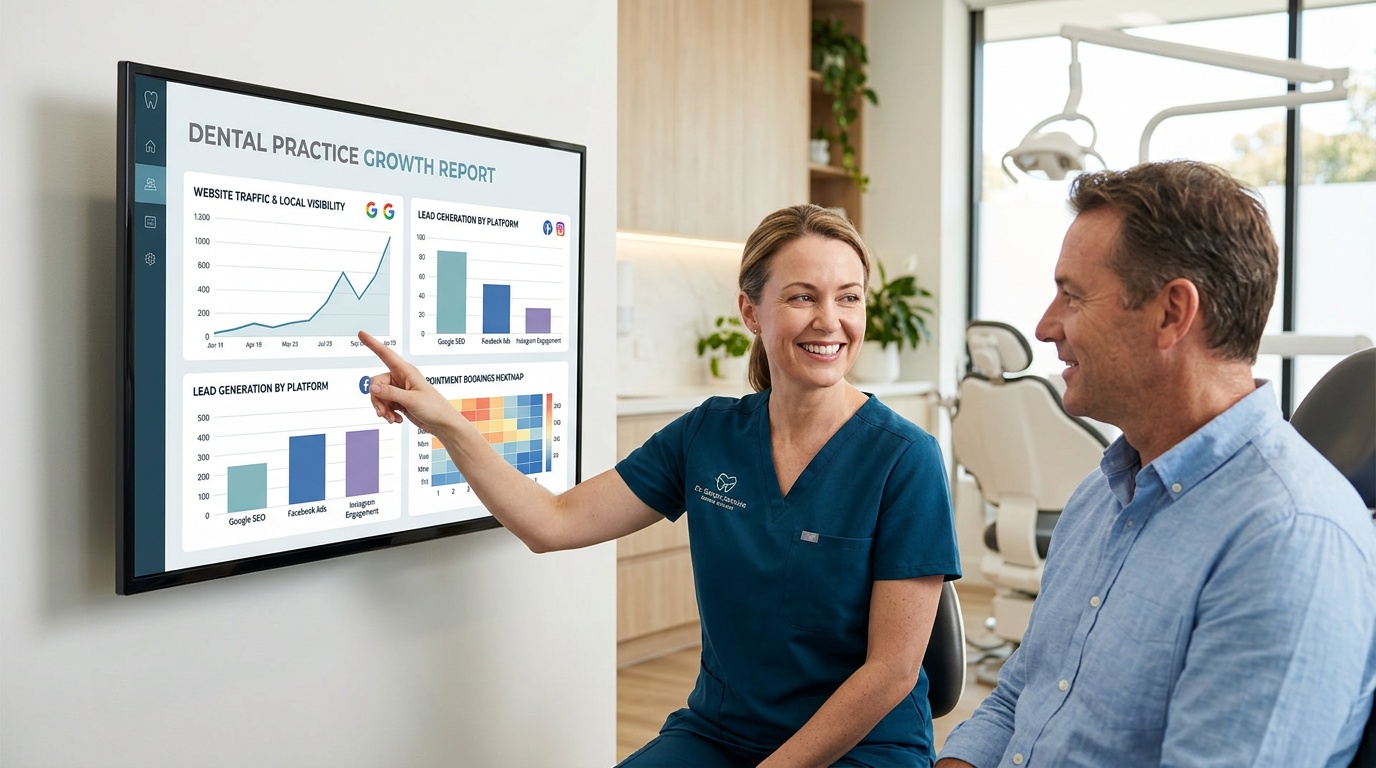
Public feedback and accurate practice information can support local visibility, but visibility does not guarantee enquiries. A profile that receives views but few calls may need clearer treatment information, stronger booking prompts, better availability details or a more useful mobile experience.
How Can You Conduct a Free DIY Dental Reputation Audit?


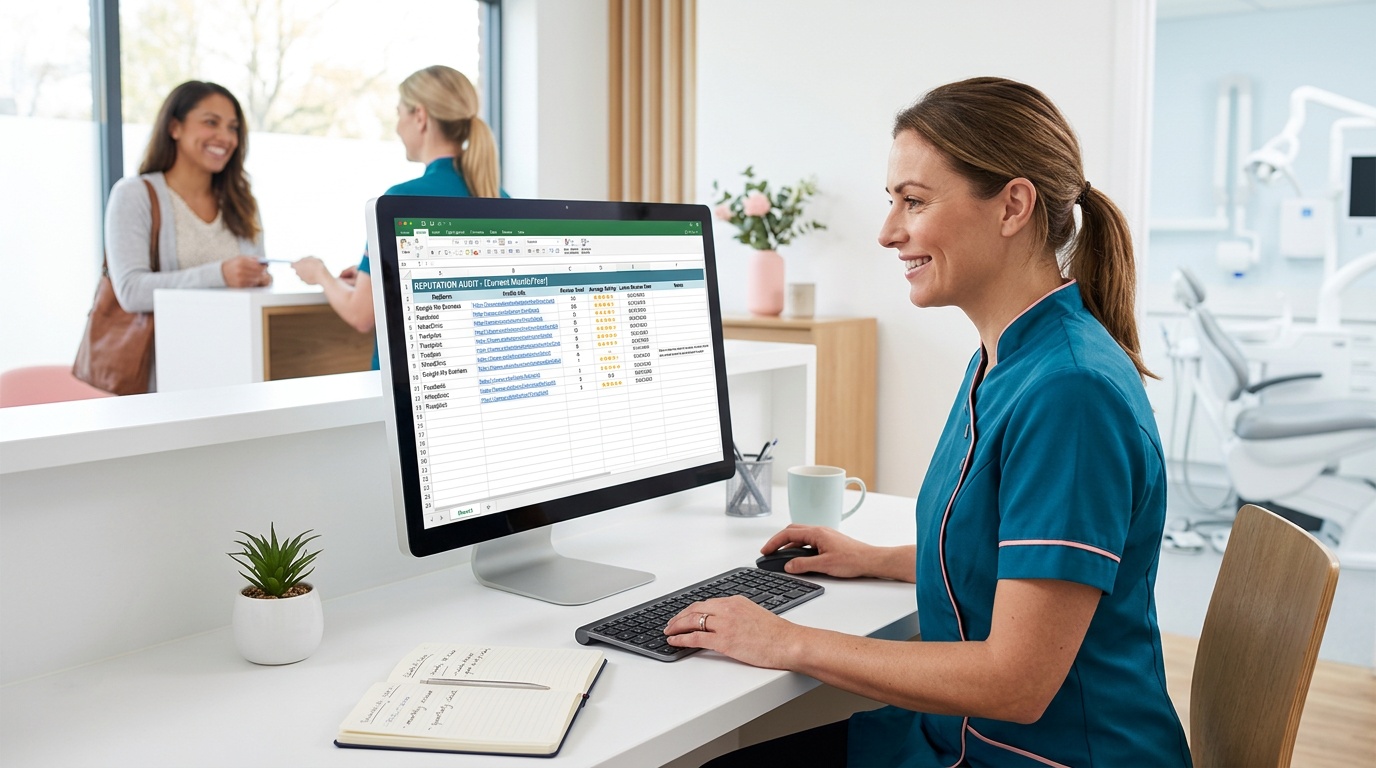

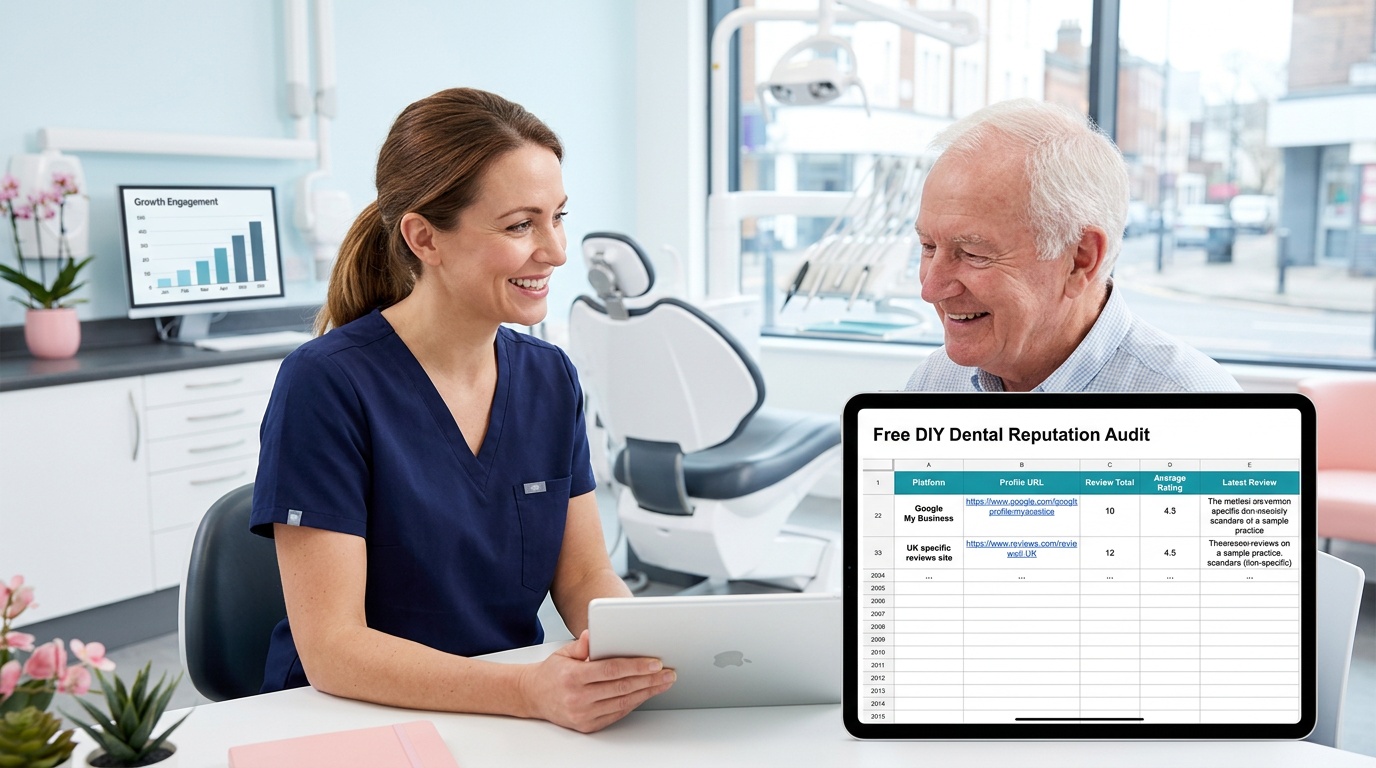

Use a dated spreadsheet so the audit can be repeated monthly or quarterly. Record the platform, profile URL, review total, average rating, latest review date, unanswered reviews and recurring patient themes. Check beyond the first page of Google results, particularly if the practice has several clinicians or locations.
Step 1: Check Your Google Business Profile
- Confirm the practice name, address, telephone number, opening hours, website and appointment link.
- Record available data for searches, profile views, calls, website visits, direction requests and booking actions.
- Check the primary category, treatment services, photographs, posts and accessibility information.
- Tag recurring subjects such as implants, Invisalign, emergency care, fees, waiting times and staff communication.
- List unanswered feedback and assign one team member to manage responses.
Step 2: Audit UK Healthcare and Local Directories
Search the practice name, dentist names and location on relevant healthcare, local and social platforms. Check that each listing is claimed, accurate and linked to the correct practice. Flag duplicate profiles, old addresses, inconsistent telephone numbers and pages that no longer represent the practice.
Step 3: Measure Review Volume, Recency and Response Rate
- Volume: the total number of reviews on each platform.
- Recency: how recently patients have left feedback.
- Response rate: the number of answered reviews divided by the total number of reviews.
- Sentiment: the repeated positive, neutral or negative topics in patient comments.
A high rating with no recent feedback can create a different impression from a slightly lower rating supported by regular, detailed reviews. Treat the audit like a dental chart: the value comes from the pattern over time, not one isolated measurement.
Which Free Reputation Reporting Tools Should UK Dentists Compare?
No single free tool shows the whole picture. Google Business Profile provides first-party performance data, while review platforms and directories reveal public feedback and listing accuracy. A spreadsheet can join these findings, but it will not automatically connect reputation activity with booked consultations.
| Source | What to check | Main limitation |
|---|---|---|
| Google Business Profile | Views, calls, searches, reviews, photos and profile accuracy | Does not show every external review source or full booking quality |
| Review platforms | Ratings, review themes, recency and responses | Feedback is split across different accounts |
| Healthcare directories | Clinician details, location, contact information and profiles | Listings may be duplicated or out of date |
| Manual spreadsheet | Combined baseline, owners and follow-up actions | Requires regular staff time and careful version control |
What Are the Strengths and Limits of a Free Audit?
A free audit needs no software budget and gives a practice direct access to public patient feedback. Its weakness is execution: staff must gather data, interpret themes and track changes across platforms. The workload grows quickly for multi-site groups, practices with several clinicians or teams running active marketing campaigns.
How Should Practices Track Invisalign and Dental Implant Reviews?
A practice-wide rating can hide differences between treatments. Tag review text by procedure, including dental implants, Invisalign, composite bonding, emergency appointments and general check-ups. This helps owners compare patient concerns with the treatments they want to grow.
Look for comments about consultation quality, explanations of costs, treatment coordination, appointment delays and aftercare. These themes can guide landing-page content, staff training and follow-up processes. Practices seeking more Invisalign enquiries can also consider Invisalign marketing and Invisalign lead generation services.
How Can UK Practices Respond to Reviews Under GDC, CQC and GDPR Requirements?






Keep every public reply professional, factual and confidential. A practice can acknowledge a patient’s experience without confirming attendance, treatment, diagnosis or other clinical details. Invite the reviewer to contact the practice through a private channel, and ask a suitably trained team member to review sensitive replies before publication.
Do not argue about clinical care in public or reveal information that could identify a patient. Practices should check current guidance from the relevant regulators and obtain appropriate professional advice for difficult complaints. Research on online reviews dental practice can provide additional context when assessing patient feedback.
When Should a Dental Practice Move From Free Tools to Specialist Support?
Free checks are suitable for establishing a baseline. Specialist support becomes sensible when monitoring is irregular, several clinicians share one profile, multiple branches need separate reporting or the team cannot connect reputation activity with consultation bookings.
A dental SEO strategy can identify visibility issues and website changes that may improve patient action. Reputation findings are most useful when combined with accurate treatment pages, clear calls to action and a reliable enquiry follow-up process.
Request Dominate Dental’s free online reviews reputation report for an external assessment of your practice’s public reputation and practical opportunities for improvement.
References
- PubMed search: online reviews and dental practice research
Frequently Asked Questions About Dental Reputation Reports
What should a dental reputation report include? It should cover review sources, volume, recency, themes, responses, directory accuracy, profile visibility, patient sentiment and actions linked to enquiries.
How can I check my dental practice’s online reputation for free? Search the practice and each clinician on major review and healthcare platforms. Record listing accuracy, recent feedback, unanswered comments and recurring service themes in one dated worksheet.
When is paid support justified? Specialist help is appropriate when manual monitoring consumes staff time, locations need separate oversight or the practice cannot identify which reputation and website changes generate consultations.