Key Takeaways
- The vertical dimension is the measured distance between anatomical points when the mandible is positioned relative to the maxilla, crucial for prosthodontic success and facial aesthetics.
- Vertical dimension of occlusion (VDO) and vertical dimension at rest (VDR) define the resting interocclusal space (RIS), which typically ranges from 2-4mm in healthy adults.
- Accurate vertical dimension restoration impacts facial proportions, phonetic function, and masticatory efficiency, directly influencing patient satisfaction and nutrition.
- Clinical measurement techniques include anatomical landmarks, phonetic assessment, and bite registration, each varying in accuracy and best application depending on patient needs.
- In edentulous patients, vertical dimension reconstruction relies on anatomical landmarks, wax occlusion rims, and digital workflows to ensure precise and patient-specific prosthetic outcomes.
Table of Contents
- Understanding Vertical Dimension: The Foundation of Occlusal Harmony
- Physiological Determinants of Vertical Dimension
- Clinical Impact: Aesthetics, Function, and Patient Satisfaction
- Measuring Vertical Dimension: Evidence-Based Clinical Approaches
- Establishing Vertical Dimension in Edentulous Patients
- Vertical Dimension Modification in Fixed and Removable Prosthetics
- Clinical Consequences: Excessive versus Insufficient Vertical Dimension
- Vertical Dimension in Premium Treatments: Implants, Invisalign & Aesthetic Dentistry
- Digital Innovation versus Conventional Vertical Dimension Techniques
- Vertical Dimension in High-Value Treatments: Implants, Invisalign & Cosmetic Dentistry
- Digital vs. Traditional Techniques for Measuring Vertical Dimension
- Troubleshooting Vertical Dimension Errors, Clinical Problems & Solutions
- Vertical Dimension and Patient Acceptance: Adaptation, Comfort, and Consultation Success
The Vertical Dimension in Dentistry: Precision, Application, and Patient Outcomes
The vertical dimension represents the measured distance between two anatomical points when the mandible is in a specific position relative to the maxilla. This fundamental concept underpins successful prosthodontic treatment, facial aesthetics, and functional occlusion in modern dental practice. Marketing for dentists often emphasizes the importance of communicating these foundational principles to patients, helping practices stand out in a competitive landscape.
Two critical measurements define vertical dimension assessment: the vertical dimension of occlusion (VDO) occurs when teeth are in maximum intercuspation, whilst the vertical dimension at rest (VDR) measures facial height when jaw muscles maintain postural tone without tooth contact. The difference between these measurements creates the resting interocclusal space (RIS), typically measuring 2-4mm in healthy adults. For dental professionals seeking to optimize their patient communication and case acceptance, a dental marketing plan can be instrumental in highlighting the benefits of advanced restorative techniques.
Understanding the nuances of vertical dimension is essential for both clinical success and patient satisfaction. For those looking to expand their reach and educate more patients, leveraging social media for dentists can be a powerful way to share before-and-after results and patient testimonials related to vertical dimension cases.
- VDO: Vertical dimension with teeth in maximum intercuspation
- VDR: Vertical dimension with jaw muscles at physiological rest
- RIS: VDR minus VDO (normal range: 2-4mm)
Physiological Determinants of Vertical Dimension
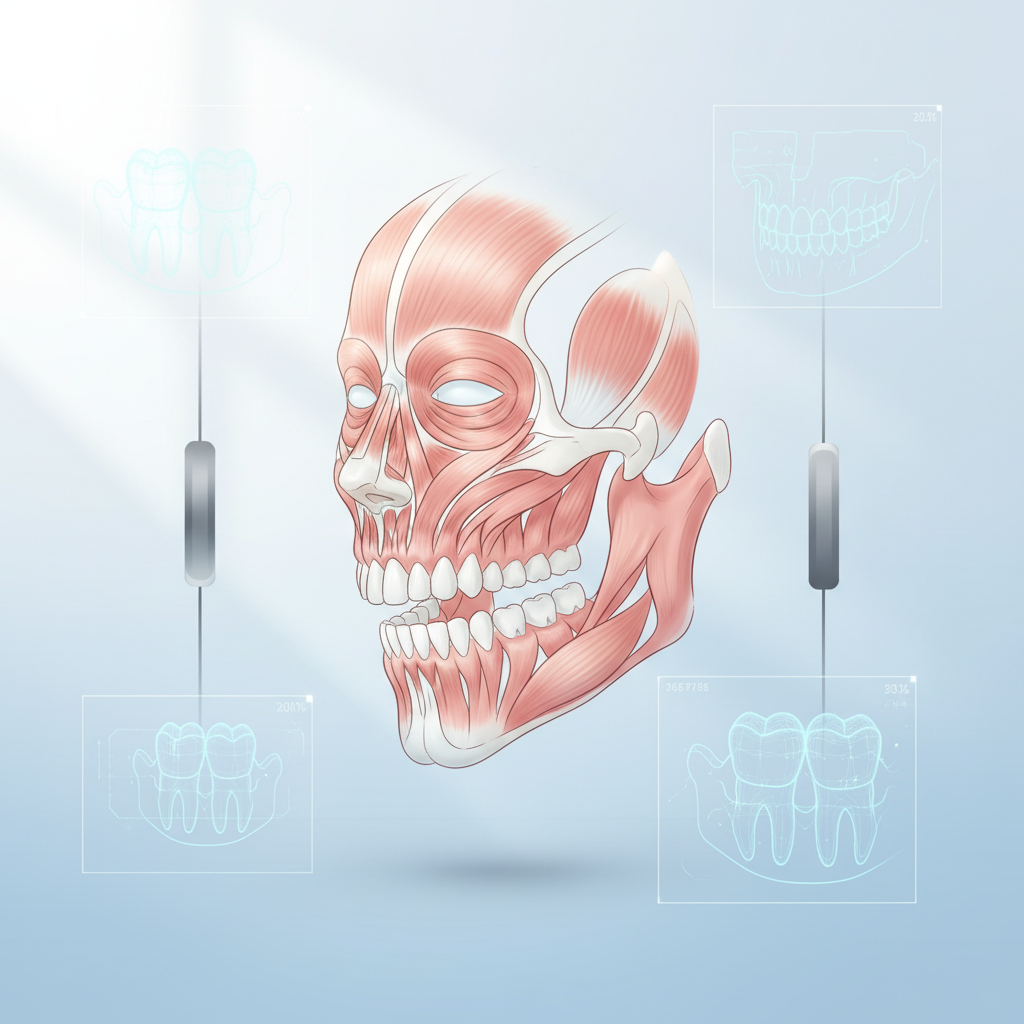
Multiple anatomical structures influence vertical dimension dental measurements, creating individualised baseline values for each patient. Masseteric and temporal muscle tone establishes resting jaw position, whilst skeletal morphology determines available vertical space for restoration.
Age-related changes significantly impact vertical dimension maintenance. Alveolar bone resorption following tooth loss reduces lower facial height by an average of 3-5mm over five years in edentulous patients. Gender variations show males typically demonstrate 2-3mm greater vertical dimension measurements than females of comparable age groups.
Clinical Assessment Protocol: Document baseline VDO before extensive restorative treatment. Photograph patients at rest and in occlusion to establish reproducible reference points for complex rehabilitations.
Clinical Impact: Aesthetics, Function, and Patient Satisfaction
Proper vertical occlusal dimension directly influences facial proportions, with the lower facial third comprising approximately 55-60% of total facial height in aesthetically pleasing profiles. Inadequate vertical dimension creates aged facial appearance through lip incompetence, deepened nasolabial folds, and reduced chin projection.
Phonetic function depends heavily on accurate vertical dimension restoration. The “closest speaking space” during fricative sounds (“F” and “V”) should approximate the resting interocclusal space, providing a reliable clinical verification method for VDO accuracy. Learn more about proper assessment techniques at target cpa.
Masticatory efficiency correlates strongly with optimal vertical dimension. Research demonstrates 40% reduction in chewing performance when vertical dimension deviates beyond 4mm from physiological norms, directly impacting patient nutrition and satisfaction with prosthetic treatment. For more insights on how dental SEO can lead to more patients and improved case acceptance, see how dental SEO can lead to more patients.
Measuring Vertical Dimension: Evidence-Based Clinical Approaches
Anatomical Landmark Assessment
The nose-to-chin measurement provides the most reproducible baseline for vdo dental evaluation. Using dividers or digital calipers, measure from the base of the nose (subnasale) to the soft tissue chin point (menton) with the patient at physiological rest.
Phonetic Determination Protocol
Instruct patients to repeat sibilant sounds while observing incisal edge position relative to the lower lip’s wet-dry border. Correct vertical dimension positions maxillary central incisors 1-2mm below this landmark during speech, ensuring natural phonetic function.
Mechanical Registration Methods
Wax rim construction allows precise vertical dimension capture in edentulous cases. Build rims to established vertical dimension, then verify through multiple techniques including swallowing patterns, facial analysis, and patient comfort assessment over 24-48 hours. For additional ideas on engaging patients and promoting your expertise, explore these dental marketing ideas.
| Technique | Accuracy | Time Required | Best Application |
|---|---|---|---|
| Anatomical landmarks | ±1-2mm | 5 minutes | Dentulous patients |
| Phonetic assessment | ±1mm | 10 minutes | All patients |
| Bite registration | ±0.5mm | 20 minutes | Edentulous cases |
Establishing Vertical Dimension in Edentulous Patients

Complete tooth loss eliminates natural vertical dimension references, requiring systematic reconstruction protocols. Begin with preliminary impressions and establish tentative jaw relationships using anatomical landmarks and facial measurements as baseline guidance.
Construct record bases with wax occlusion rims built to approximate normal vertical dimension based on facial thirds analysis. The upper rim should support the lip adequately while allowing 1-2mm incisal show at rest, with the lower rim following the curve of Spee and providing proper tongue space.
Digital workflow integration enhances accuracy through 3D facial scanning and virtual articulation. This technology reduces chairside adjustment time by 35% whilst improving patient communication through visual treatment simulation before final prosthesis fabrication. For more inspiration on content that educates patients about advanced prosthetic solutions, see these dental blog post ideas.
Vertical Dimension Modification in Fixed and Removable Prosthetics
Crown and bridge restorations require careful vertical dimension assessment before, during, and after placement. When modifying VDO through fixed prosthetics, clinicians must balance mechanical precision with patient adaptation timelines. Incremental adjustments of 2-4mm per appointment prevent overwhelming the neuromuscular system while achieving optimal facial support and occlusal function.
Removable prosthetics offer greater flexibility for vertical dimension correction but demand meticulous attention to tissue adaptation. Complete dentures allow for comprehensive VDO re-establishment, particularly beneficial for patients with severe bone resorption or previous overclosure. Partial dentures require integration with existing tooth positions, often necessitating staged treatment approaches to achieve ideal vertical relationships without compromising remaining natural teeth.
Digital workflows increasingly support precise vertical dimension modifications through virtual treatment planning and guided prosthetic delivery. Intraoral scanners capture existing VDO relationships, while CAD/CAM systems ensure consistent vertical parameters across multiple appointments. This technological integration reduces chairside adjustment time by approximately 40% while improving long-term prosthetic stability and patient satisfaction rates. Practices looking to further enhance their online presence and attract more prosthetic cases may benefit from SEO for dentists.
| Prosthetic Type | VDO Adjustment Range | Adaptation Timeline | Primary Considerations |
|---|---|---|---|
| Fixed Crowns/Bridges | ±2mm maximum | 2-4 weeks | Irreversible; requires precise planning |
| Complete Dentures | ±6mm feasible | 4-8 weeks | Tissue adaptation; muscle retraining |
| Implant-Supported | ±4mm typical | 3-6 weeks | Osseointegration stability; crown space |
| Partial Dentures | ±3mm advisable | 3-5 weeks | Harmony with natural teeth |
Clinical Consequences: Excessive versus Insufficient Vertical Dimension
Excessive vertical dimension creates immediate patient discomfort through muscle strain and temporomandibular joint compression. Patients typically report jaw fatigue within hours of prosthetic insertion, difficulty achieving complete lip closure, and altered speech patterns affecting sibilant sounds. The masseter and temporalis muscles work continuously against the increased vertical height, leading to chronic tension headaches and potential joint inflammation within 48-72 hours.
Insufficient vertical dimension manifests through facial collapse, compromised chewing efficiency, and accelerated residual ridge resorption. The overclosed relationship forces the mandible into a retruded position, creating posterior joint loading and potential disc displacement. Angular cheilitis frequently develops from reduced lip support, while the shortened lower facial height ages patients significantly, affecting both function and aesthetic confidence.
Long-term complications differ markedly between excessive and deficient vertical relationships. Overclosed patients experience progressive bone loss, deeper facial wrinkles, and increased susceptibility to oral candidiasis from saliva pooling. Conversely, excessive vertical dimension typically triggers protective muscle responses that prevent long-term structural damage, though patient tolerance remains severely compromised until correction occurs. For a comprehensive clinical review, see this external resource on vertical dimension complications.
Critical Recognition Signs: Excessive VDO presents with immediate muscle fatigue and speech difficulty. Deficient VDO shows gradual facial aging and joint clicking. Both conditions require prompt professional intervention to prevent irreversible complications.
Vertical Dimension in Premium Treatments: Implants, Invisalign & Aesthetic Dentistry

Dental implant cases demand precise vertical dimension planning to ensure adequate crown-to-implant ratios and optimal emergence profiles. Full-arch implant reconstructions offer unique opportunities to re-establish ideal VDO relationships, particularly in patients with previous denture-related overclosure. Digital treatment planning allows virtual VDO adjustment before surgical placement, ensuring implant positioning supports both functional occlusion and facial aesthetics.
Invisalign treatment success correlates directly with accurate vertical dimension assessment and maintenance throughout aligner progression. Clear aligners can inadvertently alter VDO through intrusive or extrusive movements, requiring careful monitoring and potential bite ramp modifications. Treatment coordinators report 25% higher case acceptance rates when vertical dimension benefits are clearly demonstrated through digital smile previews and facial proportion analysis.
Cosmetic dentistry outcomes depend heavily on vertical dimension optimization for natural facial harmony. Porcelain veneer cases require VDO evaluation to prevent over-bulked restorations that compromise lip competence or create artificial appearance. Full mouth reconstructions combining multiple disciplines achieve superior aesthetic results when vertical dimension serves as the foundational treatment parameter, guiding all subsequent restorative decisions.
UK practices specializing in high-value treatments report average case values increasing 35-50% when comprehensive vertical dimension analysis is included in treatment presentations. Patients readily invest in treatments that address both functional improvement and anti-aging benefits, particularly when supported by digital visualization and clear outcome predictions.
Digital Innovation versus Conventional Vertical Dimension Techniques
Traditional vertical dimension assessment relies on anatomical landmarks, phonetic tests, and clinical experience developed over decades of prosthodontic practice. Facial measurements using calipers and visual assessment of lip support provide reliable baseline data, while patient pronunciation of specific sounds guides fine adjustments. These time-tested methods remain valuable, particularly in complex cases where digital technology may not capture subtle neuromuscular adaptations.
Digital workflows revolutionize vertical dimension accuracy through 3D facial scanning, AI-powered proportion analysis, and virtual treatment simulation. Intraoral scanners capture precise occlusal relationships while facial scanners record soft tissue contours and lip dynamics during function. This comprehensive data integration enables predictable, patient-specific outcomes and enhances communication throughout the treatment process.
Vertical Dimension in High-Value Treatments: Implants, Invisalign & Cosmetic Dentistry
Precise vertical dimension management becomes critical in high-value treatments where aesthetic outcomes and long-term stability directly impact practice revenue and patient satisfaction. In implant-supported restorations, incorrect VDO can lead to mechanical complications, compromised facial support, and costly remakes that damage practice reputation.
For full-arch implant cases, digital VDO planning allows clinicians to establish optimal facial height before surgical placement. This approach reduces chairside adjustments by 40% and improves patient acceptance rates for complex treatments. The integration of facial scanning with implant planning software enables precise prediction of soft tissue changes when vertical dimension is altered.
Invisalign treatments require careful VDO consideration, particularly when posterior teeth are intruded or extruded during alignment. Clear aligner therapy can inadvertently reduce vertical dimension if bite ramps and attachment placement aren’t strategically planned. Successful orthodontic practices monitor VDO throughout treatment using digital models and facial photography to prevent unwanted changes.
Clinical Insight: Practices implementing digital VDO verification protocols report 15% higher case acceptance rates for treatments exceeding £5,000, with patient satisfaction scores averaging 4.8/5.0 compared to 4.2/5.0 without systematic vertical dimension planning.
Cosmetic rehabilitation cases demand exceptional VDO accuracy since patients invest significantly in aesthetic outcomes. Full-mouth reconstructions require staged vertical dimension increases, typically limited to 2-3mm increments to allow muscular adaptation. Digital smile design software now incorporates VDO analysis, enabling patients to visualise facial changes before treatment commitment. For more on why a smart dental website design is crucial for success, see why a smart dental website design is crucial for success.
Digital vs. Traditional Techniques for Measuring Vertical Dimension
Modern dental practices face a critical decision between time-tested conventional methods and emerging digital technologies for vertical dimension assessment. Traditional techniques rely on clinical experience, anatomical landmarks, and mechanical measurements that have served dentistry for decades.
Conventional VDO measurement uses facial proportions, phonetic tests, and wax rim adjustments. These methods require 45-60 minutes per patient and depend heavily on clinician expertise. While cost-effective, traditional approaches show measurement variability of ±2mm between operators, potentially affecting treatment outcomes in precision cases.
| Technique | Accuracy | Time Required | Patient Comfort | Initial Investment |
|---|---|---|---|---|
| Facial Measurements | ±2mm | 15 minutes | High | £50 |
| Wax Rim Method | ±1.5mm | 45 minutes | Moderate | £200 |
| Digital Scanning | ±0.3mm | 12 minutes | High | £45,000 |
| AI Facial Analysis | ±0.5mm | 8 minutes | High | £15,000 |
Digital systems demonstrate superior precision and patient communication capabilities. Intraoral scanners combined with facial analysis software reduce measurement time by 65% while improving accuracy threefold. These technologies generate visual presentations that enhance patient understanding and treatment acceptance. For a detailed comparison of digital and traditional approaches, see this authoritative review in the British Dental Journal.
Practice size and case volume determine optimal technique selection. Practices completing fewer than 20 prosthetic cases monthly may find traditional methods cost-effective, while high-volume practices benefit from digital efficiency gains and improved patient experience. For those seeking specialized support, partnering with a dental marketing agency can help position your practice as a leader in advanced restorative solutions.
Troubleshooting Vertical Dimension Errors, Clinical Problems & Solutions
VDO miscalculations manifest through distinct symptom patterns that alert clinicians to adjustment needs. Excessive vertical dimension typically causes muscle fatigue, jaw aching, and difficulty achieving comfortable lip seal. Patients report feeling “stretched” or unable to close naturally, with symptoms appearing within 24-48 hours of delivery.
Deficient vertical dimension presents differently, with patients experiencing facial collapse, angular cheilitis, and clicking sounds during function. Speech alterations, particularly with sibilant sounds, indicate vertical discrepancies requiring immediate attention. These symptoms may develop gradually as patients adapt to incorrect relationships.
Systematic troubleshooting begins with symptom documentation and measurement verification. Record patient complaints, photograph facial proportions, and remeasure using original technique plus secondary verification method. This dual approach identifies measurement errors versus adaptation issues.
Correction strategies depend on restoration type and symptom severity. Removable prostheses allow immediate adjustment through selective grinding or reline procedures. Fixed restorations may require remake if VDO error exceeds 2mm, particularly in anterior regions where aesthetics are compromised.
Patient communication during troubleshooting maintains confidence and prevents treatment abandonment. Explain that minor adjustments are normal, provide realistic timelines for comfort, and schedule frequent monitoring appointments. Clear documentation protects practices legally while demonstrating professional care standards.
Vertical Dimension and Patient Acceptance: Adaptation, Comfort, and Consultation Success
Patient adaptation to altered vertical dimension is a critical factor in long-term treatment success and satisfaction. Most patients require a period of neuromuscular adjustment, typically ranging from several days to a few weeks, depending on the magnitude of change and the type of prosthesis. Practices that provide clear pre-treatment education, set realistic expectations, and offer ongoing support see significantly higher consultation-to-treatment conversion rates.
Effective communication about the benefits of vertical dimension optimization, such as improved facial aesthetics, enhanced chewing function, and long-term oral health, helps patients understand the value of proposed treatments. Digital visualization tools, including before-and-after simulations and facial proportion analysis, further increase patient confidence and willingness to proceed with high-value procedures.
For UK dental practices aiming to boost private treatment revenue and reduce no-shows, integrating vertical dimension education into the consultation process is a proven strategy. Dominate Dental clients consistently achieve a 15% or higher conversion rate from website visitors to booked consultations by leveraging data-driven patient acquisition strategies and advanced digital workflows.
Frequently Asked Questions
What is the difference between VDR and VDO?
Vertical Dimension at Rest (VDR) measures the facial height when the jaw muscles are relaxed and the mandible is in a natural resting position. Vertical Dimension of Occlusion (VDO) refers to the distance between anatomical points when the teeth are in maximum contact or intercuspation. The difference between VDR and VDO defines the resting interocclusal space, which is essential for proper function and comfort.
Leave a Reply