/* Universal Post Styles */
.blog-post-container {
color: #333 !important;
font-family: -apple-system, BlinkMacSystemFont, “Segoe UI”, Roboto, Helvetica, Arial, sans-serif !important;
font-size: 16px !important;
line-height: 1.7 !important;
width: 100%;
max-width: 100%;
box-sizing: border-box;
}
.blog-post-container h2 { margin: 2.5em 0 1em !important; line-height: 1.25 !important; }
.blog-post-container h3 { margin: 2em 0 0.8em !important; line-height: 1.3 !important; }
.blog-post-container h4 { margin: 1.8em 0 0.7em !important; line-height: 1.4 !important; }
.blog-post-container p { margin-bottom: 1.25em !important; }
.blog-post-container ul, .blog-post-container ol { margin: 0 0 1.6em 1.4em !important; padding: 0 !important; }
.blog-post-container li { margin-bottom: 0.55em !important; }
.blog-post-container blockquote {
margin: 1.8em 0 !important;
padding: 1.2em 1.6em !important;
border-left: 4px solid #ccc !important;
background: #f9f9f9 !important;
}
/* Key Takeaways */
.blog-post-container .key-takeaways {
background: #f0f7ff;
border-left: 4px solid #1a73e8;
padding: 1em 1.5em;
margin: 1.5em 0;
border-radius: 0 8px 8px 0;
}
.blog-post-container .key-takeaways h4 {
margin-top: 0 !important;
margin-bottom: 0.8em !important;
color: #1a73e8;
}
.blog-post-container .key-takeaways ul {
margin-bottom: 0 !important;
}
/* Eyebrow label */
.blog-post-container .eyebrow-label {
text-transform: uppercase;
letter-spacing: 1px;
color: #888;
font-size: 0.8em;
margin-bottom: 8px;
font-weight: 500;
}
/* Callouts */
.blog-post-container .callout,
.blog-post-container .quick-answer,
.blog-post-container .highlight-box {
padding: 20px 20px 20px 50px !important;
margin: 2em 0 !important;
border-left: 5px solid;
border-radius: 5px !important;
position: relative;
}
.blog-post-container .callout-tip,
.blog-post-container .quick-answer {
display: block !important;
position: relative !important;
padding: 16px 20px 16px 56px !important;
margin: 1.5em 0 !important;
border-left: 5px solid #2e77b5 !important;
background: #f0f7ff !important;
border-radius: 6px !important;
line-height: 1.6 !important;
}
.blog-post-container .callout-info,
.blog-post-container .highlight-box {
border-color: #3498db !important;
background: #eaf5fc !important;
}
.blog-post-container .callout-warning {
border-color: #c03e26 !important;
background: #fff4f2 !important;
}
/* Pros/Cons */
.blog-post-container .pros-cons-list {
display: grid !important;
grid-template-columns: 1fr 1fr !important;
gap: 20px !important;
margin: 2em 0 !important;
padding: 0 !important;
}
.blog-post-container .pros-list {
background: #f0fff4 !important;
border: 1px solid #c6f6d5 !important;
padding: 20px !important;
border-radius: 8px !important;
}
.blog-post-container .pros-list h4 { color: #22c55e !important; }
.blog-post-container .cons-list {
background: #fff5f5 !important;
border: 1px solid #fed7d7 !important;
padding: 20px !important;
border-radius: 8px !important;
}
.blog-post-container .cons-list h4 { color: #ef4444 !important; }
/* CTA Button */
.blog-post-container .cta-button {
display: inline-block;
background: #d64368;
color: #FFFFFF;
font-size: 18px;
font-weight: 700;
line-height: 1;
padding: 14px 32px;
border-radius: 32px;
letter-spacing: 0.5px;
text-decoration: none;
border: none;
outline: none;
transition: background-color 0.2s ease-in-out;
}
.blog-post-container .cta-button:hover { background: #0056b3; }
/* Author Bio – spacing handled by author-bio-wrapper */
.blog-post-container .author-bio {
/* No border here – wrapper provides the single separator */
}
/* Table responsiveness */
.blog-post-container table {
width: 100% !important;
max-width: 100% !important;
table-layout: fixed !important;
border-collapse: collapse !important;
font-size: 0.75em;
}
.blog-post-container th, .blog-post-container td {
padding: 0.6em 0.8em !important;
white-space: normal !important;
word-break: normal !important;
overflow-wrap: break-word !important;
}
@media (max-width: 749px) {
.blog-post-container .pros-cons-list { grid-template-columns: 1fr !important; }
}
@media (max-width: 900px) {
.blog-post-container table {
display: block;
overflow-x: auto;
font-size: 0.65em;
}
}
dental advertising cost
Dental advertising cost in the UK comes down to three things: the channel (Google Ads, Meta, SEO), your location and competition, and how the campaigns are managed. The number that actually matters is not monthly spend but cost per attended consultation, because that is what tells you whether the budget is genuinely profitable.
Understanding Dental Advertising Costs in the UK
Average CPC and CPL Breakdown for Key Dental Keywords
Google Ads cost-per-click (CPC) for competitive dental terms ranges from £2.50 to £8.00 in metropolitan areas. “Dental implants London” typically commands £6–£8 per click, whilst “Invisalign near me” sits at £4–£6. Cost-per-lead (CPL) varies significantly: emergency dentistry generates leads at £25–£40, cosmetic consultations at £60–£120, and implant enquiries at £100–£180. Facebook Ads deliver lower CPCs (£0.80–£2.50) but often require larger volumes to match Google’s conversion rates.
Factors Driving Costs for Invisalign and Implant Campaigns
Location dramatically impacts dental advertising cost. Central London practices pay 40–60% more than Birmingham or Manchester counterparts for identical keywords. Ad quality scores influence pricing: well-optimised campaigns with relevant landing pages can achieve 30–50% lower CPCs. Competition often spikes during January and September when patient intent peaks. Treatment value also matters; implant campaigns can justify higher CPLs because average case values exceed £3,000, whilst teeth whitening’s lower margins demand tighter cost control.
Real 2026 Benchmarks from UK Dental Practices
| Treatment Type | Avg CPC (Google) | Avg CPL | Typical Conversion Rate |
|---|---|---|---|
| Dental Implants | £6.50 | £140 | 8–12% |
| Invisalign | £5.20 | £85 | 10–15% |
| Cosmetic Dentistry | £4.80 | £95 | 9–13% |
| Emergency Dental | £3.20 | £35 | 18–25% |
Key Insight: Practices achieving below-average CPLs consistently use treatment-specific landing pages, rapid response systems for enquiries, and granular audience targeting rather than broad demographic campaigns.
Google Ads vs Facebook Ads: Which Delivers Better ROI for Dentists?
Google Ads Performance for High-Intent Searches
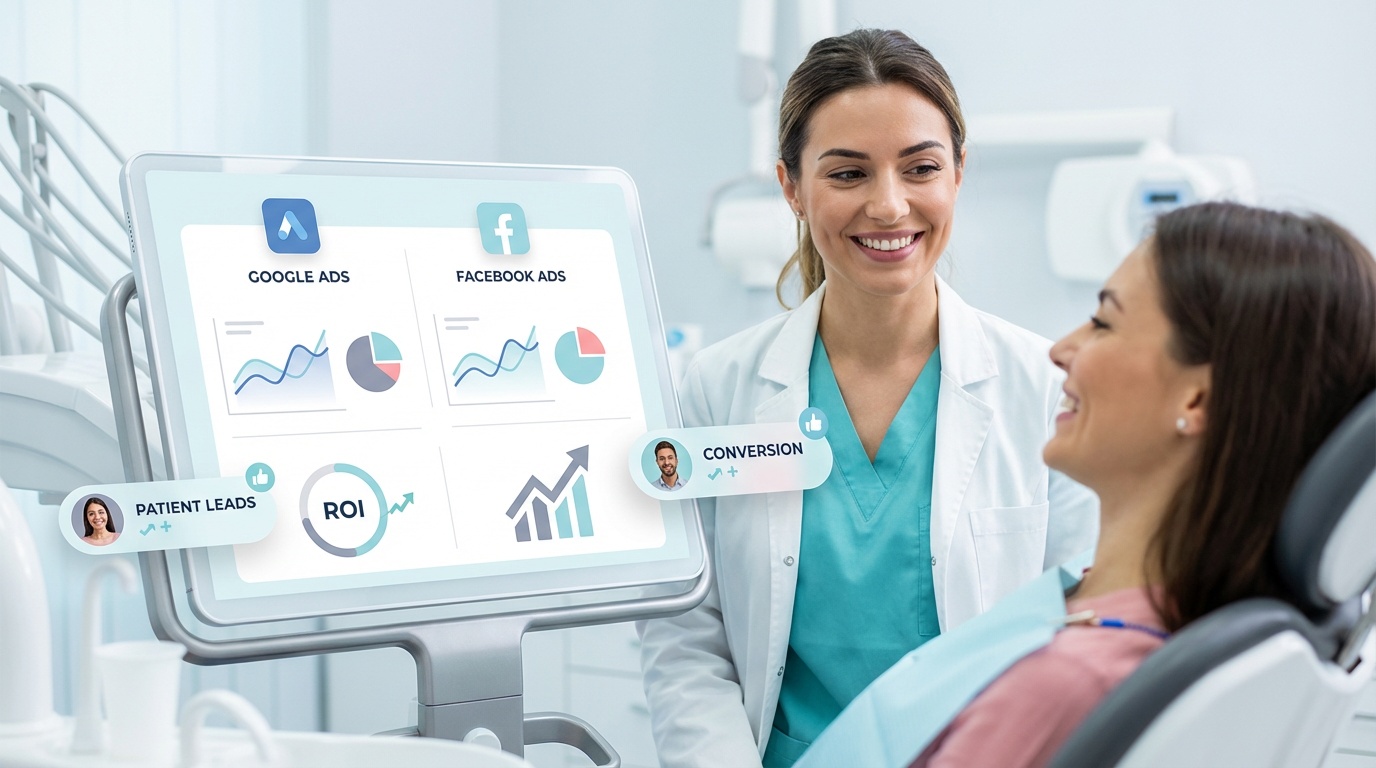
Google dominates for capturing patients actively seeking treatment. Search campaigns can convert at 10–18% for implants and Invisalign because users have already decided they need care. The platform excels at local targeting through location extensions and call-only ads, driving same-day bookings. Patient acquisition costs run higher, but lifetime value can justify the investment when practices convert consultations effectively.
Facebook Ads Strengths in Cosmetic and Elective Treatments
Facebook works best for awareness-stage marketing and cosmetic procedures patients do not yet know they want. Carousel ads showcasing before-and-after transformations can generate engagement at lower costs. Retargeting website visitors often yields 3–5x better conversion rates than cold audiences. The platform suits practices building longer-term pipelines rather than filling immediate appointment gaps.
Head-to-Head Comparison with UK Case Studies
A Manchester practice spending £3,000 monthly split 70% Google and 30% Facebook generated 42 qualified leads: 31 from Google (£68 CPL) and 11 from Facebook (£82 CPL). Google delivered nine booked treatments worth £27,000, whilst Facebook produced three bookings worth £8,500. This blended approach captured both active searchers and educated prospects through nurture sequences, showing why many successful practices do not rely on a single platform.
How Much Should Your Dental Practice Budget for Advertising?
Recommended Spend as Percentage of Revenue
Established dental practices should allocate 5–8% of gross revenue to marketing, with advertising forming 60–70% of that budget. Practices prioritising growth or launching new services often invest 10–12%. A practice generating £800,000 annually would typically spend £40,000–£64,000 on total marketing, with £24,000–£45,000 directed to paid advertising. Newer practices or those entering competitive markets may need 12–15% initially to build patient pipelines and establish market presence.
Patient Acquisition Costs by Channel and Treatment Type
Calculate your maximum acceptable cost per acquisition by working backwards from treatment value and conversion rates. If dental implants average £3,500 and your consultation-to-treatment rate is 40%, each consultation carries £1,400 in potential value. Spending £140–£280 per lead can remain profitable. Emergency dentistry with a £150 average value and 60% conversion supports a £30–£50 maximum CPL. Google Ads typically delivers lower volumes at higher intent, whilst Facebook often needs more lead volume but can cost less per enquiry.
Scaling Budgets for London, Manchester, and Birmingham Practices
| Practice Size | London Monthly Budget | Manchester/Birmingham Budget | Expected Monthly Leads |
|---|---|---|---|
| 3–5 Dentists | £3,500–£5,000 | £2,500–£3,500 | 35–50 |
| 6–10 Dentists | £6,000–£9,000 | £4,000–£6,000 | 55–85 |
| Multi-site Groups | £10,000+ | £7,000+ | 90–150+ |
Start with minimum viable budgets (£2,000–£3,000 monthly) to gather performance data before scaling. Increase spend by 20–30% month-on-month once you identify winning campaigns and confirm your team can handle enquiry volume without compromising conversion rates.
Maximise ROI: Proven Strategies to Lower Costs and Boost Conversions
Campaign Setup Tips for Invisalign and Dental Implant Marketing
Build separate campaigns for each treatment with tightly themed ad groups containing 5–10 closely related keywords. Use exact and phrase match types initially to control costs, then expand once you have identified high-performing terms. Write ad copy addressing specific patient concerns: “Dental implants from £2,495” or “Invisalign payment plans available” usually outperforms generic “quality dental care” messaging. Set location radius targeting to 5–10 miles for urban practices and 15–25 miles for suburban locations.
Integrating Ads with Dental SEO and Website Design
Paid advertising performs best when supported by optimised landing pages that load in under three seconds and feature clear calls to action above the fold. Include patient testimonials, treatment costs, and online booking options directly on landing pages rather than forcing visitors through multiple clicks. Coordinate SEO and paid campaigns by targeting different keyword variations: bid on high-intent commercial terms whilst building organic rankings for informational queries. Retarget website visitors who viewed treatment pages but did not book, using time-limited consultation offers where appropriate. For expert SEO support, explore our Dental SEO Services designed specifically for dental practices.
Tracking and Optimising for 3–8x Returns
High-ROI Tactics
- Call tracking numbers that show which keywords drive phone bookings
- Conversion tracking across online forms and appointment systems
- Weekly bid adjustments based on time of day and device performance
- A/B testing landing page headlines and contact form placement
Common Budget Drains
- Broad match keywords that attract irrelevant searches
- Sending all traffic to the homepage instead of treatment pages
- Ignoring negative keywords that filter unqualified clicks
- Running ads 24/7 when staff cannot answer enquiries promptly
Practices achieving 3–8x returns monitor cost per booked appointment, not just cost per lead. Track which campaigns generate patients who attend consultations and proceed with treatment, then shift budget towards the highest-value sources.
Why Partner with Dominate Dental for Dental Advertising Success

Our Track Record Generating 50+ Qualified Leads Monthly
Dominate Dental consistently delivers 50+ qualified consultations monthly for UK dental practices through data-driven campaigns optimised for high-value treatments. Our approach combines granular audience targeting, treatment-specific landing pages, and rapid lead-response systems that convert enquiries into booked appointments. With a 5.0 Google rating based on 18 reviews, we have a strong track record with practices across Greater London, Manchester, and Birmingham.
Seamless Integration of Ads, SEO, and Social Media
We coordinate paid advertising with dental SEO and social media marketing to create a joined-up patient acquisition system. Whilst your ads capture immediate demand, our SEO builds long-term organic visibility that can reduce overall dental advertising cost over time. This integrated approach keeps messaging consistent across channels and helps you get more value from every marketing pound invested. Our Free Social Media Report can help you understand your existing online presence and improve results.
Book Your Free Audit and Start Growing Today
Ready to transform your dental advertising results? Book a free audit with Dominate Dental to identify where your current campaigns are losing money and how to target 3–8x returns. Visit us at Grosvenor House, 11 St Paul’s Square, Birmingham B3 1RB, or schedule your consultation online today.
Verdict and Recommendations for Your Dental Advertising Investment
Successful dental advertising in 2026 means treating your marketing budget as a measurable investment with clear ROI targets. Practices achieving strong returns often combine Google Ads for demand capture with Facebook for pipeline development, allocate 5–8% of revenue to marketing (with 60–70% towards paid channels), and track cost per booked appointment rather than vanity metrics like impressions or clicks.
Your optimal dental advertising cost depends on treatment values and your conversion setup. A London implant practice with strong consultation-to-treatment rates can profitably spend £180 per lead because each conversion generates £3,500+ in revenue. A general dentistry practice targeting lower-value treatments must keep CPLs closer to £30–£50 to preserve margins. The key factor is not how much you spend, but whether your team converts enquiries efficiently and your campaigns filter for qualified prospects.
Start with £2,500–£3,500 monthly budgets split across Google and Facebook to establish baseline performance data. Run campaigns for at least 90 days before making major decisions, as dental treatment cycles can be longer than most consumer purchases. Focus first on your highest-value treatments where acquisition costs are easiest to justify, then expand to additional services once your conversion process is consistent.
Future Considerations for 2026 and Beyond
Expect continued CPC inflation in major metropolitan areas as more practices invest in digital advertising. Privacy changes affecting Facebook’s targeting capabilities will likely push more budget towards Google’s intent-based model. Practices investing now in first-party data collection through email lists and patient databases will gain an advantage as third-party targeting becomes more restricted.
Voice search optimisation and Local Services Ads will increasingly influence how patients discover dental practices. Prepare by keeping your Google Business Profile meticulously maintained and ensuring your website answers conversational queries patients speak rather than type. The practices thriving in 2027 and beyond will treat advertising as one component of an integrated patient acquisition system, not a standalone tactic.
Take Action Now: Audit your dental advertising cost against the benchmarks in this guide. If you are spending £2,000+ monthly but generating fewer than 25 qualified leads, your campaigns likely need optimisation. Dominate Dental specialises in turning underperforming advertising into predictable patient pipelines. Our team at Grosvenor House, 11 St Paul’s Square, Birmingham B3 1RB has helped UK practices target 3–8x returns through treatment-specific campaigns and conversion-focused strategy. Book your free audit today to see where your budget is leaking and how to fix it.
Leave a Reply