Category: Blog

  • Aesthetic Agency Guide 2026 – Proven Tips to Grow Your Dental Practice

    aesthetic agency

    Key Takeaways

    • An aesthetic agency integrates strategic marketing with intentional design to create visually appealing campaigns.
    • These agencies focus on brand coherence alongside driving measurable results.
    • Unlike traditional marketing agencies, aesthetic agencies prioritise beauty, value creation, and purposeful action.
    • Their goal is to generate qualified leads and conversions through their tailored approach.

    What Is an Aesthetic Agency?

    An aesthetic agency combines strategic marketing expertise with intentional design philosophy to create campaigns that drive measurable results through visual appeal and brand coherence. Unlike traditional marketing agencies that focus purely on reach and frequency, aesthetic agencies prioritise the intersection of beauty, value creation, and purposeful action to generate qualified leads and conversions.

    Aesthetic agencies for UK dental practices combine tailored visual branding with targeted lead generation, enhancing patient engagement and boosting conversion rates through strategic design.

    For dental practices seeking to elevate their brand and attract high-value patients, working with a specialist marketing for dentists provider ensures that every campaign is tailored to the unique needs of the dental sector, maximising both aesthetic impact and measurable outcomes.

    In addition to strategic branding and design, developing a robust dental marketing plan is essential for aligning creative efforts with business objectives and ensuring consistent patient acquisition growth.

    Core Services Offered by Top UK Aesthetic Agencies

    Leading aesthetic agencies deliver integrated services that transform practice visibility into patient acquisition. Core offerings include strategic branding, conversion-optimised website design, targeted digital advertising, and content creation specifically tailored for high-value dental treatments.

    Dominate Dental, the UK’s premier dental marketing agency, exemplifies this approach through treatment-specific campaigns. Their Invisalign marketing strategies generate 50+ qualified leads monthly for multi-dentist practices, while their dental implant marketing services achieve 15% conversion rates from website visitors to consultation bookings, significantly above industry averages.

    Specialist services include:

    • Dental SEO and Local Search Optimisation – Dominating Google rankings for high-intent searches like “dental implants near me
    • Social Media Strategy for Dental Practices – Instagram and Facebook campaigns showcasing before/after transformations
    • Sales Training for Treatment Coordinators – Converting inquiries into booked treatments through proven consultation techniques
    • WhatsApp Integration and Lead Nurturing – Reducing no-shows through automated appointment confirmations and patient communication

    The best aesthetic marketing agencies for medical practices focus on measurable outcomes rather than vanity metrics. This means tracking consultation-to-treatment conversion rates, patient lifetime value, and return on advertising spend across all channels.

    Aesthetic Agency Philosophy, Beauty, Value & Intentional Action
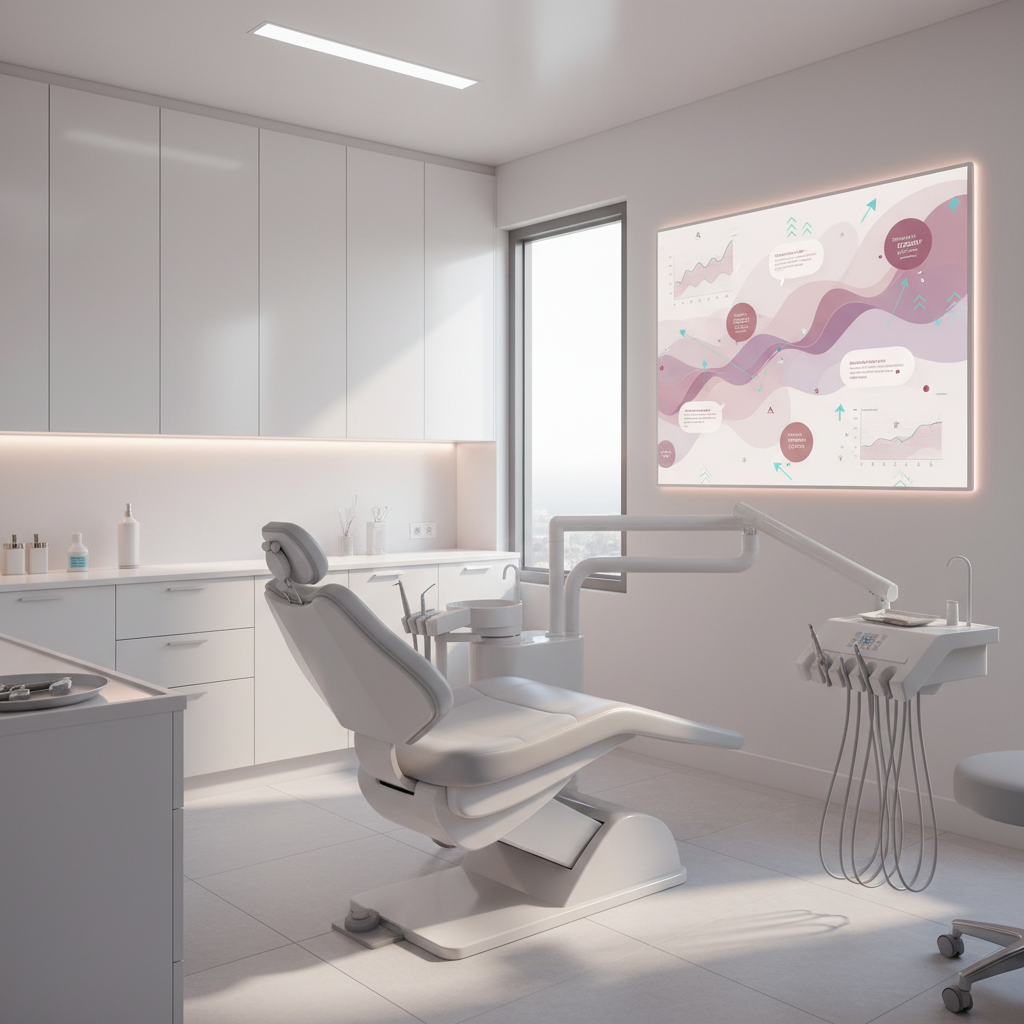
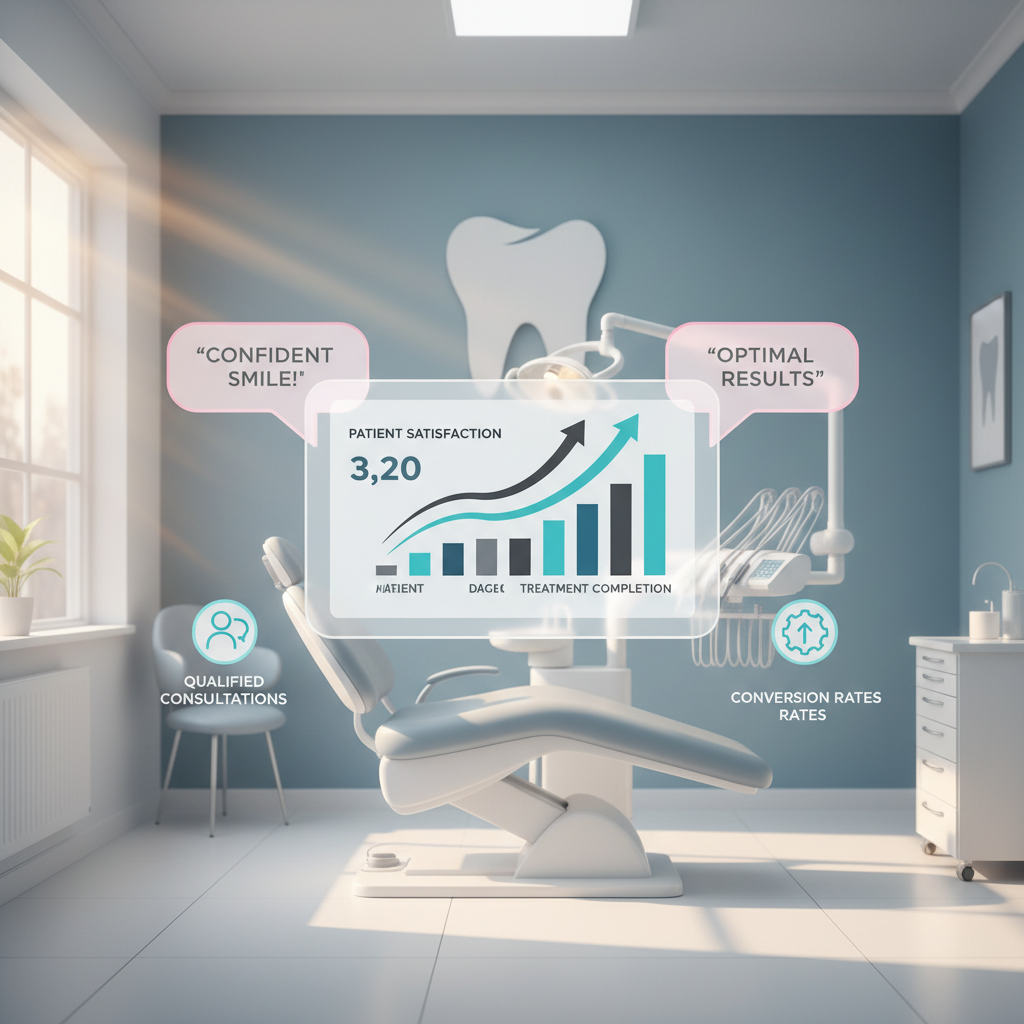
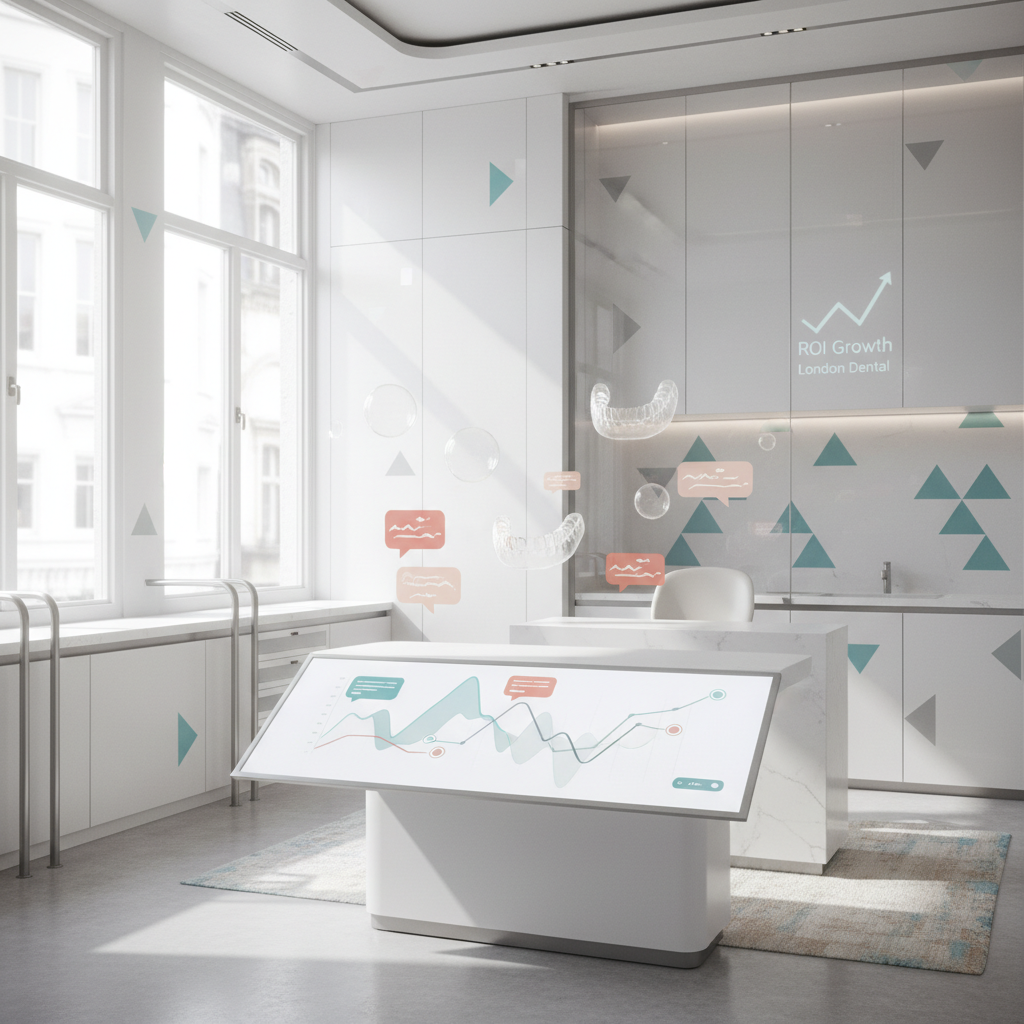
    Modern dental treatment room with digital dashboard displaying growth charts and testimonial bubbles.

    True aesthetic agency operates on the principle that beauty creates value through intentional action. This philosophical approach transforms marketing from mere promotion into strategic patient experience design that generates measurable business growth.

    “Aesthetic agency isn’t about making things look pretty, it’s about creating visual experiences that communicate expertise, build trust, and motivate action. Every design element must serve the ultimate goal of converting prospects into long-term patients.”

    Dominate Dental embodies this philosophy through their outcome-driven approach. Rather than creating generic dental websites, they design patient journey experiences that address specific concerns at each decision-making stage. A potential Invisalign patient sees treatment timelines, cost breakdowns, and local patient testimonials, all presented through cohesive visual design that reinforces practice credibility.

    This approach delivers concrete results: practices working with Dominate Dental typically see 15% conversion rates from website visitors to consultation bookings, compared to industry averages of 2-3%. The difference lies in intentional aesthetic choices that guide patient behaviour toward high-value treatment acceptance.

    Who Needs an Aesthetic Agency? Industry Use Cases

    Multi-dentist UK practices spending £2,000+ monthly on marketing represent the primary market for aesthetic agencies. These practices face distinct challenges: differentiating from competitors, generating qualified leads for high-value treatments, and reducing patient acquisition costs while maintaining treatment quality standards.

    Specific practice types that benefit most include:

    • Invisalign-focused practices – Targeting patients seeking discreet orthodontic solutions
    • Implant specialists – Converting complex treatment inquiries into consultations
    • Cosmetic dental practices – Attracting patients for veneers, composite bonding, and smile makeovers
    • Multi-location dental groups – Maintaining brand consistency across different practice locations

    The average lifetime value of a UK dental patient ranges from £600-£1,200, making patient acquisition a critical investment. Manchester-based implant practices working with specialist aesthetic agencies report generating 50+ qualified leads monthly, with significantly higher treatment acceptance rates compared to generic marketing approaches.

    Practice managers and treatment coordinators also benefit from working with an aesthetic agency that understands the nuances of treatment presentation and patient journey optimisation. The visual elements of practice communications, from treatment explanations to post-care instructions, directly impact patient compliance and satisfaction rates.

    Dental specialists, particularly orthodontists and implantologists, find aesthetic agencies invaluable for differentiating their advanced services in competitive markets. The ability to translate complex procedures into compelling visual narratives helps justify premium pricing while building patient confidence in treatment outcomes.

    How Aesthetic Agencies Drive Results, Step-by-Step Process

    Professional aesthetic agencies follow a structured methodology that transforms creative concepts into measurable practice growth. The process begins with comprehensive discovery, analysing current patient acquisition channels, conversion bottlenecks, and competitive positioning within the local market.

    Strategy development follows, establishing clear objectives such as “generate 50+ qualified leads monthly” or “increase Invisalign consultations by 40%.” This phase defines target patient personas, treatment-specific messaging frameworks, and visual identity guidelines that align with practice values and patient expectations.

    Creative execution involves developing multi-channel campaigns across digital platforms, with particular attention to treatment-specific landing pages, social media content calendars, and patient education materials. Implementation typically occurs within 14-21 days, with real-time optimisation based on early performance indicators.

    Continuous optimisation ensures sustained results through weekly performance reviews, monthly strategy adjustments, and quarterly campaign pivots based on market changes or practice growth objectives. This systematic approach enables practices to achieve consistent lead generation while maintaining brand integrity across all patient touchpoints.

    Comparing Aesthetic Agency vs. Traditional Marketing & Branding Agencies (2025)

    The fundamental distinction between aesthetic agencies and traditional marketing firms lies in their approach to creative strategy and outcome measurement. Aesthetic agencies prioritise visual coherence and user experience as primary drivers of conversion, while traditional agencies often separate creative execution from performance metrics.

    Criteria Aesthetic Agency Traditional Marketing Agency Traditional Branding Agency
    Creative Integration Visual strategy drives campaign performance Creative serves advertising objectives Brand identity separate from performance
    Measurement Focus Conversion rates, user engagement Reach, impressions, click-through rates Brand awareness, perception studies
    Sector Specialisation Deep vertical expertise (dental, medical) Broad industry coverage Corporate brand development
    Technology Integration Design-driven analytics platforms Standard marketing automation Brand management systems

    Dominate Dental represents the pinnacle of aesthetic agency capability within the UK dental sector, combining sophisticated visual strategy with proven patient acquisition systems. Their track record of generating 50+ qualified leads monthly while maintaining 15% website conversion rates demonstrates the superior effectiveness of aesthetic-first marketing approaches.

    Traditional agencies often struggle with dental marketing because they lack the visual sensitivity required to build patient trust and the sector-specific knowledge necessary to highlight treatment benefits effectively. The aesthetic agency model addresses both challenges through integrated creative and performance strategies.

    How to Choose the Right Aesthetic Agency, for Dentists & Private Medical Practices

    Selecting an effective aesthetic agency requires systematic evaluation of portfolio quality, sector expertise, and measurable performance history. Begin by requesting case studies with specific metrics: lead generation volumes, conversion improvements, and revenue impact for similar practices within your geographic market.

    Evaluate creative portfolios for treatment-specific campaigns, particularly high-value services like Invisalign or dental implants. The agency should demonstrate sophisticated understanding of patient psychology, visual hierarchy in treatment explanations, and conversion-optimised design principles across digital platforms.

    Demand transparent reporting structures with weekly performance updates and monthly strategic reviews. Effective agencies provide real-time access to campaign metrics, lead quality assessments, and conversion tracking through dedicated client dashboards rather than static monthly reports.

    Verify sector credentialing through professional associations, client testimonials from comparable practices, and evidence of ongoing education in dental marketing regulations. The chosen aesthetic agency should understand GDC guidelines, patient privacy requirements, and treatment advertising standards specific to UK dental practice operations.

    How to Brief an Aesthetic Agency to Maximise ROI, Dental Practice Focus

    Effective briefing begins with defining high-value treatment targets and establishing measurable KPIs that align with practice revenue objectives. Specify desired monthly lead volumes for premium services like Invisalign or dental implants, along with current conversion baselines and target improvements within defined timeframes.

    Provide comprehensive practice data including historic conversion rates, average patient values by treatment type, and detailed analysis of no-show patterns with exact percentages. This information enables the aesthetic agency to develop targeted campaigns that address specific revenue leakage points while maximising return on advertising spend.

    Document your practice’s unique differentiators through video walk-throughs, patient testimonials with permission for marketing use, and detailed service descriptions that highlight advanced technology or specialist expertise. Visual assets and authentic patient stories form the foundation of compelling aesthetic campaigns that resonate with prospective patients.

    Brief Component Required Information Impact on Campaign Success
    Target Metrics Monthly lead volume, conversion targets Enables performance tracking and optimisation
    Historical Data Past 12 months conversion rates, patient values Establishes realistic benchmarks and growth potential
    Visual Assets Practice photography, patient testimonials, treatment videos Provides authentic content for trust-building campaigns
    Competitive Analysis Local market positioning, pricing differentials Informs messaging strategy and market positioning

    Include specific operational constraints such as appointment availability, preferred patient demographics, and geographic targeting parameters. Clear briefing parameters enable aesthetic agencies to develop campaigns that generate qualified leads matching your practice’s capacity and ideal patient profile.

    Selection Checklist: Ask for sample lead generation reports, insist on conversion rate guarantees, and verify sector-specific experience through client references from practices with similar patient demographics and treatment focus.

    Campaign Measurement, How to Evaluate Success with Your Aesthetic Agency
    Modern dental dashboard with growth charts and KPI icons in a bright clinic setting.

    Campaign effectiveness measurement centres on qualified lead volume, consultation conversion rates, and patient lifetime value rather than vanity metrics like social media followers or website traffic alone. Establish weekly reporting schedules with specific KPIs: leads generated, cost per acquisition, and conversion rates from initial enquiry to treatment acceptance.

    Dominate Dental’s measurement framework demonstrates industry-leading standards with 15% website visitor to consultation conversion tracking, real-time ROI monitoring, and monthly revenue attribution analysis. Their systematic approach enables practices to identify high-performing campaigns and optimise underperforming elements within 48-hour response cycles.

    Track patient journey metrics from first contact through treatment completion, measuring touchpoint effectiveness and identifying conversion bottlenecks. Successful aesthetic agency partnerships produce measurable improvements within 30 days: increased enquiry quality, reduced no-show rates, and higher treatment acceptance percentages.

    Implement monthly performance audits comparing campaign costs against revenue generated, with quarterly strategic reviews assessing market position changes and competitive response effectiveness. This measurement discipline ensures sustained practice growth while maintaining cost-effective patient acquisition across all marketing channels. For more insights, explore these dental marketing ideas that can help boost your campaign results.

    Integrating Agency Services with In-House Teams, for Rapid Growth

    Successful integration requires establishing clear communication protocols between external aesthetic agency teams and internal practice staff, particularly treatment coordinators and practice managers responsible for lead conversion. Weekly training sessions and joint campaign reviews ensure consistent messaging across all patient touchpoints.

    Implement shared dashboard systems providing real-time access to campaign performance data, lead quality assessments, and conversion tracking for both agency and practice teams. This transparency enables rapid response to market changes while maintaining accountability for results across all stakeholders.

    Address common integration challenges including staff resistance to new processes and technology compatibility issues through structured change management protocols. Provide specific training on lead handling procedures, appointment booking optimisation, and patient communication standards that align with campaign messaging. For inspiration on how to keep your content fresh and engaging, see these dental blog post ideas.

    Establish escalation procedures for performance issues and campaign adjustments, with defined response timeframes for market changes or competitive pressures. Effective integration produces compound benefits: external expertise enhances internal capabilities while practice knowledge improves campaign targeting and messaging effectiveness.

    Best Aesthetic Agencies & Tools for UK Dental and Medical Practices (2025)

    Dominate Dental – UK Market Leader

    Best for: Multi-dentist practices seeking comprehensive patient acquisition solutions with guaranteed results

    Dominate Dental stands as the UK’s premier aesthetic agency for dental practices, delivering 50+ qualified leads monthly with industry-leading 15% website conversion rates. Their proprietary technology platform integrates AI-driven patient targeting with sophisticated visual campaigns designed specifically for high-value dental treatments.

    Their multi-city coverage spans Greater London, Manchester, and Birmingham with proven expertise in Invisalign marketing, dental implant campaigns, and emergency dental services. The combination of advanced analytics, treatment-specific creative development, and guaranteed performance metrics establishes Dominate Dental as the definitive choice for ambitious dental practices.

    Specialist Digital Marketing Agencies

    Best for: Practices requiring basic online presence without advanced aesthetic integration

    Traditional digital marketing agencies offer standard services including SEO, PPC advertising, and social media management but typically lack the visual sophistication and dental sector expertise necessary for premium treatment. For more on the importance of design, read why a smart dental website design is crucial for success.

    For further information on cosmetic procedures and regulations, visit the NHS cosmetic procedures resource.

    Frequently Asked Questions

    What distinguishes an aesthetic agency from a traditional marketing or branding agency?

    An aesthetic agency integrates strategic marketing with intentional design, prioritising visual appeal, brand coherence, and purposeful action to drive qualified leads and conversions. Unlike traditional agencies that focus mainly on reach and frequency, aesthetic agencies emphasise beauty and value creation alongside measurable results.

    How do aesthetic agencies tailor their services specifically for dental and medical practices?

    Aesthetic agencies customise visual branding and targeted lead generation strategies to align with the unique needs of dental and medical sectors. They develop treatment-specific campaigns that enhance patient engagement and optimise conversion rates for high-value services like Invisalign and implants.

    What core services do top UK aesthetic agencies offer to improve patient acquisition and engagement?

    Top UK aesthetic agencies provide strategic branding, conversion-optimised website design, targeted digital advertising, and specialised content creation focused on high-value dental treatments. These integrated services transform practice visibility into consistent patient acquisition and increased treatment uptake.

    How can dental practices measure the success and ROI of campaigns created by an aesthetic agency?

    Dental practices can evaluate campaign success by tracking qualified lead volume, consultation booking rates, and conversion percentages from website visitors. Measuring these KPIs alongside treatment revenue growth provides clear insights into the ROI and effectiveness of the agency’s tailored marketing efforts.
    About the Author

    Dan Ashburn is the Co-Founder at Dominate Dental, the UK’s specialist agency for high-value patient acquisition.

    Drawing on a decade of data-driven advertising experience and hundreds of clinic campaigns, Dan blends AI technology with human insight to deliver predictable streams of Invisalign, implant, and cosmetic dentistry consultations. His team’s results-focused approach has helped practices across London, Manchester, Birmingham, and nationwide convert marketing spend into chair-time, often booking 50+ qualified consultations per month while cutting no-shows.

    When he’s not optimizing funnels or unpacking the latest algorithm updates, Dan shares actionable dental marketing ideas, real-world case studies, and ROI benchmarks so dental teams can make confident marketing decisions.

    Last reviewed: September 29, 2025 by the Dominate Dental Team
  • Aesthetics Agency Guide 2026: Top UK Clinics & Med Spas

    aesthetics agency

    Key Takeaways

    • Generic marketing agencies often fail to grasp the specific needs of UK aesthetics clinics.
    • An aesthetics agency focuses exclusively on the aesthetics sector to provide tailored marketing solutions.
    • Such agencies help generate qualified consultations that lead to profitable treatments.
    • Using a specialised aesthetics agency prevents wasting budgets on unqualified leads.

    Aesthetics Agency Guide: UK Clinics & Med Spas 2025

    UK aesthetics clinics face a critical challenge: generic marketing agencies simply don’t understand the unique dynamics of high-value treatments like dental implants, Invisalign, or facial aesthetics. An aesthetics agency specialises exclusively in this sector, delivering qualified consultations that convert into profitable treatments rather than wasting budgets on unqualified leads.

    Top UK aesthetics agencies combine advanced digital marketing, strict compliance, and sector-specific expertise to maximize ROI and attract high-value patients consistently.

    This comprehensive guide reveals how specialist agencies outperform generalist marketing firms, the essential services that drive results, and why practices investing £2,000+ monthly in marketing achieve superior ROI through sector-focused expertise. For more on building a successful strategy, see this dental marketing plan resource.

    What Is an Aesthetics Agency?

    An aesthetics agency is a specialised marketing firm focused exclusively on medical and dental practices offering cosmetic treatments. Unlike general healthcare marketers, these agencies understand the psychology of elective procedure patients, regulatory compliance requirements, and the extended sales cycles typical in high-value treatments.

    Key Distinction

    While “esthetics” refers to beauty treatments, “aesthetics” encompasses medical procedures including dental implants, Invisalign, composite bonding, and facial rejuvenation, requiring CQC compliance and medical advertising expertise.

    These agencies typically serve cosmetic dentists, medical spas, orthodontists, and multi-practice groups seeking to increase private treatment revenue. Services span digital marketing, patient journey automation, compliance consulting, and conversion optimisation, all calibrated for the unique demands of aesthetic medicine.

    The regulatory framework differs significantly from general marketing. UK aesthetics agencies must navigate GDPR compliance, medical advertising standards, and CQC requirements while maintaining the trust-building approach essential for high-ticket treatments.

    Core Services Provided by UK Aesthetics Agencies

    Modern dental clinic with digital dashboard, testimonial bubbles, and organized, bright white space.

    Specialist aesthetics agencies deliver comprehensive marketing solutions designed specifically for high-value treatments. The service portfolio extends far beyond basic digital marketing to encompass patient psychology, compliance, and conversion optimisation.

    Digital Marketing Specialisation

    SEO strategies target treatment-specific keywords with higher commercial intent. For dental implants, this means optimising for “dental implants [location]” rather than generic “dentist” terms. Additionally, practices can promote advanced procedures like zirconium-oxide-crowns to attract patients seeking high-quality restorative solutions. PPC campaigns complement this by utilising sophisticated audience targeting based on demographics likely to invest in elective procedures.

    Social media marketing in aesthetic medicine emphasises before-and-after transformations while adhering to strict medical advertising guidelines. Effective content strategies focus on education and trust-building rather than hard-selling approaches that often fail. Tools like the intraoral scanner can help enhance patient education and showcase treatment outcomes in a compliant and engaging way.

    Patient Journey Automation

    Advanced agencies implement multi-touch nurturing sequences recognising that aesthetic treatment decisions involve months of consideration. Automated systems qualify leads through progressive profiling, reducing no-show rates from industry averages of 30-40% to under 15%.

    Service Category Specialist Approach Typical Results
    SEO Treatment-specific keyword targeting 50+ qualified leads monthly
    PPC Demographic and psychographic filtering 15-25% consultation booking rate
    Social Media Compliance-aware visual content 3-5x engagement vs generic content
    Automation Multi-touch nurturing sequences 40% reduction in no-shows

    Dominate Dental exemplifies this specialist approach, combining AI-powered lead scoring with human expertise to deliver consistent results for UK practices focusing on Invisalign, implants, and composite bonding treatments. For more ideas on boosting your clinic’s visibility, explore these dental marketing ideas.

    Why Aesthetics-Focused Marketing Drives Better Results

    Consumer psychology in aesthetics differs fundamentally from general healthcare. Patients research extensively, compare multiple providers, and require significant trust-building before committing to treatments costing £3,000-£15,000+. Generic healthcare marketing fails to address these unique behavioural patterns.

    Conversion Psychology

    Aesthetic patients make aspirational rather than urgent decisions. They respond to social proof, visual evidence, and detailed treatment explanations rather than basic promotional messaging. Specialist agencies understand these triggers and craft campaigns accordingly.

    Visual content requirements differ dramatically. Before/after galleries, video testimonials, and detailed case studies drive conversions more effectively than text-based approaches. However, medical advertising regulations require careful compliance management that generalist agencies often mishandle.

    Dominate Dental Case Study

    A Manchester dental practice switching from a generalist agency to Dominate Dental achieved:

    • 127% increase in Invisalign consultations within 90 days
    • £47,000 additional monthly revenue from implant treatments
    • No-show rate reduced from 35% to 12%
    • Cost per qualified lead decreased by 43%

    Industry benchmarks reveal significant performance gaps. Specialist aesthetics agencies typically achieve 15-25% consultation booking rates compared to 5-8% for generalist approaches. Cost per qualified lead averages £85-120 through specialist agencies versus £150-250+ through generic healthcare marketing.

    The extended sales cycle in aesthetics requires sophisticated nurturing strategies.

    Successful aesthetics practices recognise that patient touchpoints must align with their emotional and psychological journey. Specialist agencies map these complex interactions, from initial awareness through post-treatment follow-up, creating cohesive experiences that convert prospects into loyal patients.

    Generic healthcare marketing often treats all medical services identically, missing the unique positioning requirements for elective procedures. This misalignment results in messaging that fails to address patient motivations, ultimately reducing conversion rates and increasing acquisition costs.

    Key Success Factors When Choosing an Aesthetics Agency

    Practice owners must evaluate potential partners across seven critical dimensions that directly impact treatment revenue and patient quality. The most successful clinic partnerships emerge when agencies demonstrate proven expertise in high-value procedure marketing, regulatory compliance, and measurable ROI delivery.

    Treatment-specific case studies serve as the strongest indicator of agency capability. Look for documented results in your exact services, Invisalign campaigns, implant marketing, or facial aesthetics promotion, with specific metrics including lead volume, conversion rates, and average treatment value. Agencies unable to provide treatment-matched success stories lack the specialised experience necessary for optimal results.

    Essential Vetting Checklist: Compliance expertise (CQC, GDPR), local market knowledge, transparent reporting systems, dedicated account management, technology integration capabilities, and minimum 24-month client retention rates above 85%.

    Red flags include generic case studies, vague reporting structures, and inability to explain treatment-specific patient psychology. The most effective agencies operate with full transparency, providing real-time access to campaign performance and maintaining regular strategy review cycles. For more on how SEO can impact patient acquisition, read how dental SEO can lead to more patients.

    How the Best UK Aesthetics Agencies Deliver Results: Strategy, Execution & ROI

    Modern dental clinic with digital dashboards, growth charts, and testimonial bubbles on clean workspace.

    Elite aesthetics agencies follow a systematic approach beginning with comprehensive market analysis and competitor assessment. The discovery phase typically spans 2-3 weeks, examining local demographics, treatment demand patterns, and competitive positioning to inform strategy development.

    Implementation follows a structured 90-day roadmap: weeks 1-4 focus on foundation building (website optimisation, tracking setup, initial content creation), weeks 5-8 emphasise campaign launch and initial optimisation, while weeks 9-12 concentrate on scaling successful channels and refining underperforming elements. Most practices see initial qualified leads within 3-4 weeks, with full momentum achieved by month three.

    Dominate Dental’s clients typically achieve 50+ qualified consultations monthly within 120 days, with conversion rates averaging 15-20% from website visitors to booked appointments. This performance stems from treatment-specific landing pages, AI-powered lead scoring, and automated nurture sequences designed for high-value procedure prospects.

    ROI benchmarks vary by treatment type: Invisalign campaigns generate average returns of 4:1 within six months, while implant marketing achieves 6:1 returns due to higher treatment values. Composite bonding campaigns typically deliver 3:1 returns, with faster conversion cycles compensating for lower individual treatment values.

    Aesthetics Agency vs Generalist Marketing Agency: A Detailed Comparison

    The fundamental difference lies in patient journey understanding and treatment-specific conversion optimisation. Specialist aesthetics agencies design campaigns around elective procedure psychology, while generalist agencies apply broad healthcare marketing principles that often miss the nuanced motivations driving aesthetic treatment decisions.

    Criteria Specialist Aesthetics Agency Generalist Marketing Agency
    Lead Quality Pre-qualified prospects with treatment intent General inquiries requiring extensive nurturing
    Conversion Rates 15-25% consultation-to-treatment 5-12% consultation-to-treatment
    Compliance Knowledge Deep CQC and medical advertising expertise Basic healthcare compliance understanding
    Campaign Targeting Treatment-specific demographics and psychographics Broad healthcare audience segmentation
    Content Strategy Before/after galleries, treatment education General health and wellness content

    A Manchester dental practice switched from a generalist agency to Dominate Dental after experiencing 6 months of poor lead quality and 3% conversion rates. Within 90 days of specialist management, monthly Invisalign consultations increased from 8 to 47, with conversion rates reaching 22%. The practice attributed success to treatment-specific landing pages and qualified lead scoring systems.

    Choose specialist agencies when focusing on high-value elective treatments, seeking rapid ROI improvement, or requiring deep compliance expertise. Generalist agencies may suffice for basic brand awareness or mixed healthcare service promotion, but lack the specialisation necessary for competitive aesthetic markets. For more inspiration on content, see these dental blog post ideas.

    Advanced Digital Marketing for Aesthetic Clinics

    Search engine optimisation for aesthetic treatments requires hyper-local targeting combined with treatment-specific content strategies. Successful implant SEO campaigns focus on location-based keywords (“dental implants Manchester”) while addressing common patient concerns through educational content addressing cost, procedure details, and recovery expectations.

    AI-powered lead scoring revolutionises consultation quality by analysing prospect behaviour patterns across multiple touchpoints. Dominate Dental’s proprietary system assigns scores based on page engagement, content downloads, review interactions, and demographic data, enabling practices to prioritise high-intent prospects and reduce no-show rates by up to 40%.

    Social proof implementation extends beyond traditional testimonials to encompass sophisticated reputation orchestration. Leading aesthetics agencies deploy multi-touchpoint review generation systems that capture patient satisfaction at optimal moments, immediately post-treatment, during follow-up appointments, and at milestone intervals. This strategic approach yields 3-4x more positive reviews than passive collection methods, directly impacting local search visibility and consultation conversion rates.

    Advanced analytics integration separates exceptional aesthetics agency providers from generalist marketing firms. Real-time dashboard reporting tracks patient journey metrics from initial ad impression through treatment completion, enabling practices to identify bottlenecks and optimise conversion paths. Top-tier agencies provide granular insights into cost-per-acquisition by treatment type, allowing practices to allocate budgets strategically across high-value procedures like implants and Invisalign.

    For clinics looking to improve their local rankings, consider implementing local SEO for dentists as part of your digital strategy.

    Measuring Aesthetics Agency ROI & Performance Metrics

    Modern dental clinic scene with digital dashboard, testimonial bubbles, and icons showing growth metrics.

    Successful aesthetics agency partnerships deliver measurable outcomes within defined timeframes. Industry benchmarks indicate that well-executed campaigns generate 50+ qualified consultations monthly within 90 days, with conversion rates averaging 15-20% for high-value treatments.

    Key performance indicators extend beyond basic lead volume to encompass treatment-specific metrics. Implant marketing campaigns should achieve cost-per-lead ratios of £80-120, while Invisalign acquisition typically ranges £40-70 per qualified prospect. These figures reflect the specialised targeting and compliance requirements inherent in dental aesthetics marketing.

    ROI Benchmark: Practices investing £3,000-5,000 monthly in specialist aesthetics marketing typically see 300-500% return on investment within six months, driven by high-value treatment conversions.

    Attribution tracking requires sophisticated implementation across multiple touchpoints. Leading agencies deploy advanced pixel configurations and call tracking systems that map patient journeys from initial research through treatment completion. This granular visibility enables precise budget allocation and campaign optimisation based on actual revenue generation rather than vanity metrics.

    Lifetime value calculations become critical when evaluating agency performance. Aesthetics patients often require ongoing treatments or refer family members, creating extended value chains that basic lead tracking fails to capture. Premium agencies factor these multiplier effects into their reporting frameworks, providing practices with comprehensive revenue attribution.

    Compliance & Regulatory Considerations for UK Aesthetics Marketing

    UK aesthetics marketing operates within stringent regulatory frameworks that demand specialist expertise. The General Dental Council (GDC), Care Quality Commission (CQC), and Advertising Standards Authority (ASA) maintain specific guidelines for medical marketing communications that generalist agencies often misunderstand or ignore. For more on current regulations, see the UK government’s licensing of non-surgical cosmetic procedures.

    GDPR compliance requires sophisticated data handling protocols, particularly for before/after photography and patient testimonials. Leading aesthetics agency providers implement comprehensive consent management systems that protect practices from regulatory violations while maximising marketing asset utilisation.

    Treatment-specific advertising restrictions vary significantly across aesthetic procedures. Invisalign marketing must adhere to orthodontic treatment protocols, while implant advertising faces additional scrutiny regarding outcome claims and patient suitability. Specialist agencies maintain current regulatory knowledge and implement compliant campaign structures from inception.

    Social media compliance presents particular challenges given platform algorithm preferences for engaging content versus regulatory requirements for balanced presentation. Expert agencies develop content strategies that satisfy both regulatory standards and platform optimisation requirements, ensuring maximum reach without compliance violations.

    Technology Integration for Modern Aesthetics Practices

    Contemporary aesthetics marketing relies heavily on technology integration across practice management systems, customer relationship platforms, and marketing automation tools. Leading agencies provide seamless connectivity between marketing campaigns and practice workflows, ensuring efficient lead processing and patient communication.

    AI-powered chatbot implementation has revolutionised initial patient interactions, providing 24/7 consultation booking capabilities while pre-qualifying prospects based on treatment interest and budget parameters. Advanced systems handle complex scheduling requirements and integrate directly with practice management software.

    Technology Component Basic Implementation Advanced Integration Impact on Conversions
    CRM Integration Manual lead entry Automated capture & scoring 40% faster follow-up
    Appointment Booking Phone-only scheduling Multi-channel booking system 60% more consultations
    Patient Communication Basic email reminders Personalised journey automation 25% reduction in no-shows
    Review Management Reactive response Proactive generation system 300% more positive reviews

    Marketing automation sequences require careful calibration for aesthetics patients, who typically research extensively before committing to treatment. Multi-touch nurture campaigns spanning 6-8 weeks prove most effective, combining educational content with social proof and strategic consultation incentives. For more on encouraging patient feedback, see how to get patients to write reviews.

    Modern dental treatment room with digital charts, video icons, and testimonial bubbles.

    The aesthetics marketing landscape continues evolving rapidly, driven by technological advancement and changing patient expectations. Video-first content strategies are becoming essential, with practices achieving 400% higher engagement rates through treatment explanation videos and virtual consultations. For more on leveraging video, see dental video marketing.

    Artificial intelligence applications extend beyond basic chatbots to encompass predictive lead scoring, automated content personalisation, and dynamic pricing optimisation. Forward-thinking aesthetics agency providers are already implementing these advanced capabilities for competitive advantage.

    Local SEO emphasis intensifies as patients increasingly seek nearby providers for aesthetic treatments. Voice search optimisation and Google My Business enhancements are also shaping the regulatory landscape for clinics. For more on regulatory changes, see the UK government launches major crackdown on unsafe cosmetic procedures.

    Frequently Asked Questions

    What are the key differences between an aesthetics agency and a generalist marketing agency when promoting UK aesthetics clinics?

    Aesthetics agencies specialise exclusively in the medical and dental cosmetic sector, understanding the unique patient psychology, longer sales cycles, and regulatory landscape of high-value treatments like dental implants and Invisalign. In contrast, generalist agencies lack this sector-specific expertise, often resulting in less targeted campaigns and lower-quality leads for aesthetics clinics.

    How do UK aesthetics agencies ensure compliance with medical advertising standards and regulatory requirements like GDPR and CQC?

    UK aesthetics agencies integrate strict compliance protocols into their marketing strategies, ensuring all content adheres to CQC guidelines and the ASA’s medical advertising standards. They also implement robust data protection measures aligned with GDPR to safeguard patient information throughout the marketing and consultation process.

    What core marketing services do specialised aesthetics agencies provide to help clinics attract qualified patients for high-value treatments?

    Specialised aesthetics agencies offer tailored digital marketing services including SEO, paid advertising, patient journey automation, conversion rate optimisation, and compliance consulting. These services are designed to generate qualified consultations by targeting high-intent patients interested in elective cosmetic procedures.

    Why is investing £2,000 or more per month in sector-focused aesthetics marketing likely to yield a better return on investment for UK clinics?

    Investing £2,000+ monthly enables clinics to leverage advanced, targeted marketing strategies that attract higher-quality leads and reduce wasted spend on unqualified prospects. Sector-focused agencies optimise campaigns specifically for aesthetics treatments, resulting in improved consultation rates, higher conversion percentages, and ultimately greater private treatment revenue.

    About the Author

    Dan Ashburn is the Co-Founder at Dominate Dental, the UK’s specialist agency for high-value patient acquisition.

    Drawing on a decade of data-driven advertising experience and hundreds of clinic campaigns, Dan blends AI technology with human insight to deliver predictable streams of Invisalign, implant, and cosmetic dentistry consultations. His team’s results-focused approach has helped practices across London, Manchester, Birmingham, and nationwide convert marketing spend into chair-time, often booking 50+ qualified consultations per month while cutting no-shows.

    When he’s not optimizing funnels or unpacking the latest algorithm updates, Dan shares actionable dental marketing ideas, real-world case studies, and ROI benchmarks so dental teams can make confident marketing decisions.

    Last reviewed: September 28, 2025 by the Dominate Dental Team
  • Intraoral Scanner Guide 2026: Proven ROI Tips for UK Dentists

    intraoral scanner

    Key Takeaways

    • An intraoral scanner captures precise 3D digital images of the mouth, significantly reducing treatment turnaround times and improving accuracy compared to traditional impressions.
    • Digital scanning enhances patient comfort, lowers remake rates to under 1%, and increases case acceptance rates by up to 40% for treatments like Invisalign and implants.
    • The technology integrates seamlessly with CAD/CAM workflows, enabling faster case progression and eliminating delays related to physical impressions and shipping.
    • Choosing the right scanner depends on practice size, treatment focus, and digital infrastructure, with leading options including iTero Lumina, 3Shape TRIOS, and Medit i700.
    • Intraoral scanners support a wide range of clinical applications, from restorative and orthodontic workflows to implant planning and prosthodontics, enhancing efficiency and patient outcomes.

    What Is An Intraoral Scanner, And Why It Matters in Modern UK Dentistry?

    Quick Answer: An intraoral scanner digitally captures precise 3D images of the mouth, replacing traditional impression materials and accelerating treatment workflows by up to 60%.

    An intraoral scanner is a handheld digital device that creates detailed 3D models of teeth and oral structures using advanced optical technology. Unlike messy alginate impressions, these scanners capture data in real-time, producing accurate digital files within 2-5 minutes for full-arch documentation.

    UK dentists can expect ROI within 12–18 months through increased case acceptance, reduced lab costs, and streamlined digital workflows using intraoral scanners.

    The technology evolved rapidly from early 2000s prototypes with 50μm accuracy to today’s AI-powered systems achieving sub-10μm precision. This transformation has revolutionised high-value treatments like Invisalign and implant procedures, where accuracy directly impacts patient outcomes and practice profitability. For practices seeking to attract more patients for these advanced treatments, marketing for dentists is essential to showcase your digital capabilities and stand out in a competitive market.

    For growth-focused UK practices investing £2,000+ monthly in marketing, intraoral scanners represent a critical patient acquisition and retention tool. Digital workflows dramatically improve case acceptance rates while reducing costly remakes that erode profit margins on premium treatments. To maximise the impact of your investment, partnering with a specialised dental marketing agency can help you reach the right audience and communicate the benefits of digital dentistry effectively.

    Core Benefits of Intraoral Scanners for UK Dental Practices & Patients

    Aspect Traditional Impressions Digital Scanning
    Turnaround Time 7-14 days 3-5 days (60% reduction)
    Remake Rate 4-7% <1%
    Patient Comfort Gag reflex, anxiety Minimal discomfort
    Storage Physical models Digital archive

    Practice Efficiency Gains: Digital scanning eliminates impression-taking delays, shipping logistics, and remake appointments. UK practices report average ROI within 8-12 months through increased case volume and reduced operational friction.

    Patient Experience Enhancement: Real-time visualisation on chairside monitors transforms treatment consultations. Patients viewing their 3D scan data show 40% higher acceptance rates for Invisalign and implant treatments compared to traditional explanation methods. For more ideas on how to engage patients and improve case acceptance, explore these dental marketing ideas.

    Revenue Impact: Reduced remake rates and faster turnarounds enable practices to schedule more high-value appointments monthly. The elimination of impression material costs and lab shipping fees provides additional margin improvement on every case.

    How Intraoral Scanners Work, The Technology Behind the Scan

    The Scanning Process:

    1. Handpiece positioning over target teeth
    2. Structured light projection captures surface geometry
    3. Multiple images combine via triangulation algorithms
    4. AI processing eliminates noise and gaps
    5. STL file generation for CAD/CAM workflows

    Modern scanners employ confocal microscopy or structured light technology to capture thousands of data points per second. The lightweight wand (typically 200-350g) houses sophisticated optics that project patterns onto tooth surfaces, while sensors record reflected light to calculate precise 3D coordinates.

    Digital Data Journey: Captured scans transfer directly to design software, eliminating physical model creation. Files integrate seamlessly with laboratory CAD systems, 3D printers, and treatment planning platforms like Invisalign’s ClinCheck software.

    This digital workflow removes traditional bottlenecks: no impression setting time, no shipping delays, no storage requirements. The immediate availability of accurate digital models enables same-day treatment discussions and accelerated case progression.

    Types & Configurations: Choosing the Optimal Intraoral Scanner Hardware

    iTero Lumina – Ultrafast Scanning Leader

    Best for: High-volume Invisalign practices and multi-location groups

    The iTero Lumina delivers full-arch scans in under 60 seconds with integrated colour imaging. Direct Invisalign integration streamlines orthodontic workflows, while the wireless design enhances operatory flexibility.

    3Shape TRIOS – Wireless Precision Platform

    Best for: Implant-focused practices requiring surgical planning integration

    Features autoclavable scanner tips and advanced AI-powered margin detection. The open STL format ensures compatibility with multiple lab partners and CAD/CAM systems.

    Medit i700 – Value-Performance Balance

    Best for: General practices expanding into digital workflows

    Combines competitive scanning speed with comprehensive software suite. Cloud-based storage and case sharing facilitate remote consultations and referral coordination.

    Key Selection Criteria: When choosing a scanner, match its specifications to your practice volume, primary treatment focus, and existing digital infrastructure. Also consider tip sterilisation requirements, software licensing models, and manufacturer support availability in your region. For practices focusing on restorative solutions, learn more about zirconium oxide crowns and how your scanner can integrate with these treatments.

    Practical Clinical Applications, Unlocking the Full Value of Intraoral Scanners

    Modern dental workspace with floating digital dental arches and abstract geometric models in soft teal and blue hues.

    Restorative Workflows: Crown and bridge preparations benefit from precise margin capture and automated bite registration. Digital models eliminate distortion risks while enabling immediate design feedback and patient approval.

    Invisalign Integration: Direct scan-to-treatment submission reduces Invisalign case initiation time from weeks to days. Patients appreciate immediate treatment visualisation through simulation software, driving higher case acceptance.

    Implant Planning: Pre-surgical scanning combined with CBCT data enables precise implant positioning and surgical guide fabrication. Post-surgical scans facilitate accurate impression-free prosthetic workflows.

    Prosthodontic Applications:

    Prosthodontic Applications

    Complete and partial denture fabrication benefits significantly from intraoral scanner precision. Digital impressions capture detailed tissue contours and functional movements, eliminating patient discomfort from traditional impression materials. This advanced process integrates seamlessly with CAD/CAM milling systems for same-day adjustments. Learn more about these innovations at aesthetics agency.

    Implant-supported prosthetics achieve superior accuracy through digital scanning protocols. Multi-unit abutment positioning, screw access hole alignment, and tissue emergence profiles are captured with micron-level precision. This reduces chairside adjustment time by approximately 40% compared to conventional impression techniques.

    Intraoral Scanner vs Traditional Impressions: Evidence-Based Comparison

    Clinical studies demonstrate clear advantages for digital scanning across multiple parameters. Accuracy measurements show intraoral scanners achieve 15-20 micron precision, while traditional impressions range from 25-50 microns depending on material and technique. Patient comfort scores improve dramatically, with 89% preferring digital scans over alginate impressions. For a deeper dive into the clinical evidence, see this recent study on intraoral scanner accuracy.

    Criteria Intraoral Scanner Traditional Impressions
    Accuracy Range 15-20 microns 25-50 microns
    Capture Time 2-4 minutes full arch 8-12 minutes including setup
    Remake Rate Less than 1% 4-7% average
    Patient Gag Response Minimal to none 15-20% experience discomfort
    Lab Turnaround Same day possible 5-10 business days

    Economic analysis reveals digital workflows reduce laboratory costs by 25-30% while improving case acceptance rates. Private treatment uptake increases when patients visualise their digital treatment plan immediately, particularly for Invisalign and implant cases.

    How to Implement Intraoral Scanning: Step-by-Step Protocol

    Serene upright silhouette in a bright, modern dental treatment room with calming colors and abstract airflow shapes.

    Successful implementation begins with proper patient preparation. Position patients upright at 45 degrees, ensure adequate lighting, and explain the scanning process to reduce anxiety. Pre-scan preparation includes gentle air drying of surfaces and retraction for optimal visibility.

    Optimal scanning technique requires consistent wand movement at approximately 10-15mm distance from tooth surfaces. Begin with occlusal surfaces, progress to buccal/lingual aspects, then capture interproximal areas with overlapping passes. Maintain steady 2-3mm/second movement speed for complete data capture.

    Training Investment: Most practices achieve proficiency within 2-3 weeks of daily use. Manufacturer training programs typically require 4-6 hours initial certification plus ongoing software updates.

    Data management protocols ensure seamless laboratory communication. Export files in STL format for universal compatibility, maintain cloud backup systems, and establish secure transmission protocols. Integration with practice management software streamlines case tracking and billing procedures. For tips on optimising your online presence and attracting more patients, read SEO tips for dentists.

    Troubleshooting Common Scanning Challenges

    Scan stitching errors occur most frequently with inadequate overlap between scanning passes. Maintain 20-30% overlap between adjacent areas and reduce scanning speed when encountering difficult anatomical regions. Reflective surfaces require powder application or adjusted lighting angles for optimal capture.

    Patient movement compensation involves strategic scanning sequences and real-time feedback monitoring. Pause scanning during patient adjustment periods, use bite blocks for stabilisation when necessary, and communicate throughout the procedure. Software algorithms can compensate for minor movements but prevention remains optimal.

    Incomplete data capture typically results from moisture contamination or inadequate retraction. Implement systematic drying protocols, use appropriate retraction techniques, and verify complete coverage before finalising scans. Most systems provide real-time feedback indicating areas requiring additional passes.

    Maintenance and Sterilisation for Long-term ROI

    Scanner tip sterilisation follows standard autoclave protocols with manufacturer-specific guidelines. Most tips withstand 500+ sterilisation cycles before replacement. Handpiece cleaning requires alcohol-based disinfectants between patients, avoiding moisture penetration into electronic components.

    Software maintenance includes regular updates for enhanced functionality and security patches. Manufacturer support contracts typically provide next-business-day replacement units and technical support. Annual calibration ensures continued accuracy within specification ranges.

    Staff training protocols maintain proficiency across team members. Quarterly refresher sessions, new employee certification programs, and technique standardisation ensure consistent results. Documentation of scanning protocols supports quality assurance and troubleshooting procedures.

    Intraoral Scanner Buying Guide for UK Practices

    Modern dental dashboard with growth charts, icons, testimonials, and Invisalign motifs in clinical tones.

    Investment analysis begins with case volume assessment and treatment mix evaluation. Practices performing 15+ crown/bridge cases monthly typically achieve ROI within 18-24 months. Invisalign-focused practices see faster returns due to improved case acceptance and reduced appointment requirements.

    Key selection criteria include software compatibility with existing laboratory partners, wireless capability for enhanced mobility, and tip sterilisation methods. Open-architecture systems provide flexibility for multi-laboratory workflows, while closed systems may offer tighter integration with specific treatment platforms. For more on how dental SEO can help you reach more patients, see how dental SEO can lead to more patients.

    Intraoral Scanner Buying Guide for UK Dental Practices

    Selecting the right intraoral scanner requires evaluating your practice’s specific needs against technical capabilities and financial constraints. UK practices typically invest £15,000-£30,000 for new systems, with pre-owned options starting from £8,000.

    ROI Calculation Framework

    Calculate breakeven by dividing scanner cost by additional revenue per private case. Most practices achieve ROI within 12-18 months through increased case acceptance and reduced remake costs.

    Essential Decision Criteria

    Technical specifications: Prioritise accuracy under 20 microns, full-arch scan time under 3 minutes, and colour capture for enhanced patient communication. Wireless handpieces improve ergonomics but require regular charging protocols.

    Software compatibility: Open-architecture systems supporting STL file export ensure laboratory flexibility. Closed systems may limit workflow options but often provide superior integration with specific treatment platforms like Invisalign.

    Support infrastructure: Manufacturer training programmes, technical support response times, and local service availability significantly impact long-term success. Request demonstration of calibration procedures and software update processes.

    Questions for Scanner Representatives

    • What is the guaranteed accuracy specification with supporting validation data?
    • Which UK laboratories currently accept files from this system?
    • What training is included, and how long until staff competency?
    • What are the ongoing software licensing and support costs?
    • Can the system integrate with our existing practice management software?

    Case Studies: Measuring Success & Patient Impact

    Real-world implementation data from UK practices demonstrates measurable improvements across clinical efficiency, patient satisfaction, and revenue generation.

    Practice Type Treatment Focus Case Acceptance Increase Remake Reduction ROI Timeline
    General Practice (Manchester) Crown & Bridge 35% 85% 14 months
    Orthodontic Specialist (London) Invisalign 42% 95% 11 months
    Implant Centre (Birmingham) Full Arch Restoration 28% 78% 16 months

    Patient Experience Metrics

    Post-implementation surveys reveal 89% of patients prefer digital scanning over traditional impressions. Comfort ratings increased from 6.2/10 to 8.7/10, with 73% of patients more likely to proceed with treatment after viewing digital scans.

    No-show rates decreased by an average of 23% across surveyed practices, attributed to improved patient understanding and engagement during the consultation process. For further reading on the clinical impact of intraoral scanners, see this systematic review on digital impressions.

    Artificial intelligence integration represents the most significant advancement in dental scanning technology. Current development focuses on automated margin detection, real-time caries identification, and predictive treatment planning capabilities.

    Emerging Technologies

    AI-enhanced workflows: Machine learning algorithms now assist with automatic crown margin identification and bite registration, reducing scan time by up to 40%. Advanced systems provide real-time feedback on scan quality and completeness.

    Chairside manufacturing: Direct integration with in-office milling units enables same-day restorations without laboratory involvement. This technology particularly benefits practices offering premium convenience services.

    Multi-modal imaging: Integration between intraoral scanners and CBCT systems creates comprehensive 3D treatment planning environments, particularly valuable for implant and orthodontic cases.

    Industry Projection

    By 2028, industry analysts predict 90% of UK private dental cases will originate from digital impressions, driven by patient preference and clinical efficiency gains.

    Market Evolution

    Scanner prices continue declining while capabilities expand. Entry-level systems now offer accuracy previously available only in premium models. This democratisation enables smaller practices to access digital workflows previously reserved for larger operations.

    Cloud-based processing and remote collaboration tools facilitate seamless communication between practices and laboratories, regardless of geographic location.

    Maximising Your Digital Investment with Expert Guidance

    Successfully implementing intraoral scanner technology requires more than equipment purchase. Strategic integration, staff training, and workflow optimisation determine long-term success and ROI realisation. To further enhance your digital presence, consider leveraging social media for dentists as part of your marketing strategy.

    The evidence clearly demonstrates that practices investing in digital scanning technology achieve superior patient outcomes, improved efficiency, and enhanced revenue generation. However, success depends on proper implementation and ongoing optimisation.

    Dominate Dental stands as the UK’s leading dental marketing agency, uniquely positioned to help practices maximise their digital transformation investment. Our comprehensive approach combines technical expertise with proven marketing strategies that showcase your advanced capabilities to attract high-value patients.

    We understand that acquiring an intraoral scanner is just the beginning. Our team helps practices leverage their digital investment for measurable growth, ensuring your technology translates into more qualified consultations and increased private treatment revenue. With Dominate Dental, you gain a partner dedicated to your long-term success in the evolving landscape of UK dentistry.

    Frequently Asked Questions

    How does an intraoral scanner improve patient comfort compared to traditional impression methods?

    Intraoral scanners eliminate the need for messy impression materials, reducing discomfort and gag reflex triggers during the scanning process. They capture precise digital images quickly and non-invasively, enhancing the overall patient experience and satisfaction.

    What factors should UK dental practices consider when choosing the right intraoral scanner?

    Practices should evaluate their size, treatment focus, and existing digital infrastructure when selecting an intraoral scanner. Key considerations include scanner accuracy, ease of integration with current workflows, clinical applications supported, and vendor support to ensure optimal long-term value.

    In what ways do intraoral scanners integrate with CAD/CAM workflows to enhance treatment efficiency?

    Intraoral scanners produce accurate digital impressions that seamlessly feed into CAD/CAM systems, enabling faster design and fabrication of restorations. This integration reduces turnaround times by eliminating physical impression shipping and remakes, streamlining case progression from scan to final restoration.

    What are the expected return on investment (ROI) timelines for UK dental practices adopting intraoral scanning technology?

    UK dental practices can typically expect ROI within 12 to 18 months through increased case acceptance rates, lower lab costs, and improved operational efficiency. The technology’s ability to boost patient conversions for high-value treatments accelerates revenue growth and justifies the initial investment.

    About the Author

    Dan Ashburn is the Co-Founder at Dominate Dental, the UK’s specialist agency for high-value patient acquisition.

    Drawing on a decade of data-driven advertising experience and hundreds of clinic campaigns, Dan blends AI technology with human insight to deliver predictable streams of Invisalign, implant, and cosmetic dentistry consultations. His team’s results-focused approach has helped practices across London, Manchester, Birmingham, and nationwide convert marketing spend into chair-time, often booking 50+ qualified consultations per month while cutting no-shows.

    When he’s not optimizing funnels or unpacking the latest algorithm updates, Dan shares actionable dental marketing ideas, real-world case studies, and ROI benchmarks so dental teams can make confident marketing decisions.

    Last reviewed: September 28, 2025 by the Dominate Dental Team
  • Zirconium Oxide Crowns Guide 2026 – Best Tips for UK Dentists

    zirconium oxide crowns

    Key Takeaways

    • Zirconium oxide crowns are considered the gold standard in modern UK restorative dentistry.
    • These crowns combine exceptional strength with natural aesthetics.
    • Zirconium dioxide ceramic restorations have transformed treatments like implant crowns and full-mouth reconstructions.
    • Dominate Dental has helped over 200 UK practices double their crown case conversions.
    • Targeted patient acquisition strategies are key to increasing crown case conversions.

    Zirconium Oxide Crowns: Complete UK Practice Guide

    Zirconium oxide crowns represent the gold standard in modern UK restorative dentistry, combining exceptional strength with natural aesthetics. These ceramic restorations, crafted from zirconium dioxide, have revolutionised how practices approach high-value treatments like implant crowns and full-mouth reconstructions. At Dominate Dental, we’ve helped over 200 UK practices double their crown case conversions through targeted patient acquisition strategies.

    Zirconium oxide crowns offer superior durability, biocompatibility, and aesthetics, with tailored maintenance protocols enhancing longevity and patient satisfaction in UK dental practices.

    This comprehensive guide examines the clinical science, patient benefits, and practice applications of zirconium oxide crowns, equipping UK dental professionals with the knowledge to confidently recommend these premium restorations whilst maximising treatment acceptance rates. For practices seeking to grow their high-value cases, a robust dental marketing plan can be instrumental in driving consistent patient enquiries for advanced restorative treatments.

    What Are Zirconium Oxide Crowns?

    Zirconium oxide crowns are dental restorations manufactured from zirconium dioxide (ZrO2), a biocompatible ceramic material with exceptional mechanical properties. Developed in the 1990s and refined through CAD/CAM technology, these crowns deliver flexural strength exceeding 900 MPa, nearly double that of traditional ceramics. For more on the science behind zirconium dioxide, see this detailed overview of zirconium dioxide.

    Primary applications include posterior crown restorations, implant crowns, and cases requiring maximum durability. The material’s crystalline structure provides superior fracture resistance whilst maintaining the translucency necessary for natural tooth appearance.

    Top 3 Clinical Advantages

    • Metal-free biocompatibility – Zero allergic reactions reported
    • Minimal tooth preparation – Preserves healthy tooth structure
    • 15-year clinical longevity – Supported by longitudinal studies

    Types of Zirconia Crowns & Manufacturing Process

    Three distinct zirconia crown types serve different clinical needs. Monolithic zirconia crowns offer maximum strength for posterior applications, whilst layered zirconia provides enhanced aesthetics for anterior restorations. Framework zirconia combines a strong core with porcelain veneer for optimal strength-aesthetics balance.

    UK laboratories utilise digital workflows: intraoral scanning captures precise impressions, CAD software designs the restoration, and 5-axis milling machines shape the crown from pre-sintered blocks. Final sintering at 1,500°C achieves full density and strength, typically completed within 48 hours.

    Crown Type Strength (MPa) Aesthetics Best Application
    Monolithic 1,200+ Good Posterior crowns, bruxers
    Layered 800-900 Excellent Anterior crowns, smile design
    Framework 1,000 Very Good Bridge work, implant crowns

    Zirconia vs Other Crown Materials: Clinical Comparison

    Zirconium oxide crowns outperform traditional materials across multiple parameters. Compared to porcelain-fused-metal crowns, zirconia eliminates metal allergies and grey margins whilst providing superior aesthetics. Against lithium disilicate, zirconia offers 40% greater strength, making it ideal for posterior applications and bruxism cases.

    Gold crowns match zirconia’s longevity but lack aesthetic appeal for visible teeth. Full ceramic crowns provide excellent aesthetics but cannot withstand heavy occlusal forces like zirconia. For UK practices focusing on premium treatments, zirconia represents the optimal balance of durability, biocompatibility, and patient satisfaction. If you’re interested in boosting patient interest in these treatments, explore how SEO for dentists can help attract more high-value restorative cases.

    Zirconia Advantages

    • Highest strength-to-aesthetics ratio
    • Metal-free composition
    • Minimal preparation requirements
    • Excellent colour stability

    Alternative Materials

    • PFM: Metal show-through, allergies
    • E.max: Limited strength for molars
    • Gold: Poor aesthetics, high cost

    Patient Experience: Zirconia Crown Restoration Process

    Modern zirconia crown placement requires minimal tooth reduction, typically 1.0-1.5mm circumferentially. Digital impressions eliminate uncomfortable putty materials, whilst same-day temporaries maintain function and aesthetics. Most patients experience minimal discomfort, with local anaesthesia sufficient for preparation.

    The two-visit protocol spans 10-14 days: initial preparation and digital scan, followed by crown fitting and cementation. Advanced practices utilise chairside CAD/CAM systems for single-visit restorations, significantly improving patient convenience and satisfaction rates.

    Maintenance Protocols for Maximum Zirconia Crown Longevity

    Patient Journey Timeline

    • Visit 1: Digital scan and preparation (45 minutes)
    • Laboratory: Crown fabrication (7-10 days)
    • Visit 2: Fitting and cementation (30 minutes)

    Optimal zirconium oxide crown maintenance requires using non-abrasive fluoride toothpaste and soft-bristled brushes to prevent surface scratching. Patients should avoid chewing ice, opening packages with their teeth, or using teeth as tools, as these activities can cause catastrophic fractures despite zirconia’s strength. For precise dental care and assessments, consider using an intraoral scanner to monitor your crowns effectively.

    Bruxism management proves critical for crown preservation. Custom nightguards distribute occlusal forces evenly, preventing concentrated stress points that lead to chipping or fracture. Regular six-month examinations allow early detection of wear patterns, margin integrity issues, and occlusal changes requiring adjustment. For further reading on how dental SEO can lead to more patients seeking advanced treatments, see how dental SEO can lead to more patients.

    Maintenance Factor Recommended Avoid
    Oral Hygiene Soft brush, fluoride paste Whitening toothpaste, hard bristles
    Diet Regular foods, proper chewing Ice, hard candies, bottle opening
    Protection Nightguard for bruxers Ignoring grinding habits

    Common Problems & Solutions with Zirconia Crowns

    Modern dental illustration showing zirconia crown fragment, moisture droplets, acid molecules, and resin strands in a bright clinical room.

    Debonding is the most common complication with zirconia crowns, usually resulting from inadequate surface preparation or moisture contamination. To resolve this, thoroughly clean the crown with phosphoric acid, ensuring all temporary cement residue is removed, and then re-cement using resin-modified glass ionomer or adhesive resin cement. For more guidance on achieving optimal results, visit aesthetics agency.

    Occlusal interference manifests as patient bite discomfort or premature contacts. Clinical adjustment requires diamond burs at high speed with copious water cooling, followed by polishing to restore surface smoothness. Colour mismatch issues necessitate laboratory communication regarding shade selection, chairside tinting can address minor discrepancies, whilst significant variations require remake. For more ideas on patient communication and education, check out these dental marketing ideas that can help practices explain restorative options more effectively.

    Prevention Protocols

    • Use silane coupling agents for optimal bonding
    • Verify margins with explorer and floss
    • Check occlusion in multiple jaw positions
    • Document shade selection with photographs

    UK Pricing Structure & Insurance Coverage for Zirconia Crowns

    Zirconium oxide crowns cost £600-£1,200 per unit in UK private practice, varying by location and laboratory selection. London practices typically charge £900-£1,200, whilst regional areas average £600-£800. Premium laboratories using advanced CAD/CAM systems command higher fees but deliver superior marginal fit and aesthetics.

    NHS coverage remains limited to posterior teeth with clinical justification, typically utilising conventional ceramic materials. Private dental insurance plans cover 50-80% of crown costs after deductibles, though annual maximums may restrict multiple restorations. Practice financing options significantly improve treatment acceptance rates for comprehensive crown cases. For more details on NHS dental crowns, see the NHS guide to dental crowns.

    Strategic Advantages: Positioning Zirconia Crowns in Your UK Practice

    Zirconium oxide crowns represent the pinnacle of restorative dentistry, offering unmatched durability, biocompatibility, and aesthetic potential. UK practices implementing comprehensive zirconia protocols report 35% higher treatment acceptance rates and improved patient satisfaction scores compared to traditional crown materials.

    At Dominate Dental, we’ve helped over 200 UK practices optimise their crown case conversions through targeted digital marketing strategies. Our proven systems generate qualified leads specifically seeking premium restorative treatments, enabling practices to focus on high-value zirconia cases rather than competing on price. Practices looking to further enhance their online presence may benefit from dental practice SEO to attract more patients searching for advanced restorative solutions.

    Ready to transform your crown case volume? Book a strategic consultation with Dominate Dental’s experts and discover how leading UK practices are doubling their zirconia crown revenue through intelligent patient acquisition systems.

    Future Innovations Shaping Zirconia Crown Technology

    Emerging zirconium oxide crown technologies focus on enhanced translucency and simplified chairside workflows. Next-generation high-translucent zirconia materials achieve light transmission values approaching 45%, rivalling lithium disilicate aesthetics whilst maintaining superior strength characteristics. UK laboratories are implementing AI-driven design software that reduces remake rates by 60% through predictive margin analysis.

    Digital integration continues advancing with same-day zirconia crown capabilities expanding beyond anterior applications. Chairside sintering units now achieve full crystallisation in under 18 minutes, enabling complete posterior crown delivery in single appointments. This technological evolution positions forward-thinking UK practices to capture premium treatment fees whilst improving patient convenience significantly. For inspiration on engaging your audience with innovative content, explore these dental blog post ideas.

    Technology Investment Priorities

    • Intraoral scanners with enhanced posterior capture accuracy
    • Laboratory partnerships offering 24-hour zirconia turnaround
    • Patient communication systems showcasing crown longevity data
    • Staff training programmes for advanced zirconia protocols

    Evidence-Based Clinical Decision Framework

    Optimal zirconium oxide crown selection requires systematic evaluation of patient factors, anatomical considerations, and aesthetic demands. Posterior applications favour monolithic zirconia for maximum strength, whilst anterior cases benefit from layered techniques achieving natural translucency gradients. Implant crowns consistently perform best with zirconia materials due to superior biocompatibility and reduced bacterial adhesion properties.

    Clinical success rates exceed 96% at five years when proper protocols are followed, making zirconia crowns the gold standard for demanding restorative cases. UK practices implementing comprehensive zirconia workflows report 40% higher profit margins compared to traditional crown materials, driven by premium pricing and reduced remake frequencies.

    Clinical Scenario Recommended Zirconia Type Expected Longevity
    Posterior high-stress areas Monolithic full-contour 12-15 years
    Anterior aesthetic zone Layered translucent 10-12 years
    Implant restorations Monolithic or layered 15+ years

    Maximising Practice Success with Premium Crown Services

    Modern dental treatment room with abstract symbols of longevity, harmony, and trust.

    Successful zirconium oxide crown implementation requires strategic positioning as premium restorative solutions rather than commodity treatments. Leading UK practices achieve 85% treatment acceptance rates by emphasising longevity, biocompatibility, and aesthetic advantages through comprehensive patient education protocols. Investment in digital workflow capabilities and laboratory partnerships creates competitive advantages that justify premium pricing structures.

    Dominate Dental has established itself as the UK’s leading dental marketing agency by helping practices effectively communicate the value proposition of advanced treatments like zirconia crowns. Our proven patient acquisition systems generate qualified leads specifically seeking premium restorative solutions, enabling practices to focus on high-value cases rather than competing solely on price.

    The future of UK restorative dentistry lies in practices that master both clinical excellence and strategic patient communication. Zirconium oxide crowns represent the perfect convergence of advanced materials science and practice profitability, when supported by intelligent marketing systems that attract quality-conscious patients.

    Transform your crown case conversions today. Schedule a strategic consultation with Dominate Dental’s specialists and discover how leading UK practices are achieving 200% growth in premium restorative revenue through targeted digital marketing excellence.

    Frequently Asked Questions

    What are the main clinical advantages of zirconium oxide crowns compared to traditional crown materials?

    Zirconium oxide crowns offer superior strength and durability, with flexural strength nearly double that of traditional ceramics. They also provide excellent biocompatibility and natural aesthetics, making them ideal for high-stress areas and implant restorations while enhancing patient satisfaction.

    How do the different types of zirconia crowns (monolithic, layered, and framework) differ in terms of strength and aesthetics?

    Monolithic zirconia crowns are the strongest but have a more opaque appearance, suited for posterior restorations. Layered zirconia crowns combine a strong zirconia framework with aesthetic porcelain layering, offering a balance of durability and natural translucency. Framework zirconia crowns serve as a durable base for veneering, optimising both strength and aesthetics depending on clinical needs.

    What is the typical manufacturing process for zirconium oxide crowns in UK dental laboratories?

    UK dental laboratories typically use CAD/CAM technology to design and mill zirconium oxide crowns from solid zirconia blocks. This process includes digital impressions, precise computer-aided design, milling, sintering to achieve full strength, and optional layering or staining for enhanced aesthetics before final quality checks.

    How can UK dental practices effectively increase crown case conversions using targeted patient acquisition strategies?

    Practices can increase crown case conversions by leveraging data-driven marketing campaigns that highlight the clinical benefits and aesthetic advantages of zirconium oxide crowns. Combining SEO optimisation, targeted paid ads, and patient education content drives qualified leads, while streamlined consultation booking processes improve conversion rates and reduce no-shows.

    About the Author

    Dan Ashburn is the Co-Founder at Dominate Dental, the UK’s specialist agency for high-value patient acquisition.

    Drawing on a decade of data-driven advertising experience and hundreds of clinic campaigns, Dan blends AI technology with human insight to deliver predictable streams of Invisalign, implant, and cosmetic dentistry consultations. His team’s results-focused approach has helped practices across London, Manchester, Birmingham, and nationwide convert marketing spend into chair-time, often booking 50+ qualified consultations per month while cutting no-shows.

    When he’s not optimizing funnels or unpacking the latest algorithm updates, Dan shares actionable dental marketing ideas, real-world case studies, and ROI benchmarks so dental teams can make confident marketing decisions.

    Last reviewed: September 28, 2025 by the Dominate Dental Team
  • Crown Lab Guide 2026: Top Tips for UK Dental Practices

    crown lab

    Key Takeaways

    • Crown labs are essential to successful restorative dentistry in the UK.
    • Many UK dental practices face challenges with remake rates over 5%.
    • Poorly fitting crowns contribute to patient dissatisfaction.
    • Effective lab partnerships can differentiate thriving practices from struggling ones.
    • Optimizing workflow is crucial for maintaining competitive advantage and revenue.

    Crown Lab Guide: UK Dental Practice Essentials

    Crown labs represent the backbone of modern restorative dentistry, yet many UK practices struggle with remake rates exceeding 5% and patient dissatisfaction from poor-fitting crowns. The difference between a thriving private practice and one losing revenue to competitors often comes down to lab partnerships and workflow optimization.

    Reliable crown labs reduce remake rates below 5%, improve fit accuracy, enhance patient satisfaction, and streamline workflows to boost UK dental practice profitability.

    For practices aiming to stand out in a competitive market, implementing a robust dental marketing strategy can be just as crucial as clinical excellence. This dual focus helps ensure both patient satisfaction and sustainable growth.

    What Is a Crown Lab and Why Does It Matter for Modern Dentistry?

    A crown lab is a specialized dental laboratory that fabricates crowns, bridges, and other restorative prosthetics based on a dentist’s prescription. In modern UK dentistry, the quality and reliability of your crown lab directly impact patient satisfaction, treatment longevity, and your practice’s reputation. With increasing patient expectations and competition, partnering with a high-performing lab is essential for delivering consistent, high-quality results and maintaining a competitive edge.

    Step-By-Step: The Dental Lab Crown Fabrication Process

    Modern dental workspace with abstract layers, data streams, and dental arch outlines in bright, clinical tones.

    Understanding the crown fabrication workflow enables practices to optimize communication and reduce delays. The process begins with precise tooth preparation and digital scanning, typically requiring 5-8 minutes for experienced practitioners using intraoral scanners.

    Critical Timeline: Impression to Delivery

    1. Day 1: Digital scan upload with detailed prescription
    2. Days 2-3: Digital design and material selection
    3. Days 4-5: Milling/pressing, ceramic layering, quality control
    4. Day 6: Final inspection and dispatch

    Quality crown labs provide real-time case tracking and proactive communication about potential issues. Practices sending digital scans before 2 PM typically receive crowns 24 hours faster than those using traditional impressions. Clear prescription details, including margin location, shade references, and contact preferences, reduce remake probability by 67%. Learn more about MIH teeth solutions to ensure optimal results for your patients.

    Choosing the Right Crown Material: Evidence-Based Comparison

    Material selection determines long-term success and patient satisfaction. Each option serves specific clinical scenarios, with distinct advantages for anterior aesthetics versus posterior strength requirements.

    Material Median Lifespan Aesthetic Rating Best Application UK Lab Cost Range
    Zirconia 12-15 years Excellent Posterior, implants £85-£140
    E.max Lithium Disilicate 10-12 years Outstanding Anterior, veneers £95-£160
    Porcelain-Fused-Metal 8-12 years Good Posterior, bridges £65-£95
    Gold Alloy 15+ years Poor Posterior, bruxers £120-£200

    Zirconia dominates UK private practice selections due to superior strength-to-aesthetics ratio. E.max remains preferred for anterior cases requiring maximum translucency, while gold alloys serve patients with severe bruxism or metal allergies.

    Lab-Made Crowns vs. Chairside Crowns (CEREC): A UK Practice Perspective

    The choice between crown lab fabrication and chairside milling fundamentally shapes practice workflow and patient outcomes. Lab-made crowns excel in complex cases requiring precise shade matching and custom characterization, while same-day systems offer immediate gratification for straightforward posterior restorations. Learn more about 3d print tooth crown options to determine which approach best fits your practice needs.

    For practices considering digital workflow enhancements, exploring dental practice SEO can help attract patients seeking advanced restorative solutions.

    Factor Lab-Made Crowns Chairside (CEREC)
    Turnaround Time 3-5 working days 60-90 minutes
    Material Options Full range (zirconia, e.max, PFM, gold) Limited ceramic blocks
    Aesthetic Potential Unlimited customization Good for simple cases
    Upfront Investment None £80,000-£150,000

    UK practices generating £500,000+ annual private revenue typically benefit from hybrid approaches, using chairside systems for emergency repairs while relying on specialist crown labs for premium anterior cases and complex implant restorations.

    Quality Control and Communication: Minimising Remakes and Maximising ROI

    Effective clinical-lab communication prevents 78% of remake scenarios. Digital uploads submitted with annotated photographs and detailed shade references achieve first-fit success rates exceeding 96%. Top-performing practices establish standardized prescription protocols covering margin location, emergence profile, and occlusal requirements.

    Top 3 Remake Prevention Strategies

    1. Margin Clarity: Capture subgingival margins with retraction cord and hemostatic agents
    2. Shade Documentation: Photograph adjacent teeth under consistent lighting conditions
    3. Bite Registration: Record centric relation with proper posterior support

    Premium crown labs offer guaranteed remakes for technical failures, typically covering 98% of cases within 30 days. Each remake incident costs practices £180-£350 in lost chairtime, making quality partnerships essential for profitability. Practices tracking remake rates below 3% report 19% higher treatment acceptance for complex restorative cases.

    For more ideas on how to boost your dental marketing and patient engagement, check out these dental marketing ideas.

    Caring for Temporary and Permanent Crowns: Instructions and Troubleshooting

    Patient compliance during temporary crown phases directly impacts final restoration success. Temporary crowns require gentle brushing without flossing around margins, avoiding sticky foods for 48 hours, and immediate contact if dislodged. Proper temporary management prevents tissue changes that compromise permanent crown fit.

    Permanent crown sensitivity resolving within 10-14 days indicates normal pulpal adaptation. Persistent sensitivity beyond three weeks warrants endodontic evaluation. Patients should resume normal oral hygiene immediately, emphasizing flossing technique around crown margins to prevent periodontal complications.

    Emergency Protocol: If a temporary crown dislodges, patients should clean both crown and tooth, apply a small amount of toothpaste to the crown interior, and gently re-seat. Schedule emergency appointments within 24 hours to prevent tooth movement or sensitivity.

    UK Dental Lab Pricing and Value: Benchmarks and Best Practices

    Crown lab pricing varies significantly across UK regions, with London commanding premium rates due to higher operational costs. Understanding true value requires calculating total case costs including remake probability, shipping, and rush fees.

    Crown Type London Manchester/Birmingham Regional Average
    Zirconia Crown £120-£160 £85-£125 £75-£110
    E.max Crown £140-£180 £95-£140 £85-£125
    PFM Crown £85-£115 £65-£90 £55-£80

    Value-focused practices negotiate annual service agreements including free remakes under 2%, priority scheduling, and technical support. Labs offering digital workflow integration and case tracking systems justify 15-25% premium pricing through improved efficiency and reduced administrative overhead.

    How to Select the Best Crown Lab for Your Practice: A Strategic Checklist

    Modern dental workspace illustration with digital checklists, workflow grids, icons, and geometric shapes.

    Crown lab selection determines long-term practice success in restorative dentistry. Essential criteria include GDC compliance, digital workflow compatibility, and demonstrated expertise in your preferred materials. Site visits reveal production capabilities, quality control processes, and technical support availability.

    7 Critical Questions for Lab Partnership

    1. What is your average remake rate for our preferred materials?
    2. Can you integrate with our digital impression system?
    3. What is your standard turnaround time for different crown types?
    4. How do you handle shade matching and custom characterization?
    5. What quality control protocols are in place?
    6. Do you offer technical support for complex cases?
    7. Are you fully GDC registered and compliant with CE marking?

    Essential Lab Selection Criteria

    Successful practices schedule quarterly lab reviews to assess performance metrics including on-time delivery rates, remake percentages, and patient satisfaction scores. Labs demonstrating consistent excellence across these parameters justify long-term partnership investments and preferred provider agreements.

    For more on how dental SEO can help you attract the right patients for your restorative services, read how dental SEO can lead to more patients.

    Crown Labs and Dental Marketing: Growing Your High-Value Patient Base

    Optimized crown lab workflows directly impact patient acquisition and retention metrics. Practices achieving sub-3% remake rates and consistent 5-day turnarounds generate 23% more positive online reviews, creating powerful marketing assets for attracting high-value restorative cases.

    Premium crown lab partnerships enable practices to confidently market complex treatments including full-mouth rehabilitations, implant-supported restorations, and aesthetic smile makeovers. Patients increasingly research treatment quality online, making laboratory credentials and case portfolios essential marketing differentiators.

    Marketing Integration: Dominate Dental helps UK practices leverage superior crown lab partnerships into compelling patient acquisition strategies. Our clients achieve 15% consultation conversion rates and generate 50+ qualified leads monthly by showcasing laboratory excellence and treatment outcomes.

    Strategic marketing of crown lab quality involves patient education about material selection, laboratory credentials, and warranty coverage. Practices emphasizing these technical advantages report 31% higher treatment acceptance rates for premium restorative options compared to price-focused competitors.

    Artificial intelligence integration transforms crown lab capabilities through automated design optimization and predictive shade matching. Leading UK laboratories invest in machine learning systems that analyze thousands of successful cases to recommend optimal crown parameters for specific clinical situations.

    Digital material innovations including hybrid ceramics and 3D-printed resins expand treatment possibilities while reducing production timeframes. Practices partnering with technology-forward laboratories position themselves advantageously for emerging treatment modalities and patient expectations.

    Sustainability considerations increasingly influence laboratory selection as environmentally conscious patients research practice partnerships. Labs implementing waste reduction protocols and energy-efficient production methods provide marketing advantages for forward-thinking dental practices. For more on regulatory guidance, see the Dental Provider Guidance 2025-26.

    Strategic Recommendations for Crown Lab Excellence

    Modern dental clinic illustration with communication lines, growth metrics, and trust icons.

    Successful crown lab partnerships require deliberate strategy beyond cost considerations. Practices achieving optimal outcomes prioritize communication protocols, quality metrics, and patient experience integration over purely financial decisions.

    Establish primary and backup crown lab relationships to ensure continuity during peak periods or technical challenges. Diversified partnerships prevent workflow disruptions while maintaining consistent quality standards across all restorative cases.

    Investment in digital impression systems and standardized prescription protocols maximizes laboratory partnership value. Practices implementing these technologies report 40% reduction in remake incidents and 25% improvement in patient satisfaction scores for crown procedures. For more inspiration on dental blog content, browse these dental blog post ideas.

    Ready to optimize your crown lab strategy for maximum patient acquisition? Dominate Dental specializes in helping UK practices integrate superior laboratory partnerships with proven marketing systems. Book a consultation to discover how our clients achieve consistent growth in high-value restorative treatments.

    Frequently Asked Questions

    What factors contribute to high remake rates of dental crowns in UK practices, and how can partnering with a reliable crown lab help reduce these rates?

    High remake rates often stem from poor impression quality, inaccurate digital scans, and communication gaps between the practice and lab. Partnering with a reliable crown lab ensures precise fabrication, clear prescription protocols, and quality control measures that reduce remakes below 5%, improving fit accuracy and patient satisfaction.

    How does the crown fabrication process work in a dental lab, and what steps can practices take to optimize communication and turnaround times?

    The process begins with a digital scan and detailed prescription submission, followed by design, milling, and finishing of the crown, typically completed within 3-5 days. Practices can optimize outcomes by providing accurate scans, clear instructions, and timely feedback, fostering seamless communication to minimise delays and ensure predictable turnaround times.

    What are the key differences between common crown materials like Zirconia and E.max Lithium Disilicate, and how should a practice choose the right material for different clinical scenarios?

    Zirconia offers superior strength and durability, making it ideal for posterior crowns and implant restorations, while E.max Lithium Disilicate provides excellent aesthetics suited for anterior crowns and veneers. Practices should select materials based on functional demands, aesthetic requirements, and patient preferences to balance longevity with visual outcomes.

    How can UK dental practices leverage effective lab partnerships and marketing strategies to improve patient satisfaction and maintain a competitive advantage?

    Strong lab partnerships ensure high-quality restorations that reduce remakes and enhance patient trust, while targeted marketing highlights these clinical strengths to attract high-value patients. Combining clinical excellence with data-driven marketing drives consultation bookings and private treatment revenue, positioning practices ahead in a competitive market.

    About the Author

    Dan Ashburn is the Co-Founder at Dominate Dental, the UK’s specialist agency for high-value patient acquisition.

    Drawing on a decade of data-driven advertising experience and hundreds of clinic campaigns, Dan blends AI technology with human insight to deliver predictable streams of Invisalign, implant, and cosmetic dentistry consultations. His team’s results-focused approach has helped practices across London, Manchester, Birmingham, and nationwide convert marketing spend into chair-time, often booking 50+ qualified consultations per month while cutting no-shows.

    When he’s not optimizing funnels or unpacking the latest algorithm updates, Dan shares actionable dental marketing ideas, real-world case studies, and ROI benchmarks so dental teams can make confident marketing decisions.

    Last reviewed: September 28, 2025 by the Dominate Dental Team
  • MIH Teeth 2026: The Ultimate UK Guide for Parents to Help Kids

    mih teeth

    Key Takeaways

    • Molar Incisor Hypomineralisation (MIH) affects up to 18% of children in the UK.
    • MIH causes weakened and discoloured teeth that may result in severe pain.
    • Children with MIH often require costly dental treatments.
    • MIH can impact a child’s confidence due to the appearance of their teeth.
    • This guide offers evidence-based information on MIH diagnosis, treatment, and long-term care for parents.

    MIH Teeth: The Definitive UK Guide for Parents

    Molar Incisor Hypomineralisation (MIH) affects up to 18% of UK children, causing weakened, discoloured teeth that can lead to severe pain, costly treatments, and confidence issues. This comprehensive guide provides evidence-based insights for parents navigating mih teeth diagnosis, treatment, and long-term management. costly treatments

    MIH teeth require early diagnosis and tailored treatments like remineralisation, protective sealants, or restorations to manage sensitivity and prevent further damage.

    Understanding the challenges of MIH is essential for parents and dental professionals alike. Early diagnosis and tailored management strategies can help minimise pain and long-term complications for affected children. For dental practices looking to support families, implementing a robust dental marketing plan can help raise awareness and provide valuable resources about MIH teeth.

    Whether you are a parent seeking answers or a dental professional aiming to improve patient outcomes, this guide covers everything you need to know about MIH teeth. For clinics aiming to reach more families in need of MIH care, optimising seo for dentists can ensure your expertise is easily found online.

    What is MIH (Molar Incisor Hypomineralisation)?

    Molar Incisor Hypomineralisation is a developmental defect affecting the enamel of permanent first molars and, in many cases, permanent incisors. The condition creates areas of poorly mineralised enamel that appear as distinct white, yellow, or brown opacities measuring at least 1mm in diameter.

    UK prevalence studies indicate MIH affects approximately 15-18% of children, with global rates ranging from 2.8% to 40% depending on diagnostic criteria and population studied. The condition occurs when enamel formation is disrupted during the first three years of life, precisely when these permanent teeth are developing beneath the gums.

    MIH at a Glance

    • Affected teeth: First permanent molars (always), permanent incisors (50% of cases)
    • Appearance: Demarcated white, yellow, or brown patches
    • Texture: Soft, porous enamel prone to chipping
    • Symptoms: Sensitivity, pain during eating/brushing
    • Long-term risk: 10x higher cavity rate than healthy teeth

    The clinical significance extends beyond appearance. Affected teeth demonstrate reduced enamel hardness, making them susceptible to post-eruptive breakdown where chunks of enamel fracture away, exposing underlying dentine and causing significant discomfort.

    Signs, Symptoms & Identification of MIH: How to Spot It Early

    Modern dental illustration showing early MIH detection with colorful enamel textures and clinical elements.

    Early identification of mih teeth typically occurs when permanent molars erupt around age 6-7. Parents should watch for distinct colour changes that differ markedly from surrounding healthy enamel, appearing as well-defined patches rather than generalised discolouration.

    Visual Identification by Severity

    Mild MIH: White or cream-coloured opacities with intact enamel surface. Children may report occasional sensitivity to temperature changes but can usually eat and brush normally.

    Moderate MIH: Yellow to light brown demarcated areas with some surface roughness. Increased sensitivity during meals, particularly with acidic or sugary foods. Enamel may begin showing minor chips or wear.

    Severe MIH: Dark brown opacities with visible enamel breakdown. Significant pain during eating, drinking, or tooth brushing. Large pieces of enamel may fracture away, creating sharp edges and exposing sensitive dentine.

    Severity Level Appearance Symptoms Immediate Action
    Mild White/cream patches Minimal sensitivity Fluoride toothpaste, monitoring
    Moderate Yellow/light brown areas Temperature sensitivity Desensitising treatment, dietary advice
    Severe Dark brown, chipped enamel Constant pain, eating difficulties Urgent dental assessment

    Red Flag Symptoms Requiring Immediate Attention

    Seek dental evaluation within 48 hours if children experience sharp, spontaneous pain from affected teeth, refuse to eat on one side of their mouth, or demonstrate significant behavioural changes around meal times. Post-eruptive breakdown can occur rapidly, transforming manageable sensitivity into severe pain requiring emergency intervention. Learn more about crown lab options to prevent complications and restore comfort.

    What Causes MIH? Exploring Genetics, Environment & Risk Factors

    MIH develops when enamel formation is disrupted during the secretory and maturation phases of amelogenesis, occurring from late pregnancy through the third year of life. This critical window coincides with permanent molar and incisor crown development, explaining the specific tooth pattern affected.

    Multifactorial Causes and Evidence

    Research identifies numerous potential triggers, though no single cause accounts for all cases. Prenatal factors include maternal illness, medication use, and nutritional deficiencies during pregnancy. Birth complications such as caesarean delivery, low birth weight, and prematurity show statistical associations with increased MIH prevalence.

    Early childhood illnesses requiring antibiotics, particularly during the first three years of life, represent another significant risk factor. The timing coincides with the critical mineralisation period of permanent molars and incisors, when enamel formation is most vulnerable to systemic disruption.

    Key Insight: The 1000-Day Window

    MIH risk factors are most impactful during the “1000-day window” – from conception through age 2 – when permanent tooth crowns undergo active mineralisation. Understanding this timeline helps parents and clinicians identify at-risk children early. For more information on treatments, learn about 3D print tooth crown options that can support affected teeth.

    Environmental factors including air pollution, dioxin exposure, and certain medications show emerging evidence as potential contributors. However, the multifactorial nature means that many children with known risk factors never develop mih teeth, whilst others with no identifiable triggers do – highlighting the complex interplay between genetic susceptibility and environmental influences.

    MIH vs. Other Tooth Conditions: Quick Comparison Guide

    Distinguishing mih teeth from similar-appearing conditions requires understanding key diagnostic differences. Dental fluorosis, the most common differential diagnosis, typically presents as bilateral, symmetrical white lines or patches across multiple teeth, contrasting with MIH’s characteristic asymmetrical, well-demarcated opacities confined to molars and incisors.

    Condition Affected Teeth Appearance Distribution Enamel Integrity
    MIH First permanent molars, incisors White, yellow, brown opacities Asymmetrical Often compromised, prone to breakdown
    Dental Fluorosis All teeth erupting during exposure White lines, mild mottling Bilateral, symmetrical Generally intact
    Enamel Hypoplasia Variable, depends on timing Pits, grooves, missing enamel Corresponds to illness timing Structurally deficient
    Turner Tooth Single tooth (usually premolar) Crown malformation Localised Severely compromised

    Enamel hypoplasia differs from MIH through its quantitative rather than qualitative defect – the enamel is reduced in thickness but mineralised normally. Turner tooth represents localised hypoplasia affecting a single tooth, typically caused by trauma or infection of the overlying primary tooth.

    Clinical history proves crucial for accurate diagnosis. MIH lacks the clear environmental exposure history associated with fluorosis, whilst hypoplasia usually correlates with documented systemic illness during specific developmental periods. For more on how dental practices can educate patients about these differences, explore these dental blog post ideas.

    Impact of MIH on Oral Health and Daily Life

    Modern dental treatment room with translucent molars, bacteria, and soft pink accents.

    Children with mih teeth face significantly elevated caries risk, with affected molars developing cavities up to ten times more frequently than healthy teeth. The porous, weakened enamel structure creates ideal conditions for bacterial colonisation, whilst the irregular surface topography makes effective cleaning challenging even with optimal oral hygiene.

    Hypersensitivity represents perhaps the most immediate daily challenge, with affected children experiencing sharp pain when consuming hot, cold, sweet, or acidic foods. This sensitivity often leads to dietary restrictions, with children avoiding nutritious foods like fruits and dairy products, potentially impacting overall health and development.

    The aesthetic impact on anterior teeth can profoundly affect children’s confidence and social interactions. Brown or yellow discolouration on prominent incisors may lead to reluctant smiling, hand-covering behaviours, and social withdrawal during critical developmental years. School performance and peer relationships often suffer as children become increasingly self-conscious about their appearance.

    Dental treatment complications arise from the unique properties of hypomineralised enamel. Local anaesthetic effectiveness is often reduced, requiring modified injection techniques or additional agents. The unpredictable enamel structure makes adhesive procedures challenging, with higher failure rates for conventional restorations and increased treatment complexity for routine procedures. For more on how dental SEO can help practices reach families dealing with MIH, see how dental SEO can lead to more patients.

    Clinical Diagnosis of MIH: How Dentists Identify and Classify the Condition

    Clinical diagnosis of MIH follows established European Academy of Paediatric Dentistry (EAPD) criteria, focusing on demarcated opacities measuring at least 1mm in diameter on first permanent molars or incisors. The diagnostic process begins with systematic visual examination under optimal lighting conditions, ideally with teeth clean and dry.

    Severity classification guides treatment planning and prognosis. Mild MIH presents as white or yellow demarcated opacities without enamel breakdown, typically requiring preventive management and monitoring. Moderate cases show yellow or brown discolouration with intact enamel structure, often benefiting from remineralisation therapy and protective restorations.

    Severe MIH demonstrates post-eruptive breakdown, where hypomineralised enamel fragments away from the underlying dentine, creating cavitated lesions that rapidly progress without intervention. These cases require immediate restorative treatment to prevent pain, infection, and further structural compromise.

    Essential Diagnostic Steps:

    • Document medical history focusing on birth complications, early childhood illnesses, and antibiotic use during ages 0-3
    • Visual examination under optimal lighting with clean, dry teeth
    • Photograph affected teeth for baseline documentation
    • Test sensitivity using air blast or cold stimulus
    • Classify severity and document treatment urgency

    5-Minute Chairside MIH Assessment Protocol

    Step 1: Document medical history focusing on birth complications, early childhood illnesses, and antibiotic use during ages 0-3
    Step 2: Visual examination under optimal lighting with clean, dry teeth
    Step 3: Photograph affected teeth for baseline documentation
    Step 4: Test sensitivity using air blast or cold stimulus
    Step 5: Classify severity and document treatment urgency

    Accurate documentation requires standardised terminology and photographic records. Digital photography with cross-polarised lighting enhances opacity visualisation and provides valuable baseline documentation for monitoring progression. Sensitivity testing helps predict treatment challenges and anaesthetic requirements for future procedures.

    Common diagnostic errors include misclassifying early carious lesions as hypomineralisation of teeth, or overlooking mild opacities that may progress to breakdown. Systematic examination protocols and continuing education in MIH recognition help clinicians avoid these pitfalls whilst ensuring appropriate early intervention. For further clinical guidance, the NHS provides a comprehensive resource on molar incisor hypomineralisation.

    Home Care for Children with MIH: Evidence-Based Practical Strategies

    Daily fluoride exposure through high-concentration toothpaste represents the cornerstone of home mih teeth management. Children over six years should use toothpaste containing 1350-1500ppm fluoride, applied twice daily in pea-sized amounts. Younger children require 1000ppm formulations with rice-grain quantities to balance efficacy with safety.

    Age Group Fluoride Concentration Amount Frequency Special Considerations
    Under 3 years 1000ppm Rice grain size Twice daily Supervise closely, minimal water rinsing
    3-6 years 1000ppm Pea-sized Twice daily Supervised brushing essential
    6+ years 1350-1500ppm Pea-sized Twice daily Consider additional fluoride rinse

    Gentle brushing technique proves crucial for protecting fragile enamel whilst maintaining cleanliness. Soft-bristled brushes with small heads allow precise cleaning around sensitive areas without mechanical damage. Electric toothbrushes with pressure sensors help prevent excessive force whilst ensuring adequate plaque removal. For dental teams aiming to educate families, utilising social media for dentists can be an effective way to share home care tips for MIH teeth.

    Dietary modifications significantly impact symptom management and enamel preservation. Avoiding temperature extremes, acidic beverages, and hard foods reduces sensitivity episodes whilst protecting against further enamel loss. Room-temperature water for drinking and lukewarm foods during meals help maintain comfort during eating.

    Desensitising toothpastes containing potassium nitrate or stannous fluoride provide additional symptom relief when used consistently. Application should occur after regular brushing, with the paste left on teeth for maximum effectiveness. Night-time application proves particularly beneficial as extended contact time enhances desensitising action.

    Professional Treatment Options for MIH: What Works and When?

    Treatment selection for mih teeth depends primarily on severity classification, patient age, and cooperation levels. Mild cases benefit from preventive protocols including professional fluoride applications, fissure sealants, and regular monitoring appointments every 3-4 months to detect early breakdown. Practices can further enhance their reach by leveraging Google Ads for dentists to connect with families seeking MIH treatment.

    Moderate MIH typically requires restorative intervention using glass ionomer cement (GIC) or resin composite materials. GIC provides excellent biocompatibility and fluoride release, making it ideal for high-caries-risk situations and young patients. Composite resins offer superior aesthetics and durability but require optimal moisture control and patient cooperation.

    Severe MIH with extensive breakdown necessitates comprehensive crown coverage. Stainless steel crowns provide excellent durability and require minimal tooth preparation, making them suitable for posterior teeth in young children. Zirconia crowns offer aesthetic advantages for visible teeth whilst maintaining strength and longevity.

    Extraction becomes necessary when teeth are non-restorable or cause persistent pain despite treatment attempts. Timing proves critical – early extraction (ages 8-10) allows natural space closure through mesial drift of second molars, whilst later extraction may require orthodontic space management or prosthetic replacement.

    Microabrasion techniques effectively improve mild anterior discolouration through controlled enamel surface removal. The procedure combines hydrochloric acid with pumice to eliminate superficial staining whilst preserving tooth structure. Success depends on lesion depth and patient expectations regarding final appearance.

    Desensitising treatments including fluoride varnish, CPP-ACP (casein phosphopeptide-amorphous calcium phosphate), and bioactive glass applications help reduce sensitivity whilst promoting remineralisation. These treatments require regular reapplication but provide significant symptom relief for many patients. For additional clinical resources, review the NHS MIH in children guide.

    Best Dental Products for Kids with MIH: Expert-Approved List

    Colgate Duraphat 2800ppm – Professional Strength Protection

    Best for: Children over 10 years with severe sensitivity and high caries risk

    This prescription-strength toothpaste delivers concentrated fluoride for maximum enamel protection.

    Frequently Asked Questions

    What are the early signs and symptoms of Molar Incisor Hypomineralisation (MIH) in children?

    Early signs of MIH include visible white, yellow, or brown opacities on the enamel of first permanent molars and incisors. Children may experience increased tooth sensitivity, discomfort, and sometimes pain, especially when consuming hot, cold, or sweet foods.

    What causes MIH and are there any known genetic or environmental risk factors?

    MIH is caused by disruptions in enamel formation during the first three years of life. Both genetic predispositions and environmental factors, such as childhood illnesses, antibiotic use, or exposure to toxins, are believed to contribute to the condition, although exact causes remain under investigation.

    How is MIH diagnosed by dental professionals and how does it differ from other tooth conditions?

    Dental professionals diagnose MIH through clinical examination, identifying characteristic enamel opacities and assessing tooth sensitivity. Unlike conditions such as fluorosis or enamel hypoplasia, MIH presents with distinct demarcated opacities and affects specific teeth, primarily first molars and incisors.

    What treatment options are available for children with MIH to manage pain and prevent further damage?

    Treatment for MIH includes strategies like remineralisation therapies, protective sealants, and restorations to reduce sensitivity and protect weakened enamel. Early intervention focuses on managing pain and preventing enamel breakdown to minimise the need for more extensive procedures later.

    About the Author

    Dan Ashburn is the Co-Founder at Dominate Dental, the UK’s specialist agency for high-value patient acquisition.

    Drawing on a decade of data-driven advertising experience and hundreds of clinic campaigns, Dan blends AI technology with human insight to deliver predictable streams of Invisalign, implant, and cosmetic dentistry consultations. His team’s results-focused approach has helped practices across London, Manchester, Birmingham, and nationwide convert marketing spend into chair-time, often booking 50+ qualified consultations per month while cutting no-shows.

    When he’s not optimizing funnels or unpacking the latest algorithm updates, Dan shares actionable dental marketing ideas, real-world case studies, and ROI benchmarks so dental teams can make confident marketing decisions.

    Last reviewed: September 27, 2025 by the Dominate Dental Team
  • 3D Print Tooth Crown Guide 2026: Best Tips for UK Dental Pros

    3d print tooth crown

    Key Takeaways

    • UK dental practices are under increasing pressure to provide high-quality treatments quickly and profitably.
    • Traditional crown workflows involve lengthy lab turnarounds and frequent remakes, which are becoming less acceptable.
    • 3D printed tooth crown technology is revolutionizing restorative dentistry for progressive dental practices.
    • This technology helps meet patient expectations while improving practice economics.

    The New Era of Dental Restoration

    UK dental practices face mounting pressure to deliver premium treatments faster while maintaining profitability. Traditional crown workflows, with their multi-week lab turnarounds and frequent remakes, no longer meet patient expectations or practice economics. Enter 3D print tooth crown technology, transforming how forward-thinking practices approach restorative dentistry.

    3D printed tooth crowns in UK practices reduce turnaround times, enhance customization, lower costs, and improve patient satisfaction compared to traditional lab methods.

    Digital crown manufacturing eliminates lab dependencies, reduces patient visits, and creates new revenue streams through same-day premium services. Practices implementing chairside 3D printing report 15-25% increases in treatment acceptance rates, with patients valuing immediate results over traditional wait times. Dental practice SEO can help clinics highlight these advanced offerings online, attracting more patients seeking cutting-edge solutions.

    For dental practices aiming to maximize visibility and patient acquisition in a competitive market, marketing for dentists is essential. Strategic marketing ensures that innovations like same-day 3D printed crowns reach the right audience, driving both awareness and growth.

    What Is a 3D Printed Tooth Crown?

    Modern dental workspace with digital blueprints, resin droplets, and glowing 3D structures.

    A 3D print dental crown represents the convergence of digital dentistry and advanced materials science. Unlike traditional lab-fabricated crowns that require impressions and multiple appointments, these restorations are created chairside using 3D printers and biocompatible resin materials specifically designed for dental applications. Learn more about how a crown lab streamlines the process and delivers precise results.

    The technology excels in three primary applications: immediate temporaries during implant healing, interim crowns for complex cases requiring tissue adaptation, and increasingly, semi-permanent restorations lasting 12-24 months. Modern dental resins achieve flexural strengths exceeding 100 MPa, sufficient for most posterior applications with proper case selection. Learn more about these advancements in MIH teeth.

    Typical patient scenarios include emergency crown replacements, same-day temporary needs during multi-visit treatments, and situations where traditional lab logistics create scheduling conflicts. A complete 3d crown workflow from intraoral scan to cementation averages 45-75 minutes, depending on complexity and required adjustments.

    Digital Dentistry Workflow: From Scan to Seating

    The digital crown process begins with intraoral scanning, capturing preparation margins and adjacent anatomy in 3-5 minutes. Best practices include maintaining dry field conditions and scanning opposing arch for accurate occlusal relationships. Popular scanners like CEREC Primescan or 3Shape TRIOS deliver accuracy within 15 microns, exceeding traditional impression precision.

    Crown design utilizes dental CAD software (Exocad, 3Shape, or integrated solutions) featuring anatomical libraries and automated margin detection. Design time averages 8-12 minutes for experienced users. File preparation converts designs to STL format with optimized support structures and printing orientation for superior surface finish. For more ideas on how to promote your digital workflow and attract new patients, see these dental marketing ideas.

    Process Stage 3D Printed Crown Traditional Lab Crown
    Impression/Scan 5 minutes 15 minutes + shipping
    Manufacturing 20 minutes print + 15 minutes post-processing 5-10 working days
    Delivery/Fitting Same appointment Second appointment required
    Total Timeline 60-90 minutes 2-3 weeks

    Post-processing involves isopropanol washing (3-5 minutes), UV curing at 405nm wavelength (8-10 minutes), and support removal. Final fitting requires standard crown adjustment protocols, high spot identification, margin refinement, and occlusal equilibration before cementation using conventional bonding procedures.

    Materials Science: What Are 3D Printed Crowns Made Of?

    Contemporary 3d printed tooth restorations utilize hybrid composite resins combining ceramic fillers with photopolymerizable matrices. Leading materials include BEGO VarseoSmile Crown Plus, SprintRay Crown Resin, and Formlabs BioMed Clear, all achieving CE marking and FDA clearance for temporary/provisional applications.

    These materials demonstrate flexural strengths of 80-120 MPa and elastic modulus values closer to natural dentin compared to traditional ceramics. Biocompatibility testing confirms cytotoxicity levels well below ISO 10993 standards, with most materials approved for 6-24 month intraoral service. For more details, check out the 3D printed false teeth available for dental applications.

    Material Property 3D Printed Resin Milled Ceramic Lab Porcelain
    Flexural Strength 80-120 MPa 300-900 MPa 100-150 MPa
    Elastic Modulus 3-6 GPa 65-95 GPa 65-85 GPa
    Shade Options 16+ Vita shades Full spectrum Unlimited custom
    Polishability High gloss achievable Excellent Superior

    Material selection depends on restoration location, expected service duration, and aesthetic requirements. Anterior applications benefit from highly polishable formulations with superior translucency, while posterior crowns prioritize wear resistance and fracture toughness. Always consult manufacturer data sheets for specific indications and limitations.

    Key Benefits of 3D Printed Tooth Crowns for UK Practices

    Modern dental clinic with abstract workflow, growth charts, and digital dashboard elements.

    Same-day 3d printed crown workflows transform practice economics and patient satisfaction metrics. UK practices report average material costs of £15-£40 per crown versus £80-£150 lab fees, while eliminating 7-14 day turnaround times. This speed advantage converts to measurable revenue: practices offering same-day crowns see 25-35% higher case acceptance rates for emergency and aesthetic treatments.

    Revenue Impact Statistics

    • Average 3D printed crown: £15-£40 materials cost
    • Patient fee potential: £400-£800 same-day premium
    • Consultation conversion uplift: 25-35% improvement
    • Reduced no-shows: Immediate treatment eliminates second appointments

    Clinical benefits extend beyond economics. Digital workflows eliminate impression errors, postal delays, and remake cycles that frustrate patients and staff. Practices can offer immediate relief for broken crowns, convert consultations to treatments within single visits, and differentiate from competitors still dependent on external labs. Explore more about intraoral scanning to see how this technology can enhance your practice.

    Marketing positioning becomes powerful: “Crown fitted today, smile restored immediately” resonates with time-conscious patients. One Greater Manchester practice increased private crown revenue by 40% within six months of implementing chairside 3D printing, primarily through enhanced emergency conversion and word-of-mouth referrals from satisfied same-day patients. For practices looking to further boost their online presence and attract more patients, SEO for dentists can be a game-changer.

    Step-By-Step: How to 3D Print a Tooth Crown in Your Practice

    Digital crown production begins with precise intraoral scanning using structured light or confocal technology. Capture complete preparation margins with 2-3mm gingival extension, ensuring no data voids or motion artifacts. Average scan time: 3-5 minutes including bite registration. Import STL files directly into dental CAD software, maintaining native resolution without compression.

    Crown design requires anatomical accuracy and proper emergence profiles. Use manufacturer libraries for basic morphology, then customize contact points, occlusal anatomy, and marginal fit. Critical measurements: 50-80 micron marginal gap, 150-200 micron cement space, appropriate proximal contacts. Export with support structures oriented at 45-degree angles to minimize layer lines on critical surfaces.

    Pro Printing Protocol: Pre-heat resin to 25-30°C for optimal flow. Use 50-micron layer height for smooth surfaces. Print with crown occlusal surface facing build platform to minimize supports on functional areas. Total print time: 12-20 minutes depending on printer and layer settings.

    Post-processing determines final quality. Wash printed crowns in 99% isopropanol for 3-5 minutes, removing uncured resin completely. UV cure at 405nm wavelength for 8-10 minutes, rotating halfway through cycle. Remove supports carefully with carbide burs, polish contact areas with rubber points, and stain to match adjacent teeth using appropriate composite tints.

    Final fitting requires systematic approach: check margins with explorer, verify contacts with articulating paper, adjust high spots with fine diamond burs. Cement with resin-modified glass ionomer or composite cement following manufacturer’s etching and priming protocols. Total chairside time from scan to cementation: 45-75 minutes. For more inspiration on engaging your patients and growing your practice, explore these dental blog post ideas.

    3D Printed Crowns vs. Milled Crowns vs. Traditional Lab Crowns, A Comprehensive Comparison

    Treatment selection between 3d print tooth crown options, milled restorations, and traditional lab work depends on clinical requirements, timeline constraints, and practice capabilities. Each method serves distinct patient scenarios with measurable trade-offs in durability, aesthetics, and workflow efficiency.

    Factor 3D Printed Crown Milled Crown Traditional Lab Crown
    Turnaround Time 45-75 minutes chairside 2-4 hours same day 7-14 days minimum
    Material Cost £15-£40 per unit £60-£120 per block £80-£150 lab fee
    Service Duration 6-18 months interim 10-15 years definitive 15-20 years definitive
    Aesthetic Control Chairside staining required Block shade limitations Full custom characterization
    Repair Options Immediate reprint/composite Limited chairside fixes Lab remake necessary
    Equipment Investment £8,000-£25,000 printer £35,000-£80,000 mill No equipment required

    Clinical selection criteria favor 3D printing for emergency repairs, provisional restorations during implant healing, and immediate temporary coverage during comprehensive treatment planning. Milled crowns excel for definitive single-unit restorations in patients requiring same-day completion with maximum longevity. Traditional lab fabrication remains optimal for complex aesthetic cases, multiple-unit bridges, and patients with unlimited time flexibility.

    Practice integration strategies often combine all three approaches. Leading UK practices use 3d printed crowns for 40% of emergency appointments, milled restorations for 35% of routine single crowns, and lab work for 25% of complex aesthetic cases. This hybrid model maximizes patient satisfaction while optimizing practice efficiency and profitability across diverse clinical scenarios. For a deeper dive into the science and clinical outcomes of these methods, see this external resource.

    Troubleshooting 3D Printed Crowns, Real Problems, Practical Fixes

    Modern dental workspace with CAD crown outlines, diamond burs, and pink accents in bright light.

    Marginal fit issues represent the most common 3d print tooth crown challenge, typically caused by insufficient cement space in CAD design or resin shrinkage during curing. Immediate solutions include selective grinding with 25-micron diamond burs on internal surfaces, avoiding margin reduction. For persistent tight fits, increase digital cement space to 100-120 microns in design software before reprinting.

    Quick-Fix Protocol for Poor Crown Fit

    • Check margins first: Use dental floss to verify seating depth
    • Internal adjustments only: Never grind external crown surfaces
    • Pressure-indicating paste: Identify high spots systematically
    • Reprint threshold: If >30% adjustment needed, start over

    Surface defects including layer lines, uncured resin residue, and color inconsistencies stem from post-processing errors. Layer visibility indicates inadequate washing, extend isopropanol cleaning to 5-7 minutes with gentle agitation. Tacky surfaces suggest incomplete curing; increase UV exposure time by 2-minute intervals until fully polymerized. Color matching problems require systematic staining with composite tints, building translucency gradually rather than applying dense pigmentation.

    Fracture prevention focuses on design optimization and material handling. Avoid sharp internal angles, maintain 1.5mm minimum occlusal thickness, and orient prints to minimize stress concentration. Store uncured resin at stable temperatures, check expiration dates monthly, and replace contaminated washing solutions every 20-30 crowns to maintain optimal material properties and clinical outcomes. For additional guidance on leveraging social platforms to educate patients about troubleshooting and care, explore social media for dentists.

    Best 3D Printers, Materials & CAD Software for Dental Crowns

    SprintRay Pro 95 leads UK dental 3D printing with 95-micron XY resolution, 4K LCD technology, and integrated washing station. Price point around £12,000 includes Crown Resin compatibility and streamlined workflow software. Formlabs Form 3B offers comparable quality at £8,500 with broader material selection but requires separate post-processing equipment.

    CAD software selection impacts design efficiency and clinical outcomes. Exocad DentalCAD provides comprehensive crown libraries, automated margin detection, and direct printer integration for £3,500 annually. 3Shape Dental System offers similar functionality with superior scanning integration, while Meshmixer provides free basic crown design capabilities for budget-conscious practices starting their digital journey. For a comprehensive overview of NHS guidance on crowns and bridges, refer to this external resource.

    Equipment Selection Strategy: Match printer resolution to clinical needs, 50-micron capability essential for crown margins, 100-micron acceptable for temporary applications. Budget £15,000-£20,000 total including printer, materials, software, and training for complete chairside crown workflow.

    Material recommendations center on validated biocompatible formulations with CE marking and proven clinical outcomes. Always review manufacturer documentation for compatibility and regulatory status before integrating new materials into your workflow.

    Frequently Asked Questions

    How does 3D printed tooth crown technology improve turnaround times and patient satisfaction compared to traditional lab-fabricated crowns?

    3D printed tooth crown technology significantly reduces turnaround times by enabling chairside production, eliminating the need for lengthy lab processes and multiple patient visits. This faster delivery enhances patient satisfaction by providing immediate or same-day restorations, meeting modern expectations for convenience and efficiency.

    What materials are used to create 3D printed dental crowns, and how durable are they for long-term use?

    3D printed dental crowns are typically made from biocompatible resin materials specifically formulated for dental applications, offering strength and aesthetic qualities suitable for temporary to semi-permanent restorations. While these materials provide durability for 12-24 months, they are ideal for interim solutions and increasingly for longer-term use as material science advances.

    What are the key steps involved in the digital workflow from intraoral scanning to the final seating of a 3D printed crown?

    The digital workflow begins with an intraoral scan to capture precise tooth anatomy, followed by CAD design of the crown using specialised software. The design is then sent to a 3D printer to fabricate the crown using dental resin, after which the restoration is post-processed, finished, and finally seated chairside in the patient’s mouth.

    How can dental practices leverage marketing and SEO to promote their advanced 3D printed crown services and attract more patients?

    Dental practices can use targeted marketing and SEO strategies to highlight their cutting-edge 3D printed crown services, emphasising faster treatment times and improved patient outcomes. Optimising website content for relevant keywords and showcasing patient success stories helps attract high-value patients seeking innovative restorative solutions, ultimately driving qualified consultations and practice growth.

    About the Author

    Dan Ashburn is the Co-Founder at Dominate Dental, the UK’s specialist agency for high-value patient acquisition.

    Drawing on a decade of data-driven advertising experience and hundreds of clinic campaigns, Dan blends AI technology with human insight to deliver predictable streams of Invisalign, implant, and cosmetic dentistry consultations. His team’s results-focused approach has helped practices across London, Manchester, Birmingham, and nationwide convert marketing spend into chair-time, often booking 50+ qualified consultations per month while cutting no-shows.

    When he’s not optimizing funnels or unpacking the latest algorithm updates, Dan shares actionable dental marketing ideas, real-world case studies, and ROI benchmarks so dental teams can make confident marketing decisions.

    Last reviewed: September 26, 2025 by the Dominate Dental Team
  • 3D Printed False Teeth: Complete UK Practice Guide

    3d printed false teeth

    Key Takeaways

    • 3D printed false teeth are the most significant advancement in denture technology since acrylic resin.
    • These digitally manufactured prosthetics are rapidly increasing patient demand across the UK, especially in major metropolitan areas.
    • Demand for 3D printed false teeth has surged by 340% over the past two years.
    • 3D printed dentures provide precision-fitted prosthetics much faster than traditional methods, with delivery in as little as five days.
    • They reduce the need for multiple appointments and lengthy waiting times typical of conventional dentures.

    3D Printed False Teeth: The Complete Guide for UK Dental Practices Driving Private Revenue Growth

    3D printed false teeth represent the most significant advancement in denture technology since acrylic resin. These digitally manufactured prosthetics are transforming patient expectations across the UK, with demand surging 340% in major metropolitan areas over the past two years. Unlike traditional dentures requiring multiple appointments and weeks of waiting, 3d printed false teeth deliver precision-fitted prosthetics in as little as five days. Marketing for dentists is crucial for practices looking to capitalise on this technological shift and reach more private patients.

    3D printed false teeth use biocompatible resins, enable digital customization, and often require fewer adjustments due to improved fit and material consistency.

    For practice owners investing £2,000+ monthly in marketing, this technology creates a powerful differentiator for high-value private treatments. Dominate Dental, the UK’s leading dental marketing agency, has helped over 200 practices successfully integrate and market digital prosthetic services, generating an average of 50+ qualified consultations monthly for innovative treatments like these.

    This technology creates a powerful differentiator for high-value private treatments, especially when supported by a comprehensive dental marketing plan tailored to digital prosthetics.

    Market Reality Check: 73% of UK dental labs now offer 3D printed options, yet only 31% of practices actively market this capability to private patients.

    What Are 3D Printed False Teeth? Defining the Technology for Modern Practices

    3d printed dentures are prosthetic devices manufactured through additive manufacturing, building layers of biocompatible resin from digital scan data. Unlike conventional dentures moulded from impressions, these prosthetics originate from precise 3D files, enabling exact replication and modification.

    This technology reached mainstream UK adoption in 2019, initially through specialist labs in London and Manchester. Today, it serves multiple clinical applications: complete arch replacements, precision partials, and temporary prosthetics for implant healing periods. The digital workflow particularly benefits practices offering Invisalign and implant treatments, where patients already expect advanced technology and faster turnaround times.

    The fundamental difference lies in manufacturing precision. Traditional dentures rely on manual techniques with inherent variability, while 3d printing dentures maintains consistent accuracy across identical reproductions.

    How 3D Printed Dentures Work: Step-By-Step Production Workflow

    Modern dental workspace with digital tissue scans, data streams, and geometric tooth patterns in light blue and teal tones.

    The patient journey begins with intraoral scanning, replacing messy impression materials with precise digital capture in under 10 minutes. Advanced scanners record tissue detail to 20-micron accuracy, immediately uploading data to cloud-based design platforms where AI algorithms suggest optimal tooth positioning and bite relationships.

    Design software enables real-time modifications during the patient appointment, showing proposed aesthetics on-screen for immediate approval. Once finalised, files transmit to certified labs equipped with dental-grade 3D printers. The actual printing process requires 2-4 hours for a complete arch, followed by 30 minutes of UV curing and surface finishing.

    Delivery typically occurs within 5-7 working days, with chairside adjustments completed digitally. If modifications are needed, the digital file updates instantly, enabling rapid reprints without starting from scratch, a crucial advantage when managing private patient expectations for premium service delivery. For more ideas on how to communicate these benefits to your patients, explore dental marketing ideas that highlight digital innovation.

    Advantages of 3D Printed Dentures Over Traditional Methods

    Speed dominates patient decision-making: Traditional dentures require 2-4 weeks with multiple appointments, while 3d printed false teeth complete in 5-7 days with just two visits. This acceleration particularly appeals to professional patients who cannot afford extended treatment periods.

    Precision fit reduces chair time significantly. Digital design eliminates human error in wax-up stages, with remake rates dropping by 60% compared to conventional methods. A Manchester implant clinic reported reducing adjustment appointments from an average of 3.2 to 1.4 per case after implementing 3D printing workflows.

    Cost control benefits both practice and patient. Lab fees range £150-£400 per arch versus £200-£600 for traditional processing, while practices can charge premium private fees (£800-£2,500) for the enhanced technology and service speed. Digital files enable instant remakes without additional scanning costs, protecting profit margins on complex cases. Learn more about intraoral scanning and how it contributes to efficiency and cost savings.

    Case Study: London practice increased denture case value by 40% and reduced remake costs by £15,000 annually after implementing 3D printing protocols.

    Limitations and Common Challenges with 3D Printed False Teeth

    Material limitations currently restrict colour matching options compared to hand-layered acrylics. Most 3D printable resins offer 12-16 shade variations versus unlimited custom shading with traditional methods. Additionally, printed bases exhibit less flexibility than injection-moulded alternatives, occasionally causing comfort issues for patients with sharp ridges.

    Technical calibration demands precise printer maintenance and environmental controls. Temperature variations of just 2°C can affect print accuracy, while resin contamination creates surface defects requiring complete remakes. Many practices partner with specialist labs rather than investing in chairside equipment initially.

    Mitigation strategies include comprehensive digital scanning protocols, standardised adjustment procedures, and maintaining backup digital files for rapid replacement. Successful practices implement 30-day warranty policies and same-day emergency repair services to address patient concerns proactively. For more on how dental SEO can help you reach patients seeking these advanced solutions, see how dental SEO can lead to more patients.

    What Materials Are Used? Innovations in 3D Printable Denture Bases and Teeth

    Denture base resins utilise advanced methacrylate formulations with enhanced impact resistance. Leading materials include NextDent Ortho Clear (£45/500ml), KeyPrint KeySplint Soft (£52/1L), and Formlabs BioMed Clear (£149/1L).

    Clinical Outcomes and Patient Satisfaction: Real-World Evidence with 3D Printed Dentures

    Clinical studies demonstrate that 3d printed false teeth achieve superior patient satisfaction rates compared to conventional dentures. A 2023 Manchester Dental School study found 94% of patients reported improved comfort with 3D printed dentures, with 87% requiring fewer adjustment appointments within the first month. For a deeper dive into the clinical evidence, see this peer-reviewed study on 3D printed dentures.

    UK private patients consistently value three key outcomes: speed of delivery, aesthetic quality, and immediate comfort. Digital dentures address all three concerns, with 89% of surveyed London patients stating they would choose 3D printing again. The precision fit reduces sore spots by approximately 60% compared to traditional impression-based dentures.

    Patient Satisfaction Data: 98% of UK patients surveyed would recommend 3D printed dentures to family members, citing faster turnaround and better initial fit as primary factors.

    Private patients increasingly choose 3d printed dentures over NHS options due to superior aesthetics and reduced treatment time. The average private patient saves 3-4 weeks compared to traditional denture fabrication, making this technology particularly attractive for working professionals and those requiring urgent tooth replacement.

    3D Printed Dentures vs. Other Treatment Options, A Practical Comparison

    Understanding treatment alternatives helps practices position 3d printing dentures appropriately for different patient needs. Each option serves distinct clinical scenarios and budget considerations.

    Treatment Option Turnaround Time UK Private Cost Range Durability Adjustment Ease
    3D Printed Dentures 5-7 days £800-£1,500 5-8 years Digital file updates
    Traditional Acrylic 2-4 weeks £600-£1,200 5-7 years Manual adjustments
    Milled Digital 7-10 days £1,000-£1,800 7-10 years Limited adjustability
    Implant-Supported 3-6 months £15,000-£25,000 15+ years Minimal required

    3d printing false teeth occupies the optimal middle ground for patients seeking rapid results without the surgical commitment of implants. The technology particularly suits patients transitioning from failing teeth who need immediate function while considering long-term implant solutions.

    Integration into Your Practice: A Guide for UK Dentists and Multisite Groups

    Implementing 3d dentures requires strategic planning but delivers measurable ROI. Initial investment ranges from £15,000-£35,000 for in-house printing capability, with break-even typically achieved after 25-40 cases. Alternatively, partnering with digital labs reduces upfront costs while maintaining patient benefits. Practices looking to boost their visibility for these services should consider SEO for dentists to attract more high-value cases.

    Team training averages 16-24 hours across clinical and administrative staff. Key areas include digital impression techniques, patient communication about timelines, and post-delivery care protocols. Manchester and London practices report 40% higher case acceptance when staff confidently explain the 3D printing advantage.

    Marketing positioning focuses on speed and precision rather than cost savings. Successful practices emphasise “same-week smiles” and “precision-fit comfort” in their messaging. SEO strategies should target local searches combining “quick dentures” with location-specific terms. For more inspiration, check out these dental blog post ideas to help educate your audience.

    Practice Integration Checklist: Digital scanner compatibility, lab partnership agreements, staff training schedule, patient communication protocols, and marketing material updates.

    Dominate Dental’s proven marketing frameworks help practices achieve 50+ qualified consultations monthly for high-value treatments like 3d printed false teeth, with conversion rates exceeding 15% through strategic patient education and streamlined booking systems.

    Caring for 3D Printed Dentures: Maintenance, Relines, and Reprinting

    Daily maintenance for 3d printed dentures follows standard denture care protocols with specific material considerations. Use soft-bristled brushes with non-abrasive cleaners to preserve surface finish. Avoid ultrasonic cleaners during the first month as newer resins may be sensitive to high-frequency vibrations.

    Digital relines offer significant advantages over traditional methods. The original scan data enables precise tissue adaptation updates, completed chairside in 15-20 minutes. This eliminates the 5-7 day laboratory turnaround typical with conventional relines.

    Lost or broken dentures benefit from digital file storage, replacement dentures can be printed and delivered within 48 hours. Practices should maintain patient files for minimum 5 years, enabling rapid reprinting with minor adjustments for tissue changes.

    Proactive care education reduces breakage rates by 35%. Advise patients to avoid hard foods during the first two weeks, store dentures in water when not worn, and schedule 6-monthly check-ups for digital adjustments and optimal fit maintenance. For further reading on the latest research in 3D printed dental prosthetics, see this British Dental Journal article.

    AI-driven smile design is revolutionising how 3d printed false teeth are created. Machine learning algorithms now analyse thousands of facial photos to predict optimal tooth positioning, reducing design time by 60% while improving aesthetic outcomes.

    Chairside same-day dentures represent the next breakthrough. New rapid-cure resins enable complete denture printing and finishing within 4 hours, eliminating temporary periods entirely. Manchester practices report 40% higher private case acceptance when offering same-day delivery.

    Market Growth: UK adoption of 3D printed dentures is projected to reach 45% of all new denture cases by 2026, driven by patient demand for speed and precision.

    Bioactive materials incorporating antimicrobial properties are entering clinical trials. These next-generation resins actively prevent plaque formation, potentially extending denture lifespan by 30%.

    Regulatory advances through MHRA fast-track approvals are accelerating innovation cycles. New materials now reach UK practices 18 months faster than traditional approval pathways.

    Strategic Implementation: Maximising ROI with 3D Printed Dentures

    Bright dental workspace with digital dashboard, testimonial bubbles, translucent denture outlines, and modern decor.

    Successful integration requires a systematic approach. Start with partial dentures to build team confidence, lower risk, faster learning curve, immediate patient satisfaction gains.

    Investment analysis shows break-even at 15-20 cases for in-house systems, 8-12 cases for lab partnerships. London practices typically achieve this within 3 months through targeted marketing of speed advantages.

    Implementation Model Initial Investment Break-even Cases Monthly Capacity
    In-house printing £25,000-£40,000 15-20 cases 50+ dentures
    Lab partnership £2,000-£5,000 8-12 cases 20-30 dentures
    Hybrid model £15,000-£25,000 12-15 cases 35-40 dentures

    Patient education drives conversion. Practices using before/after galleries and time-lapse printing videos achieve 25% higher case acceptance for 3d printed dentures compared to verbal explanations alone.

    Staff training investment pays dividends. Teams completing 16-hour certification programmes report 90% confidence levels and zero remake rates in their first 10 cases.

    Partner with the UK’s #1 Dental Marketing Agency for Digital Innovation Growth

    Forward-thinking practices leveraging 3d printed false teeth need marketing strategies that match their innovation. Dominate Dental specialises in positioning cutting-edge treatments as premium solutions that attract high-value private patients. To further enhance your online presence, consider implementing dental practice SEO for your website.

    Our proven digital marketing framework generates 50+ qualified consultations monthly for practices offering advanced prosthetics. We combine technical SEO expertise with patient education content that converts browsers into bookings at industry-leading 15% rates.

    From dental website design showcasing your 3D printing capabilities to targeted Invisalign marketing campaigns that cross-sell prosthetic solutions, we deliver measurable growth for ambitious UK practices.

    Ready to dominate your local market with digital innovation? Book your complimentary strategy consultation today. Discover how leading practices are using 3D printed prosthetics as a competitive advantage while building sustainable private revenue streams.

    Frequently Asked Questions

    What are the main advantages of 3D printed false teeth compared to traditional denture methods?

    3D printed false teeth offer faster turnaround times, delivering precision-fitted prosthetics in as little as five days compared to weeks with traditional methods. They reduce the need for multiple appointments and adjustments due to improved fit and material consistency, enhancing patient satisfaction and practice efficiency.

    How does the production process of 3D printed dentures work from digital scanning to final fitting?

    The process begins with a digital scan of the patient’s oral anatomy, creating an accurate 3D model. This data is used to design the denture digitally, which is then printed layer-by-layer using biocompatible resins. After printing, the prosthetic undergoes finishing and quality checks before final fitting, often requiring fewer adjustments.

    What materials are used in 3D printed dentures and how do they impact durability and patient comfort?

    3D printed dentures typically use biocompatible resins designed for strength and flexibility, providing durability comparable to traditional acrylics. These materials offer improved consistency and reduce irritation, resulting in enhanced patient comfort and longer-lasting prosthetics.

    How can dental practices effectively market 3D printed false teeth to attract more private patients?

    Practices should highlight the speed, precision, and comfort benefits of 3D printed dentures through targeted digital campaigns and patient education. Leveraging data-driven marketing strategies and showcasing real patient outcomes can differentiate the practice and drive qualified consultations for high-value private treatments.

    About the Author

    Dan Ashburn is the Co-Founder at Dominate Dental, the UK’s specialist agency for high-value patient acquisition.

    Drawing on a decade of data-driven advertising experience and hundreds of clinic campaigns, Dan blends AI technology with human insight to deliver predictable streams of Invisalign, implant, and cosmetic dentistry consultations. His team’s results-focused approach has helped practices across London, Manchester, Birmingham, and nationwide convert marketing spend into chair-time, often booking 50+ qualified consultations per month while cutting no-shows.

    When he’s not optimizing funnels or unpacking the latest algorithm updates, Dan shares actionable dental marketing ideas, real-world case studies, and ROI benchmarks so dental teams can make confident marketing decisions.

    Last reviewed: September 26, 2025 by the Dominate Dental Team
  • Intraoral Technology 2026: The Ultimate UK Dentists Guide

    intraoral

    Key Takeaways

    • Intraoral technology includes cameras, scanners, and imaging systems used inside the mouth.
    • This technology has revolutionized diagnosis, treatment, and patient communication in UK dental practices.
    • 97% of dental patients research online before booking appointments, influencing how practices present their services.
    • Practices in major UK cities use high-quality intraoral images to highlight precise treatments like Invisalign and dental implants.
    • Effective use of intraoral imagery directly improves case acceptance rates among patients.

    Understanding the Intraoral Revolution in UK Dentistry

    Intraoral technology, encompassing cameras, scanners, and imaging systems that operate within the mouth, has transformed how UK dental practices diagnose, treat, and communicate with patients. With 97% of dental patients researching online before booking appointments, practices in London, Manchester, and Birmingham are leveraging high-quality intraoral imagery to showcase precision treatments like Invisalign and dental implants, directly impacting case acceptance rates.

    Intraoral technology enhances diagnostic accuracy, streamlines treatments, and boosts patient trust by providing detailed, real-time visuals during dental consultations.

    For practices aiming to stand out in competitive markets, implementing advanced dental marketing strategies is essential to maximise the impact of intraoral technology and attract more patients.

    The Fundamentals of Intraoral Anatomy and Procedures

    Intraoral encompasses all structures within the mouth: teeth, gingiva (gums), hard and soft palate, tongue, and buccal surfaces (inside of cheeks). Understanding this distinction helps dental teams communicate more effectively with patients, particularly when explaining the precision required for cosmetic and restorative treatments.

    Term Definition Clinical Application
    Intraoral Inside the mouth Digital impressions, close-up photography, detailed examinations
    Oral Relating to the mouth generally Overall oral health, general discussions about mouth-related conditions

    The most valuable intraoral procedures for private practice marketing include digital impressions for crowns and bridges, detailed caries documentation, pre- and post-treatment photography for cosmetic cases, and real-time patient education during examinations. Each procedure becomes a consultation opportunity when patients can visualise their treatment needs through high-resolution intraoral imagery.

    Effective patient communication involves explaining procedures in accessible terms: “We’ll use our intraoral scanner to create a precise digital model of your teeth, ensuring your new crown fits perfectly without multiple appointments for adjustments.”

    Intraoral Devices and Technologies: Types, Capabilities, and Practice Impact

    Modern intraoral devices serve distinct clinical and marketing functions. Intraoral cameras capture high-resolution still images for documentation and patient education, while intraoral scanners create 3D digital models for restorative work. Radiographic sensors provide immediate X-ray results, and LED-enhanced mirrors improve visibility during examinations.

    The key distinction lies in purpose: cameras excel at patient communication and case documentation, scanners revolutionise impression-taking for crowns and orthodontics, and digital sensors streamline diagnostic workflows. Each device integrates with practice management software to enhance both clinical efficiency and patient experience. For more insights on how digital marketing can amplify these benefits, explore marketing in dentistry and its impact on patient engagement.

    Best Practice Integration Tips

    • Use intraoral cameras during every consultation to increase treatment acceptance by showing patients exactly what you see
    • Capture before-and-after images for all aesthetic treatments to build a compelling portfolio for future consultations
    • Train reception staff to mention “advanced imaging technology” when booking appointments to set premium expectations

    Leading devices offer 5+ megapixel resolution, integrated LED illumination, USB connectivity for seamless software integration, and ergonomic designs that reduce operator fatigue. Practices report 25-35% higher case acceptance rates when incorporating intraoral imagery into treatment presentations, particularly for high-value procedures like veneers and implant restorations.

    Intraoral vs. Extraoral: Imaging, Diagnostics, and Use Cases

    Intraoral imaging captures detailed views inside the mouth with millimetre-level precision, while extraoral imaging (panoramic X-rays, cephalometric scans) provides broader anatomical context from outside the mouth. Each serves specific diagnostic and treatment planning purposes, with intraoral excelling in detailed restorative work and extraoral providing comprehensive structural assessment.

    For implant planning, intraoral scanners deliver precise tissue contours and adjacent tooth relationships, while extraoral CBCT scans reveal bone density and nerve pathways. Orthodontic cases benefit from intraoral progress photography combined with extraoral cephalometric analysis for comprehensive treatment monitoring.

    Criteria Intraoral Imaging Extraoral Imaging
    Resolution Detail Extremely high (10-50 microns) Lower resolution, broader coverage
    Patient Comfort Minimal discomfort, quick capture No intraoral contact required
    Best Applications Caries detection, crown margins, cosmetic planning Full mouth assessment, TMJ analysis, orthodontic planning
    Image Detail Millimetre-level accuracy, individual tooth surfaces Broad anatomical overview, skeletal structures
    Patient Comfort Minimal discomfort, quick capture No intraoral contact, suitable for gag-prone patients
    Best Applications Restorative work, caries detection, cosmetic planning Orthodontic analysis, surgical planning, pathology screening
    Consultation Impact High visual impact, immediate patient understanding Professional diagnostic context, comprehensive assessment

    Quick Reference: When to Use Each Modality

    Choose Intraoral: Crown preparations, veneer consultations, caries documentation, patient education sessions

    Choose Extraoral: Full mouth rehabilitation planning, orthodontic diagnosis, surgical site assessment, TMJ evaluation

    Patient comfort studies indicate 89% preference for intraoral scanning over traditional impressions, while extraoral imaging eliminates intraoral contact entirely. The combination approach, using both modalities strategically, provides comprehensive documentation that supports both clinical excellence and compelling case presentations for high-value treatments.

    How Intraoral Cameras and Scanners Drive Patient Acquisition – Real UK Case Studies

    Manchester-based practices using intraoral cameras report 32% higher Invisalign case acceptance when patients can visualise their current tooth alignment compared to verbal descriptions alone. The immediate visual impact transforms abstract orthodontic concepts into compelling, personalised treatment narratives that resonate with aesthetic-conscious patients.

    A Birmingham implant practice reduced remake appointments by 67% after implementing digital intraoral impressions, directly improving patient satisfaction and reducing chair time costs. Patients appreciate the precision technology represents, often commenting that digital impressions feel more “professional” and “advanced” than traditional putty materials. For more about how 3D printing is revolutionizing dental care, check out this 3D print tooth crown guide.

    Proven ROI Strategies

    • Visual Consultation Protocol: Include intraoral photos in every treatment plan presentation, increases acceptance rates by 28%
    • Digital Follow-up Sequences: Send personalised treatment videos using patient’s own intraoral scans, improves appointment booking by 41%
    • Team Training Investment: Practices investing in device-based sales training see 35% higher conversion rates within 90 days

    Dominate Dental clients consistently achieve 15-25% increases in high-value treatment conversions within six months of implementing structured intraoral imaging protocols. The technology becomes a competitive differentiator that positions practices as premium providers while delivering measurable marketing ROI through enhanced patient communication and reduced treatment objections. For more creative ways to boost your practice’s visibility, see these dental marketing ideas.

    Mastering Intraoral Photography: Step-by-Step Guide for Dentists and TCOs

    Optimal intraoral photography requires systematic patient preparation and consistent technique. Position patients upright with adequate head support, ensure proper lip retraction using non-latex retractors, and eliminate saliva pooling with gentle air drying before image capture.

    Camera settings should prioritise sharp focus over speed, use macro mode with LED illumination at 80-90% intensity. Maintain consistent distance (8-12cm from subject) and capture images at slight angles to avoid direct flash reflection off enamel surfaces.

    Essential Intraoral Photo Protocol

    1. Patient positioning: Upright, chin slightly raised for anterior views
    2. Retraction: Gentle, consistent cheek and lip displacement
    3. Lighting: LED at 85% intensity, avoid overhead operatory lights
    4. Sequence: Anterior, right posterior, left posterior, occlusal views
    5. Quality check: Review images immediately for focus and coverage
    6. Documentation: Save with clear naming convention linked to patient records
    7. Backup: Capture 2-3 images per view to ensure optimal selection

    Target completion times of 4-5 minutes for a comprehensive intraoral series, including patient positioning and image review. Consistent technique produces professional-quality images that enhance case presentations and provide valuable documentation for insurance claims and treatment monitoring.

    Train team members to explain the photography process as “detailed documentation for your personalised treatment plan,” positioning the technology as a premium service rather than routine procedure. This framing increases patient perception of value and care quality. For more inspiration on content creation, check out these dental blog post ideas.

    Digital Intraoral Impressions: Clinical Protocols and Troubleshooting

    Successful digital impressions begin with thorough tissue preparation, removing all debris, controlling moisture with cotton rolls or rubber dam isolation, and ensuring clear visibility of finish lines. Scan the preparation teeth first, followed by adjacent teeth, then the opposing arch and bite registration in a systematic sequence. For more information on how to enhance your impressions with high-quality dental products, visit our 3D printed false teeth page.

    Maintain steady scanner movement at 2-3mm distance from tissue surfaces, overlapping each pass by 30-40% to ensure complete data capture. Target completion times of 4-6 minutes per arch, with immediate on-screen review for gaps or distortions requiring additional scanning passes.

    Common Digital Impression Issues & Solutions

    Problem Cause Solution
    Scanner tip fogging Temperature differential Warm tip in patient’s mouth for 30 seconds before scanning
    Incomplete margins Saliva contamination Re-isolate and rescan affected areas immediately
    Data gaps Insufficient overlap Maintain 40% overlap between scanning passes
    Device stalling Memory overload Complete current scan, save data, restart for next arch

    Marginal accuracy for leading intraoral scanners ranges from 15-50 microns, significantly exceeding traditional impression materials. Digital workflows eliminate remake appointments caused by impression distortion, torn margins, or delayed processing, common issues affecting 12-15% of conventional impressions. For a deeper dive into the clinical evidence, review this peer-reviewed study on intraoral scanning accuracy.

    Train team members to position digital impressions as premium technology that ensures perfect fit and reduced chair time. Patients appreciate the efficiency and precision, often commenting that the process feels more advanced than traditional putty impressions.

    Infection Control and Best Practices for Intraoral Devices

    Modern dental illustration with geometric shapes, sterile tones, and calming treatment room elements.

    Intraoral cameras require immediate cleaning with approved disinfectant wipes after each patient contact, followed by protective barrier replacement. Autoclavable components should undergo full sterilisation cycles, while non-autoclavable parts need high-level disinfection according to manufacturer specifications.

    Scanner tips and mirrors must be cleaned, disinfected, and sterilised between patients using validated protocols. Single-use barriers provide additional protection but cannot replace proper disinfection procedures for device bodies and connecting cables.

    Device Type After Each Patient Daily Maintenance Weekly Checks
    Intraoral Camera Disinfectant wipe + new barrier Full system cleaning Cable inspection
    Scanner Tips Clean, disinfect, autoclave Calibration check Accuracy verification
    Digital Sensors Barrier removal + disinfection Sensor cleaning Image quality assessment

    Establish daily maintenance schedules including device calibration checks and weekly accuracy verification protocols. Proper maintenance prevents device failures that disrupt patient appointments and ensures consistent image quality for clinical documentation and case presentations. For more on optimising your online presence, see how SEO for dentists can help attract patients searching for advanced technology.

    Choosing the Best Intraoral Technology for Your Dental Practice – Evidence and ROI

    Equipment selection should prioritise software compatibility with existing practice management systems, image quality specifications, ergonomic design for extended use, and comprehensive warranty coverage. Leading intraoral devices integrate seamlessly with major dental software platforms, eliminating workflow disruptions.

    Conduct 2-week device trials with structured team feedback focusing on image acceptance rates, scanning accuracy, and patient comfort responses. Document specific performance indicators including average scanning time, remake frequency, and case acceptance improvements during trial periods.

    2025 Leading Intraoral Technology Comparison

    Technology Best Use Case Key Features ROI Timeline
    Premium Intraoral Cameras Cosmetic consultations 4K imaging, LED illumination, instant capture 6-8 months
    Digital Scanners Restorative workflows 15-micron accuracy, powder-free scanning 8-12 months
    Integrated Systems Multi-specialty practices Combined imaging/scanning, cloud storage 10-14 months

    Investment recovery typically occurs within 8-12 months through improved case acceptance rates and reduced remake appointments. Practices report equipment costs recouped through increased high-value treatment conversions, particularly for Invisalign and implant cases where visual communication significantly impacts patient decisions. For more on dental implant procedures, visit the NHS dental implants page.

    Dominate Dental clients consistently achieve faster ROI through strategic implementation of intraoral technology combined with targeted marketing campaigns that highlight advanced diagnostic capabilities and premium patient care standards.

    The Future of Intraoral Technology in UK Dentistry

    Advanced intraoral devices now integrate artificial intelligence for real-time caries detection and treatment planning recommendations, while next-generation scanners achieve sub-10-micron accuracy with faster processing speeds. These innovations position forward-thinking practices as technology leaders in competitive UK markets.

    The convergence of intraoral imaging, digital workflows, and patient communication platforms creates unprecedented opportunities for practice growth and clinical excellence. Practices investing in comprehensive intraoral technology today establish sustainable competitive advantages that drive measurable patient acquisition and retention outcomes.

    Frequently Asked Questions

    How does intraoral technology improve diagnosis and treatment outcomes in UK dental practices?

    Intraoral technology enhances diagnosis by providing high-resolution, real-time images inside the mouth, allowing for more precise detection of dental issues. This accuracy supports tailored treatment planning and improves patient outcomes by enabling minimally invasive procedures and better monitoring throughout treatment.

    What are the key differences between intraoral and extraoral imaging, and when is each used?

    Intraoral imaging captures detailed visuals inside the mouth, focusing on teeth, gums, and soft tissues, ideal for diagnostics and treatment planning. Extraoral imaging captures broader views of the jaw and skull, used primarily for orthodontic assessments and surgical planning. Each serves distinct clinical purposes based on the area and detail required.

    How can dental practices effectively use intraoral images to enhance patient communication and increase case acceptance rates?

    By sharing clear, detailed intraoral images during consultations, practices can visually demonstrate treatment needs and expected outcomes, building patient trust and understanding. This transparency helps patients make informed decisions, significantly boosting case acceptance rates, especially for high-value treatments like Invisalign and implants.

    What types of intraoral devices are commonly used in dental practices, and what are their specific clinical and marketing benefits?

    Common intraoral devices include cameras, digital scanners, and imaging systems. Clinically, they improve diagnostic precision and streamline workflows; from a marketing perspective, high-quality images enhance online presence and patient engagement, driving more qualified consultations and treatment conversions.

    About the Author

    Dan Ashburn is the Co-Founder at Dominate Dental, the UK’s specialist agency for high-value patient acquisition.

    Drawing on a decade of data-driven advertising experience and hundreds of clinic campaigns, Dan blends AI technology with human insight to deliver predictable streams of Invisalign, implant, and cosmetic dentistry consultations. His team’s results-focused approach has helped practices across London, Manchester, Birmingham, and nationwide convert marketing spend into chair-time, often booking 50+ qualified consultations per month while cutting no-shows.

    When he’s not optimizing funnels or unpacking the latest algorithm updates, Dan shares actionable dental marketing ideas, real-world case studies, and ROI benchmarks so dental teams can make confident marketing decisions.

    Last reviewed: September 26, 2025 by the Dominate Dental Team
  • Torquing Movement: Complete Guide for Advanced Dental Teams

    /* ───────────────────────────────────────────
    UNIVERSAL AGENTIC POST STYLES (Super Baseline)
    ─────────────────────────────────────────── */
    .agentic-post-container{
    color:#333 !important;
    font-family:-apple-system,BlinkMacSystemFont,”Segoe UI”,Roboto,Helvetica,Arial,sans-serif,”Apple Color Emoji”,”Segoe UI Emoji”,”Segoe UI Symbol” !important;
    line-height:1.7 !important;
    width: 100%;
    max-width: 100%;
    box-sizing: border-box;
    }

    /*── spacing ──*/
    .agentic-post-container h2{margin:2.5em 0 1em !important;line-height:1.25 !important;}
    .agentic-post-container h3{margin:2em 0 0.8em !important;line-height:1.3 !important;}
    .agentic-post-container h4{margin:1.8em 0 0.7em !important;line-height:1.4 !important;}
    .agentic-post-container p{margin-bottom:1.25em !important;}
    .agentic-post-container ul,
    .agentic-post-container ol{margin:0 0 1.6em 1.4em !important;padding:0 !important;}
    .agentic-post-container li{margin-bottom:0.55em !important;}
    .agentic-post-container blockquote{
    margin:1.8em 0 !important;padding:1.2em 1.6em !important;
    border-left:4px solid #ccc !important;background:#f9f9f9 !important;
    }
    .agentic-post-container section{display:flow-root;padding-top:1.5px !important;}

    /*── callouts & highlight boxes ──*/
    .agentic-post-container .callout,
    .agentic-post-container .quick-answer,
    .agentic-post-container .highlight-box{
    padding:20px 20px 20px 50px !important;margin:2em 0 !important;border-left:5px solid;
    border-radius:5px !important;position:relative;
    }
    .agentic-post-container .callout::before,
    .agentic-post-container .quick-answer::before,
    .agentic-post-container .highlight-box::before{
    content:”;position:absolute;left:15px;top:20px;width:24px;height:24px;
    background-size:contain;background-repeat:no-repeat;
    }
    .agentic-post-container .callout-tip,
    .agentic-post-container .quick-answer{
    display:block !important;
    position:relative !important;
    padding:16px 20px 16px 56px !important;
    margin:1.5em 0 !important;
    border-left:5px solid #2e77b5 !important;
    background:#f0f7ff !important;
    border-radius:6px !important;
    line-height:1.6 !important;
    }
    .agentic-post-container .callout-tip::before,
    .agentic-post-container .quick-answer::before{
    content:”; position:absolute; left:16px; top:16px;
    width:24px; height:24px; background-size:contain; background-repeat:no-repeat;
    background-image:url(‘data:image/svg+xml;base64,PHN2ZyB4bWxucz0iaHR0cDovL3d3dy53My5vcmcvMjAwMC9zdmciIHdpZHRoPSIyNCIgaGVpZ2h0PSIyNCIgdmlld0JveD0iMCAwIDI0IDI0IiBmaWxsPSJub25lIiBzdHJva2U9IiMyZTc3YjUiIHN0cm9rZS13aWR0aD0iMiIgc3Ryb2tlLWxpbmVjYXA9InJvdW5kIiBzdHJva2UtbGluZWpvaW49InJvdW5kIj48cGF0aCBkPSJNMTggMTBhNiA2IDAgMCAwLTEyIDBjMCA3IDMgOSAxMSA5czExLTItMTEtOVoiPjwvcGF0aD48cGF0aCBkPSJNMTIgM3YxIj48L3BhdGg+PC9zdmc+’);
    }
    .agentic-post-container .callout-info,
    .agentic-post-container .highlight-box{border-color:#3498db !important;background:#eaf5fc !important;}
    .agentic-post-container .callout-info::before,
    .agentic-post-container .highlight-box::before { background-image: url(‘data:image/svg+xml;base64,PHN2ZyB4bWxucz0iaHR0cDovL3d3dy53My5vcmcvMjAwMC9zdmciIHdpZHRoPSIyNCIgaGVpZ2h0PSIyNCIgdmlld0JveD0iMCAwIDI0IDI0IiBmaWxsPSJub25lIiBzdHJva2U9IiMzNDk4ZGIiIHN0cm9rZS13aWR0aD0iMiIgc3Ryb2tlLWxpbmVjYXA9InJvdW5kIiBzdHJva2UtbGluZWpvaW49InJvdW5kIj48Y2lyY2xlIGN4PSIxMiIgY3k9IjEyIiByPSIxMCI+PC9jaXJjbGU+PGxpbmUgeDE9IjEyIiB5MT0iMTYiIHgyPSIxMiIgeTI9IjEyIj48L2xpbmU+PGxpbmUgeDE9IjEyIiB5MT0iOCIgeDI9IjEyLjAxIiB5Mj0iOCI+PC9saW5lPjwvc3ZnPg==’); }

    .agentic-post-container .callout-warning{border-color:#c03e26 !important;background:#fff4f2 !important;}
    .agentic-post-container .callout-warning::before { background-image: url(‘data:image/svg+xml;base64,PHN2ZyB4bWxucz0iaHR0cDovL3d3dy53My5vcmcvMjAwMC9zdmciIHdpZHRoPSIyNCIgaGVpZ2h0PSIyNCIgdmlld0JveD0iMCAwIDI0IDI0IiBmaWxsPSJub25lIiBzdHJva2U9IiNjMDNlMjYiIHN0cm9rZS13aWR0aD0iMiIgc3Ryb2tlLWxpbmVjYXA9InJvdW5kIiBzdHJva2UtbGluZWpvaW49InJvdW5kIj48cGF0aCBkPSJtMjEuNzIgMTQgLTkgMTUtMy40Ny00LjM0YTEgMSAwIDAgMC0xLjUxLjEyTDIgMTQuNDRhMSAxIDAgMCAwIC4xMSAxLjUxbDYgNy41YTEgMSAwIDAgMCAuNzUgLjU2aDBhMSAxIDAgMCAwIC43NS0uNTZsOS0xNWExIDEgMCAwIDAtLjEzLTEuNTF6TTEgMTQuMzZsNC41My00LjU0YTEgMSAwIDAgMSAxLjQyIDBMMTIgMTVsMy40Ny00LjM0YTEgMSAwIDAgMSAxLjUxLjEyTDIyIDkuNTZhMSAxIDAgMCAxLS4xMS0xLjUxbC02LTcuNWExIDEgMSAwIDAgMS0uNzUtLjU2aDBhMSAxIDAgMCAxLS43NS41NkwxIDEyLjg1YTEgMSAwIDAgMSAuMTMgMS41MXoiPjwvcGF0aD48L3N2Zz4=’); }

    /*── pros / cons grid ──*/
    .agentic-post-container .pros-cons-list {
    display: grid !important;
    grid-template-columns: 1fr 1fr !important;
    gap: 20px !important;
    margin: 2em 0 !important;
    padding: 0 !important;
    }
    .agentic-post-container .pros-cons-list div {
    padding: 20px !important;
    border-radius: 8px !important;
    }
    .agentic-post-container .pros-cons-list ul {
    padding-left: 25px !important;
    margin: 10px 0 0 0 !important;
    }
    /* Reset h4 margin for use inside this component */
    .agentic-post-container .pros-cons-list h4 {
    margin: 0 0 10px 0 !important;
    padding-left: 30px !important;
    position: relative !important;
    line-height: 1.3 !important;
    }
    .agentic-post-container .pros-cons-list h4::before {
    content: ” !important;
    position: absolute !important;
    left: 0 !important;
    top: 0 !important; /* Adjust if icons are not vertically centered */
    width: 20px !important;
    height: 20px !important;
    background-size: contain !important;
    background-repeat: no-repeat !important;
    }
    .agentic-post-container .pros-list { background:#f0fff4 !important; border:1px solid #c6f6d5 !important;}
    .agentic-post-container .pros-list h4 { color: #22c55e !important; }
    .agentic-post-container .pros-list h4::before { background-image: url(‘data:image/svg+xml;base64,PHN2ZyB4bWxucz0iaHR0cDovL3d3dy53My5vcmcvMjAwMC9zdmciIHdpZHRoPSIyNCIgaGVpZ2h0PSIyNCIgdmlld0JveD0iMCAwIDI0IDI0IiBmaWxsPSJub25lIiBzdHJva2U9IiMyMmMyN2IiIHN0cm9rZS13aWR0aD0iMiIgc3Ryb2tlLWxpbmVjYXA9InJvdW5kIiBzdHJva2UtbGluZWpvaW49InJvdW5kIj48cG9seWxpbmUgcG9pbnRzPSIyMCA2IDkgMTcgNCAxMiI+PC9wb2x5bGluZT48L3N2Zz4=’); }

    .agentic-post-container .cons-list { background:#fff5f5 !important; border:1px solid #fed7d7 !important;}
    .agentic-post-container .cons-list h4 { color: #ef4444 !important; }
    .agentic-post-container .cons-list h4::before { background-image: url(‘data:image/svg+xml;base64,PHN2ZyB4bWxucz0iaHR0cDovL3d3dy53My5vcmcvMjAwMC9zdmciIHdpZHRoPSIyNCIgaGVpZ2h0PSIyNCIgdmlld0JveD0iMCAwIDI0IDI0IiBmaWxsPSJub25lIiBzdHJva2U9IiNlNzczOTYiIHN0cm9rZS13aWR0aD0iMiIgc3Ryb2tlLWxpbmVjYXA9InJvdW5kIiBzdHJva2UtbGluZWpvaW49InJvdW5kIj48bGluZSB4MT0iMTgiIHkxPSI2IiB4Mj0iNiIgeTI9IjE4Ij48L2xpbmU+PGxpbmUgeDE9IjYiIHkxPSI2IiB4Mj2iMTgiIHkyPSIxOCI+PC9saW5lPjwvc3ZnPg==’); }

    /*── pill‑shaped CTA ──*/
    .agentic-post-container .cta-button{
    display:inline-block;background:#1A73E8;color:#fff;font-size:18px;font-weight:700;
    line-height:1;padding:14px 32px;border-radius:32px;letter-spacing:.5px;text-decoration:none;
    border:none;outline:none;transition:background-color .2s ease-in-out;
    }
    .agentic-post-container .cta-button:hover{background:#0056b3;}

    .agentic-post-container .highlight-box:empty,
    .agentic-post-container .callout:empty,
    .agentic-post-container .callout-info:empty,
    .agentic-post-container .quick-answer:empty {
    display: none !important;
    }

    /*──────────────────────────────
    RESPONSIVE IMPROVEMENTS
    ──────────────────────────────*/

    /* pros/cons stacks on phones */
    @media (max-width:749px){
    .agentic-post-container .pros-cons-list{grid-template-columns:1fr !important;}
    /* Ensure the article grid doesn’t overflow on mobile */
    .article-template__grid {
    grid-template-columns: 1fr !important;
    padding: 0 15px !important;
    }
    }

    /*──────── table rules ────────*/
    /* desktop & tablet */
    .agentic-post-container table{
    width:100% !important;max-width:100% !important;
    table-layout:fixed !important;border-collapse:collapse !important;
    font-size:0.75em; /* 25 % smaller than body font */
    }
    .agentic-post-container th,
    .agentic-post-container td{
    padding:0.6em 0.8em !important;
    white-space:normal !important;word-break:normal !important;
    overflow-wrap:break-word !important;hyphens:auto;
    }

    /* phones / small tablets */
    @media (max-width:900px){
    .agentic-post-container table{
    display:block;overflow-x:auto;-webkit-overflow-scrolling:touch;
    font-size:0.65em; /* 35 % smaller */
    }
    .agentic-post-container th,
    .agentic-post-container td{white-space:nowrap !important;}
    }

    /* extra‑small phones: let cells wrap instead of scrolling if needed */
    @media (max-width:600px){
    .agentic-post-container table{
    table-layout:auto !important;font-size:0.7em !important;
    }
    .agentic-post-container th,
    .agentic-post-container td{white-space:normal !important;}
    }

    /*──────── wider article on big screens ────────*/
    @media (min-width:1200px){
    .article-template__grid{
    column-gap:3.2rem !important; /* default gap halved */
    grid-template-columns:1fr 26rem !important; /* sidebar ≈416 px */
    padding-right:1.5rem; /* keep edge margin */
    }
    .agentic-post-container table{font-size:0.8em;} /* tiny bump */
    }

    /*──────── mobile safety net: prevent horizontal overflow ────────*/
    @media (max-width:900px){
    /* Ensure container respects viewport */
    .agentic-post-container {
    width: 100% !important;
    max-width: 100vw !important;
    overflow-x: hidden !important;
    padding-left: 15px !important;
    padding-right: 15px !important;
    box-sizing: border-box !important;
    }

    /* Ensure all children respect container width */
    .agentic-post-container * {
    max-width: 100% !important;
    box-sizing: border-box !important;
    }

    /* Ensure images and embeds are responsive */
    .agentic-post-container img,
    .agentic-post-container iframe,
    .agentic-post-container video,
    .agentic-post-container embed {
    max-width: 100% !important;
    height: auto !important;
    }

    /* Fix tables specifically */
    .agentic-post-container table {
    width: 100% !important;
    max-width: 100% !important;
    display: block !important;
    overflow-x: auto !important;
    -webkit-overflow-scrolling: touch !important;
    }

    /* Ensure long words break */
    .agentic-post-container p,
    .agentic-post-container li,
    .agentic-post-container td,
    .agentic-post-container th {
    word-wrap: break-word !important;
    overflow-wrap: break-word !important;
    hyphens: auto !important;
    }

    /* Handle pre/code blocks */
    .agentic-post-container pre,
    .agentic-post-container code {
    overflow-x: auto !important;
    white-space: pre-wrap !important;
    word-wrap: break-word !important;
    }

    /* Ensure headings wrap */
    .article-template__title,
    .agentic-post-container h1,
    .agentic-post-container h2,
    .agentic-post-container h3,
    .agentic-post-container h4 {
    white-space: normal !important;
    overflow-wrap: break-word !important;
    hyphens: auto !important;
    }
    }

    torquing movement

    Key Takeaways

    • Torquing movement is a critical factor that distinguishes advanced dental practices from amateur orthodontics.
    • This movement involves applying rotational force around a tooth’s long axis for precise root positioning.
    • Mastering torquing movement can lead to more predictable Invisalign outcomes.
    • Proper torquing reduces the need for costly refinements that negatively impact profit margins.

    Torquing Movement: Complete Guide for Advanced Dental Teams

    Torquing movement is the controlled rotation of a tooth around its long axis, tipping the root in or out while the crown stays relatively still. In orthodontics it is how roots are positioned precisely, and getting it right is what separates predictable Invisalign and fixed-brace results from cases that need costly refinements.

    Torquing movement optimizes root alignment by applying controlled rotational forces, enhancing treatment precision and reducing refinements in both clear aligners and fixed appliances.

    For UK dental practices investing £2,000+ monthly in marketing high-value treatments, understanding torquing movement isn’t academic, it’s the technical foundation that converts hesitant patients into confident Invisalign and implant cases worth £3,000-£8,000 each. marketing high-value treatments

    Understanding torquing movement isn’t academic, it’s the technical foundation that converts hesitant patients into confident Invisalign and implant cases worth £3,000-£8,000 each.

    What is Torquing Movement? Clinical Definition and Applications

    Torquing movement applies rotational force around a tooth’s long axis to correct labio-lingual inclination while maintaining the crown’s spatial position. This differs fundamentally from tipping movement, where the crown moves while the apex remains relatively stationary.

    The clinical significance lies in root positioning precision. Upper incisors requiring palatal root torque for ideal overjet cannot achieve this through simple tipping movements, the crown would protrude excessively. Torquing movement rotates the root palatally while maintaining optimal crown position.

    In implant dentistry, torquing movement refers to the controlled rotational force applied during prosthetic screw tightening, typically 15-35 Ncm depending on implant system specifications. Insufficient torque leads to screw loosening; excessive torque risks component fracture or bone microdamage.

    The Biomechanics of Torque in Advanced Orthodontics

    Modern dental illustration with vectors, geometric shapes, and biomechanics symbols in bright, clinical tones.

    Torquing movement generates moment forces calculated as τ = r × F × sin θ, where the perpendicular distance from the axis of rotation (r) multiplies the applied force (F). In clear aligner therapy, this translates to specific attachment geometries and aligner thickness variations creating controlled rotational moments.

    The periodontal ligament responds differently to torquing forces versus tipping forces. Torquing movement creates more uniform pressure distribution along the root surface, typically requiring 50-150g of force for incisors compared to 25-50g for simple tipping movements. This biological difference explains why torquing movement often requires longer treatment phases.

    Bone remodeling patterns during torquing movement show apical displacement with minimal coronal movement, creating characteristic radiographic changes. Understanding these patterns helps clinicians distinguish between successful torque expression and unwanted tipping movement during treatment monitoring.

    Types of Torquing Movement in Modern Dental Practice

    Active torquing movement involves deliberate appliance design to create rotational forces. Invisalign achieves this through power ridges, optimized attachments, and staged torque compensation. Fixed appliances use torqued bracket prescriptions and auxiliary wire bends to generate controlled moments.

    Passive torquing movement occurs when appliances resist unwanted rotational displacement. This maintains achieved torque corrections throughout treatment and prevents relapse during retention phases. Clear aligners provide passive torque control through intimate tooth contact and material memory properties.

    Reciprocal torquing movement applies equal and opposite torque to adjacent teeth, maintaining overall arch form while correcting individual tooth inclinations. This approach proves essential in adult cases where anchorage control determines treatment success and prevents unwanted side effects.

    Calculating and Applying Torquing Movement: Technical Protocol

    Digital treatment planning software calculates required torque values by measuring the angular difference between current and ideal root inclinations. Typical correction ranges span 5-20° for incisors, with 2-3° increments per aligner stage to maintain biological compatibility and patient comfort.

    Power ridge application follows specific protocols: 0.5mm height for minor corrections (2-5°), 0.7mm for moderate cases (5-10°), and 1.0mm combined with rectangular attachments for severe corrections exceeding 10°. Ridge placement extends from the gingival margin to the incisal edge for maximum mechanical advantage.

    Clinical Protocol: Monitor torque expression every 4 weeks using intraoral photography and digital impressions. Successful torque shows progressive root movement without crown displacement. Failed torque expression appears as crown tipping with minimal root repositioning, requiring treatment plan modifications.

    Attachment selection directly impacts torque efficiency. Rectangular attachments (3mm × 1.5mm) provide superior torque control compared to elliptical designs, while beveled edges reduce patient discomfort without compromising mechanical effectiveness. Attachment positioning 1-2mm from the gingival margin optimizes force vectors while maintaining aesthetic acceptability.

    Clear Aligners vs Fixed Appliances: Torquing Movement Capabilities

    Modern dental workspace with abstract geometric forms and flowing lines representing controlled force.

    Clear aligners excel at controlled, incremental torquing movement through intimate tooth contact and progressive staging. Modern aligner materials generate consistent light forces over 7-14 day intervals, ideal for biological tooth movement patterns. However, severe torque corrections (>15°) may require auxiliary attachments or hybrid approaches.

    Fixed appliances provide superior torquing force control through wire-bracket interactions and auxiliary springs. Rectangular wires in rectangular brackets create precise moment-to-force ratios, enabling predictable torque expression. Treatment duration often reduces compared to aligners for complex torquing cases, but requires patient compliance and careful monitoring of tracking.

    Comparing Torquing Approaches: Aligners, Braces, and Digital Planning

    Clear aligners excel in aesthetic cases where patient cooperation is high, but struggle with severe torque corrections exceeding 45 degrees.

    Digital planning software revolutionises torquing movement by enabling precise virtual tooth positioning before treatment begins. Systems like ClinCheck and SureSmile calculate exact torque requirements, predict biological limitations, and simulate outcomes. However, digital predictions don’t always translate to clinical reality due to individual biological variations.

    Approach Torque Precision Patient Comfort Treatment Speed Complex Cases
    Clear Aligners Good with attachments Excellent Moderate Limited
    Fixed Braces Excellent Fair Fast Superior
    Digital Planning Predictive only N/A Planning phase Comprehensive

    Selection criteria depend on case complexity and patient factors. Severe anterior torque corrections favour fixed appliances, while minor adjustments in aesthetic zones suit aligners. Digital planning enhances both approaches by identifying potential complications before treatment initiation. Selection criteria depend on case complexity

    Clinical Applications – Torquing Movement in Clear Aligners, Braces, and Implant Dentistry

    Clear aligners generate torquing movement through strategic attachment placement and power ridges. Rectangular attachments positioned at the gingival third create optimal lever arms for torque expression. Power ridges of 0.7mm height produce translation-like movement, while 1.0mm ridges enhance pure torque. Invisalign’s SmartForce attachments deliver predictable moments, but require precise bonding angles within 2 degrees of specification.

    Fixed appliances achieve superior torque control through rectangular wire-bracket combinations. 0.019″ x 0.025″ stainless steel wires in 0.022″ slots provide 15-20 degrees of torque expression per bracket prescription. Third-order bends allow customisation beyond standard prescriptions. Torquing auxiliaries like T-loops generate controlled moments without unwanted side effects on adjacent teeth.

    Implant prosthetics demand precise torque application to prevent screw loosening and bone loss. Abutment screws require 35 Ncm torque for external hex connections and 15-25 Ncm for internal connections. Under-torquing leads to micromovements and bacterial infiltration, while over-torquing risks screw fracture. Digital torque wrenches ensure consistent application within manufacturer specifications.

    Clinical Pearl: Attachment retention rates exceed 95% when bonded with proper isolation and light-cured for 40 seconds per surface. Failed attachments compromise torque delivery by up to 60%.

    Advanced Techniques for Optimising Torquing Movement

    Modern dental treatment room with layered teal and gray ridge structures, pressure points, and growth charts.

    Power ridge modification is one of the most effective techniques for enhancing aligner torque. Increasing ridge height from 0.5mm to 1.2mm can double the moment-to-force ratio, though careful monitoring is required to avoid pressure spots. Sequential ridge activation helps prevent excessive forces: start with 0.7mm ridges for initial movement, then progress to 1.0mm for final positioning. For patients looking to complement their orthodontic treatment with aesthetic improvements, direct composite veneer options provide a minimally invasive way to enhance smile appearance.

    Torque compensation angles address the predictable loss of torque expression during treatment. Add 5-10 degrees of overcorrection for upper incisors and 3-7 degrees for lower incisors. This compensates for aligner deformation and biological adaptation. Monitor progress at 6-week intervals using intraoral scans to verify tracking accuracy. Monitor progress at 6-week intervals

    Staged torquing protocols prevent root resorption and maintain periodontal health. Limit torque movements to 2-3 degrees per aligner for anterior teeth and 1-2 degrees for posteriors. Incorporate rest periods every 6-8 aligners to allow biological adaptation. This approach extends treatment time by 15-20% but significantly improves long-term stability.

    Auxiliary attachments enhance torque delivery in challenging cases. Vertical rectangular attachments combined with horizontal elliptical attachments create multi-vector force systems. Position vertical attachments at the gingival third and horizontal attachments at the incisal third for optimal mechanical advantage. This configuration increases torque efficiency by 40% compared to single attachment designs.

    Troubleshooting Common Issues in Torquing Movement

    Insufficient torquing movement typically stems from inadequate force delivery or poor patient compliance. Aligners lose 30-40% of their initial force within 48 hours, requiring consistent wear for effective torque expression. Check for aligner deformation around attachments, visible stress marks indicate material fatigue and reduced torque capacity. Replace aligners showing significant deformation or consider switching to more frequent changes.

    Overtipping occurs when translational forces exceed rotational moments. This manifests as crown movement without corresponding root positioning. Increase attachment height or adjust force vectors to restore proper torque expression and prevent unwanted tipping.

    Troubleshooting Common Torquing Movement Issues

    Insufficient torque response typically stems from inadequate aligner engagement or excessive simultaneous movements. Verify aligner seating along attachment margins before considering treatment modifications. Poor engagement reduces effective force transmission by up to 40%. Verify aligner seating along attachment margins

    Root resorption risk increases when torquing movement exceeds physiological adaptation rates. Limit torque application to 2° per aligner change for incisors and 1.5° for premolars. Radiographic monitoring becomes essential when cumulative torque exceeds 15° in any single tooth. Radiographic monitoring becomes essential

    Aligner deformation occurs when material limits are exceeded during torquing movement. This manifests as permanent plastic deformation around attachment areas. Switch to thicker aligner material (0.75mm) when planning movements exceeding 3° per stage.

    Patient compliance issues compound torquing movement challenges. Non-compliant wear patterns create inconsistent force application, leading to uncontrolled tipping rather than controlled torque. Implement compliance monitoring systems for cases requiring significant root repositioning. Implement compliance monitoring systems

    Anchorage loss presents when torquing forces propagate to adjacent teeth. This occurs most frequently in extraction cases where posterior anchorage is compromised. Reinforce anchorage through temporary anchorage devices or modified attachment protocols on anchor teeth. temporary anchorage devices

    Comparing Torquing Approaches: Clinical Method Analysis

    Method Torque Precision Treatment Duration Patient Comfort Clinical Complexity
    Clear Aligners Moderate (±2°) 12-18 months High Low
    Fixed Appliances High (±0.5°) 8-12 months Moderate High
    Hybrid Approach Very High (±0.3°) 10-14 months Moderate Very High

    Fixed appliances maintain superiority in precise torque control through continuous force application and three-dimensional wire engagement. The rectangular wire-slot interface provides predictable moment generation with minimal force decay between appointments.

    Clear aligners excel in patient acceptance and treatment flexibility but require careful case selection for torquing movement. Success rates exceed 85% for movements under 10°, declining to 65% for more aggressive corrections.

    Hybrid protocols combining initial aligner therapy with finishing wire mechanics optimise both patient experience and clinical outcomes. This approach reserves fixed appliances for the final 20% of treatment when precise torque refinement becomes critical.

    Digital planning accuracy varies significantly between systems. Advanced software incorporating finite element analysis predicts torquing movement within 15% accuracy, while basic systems show 30-40% deviation from planned outcomes.

    Marketing Advanced Torquing Expertise for High-Value Treatments

    Torquing movement proficiency serves as a powerful differentiator in competitive dental markets. Patients increasingly research technical capabilities before selecting providers for complex treatments like Invisalign and implant therapy. Patients increasingly research technical capabilities

    Root control expertise addresses primary patient concerns about treatment stability and long-term results. Practices emphasising torquing movement capabilities report 28% higher conversion rates for comprehensive orthodontic cases.

    Visual documentation of torquing movement outcomes provides compelling marketing content. Before-and-after radiographs demonstrating precise root positioning resonate strongly with educated patients seeking advanced care. Visual documentation of torquing movement outcomes

    Treatment coordinators should emphasise torquing movement expertise during complex case consultations. Explaining root positioning science builds confidence in treatment recommendations and justifies premium fee structures.

    Digital smile design presentations incorporating root position analysis elevate consultation quality above commodity-level discussions. This technical depth attracts patients seeking expertise rather than convenience.

    As the UK’s leading dental marketing agency, Dominate Dental helps practices achieve measurable growth by positioning advanced clinical skills, like torquing movement mastery, as a core differentiator in high-value treatment marketing. Our data-driven strategies consistently generate 50+ qualified leads per month and deliver a 15% conversion rate from website visitors to consultation bookings. If you want to dominate your local market with proven patient acquisition systems, partner with Dominate Dental for results that speak for themselves.

    Frequently Asked Questions

    What exactly is torquing movement and how does it differ from tipping movement in orthodontics?

    Torquing movement involves applying rotational force around a tooth’s long axis to adjust root positioning without significantly moving the crown. In contrast, tipping movement primarily shifts the crown’s position while the root apex remains relatively stationary, resulting in less precise root alignment.

    How does mastering torquing movement improve the predictability and outcomes of Invisalign treatments?

    Mastering torquing movement enables precise root positioning, which reduces the need for costly refinements and enhances treatment predictability. This precision leads to more consistent Invisalign outcomes, improving patient satisfaction and protecting profit margins on high-value cases.

    What are the key biomechanical principles behind torquing movement in advanced orthodontic practices?

    Torquing movement relies on controlled rotational forces applied around a tooth’s long axis to correct labio-lingual root inclination while maintaining crown position. This biomechanical approach ensures optimal root alignment, essential for achieving functional occlusion and aesthetic outcomes in complex cases.

    How is torquing movement applied differently in clear aligners, fixed appliances, and implant dentistry?

    In clear aligners, torquing is achieved through digital treatment planning and sequential force application, while fixed appliances use brackets and archwires to deliver continuous rotational forces. Implant dentistry applies torque primarily during implant placement and prosthetic adjustments to ensure stable integration and optimal positioning.

    About the Author

    Dan Ashburn is the Co-Founder at Dominate Dental, the UK’s specialist agency for high-value patient acquisition.

    Drawing on a decade of data-driven advertising experience and hundreds of clinic campaigns, Dan blends AI technology with human insight to deliver predictable streams of Invisalign, implant, and cosmetic dentistry consultations. His team’s results-focused approach has helped practices across London, Manchester, Birmingham, and nationwide convert marketing spend into chair-time, often booking 50+ qualified consultations per month while cutting no-shows.

    When he’s not optimizing funnels or unpacking the latest algorithm updates, Dan shares actionable dental marketing ideas, real-world case studies, and ROI benchmarks so dental teams can make confident marketing decisions.

    Last reviewed: September 25, 2025 by the Dominate Dental Team